Category Archives: Road Movies

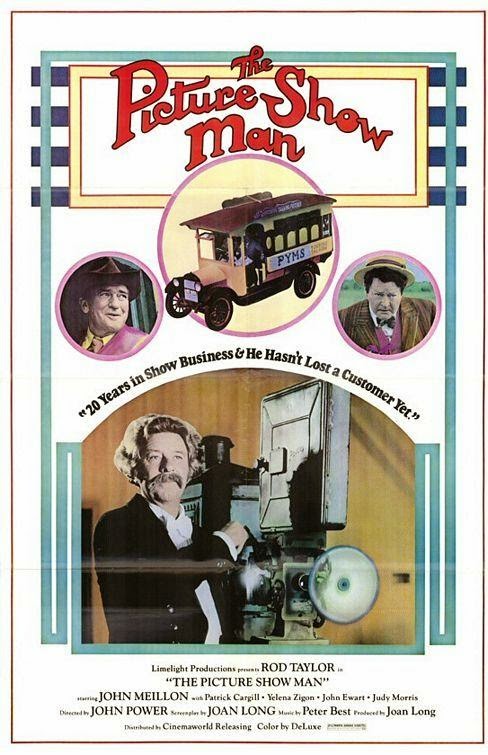
The Picture Show Man (1977)

picture show man

By Richard Winters

My Rating: 4 out of 10

4-Word Review: They show silent movies.

During the 1910’s Pym (John Meillon) travels the Australian countryside with his son and piano player (John Ewert) while renting out the local theaters in the small towns that they come upon and showing silent movies to the townsfolk. He makes just enough to survive and keeps all of his money in his pocket as he doesn’t trust the banks. His biggest problem is the advent of talking pictures as well as competition from Palmer (Rod Taylor) a man who Pym personally trained in the business, but now seems to be making more of a splash.

What should’ve been a nice slice-of-life period piece turns out to be meandering and pointless instead with a script that lacks a plot and everything broken up into vignettes that are just barely passable. The film would’ve done better with a more centralized character and point-of-view as well as adding in some conflict and drama. It also should’ve stayed more focused on the silent movie theme instead of veering into other directions including romance and even horse racing, which are just not as interesting.

Upon his death last year at the age of 85 many obituaries listed this film as being Rod Taylor’s last major role, but it really isn’t. He appears only sporadically and seems to have almost a mystical presence about him. His confrontations with Pym are contrived and his character adds very little.

The only mildly interesting aspect of the movie is the addition of Major Lockhart and his wife (Don Crosby, Judy Morris) who come onboard with Pym to do fake psychic readings during the intermission of his movies. The couples constant bickering is amusing and the scene where the husband catches his wife making out with Pym in the projection room and proceeds to attack them with an ax and sets fire to the film while the customers sit on the other side of the wall singing a song and completely oblivious to what is going on behind them is pretty funny.

I also got a kick out of the shot showing the faces of the people who are completely mesmerized to the screen as they take in hearing dialogue for the first time in a movie. The dialogue itself is banal and even corny, but the fact that the people remain so compelled to it makes it without a doubt the best moment in the movie.

I also found Leonard Maltin’s review of this movie to be pretty amusing as well. In the 1991 edition of his Movie Guide he gives this film three-and-a-half-stars while calling it “Funny and moving” and “A must for buffs”. Then in his 2013 edition he gives this same movie only two stars and describes it as meandering and lacking in energy.

My Rating: 4 out of 10

Released: May 5, 1977

Runtime: 1Hour 39Minutes

Rated PG

Director: John Power

Studio: Roadshow Distributors

Available: DVD

The Lady in the Car with Glasses and a Gun (1970)

lady in the car

By Richard Winters

My Rating: 5 out of 10

4-Word Review: Dead body in trunk.

Dany (Samantha Eggar) works as a secretary for Michael (Oliver Reed) who asks her to come to his place one evening to help him type an urgent report that needs to go out the next day. She agrees and then spends the night in his guest bedroom. The next morning she travels with his family to the airport where they board a plane for a vacation while she is instructed to drive their car back home, but along the way she takes a wrong turn and begins to come upon people who say they’ve seen her before even though she can’t remember them. Then she finds a dead body in the trunk and things get really bizarre.

The film, which is based on the novel by Sebastien Jasprisot and remade in 1992 and then again in 2015, has a certain appeal as the story is offbeat enough to keep you intrigued and manages to give a logical, or at least an attempted one, explanation at the end for why everything that occurs to Dany happened and the reason behind it. Unfortunately Anatole Litvak’s direction is bland despite a colorful opening montage and Reed, with his hair dyed gray, is miscast as a stuffy businessman.

One of the biggest issues though is the main character who behaves in ways that make little sense. Going to her boss’s place after work hours to write a report and even be instructed to drive his car back from the airport seems to be going well beyond the normal duties of an ordinary secretary and one that most likely would be met with resistance by anyone else and yet Dany obliges to his demands without question like she is a robot. Later a strange man (John McEnery) enters her car and makes an aggressive pass at her. Instead of leaving or running for help she instead gets into the car with him and takes him back to her hotel and goes to bed with him before she even knows what his first name is.

Spoiler Alert!

At the end we find out that Dany’s boss has set the whole thing up to make it look like Dany shot the man, whose dead body was in the trunk, in order to cover up for his wife (Stephane Audran) who was the one who really did it. Apparently she had been having affairs with many different men and shot this one when he refused to continue to see her. The husband was aware of all of these transgressions and would pay off the men to quit seeing her and when he found out that his wife had killed this one he concocts an elaborate scheme to get her off the hook, but why? Most men would not feel the need to come to the defense of an unfaithful wife especially one that continues to do it over and over again, which makes the whole storyline quite weak since it’s completely off-the-mark in terms of realistic human behavior.

End of Spoiler Alert!

My Rating: 5 out of 10

Released: October 22, 1970

Runtime: 1Hour 38Minutes

Rated R

Director: Anatole Litvak

Studio: Columbia Pictures

Available: None at this time.

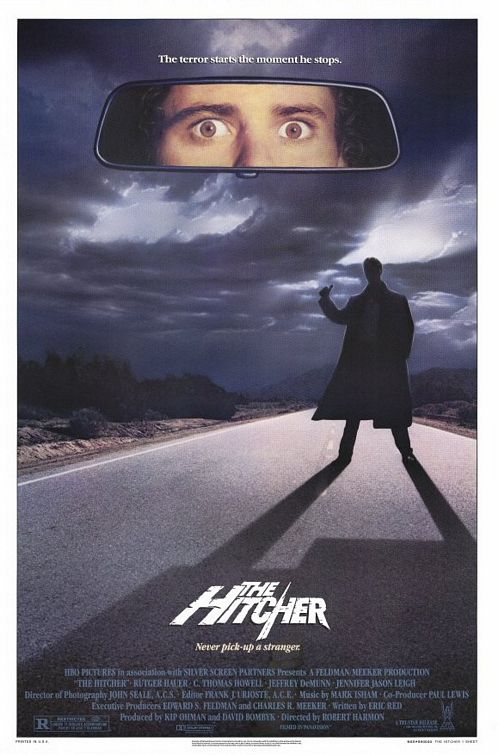
The Hitcher (1986)

hitcher

By Richard Winters

My Rating: 7 out of 10

4-Word Review: Chased by homicidal hitchhiker.

Jim Halsey (C. Thomas Howell) who is driving from Chicago to California finds himself falling asleep at the wheel as he travels late at night down a lonely desert highway. To keep himself awake he decides to pick-up a hitchhiker named John Ryder (Rutger Hauer) who immediately begins to behave strangely. Jim manages physically kick John out of the car when his life gets threatened, but then notices that he is continually coming upon him as his drive progresses. Soon the police are after him thinking that he is the one committing the murders that are really being done by John.

This film manages to be a nice blend between Spielberg’s TV-movie Duel and the classic episode of ‘The Twilight Zone’ in which Inger Stevens constantly sees the same hitchhiker as she drives her way through the desert. There are some really good suspenseful moments and a great performance by Hauer that almost makes up for its many transgressions, which unfortunately become more and more numerous.

Now, I did like this movie and tried to overlook a few of the logic loopholes, but eventually they become just too overblown. The biggest one is that John somehow manages to steel Jim’s wallet while also planting a knife on him that has blood from the victims that he has killed, but the only time they are together is when they are traveling in the car and I think Jim would’ve noticed John fishing through his pockets if that were the case. There’s also a lot of timing issues. For instance passengers stop and get off a bus to go inside a roadside café presumably for lunch, but then go right back into the bus just a couple of minutes later, which isn’t enough time for them to eat, go to the bathroom, or even stretch their legs. Another scene has Jim’s girlfriend Nash (Jennifer Jason Leigh) getting kidnapped from her hotel room by John who somehow is able to enter the room without explanation and then takes her out to the parking lot and ties her up between two trucks before the police get called in and try to intervene, but this all occurs in seemingly only a couple of minutes as Jim is in the bathroom when he hears Nash being taken out and he quickly runs out into the parking lot only to see Nash already tied up and the police there.

There is also the issue of how is John able to escape out of a police van after he is caught and handcuffed, which the movie doesn’t even bother to explain or show. Another question some viewers have brought up is why is Jim driving through Texas anyways, which is where this all occurs, since it seems too far to the south from where he needs to go. Some have speculated that maybe he was going to the southern portion of California and therefore would need to pass through the Panhandle of Texas to get there, which is plausible, but the landscape is all wrong. I live in Texas and know that the panhandle region, which I’ve been to, is flat and green and has farmland while the place Jim goes through is barren, sandy and very much a desert.

The film wasn’t even shot in Texas, but instead done in the Mojave Desert in California, which made me wonder why the setting couldn’t have been there since that was supposed to be Jim’s ultimate destination anyways. Then I realized that the police are portrayed as being quite hick and redneck and since Texas unfairly still has that stereotype I’m sure that was the reason for why it was chosen.

The script could’ve certainly been better thought out, which wouldn’t have required the viewer to take such massive leaps in logic in order to enjoy it, but overall I still liked it. I think this was mainly because of Hauer who is terrifically creepy as well as for an extremely exciting car chase that features incredible stunt work and without relying on any of computerized crap either.

My Rating: 7 out of 10

Released: February 21, 1986

Runtime: 1Hour 37Minutes

Rated R

Director: Robert Harmon

Studio: TriStar Pictures

Available: DVD


The Intruder (1977)

Capture 52

By Richard Winters

My Rating: 4 out of 10

4-Word Review: Terror on the road.

Based on a story by Dean R. Koontz and filmed in France under the title Les Passagers the plot centers on Alex (Jean-Louis Trintignant) who picks up his 11-year-old stepson Marc (Richard Constantini) from school and sets off to drive him across France and into Italy where they are to meet his mother Nicole (Mireille Darc). Along the way they become menaced by a strange man (Bernard Fresson) driving a black van that begins following them. At first Alex thinks nothing of it, but when the van tries driving them off the road they go to the police who prove to be unhelpful, which forces Alex to take things into his own hands in order to save both himself and the boy.

The film starts off well with definite hints to Steven Spielberg’s classic Duel. I enjoyed how initially everything is from Alex’s and Marc’s point-of-view where we do not know the identity of the driver in the black van, which is only seen through the perspective of their rear window that gives the vehicle a creepy presence. The banter between the boy and step father is engaging and the fact that the kid is smart and shows a keen awareness of things and not just there to be cute is great. I also liked the bawdy tune they sing together and the shot of the boy driving the car while the father leans out the passenger side window.

There is an exciting moment where the van tries pushing their car off the highway while they’re on a winding mountaintop road that is well photographed and realistic. The two are subsequently forced to ride the rest of the way in a tattered vehicle that has no windshield and looks almost as beat-up as the automobile in Planes, Trains and Automobiles.

I did not like however that fifteen minutes into the movie we are shown the face of the other driver, which takes away from the intriguing mystery angle that is what made Duel so interesting. The bad guy isn’t frightening and comes off as clumsy and careless, which makes him less threatening. The fact that he does not carry any type of weapon and must resort to grabbing a nearby fire ax in order to attack Trintignant’s character when the two confront each other didn’t make much sense.

Spoiler Alert!

The film’s biggest transgression though is that its twist ending isn’t surprising at all as the mystery man turns out to be the wife’s psycho ex-boyfriend, which is something I had guessed early on and most other viewers probably will too. It also leaves open a tremendous amount of loopholes like why Alex wouldn’t have been made aware of this boyfriend earlier as I’m sure he would’ve been stalking them long before she got remarried and why the boy wouldn’t have guessed that the stranger chasing them was this man as well as most likely he would’ve known about him too. The police investigation, which gets worked in as a sort of side story proves pointless to the plot and the fact that they end up being quite incompetent makes them seem similar to the ‘comic relief’ cops from Last House on the Left, which hurts the tension.

End of Spoiler Alert!

This film has managed to acquire a small cult following and it has good set-up, but it would’ve worked better had it been done solely from the point-of-view of the father and stepson and only revealed the face and identity of the bad guy at the very end.

My Rating: 4 out of 10

Alternate Title: Les Passagers

Released: March 9, 1977

Runtime: 1Hour 36Minutes

Not Rated

Director: Serge Leroy

Studio: Warner Brothers

Available: None at this time.

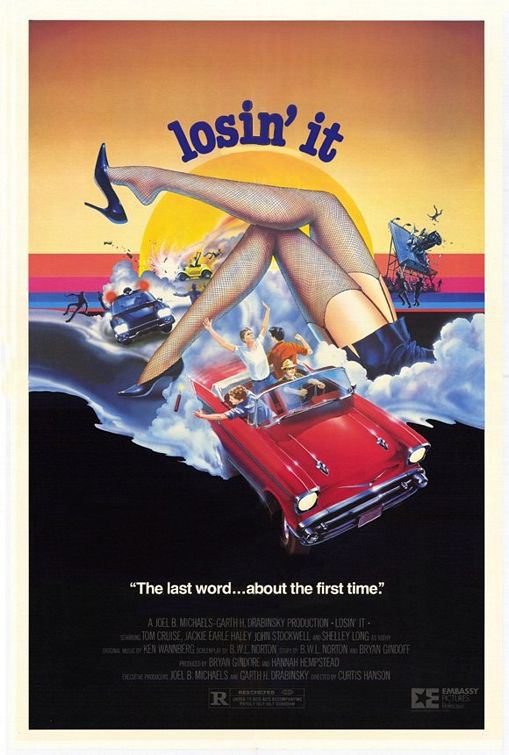
Losin’ It (1983)

losin it

By Richard Winters

My Rating: 6 out of 10

4-Word Review: Road trip to Tijuana

Four classmates (Tom Cruise, Jackie Earle Haley, John Stockwell, and John P. Navin Jr.) load up into a 1957 Red Chevrolet Bel Air to take a trip down to Tijuana where they to hope to lose their virginity to the local prostitutes. Unfortunately they end up getting more than they bargained for as they get harassed by one of the local cops (Henry Darrow) as well as taking on an added passenger by the name of Kathy (Shelley Long) who they meet at a convenience store in the midst of a fight that she is having with her husband and now wants to hitch a ride with them so she can get a quickie divorce.

Although the plot description may sound sleazy this is by far one of the better raunchy teen comedies to come out of the ‘80s. The film was directed by noted horror director Curtis Hanson and written by the prolific Bill L. Norton. The production values are high and although not actually filmed in the real Tijuana it still gives the viewer a realistic sense of the both the street and party scene that is down there. The characters are more multi-dimensional than in the typical teen comedy and the action remains realistic with humor that is amusing without getting overblown.

The film does shift uncomfortably in tone during the second half and features some unpleasant scenes including having one of the boys thrown into a dirty and dangerous Mexican prison while another gets hung up in midair by a crane while being threatened with a blow torch. Initially I didn’t like this shift, but the film still manages to keep things interesting and culminates in a funny car chase back to the border, which due to what the characters have gone through, is more thrilling than in most comedies simply because the viewer is genuinely wrapped up into their plight to get out of there.

Cruise gives an outstanding performance playing completely against type as he is nowhere near his usual cocky self here and instead comes off as shy and awkward and even has the embarrassment of being unable to ‘rise-to-the-occasion’ when alone with one of the women. Haley is quite energetic and funny and Navin as his baby faced kid brother, who’s more sensible than the rest of them despite being the youngest, is a real scene stealer. Darrow, best known for playing Zorro, gets one of his better latter career roles as the corrupt cop.

The film is supposed to take place in 1965 instead of the ‘80s and I wasn’t sure why as what the characters go through could have easily taken place in either decade. The title tune, which gets played both at the beginning and end of the flick, has a very strong ‘80’s sound, which seems jarring and out-of-place in a picture that supposedly has a ‘60’s setting.

My Rating: 6 out of 10

Released: April 22, 1983

Runtime: 1Hour 40Minutes

Rated R

Director: Curtis Hanson

Studio: Embassy Pictures

Available: VHS, DVD

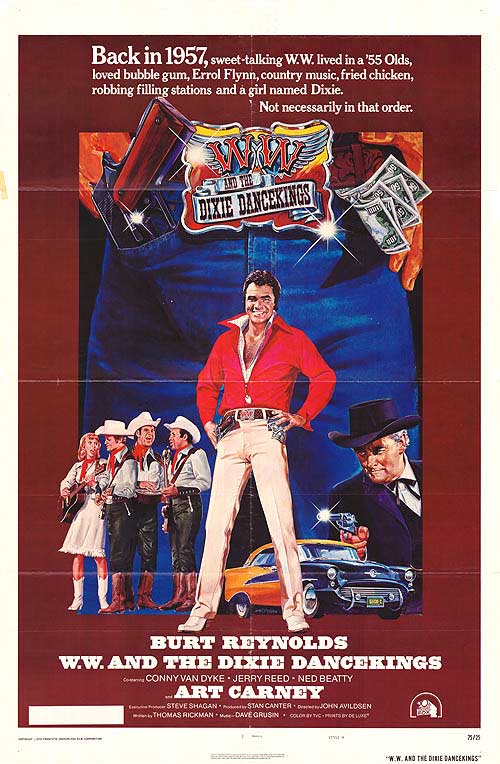
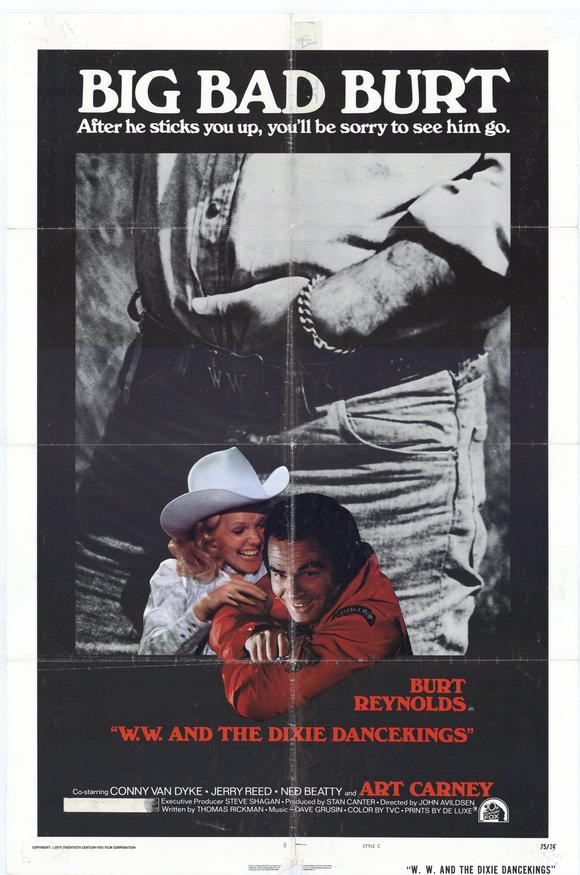
W. W. and the Dixie Dancekings (1975)

w w dixie dancekings

By Richard Winters

My Rating: 4 out of 10

4-Word Review: Conman promotes country band.

Burt Reynolds plays a good-natured, fun-loving conman who travels the south robbing gas stations as well as conning anyone out of their money in any way he can. He comes into contact with the Dixie Dancekings a struggling country band trying to make it big. W.W. initially sees this as another con-game by pretending to be a big time manager, who can use his influence to bring them to Nashville and send them straight to the top, but eventually he takes a liking to them and them to him and they begin working together to make it big while robbing banks along the way.

The film  is  fun and breezy and quite entertaining at the start. Reynolds’ charm practically propels the thing the whole way and manages to almost make up for its other shortcomings. His glib non sequiturs and boyish grin are on full display making this one of his better comical vehicles. I also loved the creative scene transitions and the playful digs at southern culture. It all comes to a head near the midway point when the group robs a bank with Polly Holliday playing the teller that makes great use of its cartoonish props and overblown action.

Unfortunately Thomas Rickman’s script fails to introduce any type of third act. The story coasts too much on its playful humor until it becomes old and tiring. There is not enough momentum or conflict and no discernable tension at all. The band members have no individual personalities and come off like faceless lemmings that are there to support Reynolds’ spotlight and nothing more.  Art Carney has a few interesting moments cast in an atypical role of the heavy in this case a police detective who is also a religious zealot that tracks the group down, but the dumb way that their final confrontation gets resolved is dull and disappointing.

It’s great to see country singer Jerry Reed making is acting film debut as he and Reynolds  would later go on to star in three more films together, but his character is not given enough to do, which ultimately makes is presence pointless.  Conny Van Dyke gets cast as the female lead, but shows little pizazz. The part was originally offered to Dolly Parton who would’ve been far superior, but she unfortunately turned it down.

John G. Avildsen’s direction is at times creative, but the plot and characters needed more layers as it all regrettably adds up to being nothing more than forgettable fluff.

w w dixie dancekings 2

My Rating: 4 out of 10

Released: May 21, 1975

Runtime: 1Hour 31Minutes

Rated PG

Director: John G. Avildsen

Studio: 20th Century Fox

Available: None at this time.

The Driver’s Seat (1974)

drivers seat 1

By Richard Winters

My Rating: 3 out of 10

4-Word Review: Crazy lady goes traveling.

Lise (Elizabeth Taylor) is a middle-aged woman with seemingly no past who travels to Rome looking for someone to kill her. Her erratic behavior and weird motivations confuse those that she comes into contact with. She then meets Bill (Ian Bannen) a man who’s more interested in her sexually than anything else and he follows her around in a veiled attempt to get ‘lucky’ despite her repeated rebuffs.

The film is basically a mess that goes nowhere. It was based on a novel by Muriel Spark, who had written some acclaimed stuff in her day including ‘The Prime of Miss Jean Brodie’, so I can only imagine that the book made more sense and only bits and pieces of it were taken to create this screenplay. In either case it was a highly strange career move for Miss Taylor who made a lot of weird movie choices in the 70’s, which helped to destroy her once megastar status and tainted her other stellar work.

Her performance by itself isn’t too bad and it’s the one thing that helps keep things watchable. The way that she can go from being passive and helpless to snippy and bitchy within seconds is kind of fun and on a purely camp level even enjoyable. The whole thing seems almost like an extension of the character that she played in Who’s Afraid of Virginia Woolf? , which became her signature role during her later years.

Bannen lends good support as his leering Cheshire cat grin is a perfect counterpart to Taylor’s crazed glare and he effectively equals her nuttiness. I also loved his so-called macrobiotic diet in which he must attain one orgasm a day for it to work and if he misses one then he must make up for it by having two the next day, which ultimately gives him ‘indigestion’. Mona Washbourne a character actress noted for playing delightfully daffy old ladies is also on hand as one of the people Taylor befriends and their encounter inside the stall of a public bathroom is a gem.

Director Giuseppe Patroni Griffi manages to infuse some interesting visuals, which along with its fragmented narrative helps keep things cheaply alluring, but it eventually plays itself out and by the end becomes quite tiring and tedious. The biggest issue is that there never is any explanation for who this woman is or why she’s doing this, which makes the whole thing quite empty and pointless.

My Rating: 3 out of 10

Released: May 20, 1974

Runtime: 1Hour 42Minutes

Rated R

Director: Giuseppe Patroni Griffi

Studio: AVCO Embassy Pictures

Available: DVD-R, Amazon Instant Video

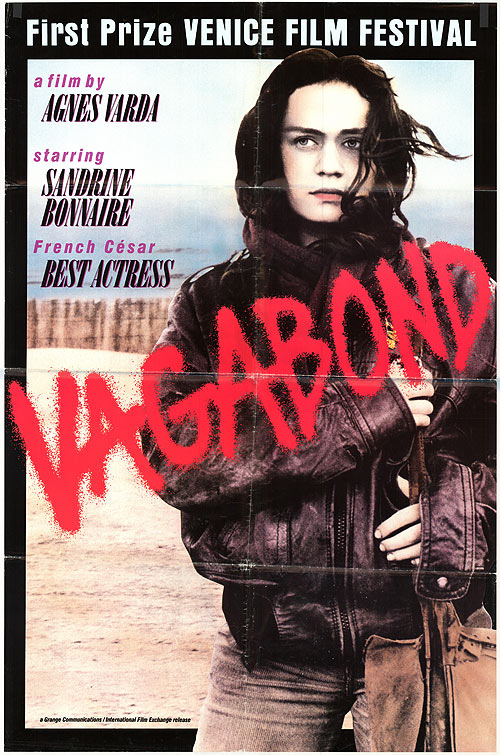
Vagabond (1985)

vagabond 1

By Richard Winters

My Rating: 6 out of 10

4-Word Review: She has no home.

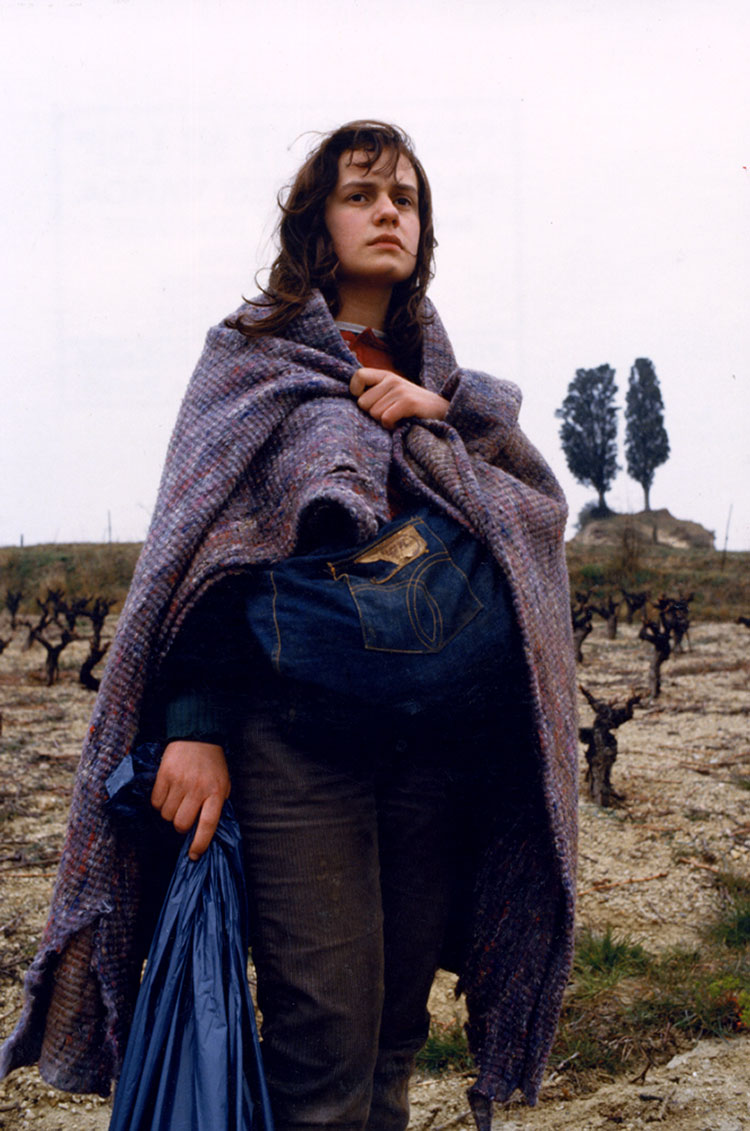
Mona (Sandrine Bonnaire) is a young woman of about 20 who wanders the South French countryside in the dead of winter searching for food and money. She camps out in a small tent wherever there is space including at one point even a cemetery. She is offered a few odd jobs here and there, but she never lasts long in them and resents being ‘bossed around’. She makes a few acquaintances along the way and even a couple of male lovers, but like with her jobs she doesn’t get settled with anyone for too long.

The best aspect of this critically acclaimed French film that is directed by the legendary Agnes Varda is that it avoids the political correctness. Most films especially Hollywood ones tend to portray the poor and homeless as humble and contrite, but the main character here is anything but. She is arrogant and aloof to those around here even the ones that offer her help. She acts strangely entitled in even in the direst of situations and in many ways almost oblivious to how truly desperate she is. Varda creates a richly textured character that while not likable and sometimes even confounding still manages to be always fascinating.

The narrative works in vignette style starting with some farmhands finding her dead, frozen body in a field and then progressing backwards showing the last few weeks of her life and the people that she met. To some degree this is interesting as it reveals how others see her some of whom are even jealous of her ‘freedom’ and ‘independence’ while also exploring how everyone can make a lasting impression on others even if they seem insignificant and the encounter brief. However, the segments where these characters speak directly to the camera comes off as jarring, clumsy and heavy-handed and it would’ve been nice had these same reactions been worked into the story in more of a subtle and sophisticated way.

My biggest issue with the film and in many ways it’s most disappointing aspect is that we learn nothing of this woman’s background. What exactly brought her to do this? Was it by choice or circumstances? Where’s her family and what about her upbringing? None of this is shown or talked about making this character study not only frustrating, but incomplete.

The character also gets sexually assaulted at one point, which to a degree brings added realism, but she is shown not to suffer any post-traumatic stress from the incident, which was not believable. Also, having the film begin with her death hurts the tension and it would’ve been more compelling had we not known her ultimate fate until the very end.

vagabond 2

My Rating: 6 out of 10

Released: December 4, 1985

Runtime: 1Hour 45Minutes

Not Rated

Director: Agnes Varda

Studio: MK2 Diffusion

Available: DVD (Criterion Collection)

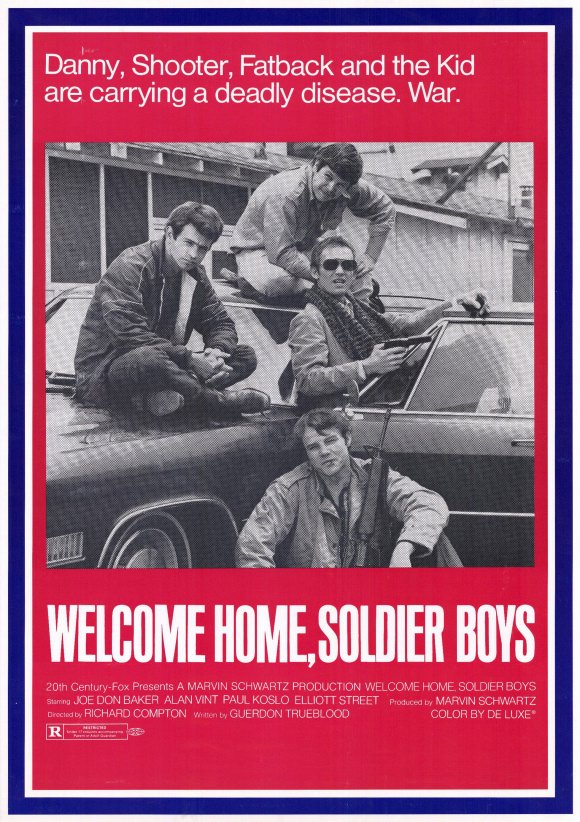
Welcome Home, Soldier Boys (1971)

welcome home soldier boys

By Richard Winters

My Rating: 5 out of 10

4-Word Review: War veterans destroy town.

Four Green Berets (Joe Don Baker, Allan Vint, Elliot Street, Paul Koslo) return home from a stint in Vietnam. Initially they stop off at the home of one of the men’s parents, but find that none of them are ready to settle down, get a job, and play ‘within-the-rules’, so they set out on a cross country road trip, but when their car breaks down they end up paying more than they should for the repairs by an unscrupulous mechanic (Timothy Scott). This along with dealing with a society that does not seem to appreciate what they did for their country gets them angry. When they arrive in a small town ironically called Hope their simmering frustrations boil over. Using their army ammunition they go on a rampage destroying the town and everyone in it causing the National Guard to come in to try and stop them and creating for them a war zone all over again.

For a low budget 70’s flick this isn’t too bad. Richard Compton’s direction is slick, nicely photographed and paced well enough to retain a passing interest. The music, which features songs written and sung by actress/singer Ronee Blakely is okay and to a degree fits the mood. The script by Gordon Trueblood has believable dialogue and doesn’t seem intent on being purely exploitive.

Unfortunately the film fails to show much insight into the personality or experience of being a veteran. No flashbacks or discussions about it. In many ways these characters could simply have been regular, non-descript young men from any background who were not yet ready to enter into the adult world and take on adult responsibilities, which in the end is what makes this whole thing rather generic and its ‘statement’ more self-important than it really is.

Baker does quite well in the lead and although he sometimes gets a bad rap for his acting I’ve come to feel that it is unfair. The way his character here is so diametrically opposite from the one that he played in Walking Tall just two years later proves without a doubt that he is a talented thespian if given the right material.

Jennifer Billingsley though is wasted in a thankless role as a prostitute who rides with them for a little ways before getting thrown out of the vehicle at high speeds. Leonard Maltin incorrectly states in his book that her character is gang raped, which isn’t too true. She has consensual sex with one of the men, but then gets kicked out when she demands $500 for her services instead of $100 that they were willing to pay her.

The violent, climatic ending is the film’s most notorious claim to fame, but it takes too long to get there, lasts for only a couple of minutes and then ends too abruptly. It’s also absurd and outrageous to believe that these men would end up killing innocent people simply as a way to vent their anger at being cheated by a car mechanic. After all if everyone responded the same way when a car mechanic overcharged them then there would be no small towns left anywhere.

My Rating: 5 out of 10

Released: December 10, 1971

Runtime: 1Hour 30Minutes

Rated R

Director: Richard Compton

Studio: 20th Century Fox

Available: DVD-R (20th Century Fox Cinema Archives)

The Gauntlet (1977)

the gauntlet

By Richard Winters

My Rating: 7 out of 10

4-Word Review: Alcoholic cop escorts hooker.

Ben Shockley (Clint Eastwood) is a down-and-out cop and borderline alcoholic who’s given the assignment of escorting a hooker named Gus Mally (Sandra Locke) from a prison in Phoenix to a trial in Las Vegas where she will be a key witness. Ben is initially told that it’s a ‘nothing witness to a nothing trial’, but finds that to be anything but the truth as the two are shot at and chased by both the mob and his fellow policeman convincing him that he’s been set-up and making him determined to ‘even the score’.

This film overall is great fun and has enough well-choreographed action sequences to be entertaining for just about anyone who watches it. The story also manages to have some intrigue and a certain symbolic message. The on-location shooting done in and around Phoenix gives it an added flair particularly the long shots of the dessert landscape.

The film is best known for its climatic sequence involving Eastwood and Locke riding in a bus that travels slowly down the main streets of Phoenix while being shot at by hundreds of cops lining the sidewalk that ultimately puts thousands of holes into the vehicle. As a visual this is exciting and memorable, but I still kept wondering why the cops didn’t simply aim at the bus’s tires, which would’ve disabled the vehicle instantly and they would not have had to bother shooting up the rest of it.

Another action segment in which Eastwood and Locke are riding on a motorcycle while being chased and shot at by men in a helicopter brought up some similar issues. Again the segment itself is exciting and surprisingly prolonged although it would’ve done better without the bouncy jazz score being played over it. Either way the helicopter begins to attack Eastwood while he is standing at an outdoor phone booth. He then runs inside to an indoor food market where the Locke character already is, but instead of staying there where they are shielded he instead leads her out of the building and onto the motorbike where it would be more dangerous because it makes them an open and vulnerable target.

I also wasn’t too crazy about Locke’s performance or her character. For one thing Locke approaches the part in too much of a one-dimensional way. A hardened, snarky prostitute may be realistic, but hardly interesting or appealing and the character would’ve been more fun had their being some sort of unique or funny trait about her instead of leaning so heavily towards the stereotype.

The other supporting characters though are great. Pat Hingle is excellent as Ben’s nervous, hyper friend who finds himself unwittingly in the middle of the fracas. I also enjoyed William Prince playing an extension of the corrupt, jaded corporate-like character that he did in Network. Bill McKinney is also good as a hick cop who has an interesting ‘conversation’ with Locke about her ‘profession’.

If you’re looking for a bubblegum, action-packed escapism then this film should do the trick and still holds up well today even when compared to modern-day action flicks.

My Rating: 7 out of 10

Released: December 21, 1977

Runtime: 1Hour 49Minutes

Rated R

Director: Clint Eastwood

Studio: Warner Brothers

Available: VHS, DVD, Blu-ray, Amazon Instant Video