Category Archives: Road Movies

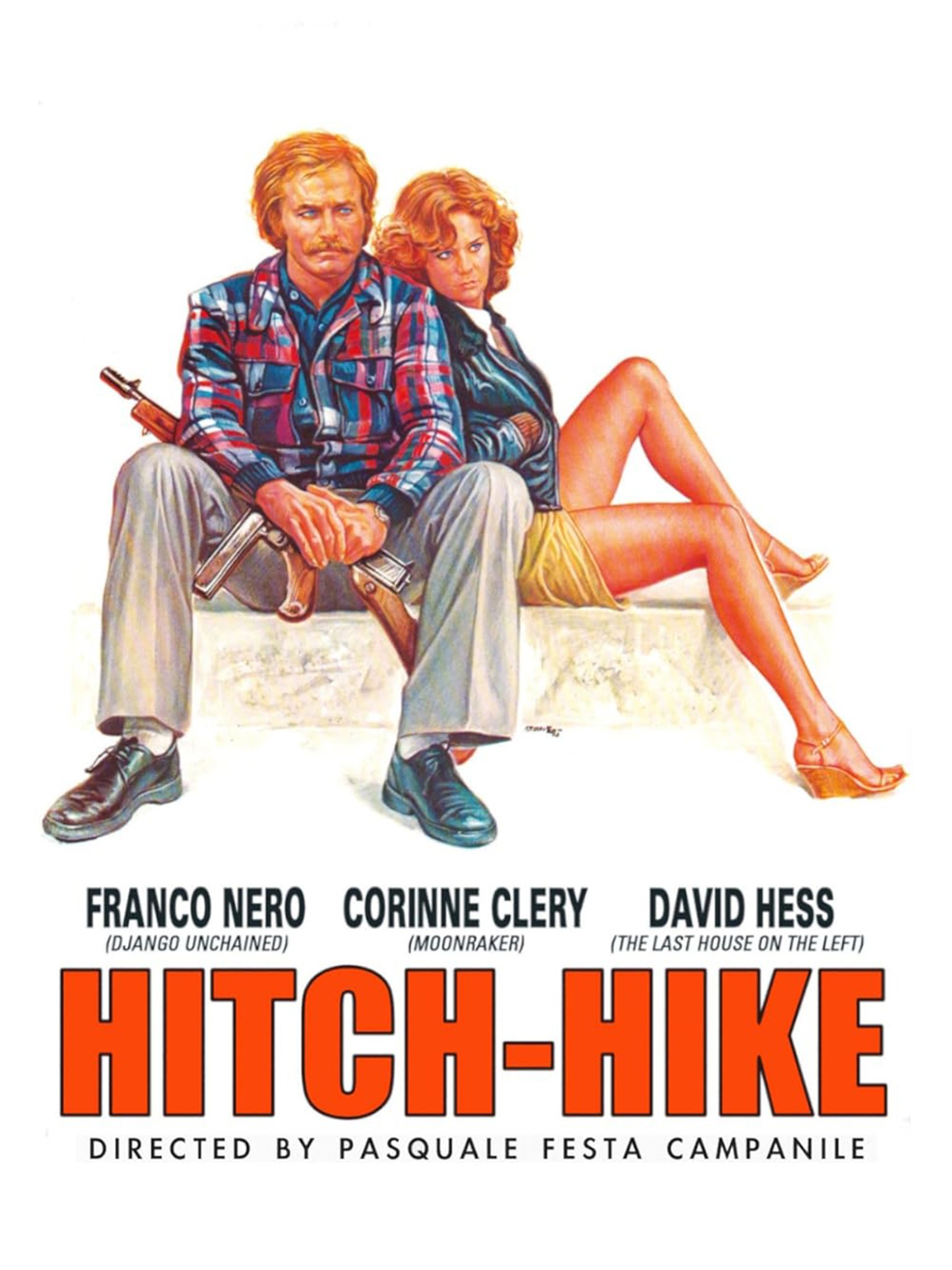
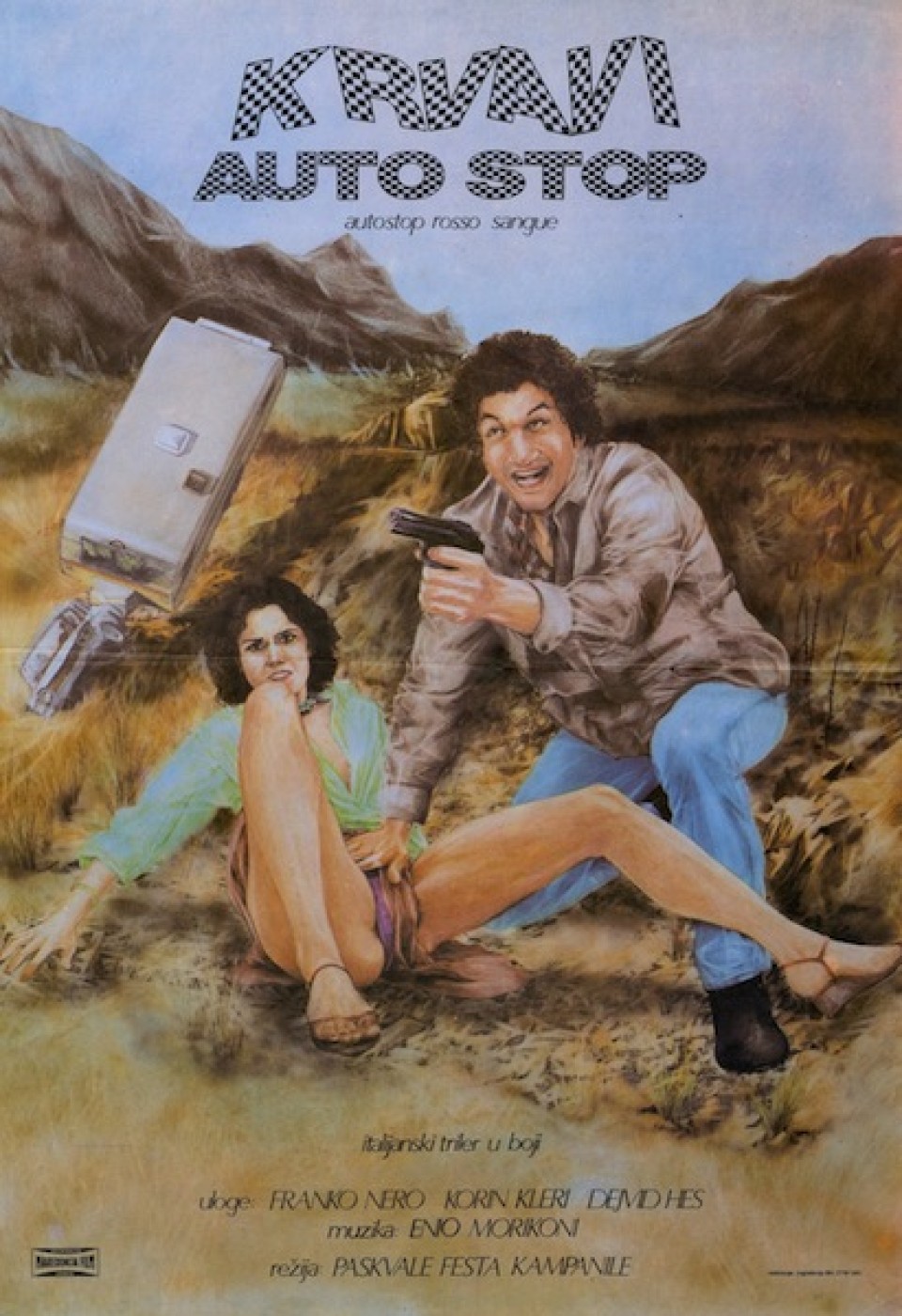
Hitch-Hike (1977)

By Richard Winters

My Rating: 5 out of 10

4-Word Review: Couple picks up killer.

Walter (Franco Nero) and his wife Eve (Corinne Clery) are constantly bickering about Walter’s alcoholism. They go on a trip to Los Angeles and on the way pick-up Adam (David Hess) whose car is stranded on the road. Unbeknownst to them he’s a robber who has doubled-crossed his partners and absconded with a suitcase full of $2 million dollars. It doesn’t take long before Adam has a gun to both of their heads demanding they take him to Mexican border where he plans to escape while also killing them in the process. As the two try desperately to figure a way out they are also being secretly followed by the two young men whom Adam betrayed and who are now intent on extracting a revenge.

One of the biggest problems I had with the movie is that it’s supposed to take place in California but was actually shot in the mountains of Gran Sasso in Italy, which looks nothing like the state. I realize that California has a varied topography but the locales here are screaming southern Europe and the highway signs are done in blue, which anyone living in the U.S. would know is fake as here they’re green, which only accentuates the off-kilter look of the production. Since where they’re driving to makes no real difference to the plot I would’ve just had it be some city in Italy like Rome, which would’ve helped the authenticity.

The other problem I had is that, at least the version I watched, it’s spoken in Italian. Normally I prefer movies that are subtitled versus dubbed, but I could’ve sworn years ago I saw it in English, but what’s available on YouTube, which is the only service currently streaming it, doesn’t offer that, which is a big shame. Not so much because of Nero or Clery, but more Hess as his own voice is not used, which then defeats the whole reason for having him. He’s best known for playing the sadistic killer in The Last House on the Left, and he has an excellent way of being menacing, but because we don’t hear him actually speak in his native tongue all of that gets lost and the creepy energy that was supposed to be there by casting him gets completely wasted.

Spoiler Alert!

The story, which is based on the unpublished novel ‘The Violence and the Fury’ by Peter Kane, doesn’t get off to a good start as it features two people, particularly Nero, who are not likable, and thus the viewer really doesn’t care about their predicament making the tension mediocre at best. There are also elements that are stolen from better known movies like the mysterious truck that keeps chasing them during their drive, with the identity of the driver hidden, that’s taken straight from Duel. Loopholes abound as well as we later learn that Hess is the driver of the truck, but how was he able to avoid being shot by his cohorts earlier with a gun aimed right at him and how was he able to hijack the truck as he had been without any vehicle? Maybe he was able to hitch a ride with a truck driver, just like he did with the couple, and then do away with the driver once inside, but this is stuff that needs to be shown as otherwise it comes-off like the filmmakers are just making up the rules as they go with no concern whether it’s logical.

The twist ending is limp as it features Nero setting the car on fire with his injured wife inside and putting Hess’s dead body next to hers in an attempt to make it look like both he (Nero) and she died in the blaze, but there were such things as dental records back then, so after the coroner examined the charred bodies he/she would determine that it wasn’t really Nero who died and thus the authorities would continue to search for him. Seeing him then become a hitchhiker himself leaves open too many questions and comes off like a cop-out where the filmmakers ran out of ideas and thus decided to just end it there.

End of Spoiler Alert!

The moment where Nero is forced to watch Hess make love to his wife, and witnessing the humiliation and anger in his eyes, is the film’s best moment. Watching Clery, the only person you sympathize with, is entertaining both with her clothes on and off. However, the film lacks any character development, and the plot is quite strained with a lot of moments where the story, much like with the car ride, doesn’t seem to be going anywhere and if anything, just driving itself around in circles.

My Rating: 4 out of 10

Released: March 4, 1977

Runtime: 1 Hour 44 Minutes

Rated R

Director: Pasquale Festa Campanile

Studio: Explorer Film ’58

Available: DVD, Blu-ray, YouTube

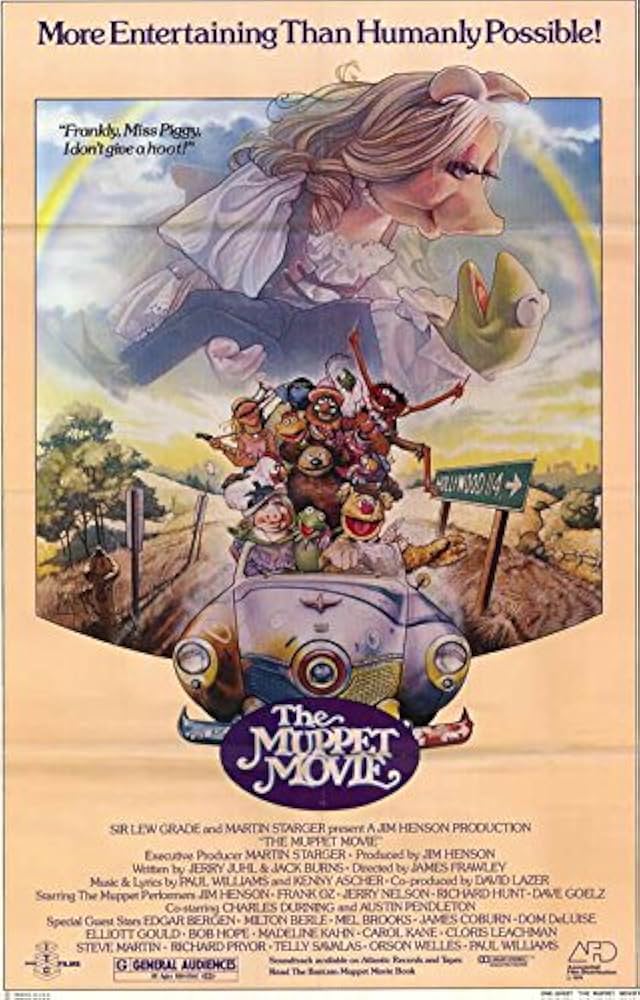
The Muppet Movie (1979)

By Richard Winters

My Rating: 7 out of 10

4-Word Review: How they became famous.

Kermit (Jim Henson) is a lonely frog living in a Florida swamp who dreams of one day making it to Hollywood and becoming famous. He then meets talent agent Bernie (Dom Deluise) who hears Kermit singing a song with a banjo and becomes convinced that the frog has what it takes to become a star. He hands him his card and tells him to give him a visit when it makes it to California. Kermit then sets-off on a cross-country trip and along the way meets several other characters all looking for their big-break including Fozzie Bear, a struggling comedian, and Miss Piggy (Frank Oz) who wants to become a fashion model. They tag along on the trip with Kermit while pilling into Fozzie’s Studebaker as he drives them to the west coast, but then they meet up with Doc Hopper (Charles Durning), an owner of restaurants who specializes in frog legs, who wants Kermit to be his new spokesmen in some commercials that he’s producing, but Kermit declines. However, Doc refuses to take no for answer and chases after the gang and using increasingly more sinister methods in order to get the frog to change his mind. 

Due to the success of ‘The Muppet Show’ creator Jim Henson was given financing to produce his own movie featuring the same puppet characters audiences had grown to love from the program. Since this would be a large-scale production great effort had to be put into making the muppets appear real and able to blend into an actual outdoor setting versus having everything done on a sound stage like it was in the TV-show. Henson refused to compromise on anything and insisted that money would not be a limitation, and this included the segment where Animal, one of the muppet characters, grows to giant proportions. Initially the idea was to keep the puppet the same size and place him on a miniaturized set, which would’ve cut down on costs, but Henson felt this didn’t look convincing enough, so instead they constructed Animal’s head to gigantic proportions that measured over sixty feet, which called for way more money and was very time consuming, but ultimately worth the effort. 

The story itself is pedestrian and relies, similar to the TV-show, with rapid fire quips and comebacks much like in old vaudeville. On the surface the humor is corny, and some could find the whole thing silly, but enjoyment comes with the puppet characters that are made to be like caricatures of humans, and their amusing responses and reactions. It’s also filled with a lot of great songs all written by the talented Paul Williams, who appears briefly. Normally in movie musicals the songs end up sounding the same and it starts to feel like we’re just listening to the same loop done over and over, but here each music bit has a distinct beat and a good toe-tapping quality, which not only adds to the fun, but actually helps move the story along versus holding it up. 

The only drawback is the massive amount of guest star appearances. There are many familiar faces, but most of them are only in it for a half-minute, or so and few of them have anything that’s actually funny to say, or even moderately clever. Performers like Bob Hope, Richard Pryor, Madeline Kahn, and Edgar Bergen, in his last screen appearance before dying just a couple weeks later, are essentially wasted in bits that add nothing and could easily have been excised and not missed. However, there’s a few cameos that do work including Steve Martin as an annoyed waiter, Cloris Leachman as a receptionist allergic to animal hair and Orson Welles who comes on near the end and has the film’s best line. Mel Brooks also quite memorable in an over-the-top send-up of a German mad scientist. 

Durning though is the one exception as he is more like a main cast member and in it quite a bit. Of course, he’s an outstanding character actor and a personal favorite and he shines here as well particularly with his attempt at a Cajun accent, but it seemed a bit ridiculous for a guy to go to such extreme measures just to get Kermit to be in his commercials. A better storyline would’ve had Kermit witness Durning turning one of his family members, perhaps one of his distant frog cousins, into a frog legs meal and thus threaten to turn Durning into the authorities and this would cause him to chase after him in order to try and keep him from squealing.  It also would’ve been nice had he shown a change-of-heart at the end and come around to being a friend to the muppets versus remaining an adversary. It comes close at one point when Durning realizes he doesn’t have any real friends like Kermit does, but I would’ve liked to have seen him come to grips with his aggressive personality and make amends to do better moving forward. 

My Rating: 7 out of 10

Released: June 22, 1979

Runtime: 1 Hour 35 Minutes

Rated G

Director: James Frawley

Studio: Associated Film Distribution

Available: DVD, Blu-ray, Amazon Video, YouTube
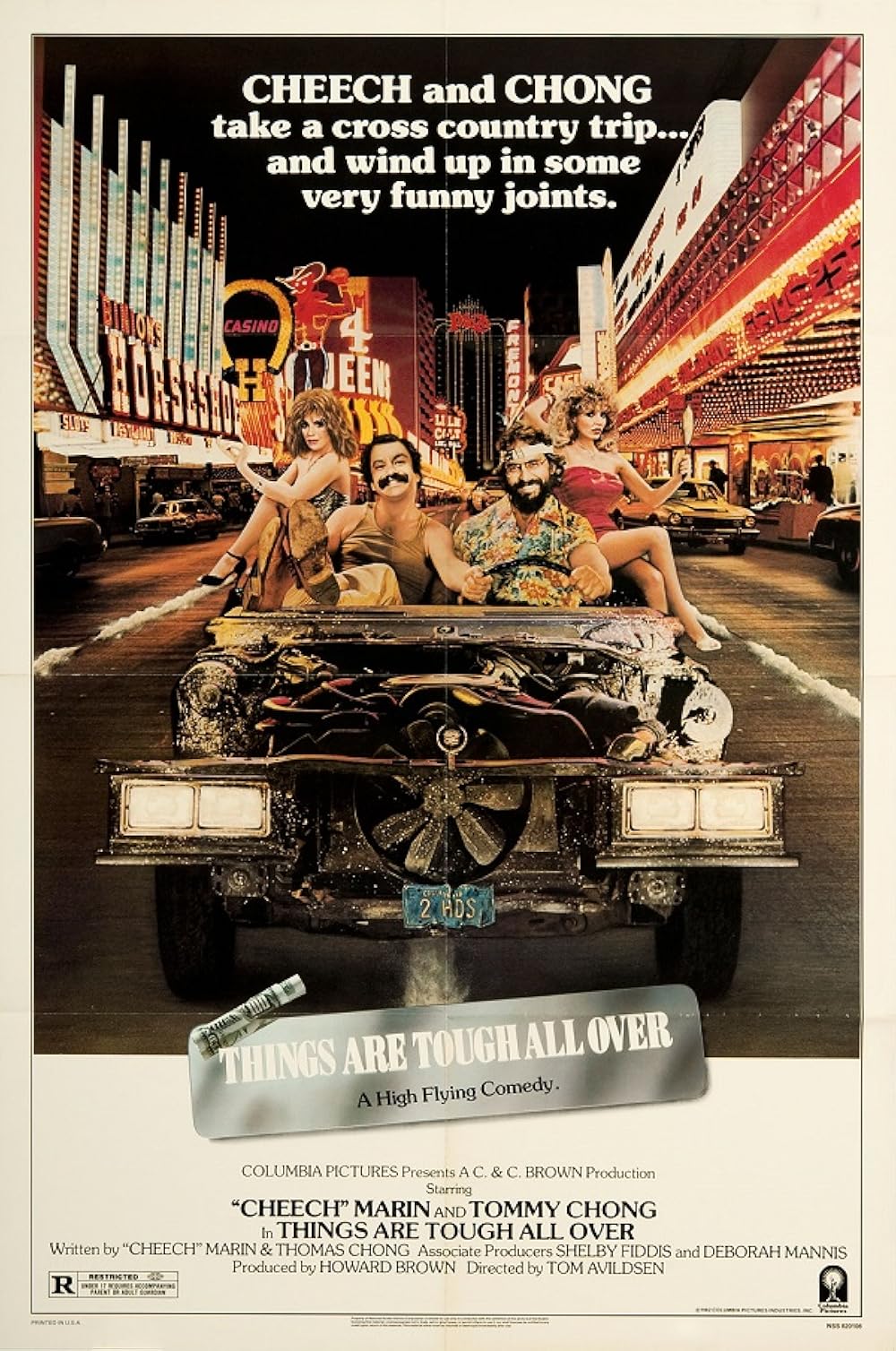
Things Are Tough All Over (1982)

By Richard Winters

My Rating: 5 out of 10

4-Word Review: Stoners on the road.

Cheech (Cheech Marin) and Chong (Tommy Chong) have moved to Chicago and are working at a car wash, but when they accidentally destroy a customer’s car they are fired. The owners of the car wash Mr. Slyman (Cheech Marin) and Prince Habib (Tommy Chong) hire the two for another job, which is driving a limousine across the country to Las Vegas. The two stoners think it will be an easy task but are unaware that the seats of the vehicle are stuffed with illegally collected cash. The boys though are given no money for gas, so each time they have to fill up the tank they’re forced to do away with a part of the car as payment forcing them to eventually have to drive down the road with only the vehicle’s main frame left. However, along the way they give up the seat with the money in it to an old-time gas station owner (John Steadman) and when the Arab owners find out that the money is gone, they set out to kill the two, who have become lost on foot inside the burning hot desert.

Cheech and Chong’s fourth installment is a definite improvement thanks mainly to the fact that it wasn’t directed by Chong, but instead the reins were handed over to Tommy K. Avildsen who had worked as an editor on their previous two movies. The pacing is much better, the gags come about in a more rhythmic order and the scenes don’t seem to go on forever. Avildsen’s editing background clearly helps keep the pace going and it’s nice to have a bona fide plot versus just trying to string together a bunch of comedy bits like in the first three films. Here there’s a better structure and focus. Things are still quite zany and surreal, but at least weird stuff don’t just get thrown in for no reason. 

Of course, there’s still the issue of why these guys are suddenly in Chicago. When we last left them, they were hanging out in East L.A., which served as the duo’s cultural and atmospheric background. If they are to move to a different city then we need to see if occur in the movie and not just between installments and there needs to be a reason why, which is never given. As I’ve explained before in my reviews of their past movies having each new film change the settings and their living circumstances so drastically makes it seem like we’re not really seeing sequels that’s progressing things forward, but more just starting things over from scratch. Same goes with Cheech suddenly having to do voice-over narration, which they had never done before, and in this instance added little and could’ve been skipped. 

However, it’s at least funny. Watching these guys shivering in the snow is a good change of pace from they’re pampered beach surroundings. The way they destroyed the car as it goes through the wash had me laughing as did the dismantling of the limo. Planes, Trains, and Automobileswith Steve Martin and John Candy, is the most well-known movie for having two guys riding down the highway inside a skeleton vehicle, but this movie did it first and in just as hilarious way. A couple of other comic highlights are when the stoners pick-up Donna (Evelyn Guerrero), who’s hitch-hiking, and she brings along a bunch of Mexican illegals who crowd into the limo like they’re stuffing themselves into a bus. The scene where the two sit in a movie theater and watch themselves star in a porno film, that was captured without them knowing it, is another great moment. 

The best thing about the movie though is that it features C&C in dual roles as they also play the rich Arab businessmen and it’s really impressive how these two can get into other characters and speak in completely different accents. They play the stoner parts so well that you start to believe that it’s really them and they’re not acting until you witness how seamlessly they can morph into other roles. Chong had me especially surprised as for a while I didn’t think it was him, he puts on a prosthetic nose that completely changes his appearance when he plays the prince, and it took me awhile before I caught on. Having them play the so-called heavies gives the movie a much-needed bump of energy and the only thing that’s missing is seeing all four in a scene together with some sort of over-the-top confrontation between them in the desert, which could’ve easily been done using trick camera work. 

This is also the first C&C movie where the drug use gets played down. This was apparently Chong’s idea as he felt it had become too much of a prop and they needed to challenge themselves and prove to audiences that they could still be funny without it. I also liked how Chong goes through a bad drug trip while inside a restaurant as the negative side of taking drugs had never been shown in any of their previous movies, but here does at least get lightly touched upon, which helps create a better balance especially for young and impressionable viewers.  

My Rating: 5 out of 10

Released: August 6, 1982

Runtime: 1 Hour 30 Minutes

Rated R

Director: Thomas K. Avildsen

Studio: Columbia Pictures

Available: DVD, Amazon Video, YouTube

Up In Smoke (1978)

By Richard Winters

My Rating: 5 out of 10

4-Word Review: Two stoners become friends.

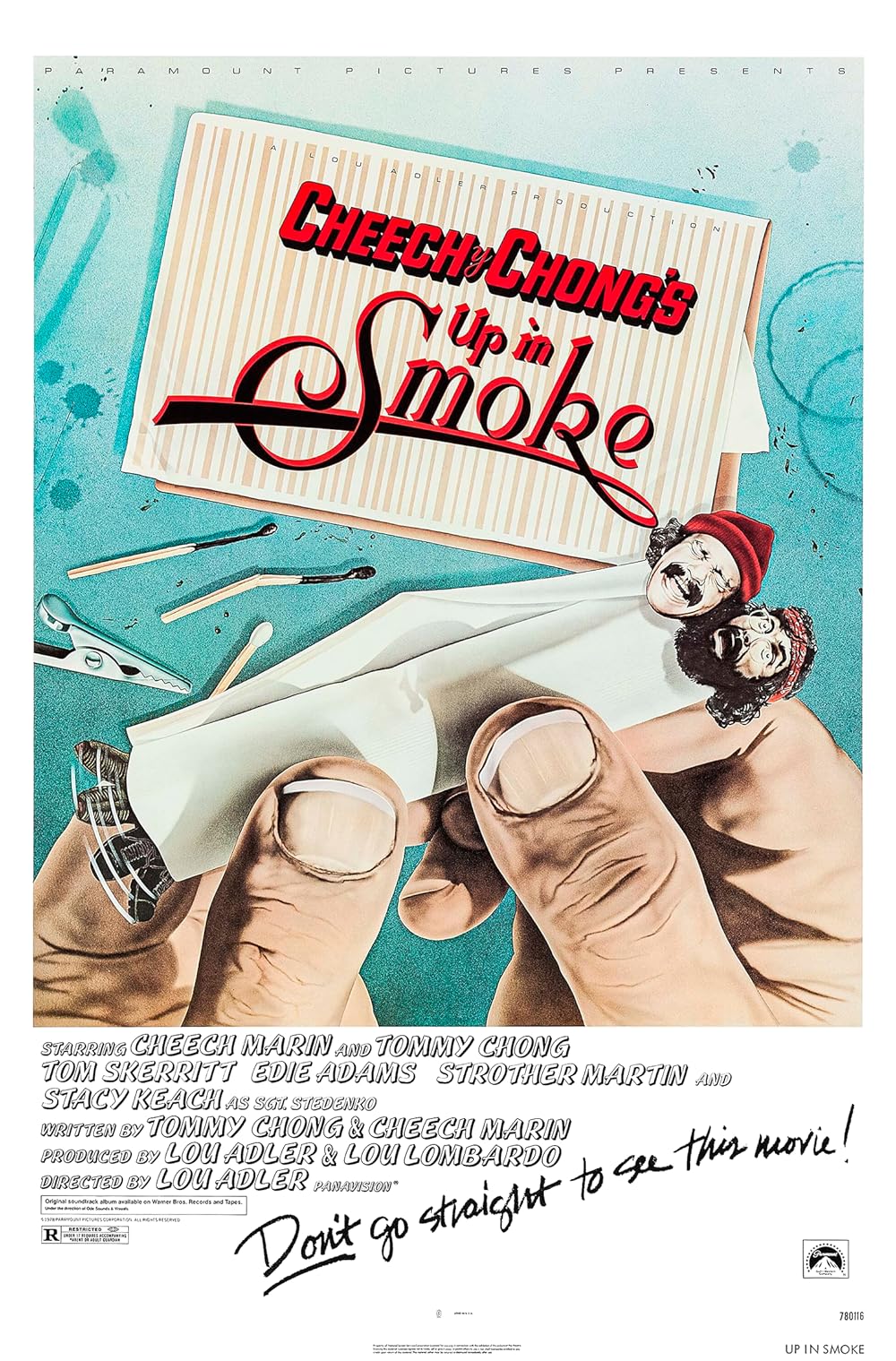
Anthony (Thomas Chong) is told by his father (Strother Martin) that he must find a job, or he’ll be kicked out of the house. Anthony then hitches a ride with Pedro (Cheech Marin) and the two quickly become friends based on their mutual interest of getting high on drugs. Soon they’re involved in many adventures including being shipped off to Tijuanna. In order to get back into the country they agree to drive a van that unbeknownst to them, is made completely of hardened marijuana, which gets them quickly put on the radar of Seargent Stelko (Stacy Keach) who along with his crack team of incompetents chases the two relentlessly in order to haul them into jail and make the country’s streets safe again. 

Cheech Marin was trying to avoid the draft when he went to Canada in 1969, which is where he met Thomas Chong, already a Canadian citizen who was starting up his own improv called ‘City Works’ after seeing Second City improv in Chicago while touring as a musician. The two became a comedy team who would come out to warm up audiences before concerts, but in many cases were more popular than the bands they were introducing. This then caught the attention of producer Lou Adler, who signed them to a contract to create record albums, which were so profitable that they graduated into making a movie, which Adler directed, that recreated many of the same skits they had used during their stage routines.

The movie upon its initial release with its open drug use was considered quite controversial and lead to many critics at the time to condemn it but nonetheless proved to be a big money-maker grossing $104 million on a $2 million budget.  Today the film is seen in a much softer light and in 2024 was elected for preservation by the National Film Registry by the Library of Congress.

I remember watching this when it came out and laughing at much of it particularly the car scene where the two smoke a giant marijuana cigarette and then get pulled over by the police. The film also does a terrific job of showing the East L.A. vibe possibly better than any other movie out there. You feel immersed in the culture and get a vivid feel of the era and setting especially at the end when the two go onstage and take part in the Battle of the Bands at the Roxy Theater. The film also has a leisurely pace, much like a French film, where it doesn’t feel the need to have a highly structured plot like in most American films and putting the emphasis more on atmosphere, which is a refreshing change of pace. Some of the supporting players, including Strother Martin who refers to his son as the ‘anti-Christ’ and Stacy Keach as the hardnosed police detective as well as his loyal, but bumbling deputy, played by Mills Watson, but without his patented mustache, who later went on to play the same type of role in the TV-show ‘The Misadventures of Sheriff Lobo’, are all perfect and help add to the fun.

On the negative end the two leads and their interactions, are poor. Cheech never even bothers to learn his buddies name and just continues to refer to him as ‘man’ for the duration of the pic, which might be the intended comedy, but offers no character development. They never grow or change and instead are paralyzed in a permanent caricature. Marin is funny, and in fact the only source of the humor, but Chong is underdeveloped. He spends most of the time strung out on drugs, or going through a bad trip, to the point that he seems catatonic and allowing all the energy to go to Marin, which is fine as he makes the most of it, but it barely seems like a buddy pic when it’s only one guy getting all the laughs. 

Without sounding like somebody’s old-fashioned parent I must agree with the initial sentiment that found this movie to be glorifying drug use and thus toxic to the day’s youth. The film acts like using drugs is just harmless fun. The scene involving actress June Fairchild, who later became homeless due to her own real-life addictions, where she sniffs some Ajax by mistake thinking it’s cocaine, but has no bad reaction to it and instead gets just as an enjoyable high is a problem. Granted I realize it’s supposed to be ‘funny’, but I could see a parent being concerned that it’s sending the wrong message to impressionable teens. 

My Rating: 5 out of 10

Released: September 15, 1978

Runtime: 1 Hour 26 Minutes

Rated R

Director: Lou Adler

Studio: Paramount Pictures

Available: DVD, Blu-ray, Amazon Video, YouTube
Every Which Way But Loose (1978)

By Richard Winters

My Rating: 4 out of 10

4-Word Review: A bare-knuckle brawler.

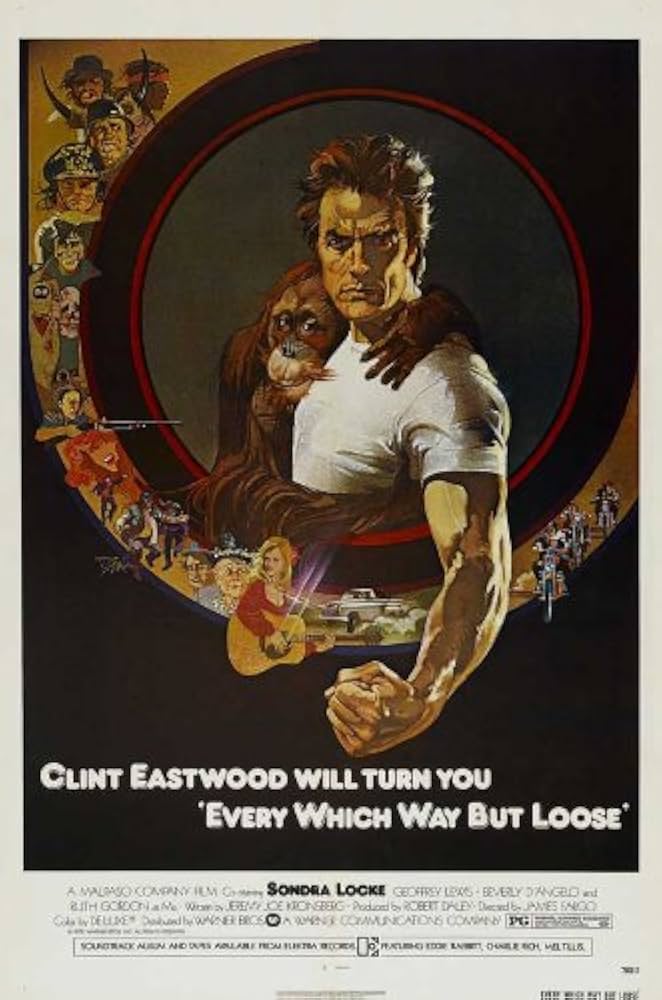
Philo (Clint Eastwood) is a truck driver still living with his mother (Ruth Gordon) and who compensates his income with bare-knuckle fights where people can make bets either on, or against him. He also travels around with an orangutan named Clyde whom he won as compensation for one of his fights. One day while waiting in his pick-up at a red light a biker gang known as The Black Widows and led by Cholla (John Quade) pull up beside them and begin harassing the ape. This creates a confrontation, and the bikers seek a vendetta on Philo determined to challenge him to a fight and begin stalking him until he agrees. Philo is also being chased by Putnam (Gregory Walcott), a cop upset at Philo over a misunderstanding that occurred while the two were in a bar. Meanwhile Philo is also trying to find Lynn (Sandra Locke) a singer he fell for who moved away to Colorado with her boyfriend, but Philo travels there in an attempt to find her and win her back, but Putnam and the Black Widows are in hot pursuit. 

The script is the product of Jeremy Joe Kronsberg, who after watching Smokey and the Banditbecame ‘inspired’ to write this one and was convinced it would make the perfect follow-up vehicle for star Burt Reynolds. However, when he shopped it around to the studios, they all rejected it, so he decided to send it off to Clint Eastwood’s secretary in the hopes that Clint, being good friends with Burt, would show him the script and convince him to do it. Instead to everyone’s surprise Clint, who was looking to broaden his appeal, decided to take on the starring duties himself and even cast Kronsberg as one of the biker gang members.

Many of those close to Clint thought it was a bad career move, and the critics savaged the film upon its initial release, but at the box office, which is what really counts, it did very well and became one of the highest grossing films of Eastwood’s career. A major reason for this is its rural appeal where everyone is essentially a redneck and white collar, college educated suburbanites just don’t exist. Instead, one’s social standing hinges on how much they down at the bar and whom they beat-up, which helps create a strong and surreal atmosphere. Initially though with this type of mentality I thought the setting should’ve been Texas and not California as when most people think of Cali they connect it with rich Hollywood stars and Malibu mansions when in reality that’s only a portion of the state and on the east end it’s much more rustic with a far more blue collar attitude and the movie does a good job of exposing this. 

It’s fun to see Eastwood not taking himself so seriously and being laid-back even smiling versus having him constantly look at everybody with his patented squinty-eyed stare. In support I though Ruth Gordon was great. Usually she plays ditzy old dames, but here she’s crusty and ornery and the segment where this ‘vulnerable old woman’ single-handedly shoots-up the biker gang when they invade her property is the movie’s highpoint. Bevery D’Angelo quite good too playing a free-spirited flower child named Echo. While she doesn’t have anything funny to say it’s nice having a character who’s quiet and subdued to help balance all the other wackiness. 

The script though is in desperate search for a story that never really transpires. Too much hinges on random events strung together by the thinnest of threads versus being connected by actual motivations and momentum. Having Eastwood, a tall and intimidating looking guy, constantly getting harassed for no reason, doesn’t make a lot of sense. The biker gang should’ve hounded him because they were hired by someone who lost to him in a fight and was bitter about it and the cop could’ve been hassling him because he lost a bet on one of his fights and thus wanted some compensation. While these may not be deep and profound motives at least they give a reason for what’s happening versus having things strung together by a lot of disconnected events that come out of nowhere. 

Spoiler Alert!

Sondra Locke though almost saves it. Her hyper and sarcastic personality makes for a nice contrast to Eastwood’s, and I liked how he pursues her as a love interest only to ultimately realize that she’s a psycho and he’d be better off without her. Most other movies have the concept that ‘lover conquers all’ and you’re better off with someone, even if they’re seriously flawed, than without, so having this movie take the alternative viewpoint is a refreshing change of pace and thus deserves some credit. 

My Rating: 4 out of 10

Released: December 20, 1978

Runtime: 1 Hour 55 Minutes

Rated PG

Director: James Fargo

Studio: Warner Brothers

Available: DVD, Blu-ray, Amazon Video, YouTube
The Hit (1986)

hit

By Richard Winters

My Rating: 5 out of 10

4-Word Review: Not afraid to die.

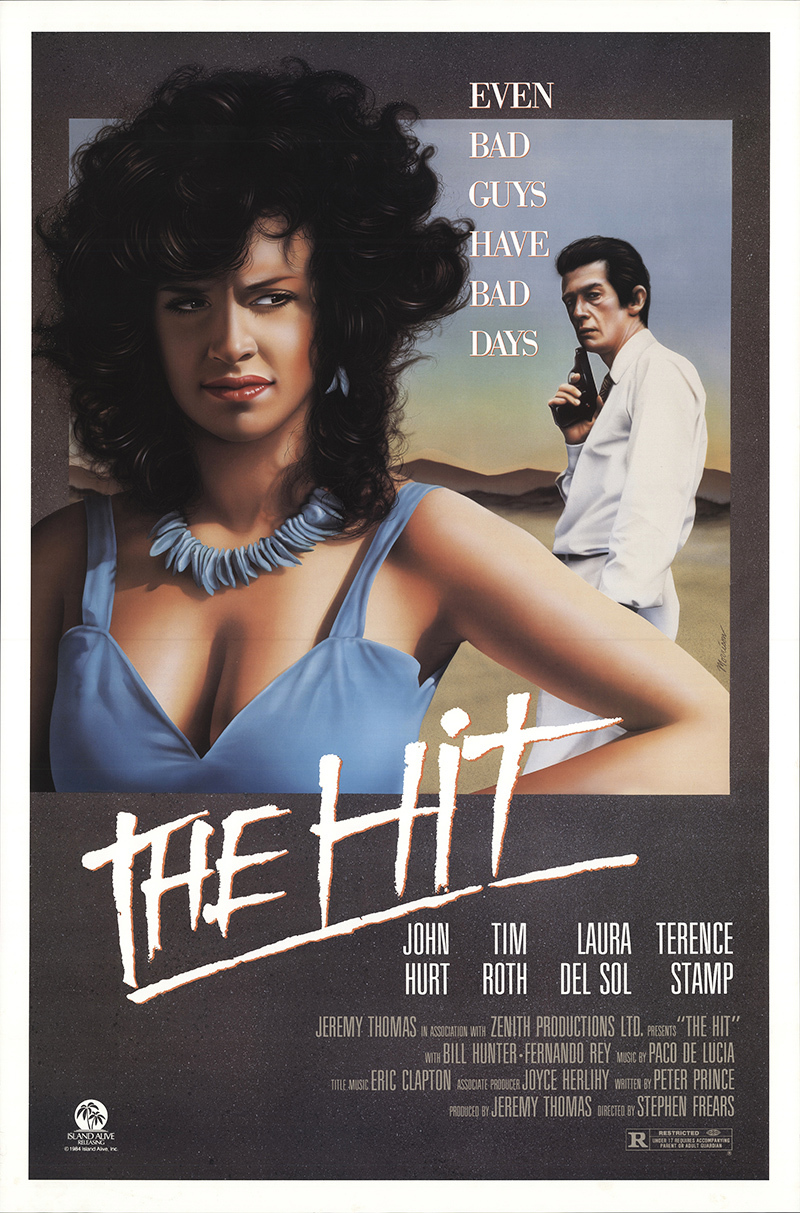
Willie (Terence Stamp) turns states evidence against the criminal underground that he’d been apart of, which then sends his former partners away to prison, but before they go they sing ‘We’ll Meet Again’ just as he leaves the court room. Ten years later Willie is living the quiet life in Spain as a part of the witness protection program only to have his home invaded by a group of teens who kidnap him and take him to hitman Braddock (John Hurt) who was hired by the kingpin that Willie helped put away. Braddock along with his young partner Myron (Tim Roth) are instructed to take Willie, via a car, to Paris where the kingpin hopes to inflict harm on Willie before eventually killing him. However, things don’t go quite as planned as Willie shows no fear of death insisting that he’s accepted it as a part of the cycle of life and this throws the two hit men off convinced that he must have something up-his-sleeve, but does he?

This is another example where a movie I enjoyed when I first watched it years ago, but doesn’t quite live up to expectations upon the second viewing. For the most part this doesn’t happen that often and there has been some cases where a movie I didn’t like when I first saw it I’ve come to appreciate when seen a second time. This one though is definitely a case of the former and I came away a bit miffed on what its point was. When I first saw it I was impressed by the scene at the waterfall where Willie, who had a chance to escape, but doesn’t and instead decides to spend his time appreciating nature’s beauty until Braddock catches up to him, I found at the time to be quite memorable and unique moment as it revealed that the bad guy in this instance was the one more afraid and insecure of death than the intended victim.

However, there’s a lot of stuff that doesn’t mesh, or could’ve been more convincing. I had a hard time understanding why this sophisticated criminal group would hire a bunch of teen boys to break into Willie’s home (hideout). How could they trust these novices to get the job done and the fact that they’re able to do it so easily makes it seem that Willie’s ‘protection’ as it were wasn’t too impressive. It also negates the effect of the criminal unit. They’re supposedly this cunning, evil, underground group relentlessly pursuing their man against this supposedly intricate government program, but if literal kids can just break down the door with just a bit of effort then the whole operation from both sides comes-off as rather amateurish.

The casting of Hurt as the bad guy isn’t effective mainly because of his meek stature. Stamp was originally intended for that role and with his big build and piercing blue eyes would’ve been perfect, but it was ultimately decided for both actors to play against type and thus the parts got reversed, but it really doesn’t work. Hit men should have an intimidating presence, but with Hurt’s slim figure and quiet, exhausted looking demeanor that doesn’t happen. Roth as his quick-triggered, youthfully naive henchmen makes matters worse as he’s a walking cliche of a teen in over-his-head just biding time before his knee-jerk reactions to do them in. Thus the psychological games that Willie plays with them are not that interesting, or impressive since these two come-off as badly dis-coordinated right from the start and like any average person could easily outfox them.

Stamp’s character is baffling as well. During the courtroom moments he states his testimony is an almost hammy way like he’s making fun of the whole situation, which maybe he is, but it’s not clear as to why and his ulterior motivations are never answered. It’s hard to tell whether he really is a good guy, or maybe secretly a bad one as there are scenes where he puts other potential victims in definite danger and then feigns ignorance about it afterwards. He spends the whole time telling everyone how death doesn’t scare him and yet when a gun does finally get pointed at him he panics and tries to run while also pleading for his life, so which is it? The same goes for Roth’s character who during the course of the movie he seems to be falling for the lady hostage, played by Laura del Sol, and even protective of her and yet when the time comes for Hurt to shoot her he puts up no fight, or resistance, which defeated the momentum and missed-out on what could’ve been an interesting confrontation.

I like movies with multi-dimensional characters and the film does have that and certainly humans can be a bag full of contradictions. However, at some point it kind of needs to explain itself and it fails on that end. Intriguing elements about these people get thrown-in, but the story fails to follow through with it ultimately making it too vague, ambiguous to be full satisfying and in many ways it will most likely leave most viewers frustrated and scratching their heads as they ask themselves what the point of the whole thing was supposed to be.

I did though really enjoy the scenes with Australian actor Bill Hunter who is marvelous in support playing a man who takes over one of Hurt’s friend’s apartments while on vacation only to get the shock of his life when the hit man and his entourage show up unexpectedly. His rather pathetic attempts to mask his fear and trying to somehow carry-on a casual conversation knowing full well he could be blown away at any second is dark comedy gold and by far the film’s best moments.

My Rating: 5 out of 10

Released: May 18, 1984

Runtime: 1 Hour 38 Minutes

Rated R

Director: Stephen Fears

Studio: Zenith Entertainment

Available: DVD, Blu-Ray (Criterion Collection), Tubi, Plex

Martin’s Day (1985)

martinsday

By Richard Winters

My Rating: 4 out of 10

4-Word Review: Escaped convict kidnaps boy.

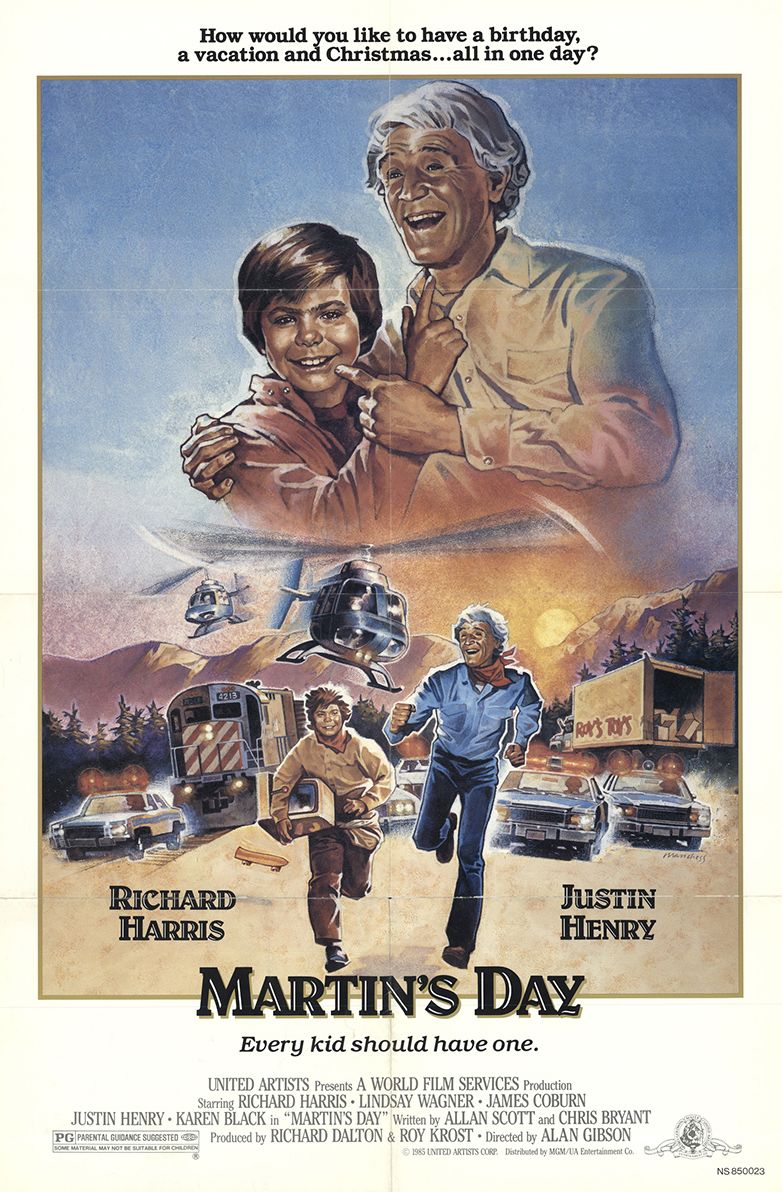
Martin Steckert (Richard Harris) breaks out of jail and disguises himself as a policeman while also absconding with a squad car. Soon some other cops notice the stolen car, which has a broken rear window, and begin to inspect it while Martin is buying groceries. When Martin returns he sees the cops inside the car, but notices their vehicle, which has caught the attention of some neighborhood boys, is sitting idle. He decides to use that car to getaway, but just as he tries to get inside it the other cops take out their guns and point them at him. In a desperate move Martin grabs one of the kids and threatens to kill him, which forces the officers to put down their weapons and let him get away. During the subsequent road trip the two get to know each other and he learns that the kid’s name is also Martin (Justin Henry). A unique bond is created, but the Canadian police force, lead by Lt. Lardner (James Coburn), is hot-on-their-trail.

Richard Harris is fantastic as usual, but the majority of the film is too intent on being a family-friendly movie that it ends up having no edge. The Canadian landscape, shot in September of 1983 in the province of Ontario, is nice and gives one a good feel of rural Canada, but everything else comes-off as trite and predictable though the eclectic supporting cast allows for some added interest.

I especially got a kick out of Lindsay Wagner playing the prison psychiatrist, who tries to replicate the Canadian accent by adding an ‘eh’ at the end of her sentences. I was surprised though that James Coburn, who was still considered a quality leading man at the time, was relegated to such a small role and only seen sporadically. Karen Black does a fine job as Harris’ former lover, but she’s in it for only about 5-minutes and they should’ve had her go along on the trip with the other two, which would’ve added some much needed energy and even a little spice.

The story itself is weak mainly because it telegraphs everything out and there’s absolutely no surprises. It’s clear right from the start, that Harris, while in jail, is a nice guy with a few anger issues, but then when he kidnaps the kid we know upfront that he isn’t going to hurt him. A more intriguing way to have done it, which would’ve allowed for some genuine tension, was to have shown him getting into angry confrontations with his cellmate and possibly even his therapist, so when the kid and him are alone you start to worry how he’ll behave and then during the course of the movie he could learn to be more calm and sympathetic. Even having him threatening the kid versus telling him upfront he’s not going to hurt him, would’ve upped the dramatic ante and allowed for a wider character arch.

I also couldn’t understand why the kid wouldn’t want to go back to his parents and start missing his home life at some point. The movie portrays his mom and dad, whom we never see, as being ‘strict’, but the rules that they had for him, like not eating candy on weekdays and only on weekends, didn’t seem all that outrageous. Had the film shown some scenes at the beginning where his folks were abusive towards him then his ‘escape’ with Harris might’ve made more sense, but as it gets done here the concept becomes highly strained.

Also, for a film aimed at a younger audience the segment where Harris intentionally sets himself on fire while inside his cell was quite graphic and could disturb a lot of children viewers. The scene where Harris backs the squad car that he’s just stolen into the front wall of the policeman’s house gets botched when I noticed that the backend of the vehicle remains completely intact and with no signs of damage, which just painfully illustrates that a breakaway wall was used and not a real one. Another logistical lapse comes when Harris and the kid park their pick-up on the train tracks, which forces the locomotive to stop and allows them to holed-up the train while the kid gets trained by the engineer on how to work it. Then in the next shot we see the train starting down the tracks with the kid now at the helm, but with the pick-up on the side of the tracks and no longer on them, but  it’s never shown how did the pick-up got moved.

My Rating: 4 out of 10

Released: February 22, 1985

Runtime: 1 Hour 38 Minutes

Rated PG

Director: Alan Gibson

Studio: MGM/UA

Available: DVD (Region 2), Amazon Video

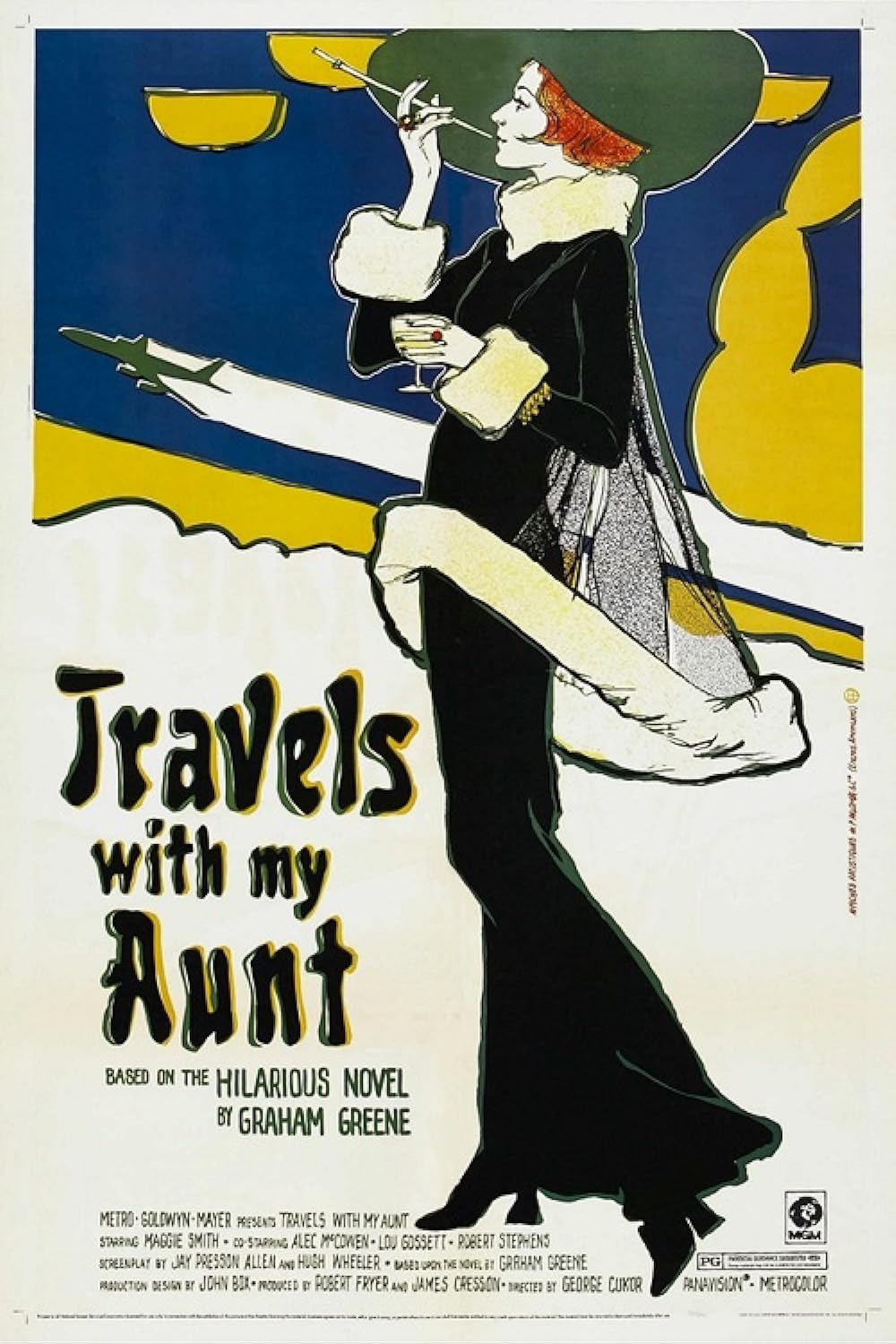
Travels With My aunt (1972)

travels1

By Richard Winters

My Rating: 4 out of 10

4-Word Review: Kooky lady cons nephew.

Henry (Alec McCowen) is a middle-aged bank manager who attends his mother’s cremation where he meets his kooky Aunt Augusta (Maggie Smith). She invites him over to her residence where he finds that she’s living with a black man named Wadsworth (Louis Gossett Jr.) who works as a fortune teller. It is here that she receives a package holding the severed finger of her longtime lover Visconti (Robert Stephens) and told that she must deliver $100,000 in ransom in order to see the rest of him alive. She convinces Henry to go with her to Paris to meet the kidnappers demands and in the process the two go on a wild jaunt across the globe that ends with them in North Africa.

The film is based on the novel of the same name by Graham Greene that was originally intended for Katherine Hepburn in the lead. Director George Cukor, whose career was winding down at this point, had worked with Kate in several projects from decades earlier and felt this role would be the right fit though she disagreed, but then decided that if she could rewrite the script, she’d consider doing it. Jay Presson Allen, who had done the original adaptation, which Hepburn didn’t like, gave full control over to her to rewrite it anyway she’d like, but ultimately the studio felt she was too old for the part especially since she was expected to play a younger version of the character during flashback sequences and they didn’t feel she at her advanced age could come effectively as someone in their early 20’s, so the part went to Smith instead.

Maggie to her credit is quite good and although she was only in her late 30’s really seems quite old during the sequences where the aunt is portrayed in the present. There’s even realistic wrinkles on her face especially around the cheekbones that gives the character the look of someone in their 70’s and 80’s. In the flashbacks she comes-off equally effective as a youthful free-spirit. Unfortunately her daffy character was for me a turn-off as she’s too much of an eccentric caricature that’s more obnoxious than amusing and building a whole film around her doesn’t work.

Henry is equally perplexing as I couldn’t understand why he’d believe this nutty lady when she tells him the mother he had always known wasn’t his biological one. For all he knew she was a goofball that shouldn’t be taken seriously unless she can supply more evidence, which she doesn’t. Most rational people would’ve kept her at an arm’s length instead of galivanting across the continent with her especially whom he had just met. In the book Henry is portrayed as being bored with his life and longing for adventure, but the film doesn’t make this clear, so his motivations and personality become muddled. Also in the book he was in early retirement, which would help explain why he had so much free time to go traveling, but the movie doesn’t bring this up either, so you wonder what he told his employer that would allow him to be off of work for so long and not get fired.

Having the Aunt and Henry bicker about, as their personalities were quite opposite, could’ve been fun, but this doesn’t get played-up. Too much time gets spent on this outlandish James Bond adventure that gets more ridiculous and unbelievable. The flashbacks bog down the pace and weren’t really needed and everything should’ve remained in the present day. The coin flip ending, in which Henry can’t decide what he wants to do moving forward, go back to his old life or continue on with his aunt, is a cop-out and only done because they couldn’t figure out how else to end it, so they do a freeze-frame of the coin in the air and the  let the viewer feel-in-the-blanks, which was far different than the novel. There Henry becomes a changed man who enjoys the excitement of getting involved in illegal activities, but because the film was not centered around him, which it should’ve been, we don’t witness any type of character arch making the whole thing quite trite and saved only by the brief appearance of Cindy Williams who plays a free-spirited hippie that he meets on a train.

My Rating: 4 out of 10

Released: December 17, 1972

Runtime: 1 Hour 49 Mintutes

Rated PG

Director: George Cukor

Studio: MGM

Available: DVD-R (Warner Archive)

The Big Bus (1976)

bigbus1

By Richard Winters

My Rating: 6 out of 10

4-Word Review: Bomb planted on bus.

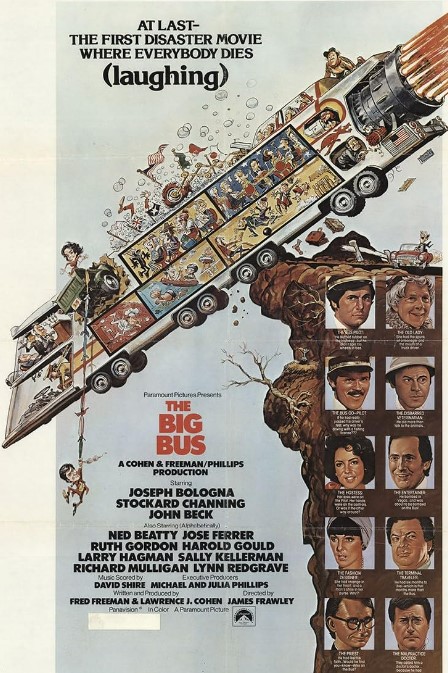
Cyclops is the new revolutionary designed double-decker bus that because it’s powered by nuclear fuel will allow it to travel non-stop between New York and Denver. Just before it’s set to make its maiden voyage a bomb goes off within the facility it’s been housed in, which seriously injures the bus’s designer Professor Baxter (Harold Gould). The vehicle itself remains unscathed, so the Professor’s daughter, Kitty (Stockard Channing), takes control of the project and hires a new driver named Dan (Joseph Bologna) whom she had a relationship with in the past. Dan though is still fighting-off the stigma of having crashed another bus into the mountains, and after being stranded for many days ended up reverting to cannibalism by eating all the rest of the passengers. The trip faces further obstacles when unscrupulous billionaire Iron Lung (Joes Ferrer), who resides inside a iron lung due to having polio as a child, orders his henchmen Alex (Stuart Margolin) to plant a bomb on the bus, so that it will be destroyed and prevent nuclear fuel from overtaking gasoline of which he owns much stock. Will Dan be able to overcome both his past and personal problems to both find and prevent the bomb from going off, or will this become yet another disaster on his already checkered past?

While Airplane! is widely thought-of as being the original parody of 70’s disaster flicks it’s really this one that came out a full 4 years earlier that deserves the credit. While it didn’t do well at the box office, which essentially pushed it off into obscurity it still upon second look has a lot of funny moments and deserves much more attention than it has gotten.  Not every gag works and some do fizzle, but the script by writing team Fred Freeman and Lawrence J. Cohen has far more hits than misses. Some of the best bits are the indoor swimming pool on the bus as well as the bowling alley and disco and the radiation suit to put on in times of emergency including the reaction of the passengers when it gets hung down from the ceiling compartment during the flight instructions. The attempt to treat the bus like it’s a metaphor for an airplane, which was the mode of transportation used in most disaster flicks, is quite funny especially the scene where crews in a small town try to halt the bus, or essentially ‘force it to land’ by spraying the main street with foam in order to slow the vehicle down.

The acting is in top form with many familiar faces from both television and the big screen. Stockard was probably my favorite she pretty much plays her part straight, but still manages to be quite amusing especially during the segment when she gets stuck inside a room that fills up with soda, which she stated in later interviews she almost drowned in.  Richard Mulligan and Sally Kellerman are equally amusing as a soon-to-be-divorced couple who share a rather unusual love-hate relationship. Larry Hagman as a dubious doctor, Ned Beatty as a moody technician and Murphy Dunne as a caustic pianist all help to top-it-off. Even Bologna, whose normally brash persona doesn’t make him a likely hero, scores comedic points though John Beck as his co-driver with a tendency to pass-out the second he gets nervous steals away most of the scenes they share.

Spoiler Alert!

The actual disaster, where the bus precariously balances over a cliff, is nicely photographed in a way that makes it seem real with some good stunt work, but I was disappointed that this ends up being the only real exciting moment. I didn’t like either that at the very end, just before the final credits begin to roll, the bus splits apart, which creates screams from the passengers. This was the type of movie where despite their oddball nature I had grown kind of fond of the daffy bunch and wanted to see them arrive safely, which with the ending here doesn’t occur. Instead the viewer is left (no pun intended) hanging, which is a giant cop-out. Just about every disaster flick made offers a conclusion where we see if the people ultimately make it out alive, or not and doing it the way they do here makes the viewer feel like they’ve seen only half a movie, which could explain why this did poorly at the box office.

A  good way to have prevented this would’ve been to chop up the beginning, which has a lot of unnecessary back-story. The bombing of the facility wasn’t needed as all of the calamity should’ve been saved for the bus ride itself. Dan’s visit to a bar in which the patrons harass him about his notorious past gets cheesy, particularly the cartoonish barroom brawl. This should’ve been cut- out too. The rumors of Dan’s supposed cannibalism could’ve been brought up at the press conference announcing the bus’s initial trip and seeing Dan’s uncomfortable response would’ve been enough to make the audience realize he had personal demons to overcome. The rest of the time could then be spent on the various problems that the bus runs into as it travels on road, which would’ve allowed for more excitement versus having the disaster portion seem like a side-story to the barrage of jokes that don’t always work.

My Rating: 6 out of 10

Released: July 23, 1976

Runtime: 1 Hour 28 Minutes

Rated PG

Director: William Frawley

Studio: Paramount

Available: DVD, Blu-ray, Amazon Video, YouTube
Smokey and the Bandit Part 3 (1983)

smokey1

By Richard Winters

My Rating: 0 out of 10

4-Word Review: Where is the Bandit?

Buford T. Justice (Jackie Gleason) announces his retirement as sheriff after more than 30 years of service. He decides to spend his time in Florida where he expects to get some rest and relaxation. However, once he becomes a part of the senior community he doesn’t enjoy it and feels the need to get back to what he liked doing most, which was chasing after the elusive Bandit. Big Enos (Pat McCormick) and Little Enos (Paul Williams) offer him a deal to get back into the swing of things. They bet that he can’t drive his police car from Miami, Florida to Austin, Texas, a total of 1,400 miles, in two days with a stuffed fish tied to the top of the car. If he’s able to succeed at the challenge he’ll make $250,000, which Buford readily accepts. To keep him from getting there the two Enos brothers set-up traps along the way in order to stymie his progress, but Buford and his dim-witted son Junior (Mike Henry) manage to get out of each predicament that gets thrown at them, so the Enos brothers decide to call-in Snowman (Jerry Reed) to help them. Snowman is a trucker, but in this instance he gets to pretend he’s the Bandit and even dress in his get-up and drive Bandit’s fancy black and gold Pontiac Trans Am. The new Bandit, who picks-up Dusty (Colleen Camp), a disgruntled used car sales woman along the way, soon catches up with Buford and son and steals their stuffed fish, which turns-the-tables and forces Buford to go after them.

By 1982 both Hal Needham, who had directed the first two installments, and Burt Reynolds, who had played the Bandit in the first two go-arounds, were no longer interested in getting involved in the project for another time as both were already busy working together on Stroker Ace. The studio though didn’t want to give up on the idea of a third installment since the first two had made a lot of money, so they signed-on Gleason to reprise his role as Buford with the promise that he’d have full script approval, which proved difficult as he didn’t like any of the scripts that were handed to him and at one point made the glib remark “with scripts like these who needs writers?’. After going through 11 rejections the writers finally hit on the idea of letting Gleason play dual roles of both the Bandit and the sheriff. Initially Gleason didn’t like this either, but the prospect of hamming up two different characters, which he had already done in Part 2 where he played Buford’s two cousins Gaylord and Reginald, got the better of his ego, so it received the green light.

In October of 1982 the script with Gleason in both roles was shot, but with no explanation for why he was playing the Bandit and everyone else in the story playing it straight like they didn’t see the difference. Eventually upon completion it was sent to a test audience in Pittsburgh where they gave the film unanimously negative feedback convincing the studio that the experimental novelty wasn’t going to work. They then hired Jerry Reed, who wasn’t even in the project before then, and asked him to reprise his role as Snowman who would then disguise himself as the Bandit. Then every scene that originally had Gleason in the role as Bandit was reshot with Reed now doing the part, but all the rest of the scenes that had already been filmed without the Bandit remained intact. The reshot Bandit segments were filmed in April of 1983 and the film eventually got its release in August of that year where the response of audiences and critics alike remained just as negative.

For years this was considered by many to be an urban myth as no footage with Gleason as the bandit was ever seen, but then in 2010 a promo of Gleason playing Buford, but talking about becoming the Bandit, or ‘his own worst enemy’ appeared on YouTube with the title of Smokey IS the Bandit Part 3 and Jerry Reed’s name not appearing anywhere on the cast list. Then in 2016 the actual shooting script that was shot in October of 1982 was downloaded to IMDb’s message board (back when they still had them), which plainly detailed Gleason as the Bandit, but had no written dialogue for those scenes since Gleason was routinely allowed to ad-lib his lines. The lost footage of Gleason in the Bandit scenes is purportedly in the control of the Gleason estate where it’s kept under wraps never to be shown to anyone again by apparently Gleason himself who felt humiliated by the test audiences negative reaction.

As it is the movie is not funny at all and unsurprisingly did not do well at the box office. Nothing much makes sense and the humor is highly strained including a drawn-out segment featuring the Klu Klux Klan, which I found downright offensive. Having a Blu-ray release of the lost footage of Gleason in dual roles would most likely be a big money maker as through the years it’s built up a lot of curiosity. It might be confusing and weird just like the original test audiences said it was, but it couldn’t be any worse than what we ultimately get here, which is as bottom-of-the-barrel as they come.

smokey2

My Rating: 0 out of 10

Released: August 12, 1983

Runtime: 1 Hour 25 Minutes

Rated PG

Director: Dick Lowry

Studio: Universal

Available: DVD, Blu-ray