Category Archives: Prison Flicks

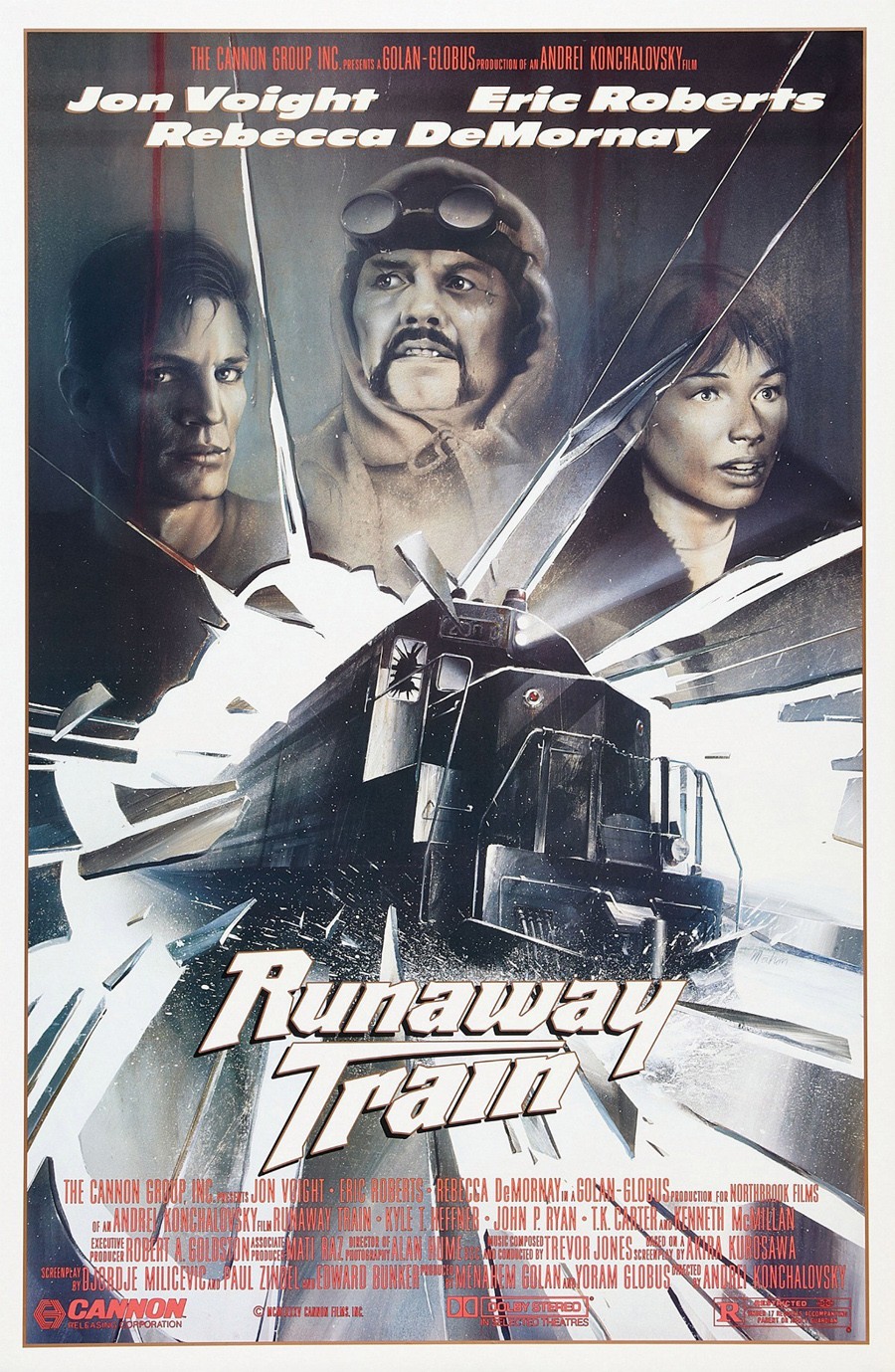
Runaway Train (1985)

runaway

By Richard Winters

My Rating: 8 out of 10

4-Word Review: Trapped on speeding locomotive.

Manny (Jon Voight) is a robber locked away in solitary confinement at a maximum security prison because of his two previous attempts at escape. He plans on making a third try with the help of a younger, more naive prisoner named Buck (Eric Roberts). Their breakout this time proves successful, but they find themselves having to fight the bitter cold and hike along the frozen Alaska landscape. They come upon a rail line and board a train by sneaking onto one of it’s four empty locomotives. However, unbeknownst to them the engineer, (Reid Cruickshanks) suffers a fatal heart attack while starting up the train and causing it to accelerate at high speeds, which is too fast for them to jump off. Later the two meet Sara (Rebecca De Mornay) an employee of the train company and three devise a plan to climb onto the lead engine and press the kill switch, but while this is going on the two fugitives are being pursued by police bounty hunter Rankin (John P. Ryan) who’s determined to board the runaway train via a helicopter and arrest Manny and bring him back to prison.

The story is based on a script by Akira Kurosawa who had read an article written in Life magazine about a runaway train and decided it would make for a good movie and planned to have this be his first American film. The shooting was to take place in the fall/early winter of 1965 with Peter Falk playing Manny and Henry Fonda as Rankin. However, the location, which was upstate New York received some early season snowstorms, which caused many production delays and eventually the financers pulled-out and film ultimately was never made. The project sat dormant for many years until 1982 when the script’s current owner managed to get Russian director Andrei Konchalovsky, at the suggestion of Francis Ford Coppola, interested in reviving it.

The film is for the most part masterfully done and quite suspenseful with kudos going to filming it in Alaska where the snow and ice are real and so vividly captured that you can almost feel the cold permeate through the big screen. Originally it was to be shot in Montana where the prison is, the same one that was also used in Fast Walkingbut the weather conditions proved to be mild and attempts at fake snow weren’t successful, so it was eventually decided to move the production further north.

I did though have some quibbles with the escape sequence, which gets done by having them hide in a cart of laundry, which is awfully predictable and unimaginative and you’d think a maximum prison such as this one would be on the lookout for such a thing making it all seem too easy. Voight having a gadget that could bend bars was equally too convenient. I realize prisoners can be adept at smuggling in many things, but if it’s so simple to get something that can literally bend steel bars then why doesn’t every prisoner use to breakout?

The casting of Voight was in my opinion a mistake, or at least not as effective as another actor in the part. He looks too thin and not threatening at all despite him wearing false teeth, tanning his skin in more of a darker tone, and putting on a fake scar around his eye, but for me this all came-off as highly affected and just didn’t seem gritty enough. While his performance improves as he gets on the train I couldn’t buy-in that this was a real bad ass as the movie wants you to believe and I really wish Voight had listened to his first instinct and not taken the role as he felt it wasn’t he type of character he could play, but eventually changed his mind when Konchalovsky convinced him that great actors play against type. I also didn’t like screenwriter Edward Bunker changing him into a bank robber as in the original script he was a killer, which would’ve made for a far more intriguing character arch as it would then attempt to humanize someone that is perceived as being quite viscous.

The train scenes are quite intense as it takes on a man vs. the elements theme with Roberts, who usually plays sleazy characters, doing quite well as the conscientious person here. De Mornay is fantastic too wearing very little make-up, which makes her look younger and almost teen-like and far more youthful than in Risky Businesswhich is a film she did 2 years before this one. My only complaint is that the character gets introduced in an awkward manner where she just literally ‘pops-in’ without any warning in the middle of it and the film should’ve given the viewer some hint that there was someone else on the train right from the start.

The scenes inside the dispatch office are highly engaging and become almost like comic relief, which for a film that’s as tension filled as this one, is a welcome addition and helps give the viewer a bit of a breather between moments on the train. I loved how oblivious the dispatchers, played by the talented T.K. Carter and Kyle T. Hefner, are initially to the situation and are seen at the start being quite laid-back. Hefner is even in the bathroom when the news hits and the film misses a great opportunity, similar to the one in Catch-22where he would be seen sitting on the toilet as he got updated on the situation. Kenneth McMillan, one of the all-time great character actors, comes-in later to lend advice and he really should’ve been given more screentime and possibly replaced Hefner altogether as he has a way to create amazing energy that his co-stars just didn’t.

Spoiler Alert!

The ending in which Manny goes down with the train, we don’t actually see it crash, but know it’s coming, with Manny raising his arms in the air like he somehow has achieved something I found disappointing. I didn’t care for it back when I first saw it during my college days and had the same response to it this time around. This was in the original script as well and was intentionally done to go against the theme of most American movies were the protagonist must always come out as the perceived winner, but either way it comes-off as all wrong for this time of film. We spend so much time watching him do whatever it takes to survive and going to great risks to accomplish it that to see him ultimately give-in to his inevitable circumstances and simply accept death to come and take him kills all the momentum that had built-up and becomes a letdown for the viewer. I kind of wonder if this is the reason why it didn’t do well at the box office as it only managed to recoup $7 million of its $9 million budget.

My Rating: 8 out of 10

Released: December 6, 1985

Runtime: 1 Hour 51 Minutes

Rated R

Director: Andrei Konchalovsky

Studio: The Cannon Group

Available: DVD, Blu-ray, Pluto TV, Roku, Tubi, YouTube
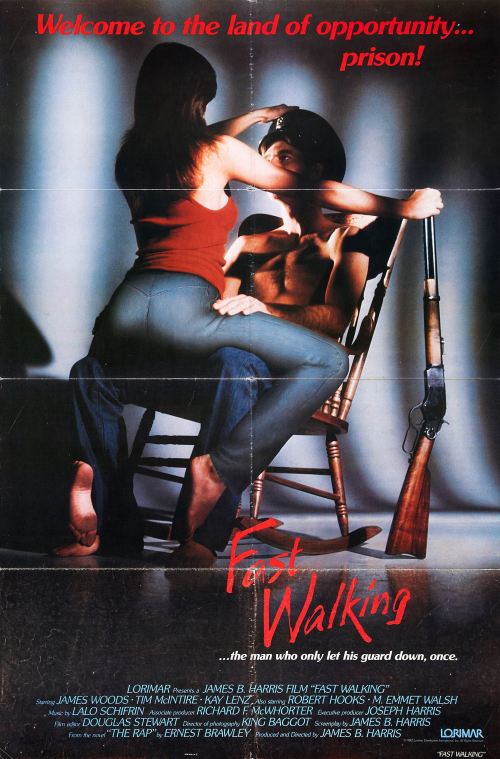
Fast-Walking (1982)

fastwalking

By Richard Winters

My Rating: 7 out of 10

4-Word Review: Guard helps prisoner escape.

Based on the 1974 novel ‘The Rap’ by Ernest Brawley the film centers on prison guard Frank Miniver (James Woods) a pot smoking man who’s unhappy with the low pay of his current job and helps supplement his income by pimping prostitutes to the local Mexican laborers. Wasco (Tim McIntire) is a prisoner at the jailhouse Frank works at who has many outside connections. When a black political prisoner William Galliot (Robert Hooks) arrives at the prison Wasco fashions to have him assassinated by Frank, but Frank has other ideas. He’s already made a deal with Galliot to have him sprung from the inside and in so doing he’ll be given a cool $50,000. Wasco become aware of this other deal, but insists that Frank follow his plan, or he’ll put a hit on Moke (Kay Lenz) an attractive, sharp-shooting lady friend that Frank’s been sleeping with who is also Wasco’s girlfriend. Will Frank choose money over the girl, or will he have a plan-B of his own?

Filmed on-location at the old Montana State Prison building in Deer Lodge, Montana the film has an interesting look to it, which helps accentuate the characters. The American west has always had the allure of escape and individualism, so the rustic landscape here brings out not only Frank’s need to get out of the shackles of his dead-end job, but the prisoners as well. The small town setting has a sort-of renegade vibe where everyone is eager to  push-the-envelope of the law and feeling more than confident that they can get away with it. The guards seem almost as corrupt as the men they incarcerate and in some ways even worse. The entertainment is not seeing good conquer evil, but more with which side will manage to out con the other.

The story takes its sweet time getting told with the entire first hour spent just showing Frank’s on the job frustrations before it even gets to the prison break plan. It works more as vignettes than a plot with one amusing moment taking place in the visiting room with one prisoner named Ted (Sydney Lassick) more fascinated with Moke taking off her panties underneath her skirt than with what his own wife (Helen Page Camp) is saying who sits directly in front of him. The cat-and-mouse game that Frank plays with Moke who each challenge the other with their rifle skills with Frank shooting flat the tire of Moke’s motorcycle from a long distance only to have Moke do the same to Frank’s tire on his jeep while he’s driving it is a lot of fun too.

The acting is excellent and the film’s main driver. Lenz looks great, both with her clothes on and off and this marked her career peak as her roles after this were of the supporting variety, or stymied in obscure, low budget flicks. Tim McIntire is also quite good in his second-to-last feature before his untimely death. He spouts a lot of dialogue, which seems almost like a never ending rant at times, but he conveys it in such a snarky, articulate way that it’s still fun to listen to though I was confused why, being a prisoner himself, he was allowed to sleep in the same room as the guards and even socialize with them out in the open. At first I thought he was a guard since he’s given a lot of their responsibilities including lowering the lever each morning that open up the other cell doors. I could only presume that given the corrupt environment and the fact that he was Frank’s cousin that he was given some under-the-table leverage to get these perks and privileges, but it would’ve helped had it been explained better, or given some backstory.

It’s also interesting seeing M. Emmet Walsh here doing yet another nude scene. He has an aging, out-of-shape body type that you’d think no one on this planet would want to see naked, nor would ask to, and yet in a span of 2-years his bare body figured prominently in two different films. In Straight Time he gets his pants pulled down while chained to a fence overlooking a busy highway, which I thought was edgy enough, but here he again gets shown sans his clothes this time from the front side where you get to see underneath his bulging belly his little wee-wee dangling about as he stands outside the front door and yells at Woods who is pulling away, which makes for an image you may want to forget, but might have problems doing.

As for the action there’s not much of it. Sure there’s a couple of shootings, which are quick, and a few fleeting scenes of prisoners falling to their deaths, but that’s about it. No riots, rapes, knife fights, or prison yard fist-fights all stuff that most viewers have come to expect with these types of movies and thus unless they get into the subtle quirkiness may leave disappointed. The inmates are also strangely docile and respectful of authority and even though they greatly outnumber the guards and at times could easily over power them they don’t, which makes it seem not as gritty as it could’ve been though others may not mind this and instead enjoy the film’s offbeat quality including Lalo Schifrin’s bouncy score.

My Rating: 7 out of 10

Released: October 8, 1982

Runtime: 1 Hour 55 Minutes

Rated R

Director: James B. Harris

Studio: Lorimar Productions

Available: DVD-R (Warner Archive), Amazon Video

The Chair (1988)

chair2

By Richard Winters

My Rating: 3 out of 10

4-Word Review: The prison is haunted.

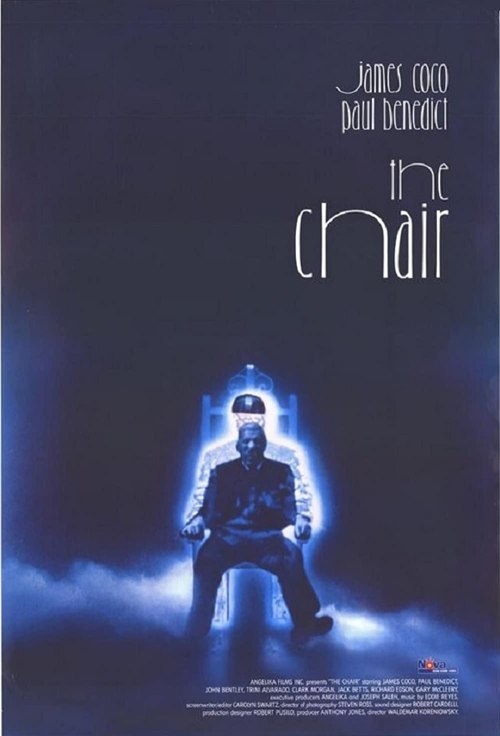
Dr. Langer (James Coco) is a psychiatrist who decides to reopen an abandoned prison with the help of his assistant, the beautiful young Lisa (Trini Alvarado). The problem is that the warden, Ed (Paul Benedict) is plagued by nightmares of a prisoner uprising that he had to deal with many years earlier, that cost the life of his friend Joe who he abandoned when he tried to go for help. While he lay hidden Joe was dragged by the prisoners to an electric chair and killed. Now, years later, the prison has become haunted by Joe’s spirit, but Dr. Langer refuses to believe this until he comes face-to-face with the ghostly presence forcing him to apologize to the prisoners who he had initially disbelieved, but the prisoners are seething from a lack of a working fan, caused by the ghost, and the heat in their cells has become stifling and motivates them to take out their frustrations on the defenseless Langer.

This film, which was directed by a man better known for his work in industrial films, is an odd mix of quirky comedy and surreal horror. The first act works as a soft satire to the new wave of ‘I’m okay, you’re okay’ psychiatry that has its share of mildly amusing moments. James Coco is perfect as a Dr. who seems confident and in-control to his prisoners, but deeply out-of-control when dealing with his personal life. Had the movie centered solely on Coco, a highly talented character actor whose obesity was the only thing that held him back from receiving better roles, it might’ve worked.This though will be turn-off to the regular horror fan who will likely find the broadly comical overtones as the beginning off-putting and even confusing as at times, at least initially, it doesn’t seem like a horror flick at all.

The second-half gets darker and even features a few deaths though it cuts away too quickly, particularly with the scene featuring the guard named Wilson (Mike Starr) who gets electrocuted in gruesome fashion, but no follow-up scenes showing how they removed his mutilated body, or who discovered him. The flashbacks dealing with the uprising don’t happen until 55-minutes in, which is too long of a wait to be introducing something that’s an integral element to the plot. There’s also numerous shots of an image of an eyeball appearing inside a light bulb, which becomes redundant and isn’t scary.

The man who gets electrocuted on the chair, and whose name doesn’t appear in the credits, is seen too little and needed to have a bigger part onscreen. The shift in tone from playful camp to gory effects is jarring and makes the whole thing seem like it was done by amateurs who had no idea what they were doing. It also features a completely impotent ‘hero’, played by Gary McCleery, who gets for some reason trapped in his cell when everyone else is able to escape and thus cannot not stop, or prevent any of the violence that happens, which makes him a completely useless character that had no need being in the story at all. If anything Coco, who’s fun despite the anemic material, should’ve been the protagonist and having him disappear before it’s over was a mistake.

Spoiler Alert!

The ending features Lisa marrying Rick, but this gets explained through a newspaper headline even though movies are a visual medium and thus should’ve been shown. The twist of some real estate developers deciding to turn the place into a senior citizen center, is novel, but having this occur at the beginning would’ve been better, as watching a bunch of old-timers fighting off the ghosts would’ve been far more entertaining than anything else that goes on.

Alternate Title: Hot Seat

My Rating: 3 out of 10

Released: May 13, 1988

Runtime: 1 Hour 40 Minutes

Rated R

Director: Waldemar Korzeniowsky

Studio: Angelika Films

Available: VHS, DVD (Import Reg. 0)

The Domino Principle (1977)

domino

By Richard Winters

My Rating: 6 out of 10

4-Word Review: Hired for secret mission.

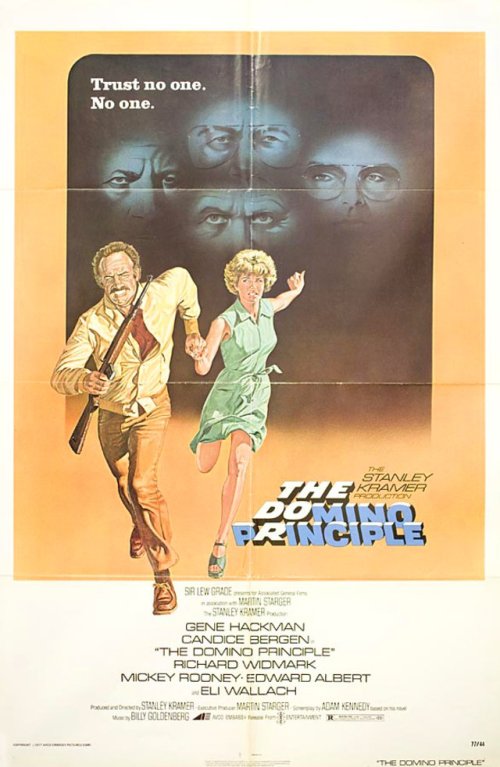
Roy Tucker (Gene Hackman) is in prison for the murder of his wife’s first husband, but gets approached by Tagge (Richard Widmark), who works for a secret organization and who offers to get both Roy and his cellmate Spiventa (Mickey Rooney) out of jail where they can have their freedom again, but with one hitch; he must carry out a mysterious mission that they themselves don’t yet know the details to yet. Roy is suspicious of the group’s intent, but longs to see his wife Ellie (Candace Bergen), so he agrees to go along with it. After getting out of prison through an elaborate escape plan that the secret group hatches Roy is then able to travel to Costa Rica using a passport that the group made for him. It is there that he spends a relaxing week with Ellie, but then Tagge and his men (Eli Wallach, Edward Albert) return and remind him of his commitment, which turns out to being the assassination of an important political figure. Once Roy realizes this he tries to back out, but soon realizes that he jeopardizes the life of his wife, who the group insists they will kidnap an kill, if he does.

The film is based on the novel of the same name written by Adam Kennedy, who also wrote the screenplay and at one time was an actor before eventually turning to writing. While the novel got great reviews the movie didn’t with many critics panning it including Leonard Maltin, who described it as a ‘muddled thriller’. Both Hackman and Bergen, in later interviews, have called it ‘terrible’ and even director Stanley Kramer wrote in his memoirs that he’d like to disown it. Much of the problem could be blamed on the different runtimes with a heavily edited 88-minute cut being completely confusing, but this version that I saw, which ran a full 101 minutes, I found to be captivating, at least through the first 90-minutes.

The real problem I had stemmed around Hackman, who gives a one-dimensional performance. There is one moment where he assaults the Edward Albert character after he refuses to let him see his wife, which I felt was justified and entertaining to watch, but he remains surly too much of the time and it would’ve been nice to have seen some other emotions seep through, if even for a few random moments. Bergin is totally miscast as the middle-aged wife and even wears a brunette wig in an effort to make herself seem older. She stated in interviews that she took the part so she could play an ‘ordinary person for once’ instead of a beautiful, glamourous person like she usually did, but I didn’t understand why she was even offered the role as there were plenty of actresses more Hackman’s age that would’ve been a better fit.

Spoiler Alert!

While I did enjoy the movie for the most part especially its scenic location shooting including one scene that takes place directly underneath the Golden Gate Bridge I did find the twist ending to be extremely dumb. This includes having Roy deciding not to shoot the intended victim by intentionally aiming his shots short in order to miss his human target only to find that his former cellmate Spiventa was also hired for the same mission, but without Roy knowing, and he kills the person while shooting at him from a different angle. The problem is that the viewer thinks Spiventa is already dead as we see him get shot by the mysterious group while underneath the bridge. Why Spiventa would fake his own death, or not tell Roy that he was in on the plan since the two had been quite close, is ever explained. It also doesn’t make sense why Roy would decide at the last second to pull back his shots and not kill the person he was assigned to assassinate. Sure, for moral reasons he probably felt bad about it, but he knew that his wife would be killed if he didn’t follow through, so how he was expecting to save the life of his target while also somehow keeping his wife alive after the group finds out Roy didn’t do what he was supposed to?

The final shot shows Roy, with gun in hand, walking along a beach, apparently intent on hunting down whoever was the behind-the-scenes man from the group who was giving out all the orders, which we the viewer never see. Keeping some elements of the organization a mystery is fine, but what annoyed me is that we see a rifle pointed right at Roy as he walks the beach, but then the film ends without us ever knowing if Roy got shot first, or if he survived to kill the head of the group. Some sort of resolution in this area should’ve been shown and leaving it so wide-open is not intriguing and instead quite frustrating.

My Rating: 6 out of 10

Released: March 23, 1977

Runtime: 1 Hour 41 Minutes

Rated R

Director: Stanley Kramer

Studio: AVCO Embassy Pictures

Available: DVD, Amazon Video, Shout Factory TV, Tubi, YouTube

Hoodwink (1981)

hoodwink4

By Richard Winters

My Rating: 5 out of 10

4-Word Review: Pretending to be blind.

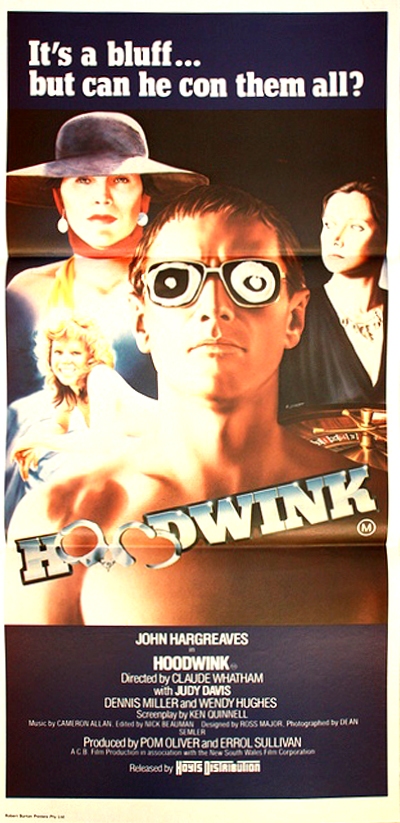
Martin (John Hargreaves) is in jail for bank robbery and with very little chance for escape he comes up with the idea of pretending to be blind, which he hopes will gain sympathy from the court and ultimately a lighter sentence. The con eventually pays off as he’s transferred to a minimum security prison with only a 3-year sentence to serve even though the Dr.’s who examine him are unable to determine if he’s faking or not and the guards within the prison believe he’s making it up and routinely set traps for him to fall into hoping it will will expose the lie. Things though get complicated when Sarah (Judy Davis), a minister’s wife, takes a liking to him, which allows him to leave the prison grounds during the day, so that he can, under her tutelage, learn to become self-sufficient with his handicap so that he’ll be prepared to live on his own in the real-world once he’s formally released. The two though fall-in-love causing her jealous husband (Dennis Miller) to threaten to come forward with Martin’s charade, which could put him in terrible jeopardy.

To some extent it’s hard to believe this could’ve happened, but it’s all based on the true story of Carl Synnerdahl, who was able to fool everyone that he couldn’t see for over 18 months while inside the Australian penal system and it allowed him, like with Martin, to be given special privileges that he wouldn’t have gotten otherwise. What perplexed me though was that testing someone’s so-called blindness should’ve been easy as you could act like you’re going to poke you’re finger into his eye real quickly and if he’d blink, or recoil his head, then you’d know he was able to see it and was a faker, and yet no one in this movie thinks to do that.

If you’re able to get past this issue, then it’s a fun movie most of the way. I liked the scenes shot at Bathurst Jail, the same prison that Synnderdahl was in, that has a very old-time jailhouse look and quality. I also enjoyed the sumptuous, sprawling countryside view from Sarah’s living room window that could beat or rival any one else’s. That acting is great too with Hargreaves able to create, despite all of his shenanigans, a sympathetic character. Davis though is the scene-stealer, she won the Australian Film Institute Award for Best Supporting Actress, as the sexually repressed wife who’s in constant flux about whether she wants to leave her situation, or stay faithful.

The drama though becomes less compelling when Martin almost immediately admits his ruse to Sarah, who then goes forward with it to her husband even though I thought him trying to pretend he was still blind with them in their house could’ve created some interesting dynamics that unfortunately never get played-out. The affair and her husband’s jealous rage is toned down instead of ramped-up causing the third act, which should’ve had a lot of fireworks, to fizzle. The couple had vast potential to being key players, but instead get treated more like ornaments that don’t throw as much of a monkey wrench into the proceedings as they should’ve, or that you’re expecting.

Spoiler Alert!

The conclusion, which is far different than what occurred in the real-life incident, has Martin stealing a car and escaping, but this leaves too many questions unanswered. Will he eventually get caught, which is most likely, and what happens to him then when the prison system finds out that they had been duped? These issues should’ve been examined and leaving it wide-open isn’t satisfying and I suspect the reason that lead to it doing poorly at the box office.

My Rating: 5 out of 10

Released: November 5, 1981

Runtime: 1 Hour 29 Minutes

Not Rated

Director: Claude Whatham

Studio: New South Wales Film Corporation

Available: DVD (Import Region 2)

Stir (1980)

By Richard Winters

My Rating: 8 out of 10

4-Word Review: Prisoners stage an uprising.

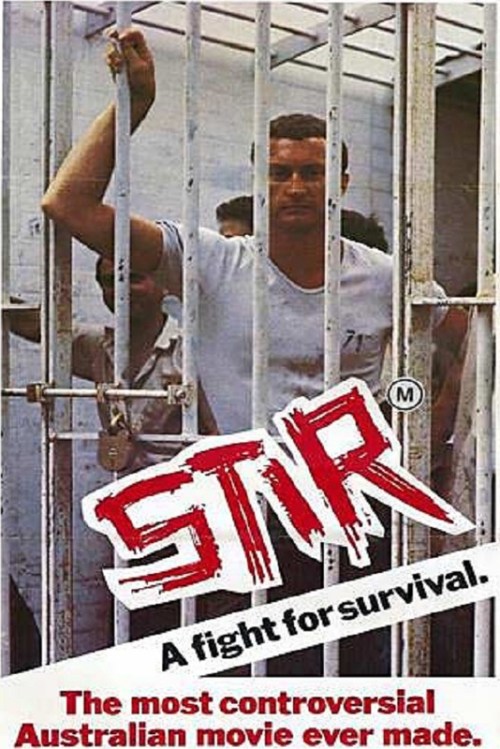
China Jackson (Bryan Brown) was a part of an earlier prisoner revolt and when he was released he became a media advocate informing the public about the rotten conditions of the South Australian prison system and the abusive tactics of those running it. When China returns to prison after committing another crime while on parole the guards make sure that life for him on the inside is made as miserable as possible to get back at him for what he said. Yet as stirrings inside the jailhouse begin to grow and fears of a violent uprising manifest, the guards begin working with China in an attempt to quell it, but even his efforts to calm things backfire leading to a massive revolt.

The screenplay was written by Bob Jewson, which as the epilogue states, was a prisoner inside the Bathurst Jailhouse in February, 1974 where rioting lead to the place being almost entirely destroyed. The story here touches on many of the elements that Jewson faced while incarcerated and several of the supporting cast members in this film were actual prisoners during that riot.

The film has an impressively gritty feel that far exceeds most other prison flicks. Similar to Fortune and Men’s Eyes the camera gets situated inside the cell instead of being placed outside of it and then looking in. The result gives the viewer the feeling of being locked into the cramped, dingy cell alongside the  prisoners leading to a claustrophobic and uneasy feeling, which lasts for the entire duration of the movie. When the guards burst into it for no apparent reason and begin riffling through the prisoners things and pushing them up against the wall you sense their tension and can relate to the ongoing stress that they must live with.

I also loved how when the riots break out the camera takes a point-of-view perspective by running along with the prisoners has they tear the place apart making you think that you’re one of them. Later, when the guards reclaim control, the camera again takes the point-of-view perspective this time making you feel like you’re being marched through the gauntlet as they take turns beating each prisoner with their rubber batons, which literally made me wince as I could imagine the same type of pain that they were going through.

The casting of Bryan Brown I initially didn’t like. He’s a good actor, but too well known of a face, even for back then, so it was hard for me to detach who he was from some of the other parts he has played though his increasingly intense performance does help. I did like that one of his front teeth appears decayed here and they left it that way for filming, which enhances the gritty quality versus doing the Hollywood treatment and having it capped. I did though have a problem with him getting shot in the back of his shoulder, but he continues to be able to move his arm easily without any apparent pain, which I surmised would’ve been doubtful.

Spoiler Alert!

While the film does have its slow, talky moments I did appreciate how we see things from both the prisoner’s and guard’s perspectives. Most other prison flicks like to paint the guards as being all bad, but here we’re made to understand their fear and how not all of them were on the same-page and at times even openly at odds with each other. The third act is where the violence explodes and it’s effective, but what I found most disturbing was the aftermath where the prisoners get rounded up and put into pens that were even smaller than the cells the they came from looking almost like animals herded into a cage and making their protest and anger, some of which was quite justified, seem futile and pointless as things just went right back to the way they were before.

My Rating: 8 out of 10

Released: August 31, 1980

Runtime: 1 Hour 36 Minutes

Director: Stephen Wallace

Studio: New South Wales Film Corporation

Available: None at this time.

Vigilante (1982)

By Richard Winters

My Rating: 2 out of 10

4-Word Review: Father dispenses street justice.

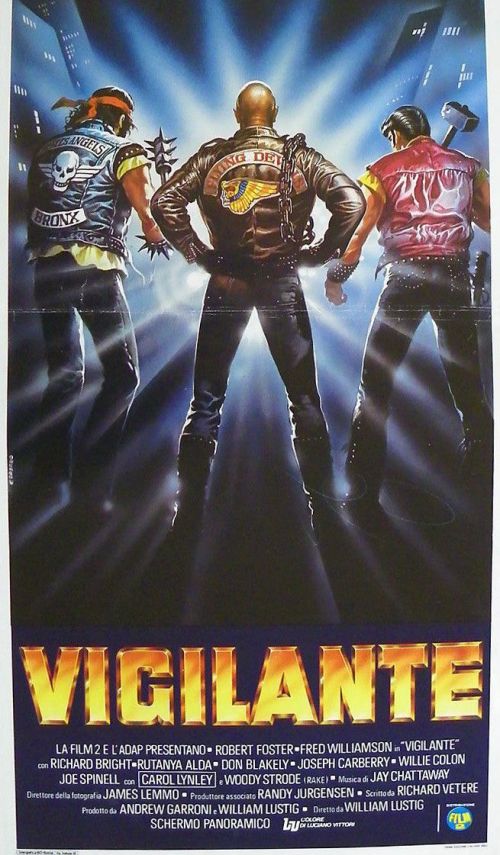
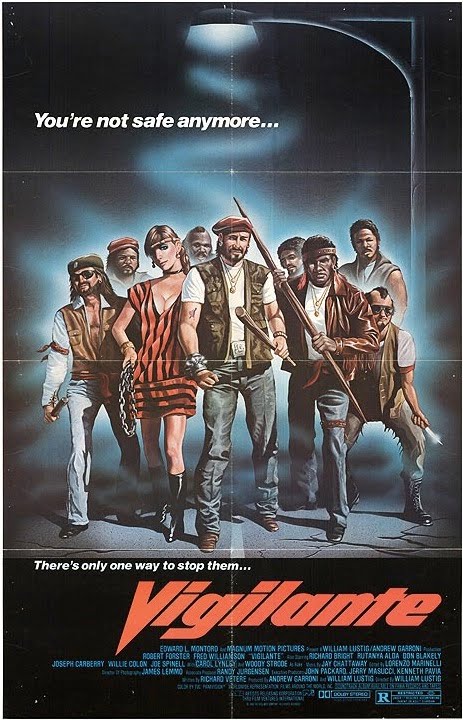
Eddie (Robert Forster) is a factory worker living in a tough neighborhood of New York who comes home one day to find his wife (Rutanya Alda) beaten and his infant son murdered. Initially he trusts the system will bring the culprits to justice, but then realizes to his horror that the judge (Vincent Beck) is corrupt and with a payout that he receives from the defense attorney (Joe Spinell) he lets the head of the gang (Willie Colon) off with a probation sentence.  Eddie becomes outraged and seeks the help of a neighborhood vigilante group headed by Nick (Fred Williamnson) to set things right.

The film is an obvious rip-off of  Death Wish  that is so uninspired that I’m surprised that the producers of that film didn’t sue the filmmakers of this one for plagarism. Both the good guys and the bad ones are such extreme caricatures that it becomes unintentional camp while the tone has an ‘everything is terrible’ approach that makes it seem like the entire planet has become one big crime-ridden urban hellhole.

The script is full of loopholes like the fact that Alda initially confronts the gang at a gas station and yet when she gets home she finds that the gang is waiting outside in their car, but it’s never explained how they knew where she lived. If they followed her then that needs to be shown and it isn’t. When she calls the police asking them to send over a squad car she neglects to give them her address even though this was long before caller ID and without the address they wouldn’t know where to go.

Although I’ll give him credit for appearing nude while trying to fight off guys who were bigger than him and fully clothed while in the prison’s shower I still felt overall Forster’s performance, who gets billed on the film’s promotional poster as Robert FOSTER, is quite poor. Most of this is due to the script, but I still found it disappointing. Usually he displays a feisty, gutsy tough guy that I enjoy, but here he comes off as transparent and when he finds out his kid has been murdered he shows barely no emotion at all. Williamson conveys a far better edge and he should’ve been made the star while Forster’s character could’ve been scrapped completely.

Carol Lynley, as the District Attorney, is barely seen at all in a thankless bit that lasts less than five minutes, which is a shame as this was the last film that she was in where she still retained her youthful appeal as her film appearances after this she displayed a much more middle-aged appearance. Spinell, who had starred in Maniac just a year before that was done by the same director, is also wasted in a part that is much too brief. Woody Strode appears here as one of the prisoners, but he was clearly aging by this point and nearing 70 at the time make the part where he beats up two younger guys who are much bigger than him look ludicrous.

Spoiler Alert!

The films ends with a nifty car chase, which is probably the best moment in the film even though there’s loopholes here as well like having Forster crash into a patrol car, but he’s able to back away and keep going, but for some reason the patrol car doesn’t continue to give chase. If it was disabled in the crash then it needs to show this and it doesn’t. Forster also plants a bomb in the corrupt judge’s car, but nothing is shown earlier revealing that Forster had the ability to build one, so how did he figure out how to make it? It’s also highly unlikely that a judge, knowing that he was corrupt and people would mostly likely be after him, would pick-up a strange looking red object that he sees on his car and stupidly press a button on it. The bomb, before it explodes, also features a recording of him handing down the light sentence to the gang leader, but how was this recorded because during the courtroom scene no recording device was shown?

End of Spoiler Alert!

William Lustig, who initially started out as a director of porn films under the pseudonym Billy Bagg, showed great promise with Maniacbut here the effort is sloppy with little imagination given to the already stale premise. Everything, even the grisly violence comes off as mechanical and derivative.

My Rating: 2 out of 10

Released: July 23, 1982

Runtime: 1 Hour 30 Minutes

Rated R

Director: William Lustig

Studio: Artists Releasing

Available: DVD, Blu-ray, Amazon Video, YouTube

Jackson County Jail (1975)

By Richard Winters

My Rating: 5 out of 10

4-Word Review: Deputy rapes his prisoner.

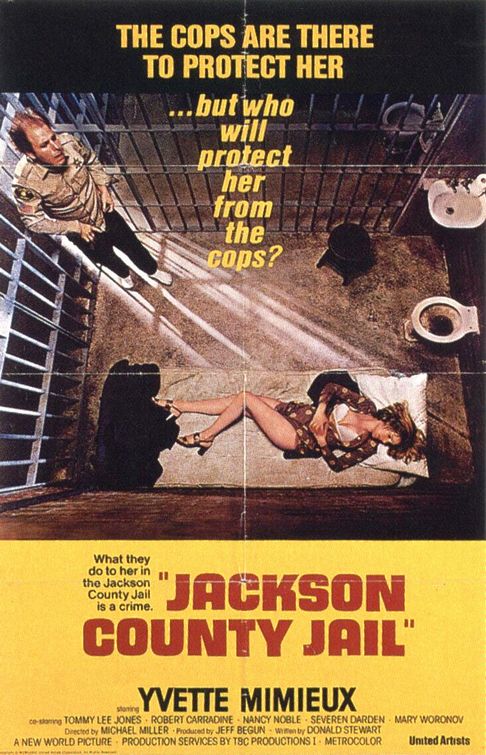
Nothing seems to be going right in Dinah’s (Yvette Mimieux) life. She quits her job as an advertising executive only to come home to find that her husband (Howard Hesseman) has been cheating on her. She decides to travel across the country and back to her old digs in New York. Along the way she picks up two hitch-hikers (Robert Carradine, Nancy Lee Noble) who end up robbing her at gunpoint and driving off with her car and money. When she walks to the nearest town she finds that no one is willing to help her since, without any identification, she can’t prove who she is. The sheriff (Severn Darden) throws her in jail temporarily until her identity can be confirmed. While there she gets raped by one of the deputies (Fredric Cook) and then goes on the run with Coley (Tommy Lee Jones)  a small-time crook and drifter.

This is yet another Roger Corman produced cheapie made to capitalize on the exploitative low budget drive-in fervor that was so popular during the early to mid 70’s. This one fares better than most as it manages to retain its gritty tone throughout without ever resorting to campiness. The car chase doesn’t have any of the cartoonish or humorous stunts as most others did during that time period, but instead like in Cannonball! shows more of the potential ugly side to them by having several of the vehicles crash and blow-up in flames and killing those that were inside them, which helps accentuate the realism.

The police aren’t quite as inept either although I did find it curious that the cops in the helicopter once they found where Mimieux and Jones’s hideout was didn’t continue to chase the two via the air as they tried to escape down the road in their pick-up. The part where the cop shoots at Jones who collides on foot into a marching band is absurd too as no policeman with half-a-brain would fire into an open crowd as it’s too dangerous and would almost assure innocent victims getting hit.

Mimieux is adequate and the funky 70’s style compact car she drives in with its roundish flying saucer body and oversized steering wheel is a laughable relic. However, for someone whose lived in L.A. she didn’t seem savvy especially when she decides to pick-up two hitch-hikers, which is just asking for trouble, or naively unaware that the obviously drunken, leering cafe owner (Britt Leach) is only being ‘helpful’ so he can have a chance to pounce on her.

Jones is excellent in support, but I found it odd that despite being considered a ‘good guy’ he makes no effort to stop her rape, which he witnesses by being in the adjoining cell, but then when she kills the rapist by beating him over the head with a stool he reaches through the bars and stops her.

The film’s most interesting performance is Fredric Cook’s who plays the rapist. His film career never really took off and he spent most of his life working as an acting teacher, but here in his film debut he really shines. I liked the way his character starts out as a redneck dope who seems put in for comic relief and then quietly becomes menacing as he serves Mimieux her food, explodes into a sudden massive rage, and then after the act is committed becomes guilt ridden and even ashamed, which creates a very interesting portal into the mindset of most male attackers.

The second half unfortunately slows up creating boring segments when the pace and tension should instead be revved up. The wide-open ending offers no conclusion to Mimieux’s ultimate fate and the film’s message is vague and transparent.

My Rating: 5 out of 10

Released: April 2, 1976

Runtime: 1 Hour 24 Minutes

Rated R

Director: Michael Miller

Studio: New World Pictures

Available: DVD, Amazon Video

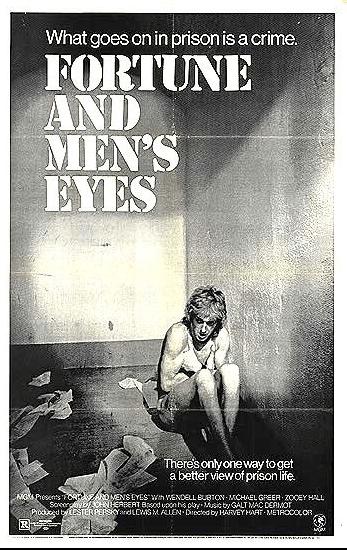
Fortune and Men’s Eyes (1971)

By Richard Winters

My Rating: 6 out of 10

4-Word Review: His life in prison.

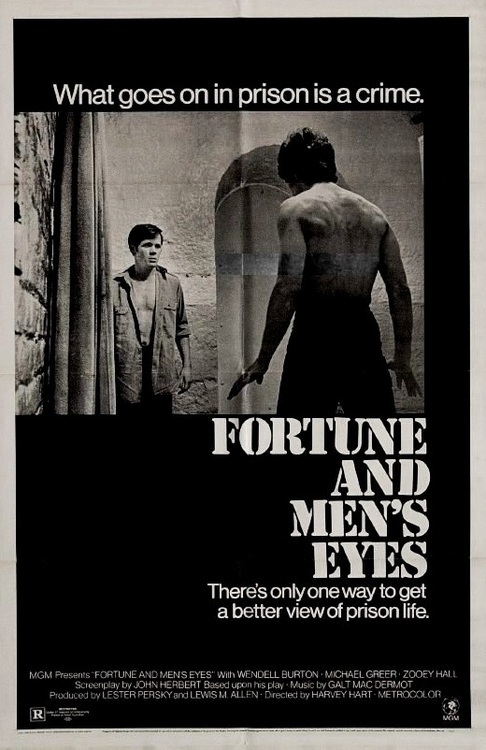
Smitty (Wendell Burton) is a young first-time offender who’s sent away to the Canadian penitentiary for six months. He gets assigned to a cell with three other men: Rocky (Zooey Hall), Mona (Danny Freedman), and Queenie (Michael Greer). Queenie is an openly gay drag queen while Mona is a soft-spoken young man who likes to write poetry. Rocky is the tough guy who offers Smitty ‘protection’ if Smitty agrees to become his subordinate and do anything he asks including sexual favors. To avoid the harassment that he sees others getting that don’t have the same ‘protection’ he agrees, but eventually he grows tired of Rocky’s dominance and decides to challenge it.

The film is based on  a play written by John Herbert who also wrote the screenplay. It is based on actual experiences that he received when he was arrested for dressing in drag in 1947 and taken to a reformatory at the age of 20. The play, which was written in 1967 initially had a hard time getting produced due to the subject matter, but was eventually put on the stage by Sal Mineo who directed and also played Rocky while Don Johnson played Smitty and Greer, like in the film, played Queenie.

The film version though makes many changes to the story some of which I’m not sure I liked. The one thing though that I thought was excellent is that it was shot inside an actual prison, which helps add authenticity. As opposed to most movies which shoots things from outside the cell looking in this one captures everything from inside the cell, which makes the viewer feel like they’re locked in the jail with the rest of the men and gives one a true feeling of the claustrophobic prison experience.

The shock element may not be as strong as it once was. The scene where Rocky rapes Smitty in the shower as the camera fixates on the running faucets and we hear only Smitty’s cries may be a bit too stylized and even kind of hokey by today’s standards. The segment though where Mona is grabbed from behind by a brute and taken into a dingy cell where he’s gang raped while the guards look away was to me far more potent. A later scene dealing with a prisoner being taken to a back room and beaten by the guards could’ve been stronger had it been extended.

For me personally the most shocking element is seeing Smitty’s transformation from naive man who we the viewer can mostly relate too, to someone who becomes almost as bad as Rocky. However, I found it annoying that it’s never made clear what he did that got him into prison in the first place and his character arch would’ve been stronger had the film started with him in the outside world committing the crime and subsequently getting arrested.

Burton’s acting abilities don’t seem quite on par with the demands of the role. His blank-eyed stare and monotone delivery make him seem like a one-dimensional actor and he was most likely given the role simply because of his babyface. Greer though in many ways steals it as the flamboyant drag queen and the outrageous performance that he puts on during the Christmas show at the prison is quite memorable.

Spoiler Alert!

The film remains compelling, but is hampered visually by being done almost entirely in one setting. The ending though leaves open too many questions. Does Smitty ever get out? How does he behave once he does and how has his experiences in prison changed him? None of these things get answered, which to me made the film incomplete and despite some good dramatic efforts here and there unsatisfying.

My Rating: 6 out of 10

Released: June 15, 1971

Runtime: 1 Hour 42 Minutes

Rated R

Director: Harvey Hart, Jules Schwerin (uncredited)

Studio: MGM

Available: VHS

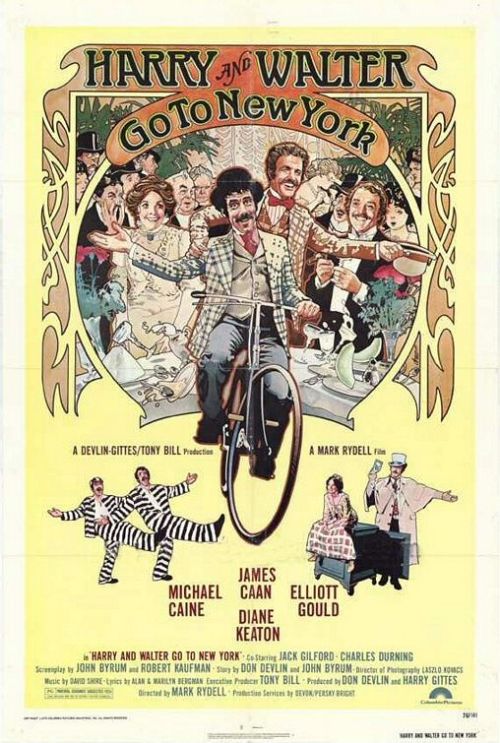
Harry and Walter Go to New York (1976)

By Richard Winters

My Rating: 7 out of 10

4-Word Review: Two vaudevillians rob bank.

Harry and Walter (James Caan, Elliot Gould) are two down-on-their-luck marginally talented comedians living in the 1920’s who go to jail when they’re caught trying to rob their audience members during a tacky onstage ‘psychic’ stunt that goes horribly wrong. While in the slammer they meet up with Adam Worth (Michael Caine) a rich man from society’s upper crust who enjoys robbing banks just for the thrill of it. They come upon the blue print for his next proposed heist and take a picture of it and then after they escape from jail challenge Adam on who will be able to rob the bank first.

This is one of those 70’s movies that I found to be refreshingly original and quite funny, but when it was released it was met with harsh reviews and was a bomb at the box office. After some bad test audience reactions it was heavily cut much to director Mark Rydell’s dismay who felt a lot of the better jokes went missing although producer Tony Bill and star Caan blame Rydell for the film’s failure and insist that much of the humor in the original script was never even filmed or used.

I can’t explain why the film didn’t do well as I personally found as bank heist movies go this one to be quite  unique. So many bank robbing films from that era, and even today, paint the scheme in a one-dimensional way by portraying the robbers, who we are usually supposed to sympathize with, as a modern-day Robin Hood, while the cops and those out to stop them are represented as being the greedy,oppressive establishment, but this film takes things a step further, which is what I found interesting. The competition aspect gives it an extra.,likable edge and really made me want to root for Harry and Walter and their gang of losers who take on the arrogant Caine and his snotty buddies. Instead of the viewer just being intrigued at how they’re able to pull of the robbery as is the case with most heist films we are much more emotionally invested with its outcome.

Caan and Gould are what Warren Beatty and Dustin Hoffman should’ve been in Ishtar. These guys are definite losers, but still appealing and comical at the same time. Caan has never been known for his comedy and he has referred to this movie as ‘Harry and Walter Go to the Toilet’, which is a shame because he shows nice energy here and is able to keep Gould in check by not allowing him to drone on and steal the spotlight as he can sometimes do when left alone or with a less capable co-star.

If the film fails at all it’s by entering in too many supporting players. The title mentions only Harry and Walter and they should’ve pulled off the heist alone with maybe only Keaton tagging along for balance. As it is though a whole massive group gets in on it to the point that the two leads have little to do. While the group is busily trying to figure out how to open the safe Harry and Walter are on stage trying to extend a stage play  The film still works pretty well despite this issue, but technically the two men should be at the center of the action and in a lot of ways they really aren’t and in fact become almost like supporting players by the end.

The film also goes on too long with the denouncement being far more extended than it should, but it’s still a fun, breezy watch that reflects the gilded age flavor well and uses leftover sets from Hello Dolly to enhance the scenery perfectly.

My Rating: 7 out of 10

Released: June 17, 1976

Runtime: 1 Hour 55 Minutes

Rated PG

Director: Mark Rydell

Studio: Columbia Pictures

Available: DVD, Blu-ray, Amazon Video