Category Archives: Police Drama

Strange Shadows in an Empty Room (1976)

strange

By Richard Winters

My Rating: 4 out of 10

4-Word Review: Cop’s sister dies mysteriously.

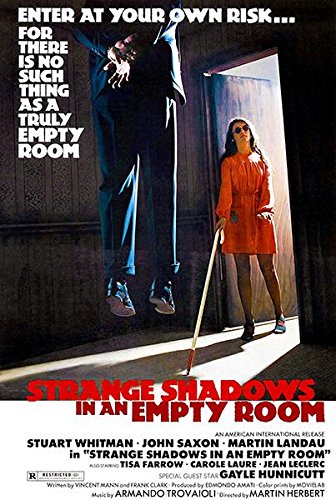
Tony (Stuart Whitman) is a tough-as-nails veteran cop who gets the shocking news that his younger sister Louise (Carole Laure) is found dead at a party she had attended. Initially he presumes it’s George (Martin Landau) a middle-aged doctor whom she’d been having an affair with and who gave her a injection at the party, but later he realizes there might be more to the story than he thought and begins investigating other avenues that leads him to a wild and completely unexpected conclusion.

The film was directed by Alberto De Martino who had done other Italian produced films that were rip-offs of better known Hollywood hits with this one clearly being inspired by Dirty Harry. It was filmed in Montreal and Ottawa, Canada, but done by an Italian film crew making it seem more like an overseas production with very little Canadian elements to it. Overall the quality looks cheap and the story has a lot of twists that don’t make a lot of sense, or are believable.

Two that stood out right away to me is during the party scene where Louise fakes illness simply to get George’s attention to make him come over there and away from his wife. Then when he tries to help her she lets him know it was all a gag. A few minutes later she passes out for real and he responds in a worried way, but you’d think since he got taken advantaged of just moments earlier he’d presume this was just another prank and not take it seriously. Also, at her funeral Tony begins to suspect there’s more to her death than what is known and requests an autopsy be done, but an autopsy is standard procedure that should be done after any unexplained death, especially since the victim was so young, and thus seems absurd that he should have to request it only as her body is already in the casket and ready to be buried.

Whitman, who was nearing 50, looks too old for this kind of thing and it’s hard to imagine he would, in reality, be able to physically keep up with these much younger suspects who force him to chase them around in airports, along crowded city sidewalks, and even in hospitals. He’s not the most ethical guy either as he has no problem drowning one of the men he’s questioning in a sink of water as a method of interrogation, which should normally get an officer in trouble. There’s also no glimpses of his personal life, so we never learn anything about him, or see any other dimension except for his rough cop persona. Most other cop movies, or at least the good ones, do have a few scenes dealing with the policeman’s private side, but here there’s none, which makes the character flat and uninteresting. Having the victim be his sister didn’t make too much sense since she was clearly quite a bit younger than him and making her his daughter would’ve been more believable and more devastating when he has to come to terms with her darker side.

The supporting characters are, just like with Whitman’s, poorly fleshed-out. It’s hard to be intrigued who the suspects are when they all seem alike and say and do nothing that’s interesting. The film does have one long car chase, which has some impressive stunts, but it seemed unnecessary as the man driving away from the cops really didn’t have much to hide and is essentially not interrogated once Whitman catches up to him, and he offers only a little piece to the puzzle, so why tear up the city streets and completely destroy two cars if he’s not in dire trouble? Better to have saved this for the finale with the bad guy who really is the culprit than just some minor player who isn’t seen, or heard of again.

I did enjoy the foot chase through the hospital that comes at the end and even goes through a maternity ward and ultimately onto the roof of the place. The story does feature many twists and I did appreciate the way it shows how policeman can make the wrong guesses on who they think is guilty and go on many long tangents that don’t lead anywhere before they realize their mistake. However, more effort should’ve been made to create unique characters as the ones provided here are wooden and banal.

Alternate Title: Blazing Magnum

My Rating: 4 out of 10

Released: March 9, 1976

Runtime: 1 Hour 39 Minutes

Rated R

Director: Alberto De Martino

Studio: Fida

Available: DVD, Blu-ray, Amazon Video, YouTube
Night Game (1989)

nightgame1

By Richard Winters

My Rating: 4 out of 10

4-Word Review: Baseball score and murder.

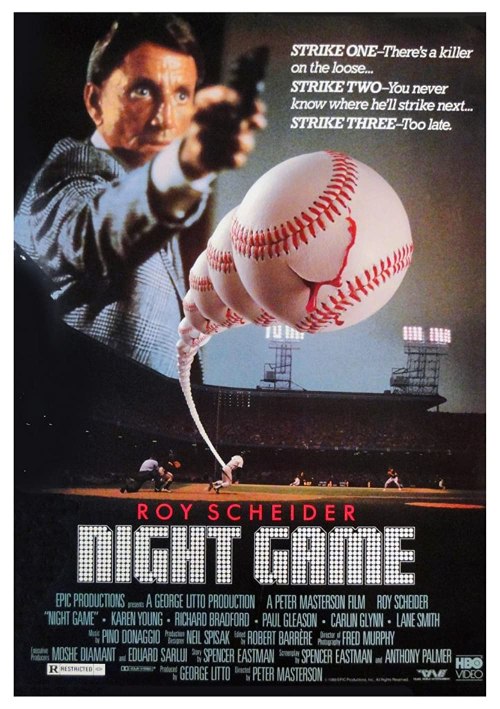
Mike Seaver (Roy Scheider), a police detective, is put in charge of investigating a series of bizarre murders where women, some of them prostitutes, are murdered along the beaches of Galveston, Texas after each Houston Astros home game where pitcher Silvio Baretto achieves a victory. There are initially no suspects and it all seems to be a coincidence until Seaver ties the clues together and hones in on the killer while quarreling with Witty (Lane Smith) a state investigator brought in to help him with the case, but who has opposing ideas as to how to approach it.

The story is a strange mixture wanting to feed-off of the slasher films of the 80’s while also tying it to a sports themed flick, that was also popular during that decade, but manages to fail on both ends. The killings aren’t imaginative enough to attract a horror audience while the gore is much too graphic for those just looking for a slick thriller and thus both types of viewers will get put-off with this pretty quickly. Fans of sports movies won’t like it either as the baseballs scenes are brief and fleeting. While it’s kind of fun to see the Astros old color bar uniforms as well as watching actual game footage shot inside the old Astrodome, which at one time was coined ‘the 8th wonder of the world’ it hardly seems necessary especially since a TV-movie ‘Murder at the World Series’, which came out in 1977, had a very similar storyline that also included the Astros and Astrodome making this seem like a cheap, uninspired rip-off of that one.

The plot at least, while still dated especially on the technology end, takes a realistic approach to being a detective and how hard it is to find clues that can help piece the case together and lead to an actual suspect. Scheider, who was 57 at the time and looking it, manages to give it some energy and this was helped no less than by casting Richard Bradford as his nervous and pensive superior whose white hair and old school ways helps to offset Scheider’s wrinkles despite the fact that Scheider was in real-life 2 years older. The side stories though dealing with Smith coming in to butt heads with Roy doesn’t get played-up enough to be interesting and Scheider squabbling with his mother-in-law over a color TV that he got her drags the pacing down and hurts the tension of the mystery, which is where the sole focus of the script should’ve stayed.

Spoiler Alert!

What really ruins it though is the stupid ending. For one thing people in big cities, and Houston is the 4th largest one in the US, get murdered all the time, so having a cop able to somehow tie it to when a pitcher wins a game was too much of a stretch as technically there’s likely to be a murder happening somewhere whenever ANY pitcher wins a game and there needed to be more direct clues, like the killer sending cryptic notes to the police, or media, stating what his intentions were for it to realistically come together for the investigators.

The man playing the murderer, Rex Linn, who is supposedly a former pitcher who got cut from the team and then ultimately loses his hand in an accident and has it replaced with a hook, looks more like an disheveled, beer bellied truck driver who never played a sports game in his life. His motivations, to kill someone whenever the pitcher, who replaced him on the rotation, wins a game, in order to steal media attention away from the new pitcher’s success, is poorly thought out. It would’ve made more sense had the disgruntled man gone after the pitcher directly by either threatening his life, or those of his family, or maybe even attempting to kill the general manager, or owner, since they were the ones directly responsible for cutting him instead of no-name hookers who usually don’t get a lot of news attention anyways when they’re killed and thus making the whole premise pretty vapid.

My Rating: 4 out of 10

Released: September 15, 1989

Runtime: 1 Hour 35 Minutes

Rated R

Director: Peter Masterson

Studio: Epic Productions

Available: DVD, Blu-ray, Amazon Video, Tubi

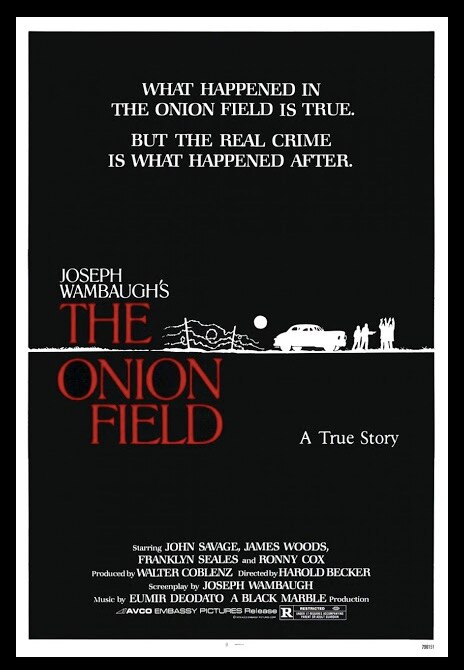
The Onion Field (1979)

onion2

By Richard Winters

My Rating: 7 out of 10

4-Word Review: Guilt over partner’s death.

Los Angeles police detectives Ian Campbell (Ted Danson) and Karl Hettinger (John Savage) are on-duty driving around in an unmarked police car when they spot two men, Gregory Powell (James Woods) and Jimmy Smith (Franklyn Seales), driving suspiciously, so they pull them over. While Campbell is talking to Powell, Powell is able to pull out a gun he had hidden in his trousers forcing Campbell to drop his weapon. Hettinger is then told to give up his weapon as well, which he does, or risk seeing his partner get shot. The two cops are then taken at gunpoint to an remote onion field where in the darkness of night Campbell is shot and killed, but Hettinger escapes and manages to run 4 miles until he finds someone and gets help. While the two criminals are eventually apprehended and found guilty it is Hettinger that suffers the most from the guilt of surviving when his friend and partner didn’t and from the humiliation of being the subject of a police video detailing what not to do when stopping a vehicle, which leads him to a severe mental breakdown in both his personal and professional life.

The story is based on the actual incident that occurred on March 9, 1963 with the traffic stop happening on the corner of Carlos Avenue and Gower Street in Hollywood and the murder happening off of Interstate 5 near Bakersfield. It was written into a novel by former cop turned author Joseph Wambaugh in 1973. I remember reading it when I was 14 and finding it captivating from beginning to end. While the film stays faithful to it I still felt it wasn’t as effective and in a lot of ways not as gripping. Even though it was a long time ago I remember the part about Powell’s ‘disguise’ where the only thing he changed about his features was putting a distinctive mole on his left ear lobe, which sounded completely absurd. This is discussed in the movie, which gets a subtle eye roll from Smith his partner, but the irony is, which is talked about in the book and not the film, is that the witnesses from the robbery that Powell was in described the mole to the police and this litrerally threw the detectives off for awhile as they kept searching for a man with a distinctive mole that Powell had since removed, so as silly as it sounded, his idea had actually worked, but the movie never gives this pay-off.

The chase through the onion field is also really hurt. I remember finding this section the most captivating part of the book and finding it a truly tense and horrifying moment that seemed to go on forever and a major element of the story, but in the movie this moment gets trimmed down significantly. Years ago, when I first saw the movie on TV, I thought it was because they had edited it down due to time constraints in order to get more commercials in, but when I finally viewed the full version on DVD I found this wasn’t the case. For whatever reason the chase in the onion field lasts for only a few minutes and not done from Hettinger’s perspective, which is what made it such an intense reading and it’s a real shame as it makes the movie much less impactful then it could’ve been. It turns the whole onion field incident into a side story instead of the main event.

The performances by Woods and Seales are outstanding and the element that really gives the film its energy they also look exactly like the people they’re playing to the point it’s almost freaky. Woods is especially creepy and he literally demands your attention with each moment he’s in it. Seales though, whose career never really took off and he died at the young age of 37 from AIDS, is excellent too as he plays someone who is very timid especially when initially with Powell, but brazen at other points and the way his and Powell’s relationship evolves both through their criminal and then when behind bars is quite fascinating. The scream that he lets out when Campbell gets shot, which was not in the script and completely improvised, has a very riveting effect and the one thing about the film that I had remembered from watching it decades earlier.

Unfortunately the two leads, the people we’re supposed to be the most connected with, are quite boring. It’s not like it’s the actors faults either. Danson, this was his film debut, is not bad, but his character isn’t fleshed out enough. Other than enjoying playing the bagpipes we don’t learn much else about him and nothing he says his captivating, or interesting. The same with Savage his inner turmoil and mental breakdown really doesn’t have the intended emotional impact in fact his moments bogs the movie down and you can’t wait until they get back to the bad guys who as rotten as they are what gives the movie its liveliness. I realize that Wambaugh felt it was very important to get Hettinger’s story out there and it was the whole reason that motivated him to write the book, but I came away feeling, at least movie wise it would’ve worked better had it just focused on the two crooks and their weird ‘friendship’.

On the whole it’s still an adequate production that holds enough interest and makes some good points about an important event that shouldn’t be forgotten, but at times it also seems like an overreach. Wambuagh’s insistence that everything be as accurate as possible gives the narrative a cluttered feel particularly with all the various court proceedings with each one having a different set of attorney’s, judges, and courtrooms which becomes dizzying instead of riveting. Pairing certain elements down would’ve helped as it’s not quite a completely effective, despite the great effort, as it could’ve been and without question another incidence where the book is far better.

My Rating: 7 out of 10

Released: September 19, 1979

Runtime: 2 Hours 6 Minutes

Rated R

Director: Harold Becker

Studio: AVCO Embassy Pictures

Available: DVD, Blu-ray

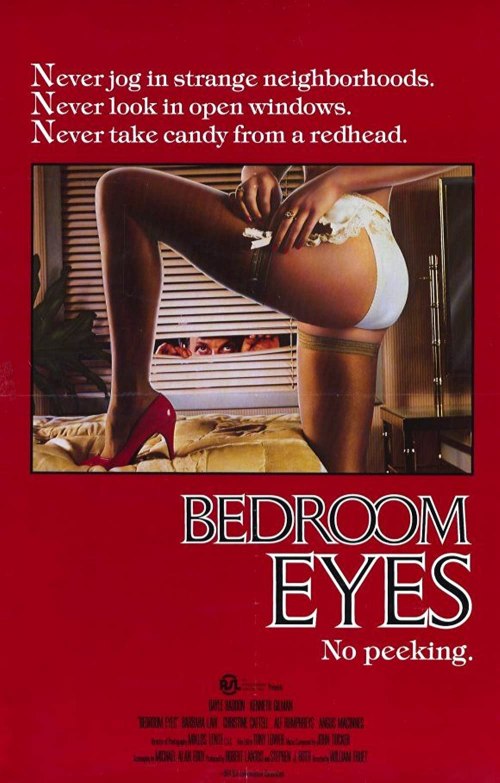
Bedroom Eyes (1984)

bedroom1

By Richard Winters

My Rating: 1 out of 10

4-Word Review: Voyeur witnesses a murder.

Harry Ross (Kenneth Gilman) is a businessman who enjoys taking a late night jog in the Toronto neighborhood in which he lives. One night he steps in dog poo and as he’s trying to scrape it off he notices a light coming from a nearby window. Out of curiosity he peers in and sees a half-naked woman (Jayne Catling) dancing provocatively. It turns him on and he decides to make it a point to peer into the window each night when he goes for a run. He though begins to feel guilty about what he’s doing and thinks he may be a ‘pervert’ and thus schedules an appoint with Alex (Dayle Haddon), who is a psychiatrist, so that they can talk it through. During their sessions he also becomes attracted to her and things slowly work into a relationship. While this is going on he continues to look into the window each night, but eventually witnesses the woman getting murdered and now must go into hiding inside Alex’s apartment as not only the police, who mistakenly think he did it as they get his prints off of the window, are after him, but so is the killer.

This film was directed by William Fruet, a prolific writer/director from Canada, who shot to fame with the excellent Wedding in White and then followed that up with a lot lame thrillers and horror films. While some of those were diverting this one isn’t and the tacky set-up is the biggest problem. The fact that Harry isn’t portrayed as being a life long voyeur, but instead quite literally just ‘stumbles’ upon it is farfetched and the character would’ve had more depth if this had been a constant trait that he had to deal with. Having him ‘panic’ that he was afraid this made him a ‘pervert’ was ridiculous too as I’d think just about any heterosexual guy would get aroused seeing a hot lady cavorting around erotically. The way he peers in, the camera captures it from the inside looking out, is quite obvious as his face is fully light, from the indoor lamps, and thus all the people needed to do was glance up briefly to see him, which I would think would’ve occurred at some point especially since he continues to do it over multiple nights. The fact that they always leave the window shade half open seems like they’re inviting someone to look in though the movie acts like this is unintentional and just a ‘coincidence’. The place is lit in a way that makes it seem like it’s a set for soft core porn flick and the woman behaves like an adult actress, which completely ruins any sliver of plausibility.

Initially I liked seeing Haddon, who was at one time a super model before she got into acting, cast as the therapist as this was traditionally at that time still more of a man’s profession, so she was playing against type, but having Harry immediately asks her out on a date was dumb. Due to this being a professional doctor and patient relationship he should’ve at least waited until after several sessions before he got up the nerve to do it and even then it’s putting her in an unethical spot and he should’ve known that. Fortunately she tells him ‘no’ the first couple of times, which is what she should’ve done, but I knew, going by how stupid this script had already been, that she’d eventually cave and of course she does, which makes the whole premise become even more ludicrous. Having her spot him at a fancy restaurant was too coincidental in such a big city and having his girlfriend perform a sexual act while inside the place with all sorts of people around was over-the-top. If anything Haddon should’ve just been cast as his girlfriend, who just happens to work as therapist, and he could’ve still spoken to her about his voyeurism in private when they were together and this would’ve helped made it more believable.

It does get a bit intriguing for a few minutes when the police begin to close-in on Harry and I enjoyed the inner-rivalry of the police department where the two lead detectives became irritated at how a young ‘wet-behind-the-ears’ kid (Alf Humphreys) was always coming up with new leads and clues before they did, but other than that there’s very little to recommend. The climactic sequence in which the killer ties Harry up while he’s inside Haddon’s apartment, is quite boring and the female actor who plays the culprit shows no panache and thus making her scenes quite dull. In 1989, at the request of no one, this was made into a sequel, but with a completely different writer, director and actors with the only thing connecting the two being the Harry Ross character.

My Rating: 2 out of 10

Released: November 30, 1984

Runtime: 1 Hour 30 Minutes

Rated R

Director: William Fruet

Studio: Pan-Canadian Film Distributors

Available: DVD-R

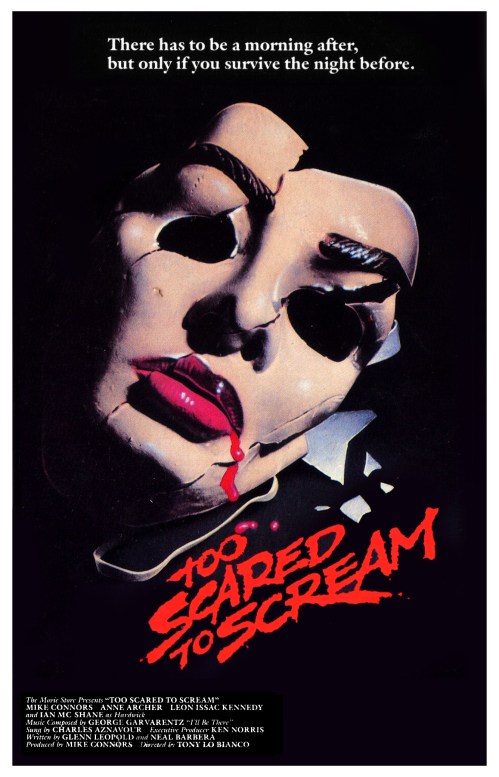
Too Scared to Scream (1984)

tooscared3

By Richard Winters

My Rating: 3 out of 10

4-Word Review: Who’s killing the tenants?

Female tenants living in a New York City high-rise building are turning-up dead in brutal fashion. Lieutenant Alex Dinardo (Mike Connors) and his younger, female partner Kate (Anne Archer) are convinced that the culprit is Vincent (Ian McShane) who works as the overnight watchmen at the apartment building and since all the crimes happen during his shift he quickly becomes suspect number one. Though getting enough evidence in order to arrest him becomes a delicate matter. Alex then decides to asks Kate to move-in to the building as a new tenant and thus keep tabs on what Vincent is doing and hopefully lure him into a situation where he’ll incriminate himself, but Kate soon finds herself in over-her-head as the killer is on-top of what’s going on and he soon bates her into a dangerous game of cat-and-mouse where Alex and the other policemen are not able to help her.

The film was an attempt at creating an American version of an Italian giallo complete with gory murders and an intricate mystery where you don’t know who the real killer is until the final twist ending. It’s also the only film to date to be directed by actor Tony Lo Bianco. Severely straddled during production as it was shot in 1982, but due to the production studio that financed the project going bankrupt it was never released until 3 years later where it was given little fanfare and came and went with few people seeing it.

The biggest problem with it is that it plays-up McShane’s role too much. Granted he’s a gifted actor who’s best known today for his work in the TV-series ‘Deadwood’, but by overemphasizing his character it makes it seem right from the start that he’s the culprit and thus making the investigation uninteresting because you feel it’s just a matter of time before he’s found out and thus little mystery, or intrigue. Granted there are a couple of other suspects, but they seem thrown-in simply as red herrings and aren’t seen much. The story would’ve had better tension had the suspects shared equal screen time and a more balance of clues making it seem like any one of them could’ve done it and thus some genuine interest at getting at what the truth is versus having it seem like it’s all spelled-out from the start. If anything Maureen O’Sullivan, who plays McShane’s near comatose mother whom he takes care of, is far more captivating, despite the fact that she doesn’t speak any line of dialogue and trapped in a wheelchair, then anything McShane himself does.

The unusual pairing of a 60-something male cop alongside a female one that appears to be only around 30 should’ve been what the film focused on as I found their contrasting personalities and different ways they approached their police work to be something that could’ve been played-off of more. Unfortunately the film taps into this just slightly and then quickly moves on and thus misses the opportunity for what could’ve lead to captivating confrontations and debates. Connor does seem a bit too old for this kind of thing and seeing him trying to chase down a young athletic man who was only 20 came-off as almost laughable and I was surprised he didn’t just fall over from a heart attack, or exhaustion before he ever managed to get near the guy. Having him lose a fight to the younger guy and have to depend on his partner to bail him out of it was realistic, so it gets props there, but the way he goes about his police work, which includes physically beating-up on suspects, is highly unethical and should’ve gotten him demoted, or fired.

Spoiler Alert!

I had issues with Archer’s character as well. This comes when she agrees to move into the apartment and work undercover, but seems woefully unprepared for it. She manages to carry a gun with her when she goes down to the basement of the building to do laundry, but then when she gets back to her place she does a goofy aerobics workout where she gets caught off-guard, but wouldn’t a seasoned cop know to carry a weapon on her at all times especially when she’s intentionally making herself a target to the killer? Also, what kind of person walks into their apartment and then doesn’t turn around and immediately lock the door once they’re inside? If you want to argue that this was intentional (I don’t think it was) because she wanted to lure the killer inside, so as to apprehend him, then fine, but she should then make damn sure she was a gun in-hand, pointed at him, when he does, which in this case she didn’t.

You must likely won’t be able to guess who the true killer is, but it’s not worth sitting through. The script doesn’t offer any clues, or hints either, so even an alert viewer won’t figure it out, but that doesn’t mean it’s a good mystery because it really isn’t. The story is sloppily put together without much imagination, or character development. Unlike a true giallo the murders are quick and without much blood, so if you’re a gorehound this thing won’t suffice. The concept had potential, but the execution is half-hearted.

My Rating: 3 out of 10

Released: September 28, 1984

Runtime: 1 Hour 40 Minutes

Rated R

Director: Tony Lo Bianco

Studio: International Film Marketing

Available: Blu-ray (Import), DVD-R

The Swinging Barmaids (1975)

swinging

By Richard Winters

My Rating: 3 out of 10

4-Word Review: Killer stalks cocktail servers.

With a script written by Charles B. Griffith, better known for having done Little Shop of Horrors, the story centers on Tom (Bruce Watson) a serial killer who stalks women who work at a bar called The Swing-a-Ling Club. His first victim is Boo-Boo (Dyanne Thorne), whom he felt ‘disrespected’ him when she referred to him as ‘sonny’ when she served him his drink, so he quietly followed her home and attacked her and afterwards took photos of her in provocative poses. He then changes his appearance and gets a job at the bar as a bouncer. He proceeds to kill two more of the waitresses, Marie (Renie Radich) and Susie (Katie Saylor) before setting his sights on Jenny (Laura Hippe). However, with Jenny he begins to admire the fact that she insists on staying faithful to her fiancée Dave (Jim Travis) and therefore he considers her to be ‘pure’ deserving of respect instead of a gruesome death. While visiting her at the home of her parents (Milt Kogan, Judith Roberts) he tries to convince her to dump Dave and get with him and he won’t take ‘no’ for answer. Will Lieutenant White (William Smith), who’s been investigating the case and does not consider Tom as a suspect, be able to connect-the-dots before it’s too late?

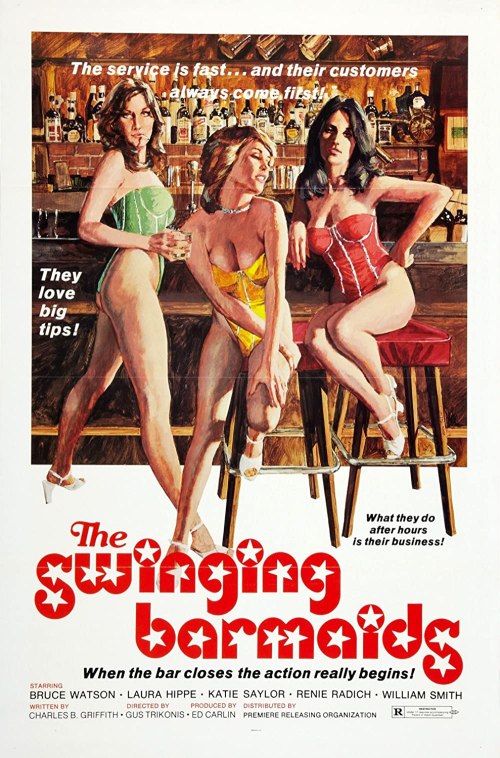
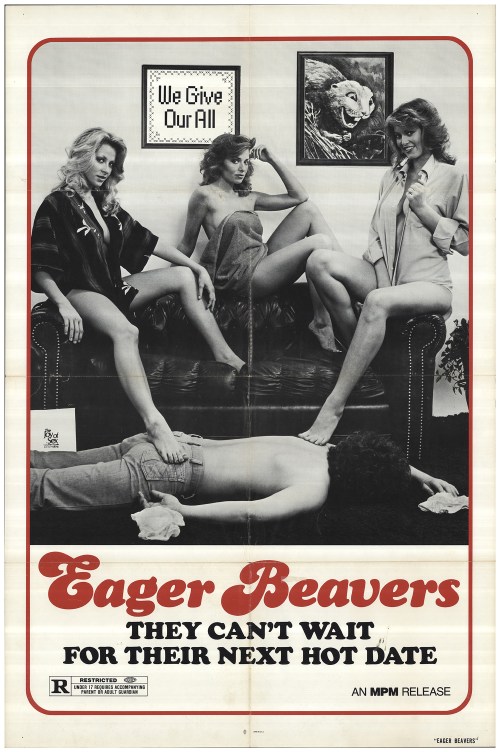
For an exploitation flick this one doesn’t seem all that titillating. The film’s promotional poster seen above alludes to ‘loose women’ having indiscriminate sex, the film was later reissued as Eager Beavers, which pushes this concept in an even more explicit way, but really you don’t see much of that onscreen. The women, who appear to be around 30 and looks-wise are okay, but nothing that would be considered stunning, come-off as basic working-class folks just trying to do their hum-drum jobs and not oversexed vamps in any way. Their personalities are indistinguishable from the other and their conversations deal with run-of-the-mill issues that aren’t compelling, or original. They also speak in a cliched, Flossie-like tough girl way of a New York street hooker, which I found annoying.

Having it shown right away who the killer is doesn’t help matters. Part of the fun of a slasher film, which this isn’t as it was made before that concept came into vogue though still follows the same basic formula, is trying to guess who the bad guy is, but having that quickly revealed losses the potential mystery element that could’ve made it more intriguing. We learn nothing about the killer, other than a police detective ‘profiling him’ as being someone with ‘mother issues’, but this is something the viewer needs to see and learn visually instead of having it explained to them. Smith as the good-guy is weak too. He’s been great in some of his other film roles, but he’s rather detached and downright irritable in this part and there’s long segments where he’s not even seen.

Gus Trikonis’ direction helps to give it a few extra points. While the killings lack blood I did like the way the hand-held camera follows the victim around as she gets chased through her apartment, particularly during the first attack, which lends an authentic, vivid feel as she tries to fight-off her attacker. The underwater photography showing one of the victims getting drowned is impressive as well, but there are some directorial mistakes here too.

One is when Tom kills Marie and then poses her naked body on a deck chair outside on the patio. The club owner Zitto (Zitto Kazann)  comes along and finds her there with Tom hiding behind the bushes and could’ve easily escape undetected, but instead he proceeds to attack Zitto, who is his boss and could identify him, so why not just get away from the crime scene instead of making things potentially worse for himself?

Another segment has Susie inside a film studio looking up towards a bright spotlight where Tom is standing, but because the light is so bright she must shield her eyes and cannot make out who’s talking to her.  When the viewer though is shown a point-of-view shot we can easily identify him, but if we’re really supposed to be seeing things from her perspective then the light should be blinding for us as well.

Another flawed moment has Jenny’s mother getting a call from a Smith warning her that Tom could be dangerous. She’s to pretend that she’s talking to someone else on the other end, so as not to tip-off Tom, who is sitting close by and can overhear what she’s saying. However, in the film the viewer can hear Smith’s voice through the receiver making it seem that if we can hear it then Tom should be able too. To have prevented this the film should’ve cut away every time Smith spoke showing him at the phone booth and therefore never would’ve heard his voice through the receiver.

Some may enjoy the sleazy storyline and Grindhouse reputation, but even on that level, there’s more explicit and violent stuff out there and it all gets handled in a highly routine way. In fact the only unique thing about the production is that both of the leading actors ended up committing suicide. Hippe’s was in 1986 and Watson, who suffered from manic depression, was in 2009.

swinging2

Alternate Title: Eager Beavers

Released: July 16, 1975

Runtime: 1 Hour 28 Minutes

Rated R

Director: Gus Trikonis

Studio: Premiere Releasing Organization

Available: DVD-R

The Take (1974)

take1

By Richard Winters

My Rating: 4 out of 10

4-Word Review: Black cop accepts bribe .

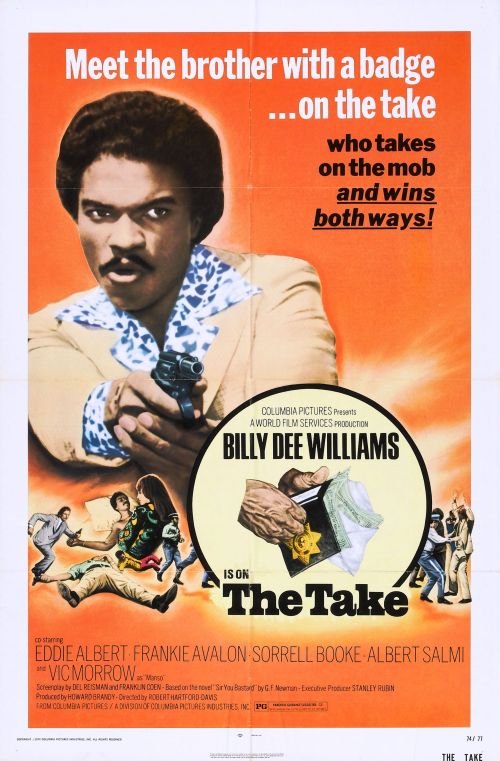
Terence Sneed (Billy Dee Williams) is a San Francisco cop brought to Paloma, New Mexico to help take down local crime boss Victor Manso (Vic Morrow). The only problem is that Manso invites Sneed over to his place and offers him a significant amount of cash to get on his ‘payroll’ and thus allow him to get away with his crimes. Sneed is also informed that another top official in the police department, Captain Frank Dolek (Albert Salmi) is on the take as well. Sneed accepts the cash, but then double-crosses Manso by having Dolek secretly tailed where he finds out who all of Manso’s connections are and uses this info to try and bust Manso’s drug operation, which ends up being a tall order that gets Sneed in hot water not only with Manso, but with his police supervisor Chief Berrigan (Eddie Albert) as well.

The film is based on the 1970 British novel ‘Sir, You Bastard’ by Gordon Frank Newman, which became a bestseller and set-off a series of three books that he wrote around the Sneed character. There were though differences between the book and movie as in the novel Sneed was white and worked in Scotland Yard. The one thing though that remained the same was Sneed being unscrupulous and working outside the system.

The fact that the protagonist accepts bribes and most of the way it’s unclear whether he’s even a good guy at all is what makes the movie interesting and helps differentiate it from the other early 70’s cop action flicks. This is the complete opposite of Serpico where the cop refused all bribes and vigorously fought against it. Here we see the other angle. Instead of the main character being on the outside looking in he’s a part of the corrupt system and in order to survive in it must be willing to play along, which I found more realistic and insightful as someone who’s able to totally rise above the evil environments they’re in is rare and therefore we get more of an everyman’s perspective here. It also works against the ‘Save the Cat’ book, which has become the bible of today’s screenwriters, which insists that the main character must be likable for the movie to work. Here Sneed is anything but and at certain points when he forces an overweight suspect (Robert Miller Driscoll) to take-off his clothes and do jumping jacks in humiliating fashion to the amusement of the other cops he becomes downright nasty, but in-turn it makes the movie less formulaic, which too many movies today have become.

Williams’ skill as an actor helps to keep the character engaging and he gets great support not only by Eddie Albert as his exasperated superior, but also surprisingly by Frankie Avalon who has a small, but memorable bit as a drug dealer who initially comes-off as quite cocky, but melts dramatically once inside the interrogation room. Unfortunately for Vic Morrow, who’s played some classic villains in his career, his presence here doesn’t work. This is mainly from his get-up including dyed blonde hair and at one point a pseudo cowboy outfit, which looked campy. I also didn’t like that it’s shown right away that his character has heart problems, which telegraphs a major vulnerability that instantaneously sets the viewer into expecting that this will predictably lead to his eventual demise.

As for the action I felt it started well particularly the opening courthouse ambush, which is well choreographed with a funky score, but it becomes rather pedestrian after this. Having the main character misjudge things like when he tries the intercept Manso’s transporting of illegal goods, but ends up chasing down the wrong van each time, which were intentionally being used as decoys, was refreshing because in too many other police movies the hero cops always gets things right the first time and his hunches are never proven wrong, which again is just not how things work in reality. Either way it’s not as exciting as it could’ve been with a lot of car chases and action scenarios that ultimately prove to be generic in nature.

My Rating: 4 out of 10

Released: May 5, 1974

Runtime: 1 Hour 32 Minutes

Rated PG

Director: Robert Hartford-Davis

Studio: Columbia Pictures

Available: DVD-R

Beverly Hills Cop II (1987)

beverly2

By Richard Winters

My Rating: 6 out of 10

4-Word Review: Going back to L.A.

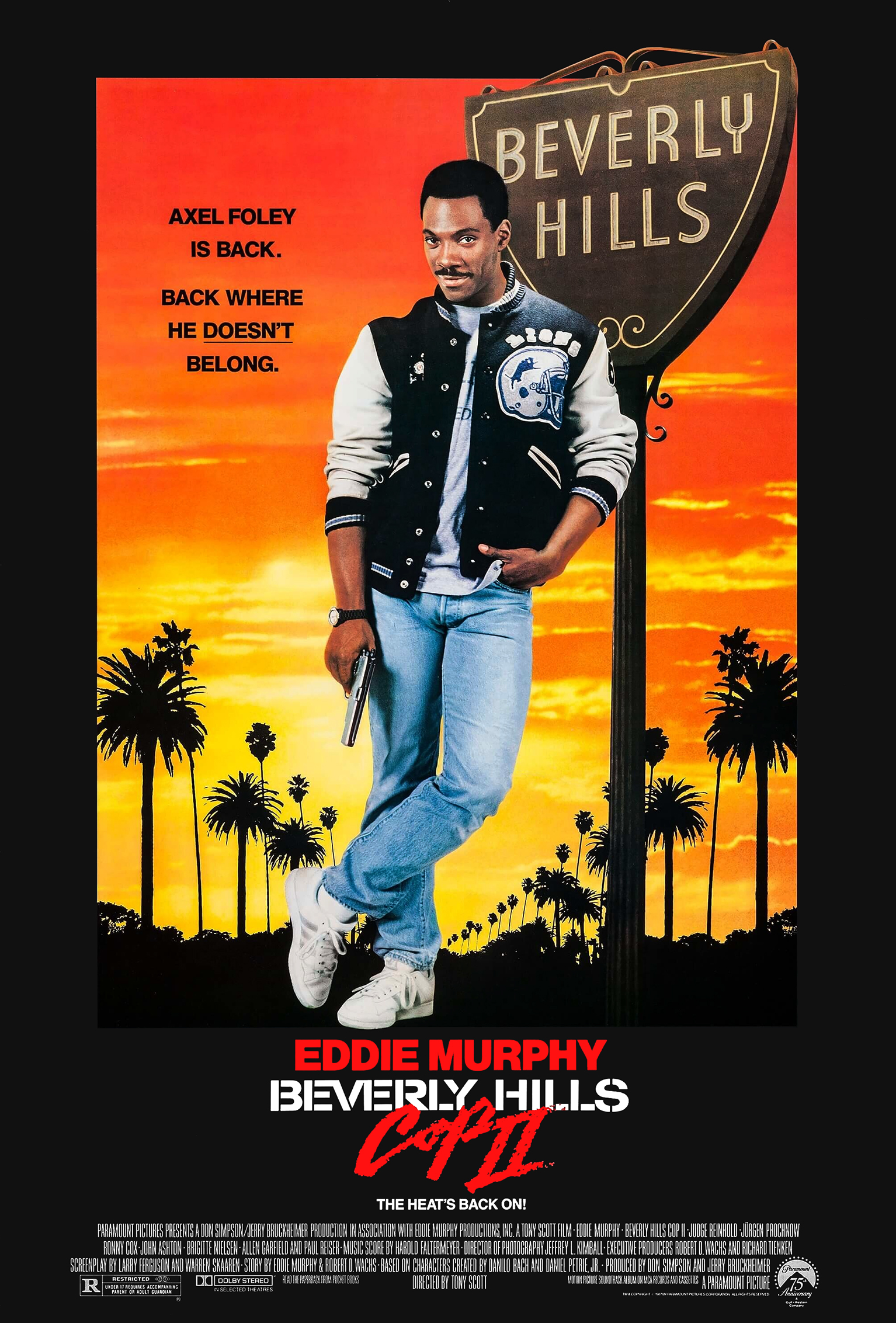
Captain Andrew Bogomil (Ronny Cox), Sergeant John Taggart (John Ashton), and Detective Billy Rosewood (Judge Reinhold) are working on a case known as the ‘Alphabet Crimes’ due to a monogrammed envelope in alphabetic sequence that gets left at the scene of each robbery. Billy decides to get the F.B.I. involved in order to have them help solve the case, but this upsets the new police chief, Harold Lutz (Allen Garfield), who demotes both Taggart and Rosewood to traffic duty and then suspends Bogomil when he tries to come to Rosewood’s defense. On his way home Bogomil gets shot and seriously wounded when he pulls over to help Karla Fry (Brigitte Nielson) who acts as a stranded motorist, but in reality is a part of the organization behind the crimes. When Axel (Eddie Murphy) hears about Bogomil’s shooting he immediately travels to L.A. and again hooks-up with Taggart and Rosewood to solve the case and avenge Bogomil’s assault. 

If  you can get past the overly complex crime mystery, which comes-off as a cheesy variation of Agatha Christie’s ‘The Alphabet Murders’, which apparently was the ‘inspiration’, this sequel, as 80’s sequels go, isn’t bad. Despite Leonard Maltin’s criticism in his review where he didn’t like that Bogomil and Axel had now become chummy and even planning a fishing trip together, I liked it. Maltin considered this ‘inconsistent’ with the first film where the characters were at odds through most of it, but I felt they had grown to like each other after what they had gone through previously and had no problem with it. What I didn’t like though was that Lisa Eilbacher for whatever reason doesn’t return and in her place they stick-in Alice Adair, who plays Bogomil’s daughter, that Axel is good friends with, but since she never appeared in the first one this relationship comes-off as quite forced. 

Having Ashton and Reinhold reprise their roles is great too, but they have little to do. In the first film they worked with Axel more as a team with each using their unique abilities to help take down the bad guys, but here Axel does virtually everything. This was most likely the result of Murphy co-writing the script where he vainly makes his character almost like a super hero and able to solve difficult clues and even at one point hacking into the criminal’s computer system while Ashton and Reinhold act as nothing more than observers who follow along, but add little input. I also didn’t like Reinhold’s character turning into a gun collecting nut, which was something that was never alluded to at all in the first one, but gets played-up here even though it makes the guy seem unintentionally creepy. There’s also a lot of talk about Ashton’s tumultuous marriage to the extent that I felt at some point we needed to see the wife, but never do. 

The humor is silly and doesn’t blend well with the action. What made the comedy work in the first one is that it remained on a believable level, but here starts to get downright stupid. A perfect example of this is when the three guys get into a strip club by pretending Taggart is the former President Gerald Ford, even though he doesn’t look that much like him, but it still manages to fool everybody in the place, which had me eye-rolling instead of laughing. The car chases are a bit farcical, much like the ones seen in a Disney movie, where they attempt to work-in a cheap laugh here and there as it’s going on instead of just making it exciting and realistic. 

I did like Brigitte Nielsen as the villainous and felt that given the time period having a female play a nefarious bad guy was novel. Maltin, in his review, described this as being ‘misogynistic’, but if the ultimate idea is for everybody to be equal then a woman should have just as much chance to play the occasional heavy as any man. Jurgen Prochnow, who plays the head of the evil operation, is too similar to Steven Chekoff, the bad guy from the first installment, to the extent that it seemed like that character had never really died, but instead got reborn through this guy, but his steely, ice-cold presence is cliched, over-the-top, and most of all not interesting.

Having Axel return to L.A. was a mistake and whole thing basically ends-up being a mindless rehashing with no particular point. Like with the first incarnation the producers considered many different potential scenarios before finally settling on this one including having Axel go to Paris and even London where he’d work with Scotland Yard. I would’ve preferred him staying in Detroit and then having Bogomil, Taggart, and Rosewood go there maybe to visit him while inadvertently getting caught-up in a case happening in the Motor City. This then would’ve turned-the-tables by having the three in a foreign environment and seeing how they adjusted to it and would’ve added revealing character development, which is otherwise missing.

My Rating: 6 out of 10

Released: May 19, 1987

Runtime: 1 Hour 40 Minutes

Rated R

Director: Tony Scott

Studio: Paramount

Available: DVD, Blu-ray, Amazon Video 


Beverly Hills Cop (1984)

beverly1

By Richard Winters

My Rating: 8 out of 10

4-Word Review: Detroit cop in L.A.

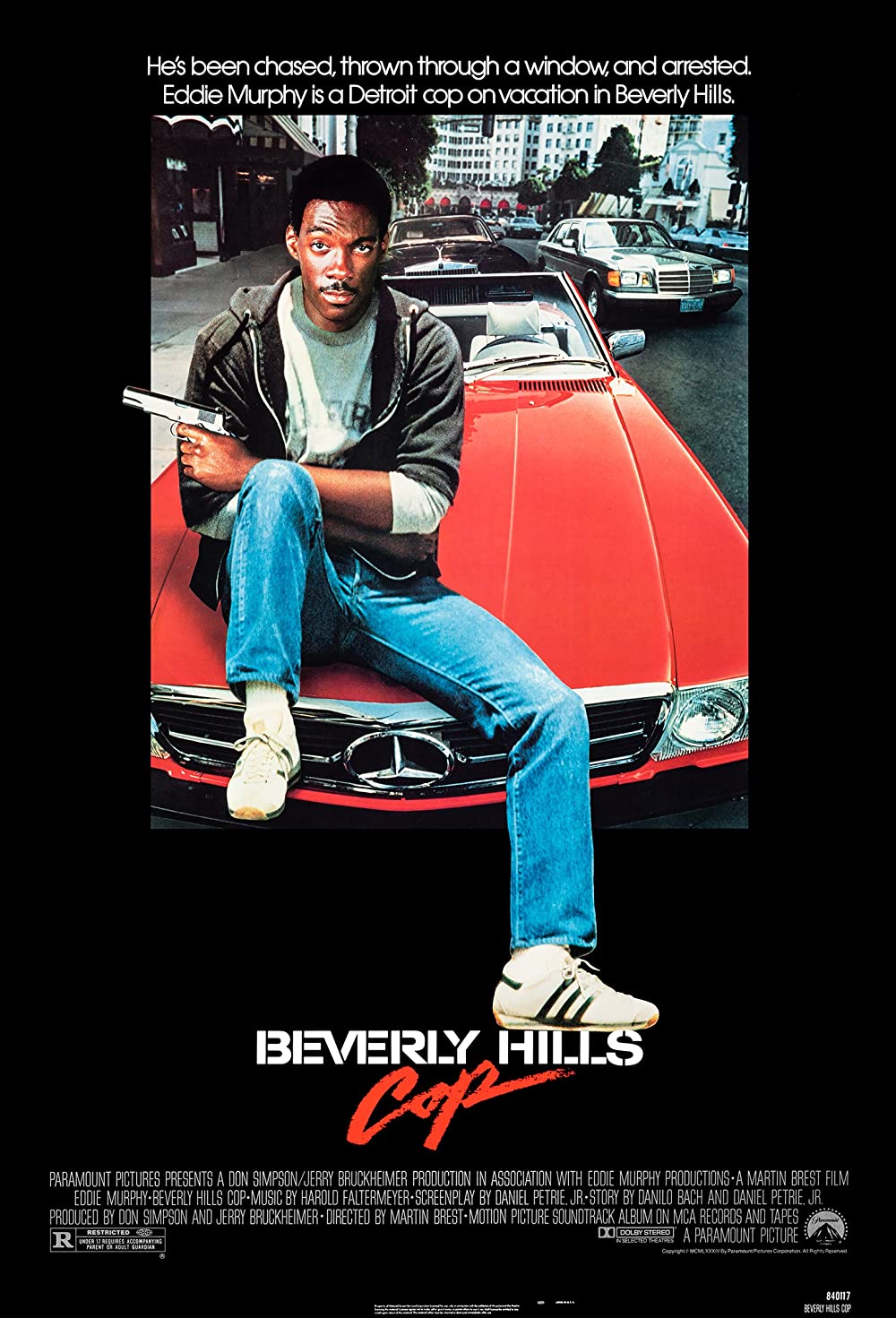
Axel Foley (Eddie Murphy) is a Detroit cop who likes working outside the system and by his own rules, which frequently gets him into clashes with his superior Captain Todd (Gilbert R. Hill). When his childhood friend, Mikey Tandino (James Russo), comes to visit him from Beverly Hills, but later is murdered, Axel requests to be put on the case, but Captain Todd refuses to assign him thinking Axel was too close emotionally to the victim to be able to give the case a fair investigation. To get around this Axel requests some time-off for a vacation, so that he can travel to Beverly Hills and do some investigating on his free time. When he arrives he meets-up with Jenny (Lisa Eilbacher), who was a mutual childhood friend of both Axel and Mickey. She works at an art gallery owned by Victor Maitland (Steven Berkoff), who may be the one behind Mikey’s murder. When Axel tries to follow-up on this lead he gets himself in trouble with the police department there and quickly learns that in Beverly Hills everything is very much by-the-book. 

This film is a great example of how an idea for a movie can go through many changes before it finally comes to fruition. The original concept came about in 1975 when Michael Eisner, then head of Paramount Pictures, got pulled over for speeding while driving an old station wagon and was taken aback by the condescending way the Beverly Hills police treated him simply because he was driving a beat-up car. He came to the conclusion that the Beverly Hills police department was highly status conscious and wanted to bring this angle out in a movie. He sent out an open call asking for writers to submit scripts with a premise dealing with an outsider coming into the Beverly Hills police unit and clashing with their culture. Most of the scripts that were sent in he didn’t care for until finally in 1983 the one written by Daniel Petrie Jr. caught his eye. 

Both he and producer Jerry Bruckheimer enjoyed the comical elements that were in it and cast Sylvester Stallone as the lead, but he wanted the comedy removed and they refused to abide, so he walked-off the project and was eventually replaced by Murphy. Director Martin Brest, who had just been fired as director of War Gameshad grown disillusioned with Hollywood and considered getting out of the business, but was hounded so much by Bruckheimer that he had to change his phone number, but when the calls continued anyways he finally flipped a coin, so as to decide whether he’d do the project, or not. When he result came up heads he said ‘yes’ and because of the film’s later box office success he eventually had that coin framed and mounted on his office wall.

Eddie Murphy is clearly the entertaining catalyst that drives this and I was happy that despite him being black his race is never a factor. It’s also great that his hard-nosed supervisor that routinely chews-him-out isn’t some authoritarian white guy either, but instead an actual black police chief, Gilbert R. Hill, who was brought in as a police consultant, but eventually got cast and his exasperated expressions are more than enough to elicit genuine laughs. 

It would though have been nice to see Murphy, at least briefly, in a police uniform as the character comes-off as being too outside the system, so for the sake of balance seeing that at times he was still ‘a part of the team’ and had to conform. He also mentions being an expert thief during his youth, so for added character development this should’ve been explored; what caused him to change his ways and become a cop instead of remaining a thief? Unfortunately this aspect is never answered.

John Ashton and Judge Reinhold as the two cops who initially act like adversaries, but ultimately work together with Murphy as a team, are terrific. During the 70’s and 80’s cops weren’t usually portrayed in nice ways. Most movies either characterized them as being excessively buffoonish, or entirely corrupt, but here they got humanized. Ashton in particular is a perfect caricature of a cop without it having to go overboard and the script makes great use of Reinhold’s wide-eyed expression by working it into him being young and inexperienced. The conversation the two have while in the squad car where Reinhold talks about the ‘five pounds of red meat in the bowels’ was taken nearly word-for-word from what the two used during their audition that got them the roles.  

The car chases, particularly the one at the beginning shot in Detroit, are quite exciting and this is one of the rare cop films that manages to blend the humor with the action without having to compromise on either. The only complaint I have, and this may sound shallow to some, is that I couldn’t stand the mole, or whatever it is, on the center of Steven Berkoff”s forehead. I honestly found it very distracting, and there are quite a few close-up shots of his face, so it’s hard not to see it and in fact with each scene he’s in I kept focusing more on that than what was being said. There are pictures on the net of him as a child and even young adult where the growth was not apparent, so I’m not sure at what age it occurred, but since it’s in such a prominent part of his face, I would have, if I were him, had it surgically removed if medically possible. 

My Rating: 8 out of 10

Released: December 1, 1984

Runtime: 1 Hour 45 Minutes

Rated R

Director: Martin Brest

Studio: Paramount

Available: DVD, Blu-ray, Amazon Video

Off Beat (1986)

offbeat1

By Richard Winters

My Rating: 4 out of 10

4-Word Review: Not really a cop.

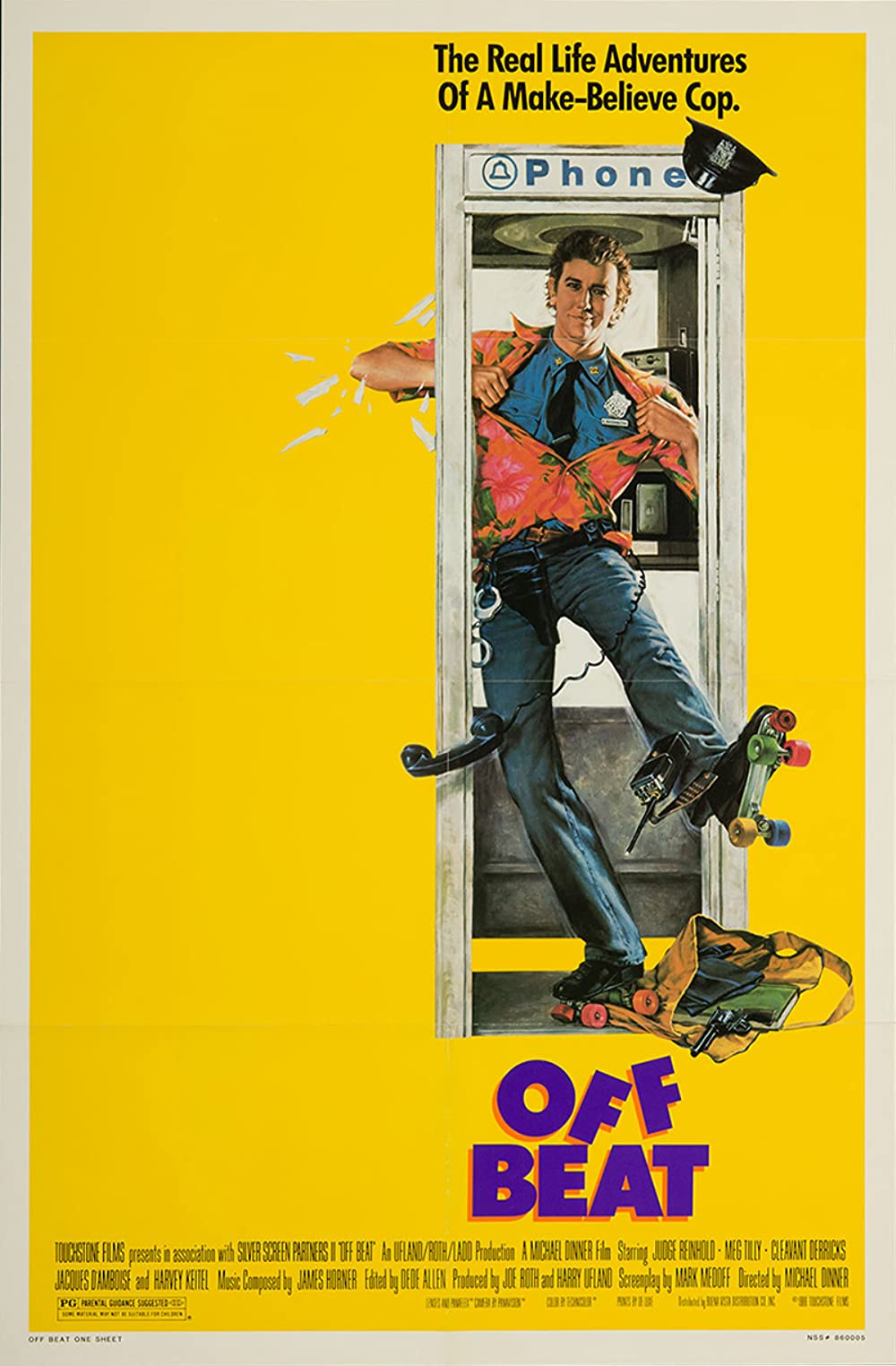
Joe (Judge Reinhold) works in the basement of a library. While he doesn’t hate his job he’s still looking for direction in life and feels he has missed his calling though he’s not really sure what that is. He’s friend with Abe (Cleavant Derricks) who is a New York City cop. One day Joe inadvertently messes-up a criminal sting that Abe was working on and in an effort to make it up to him Joe agrees to volunteer for a charity event that will require him to do ballet. It’s part of a city wide effort to get one policeman from each precinct to take part and Abe was chosen by his supervisor, but he has no interest, so he gets Joe to take his place while Joe pretends that he’s a cop in order to qualify for the audition. Joe is convinced he won’t make the cut, but when he meets the beautiful Rachel (Meg Tilly), who’s a cop that’s also trying out for the performance, he decides to press-on with it and in-turn finds that dancing gives him the interesting challenge that was otherwise missing in his life as well as a romantic relationship with Rachel. 

One of the things that really hurts the film right from the start is the totally wacky premise that seems to stretch all credibility. I found it very hard to buy into the idea that a policeman would be obligated, and in some ways almost forced, to get involved in a charity event that would take-up so much of his free time and require an extraordinary amount of rigorous training for no pay. Asking some cops to spend a few hours on one weekend at a soup kitchen passing out meals to the homeless is more reasonable, but pushing people into ballet that have no skills, or business in doing is just plain far-fetched. I felt too it was testing the friendship to obligate Joe in what turns out to being a very time consuming endeavor. Granted he learns to enjoy it, but upfront I can’t expect anyone to go that out of their way, even for a friend, over some simple mistake that the made earlier. Originally, and I can’t remember where I read this, the premise was for the characters to be prisoners and getting involved in the dance charity event would allow them the potential of getting their sentences shorten, which made much more sense, but the producers wanted to take advantage of the spate of comical cop movies that were popular at the time and therefore changed the characters into cops, but this just makes it dumb. 

The attempted comedy doesn’t gel either. It starts out at a park with undercover cops secretly listening into a conversation of two people, which seemed to have been taken right out of the opening scene in the far better movie The Conversation. It’s not made clear if that was meant to be an attempted parody of that one, but it doesn’t work either way and it’s best not to imitate a classic if you can’t improve on it as it ends up reminding one of that movie and how much more entertaining it was than this one. Later on there’s a bank robbery segment, which again seemed strikingly similar to another 70’s classic Dog Day Afternoonand again it’s not clear if this was intentionally stealing from that one in an effort to be amusing, but it doesn’t click either way. 

Reinhold shows why his Hollywood leading man career never lasted. He’s just not funny and all he seems good at is having that wide-eyed deer-in-headlights look and not much else. Other talented actors like Joe Mantegna, as Reinhold’s dance rival, and John Turturro, as Reinhold’s obnoxious boss, don’t get enough screen time and the friction that their characters create isn’t played-up enough, or results in any interesting confrontation. I did though really like Meg Tilly, who plays against type, as she’s usually cast as soft-spoken, flighty characters, but here plays someone who is tough and outspoken and does quite well.

The script, which was written by Mark Medoff, who had better success penning stageplays like Children of a Lesser God and When You Comin’ Back, Red Ryder?, does have a few heartfelt moments and having a main character feeling lost and directionless in this confusing world will be easily relatable to many, but there are just too many segments where the comedy misses-the-mark. The scenes where Reinhold is forced to try and chase down a thief and another moment where he has to arrest someone, but because he’s not a trained cop he doesn’t really know what he’s doing, could’ve been comical gold, but the film doesn’t play it out enough to be effectively hilarious. It peters-out with a fizzle by the end making it a definite misfire that didn’t do well with either the critics, or at the box office. 

My Rating: 4 out of 10

Released: April 11, 1986

Runtime: 1 Hour 32 Minutes

Rated PG

Director: Michael Dinner

Studio: Touchstone Pictures

Available: VHS, DVD (Region 2)