Category Archives: Mystery

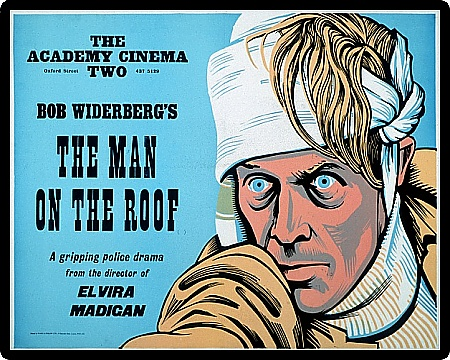
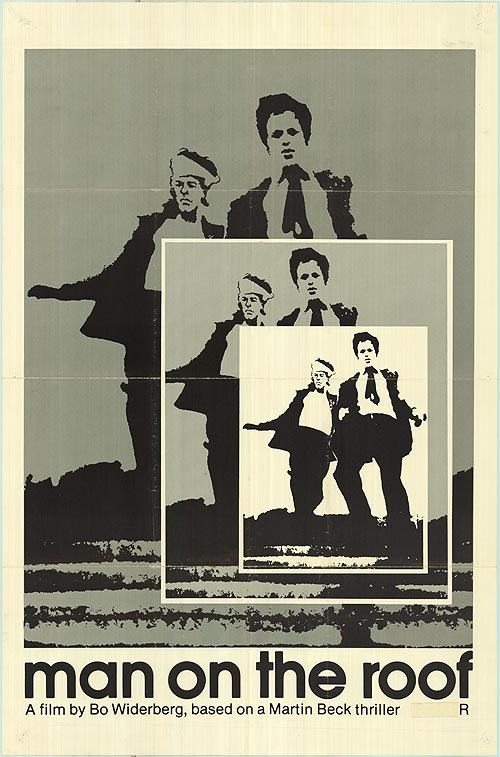
Man on the Roof (1976)

man on the roof 3

By Richard Winters

My Rating: 6 out of 10

4-Word Review: Sniper shoots at police.

Police officer Stefan Nyman (Harald Hamrell) is shot and killed by an unknown gunman. During the investigation police detective Martin Beck (Carl-Gustaf Lindstedt) finds that Nyman was an officer who used brutal and sometimes unethical conduct in his dealings with suspects. Beck begins to consider this as a possible motive, but before he can decide on that the sniper climbs on top of a high rise building in downtown Stockholm and begins shooting and killing all uniformed officers.

The first hour of this Swedish production is different from just about any other police drama you’ve seen. The investigation is slow and meticulous and the identity of the killer is kept a complete mystery.  There is no heart pounding soundtrack and all the scenes are handled in a nicely subdued fashion.  The tension mounts slowly, but deliberately until it finally wraps you into it and becomes riveting.

By contrast the second hour is handled completely differently to the point that it almost seems like two movies in one. The second half becomes this high adrenaline action pic that includes an exciting helicopter crash, but it all proves jarring when compared to the first hour.

man on the roof 1

The story is also too reminiscent of the real-life Charles Whitman incident that occurred in Austin, Texas in 1966.  The ending is much too abrupt and leaves open too many loose ends and a more composite portrait of the killer would have also helped.

This film definitely has its moments both in action, drama and dialogue and is considered highly influential to the modern police dramas that we see today, but the way it comes together is a mishmash. Director Bo Widerberg was known for his poor planning and constantly rewriting scenes and dialogue sometimes while he was sitting on the toilet. The behind-the-scenes atmosphere of his productions was filled with chaos and confusion and the results can be easily detected here. Viewers that enjoy the first half may not like the second one and vice versa.

man on the roof 2

My Rating: 6 out of 10

Released: October 1, 1976

Runtime: 1Hour 50Minutes

Rated R

Director: Bo Widerberg

Studio: Svensk Filmindustri

Available: DVD (Region 2)

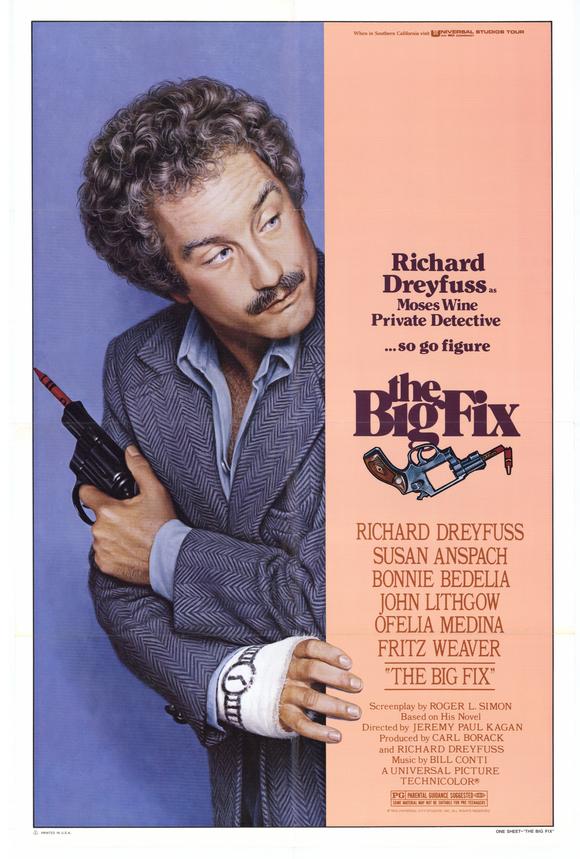
The Big Fix (1978)

the big fix

By Richard Winters

My Rating: 6 out of 10

4-Word Review: 60’s radical turned detective.

Moses Wine (Richard Dreyfuss) was at one time a student radical during the tumultuous 60’s, but now it is 1978 and he is working as a private eye. Most of his cases are unexciting and even mundane, but then Lila Shay (Susan Anspach) a woman he had a fling with during his college days shows up asking for his help. She is now working for a candidate running for governor and she wants Moses to find Eppis (F. Murray Abraham) a former student radical himself who has now gone underground, but seems to be smearing her candidate’s campaign and hurting his ability to be elected. Moses takes the case on a whim, but finds it to be much more complex and dangerous than he bargained for.

The film is based on the novel by Roger L. Simon who also wrote the screenplay and it is almost like a revisionist private eye movie. Everything that we’ve come to accept in this genre gets turned upside down and for the most part with great and amusing success. Moses is not a tough, brawny, stoic figure like most detectives in these films, but instead a little shrimp of a guy that can easily get hyper and frazzled and is certainly never cool under pressure. Many times he will bring his two young sons on the case with him and even use there insight to help him solve the case. He makes mistakes and even has to write certain things down to avoid forgetting them unlike those other detectives that always seem to remember even the smallest tidbits of information. By making the Moses character more human he becomes better relatable and the viewer feels almost like they are in his shoes, which is what makes the story work.

Simon’s script also is a great character study showing how the student protestors from the 60’s have now begrudgingly and awkwardly taken on adult roles and even become a part of the dreaded ‘establishment’. This comes to a head with the Abraham character the one time head of an underground movement that now is seen living in suburbia as a ho-hum family man. His line about why so many of his fellow radicals ‘sold-out’ and became a part of the suburban culture is an excellent and keen observation.

Dreyfuss is perfect in the role as a wise-guy, cynical smart ass. Most of the times characters and actors with these traits are off-putting, but somehow with him it is always engaging. The character is also nicely multi-dimensional. He is acerbic and brash one minute, but then singing lullabies over the phone to his children the next. He acts like his has ‘moved on’ from the 60’s, but then later on tears come to his eyes when he looks at a film of some old student protests. Dreyfuss also broke his wrist just before filming began and so they wrote it into the script and it becomes a funny running gag as different people ask him how he broke it and each time he tells them something that becomes increasingly more outrageous and amusing.

Bill Conti’s musical score is bouncy and distinctive and gives the film an added kick. He also employs several different styles including ragtime, disco, electronic and even a ballad by Leon Redbone.

The mystery is full of twists and close attention must be paid, but it is doubtful anyone will figure the surprise at the end. Baby boomers that lived through the period may be more connected to this than others, but it is still entertaining and a terrific time capsule.

My Rating: 6 out of 10

Released: October 6, 1978

Runtime: 1Hour 48Minutes

Rated PG

Director: Jeremy Kagan

Studio: Universal

Available: VHS, Netflix streaming

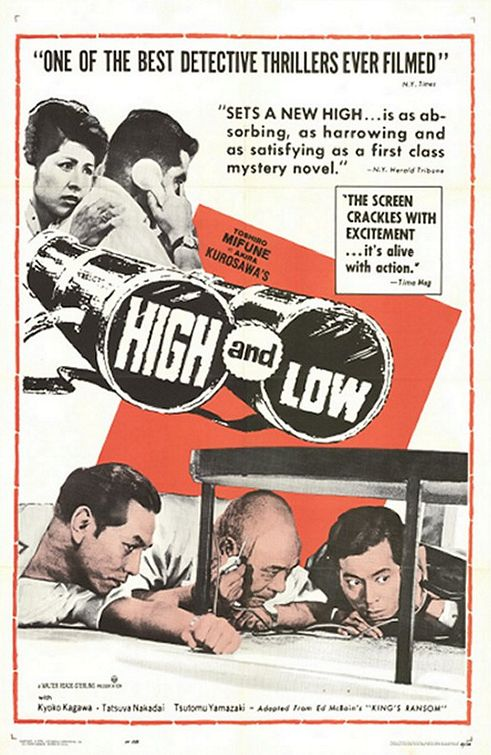
High and Low (1963)

high and low

By Richard Winters

My Rating: 7 out of 10

4-Word Review: Pay ransom go bankrupt.

Kingo (Toshiro Mifune) is an executive of a shoe company who finds out that his chauffeur’s son has been kidnapped and comes under tremendous pressure to pay the ransom even it will make him bankrupt.

As with all of Akira Kurosawa’s films the production values are solid and the story is well paced. The very methodical police work and investigation is interesting and enlightening. It’s certainly nothing like today’s CSI shows, but well done for its period. The ending scene where Mifune faces the kidnapper leaves a strong and memorable impression.

However, on the negative side the set-up to the kidnapping happens too quickly without any type of buildup or tension. Almost the entire first hour takes place inside the living room of Kingo’s hilltop house and it would’ve helped to have some cutaways to other locales.  Mifune, who is billed as the star and gives a great performance disappears during the second hour only to finally reappear at the very end and I felt it would’ve been stronger had he been involved more in the investigation. Also, the revealing of the kidnapper is unexciting and a big letdown.  I had a hard time understanding why a guy who was so very crafty and sophisticated in every facet of his planning of the kidnapping would suddenly get so conveniently dumb and sloppy at the very end.

This is a decent Kurosawa entry, but in my opinion not one of his best. Yet it is still good enough to keep you captivated from beginning to end.

My Rating: 7 out of 10

Released: March 1, 1963

Runtime: 2Hours 23Minutes

Not Rated

Director: Akira Kurosawa

Studio: The Toho Company

Available: DVD, Blu-ray (The Criterion Collection)

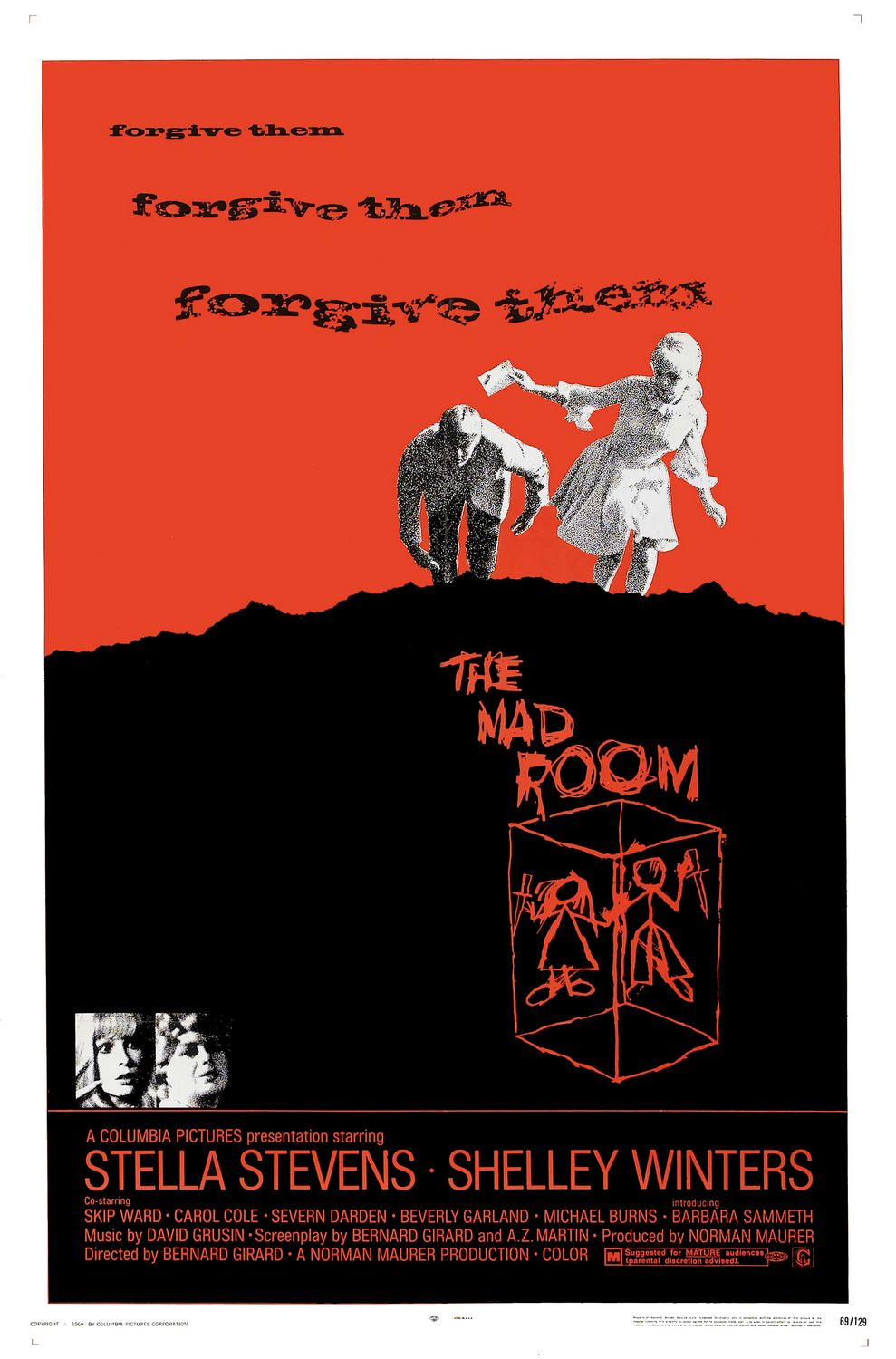
The Mad Room (1969)

the mad room

By Richard Winters

My Rating: 4 out of 10

4-Word Review: Children murder their parents.

In 1957 George (Michael Burns) and Mandy (Barbara Sammeth), a brother and sister ages 6 and 4, murder their own parents in cold blood. No one knows for sure which one of them did it except that their older sister Ellen (Stella Stevens) witnessed them standing over their dead bodies in blood soaked clothes. It was her testimony that got them locked away into a mental institution, but now 12 years later they are set free into Ellen’s care. Ellen is now living with and working for wealthy widow Mrs. Armstrong (Shelley Winters) who agrees to allow the children to move in to her sprawling mansion, but then the murders begin to reoccur, but this time Ellen decides to cover up for them in order to avoid the humiliation and publicity.

This film, which is a remake of 1941’s Ladies in Retirement starring Ida Lupino, starts out with a bang by using some interesting visuals during the opening credit sequence. We are also shown flowers finger painted by the children using the dead parent’s blood on the walls of the victim’s bedroom, which I felt sent this thing to unprecedented darker depths especially for its time period. Unfortunately the film cannot sustain its initial momentum and devolves into a talky script that lacks much action or scares. Director Bernard Girard’s stylish direction keeps it watchable, but the film fails to achieve its full potential. Dave Grusin’s excellent music score manages to keep the tension going even when the script can’t.

Stevens looks gorgeous, but unfortunately her acting is sterile. Her wide blue eyes seem to reflect her empty performance and her presence weakens the film. The younger performers who play her brother and sister upstage her particularly Sammeth in her film debut.

I have always loved Winters as a character actress, but her goofy character hurts the dark undertones at least at the beginning. She does improve as it goes along and I enjoyed the way she reacts when Ellen tells her about her sibling’s dark secret and I was disappointed she didn’t remain through the film’s entire duration. Beverly Garland is a scene stealer as an embittered alcoholic wife who makes a big stink at a party and then a little later commits a shocking act.

If there is one thing that really ruins the movie it is the lame, limp ending, which has to be one of the most uneventful finales I have ever seen especially for a thriller. When the credits started to roll I literally did a double-take and asked myself. That’s it?? We just sat through 95 minutes of buildup just for that?? This was also another film where I figured out its twist ending long before it happened and when the ‘surprise’ revelation does come about it is unexciting and even anticlimactic.

My Rating: 4 out of 10

Released: May 1, 1969

Runtime: 1Hour 33Minutes

Rated M

Director: Bernard Girard

Studio: Columbia Pictures

Available: DVD, Amazon Instant Video

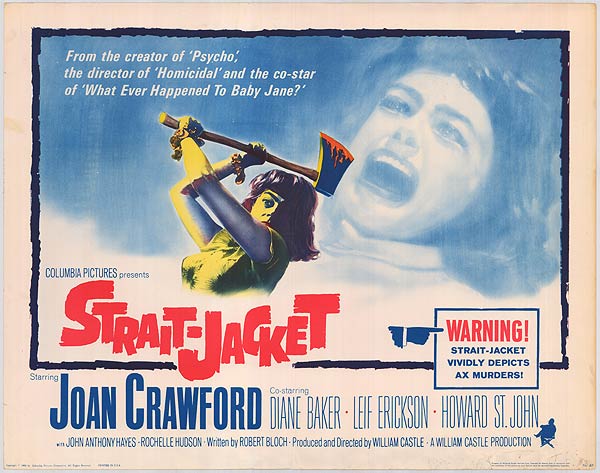
Strait-Jacket (1964)

strait jacket

By Richard Winters

My Rating: 6 out of 10

4-Word Review: Giving them the ax.

Lucy Harbin (Joan Crawford) comes home early one night from a trip only to find her husband Frank (Lee Majors in his film debut) in bed with another woman. This enrages her so much that she grabs an ax and chops off both of their heads all while in front of her young daughter.  After being institutionalized for 20 years she is released and sent home to live with her now grown daughter Carol (Diane Baker). Unfortunately the ax murders begin happening again and all signs seem to point to Lucy having a bad relapse.

Director William Castle keeps the proceedings compact enough to be entertaining, but borrows too many elements from Psycho and What Ever Happened to Baby Jane? while also adding a few to many gimmicks. Having the setting take place on a rural hog farm gives it a little extra atmosphere. The wrap-up is nice, but halfway through the film I had already figured out the twist ending and thus making the final revelation not as shocking or interesting as I think the filmmakers intended.

I realize the gore factor here is quite sanitized when compared to today’s horror movies and yet the scene where Lucy axes her hubby is actually quite effective. We see the shadow of the husband’s body with his head popping off like a cork coming out of a wine bottle. Instead of cutting away like most other films do it cuts back to Joan’s face where she continues to whack and whack and whack while her eyes get wilder with rage, which in many ways makes this far better and more fun than most other ax wielding movie scenes.

The film also brings out an interesting loophole. Namely the fact that can a woman be considered crazy for wanting to chop off her husband’s head after finding out he is unfaithful or is she simply giving the two-timing cad his just desserts.

Baker is good in support and her face is adorable. Her restrained performance nicely compliments Crawford’s more hammy and histrionic one. In fact some may consider Crawford’s acting to be over-the-top and unintentionally funny, but on a camp level it is fun. I realize both her wig and clacking bracelets become a major plot point, but I disliked both. The wig makes her look too much like an old, haggard version of her famous Mildred Pierce character and the constant clacking from the bracelets becomes annoying.

It was interesting to see Leif Erickson cast as a family friend who tries to work with Lucy and her emotional instability as he was at one time the husband of Frances Farmer an actress who also suffered from mental illness and I kept one wondering the whole time whether he was channeling those experiences into his character here. George Kennedy can also be spotted, but his almost unrecognizable as he has jet black hair here, a much thinner frame, and a pair of buck teeth.

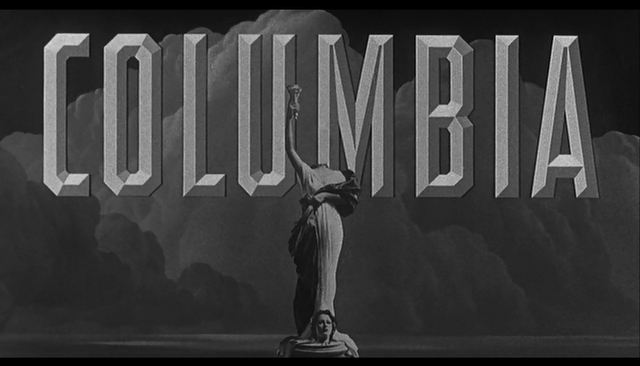
Probably the film’s best gimmick comes at the very end where the famous torch carrying lady on Columbia Pictures logo is seen with her head cut off and having it lying on the ground beside her feet.

Capture 334

My Rating: 6 out of 10

Released: January 19, 1964

Runtime: 1Hour 33Minutes

Not Rated

Director: William Castle

Studio: Columbia Pictures

Available: VHS, DVD, Amazon Instant Video

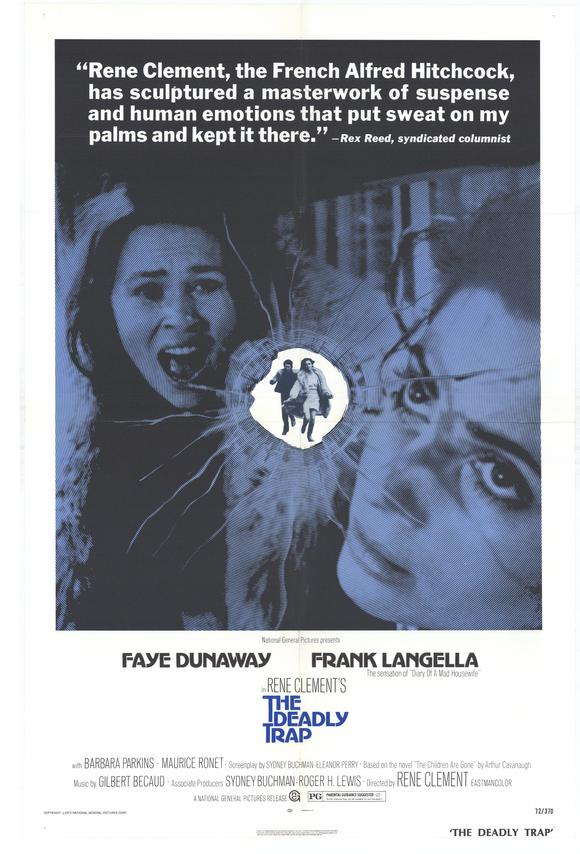
The Deadly Trap (1971)

the deadly trap

By Richard Winters

My Rating: 4 out of 10

4-Word Review: They have their kids.

Philippe (Frank Langella) works at a high-tech job in a large corporation. For years he has been giving trade secrets to a mysterious organization that pays him handsomely for his efforts. Now that he is married and has children he has decided he no longer wants contact with this underground entity, but they refuse to leave him alone. When he is no longer willing to corporate they kidnap his two children, which sends his emotionally and mentally fragile wife Jill (Faye Dunaway) over-the-edge.

Dunaway’s amazing performance is the one thing that really helps propel a film that is otherwise too laid-back. I have always been an admirer of hers, but her performance here is great because it is so different from any of the other characters that she has played. Normally she is cast in parts of strong or manipulative women, but here she plays someone who is very fragile and does it with amazing effectiveness. I felt like she was a completely different person and showed a side to her that I didn’t think she possessed. Her face and expressions accentuate the fragility and she looks quite beautiful.

Langella is good on the opposite end. He plays a cynical and aloof man who snaps at his wife in an annoyed manner at regular intervals. The contrasting personalities and dialogue between them is interesting. In many ways he seems to playing an extension to the character that he did in Diary of a Mad Housewife and given the fact that Eleanor Perry wrote the screenplays for both films makes me believe that there had to be more than just a passing connection there.

The story has some interesting underlying elements that manage to retain a modicum of intrigue, but Rene Clement’s direction is too leisurely. The first hour gets bogged down with too much conversation and certain tangents that go nowhere. It is only in the last half hour that things finally get going and has some interesting twists, but by then it is too late. It would have been better had we seen some sort of face to the organization instead of having them portrayed in such a vague way. The movie is also in need of a lot more action although the part where Jill and her kids get into a car accident and get thrown from the vehicle is impressive since actual bodies where used, which is something I had never seen done before.

Spoiler Alert!

The film features several loopholes that will end up confounding anyone. One is that when the children are kidnapped they are locked in an upstairs room that has a loaded gun stashed away in the closet. The children get their hands on it and use it against their captors, but you would think that a sophisticated and large criminal group that this organization supposedly is wouldn’t be so utterly careless as to leave it there. Also, when it is found that the couple’s downstairs neighbor Cynthia (Barbara Parkins) has a connection to this organization and kidnapping the police shoot her dead at point-blank range instead of just arresting her and interrogating her in order to find the whereabouts of the kids. The biggest problem though is the ending itself where the kids are saved and everybody becomes one big happy family, which doesn’t jive at all with the rest of the film that had a constant murky undertones and a couple that was always squabbling. By having this otherwise dark thriller suddenly become ‘The Brady Bunch’ at the end is jarring in tone. It also doesn’t answer the fact that the organization was never caught and therefore will continue to harass him again, so why should they be all happy when the bad guys could strike at any moment?

My Rating: 4 out of 10

Released: June 9, 1971

Runtime: 1Hour 36Minutes

Rated R

Director: Rene Clement

Studio: National General Pictures

Available: VHS, Warner Streaming

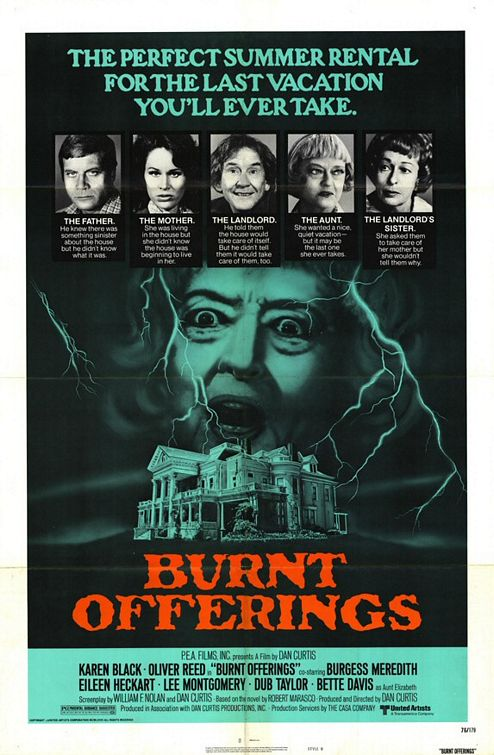
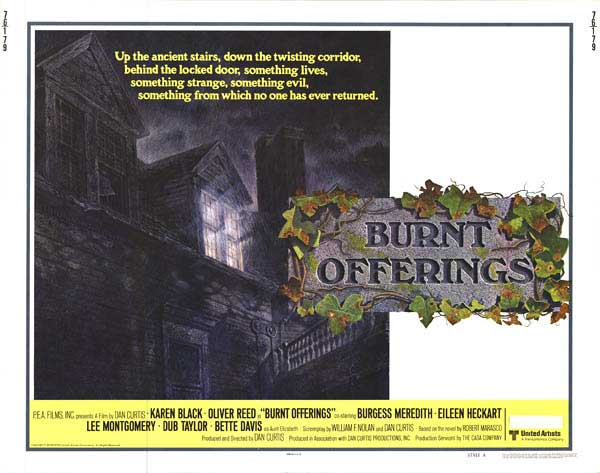
Burnt Offerings (1976)

burnt offerings 1

By Richard Winters

My Rating: 2 out of 10

4-Word Review: Evil house menaces family.

Marian and Ben (Karen Black, Oliver Reed) are a couple who takeover for the summer as caretakers for an old gothic-like mansion.  They bring along their son Davey (Lee Montgomery) and Aunt Elizabeth (Bette Davis). Soon there are strange occurrences as well as a transformation of their personalities, which makes them believe that the place is haunted.

The attempt at going back to an old-fashioned type of horror movie doesn’t work. Dan Curtis’s direction is too restrained and most likely will be a turn-off to even those that like these types of films. The pace is slow and the film takes way too much time telling a story that in the end adds up to nothing. The scares are non-existent and I didn’t even find it to be the slightest bit creepy. The only impressive scene involves a body flying out of an upstairs window and crashing head first into the windshield of a car, but that doesn’t occur until the very end. There is also a potentially interesting subplot involving Ben’s reoccurring nightmares about a traumatic childhood experience with a chauffeur, but it is never fully explained what this is about, which ultimately makes this more frustrating instead.

The soft lighting approach is another mistake as it makes the whole thing look like a shampoo commercial and adds nothing to the atmosphere. There is also the backyard pool that was clearly shot at another location from the summer house one that they reside.

Probably the only fun element of this otherwise blah film is the eclectic cast. Burgess Meredith, who shows up at the beginning, should’ve won an award for campy performance of the decade. Black plays another one of her flaky characters with her usual flaky style and Montgomery is good as the no-nonsense kid. Reed is outstanding as he ends up showing the widest array of emotions.

However, it is Davis whose latter day presence gives the film its broadest appeal. She spent a career playing strong-willed women with electrifying performances and yet here her character is downright ordinary. The change of pace is interesting especially the scene where she gets shouted down by Black. She also has a pretty good deathbed sequence and there is even a moment where Reed pats her on her rear. Depending on one’s point-of-view you will either find this to be amazing, amusing, or really gross.

On the whole though I found this to be a pretty hopeless excuse for a horror film with the most horrifying thing about it being having to sit through it.

burnt offerings 2

My Rating: 2 out of 10

Released: October 18, 1976

Runtime: 1Hour 56Minutes

Rated PG

Director: Dan Curtis

Studio: United Artists

Available: VHS, DVD

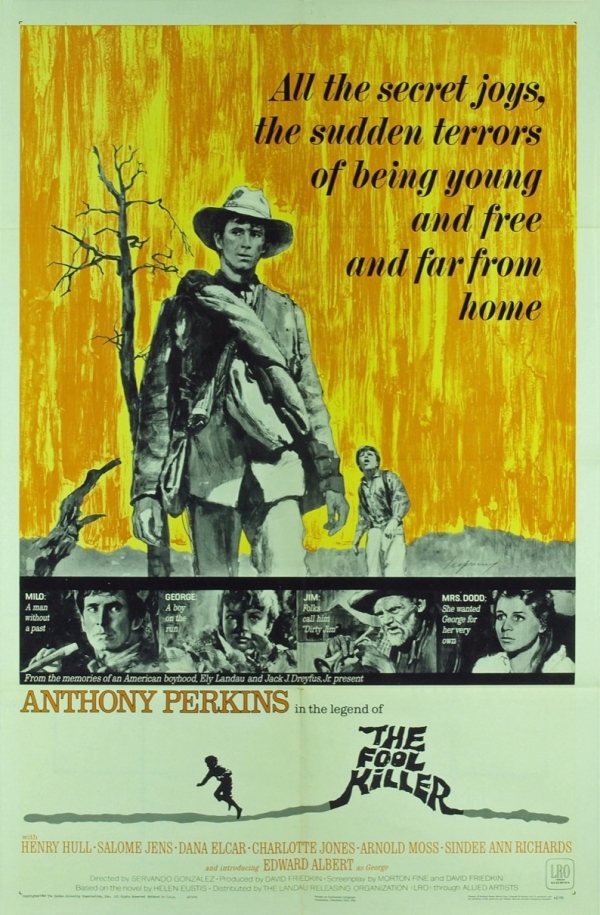
The Fool Killer (1965)

fool killer

By Richard Winters

My Rating: 6 out of 10

4-Word Review: Kid roams the countryside.

George Mellish (Edward Albert) is a 12-year-old boy who runs away from home after a particularly harsh beating at the hands of his foster parents. As he roams the Tennessee countryside he meets Dirty Jim (Henry Hull) an old man who takes him into his rundown home and fills his head with all sorts of stories about an eight foot ax-wielding man who kills people he deems to be foolish. After a bout of illness George runs away from Jim and late one night meets Milo (Anthony Perkins) a loner who carries an ax and acts strangely. Initially George thinks that he is ‘the fool killer’ Jim described, but the two soon become friends even though strange ax murders begin to occur everywhere they go.

Servando Gonzalez’s direction is excellent and the one thing that keeps this otherwise thin story intriguing. This was his only English language film and he uses a variety of different camera angles and editing styles to create a sort of hypnotic effect. The on-location shooting is vivid and their ability to recreate the look and feel of the late 1800’s is solid including having the characters occasionally speak with poor grammar, which helps with the authenticity.

The only thing about Gonzalez’s direction that I did not like is where they have a nighttime scene that was clearly filmed in the daytime, but done with a darkened lens to ‘fool’ the viewer into thinking it is night. This process has been done many times in the past, but it never works. Even with the dark lens the sky is too bright and you are unable to see any stars. I remember this done a few times on the old ‘Brady Bunch’ TV-show and I always found it disconcerting. The reason is usually because by law child performers are not allowed to work past a certain late hour, so if the script calls for a nighttime scene they try to compensate using this trick, but it always looks tacky. My solution would be to get the parent’s permission to allow the young performer to work late for one night or alter the script to have the scene done in the daytime.

Despite some good production values and an interesting narrative the story itself, based on a novel by Helen Eustis, is limp and doesn’t have enough action. The middle section, which features a lot of conversations between Milo and George, gets boring and the pace comes to a screeching halt. The George character also gets a bit annoying. I realize he is a young and the story takes place in a more innocent era, but the kid falls too easily for anything and everything he is told and seems to have no center, which eventually becomes off-putting.

For what it is worth Albert is good in the lead in what was his film debut and so is Perkins although with this he was risking getting typecast. I thought Henry Hull in one of his last roles was highly engaging and I also really liked Arnold Moss as a bombastic preacher giving a fiery sermon under a tent during a religious revival. Since the movie otherwise does not have much happening this scene tends to be pretty electrifying and vivid particularly the looks on the people’s faces as he preaches to them.

There is a sort-of surprise ending, but it is not that big of a deal and most viewers will probably see it coming long before it happens and they might also say to themselves ‘I sat through two hours of this just for that!’ as well. If the story had been a little richer with more twists or a subplot this might have been memorable, but as it is the final result is empty.

My Rating: 6 out of 10

Released: April 28, 1965

Runtime: 1Hour 39Minutes

Not Rated

Director: Servando Gonzalez

Studio: Allied Artists Pictures

Available: VHS

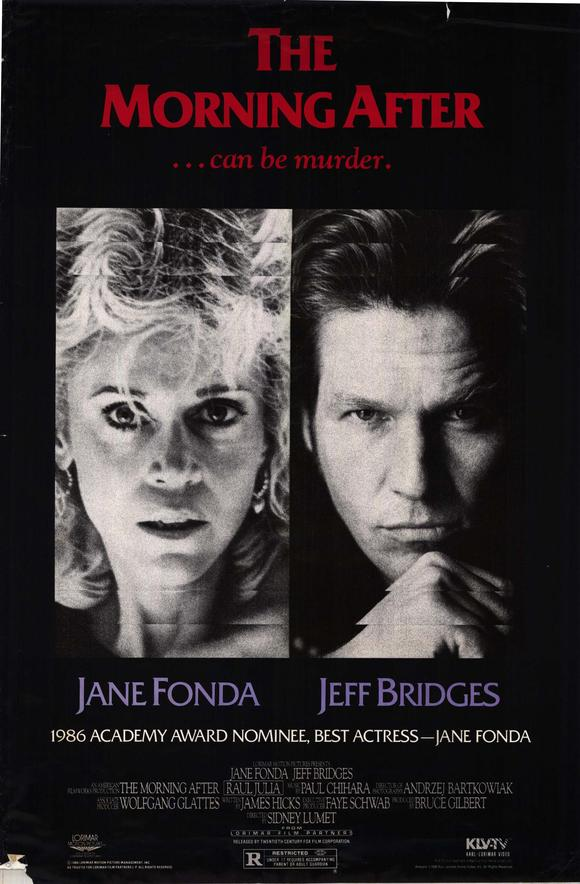
The Morning After (1986)

the morning after

By Richard Winters

My Rating: 5 out of 10

4-Word Review: She can’t remember anything.

Alex (Jane Fonda) is an out of work actress and alcoholic who is prone to black outs. One morning she wakes up to the find that the man lying beside her has been murdered. She isn’t sure if she did it or not as she can’t remember anything. She cleans up the place and then by chance meets Turner (Jeff Bridges) a former cop who tries to help her prove her innocence.

Starting out right away with her waking up to find the dead body doesn’t work. Some background to the character would have been better as without it the viewer doesn’t particularly care about the character’s predicament. It took me a long while before I could get into it and even then it was only at a lukewarm level. The laid-back and melodic jazz soundtrack doesn’t help. For a thriller it is completely out-of-place and as good as a director as Sidney Lumet is he seems to have problem in that area as the musical score selected for Family Business another film that he did was also a terrible choice.

The film has one interesting twist near the middle, but the pacing is so slow that whatever intrigue it gave me quickly subsided, which is the film’s biggest problem. It doesn’t know if it wants to be a thriller, mystery, drama, or love story. Too much time is spent dealing with Alex’s budding relationship with Turner, which isn’t interesting. By the time they do get back to the mystery you really don’t care anymore. There are also not enough suspects and I had figured out who the culprit was long before the revelation comes about.

Fonda is competent particularly in a teary-eyed emotional sequence where she tries to somehow justify her pathetic self-destructive existence. The character though is unappealing and it may take a while for the viewer to warm up to her if at all. I did like her in the blonde, puffy 80’s hairstyle, but at the half way mark she changes back to her more natural brunette look, which I felt made her look older.

Bridges character helps stabilize Fonda’s and in that regards his presence is helpful, but having them meet by complete chance and then having him get so involved in her quandary seemed implausible. It would have been better and made more sense had he been a longtime friend who she turned to in her time of crisis. Although Raul Julia has a less screen time he still adds a lot more energy than Bridges.

Kathy Bates, Bruce Vilanch, and Frances Bergen (Candice’s Mom) can all be seen in brief bits. I also want to mention Richard Foronjy who nails the caricature of a streetwise big city cop perfectly.

Although the film is now 27 years old it really isn’t too dated. Only two issues in this area come to mind. One is when Alex can’t get any money out of the bank because it is closed due to a holiday and there doesn’t seem to be any such thing as ATM machines. Another occurs when a police investigator asks the Raul Julia character if he is gay by using a derogatory term, which wouldn’t go over today. However, Julia’s comeback line “How bad do you want to know?” is a good one.

My Rating: 5 out of 10

Released: December 25, 1986

Runtime: 1Hour 43Minutes

Rated R

Director: Sidney Lumet

Studio: Lorimar Productions

Available: DVD, Amazon Instant Video

The Power (1968)

the power 2

By Richard Winters

My Rating: 6 out of 10

4-Word Review: Who has the power?

Professor Jim Tanner (George Hamilton) is the head of a scientific research group who come to realize that one of their members has strong telekinetic powers and is slowly killing off the other members one-by-one by fantastic and bizarre means. It is up to Jim and his assistant Margery (Suzanne Pleshette) to find out who it is and try to put a stop to it before they become his next victim.

There are definite shades to Agatha Christie’s classic mystery novel ‘And Then There Were None’ and in fact that title even gets mentioned here. Despite a pace that ebbs and flows Director Byron Haskin gives the proceedings a flashy and creative flair. Watching Jim getting attacked by toy soldiers in a display window is cool as is the part where he gets stranded in the middle of a desert. The ending features visuals of faces melting and skeletons dancing that reminded me a bit of the one in Raiders of the Lost Ark. I also enjoyed the scene showing an actual heart inside a man’s body getting squeezed and forcing it to stop.

The supporting cast is fabulous and almost of half of the film’s entertainment alone. Yvonne De Carlo is terrific in a brief, but fun bit as the tipsy wife of one of the victim’s. Gary Merrill is solid as a hard-bitten police detective and Aldo Ray is good as a menacing bad guy. Michael Rennie better known for his starring role in another sci-fi classic The Day the Earth Stood Still is effective here as the mysterious Arthur Nordlund, but my favorite of them all would have to Arthur O’Connell as the nervous and high-strung Henry Hallson. The look on his face after he is spun around at high speeds in a space compressor is probably the film’s best moment.

Where the film fails is that this mysterious person’s powers are much too broad with no limitations of any kind. I can handle the idea of telekinesis, but this guy can also make walls of buildings grow and make doorways disappear. He can even change the words on street lights to go from ‘Don’t Walk’ to ‘Don’t Run’. To me this made it seem too fabricated and far-fetched. Even in sci-fi there needs to be same perimeters and basis of logic of some kind and this film offers none. The fact that there is never any explanation given for how this person got these amazing powers, or what might have caused it makes it even weaker and hurts what is otherwise an interesting idea.

My Rating: 6 out of 10

Released: February 21, 1968

Runtime: 1Hour 48Minutes

Not Rated

Director: Byron Haskin

Studio: MGM

Available: DVD (Warner Archive)