Category Archives: Movies with Nudity

Streetwalkin’ (1985)

streetwalkin

By Richard Winters

My Rating:  6 out of 10

4-Word Review: Runaway turns to prostitution.

The actress I had a crush on when I was growing up was Julie Newmar best known as Catwoman from the old ‘Batman’ TV-series. I know that there have been several other actresses that have played the part, but Julie always brought in a sensual level that the others didn’t.  She also had a perfect hour glass figure and in that skin tight costume what man young or old could resist her. The fact that she balanced her performances with a hammy side, which the producers allowed her to freely ad-lib, is what always made her appearances on the show for me as an 11-year old kid, much anticipated and special.

Her Catwoman role was by far not the only thing that she did as she also starred in her own series as Rhoda the Robot in the TV-show ‘My Living Doll’ with Bob Cummings. She was also nominated for an Emmy for her performance in two memorable episodes of the classic series ‘Route 66’. In fact her performance here as the quirky non-conformist Vicki Russell I feel is the best of her career and now that this great show is finally available on DVD it would be well worth checking out.

Her movie credits aren’t too bad either. She co-starred in the classic 50’s musical ‘Seven Brides for Seven Brothers’ and also recreated her Tony award winning role as an over-sexed Swedish woman tempting her staid American host (James Mason) into fathering her baby. She also starred in ‘For Love or Money’ with Kirk Douglas and ‘Mackenna’s Gold’ with Gregory Peck. This was probably her best film performance as she plays a volatile and aggressive Indian woman and has no dialogue, but does appear nude from the backside.

In 1977 she married for the first time and dropped out of the business in order to spend more time with her husband. However, by 1983 it had ended in divorce and when she tried to get back into the movies she found the pickings to be slim. She co-starred with Tina Louise (Ginger from ‘Gilligan’s Island) in a film called ‘Evils of the Night’ that looked like it was made on a budget that wouldn’t be enough to buy a happy meal at McDonald’s. Her other film roles from the 80’s and 90’s weren’t much better with the possible exception being this one.

Here she plays the part of Queen Bee an older prostitute who befriends Cookie (Melissa Leo) who has run away from home with her brother and just starting out as a streetwalker. When Cookie realizes that her pimp/boyfriend Duke (Dale Midkiff) has beaten up her friend Heather (Deborah Offner) she becomes afraid of him and decides to start working for a new pimp. When the vengeful Duke becomes aware of the betrayal he begins to stalk her, which forces her to go on the run.

Newmar3

For the most part I found this film to be redundant. Yes it is hard hitting and at times quite vulgar and graphic, but it really doesn’t show anything we haven’t seen before. The storyline is basic and predictable. The scene where Duke beats up Heather is unpleasant and a bit unsettling. If this film managed to give us some new insight into the life of a prostitute I might have given it some credit, but it doesn’t and instead becomes intent in wallowing in its own sordidness.

Of course if you’re into trashy cinema then this thing might do the trick (no pun intended). The film has a tight pace and it is never boring. The fight scenes are well choreographed and for the most part realistic looking and for whatever reason I found myself caught up in the story during the second half and seeing whether our heroine would escape the relentless psycho.

Leo is excellent and it is no surprise that she would later go on to have an impressive acting career and even win the Oscar. She shows a nice vulnerability and creates a character that is real and appealing.

Midkiff is impressive as the brutal pimp. The part where he tears up Cookie’s apartment in a psychotic rage is intense and well handled.

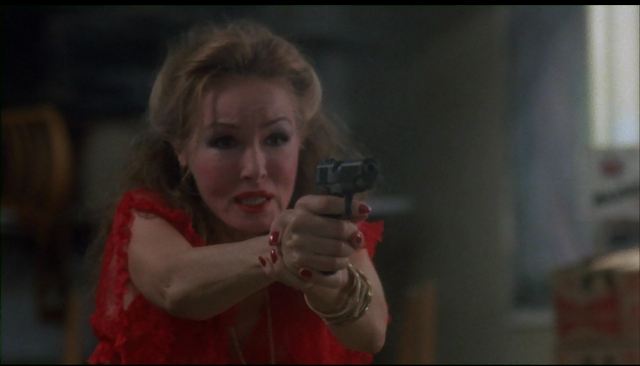
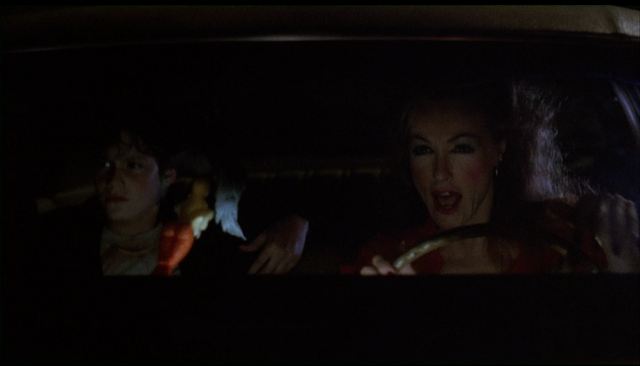
Newmar isn’t seen much in the first half, but comes on strong at the end. I loved seeing her shooting at Duke with a gun and when he escapes out onto the streets she gets into a car and tries running him down, which is pretty cool.  Having an older actress mixed in with a lot of younger ones creates a nice balance and hearing an actress who I grew up seeing on a kid’s show and now hearing her spew out the F-bomb is kind of funny.

Newmar4

Like I said personal taste will dictate whether you like this or not, but it is interesting to note that besides Leo and Midkiff a lot of other young performers got their start here, which then blossomed into successful careers. The others include: Randall Batinkoff, Greg Germann, Khandi Alexander and Leon, which is impressive and should make this a much sought after curio by fans who wish to see their favorite actor when they were just starting out.

My Rating: 6 out of 10

Released: September 20, 1985

Runtime: 1Hour 26Minutes

Rated R

Director: Joan Freeman

Studio: Concorde Pictures

Available: VHS, DVD

Street Girls (1975)

street girls

By Richard Winters

My Rating: 3 out of 10

4-Word Review: Father searches for daughter.

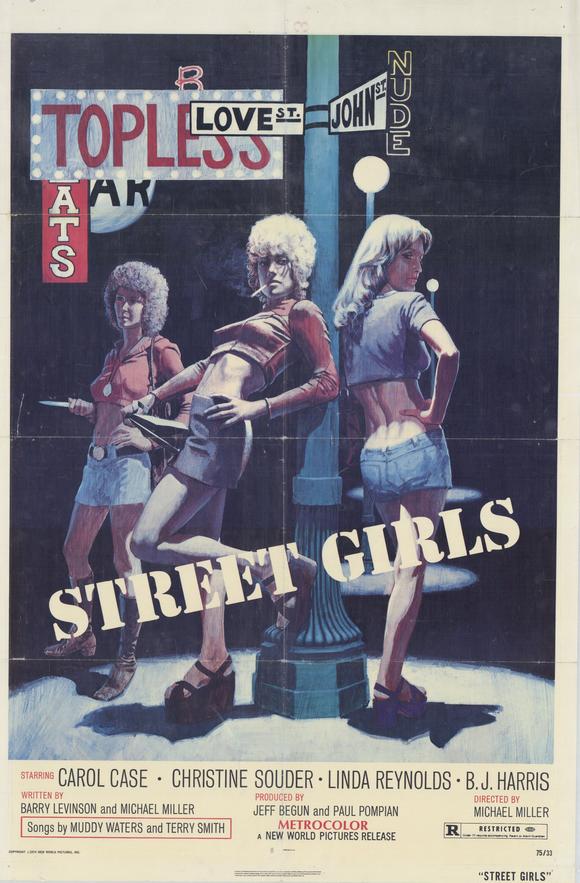
Angel (Christine Souder) is a young woman out on her own for the very first time. To make ends meet she gets a job at a topless bar, but this leads to working as a prostitute and getting hooked onto heroin by her brutal pimp boyfriend. When her father Sven (Art Burke) goes searching for her he finds himself swept in the seedy side of life and the people who populate it almost as much as her.

This otherwise low budget and forgotten film’s biggest claim to fame is that it is the first feature credited to Barry Levinson as the screenwriter who also worked as the assistant cameraman during the production. Levinson has never talked about it in any interview and it is easy to see why. The script is filled with a lot of rambling dialogue that goes nowhere. The story is basic and boring and seems preoccupied with taking advantage of the ‘shock value’ of its topic which these days has lessened.  It’s more clichéd than anything although the scene where one of Angel’s johns asks her to put on some goggles so that he can, to her shock, pee all over her does deserve mention.

This film is very similar to Paul Schrader’s Hardcore that starred George C. Scott and came out four years later and deals with a desperate father’s search for his daughter who has gotten into the world of porn. I actually like this film a bit better to that one. For one thing this one focuses more on the daughter and her experiences while that one solely centered on the father, which wasn’t as interesting. The father here isn’t quite as one-dimensional either. Yes he has all the caricatures of a middle-aged Midwestern man from the period including being homophobic, but I got a kick out of the way he initially gets into the naked girl dancers and likes it as long as of course it isn’t his daughter that’s doing it.

The acting swings from tolerable to really bad, but I did like Carol Case as Sally who has the most screen time and looks like a cross between Susan Anton and singer Carly Simon. Paul Pompain has a certain menacing quality as the brutal pimp although watching him constantly beat up his prostitutes and even kill one didn’t seem to make any sense as these girls were his may source of income and as my friend stated who watched this movie with me “He’s hurting their resale value.”

The picture is grainy with a faded washed out look and muffled sound that makes it seem almost like someone’s cheap homemade movie and yet it is well enough paced that it remains watchable. The scene where the father and daughter finally meet I found to be surprisingly touching.

My Rating: 3 out of 10

Released: January 16, 1975

Runtime: 1Hour 14Minutes

Rated R

Director: Michael Miller

Studio: New World Pictures

Available: None at this time.

The Magic Garden of Stanley Sweetheart (1970)

the magic garden of stanley sweeheart

By Richard Winters

My Rating: 3 out of 10

4-Word Review: An aimless, carefree lifestyle.

Based on the novel by Robert T. Westbrook who also wrote the screenplay the film centers on Stanley (Don Johnson in his film debut) an underground filmmaker living in an apartment that is almost continually bombarded with the noise of a construction site next door. He has big dreams and ambitions, but at times seems awkward and unsure of himself. He meets Cathy (Dianne Hull) who he initially is just interested in for sex, but then he starts to fall-in-love with her and when she breaks up with him he finds it hard to handle.

The movie starts out well. I enjoyed the free-style direction and narrative. Cutting back and forth showing things as they are versus how Stanley would like them to be is fun, but the film deviates away from this when it would have been more interesting had it stayed this course all the way through. There is a certain element of one of Andy Warhol’s anti-movie movies here where the film tries to challenge the viewer’s conventional understanding of protagonists, plot, character development and all around narrative structure and it is no surprise that Warhol really liked this movie. It does have a strong cinema vertite approach that gives you a feeling like you are right there with the characters and to a certain extent helps bring the 60’s back to life.

Unfortunately the direction is too lackadaisical and unfocused and the story is uninteresting. Looking more at Stanley’s underground films could have given it a little more bite, but we only get a glimpse of one of his movies and then that thread is pretty much forgotten. The second half of the film centers on Stanley’s relationship and ultimate break-up with Cathy, which is too contrived and does not compliment the film’s otherwise offbeat approach. Funky and irreverent moments of humor are lost with a storyline that doesn’t seem to know where it wants to go or what to say. Tighter editing could’ve helped avoid some long stretches where nothing seems to happen.

The film though still has some interesting and unique scenes. I got a kick out of Stanley’s cluttered apartment and how he has to smell his food in his refrigerator to see what is still edible and for entertainment he stamps on cockroaches crawling across his floor. The part where he masturbates in a bathtub while reading a letter written by his mother is hilarious. His attempts at making a porno by getting his actress (Holly Near) good and drunk only to get her hornier than he is amusing. The naked body painting sex orgy that he has with two young nubile roommates has a nice sensual quality.

Don Johnson is excellent and the one thing that keeps this wandering film together and he can be seen totally nude from both the front and back. Hull allows for some diversion as a sheltered young lady who is initially shocked by the open sexuality around her, but eventually learns to embrace it. Native American actress Victoria Racimo is hot with her clothes on and off and reminded me a lot of 70’s adult film star Hypathia Lee. Brandon Maggart makes the most of his small bit as a gay man trying to come onto Stanley while inside a café. Michael Greer offers some edginess as Stanley’s slightly menacing friend Danny. His violent death that occurs near the end of the film and in front of his shocked mother does leave an impression, but we don’t know enough about the character for it to make much sense and just another thing put into the film without seemingly much thought.

My Rating: 3 out of 10

Released: May 26, 1970

Runtime: 1Hour 50Minutes

Rated R

Director: Leonard Horn

Studio: MGM

Available: None at this time.

Is There Sex After Death? (1971)

is there sex after death 2

By Richard Winters

My Rating: 4 out of 10

4-Word Review: It’s all about sex.

This is basically a compilation of vignettes all satirizing America’s new found sexual revolution and is not all that different from other similar ‘underground’ films of that period and should best be viewed as simply a relic of its era.

Some of the bits could be considered clever, but they fail to build any momentum. The one joke premise loses steam halfway through eventually making the constantly quirky insights by the constantly quirky characters tiresome and redundant. The sex and nudity, while in abundance, also become a turn-off. The majority of the participants, especially those in the nudist colony, are so old and out of shape you really wish they would have just left their clothes on.

Writer/director Alan Abel who also acts as the host and interviewer comes off best. His unblinking deadpan seriousness, even when in the middle of complete perversity, is right on target. It also features a funny interview with transvestite Holly Woodlawn, some spontaneous on the street moments and a climatic ‘Sex Olympics’. In fact if you get this on video it might be worth it to just fast forward it to that point.

My Rating: 4 out of 10

Released: October 24, 1971

Runtime: 1Hour 42Minutes

Rated X

Director: Alan Abel

Studio: Abel-Child Productions

Available: VHS

Kramer vs. Kramer (1979)

kramer vs kramer

By Richard Winters

My Rating: 10 out of 10

4-Word Review: Life after wife leaves.

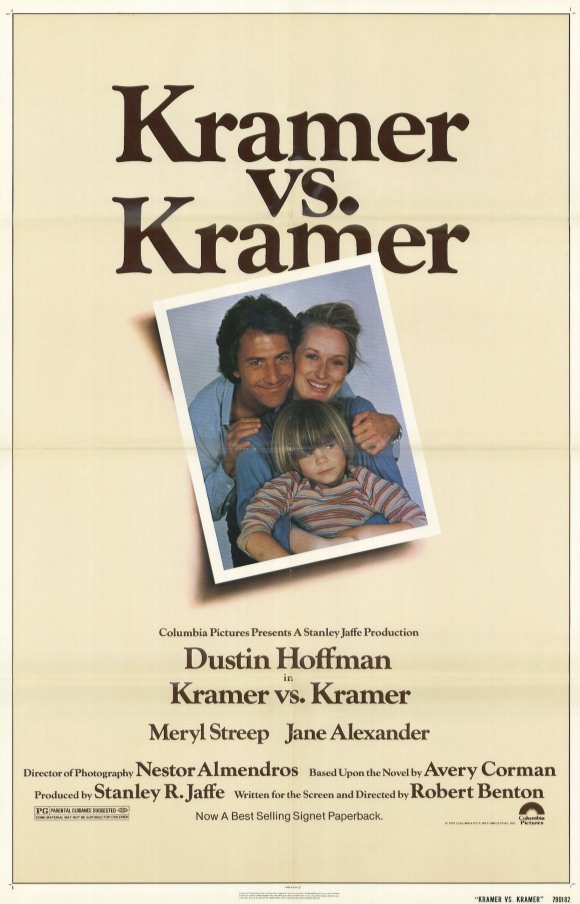
This is a solid drama detailing the divorce and subsequent custody battle between two young, educated and upper middle class parents (Dustin Hoffman, Meryl Streep).

To say that this is simply an examination of divorce and its effects on both the child and parents do not do the film justice as this is a very richly textured story that brings out the many variables that come with being a modern day parent. One of the best is the examination of Hoffman’s character’s job and how ‘moving up the corporate ladder’ can have an adverse effect on a man’s home life and his family members. In fact this is a major factor to his break-up and emotional detachment with his wife.

The film also offers a nice glimpse between father and son and the scenes showing this relationship are quite touching especially as they learn to coexist with one another after the mother leaves. Justin Henry doesn’t get enough credit for his performance as the son. Yes, he is adorable in the typical child-like way, but he also manages to create a child character that is diverse and memorable.

Hoffman gives a superior performance and in many ways it is all about him and his adjustment at playing the dual roles of being both a father and mother. He has his aggressive New Yorker persona, but you understand it and really feel for what he is going through. Even watching him frantically running around from place-to-place is interesting.

Streep is also outstanding in what is kind of an unusual role for her. Typically she plays strong-willed women with a strong on-screen presence, but here her character is rather weak and suffers from problems that are elusive, but still intriguing.

Howard Duff is solid as Hoffman’s attorney and Jane Alexander offers good support as the next-door-neighbor although her character is a bit too ordinary and could have been supplied with a few interesting quirks.

The subject itself is still quite topical and everything is kept in a real perspective with nothing getting overblown or clichéd.  Robert Benton’s direction is flawless as it pays attention to the smallest of details and makes them special.  A good example of this is the poor way the father and son try to make French toast when they first find themselves alone together and then the very efficient way they learn to make them at the end. It is also not all serious as there is a really hilarious scene involving Jobeth Williams who plays Hoffman’s new girlfriend and the unusual circumstances onto which she first meets Henry.

There are a few issues to quibble about, but they are minor. One is that you hear Hoffman and Henry peeing in the toilet a lot, but they never seem able to flush it! There is also a scene where Hoffman who is in desperate need for a job applies for one during a holiday party and when he gets it he runs out, grabs a woman he does not know and kisses her right on the lips. If he tried something like that today he would not only be fired on the spot, but have a sexual harassment lawsuit as well.

My Rating: 10 out of 10

Released: December 19, 1979

Runtime: 1Hour 45Minutes

Rated PG

Director: Robert Benton

Studio: Columbia Pictures

Available: VHS, DVD, Blu-ray, Amazon Instant Video

La Grande Bouffe (1973)

la grande bouffe 1

By Richard Winters

My Rating: 3 out of 10

4-Word Review: They stuff their faces.

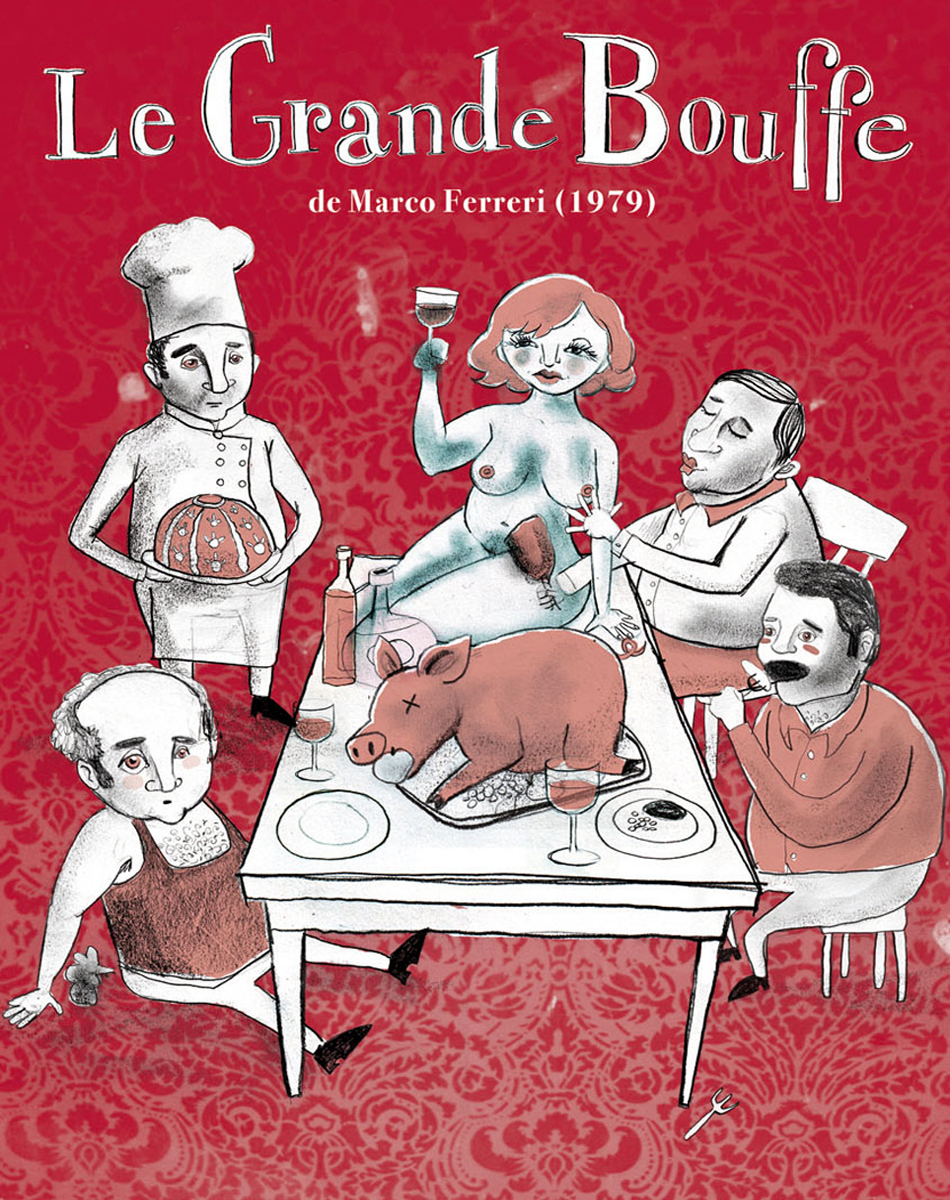
This film will start an annual Thanksgiving Day theme of reviewing movies that have something to do with food and eating. This one may be the most notorious of them all and despite its offbeat plot and crude scenes won the Cannes Film Festival’s International Critics award as well as attaining a large cult following and be one of the highest grossing movies in the history of Italian cinema.

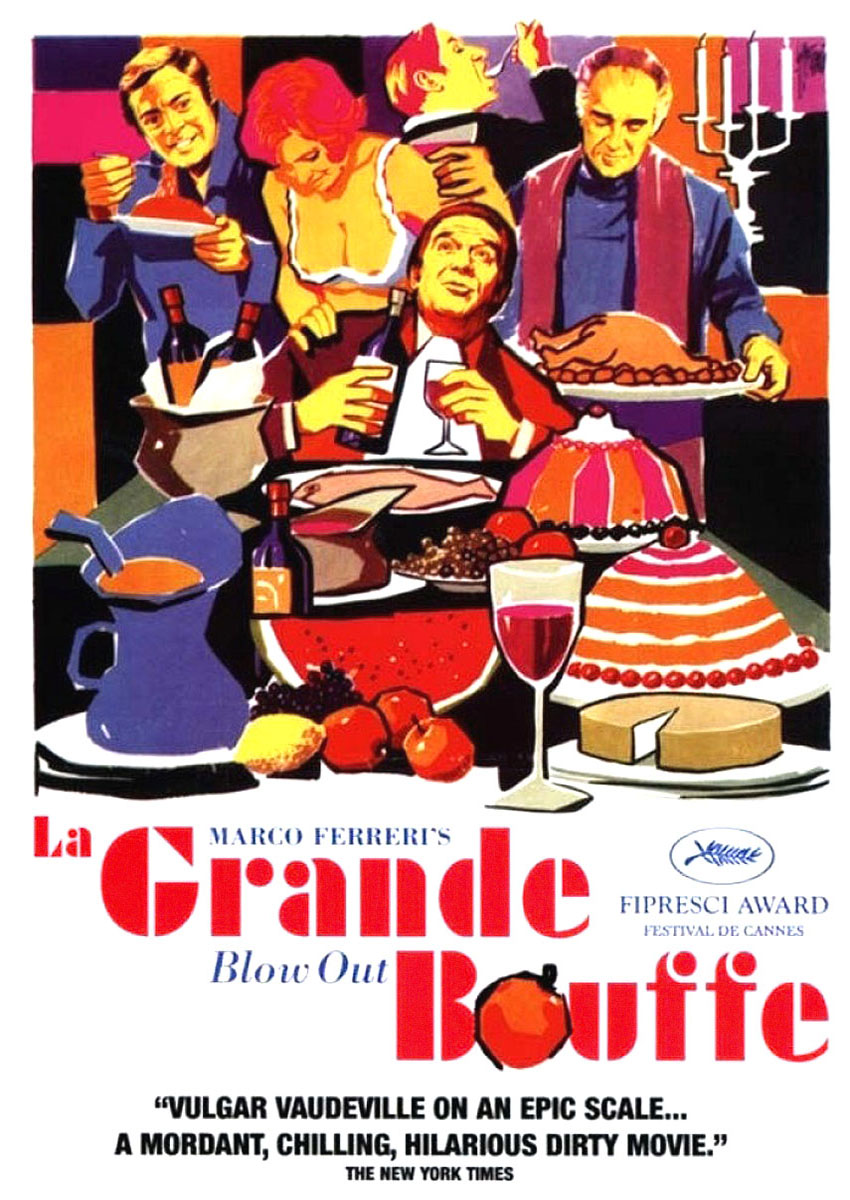
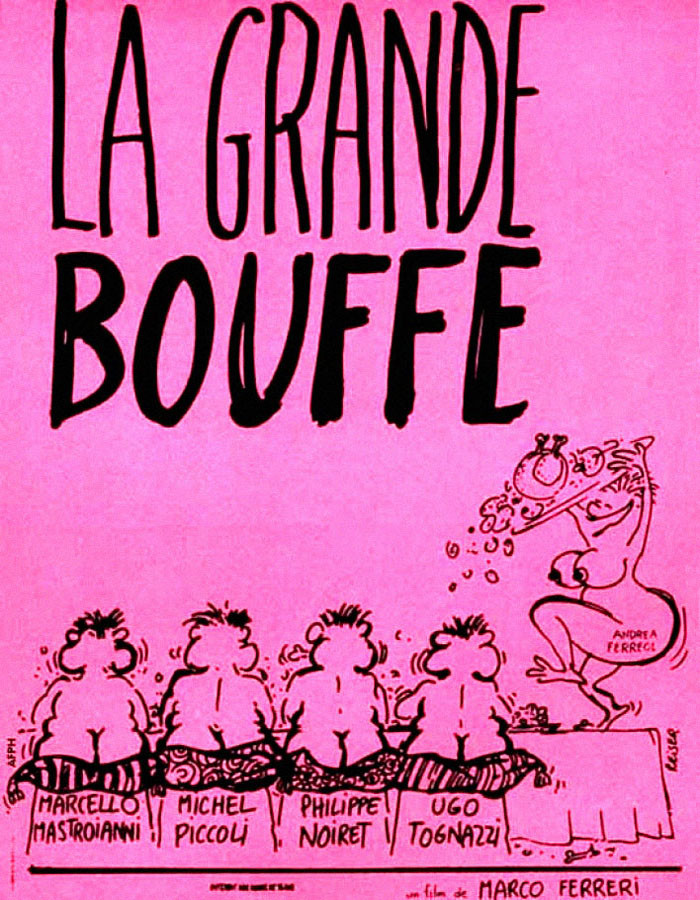
The story deals with four middle-aged men (Marcello Mastroianni, Ugo Tognazzi, Philippe Noiret, Michel Piccoli) who despite attaining affluence and wealth are bored with life and decide their only recourse is to get together for a weekend and commit group suicide by eating themselves to death.

At first the movie will make you hungry.  After an initial set-up the characters can be seen eating in just about every shot. The variety of foods and menu that is served is almost mouth-watering and features a wide array of exquisite dishes seen only in the most fanciest of restaurants. However, after visually seeing these people overeat I felt myself feeling as bloated as the characters and almost sick. The film also gets quite gross with several segments featuring loud sounds of flatulence and a scene where the toilet bursts and covers the men and room with feces that even drips down and gets into the kitchen.

Some may find this ‘hilarious’ while others will think it’s disgusting. For me despite the moments of over-the-top crudeness the strongest scene may actually be when the characters start dying and their dead bodies are carried into a freezer while the rest of them continue to make food and stuff their mouths like it is a compulsion.

la grande bouffe 2

The four leads are old pros who couldn’t give a bad performance if they tried. I started to wonder though how they could eat so much and whether the scenes were all done in one take with no retake as eventually I think they would all start puking. Mastroianni’s death scene is a stand-out simply because it manages to keep his expression completely frozen and does not manage to blink for several minutes, which I found impressive. Tognazzi’s death moment is also fun although it’s Andrea Ferreol who starts out as a proper school teacher, but ends up becoming as decadent and hedonistic as all the men combined that steals it.

The film makes a strong if not impactful statement about gluttony and how a life of prestige and luxury may actually be more of a trap and curse. The more some people get of it the more they want until it is never enough and death may end up being their only true source of salvation and escape.

The idea is outrageous and clever and I loved the concept, but the execution is lacking. The direction is too loose with scenes going on longer than they should. Some tighter editing would have helped the pace and momentum.  I also don’t think it is possible for a person to stuff themselves with food and then die as I think instead they would just vomit it all out.

la grande bouffe 3

My Rating: 3 out of 10

Released: May 17, 1973

Runtime: 2Hours 4Minutes

Rated NC-17

Director: Marco Ferreri

Studio: Films 66

Available: VHS, DVD

The Marriage of Maria Braun (1979)

the marriage of maria braun

By Richard Winters

My Rating: 8 out of 10

4-Word Review: Maria gets her way.

Maria’s (Hanna Schygulla) husband a soldier in World War II is presumed dead. She decides to make her mark by getting a job and a new lover in the form of a black man named Bill (George Eagles), but complications ensue when her husband Hermann (Klaus Lowitsch) shows up very much alive. Maria enjoys her new found independence and isn’t interested in falling back into her old role, which causes friction with her husband as well as her interactions with others.

Director Rainer Werner Fassbinder creates a unique vision and manages to walk the balance between the gritty and surreal. The lighting is evocative and shadowy and nicely reflects his stage background. The sets are colorful and varied and one becomes almost hypnotically entranced with the visuals. The abandoned buildings and rundown locales especially at the beginning make a strong impression and become like a third character. Fassbinder echoes the desperation of the characters through visual means only without ever having to resort to melodramatics, which alone makes this a classic and far better than some other similar films about the period.

Equally great use is made of sound with two to three layers of it within each scene. Whether it is the noise of a radio, traffic, or someone whistling there is always some noise coming from the background much like in reality, which helps in a subtle way to make the scenes more vivid. I loved the dolly shots constantly moving the camera around in every scene throughout the rooms that the characters are in giving the viewer a full sense of their dimensions and helping breakdown the fourth wall.

Some memorable scenes include the moment when Maria’s husband comes back from the war and catches Maria in a compromising position with her new found lover. There are at least four minutes here where there is no talking from any of the characters and one becomes riveted with the silent reactions of the three, which proves powerful. Even the erotic overtones work. Normally I find that area to be rather clichéd and mechanical, but here the sweat glistening off the naked bodies seems genuinely evocative and enticing.

Many people feel this is a movie about budding feminism and applaud the strong female character. I really wouldn’t argue with that and in many ways it is fun seeing this woman forge her way ahead while remaining poised and stalwart throughout. Her relationship with rich businessman Karl (Ivan Desny) and the way she turns him into a subservient to her every whim while also explaining to him that ‘he isn’t having an affair with her, but instead SHE is having one with him’ is classic, but I also felt it seemed a bit artificial. Having a strong central character is one thing, but this woman seems inhuman. She never shows any vulnerability at any time and appears almost completely removed from the environment around her. Never once does she flinch, compromise, or back down from anything or anyone, which just isn’t possible and makes Maria one-dimensional in the process. A character is more interesting when their flaws are exposed and then they must work hard to overcome them, but this one doesn’t have any, which is my biggest issue with this otherwise excellent production.

My Rating: 8 out of 10

Released: February 20, 1979

Runtime: 1Hour 58Minutes

Rated R

Director: Rainer Werner Fassbinder

Studio: United Artists

Available: VHS, DVD (The Criterion Collection)

Death Race 2000 (1975)

death race 2000

By Richard Winters

My Rating: 5 out of 10

4-Word Review: New meaning to roadkill.

Based on the novel ‘The Racer’ by Ib Melchior the year is 2000 and a highly rated cross-country race takes place on television between many colorful individuals. There is Frankenstein (David Carradine) who has lost an arm and a leg in past races and must wear a leather mask to cover up his facial scarring. Then there is his chief rival Machine Gun Joe Viterbo (Sylvester Stallone) and also Calamity Jane (Mary Woronov) Nero the Hero (Martin Kove) and Matilda the Hun (Roberta Collins). Of course this is no ordinary race as crossing the finish line isn’t really as important as how many innocent bystanders they can kill along the way.

The idea is outrageous and for the most part director Paul Bartel manages to pull it off especially within the limitations of the budget. There are real kick-ass car explosions here and none of that computerized crap, which in itself gives it a few extra points. I liked the scene were an actual car is seen dropping down a steep cliff and how they were able to block off long sections of highways in order to be the only cars on the road. Some of the dark humor is funny although more so in the beginning. The best moment is when a group of doctors and nurses wheel up some elderly patients onto the middle of the roadway in order to be slaughtered by the racers as part of the their annual ‘euthanasia day’.

Sly is really funny. I know some critics have gotten on him over the years about his acting, but here he steals it from his costars and the film wouldn’t have been as effective without him. Carradine is pretty good in his part and his more subdued acting style makes a nice contrast to Stallone’s flamboyant one. The two even end up in a nice fist fight. However, I liked the idea of having the Carradine character being this walking gimp of a man so intoxicated with winning that he continues to drive and compete even as his body falls apart. Having him take of his mask and look completely normal and making that all a sham was disappointing and took away the unique gritty mystic of the character.

The initial treatment of the script was written by producer Roger Corman and then Bartel was hired in to put a more humorous spin on it. Although I like the idea of having some comedy I still wanted more gore and grittiness. Instead it becomes too campy and cartoonish and losing the potential edge that it has at the beginning. There also needed to be more of a focus on the race itself. As it is it goes too fast with pit stop segments that bogged the whole thing down. They manage to get from New York to St. Louis in one day, which if going on I-70 would be 953 miles and doesn’t seem possible even at high speeds. There is also a question of the speed of these cars. Supposedly they are ‘real fast’, but there is one segment where Joe tries to run down a kindly fisherman and the guy is able to out run the car for quite a distance before he is hit, so they can’t be all that fast.

There is also a secondary storyline involving an underground group called the People’s army that is trying to sabotage the race and put an end to it. Initially I felt this thread would allow for more intrigue, but instead it makes the whole thing too over-the-top. The short running time doesn’t allow for such a convoluted plot and the whole thing would have been better served had they stuck to the race and racers personalities itself. The sappy ‘feel-good’ twist ending is terrible and ruins whatever potential edge the film had.

My Rating: 5 out of 10

Released: April 27, 1975

Runtime: 1Hour 20Minutes

Rated R

Director: Paul Bartel

Studio: New World Pictures

Available: VHS, DVD, Blu-ray, Amazon Instant Video

A Nightmare on Elm Street 5: The Dream Child (1989)

Nightmare on elm street 5

By Richard Winters

My Rating: 5 out of 10

4-Word Review: Freddy’s in the womb.

Alice (Lisa Wilcox) who survived Freddy’s attack from the last film and supposedly killed him is now suffering from those dreaded reoccurring nightmares again. This time she sees herself inside the mental institution where Freddy’s mother Amanda was raped and even witnesses his rebirth. She also finds out that she is pregnant and Freddy is trying to drive his spirit into the fetus so he can be reborn into the real world.

I came into this thing with extremely low expectations, but found myself delightfully surprised and consider this a definite improvement over the previous installment. Director Stephen Hopkins inserts a more artistic visual flair here. Some of the segments even have a certain Salvador Dali look especially near the end when the dimensions in the rooms inside the dreams begin to have all sorts of odd configurations. The use of a moonlit-like lighting accentuates the film’s dark imagery. I saw here the makings of the modern day horror movie that we are used to seeing today with more emphasis on the dark psychological undercurrent and less on the mechanical slasher formula.

The special effects are imaginative. Watching Freddy coming out of his mother’s womb as a baby is excellent as well as having him as a deformed baby run around an abandoned sanctuary as a sort of freak child. The scene showing Alice’s unborn baby inside her womb and attached to an umbilical cord I found to be quite impressive. I also was impressed with the segment where Alice’s skinny model friend Greta (Erika Anderson) gets her mouth stuffed with food by Freddy and her cheeks balloon out excessively, which may sound funny, but the way it is shown gets disturbing and even unsettling as they go back to it several times later on in the film. A segment cut from the theatrical release where Freddy force feeds her the insides of her own stomach can be seen on the unrated version.

The characters seem more like real people and the dialogue is an improvement as well. Wilcox now sports blonde hair and no longer has that reddish hair look that reminded me too much of Carrie. She also seems more confident in her role and gives a solid performance. Anderson, who was a former Elite model, makes for a pleasant addition to the eyes.

Freddy doesn’t have quite as much screen time as he did before, but that works for the best. The pace is slowed down with more emphasis on mood and atmosphere, which gives it a slightly more sophisticated feel.

My only real complaint is the blaring rap song that gets played over the closing credits, which is jarring and out-of-place.  Some fans of the series consider this to be one of the weaker installments, but I don’t agree. However, if you didn’t like it feel free to leave a comment as I would be interested to hear why.

My Rating: 5 out of 10

Released: August 11, 1989

Runtime: 1Hour 30Minutes

Rated R

Director: Stephan Hopkins

Studio: New Line Cinema

Available: VHS, DVD, Blu-ray, Amazon Instant Video

A Nightmare on Elm Street 4: The Dream Master (1988)

nightmare on elm street 4

By Richard Winters

My Rating: 3 out of 10

4-Word Review: Freddy won’t go away.

Freddy Krueger (Robert Englund) tracks down and kills the last of the three remaining Elm Street teens, but Kristen (Tuesday Knight) wills her dream powers to her friend Alice (Lisa Wilcox) who now finds herself taking on the different traits of the past victims.  As Freddy tries to draw on a new batch of teen victims she fights him off with her new found abilities.

What started out as a highly original idea has now become formulaic. I didn’t find any of it scary, or even all that entertaining. The nightmare segments are redundant and the storyline cluttered. I wasn’t wrapped at all in the perils of any of the characters and would be surprised why anyone would. The whole series would’ve worked better had it stuck with the original Nancy character solely being the victim of the dreams and her lifelong battle against Krueger instead of always having some new character being the victim of the nightmares, which starts to make it derivative.

The dialogue is stilted and the characters are cardboard. The acting is also uniformly bad. Past entries in the series have had teen cast member go on to super stardom, but it is easy to see why this one didn’t. Due to being pregnant Patricia Arquette was unable to reprise her role as Kristen and Knight makes for a very weak replacement. I also didn’t like Wilcox because she seemed to resemble Sissy Spacek and started to remind me too much of the original Carrie. I did appreciate Danny Hassel as Dan simply because his wooden acting and one-note facial expressions aptly reflected the dull personality of your average high school jock.

The special effects are okay. The part where Alice is at a movie theater and gets sucked into an old movie is groovy as is watching the attractive Brooke Theiss morph into a giant cockroach. The segment where the souls of Freddy’s victims burst out of his body is excellent and the best moment of the entire film. However, other effects like having the heads of Freddy’s victims on sausages of a giant pizza are too silly.

Englund is in top form and really seems to be having fun. The part where he bursts out of a water bed and asks Joey (Rodney Eastman) “How’s this for a wet dream?” is fun as are his other choice lines. Englund even appears briefly as a female nurse and does as the Freddy character a rap song during the closing credits.

The series at this point looks to be dying a slow death with not enough new elements being added in and too much rehashing of the same old stuff. It seems incredulous to me that another two entries were made before the concept was finally retooled.

My Rating: 3 out of 10

Released: August 19, 1988

Runtime: 1Hour 32Minutes

Rated R

Director: Renny Harlin

Studio: New Line Cinema

Available: VHS, DVD, Blu-ray, Amazon Instant Video