Category Archives: Movies with Nudity

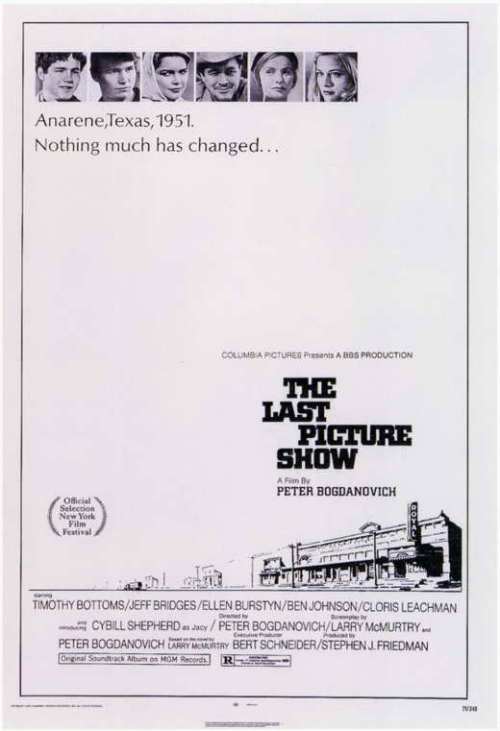
The Last Picture Show (1971)

last picture show 1

By Richard Winters

My Rating: 9 out of 10

4-Word Review: A Texas sized drama.

Based on the Larry McMurtry novel, who also co-wrote the screenplay, the story deals with the inter-workings and relationships of a people living in a small Texas town known as Anarene during the years of 1951 and 1952.  There’s Duane (Jeff Bridges) and Sonny (Timothy Bottoms) two high school seniors who are also best friends. Duane dates the highly attractive Jacey (Cybill Shepherd) who seems more geared to playing the field with every guy in town and even makes a play for Sonny, which seriously affects his relationship with Duane. There’s also Ruth (Cloris Leachman) the lonely coach’s wife who begins a brief affair with Sonny until he decides to bail-out for the more attractive Jacey. Sam (Ben Johnson) makes up part of the older generation still stuck in the dusty town and trying to make ends meet by running the local movie theater and pool hall both of which come to a halt when he dies suddenly.

I saw this film just recently outside on the big screen as part of the Texas Film Heritage and Preservation Society here in Austin. Although I had seen it before I was hit with how much more impressive and visually sumptuous it is on the big screen. Robert Surtees’ black and white cinematography is top-notch and the main ingredient to what makes it so spellbinding, so much meticulous attention is taken into each and every shot that one could almost watch this with the sound down and still find it thoroughly compelling.

Director Peter Bogdanovich takes great care to make sure that all of the elements are there and spins them together like a well-crafted machine so the viewer learns bit and pieces about these characters and their attitudes through each shot and camera angle that comes along. Filming it on-location in Archer City where McMurtry grew up helps accentuate the authenticity as does playing the country music from the period although I could’ve done with a little less of that and more of the sound of the wind and dust crackling across the barren region instead.

What surprised me most was how interesting and varied the love making scenes where and how instrumental they became to the film as a whole. One of the most memorable ones is when Sonny first tries to make love to Ruth, but is quite awkward about it. We see the pained expressions on both of their faces, hear the rusty springs of the mattress, and then finally witness Ruth’s attempts to shield her crying and frustration from Sonny. Duane’s futile attempt at sex with Jacey later on is also good particularly the fiery look of anger spewing from Jacey’s eyes when he is unable to perform. The scene involving a mentally challenged young man pushed into attempting sex with an obese and caustic prostitute inside the backseat of a cramped car is both darkly funny and sad, but the most provocative love making moment comes near the end when Jacey has sex with her mother’s boyfriend (Clu Gulager) on top of a pool table inside a dark and lonely pool hall while bracing the table’s side pockets with her hands for leverage.

The performances are all-around outstanding and both Leachman and Johnson won the Academy Award for their work here, but I still came away feeling, just like I did twenty years ago when I first saw this film, that Shepherd does the best job and leaves the most lasting impression. I love how her character slips between being insecure and indecisive to cunning and conniving and Shepherd’s facial expressions are completely on-target all the way. Her striptease done on top of a diving board is still pretty hot and my only complaint about the character is the way she elopes with Sonny and then completely bails on him the next day. I realize she didn’t love the guy and she’s just used him like she did others, but I didn’t understand what her motivation was in this instance as she seemed to get little if anything out of it.

I was also a bit disappointed that the Coach Popper character played by Bill Thurman didn’t have a bigger role in the story. The way he berates his players during practice is amusing and would most likely get coaches in today’s more sensitive world in hot water. I also found his constant spitting of tobacco juice into a cup that he carries around with him to be grotesquely amusing, but my biggest beef is the fact that we have a main character screwing his wife and the whole town knows about it, but never any reaction from the man himself. Maybe he was aware and didn’t care, but the movie should’ve made an attempt to show this, or at least some interaction between Sonny and the Coach since Sonny was at one time one of his players, which would have to make things quite awkward whenever they would bump into each other and in a small town that would most likely happen on more than a few occasions.

Overall though this is a great movie and I was surprised at how frank and explicit it was despite its 1950’s setting. Some may argue that it was done with too much of a revisionist mindset and things weren’t quite this wild, but others, like myself, will insist that it probably was, but just not talked about as much.

My Rating: 9 out of 10

Released: October 22, 1971

Runtime: 2Hours 6Minutes (Director’s Cut)

Rated R

Director: Peter Bogdanovich

Studio: Columbia Pictures

Available: DVD, Blu-ray, Amazon Instant Video

Life Size (1974)

life size 1

By Richard Winters

My Rating: 5 out of 10

4-Word Review: A sex doll obsession.

Michel (Michel Piccoli) runs a successful dental practice, but finds that his life is empty and his marriage to his wife Isabelle (Rada Rassimov) is no longer working. He has cheated on her before, but those affairs left him with the same empty feeling, so this time he decides to take a different route by purchasing a life size sex doll that looks so real that she almost seems human. He takes her everywhere and even brings her along to a visit with his mother (Valentine Tessier) so she can meet his new ‘girlfriend’.  The doll becomes the centerpiece of his very existence and he spends every waking moment he can with her until he sees footage, from a closed circuit camera that he has set-up in his house, of one of friends having sex with her while he was away. He becomes outraged at her ‘betrayal’ and decides that her punishment will be ‘death’.

The film, which can best be described as an early, distant cousin to Lars and the Real Girl, definitely has its share of unique and memorable moments. Writer/director Luis Garcia Berlanga does an admirable job of analyzing just what might happen if sexual fantasy gets taken to its most extreme level. The scenes showing Michel taking the doll to a clothing store in order to be measured and fitted with the latest fashions and marrying the doll in a makeshift wedding are by far the film’s two best segments.

However, it’s Michel’s scenes with his wife that I found to be the most unsettling. The scene where he fondles his wife’s naked breasts late at night as she sleeps while looking at a picture of the doll is quirky enough, but then later on, in the film’s most disturbing moment, she tries immersing completely into his sexual fantasy by pretending to be a sex doll herself in a desperate attempt to win him back.

What is initially considered the sexual substitute to the real thing soon becomes the preferable choice here and it reminded me of an article I read in a science journal a few years back about young men in their 20’s forced to be prescribed Viagra because they were no longer able to achieve erections with their wives/girlfriends because the proliferation of porn on the internet had somehow dulled their senses to real sex to the point that they found it to be a ‘turn-off’. Now, if you are a fan of porn then that’s great and I don’t mean to be appear like I’m trying to knock it, but I did find it fascinating that elements of that article correlated to what this film was showing and how successful this movie was at foreshadowing the phenomenon’s that we are now seeing in our modern day culture.

Although the film is adequately directed and more of a psychological study than a perverse sleaze feast it’s still not an overall success. The main issue is that the main character acts overtly freaky about the doll from the very beginning without enough backstory to tell us why and simply saying it’s due to a unhappy marriage is not enough. A far more compelling concept would’ve been to portray the main character as being more ‘normal’ by having him feel awkward about the doll and even a bit embarrassed only to grow increasingly more obsessed as the film progresses until his ultimate infatuation with it shocks even him.

Alternate Titles: Grandeur Nature, Love Doll, Tamano Natural

My Rating: 5 out of 10

Released: August 21, 1974

Runtime: 1Hour 41Minutes

Rated X

Director: Luis Garcia Berlanga

Studio: Cinema International Corporation

Available: None at this time.

Baby Boom (1987)

baby boom

By Richard Winters

My Rating: 5 out of 10

4-Word Review: Yuppie inherits a baby.

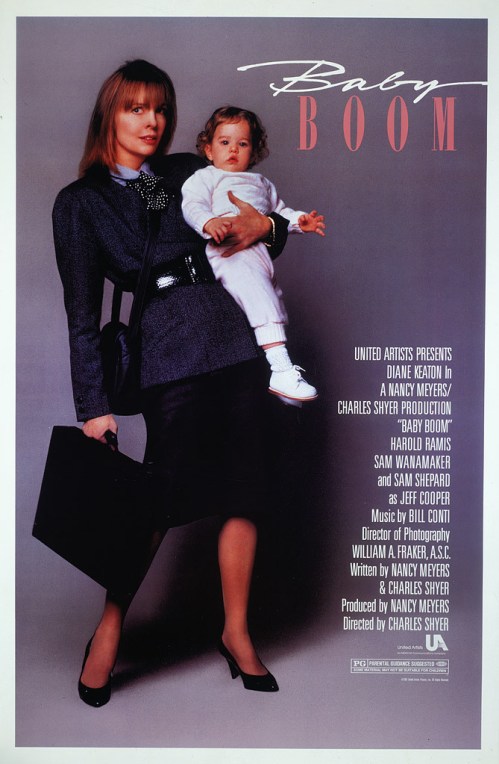
J.C. Wiatt (Diane Keaton) is a successful businesswoman who has risen to the top of the corporate world by being quite literally ‘married-to-her-job’, which is just fine with her boss (Sam Wanamaker) as he is the same way and demands nothing less. Out-of-the-blue she gets a call that a distant relative has died and sent her an inheritance. She initially thinks it’s money only to find to her shock that it’s a baby girl instead. J.C. lacks any parenting skills and has difficulty even putting on a diaper, let alone knowing the right sized one to buy. Her annoyance slowly grows to bonding as she finds raising a young one has rewards far greater than her previous yuppie lifestyle could offer.

The premise for this thing is whacked. What kind of halfway normal parent would write a will that has their child shipped off to a distant relative that they haven’t had contact with since 1954 in the event of their death? Certainly there had to have been some close friend or family member that they knew of who would’ve been far more appropriate and could’ve been forewarned that they were the intended god parent. It’s almost like the parents just threw the child off a cliff and hoped someone down below would catch her.

The Harold Ramis character should’ve been chucked from the beginning. He plays her live-in boyfriend, but if someone is working 70 to 80 hours a week then they would have little time for a social life let alone a normal, healthy romantic relationship. The idea is to show that this character’s life is imbalanced, so might as well portray her as being alone and desperate need for genuine human contact making the baby’s presence all the more significant.  Ramis disappears quickly as he bails on her the minute she decides to keep the kid, so why bother introducing him at all?

Although likable I didn’t feel Keaton was the best choice for the part. The character is given the nickname of ‘tiger lady’, but to me that would signify having traits that are cold, steely and bitchy, but Keaton never displays these. Cybil Shephard or Candice Bergen with her Murphy Brown persona would’ve been a better pick and made the character’s transition from cutthroat businesswoman to loving mommy all the more vivid.

The film does have some funny bits and the twin girls who play the part of the infant are cute and respond well to the camera. I even enjoyed when J.C. begins to bond with the girl, but Bill Conti’s musical score gets overplayed during these segments and his cutesy melody gives these otherwise  touching moments too much of a heavy-handed feel.

I certainly liked the message, but writer/director Charles Shyer tries too hard to get it across. Having the character suddenly move out to the country seemed too severe of a shift. This is the type of person who thrived in a big city atmosphere and I don’t think she’d ever fully adjust to the slow pace of the rural lifestyle, which makes this plot twist, in a movie that goes on too long to begin with, come off as a misguided tangent that isn’t interesting or believable and the ending itself is too idealistic.

My Rating: 5 out of 10

Released: October 30, 1987

Runtime: 1Hour 50Minutes

Rated PG

Director: Charles Shyer

Studio: United Artists

Available: DVD, Amazon Instant Video

Another Chance (1989)

another chance 1

By Richard Winters

My Rating: 2 out of 10

4-Word Review: Jaded playboy seeks redemption.

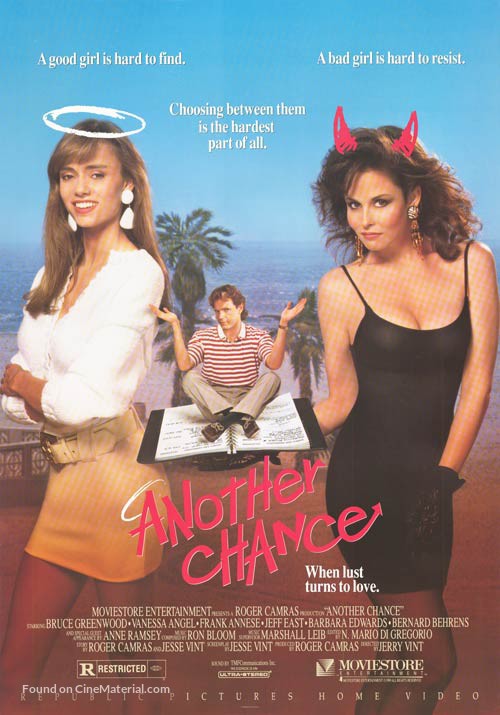
John Ripley (Bruce Greenwood) enjoys trying to bed every attractive woman that comes along. He even has his dog Rocky trained to bite on their purses and lead them over to him wherever he may be sitting. He is a big star on the daytime soaps and uses this position to take advantage of every young, nubile starlet willing to go to have sex with an established actor if it can in some way help boost their career. Then he meets the beautiful Jackie (Vanessa Angel) and starts to have strong feelings for her, but she catches him with another woman and it’s all over. He tries to win her back, but in the process loses his job and home. While working a part-time gig at a look-a-like show he gets into an ugly confrontation with a psychotic man resembling Humphrey Bogart (Robert Sacchi) who pulls out a gun and shoots him on the spot. John then finds out that he has been banished to hell, but pleads for one more shot at redemption, which he is given, but only if he can win back Jackie’s heart.

The film, which was written and directed by B-actor Jesse Vint, certainly has a crazy wide open storyline that seems to want to mix in the mindset of today’s modern world with that of spiritual one, which doesn’t work at all. Initially I thought the heaven and hell thing was thrown in simply as a plot device, but the more it continued the more I became convinced that this movie was intended to be religious one even though it gets enveloped inside the jaded world of modern day Hollywood, which just makes it all the more loopy.

In more competent hands this might’ve worked as an interesting curio, but the script needed to be better focused and the editing much tighter. The narrative is too heavy-handed to take seriously and everything gets photographed in a flat sort of way making the whole thing seem on par to a TV-movie instead of a theatrical one.

Greenwood gives an engaging performance and helps make a potentially unlikable character more tolerable. Angel is good too and it’s too bad she couldn’t have been in more scenes. The supporting female cast is overall quite attractive, but they’re all made to dress and act like bimbos. Anne Ramsey is on-hand for a brief bit as John’s crabby landlady and Allan Rich has a supporting role as a sleazy agent, but overall the one thing I liked most about the movie was Rocky the dog and that’s about it.

My Rating: 2 out of 10

Released: May 5, 1989

Runtime: 1Hour 38Minutes

Rated R

Director: Jesse Vint

Studio: Moviestore Entertainment

Available: VHS

Chastity (1969)

chasity 1

By Richard Winters

My Rating: 6 out of 10

4-Word Review: Hardships of a runaway.

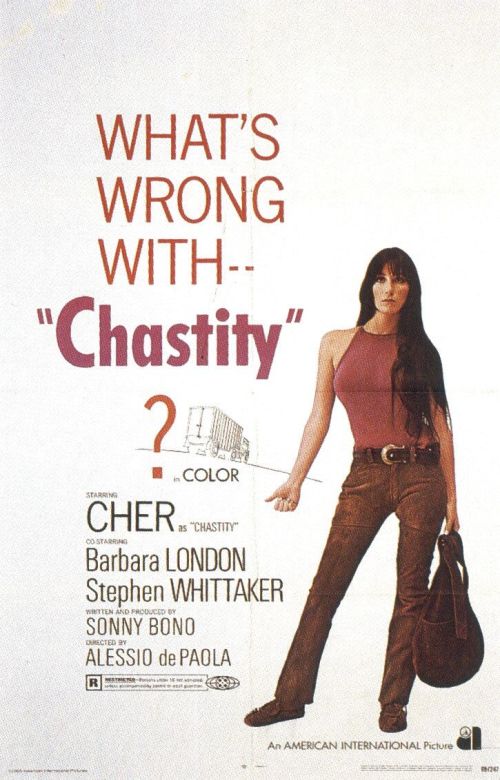
Chastity (Cher), in an attempt to escape her troubled past, runs away from home. She initially hitches a ride with a truck driver (Elmer Valentine) who seems to have only one thing on his mind, so she leaves him and meets up with a younger man named Eddie (Steve Whittaker) who she takes a liking to. He brings her back to his place and she spends the night there, but then worries that things may be moving too fast, so she leaves him. She then treks down to Mexico where she gets a job at a whorehouse. The woman (Barbara London) who runs the place becomes sexually attracted to Chastity and makes an attempt to start a lesbian relationship with her, but Chastity is uncomfortable with this and runs away again. She then meets back up with Eddie hoping to restart their relationship, but her demons from the past catch up with her and make that impossible.

The film was written and directed by Sonny Bono and I got to admit I was surprised at how genuinely riveting this was. The dialogue is sharp with a definite cinema vertite feel. There’s little or no action, but like with a Jim Jarmusch film you still find yourself glued to it and interested in picking up any little nuance that happens. The subject matter is frank and uncompromised and there’s even a little bit of nudity as we see Cher naked from both the top and backside.

The plot is unstructured and works more as a portrait to the tough situations most runaways fall into than in actually telling any type of story with a beginning, middle and end. However, it flows pretty well and has some memorable scenes including Chastity’s attempts to change the oil in a stranger’s car, her visit to a church and most especially her stay at the whorehouse and the way she successfully fleeces money out of a shy and unsuspecting teenage boy customer (Tom Nolan).

Cher is outstanding and the main reason to why this thing is so compelling. Apparently she was unhappy with her performance and refused to do another film until 13 years after this one, which is a shame as she shows definite signs of being a star-in-the-making and she looks so young that she seems almost like a different person than the one we’ve become so accustomed to seeing.

My only quibble is the fact that we get very little insight to the character’s past or why she’s running away. At the very end we do start to hear some voices, which are apparently going on inside her head and that of her parents, but it was too late to bring that up and should’ve been introduced earlier. The ending is vague and leaves the viewer in-the-dark as to what the ultimate fate of the character is, which is frustrating.

My Rating: 6 out of 10

Released: June 24, 1969

Runtime: 1Hour 25Minutes

Director: Alessio de Paola (Sonny Bono)

Rated R

Studio: American International Pictures

Available: DVD

Portnoy’s Complaint (1972)

portnoys complaint 1

By Richard Winters

My Rating: 4 out of 10

4-Word Review: Jewish man digs prostitute.

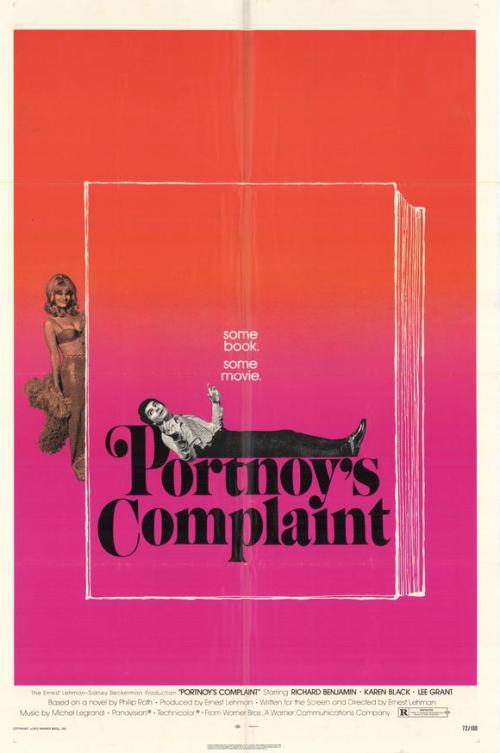
Alexander Portnoy (Richard Benjamin) is a man who no longer believes in a God or any of the other conventional ways of life taught to him by his old-fashioned Jewish parents (Jack Somack, Lee Grant). He enjoys the ‘art’ of masturbation and will routinely find excuses to go do it when his parents aren’t looking. As he grows older he finds that his sexual appetite broadens in a way that regular women won’t be able to fulfill. Then he meets Mary Jane (Karen Black). She’s a prostitute nicknamed ‘The Monkey’ due to all the wild positions that she can get her body into during sex. The two enjoy a lot of kinky times, but then she ends up falling in love with him and wanting to get married, but Portnoy resists as he considers her to be intellectually inferior and fears she’ll become an embarrassment to him with his other friends.

Philip Roth’s landmark and controversial novel comes to the big screen with only lukewarm results although it does start out funny. I laughed-out-loud at the scene where Portnoy pretends to have a bout of diarrhea just so he can sneak into the bathroom to get-off and his parents misinterpret his moans of ecstasy as being that of gaseous agony. The dream segment where Portnoy finds that his penis has fallen off and onto the kitchen floor while his parents come into to inspect it is pretty good as is the bit where Jeannie Berlin tries to give Portnoy a hand-job.

Unfortunately the film shifts too much in tone. It starts out as this quirky, dark-humored, sex-laden comedy only to end up being a brooding drama. The novel was written as a continuous monologue spoken by Portnoy while talking to his therapist, which doesn’t effectively come off here. We see a few scenes in his therapist’s office, but they are brief and I didn’t like the fact that his therapist never speaks a word of dialogue, which seemed weird and unnatural.

Screenwriter Ernest Lehman, in his one and only foray behind the camera, implements too much of a slow pace to the proceedings. Many scenes go on far longer than they should and at certain points the camera gets nailed to the ground giving it a static presence. He also hired Michel Legrand to do the film score, which is beautiful and majestic, but the lush tones are better suited for a romantic flick, which this definitely isn’t.

Karen Black gives an outstanding performance as ‘The Monkey’, but her character is too one-dimensionally dumb almost to the point that she seems mentally handicapped, which I don’t think was the intention. Either way it is never funny, touching, or even real while bordering into the stereotype that all prostitutes ‘must be really stupid’.

One of the most annoying elements of the film is that it keeps cutting back to a matted image of Black jumping from a skyscraper and towards the viewer while she screams. The image looks very hooky while giving the film a real amateurish feel. I also didn’t like how at the very end we spot Black walking amongst a crowd of people from a bird’s eye perspective. The supposed demise of the character was meant to be murky as she threatens to jump from a building and Portnoy leaves her without ever knowing if she ended up doing it or not, which then causes him a major source of guilt afterwards. By having her suddenly appear at the very end ruins the mystery and brings up far more questions than answers.

Roth’s novel was very much ahead-of-its-time and deserved a film that could match it, but Lehman’s staid approach doesn’t do it justice.

My Rating: 4 out of 10

Released: June 19, 1972

Runtime: 1Hour 41Minutes

Rated R

Director: Ernest Lehman

Studio: Warner Brothers

Available: DVD (Warner Archive), YouTube

Angel, Angel, Down We Go (1969)

angel angel 1

By Richard Winters

My Rating: 4 out of 10

4-Word Review: Singer manipulates rich family.

Tara (Holly Near) is an overweight teen who feels like a social outcast. Her family is rich, but empty on love. Her mother (Jennifer Jones) is a former star of stag films and boozes it up on the bottle, but still manages to look quite attractive, even better than her daughter, which she constantly reminds her of. Her father (Charles Aidman) is a closet homosexual who routinely brings in male lovers for entertainment. When a rock group with a dashing lead singer (Jordan Christopher) arrives at her sprawling family home to help host a party Tara doesn’t hesitate to fall into his open arms. At first he seems to be the answer to her loneliness, but after a while she realizes he has a plan of his own as he not only seduces the mother, but her father as well before manipulating his way into the family fortune.

The main reason to watch this film, if not the only one, is for the performance of Jones in this her second-to-last cinematic appearance. She gives an incredibly strong, multi-faceted portrayal of a middle-aged woman on the emotional edge who realizes she’s being used, but allows it to happen simply so she can still feel desirable. Her presence lifts the sleazy material to watchable heights and comes just a year after she herself tried to commit suicide after hearing of the death of a close friend in real-life.

Near, who has later become a well-known folk singer, gives an effectively sensitive portrayal of a troubled teen, which allows her to be the one character that the viewer has any sympathy for. The rest of the cast though, which includes Roddy McDowall and Lou Rawls as Christopher’s band mates, are essentially wasted although you will get a full view of McDowall’s bare bottom for those few who are interested.

The garishly colorful collages done by Shirley Kaplan are visually alluring, but writer/director Robert Thom goes back to them too often. The aerial skydiving footage is excellent, even breathtaking, but the script as a whole, despite its lurid and even groundbreaking subject matter, falls flat. A lot of the reason for this is the fact that it’s poorly paced with too much time given to Christopher who sings a total of five songs, which does nothing but slow the proceedings down to a screeching halt. The ending is vague and aloof, which only helps to cements this as a misfire and good only as a curio.

The film did quite poorly upon its initial release, so it was reissued under another a title called Cult of the Damned in hopes that it could cash in on the hysteria of the Manson murders that had occurred around the same time, even though the story doesn’t have anything to do with a religious cult and the movie still fared no better at the box office.

angel angel 2

Alternate Title: Cult of the Damned

My Rating: 4 out of 10

Released: August 19, 1969

Runtime: 1Hour 29Minutes

Rated R

Director: Robert Thom

Studio: American International Pictures

Available: DVD, Blu-ray, Amazon Instant Video

Vamp (1986)

vamp 1

By Richard Winters

My Rating: 5 out of 10

4-Word Review: Stripper is a vampire.

A.J. (Robert Rusler) and Keith (Chris Makepeace) are two fraternity pledges hoping to avoid a hazing by promising that they can bring in a stripper to the next frat party. They then drive into the city to check out the clubs and find a pole dancer willing to take them up on their offer. One place, which is run by the sleazy Vic (Sandy Baron), has an exotic dancer named Katrina (Grace Jones) that immediately catches their eye. A.J. is invited backstage to meet her only to ultimately be attacked once he finds out that she is really a vampire. Keith is then forced to try to escape from the place on his own with the help of a friendly waitress Allison (Dedee Pfeiffer), but finds that the entire neighborhood is infested with vampires and more popping up wherever he turns.

It’s never a good omen when the film’s first day of shooting coincided with the space shuttle challenger disaster, but on the whole writer/director Richard Wenk does his best to breathe new life into a tired genre. The humor at the beginning is amusing although it goes a bit overboard and the whole fraternity angle could’ve and should’ve been avoided as it comes off as too contrived and the story would’ve worked just fine without it.

Jones, who never speaks a word of dialogue, gives a provocative performance. I enjoyed her white-faced sultry dance and her make-up effects are frightening during the times when she morphs into a vampire.

Rusler makes for a brash and believable college dude and the film only works when he and Makepeace are together, but on his own Makepeace is quite boring. I thought he was fantastic in My Bodyguard, but here he shows no charisma and probably one of the main reasons this film has never attained much of a cult following despite being ripe for it. Gedde Watanabe and Pfeiffer are equally useless and their character’s presence wasn’t needed at all although Baron camps things up nicely as the scheming club owner.

There are a few interesting moments here and there including a rather surreal one inside an elevator, but overall it’s not too exciting. I think the biggest issue is the fact that it’s too easy to kill these vampires off. Whether it’s a wooden stake, daylight, fire, or even a cross these guys seem to have the odds stacked against them and no matter how many of them surround this novice college guy hero he somehow finds a way to off them with relative ease until it seems almost like swatting flies from a wall. At the end when he walks away from it virtually unscathed and giving the impression that it had been ‘no big deal’ resonated with me as a viewer as I felt the same way about this movie.

My Rating: 5 out of 10

Released: July 18, 1986

Runtime: 1Hour 34Minutes

Rated R

Director: Richard Wenk

Studio: New World Pictures

Available: DVD, Amazon Instant Video

The Marriage of a Young Stockbroker (1971)

marriage of a young stockbroker

By Richard Winters

My Rating: 6 out of 10

4-Word Review: Husband is a voyeur.

William (Richard Benjamin) seems to be living the dream having both a stable job and a beautiful wife named Lisa (Joanna Shimkus), but underneath he’s bored and as a source of escape begins to get involved in voyeuristic activities. He spends hours at an adult theater and uses any opportunity he can to spy on scantily clad women through his binoculars. Eventually Lisa, in a fit of frustration over William’s behavior, walks out on him and moves in with her sister Nan (Elizabeth Ashley) and her husband Chester (Adam West). Nan is very controlling and makes every attempt to keep Lisa away from William even as William tries to reconcile. Although her marriage seems fine on the outside it is actually as troubled as William and Lisa’s, which comes to a head when both couples get involved in a group therapy session.

The film is based on the novel of the same name written by Charles Webb, who was also the author of The Graduate, which became a hit film that was produced by Lawrence Turman who directed this one. Clearly Turman was hoping for the same success and this one begins well. The opening bit showing William bored with his job is funny as is his trip to an adult theater and the many thoughts that go through his head as he watches a nudie flick. The cinematography by Lazlo Kovacs captures the California coastline in a lush style and the overall narrative takes a refreshingly open-minded approach towards sexual fetishes as well as the institution of marriage while also questioning society’s conventional understanding of both.

Benjamin is good playing almost the exact same type of character living the same type of detached existence as the one he did in The Steagle. In fact this film could easily be considered an extension to that one and both movies were released less than a month apart. This one though fares a bit better as Benjamin gives a more well-rounded performance. In fact this may be his best work second only to the one that he did in Diary of a Mad Housewife.

The beautiful Shimkus does equally well and I enjoyed the scenes with the two of them together. Ashley makes a strong impression as the meddling sister and has a few funny moments. West, who campaigned hard for the role in an attempt to shake his Batman image, seems a bit too transparent and there needed to be more of a backstory involving both his character and his marriage to Nan.

Unfortunately all of these good things get crushed by a script that doesn’t know what direction it wishes to take. The scene with Tiffany Bolling is just one issue as she plays this really beautiful woman who for some indiscriminate reason decides to invite William, who is a complete stranger to her, into her house for sex after spotting him walking down the sidewalk. Why such a gorgeous woman would invite a schmuck like Benjamin into her place on a sexual whim makes very little sense and seems too much like a male sexual fantasy that demanded much more of an explanation to be believable. I realize this scene was part of the story arc to show William’s dissatisfaction with having sex with women who were strangers and thus propel him to try and win Lisa back, but the same point could’ve been made in a more realistic way had he done it with a hooker that he met on the street instead.

The ending is the biggest letdown as it employs too much of a feel-good, happy curve that comes out of nowhere. The two main characters suddenly turn into frolicking, youthful lovebirds that do not in any way resemble the same people that we’ve been following for the first 90 minutes. It comes off like a cop-out that is jarring to the overall tone while undermining all of the other issues that the film had previously brought up.

My Rating: 6 out of 10

Released: August 19, 1971

Runtime: 1Hour 35Minutes

Rated R

Director: Lawrence Turman

Studio: 20th Century Fox

Available: http://www.modcinema.com

Rats: Night of Terror (1984)

rats 1

By Richard Winters

My Rating: 2 out of 10

4-Word Review: Rats rule the world!

Years after a nuclear holocaust has turned the earth’s surface into a scorched wasteland, a group of bikers known as scavengers descend into an abandoned building for shelter. Little do they know that the place is infested with large rats that, in their desperate need for food, have become particularly keen to human flesh and attack the group and devour each member one-by-one.

The film was written and directed by Bruno Mattei who was known as the Italian version of Ed Wood. The low-grade production values and uninspired dialogue quickly become apparent, which sucks the viewer into a listless and joyous experience from the get-go. The biggest issue are the rats and although I was happy to see that real ones where used this to a degree is what kills the tension because they are never seen attacking anyone. All they do is go about their normal rat behavior, which is scavenging for food while the rest of the cast, wearing tacky outfits like they are leftover members of an ‘80s punk band, make total fools of themselves trying to act frightened.

In some ways though this is the one thing that I liked, which was watching these rats scurrying around as it looks like hundreds of them were thrown onto the set forcing them to climb over each other and even climb up things, which to a strange degree is fascinating to watch. The movie would’ve been far better had it dumped its whole cheesy premise, as well as the human characters, and just turned itself into a nature documentary focusing on how rats behave and forage for food. Some are actually kind of cute and I was upset to see that a few were set on fire as no animal of any kind should’ve lost their life for this stupid thing.

In the end though the plot goes nowhere and the majority of the action takes place in what looks to be a dingy, grimy basement of a warehouse, which visually makes things quite static. The acting is atrocious and the twist that comes at the very end is quite predictable and something most viewers will see coming long before it finally does.

My Rating: 2 out of 10

Released: August 3, 1984

Runtime: 1Hour 37Minutes

Not Rated

Director: Bruno Mattei

Studio: Artist Entertainment Group

Available: DVD, Amazon Instant Video