Category Archives: Movies with a rural setting

Death Weekend (1976)

death weekend

By Richard Winters

My Rating: 3 out of 10

4-Word Review: She can defend herself.

This Canadian thriller, which is loosely based on actual events deals with a rich playboy named Harry (Chuck Shamata) who invites Diane (Brenda Vaccaro) who is also a model to spend the weekend with him at his isolated lakeside cabin that is miles from anywhere. On their way there they run into a biker gang whose leader (played by Don Stroud) takes an intense disliking to Harry. The gang tracks the two down at their cabin where they proceed to terrorize them before eventually killing Harry and forcing Diane to defend herself alone, which she does valiantly.

In a way this is a poor man’s version of I Spit on Your Grave or Straw Dogs, but not nearly as effective. For one the violent scenes aren’t very intense. This is due mainly to the fact that writer/director William Fruet keeps the camera too removed from the action and never once uses a hand held. There is also no gore as Fruet always cuts away just before anything happens and what little you do see looks tacky. Of course a film doesn’t have to be gory to be scary or intense, but if it is going to have this type of violent theme then it should at least equal it in style. The tension also ebbs and flows and the four hoodlums are too dumb and seem like cardboard cutout caricatures that possess no human qualities whatsoever.
The Harry character does allow for some added dimension, which helps and hurts. I liked the way he sees himself as this ‘refined’ gentlemen and yet views women in the same Neanderthal way as the thugs. He brags of having money and power, but when that gets stripped away from him he becomes amazingly spineless. This makes for a good commentary of the rich and successful, but unfortunately also turns him into being too much of a jerk and when the bad guys proceed to tear his place apart we are not ‘horrified’ at all, but instead enjoy seeing it.

There are actually a few good elements one of which is the music score, which effectively creates an ominous feeling. It was also filmed in Ontario Canada during the autumn and the desolate, bleak landscape helps match the bleakness of the situation and characters. I also loved the morning mist captured during the final chase sequence that gives things a very eerie look. There is also a well-staged car chase at the beginning that was done at high speeds and features some great stunt driving.

The film is saved somewhat by Vaccaro’s interesting performance as a victim. She is independent and self-sufficient and refuses to allow herself to be seen or used as a sex object. This goes along with the film’s overall theme which seems to run on the emergence of the woman in a man’s world and the basic redefining of the female role in society. Yet I felt it would have worked better had the character harbored the old female traits at the beginning and then had these new traits come out as the film progressed.

death weekend

My Rating: 3 out of 10

Alternate Title: House by the Lake

Released: September 17, 1976

Runtime: 1Hour 27Minutes

Rated R

Director: William Fruet

Studio: American International Pictures

Available: VHS
Why Shoot the Teacher? (1977)

why shoot the teacher 2

By Richard Winters

My Rating: 8 out of 10

4-Word Review: Not a good job.

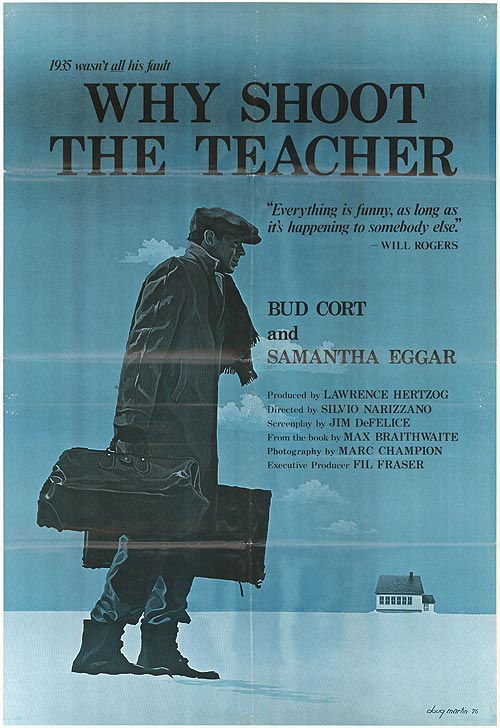
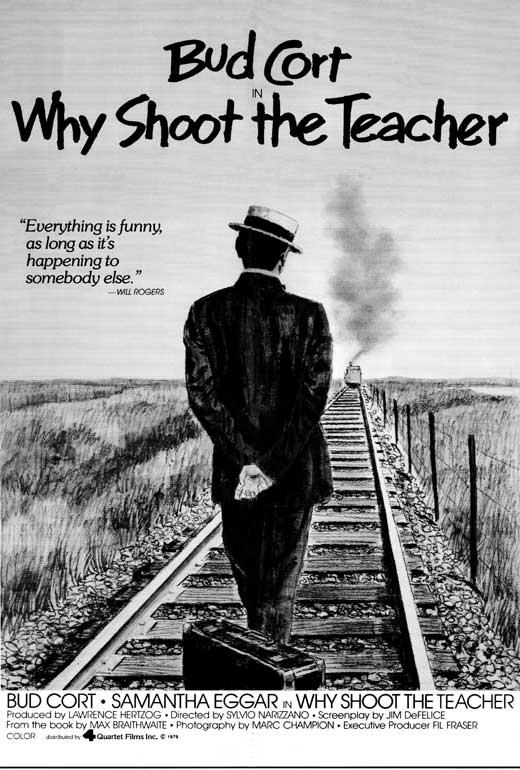
If you hate your job then watching the escapades of Max Brown (Bud Cort) dealing with his should make you feel a lot better about yours, or even lucky. The setting is 1935 and Max has traveled to an isolated farming community in Saskatchewan Canada in order to live out his dream of being a school teacher. The problem is that he must live in the dingy basement of the school that has no running water and an outhouse that gets regularly overturned by the rowdy school children, sometimes with Max in it, and he is only paid $20 dollars a month for his efforts, which even back then was a paltry amount. What is worse is that the district can’t even afford to pay him so instead gives him promissory notes and forces him to be dependent on the generosity of the townspeople for his food. Since he had to borrow money for his train ride up there he is unable to go back and forced to spend the harsh Canadian winter all alone while dealing with difficult students and indifferent parents and adults.

Cort really shines. The fact that through all his diversity he still remains civil and upbeat makes the character quite appealing even though he does evolve and at times compromises from his initial ideals. The best example of this is when he eventually, despite his initial reluctance, uses the strap on one of the older bigger students while the rest of the school children watch through the school windows. Although Cort is best known for his starring role in Harold and Maude I’d actually say this is his best all-around performance.

Samantha Eggar another under-appreciated and underused performer is terrific in support as Alice Field a woman transplanted from England who like with Max finds herself alienated and unconditioned to the harsh climate. She also has a really amusing line when she states “Canada is a nice country…sometimes…in the spring.”

Filmed on-location in the tiny town of Hanna, Alberta the sprawling wheat fields create a tremendous sense of isolation as well as a distinctive sense of natural beauty. The story is filmed during all three seasons, which makes the viewer feel like they are battling the rigorous Nordic climate right alongside Max. One of the funniest moments is when the word ‘Spring’ is flashed on the screen while a raging blizzard goes on behind it making Canada one of the few places that can make Minnesota, where I am originally from, seem like a mild climate.

The film is wonderfully vivid and creates a rich multi-textured tapestry of life on the prairie. By keeping everything on a realistic level it helps recreate what life must have been like for a lot of rural school teachers during the period, which is what makes it so fascinating. The film’s faded washed-out color and archaic low budget technical approach only helps to accentuate the look and feel of the period. There are shades of Wake in Fright here that also dealt with a man teaching school in an isolated school house while battling the elements and I found it interesting to note that Ted Kotcheff who was the director of that film was listed as a production consultant on this one.

My only complaint about the film was the misleading title. There is no shooting of any kind of the teacher, or even any talk of it. Why they came up with that title, which is based on the book with the same title is a mystery. Unfortunately it may give some people the idea that this is a violent film when nothing could be further from the truth and may turn-off potential viewers from enjoying this endearing slice-of-life comedy/drama.

why shoot the teacher 1

My Rating: 8 out of 10

Released: June 23, 1977

Runtime: 1Hour 39Minutes

Rated PG

Director: Silvio Narizzano

Studio: Lancer Productions Limited

Available: VHS, DVD, Amazon Instant Video, YouTube

The Fool Killer (1965)

fool killer

By Richard Winters

My Rating: 6 out of 10

4-Word Review: Kid roams the countryside.

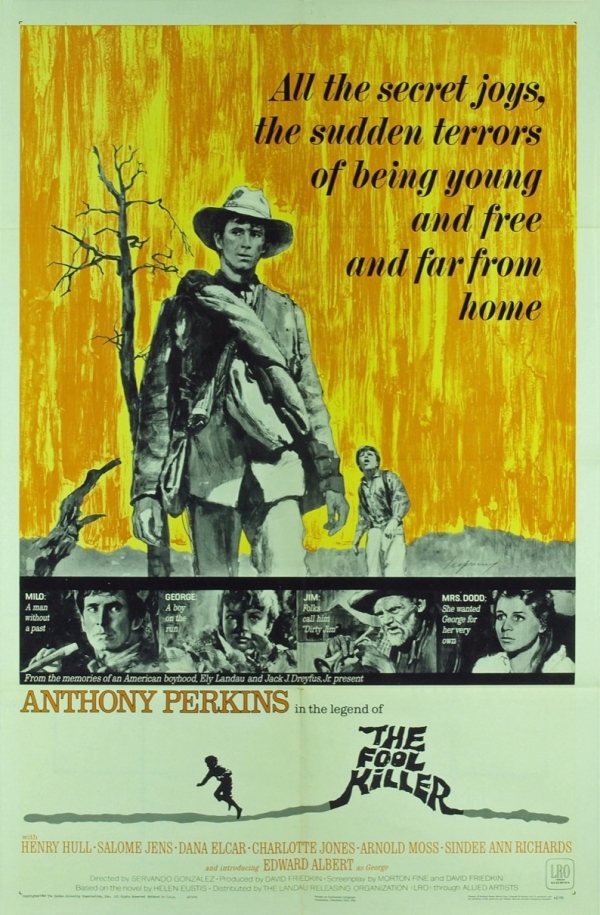
George Mellish (Edward Albert) is a 12-year-old boy who runs away from home after a particularly harsh beating at the hands of his foster parents. As he roams the Tennessee countryside he meets Dirty Jim (Henry Hull) an old man who takes him into his rundown home and fills his head with all sorts of stories about an eight foot ax-wielding man who kills people he deems to be foolish. After a bout of illness George runs away from Jim and late one night meets Milo (Anthony Perkins) a loner who carries an ax and acts strangely. Initially George thinks that he is ‘the fool killer’ Jim described, but the two soon become friends even though strange ax murders begin to occur everywhere they go.

Servando Gonzalez’s direction is excellent and the one thing that keeps this otherwise thin story intriguing. This was his only English language film and he uses a variety of different camera angles and editing styles to create a sort of hypnotic effect. The on-location shooting is vivid and their ability to recreate the look and feel of the late 1800’s is solid including having the characters occasionally speak with poor grammar, which helps with the authenticity.

The only thing about Gonzalez’s direction that I did not like is where they have a nighttime scene that was clearly filmed in the daytime, but done with a darkened lens to ‘fool’ the viewer into thinking it is night. This process has been done many times in the past, but it never works. Even with the dark lens the sky is too bright and you are unable to see any stars. I remember this done a few times on the old ‘Brady Bunch’ TV-show and I always found it disconcerting. The reason is usually because by law child performers are not allowed to work past a certain late hour, so if the script calls for a nighttime scene they try to compensate using this trick, but it always looks tacky. My solution would be to get the parent’s permission to allow the young performer to work late for one night or alter the script to have the scene done in the daytime.

Despite some good production values and an interesting narrative the story itself, based on a novel by Helen Eustis, is limp and doesn’t have enough action. The middle section, which features a lot of conversations between Milo and George, gets boring and the pace comes to a screeching halt. The George character also gets a bit annoying. I realize he is a young and the story takes place in a more innocent era, but the kid falls too easily for anything and everything he is told and seems to have no center, which eventually becomes off-putting.

For what it is worth Albert is good in the lead in what was his film debut and so is Perkins although with this he was risking getting typecast. I thought Henry Hull in one of his last roles was highly engaging and I also really liked Arnold Moss as a bombastic preacher giving a fiery sermon under a tent during a religious revival. Since the movie otherwise does not have much happening this scene tends to be pretty electrifying and vivid particularly the looks on the people’s faces as he preaches to them.

There is a sort-of surprise ending, but it is not that big of a deal and most viewers will probably see it coming long before it happens and they might also say to themselves ‘I sat through two hours of this just for that!’ as well. If the story had been a little richer with more twists or a subplot this might have been memorable, but as it is the final result is empty.

My Rating: 6 out of 10

Released: April 28, 1965

Runtime: 1Hour 39Minutes

Not Rated

Director: Servando Gonzalez

Studio: Allied Artists Pictures

Available: VHS

Alice’s Restaurant (1969)

alices resturaunt 2

By Richard Winters

My Rating: 7 out of 10

4-Word Review: Nobody likes the draft.

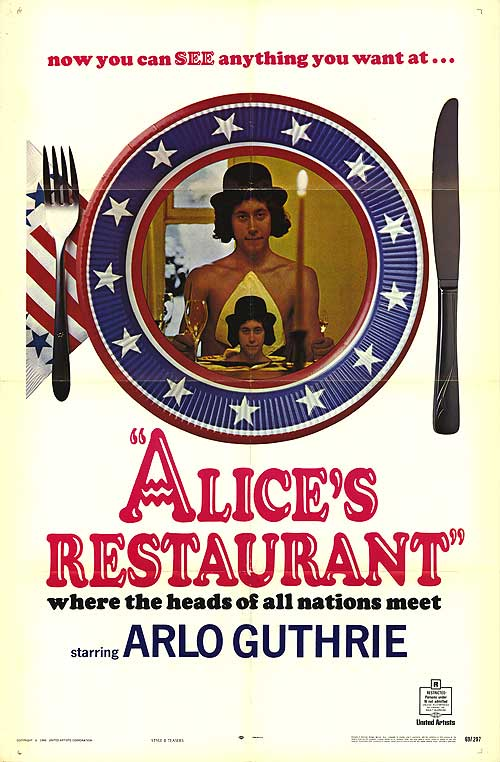
Attempt at making a movie out of Arlo Guthrie’s famous 18-minute song, which in itself was based on actual events succeeds for the most part although it seems to be biting off little more than it can chew. Pat Quinn plays Alice a middle-aged woman who along with her husband Ray (James Broderick) buys a church and turns it into a hippie retreat as well as a restaurant. Arlo plays himself and a friend of the couple who helps them in their endeavor. Things go well for a while, but then infighting, the draft, the death of some of the members, and basic overall disorganization do it all in.

Although Guthrie’s song has a bouncy, upbeat, and humorous quality to it the movie works in an opposite fashion. There are a lot of long dramatic takes with a tone that is overall downbeat and depressing. To some extent it succeeds at giving the viewer a vivid look at the late 60’s experience, but compared to the song it seems to be a bit of a letdown. However, there are still some great moments that will connect with you on a purely emotional level. One of them is seeing legendary folk singer Pete Seeger and Arlo playing a song for Arlo’s bedridden father Woody (Joseph Boley) and another includes the sights and sounds of an outdoor wintry funeral for one of their troubled friends.

There are some good comedic moments, but they all come pretty much in the second half making the film seem a bit disjointed and almost like two films rolled into one. The best moments in this area include Arlo’s attempts at dumping out garbage, which features a lot of good quick edits as well as the actual Officer William Obanhein mentioned in the song. Arlo’s army physical is also quite funny especially his experiences in the ‘Group W’ room, which also has an early appearance by character actor M. Emmet Walsh who talks so fast that he becomes incoherent.

The idea of casting Arlo in the lead works to some extent. Obviously the presence in his own story makes it more authentic, but he also seems too detached and shows little if any emotional range. He also looks incredibly young almost like he is only 14.

It is Broderick who comes off best and this is easily his best performance of his otherwise sporadic career. He seems light years away from the more conservative, fatherly figure that he played in the 70’s TV-show ‘Family’ and the fact that the character here is a middle-aged man trying to submerge himself with the youth movement while displaying obvious frailties in the process makes him fascinating to watch and help give the film an added layer.

When I first saw this film years ago I came away feeling that it was too downbeat and disjointed, but upon second viewing I have a greater appreciation for it. It seems now more prophetic and forewarning to the beginning of the end of the hippie movement and how their carefree youthful ideals simply weren’t going to survive amidst the harsh, practical realities of the world that it was in. The long, continuous shot of Alice’s sad, forlorn expression seen at the very end seems to be conveying this and thus makes this movie less of a relic and more perceptive than most people may realize.

My Rating: 7 out of 10

Released: August 20, 1969

Runtime: 1Hour 51Minutes

Rated R

Director: Arthur Penn

Studio: United Artists

Available: VHS, DVD, Amazon Instant Video

Chino (1973)

chino 2

By Richard Winters

My Rating: 3 out of 10

4-Word Review: Chuck and the kid.

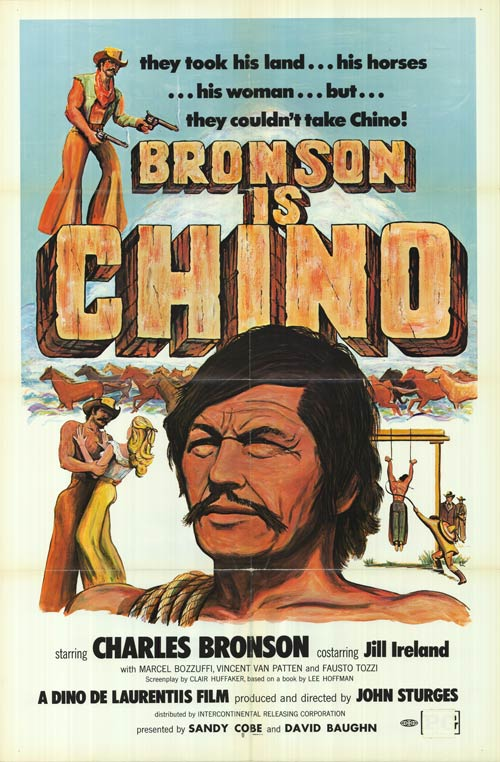
Jamie (Vincent Van Patten) is a teen runaway in the old west that comes upon an isolated horse ranch run by Chino (Charles Bronson) who is ostracized by the locals for being a ‘half-breed’.  Chino reluctantly takes the boy under his wings and teaches him about how to take care of horses, but neither of them can completely escape the racism and hatred around them.

Filmed in Spain the rustic countryside has a certain visual appeal and the low-key music is a perfect score for this type of western. There is a barroom brawl and a shootout at the end, but overall this is standard stuff with little to help make it stand out. Everything this movie has to offer you’ve seen before and in most cases done better. That is not to say it is a bad movie, but it is lacking in imagination and seems content to simply borrow from an already overused formula. While the pacing isn’t exactly slow it isn’t compelling either. The characterizations, plot, and dialogue are held at the most simplistic level and if it weren’t for a brief bit of nudity by an attractive native woman I would almost say this thing was aimed solely for kids.

Bronson doesn’t show much range of emotion here and comes off in the wooden way his critics have always accused him of although he is still good in the action sequences. Jill Ireland’s appearance helps add a bit of life to the proceedings and the antagonistic banter that the two share while he tries to train her to ride a horse is fun to a minor extent as it the part where she walks in on him as he is standing buck-naked in a bathtub. However, having them fall in love so quickly and then want to get married is rushed and forced.

It is fun seeing Vincent Van Patten as a young teen, but his interaction with Bronson is dull. Their eventual ‘bonding’ is formulaic and clichéd and only helps in cementing this as a forgettable, pointless, low-budget foray.

The real stars of the picture are the horses that show much more of a screen presence than their human counterparts. In fact during the first half you see more of them than the people, which is just as well. There is even a shot showing two of them mating, which is the film’s sole unique moment and for some possibly even the highpoint.

My Rating: 3 out of 10

Released: September 14, 1973

Runtime: 1Hour 37Minutes

Rated PG

Director: John Sturges

Studio: Intercontinental Releasing Corporation

Available: DVD, Amazon Instant Video

The Mosquito Coast (1986)

mosquito coast 2

By Richard Winters

My Rating: 7 out of 10

4-Word Review: Moving to the jungle.

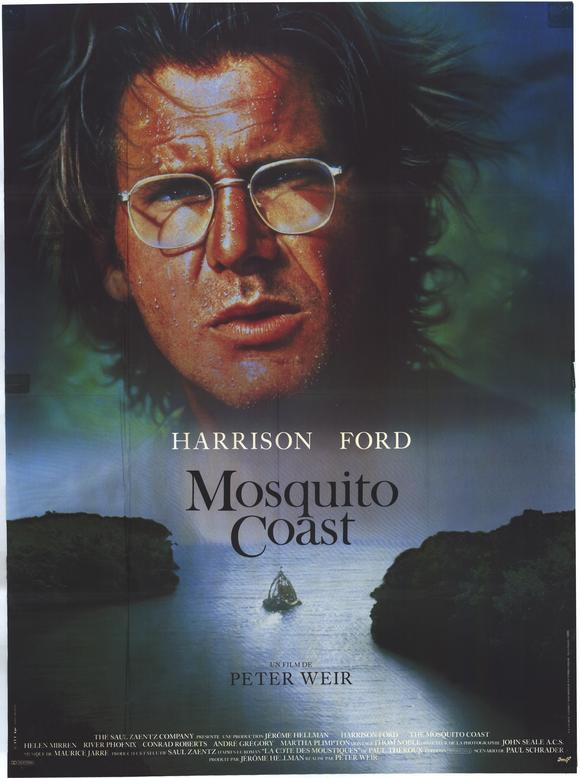
Allie Fox (Harrison Ford) is a disgruntled, eccentric, and angry inventor who feels that the United States has lost its soul. When his new ice making invention is not met with the enthusiasm that he expects he decides to move to the jungles of Central America and start a whole new society of his own in his own vision while taking his wife and four kids with him.

Filmed mostly in the country of Belize Director Peter Weir does a terrific job of capturing the flavor of the region. The plot progresses in a slow linear fashion making the viewer feel that they are traveling along and experiencing the same things right along with the characters. I found myself more entranced with the unique sounds of the exotic birds and insects of the region than the visuals. There are definite shades of Werner Herzog’s Fitzcarraldo and Sam Peckinpah’s Ballad of Cable Hogue were we watch a man verging on sheer madness build a town from nothing while injecting his control and passion on all those around him.

Watching Allie’s vision and town come to life is fascinating and satisfying, which makes up most of the film’s first hour. However, the second hour deals with his eventual self-destruction and watching the whole place go up literally in flames and due mainly to his self-absorbed arrogant nature is rather depression and agonizing to go through. Having the man turn into an out-of-control tyrant that alienates those around him even his own family is telegraphed from the very beginning. Instead of being an insightful character study it is instead more like a draining experience that makes the viewer feel as exhausted and run over as Allie’s beleaguered family.

Helen Mirren’s character as the mother is poorly defined and becomes rather frustrating in the process. She seems like an intelligent woman with sufficient self-esteem, so it became baffling to me why she would go along with this nut of a husband and follow him loyally on all of his bizarre tangents. She does finally have an emotional breakdown of sorts near the end, but I felt that should have occurred way earlier like before they even left on their crazy journey. By remaining so passive and compliant to Allie and towing her four young children along with it made me almost believe that she was crazier than he was. Some may argue that she was ‘madly in-love’ with the man and therefore overlooked his many personality flaws, but it seemed to be taking that concept too much to the extreme.

River Phoenix and Jadrien Steele are excellent as Allie’s two sons. Both have amazingly expressive faces and the viewer finds themselves sharing most of their empathy with them. Watching them start out as idolizing their father and then learning to hate him only to grieve for him at the end is touching. My only complaint is the voice-over narration by Phoenix, which to me came off as unnecessary and heavy-handed.

Ford took a risky career move by playing a character that is not too likable, but I applaud his decision. A true actor takes roles that demand going out of the safety zone and for the most part he succeeds. I liked how he brings a certain level of humor to the otherwise abrasive character particularly when he goes on long and uncontrolled rants to the natives while they are helping to build his town and many respond with lost looks on their faces while he talks to them. My favorite part is when he lectures a young boy about America’s inflation while being drowned out by the noise of a chainsaw that he is using. . I realize the scar on his chin is from a car accident that he had in the 60’s, but there were so many close-ups of his face and you see it so vividly that I felt there should have been some explanation for it written into the script, which has been done in some of his other films.

Andre Greagory is fun as the missionary who comes to odds with the opinionated Allie. He supplies just the right balance of menace and humor to the role. The televised sermon that he gives while using props is funny. It is fun to see Butterfly McQueen in her last movie role as well as spotting a young Jason Alexander as a hardware store clerk. Martha Plimpton has a nice sarcastic way about her as River’s potential girlfriend and it is good to see a teen love interest that has more of a plain look and not some model taken straight off the cover of Seventeen Magazine.

The idea of showing how modern day suburbia has destroyed the rugged individualist, but how trying to rough it in the wilderness could pretty much end in the same way is a good one. However, the movie tends to be too downbeat and unbalanced. It is based on the Paul Theroux novel, which I suspect is probably better.

My Rating: 7 out of 10

Released: November 26, 1986

Runtime: 1Hour 57Minutes

Rated PG

Director: Peter Weir

Studio: Warner Brothers

Available: VHS, DVD, Amazon Instant Video

Cul-De-Sac (1966)

cul de sac 2

By Richard Winters

My Rating: 8 out of 10

4-Word Review: Bubbling beneath the surface.

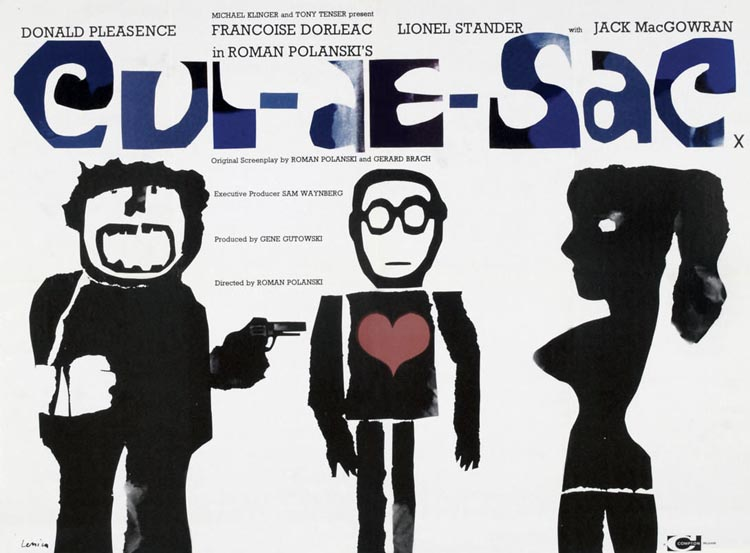
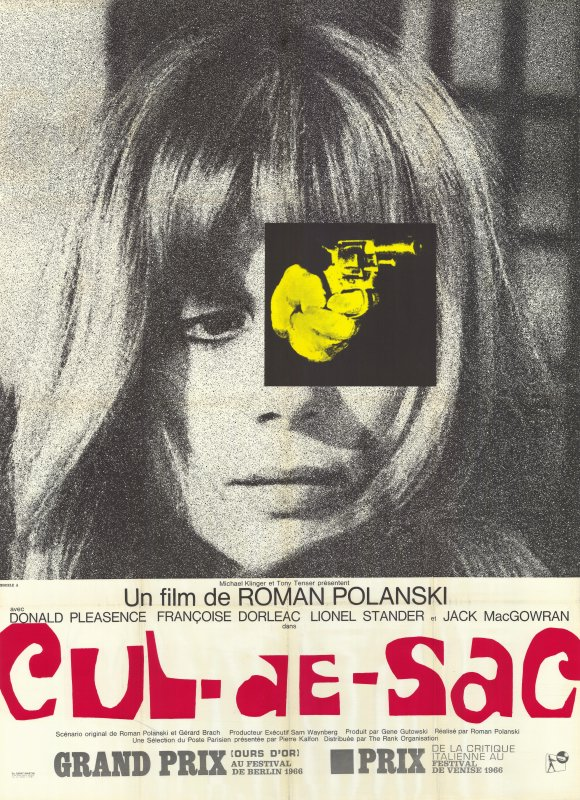
Albie and Richard (Jack MacGowran, Lionel Stander) are two gangsters on the run. Albie is injured with a gunshot wound and their getaway car has broken down. They come upon an isolated castle owned by George (Donald Pleasance) who lives there with his new wife Teresa (Francoise Dorleac, who tragically died in a car accident just one year after this film was released). George is very passive and timid and pretty much allows Richard to have his way as he takes over the place and his wife and yet as the situation progresses different shades of the character’s personalities begin to come to light.

Roman Polanski leaves his strong directorial touch from the exquisite opening shot, which shows an old car being pushed along on a desolate road amidst a very flat landscape until the end. In the hands of any other director this otherwise odd story probably would not have worked. Like with A Knife in Water Polanski makes great use of the quiet and serene atmosphere and as a viewer you feel like you are right there with the characters.  Filmed on-location at the Lindisfarne Castle on Holy Island in Northumberland, England the movie makes great use of the tranquil setting. I found it almost hard to believe that there was a film crew there as the isolation really grabs you and sucks you in. The quiet moments are the film’s strongest and I just loved the hooting owl heard in the background. The idea of filming it in black and white nicely compliments the film’s dark psychological undertones.

The film’s novelty is watching how the characters evolve and interact with one another. Donald Pleasance gives one of his best performances as the cowardly George. There have been many weak and frighten characters in cinema history, but Pleasance makes the character here quite interesting and the way he finally shows some bravado at the least likely moment is fascinating. Stander also excels with a character that initially comes off as a brute, but at strange times reveals a trusting and even child-like manner.

The movie can be viewed in different ways and doesn’t fit distinctly into any type of genre. To a degree it can work as a dark psychological character study, a mystery, film noir, a thriller, or macabre comedy. Approaching it as a comedy works best Polanski has not always had great success in that area and some of his comedies in particular the ill-advised Pirates have been complete disasters, but this one works. The best scene is when some of George’s old friends come to visit and bring along their bratty son who becomes an absolute terror to everyone.

The odd ending is open to interpretation and leaves a lasting impression. This is also a great chance to see Jacqueline Bisset in her film debut. She appears during the second half wearing glasses and saying little, but is as beautiful and alluring as ever.

cul de sac 1

My Rating: 8 out of 10

Released: November 7, 1966

Runtime: 1Hour 57Minutes

Not Rated

Director: Roman Polanski

Studio: Tekli British Productions

Available: DVD (The Criterion Collection) Blu-ray, Amazon Instant Video, Netflix streaming

Witness (1985)

witness

By Richard Winters

My Rating: 8 out of 10

4-Word Review: Hiding out on farm.

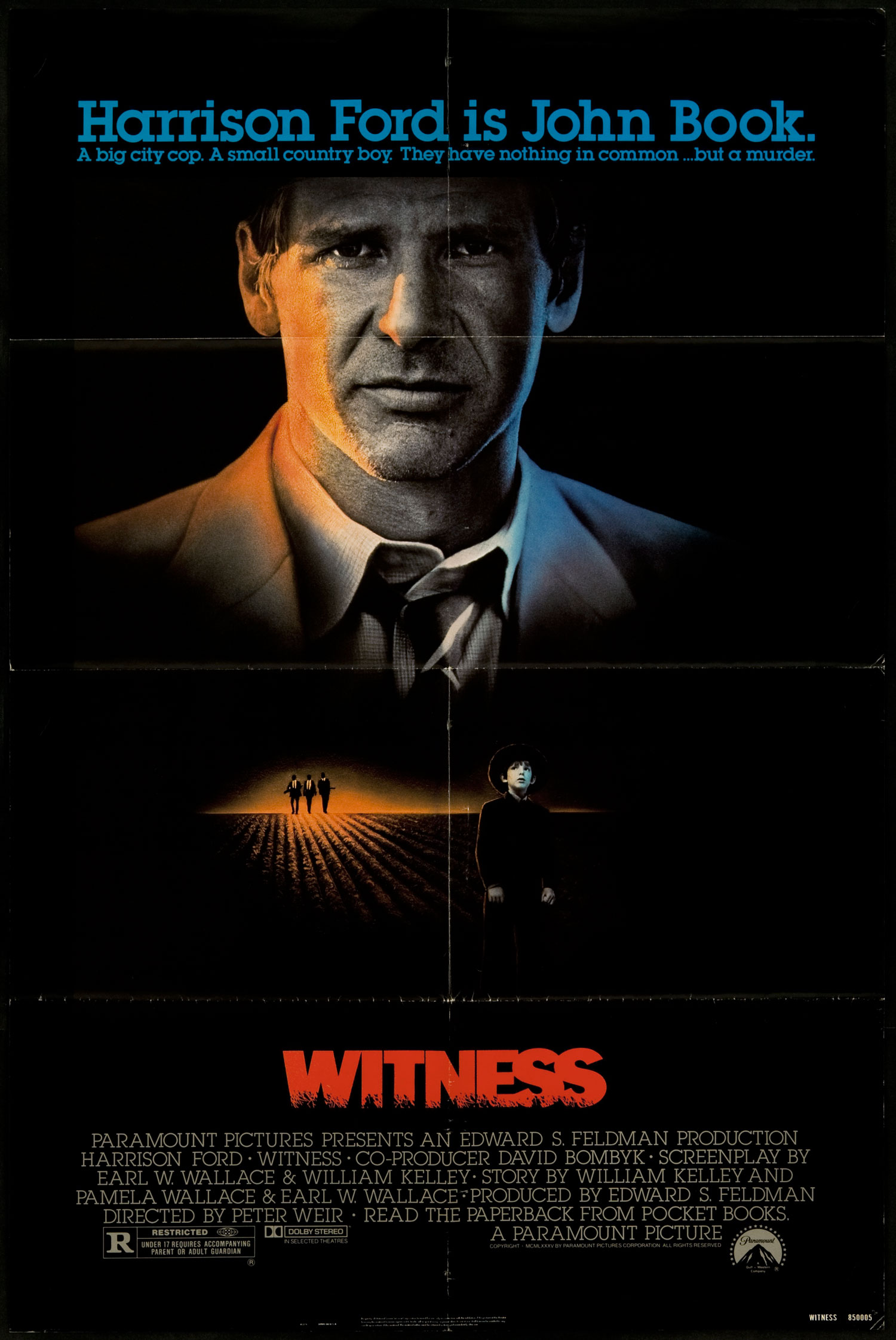
Samuel (Lukas Haas) is a young Amish boy traveling with his mother Rachel (Kelly McGillis) by train to Baltimore to visit her sister. At the train station he leaves to go to the restroom where he witnesses a murder committed by McFee (Danny Glover) a narcotics cop gone bad. John Book (Harrison Ford) is the policeman investigating the case and when he realizes that there is an internal cover-up and he is now being targeted for blowing the whistle he goes into hiding with the boy and his mother at the farm home of Rachel’s grandfather Eli (Jan Rubes). There John learns to adjust to the Amish lifestyle while forming feelings for Rachel who displays the same for him, but McFee and his henchman doggedly pursue John in an attempt to silence him permanently.

The script by Earl K. Wallace and William Kelley deservedly won the Academy Award and is perfect blend of riveting cop drama and cultural understanding and one of the few films to deal with the Amish culture. It manages to tackle the subject in a non-sensationalistic manner that for the most part shows the Amish community in a positive, but still realistic light. The scenes showing the Amish men getting together and working as a team to hoist up a barn is exhilarating. The part where John punches out a brash heckler who looks exactly like current Baltimore Ravens head coach John Harbaugh who is harassing the peaceful people is satisfying as well. The film does also manage to look a bit at the negative side of the religion namely the shunning where if one of their members does not conform completely to their rigid doctrine then they will be literally shunned by the rest of their community even their own family members, which Rachel is told she risks simply by being, in their eyes, too friendly with John.

I remember at the time some critics complained about the scene where Rachel is bathing and turns around to find John peering at her and instead of covering herself up just stands there and exposes both of her breasts. Many people felt that this was not realistic. That a women raised on modesty would not just throw it all away and expose herself to a man who she was not married to and not a part of their community even if she did have some feelings for him and I have to agree. Although I did like the quiet sensuality of the scene I did not feel it was right for his type of picture, but fortunately it is the only time that it ever gets ‘Hollywoodnized’ and for the most part is pretty respectful.

The balance between the potential love angle and the action is surprisingly well done. The film may have one too many romantic moments, but otherwise the pacing is solid. The climatic showdown inside the barn had me on the edge of my seat and one of the best and most creative action finales for a cop movie that I have seen.

Ford is engaging as ever and it is surprising that his role here is his first and so far only time that he has ever been nominated for best actor. It is fun watching him learn how to milk a cow as well as seeing him dressed in an Amish suit with the pants not quite long enough.

Josef Sommar also gives an interesting performance as one of the bad guys. Instead of being the villain that becomes more confident, brazen, evil, and vicious as the pressure mounts he instead begins to behave in a more panicked and confused manner, which is an interesting take on the age-old formula.

Of course the real star of the film has to be Haas who is perfectly cast. He is cute and adorable without it ever having to be forced, or clichéd and one of the main reasons that this film has become so endearing.

The film also features Viggo Mortensen in a non-speaking part as one of the Amish men and Patti Lupone has a brief bit as John’s sister who begrudgingly agrees to take in Rachel and her son for the night in her home. Her reaction when Rachel tells her that she is Amish is subtly amusing.

My Rating: 8 out of 10

Released: February 8, 1985

Runtime: 1Hour 52Minutes

Rated R

Director: Peter Weir

Studio: Paramount

Available: VHS, DVD, Amazon Instant Video

The Flim-Flam Man (1967)

flim flam man 2

By Richard Winters

My Rating: 6 out of 10

4-Word Review: Con-man finds apprentice.

Curley (Michael Sarrazin) is a young army deserter living in an over-turned and abandoned freight car in the rural regions of Kentucky. By chance he meets up with Mordecai Jones (George C. Scott) a traveling con-man who decides to use Curly as his apprentice as well as his assistance in some of his more elaborate schemes. At first Curley goes along with it, but when he fall in-love with Bonnie (Sue Lyon) one of Mordecai’s intended victims he decides he wants out much to Mordecai’s reluctance.

Scott really shines and this may be his best comic performance. Although he was only 38 at the time he looks and acts like a genuine old man even though his gray hair looks like it was frosted on much like what is done to white Christmas trees. In some way it might have been more authentic had an older actor played the role, but Scott is so much fun in the part that the movie may not have worked as well.

Sarrazin is solid in support. His quiet demeanor and understated performances never allowed him to get the recognition that he deserved, but he was always effective in these types of roles and having the character walk the moral tightrope and sometimes fall off makes him interesting and believable. Lyon is also good as the romantic interest. Although I felt the romance bogged things down a bit I still enjoyed her natural acting style that is devoid of any pretension.

Harry Morgan is fun as the headstrong sheriff who chases after Mordecai and Curly as is Albert Salmi as his dim-witted deputy. Salmi’s blank looking facial expressions are tops and the car chase that they have with the two culprits features some impressive comical stunt work and seems to tear-up the entire main street of the town.

The soundtrack by Jerry Goldsmith has wonderfully soothing melody with some great harmonica and trumpet solos. The on-location shooting in Kentucky captures the countryside and the hazy late summer sunshine of the region well.  For the most part the film is quite amiable and amusing, but predictable. The script lacks the unexpected twist or unique insight that would elevate it above being just the fluff that it is. The ending, which features Curly rigging the courthouse with dynamite and threatening it blow it up has a touching quality to it, but proves frustrating as it doesn’t show us what ultimately becomes of the characters.

My Rating: 6 out of 10

Released: August 22, 1967

Runtime: 1Hour 44Minutes

Director: Irvin Kershner

Studio: 20th Century Fox

Available: VHS 

The Night of the Iguana (1964)

night of the iguana 2

By Richard Winters

My Rating: 6 out of 10

4-Word Review: Flawed clergyman loves women.

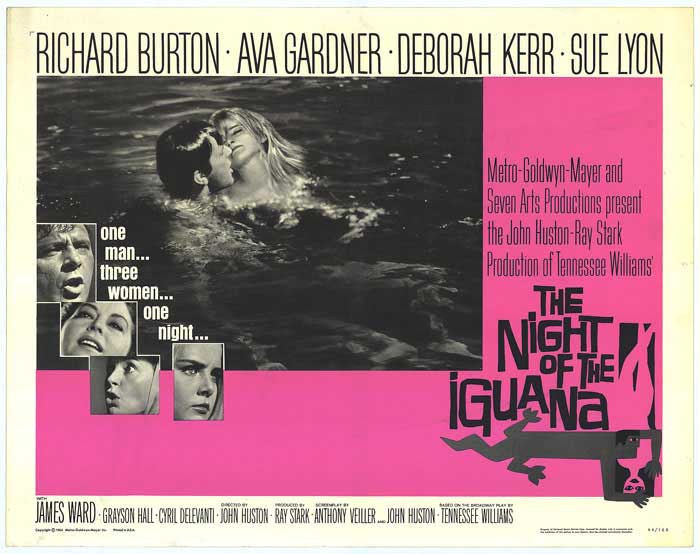
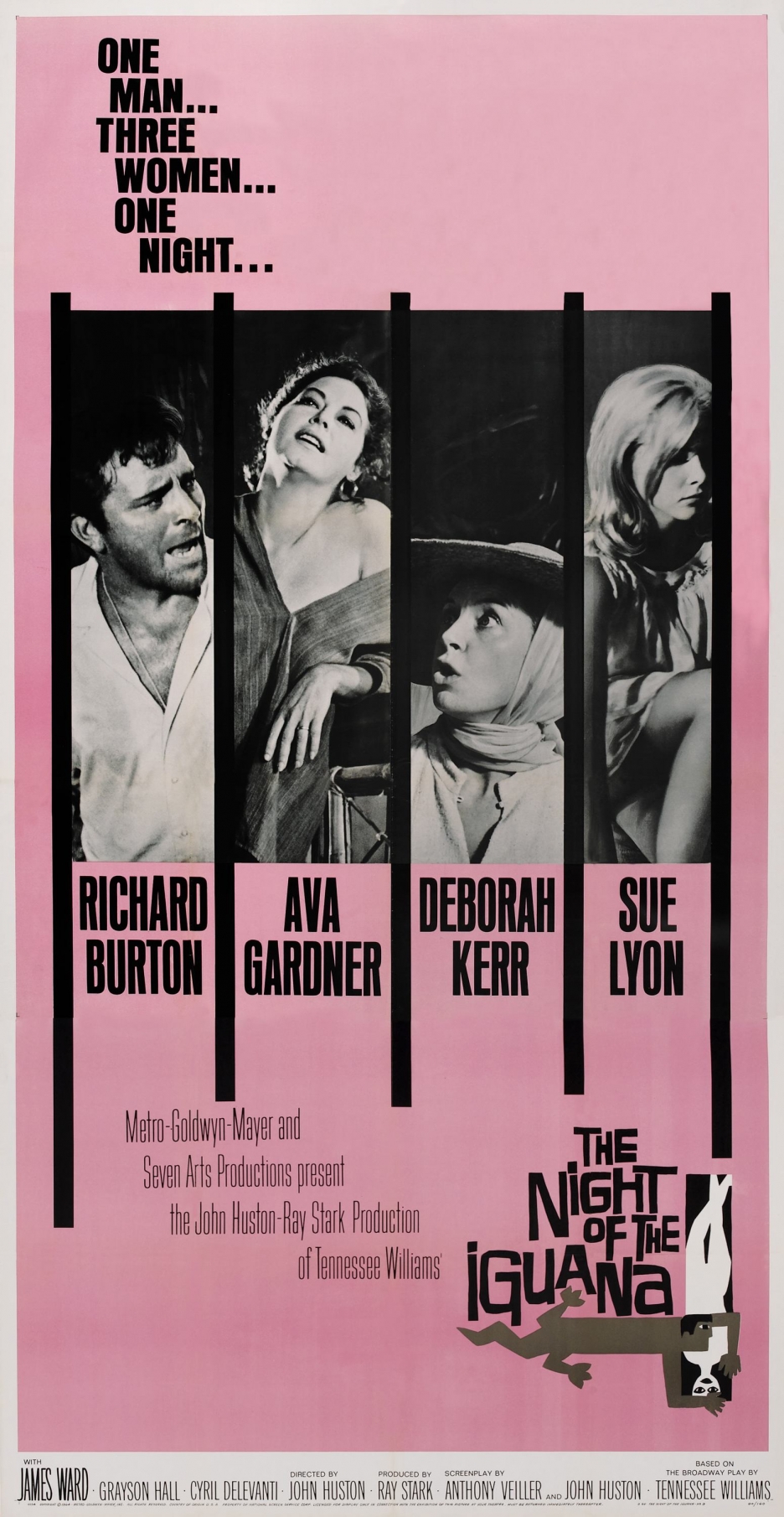
Lawrence Shannon (Richard Burton) loses his job as a clergyman when rumors surface of indiscretions he had with a young female parishioner, which pushes him to preach a ranting sermon at the pulpit that eventually drives all the members of the congregation out of the building. He then gets a job as a tour guide in Mexico and has the chore of leading a bus load of middle-aged women around the country. Charlotte (Sue Lyon) is a young nymph who takes a liking to Lawrence much to the chagrin of her over-protective chaperon Judith Fellowes (Grayson Hall). When Charlotte is caught in Lawrence’s bedroom late at night Ms. Fellowes promises that she will have it reported and get him fired. Unable to handle a another potential job loss Lawrence takes the bus load of women to an isolated seaside hotel run by Maxine (Ava Gardner) an old friend of his. He hopes that by somehow trapping them there he will be able to convince Ms. Fellowes to drop the charges, but along the way he meets Hannah (Deborah Kerr) who he starts to fall in-love with.

Unlike most of Tennesse William’s other plays this one, at least the first half, is full of energy and comical nuance. I found the group of ladies and Lawrence’s exasperated dealings with them to be quite amusing and the film moves along at an engaging pace. The second half though bogs down with more of William’s signature brooding drama that ends up hurting the flow. In many ways this film seems like two movies in one and the difference in tone and pace never gels. Despite a good nighttime conversation between Kerr and Burton I kept hoping the ladies and Ms. Fellowes would come back and felt the film was weaker without them.

Legendary director John Huston hits most of the right buttons here although it is not his best work. I was surprised and impressed to learn that Maxine’s hotel was built specifically for the production in an otherwise deserted region of the country. The building had an authentic old look and helped give the film added style and personality. I had mixed feelings with the black and white photography. On one had it helps bring out the dark recesses of its flawed characters and accentuate the moodiness of William’s script, but it also takes away from the exotic beauty of the locale.

Burton is good as usual and playing the part of an emotionally fractured, alcoholic character seems right up his alley. Gardner is great as the brassy Maxine and the scene of her making out with her two young, shirtless, maraca playing male assistants along the beach late at night is genuinely steamy. Kerr is in fine form as well and her more restrained demeanor makes a nice contrast to Gardner’s.

Lyon’s acting isn’t quite up to her costars and she seems particularly out of her league during her scene with Burton, but in the looks department she is unmatched. She is more filled-out and mature than in Lolita and in many ways even hotter. The scene of close-up shots of her moving her hips to a tune at a Mexican bar may excite some of the male viewers.

The under-rated Hall is excellent in her role as the heavy. Her craggy face and personality are perfect for the part and it rightly got her a supporting actress nomination.

In the final analysis this is not a bad version of Tennessee William’s material, but not a great one either.

night of the iguana 1

My Rating: 6 out of 10

Released: August 6, 1964

Runtime: 1Hour 58Minutes

Not Rated

Director: John Huston

Studio: MGM

Available: VHS, DVD, Amazon Instant Video