Category Archives: Movies with a rural setting

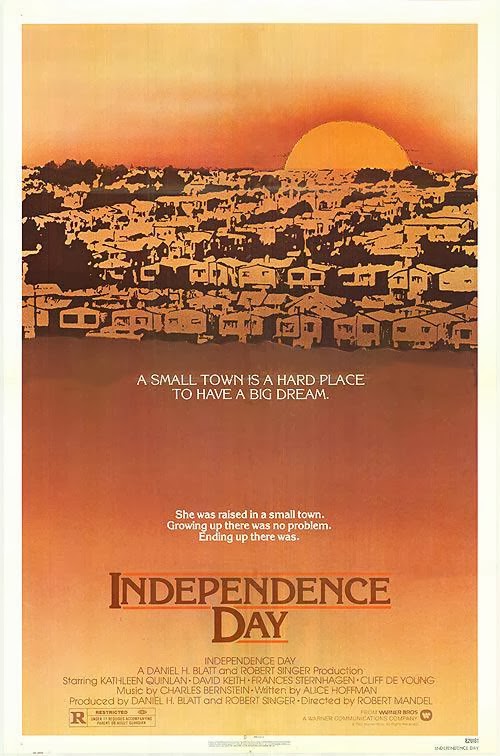
Independence Day (1983)

independence day 2

By Richard Winters

My Rating: 3 out of 10

4-Word Review: Getting out of Texas.

Mary Ann Taylor (Kathleen Quinlan) works as a waitress at her father’s café, but dreams of leaving her sleepy Texas town and going to school in California to study photography. Her mother (Frances Sternhagen) though is in declining health and her current boyfriend Jack (David Keith) wants her to stay which makes her decision to leave all the more difficult.

Shot on-location in Anson, Texas the film is a pleasant time-filler that fortunately doesn’t go overboard with Texas stereotypes, but it’s also rather bland and predictable. Feeling trapped in a small town is by no means a unique feeling and the film doesn’t go far enough with that theme and for the most part just touches the surface. Adding in a second storyline dealing with Jack’s sister (Dianne Weist) being abused by her husband (Cliff De Young) is a bit jarring and doesn’t really fit as there are long periods where Mary Ann is not seen at all and it would’ve made more sense had it been her sister that was being abused and not Jack’s and thus giving her more screen time.

The dramatic arcs are a bit too obvious as well and at times even bordering on being corny. For one thing the abuse issue gets introduced by having Jack visit his sister and asking her husband to borrow some money and then for no reason the husband begins throwing lit matches at his wife while right in front of Jack. Abusive people can certainly be cruel, but they’re not stupid and hurting a woman while her well-built brother sits right there is most assuredly going to get the husband into trouble, so why do it? Having Jack find out about the abuse by coming to the home one day unannounced and hearing shouting and maybe looking into a window and seeing the husband hit her would’ve made far more sense.

Having Mary Ann’s mother, who otherwise looks and acts quite healthy, suddenly fall over with fainting spells and suffering from some disease that never gets explained seemed too manufactured. Mary Ann’s arguments with Jack over whether she should go to school or stay in Texas is equally transparent especially since the two really didn’t have all that much in common and could’ve easily found other dating partners quite quickly.

Having one of the official’s from the photography school drive out to her rural home and personally offer her a full scholarship while telling her she was one of the greatest photographers he had even seen was pretty loopy too. All she did was take pictures of the town’s buildings and people’s faces, so what this guy managed to see that was so ‘brilliant’ and ‘special’ from that is hard to figure.

Quinlan and Wiest give great performances, but the movie is nothing more than lightweight drama that fails to distinguish itself from all the other B-dramas out there.

My Rating: 3 out of 10

Released: January 21, 1983

Runtime: 1Hour 50Minutes

Rated R

Director: Robert Mandel

Studio: Warner Brothers

Available: DVD (Warner Archive)
Rosalie Goes Shopping (1989)

rosalie goes shopping

By Richard Winters

My Rating: 4 out of 10

4-Word Review: Shopaholic turns to crime.

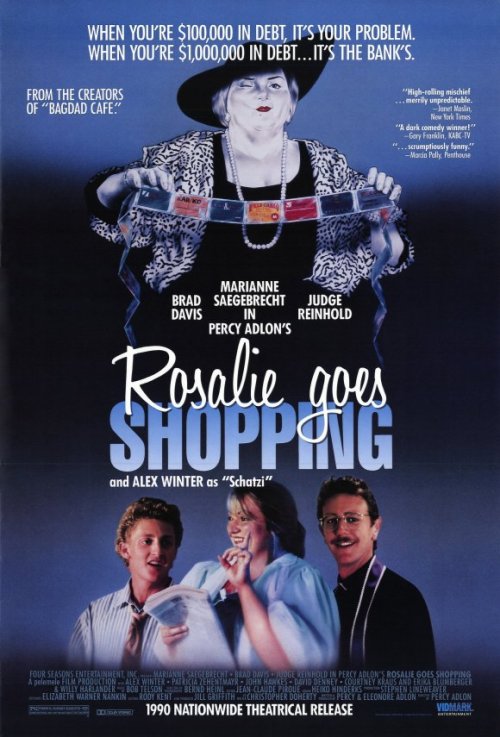
Rosalie (Marianne Sagebrecht) is a German immigrant who has married an American crop duster (Brad Davis) and moved onto a small ranch just outside of Stuttgart, Arkansas. There they raise a large family while also becoming obsessed with American consumerism by recording all the TV-shows on their VCR, but only so they can watch the commercials. Rosalie becomes a particularly obsessive shopper buying things that she really doesn’t need even when her money and credit become tapped out. She then figures out a way to hack into the accounts other people and companies via her home computer, which allows her to continue to pay for all her items by embezzling it from others.

This marks the fourth teaming of director Percy Adlon and star Sagebrecht and straight after their big success in the cult classic Bagdad Café. The film was made on-location in Arkansas, but financed by a German production company. I’m not sure what camera lens was used or the film stock, but the color contrast is quite unique and gives the whole thing an Avant-garde appearance. The storyline is original as well and veers off into unpredictable ways while making a great point, which is that unbridled capitalism can be just as dangerous and oppressive as any other form of government.

Sagebrecht is a delight and the moment where tears trickle down her checks as she becomes homesick for her native land while watching home movies taken in Germany is touching. Judge Reinhold is funny as the priest who becomes aware of Rosalie’s shenanigans through hearing them during confession, but completely exasperated about what to do about it. Brad Davis, a highly underrated actor who died too young, plays a rugged country man that’s completely against type from his more famous roles in the homoerotic films Midnight Express and Querelle.

Unfortunately the script, which was co-written by Adlon and his wife Eleonore veers too far into the whimsical and shows too much of a naiveté in regards to cyber technology. The idea that Rosalie could somehow ‘guess’ what everybody’s password was even those used by big companies and major banks is too farfetched and even if she did somehow figure them out all they’d have to do is change them once they realized their accounts had been hacked, which would’ve ended Rosalie’s cybercrimes right there.

The fact that she is able to cover up her crimes by doing even more outrageous ones and never, ever having to face the consequences of her actions is far too fanciful. It also makes light of a genuinely serious issue where the poor and lower middle-class do not have the same resources to get out of their financial predicaments as the rich do. They also do not have the convenience to magically cheat-the-system like the character here and those that do will almost always have it catch up with them where they will ultimately face harsh repercussions no matter how ‘justified’ they may have felt they were in doing it.

Some may argue that this was just a wish-fulfillment comedy, but even then there still needs to be some realm of possibility to it for it to be satisfying and this has none and it also makes the so-called clever twists lose their edge once you realize that none of it is plausible.

My Rating: 4 out of 10

Released: May 19, 1989

Runtime: 1Hour 34Minutes

Rated PG

Director: Percy Adlon

Studio: Pelemele Film

Available: VHS, DVD (Region 2), Amazon Instant Video

King Rat (1965)

king rat 1

By Richard Winters

My Rating: 6 out of 10

4-Word Review: An island prison camp.

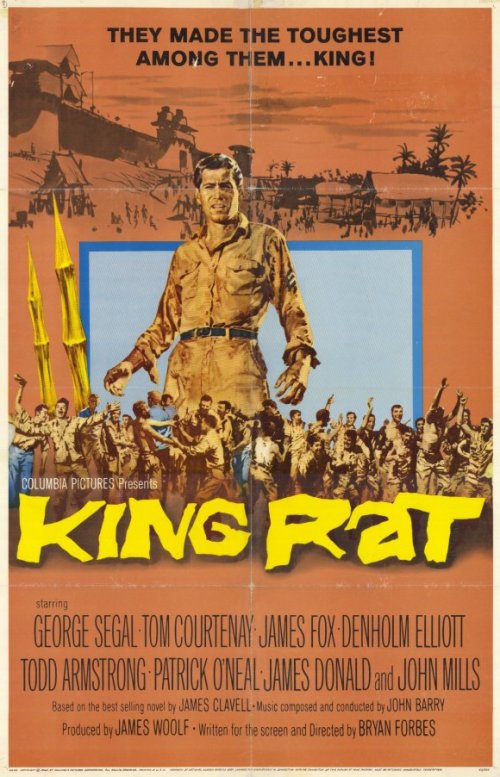
British and American POWs are held on an Island prison camp run by the Japanese during WW II. This camp is unlike the others as it does not have any walls, barbed wire fences, or prison guards. The men are allowed to roam freely while trapped on a tiny island with nowhere to go. Corporal King (George Segal) manages to wheel-and-deal his way to the top of the food chain by getting involved with the underground black market, which allows him to live the relative good-life while the other prisoners remain near starvation. He befriends Marlowe (James Fox) who can speak the Malaysian language, which he feels can come in handy as he gets involved with a diamond smuggling operation as well as selling deer meat, which unbeknownst to his customers is actually meat from rats who’ve feed off of the bodies of the other dead prisoners.

To some extent one can find some similarities to this and The Great Escape or Stalag 17 in that the prisoners have managed to create their own underground network without their captors being aware, but that is pretty much where the comparisons end. This film is darker and examines more the psychological deterioration that the men go through while realizing its themselves and each other that is more the enemy than the actual Japanese guards who are shown very little and have no presence at the camp or in the movie.

Segal gives a star making performance as a anti-hero who could easily be quite unlikable, but Segal’s engaging on-screen persona gives the character an added spark making him and his constant conniving more amusing than anything particularly with the way he barters with the Malaysian guards during their discussions on the price of the transfer of diamonds.

The supporting cast is outstanding as well especially Fox as the only sympathetic character and Tom Courtenay as the overzealous Grey and his never-ending crusade to take King and his cronies down. James Donald is also good as the no-nonsense Dr. with a very matter-of-fact bedside manner and a young Richard Dawson who gets the shock of his life when he comes in after the Japanese surrender to free the men of their enslavement only to find that they’re strangely reluctant to leave.

The film works in episodic fashion and while it maintains a gritty level it also has some lulls and few too many shifts in tone. There are though many unique and memorable moments including the ending where the men find themselves free to return home, but respond much differently than you’d expect. There is also a scene where the men kill a dog after it attacks some chickens and then later eat it as if it were a delicacy.

My Rating: 6 out of 10

Released: October 27, 1965

Runtime: 2Hours 14Minutes

Not Rated

Director: Bryan Forbes

Studio: Columbia Pictures

Available: DVD, Amazon Instant Video

When You Comin’ Back, Red Ryder? (1979)

when you comin back red ryder 2

By Richard Winters

My Rating: 5 out of 10

4-Word Review: Terror at a diner.

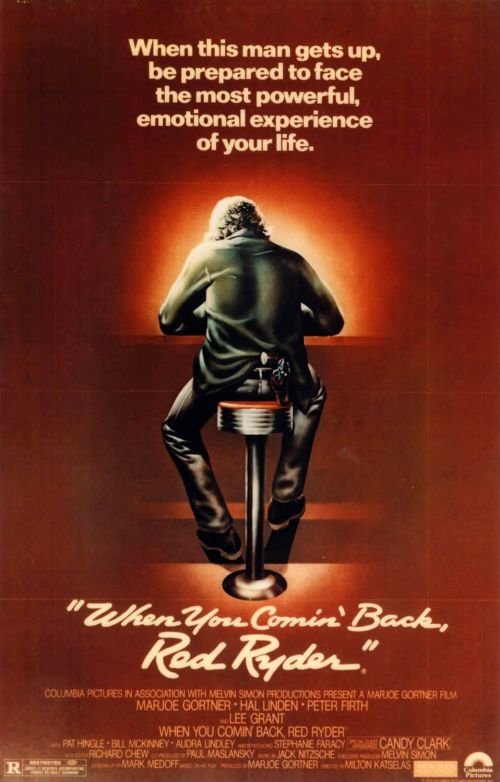
The year is 1968 and the setting is a small, lonely diner nestled at the border of Texas and New Mexico. Richard (Hal Linden) and his violinist wife Clarissa (Lee Grant) arrive for a morning cup of coffee. There is also Angel (Stephanie Faracy) the diner’s lone waitress and Stephen (Peter Firth), who was nicknamed Red during his youth due to his red hair at the time, but besides them the place is empty and peaceful. Then Teddy (Marjoe Gortner), an unhinged Vietnam vet and his hippie girlfriend Chery (Candy Clark) enter. They are without money and stranded with a broken down van, which makes Teddy particularly volatile as he begins harassing the others with evasive questions before eventually terrorizing them all by trapping them inside the place and forcing them to do whatever weird, sick thing he asks.

The film is based on the 1973 Off Broadway play by Mark Medoff, who also wrote the screenplay. In many ways it’s similar to the 1967 black-and-white drama The Incident in which Tony Musante and a young Martin Sheen trap several subway riders inside a subway car and spend the rest of the night terrorizing them simply for their own personal amusement.  Both films are structured the same with the first part examining the characters before they arrive at the scene and revealing a bit of the personal dramas that each of them face and then spending the second half showing them trapped in a claustrophobic setting and forced to deal with their reluctance at confronting their fears.

The 1967 film though outshines this one as there were more characters, which gave it a better variety of personalities as well as bad guys that were menacing and believable. Gortner is too much of a ham making him more irritating than scary. The part was originally played by Kevin Conway during its Off Broadway run and his performance won many accolades, which should’ve been enough for them to have offered him the chance to reprise the role here. Gortner, who also produced seemed intent at trying to use this as a vehicle to promote himself as being a ‘serious’ actor, but he was too old for the role from the beginning since he was already in his mid-30’s at the time this was shot while vets coming back from the war during the ‘60s where only in their late teens or early 20’s.

The film only gets mildly interesting during the confrontation sequence inside the diner, which takes 45 minutes of the film’s 2-hour runtime just to get there. The way the characters respond to Gortner’s scare tactics and the supporting cast’s performances, who are all far better actors than Gortner, is the movie’s only compelling element, but even here there are issues. The biggest one being that the people seem too wimpy and today’s viewers will get frustrated at how overly compliant they are to Gortner’s demands and never once try to overpower him despite having ample opportunity.

The movie is also notorious for featuring some rather shocking moments of nudity. It starts out with a full body shot of Candy Clark in the buff, who was married to Gortner in real-life at the time this was made and that isn’t too bad, but then it proceeds to later show 48-year-old Linden in nothing but speedo shorts doing sit ups with his butt crack clearly exposed. Still later there is a scene where 52-year-old Lee Grant has her shirt hoisted all the way over her head with her breasts in full view and then paraded around the diner in mocking fashion. The film’s most over-the-top moment though comes when Gortner himself is stripped naked and bent over a table while having a proctoscope shoved up his rectum as he continues to have a conversation with the man who’s doing it.

Filmed on-location in Fabens, Texas, which was also the site of a famous scene in The Gateway, and Las Cruces, New Mexico the movie just doesn’t convey enough tension to make it compelling or worth catching. It would’ve worked better had it skipped the first half dealing with the backstories of the characters, which was never a part of the original play anyways and just gone straight into the diner sequence while also casting a leading actor that had some actual acting training.

when you comin back red ryder 1

My Rating: 5 out of 10

Released: February 9, 1979

Runtime: 1Hour 58Minutes

Rated R

Director: Milton Katselas

Studio: Columbia Pictures

Available: VHS

Way…Way Out (1966)

way way out

By Richard Winters

My Rating: 3 out of 10

4-Word Review: Living on the moon.

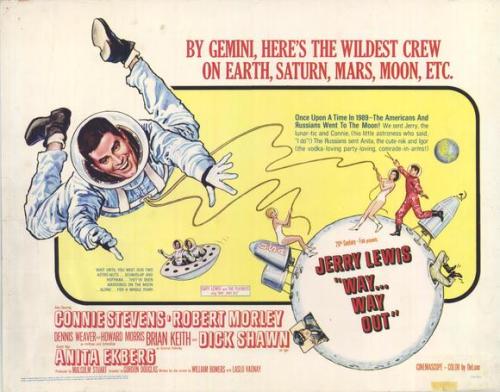
The year is 1989 and both the Russians and Americans have set-up bases on the moon. Each base has 2-people living in them. For the Russians things go smoothly mainly because they have a man and a woman (Dick Shawn, Anita Ekberg) cohabitating while the Americans have two men (Dennis Weaver, Howard Morris) who quickly go crazy because there are no women around for sex. NASA decides to replace the two men with a man and woman like the Russians have, but insist that unlike the Russians the American couple must be married. Pete (Jerry Lewis) who is a long time employee of the space agency is chosen and his female counterpart is fellow astronaut Eileen (Connie Stevens). The two had never met and are forced to accelerate their courtship and eventual marriage in a matter of 3 days before getting rocketed up into orbit.

To some degree this is an interesting idea and the first 15 minutes or so allows for some comic intrigue, but the filmmakers blow it by backing off of their novel approach and turning the whole thing into just another contrived romance. Stevens may be attractive, but her acting is limited and her presence adds no other added element to the proceedings besides being ‘eye candy’. The film would’ve been funnier had Pete been forced to go up with agency’s second choice, which was Esther (Bobo Lewis) who was a more aggressive, less attractive woman who could’ve added humorous conflicts. The spats between Pete and Eileen is banal and the second half devolves into one long drunken party between the American and Russian couple that isn’t funny and more like filler  put in when the writers ran out of ideas from their original concept.

From a sci-fi angle it is implausible. The rocket ship takes only a few minutes to get from earth to the moon and when they get there the lack of gravity is never addressed and they are able to walk around normally except for the few times when they get into fights, which sends one person flying off into the air when punched by the other. The earth that is shown in the sky has no clouds even though clouds can always be seen from just about every satellite shot taken of earth from space. The film also ruins the most intriguing element, which is seeing how they might’ve predicted things would look like in the ‘80’s from a ‘60’s perspective by having a narrator state right away that ‘little has changed’ in the past 23 years and therefore making no attempt to show anything from a futuristic viewpoint.

Lewis is amazingly restrained and doesn’t end up ruining things with his overacting, which instead gets done by Shawn. Weaver has a few good moments as the stressed out astronaut slowly going nutty as well as Brian Keith as a gruff American general, but Robert Morley is the funniest as the over-worked and over-burdened head of the space program.

Since one must set the bar very low from the beginning with any Lewis comedy this manages to be tolerable despite being more benign than it needed to be.

My Rating: 3 out of 10

Released: October 26, 1966

Runtime: 1Hour 41Minutes

Not Rated

Director: Gordon Douglas

Studio: 20th Century Fox

Available: DVD (Region 2), Amazon Instant Video

The Visitors (1972)

visitors 1

By Richard Winters

My Rating: 3 out of 10

4-Word Review: His past comes back.

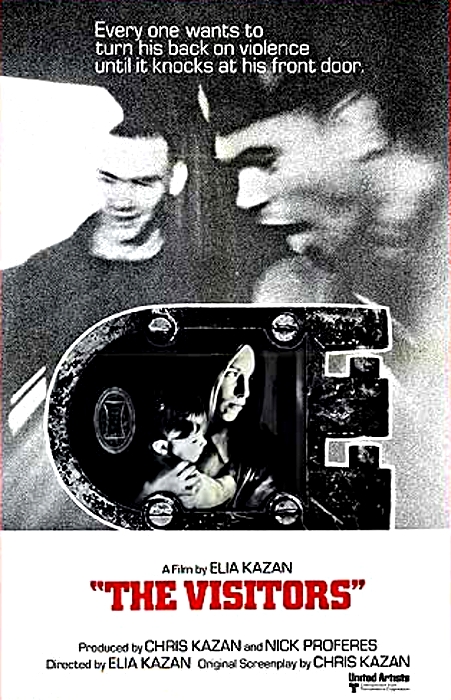
Vietnam veteran Bill (James Woods) has moved back into civilian life while enjoying the quietness of the country with his girlfriend Martha (Patricia Joyce) and her infant son. One day in the dead of winter while Bill is away shopping two of his former war buddies Tony and Mike (Chico Martinez, Steve Railsback) come by for an unexpected visit. When Bill returns he is not happy to see them and when Martha asks him why he tells her of how while in Vietnam he had witnessed the two raping a woman and later he decided to report it, which got the two men sent to prison. Now that they are out he is afraid they may be looking for revenge. Tony insists that he’s forgiven Bill for what he did, but Mike’s intentions are much more ominous especially with the way he eyes Martha. As the night wears on the tensions mount until festering over into anger and mayhem.

The story is loosely based on an actual crime that occurred in Vietnam on November 19, 1966 when five American soldiers kidnapped and gang raped a 21-year-old Vietnamese woman who they later killed. One of the soldiers, who did not take part in the crime, but did witness it, reported the incident to his superiors, which eventually got the other men convicted and imprisoned.

The incident was first made into a movie in 1970 in Michael Verhoeven’s o.k. and then 19 years later Brian De Palma did another version of it called Casualties of War, which starred Michael J. Fox. This version differs from the other two in that it only alludes to the crime, but never shows it. Instead it hypothesis on what might’ve happened had those who were convicted came back to revisit the one that had turned them in.

Story wise the film works to a degree as it reveals things in layers, which helps hold the mystery and filming the majority of it inside one lonely, isolated house gives it an effectively claustrophobic feeling, but the production values are extremely low and resembles more someone’s lost home movie than a feature film directed by a one-time Hollywood legend. The background sound is mainly made up of a howling wind noise, which helps heighten the creepiness, but then during the second half director Elia Kazan inserts music, which becomes a distraction.

The ending leaves open a wide array of unanswered questions along with a lot of murky character motivations that makes the whole thing seem pointless and ill-conceived. The only interesting element to get out of it is seeing Woods and Railsback in their respective film debuts. Railsback is especially good in a part he seems born to play and one he honed to even greater success years later in The Stunt Man.

My Rating: 3 out of 10

Released: February 2, 1972

Runtime: 1Hour 28Minutes

Rated R

Director: Elia Kazan

Studio: United Artists

Available: Amazon Instant Video

Night of the Lepus (1972)

night of the lepus

By Richard Winters

My Rating: 1 out of 10

4-Word Review: Giant rabbits attack people.

Arizona rancher Cole Hillman (Rory Calhoun) has his property overrun with rabbits and looks to zoologist Roy Bennett (Stuart Whitman) for help. Roy along with his wife Gerry (Janet Leigh) decides to inject these rabbits with hormones that he hopes will throw off their breeding cycle, but instead one of them escapes from the testing lab and creates a whole new race of giant sized rabbits that begin terrorizing and destroying everyone and everything around.

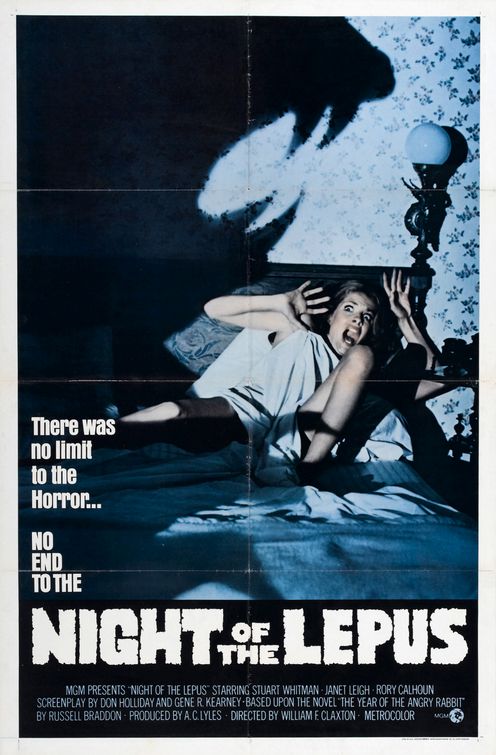
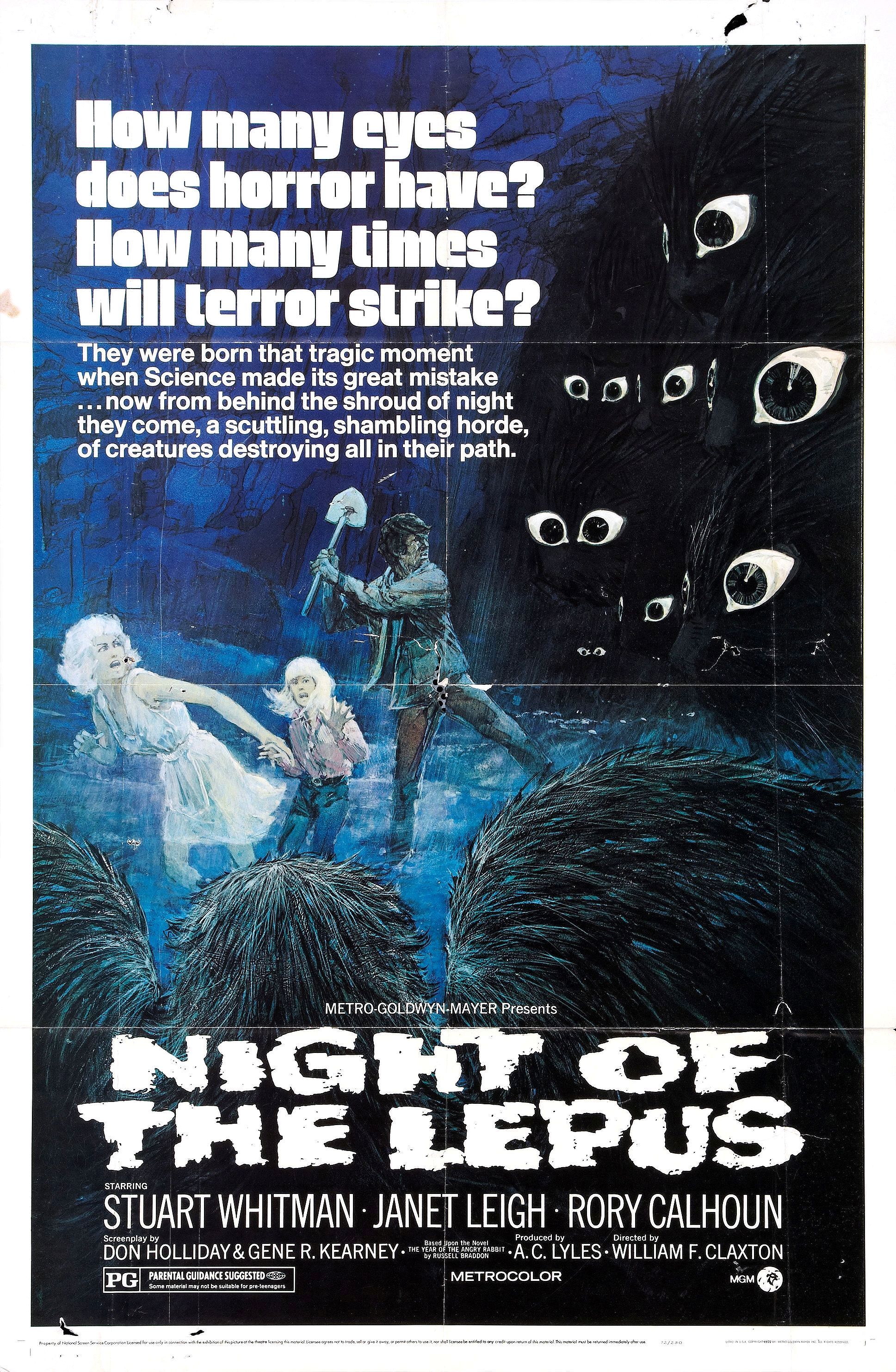
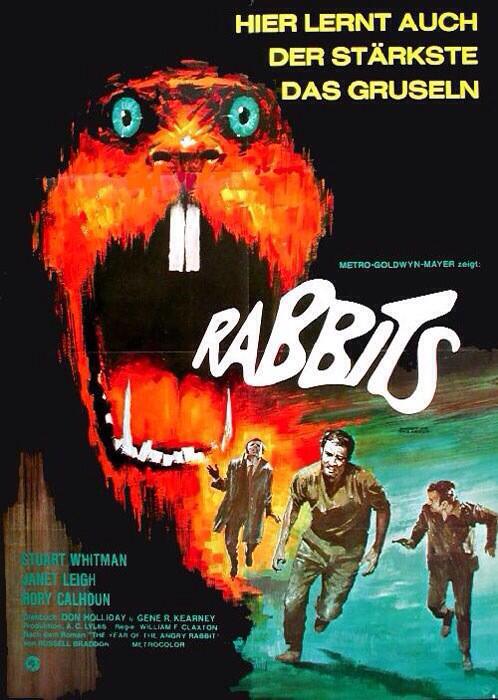
If your thought is ‘what were they thinking’ as you read that plot synopsis then you are not alone as that was the question I kept asking as I viewed the film. What’s even funnier is that the studio feared this concept would be met with ridicule from the beginning and therefore created movie posters that carefully avoided showing the rabbits or explaining what the threatening presence was. The original title for the film, which was ‘Rabbits’ was also changed to Lepus, which in Latin means hare as another way to avoid giving away the plotline, but it all proves futile because once people view the film the secret would be out and the laughter not the scares would begin.

The special effects are the biggest issue as the rabbits never seem giant-sized and are simply photographed in extreme close-up to give the clumsy impression that they are large or shown amongst a miniaturized set. However, even when shown next to a small building it doesn’t work as they appear no bigger than a horse, which may make it big for that species, but still not giant sized. The sound effects used to represent the noise that they make comes off more like ancient tribal music that becomes increasingly annoying and overplayed.

night of the lepus 2

The shots showing the victims after an attack looks more like people lying on the ground smeared with red paint and without any bite marks or chewed flesh that you would expect. The film also doesn’t explain why these rabbits that are normally a docile type of creature would suddenly become so aggressive simply because they became bigger.

It’s fun to see some familiar faces like DeForest Kelley in one of his last non-‘Star Trek’ roles, but I’m surprised that any of these actors took part in this as I’m sure from reading the script that they knew it was ludicrous, but to their credit they perform it earnestly. Melanie Fullerton as the young girl who sets the whole thing in motion by allowing one of the rabbits to escape is the only one that got on my nerves and may win the prize for most annoying child ever to be put on the big screen.

Based on the novel ‘The Year of the Angry Rabbit’ by Russell Braddon the film never gets off the ground and is straddled from the very beginning by its absurd plot and cheesy effects. Even if it had been done as a parody I don’t see it doing any better, which brings us back to the first question ‘what were they thinking’ and my answer to that is that they clearly weren’t.

night of the lepus 4

My Rating: 1 out of 10

Released: October 4, 1972

Runtime: 1Hour 28Minutes

Rated PG

Director: William F. Claxton

Studio: MGM

Available: DVD, Amazon Instant Video

Village of the Damned (1960)

village of the damned 2

By Richard Winters

My Rating: 6 out of 10

4-Word Review: The eyes have it.

Remade in 1995 and based on the John Wyndham novel ‘The Midwich Cuckoos’ the story centers on a small English village where one day everyone mysteriously falls asleep for several hours while under the spell of some invisible, odorless gas. When they awaken everything seems normal, but later on all the women become pregnant, even those that were not married or were still virgins. When the babies are born they are found to be different from their human counterparts as they have a higher intelligence, odd shaped heads and bright blonde hair. Later on these same children gain the ability to read other people’s minds and dispose of those that they don’t like penetrating them with the spell of their glowing eyes. As the rest of the village panics one man (George Sanders) feels that he may have the ability to stop them, but only if he can somehow control his own thoughts, so they won’t be able to tell what he is actually up to.

As a sci-fi thriller it’s not bad. The film’s short running time has a nice compact style to it with a story that evolves at a fast pace and continues to add new twists. The special effects for its day are realistic enough to be passable and the violence is surprisingly high. Sanders is effective in the lead and Martin Stephens as the leader of the children is quite creepy.

I found it a bit baffling though that the townspeople wouldn’t have quarantined the strange children from the start as it becomes quite obvious from the beginning that they aren’t normal. Instead they are allowed to roam freely even as they become increasingly more sinister. I would’ve also have thought that some of the mothers who gave birth to these strange beings would’ve disowned them and even refused to take care of them once their unnatural and frightening oddities became apparent.

The ending is frustrating as the film does not supply any answer as to who these kids where and what type of alien presence impregnated the women and why. The movie tells us that other places have been effected with these strange children as well, which leads one to believe that this is only a part of some other more sinister plot with far reaching consequences that never gets tackled. Instead we get left with a short film that acts like a small chapter to a fascinating idea with broad potential variables that unfortunately never gets followed through on.

My Rating: 6 out of 10

Released: July 5, 1960

Runtime: 1Hour 17Minutes

Not Rated

Director: Wolf Rilla

Studio: MGM

Available: DVD, Amazon Instant Video

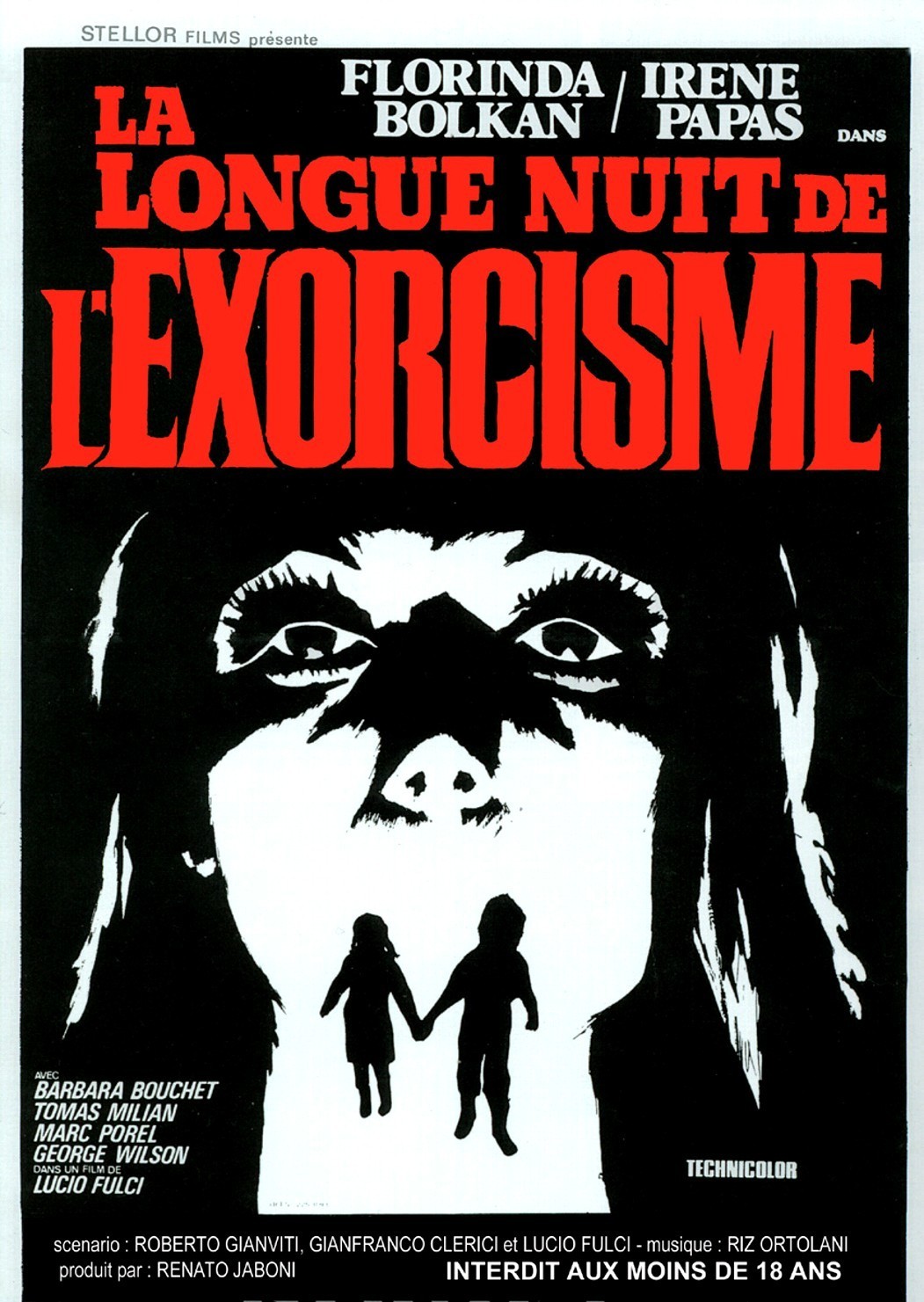
Don’t Torture a Duckling (1972)

don't torture a duckling 2

By Richard Winters

My Rating: 4 out of 10

4-Word Review: Who’s killing the children?

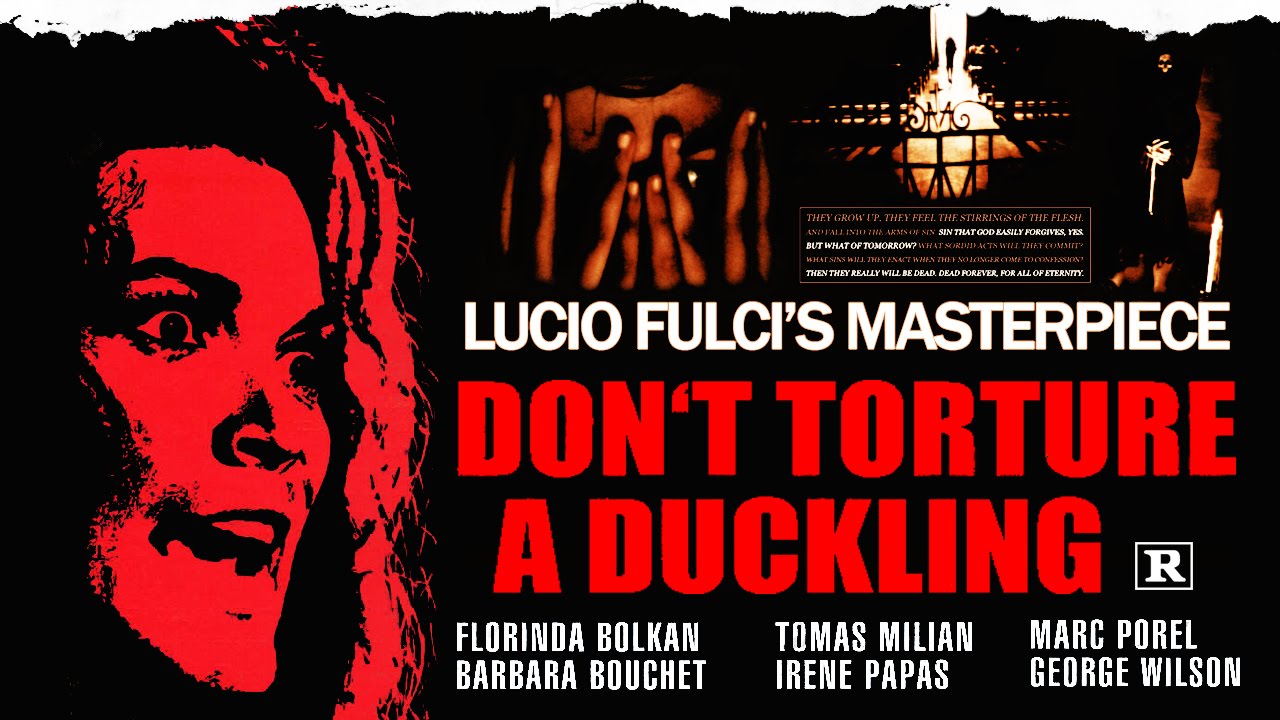
The setting in this Italian giallo is a small, rural village where the children of the townspeople are being murdered. At first the police suspect and arrest a mentally handicapped man (Vito Passeri), but the killings continue. Soon even more suspects turn up including Maciara (Florinda Bolkan) the mother of a dead child herself who secretly practices voodoo using dolls made by her father and yet every time the authorities believe they’ve found the culprit more clues arise that leads them to someone else creating panic in a town already steeped in fear, suspicion and the superstitious.

As a story detailing a police investigation it’s not too bad. The plot works in a linear fashion that’s easy to follow without entering in too many subplots or red herrings although it’s still no better than your average episode of ‘Murder She Wrote’. I did enjoy the rural Italian landscape and the bird’s eye shot of the village whose decrepit, rundown buildings visually hit home the stifled, bleak nature of the residents and why they would turn so heavily to the spiritual world as their sole escape.

Balkan’s performance as the nutty lady is effective particularly when she has a seizure during her interrogation and the scene where she gets surrounded by men who belt her with chains is quite graphic and realistic.

The film though, like with a lot of Italian productions from that era, does have dubbing issues particularly director Lucio Fulci’s use of adding in all the sound effects giving it a certain over-the-top cartoon quality. For instance when a victim is being slapped by a man’s hand it sounds more like the lashing of a whip and even simple stuff like the shoveling of dirt comes off wrong because the sound effect is not in sync with the action on the screen.

The film also has a uncomfortable moment where an adult character (Barbara Bouchet), who is one of the protagonists, walks around naked in front of a 12-year-old boy and even asks him how many women ‘he’s done it with’.

Spoiler Alert!

Guessing who the real killer is was easy and I had the whole thing figured out after about 30 minutes making the rest of the mystery predictable and boring. The idea of a priest killing children might’ve been considered shocking at the time, but now as with Fulci’s criticism of the Catholic Church it comes off as heavy-handed and redundant.

The close-up, slow motion shot of the priest falling down a cliff at the end is the film’s most controversial moment as it is clearly a dummy whose blank eyes and unnaturally agape mouth looks incredibly fake. Some have argued that this was Fulci’s attempt at revealing the ‘inner ugliness’ of the character by showing something with such a distorted face, but since a similar looking mannequin is also used to portray one of the boy victim’s submerged in a tub of water earlier I think it can safely be said that it was more just the cheapness of the production than anything else.

End of Spoiler Alert!

don't torture a duckling 4

My Rating: 4 out of 10

Released: September 29, 1972

Runtime: 1Hour 42Minutes

Not Rated

Director: Lucio Fulci

Studio: Medusa Distribuzione

Available: DVD, Amazon Instant Video

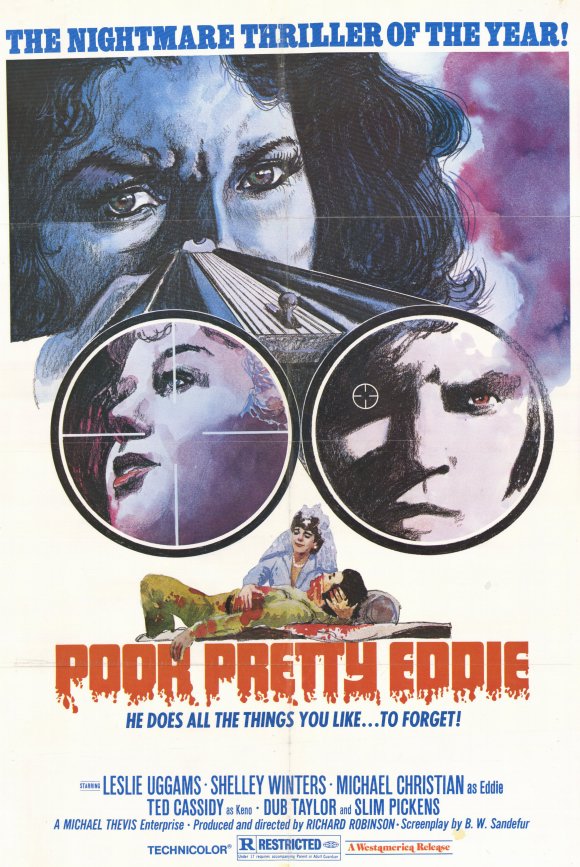
Poor Pretty Eddie (1975)

poor pretty eddie 1

By Richard Winters

My Rating: 6 out of 10

4-Word Review: Wrong turn to hickville.

Liz Weatherly (Leslie Uggams) was simply looking for a break from her hectic touring schedule and a chance to take some nature photos when her car breaks down on a lonely southern dirt road near an isolated lodge run by an aging, overweight lush (Shelley Winters) and her much younger boyfriend Eddie (Michael Christian). Eddie recognizes Liz as being a famous singer and since he has dreams of that nature as well tries to convince her to help him get his foot-in-the-door, but his talents do not match his ambitions and he fails to impress her. He then delays the repairing of her car hoping to wear her down and work things into a sexual relationship. When she resists this he rapes her and traps her at the remote hotel with no vehicle for escape. When she goes to the police the backwoods sheriff (Slim Pickens) humiliates her further, which crumbles her inner strength and makes her feel like a droid to the perversion around her that ultimately has her forced into a shotgun wedding.

This turgid drama is full of provocative southern gothic elements and wallows in areas that others fear to tread. The creative camerawork and backdrop sounds are impressive especially for a low budget film and the slow motion violence adds an evocative touch that stays with you long after it’s over. The character’s sexual repression gets relayed in an equally interesting way by showing scenes of them sucking and slurping their food like it’s a sexual substitute.

poor pretty eddie 3

Prolific character actor Pickens gets one of his best roles as the slimy hick sheriff in a part he seems almost born to play and Dub Taylor is spot-on as a self-imposed backwoods judge who creates a makeshift trial in the middle of his ragtag bar while also amusingly comparing Yankees to hemorrhoids. Ted Cassidy is good as well and makes a strong impression despite having limited lines.

I was not as impressed with the female performances as star Uggams comes off as too cold and one-dimensionally rigid without showing any type of preliminary vulnerability. Winters is competent as always, but playing a lonely, aging, pathetic woman begging for love is too similar to the character that she played in Lolita and making it seem more like typecasting.

The climactic bloody shootout is fun, but ends up being more of a spectacle than anything.  B.W. Sandefur’s script lacks any type of twist, introduces psychological elements that it fails to follow through on and wades in tired southern stereotypes making this a warped piece of ‘70s cinema that falls just short of being a cult classic.

poor pretty eddie 2

My Rating: 6 out of 10

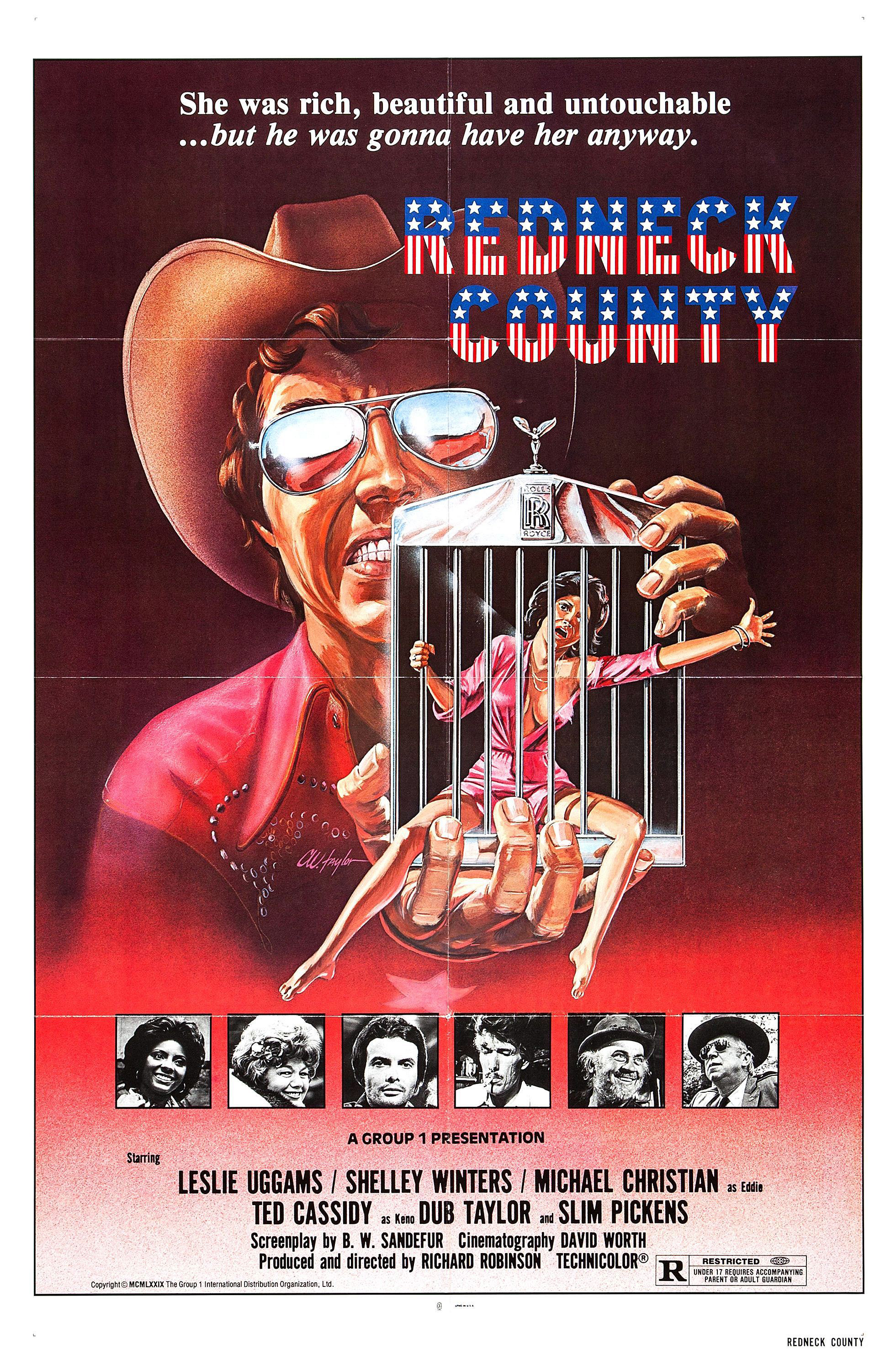
Alternate Titles: Redneck County, Heartbreak Hotel, Black Vengeance

Released: June 16, 1975

Runtime: 1Hour 22Minutes

Rated R

Director: Richard Robinson, David Worth

Studio: WestAmerican Films

Available: DVD