Category Archives: Movies with a rural setting

The Cars That Ate Paris (1974)

cars-ate-paris-1

By Richard Winters

My Rating: 7 out of 10

4-Word Review: Lots of car accidents.

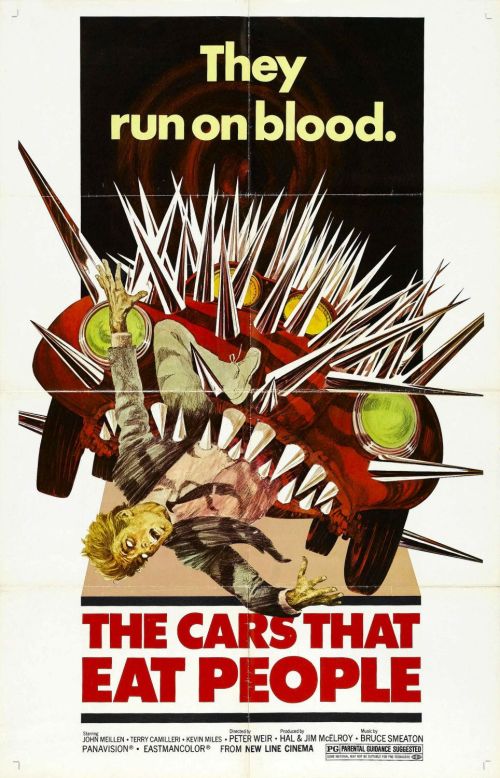
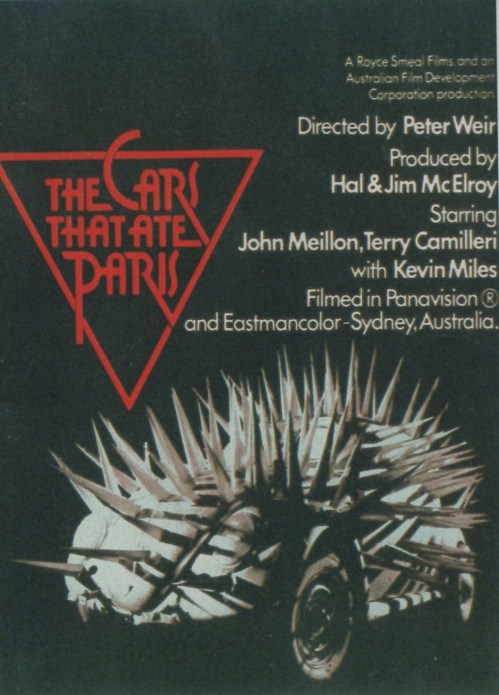
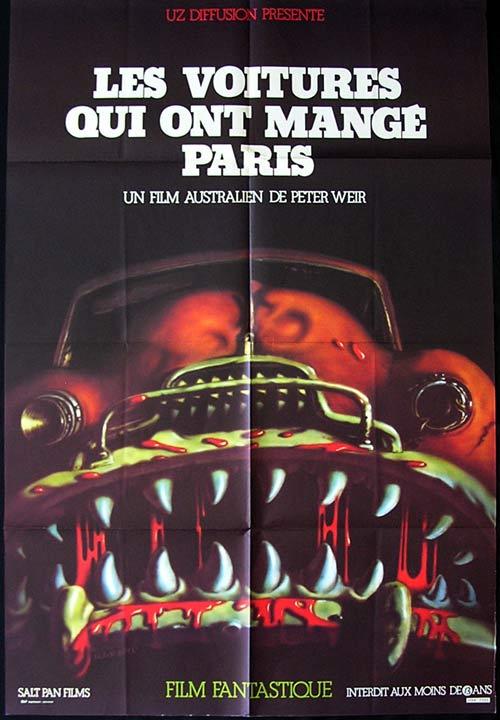
The residents of a poor Australian town known as Paris come up with a scheme to cause car accidents to those traveling through it which will allow them to salvage what’s left of the vehicle and resell it for goods or cash.  Things go smoothly for a while until Arthur (Terry Camilleri) and his brother George (Rick Scully) become victims to one these ‘accidents’. George dies, but Arthur survives and is too traumatized to get back into a car again or leave town. He takes up residence with the town’s mayor (John Meillon) who gets him a job as a parking enforcer, which causes problems when Arthur gives a citation to some rowdy young people who do not take kindly to this and seek a violent revenge.

This decidedly odd story marks director Peter Weir’s feature film debut and it’s hard to know what genre to place it into. Originally it was intended as a wacky comedy, but then dark elements were added in. Eventually it was distributed as a horror film, but it didn’t do well at the box office, so it was reissued as an art film and only fared slightly better. The film has managed to obtain a cult following and the story is original with funny moments, but the unexpectedly gory ending could leave some viewers cold as it did when it was first screened at the Cannes Film Festival back in ‘74.
cars-ate-paris-2

One of the best things about the movie is the casting of Camilleri in the lead. He’s very soft-spoken and has an almost transparent demeanor, which helps heighten the interest because you become intrigued at seeing how this schmuck is going to potentially take down this small town criminal organization, which would’ve been fun, but unfortunately the plot doesn’t get played-out in quite that way.

Meillon is solid as the mayor and I enjoyed seeing how his character puts up this calm façade while simultaneously trying to bottle up all the tension that he has inside. Bruce Spence is effective as the town crazy as well as Chris Haywood playing an average-joe who seems quite benign and good-natured at the beginning only to become increasingly more menacing as the film progresses.

The entire movie was shot on-location in Sofala, New South Wales which has a population of only 208 people and quite possibly the narrowest main street of any town in the world. Weir captures its rundown look well and helps convey how poor and isolated the residents were, which allows the viewer to understand why the people resorted to such desperate measures. However, I didn’t like how these same people immediately flee the town the minute the young adults get out-of-control. People who’ve lived somewhere all their lives become emotionally bonded to it and will not move the moment something goes wrong. They would try to control the threat if they could and only up-and-leave months or years later if they had to. Besides where would these people go as they had no money and limited job skills.

If you’re into offbeat comedy then this one may do for a slow evening although those looking for something in the horror vein will be disappointed.
cars-ate-paris-3

cars-ate-paris-4

My Rating: 7 out of 10

Released: October 10, 1974

Runtime: 1Hour 31Minutes

Rated PG

Director: Peter Weir

Studio: The Australian Film Corporation

Available: DVD
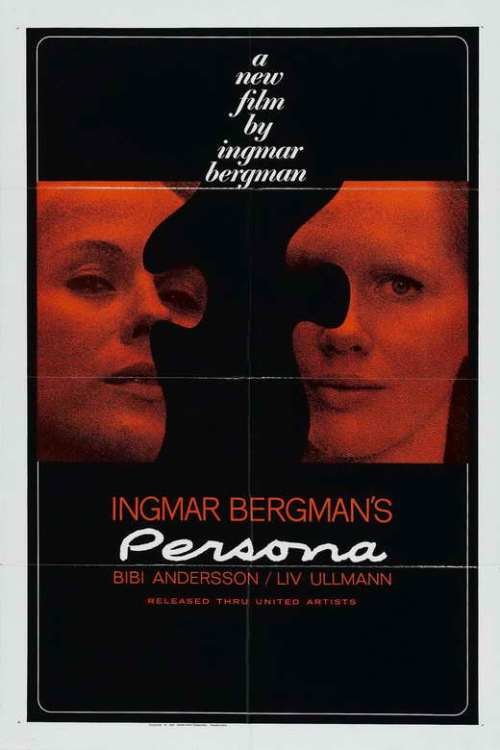
Persona (1966)

persona-1

By Richard Winters

My Rating: 9 out of 10

4-Word Review: Two women become one.

Elisabet (Liv Ullmann) is a famous stage actress who one day decides to quit speaking. Alma (Bibi Andersson) is a nurse at a mental hospital in charge of trying to get Elisabet to talk again, but her efforts prove futile, so the hospital administrator (Margaretha Krook) offers the two her island cottage hoping the quiet, secluded locale will prove more beneficial. As the days wear on Alma begins seeing Elisabet less as a patient and more like a therapist and divulges secrets about her life to her, which causes Alma to feel quite close to Elisabet and treat her almost like a confidant. Then she reads a letter that Elisabet has written where she describes Alma in a condescending way, which creates tension between the two that eventually spills over into a long ongoing confrontation.

This film was considered for many years to be one of the most bizarre and shocking movies ever made and this is mainly due to the strange and eclectic mix of images that gets shown at the beginning. Visions of a lamb being slaughtered, a nail getting pounded into a hand and a close-up of an erect penis flash before the screen while later there is even stock footage of a man setting himself on fire and moments where the film itself gets a hole burned through it.

For me the more subtle moments is what I enjoyed with my favorite scene being the one that occurs in the early morning hours when Elisabet quietly walks into Alma’s room as she sleeps while we hear the distant sound of a boat horn blowing in the background. The shot where the left side of Elisabet’s face gets superimposed next to the right side of Alma’s is also quite amazing.

persona-2

There have been many interpretations through the years over what this film’s ultimate message is. For me it shows how we are more alike than different and how what bonds two people to each may not always be readily apparent and might be something that comes out much later after initially seeming like they are two opposites. I also think it is a great examination at how fragile and interchangeable societal roles can be where someone can seem like the stronger one at one point only to later be shown as the weaker. Alma’s emotional meltdown is the most striking especially after seeming so confident and stable at first while Elisabet’s silence is initially perceived as a rejection to the ugly world around her, but later gets exposed as being more of a rejection of herself and the selfish nature that she harbors.

Andersson, who ironically and sadly can no longer speak in real-life after suffering a debilitating stroke in 2009, gives an excellent performance and I enjoyed how her character exudes ugly emotions like jealousy, envy and even anger and yet still manages to remain likable and relatable. Ullmann has the challenge of keeping her character interesting despite saying very little, but with her ever expressive eyes she does.

The scenic locale of the Faro island where this was filmed is nice, but a patient and doctor sharing someone else’s seaside resort and treating it more like a retreat than a therapy session seemed dubious and almost enough to make anyone fake mental illness if it could get them time off to go there. There is also no explanation to Alma’s fiancée and his feelings about her staying with Elisabet and not him. The sudden arrival of Elisabet’s husband is equally confusing. I liked the scene due to the symbolism that it brings out, but I didn’t understand how he was able to find them at such a remote location especially since he appeared to be blind. The segment seems almost like a dream, which is how I had initially interpreted it when I first saw this film year’s earlier, but it’s never made clear.

On the whole though these issues prove minor and in many ways help make the film even more interesting. My only real complaint is when Alma speaks to Elisabet in regards to her child and the camera stays glued onto Elisabet’s face, which captures her increasingly pained expressions, which is great, but then the scene gets played over while showing Alma’s face as she says the exact same things again, which was too repetitious in a film that is otherwise quite brilliant and a landmark in many ways.

persona-3

My Rating: 9 out of 10

Released: October 18, 1966

Runtime: 1Hour 23Minutes

Not Rated

Director: Ingmar Bergman

Studio: United Artists

Available: DVD, Blu-ray (Criterion Collection), Amazon Instant Video

Mad Max 2 (1981)

mad max road warrior 1

By Richard Winters

My Rating: 10 out of 10

4-Word Review: A battle for gas.

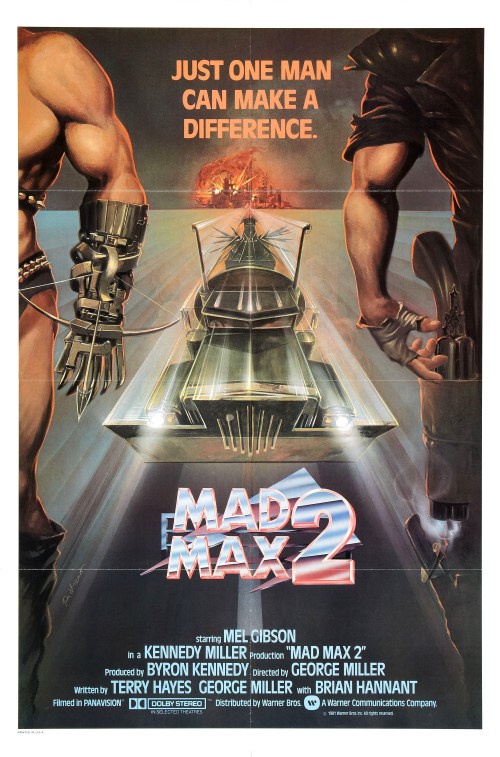
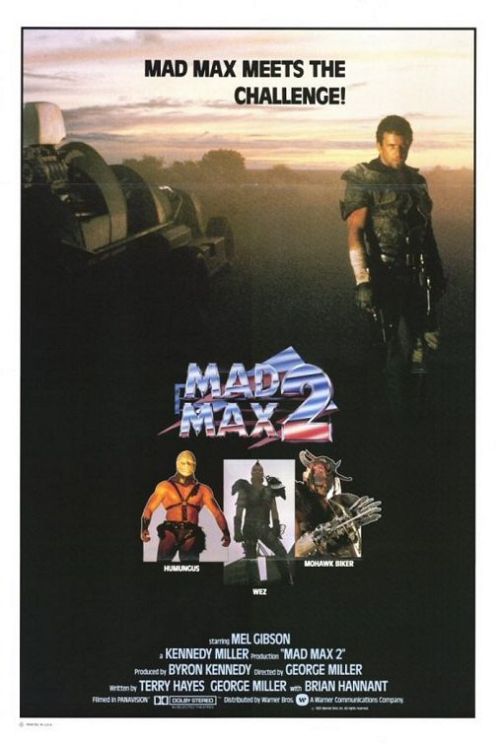
Years after a nuclear holocaust has depleted the planet former rogue cop Max (Mel Gibson) travels the scorched countryside looking for food and fuel. He meets up with a pilot (Bruce Spence) who guides him to an oil refinery that is under attack by a gang of marauders led by Lord Humungus (Kjell Nilsson). Max agrees to help out those trapped inside by driving a tanker truck carrying the fuel out of the refinery and through the makeshift gauntlet, but even he wasn’t prepared for the relentless and violent attack that awaits him.

The film is such a massive improvement over the first installment that viewers could just skip that one and go straight to this as it is far more polished and comes off like an epic while the first seemed more like a rough draft done by amateurs looking to get their feet wet. All the problems that I had with the first one get smoothed out here including a good intro that helps explain how the characters got to where they are. Dean Semler’s widescreen photography of the vast, flat desert landscape is outstanding and the violence is far more graphic, although significant portions of it were trimmed to achieve the R-rating, but it still realistically replicates the savage nature of the desperate characters living in a lawless land and willing to do whatever it takes to get what they want.

The vehicle chase at the end is one of the best ever filmed. The editing is quick with no ill-advised slow motion sequences or annoying cutaway or close-ups. The action happens just like it would in real-life where everything is split-second. The good guys don’t miraculously avoid injury or death either and in fact there’s enough bloodshed from both sides that you begin to wonder if anyone will make it, which creates far more authentic tension than most action pics. Yet what I really liked was that there were no irritating computerized effects. The vehicles used are all real with expert stunt driving and incredible stunt work that rates as some of the most dangerous ever to be tried on film.

mad max road warrior 2

The only minor letdown is the fact that Gibson’s character no longer has that clean-cut, choirboy image and is now more of the moody, clichéd loner dressed in a getup that doesn’t look much different than the bad guys. The first film had more of an interesting contrast, but here he at least gets partnered with a dog, which the producers managed to save from being euthanized, and a feral boy (Emil Minty) who has a nice ability to throw a mean metal boomerang.

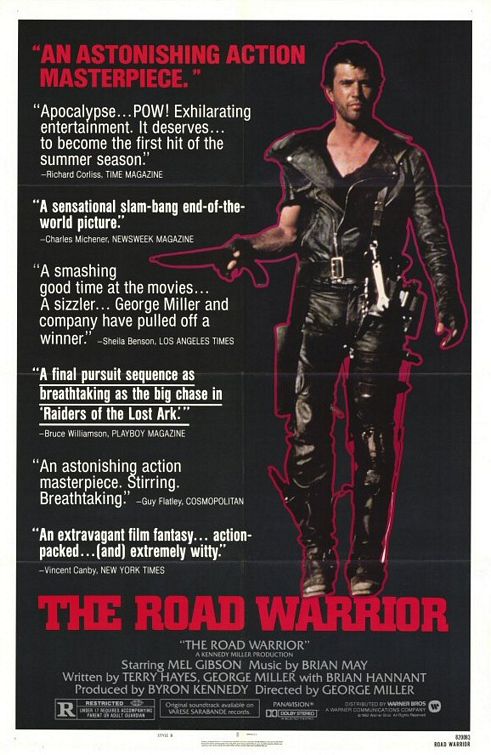
Many critics at the time considered this to be the best action flick to have come out of the ‘80s, but I’d consider this to be quite possibly the best action movie ever made! Absolutely everything clicks from the first shot to the last and remains intense, exciting and gripping even after repeated viewings. However, watching it on the small screen will not do it justice and only broadcasting it in the cinema or a very large screen HD TV will do.

mad max road warrior 3

mad max road warrior 4

My Rating: 10 out of 10

Alternate Title: The Road Warrior

Released: December 24, 1981

Runtime: 1Hour 35Minutes

Rated R

Director: George Miller

Studio: Warner Brothers

Available: DVD, Blu-ray, Amazon Instant Video, YouTube

The Ballad of Cable Hogue (1970)

ballad of cable hogue

By Richard Winters

My Rating: 6 out of 10

4-Word Review: Desperate man finds water.

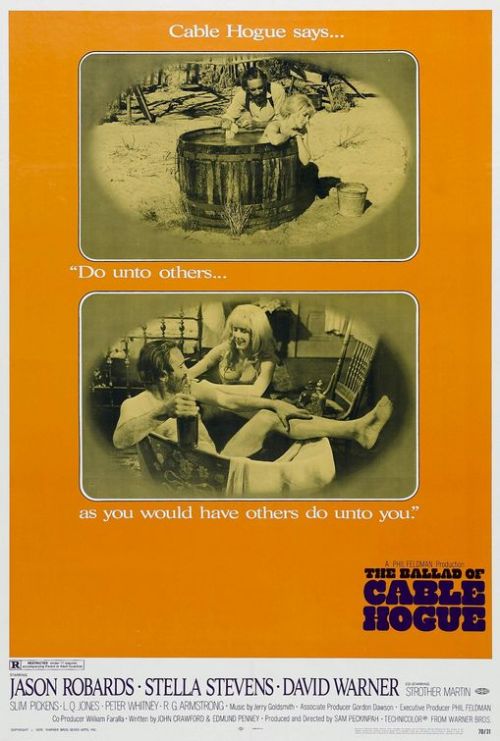
After he is betrayed by his two friends (L.Q. Jones, Strother Martin) and forced to survive in the middle of the desert without the benefit of food, water, a gun or even a horse Cable Hogue (Jason Robards) goes on a mad search for an oasis. After four days in the heat he collapses and just as he is ready to die he suddenly finds water in the most unlikely place. He uses this untapped spring to create a way station for the stagecoaches that travel through the area and becomes quite rich, but deep down he harbors the dark desire to get revenge on the two who wronged him and one day he finally gets his chance.

Theoretically a person can survive up to 4 ½ days, or 100 hours, without water if they are in a climate with a temperature of 72, but in much hotter conditions such as the one shown here it would be far less, so having the character survive like he does seems to be a an extreme stretch, but if you can get past that then the film is quite enjoyable at least at the beginning. The script was written by John Crawford and Edmund Penney who spent the majority of their careers working as character actors in B-movies and this was their one and only foray as writers. The story’s biggest asset is the main character that is expertly portrayed by the gifted Robards. His determination to beat long odds and find success even as he starts from rock bottom should resonate with most viewers and the character’s grit meshes well with director Sam Peckinpah’s perennial theme of rugged individualism.

The addition of David Warner as a dubious minister who helps Cable build his station is excellent and the film could’ve been an engaging buddy movie had it remained at this level. Unfortunately it felt the need to add in a love interest in the form of Stella Stevens, sans make-up, who portrays a whore that takes a liking to Cable. Stevens is not as strong of an actor as Warner and doesn’t know how to carry a scene like he does, so her time in front of the camera is boring and does nothing but bog down the pace while pushing Warner’s character out, which severely hurts the film’s rugged but whimsical chemistry.

Spoiler Alert!

Strother Martin’s character becomes yet another issue. He again gets straddled with the creepy, cowardly bad guy role of which is plays to perfection, but eventually made it seem almost like typecasting. To some extent I was happy to see him become humanized as it went along, but I didn’t like how Cable decides to leave his way station to him instead of the Warner character as he was the one who helped build it. Maybe Cable realized that with the invention of the automobile his station would no longer be prosperous and he would then be sticking Martin with a stinker instead of the goldmine that he thought, which is okay, but then he saves Martin’s life just a few minutes after he was ready to kill him, which became too much of a contradiction.

End of Spoiler Alert!

The film has some funny moments, but I didn’t like the fast motion running as it made it seem too cartoon-like. The numerous potshots at religion and those that expound on it are hilarious and I enjoyed how Peckinpah looks at capitalism from both sides where it is shown to greatly benefit an individual who is able to take advantage of a market demand, but also how it can coldly abandoned that same person the second that demand goes away.  The first 40 minutes are great, but then the story loses steam with comical moments that become too drawn out and have little to do with the main story as well as a protracted ending that really fizzles.

My Rating: 6 out of 10

Released: March 8, 1970

Runtime: 2Hours 1Minute

Rated R

Director: Sam Peckinpah

Studio: Warner Brothers

Available: DVD, Amazon Instant Video, YouTube

It Rained All Night the Day I Left (1980)

it rained all night 1

By Richard Winters

My Rating: 2 out of 10

4-Word Review: Stuck in the desert.

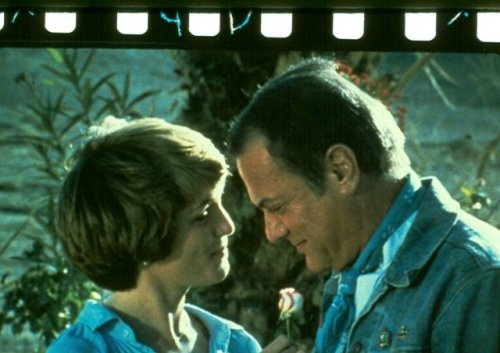
Robert and Leo (Tony Curtis, Louis Gossett Jr.) are two losers working as gun runners who transport their goods in an old beat-up VW that looks to be seriously on its last leg. They meet up with The Colonel (Sally Kellerman) who is the widow of an actual Colonel that fought during WW II. She is now living alone with her nineteen year-old daughter Suzanna (Lisa Langlois) in an isolated ranch in the middle of the African desert. She hires Robert and Leo to help her oversee the water that she pumps to a nearby village. Since she feels that the members of this village had something to do with her late husband’s murder she has cut off their supply to it and only lets them have access to it at certain times of the day, which the two men feel is harsh. They do some investigating on their own and believe that it is neighboring rancher Killian (John Vernon) who is the real culprit to the murder, but trying to convince The Colonel of this, who has a romantic interest in Kilian, is another matter completely.

This obscure, low budget film is pretty much a botched mess from the get-go. Too much emphasis is put on comedy, but filmed by people who have no idea what is funny which forces the actors to carry-on with broadly written banter and insipid slapstick-like scenarios that is intended to be humorous, but falls resoundingly flat instead. The story and setting has some potential, but resorts to contrived, uninspired romance that becomes completely boring.

I’ll give Kellerman credit for lasting over six decades in the business, but her acting never seems to be effective. Her character is supposed to be a domineering, tough-as-nails lady, or at least that is how she is introduced as she even insists that the men refer to her as ‘sir’, but this quickly evaporates until she becomes just another aging, lonely female looking for love and companionship, which isn’t compelling, or original. Langlois as the daughter is equally transparent while delivering her lines as if she were half asleep. Why an attractive young lady such as herself would ever fall for a struggling 55-year-old man like the one Curtis plays here makes little sense and is pretty dumb.

The film is saved to a minor degree by the presence of Curtis. He was a top billed star during the ‘50s and 60s, but by the ‘80s his career had plummeted severely to the point that he was accepting minor, supporting roles in direct-to-video fare that next to no one saw. This film isn’t much better than those, but here at least he retains his engaging persona and helps lift the dead material to a somewhat tolerable level and his pairing with Gossett is odd enough to make it semi-intriguing.

This is a sad, almost embarrassing follow-up project for director Nicolas Gessner who had achieved critical acclaim with the Jodie Foster hit The Little Girl Who Lives Down the Lane. Why he would choose this oddball thing to tackle next is a mystery as I’m sure he must’ve been offered better scripts, but in either case it’s a misfire that never manages to click at all.

My Rating: 2 out of 10

Released: August 6, 1980

Runtime: 1Hour 24Minutes

Not Rated

Director: Nicolas Gessner

Studio: Gaumont

Available: None at this time.

Baby Boom (1987)

baby boom

By Richard Winters

My Rating: 5 out of 10

4-Word Review: Yuppie inherits a baby.

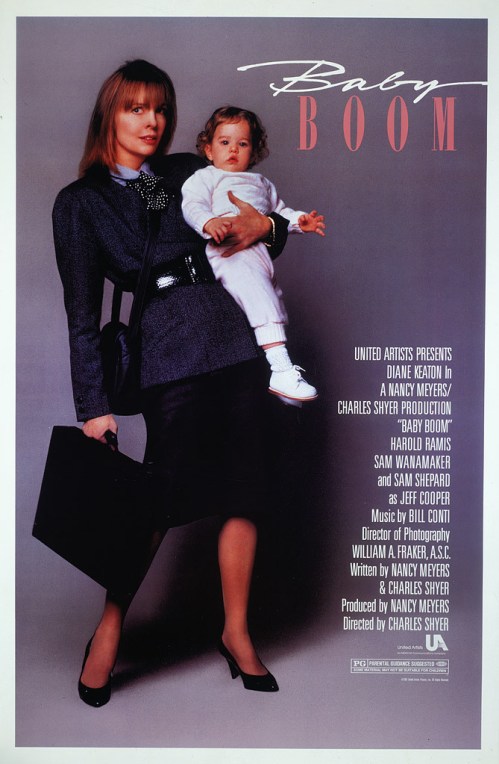
J.C. Wiatt (Diane Keaton) is a successful businesswoman who has risen to the top of the corporate world by being quite literally ‘married-to-her-job’, which is just fine with her boss (Sam Wanamaker) as he is the same way and demands nothing less. Out-of-the-blue she gets a call that a distant relative has died and sent her an inheritance. She initially thinks it’s money only to find to her shock that it’s a baby girl instead. J.C. lacks any parenting skills and has difficulty even putting on a diaper, let alone knowing the right sized one to buy. Her annoyance slowly grows to bonding as she finds raising a young one has rewards far greater than her previous yuppie lifestyle could offer.

The premise for this thing is whacked. What kind of halfway normal parent would write a will that has their child shipped off to a distant relative that they haven’t had contact with since 1954 in the event of their death? Certainly there had to have been some close friend or family member that they knew of who would’ve been far more appropriate and could’ve been forewarned that they were the intended god parent. It’s almost like the parents just threw the child off a cliff and hoped someone down below would catch her.

The Harold Ramis character should’ve been chucked from the beginning. He plays her live-in boyfriend, but if someone is working 70 to 80 hours a week then they would have little time for a social life let alone a normal, healthy romantic relationship. The idea is to show that this character’s life is imbalanced, so might as well portray her as being alone and desperate need for genuine human contact making the baby’s presence all the more significant.  Ramis disappears quickly as he bails on her the minute she decides to keep the kid, so why bother introducing him at all?

Although likable I didn’t feel Keaton was the best choice for the part. The character is given the nickname of ‘tiger lady’, but to me that would signify having traits that are cold, steely and bitchy, but Keaton never displays these. Cybil Shephard or Candice Bergen with her Murphy Brown persona would’ve been a better pick and made the character’s transition from cutthroat businesswoman to loving mommy all the more vivid.

The film does have some funny bits and the twin girls who play the part of the infant are cute and respond well to the camera. I even enjoyed when J.C. begins to bond with the girl, but Bill Conti’s musical score gets overplayed during these segments and his cutesy melody gives these otherwise  touching moments too much of a heavy-handed feel.

I certainly liked the message, but writer/director Charles Shyer tries too hard to get it across. Having the character suddenly move out to the country seemed too severe of a shift. This is the type of person who thrived in a big city atmosphere and I don’t think she’d ever fully adjust to the slow pace of the rural lifestyle, which makes this plot twist, in a movie that goes on too long to begin with, come off as a misguided tangent that isn’t interesting or believable and the ending itself is too idealistic.

My Rating: 5 out of 10

Released: October 30, 1987

Runtime: 1Hour 50Minutes

Rated PG

Director: Charles Shyer

Studio: United Artists

Available: DVD, Amazon Instant Video

Quick, Before it Melts (1964)

quick 1

By Richard Winters

My Rating: 2 out of 10

4-Word Review: Stuck in the cold.

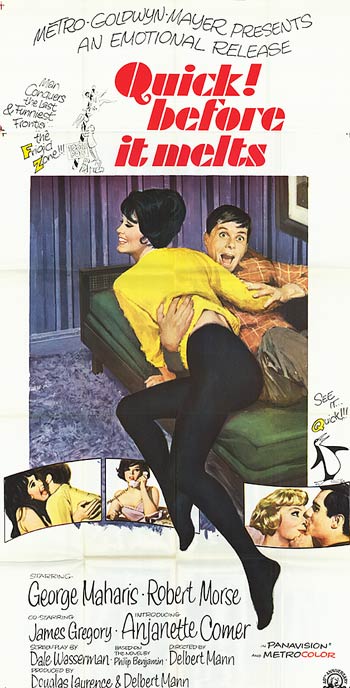
Oliver Cannon (Robert Morse) is a lowly newspaper reporter who gets sent to the Antarctica by his boss Mr. Sweigert (Howard St. John). Sweigert not only dislikes Oliver, but also wants to keep him away from his daughter Sharon (Yvonne Craig) who intends on marrying him. To his surprise Oliver accepts the assignment feeling that the South Pole is the ‘last great frontier’ and wanting to expose the harsh environment of the region to his readers who may not otherwise realize quite what it is like. Yet once he arrives he quickly wishes to leave, but can’t. He then concocts a plan with Peter (George Maharis), who is  another  American stranded  there, to fly in a planeload of beautiful women, so at least their time there can be enjoyable and sexy.

The script is virtually plotless and amounts to nothing more than broadly written, flatly comical scenarios loosely tied into the Antarctica theme. It’s basically just another contrived, generic ‘60s sex comedy that lacks bite or imagination. The only mildly amusing part about it is the real-life penguin that acts as a carrier pigeon by delivering mail and messages to the various residents.

I was surprised that Maharis chose to be in this as he was a strong, highly underrated dramatic actor who was one of the main reasons for the success of the acclaimed TV-series ‘Route 66’. In fact he left that show before the end of its run mainly to take advantage of all the movie offers that were coming in, but choosing to do this silly thing as his first one especially when he isn’t even the star of it is baffling. His career ultimately was ruined when he was caught having sex with a gay hairdresser inside the men’s bathroom of a gas station during the mid-‘70s, but appearing in fluff like this certainly didn’t help it.

Morse on the other-hand seems well suited for the material and performs admirably. This film also has, in her film debut, Anjanette Comer who later had roles in many interesting cult films. In fact both Morse and she later reteamed to star in The Loved One just a year after doing this one. That film is far superior and a movie you should definitely see while avoiding this one at all costs.

My Rating: 2 out of 10

Released: October 5, 1964

Runtime: 1Hour 38Minutes

Not Rated

Director: Delbert Mann

Studio: MGM

Available: DVD (Warner Archive)

Wanda (1970)

wanda 1

By Richard Winters

My Rating: 8 out of 10

4-Word Review:  How the poor survive.

There is a scene near the beginning that shows our main character played by Barbara Loden from a distance walking through mounds of coal to get to her father so that she can ask him for some money. The shot stays on her for what seems like several minutes with the camera slowly panning forward as she progresses. Some may say this is boring or the work of an amateur that doesn’t know when to cut. Yet this shot becomes the essence to the plight of the character and what this film is all about. In life she is constantly moving unable to fully grasp the true dissolution of her existence she searches for something, anything while becoming a victim to life’s cruel riddle that has no answer.

This may be one of the saddest movies you will ever see because Wanda’s condition is not unique and makes up more of what the working poor go through than we care to think. It helps clarify the desperation that people in these circumstances feel while also explaining why they get into bad situations and at times make such misguided choices.

Here drifter Wanda meets up with a two-bit crook named Norman Dennis (Michael Higgins). The two create an odd relationship, which proves to be beneficial for both. She brings out his long dormant tenderness, while he, in one truly touching moment, actually gives her some confidence. Of course it doesn’t last, but it is an inspiring scene and shows that even the most pathetic of people in the bleakest of situations can still transcend themselves.

This is a powerful film with a stark, home movie-like look that is actually an asset. No stylized interpretations here. The dingy bars, restaurants, homes, hotels, and factories are all very real and the viewer feels as trapped in the grayness as the characters in a film that is far more emotionally taxing than one might initially expect.

My Rating: 8 out of 10

Released: September 2, 1970

Runtime: 1Hour 42Minutes

Rated GP

Director: Barbara Loden

Studio: Bardene International

Available: DVD

Caveman (1981)

caveman

By Richard Winters

My Rating: 1 out of 10

4-Word Review: Caveman starts new tribe.

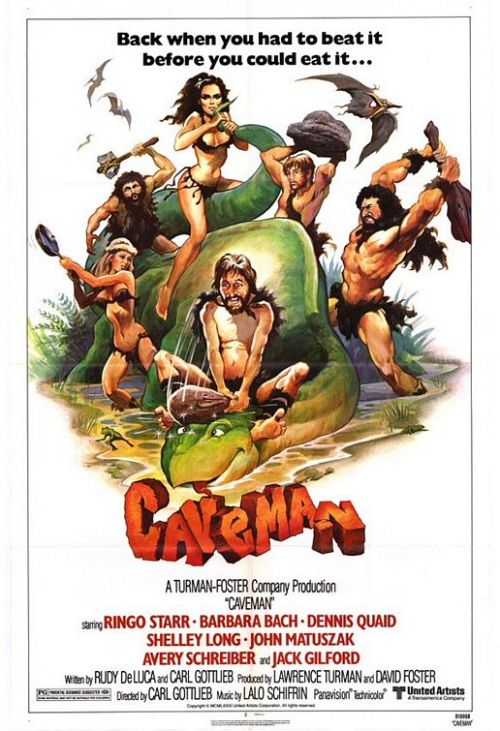
Caveman Atouk (Ringo Starr) is in-love with Lana (Barbara Bach) who unfortunately is infatuated with Tonda (John Matuszak). Tonda is the big muscular leader of their tribe and when he catches Atouk trying to make a pass at his girl he throws him out. Atouk is then forced to fend for himself. Fortunately he meets up with Lar (Dennis Quaid) and Tala (Shelley Long). Soon more cavepeople join his band of misfits only to have Tonda and his people track them down and challenge them to a fight.

This is yet another film where I’m at a complete loss for what type of intended audience the producers were looking for. There is no nudity, no sexual innuendos, and not enough raunchiness to attract the raucous college crowd. The humor is also too subtle and spread too thin, so it wouldn’t attract the kiddie crowd who prefer slapstick and a faster pace. In the end one is left with what amounts to being one really, really dumb movie that is virtually plotless and stretches out its threadbare concept until it becomes incredibly boring to sit through.

Starr may have been the member of one of the most influential and greatest rock bands of all-time, but as an actor he sucks. Granted the unimaginative script gives him little to go on, but a more creative actor could’ve added some interesting nuances that would’ve made the part more memorable and the movie more enjoyable. Even veteran actors like Jack Gilford, who are almost always funny, come off as flat and transparent here. The only performances that I liked were that of a young Dennis Quaid and Shelley Long, who looks surprisingly cute in her cave-girl getup.

The special effects involving the dinosaurs that were created by Jim Danforth are the film’s one and only saving grace even though it’s painfully clear that the beasts on shown on a separate screen from the one that the actors are in and thus making the moments where they are being ‘chased’ by the animals look quite cheesy. Also, the scene where a giant fly lands on top of Quaid’s face is genuinely funny, but unfortunately amounts to being the only laugh-out-loud moment in the movie.

How this pathetic excuse for a script ever got the green light is hard to fathom especially when so many other good ones get rejected year-after-year and yet it proves once again that Neanderthals are still alive and well even in this day and age and the majority of them work as heads of major Hollywood film studios.

caveman 2

My Rating: 1 out of 10

Released: April 17, 1981

Runtime: 1Hour 31Minutes

Rated PG

Director: Carl Gottlieb

Studio: United Artists

Available: DVD

The Andromeda Strain (1971)

andromeda strain

By Richard Winters

My Rating: 7 out of 10

4-Word Review: Isolating a dangerous virus.

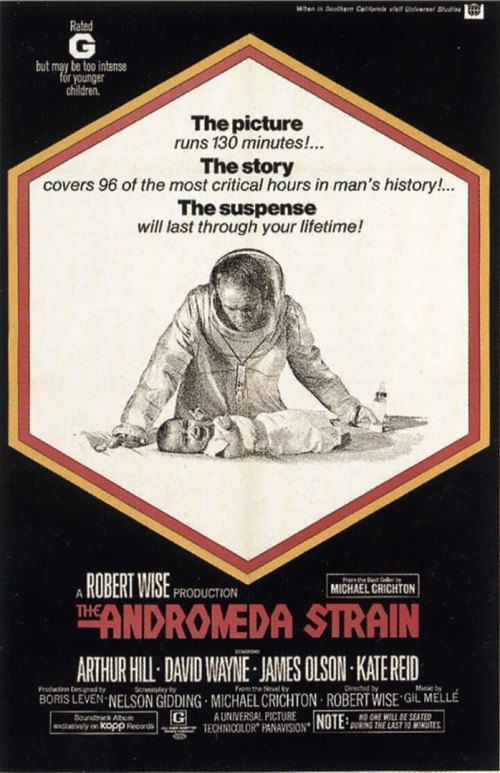
When a satellite returns to earth it brings back a mysterious virus that ends up killing all the residents of a town where it lands. Two scientists Dr. Jeremy Stone (Arthur Hill) and Dr. Dan Hill (James Olson) go to the town to investigate and find that the only survivors are a wino (George Mitchell) and a six-month-old baby. They bring these two people along with the remnants of the satellite back to a secret Nevada lab known as Wildfire that’s buried deep below the ground. It is here after close examination that they are able to observe the virus, which appears as small green dots on the satellite, but they fail to realize that this virus can also mutate and presents an even greater risk to them in the lab.

One of the major selling points of this film is the fact that it keeps everything within the realm of ‘realistic sci-fi’. No bubblegum action, scary monsters, or any other form of over-the-top dramatics get added; instead it’s on a ‘thinking man’s level’ with an extraordinary attention to detail. I enjoyed seeing all of the decontamination procedures that the crew is forced to go through before they are even allowed to begin their investigation. The isolated lab, which is hidden beneath what looks to be just an ordinary farmhouse and shed, is really cool and director Robert Wise’s use of the split-screen during the search of the town is both flashy and slick.

Showing the scientist’s personal lives and how the government agents literally demand that they drop what they are doing and come with them helps humanize the characters to a degree. I also liked how the male character of Dr. Peter Leavitt in the Michael Crichton book from which this is based gets switched to a female character here, which helps add an extra dynamic and is very well played by Kate Reid. In fact the only thing about the character’s that I didn’t like, aside from Arthur Hill’s sterile performance, is when we see the dreams of the doctors as they sleep, which seemed corny and unnecessary.

The mysterious nature of the virus is compelling and I certainly enjoyed the way they were able to detect it by scanning the satellite with cameras that could focus onto the object in minute detail, but the plot itself gets stretched farther than it needs to. There are a few interesting twists, but it starts to feel quite labored around the 2-hour mark and the climatic finish isn’t all that intense and seems rather stagy and predictable.

I was also amazed that this film achieved a G-rating. For one thing there isn’t much action and the narrative is on a more sophisticated level that is clearly aimed at adults and something most children won’t be able to pick up on. Also, one of the victims that the two men come upon is of a woman with no top on. The image is brief, but her breasts are clearly exposed making this one of the few G-rated movies to feature nudity.

My Rating: 7 out of 10

Released: March 12, 1971

Runtime: 2Hours 11Minutes

Rated G

Director: Robert Wise

Studio: Universal

Available: DVD, Amazon Instant Video, YouTube