Category Archives: Movies with a rural setting

Rituals (1977)

By Richard Winters

My Rating: 2 out of 10

4-Word Review: Nightmare in the woods.

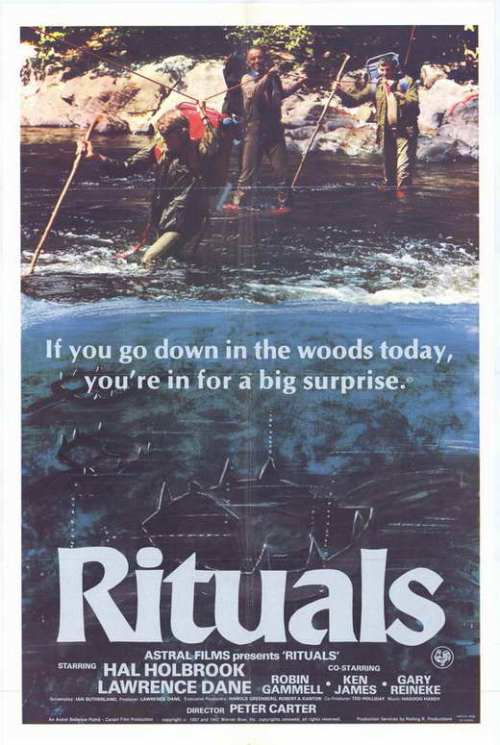
Five middle-aged doctors (Hal Holbrook, Lawrence Dane, Robin Gammell, Ken James, Gary Reineke) take a trip into the Canadian wilderness in what they hope will be a fun weekend retreat, but soon bizarre things begin to occur including having all of their hiking boots stolen from them in the middle-of-the-night. It eventually becomes clear that they are being stalked by an unforeseen adversary who’s intent on playing mind games with them while slowly picking them off one-by-one.

This was Canada’s answer to Deliverance and while great effort was made to lift it above the usual mindless slasher film level it still doesn’t work and remains flat and predictable all the way through. One of the things that I really liked about Deliverance was that it was filmed on-location in the Georgia backwoods and this film takes the same approach by being shot in the dense forests of northern Ontario, but the result isn’t as satisfying. In Deliverance the location becomes like a third character while here it amounts to being just a backdrop.

The film has too much of a creepy musical score that makes it clear that it wants to mold it into a horror film and only helps to give it a formulaic feel. Deliverance was never mechanical and instead came off more like a drama that suddenly turns ugly without warning, much like life sometimes, while this thing seems more staged and rehearsed.

The cast is top-notch and puts great effort into their roles and the rigorous requirements of doing all of their own stunts. Yet the result is shallow as there’s no distinction between the characters who come off as stereotypically jaded middle-aged businessmen. Watching their personalities unravel as the grueling journey proceeds isn’t riveting since they seemed broken from the beginning and the viewer doesn’t care if any of them survive it or not.

The tension is minimal and the nemesis never gets revealed until the very end. At points I felt that having a bad-guy wasn’t needed and the story could’ve been stronger had it focused around the men getting lost in the woods through no one’s fault but their own and then their ultimate struggle with the elements. The mountain man (Michael Zenon) is much too crafty anyways and pulls off things that no normal person could making the culprit seem like a mysterious enigma that transcends the bounds of reality and makes the film too unbelievable to take seriously.

My Rating: 2 out of 10

Released: July 21, 1977

Runtime: 1 Hour 40 Minutes

Rated R

Director: Peter Carter

Studio: Canart Films

Available: None at this time.
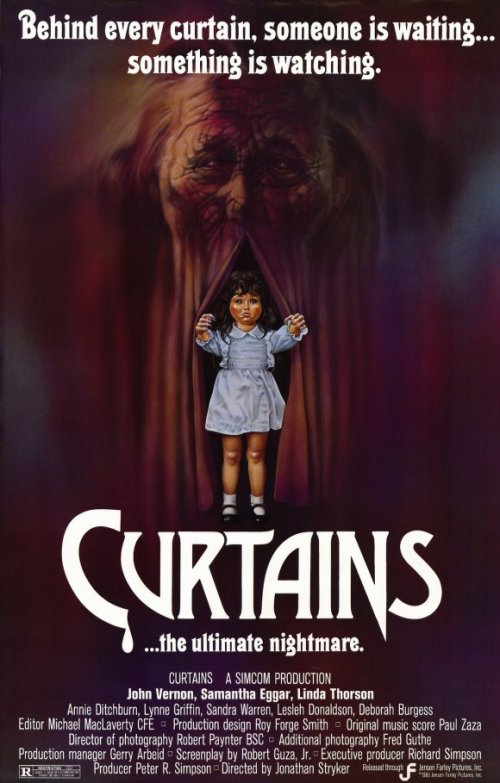
Curtains (1983)

By Richard Winters

My Rating: 1 out of 10

4-Word Review A very deadly audition.

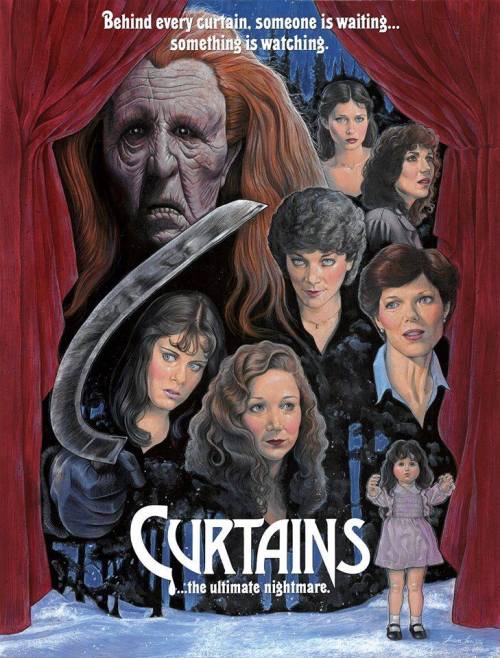
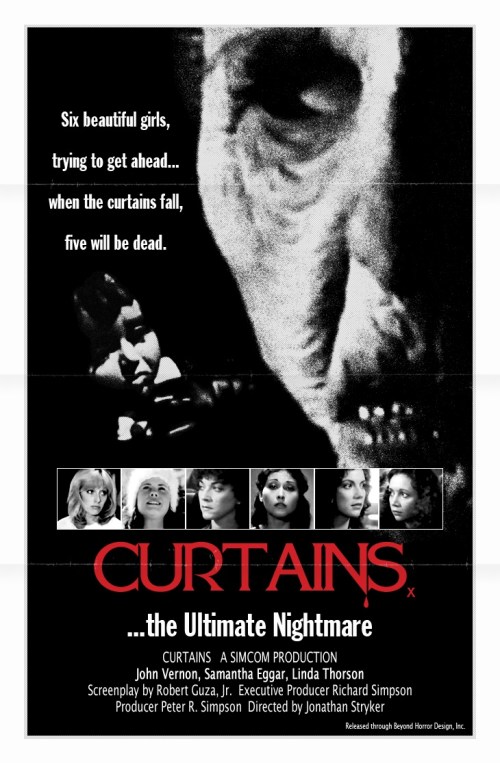
Well-known movie director Jonathan Stryker (John Vernon) is producing a new film and aging actress Samantha Sherwood (Samantha Eggar) presumes she’ll get the starring role like with all of his other productions, but this time Stryker has a catch. He tells her that to prepare for the part she must commit herself to a mental institution to better understand the character she is to play. The desperate Samantha agrees, but then realizes Jonathan has no intention of getting her out once she is inside, so she escapes and seeks revenge at Jonathan’s secluded wintertime mansion where he is auditioning six younger actresses for the role. Now suddenly everyone starts dying off at the bloody hands of a masked assailant. Is the killer Samantha in disguise, or could it be one of the other actresses willing to kill in order to get the part?

The film starts out okay. I liked that we are shown a brief background to these actresses before they get to the mansion, which helps make them seem more like real people and less like caricatures. The mansion where the action takes place has an interesting exterior/interior and I loved the pristine winter time landscape, but that is pretty much where the good points end.

The narrative is horribly disjointed and most likely a result of a lot of rewrites and reshoots that had the production shelved for up to three years before it was finally released. The opening sequence done inside the asylum is clichéd to the extreme and makes the film come off as a complete campfeast. The idea that someone would intentional try to get themselves committed simply to get a movie role is stupid and overall there are no scares or frights at all.

The killings are mechanical and unimaginative. I couldn’t understand how this killer was able to sneak up on people and literally magically appear at the most in opportune times. For instance a victim, played by Lesleh Donaldson, manages to escape the clutches of the bad guy and proceeds to make more distance between her and him by running through a snow capped forest. She briefly stops to catch her breath by a random tree and wouldn’t you know that’s the one tree that the killer is hiding behind.  Another segment has a victim (Anne Ditchburn) dancing by herself in a big empty room where the killer somehow sneaks up right behind her, which I would argue couldn’t happen. Everyone has a sense when someone else starts getting too close to them, especially in a room devoid of anyone else, and she would’ve detected the killer’s presence long before he got right behind her.

The ending in which the killer chases the final victim through an array of old stage props inside the mansion’s basement gets overly prolonged. The young women end up looking too much alike, so it was hard to have any empathy for them because they weren’t distinctive enough and the story would’ve worked better had it taken the concept of Dead of Winter where just one woman goes to the isolated place for the audition and thus allow the viewer to create more of a connection to the protagonist.

The only bright spot is Eggar. Her starring movie roles from the ‘60s and early ‘70s were now long gone and much like the actress she portrays was forced to take cheap low budget horror offers to remain busy, but she still gives it a 110% effort. What impressed me was how different her character was from any of her others. In those earlier films she was mainly a young, sensitive and idealistic woman, but here she is cold, conniving and bitter proving that she must be a great actress if she is able to play such opposite personalities in the same convincing way. It’s just unfortunate that the filmmakers didn’t share that same type of professionalism as the sloppy execution destroys any potential that it may have had.

My Rating: 1 out of 10

Released: March 4, 1983

Runtime: 1 Hour 29 Minutes

Rated R

Director: Robert Guza Jr.

Studio: Norstar Releasing

Available: DVD, Blu-ray, Amazon Video

The Milagro Beanfield War (1988)

By Richard Winters

My Rating: 8 out of 10

4-Word Review: Small town fights developer.

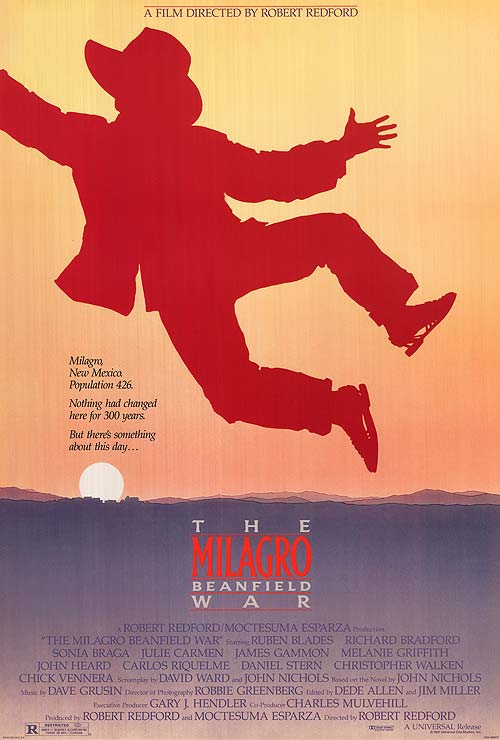
Milagro, New Mexico becomes the centerpiece to controversy when a rich developer (Richard Bradford) decides to build a resort, which cuts off the water supply to the rest of the struggling inhabitants of the nearby town. Joe Mandragon (Chick Vennera) is one of those farmers who is frustrated with the current situation and in a fit of rage kicks a water valve, which allows water to flow into his field where he soon begins to grow beans. Kyril Montana (Christopher Walken) is then sent in by the rich tycoons to ‘settle-the-score’, which only helps to make the town’s resistance to the development even stronger.

The film is based on the 1974 novel by John Nichols and was directed by Robert Redford eight years after he helmed his first feature the very successful Ordinary People. From a completely technical standpoint the film shines in all areas as it delightfully mixes whimsical comedy with harsh real-world issues and manages to keep the tone consistent throughout. My favorite element was the difficulty the activists had in getting the townspeople  ‘on-the-same-page’ and organized to fight their mutual enemy, which illustrated one of the biggest challenges to fighting for social change where just trying to convince and mobilize others is sometimes the toughest part.

John Heard has the film’s best character arch playing a former political activist who dropped out of trying to change-the-world years ago, but after sufficient prodding finally gets back to his old form in one very fiery and memorable moment. Walken is quite good in reverse playing a man sent to initially squash the rebellion only to eventually soften a bit (just a bit) on his stance. Carlos Riquelme is delightful as the elderly Amarante who despite being weak with age fights-the-good-fight including a hilarious scene where he precariously tries to drive a bulldozer.

I wasn’t quite as crazy about Daniel Stern’s inclusion. He plays his part well and the character is likable, but I didn’t understand the need for him in the story. It almost seemed like the filmmakers didn’t trust that the Hispanic cast alone could carry it and a white guy needed to be added in in order to usher in a more mainstream demographic. Vennera is weak only because he constantly reminded me of Bruno Kirby Jr. and could’ve easily passed off as his twin in both his looks and voice.

The only argument I would have against the film, which is otherwise a charmer and does not in any way deserve the outrageous R-rating that it was given, is the addition of Robert Carricart as the Coyote Angel that only Riquelme’s character can see. To an extent this cheapens the struggles that the townspeople go through because it gives what is otherwise a serious problem too much of the fable-like treatment. I would’ve preferred a grittier approach focusing solely on the efforts of the people to create the change, which would’ve left a stronger emotional impact and avoided telegraphing the idea that it was all going to work-out due to this extra magical force.

My Rating: 8 out of 10

Released: March 18, 1988

Runtime: 1 Hour 57 Minutes

Rated R

Director: Robert Redford

Studio: Universal

Available: DVD, Amazon Video

Ode to Billy Joe (1976)

By Richard Winters

My Rating: 2 out of 10

4-Word Review: Where is Billy Joe?

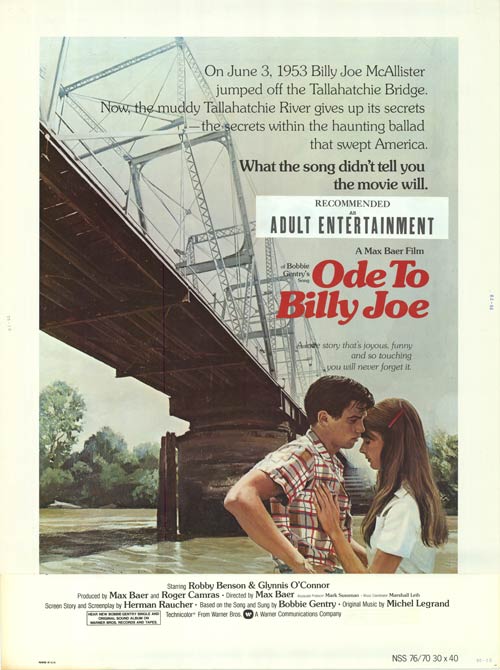
Based on the hit 1967 single sung by Bobbie Gentry this film attempts to reenact what occurred in the ballad as well as explain the song’s mystery elements with a screenplay co-written by Gentry herself. The story centers on Bobbie Lee (Glynnis O’Connor) a 15 year-old girl living on a farm and longing to satisfy her newfound sexual awakenings. She becomes attracted to a local boy named Billy Joe McAllister (Robby Benson) and he to her, but her conservative father (Sandy McPeak) won’t allow her to bring over ‘gentleman callers’ until she is 16, so she runs off into the woods with him only to learn that he harbors a dark secret that if it became known to the public could ruin his life.

While the film did quite well by grossing $27 million at the box office on only a $1.1 million budget I felt it was a mistake to turn the classic song into a movie. Sometimes things are more interesting when the mystery angle is left unanswered, and having it explained especially with the lame way that it gets done here, tarnishes the song’s mystique.

For years Gentry said that the point of the song was never about why Billy Joe jumped off the bridge or what he threw off of it, but instead the relationship of the song’s narrator with her family and how completely oblivious they were to her feelings, which the movie doesn’t recreate. In the song the father is portrayed as being ambivalent and distant towards his daughter and yet in the film for some ill-advised reason he is kindly and connected, which isn’t as interesting.

Hiring Herman Raucher to co-write the screenplay was a mistake as well. He had great success with Summer of ’42, but pretty much tries to turn this into the same glossy romance as that. He even brings along the same composer Michel Legrand whose orchestral score is completely out-of-place with the story’s country setting.

The script also adds some crazy side-stories that have nothing to do with the main plot or the song that it is based on. One of them includes having prostitutes shipped in from nearby Yazoo City to have sex with all men from the town, who line up one-by-one seemingly guilt free, to fuck the ladies while attending a small jamboree. Now, I was not alive during the ‘50s, but I know people who were including my parents, who insist that it was every bit as oppressive and conservative as its reputation states especially in the rural areas such as this film’s setting. I realize that prostitution is considered the ‘world’s oldest profession’ and I’m sure in some underground big city clubs of that period you could find some, but bringing them to some small town where everybody knows everybody else and having the men jumping in for quite literally ‘roll-in-the-hay’ with them (as this took place on a barnyard floor) with all of their friends watching and not worrying that this would get back to their wives or ruining their reputations, as rumors spread like wild fire in small  towns, is just too far-fetched and ridiculous to be believable.

Benson is great in the lead and James Best is strong too in a small, but crucial role, however O’Connor seems miscast. She’s attractive and has been good in other films, but she plays the part as being very outspoken and strong-willed where in the song that same character came off as more introverted and quiet. She also seemed too worldly-wise for a 15-year-old especially one that had never ventured out of her town although the bit where she sticks her head into a toilet bowl and shouts ‘hello’ may be worth a few points to some.

If you spent sleepless nights trying to figure what it was that Billy Joe threw off that Tallahatchie Bridge then you may find this film’s clichéd and corny answer to it as disappointing.  It also takes way too damn long to get there while forcing the viewer sit through many long, drawn-out scenes in-between.

In fact the only thing that the movie does get right is its on-location shooting that was done in LeFlore County, Mississippi that was the actual setting to the song. However, even this gets botched because the Tallahatchie Bridge that Gentry describes in her song, which was near the small town of Money, was destroyed in 1972 and the bridge used in the film was a different one located near the town of Sidon that also ended up getting demolished in 1987.

My Rating: 2 out of 10

Released: June 4, 1976

Runtime: 1 Hour 46 Minutes

Rated PG

Director: Max Baer Jr.

Studio: Warner Brothers

Available: DVD, Amazon Video, YouTube

Hands of Steel (1986)

By Richard Winters

My Rating: 2 out of 10

4-Word Review: He’s made of steel.

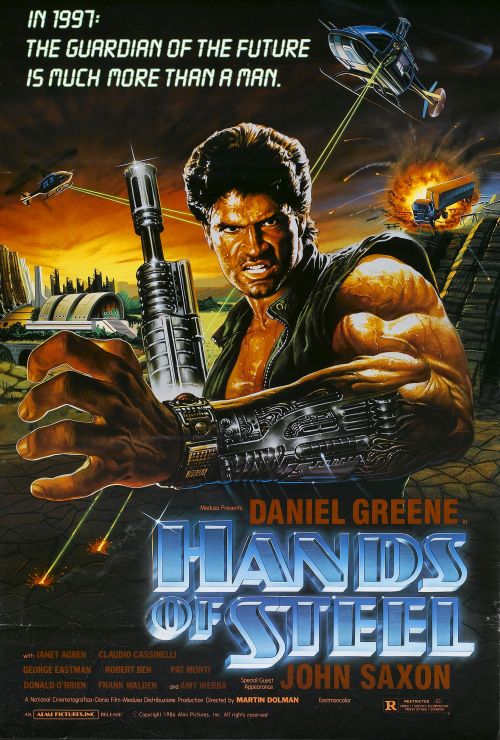
Paco (Daniel Greene) is a man who gets injured in an accident and then rebuilt as a cyborg in an operation financed by evil industrialist Francis Turner (John Saxon). Paco is then programmed to assassinate the head of a competing faction, but at the last second he is unable to do it, due to still harboring a conscience from his human side. He then hides out at a desolate Arizona hotel/bar run by the attractive Linda (Janet Agren) who he soon forms a bond with, but Turner and his men track Paco down and are determined to enact revenge for his disobedience.

The storyline could best be described as a variation to the Six Million Dollar Man. In that one a man was rebuilt to help the secret service on missions for ‘good’ while here the protagonist is programmed to carry out evil tasks, but refuses. It all might’ve been more interesting had it not been produced by an Italian film company where all the speaking voices are dubbed, which gives it an amateurish quality.

The isolated desert location only helps to make an already visually boring film even more so and the place certainly gets a lot of customers for being stuck literally in the middle-of-nowhere. The action is passable, but relies heavily on arm wrestling matches (yes you read that right) that are not exciting at all.

The plot features many logical loopholes that make little sense if you start thinking about it. For instance the cyborg gets shot at in close range, but he does not get injured or killed, but you would think the metal, circuitry or the skin surrounding it would still be affected or damaged. Later on when the bad guys are chasing him down in the desert by shooting at him from a helicopter the cyborg ducks out of the way from the bullets as if he fears getting hit by them, but why since we’ve seen earlier that they have no effect?

Greene’s performance is incredibly one-note and one of the main reasons the film is so boring. John Saxon is the only recognizable face in the cast although there is also George Eastman who played one of the killers in Mario Bava’s Rabid Dogs and appears as a similar type of baddie here. However, that film was way better than this one and more worth your time to watch.

My Rating: 2 out of 10

Released: August 29, 1986

Runtime: 1Hour 34Minutes

Rated R

Director: Sergio Martino

Studio: Almi Pictures

Available: VHS

Amateur Night at the Dixie Bar and Grill (1979)

By Richard Winters

My Rating: 6 out of 10

4-Word Review: Five minutes of fame.

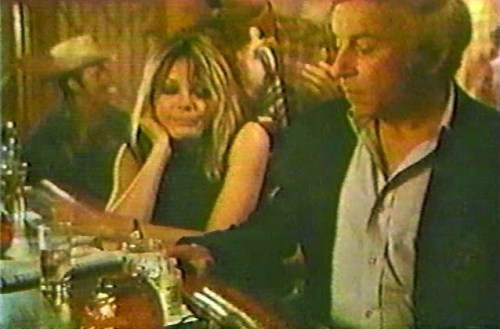
A bar on the outskirts of a nameless small town becomes the social setting for a group of everyday people who flock to it one night in hopes of winning an amateur act contest. Every one of the contestants is fighting some inner demon or insecurity and critiqued by a judge (Henry Gibson) that is being bribed by different parties to choose their candidate over the others. There’s also a dangerous serial killer lurking about known as the Disco Killer, who has shot up several other venues in the area and may be eyeing the Dixie bar as his next target.

This TV-movie, which was written and directed by Joel Schumacher, seems way too similar to Robert Altman’s Nashville to be considered original. Clearly that film was this movie’s inspiration and this one does not go far enough with the concept and would’ve been better had its runtime been extended and the characters more fleshed out. Certain actors, such as Don Johnson and Candy Clark, are underused and there’s not enough of an understanding of the town that the bar was in. Some shots of rundown buildings in an isolated area would’ve helped give the viewer a better feel for how bored these people were and why they would be motivated to go on stage and essentially make fools of themselves just for the lofty chance at somehow escaping their otherwise hopeless existence with a small shot at fame.

What I did like is that the entire story takes place in one setting. The only time the camera ventures outside of the cramped place is when it goes into its parking lot for brief periods, but otherwise this bar is the center of the universe for these characters, which for many small town people, especially before the advent of the internet, is what bars such as these represented.

The stage acts themselves were a bit disappointing and could’ve been played-up more as I was expecting something a little more along the lines of stuff seen on the old Gong Show or stupid human tricks from David Letterman. The scene where a big fight breaks out in a dressing room that is far more exciting than anything occurring on stage does allow for some irony and the part where actor Rick Hurst attempts to crack open a coconut by using nothing more than his bare teeth is engaging, but more acts in this vein was needed.

Having Tanya Tucker appear as this shy woman who lacks confidence despite possessing the talent and walks off the stage in humiliation at the start only to redeem herself later, is too manufactured. I much preferred Pat Ast as this homely, overweight woman who unexpectedly wows everyone with some rousing showstopping numbers that should’ve made her the winner instead. I also felt that the so-called prize, which was simply the privilege to appear on stage at that same bar for two straight weeks, was too skimpy. People have bigger dreams than that even in a dusty small town and want more of a reward like  a trip to Hollywood, New York or a contract with an agent in order for them to be excited enough to go through what they do.

There is also no payoff to the Disco Killer storyline. He gets discussed quite a bit and there are even TV news reports about him, but then he never appears, which feels like a letdown. I’m not saying there needed to be a bloody sequence where a killer shoots people dead, but maybe a scenario where the contestants, who are quite competitive with one another otherwise, manage to come together enough to subdue the bad guy, or some other lighthearted element that would’ve at least brought a conclusion to the subplot instead of just letting it hang.

Sheree North as an embittered alcoholic easily steals it and has some of the best lines. There is also a long tracking shot in which the camera starts out at the back of the bar and then slowly weaves its way up onto the stage that is great too. The film certainly has its share of moments and as a TV-Movie it’s impressive, but lacks finesse for the big screen.

My Rating: 6 out of 10

Released: January 8, 1979

Runtime: 1Hour 36Minutes

Director: Joel Schumacher

Studio: Universal

Available: None at this time.
Thunderbolt and Lightfoot (1974)


By Richard Winters

My Rating: 8 out of 10

4-Word Review: The one room schoolhouse.

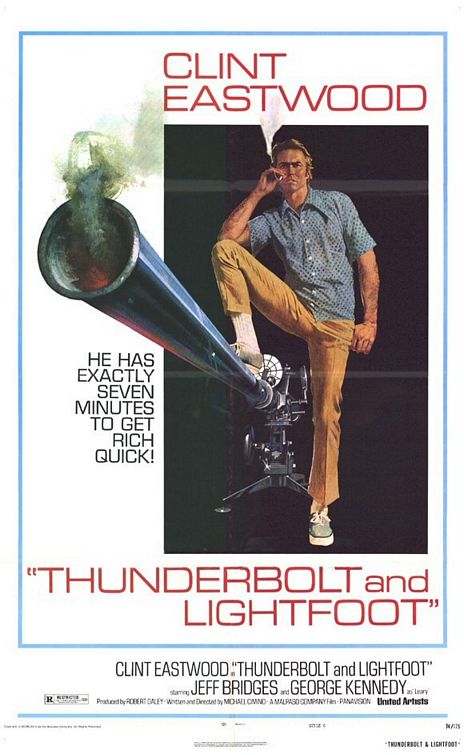
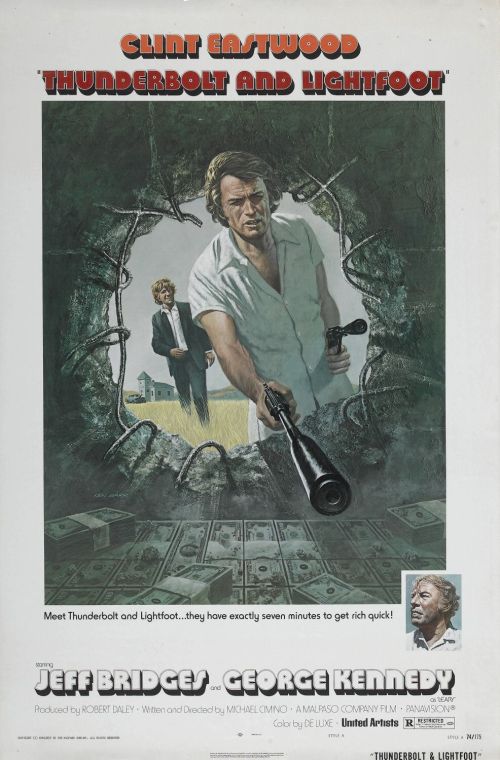
Thunderbolt (Clint Eastwood) is a former bank robber hiding out as a Montana preacher while trying to avoid Red (George Kennedy) and Eddie (Geoffrey Lewis) who are his former crime partners that mistakenly believe he double-crossed them. One day they manage to catch up with him and try gunning him down during one of his church services. Thunderbolt escapes by hopping into a car driven by Lightfoot (Jeff Bridges). Despite their contrasting temperaments and ages of the two end up hitting-it-off and even manage to bring Red and Eddie into the fold once it’s explained to them that Thunderbolt hadn’t sold them out. Now the four plan to rob the same bank again using a 20 millimeter cannon to break into the safe.

This was the Michael Cimino’s first foray behind the camera after having success co-writing the screenplays to Silent Running and Magnum Force.  For the most part it’s a success and I particularly enjoyed the way he captures Montana’s majestic landscape, which helps add a strong flavor to the story. Some of the comical bits and throwaway lines are hilarious and gives the film an edge over the usual bank robbery storyline.

The drawback is that like with Cimino’s other films it takes too long for the story to get going. The Thunderbolt’s backstory doesn’t get explained until almost 50 minutes in and we never learn much of anything about Lightfoot or why he would simply appear almost out of nowhere in this tiny, isolated town for literally no reason. There are certain scenarios that get introduced, but offer no payoff and the robbery itself gets pulled off a little too easily while not taking enough advantage of its unique premise.

The acting though is uniformly excellent including Bridges who is at his most engaging and even looks weirdly sexy when disguised as a woman and I loved the part when he talks to himself in the mirror. Kennedy gets one of his better post Cool Hand Luke roles as the cantankerous Red and Lewis is funny as his dim-witted partner.

The film also has some great bits for its supporting cast. Cliff Emmich is amusing as an overweight security guard with a porn fetish and Jack Dodson has a memorable moment when he finds to his shock that his teenage daughter isn’t quite as ‘innocent’ as he thought she was.

Bill McKinney is goofy as a crazy man driving around in a car with a trunk full of rabbits, but like with a lot of other things in the film it introduces something that doesn’t get fully explained including the fact that the character seems to be acting erratically because he is overcome by toxic gas fumes from his own car, but when Thunderbolt and Lightfoot take over the car and drive it for themselves they don’t for some reason end up having the same issue.

My Rating: 8 out of 10

Released: May 22, 1974

Runtime: 1Hour 55Minutes

Director: Michael Cimino

Rated R

Studio: United Artists

Available: DVD, Blu-ray, Amazon Video

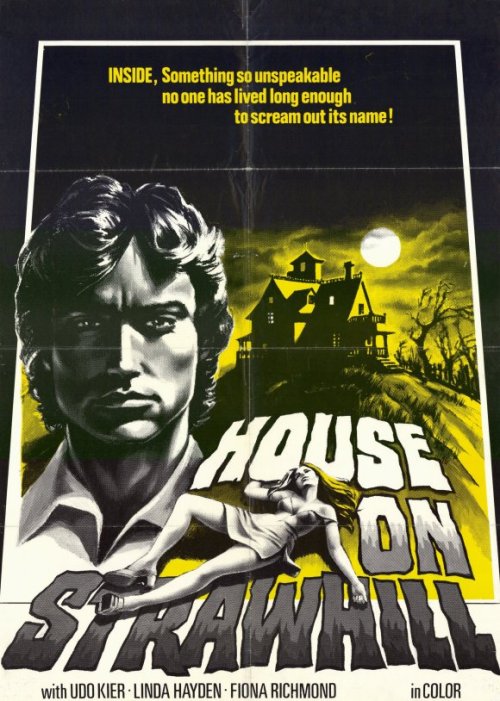
House on Straw Hill (1976)

house-on-straw-hill-1

By Richard Winters

My Rating: 3 out of 10      

4-Word Review: Writer battles his secretary.

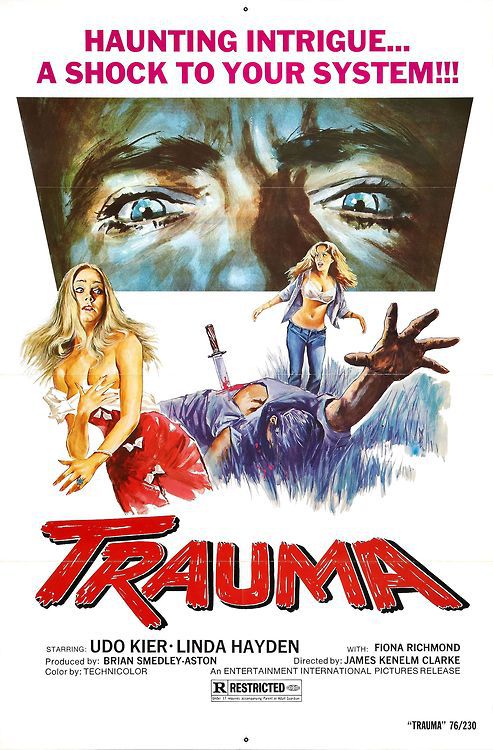
Paul (Udo Kier) is a writer who had success with his first novel and now working on his much anticipated second one. To help him get the manuscript done faster he hires a secretary (Linda Hayden) who comes to his isolated, countryside home to type it up, but the two don’t get along. Soon Paul becomes convinced that she is out to kill him and he just may be right.

This pseudo horror film has an enticing visual style.  I liked the close-up shots of the typewriter keys banging on the paper as well as the giant wheat field surrounding the home, which to a degree helps create an interesting atmosphere, but writer/director James Kenelm Clarke goes back to these things too often eventually making the film one-dimensional and monotonous.

The film is also loaded with a lot of explicit sex. If this were a porno then that would be great, but for an intended horror film it goes off the mark completely. We really don’t need to see Linda constantly masturbating. Having Paul find a dildo in her suitcase as he does would’ve been enough. Linda’s ultimate seduction of Paul’s girlfriend (Fiona Richmond) in a provocative lesbian sequence is completely pointless to the story and clearly just done to grab the crowd that’s into watching mindless sleaze.

The characters come off as weird, half-human caricatures whose motivations and actions are confusing. Both Paul and Linda needed to be better fleshed out for the viewer to have any compelling reason to care what happens to either one of them. The scene where Linda masturbates in the wheat field and is then attacked and raped by some locals only for her to turn-the-tables on them and kill them is particularly stupid because she is somehow able to immediately compose herself afterwards and come back to the house and act like it never happened when with anyone else it would’ve been an emotionally traumatic experience that would’ve taken months maybe even years to get over if even then.

The film’s twist ending is particularly weak and the film should’ve used flashbacks and other subtle clues to help the viewer figure it out for themselves the reasons for Linda’s motivations instead of having it all explained to them by her at the end. I also didn’t like the title as it is too reminiscent to Straw Dogs, which also took place in a remote home in the English countryside and dealt with a rape by some of the local thugs. This might’ve been intentional, but it was a big mistake because it just reminds the viewer of that movie, which was far better.

house-on-straw-hill-2

My Rating: 3 out of 10

Alternate Titles: Trauma, Expose

Released: March 15, 1976

Runtime: 1Hour 24Minutes

Rated X

Director: James Kenelm Clarke

Studio: Norfolk International Pictures

Available: DVD, Blu-ray

The Final Terror (1983)

final-terror

By Richard Winters

My Rating: 2 out of 10

4-Word Review: Killer in the woods.

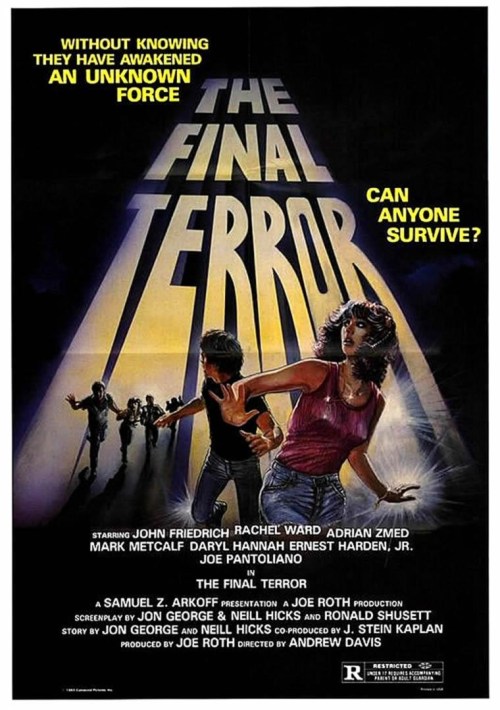
A group of young forest rangers go camping out in the woods only to find themselves quietly stalked by a menacing presence. When some of them go missing and then turn up dead they become convinced that it was caused by Eggar (Joe Pantoliano) a member of the group who was kicked-out for his anti-social behavior, but the killer may actually be more evasive than they thought and somehow able to track them down no matter where they try to go.

The film takes a different approach to most other ‘80s horror flicks in that it emphasizes the tension instead of the shocks or gore, which might’ve worked had the story been better plotted and the characters more rounded. As it is though it comes off like a weak rip-off to Deliverance and nothing more.

The characters are less cardboard here, but the viewer is still forced to slog through a lot of formulaic stuff that seems to have to appear any scary movie dealing with campers including the tacky ghost story told around a campfire, which in this case is even cornier than usual. The opening sequence, which was filmed later after the rest of the movie had already been shot and done by a different director, is completely pointless and should’ve been discarded.

The biggest issue I had though with the movie is that you barely ever see the killer. In fact out of its entire runtime you probably only see the killer’s figure for less than a minute. When you do spot him he comes off looking like a giant human-sized fur ball made by Stan and Marty Kroft for one of their Kroft Superstars show.

The acting is okay and much of the cast went on to have distinguished careers including Daryl Hannah and Rachel Ward who both look beautiful and should’ve been given more to do. Since this was filmed in 1981 it is technically Adrian Zmed’s film debut who manages to do a pretty good howl.

The music, which was inspired by Billy Idol’s ‘White Wedding’ has a good funky beat and the killer’s ultimate demise is well shot, but overall it’s rather lame with not enough to distinguish it from slew of other slasher films already out there. I also thought the title was stupid. Just exactly what is so final about this terror? It never gets explained or addressed and was apparently just tacked on once they found a distributor 2 years after it was already shot. The original working title was ‘Bump in the Night’, which would’ve been better.

My Rating: 2 out of 10

Released: May 1, 1983

Runtime: 1Hour 23Minutes

Rated R

Director: Andrew Davis

Studio: Aquarius Releasing

Available: DVD, Blu-ray, Amazon Instant Video 

The Beast Within (1982)

beast-within

By Richard Winters

My Rating: 3 out of 10

4-Word Review: Teen turns into monster.

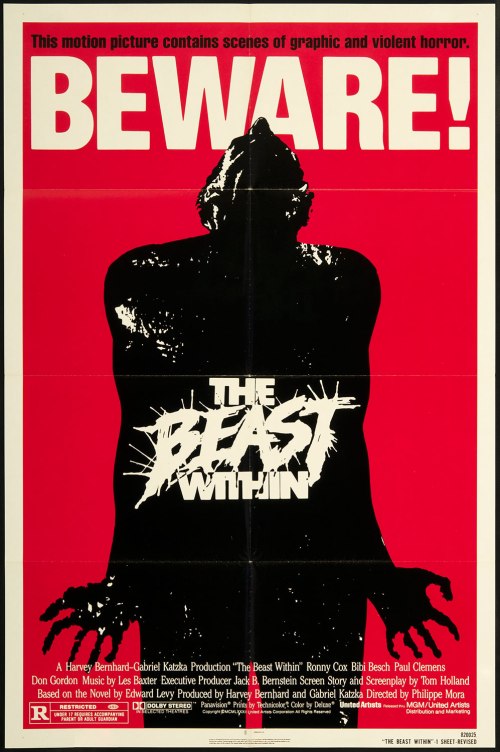
On the night of their honeymoon Eli and Caroline (Ronny Cox, Bibi Besch) become stranded on the side of a road. Eli goes for help while Caroline remains in the car only to end up getting raped by a mysterious beast that escapes from a nearby farmhouse. 17 years later Michael (Paul Clemens), who became the product of that ugly incident, begins to show signs of erratic behavior that doctors are unable to find the cause to. Eli and Caroline decide to go back to Nioba, Mississippi where the assault took place in order to find out who it was that raped her and see if he or his family may have any genetic abnormalities that Michael may have inherited. However, before they can do anything Michael’s condition worsens and he changes into a monstrous, homicidal maniac that resembles the spirit of an abused child that had long ago been buried away by the townspeople.

One of the pluses to this film is its supporting cast that is filled with B-movie regulars who do their best to liven up the proceedings with their eccentric characterizations. Logan Ramsey is a lot fun as the town’s newspaper editor and in some ways proves even more entertaining as a corpse. R.G. Armstrong is good as the town’s physician and I especially liked his squeeze toy. Luke Askew has a few choice moments as an embalmer and Don Gordon, who wears a wig, has a solid bit near the end as a corrupt judge.  John Dennis Johnston as an overprotective father and L.Q. Jones as the sheriff help round it out.

Unfortunately the three leads are boring although I was amused at how much Besch resembles actress Eleanor Parker who was star Clemen’s mother in real-life. Clemens though as an actor is weak and looks too creepy from the beginning especially his eyes which make his transformation into a monster less dramatic and would’ve worked better had he had more of a clean-cut blonde, blue-eyed look.

Tom Holland’s script tries to cover every type of horror niche by treating the viewer to elements of southern gothic, ghost stories, possession, monsters, slashers and gore, which may sound interesting, but eventually becomes overplayed. There are also some loopholes to it that doesn’t quite make sense and the rape segment shouldn’t have been shown right away, but instead used as a flashback later on. Also, Michael is described by his father as being ‘normal kid’ who never showed any signs of odd behavior, but it would’ve been more vivid had we seen him as a regular teen instead of it starting out with him already acting strangely.

The transformation scene in which Michael turns into a grotesque looking creature might actually make you sick to your stomach, but it’s impressive. This was the first film to use air bladders, which were made up of condoms that were connected to air hoses that were put underneath the actor’s face casting and then inflated to give the appearance of the skin ‘bubbling’, which is pretty cool and worth checking out for this scene alone, which is by far the best moment in the movie.

My Rating: 3 out of 10

Released: February 12, 1982

Runtime: 1Hour 38Minutes

Rated R

Director: Phillippe Mora

Studio: United Artists

Available: DVD, Blu-ray, Amazon Instant Video, YouTube