Category Archives: Movies Based on Novels

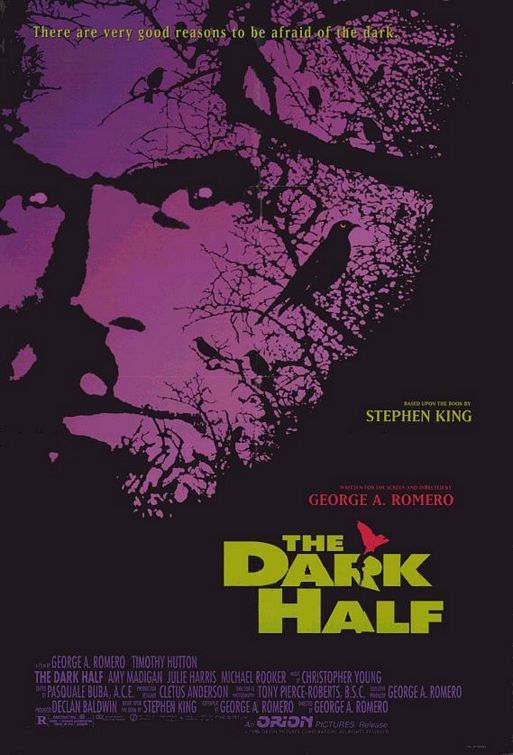
The Dark Half (1993)

By Richard Winters

My Rating: 3 out of 10

4-Word Review: Cure for writer’s block.

Thad Beaumont (Timothy Hutton) is a novelist who writes under the pen name of George Stark, but then decides to do away with it. Unfortunately this pen name slowly starts to take on a life and identity of its own. When George is ‘killed’ he becomes angry and starts to seek revenge.

Some of the things that I liked about the movie were the theme, which is interesting because it examines the idea that we are all two people. The one we want people to know and the other we repress. It also gives a thoughtful look at just how difficult writing a book can be. The climactic sequence is one of the most unique ‘showdowns’ you will ever see as both our hero and his dark half sit down across from each other to write a book of their own and the first one to finish lives while the other will die. There is also a nice creepy little nightmare segment.

However, there are a lot of things that don’t work in this movie and the majority of it looks like reprocessed stuff you’ve seen before. For one thing the musical score that gets overplayed. It’s like we are back in the silent film era and need it played in every segment just to keep the film going. The use of the sparrows as some symbolic reference seems awkward. They are not scary even when shown in flocks and having to see a shot of them flying around every other scene becomes annoying and redundant. The basic premise itself has potential, but gets stretched too far.

Hutton was not a good choice for this. He doesn’t display enough fear or emotion with the scenario. He approaches everything like a properly trained student of drama instead of as a method actor and playing the character’s dark half isn’t much better. He is supposed to be a creepy southern guy, but instead comes off as a bad, campy version of Elvis. The make-up effects never look realistic. It’s also irritating how these super smart, super clever bad guys always get so gosh darn dumb at all the right moments.

Amy Madigan makes a good non-glamorous wife, but accomplished actress Julie Harris is pretty much wasted although she does get the film’s best line.

Overall this is an offbeat idea that is given routine treatment. Having George Romero as the director doesn’t seem to add anything and he certainly has been slumming for quite a while.

My Rating: 3 out of 10

Released: April 23, 1993

Runtime: 2Hours 2Minutes

Rated R

Director: George A. Romero

Studio: Orion Pictures

Available: VHS, DVD

Misery (1990)

By Richard Winters

My Rating: 6 out of 10

4-Word Review: She’s his biggest fan.

Paul Sheldon (James Caan) is a writer who has just finished his latest novel. On the way back to his publisher (Lauren Bacall) he gets stranded in a freak snowstorm and ends up being ‘saved’ by Annie Wilkes (Kathy Bates) who is his ‘number one fan’. He is injured so she takes him to her nearby house where she proceeds to make him a helpless prisoner to her tormented and delusional mind.

The story has some interesting underlying elements. The film doesn’t really explore them, but does at least touch on it. It is the metaphor of the artist and the public. He is an educated man and yet his stories appeal to those with less education and what he puts into his work isn’t always what they take out of it. He doesn’t really like these stories and wants to expand his craft, but can’t because the formulaic stuff is what sells. In a way Paul was already trapped by Annie long before he ever got to her house and it is a sad dilemma a lot of artistic people have to deal with.
Bates as Annie plays the part really well. She is the ordinary, bland looking woman that you would never think about or consider dangerous. Her strange, erratic behaviors are slowly revealed until in the end the complete monster inside is unleashed. Screenwriter William Goldman, director Rob Reiner, and Bates herself show a good understanding of the character and what makes her tick. They create a woman who is complex, real, frightening, and at times even sad and pathetic.

Caan is a good competent actor however any one of number of actors could have played the part and maybe even done better. Yet you really sense and feel his confinement and ever growing frustration and when he finally revolts at the end you love it!

On the whole the thriller is pretty standard. There are some tense moments, but it is also routine and by the numbers. I thought it was too well lighted as a good psychological thriller always works best with a lot of shadows. The room Paul is trapped in looks more like it was done on a sound stage than in a real home and the film needed a few more unexpected twists.

My Rating: 6 out of 10

Released: November 30, 1990

Runtime: 1Hour 47Minutes

Rated R

Director: Rob Reiner

Studio: Columbia Pictures

Available: VHS, DVD, Blu-ray, Amazon Instant Video

Bye Bye Braverman (1968)

By Richard Winters

My Rating: 6 out of 10

4-Word Review: Where is the funeral?

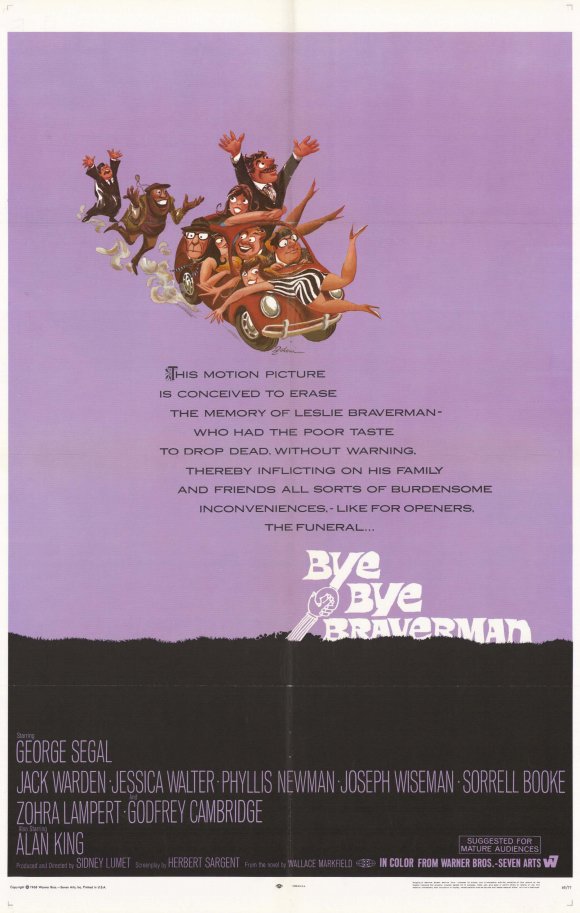
Four middle-aged Jewish men get together for a mutual friend’s funeral and find that the passage of time has changed many things between them.

There are some really nice vignettes here. The best may be Morroe’s (George Segal) conversation with all the dead people in the grave yard while amidst hundreds and hundreds of tombstones. You also have to love Alan King as the rabbi leading the funeral. Morroe as a middle-aged man becoming disillusioned with life while going through a sort of mid-life crisis is very relatable and his fantasy segments are funny. Godfrey Cambridge also has a great cameo as a black cab driver who runs into them and the group’s difficulties at finding the right funeral are amusingly on-target.

While the film does have its share of delightful moments it fails to ever come together enough to leave any impact. Some of the segments are too talky and the ending fizzles badly. There is also an extraordinarily high amount of footage given to showing a bird’s eye view of the red Volkswagen that they are in driving through the streets of Brooklyn. In some ways this does give one a great glimpse of Brooklyn during the late 1960’s, but it also screams ‘filler’ in the process.

This definitely seems to be the case where the novel by Wallace Markfield that this movie is based on would be the better choice. It’s certainly watchable and mildly entertaining, but the characters and situations need to be better fleshed out.

My Rating: 6 out of 10

Released: February 21, 1968

Runtime: 1Hour 34Minutes

Rated NR (Not Rated)

Director: Sidney Lumet

Studio: Warner Brothers/Seven Arts

Available: DVD (Warner Archive)

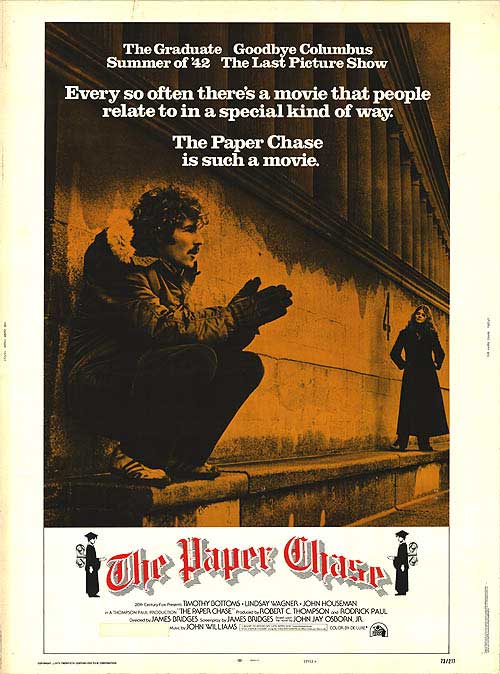
The Paper Chase (1973)

By Richard Winters

My Rating: 9 out of 10

4-Word Review: He can’t please Kingsfield.

James Hart (Timothy Bottoms) attends his first year at Harvard Law School and finds himself obsessed with the notoriously stern Professor Charles Kingsfield (John Houseman). His fascination increases after he begins a relationship with Kingsfield’s daughter Susan (Lindsey Wagner). The rest of the story deals with the pressures and demands of being a law student.

This quite possibly is the quintessential movie about college life. Everything is captured in such a real and revealing way that it will very likely send the viewer back to their college days. Despite being nearly forty years old it doesn’t seem dated at all as it touches on many universals that every generation goes through at that age. If anything it is still quite topical. The few dated elements are actually fun to see including the scene in the pre-cellphone days where the students would line up and wait their turn to make a call on the dorm’s one and only pay phone.

The student characters have diverse personalities and seem like young adults one would meet during their college days, or even see on a campus today. It is nice to have a college movie where students are actually studying. In fact these scenes are some of the best moments in the film including Hart’s dealings with difficult people in his study group.

The Hart character is appealing and relatable. I liked how he is multi-faceted and displays elements from both his own era including his counter-culture hairstyle as well as past ones.

Having it filmed on-location and capturing the different seasons of the year makes the viewer feel like they are attending the school year right along with him. I particularly liked the scene shot in the historic Harvard stadium.

The film also makes terrific use of silent moments as there is very little music. Many college movies dwell on the loud and raucous partying, but there is a lot of quiet time as well particularly the first day of class in a large auditorium wondering what the instructor will be like. The opening sequence done underneath the credits showing an empty classroom quietly filling up with students was not only novel, but brilliant.

Houseman deservedly won the Oscar for his portrayal of the crotchety professor. Outside of a small and unaccredited role in Seven Days in May this was technically, at age 71, his film debut. Some may complain that the character is one-dimensional. We are never shown any type of softer side to him and I am sure most films would have thrown some in, but the fact that they don’t do it makes his mystique more interesting. My favorite moment of his is when at the end of the year the students give him a standing ovation while Kinsgfield responds with his trademark scowl before walking out of the room.

The supporting cast of students is terrific and many were making their film debuts. There is Graham Beckel as Hart’s study partner Franklin Ford who looks like a twin of Brad Dourif. There is also Edward Herrmann and James Naughton as Kevin Brooks a man with a photographic memory, but no analytical ability. My favorite though was Craig Richard Nelson as the moody and belligerent Willis Bell.

Blair Brown can also be seen as one of the female students during the classroom scenes. She speaks in a strange accent and I think she was trying too hard to get the Bostonian sound, but I ended up kind of liking it anyways.

The implementation of Kingsfield’s daughter into the story really didn’t work with me. Lindsey Wagner is a competent actress, but the way they meet on a sidewalk seemed too forced and random. It is also beating extreme odds that Hart would by chance get into a relationship with the daughter of a man that is the complete center of his universe and the fact that she turns out to be hip, sexy, and gorgeous even though she is related to a man who is anything but was also a stretch. It would have been interesting had there been a few scenes and dialogue between Kingsfield and Susan, but none is ever shown.

There is a part involving Hart sneaking into the library when it is closed in order to get into a section that houses the notes taken by the professors when they attended the school as students, which I found to be odd. I have never known any college that has done this and talking with others no one else has either. I was still willing to roll with it but found it frustrating that when Hart takes out the notes written by Kingsfield in 1927 that the camera doesn’t focus in on the page to allow the viewer to see it for themselves. Having Hart simply describe what he sees including some doodling that Kingsfield apparently made on the side of the page is not as satisfying.

I had a few problems with the end as well although it was not enough to ruin what is otherwise a great movie. However, there is a scene showing Kingsfield grading his student’s tests by himself even though most tenured professors who teach large classes have graduate assistants do this for them. It may be more cinematically satisfying especially for the general viewer to see Kingsfield doing the grading, but that is not how it actually works.

Also, when Hart receives the grades in the mail he doesn’t bother to open the letter, but instead turns it into a paper airplane and floats it into the ocean. I didn’t understand the motivation of this because during the film Hart spends an enormous amount of time preparing for the test, so I would think anyone who went through that would want to see what they got. If he wants to turn it into a paper airplane afterwards that is fine, but at least see the results. I spoke to a fan of the film who says he interprets this scene to mean that Hart was more interested in learning the subject for his own enjoyment and not concerned with what he got out of it, but if that is the case the film fails to bring that out earlier and instead seems to show the exact opposite.

My Rating: 9 out of 10

Released: October 16, 1973

Runtime: 1Hour 53Minutes

Rated PG

Director: James Bridges

Studio: 20th Century Fox

Available: VHS, DVD, Amazon Instant Video

Paper Moon (1973)

By Richard Winters

My Rating: 7 out of 10

4-Word Review: Tatum is the star.

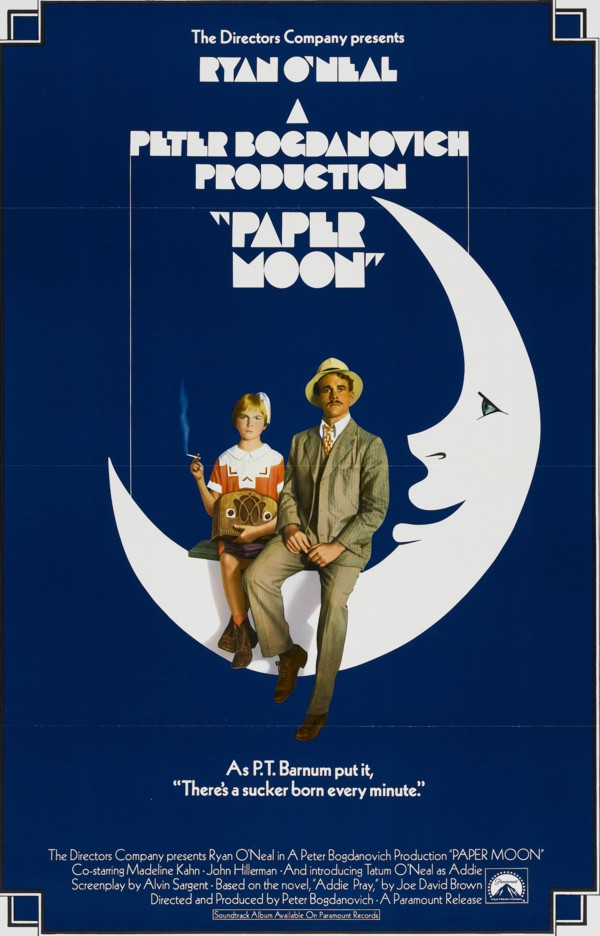
Due to the recent reality show airing on the Oprah Winfrey Network about Tatum and Ryan O’Neal trying to patch things up as father and daughter after years of acrimony I thought it was time to dig up this gem of a 70’s movie and give it a review. It is the story of  Addie (Tatum in an Academy Award winning performance) a 11 year old girl who has just lost her parents and comes into the custody of a traveling salesman/con-artist (Ryan). Their relationship starts out as contemptuous, but eventually evolves into a strong friendship as the two travel the lonely roads of Kansas selling Bibles door-to-door during the Depression.

Lazlo Kovac’s incredibly evocative black and white cinematography is the true star here. Absolutely everything is in focus and his ability to bring out the beauty and charm of the otherwise barren and stark Kansas landscape is an achievement in itself. Tatum is sensational and eats up every scene that she is in. Madeline Kahn as Trixie Delight is also great. The opening scene where she walks up with her breasts juggling up and down in her dress is memorable. The story itself works off of the cuteness formula, but somehow manages to pull it off without it becoming forced or annoying.

Ryan’s performance is a little too affected. At times he becomes badly upstaged by his daughter and seems even a little intimidated by her. The film might have been better served with someone else playing the part. Also the scene showing him in the aftermath of a big fight where he gets beat up by a group of four men looks cheesy. He comes away with only a few cuts and bruises when it reality it should have been a lot worse.

Overall this is a charming and entertaining movie that, scene for scene, hits all the right marks. On a technical level this film is brilliantly photographed and directed and effectively brings back the 1930’s period detail and feeling.

My Rating: 7 out of 10

Released: May 9, 1973

Runtime: 1Hour 42Minutes

Rated PG

Director: Peter Bogdanovich

Studio: Paramount

Available: VHS, DVD, Amazon Instant Video
The Big Bounce (1969)

By Richard Winters

My Rating: 3 out of 10

4-Word Review: She is really crazy.

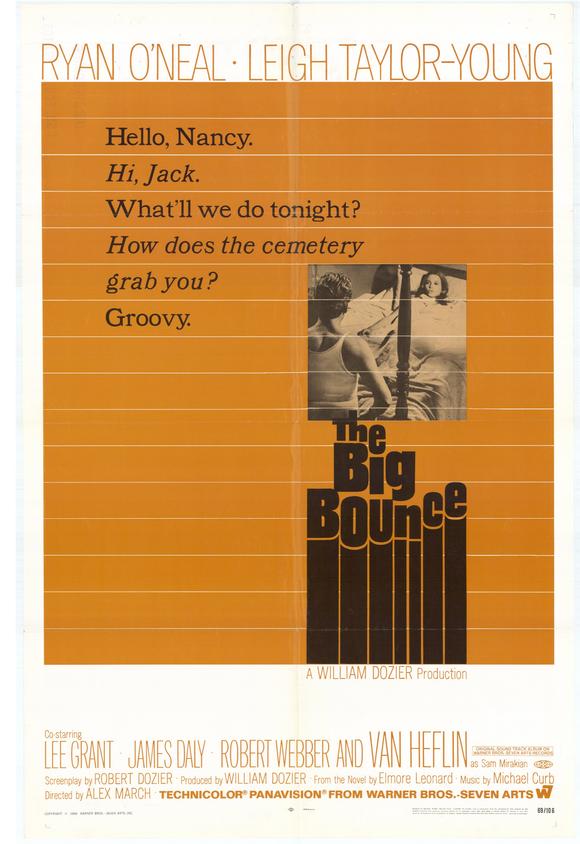
Based on the Elmore Leonard novel and remade in 2004 as a vehicle for Owen Wilson this version stars Ryan O’Neal as Jack Ryan a Vietnam vet on the run when he has a physical altercation with a player during a baseball game that leaves the other man injured and looking for revenge. He meets up with Ray Ritchie (James Daly) and his mistress/secretary Nancy (Leigh Taylor-Young) who is a bit on the wild side. She convinces Jack to help her rob her boss of a large amount of money that he has hidden away in his safe, but Jack becomes wary as Nancy displays more and more psychotic tendencies.

I enjoyed the film’s jaded sensibilities, but unfortunately it doesn’t do enough with them. There is too much talk without enough action. The plot is thin and unfocused. I spent the entire time wanted the story to get moving, but it really never does until the very end and by then it is too late. The scenes are lengthy and the production has too plodding a pace. I also didn’t like the fact that they discuss the robbery, but never go through with it. Nothing is more frustrating than an already draggy movie having a potentially interesting plot progression only to drop it.

I also couldn’t stand the music which sounded like men from a barbershop quartet and gets overplayed until it becomes annoying. The melody was too soft and mellow and did not fit the edgy tone of the script, or characters. This is the type of film that needed an up-tempo score with hard and fast beat.

For what it is worth Taylor -Young is good. She gets convincingly crazy and has a near epic meltdown at the end. She also has a tantalizing scene involving her swimming nude, which is only topped by another scene showing her standing naked in the middle of graveyard while pretending to be a statue.

O’Neal is okay although I felt some other actors might have been better, but at least he improves as the film progresses. The two stars were married in real-life at the time and I presume the producers cast them in the parts hoping that their chemistry would project onto the screen, but it never does and they ended up divorced four years later.

Van Heflin is great in a supporting role as Sam Mirakian a cynical and detached man who has seen it all. He brings the film some much needed energy. Lee Grant is also terrific and it was a crime that she wasn’t given more screen time. She makes her desperate and emotionally brittle character real and interesting. Cindy Eilbacher is quite adorable as her young daughter Cheryl. Robert Webber also deserves mention as he is amusing playing a man trying to be tough and intimidating, but ending up always looking like a schmuck.

I never saw the remake, but heard from several people that it wasn’t too great either. I dare say the novel is the best of the three and both film versions are worth skipping.

My Rating: 3 out of 10

Released: March 5, 1969

Runtime: 1Hour 42Minutes

Rated R

Director: Alex March

Studio: Warner Brothers/Seven Arts

Available: VHS, DVD, Amazon Instant Video

Cemetary Man (1994)

By Richard Winters

My Rating: 5 out of 10

4-Word Review: They shoot the zombies.

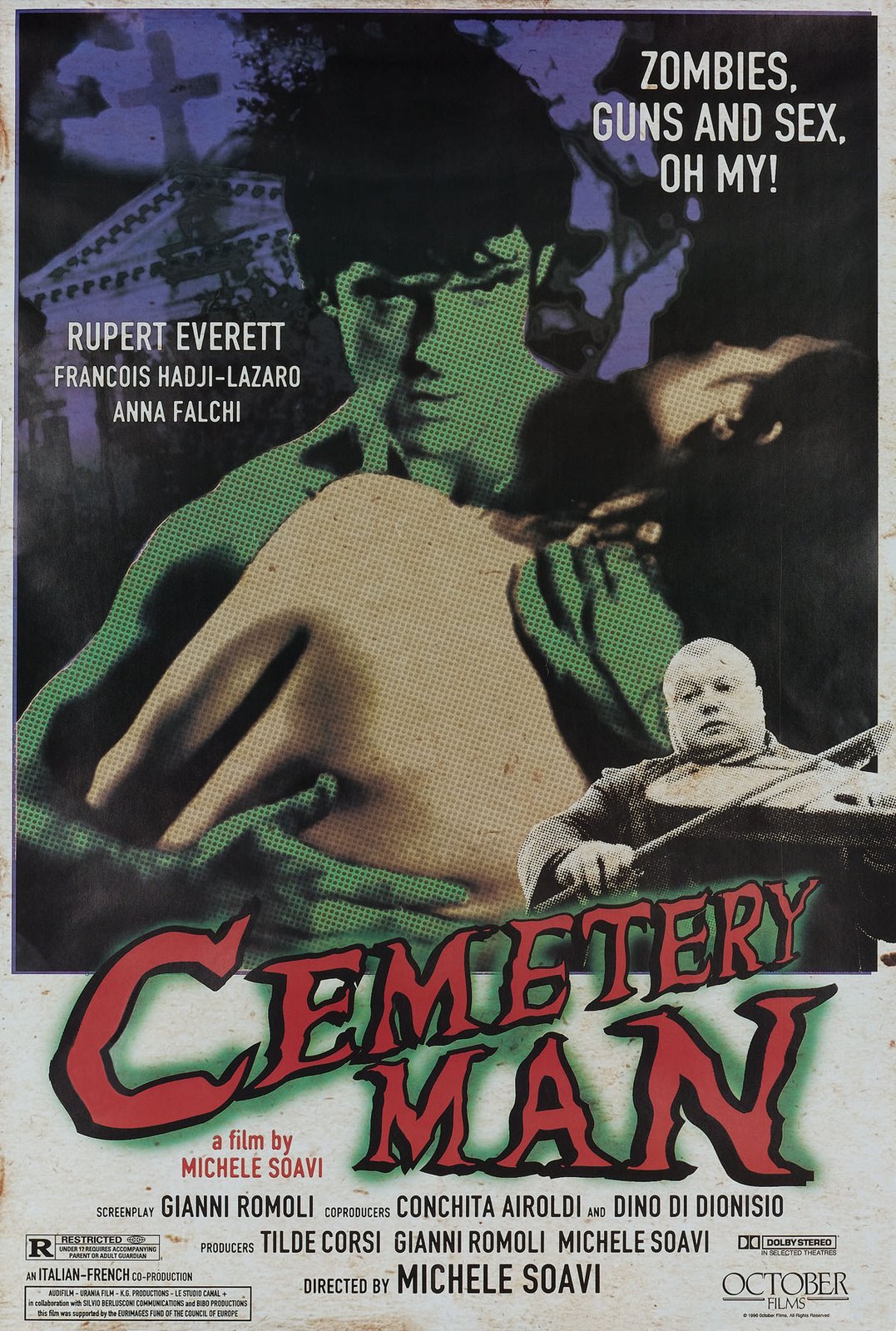
The film opens with a cemetery worker (Rupert Everett) talking on the phone with a friend. He hears a knock at the door and when he answers it he sees a man with bluish, decayed skin ready to attack him. The worker calmly takes out a gun, shoots the man in the head, and then goes back to talking on the phone like nothing happened.  Thus begins this very quirky horror comedy that is a send-up of all those old zombie movies and has acquired a cult following.  It was filmed in Italy and is based on the popular Italian comic book ‘Dylan Dog’ by Tiziano Sclavi.

The initial premise is fun.  The protagonist is Francesco Dellamorte, who with his mute and mentally-challenged assistant named Gnaghi (Francois Hadji-Lazaro), are stuck running a cemetery in a small Italian town where the dead will routinely come back to life. It is then up to them to shoot the zombies in their head, which will kill them permanently.  This starts a wild array of crazy scenarios that become increasingly bizarre as the film progresses.

Initially I found it to be inventive.  The tongue-in-check humor is first-rate as is the snappy dialogue.  The film though starts to bite off more than it can chew.  All sorts of weird storylines get thrown in, but are never resolved.  After about the first hour it no longer made any sense.  For instance there is Francesco’s girlfriend named She (Anna Falchi), who he accidently kills at the beginning, but then she keeps getting reincarnated as different women throughout the rest of the film.  For various reasons Francesco is forced to kill her in different ways all over again, which eventually becomes tiring. This is only one of the many convoluted surreal elements that eventually overwhelm the viewer.  By the time it got to its extensile ending I was more than happy that it was over and really no longer cared what happened to the characters.

I felt frustrated because there were a lot of cool ideas that the film brings up, but drops without explanation.  I thought the original idea was good enough that the film could have stuck with that and built around it without going off on so many tangents. The special effects were a problem as well as they looked cheap and fake.  It was obvious when they were using mannequins in the place of real people and the blood and gore were thrown in haphazardly.

I did however like the pacing, which moves quickly with no letup.  The set designs are imaginative and the dark humor is consistently funny. If I would suggest this movie for any reason it would be that one.  Even when the story was getting annoyingly out-of-control it still had me chuckling.  The best scene involves Francesco talking to a sick friend in the hospital and when anyone from the hospital staff tries to intervene he shoots them and this creates a memorably macabre imagery as the room gets filled up with bodies and blood everywhere.

I also liked the character of Gnaghi, who tends to grow on you and becomes a real scene stealer.  He is short, fat and bald and looks like a young version of Uncle Fester from ‘The Adams Family’.  He speaks only through grunts, but the way he responds to things is quite amusing and the director comes up with clever ways to make the most of it.  The fact that he was played by a rock musician and not a professional actor makes it more interesting.  The part where he falls in love with one of the corpses and wants to marry her is hilarious and should have been played out more.

I liked the character of Francessco at the beginning as well.  He comes off like a rugged cowboy from the old west with a nifty matter-of-fact attitude towards his job and is cool under pressure. However, his behavior and actions become erratic and his motivations confusing until, by the end, he is almost alienating. There are also too many segments where he gets caught off guard by an attacking zombie and panics when he does not have his gun handy, which hurts the credibility since someone who has been doing this for a long time and is as savvy as he portrayed would learn to expect the unexpected and be prepared at all times for it.

I hate to say that this film was a disappointment because it is very creative and the direction is slick.  Unfortunately it just could not sustain its potential, which makes it a misfire. The film did quite poorly with both the critics and viewing public when it was first released both in Europe and in the states. It was only after being hailed by director Martin Scorsese that it started to find new life in the DVD market. Actor Everett was in talks with American studios to do a big-budget Hollywood remake, but it fell through.  A remake would not be a bad idea and may still happen as the horror-dark comedy genre has proven to be profitable in recent years most notably with Zombieland.  A tighter script and more money on the special effects could make this a winner.

My Rating: 5 out of 10

Released: March 25, 1994

Runtime: 1Hour 45Minutes

Rated R

Director: Michele Soavi

Studio: Angelo Rizzoli

Available: VHS, DVD, Blu-ray

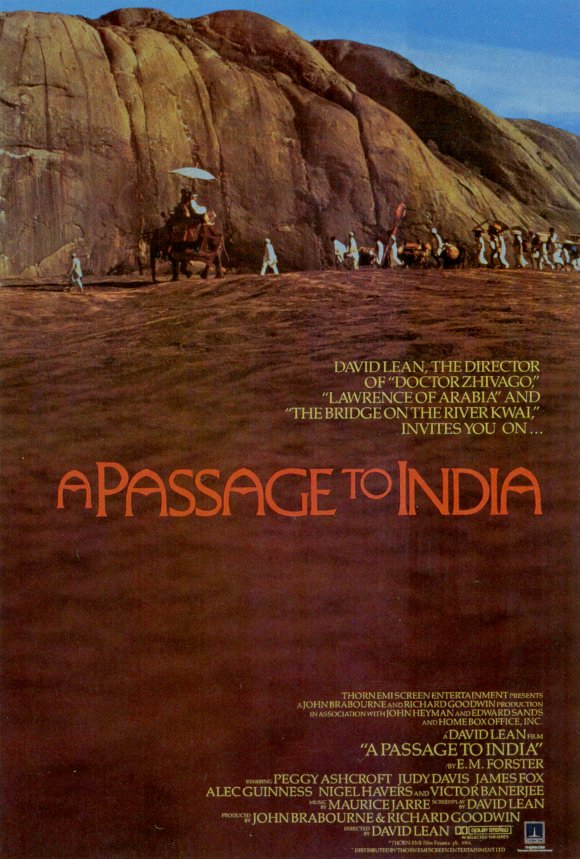
A Passage to India (1984)

By Richard Winters

My Rating: 7 out of 10

4-Word Review: Unjustly accused of rape.

An older woman (Peggy Ashcroft) and her son’s fiancée Adele (Judy Davis) travel to India to visit him as he works as a British Magistrate there. During the course of their visit they come upon the harshness of British rule, the unusual climate, and a rather unexpected criminal trial.

Like with most of Lean’s films the gargantuan approach cannot equal the story. You sit through two hours and forty five minutes only to feel slighted when it is all over. The story plays a lot like To Kill a Mockingbird only it is stretched out more and has a different location. That is not to say it isn’t entertaining, because it is, but only in the most general of ways.

The first hour is downright breezy. It does hit on certain inhumanities and inequalities, but it is all handled with kid gloves. It also seems very similar to Gandhi, which came out only a year earlier. The second half, which involves the court trial, seems almost jarring when compared to the first. It does get more intense and multifaceted, but just when it seems to be getting intriguing it fizzles with a wrap up that is too neat and tidy.

Lean’s films have always had a sort of running theme involving the characters coming to terms with the full scope of their personalities. Yet here their changes seem too abrupt and severe. Adele starts out as a very interesting person. She is independent and idealistic and then having her turn into a confused and bullied woman without any real explanation doesn’t mesh. The same can be said for Aziz (Victor Banjeree) the man she accuses of rape. His character is so benign and affable at the beginning that having him turn so angry and vindictive in the second half seems overdone understandable to some degree, but still overdone. Of course everyone can have these traits at times, but here it gets heavy- handed.

The two best characters consist of Mrs. Moore (Ashcroft) and Fielding (James Fox). Ashcroft is compassionate and strong and it is nice to have an older character where their age isn’t completely embedded into their persona. Fielding is strong and stalwart as well and his very proper sensibilities help keep the whole thing stabilized.

Legendary actor Sir Alec Guinness is badly miscast. Although some of his dispensed wisdom is fun he never completely comes off as a native and the part should have been played by an actual native of the country.

Out of all of Lean’s films this may actually be his weakest. The cinematography is okay, but it is not as sumptuous as some of his others. I wanted to be shown more of India and given a broader perspective of the region. There also could have been a little more action and the characters placed in a little more physical danger. The part where Adele is chased by some wild monkeys is unconvincing especially when you never see her or the monkeys in the same shot.

My Rating: 7 out of 10

Released: December 14, 1984

Runtime: 2Hours 45Minutes

Rated PG

Director: David Lean

Studio: Columbia Pictures

Available: VHS, DVD, Blu-ray, Amazon Instant Video

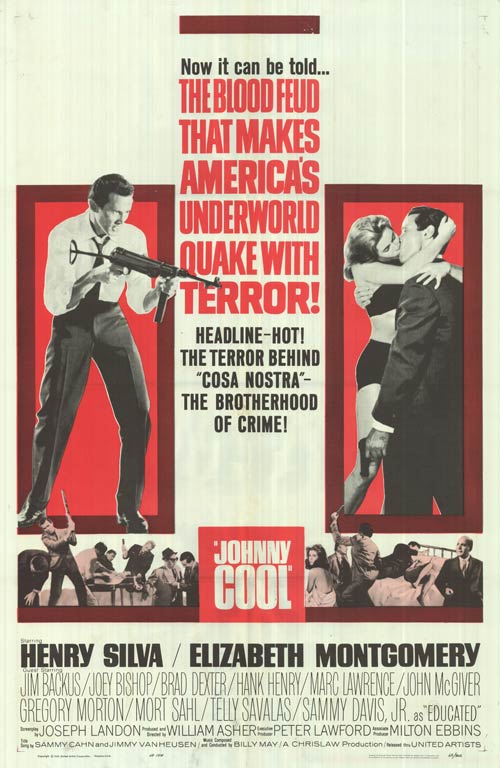
Johnny Cool (1963)

By Richard Winters

My Rating: 7 out of 10

4-Word Review: Top of crime world.

                Johnny Cool (Henry Silva) is really Giordano a man who grew to mythical proportions as an outlaw in a small Italian village after killing off some soldiers who tried to rape his mother. His exploits come to the attention of  Colini (Marc Lawrence) who has been exiled to Sicily because of his gangster past. He stages a fake assassination of Giordano in order to kidnap him and train him to go back to the United States and kill off the men that ordered his downfall. Johnny does this, but then becomes even more powerful than Colini was and soon he is both feared and hunted by the crime world.

The film, which was directed by William Asher, is nicely paced. I liked the fast, gripping action, the pounding music, and raw approach. The black and white photography nicely accentuates the gritty subject matter. Although it may seem a bit tame by today’s standards I still found most of it to be intense and uncompromising especially the ending.

Lots and lots of famous faces pop up everywhere, which is fun for a bit, but then takes you out of the story as it seems to become more like ‘spot the star’. Some of the cameos are small and pointless while others are more interesting. Sammy Davis Jr. has a tense scene playing a man with an eye patch who must role a specific number with the dice or be blown away by Johnny’s gun, which is aimed directly at his temple. Joey Bishop is funny as a fast talking used car salesman and his feeble attempts at making a play at the beautiful Dare (Elizabeth Montgomery). John McGiver is equally fun as a perplexed store manager who brings in a woman to his office after finding that she has been writing a lot of bad checks. The exchange he has with her is a perfect example of why sexual innuendos where a lot more interesting and creative back in the old days when the standard didn’t allow them to be as crass and vulgar as they are now. Here the lady states “I can make those bad checks good.” And McGiver responds after eyeing her figure “Yes, I think you can!”

Telly Savalas is wasted. The man is a great character actor especially as a villain. Playing a tough crime boss from Brooklyn is his forte and he could have really gone with it had they given him a bigger part. Marc Lawrence is equally evil as Colini and showing him only in one scene and then disappearing was disappointing. Jim Backus’s appearance was a mistake. A funny, talented man for sure, but I didn’t like that he did his Mr. Magoo laugh several times here as it did not fit the gritty mood.

Henry Silva has proven to be a great villain throughout his career, but in this role it just doesn’t work. His eyes have a weird type of stare that makes it look like he has been drugged. He delivers his lines in a monotone fashion. The character becomes overblown and some may find his use of the karate chop to be a bit cheesy. He kills a man on an escalator amidst a crowded airport and is able to get away. There are several other scenes where he is able to somehow get into a secure area and kill off people without any explanation for how he was able to do it.

Elizabeth Montgomery, who was at the time the wife of the director, is fantastic. She plays a brunette and does well with a multi-faceted character that goes from helpless victim to conniving double-crosser. She is shown in several scenes wearing no make-up and I liked the naturalistic quality. My only quibble is the scene where she gets roughed up by some gangsters, but the only mark left on her is a bruise on a shoulder even though a few bruises, scratches, and cuts on the face would have been not only more believable, but visually more effective.

My Rating: 7 out of 10

Released: October 2, 1963

Runtime: 1Hour 43Minutes

Rated NR (Not Rated)

Director: William Asher

Studio: United Artists

Available: DVD, Netflix streaming

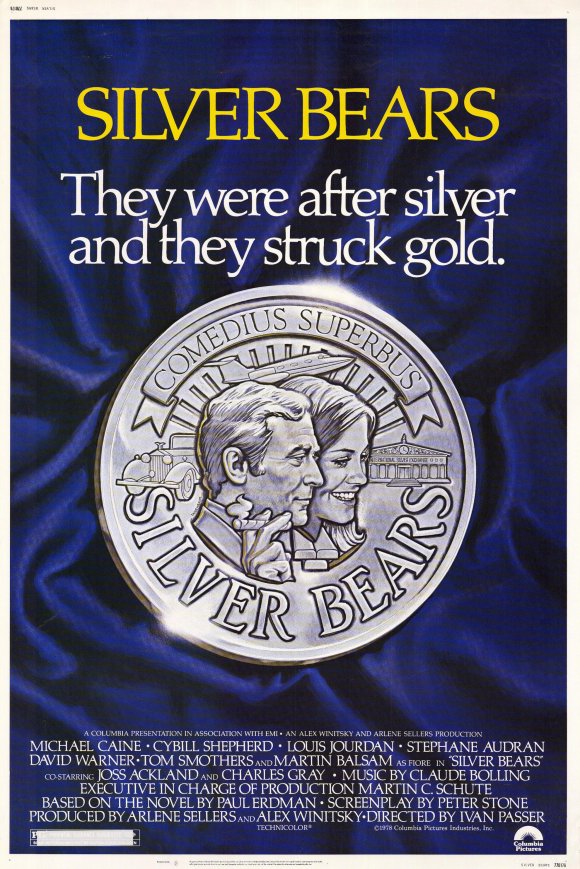
Silver Bears (1978)

By Richard Winters

My Rating: 6 out of 10

4-Word Review: Investing in Silver Mine.

This is an engaging, lighthearted look at the complex inner-workings of financial institutions and markets and how a group of con-men try to exploit it. The plot is elaborate and although it is easy to follow as you are watching it, as long as you are paying close attention, it is hard and even convoluted to explain, but I will try my best.

The basic premise works like this: Doc Fletcher (Michael Caine) is hired by underground kingpin Joe Fiore (Martin Balsam) to open a phony bank which they can use as a front for their laundered money. When they get there they find that the building is some rundown offices on top of a restaurant. Prince di Siracusa (Louis Jourdan) then tells them of a silver mine in Iran that is run by his distant cousins Agha (David Warner) and Shireen (Stephanie Audran).  Doc decides the bank can invest in the mine and use the money to create a better building premises as well as attracting rich investors. The silver in the mine begins to flood the market causing a drop in value at the London Stock Exchange and forces Charles Cook (Charles Gray) to decide to buy out the bank that is funding the mine in order to then close the mine. To do this he contacts the President of the First National Bank of California (Joss Ackland) who is looking to expand his business in Europe. The bank president sends Donald Luckman (Tom Smothers) out to negotiate a sale of the bank with Doc, but without telling Doc the true reason why. This makes Doc suspicious and to find out their true motives he decides to seduce Donald’s beautiful and free-spirited wife Debbie (Cybil Shepard). Once she divulges their secret things really get going in a high-spirited fashion.

The catalyst of the comedy comes through the many different ‘negotiating’ sessions that take place throughout the film all of which prove to be quite amusing. The first is when Doc negotiates with Agha about a suitable deposit Agha must give to the bank in order to obtain a bank loan even though the bank has no money to give. The second is when Donald tries to bargain with Doc on a selling price for the bank and the third is when Doc tries to intimidate Crime boss Joe into not accepting Donald’s offer. The final one at the end is where all the characters chase Charles around his mansion in order to get settlements to their deals, which have by then soured.

The characters are charming and delightful. Caine is superb as always playing a man who would like to be a lot more ruthless and intimidating if he weren’t surrounded by a bunch of incompetents. Jourdan is suave as the Prince and the two leads share very contrasting personalities and styles, which makes their conversations and budding friendship interesting.

This movie is also a great chance to see Jay Leno in a rare acting role. I’d say being a talk show host is more his repartee, but he is energetic enough here to remain amiable and seeing him with a big mop of curly black hair is almost worth the price itself. Shepard is fantastic and the one thing that gives the film some zest. She is best known for her bitchy roles of which she is very good, but her she plays a fun-loving hippie type and is hilarious. Although this movie is a bit hard to find fans of Shepard should really seek this out as they won’t be disappointed.

Smothers is okay as the meticulous accountant who thinks he has all the bases covered until he gets an unsettling surprise at the end. Usually he is stuck playing characters on the dim-witted side, so it was nice to see him in something that was a slight change of pace. Although Balsam’s screen time is brief I still got a kick out of the way he would look at pictures showing the bloody corpses of the victims he had ordered killed while he ate his breakfast.

The film was shot on-location in such places as Switzerland and Morocco and although it does show some of the exotic topography of the regions it wasn’t enough and I wanted to see more. The musical score is terrible and resembles a show tune from the big band era that does not fit with the mood, or action of the story. I also didn’t find it enticing to have the film begin by focusing the camera onto the naked rears of a bunch of fat, middle-aged men as they get into a hot tub.

For those looking for a diverting, original comedy that emphasizes the subtle and dryly humorous exchanges between business partners then this little known gem should hit the spot.

My Rating: 6 out of 10

Released: April 21, 1978

Runtime: 1Hour 53Minutes

Rated PG

Director: Ivan Passer

Studio: Columbia Pictures

Available: VHS