Category Archives: Movies Based on Novels

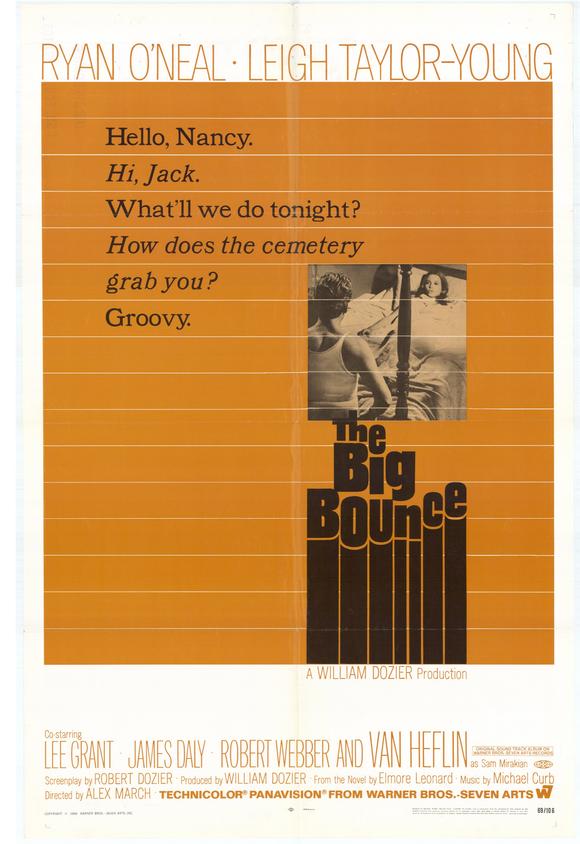
The Big Bounce (1969)

By Richard Winters

My Rating: 3 out of 10

4-Word Review: She is really crazy.

Based on the Elmore Leonard novel and remade in 2004 as a vehicle for Owen Wilson this version stars Ryan O’Neal as Jack Ryan a Vietnam vet on the run when he has a physical altercation with a player during a baseball game that leaves the other man injured and looking for revenge. He meets up with Ray Ritchie (James Daly) and his mistress/secretary Nancy (Leigh Taylor-Young) who is a bit on the wild side. She convinces Jack to help her rob her boss of a large amount of money that he has hidden away in his safe, but Jack becomes wary as Nancy displays more and more psychotic tendencies.

I enjoyed the film’s jaded sensibilities, but unfortunately it doesn’t do enough with them. There is too much talk without enough action. The plot is thin and unfocused. I spent the entire time wanted the story to get moving, but it really never does until the very end and by then it is too late. The scenes are lengthy and the production has too plodding a pace. I also didn’t like the fact that they discuss the robbery, but never go through with it. Nothing is more frustrating than an already draggy movie having a potentially interesting plot progression only to drop it.

I also couldn’t stand the music which sounded like men from a barbershop quartet and gets overplayed until it becomes annoying. The melody was too soft and mellow and did not fit the edgy tone of the script, or characters. This is the type of film that needed an up-tempo score with hard and fast beat.

For what it is worth Taylor -Young is good. She gets convincingly crazy and has a near epic meltdown at the end. She also has a tantalizing scene involving her swimming nude, which is only topped by another scene showing her standing naked in the middle of graveyard while pretending to be a statue.

O’Neal is okay although I felt some other actors might have been better, but at least he improves as the film progresses. The two stars were married in real-life at the time and I presume the producers cast them in the parts hoping that their chemistry would project onto the screen, but it never does and they ended up divorced four years later.

Van Heflin is great in a supporting role as Sam Mirakian a cynical and detached man who has seen it all. He brings the film some much needed energy. Lee Grant is also terrific and it was a crime that she wasn’t given more screen time. She makes her desperate and emotionally brittle character real and interesting. Cindy Eilbacher is quite adorable as her young daughter Cheryl. Robert Webber also deserves mention as he is amusing playing a man trying to be tough and intimidating, but ending up always looking like a schmuck.

I never saw the remake, but heard from several people that it wasn’t too great either. I dare say the novel is the best of the three and both film versions are worth skipping.

My Rating: 3 out of 10

Released: March 5, 1969

Runtime: 1Hour 42Minutes

Rated R

Director: Alex March

Studio: Warner Brothers/Seven Arts

Available: VHS, DVD, Amazon Instant Video
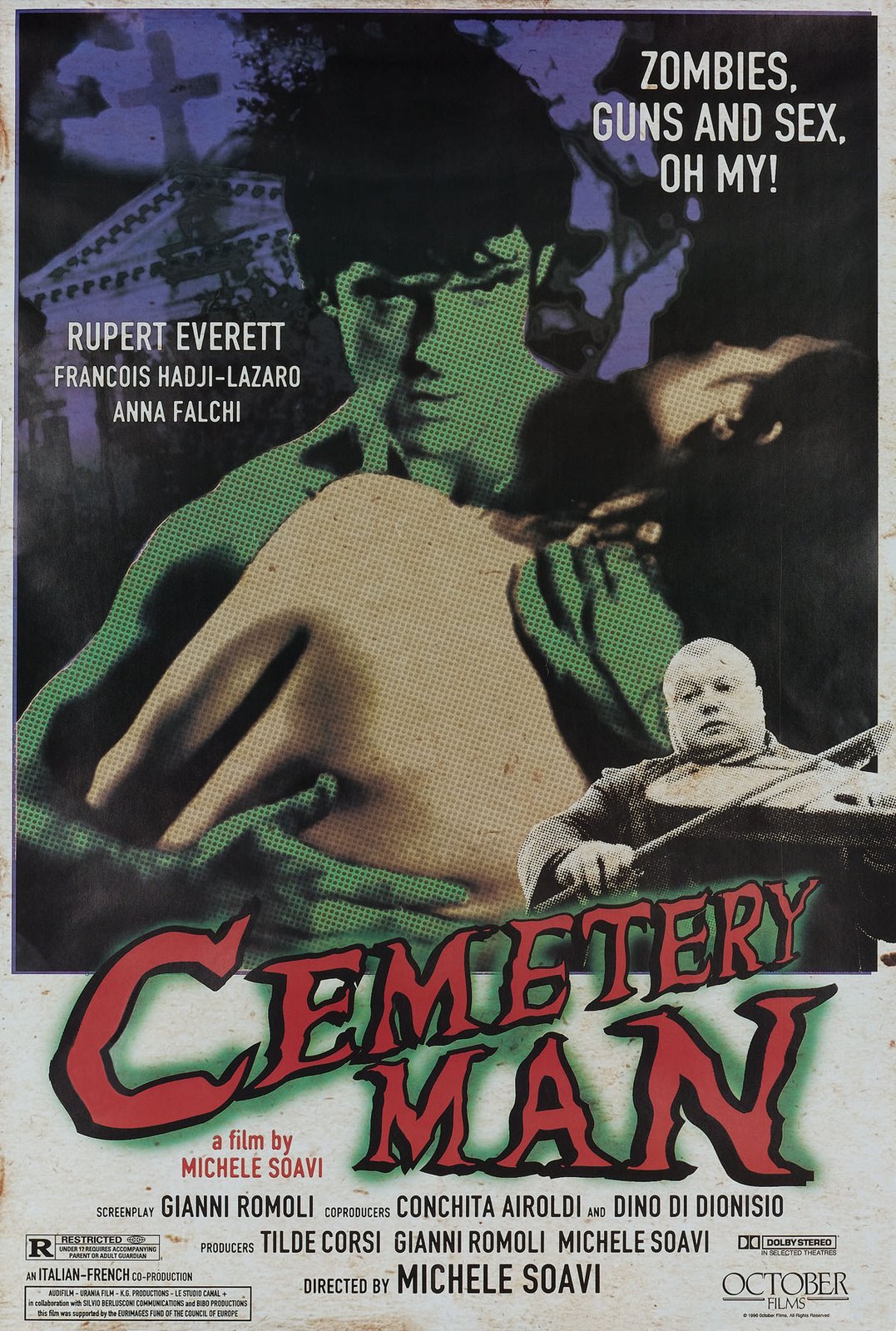
Cemetary Man (1994)

By Richard Winters

My Rating: 5 out of 10

4-Word Review: They shoot the zombies.

The film opens with a cemetery worker (Rupert Everett) talking on the phone with a friend. He hears a knock at the door and when he answers it he sees a man with bluish, decayed skin ready to attack him. The worker calmly takes out a gun, shoots the man in the head, and then goes back to talking on the phone like nothing happened.  Thus begins this very quirky horror comedy that is a send-up of all those old zombie movies and has acquired a cult following.  It was filmed in Italy and is based on the popular Italian comic book ‘Dylan Dog’ by Tiziano Sclavi.

The initial premise is fun.  The protagonist is Francesco Dellamorte, who with his mute and mentally-challenged assistant named Gnaghi (Francois Hadji-Lazaro), are stuck running a cemetery in a small Italian town where the dead will routinely come back to life. It is then up to them to shoot the zombies in their head, which will kill them permanently.  This starts a wild array of crazy scenarios that become increasingly bizarre as the film progresses.

Initially I found it to be inventive.  The tongue-in-check humor is first-rate as is the snappy dialogue.  The film though starts to bite off more than it can chew.  All sorts of weird storylines get thrown in, but are never resolved.  After about the first hour it no longer made any sense.  For instance there is Francesco’s girlfriend named She (Anna Falchi), who he accidently kills at the beginning, but then she keeps getting reincarnated as different women throughout the rest of the film.  For various reasons Francesco is forced to kill her in different ways all over again, which eventually becomes tiring. This is only one of the many convoluted surreal elements that eventually overwhelm the viewer.  By the time it got to its extensile ending I was more than happy that it was over and really no longer cared what happened to the characters.

I felt frustrated because there were a lot of cool ideas that the film brings up, but drops without explanation.  I thought the original idea was good enough that the film could have stuck with that and built around it without going off on so many tangents. The special effects were a problem as well as they looked cheap and fake.  It was obvious when they were using mannequins in the place of real people and the blood and gore were thrown in haphazardly.

I did however like the pacing, which moves quickly with no letup.  The set designs are imaginative and the dark humor is consistently funny. If I would suggest this movie for any reason it would be that one.  Even when the story was getting annoyingly out-of-control it still had me chuckling.  The best scene involves Francesco talking to a sick friend in the hospital and when anyone from the hospital staff tries to intervene he shoots them and this creates a memorably macabre imagery as the room gets filled up with bodies and blood everywhere.

I also liked the character of Gnaghi, who tends to grow on you and becomes a real scene stealer.  He is short, fat and bald and looks like a young version of Uncle Fester from ‘The Adams Family’.  He speaks only through grunts, but the way he responds to things is quite amusing and the director comes up with clever ways to make the most of it.  The fact that he was played by a rock musician and not a professional actor makes it more interesting.  The part where he falls in love with one of the corpses and wants to marry her is hilarious and should have been played out more.

I liked the character of Francessco at the beginning as well.  He comes off like a rugged cowboy from the old west with a nifty matter-of-fact attitude towards his job and is cool under pressure. However, his behavior and actions become erratic and his motivations confusing until, by the end, he is almost alienating. There are also too many segments where he gets caught off guard by an attacking zombie and panics when he does not have his gun handy, which hurts the credibility since someone who has been doing this for a long time and is as savvy as he portrayed would learn to expect the unexpected and be prepared at all times for it.

I hate to say that this film was a disappointment because it is very creative and the direction is slick.  Unfortunately it just could not sustain its potential, which makes it a misfire. The film did quite poorly with both the critics and viewing public when it was first released both in Europe and in the states. It was only after being hailed by director Martin Scorsese that it started to find new life in the DVD market. Actor Everett was in talks with American studios to do a big-budget Hollywood remake, but it fell through.  A remake would not be a bad idea and may still happen as the horror-dark comedy genre has proven to be profitable in recent years most notably with Zombieland.  A tighter script and more money on the special effects could make this a winner.

My Rating: 5 out of 10

Released: March 25, 1994

Runtime: 1Hour 45Minutes

Rated R

Director: Michele Soavi

Studio: Angelo Rizzoli

Available: VHS, DVD, Blu-ray

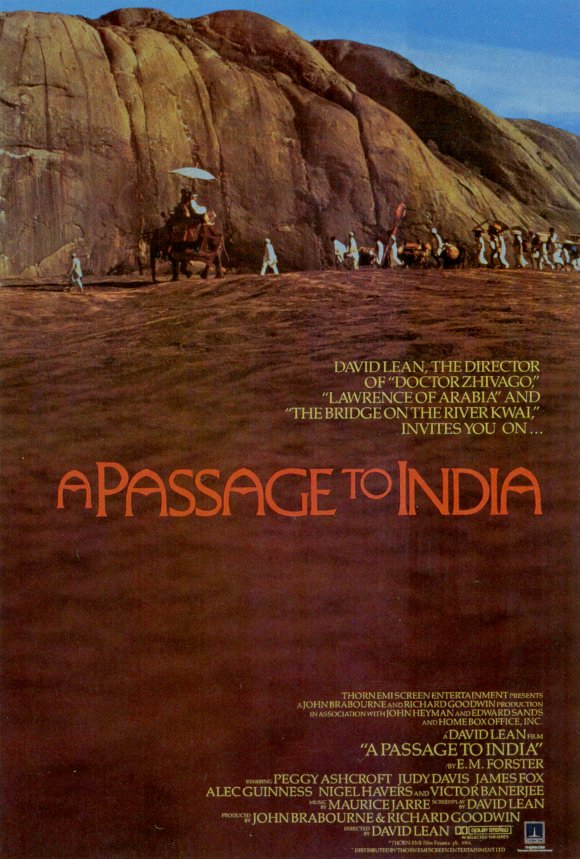
A Passage to India (1984)

By Richard Winters

My Rating: 7 out of 10

4-Word Review: Unjustly accused of rape.

An older woman (Peggy Ashcroft) and her son’s fiancée Adele (Judy Davis) travel to India to visit him as he works as a British Magistrate there. During the course of their visit they come upon the harshness of British rule, the unusual climate, and a rather unexpected criminal trial.

Like with most of Lean’s films the gargantuan approach cannot equal the story. You sit through two hours and forty five minutes only to feel slighted when it is all over. The story plays a lot like To Kill a Mockingbird only it is stretched out more and has a different location. That is not to say it isn’t entertaining, because it is, but only in the most general of ways.

The first hour is downright breezy. It does hit on certain inhumanities and inequalities, but it is all handled with kid gloves. It also seems very similar to Gandhi, which came out only a year earlier. The second half, which involves the court trial, seems almost jarring when compared to the first. It does get more intense and multifaceted, but just when it seems to be getting intriguing it fizzles with a wrap up that is too neat and tidy.

Lean’s films have always had a sort of running theme involving the characters coming to terms with the full scope of their personalities. Yet here their changes seem too abrupt and severe. Adele starts out as a very interesting person. She is independent and idealistic and then having her turn into a confused and bullied woman without any real explanation doesn’t mesh. The same can be said for Aziz (Victor Banjeree) the man she accuses of rape. His character is so benign and affable at the beginning that having him turn so angry and vindictive in the second half seems overdone understandable to some degree, but still overdone. Of course everyone can have these traits at times, but here it gets heavy- handed.

The two best characters consist of Mrs. Moore (Ashcroft) and Fielding (James Fox). Ashcroft is compassionate and strong and it is nice to have an older character where their age isn’t completely embedded into their persona. Fielding is strong and stalwart as well and his very proper sensibilities help keep the whole thing stabilized.

Legendary actor Sir Alec Guinness is badly miscast. Although some of his dispensed wisdom is fun he never completely comes off as a native and the part should have been played by an actual native of the country.

Out of all of Lean’s films this may actually be his weakest. The cinematography is okay, but it is not as sumptuous as some of his others. I wanted to be shown more of India and given a broader perspective of the region. There also could have been a little more action and the characters placed in a little more physical danger. The part where Adele is chased by some wild monkeys is unconvincing especially when you never see her or the monkeys in the same shot.

My Rating: 7 out of 10

Released: December 14, 1984

Runtime: 2Hours 45Minutes

Rated PG

Director: David Lean

Studio: Columbia Pictures

Available: VHS, DVD, Blu-ray, Amazon Instant Video

Johnny Cool (1963)

By Richard Winters

My Rating: 7 out of 10

4-Word Review: Top of crime world.

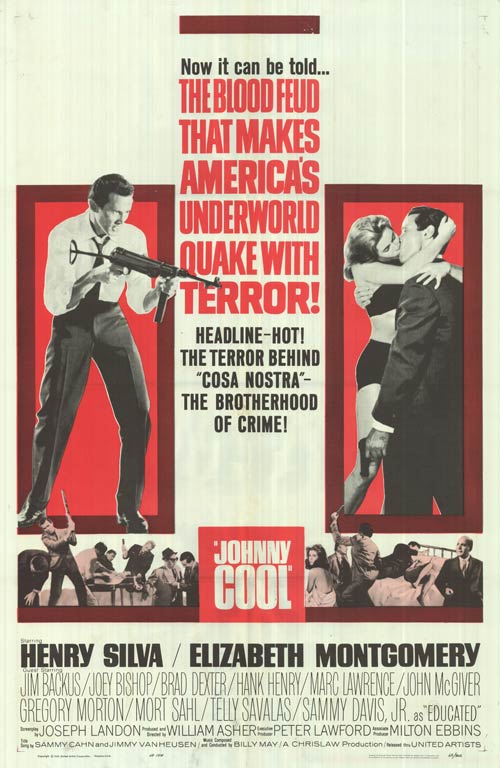
                Johnny Cool (Henry Silva) is really Giordano a man who grew to mythical proportions as an outlaw in a small Italian village after killing off some soldiers who tried to rape his mother. His exploits come to the attention of  Colini (Marc Lawrence) who has been exiled to Sicily because of his gangster past. He stages a fake assassination of Giordano in order to kidnap him and train him to go back to the United States and kill off the men that ordered his downfall. Johnny does this, but then becomes even more powerful than Colini was and soon he is both feared and hunted by the crime world.

The film, which was directed by William Asher, is nicely paced. I liked the fast, gripping action, the pounding music, and raw approach. The black and white photography nicely accentuates the gritty subject matter. Although it may seem a bit tame by today’s standards I still found most of it to be intense and uncompromising especially the ending.

Lots and lots of famous faces pop up everywhere, which is fun for a bit, but then takes you out of the story as it seems to become more like ‘spot the star’. Some of the cameos are small and pointless while others are more interesting. Sammy Davis Jr. has a tense scene playing a man with an eye patch who must role a specific number with the dice or be blown away by Johnny’s gun, which is aimed directly at his temple. Joey Bishop is funny as a fast talking used car salesman and his feeble attempts at making a play at the beautiful Dare (Elizabeth Montgomery). John McGiver is equally fun as a perplexed store manager who brings in a woman to his office after finding that she has been writing a lot of bad checks. The exchange he has with her is a perfect example of why sexual innuendos where a lot more interesting and creative back in the old days when the standard didn’t allow them to be as crass and vulgar as they are now. Here the lady states “I can make those bad checks good.” And McGiver responds after eyeing her figure “Yes, I think you can!”

Telly Savalas is wasted. The man is a great character actor especially as a villain. Playing a tough crime boss from Brooklyn is his forte and he could have really gone with it had they given him a bigger part. Marc Lawrence is equally evil as Colini and showing him only in one scene and then disappearing was disappointing. Jim Backus’s appearance was a mistake. A funny, talented man for sure, but I didn’t like that he did his Mr. Magoo laugh several times here as it did not fit the gritty mood.

Henry Silva has proven to be a great villain throughout his career, but in this role it just doesn’t work. His eyes have a weird type of stare that makes it look like he has been drugged. He delivers his lines in a monotone fashion. The character becomes overblown and some may find his use of the karate chop to be a bit cheesy. He kills a man on an escalator amidst a crowded airport and is able to get away. There are several other scenes where he is able to somehow get into a secure area and kill off people without any explanation for how he was able to do it.

Elizabeth Montgomery, who was at the time the wife of the director, is fantastic. She plays a brunette and does well with a multi-faceted character that goes from helpless victim to conniving double-crosser. She is shown in several scenes wearing no make-up and I liked the naturalistic quality. My only quibble is the scene where she gets roughed up by some gangsters, but the only mark left on her is a bruise on a shoulder even though a few bruises, scratches, and cuts on the face would have been not only more believable, but visually more effective.

My Rating: 7 out of 10

Released: October 2, 1963

Runtime: 1Hour 43Minutes

Rated NR (Not Rated)

Director: William Asher

Studio: United Artists

Available: DVD, Netflix streaming

Silver Bears (1978)

By Richard Winters

My Rating: 6 out of 10

4-Word Review: Investing in Silver Mine.

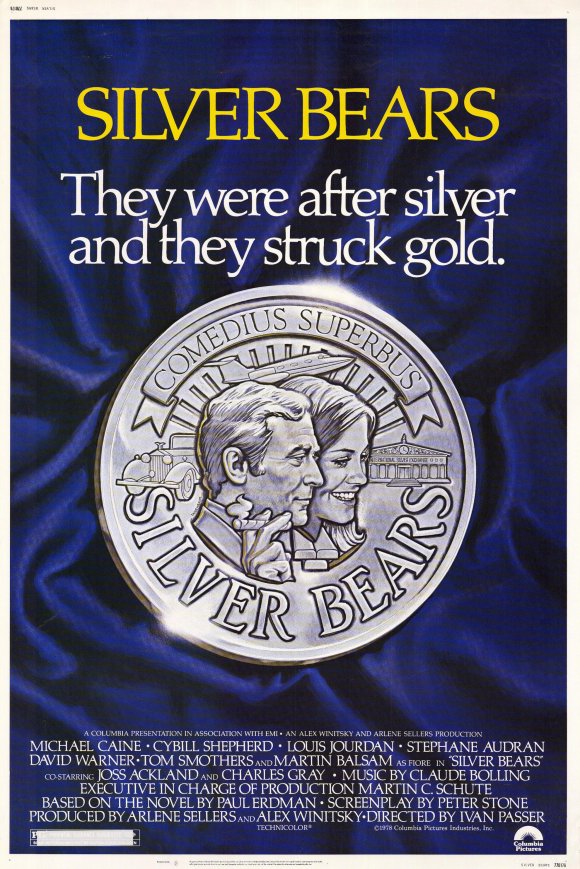
This is an engaging, lighthearted look at the complex inner-workings of financial institutions and markets and how a group of con-men try to exploit it. The plot is elaborate and although it is easy to follow as you are watching it, as long as you are paying close attention, it is hard and even convoluted to explain, but I will try my best.

The basic premise works like this: Doc Fletcher (Michael Caine) is hired by underground kingpin Joe Fiore (Martin Balsam) to open a phony bank which they can use as a front for their laundered money. When they get there they find that the building is some rundown offices on top of a restaurant. Prince di Siracusa (Louis Jourdan) then tells them of a silver mine in Iran that is run by his distant cousins Agha (David Warner) and Shireen (Stephanie Audran).  Doc decides the bank can invest in the mine and use the money to create a better building premises as well as attracting rich investors. The silver in the mine begins to flood the market causing a drop in value at the London Stock Exchange and forces Charles Cook (Charles Gray) to decide to buy out the bank that is funding the mine in order to then close the mine. To do this he contacts the President of the First National Bank of California (Joss Ackland) who is looking to expand his business in Europe. The bank president sends Donald Luckman (Tom Smothers) out to negotiate a sale of the bank with Doc, but without telling Doc the true reason why. This makes Doc suspicious and to find out their true motives he decides to seduce Donald’s beautiful and free-spirited wife Debbie (Cybil Shepard). Once she divulges their secret things really get going in a high-spirited fashion.

The catalyst of the comedy comes through the many different ‘negotiating’ sessions that take place throughout the film all of which prove to be quite amusing. The first is when Doc negotiates with Agha about a suitable deposit Agha must give to the bank in order to obtain a bank loan even though the bank has no money to give. The second is when Donald tries to bargain with Doc on a selling price for the bank and the third is when Doc tries to intimidate Crime boss Joe into not accepting Donald’s offer. The final one at the end is where all the characters chase Charles around his mansion in order to get settlements to their deals, which have by then soured.

The characters are charming and delightful. Caine is superb as always playing a man who would like to be a lot more ruthless and intimidating if he weren’t surrounded by a bunch of incompetents. Jourdan is suave as the Prince and the two leads share very contrasting personalities and styles, which makes their conversations and budding friendship interesting.

This movie is also a great chance to see Jay Leno in a rare acting role. I’d say being a talk show host is more his repartee, but he is energetic enough here to remain amiable and seeing him with a big mop of curly black hair is almost worth the price itself. Shepard is fantastic and the one thing that gives the film some zest. She is best known for her bitchy roles of which she is very good, but her she plays a fun-loving hippie type and is hilarious. Although this movie is a bit hard to find fans of Shepard should really seek this out as they won’t be disappointed.

Smothers is okay as the meticulous accountant who thinks he has all the bases covered until he gets an unsettling surprise at the end. Usually he is stuck playing characters on the dim-witted side, so it was nice to see him in something that was a slight change of pace. Although Balsam’s screen time is brief I still got a kick out of the way he would look at pictures showing the bloody corpses of the victims he had ordered killed while he ate his breakfast.

The film was shot on-location in such places as Switzerland and Morocco and although it does show some of the exotic topography of the regions it wasn’t enough and I wanted to see more. The musical score is terrible and resembles a show tune from the big band era that does not fit with the mood, or action of the story. I also didn’t find it enticing to have the film begin by focusing the camera onto the naked rears of a bunch of fat, middle-aged men as they get into a hot tub.

For those looking for a diverting, original comedy that emphasizes the subtle and dryly humorous exchanges between business partners then this little known gem should hit the spot.

My Rating: 6 out of 10

Released: April 21, 1978

Runtime: 1Hour 53Minutes

Rated PG

Director: Ivan Passer

Studio: Columbia Pictures

Available: VHS

Harper (1966)

By Richard Winters

My Rating: 9 out of 10

4-Word Review: New-age private eye.

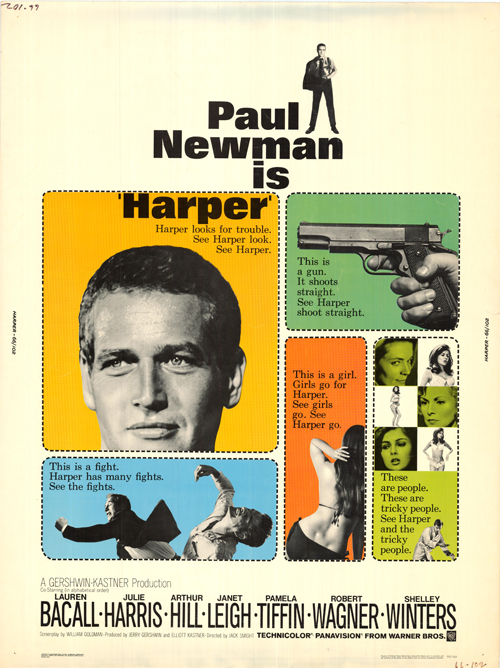
            Detective Lew Harper (Paul Newman) is hired by Mrs. Sampson (Lauren Bacall) a rich woman whose husband has gone missing. She wants a private eye to find him instead of the police due to the fact that her husband was involved in certain illegal business activities, which she doesn’t want to come to light. Harper finds himself immersed in a complex web of intrigue dealing with an array of shady characters, twists, and danger.

Newman is terrific and the Harper character is the perfect private eye for modern audiences. Watching him get out of bed in his dingy, cluttered apartment at the beginning and get ready for the day is excellent and builds characterization in a visual, subtle, and believable way. His cool, laid-back, and detached demeanor is a great contrast to the hyper, jaded, high-strung L.A. types that make up the assortment of suspects. His cynical style attaches the viewer to him right from the start and the banter that he has with everyone is marvelous.

The supporting characters are superb as well and very well-defined. Bacall gets one of her better later career roles as the bitchy eccentric wife. She gets quite a few quotable zingers particularly between her and her step daughter Miranda (Pamela Tiffin) that are close to classic. I also got a kick out of Shelley Winters playing a parody of herself as a way past her prime Hollywood star who is now overweight and an alcoholic. Harper’s attempts to get information out of her by pretending to be a hick who is totally mesmerized by her is quite amusing.

Director Jack Smight is at his directorial peak here. The on-location shooting is splendid. I particularly enjoyed the modernistic building that fronts as a church, but is really used as a cover for criminal activity. It sits out on a sandy hilltop and leaves a strong visual impression as does Harper and Miranda’s car ride along a very winding desert highway to get there. I also liked his ability to capture an abandoned airplane hangar making it almost as evocative to the eye as the foot chase that happens in it. The whole production is consistently slick with color schemes, set design and editing that are all top notch.

William Goldman’s script, which is based on the novel by Ross Macdonald is sensational and one of his best in his already legendary career. The dialogue is sharp one can view it for the lines alone and might need to re-watch it again simply to pick-up on all of them as there are so many your liable to miss some. The mystery is also intriguing and nicely layered to the point that it will keep you guessing and impossible to figure out and fortunately there is a minimum of loopholes. I saw this before and knew the outcome, but still found it an enjoyable and involving ride.

My complaints are few and fortunately do not taint the quality of the picture, which is otherwise high. I didn’t like that Harper had an ex-wife Susan (Janet Leigh) who he is constantly trying to win back. The woman seemed a bit cold and snippy and not the type I would think Harper would fall for, or want to put up with. Having him act so needy to win back her affections hurt the ruggedness of the character who is appealing because of his independent and self-assured nature. There is another scene where a man is shot dead and Harper goes through his coat pockets in order to get some clues to his identity. He finds a matchbook listing a nightclub, which Harper goes to in order to ask questions from the patrons, but I kept thinking it would have been much easier had he just went through the victim’s pants pocket and taking out his wallet and looked at his driver’s license.

If you are looking for a nifty mystery done in the best crime noir tradition then they don’t come much better than this.

My Rating: 9 out of 10

Released: February 23, 1966

Runtime: 2Hours 1Minute

Rated NR (Not Rated)

Director: Jack Smight

Studio: Warner Brothers

Available:  DVD, Amazon Instant Video

The Drowning Pool (1975)

By Richard Winters

My Rating: 7 out of 10

4-Word Review: Way too much water.

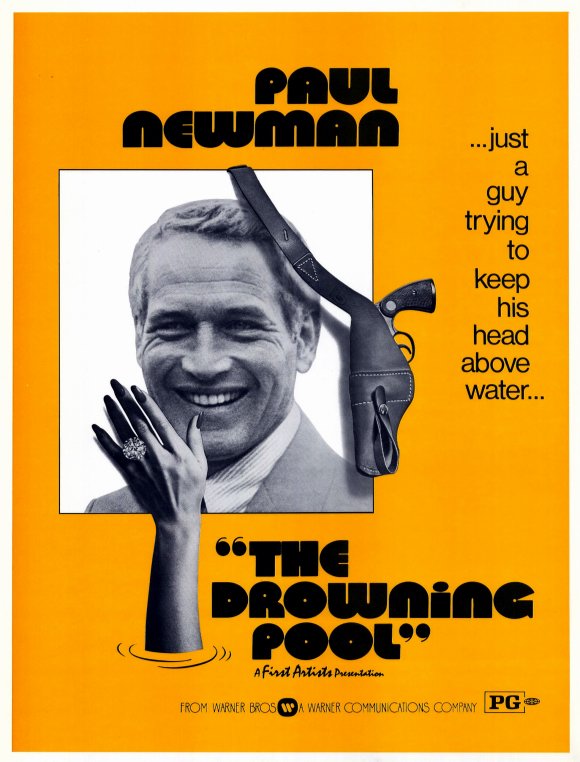
            Detective Lew Harper (Paul Newman) travels to New Orleans in order to help Iris (Joanne Woodward) an old love of his who has now married and living in a large southern mansion that is controlled by her husband’s domineering mother Olivia (Coral Browne). Iris asks Harper to track down a former servant who she has fired and is now sending notes to her husband threatening to describe one of her elicit affairs. Initially Harper thinks it will be a simple straightforward case, but finds many twists and turns including the presence of an oil company looking to buy the land the mansion sits on for drilling. There is also Iris’s over-sexed teen daughter Schuyler (Melanie Griffith) who is always present when there is any trouble as well as the town’s sheriff Broussard (Tony Franciosa) who takes an unusual interest in the well fare of Iris and her daughter.

By itself this is an okay mystery although it takes a while getting there and there are too many characters popping in out of nowhere threatening harm to Harper to point that almost becomes formulaic. Compared to the first Harper this film pales in comparison. It lacks the snappy dialogue that made the first one so fun. The supporting characters are not as well defined, or as interesting and the overall production values are not as slick. I was amazed that with a script written by Tracy Keenan Wynn, Walter Hill, and Lorenzo Semple Jr. that it could be so overall ordinary, but it is. That doesn’t mean it is not passable, or entertaining, but it lacks the zing from the first.

I also didn’t like the change of location. Harper with his very detached approach worked better with the jaded Hollywood types. Here he just seems out-of-place. The mansion setting is boring and predictable. However, the scene where Harper is taken by boat along a swamp and to a pit bull farm where the animals are trained for dog fighting is special.

As for the supporting characters Richard Jaeckel, who has appeared with Newman before in several good scenes including the drowning one in Sometimes a Great Notion, is good as ‘bullet head’ a corrupt policeman who is constantly harassing Harper. Harper later turns the tables playing a game of Russian roulette with him that is great. Murray Hamilton is also quite good as the evil oil baron Kilbourne and the all red jumpsuit that he appears in is something else.

On the female end you have to love Melanie Griffith as the devious, nympho teen. She plays that type of part so well that I don’t think there is any other actress that could ever do it better. I did not like Gail Strickland as Mavis who is Kilbourne’s wife.  When we first see her she is a conniving, cocky, flirtatious woman, but then in a later scene turns into a whimpering, whiny mess begging Harper for help when she barely knows him. This extreme contrast didn’t work with me and I thought that a woman who marries a rich, but shady businessman and has been involved in some underhanded maneuverings herself should have a little better ‘plan B’ in place and not sink to such a pathetic helpless level the minute things unravel. Woodward is wasted in a boring role that allows for very little range. I wished she had played Strickland’s part as I think she would’ve made it more interesting.

The one scene that really stands out and makes this movie special is the part where Harper and Mavis are trapped in a hypo-therapy room in an old, abandoned asylum. Newman does most of his stunts here including being sprayed by a fire hose while locked in a strait jacket. The sequence where they plug up all the drains and then turn on all the showers in an attempt to float up the pool of water and escape out the skylight is amazing as is the moment where the gallons of water comes rushing through the door toppling furniture and people. This scene is incredible on many levels and should make it into the top twenty of best movie moments ever.

My Rating: 7 out of 10

Released: June 25, 1975

Runtime: 1Hour 48Minutes

Rated PG

Director: Stuart Rosenberg

Studio: Warner Brothers

Available: VHS, DVD, Amazon Instant Video
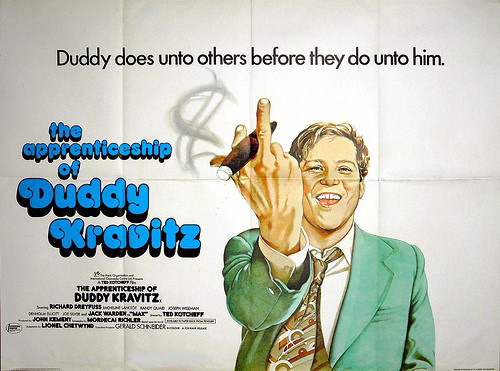
The Apprenticeship of Duddy Kravitz (1974)

By Richard Winters

My Rating: 8 out of 10

4-Word Review: Anything to get ahead.

            Duddy Kravitz (Richard Dreyfuss) is a young Jewish man looking to make a name for himself and escape the working class existence of his father. He comes up with several schemes many of which aren’t legal and don’t work, but his aggressive nature drives him even as it alienates those around him.

I loved the Duddy character and I liked him because of his unlikableness. Yes, he is obnoxious, deceitful, conniving, brash, arrogant, crude, and aggressive to the point of running down anyone who might get in his way, but you are shown why he is that way. How the desperate world around him has brought out the ugliness and the allure of money and social prestige only makes it worse. Duddy is more of a victim of a capitalistic culture that promises with money comes happiness, but fails to mention all the sacrifices and compromises that must come with it.  The script by Mordecai Richler, which is based on his novel, does a terrific job on analyzing the idea of success on how the end doesn’t always justify the means and how a man who is poor but true to his values can be far richer than one who may have a fortune, but is hollow.

Dreyfuss does a terrific job and I consider this one of his best performances even though apparently he was dissatisfied with it personally. I liked the nervous energy and ticks that he gives the character that easily reveals the desperation and drive that he has inside. He manages to bring out the human side of his character making him relatable despite his many flaws. What is interesting is the way Duddy will display a certain sensitive side in brief and surprising moments.

Jack Warden is wonderful as the father a man who is well aware of his son’s faults, but remains loyal to his strive for success. The film’s final image, which features Warden is a gem especially when taken into effect everything that came before it. Joe Silver, a deep, gravelly voiced character actor has his best performance of his career as Farber. This is a man who shows deep devotion and respect to religion and spirituality, but then openly boasts to Duddy at how he cheated and back-stabbed a business partner.

Denhom Elliot is great in comic relief playing an alcoholic has-been filmmaker who makes a movie involving the bar mitzvah of Farber’s son that ends up showing everything from Adolf Hitler, to a naked woman’s breast, and even a man eating glass. He exhibits this to everyone in the synagogue and the facial reactions of Farber while he is watching it is hilarious.

The on-locations shooting in Montreal is well done. I felt like I was right there back in the 1950’s. The inside of Duddy’s home had a nice lived-in look and feel. There are images that stay with you long after it is over including the gorgeous forest and lake that Duddy hopes to one day own.

This is a perfect example of a compelling drama. Each scene works seamlessly with the others and the film continues to reveal more insight as it goes on. It also an excellent character detailing someone who is all too real and facing many difficult life decisions that we all face.

My Rating: 8 out of 10

Released: April 11, 1974

Runtime: 2 Hours

Rated PG

Director: Ted Kotcheff

Studio: Paramount

Available: VHS, DVD, Amazon Instant Video
The Year of Living Dangerously (1982)

By Richard Winters

My Rating: 5 out of 10

4-Word Review: Experiencing life in Indonesia.

      Guy Hamilton (Mel Gibson) is a reporter who travels to Indonesia in 1965 just as the government is ready to be toppled. He experiences all the chaos as well as the poverty of the people and apathy from his fellow newsmen. He falls in love with a beautiful diplomat Jill Bryant (Sigourney Weaver) who works with a dwarf photographer named Billy Squires (Linda Hunt in her Academy Award winning performance), and eventually finds himself reluctantly thrust into the middle of the turmoil.

     The film is great at recreating the environment and atmosphere of that period. One gets a very good understanding and feeling at just how poverty stricken and desperate the Indonesian people where. Linda Hunt is unique and memorable as the male dwarf. She also has a great line when a fellow photographer asks her opinion of a picture that he took of a naked woman. He wants to know if she thinks it is art or pornography. Her reply, “If it is out of focus it’s art, if it is in focus it is pornography.” It is also fun to see journeymen supporting actor Michael Murphy playing against type. Usually he is saddled with rather transparent types of roles, but here his character is quite obnoxious.

      It would have been better had the film given the viewers a little bit more of a historical background before it just plopped the characters into a very chaotic and confusing situation. Most people probably have no clue as to the history of Indonesia let alone finding it on a map. It would have also been more interesting had the film been based on real people who really lived through the situation instead of predictable prototypes. A very young Gibson seems a bit overwhelmed with his role. His character seesaws from being boring to exasperating. He gets a huge crush on the Weaver character and chases after her like she is the only thing on his mind and then when she gives him an important piece of information he pounces on it even if it means losing her and their relationship. The pace is hurt by having the film spend too much of its middle section focusing on the romance, which really isn’t all that interesting or diverting. The ending is much too pat for a story that takes place in such a dangerous and complex environment.

      This is a grand idea that becomes too muddled and doesn’t place enough emphasis on the historical background and context. The lead character is boring and the pace is not compelling enough.

My Rating: 5 out of 10

Released: December 17, 1982

Runtime: 1Hour 55Minutes

Rated PG

Director: Peter Weir

Studio: MGM/UA

Available: VHS, DVD, Amazon Instant Video
Hail, Hero! (1969)

By Richard Winters

My Rating: 5 out of 10

4-Word Review: Michael Douglas film debut.

Okay all you Michael Douglas fans out there, you know him, you love him, and you’ve seen all his movies, but what was his film debut?  I say this because I have known other fans of stars who are a bit vague when asked about early films of their favorite actors. I remember one lady who was in her 20’s, who I knew from work and professed to be a ‘huge’ Jack Nicholson fan, but when I asked her about some of his early films, which I had enjoyed including Five Easy Pieces, and King of the Marvin Gardens, she drew a complete blank. In fact she was not aware of any of the movies he did before The Shining. I had a similar experience with another lady friend I knew from a different job who professed to be a big Goldie Hawn fan and yet had no idea what film she had won the Academy Award for, which was in 1969 for Cactus Flower a movie that she hadn’t even heard of.  So I was curious how many Michael Douglas fans are actually aware of some of his early work. In fact this film, which was his first, was released when his future wife Catherine Zeta-Jones was only 11 days old.

It is the story of Carl Dixon (Douglas) who is an idealistic, peaceful young man that joins the army simply to please his conservative father (Arthur Kennedy). The film is a pleasant, even touching look at a someone learning to face the difficult and complex issues of adult life and realizing there are no easy answers. The movie doesn’t try to make any type of statement while carefully examining both sides of the issue. There isn’t any ‘bad guy’ here. The characters are real and multi-dimensional. The conversations and debates that they have are ones that went on in many households across the country at that time.

Douglas looks expectedly younger and initially I didn’t even recognize him. His hair is long, at least initially until his father cuts it, and his eyebrows are bushy and his voice much higher pitched. His performance is excellent and the  character his likable and engaging especially with the way he treats everyone with respect and is so generous that he gives his entire suitcase of clothes to a poor family in need.

Kennedy is perfect as the old-school father and my only complaint here is that I wished he had been in more scenes. Theresa Wright, as Carl’s mother, is okay, but she is not given enough screen-time either. She is also caught having an affair, but the film does not delve enough into this, but should have. Louise Latham is terrific giving one of the best performances of her career as a hermit-like woman living alone in a cave alongside the skeletal remains of an Indian baby.

There are some good scenes including Carl’s visit to a senior home where he comes face-to-face with the difficulties of aging as well as when he finds himself ready to strike someone at a party whom he does not agree with and realizing that violent tendencies lurk within anyone even those purporting to be pacifists. Yet the film fails to leave any lasting impression. The ending is weak and the story does not progress enough. The viewer is left feeling almost cheated because we are never shown how these characters evolved. In my opinion the material was insufficient for a feature film.

My Rating: 5 out of 10

Released: October 4, 1969

Runtime: 1Hour 40Minutes

Rated M

Director: David Miller

Studio: National General Pictures

Available: VHS