Category Archives: Movies Based on Novels

Scarface (1983)

scarface

By Richard Winters

My Rating: 6 out of 10

4-Word Review: Refugee becomes drug lord.

Tony Montana (Al Pacino) is a Cuban refugee arriving in Miami hoping to make it big in the land of opportunity. At first he is forced to do low paying jobs, but finally gets his break when he is hired to do a job for a rich drug dealer named Frank Garcia (Robert Loggia). Soon Tony becomes infatuated with Frank’s girlfriend Elvira (Michelle Pfeiffer) and the two begin a torrid affair. When Frank tries to assassinate Tony by ordering a hit on him at a nightclub Tony gets his revenge by killing Frank and becoming the top drug lord, which makes him quite wealthy, but the strain of constantly having to watch his back for whoever may be out to get him eventually wears on his personality.

This is a remake of the 1932 Howard Hawk’s classic that came about when Pacino watched the original film in a theater and felt compelled to make a modern day update with the drugs being the source of the criminal activity instead of alcohol. The result is only so-so, but it gets helped immensely by an incredible set design. Tony’s all-black office and a luxurious hot tub placed in the middle of his already kitschy living room are eye-popping as are the chic and lively interiors of the nightclubs, posh restaurants and exotic resorts. The graphic shootouts are equally arresting and keenly shot and edited for ultimate excitement.

Director Brian De Palma again digs into his bag of borrowed Hitchcock shots in order to tell his story, but here it works pretty well. My favorite one is when he uses the camera to track outside of a room where the action is occurring and onto a quiet street below. Hitchcock did the same thing in Frenzy where the bad guy strangles a woman inside her apartment, but instead of showing the violent act the camera moves out of the apartment and onto a busy street outside. Here the camera takes an equally fascinating journey from a man getting chopped up by a chainsaw to an idyllic afternoon day just a few feet away.

The supporting cast is strong particularly Pfeiffer as Tony’s bitchy girlfriend whose ongoing acerbic responses act as a good barometer to Tony’s ever changing social standing. I also enjoyed the transformation of Loggia’s character from intimidating kingpin to wilting coward. Harris Yulin is also memorable as a corrupt cop who ends up playing things a little too cool for his own good.

The thing I hated about the movie was Pacino’s over-the-top performance. Normally I’ve found him to be a great actor, but here the character comes off as too cartoonish and one-dimensional. He possesses no interesting character arch and is creepy and unlikable from the beginning and proceeds to only get worse as it goes along, which makes following his rise and fall quite boring and predictable.

The runtime is too long and encompasses a lot of lulls in between the action bits in a story that seems to telegraph where it’s going right from the start. The Cubans are also portrayed in a negative and stereotypical way with only a slight attempt to balance it. Had it not been for the excellent production values this thing would’ve been a real bore.

I was also confused as to why Charles Durning’s voice gets dubbed in during a scene involving Tony’s conversation with an immigration officer. If De Palma was unhappy with the original actor’s performance as the immigration officer then he should have re-filmed it with Durning present instead of just using his voice because his style of speaking is quite distinctive and I was thrown out of the scene completely due to wondering why I was hearing Durning’s voice, but not seeing him.

My Rating: 6 out of 10

Released: December 9, 1983

Runtime: 2Hours 50Minutes

Rated R

Director: Brian De Palma

Studio: Universal

Available: DVD, Blu-ray, Amazon Instant Video, YouTube

Peeper (1976)

peeper-4

By Richard Winters

My Rating: 6 out of 10

4-Word Review: Searching for client’s daughter.

Leslie C. Tucker (Michael Caine) is a British private eye working in L.A. who gets hired on by an eccentric client named Anglich (Michael Constantine) to find his long lost daughter that was born 24 years ago and now resides he believes somewhere in Hollywood. Tucker tries following the skimpy clues and this leads him to a beautiful woman named Ellen (Natalie Wood) who he believes just may be that daughter and not even know it, but the closer he gets to some answers the more questions he has to tackle as well as being chased by a pair of hoods (Timothy Carey, Don Calfa) who are out to stop him.

This film is based on a novel by Keith Laumer with a screenplay written by W.D. Richter and directed by Peter Hyams. With such talented people involved you’d think this would’ve been a winner, but it bombed at the box office and I’m not completely sure why. The ingredients are there, but the oversaturation of private eye parodies during the ‘70s could’ve gotten this one lost in the shuffle.

The film though is filled with snappy dialogue and some highly amusing voice-over narration by the Tucker character. There are also unique scenes including a car chase that takes place amidst a major traffic jam and a cool foot chase sequence down a long, winding spiral staircase. I also loved the scene where Tucker is trapped in a car with an angry dog outside only for him to miraculously turn-the-tables on the animal where he gets outside while the dog ends up stuck in the vehicle. The best moment though is at the beginning when actor Guy Marks does his impersonation of Humphrey Bogart while standing in a dark alley and reciting the opening credits instead of having them shown on screen.

As much as I love Michael Caine I found him to be wrong for this role. If you’re going to do a light parody of old school private eye films then you have to cast someone in the lead that would reflect to some degree Bogart. It certainly doesn’t have to be an impersonator, but someone that is from Brooklyn and has a New York mentality as opposed to a transplanted Englishman with a British accent.

Wood is equally miscast. This was her first theatrical feature in 7 years and she turned down a role in The Towering Inferno to do this one and I’m not sure why. The part is rather small and offers little range in either acting or character development and with everything else that goes on in the story she ends up getting forgotten though it does have a foreboding quality in that the final segment involves her on a boat and near water.

The mystery itself ends up being the worst thing. It’s too intricate and filled with so many rapidly paced twists that it becomes almost impossible to follow. The action is enough to keep it interesting, but as a compelling plot it fails. I also wasn’t too crazy about the title. The working title was ‘Fat Chance’, which I didn’t like either, but peeper is slang for a private eye who takes a lot of photographs, which this detective doesn’t do at all.

My Rating: 6 out of 10

Released: January 6, 1976

Runtime: 1Hour 27Minutes

Rated PG

Director: Peter Hyams

Studio: 20th Century Fox

Available: DVD, Amazon Instant Video

Pin (1988)

pin-1

By Richard Winters

My Rating: 5 out of 10

4-Word Review: He befriends a dummy.

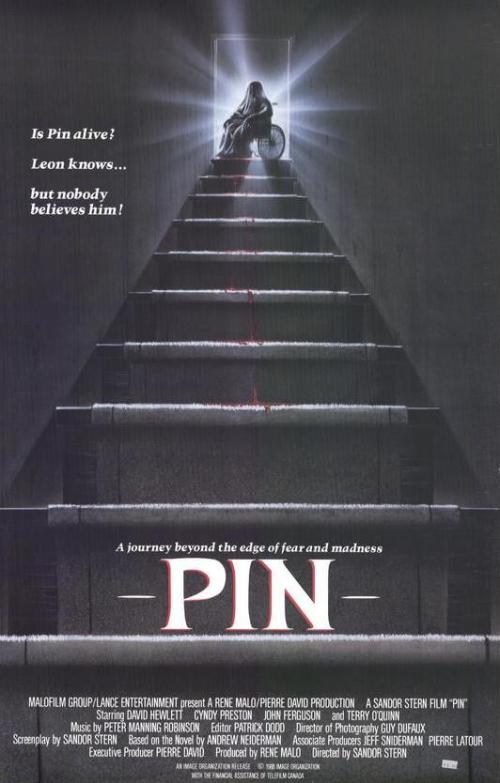
Leon (David Hewlett) and Ursula (Cynthia Preston) are brother and sister growing up in a large home run by their stern father (Terry O’ Quinn) who works as a doctor and has an anatomically correct dummy named Pin in his office. Sometimes to entertain the children he gets the dummy to talk, by throwing his voice to make it seem like it’s the dummies. As the children get older Leon remains convinced that the dummy can speak and begins to have an unhealthy fixation with him that concerns his sister. When the parents end up dying in a tragic car accident the sister and brother get the house all to themselves and Leon becomes even more possessive about Pin and anyone who dares make fun of him or Pin pays the ultimate price.

This intriguing film manages to be captivating throughout thanks mainly to an intelligent script and some excellent performances by its two leads. The casting is top-notch including the fact that the different actors who represent Leon and Ursula as they grow from children to young adults look very similar, which is a major achievement since many other movies aren’t as adept with this and cast child performers that do not effectively resemble their adult counterparts.

It’s also refreshing that Leon’s character is not a complete derelict, but instead quite cultured and educated, which makes his weird child-like fixation with the dummy all the more creepy. I also enjoyed O’Quinn as the father and the scene where he performs an abortion on his own daughter and tries to force his son to watch it is really twisted.

The scares though are lacking and there are only a couple of murders, which aren’t all that dramatic or impressive. Pin is also not frightening to look at and in fact becomes downright boring. Most horror films would’ve exaggerated some characteristic of the dummy to give him more of a creepy effect, which is what this one should’ve done. It also would’ve helped had there been a surreal moment where we saw things from Leon’s point-of-view and witnessed the doll actually speaking or even just moving.

Spoiler Alert!

The film’s ending though is the script’s weakest point. It involves Ursula attacking Leon with an ax after she realizes that he has just killed her boyfriend (John Pyper-Ferguson), but then the film cuts away making it confusing as to what happens. It then cuts to show Leon sitting in a wheelchair and having taken on the personality of Pin as apparently that’s who she cut up, but the film would’ve been more interesting had it shown the doll getting destroyed and even doing some of it in slow-motion especially since its devoid of much action otherwise.

The idea of a person taking the personality of an inanimate object that they earlier thought was real is nothing new. The same fate occurred to the Anthony Hopkins’ character in Magic where he played a ventriloquist who thought his dummy could talk as well as to another ventriloquist character in a classic episode of ‘The Twilight Zone’, which makes the twist here less interesting and almost predictable. A more surprising element would’ve been to have the dummy suddenly come to life when Ursula attacks it and then killing her.

It also seemed ridiculous that Leon would remain living in his large, stately home in a sort of vegetative state after being caught attempting to murder the boyfriend while apparently being cared for by a round-the-clock nurse is not believable as the cost of his medical care would dry up any funds that he had in his inheritance and making his continued stay at the home completely impractical. In reality the court appointed doctors would’ve deemed him mentally ill and a menace to society while also advising that he be sent away to a secure and monitored mental facility.

End of Spoiler Alert!

My Rating: 5 out of 10

Released: November 25, 1988

Runtime: 1Hour 43Minutes

Rated R

Director: Sandor Stern

Studio: New World Pictures

Available: DVD

The Beast Within (1982)

beast-within

By Richard Winters

My Rating: 3 out of 10

4-Word Review: Teen turns into monster.

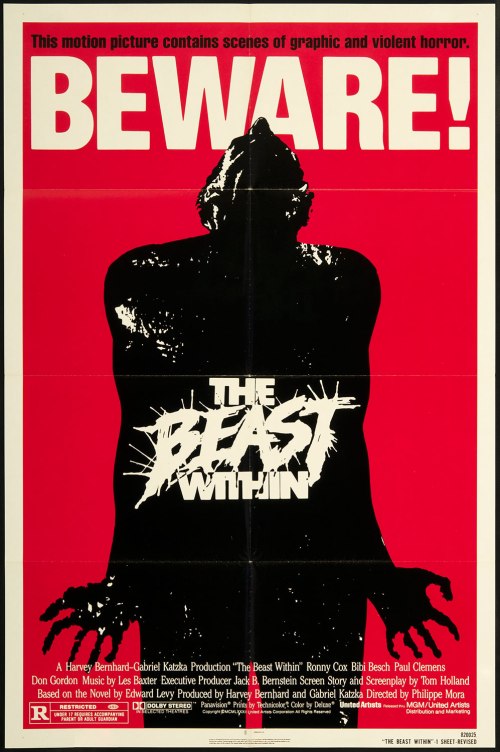
On the night of their honeymoon Eli and Caroline (Ronny Cox, Bibi Besch) become stranded on the side of a road. Eli goes for help while Caroline remains in the car only to end up getting raped by a mysterious beast that escapes from a nearby farmhouse. 17 years later Michael (Paul Clemens), who became the product of that ugly incident, begins to show signs of erratic behavior that doctors are unable to find the cause to. Eli and Caroline decide to go back to Nioba, Mississippi where the assault took place in order to find out who it was that raped her and see if he or his family may have any genetic abnormalities that Michael may have inherited. However, before they can do anything Michael’s condition worsens and he changes into a monstrous, homicidal maniac that resembles the spirit of an abused child that had long ago been buried away by the townspeople.

One of the pluses to this film is its supporting cast that is filled with B-movie regulars who do their best to liven up the proceedings with their eccentric characterizations. Logan Ramsey is a lot fun as the town’s newspaper editor and in some ways proves even more entertaining as a corpse. R.G. Armstrong is good as the town’s physician and I especially liked his squeeze toy. Luke Askew has a few choice moments as an embalmer and Don Gordon, who wears a wig, has a solid bit near the end as a corrupt judge.  John Dennis Johnston as an overprotective father and L.Q. Jones as the sheriff help round it out.

Unfortunately the three leads are boring although I was amused at how much Besch resembles actress Eleanor Parker who was star Clemen’s mother in real-life. Clemens though as an actor is weak and looks too creepy from the beginning especially his eyes which make his transformation into a monster less dramatic and would’ve worked better had he had more of a clean-cut blonde, blue-eyed look.

Tom Holland’s script tries to cover every type of horror niche by treating the viewer to elements of southern gothic, ghost stories, possession, monsters, slashers and gore, which may sound interesting, but eventually becomes overplayed. There are also some loopholes to it that doesn’t quite make sense and the rape segment shouldn’t have been shown right away, but instead used as a flashback later on. Also, Michael is described by his father as being ‘normal kid’ who never showed any signs of odd behavior, but it would’ve been more vivid had we seen him as a regular teen instead of it starting out with him already acting strangely.

The transformation scene in which Michael turns into a grotesque looking creature might actually make you sick to your stomach, but it’s impressive. This was the first film to use air bladders, which were made up of condoms that were connected to air hoses that were put underneath the actor’s face casting and then inflated to give the appearance of the skin ‘bubbling’, which is pretty cool and worth checking out for this scene alone, which is by far the best moment in the movie.

My Rating: 3 out of 10

Released: February 12, 1982

Runtime: 1Hour 38Minutes

Rated R

Director: Phillippe Mora

Studio: United Artists

Available: DVD, Blu-ray, Amazon Instant Video, YouTube
The Walking Stick (1970)

walking-stick

By Richard Winters

My Rating: 4 out of 10

4-Word Review: Polio victim becomes pawn.

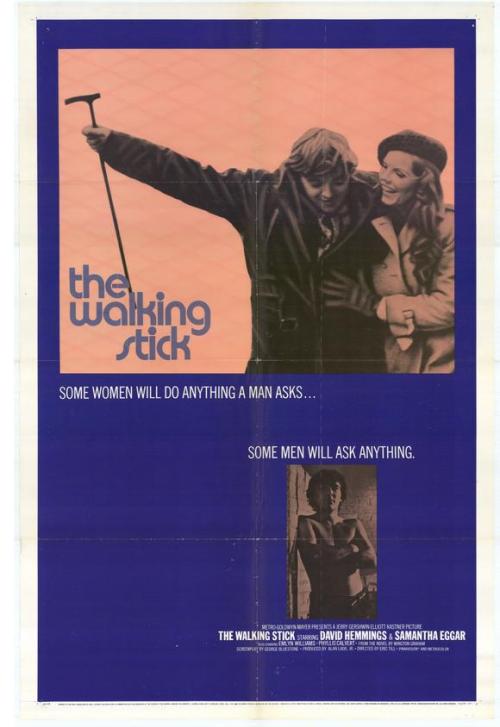
Deborah (Samantha Eggar) is a shy, lonely woman who suffered from polio as a young girl and now must rely on the use of a cane to get around. She still lives with her parents while suffering from claustrophobic tendencies due to being locked inside an iron lung as a child. She meets Leigh (David Hemmings) a struggling artist at a party and he asks her out. Initially she resists his advances, but eventually gives in. The two form a tight bound and even move in together, but her fairytale romance is short-lived once she realizes that she’s been pegged as a pawn and simply used by his gang for her inside knowledge of the auction house where she works to pull off a daring robbery.

The film, which is based on the novel by Winston Graham, is quite leisurely paced. To a degree I didn’t find this to be a problem as it still managed to hold my interest, but too much time is spent on the romance making it seem more like a drama.

The robbery and its planning doesn’t come into play until well over an hour in and seems like a whole different movie altogether. Certain hints should’ve been brought in from the beginning to make it clear to the viewer that despite all the romance this was still meant to be a thriller, which is just not obvious at all. The crime scenes do at least provide some action and quick edits, which normally would’ve made it exciting, but because it takes so long to get there it comes off as off-putting instead. The intended tension doesn’t work because we are less concerned if Leigh and his gang are going to get away with it and more upset at seeing Deborah being taken advantage of.

Eggar gives an outstanding performance and seeing this normally effervescent woman wearing a perpetual frown seemed almost startling, but she conveys her characters inner unhappiness quite well and mostly through her facial expressions alone. However, her character is also quite cold and acerbic. To a degree this is understandable as it’s clearly just a defense, but the viewer never sees enough of her softer side and therefore doesn’t emotional bond with her as they should.

Hemming’s more outgoing personality creates a nice contrast to Eggar’s introverted one, but his character is pretty benign. Dudley Sutton who plays his cohort would’ve made a better boyfriend as he is good at showing a dark side and would’ve kept the viewer more on edge.

The ending doesn’t provide any type of clear wrap-up and leaves a lot of loose ends hanging, which is a pity. The production values are decent and I liked the flashback scenes showing Debora being put into an iron lung, which is the film’s best cinematic moments, but the pace needed to be tighter with more emphasis placed on the story’s twists and turns.

My Rating: 4 out of 10

Released: April 15, 1970

Runtime: 1Hour 41Minutes

Rated GP

Director: Eric Till

Studio: MGM

Available: DVD-R (Warner Archive), Amazon Instant Video

Puberty Blues (1981)

puberty-blues-2

By Richard Winters

My Rating: 6 out of 10

4-Word Review: Girls can surf too!

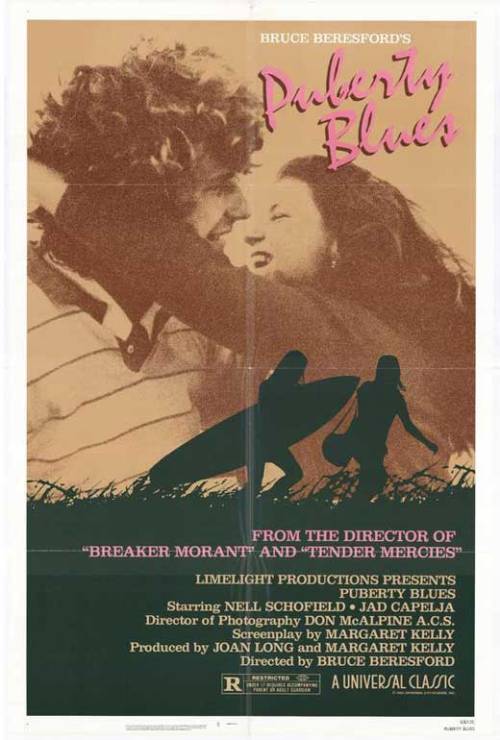
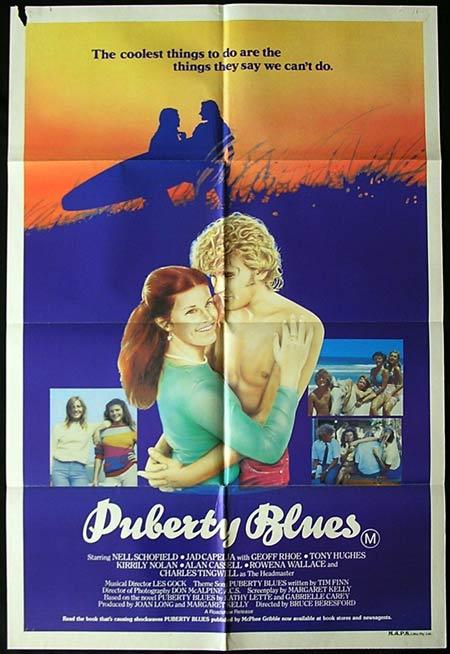
Debbie and Sue (Nell Schofield, Jad Capelja) are best friends attending high school in the south suburbs of Sydney. They desperately want to fit-in with the surfer group, but find that this means being pressured into having sex and experimenting with drugs and alcohol that starts to take its toll on both their grades and family life. When Debbie thinks she’s gotten pregnant by Gary (Geoff Rhoe) and he responds with indifference she realizes that the surfers aren’t as cool as she thought and pledges to become more independent by trying to do some surfing of her own, which she is told ‘girls can’t do’.

The film is based on the novel by Gabrielle Carey and Kathy Lette who became best friends at age 12 and at 16 began writing stories based on their high school experiences. While attending a writer’s workshop they met Margaret Kelly who worked as a writer in television and was impressed with the girl’s output. She got their stories optioned into a screenplay while the girls went on to write a weekly newspaper column under the byline of The Salami Sisters and their stories were eventually published into a novel. The big change between the movie and the novel is that in the book the girls were only 13 while in the movie it gets upped to 16 since that was Australia’s age of consent.

Director Bruce Beresford ends up tearing away the mystique from teen life in much the same way that he did to suburbia in Don’s Party, which leaves the viewer with a far more caustic take on the high school experience than the Hollywood version, which tends to play up the teen scene like it’s just one big raucous party. Here the cool kids are vapid, crass creatures who are unable to hold any type of interesting conversation. Their parties are lifeless affairs where they aimlessly sit around and get drunk because they have nothing better to do while the sex is shown to be an unpleasant experience for the girls who get pressured into doing it before they’re ready and leave feeling used afterwards.

This was more the way I remembered high school being and I was impressed with the film’s honesty, but the pace is too leisurely and not enough happens. There is some drama when Debbie thinks she is pregnant, but it takes an entire hour just to get there and a comical segment dealing with a goofy fight amongst the surfers, which was not in the book, is completely unnecessary.

The film though does have some funny bits including a scene where Debra brings her boyfriend Bruce (Jay Hackett) over to meet her parents (Kirrilly Nolan, Alan Cassell) as well as the shots showing the interior and exterior of Bruce’s van. This though gets coupled with an uncomfortable moment dealing with a homely girl (Tina Robinson Hansen) who gets tricked into getting into the guy’s van where she is forced into a gang bang before being coldly thrown onto the curb afterwards.

The best part is the ending where the girls grow in confidence and become unafraid at challenging the status quo. Seeing the shocked expressions  of the cool kids as they watch the girls get on surf boards for the first time and succeed at something they were told only guys could do is a treat and makes the rest of the film worth sitting through.

Many years later this movie spawned a TV-series as well as a special that aired in 2012 on Australian TV where Nell Schofield traveled back to the locations where the film was made. Unfortunately her costar Jad Capelja was not present as she had already killed herself in 2010 after spending years battling drug addiction and mental illness.

puberty-blues-1

My Rating: 6 out of 10

Released: December 10, 1981

Runtime: 1Hour 27Minutes

Rated R

Director: Bruce Beresford

Studio: Roadshow Film Distributors

Available: VHS, DVD (Pal Region 0), Blu-ray (Region B/2)

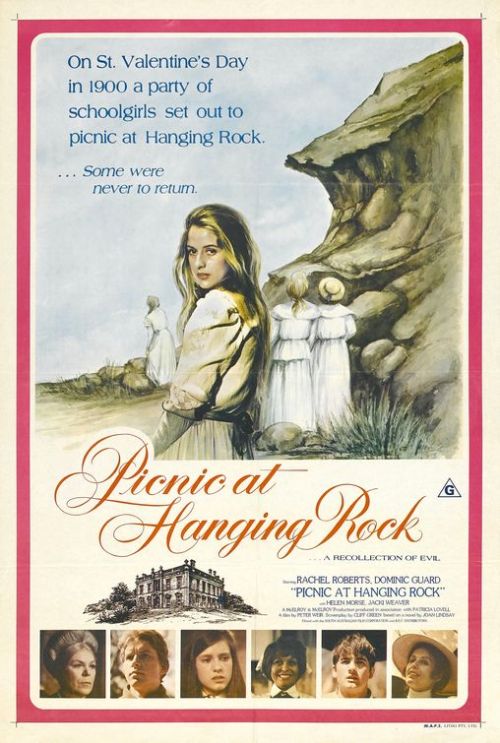
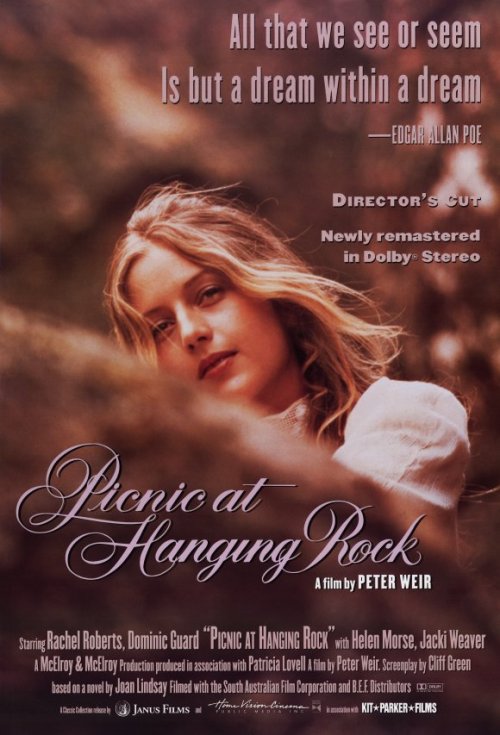
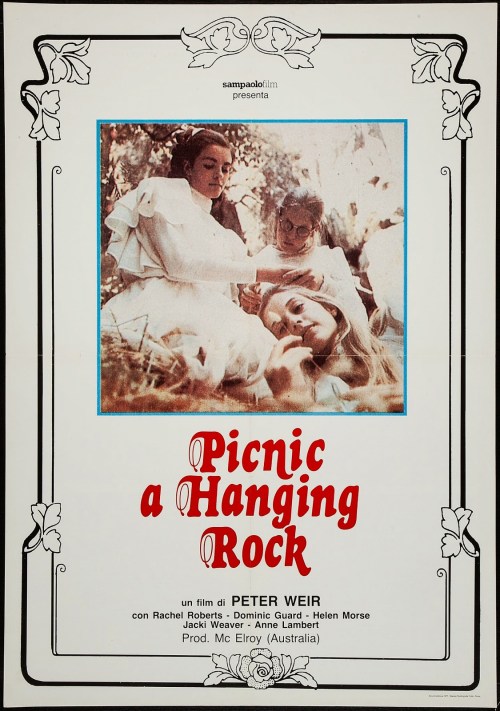
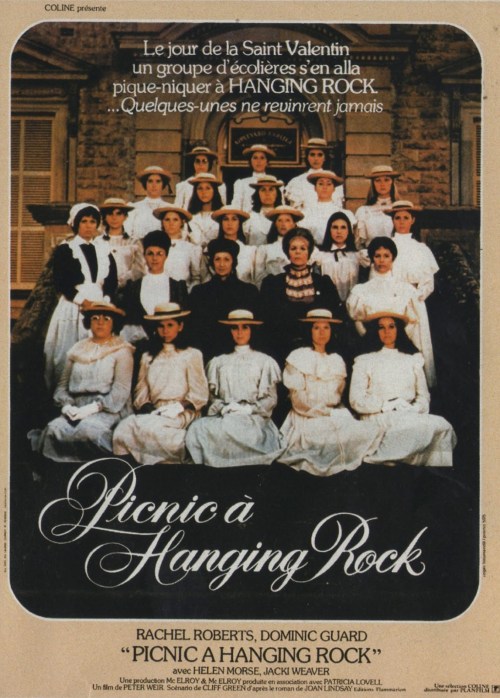
Picnic at Hanging Rock (1975)

picnic-at-hanging-rock-1

By Richard Winters

My Rating: 6 out of 10

4-Word Review: Where are the schoolgirls?

On Valentine’s Day in the year 1900 a group of Australian schoolgirls and two teachers (Vivean Gray, Helen Morse) set out to a rock formation known as Hanging Rock for a picnic. While there one of the girls named Miranda (Anne-Louise Lambert) decides to go exploring and three of the other girls follow. They proceed to climb the rocks, which frightens one of the girls (Christine Schuler) who runs back. By that evening the other three haven’t been located and a search party goes out by the local police to find them, which only leads to more questions than answers.

If one is in to mood pieces then this thing will be the perfect fit. The music and director Peter Weir’s ability to capture the rock formations in a way that makes them seem creepy and menacing is very well done. I found myself being strangely captivated most of the way while also impressed that the whole thing gets captured through a camera lens with a piece of bridal veil hung over it.

The story is based on the 1967 best-selling novel of the same name by Joan Lindsay. Despite many rumors to the effect and a follow-up novel called ‘The Murders at Hanging Rock’ this was not in any way based on a true story. Originally Lindsay wrote a resolution to the mystery that had the girls entering into some sort of time warp, but at the last minute that chapter was excised at the suggestion of her publisher, but then later published in 1987 as ‘The Secret of Hanging Rock’.

picnic-at-hanging-rock-2

The film on the other hand offers no resolution of any kind. Instead like in the book the main emphasis is on how the disappearance affects the people at the school and in the town. Rachel Roberts is a standout in this area playing the strict headmistress Mrs. Appleyard who initially comes off as quite composed and in control, but as the toll of the mystery continues her character unravels in increasingly more shocking ways, which is the film’s highlight.

Despite its cult following and the fact that it is included in the book ‘1001 Movies You Must See Before You Die’ I still came away frustrated and feeling like not enough happened to justify having to sit through two hours of viewing. On the technical end it is excellent and watching the different ways people cope and respond to the mystery is interesting, but this could’ve been played up a lot more.

Sometimes movies with vague endings are good as life doesn’t always give us nice and tidy wrap-ups, but this is one instance where it would’ve been better had there been more of a conclusion even if it had just thrown out some clues and then allowed the viewer to come to their own deductions. To some extent it does this as supernatural elements are introduced as well as the idea that it might’ve been a sexual crime, but even this is off-putting because it’s not connected to anything concrete or tangible and thus makes it all the more evasive.

Had this been based on an actual mystery, which for years is what a lot of people thought, then it would’ve been more acceptable and even fascinating, but the fact that it’s all made up hurts it and tears away the mystique that for a long time it relished under.

picnic-at-hanging-rock-3

picnic-at-hanging-rock-4

My Rating: 6 out of 10

Released: August 8, 1975

Runtime: 1Hour 47Minutes (Director’s Cut)

Rated PG

Director: Peter Weir

Studio: The Australian Film Commission

Available: DVD (Criterion Collection), Blu-ray (Region B/2), Amazon Instant Video, YouTube
picnic-5

This is a 2014 pic of Anne-Louise Lambert, who played Miranda in the film, sitting at the location of where the movie was filmed.

The Good Mother (1988)

good-mother

By Richard Winters

My Rating: 4 out of 10

4-Word Review: She losses her daughter.

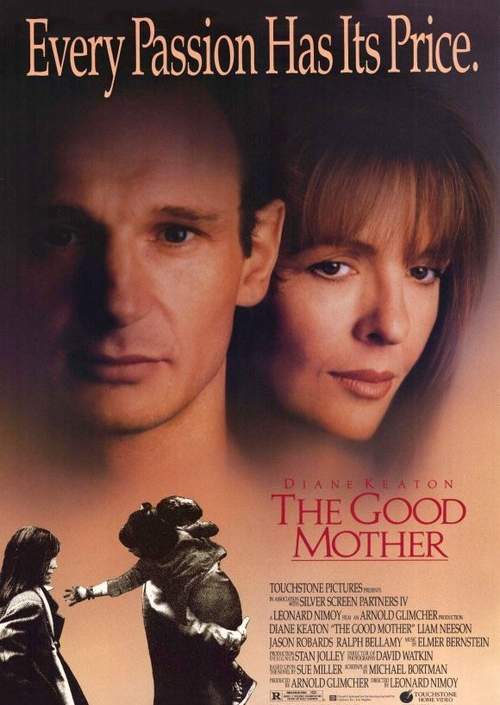
Anna (Diane Keaton) is a frigid woman who divorces her husband Brian (James Naughton) of many years and gets joint custody of their 6-year-old daughter Molly (Asia Vieira). After spending some time being single she meets up with an artist named Leo (Liam Neeson) who opens her up to a whole new sexual awakening. Her new liberated lifestyle affects her daughter as well. When Molly catches Leo getting out of the shower naked she inquires if she can touch his penis, which he allows and then later she crawls into bed with the couple as they make love. When Brian hears about this he demands full custody, which pits Anna against Leo as she fights the system to keep her daughter.

Keaton’s performance is the best thing as she plays the mother role for the third time in a decade and the exact reverse predicament of the character that she portrayed just before doing this one where she got stuck with a child that she didn’t want while here she loses one. I enjoyed Neeson’s Irish accent and Vieira is cute while it’s great seeing old-timers Ralph Bellamy and Teresa Wright in supporting roles.

Leonard Nimoy’s direction is solid for the most part. He was just coming off tremendous success with his earlier hit 3 Men and a Baby, so it was nice to see him take a creative challenge by tackling a different genre.  The story’s sensitive subject matter  is handled well including most importantly the scene showing the girl in bed with the two adults although the various other moments showing Anna’s and Leo’s intimacy is a little uncomfortable, but still captured tastefully without ever feeling that it is being overtly erotic.

The film’s biggest failing is the story itself. Although based on the best-selling novel by Sue Miller it doesn’t have enough twists to be compelling or enough of a visual quality to be cinematic. Too much time is spent at the beginning dealing with Anna’s childhood experiences with her cousin Babe (Tracy Griffith) that only has a thin connection to the rest of the plot and could’ve easily been cut and simply alluded to instead. The courtroom scenes lack impact and offer no new interesting revelations. The film also doesn’t bother to show two of the story’s most dramatic moments, which is when Molly tells her father about her experiences with Leo, or when Anna confronts Leo about it later, which to me should’ve been a must.

The ending leaves little impact making me wonder what point the filmmakers where trying to convey, or why a viewer should sit through it especially since it’s not based on a true story and meanders too long just for it to come to a very vague resolution.

My Rating: 4 out of 10

Released: November 4, 1988

Runtime: 1Hour 43Minutes

Rated R

Director: Leonard Nimoy

Studio: Touchstone Pictures

Available: DVD, Amazon Instant Video, YouTube
Walkabout (1971)

walkabout 1

By Richard Winters

My Rating: 7 out of 10

4-Word Review: Lost in the outback.

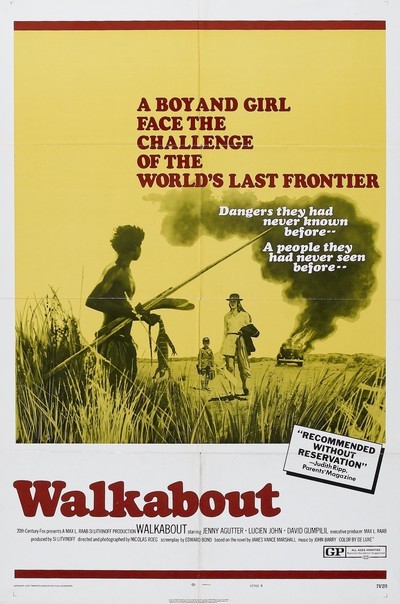
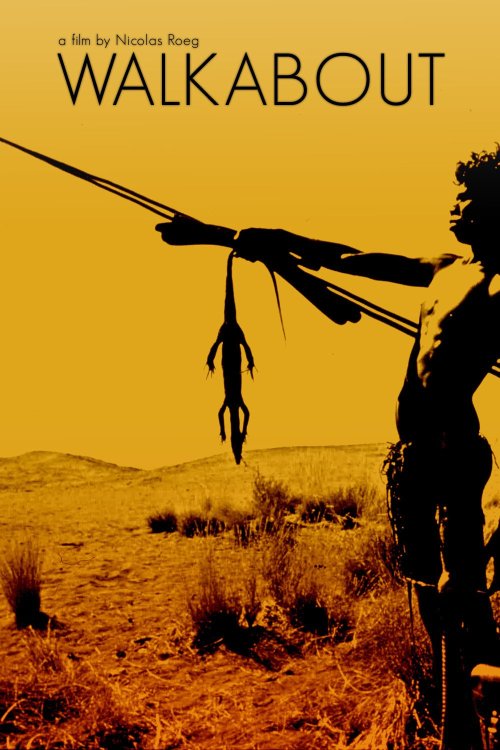
A teenage girl (Jenny Agutter) and her younger brother (Luc Roeg, but billed as Lucien John) find themselves trapped amidst the harsh climate of the Australian outback. After spending a couple of days walking in the heat they manage to come upon a watering hole, but find to their horror that it dries up overnight. Feeling almost ready to give up they spot an aborigine (David Gulpilil in his film debut) marauding through the desert as part of his walkabout where young men are cast off into the wilderness for several months as part of their journey to manhood. He helps find them water, food and shelter, but eventually the cultural differences between the three and their inability to effectively communicate become a problem.

The legendary Nicholas Roeg makes his directorial debut here and even casts his own son, who is excellent, as the 9-year-old boy.  The way the camera captures the desert by focusing on the different types of animal life and rock formations is impressive.  I also enjoyed the editing which cuts back and forth between the desert and modern civilization while examining how each are uniquely connected and commenting on how our advanced culture has made us regress and less able to survive the savage elements that our ancestors were able to.

There are also scenes of animal cruelty as the aborigine hunts a kangaroo by first injuring him and then, as the animal gives out a whimpering cry, he spears it. Later the viewer is shown scenes involving big game hunters who mow down water buffalo for sport while graphically slitting their throats.

The film was controversial for capturing Agutter, who was only 17 at the time that this was filmed, in the nude while swimming at a watering hole. The actress felt uncomfortable doing the scene and required only the minimum of the crew to be present while it was shot. To me the scene was unnecessary as it didn’t fit the character who was prim and proper and didn’t at all come off like the type of person who would suddenly become carefree and risk being spotted by the aborigine that she really didn’t know or the ‘embarrassment’ of being seen by her younger brother. The camera stays on her naked body far longer than needed and comes off like shameless voyeurism.

I had the same issue with the scene involving researchers at a weather station that resembles footage to a soft core porn flick instead as the men ogle the only woman in their group, become overtly aroused at glimpses of her bosom and in one truly absurd moment even has one of the them sucking on her finger. I realize scientists have sex drives too, but I would think they would be able to behave in a professional capacity when on the job and not act like they hadn’t gotten laid in years and like with the swimming sequence this scene has nothing to do with the main story and could’ve been cut out completely.

The presence of the radio weakens the story as well as supposedly they’re in the middle of nowhere and miles from civilization and yet somehow are able to pick up different radio stations that come in crystal clear without any static, which would mean that they must be much closer to a city than it seems and thus hurts the desolate feeling that the film otherwise tries hard to create.

Spoiler Alert!

The film is based on a 1959 novel of the same name that was written by Donald Gordon Payne under the pseudonym of James Vance Marshall. The script though differs from the book in two major ways, one of which I liked and the other I didn’t.

The first difference involves the reason for how the two children get stranded. In the book they are victims of a plane crash, but in the film it is because their father tries to kill them, which is offbeat and sends the message that this movie will be different from any you’ve seen before, which I liked. Normally I would’ve wanted an explanation for his behavior, but by keeping it a mystery it elevates the intrigue and if anything was a far more creative explanation for their predicament than the formulaic plane crash one.

However, the way the aborigine dies is ludicrous. In the book he is stricken with the flu virus that was inadvertently passed onto him by the boy, but in the movie he ends up killing himself when the girl does not respond to his attempts at courtship, which seemed excessively rash.

Rejection is a part of the human experience and transcends all cultures. Everyone will have to deal with it at some point in their lives. If everyone killed themselves the minute they are rebuffed by someone they were attracted to then virtually no one on would make it past adolescence. The idea that a normal, healthy and otherwise happy young man with no signs of mental illness, and the film does not show him as having any so we must assume that he doesn’t, would suddenly off himself over a girl he has just met and barely knew is absurd. In reality he probably would’ve just gotten frustrated and left them stranded while going back to his own tribe where I presume he’d meet other women who he’d bond better with due to being more culturally connected and most likely would’ve found more attractive anyways.

End of Spoiler Alert!

walkabout 2

My Rating: 7 out of 10

Released: July 1, 1971

Runtime: 1Hour 40Minutes

Rated R

Director: Nicholas Roeg

Studio: 20th Century Fox

Available: DVD, Blu-ray, Amazon Instant Video

The Sterile Cuckoo (1969)

sterile cuckoo 1

By Richard Winters

My Rating: 7 out of 10

4-Word Review: This relationship is doomed.

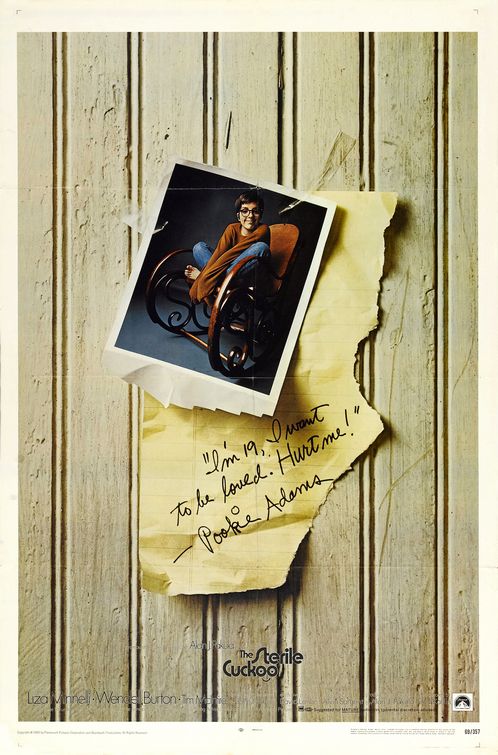
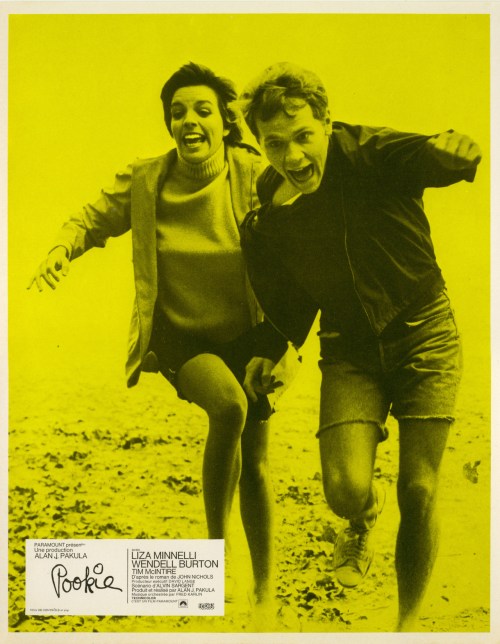
Mary Ann Adams (Liza Minnelli), who goes by the nickname of Pookie, is a complete social misfit who can’t fit-in anywhere.  As she waits at a bus stop to go off to college she meets Jerry (Wendell Burton) a shy and reserved young man who just happens to be attending the same school as she. Pookie immediately starts up a conversation with him and takes full advantage of his quiet nature to force herself into his life. The two soon begin to date, but Pookie’s inability to get along with others and her extreme insecurities make it almost impossible for the fledgling relationship to get off the ground.

This film marks the directorial debut of Alan J. Pakula and the result is nothing short of excellent. This is the type of movie that they don’t seem to make anymore where great sensitivity is taken to focus on a broken individual, but without ever making fun or demeaning them in anyway. The film’s pace is slow, but never boring and the emphasis is almost entirely on the nuances of its two leads. It also features one of the best and most memorable movie soundtracks to come out of the ‘60s.

The film is based on the novel of the same name that came out in 1965 and was written by John Nichols. It was even shot at Hamilton College in Clinton, New York where Nichols graduated in 1962. For the most part the script, by the prolific Alvin Sargent, stays quite faithful to the book with the only real big difference being that the story here encompasses only one year while in the book it was three. To me this revision was an improvement because the relationship was clearly doomed from the beginning and I couldn’t imagine it somehow lasting for three years let alone one to begin with.

Minnelli’s performance is Oscar worthy and the scene where she has a long talk on the phone with Jerry and the camera stays solely focused on her face is one the strongest moments in the movie and could only have been pulled off by a brilliant actress who somehow makes the viewer empathetic to this otherwise annoying character.

Burton, in his film debut, is equally strong and watching the two characters with such contrasting styles dealing with each other is the main catalyst that propels the story. Tim McIntire, as Jerry’s college roommate, is quite good as well playing the perfect composite of a partying college kid while also offering one of the film’s few moments of levity.

Some viewers have complained that the film lacks any wintertime shots even though the story takes place in Upstate New York where snow is inevitable and the story is supposedly spread over one full school year, but to me this is nitpicky. Clearly the film’s budget didn’t allow for shooting over an entire year and it wasn’t necessary anyways. The film captures the forestry region in such a vivid way that it almost becomes like a third character. It also in my mind made it more believable because I never felt this wacky, makeshift romance could last a full year and at best might’ve only existed for the fall semester before inevitably petering apart.

For me the only real criticism is the fact that we learn very little of about Pookie’s personal life. She mentions her relationship with her father quite a lot and we see him for a brief period at the beginning, but then that’s it even though it would’ve helped the viewer understand the character better had a backstory, or scenes involving her family life been shown.

The film is also incredibly sad to the point that it will make just about any viewer depressed after seeing it. On the technical end it’s flawless, but Pookie’s feelings of loneliness and the character’s extreme isolation eventually reaches out and sucks the viewer into it without any let up and it remains with them long after it’s over.

sterile cuckoo 2

My Rating: 7 out of 10

Released: October 22, 1969

Runtime: 1Hour 48Minutes

Rated M

Director: Alan J. Pakula

Studio: Paramount Pictures

Available: DVD, Blu-ray, Amazon Instant Video, YouTube