Category Archives: Movies Based on Novels

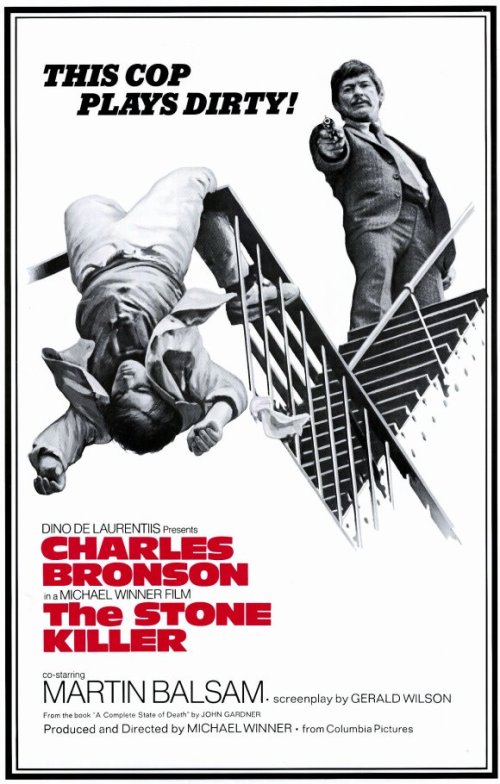
The Stone Killer (1973)

By Richard Winters

My Rating: 5 out of 10

4-Word Review: Tough cop is relentless.

Lou Torrey (Charles Bronson) is an old-school cop baffled by a rash of homicides that initially seem like random hits, but really aren’t. As Lou investigates further he uncovers a plot orchestrated by a Mafia Don (Martin Balsam) to use a group of Vietnam Vets to avenge the death of some Mafia families 42 years earlier.

Director Michael Winner, during his later directing projects, became synonymous with stale, cardboard B-pictures and after the year 2000 he dropped out of the movie business completely and became a celebrity food critic in the UK writing in a weekly newspaper column called Winner’s Dinners. Here though he shows signs of being a young talent on the rise looking to make his cinematic mark. He captures the lesser seen areas of L.A. with a flair and the shot selection has style that manages to seamlessly connect the film between its talky moments and action.

Bronson though can’t really act as his facial expressions rarely change and he says his lines in an unemotional way making him seem almost like a computer, but his hard-headed personality in real-life carries over to the big screen making him a perfect fit personality-wise to the character. John Ritter is good as a young cop caught making a lot of rookie mistakes. It’s also interesting seeing Stuart Margolin here as he has an important sequence in the desert, which connects with his appearance  in another Bronson hit Death Wish that also had him in the sandy landscape.

The story, which is based on a novel by John Gardner entitled ‘A Complete State of Death’ comes off as flimsy and just an excuse to tie-in a lot of loosely related action sequences. The plot is hard-to-believe and the villain is more like a caricature and barely seen.

There’s some enjoyable moments including Bronson’ relentless chase in a car of a police suspect, played by Paul Koslo, who tries to evade him by tearing through the city streets on a motorbike. Watching Chuck drive through park tables with people trying jump out of the way,  going into oncoming traffic and even storefront windows is impressive on the surface, but ultimately makes the character come-off badly. In real-life a cop barreling his vehicle through areas with so much foot traffic would make him irresponsible and a menace to society as he puts too many people in direct danger simply for his pursuit of one person.  In most cases there would’ve been casualties and Bronson’s character could’ve easily been fired or sued.

The mass assassination of all the Mafia Dons has pizazz, but ultimately it’s just one giant marketing ploy as it borrows many elements from other hit movies of that time including Dirty Harry and The Godfather then blends it together with over-the-top action and a farfetched plot.

My Rating: 5 out of 10

Released: August 8, 1973

Runtime: 1 Hour 35 Minutes

Rated R

Director: Michael Winner

Studio: Columbia Pictures

Available: DVD, Amazon Video, Blu-ray
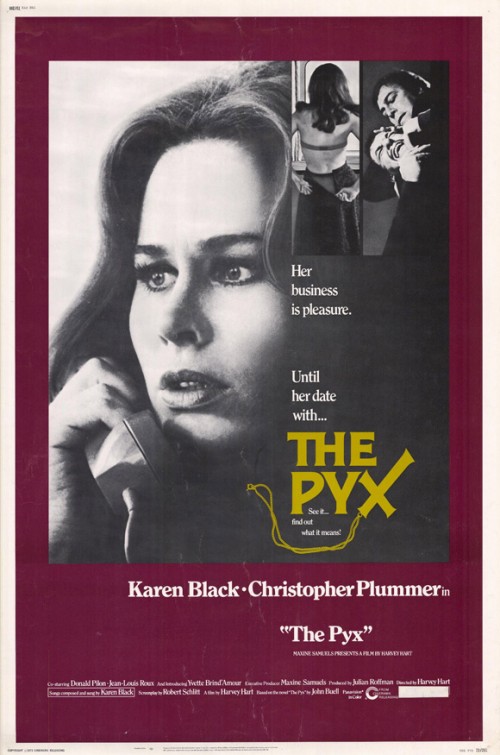
The Pyx (1973)

By Richard Winters

My Rating: 5 out of 10

4-Word Review: Religious cult wants prostitute.

A woman is seen falling from a high-rise tenant building to her death and Police Sergeant Jim Henderson (Christopher Plummer) is assigned to the case. When he inspects the body he finds that in her right hand she is holding a crucifix and in her left one is a small metal container known as a pyx. The victim is later identified as being Elizabeth Lucy (Karen Black) a heroin addict who works as a prostitute. The film then cuts back and forth between showing Elizabeth when she was still alive and the circumstances that lead to her death as well as Jim’s dogged search to find her killer, which may be connected to an underground religious cult.

The film, which is based on the novel of the same title by John Buell and shot entirely on-location in Montreal, has a nice eerie atmosphere.  The cutting back and forth between the two linear stories is interesting and this is the type of mystery that is complex, but not too much. There are just enough clues given to keep it intriguing without so much thrown in that it becomes convoluted. The slow pacing is okay because it keeps things on a realistic level and everything remains plausible and gritty.

Unfortunately the story has no payoff. The slow reveal of the religious cult offers nothing new or exciting and seems to be borrowing elements from other horror flicks that have dealt with the same theme. Except for a few brief moments the film is devoid of any action and the shootout on a yacht is edited in such a quick way that it’s hard to follow what happened. The overuse of nighttime shots gives the film a grainy appearance that looks more like it was a victim of a low budget and poor lighting.

The two leads give good performances and Plummer looks almost unrecognizable with a bowl haircut and appearing almost 20 years younger than he already was. The music was composed by Harry Freedman and star Black does the vocals, which is distinctive and gets the viewer into a spiritual mood, but there aren’t any frights and it’s hard to put this thing into any type of category as it’s really not a horror film at all.

Even as a standard mystery it’s only average and just enough to hold your interest. Ultimately it goes down a familiar path that we’ve seen too many times before and is devoid of any true shock or surprises.

My Rating: 5 out of 10

Released: September 13, 1973

Runtime: 1 Hour 47 Minutes

Rated R

Director: Harvey Hart

Studio: Cinerama Releasing Corporation

Available: DVD-R, Amazon Video

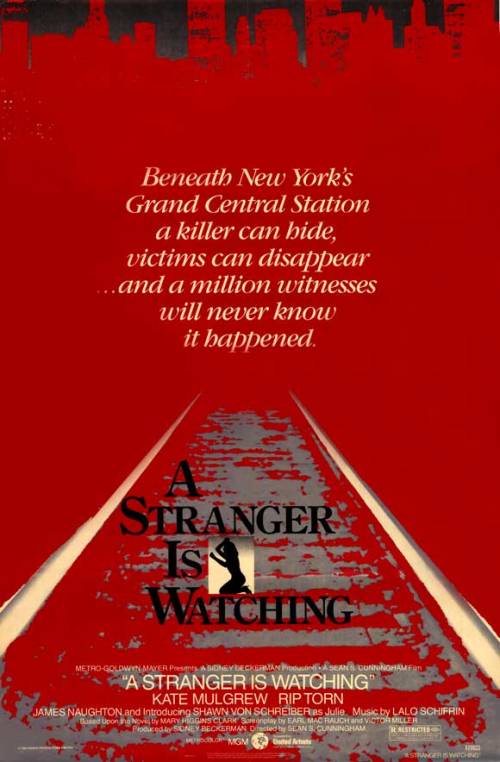
A Stranger is Watching (1982)

By Richard Winters

My Rating: 4 out of 10

4-Word Review: Her mother’s killer returns.

At the age of 6 young Julie (Shawn Von Schreiber) witnesses her mother’s rape and murder at the hands of Ronald Thompson (James Russo) at least she thinks that’s who it was when instead it was really Artie Taggart (Rip Torn). Now Ronald is slated to go to the electric chair and news reporter Sharon Martin (Kate Mulgrew) covers the controversy, but just before his execution Julie and Sharon are kidnapped by Artie. He takes them deep into the bowels of Grand Central Station where he holds them hostage while demanding a ransom of $182,000 from Julie’s Father (James Naughton).

The story is based on the Mary Higgins Clark novel of the same name and due to his success with Friday the 13th director Sean S. Cunningham is given a bigger budget to work with, which gives the production more of a visual style from the usual low budget horror flick. However, I was never convinced that Cunningham was all that great of a director and it was only through dumb luck that the Jason franchise became the big hit that it did and if anything this movie proves it. Even with more money put in and an interesting backdrop it still comes off as lackluster and uninspired.

The characters are boring particularly Torn’s psycho role where no backstory is given as to why he decides to come back to terrorize the same family when he was able to get away with the murder the first time and should feel lucky by allowing the other schmuck to take the fall and simply move on. Julie’s behavior is all wrong too. This is a child who witnessed her mother’s rape and murder, which would psychologically damage anyone else for life and yet she recovers from it like it was no big deal and acts overly angelic and gracious about everything.

The underground of Grand Central Station are the film’s best element as it captures the dank, dingy dankness quite well to the point that it almost becomes like a third character. However, when Torn kidnaps the two women he puts the girl into a sleeping bag and then carries her through the station in order to get to the spot where he hides her, but I kept wondering why she didn’t yell for help as they pass by many people in the process. He didn’t drug her, so she was free to yell out, so why doesn’t she?

I’ve read other novels written by Clark although not this one, but I was always impressed with the amount of twists that she had in them and was surprised how little that there are here. The film does feature one small surprise, but then treats it as a throwaway scene that soon gets forgotten. In the end the viewer gets treated to nothing more than a placid blueprint of the novel in a plot that gets more formulaic and pedestrian as it goes on.

My Rating: 4 out of 10

Released: January 22, 1982

Runtime: 1 Hour 31 Minutes

Rated R

Director: Sean S. Cunningham

Studio: MGM

Available: DVD, Amazon Video, YouTube

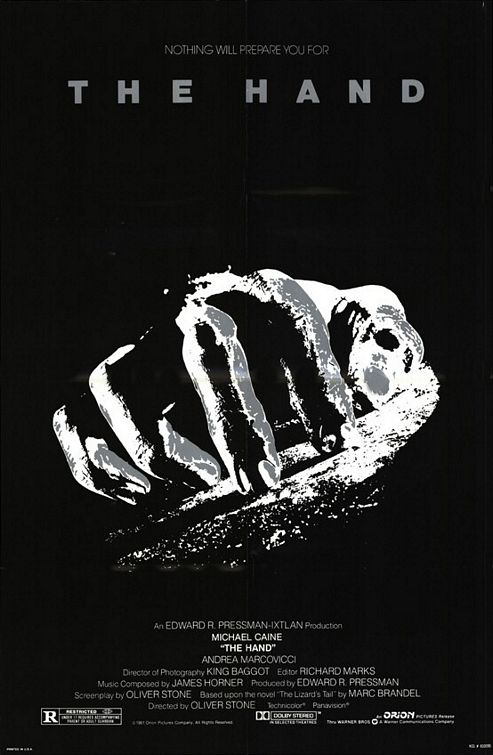
The Hand (1981)

By Richard Winters

My Rating: 5 out of 10

4-Word Review: He loses his hand.

Jon Lansdale (Michael Caine) is a gifted comic book illustrator who loses his hand in a freak car accident. They are unable to locate the missing limb at the scene and therefore unable to reattach, so he’s fitted with a prosthetic one made of metal. In the meantime the severed one goes on a murderous rampage killing all those that Jon has a problem with.

The film, which is based on the novel ‘The Lizard’s Tail’ by Marc Brandell, can best be described as an experimental horror and to some degree is quite intriguing. I liked the psychological subtext showing the hand as being a symbol to Jon’s subconscious and acting out the anger that he felt from others, but ordinarily too reluctant to do anything about. The story conveys a very universal message that we are in many ways two people, the one we choose to display to the world and the other more politically incorrect one that we try to hide from it.

Had it remained more on a subtle, intellectual side it might’ve worked, but showing the severed hand as much as it does is its biggest downfall. The scenes showing the hand strangling people looks quite tacky as instead of seeming like the victim is trying to pull the hand off of their throat it looks more like they are trying to hold it in place so it doesn’t fall off. It also brings up all sorts of unanswered questions like how is the hand able to move around so quickly and sneak inside buildings and cars and where does it get the strength to strangle people, or jump up to their throats when all the muscles connected to it have been severed away.

It would’ve worked better had the hand not been shown at all and kept a mystery as to what was causing the murders and then only at the end expose the hand as being the culprit, which would’ve made Jon’s final confrontation with it much more startling and impactful. An even better idea would’ve been to have the metal hand act as the one that does the killing since this one resembled Freddy Kruegar’s and looked far creepier.

Oliver Stone’s direction is interesting especially his technique of going from color to black and white and then back again, but the story drags on longer than it should and seems to give too much away. The twist at the end is great because it’s actually a logical one that makes perfect sense, but then at the last second Stone sells-out by throwing in tacky ‘second twist’ that is nothing but a gimmick that makes the whole thing seem too commercial.

On the acting side Caine is adequate, but I found his wavy hair far more fascinating than the hand and I especially enjoyed seeing how progressively disheveled it gets the more insane that he becomes. Andrea Marcovicci is standout as his wife. Initially I thought she was too young to play his spouse as there was a 16 year difference between the two, but her very expressive face particularly her blue eyes and the way it conveys fear helps heighten the suspense.

My Rating: 5 out of 10

Released: April 24, 1981

Runtime: 1 Hour 44 Minutes

Rated R

Director: Oliver Stone

Studio: Orion Pictures

Available: DVD, Amazon Video, YouTube

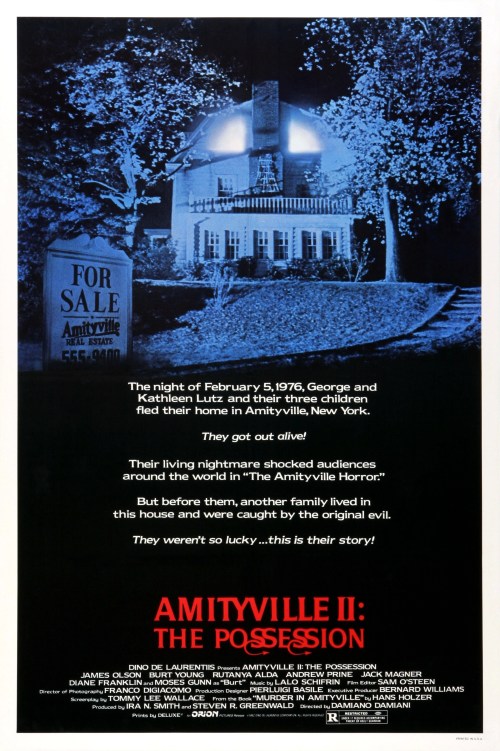
Amityville II: The Possession (1982)

By Richard Winters

My Rating: 1 out of 10

4-Word Review: Their son becomes possessed.

A family moves into the infamous home at 112 Ocean Avenue in Amityville, New York only to immediately start encountering paranormal events. Their eldest kid Sonny (Jack Magner) begins to display anti-social tendencies that eventually drive him to kill the entire family late one night. The family’s Priest Father Adamsky (James Olson) is convinced that Sonny did it because he was possessed from evil spirits that inhabit the home due to it being built on an ancient Indian burial ground and he takes it upon himself to perform an exorcism on the young man in order to free him of the demon.

The film is loosely based on the events of the DeFeo family, who lived at the residence, and was murdered by their eldest son on the night of November 13, 1974. However, the film deviates from what actually occurred including having the family just recently moved in when in reality the DeFeo’s had lived there for 9 years before they were killed. The film also portrays the family members as being awake and aware of what was going on when evidence had shown that most of them had been asleep when shot. There’s also a side-story dealing with a sexual relationship that Sonny had with his sister Patricia (Diane Franklin) that was only speculated never confirmed to have occurred with the real family.

This movie is only a slight improvement from the first one. Director Damiano Damiani manages to instill more of an atmosphere and uses fast moving tracking shots to create a point-of-view perspective of the demons. Also, James Olson plays the Priest role better than Steiger did in the first one by being less hammy and more understated, which is good.

Yet I still found the whole thing to be quite boring. The first half-hour is just a rehashing of many of the same scares that were done in the first one and we all know from the beginning how it’s all going to turn out, that the son will inevitably kill the family, so there’s no intrigue at all. The final half hour deals solely with the exorcism, which despite some decent special effects, is nothing more than a Grade B rip-off of The Exorcist.

There’s a lot of overacting too just like in the first one. Rutanya Alda, who plays the mother, is the biggest culprit in this area, which includes her death scene that deserves to be in the annals of all-time cheesiest death sequences ever put onto film. I was also confused why such an otherwise normal, well-adjust woman would want to marry a lout like Burt Young and having her show affection to him not more than a couple minutes after he had abused both her and the kids with a belt is misguided.

On the technical end the film seems to be done on a higher budget than the first, but the script is empty-headed and relies heavily on broad generalizations involving religion and ‘evil’. I also found it amusing that, like in the first installment, there’s a scene were the Priest tries to convince his church elders about the home being haunted and they scoff and insist that isn’t ‘rational’ when these same men have dedicated their lives to a profession steeped in supernatural, faith based claims.

My Rating: 1 out of 10

Released: September 24, 1982

Runtime: 1 Hour 44 Minutes

Rated R

Director: Damiano Damiani

Studio: Orion Pictures

Available: DVD, Blu-ray (Region B/2), Amazon Video

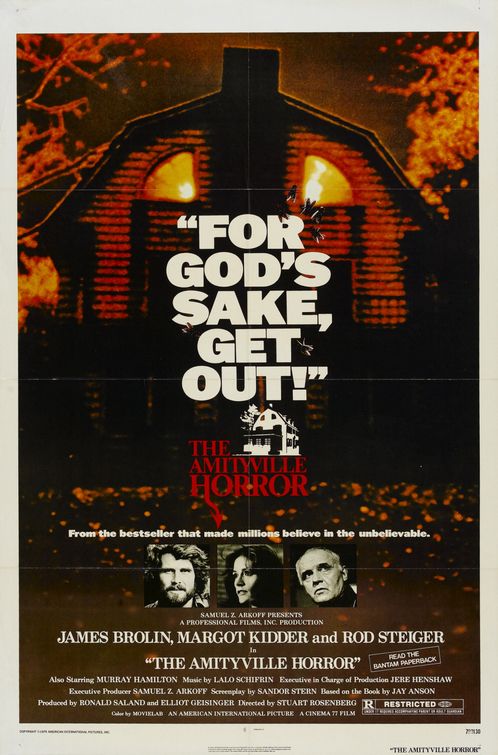
The Amityville Horror (1979)

By Richard Winters

My Rating: 1 out of 10

4-Word Review: Their house is haunted.

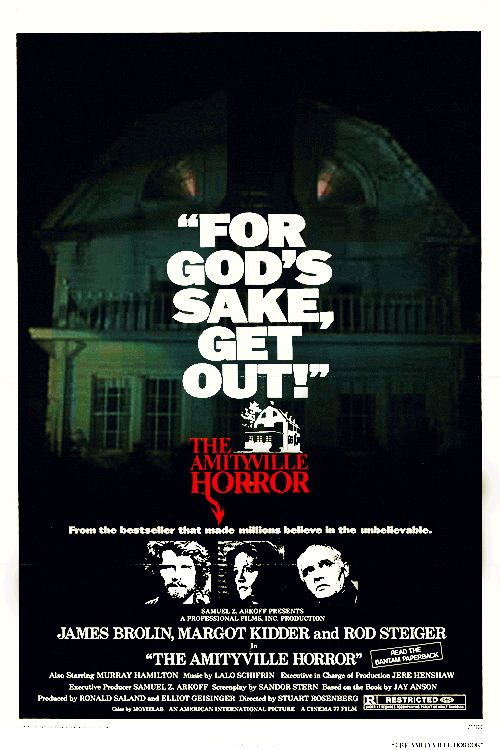
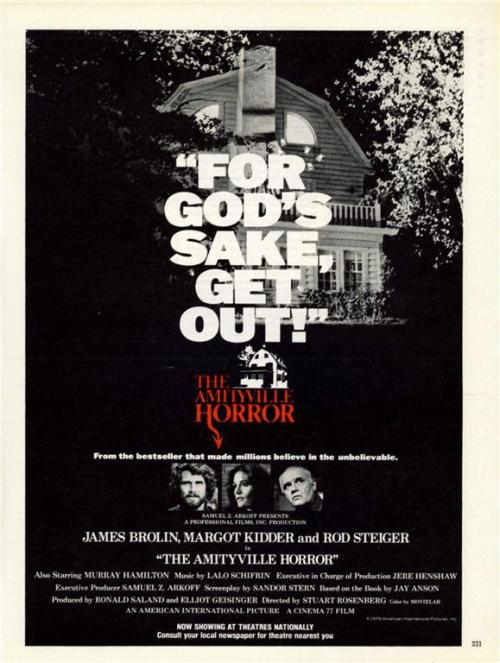
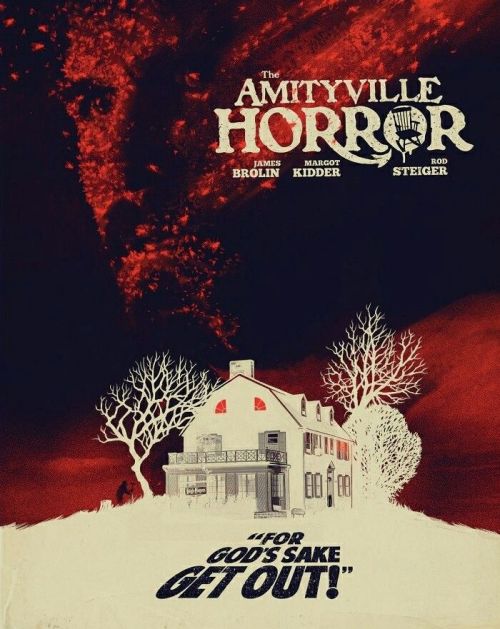
Kathy and George Lutz (Margot Kidder, James Brolin) move into a large home that just a year earlier was the place of a gruesome homicide of six people. Though the idea of living where these murders occurred is unsettling they cannot beat the home’s price, so they take the offer. Soon there are bizarre occurrences and George begins to behave like he is becoming possessed convincing the young family that the place is haunted and they need to move out before it is too late.

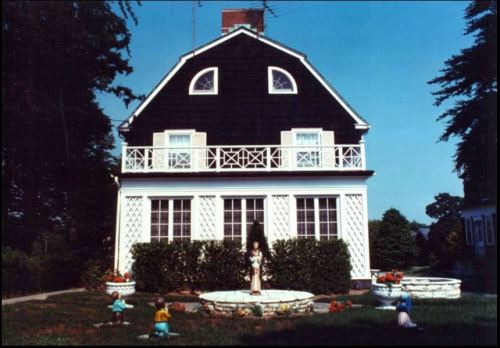
The film is based on the Jay Anson novel, which was centered on the supposedly true events of the Lutz family who moved into a home known as ‘High Hopes’ that had previously been occupied by the DeFeos who were slaughtered at the hands of their oldest son Ronald in November of 1974. The Lutzs lived in the home from December of 1975 until they ‘abandoned’ it in January of 1976. Since that time many other people have lived there and none have reported any paranormal activity. The home, which was built in 1924, had no unusual events occur in it for the 50 years previous to the DeFeo tragedy either making me and many others speculate that the Lutzs made it all up because why else would they be subjected to the hauntings and none of the others.

(The actual house as it appeared in 1974)

In either case the movie isn’t very good and at many points is quite laughable. The film would’ve worked better had it been structured as a pseudo-documentary where interviews with the characters could’ve be spliced into the reenactments, which would’ve avoided it from seeming so mechanical and coming off like a formulaic scare-a-minute like it does here. The so-called frights are over-the-top from the start and there’s such a barrage of them that by the time you get to the finale, which should be the scariest point of the film, it becomes almost anti-climactic.

The overblown facial reactions of the actors had me laughing out loud at many spots particularly Brolin’s feeble attempts to channel a Charles Manson-like persona and Amy Wright getting locked in a closet. She plays a teen babysitter who walks around wearing one of those garish dental headgears and made me believe that the spirits locked her in there simply because they felt she looked too stupid. Kiddor’s constant shocked expressions at Brolin’s increasingly edgy responses becomes tiring and the part where Brolin shouts at the evil spirts that “This is my house!” had me thinking the spirits should’ve responded with “No it isn’t, it’s the banks!”

Rod Steiger’s priest impression is the Achilles heel. I realize there was a priest in the book, but since then that same priest as disputed the events described in the story, so it should’ve gotten downplayed. I didn’t like the supernatural events occurring outside of the home like when Steiger and Don Stroud are driving in their car and having it mysteriously breakdown. The house is the centerpiece and all scares should take place there otherwise it ceases to be a haunted house film at all and instead just another pedestrian story dealing with evil spirits that can manifest anywhere.

How some could find this scary is a mystery. I first watched it 30 years ago and thought it was tacky then and consider it even more so now. Just because it has managed to spawn a lot of sequels doesn’t make it ‘a classic’ and I feel it would be better suited for rifftrax of Mystery Science Theater.

My Rating: 1 out of 10

Released: July 27, 1979

Runtime: 1 Hour 58 Minutes

Rated R

Director: Stuart Rosenberg

Studio: American International Pictures

Available: DVD, Blu-ray (Region A/1, B/2) Amazon Video, YouTube

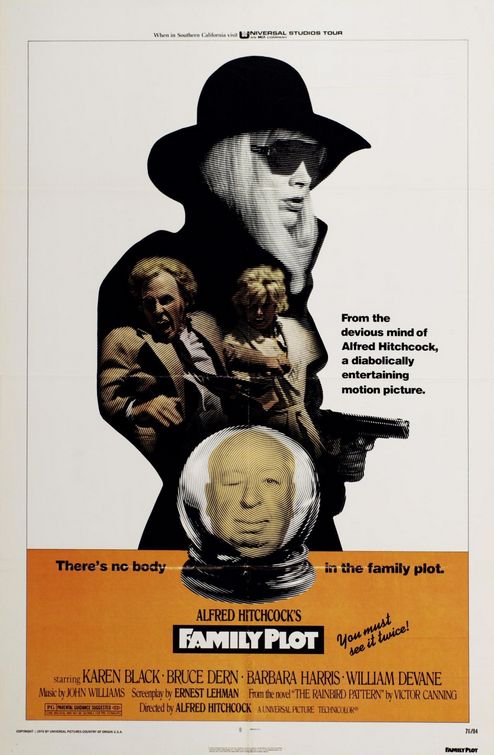
Family Plot (1976)

By Richard Winters

My Rating: 4 out of 10

4-Word Review: Alfred Hitchcock’s last movie.

Blanche Tyler (Barbara Harris) is a phony psychic whose client, the rich heiress Julia Rainbird (Cathleen Nesbitt) offers her a reward of $10,000 if she can use her ‘psychic abilities’ to find Julia’s long-lost nephew who was given up for adoption years earlier. Blanche employs her boyfriend George (Bruce Dern) who works as a cabbie in-between acting gigs, to find the man. George ends up stumbling upon someone who he thinks may be him, Arthur Adamnson (William Devane), but ends up getting in-over-his-head when Arthur proves to have ulterior motives.

The film’s claim-to-fame is that it was the last one directed by Alfred Hitchcock, which is probably the only good thing to say about it. Technically it’s not bad, but it’s not terribly interesting either. Everything that gets done here has been done before in other films with more interesting results. This includes a sequence where Blanche and George’s car goes careening down a mountain highway with no breaks, which isn’t exciting at all and looks clearly shot in front of a green screen.

After completing the far edgier Frenzy I was expecting Hitch to try and push the envelope even more, but instead he draws back with a pedestrian story that’s full-of-holes.  It was based on the novel ‘The Rainbird Pattern’ written by Victor Canning, which had a darker tone. Screenwriter Ernest Lehman wanted to capture that same tone here, but Hitch pushed him instead for a lighter quality that borders on camp, but ultimately comes off as gimmicky. The ending is particularly limp and for someone once dubbed the ‘Master of Suspense’ there is very little of it here.

The only moment that stuck out for me is where Blanche and George sit down to eat hamburgers. Normally actors in films rarely eat the food that they’re served and will usually either take small nibbles, or simply leave it on the plate without taking a single bite, but here both Dern and Harris take big bites from their burgers while continuing to talk. At one point a piece of burger spits out of Dern’s mouth as he speaks and he instinctually holds up his hand in front of his mouth in an embarrassment, which was strangely left in. Most directors would’ve quickly stopped the scene and reshot it, but instead Hitch decided to let it continue, which adds an odd realism probably not seen anywhere else.

The casting is the only real bright spot especially Devane, who normally played good guys, but takes a turn as a villain here and does quite well. In fact it’s the best performance of his career. Unfortunately the two women (Harris and Karen Black who plays Devane’s girlfriend) are wasted and for the most part have very little to do. Black’s role could’ve been cut out completely in a film that especially when compared to the director’s earlier works is a huge disappointment.

My Rating: 4 out of 10

Released: April 9, 1976

Runtime: 2 Hours 1 Minute

Rated PG

Director: Alfred Hitchcock

Studio: Universal

Available: DVD, Blu-ray, Amazon Video, YouTube

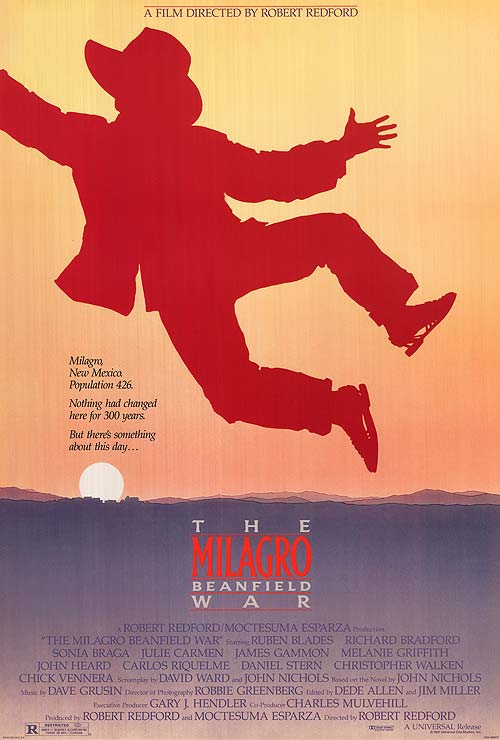
The Milagro Beanfield War (1988)

By Richard Winters

My Rating: 8 out of 10

4-Word Review: Small town fights developer.

Milagro, New Mexico becomes the centerpiece to controversy when a rich developer (Richard Bradford) decides to build a resort, which cuts off the water supply to the rest of the struggling inhabitants of the nearby town. Joe Mandragon (Chick Vennera) is one of those farmers who is frustrated with the current situation and in a fit of rage kicks a water valve, which allows water to flow into his field where he soon begins to grow beans. Kyril Montana (Christopher Walken) is then sent in by the rich tycoons to ‘settle-the-score’, which only helps to make the town’s resistance to the development even stronger.

The film is based on the 1974 novel by John Nichols and was directed by Robert Redford eight years after he helmed his first feature the very successful Ordinary People. From a completely technical standpoint the film shines in all areas as it delightfully mixes whimsical comedy with harsh real-world issues and manages to keep the tone consistent throughout. My favorite element was the difficulty the activists had in getting the townspeople  ‘on-the-same-page’ and organized to fight their mutual enemy, which illustrated one of the biggest challenges to fighting for social change where just trying to convince and mobilize others is sometimes the toughest part.

John Heard has the film’s best character arch playing a former political activist who dropped out of trying to change-the-world years ago, but after sufficient prodding finally gets back to his old form in one very fiery and memorable moment. Walken is quite good in reverse playing a man sent to initially squash the rebellion only to eventually soften a bit (just a bit) on his stance. Carlos Riquelme is delightful as the elderly Amarante who despite being weak with age fights-the-good-fight including a hilarious scene where he precariously tries to drive a bulldozer.

I wasn’t quite as crazy about Daniel Stern’s inclusion. He plays his part well and the character is likable, but I didn’t understand the need for him in the story. It almost seemed like the filmmakers didn’t trust that the Hispanic cast alone could carry it and a white guy needed to be added in in order to usher in a more mainstream demographic. Vennera is weak only because he constantly reminded me of Bruno Kirby Jr. and could’ve easily passed off as his twin in both his looks and voice.

The only argument I would have against the film, which is otherwise a charmer and does not in any way deserve the outrageous R-rating that it was given, is the addition of Robert Carricart as the Coyote Angel that only Riquelme’s character can see. To an extent this cheapens the struggles that the townspeople go through because it gives what is otherwise a serious problem too much of the fable-like treatment. I would’ve preferred a grittier approach focusing solely on the efforts of the people to create the change, which would’ve left a stronger emotional impact and avoided telegraphing the idea that it was all going to work-out due to this extra magical force.

My Rating: 8 out of 10

Released: March 18, 1988

Runtime: 1 Hour 57 Minutes

Rated R

Director: Robert Redford

Studio: Universal

Available: DVD, Amazon Video

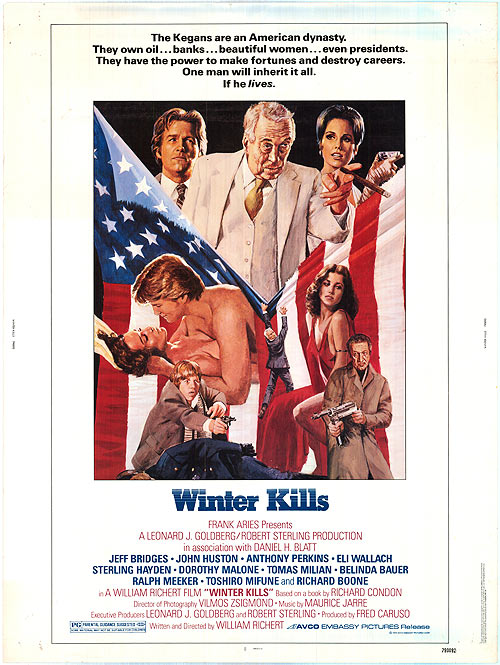
Winter Kills (1979)

By Richard Winters

My Rating: 6 out of 10

4-Word Review: Who assassinated his brother?

19 years after United States President Timothy Kegan is assassinated and an independent investigation concluded that it was the act of a lone gunman, his younger brother Nick (Jeff Bridges) gets a deathbed confession from a man (Joe Spinell) insisting he was the real killer hired by a secret underground organization. Nick goes to his rich father (John Huston) with the news and then decides to do an investigation of his own, but becomes entangled inside a web of lies and deceit that drives him further away from the truth instead of closer.

The film is based on the novel by Richard Condon and in many ways is a stunning filmmaking debut for director William Richert. The cinematography by Vilmos Zsigmond is richly textured with a colorful variety of backdrops, sets and atmosphere making it visually soar while the surreal tone helps give it an added edge.

Unfortunately the film suffered from many behind-the-scenes issues including running out of funding and forcing the cast and crew to put the production on hold while they went overseas to shoot The American Success Company in Germany and then used the proceeds from that one to finish this one. The final result is a fragmented narrative that at times gets too rushed. The story was significantly paired down from the novel, which leaves open a lot of loose ends and it should probably be remade as a miniseries.

The story is also permeated with a lot of dark humor which only makes the viewer even more confused. Some of it is genuinely funny, but it’s unclear what it’s trying to satirize. Certain absurd situations and oddball characters get thrown in for seemingly no reason and takes away from the otherwise compelling storyline while leaving the viewer baffled as to what the point of it was supposed to be and could easily explain why it bombed so badly at the box office during its initial run.

The casting is interesting. Jeff Bridges usually gets stuck in bland, transparent roles and that’s no different here, but he’s surrounded by so many eccentrics that his otherwise vanilla delivery seems refreshing and distinct. Huston is the real star in a bravura performance that steals the film and makes it memorable. There’s also a lot of recognizable supporting players that are on only briefly and if you blink you’ll miss them. This includes an uncredited appearance by Elizabeth Taylor who comes on near the end and has no lines of dialogue, but does clearly mouth the words ‘son-of-a-bitch’.

If you are looking for something that is offbeat, but still intriguing then this is well worth the effort. If it weren’t for its misguided humor this thing could’ve really had an impact although it does reveal its cards too soon and I was able to guess the twist ending long before it actually happened, but as a whole it has its moments and a potential cult following or sure.

My Rating: 6 out of 10

Released: May 11, 1979

Runtime: 1 Hour 26 Minutes

Rated R

Director: William Richert

Studio: AVCO Embassy Pictures

Available: DVD, Amazon Video

Russian Roulette (1975)

By Richard Winters

My Rating: 4 out of 10

4-Word Review: Trying to stop assassination.

When a Soviet leader decides to visit Vancouver the Russian Embassy puts the Canadian authorities on alert about Rudolf Henke (Val Avery) who moved to Canada many years back, but is reported to still hold grudges about the Soviet Union and could be a sniper threat. Timothy Shaver (George Segal) is then secretly hired to kidnap Henke while the Soviet leader is in town and then let him go once that leader has left. However, when Shaver gets to Henke’s apartment he finds out that he has already been abducted by somebody else, which leads him to believe that he is being made a pawn to an even bigger conspiracy and that he may become their next victim.

The story is based on the novel ‘Kosygin is Coming’ by Tom Ardies and the first 45 minutes of this are actually quite diverting. Director Lou Lombardo gave his actors the freedom to ad-lib and he instills some quirky humor, which made me believe this was going to be a new wave-like actioner that deftly mixes in the offbeat perspective with a story that had an intriguing mystery angle.

Unfortunately the second half devolves into cheesy action flick with all the usual formulaic trappings. The biggest problem is introducing the Russian bad guys who speak in inauthentic, corny accents that made them become like caricatures that lessens the tension instead of heightening it. The film would’ve been better served had it not shown the villains at all until the very end and kept things solely focused on Segal as he tries desperately to figure out what is going on while being chased by a mysterious group of people whose motives are unclear.

There are a couple of stupid moments as well.  One of them occurs when Segal and his girlfriend played by Cristina Rains return home. She immediately runs into the bathroom to take a pee, but then just as quickly comes back out wearing a strange expression. Segal then walks in to see a dead body of a murdered stranger sitting on the toilet. I know this may make me sound like a sexist to some, but the truth is women have a tendency to scream when they are startled and sometimes for a lot less than an unexpected sight of a corpse in their bathroom, so having her not instinctually scream here (hell even I would’ve probably let out a shrill yell at that point) is dumb.

Another part has Segal and Rains handcuffed and sitting in a backseat of a car that is being driven by one of the Russian bad guys. Segal, in an apparent attempt to escape, kicks the Russian guy in the back of his head, which sends the car reeling off the road and overturning into a ditch. However, this to me seemed dangerous because what guarantees that Segal and Rains wouldn’t be injured when that occurs. As it turns out the driver ends up conveniently dying in the crash, but miraculously the couple get out of the badly banged up car without even a single scratch, which is beating astronomical odds!

Segal wasn’t the best choice for the role. He spent the 70’s decade playing mostly in light comedies and romances, which he is more adept at, but presumably took the part to help stretch his acting resume and avoid being typecast. It doesn’t fully work and there were other actors who would’ve been better able to reflect the film’s gritty tone although watching Segal do mostly his own stunt work as he climbed out to the top of the roof of The Fairmont Hotel in downtown Vancouver does deserve kudos.

The supporting cast proves to be more interesting. I enjoyed seeing Louise Fletcher in her second movie after coming out of a 10-year hiatus. She has only a small role here, but she makes an impression nonetheless and it’s interesting seeing her play a person with such a sunny disposition when later that same year she portrayed the dour Nurse Ratched, which only proves what a talented actress she really is.

Val Avery is equally good in a part that has no lines of dialogue, by his own insistence, but still ends up being a scene stealer not only at the end when he stumbles into a scared crowd while wearing a bomb, but also in an earlier scene where he plays a cruel trick on a group of children playing roller blade hockey in the street.

Unfortunately the rest of the movie doesn’t have enough of a payoff. The action gets overplayed and the blaring music takes away the sophisticated feel and puts it more on the level of a bubblegum TV-show. Some good potential gets marred by an indecisive director who reportedly was suffering from drug addiction at the time and the effects show.

My Rating: 4 out of 10

Released: August 20, 1975

Runtime: 1 Hour 33 Minutes

Rated PG

Director: Lou Lombardo

Studio: AVCO Embassy Pictures

Available: DVD