Category Archives: Movies Based on Novels

Lolly-Madonna XXX (1973)

lolly3

By Richard Winters

My Rating: 3 out of 10

4-Word Review: Two rural families feud.

Rod Steiger is the patriarch of the Feather family while Robert Ryan heads the Gutshall household. Both families live next to each other in poor ramshackle shacks in rural Tennessee. Neither side gets along and both will occasionally play tricks on the other in order to try and get the upper-hand. One day the Gutshall boys send a letter to the Feathers signed by a Lolly Madonna even though that woman doesn’t really exist and was created to get the Feathers away from their whiskey still so the Gutshalls could destroy it. However, two of the Feather boys, Thrush and Hawk (Scott Wilson, Ed Lauter) spot Ronnie (Season Hubley) sitting at a bus stop in town and think that she’s the mysterious Lolly, so they kidnap her and bring her back to their farm where they hold her hostage. The Gutshalls see them bring in this new girl, but have no idea who she is, so the Gutshall’s daughter Sister E (Joan Goodfellow) sneaks over to the Feather residence to spy on them, but gets accosted and raped by Thrush and Hawk in the process. Now the Gutshalls feel the Feathers need to pay a price and both factions go to war, which causes several casualties.

The screenplay was written by Sue Grafton, better known for her later mystery novels, and based on her book ‘The Lolly-Madonna War’, which was published in the United Kingdom, but never in the U.S. Supposedly the story is a metaphor for the Vietnam War and the horrible destruction of violence, but trying to make a profound statement through the follies of a bunch of stereotyped hillbillies doesn’t work. For one thing they live in homes that look like they were abandoned 30 years ago and drive in rusted pick-ups that seem taken straight out of the junkyard. I realize poor people can’t all live in nice homes or drive fancy cars, but most can at least maintain them a bit better. Also, neither family owns a telephone, but they do have electricity, a refrigerator and even a TV, so if they can have all of those things then why not a telephone too?

Hubley’s character has no real purpose in the story as the Gutshall’s daughter could’ve been raped for a variety of reasons without any stranger needing to be present. She doesn’t do much when she’s there anyways except sit quietly in the background and observe the feuding. Having her fall madly in love with one of the boys, played by Jeff Bridges, and grieve openly when Hawk, the same man who violently kidnapped her just a day earlier, gets injured seems too rushed and out-of-whack to be believable. I’m well aware of the Stockholm Syndrome where victims can over a great deal of time fall for their captors, but this takes that concept to a ridiculous new level.

Despite being top-billed Steiger is seen very little, especially during the first hour and he’s not allowed to chew-up the scenery like he usually does though watching him make a ham sandwich where he applies a massive amount of ketchup is fun. Bridges pretty much takes over things by the end, but for the most part no one actor, despite the plethora of well-known faces, headlines here and if anything they’re all wasted by being locked into roles that are caricatures and indistinguishable from the others.

The pace is slow with an inordinate amount of talking that over explains things that the viewer could’ve picked up on visually. When the action does occur, like the death of Bridges’ first wife, played by Kathy Watts, it comes off as corny. The animal lovers will not like the scene where Steiger shoots a horse looped together from several different angles and in slow-motion, nor the segment where pigs get tied to a post and scream in panic as a ring of fire gets set around them. The final shootout though is the biggest letdown as the film fades-out before it’s over, so we really never know who survives it and who doesn’t.

Fred Myrow’s haunting score is the only thing that I liked, but everything else falls flat. If you’re looking for a movie with a anti-war/anti-violence message there are hundreds of others to choose from that do it way better.

My Rating: 3 out of 10

Released: February 21, 1973

Runtime: 1 Hour 45 Minutes

Rated PG

Director: Richard C. Sarafian

Studio: MGM

Available: DVD-R (Warner Archive), Amazon Video, YouTube

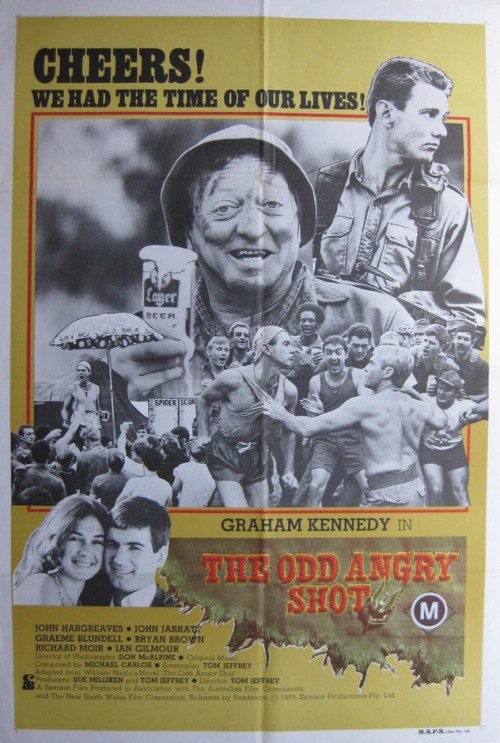
The Odd Angry Shot (1979)

odd3

By Richard Winters

My Rating: 5 out of 10

4-Word Review: Aussie soldiers in Vietnam.

Based on the novel of the same name by William Nagle, who wrote about his actual experiences fighting in Vietnam as part of the Australian army, the story centers on a small group of Aussie men who go to a war that they feel they have no business being in. The story centers on Harry (Graham Kennedy) a bitter middle-aged man who believes his country doesn’t care whether he lives or dies, Bill (John Jarrat) who faces army life for the first time, and Rogers (Bryan Brown) who must deal with crippling injuries when he steps on a landmine as well as Bung (John Hargreaves) who goes through tremendous grief after receiving heartbreaking news in a letter from back home.

To some extent the film features a fresh take as most other movies dealing with the Vietnam War were done from the U.S. perspective and many people may not even realize that Australia had involvement in the conflict and at one point over 7,000 troops stationed there. However, the tone is confusing as it wants to be irreverent like M*A*S*H at certain intervals while at other times more like Apocalypse Now. Some of the amusing moments do work particularly the scene where the U.S. soldiers challenge the Aussies to a contest to see if a deadly spider can kill a scorpion and then having the spider take on the scorpion inside a dish pan that you get to see close-up, which is pretty cool. There’s even some weird imagery involving a dream that Bill has, which is visually arresting. While these scenes are passively entertaining they also make the story come-off as meandering and pointless. The concept may have been to show how boring the war experience can be, but this still needed to be done in a way that kept things gripping, which ultimately the film isn’t.

Having the story center around one main character would’ve prevented this. Initially it starts off like Bill is that person by showing his going-away-party with his friends and family, but then once the setting changes to Vietnam he isn’t seen much and if anything Harry becomes the main star. Observing how Bill’s perspective and personality evolved and become more hardened as the war progressed could’ve been intriguing, but the film fails to deliver. With the exception of Harry there’s not much distinction between the other men in the group, which impedes the viewer from ever becoming emotionally invested in any of them and thus less impactful overall.

The way the violence gets portrayed is interesting as it occurs at random periods without warning. The group can be having a lighthearted time one minute only to be doused with enemy fire the next, which helps recreate the reality of battle where death and destruction can be sudden and unexpected. This put me as a viewer quite on edge, but the characters never reflected that same unease, or by seeing their comrades dying, or injured changed them in any way even though I felt it should’ve.

On the technical end it effectively looks like it was shot on-location even though it really wasn’t. Dramatically though it suffers from not have a centralized character and a vague point-of-view.

My Rating: 5 out of 10

Released: March 1, 1979

Runtime: 1 Hour 32 Minutes

Not Rated

Director: Tom Jeffrey

Studio: Roadshow Films

Available: DVD, Blu-ray

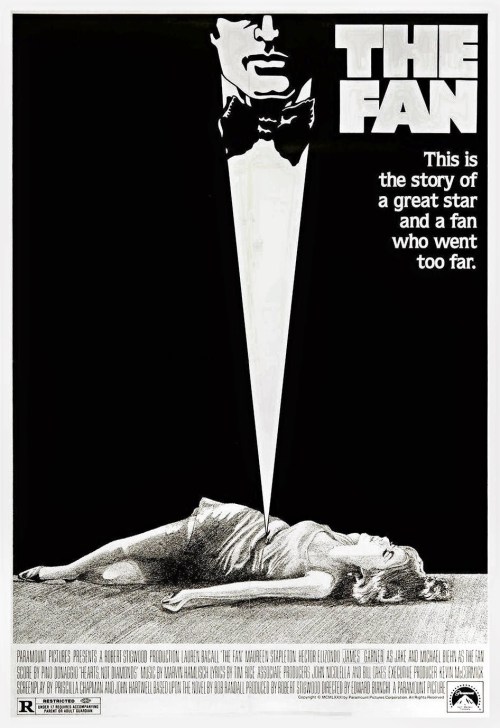
The Fan (1981)

By Richard Winters

My Rating: 6 out of 10

4-Word Review: Obsessed fan stalks actress.

Douglas Breen (Michael Biehn) has become obsessed with aging film actress Sally Rose (Lauren Bacall) and wants to meet her. He begins by writing her fan letters, but Sally’s secretary Belle (Maureen Stapleton) intercepts them and sends an autographed picture of Sally in return, which gets Michael seething as he wanted a personal response from Sally instead. His letters become more frequent and threatening. Eventually he decides to injure Belle in order to get her out of the way as well as kill anyone else in Sally’s life, so that he can meet with Sally unimpeded and have her all to himself.

One of the quandaries that I had was the casting of Bacall who I felt was too old for the part. I realize that in the Bob Randall novel of the same name, which this film is based, the actress character was also an aging Hollywood star, but as stalking has become more prevalent since this film was released, it’s been shown that stalkers prefer younger, more attractive women with a ‘virginal’ appeal and who they feel they can better control or ‘possess’. With Bacall, and her very feisty personality, you don’t get any of that. She’s also supposedly playing someone who is 49, but looks more like 60 and was actually 56 when it was filmed. While I got more used to her as the film progressed, the script doesn’t take enough advantage of her patented bitchy side, and except for one brief spat with her secretary, her presence is too benign.

The real waste though came from James Garner, who’s given a bland part that doesn’t help propel the story in any way. Originally when the film was first released and I saw his name in the credits I thought he was the stalker, which would’ve been interesting as he’s rarely ever played a bad guy, so it would’ve been intriguing seeing him thrown out of his comfort zone, but unfortunately that ends up not being the case.

Biehn is certainly a good actor although his psycho character in the TV-Movie ‘Deadly Intentions’ is far more interesting than the one he plays here. His weapon of choice, a shaving razor, is not visually intimidating enough and the victims die too easily by slumping over dead after just one quick cut across the chest. The scene where he stabs and kills a guy by swimming underneath him in a public pool is well shot, but implausible as there were so many other people around, including in the pool that it seemed hard to believe that Biehn would’ve been able to escape undetected.

Director Ed Bianchi, who directed a lot of award-winning commercials before doing this, reveals a stylish flair and I enjoyed the way he captures New York particularly the urban cafes and city streets, but the plot itself offers few surprises. Ultimately it would’ve worked better had the identity of the killer been left a mystery until the very end. This way the tension would’ve mounted as the viewer would remain in the dark as much as Sally as to who actually was after her.

Spoiler Alert!

The climactic sequence has Bacall confronting Biehn all by herself while trapped inside an otherwise empty theater. Bacall doesn’t respond to things the same way a conventional female might by screaming, which is great, and she also literally tells the guy off right to his face just as he’s about to stab her, which is great too, but the way she props up his dead body into a theater seat seemed bizarre. Why would she bother doing this? Just leave the dead body lying on the floor and run for help. Seeing the bird’s-eye shot of the killer lying there would’ve looked creepier and instead of a voice over of him reading the first letter he sent her have another letter written by another obsessive fan read and thus creating the double-ending famous in a lot of 80’s slasher flicks where you think the threat had been defeated, but was actually still out there in another form.

My Rating: 6 out of 10

Released: May 15, 1981

Runtime: 1 Hour 35 Minutes

Rated R

Director: Ed Bianchi

Studio: Paramount

Available: DVD, Blu-ray, Amazon Video, YouTube

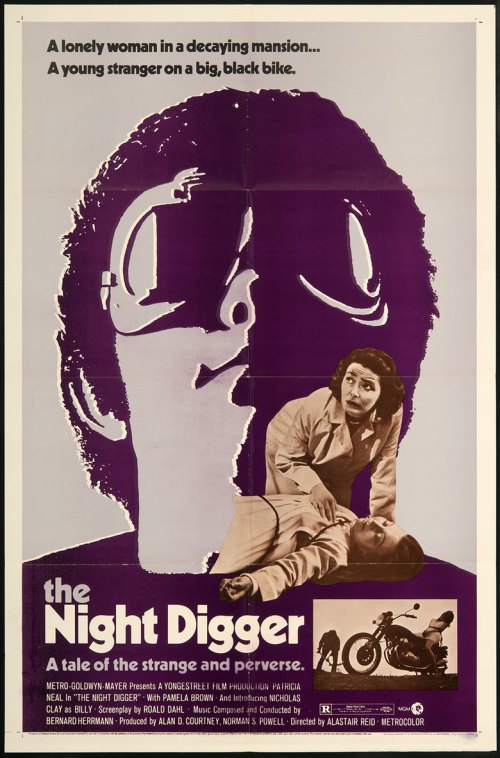
The Night Digger (1971)

By Richard Winters

My Rating: 6 out of 10

4-Word Review: Handyman holds dark secret.

Maura (Patricia Neal) is the repressed daughter of Edith (Pamela Brown) who both reside in a large gothic mansion. Maura has never married and completely controlled by her overbearing mother, but feels she has no way of getting out of it. One day Billy (Nicholas Clay) rides in on his motorcycle looking for work. He wants to be the resident handyman. Maura declines to hire him, but is overridden by her mother. Soon Billy is living at the mansion with the other two and helping out by fixing things when he can, but Billy is tormented by his tortuous past, which leads to a twisted conclusion.

The film is based on the novel ‘Nest in a Fallen Tree’ by Joy Crowley that was adapted into a screenplay by Roald Dahl who at the time was married to Neal. I’ve never read the novel, but feel it must assuredly have more context particularly with Billy, than what you get here. The plot certainly has some intriguing elements, but it all gets lost with the poorly defined characters. For instance there’s several flashbacks shot in black-and-white showing Billy being tormented by a group of women, but no explanation for who these women were or why they were doing it, or why Billy was got caught up in that situation to begin with. Without more of a backstory the plot and people in it don’t mean as much and the film becomes transparent.

I did though like the directing by Alastair Reid, which is the one thing that holds it together. He makes great use of shadows and darkness and the brief scenes of Billy’s attack on women have a chilly visual effect. I also loved the setting shot at Oakley Court, which is a large stately mansion built in 1859 and now used as a hotel. The scene where Maura goes searching for Billy in his room and opens up what you think is a closet door, but instead is just a gateway that leads to three other rooms shows just how immense the place was, which though does prove to be a bit problematic if you think about it. Why would these two lonely women live in such a large place and if they aren’t rich, which Edith states in the scene where Maura serves them steak dinner, which  she states they ‘can’t afford’ then where did they find the money to own such a large place and maintain it?

The acting by Brown and Clay is good and some interesting bits by Graham Crowden in a supporting role, but Neal seems miscast. I realize she got the part because she was married to the screenwriter, but she looks almost as old as Brown, who plays her adoptive mother, but in reality there was only a 9 year age difference. Her character, like with Billy’s, is not fleshed-out enough making her actions more confusing than revealing like when she despises Billy’s presence at one point only to suddenly throw herself at him the next.

The ending is disappointing. I sat through this wondering what the twist was going to be, but there really isn’t any and it just leaves more questions than answers. Apparently Bernard Herrmann, who was hired to do the music, disliked the ending immensely and this was the first thing out of his mouth when he sat in to screen the film. He even threatened not do the soundtrack unless it was changed, but after arguing with Dahl he eventually caved, but personally I wished he had gotten his way.

Alternate Title: The Road Builder

My Rating: 6 out of 10

Released: February 25, 1971

Runtime: 1 Hour 37 Minutes

Rated R

Director: Alistair Reid

Studio: MGM-EMI

Available: DVD-R (Warner Archive), Amazon Video, YouTube

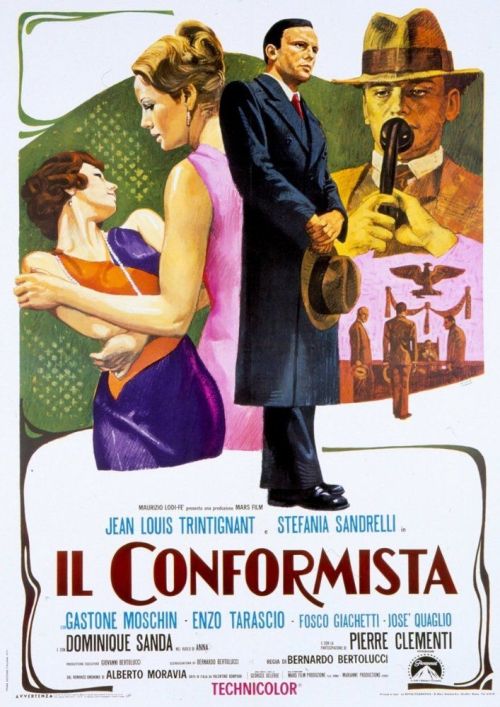
The Conformist (1970)

By Richard Winters

My Rating: 8 out of 10

4-Word Review: Trying to fit-in.

Marcello (Jean Louis Trintignant) is living in Italy during WWII and a member of the fascist secret police. He longs to be a part of acceptable society and partaking in the conventions of what he believes is a normal life including settling down and getting married even if it’s to a woman Giulia (Stefania Sandrelli) that he doesn’t really love. He gets ordered to assassinate Quadri (Enzo Tarascio) who was one of his professors back in college, but who has now been deemed an anti-fascist by the government.  Marcello uses the guise of his honeymoon as an excuse to travel with Giulia to Paris in order to carry out his mission. However, once there he begins to have feelings for the professor’s wife Anna (Dominique Sanda) and becomes unable to carry out the assignment despite being aware that Anna is only using him to get to Giulia, which is who she truly desires.

This film became a benchmark in Bernardo Bertullici’s career and was his first box office success that allowed him the ability to go on and direct even bigger  classics such as The Last Tango in Paris and 1900.  While the visuals are impressively stylistic I do agree with many critics that too much emphasis is placed on the sets, that gives it an almost over-the-top kitschy feel, while drowning out the story, which is handled in a more subtle way, in the process. The plot is still captivating, but a good movie should have a nice balance and as critic Gene Siskel stated in his review it’s more of a ‘show than a story’ and reviewer Keven Thomas labeled it a ‘bravura style Fellini’, which I consider to be a very accurate description.

The story is based on the 1951 novel of the same name by Alberto Moravia, but apparently Bertolucci had never read it when he pitched the idea to Paramount and managed to wow the studio execs into loving the idea simply by relying on the the description of the story giving to him by his then-girlfriend who had read it. When he finally did read it he did so while writing it into a screenplay at the same time.

There are many differences though between the source novel and the film with the movie leaving out a lot of Marcello’s childhood backstory that I felt was needed. The book examines Marcello’s penchant for killing lizards and even the neighbor’s cat as well as his witnessing his father’s abusing of his mother and the vandalization of a family photograph, which the film doesn’t touch on. The book also gets into more detail about why Marcello is tormented by his classmates where in the film we see Marcello being harassed, but it’s never made clear why.

Spoiler Alert!

The ending gets changed too. In the book Marcello has an interesting philosophical debate with Lino, a chauffer who sexually abused him as a child, but this conversation is left out of the movie. Marcello also, along with his wife and child, gets gunned down while driving in their car, but surprisingly the movie doesn’t have this part either. You would think that they would since action makes for a good visual, and I’m not sure for the reason why it was left out/revised except that Bertolucci may have feared it would be too similar to the finale in Bonnie and Clyde and didn’t want to seem like he was replicating that one.

End of Spoiler Alert!

Overall despite these deviations I still found it impactful particularly the ambush scene on a lonely road, which was the one thing that I remembered about the movie after having not seen in for several decades. The strong performances help too especially Trintignant’s brooding portrayal though being French born he spoke his lines phonetically without knowing what they meant and then later had them dubbed by Sergio Graziani in post production. The two lead actresses are splendid too and although the parts were originally offered to the more famous Brigitte Bardot and Anouk Aimee I felt it came off better with the then unknowns particularly Sandrelli who’s energetic and almost child-like at the beginning only to behave like jaded, middle-aged woman by the conclusion.

My Rating: 8 out of 10

Released: July 1, 1970

Runtime: 1 Hour 53 Minutes

Rated R

Director: Bernardo Bertolucci

Studio: Paramount

Available: DVD, Blu-ray

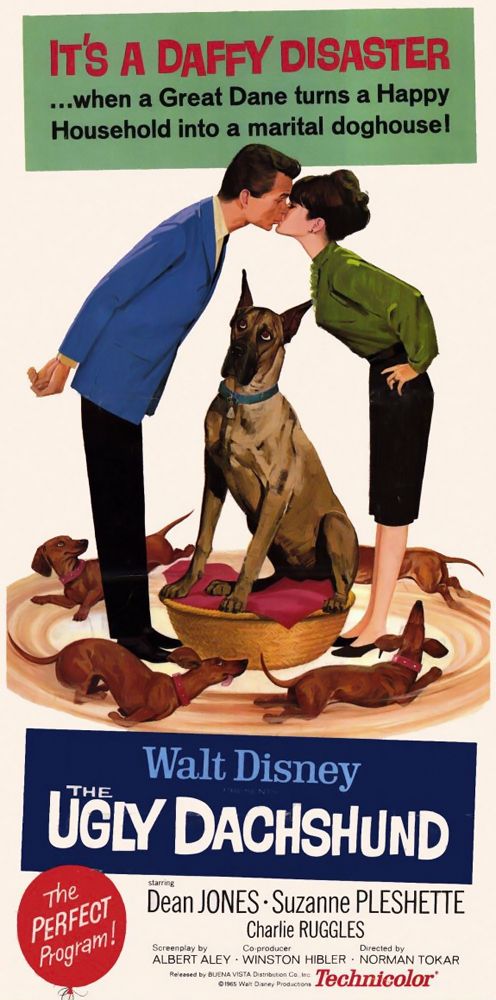
The Ugly Dachshund (1966)

By Richard Winters

My Rating: 7 out of 10

4-Word Review: Dog has identity crisis.

Fran (Suzanne Pleshette) and Mark (Dean Jones) are a married couple who are proud owners of a dachshund named Danke. When they take her to the pet hospital to give birth to her liter the veterinarian (Charlie Ruggles) mentions to Mark that he has a Great Dane on hand that has also given birth, but pushed away one of  her puppies due to having a lack of milk for him. Mark decides to take the pup home and pretend that he’s one of the liter, but it soon becomes apparent to Fran that he isn’t. The dog, who Mark names Brutus, starts to think that he’s a dachshund like the others and even tries to walk like them, but his large size causes many problems for the homeowners as he inadvertently destroys much of the home, which is usually at the instigation of the other dogs who never get blamed. Fran pressures Mark to get rid of the dog, but he continually refuses, which eventually puts a strain on their marriage.

For a Disney movie this one, which is based on the 1938 novel of the same name by Gladys Bronwyn Brown, isn’t too bad and has much better character development than many of the others that the studio produced. The distinction between their personalities is clear as is the dynamics of the marriage where each learns, like in any real union, to begrudgingly give-and-take in order to make the other partner happy. The film though comes off as quite dated in the fact that they sleep in separate beds, I guess seeing them in the same bed would’ve been considered by some in that era as ‘racy’, but what’s the use of getting married if you still end up having to sleep alone?

The comedy starts out a bit slow and young children may get bored with it at the beginning, but it does redeem itself once the dogs proceed to destroy everything in sight. It’s refreshing change to see animals causing the chaos instead of goofy people like in the other Disney flicks and they’re a lot funnier at it too, but the adult side of me had to cringe a bit knowing all the money it was costing the homeowners seeing their place and everything in it turned to shreds. It also hurts the humor that Brutus is always constantly getting blamed for the mess when it’s really the bratty dachshund’s that cause it, but are never adequately punished. Certain modern viewers may also be uncomfortable with the Japanese themed party that the couple hold at their home, which also gets destroyed by the dogs, as it features a lot of cultural appropriation, which in this era has become a big no-no.

The three acts serve as three distinctly different stories. The first one deals with the couple feuding over the dog, the second one has a cat burglar on the prowl, and the third centers on Mark training Brutus for a dog show. While the cat burglar thread does feature a funny scene where Brutus forces a policeman, played by Kelly Thordsen, up a tree and traps him there the entire night, we never get to see the actual burglar. The story would’ve been stronger had the dog caught the real bad guy instead of just scaring an innocent man due to mistaken identity. The third story is weak too as Brutus had very little training before he enters the contest, which seemed rushed and unrealistic.

The only real complaint that I had with the movie, which I overall found to be kind of cute,  was that the two main characters should’ve been children instead of adults. This is a kids movie and kids relate better to protagonists who are their same age. Having a sister into her dachshunds and a brother in love with a Great Dane would’ve entered in some interesting variables though Jones and Pleshette play their parts well and they reteamed 10 years later as another married couple in the The Shaggy D.A. 

My Rating: 7 out of 10

Released: February 4, 1966

Runtime: 1 Hour 33 Minutes

Not Rated

Director: Norman Tokar

Studio: Buena Vista

Available: DVD, Amazon Video, YouTube

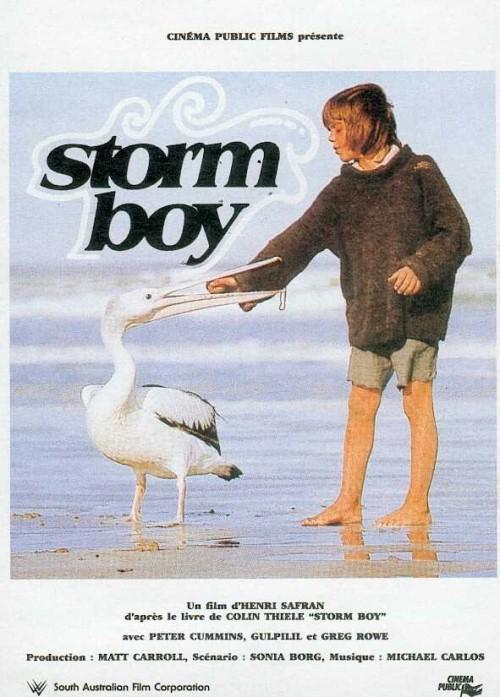
Storm Boy (1976)

By Richard Winters

My Rating: 6 out of 10

4-Word Review: A boy raises pelicans.

Mike (Greg Rowe) is a 10-year-old boy living in a ramshackle home near the ocean on Australia’s southern coast. He lives with his reclusive father Tom (Peter Cummins) who wants no connection with the outside world and won’t even allow his son to have a radio. One day Mike meets Fingerbone (David Gulpilil) an aborigine living alone on the beach due to a falling out with his tribe. Together they come upon a group of hunters shooting at birds. Fingerbone is able to scare them away, but not before they’re able to shoot and kill a mother pelican leaving her young to die of starvation. Mike decides to take the baby birds home with him and despite his father’s initial objections he’s allowed to keep them. The bird’s require a lot of food, but Mike is able to keep them fed and once they’ve grown he and his father set them free, but one of the bird’s, whose name is Mr. Perceval, comes back and Mike grows a strong bond with him.

The film is based on the children’s book of the same name written by Colin Theile, which won many awards. The film has acquired many legions of fans as well, but filming it proved to be quite complicated. Training the birds took 12-months and many times they’d fly off during the filming including one of them flying into a nearby private party that scared many of the party goers there. They also had the challenge of trying to get the Rowe to interact with the bird as he was initially quite scared of them.

Personally I’ve never found pelicans to be all that cute or lovable and their large beaks are an odd sight second only to that of the toucan’s. I did though enjoy seeing the baby pelicans who don’t even have any feathers on them and was hoping more time would be spent on to their feeding and caring, but the movie glosses over this part pretty quickly.

The bird storyline is in fact only one part of the movie as the script also focuses on several other threads including a local teacher (Judy Dick) trying to get the father to allow Mike to attend school with the rest of the children. There’s also a segment where a bunch of young men in dune buggies come out of nowhere late one night and proceed to tear up, with their vehicles, the home that Mike and his father live in. I suppose the reason this is put in is to show how the bird warns Mike of the impending danger, which gets him out of the house, but otherwise it has no connection to the rest of the plot and it’s left a mystery to what motivated these young men to do it nor are they ever seen or heard of again.

The performances are quite good, which is the one thing that holds it all together. Cummins as the father impressed me the most because he is so different here than any of the other parts he’s played. Gulpilil is entertaining too and has some of the most lines, which is the exact opposite from Walkabout where he had none. Rowe is excellent as well despite the fact that he wears the same clothes the whole way through. Only at the very end is he seen wearing something other than his drab green sweater, but I felt for the sake of body odor he should’ve had a variety of outfits to wear all the way through. I realize they were poor, but even poor people don’t usually wear the same clothes everyday for months on end.

Spoiler Alert!

The ending, in which the bird gets shot by a group of hunters, most likely the same ones that killed the bird’s mother, is very predictable, which is the film’s biggest drawback. No real surprises and the life lesson’s are pretty routine and something seen in a lot of children’s stories, so if you take the pelican out of it it’s not all that special. The constant gray, overcast sky gets a bit depressing to look at too, but the film has found a loyal following and was remade to a degree in 2019, where Geoffrey Rush plays a now grown Mike and relating back to his kids about his adventures when he was young. It also stars Gulpilil as the father of Fingerbone Bill.

My Rating: 6 out of 10

Released: November 18, 1976

Runtime: 1 Hour 25 Minutes

Not Rated

Director: Henri Safran

Studio: Roadshow Films

Available: DVD-R (Region Free), Blu-ray (Region 0)

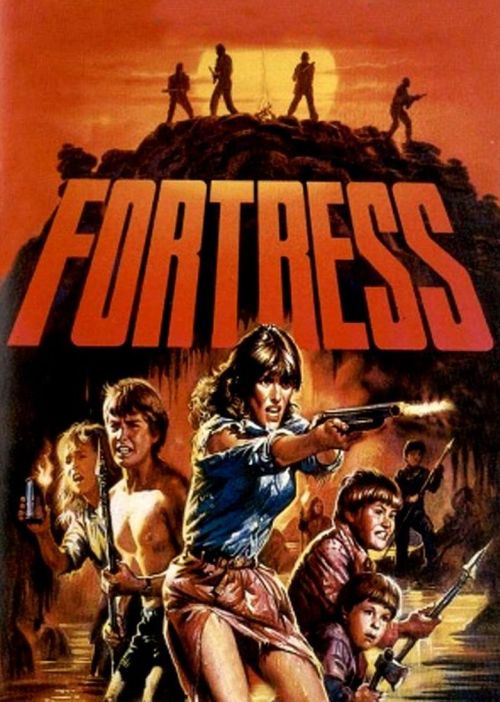
Fortress (1985)

By Richard Winters

My Rating: 7 out of 10

4-Word Review: Australian schoolchildren get kidnapped.

Sally (Rachel Ward) is a school teacher working in rural Australia where she teaches in an old-fashioned one-room school house. The ten students are made up of different ages and an even mix of boys and girls. One morning while class is beginning a group of four masked men invade the building and take the children hostage. They throw them into an underground cave and then put a large boulder over the cave opening to lock them in. Sally and the students go searching through the underground caverns and manage to find another way out, but every time they think they’ve reached freedom the kidnappers always seem to be one-step ahead of them.

The film’s main selling point are the children, which at first I didn’t think would be a good idea. It can be hard to get kids, for many of them this was their first movie project, to show the necessary emotions in an effective way and while they don’t always respond to things quite the way I think a real kid would I still found their resiliency to be uplifting. I also enjoyed seeing how the older boys grew into men during the experience and watching Sally precariously balance her obligation of the being the mature, brave one while still hiding her inner emotions of fear and panic.

The location shooting takes advantage of many different Australian locales including the Buchan Caves where the action in the first act takes place. Later on we’re given exciting view of a them running through the forest late at night in an attempted escape as well as them returning to yet another cave for the climactic finish. The story manages to be reasonably tense throughout though the killers always managing to catch-up with their victims no matter where or how far they go does ultimately test the plausibility. The film’s tone is a bit off-kilter as well. Most of the time it seems to want to be a story of victim empowerment and resourcefulness, but then intermittently throws in some jarring violence, which wasn’t necessary.

Spoiler Alert!

While it’s great seeing these kids remain stoic it also seems hard to believe. After being put in the cave they find a way out where they then spot a farmhouse, which was several miles away only to ultimately realize that the kidnappers have been there waiting for them. They then great treated to a man getting gunned down before their very eyes, but manage to escape from their to yet another cave that is many miles away and again the kidnappers find them and continue their assault of terror. Normally after all this most people, especially young children, would feel overwhelmed and defeated and eventually fall into a traumatized state instead of the warrior mentality that they do. While the good guy fighting back approach may be more of an audience pleaser I wasn’t sure if this was a realistic response when given the daunting circumstances. Also, why would the bad guys not invade the cave the kids are in right away instead of staying back and giving the group ample time to create the makeshift weapons’, stuff that would take hours if not days to make,  in order to be ultimately used against the kidnappers like they are?

The Lord of the Flies – themed twist ending comes out of nowhere and seems too forced to be effective. Watching the group surround the last of the bad guys and viscously stabbing him with their weapons’ in slow motion made enough of a statement and that’s where it should’ve ended. Adding in the denouncement where the kids are back in school and have the heart of the killer placed inside a glass jar in the middle of the room was just too heavy-handed. With what they’ve been through most kids would never want to step foot in that school again and where are the parents during all of this as they’re never shown?  Having a human heart in a jar is pretty nasty and you’d think  one of the kids would’ve talked about it to others and word would ultimately get around.

End of Spoiler Alert!

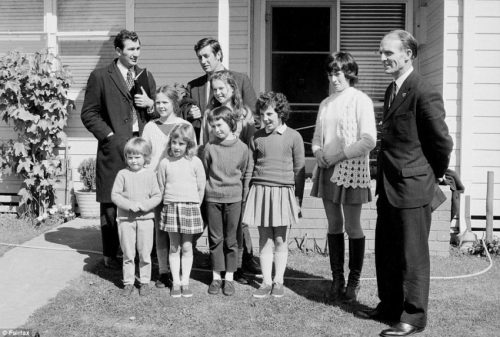
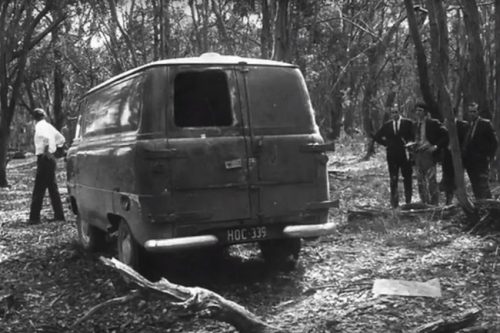
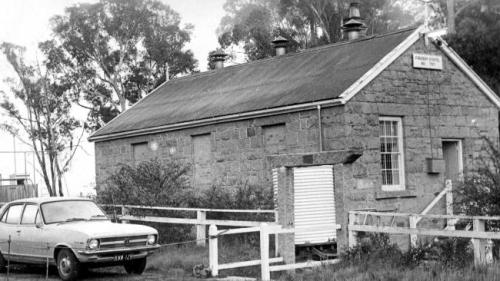
The plot is loosely based on an actual event that occurred in the small town of  Faraday, Australia on October 6, 1972 when Edwin Eastwood and Robert Boland kidnapped a young teacher and her students from a remote one-room school house similar to the one depicted in the movie. However, there are many differences between the real event and what happens in the film. For one there were only 6 students and all of them were girls. They were never taken to a cave either, but instead held in the back of a van. When the kidnappers left the next morning to retrieve the ransom money the teacher, whose name was Mary Gibbs, managed to kick out the back door panel with her leather boots and escape with the children and eventually the two men were later caught.

The irony though is that’s not where the story ends as Eastwood was able to escape from jail in 1977 where he then kidnapped another group of children and their teacher, but was again caught. He then served a 16 year sentence, but was eventually paroled in 1993 and has been a free man working as a truck driver since.

Teacher Mary Gibbs and the six students who were kidnapped during the real-life incident.

The van in which Gibbs and the students were held captive.

The school house in which Mary Gibbs and her six students were taken hostage on October 6, 1972.

My Rating: 7 out of 10

Released: November 24, 1985 (HBO Broadcast)

Runtime: 1 Hour 28 Minutes

Rated: TV-MA

Director: Arch Nicholson

Studio: HBO Premiere Films

Available: DVD

Fire Sale (1977)

By Richard Winters

My Rating: 3 out of 10

4-Word Review: Burn down the store.

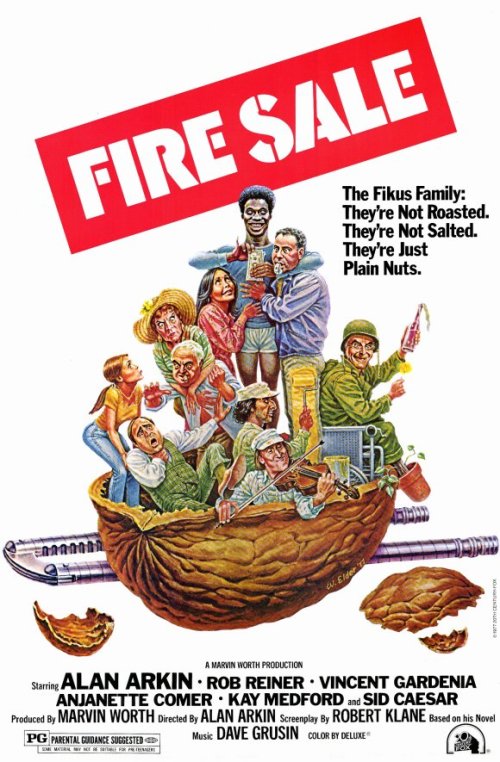
Benny Fikus (Vincent Gardenia) is the elderly owner of a struggling clothing store, who has decided the only way to recoup costs will be to have it burn down and then collecting money on the fire insurance policy. He has convinced his mentally ill brother Sherman (Sid Caeser), who still believes that WWII is happening, that the store is really a front for the Nazi Headquarters and thus motivating Sherman to destroy it. To make his alibi iron-clad Benny takes a trip with his wife Ruth (Kay Medford) to Florida when the arson is expected to occur. During the trip Benny has a heart attack causing his son Russell (Rob Reiner) to take over the business. When he realizes that the place is bankrupt he decides to cash-in the fire insurance policy and use those funds to help regenerate the place. When Benny recovers from his heart attack and realizes what Russell’s done the two, along with Russell’s older brother Ezra (Alan Arkin), go on a mad dash to stop Sherman from setting the fire before it’s too late.

It’s hard to imagine just how badly botched this thing is as I approached it with high expectations. Arkin had already directed the brilliant Little Murders, which is one of the best dark comedies ever made. Robert Klane, who wrote the screenplay and book of the same name that the movie is based on, had also 6 years earlier written the screenplay for Where’s Poppa?, another cult masterpiece. So, with those great films already under the filmmaker’s belts you’d expect good things from this and yet it’s pretty awful right from the beginning.

The main problem is that there’s no running theme. Little Murders centered around the isolating effects of urbanization and Where’s Poppa? dealt with the harsh realities of caring for elderly parents.  This film though has no point to it. Lots of sloppy, slapdash comedy as director Arkin and writer Klane seem more concerned with getting a cheap laugh than telling a story. The sets have no cinematic style making it look better suited for a low-grade sitcom. The score by Dave Grusin, is too generic with overtones more on-par with a cartoon. A good movie should have music that is distinct and matches the tone of the script, which this one doesn’t.

I’ve always considered Reiner the weakest link from the classic ‘All in the Family’ TV-show and while his talents have been much better served as a director this movie was made when producers were still trying to turn him into a star, but the attempt fails. That only thing that he does that could be considered ‘comical’ is the running joke of him going into wheezing fits from his asthma every times he gets stressed-out, which gets overdone. He shares no chemistry with Arkin and they’re too far apart in age to be a believable brotherly pair.

Anjanette Comer, who was married to Klane at the time this was filmed, gets wasted in a thankless bit as Arkin’s beleaguered wife and the scene where she tries to commit suicide by locking herself inside a refrigerator is pointless because it never shows how she got rescued. Caeser as the would-be arsonists relies too heavily on  zany slapstick that is inconsistent in tone with the rest of the film.

Medford, as Arkin’s and Reiner’s put-upon mother, is alright, but the person that impressed me most was Gardenia whose frantic, over-the-top delivery as the exasperated father/business owner is quite good and his energy, even though he is not the star, helps propel the film. He’s even good when he’s in a comatose state and doesn’t move at all. I was particularly amazed during a segment where Reiner and Arkin crawl over him during an altercation and Arkin accidently kicks him in the head, but Gardenia does not flinch and remains very much in character.

My Rating: 3 out of 10

Released: June 9, 1977

Runtime: 1 Hour 25 Minutes

Rated PG

Director: Alan Arkin

Studio: 20th Century Fox

Available: DVD-R (Fox Cinema Archives)

Thumb Tripping (1972)

By Richard Winters

My Rating: 5 out of 10

4-Word Review: Hitchhiking across the country.

Gary (Michael Burns) is a college kid from a good family who decides he’s not ready to settle down just yet and wants to ‘drop-out’ for awhile by taking part in the hitchhiking scene that was popular in the early 70’s with the counter-culture. While accepting rides he meets up with fellow hitchhiker Chay (Meg Foster) and the two immediately hit-if-off. They decide to accept every ride that comes along, which gets them into trouble when they get into a car driven by two violent men (Bruce Dern, Larry Hankin) and then later when they hop into a truck driven by Diesel (Michael Conrad) who seems kindly at first, but ultimately sets his sights on having sex with Chay, who willingly accepts his invitation, much to the consternation of Gary.

This film never really clicked with the public and much of the problem stemmed from the inability of knowing how to effectively market it, or even what genre it belonged in. Leonard Maltin, in his review, describes the film as being ‘amusing’ even though there is nothing in it that is funny or light-hearted. I remember in the 80’s going to my local video store where this film was put into the horror section and played-up like it was a thriller with Bruce Dern listed as the star even though his segment happens early on, is quickly forgotten, and only lasts for about 5 minutes.

If anything it works as a period piece at seeing how different and more free-spirited things were back then where accepting rides from strangers was considered fun and adventurous and not something to fear. It’s based loosely on the real-life experiences of Don Mitchell, a self-described hippie in the late 60’s who eventually moved to Vermont and became a sheep farmer. He wrote the story first as a novel before getting commissioned into turning it into a screenplay. For the most part it has an authentic feel particularly the segment showing the young people of the day hitch-hiking at various locations making it seem like it was an informal community all to its own.

What’s fascinating is seeing how the ‘responsible’ people that give the hitchhikers rides are usually just as unhappy with societal demands as the hippies, but with no idea or confidence on how to get out of their situations. The segment with Michael Conrad is the best as at first he’s the family man doing long over-the-road hauls to feed his wife and kids and yet his commitment to them takes an immediate backseat the second he becomes sexual aroused by Chay when he sees her dancing at a bar revealing that middle-aged men never become fully ‘domesticated’ no matter how hard they may try to play the part.

The two leads though are not fleshed-out enough. There’s a brief voice-over segment dealing with Burns’ conversation with his mother describing why he wants to drop-out and travel, which helps to give him some backstory, but we never get the same treatment with Foster. She’s this elusive enigma we want to know more about, but never understand. She’s far more compelling than Burns and should’ve been made the star and having her hitchhike alone would’ve  improved the movie.

Despite a few interesting moments it never comes together as a whole. The scenes are too loosely tied together and the story never feels like it’s progressing or has any momentum. The ending leaves everything wide-open particularly the fate of Chay who was the only intriguing element in it, which makes the viewer feel cheated when it’s over.

My Rating: 5 out of 10

Released: October 28, 1972

Runtime: 1 Hour 34 Minutes

Rated R

Director: Quentin Masters

Studio: AVCO Embassy Pictures

Available: VHS