Category Archives: Movies Based on Novels

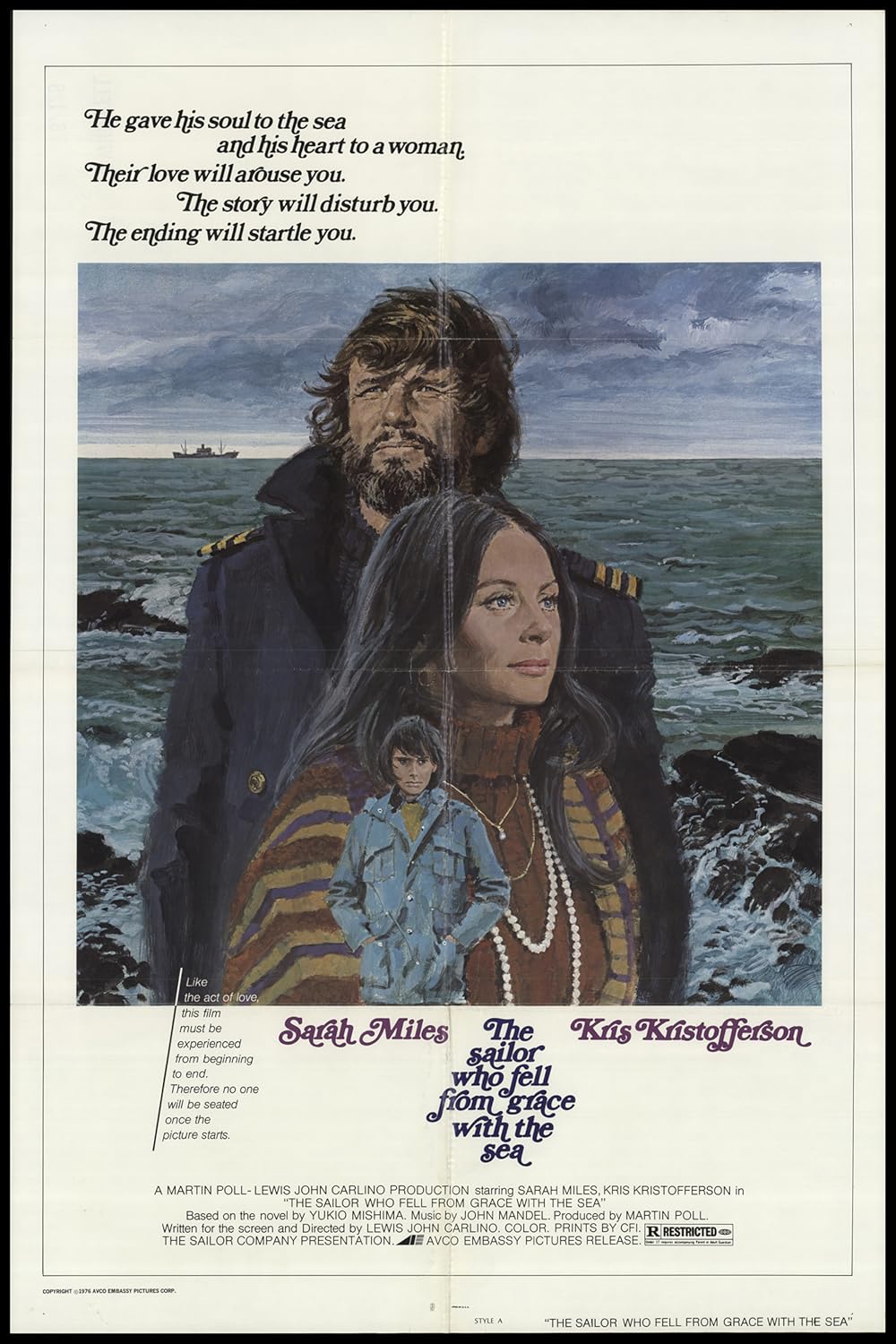
The Sailor Who Fell from Grace with the Sea (1976)

By Richard Winters

My Rating: 4 out of 10

4-Word Review: They dissect a cat.

Jonathan (Jonathan Kahn) is a 14-year-old who lives with his mother (Sarah Miles) and nanny Mrs. Palmer (Margo Cunningham) in a beachfront house along the sea after the death of his father three years earlier. Jonathan enjoys his friendship with a group of boys lead by Chief (Earl Rhodes), but his mother does not approve due to Chief’s anti-social sentiment forcing Jonathan to have to sneak out on the sly to see them. One day Jonathan finds a peep hole in his bedroom wall that allows him to see inside his mother’s bedroom, and he begins to peer in on her when she’s undressed, and this creates an unhealthy arousal. When his mother begins a relationship with a sailor named Jim (Kris Kristofferson) he becomes jealous and conveys as much to Chief who devises a sinister plan to ‘solve the problem’.

Lewis John Carlino had a highly respected career as a screenwriter garnering 4 Academy Award nominations for best screenplay, but his three forays as director weren’t as successful and all started out well but ended up just missing the mark. This one was no exception as many critics at the time felt the problem lay in adapting a novel, that was written by Yukio Mishima, which was set in Japan, and trying to convert it to English society. The cultures differences that make up the complex Japanese society that were so integral to the characters in the book gets completely lost in the translation leaving the viewer feeling cold, detached, and genuinely confused when it’s over.

The on-location shooting filmed in Dartmouth, Devon, England, is excellent and the one thing that helps the movie stand-out particularly the isolated hillside house that gives the atmosphere an almost surreal-like feel. There’s also a really creepy performance by Rhodes who nails it as a highly intellectualized kid who displays no moral compass and effectively comes-off as a very believable young sociopath. However, these moments gets coupled with some very disturbing ones dealing with animal cruelty which includes a very drawn-out scene involving the killing and dissecting of a cat as well as putting a firecracker in a seagull’s mouth and while no animal was actually harmed during the production it still left many audiences at the time upset and will very likely do the same with viewers today.

The film’s biggest flaw though is that it doesn’t interpret the character’s actions in any way that helps makes sense of their motivations and for the most part they’re all quite two-dimensional. Jonathan’s arousal at seeing his naked mother needs much better explaining. Most kids aren’t this way, so what is it about his psyche that causes him to enjoy it without any guilt or shame? The movie gives us no clue, nor does it explain how his father died and when you add in the boy’s weird behavior and you start to wonder if the Jonathan maybe had something to do with it, which would’ve opened an interesting subtext if even brought up subtlety, but the script fails to touch on it.

The book makes the reasons for the son’s actions clearer. For instance in the novel the boy losses respect for the sailor when he sees him jump into a water fountain, which he considers to be undignified and the movie really needed to have some similar moment as the kid, like in the book, is initially in awe of the man, but it’s never totally clear what creates the deadly shift. Also, when the son is caught peeping in at his mom the response by his mother in the book is different as she feels the boy should receive a severe punishment, but the sailor, in hopes of becoming ‘friends’ with the kid whom he’s now helping to raise, resists, but the film flubs this scene too by treating it almost like a forgettable throwaway moment that has no impact versus one that would’ve helped reveal the sailor in a more in depth way.

Spoiler Alert!

The ending, which should’ve been a shocker, falls flat as well. In the novel it’s made clear that the boys plan to drug and dissect the sailor just like they did with the cat and they even bring along the tools to do it, in the movie we only witness him drinking the spiked tea. The camera then zooms way out showing the boys at an extreme distance where it’s not obvious what they’re doing. To really make a memorable impression we should’ve seen the boys stab the sailor several times with their knives, which would’ve been far more startling. I felt too there needed to be a reaction from the mother. Does she find out what they did, or does his violent demise remain a mystery? How does her relationship with her son evolve, or devolve afterwards? These questions remain unanswered making the movie seem less like a story and more as a concept that’s never adequately fleshed out.

My Rating: 4 out of 10

Released: April 5, 1976

Runtime: 1 Hour 45 Minutes

Rated R

Director: Lewis John Carlino

Studio: AVCO Embassy Pictures

Available: DVD, Blu-ray, Amazon Video, Plex, Roku Channel, Tubi, YouTube

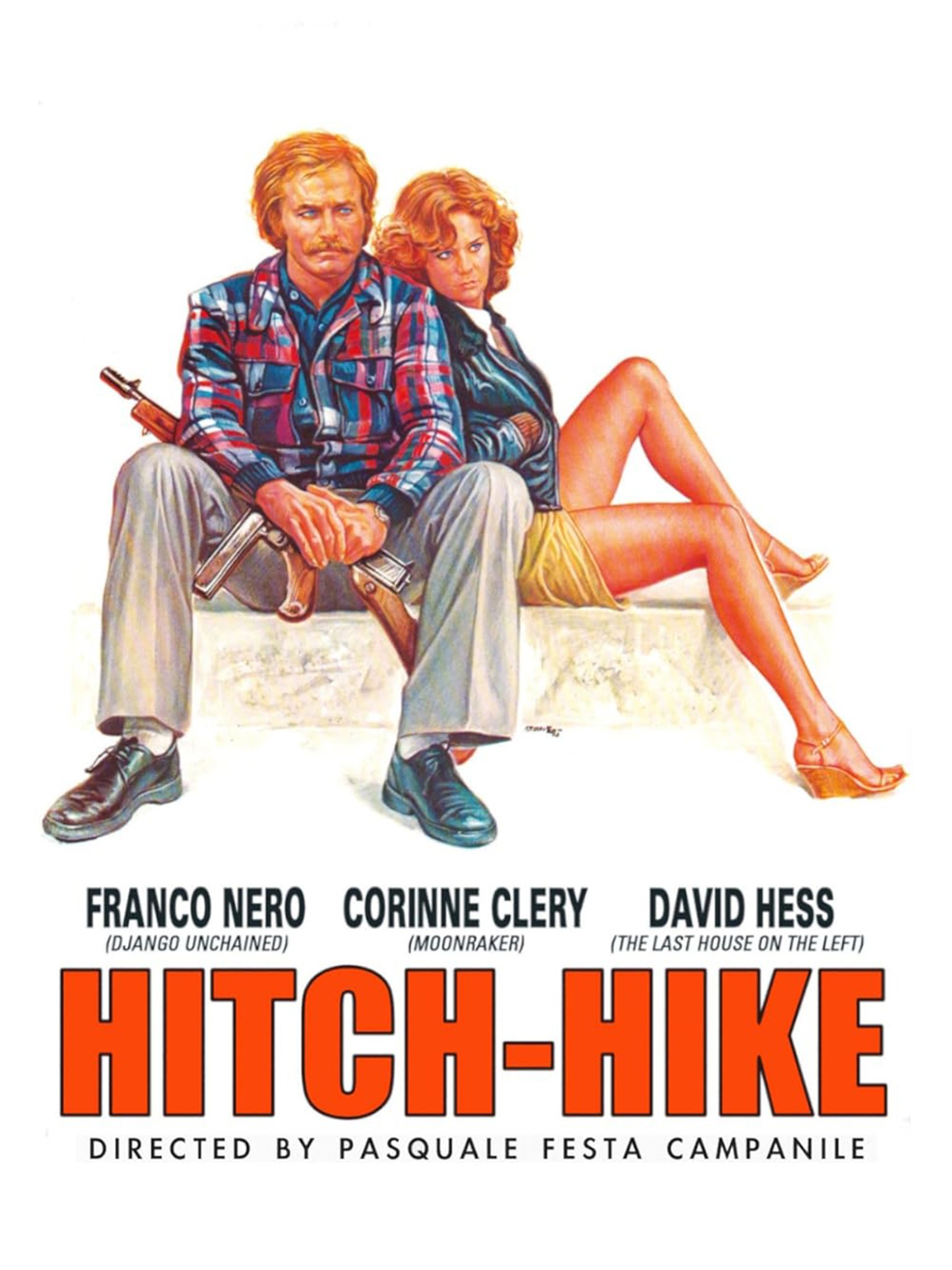
Hitch-Hike (1977)

By Richard Winters

My Rating: 5 out of 10

4-Word Review: Couple picks up killer.

Walter (Franco Nero) and his wife Eve (Corinne Clery) are constantly bickering about Walter’s alcoholism. They go on a trip to Los Angeles and on the way pick-up Adam (David Hess) whose car is stranded on the road. Unbeknownst to them he’s a robber who has doubled-crossed his partners and absconded with a suitcase full of $2 million dollars. It doesn’t take long before Adam has a gun to both of their heads demanding they take him to Mexican border where he plans to escape while also killing them in the process. As the two try desperately to figure a way out they are also being secretly followed by the two young men whom Adam betrayed and who are now intent on extracting a revenge.

One of the biggest problems I had with the movie is that it’s supposed to take place in California but was actually shot in the mountains of Gran Sasso in Italy, which looks nothing like the state. I realize that California has a varied topography but the locales here are screaming southern Europe and the highway signs are done in blue, which anyone living in the U.S. would know is fake as here they’re green, which only accentuates the off-kilter look of the production. Since where they’re driving to makes no real difference to the plot I would’ve just had it be some city in Italy like Rome, which would’ve helped the authenticity.

The other problem I had is that, at least the version I watched, it’s spoken in Italian. Normally I prefer movies that are subtitled versus dubbed, but I could’ve sworn years ago I saw it in English, but what’s available on YouTube, which is the only service currently streaming it, doesn’t offer that, which is a big shame. Not so much because of Nero or Clery, but more Hess as his own voice is not used, which then defeats the whole reason for having him. He’s best known for playing the sadistic killer in The Last House on the Left, and he has an excellent way of being menacing, but because we don’t hear him actually speak in his native tongue all of that gets lost and the creepy energy that was supposed to be there by casting him gets completely wasted.

Spoiler Alert!

The story, which is based on the unpublished novel ‘The Violence and the Fury’ by Peter Kane, doesn’t get off to a good start as it features two people, particularly Nero, who are not likable, and thus the viewer really doesn’t care about their predicament making the tension mediocre at best. There are also elements that are stolen from better known movies like the mysterious truck that keeps chasing them during their drive, with the identity of the driver hidden, that’s taken straight from Duel. Loopholes abound as well as we later learn that Hess is the driver of the truck, but how was he able to avoid being shot by his cohorts earlier with a gun aimed right at him and how was he able to hijack the truck as he had been without any vehicle? Maybe he was able to hitch a ride with a truck driver, just like he did with the couple, and then do away with the driver once inside, but this is stuff that needs to be shown as otherwise it comes-off like the filmmakers are just making up the rules as they go with no concern whether it’s logical.

The twist ending is limp as it features Nero setting the car on fire with his injured wife inside and putting Hess’s dead body next to hers in an attempt to make it look like both he (Nero) and she died in the blaze, but there were such things as dental records back then, so after the coroner examined the charred bodies he/she would determine that it wasn’t really Nero who died and thus the authorities would continue to search for him. Seeing him then become a hitchhiker himself leaves open too many questions and comes off like a cop-out where the filmmakers ran out of ideas and thus decided to just end it there.

End of Spoiler Alert!

The moment where Nero is forced to watch Hess make love to his wife, and witnessing the humiliation and anger in his eyes, is the film’s best moment. Watching Clery, the only person you sympathize with, is entertaining both with her clothes on and off. However, the film lacks any character development, and the plot is quite strained with a lot of moments where the story, much like with the car ride, doesn’t seem to be going anywhere and if anything, just driving itself around in circles.

My Rating: 4 out of 10

Released: March 4, 1977

Runtime: 1 Hour 44 Minutes

Rated R

Director: Pasquale Festa Campanile

Studio: Explorer Film ’58

Available: DVD, Blu-ray, YouTube

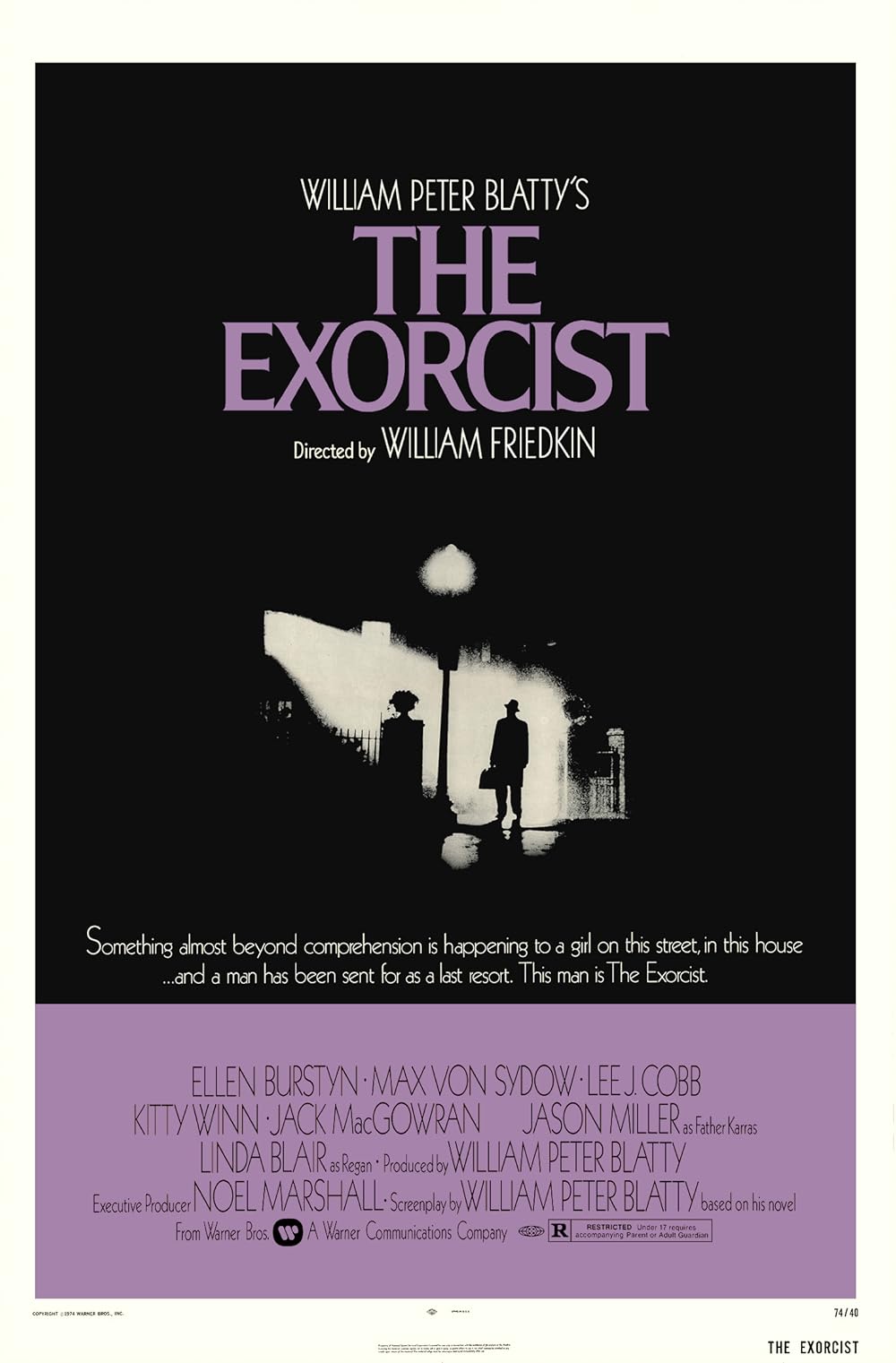
The Exorcist (1973)

By Richard Winters

My Rating: 10 out of 10

4-Word Review: Possessed by the devil.

Chris McNeil (Ellen Burstyn) is a famous Hollywood actress living on location in a neighborhood of Washington D.C. known as Georgetown where the latest movie she’s working on is being shot. She’s renting a posh home along with her two servants (Rudolf Schundler, Willi Engstrom), her secretary Sharon (Kitty Winn) and her 12-year-old daughter Regan (Linda Blair). Things start out fine, but then Regan begins exhibiting odd behaviors. Chris takes her to several doctors as Regan’s anti-social traits continue. The doctors prescribe various drugs, but nothing works. At her wits end Chris, a non-believer, finally resorts to asking a local priest, Father Karras (Jason Miller) if he’ll perform an exorcism on her daughter. Karras though is going through a crisis of faith and doesn’t believe the archaic ritual will help her but becomes more convinced after he visits the girl who displays knowledge of his personal life that she would not have known about otherwise. Eventually he asks the church for permission to conduct one, but under the condition that he do it alongside Father Merrin (Max Von Sydow) an elderly man with a heart condition who had done an exorcism many years earlier in Africa.

The film was based on the bestselling novel of the same name that in-turn was inspired by the true-life event that occurred in 1949 where priests performed an exorcism on a troubled 14-year-old boy named Ronald Edwin Hunkeler. Author William Peter Blatty, read about the incident while a student attending Georgetown University. After having become a successful screenwriter during the 60’s where he wrote mainly comedies for director Blake Edwards, he approached his agent about writing a horror novel about a child possessed but was initially talked out of it. Then in 1968 he watched Rosemary’s Baby, which he felt had a weak ending that he could’ve done better, so he brought up the exorcism concept to a book publisher while attending a cocktail party and he agreed pay him a $25,000 advance to write the book in 10-months. Upon publication the sales were at first sluggish, but then after an appearance on the ‘Dick Cavett Show’ they skyrocketed, which soon lead to a movie rights deal with Blatty commissioned to write the script.

The movie follows the book closely though in a more condense form with scenes that were groundbreaking in its level of explicitness and perversity including an infamous crucifix masturbation moment. However, it’s the angiography that many viewers found the most disturbing. While it’s shockingly explicit it’s also lauded by medical professionals as being highly accurate and for many years afterwards was used in radiological training films. Many critics at the time condemned the scene labeling it ‘irresponsible’ and ‘needless’, but I liked it. A good horror movie should put the viewer in an uneasy state right from the start and then continue to turn the screws tighter as it goes on. This moment clearly telegraphs to the audience that the filmmakers will not shy away from showing something graphic even if it’s outside of good taste and if they’re going to be this brazen with this scene then it makes it all the more unsettling about what’s to come next. 

In many ways, and I don’t believe it was intentional, but the film does become an inadvertent satire on the medical, psychiatric community as their ‘diagnosis’ on Regan are really just guesses and the extreme reliance on prescribing medications, which they feel will somehow ‘resolve everything’. I didn’t really have a problem with this as I think many doctors at the time, and maybe even now, would respond the same way if given such a bizarre case. My one issue though is that eventually one of them, played by Peter Masterson, gets up in front of a roundtable of other doctors and suggests that Chris take Regan to an exorcist. I don’t believe any real medical doctor would ever suggest it or certainly be met with pushback by the other medical professionals in the room. I realize the movie had to find a way to progress to the third act, so the idea of an exorcist needed to be brought up at some point, but it would’ve made more sense had it come from Chris’s servants, who were deeply spiritual already. Chris could’ve scoffed at it at first, but then after thinking and even reading up on it, would eventually relent. 

The performances are uniformly excellent. Burstyn was not the first choice as there were other actresses more famous than her at the time, but her ability to display distraught emotion and continue to do so as it progresses and still keep it fresh and genuine makes her the best person for the role bar none. Blair is quite good too though Mercedes McCambridge does voice the demon during the exorcism moments, which kind of affects things. Don’t get me wrong McCambridge’s deep vocals makes it scarier, but had the lines, which are quite obscene, been recited by Blair herself it would’ve made it more shocking. Plus, it would still allow credence for the doctors to say it was a mental illness and not a possession since whatever was being said was coming from her natural voice. 

The real star though is Father Karras as he’s the one that goes through an actual internal change during the course of the story, from a person who’s had a crisis of faith to ultimately regaining it. Miller, who’s perfect, was not the original choice as Stacey Keach had already been offered the role and signed on, but then director William Friedkin went to watch the play That Championship Seasonwhich Miller had written and afterwards the two met backstage and Friedkin talked about his new project that got Miller to describe his own Catholic upbringing and his quarrels with it, which convinced Friedkin that he’d be the better actor and thus the studio bought Keach out of his contract. As much as I like Keach this was still a good move as Miller’s guilt-ridden face, which gets on full display every time he’s in front of the camera, leaves a lasting visual impression. I also liked the way the character remains skeptical until the very end versus other horror films that would have the people believing in the supernatural right away, or pretty quickly. However, in real-life there’s always going to be cynical people, so allowing in their apprehension through Karras makes the story stronger and more three-dimensional. 

Spoiler Alert!

I felt the ending, in which Chris pronounces Regan to be ‘cured’ and not remembering a thing and then driving away, to be a bit lacking. Chris was portrayed as being secular, but you’d think after what she saw her daughter going through would’ve changed that. This could’ve been done subtly by having her holding a crucifix, something she had despised her staff putting underneath her Regan’s pillow earlier or just shown wearing a small one around her neck. 

I also didn’t like the side-story dealing with the Burke Dennings character, played by Jack MacGowran, being apparently pushed out the window by the demon and falling to his death down a flight of cement stairs as this takes away the impact of when it happens to Father Karras at the end. Instead of Karras’ death being the shocking, unexpected twist that it should’ve it comes off more like a ‘here-we-go-again’ thing. If I had been the director I would’ve removed both Dennings death and Lee J. Cobb character completely as I really didn’t think he added much or helped progress the story forward. I would’ve still had the steps being shown in the early part of the film as a forewarning by having Karras runup them during his early morning workouts and this could’ve been when he first met Chris as they’d bump into each other one day while she was leaving to go somewhere. The head being twisted all the way around, which is described as happening to Dennings, but never shown, could’ve been revealed as occurring with Karras, possibly with his eyes glowing when the pedestrians come running to his aid, which would’ve been a good creepy final horror visual. 

My Rating: 10 out of 10

Released: December 26, 1973

Runtime: 2 Hours 15 Minutes

Rated R

Director: William Friedkin

Studio: Warner Brothers

Available: DVD, Blu-ray, Amazon Video, YouTube

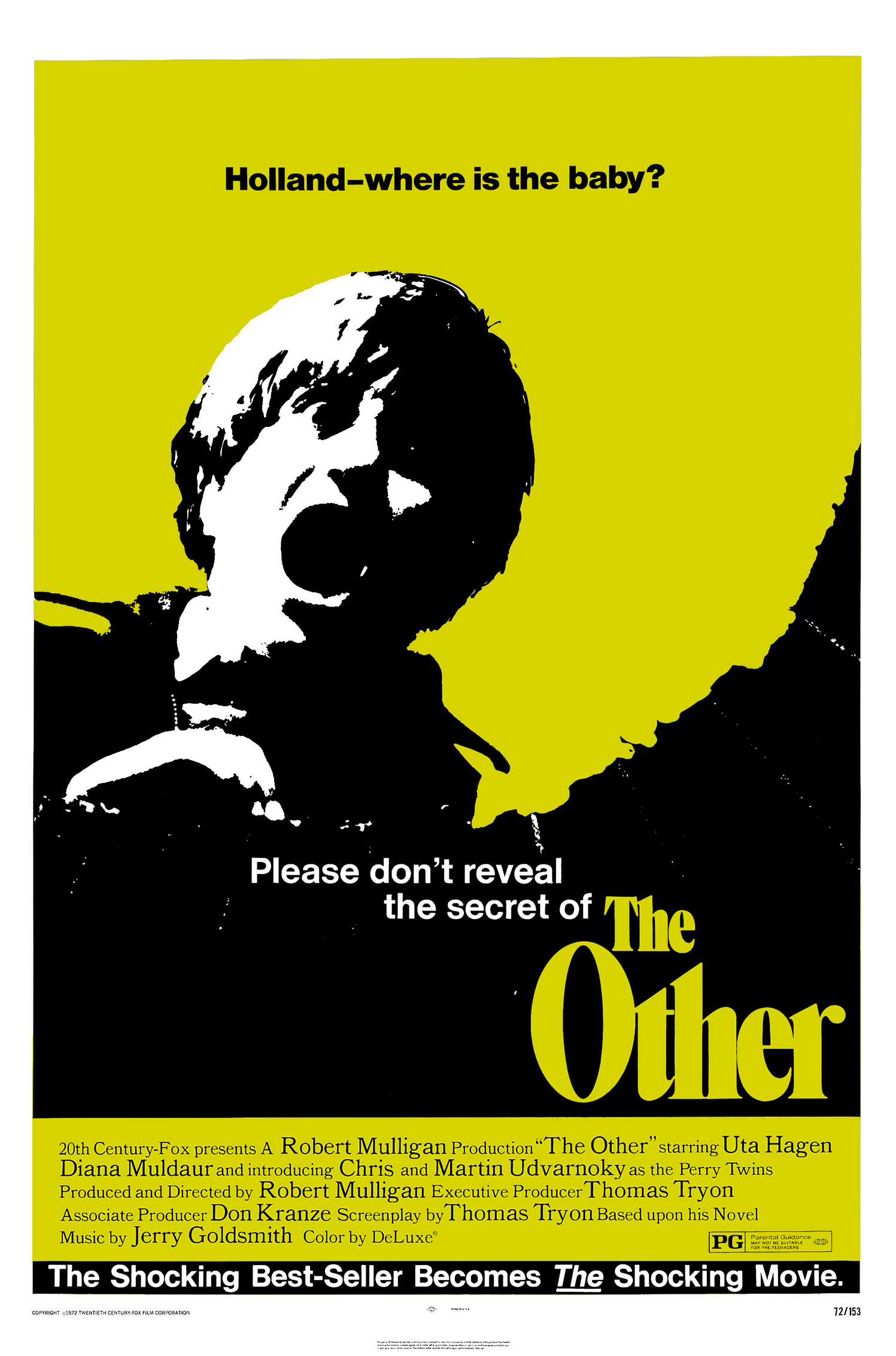
The Other (1972)

By Richard Winters

My Rating: 7 out of 10

4-Word Review: Twin brother causes havoc.

Niles and Holland (Chris and Martin Udvarnoky) are twin brothers living with their mother (Diana Muldaur) and aunt and uncle (Norma Connolly, Lou Frizzell) on an isolated farm. Niles becomes good friends with Ada (Uta Hagen) a neighbor lady who taps into Niles’ special abilities. She teaches him a technique in which he can separate his mind from his body and then have it harbor in another body be it a person, or animal, or even a bird. Ada though fears Niles is using this ability for evil purposes when those around him begin turning up dead. When his mother is found at the bottom of the stairs unconscious and stuck to a wheelchair the rest of her life afterwards Ada tries to convince Niles to give up the game, but Niles insists it’s really his brother Holland that’s committing the acts of violence and not him, but Ada refuses to believe him as she’s in on a secret that Niles is refusing to accept.

Tom Tryon, who had been an actor throughout the 50’s and 60’s, became frustrated at the quality of roles he’d been offered and wanted to try novel writing. After watching Rosemary’s Baby and seeing the reaction it got he decided to write his own horror story basing it on some of the experiences he had gone through while growing up in a small New England town. It took nine different rewrites before he was able to get it published where it became a best seller and allowed him to quit acting and become an author fulltime. When it was bought into a movie Tryon retained the rights to the story, which allowed him to write the screenplay though he later admitted to not liking the finished product and blaming it on the casting and editing, which had cut out a significant portion of the story, over 25-minutes of it, based on feedback from test audiences.

On the surface the film really doesn’t seem much like a horror movie, or at least what modern audiences have come to expect from horror. There’s no gore, several of the killings aren’t even shown and just implied, there’s also no shocks, or scares and the majority of the plot takes place outside in the sunshine versus the darkness of night. Initially viewers didn’t take to it too well and it lost money at the box office with many feeling that Robert Mulligan, best known for having done To Kill a Mockingbird, was not the right choice for this type of material with the biggest complaint being that the movie was ‘too beautiful’ and made more like a drama, which had been my feeling when I first saw it years ago on TV. However, after viewing it again in its complete form without any commercials I was able to get into it more and if one is patient, it can have many benefits.

It still could’ve been played up more, and I didn’t like the setting at all. It was shot in Murphys and Angel Camp, California even though the setting in the book had been a small town in the east. Originally Mulligan had wanted to shoot it in Connecticut, but since the story took place in the summer and they weren’t able to begin production until the fall he felt the leaves changing color would have a negative effect and thus choose to do it in the west, but topography is all wrong as all you get is very dry, brown, parched earth that doesn’t allow for much atmosphere. The eastern autumn foliage would’ve been to its benefit and made it even creepier as it would’ve reminded one of Halloween.

Despite this there are some good moments like the twin’s trip to the circus where they sneak behind the curtains and view the participants of the freakshow including witnessing a fetus floating in a glass jar of liquid, which is a great foreshadowing. Niles ability to view things outside himself like witnessing the point of view of a crow as it flies around the property is well done too though the best moment comes at the end when a baby is found missing during the night that creates a panic and is quite riveting both emotionally and visually.

The Udvarnoky twins was an unusual choice as they hadn’t been in any movies before, nor did anything films afterwards and only became aware of the roles through their grade school teacher who sent in their headshots upon learning that a film was being shot in the area and searching for twins to star in it. Originally the part was meant for Mark Lester, who could’ve done it easily since neither twin is ever in the same shot, but the brothers do admirably especially Chris, who sadly died at the young age of 49 from kidney disease, who’s able to carry the film throughout and in just about every scene though their constant whispering may eventually become irritating to some. Uta Hagen, who was known for being an acclaimed acting teacher as well as for her stage work, but had never been in a movie before, is splendid and the one element that keeps it both compelling and unnerving. Good work too by Victor French in a small, but pivotal bit and a young John Ritter.

Spoiler Alert!

The story was actually given three different endings. In the book we find that Niles is sitting inside a mental hospital as an adult and describing what happened through flashbacks. In the version broadcast on TV Niles is able to escape the fire set by Ada, but then through voiceover is heard talking to his dead brother where he states that they’ll be ‘taken away’ (most likely an institution) and will be able to ‘play the game’ there. In the film though we see Niles looking out his bedroom window before being called down to dinner revealing that he had escaped detection by the others who did not suspect him of committing the killings and thus was still free to kill again, which is the scariest.

My Rating: 7 out of 10

Released: May 26, 1972

Runtime: 1 Hour 41 Minutes

Rated PG

Director: Robert Mulligan

Studio: Twentieth Century Fox

Available: VHS, DVD-R

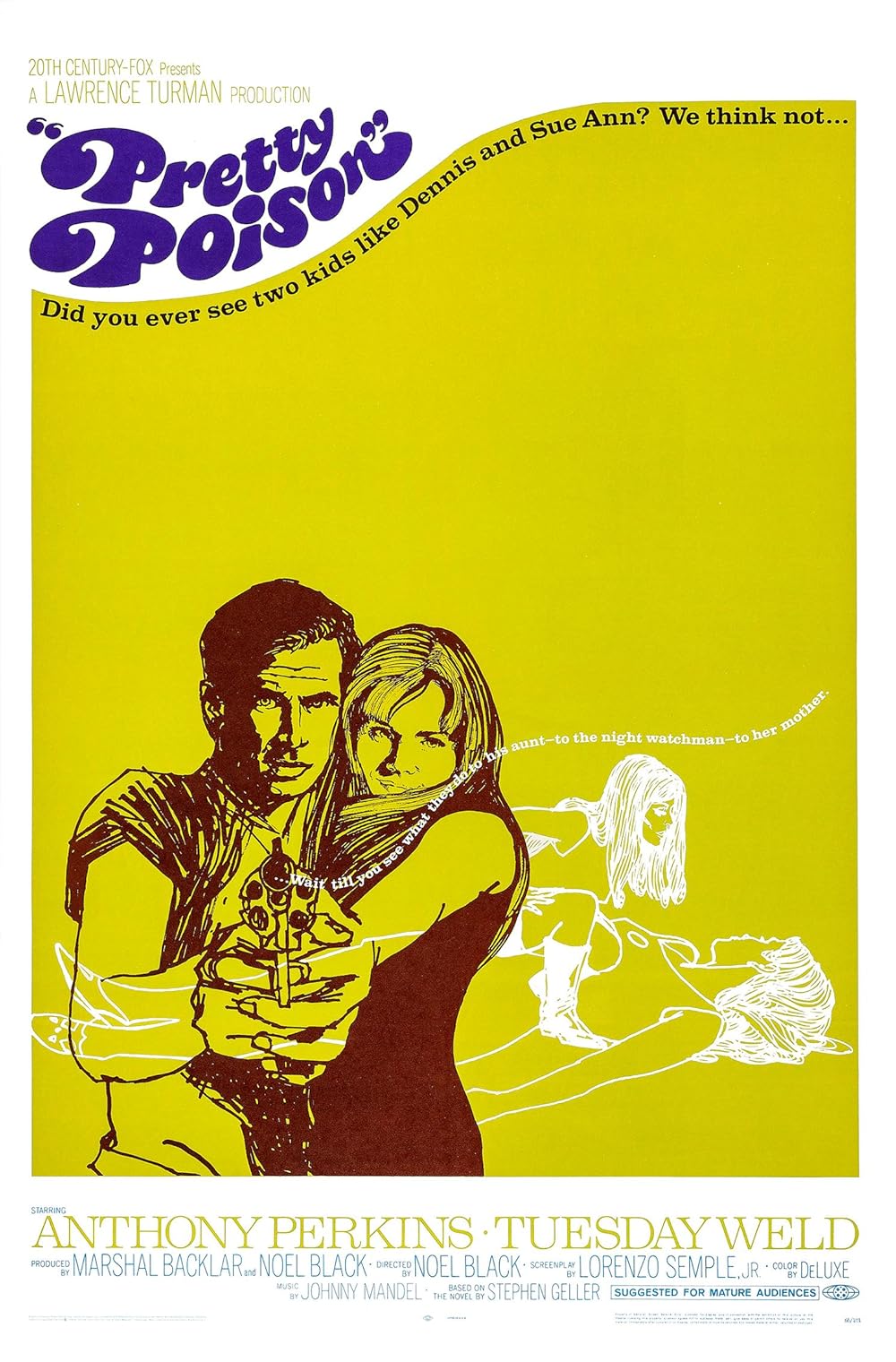
Pretty Poison (1968)

By Richard Winters

My Rating: 7 out of 10

4-Word Review: Manipulated by attractive teen.

Dennis (Anthony Perkins) has been released from the mental institution after serving several years there for setting a home on fire. He gets a job at the local factory but finds it boring and begins to escape into fantasies. He spots pretty 17-yeard-old Sue Ann (Tuesday Weld) while she rehearses with her high school marching band and immediately becomes smitten. He’s never had experience dating anyone, so he decides he’ll pretend to be a CIA agent on a secret mission as a way to impress her and get her attention. He’s disgusted at the way the factory where he works at dumps pollution into the river and thus comes up with a scheme to destroy it using her help, but when a security guard spots them, Sue Ann kills him. Dennis is shocked with Sue Ann’s brazenness and realizes she’s not as innocent as she appears. He tries to cover-up the killing but finds that Sue Ann’s only getting started as her next target is her mother (Beverly Garland). Will Dennis try and stop it, or figure that appeasing her murderous desires may be the only way to keep her from going after him?

The film is based on the 1966 debut novel ‘She Let Him Continue’ by Stephen Geller and directed by Noel Black, who was just coming off the success of his award winning short Skaterdater and this was considered perfect material for his feature film debut. He described the story as “a Walter Mitty type who comes up against a teenybopper Lady MacBeth”. It was shot on-location in Great Barrington, Massachusetts, which gives it a quant small town atmosphere where supposedly ‘nothing ever happens’ and Beverly Garland gives a terrific supporting performance as the caustic mother.

However, Black had no background in working with actors leading to many confrontations behind-the-scenes between he and Weld and keeping the shooting production on schedule proved equally challenging, which got the studio to believe they’d hired a director who was in over-his-head and helped bring in added pressures. When the movie finally did get released, it fared poorly at the box office. Black felt this was because of the recent assassinations of Martin Luther King and Robert Kennedy, which made the studio timid to distribute it and thus few people saw it though in recent years its acquired a small cult following. 

One of the elements that really makes it work is Perkins who gives a splendid performance. Initially I thought it was a mistake to cast him as he would seem too much like his earlier, more famous character of Norman Bates, but he plays this part much differently. Here he comes off as smarter and less crazy. He does dabble in make believe at times but only does it to mask his insecurities and lack of life experience. Watching his emotional arc where he goes from feeling confident, thinking he’s in control with this supposedly naive young teen, only to ultimately have to grapple with his slow realization that it’s really she who’s pulling-the-strings is the most captivating thing in the movie. 

Weld seemed initially to be perfectly cast as she had already shown a propensity at playing characters quite similar to this one in classic episodes of ‘Route 66’ TV-show and ‘The Fugitive’. However, her age clearly belies her as she was 24 at the time it was filmed and looking nowhere near 17. Having a true teen playing the role may have made what she does even more shocking. She later said in interviews that she hated working on this project mainly because Black wouldn’t let her improvise her lines and you could see she just wasn’t fully into it, and it diminishes somewhat the full effect.  

Spoiler Alert!

While it’s intriguing the whole way the ending, which has Dennis calling the police and allowing himself to be put into jail, didn’t have quite the bang I was hoping for. Dennis had fallen hard for Sue Ann to the extent he felt she had ‘changed his life’ and gave meaning to his otherwise lonely existence. When people are in love with someone, they tend not to see the same red flags that others do, so even though she does some evil things I was expecting him to make excuses for it. Like she killed the nightwatchman not so much because she was a sociopath, but more because of her ‘love’ for him and knowing it would help him in his ‘secret mission’. The murder of the mother could’ve been approached the same way in his mind. She killed her only so they could be together, and he would view it as an ‘unselfish’ act versus a selfish one.

Seeing someone who starts out a bit cocky thinking he can ‘trap’ others with his fantasies only to learn that his own fantasy had trapped him would’ve been quite ironic. He could still be convinced of her love even as he’s arrested and thus his final meeting with her, in which he realizes that she’s betrayed him by going to the police, would’ve had more of an impact.

I didn’t feel that Dennis should’ve had to spoon-feed to his psychiatrist, played by John Randolph, that Sue Ann was really the killer, as the doctor should’ve been smart enough to figure this out for himself. Watching the psychiatrist then follow Sue Ann around in his car as she finds another man (Ken Kercheval) that she intends to manipulate leaves things too wide open. What exactly will this lead to? Will the doctor stop her from killing again before it’s too late, or will Sue Ann realize she’s being followed and have the doctor killed? This is something I feel the film should’ve answered. 

My Rating: 7 out of 10

Released: September 18, 1968

Runtime: 1 Hour 29 Minutes

Rated R

Director: Noel Black

Studio: 20th Century Fox

Available: DVD, Blu-ray, Amazon Video, YouTube
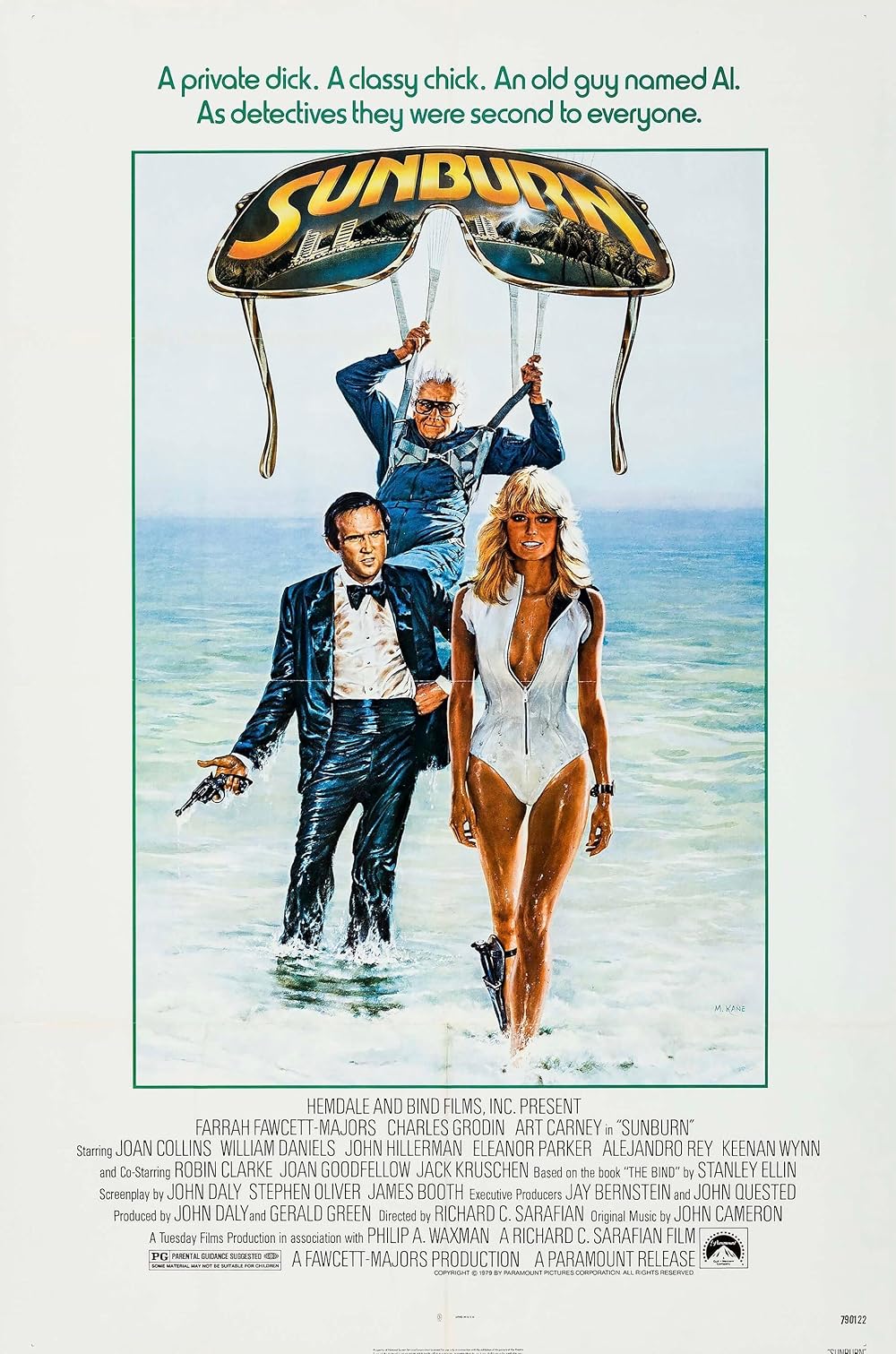
Sunburn (1979)

By Richard Winters

My Rating: 2 out of 10

4-Word Review: Couple investigates insurance fraud.

Jake (Charles Grodin) works as a private eye and gets hired by an insurance company wanting him to investigate a case that took place in Acapulco of a man who crashed his car into a building and died. The authorities have labeled it an ‘accident’, which would put them on the hook to have to pay out a large sum of money, so they’d like Jake to travel down there and find out if that were really the case, or if it could be deemed as a suicide. Jake decides to hire an actress from a modeling agency named Ellie (Farrah Fawcett-Majors) to act as his wife. Ellie takes an interest in the case and helps him search for clues while also forming a romance with him, which starts out rocky but becomes stronger as they find themselves sucked further into the mystery and the potential dangers.

The film is based on the 1970 novel ‘The Bind’ by Stanley Ellin, which had a grittier tone than the movie. Farrah’s agent Jay Bernstein felt this would be a good vehicle for her, but wanted the script turned into more of a lighter and comical story that the book did not have. This was at a crucial point in her career as the first film he got her cast in Somebody Killer Her Husbanddid badly with both the critics and public, so it was important that she prove her box office ability with this picture and when this one also bombed she fired him complaining that both movies had been ‘put together with hustle and bubble gum’.

One of the elements that really hurts it is the casting of Charles Grodin, who by his own admission was their sixth choice for the role as they had initially pursued Robert Redford and even Harrison Ford, who would’ve both been way better. Grodin can certainly be funny, but this part doesn’t give him much to work with. He has a few amusing moments when he’s trying to scare away a lizard from entering their bedroom and then in an effort ‘to protect her’ from a further ‘lizard invasion’ agrees to sleep on a nearby chair, which cause him to do nothing but toss and turn the whole night in an effort to find a ‘comfortable’ position.

His character though didn’t seem all that professional as he leaves it up to her to place a listening device into one of the suspect’s phones, but she had no background in this kind of thing, so what would happen if she screwed it up? The insurance company is promising him a lot of money so it should be up to him to do most of the legwork to make sure it gets done right and if any ditzy amateur blonde can be pulled in off the street to do what he does then what’s the point in hiring him to begin with?

Farrah does much better here than her previous film. I enjoyed her dialogue with Grodin and how just because she was hired to play his wife didn’t mean she was automatically going to be one during their off hours when he for some chauvinistic reason expects her to make him a sandwich, which she immediately declines to do. I was confused though why her character would want to get so involved in the case. She’s just there to play a part, so why not just do her job and enjoy the sun? Instead, she constantly puts herself in increasingly dangerous situations for no real reason. She’s gets paid whether the case gets solved or not, so why jeopardize her life over something that she has no emotional or financial investment in?

It’s also hard to believe that such a hot looking lady wouldn’t be in a relationship. It would’ve been far more enjoyable had there been a jealous boyfriend who secretly followed her on her mission and even threw a few monkey wrenches into the investigation, which could’ve added extra spark into a movie that’s otherwise too leisurely. For her to then fall in love with Grodin was equally dumb. The guy could’ve been her father and lacked any type of sexual pizazz. Had Redford or Ford been cast then the romance might’ve made more sense, but such a beautiful woman like her would have no reason to settle for a doofus like him and would simply be there for the payout and then be long gone.

Art Carney is great in support and actually does most of the work making it seem like Grodin’s character wasn’t even necessary and in fact having Carney and Farrah team up would’ve made it unique and more entertaining as Carney despite his advanced age shows a lot of energy particularly when he goes out onto the disco floor. The rest of the cast though gets wasted with many of them having only one or two lines making you wonder why they’d bother to sign on at all.

The film does have one memorable moment where Carney and Farrah, in an effort to escape the bad guys who are pursuing them, inadvertently crash their car into a bull fighting ring and then must avoid the bull who goes after them. This action is both humorous and exciting, but otherwise unless you’re some super Farrah fan the movie offers little else that’s interesting.

My Rating: 2 out of 10

Released: August 10, 1979

Runtime: 1 Hour 45 Minutes

Rated PG

Director: Richard C. Sarafian

Studio: Paramount Pictures

Available: DVD-R (MGM Limited Edition Collection)

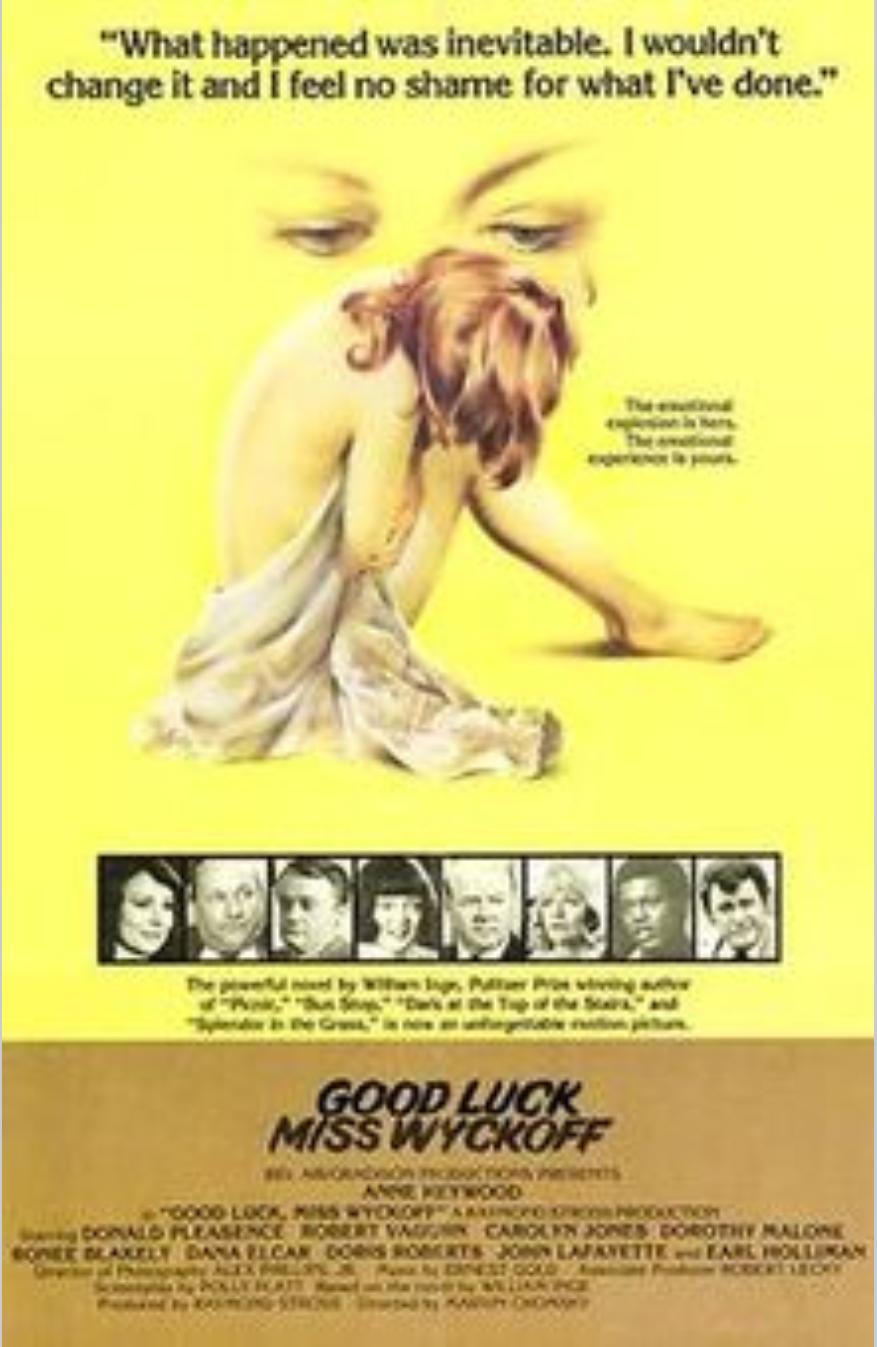
Good Luck, Miss Wyckoff (1979)

By Richard Winters

My Rating: 1 out of 10

4-Word Review: Spinster teacher is raped.

Evelyn Wyckoff (Anne Heywood) is a middle-aged single woman who teaches high school in a small town in Kansas. She has never married and is showing signs of severe depression, which alarms her best friend Beth (Carolyn Jones) as well as the older couple (R.G. Armstrong, Joycelyn Brando) whom she’s living with. Both her doctor (Robert Vaughan) and her psychiatrist (Donald Pleasance) believe it’s because she is not in a relationship or having any sex and that she needs to get out more and meet people. She attempts at starting something with fellow teacher Chester (J. Patrick McNamara) but finds him to be too shy and embattled with his own problems to be able to recognize her interests. She also considers friendly bus driver Ed (Earl Holliman) only to call it off when she learns he’s married. Left alone after school one evening she comes into contact with Rafe (John Lafayette), a black man who works as the janitor, who sees her loneliness as a weakness that he can exploit. He comes onto her strongly and abrasively eventually forcing her to submit to his sexual demands, but she doesn’t go to the authorities and instead starts to enjoy the degradation and continues to come back for more until the rest of the students and teachers find out about it putting her job and reputation in peril.

The story is based on the 1970 novel of the same name written by William Inge. The film rights were sold in 1971 but sat on the shelf for many years until producer Raymond Stross found it and felt it would be a good vehicle for his actress wife Heywood who had already made a name for herself in tackling controversial, edgy material and even sought it out, so this was considered a perfect next project. While she had received critical accolades for her earlier work, The Fox, where she played a lesbian in a  relationship with Sandy Dennis, which was envelope pushing for its era, this one did not go over as well and was genuinely lambasted causing her career to take a downfall from which it couldn’t recover and she ended up retiring from acting just a decade later.

On a surface level it’s okay. The recreation of the 1950’s Kansas, while shot in Stockton, California, is still effective and the personalities of the people isn’t as cliched. There are those that show prejudices and oppressive mind sets, but there’s a healthy balance that don’t, which helps make it feel more realistic. The supporting cast is full of familiar faces though most of them are wasted in small roles that don’t add much and Carolyn Jones, in her last feature film appearance, stands out best albeit with an awful hairstyle.

The biggest detriment, besides the flat direction and booming music score, is Heywood who doesn’t offer enough nuance to her part. I’ll commend her for taking on a very difficult role that required at age 48 to be fully nude and allowing herself to be put into some very vulnerable and demeaning positions, but her facial expressions and responses are one-note. Her constant crying for no reason, which alarms those around her, and unexplained impulsive behavior, like smashing a mirror during a party, is too dramatic. Instead of using this to reveal that she’s unhappy it makes her seem more like a complete mental case that has far worse issues than just being lonely and I felt more sympathy for her friends trying to put up with her erraticism than I did with the main character who for the most part is rather whiny and annoying.

There’s never any explanation for why she’s unable to get into a relationship. She’s attractive, so you’d expect there would be eligible suitors who’d ask her out. All we see is a bus driver who’s already married, but what about other single men who would have to be out there? Why don’t we ever see one of them make a move and if so, how would she respond to them, which would be far more revealing than anything she says to her shrink, which amounts to talky pseudo-science.

The rape scene isn’t either shocking or effective and seems to come out of nowhere. It occurs in the middle of the second act, but before then we see the Rafe character only once while cleaning the chalk boards for a few seconds, so we have no idea what makes him tick, or why he chooses to prey on this woman and none of the others. Had she made the first move in an attempt to connect with someone and relieve her of her isolation, and this then inadvertently incited some inner aggression with him it might’ve made more sense and worked with the flow of the story, but the way it gets handled here makes it seem like two different movies: one dealing with the pain of being alone and the other about a man who enjoys exploiting women.

Ultimately nothing comes together. We don’t learn much about the protagonist. Yes, she’s sexually repressed, but the root cause is never made clear. The fact that she accepts her degradation at the hands of Rafe makes her even more confusing. When her friend Beth says that she feels like she didn’t really know her at all I the viewer felt like saying the same thing. The result is shallow using shock elements that are no longer effective causing the film to be both forgettable and boring.

My Rating: 1 out of 10

Released: April 13, 1979

Runtime: 1 Hour 46 Minutes

Rated R

Director: Marvin J. Chomsky

Studio: Bel Air/Gradison Productions

Available: DVD, Blu-ray, Tubi

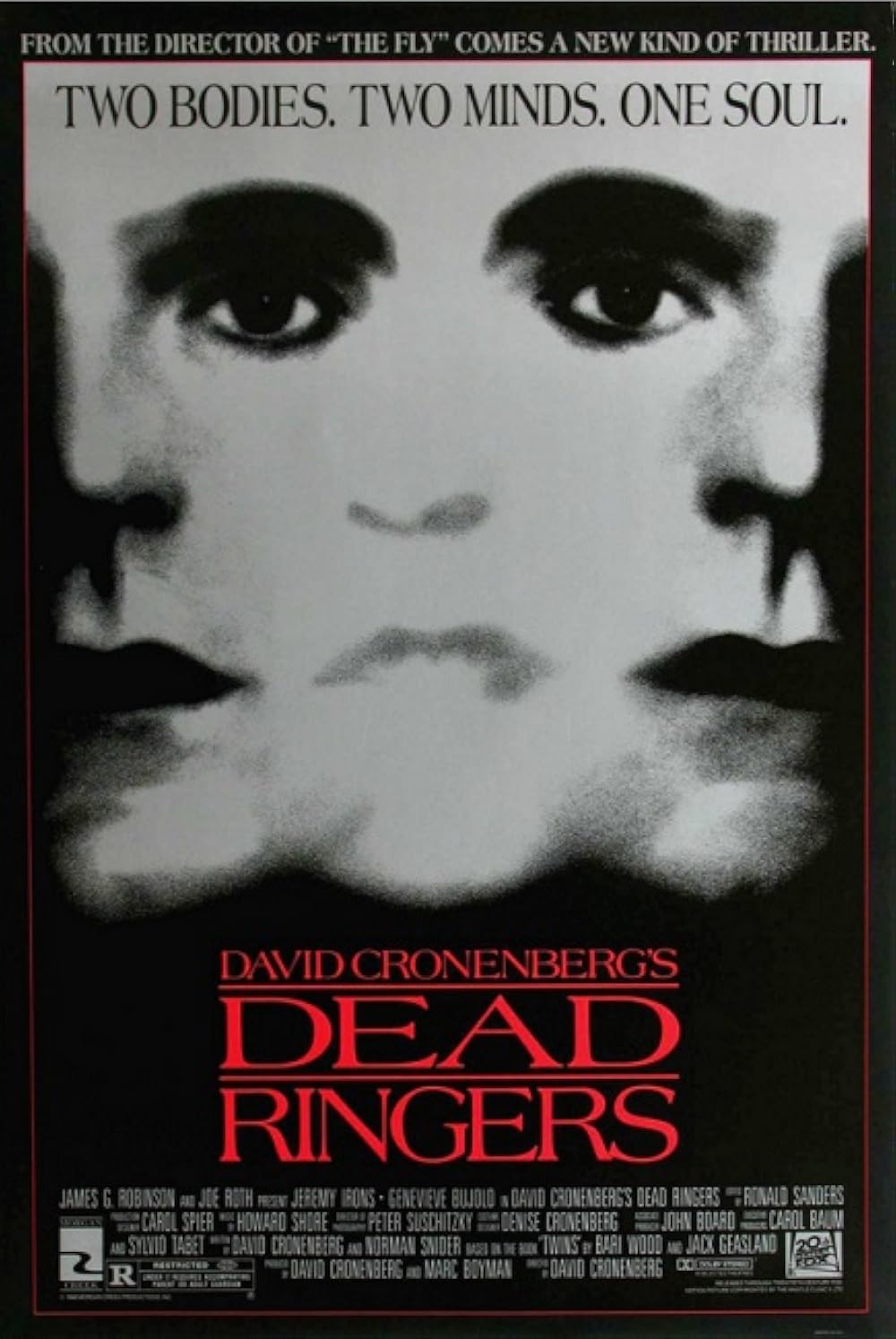
Dead Ringers (1988)

By Richard Winters

My Rating: 7 out of 10

4-Word Review: Twin brother’s relationship erodes.

Twins Elliot and Beverly (Jeremy Irons) work at a clinic as gynecologists with Elliot being the more outgoing of the two. Elliot routinely dates women many of them patients at their clinic but will then ‘hand them off’ to Beverly who is the shyer of the two and unable to get women without Elliot’s help. Since Elliot likes variety in his relationships, he’s okay with Beverly getting the women once he’s lost interest in them and the women can never tell the difference. Things though begin to change when Claire (Genevieve Bujold) enters into the picture. She, like the ones before her, was a patient whom Elliot is quickly able to hook-up with and then after a brief fling is given to Beverly, but this time Beverly falls for her in a deep way and not so eager to drop her. Claire also becomes aware that she’s been tricked by the two and has a confrontation with Elliot about it while she continues to see Beverly on the side. Beverly though becomes conflicted with his dual loyalties unable to handle how fractured his relationship with his brother, who he used to be quite close to, has become spiraling him into a depression that ultimately leads to a dangerous drug addiction. 

In 1981 David Cronenberg became interested in doing a movie about twins and producer Carol Baum sent him articles about Steward and Cyril Marcus. These were identical twins who were gynecologists working and living together in New York City. On the morning of July 17, 1975 both were found dead inside Cyril’s cluttered apartment in what had initially been perceived as being a suicide pact, which was later ruled out, but both did die within a few days of the other. While their deaths generated may articles and even a novel the cause to what circumstances lead to them dying together has remained open and thus Cronenberg decided to ‘answer’ that question with this story though he had to go through many years of different producers, screenwriters, and various different drafts before this version was finally given the green light.

If you’re a fan of Cronenberg, particularly his gore, which he’s best known for, then you may be disappointed with this as there really isn’t much. There are still some disturbing moments including the garish genealogical instruments that Beverly pays an artist, played by Stephan Lack, to create which he then plans on using on one of his patients, to the shock of his medical staff, which is a creepy moment. There’s also a dream sequence where Claire bites off a membrane connecting the two brothers, which is cool, but brief. There was also a scene shot that had the head of one of the twins coming out of the stomach of the other one, but this didn’t go over well with the test audiences, so it got cut, but I really wished had been left in. 

It’s really Irons and his incredible performance as the twins that makes this such an engaging movie to watch. Having one actor playing dual roles has certainly been done before, but never quite this effectively. Even though they look exactly alike I really got the sense these were two different people and Irons ability to craft such diverse personalities and postures, this was achieved by putting his weight on the balls of his feet while playing one of them and having his weight put on his heels while playing the other helps to, in a very subtle way, create a strong distinction and a hypnotic presence that sucks you into the story and never lets you go. 

My only quibble is that rarely have I seen twins that you couldn’t tell apart in some way. I noticed that Irons did have some minor moles on his right cheek and then another on the left side of his head near his eye. In the movie both of the brothers have these lesions in the exact same place, but I think in reality they wouldn’t, so they could’ve masked the moles on one of the characters through make-up, so it would only show on one of them and that could’ve been a way to tell them apart physically. There’s also the issue with one of them given a women’s name, which Claire does question at one point. Beverly gets quite defensive when it’s brought up insisting that his name is spelled in the ‘masculine’ way, but on the credits it’s spelled out just like it would had the name been given to a female, so I felt there should’ve been more explanation of why he’d been given an unusual name as it was something that would certainly come off as odd to many and I don’t think I’ve ever heard of a man with that name. 

I also had some problems with Bujold’s character as she seems to be plopped in solely to get the story going and start the process of having the brother’s strong bond dissolve, but for a character to generate such a pivotal thing I think she should’ve stood out more. What was it about this woman that created a division between the boys that the other women hadn’t? I would’ve liked seeing her more involved in the conflict possibly confronting Elliot in an angry way, not the conciliatory one we see here, and forbidding Beverly to see him, which would’ve helped make her more prominent versus just being a story device. 

My Rating: 7 out of 10

Released: September 23, 1988

Runtime: 1 Hour 53 Minutes

Rated R

Director: Michael Cronenberg

Studio: 20th Century Fox

Available: DVD, Blu-ray, Peacock, PlutoTV, Roku,Tubi, Amazon Video, YouTube

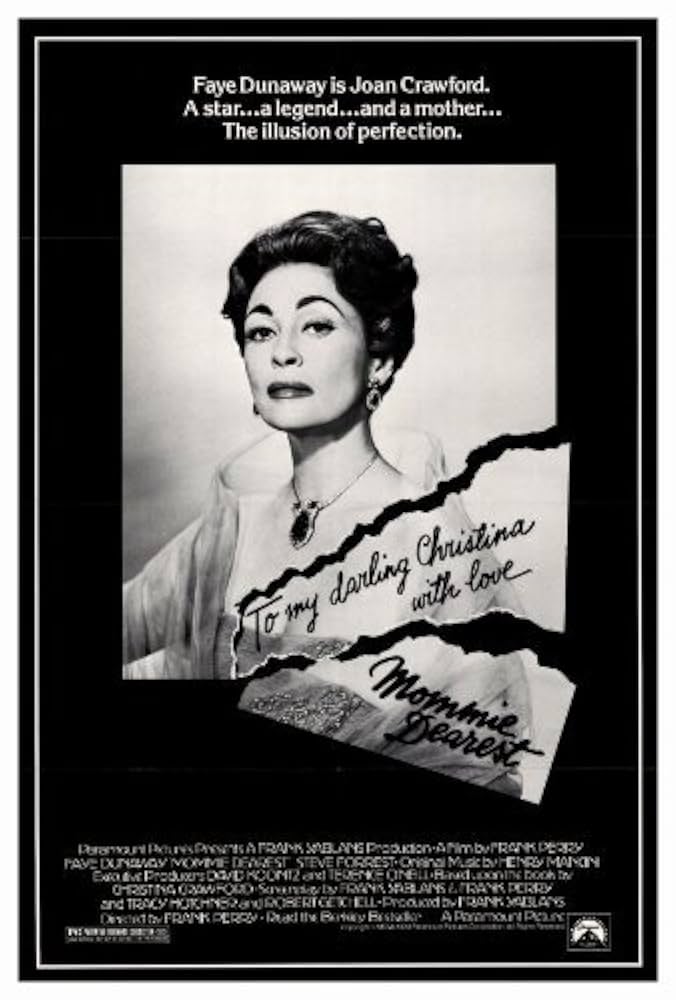
Mommie Dearest (1981)

By Richard Winters

My Rating: 6 out of 10

4-Word Review: Treating her children cruelly.

Joan Crawford (Faye Dunaway) is a famous actress who longs to have children, but unable to have any of her own. The adoption agencies reject her attempts to get a child because she’s divorced and a career woman, so she gets her boyfriend Gregg (Steve Forrest), who’s rich and influential, to pull-some-strings, which ultimately gets her a baby girl named Christina (Mara Hobel). Joan though proves to be a very strict parent and enforces harsh rules, which Christina rebels from and this leads to even harsher consequences. As Christina grows older, (Diana Scarwid) she begins a life on her own away from her mother including a fledgling acting career where she stars in the soap opera ‘Summer Storm’, but when she gets ill her mother, desperate to recharge her failing career, takes over Christina’s role while she’s recovering in the hospital that further erodes their already tenuous relationship. When Joan ultimately dies and Christina finds that both her and her brother have been written out of the will she decides at that point to write a tell-all book that will scratch away the glossy image of her famous mother and instead paint a ‘true’ portrait of who she really was.

The film is based on the autobiography of the same name written by Christina Crawford that was published in 1978 to much controversy as both family and friends denounced it as sensationalized and not an accurate portrait of Joan. Nonetheless it was a best seller, which quickly lead to a movie deal. Dunaway was excited to take the role convinced it would lead to her second Oscar, but instead, despite being directed by the talented Frank Perry, it was perceived as camp by both the critics and the public alike forcing Paramount to retool its marketing campaign selling it more as a dark comedy much to the dismay of the film’s producer Frank Yablans, who insisted it should be perceived as a serious drama.

On the one hand I think some of it is true. I have no doubt that Joan was a very strong-willed woman who had very particular ideas on child-rearing. Anyone who’s scratched-and-clawed their way to the stardom and able to maintain it over several decades would certainly have to be a driven person and I’m sure some of that would have to rub off in their home life. The scenes where she pushes Christina to be a better swimmer, so that she learns to understand the competitive world out there, made sense and parents pushing their children can happen a lot. Having her being controlling and a clean freak wasn’t all that surprising either and these scenes felt honest and revealing.

The problem is that the film makes no attempt to humanize Joan and instead becomes obsessed with portraying her as being a monstrous kook that scares everyone who’s around her including her dedicated servants who act in petrified fear every time they come near her.  The film fails to show any nuance and becomes a big trash feast intent at making her look as awful as possible and leaving no room to even consider the other side, which because she had already died by the time this movie was released, she wasn’t able to give. The most ridiculous moment, which wasn’t in the book, is when she goes into Christina’s room late at night while wearing white face cream that makes her appear almost demonic and then flies into a rage when she notices a wire hanger in her closet that is so over-the-top I’m surprised the cast and crew didn’t break out laughing while it was being shot.

There are issues with Christina too as she’s a little too good to be true. There are several scenes that had it been tweaked just a bit could’ve made her the difficult one instead of the mother. Case in point is when she refuses to do things that her mother asks that could easily be seen by some as Christina being a mouthy brat unwilling to do as she’s told and Joan simply stepping to create some discipline, which is why some attempt at balance would’ve helped and made it seem less like a cheap soap opera.

Spoiler Alert!

Another dumb scene comes near the end when Joan jumps on Christina and begins to strangle her and needs to be pulled off by two other women in the room (Rutanya Alda, Joycelyn Brando). It makes it look like she was close to dying had the two ladies not intervened, but Christina was at the time a grown woman and much younger than Joan, so she should’ve been able to defend herself and fight back. Having her essentially just lay down and take it seemed unrealistic and turning it into an all-out physical cat fight between the two would’ve far more entertaining and believable. Yet despite all this the production values are still top notch and in a tabloid sort of way it’s entertaining.

My Rating: 6 out of 10

Released: September 16, 1981

Runtime: 2 Hours 9 Minutes

Rated PG

Director: Frank Perry

Studio: Paramount

Available: DVD, Blu-ray, PlutoTV, Amazon Video, YouTube

Little Big Man (1970)

By Richard Winters

My Rating: 8 out of 10

4-Word Review: Raised as an Indian.

Jack Crabb (Dustin Hoffman) has reached the age of 121 and agrees to a taped interview with a reporter (William Hickey). He recounts his life events including being kidnapped by Cheyenne Indians in 1859 when he was 10 and befriending their tribal leader Old Lodge Skins (Chief Dan George) who gives him the nickname Little Big Man. He then goes on to elaborate other life events like being captured by the U.S. Calvary where he is placed in the home of a Reverend (Thayer David) and his beautiful wife (Faye Dunaway) who despite her professed Christianity is having an affair with a soda shop owner, which disillusions Jack from religion altogether. He also goes through his marriage to a Swedish immigrant named Olga (Kelly Jean Peters) and how she gets kidnapped by the Cheyenne during a stagecoach ride and Jack’s attempts to find her, which reunites him with Old Lodge Skins and leads him to meet General Custer (Richard Mulligan), who he initially admires, but eventually learns to despise.

The film is based on the 1964 novel by Thomas Berger of the same name and wonderfully mixes the whimsical style of that book into the movie and maintains overall an excellent balance between quirky moments, of which there’s many and jarring scenes dealing with Indian Massacres by the U.S. Calvary, which remains effectively disturbing and impactful despite all the humor that goes on in between. The impressive cinematography by Harry Stradling Jr. that manages to capture the Big Sky Country, filmed on-location in Montanna where many of these historical events actually occurred, in all of its glory and makes you feel like you’ve genuinely been physically transported back to that era.

The most amazing element though, which comes up right away, is the makeup effects on Hoffman where he’s made to look about as elderly as you can get and hats-off to makeup artist Dick Smith to achieve it in such an effective way. While aging of characters has been attempted in other films, I’ve never seen it so realistic as here and in fact it still holds claim even after all these years in the Guiness Book of World Records as ‘The Greatest Age Span Portrayed by a Movie Actor’. My only quibble is that his eyes as an old man appear to be blue even though for the rest of the movie Hoffman’s eyes are clearly brown.

The acting all around is superb starting of course with Hoffman and then moving onto Dunaway whose first attempt at comedy this was and she’s really funny if not a complete scene-stealer. Thayer David awesome too as her bombastic minister husband and I wished there had been more scenes with him. Chief Dan George is quite memorable as the Indian Chief, he became the first Native American ever nominated for an Oscar for his work here, in a part that was originally intended for Marlon Brando who thankfully turned it down as having a genuine Native American makes it so much more compelling. Great work too by the lesser-known Kelly Jean Peters whose frantic screams of terror, as she’s being kidnapped, I found to be both funny and frightening at the same time.

While it doesn’t affect one’s enjoyment of the movie, the film does have a few drawbacks, or moments that could’ve been done slightly better. Having Hoffman constantly come back into contact with people he had been with years earlier got a bit too cute for its own good. I was okay with some of it, like his reunion with the Indian Chief, but having him literally re-meet everyone he had known before got unrealistic and almost monotonous. I also couldn’t understand why the people he meets again don’t recognize him right away as is the case with Dunaway, as Hoffman has a very distinct face that really doesn’t change much even as he ages, so forcing him to have to remind her who he was should’ve been quite unnecessary. Same goes in reverse with the reunion with his sister, played by Carole Androsky, I immediately recognized her voice even before seeing her face, but for Hoffman it takes a long time to remember who she is, but if I the viewer could detect her voice right away why couldn’t he?

Another issue is when he meets his wife Olga many years later when she’s become a part of an Indian tribe. When he married her she had a very strong Swedish accent and due to the language barrier could only say a very few words, basically just ‘Yah’. Then, when he sees her again, she speaks fluent English, but how could she have learned that by being in an Indian tribe? Also, she had completely lost her accent, which I don’t believe would happen. I’ve known people who have lived in this country for 30 or 40 years, but where originally from somewhere else and no matter how long they’ve been here, or how ‘Americanized’ they may become they still retain their original accent, or at least sufficient hints of it.

Spoiler Alert!

There’s also issues with the General Custer character. Acting wise I felt Richard Mulligan nailed it as he integrates a great blend of comic self-importance to him, but on the satire end it goes a little too far. He gets portrayed as being a complete buffoon with a clownish logic and such a severe narcissistic ego he’s unable to realize when everyone else around him thinks he’s an idiot. There were many different issues that went into the Battle of Little Big Horn, or more commonly known as Custer’s Last Stand, and this movie answers it by saying the guy running it was a self-deluded moron, which I suppose comically and emotionally is satisfying, but doesn’t sufficiently tackle the others nuances that were also involved. There’s also the argument over the demise of Wild Bill Hickok though having him get killed by a little kid was historically inaccurate I felt it was so humorously ironic that I was willing to forgive it.

The ending, where in the book Old Lodge Skins dies, but in the movie he doesn’t, annoyed some fans as well. Director Arthur Penn admitted in interviews that the earlier script drafts had him dying, but then he felt that would be ‘too depressing’ so they had him live, but I felt with such a picturesque back drop that having him lay down for his final resting place was appropriate. He was really old anyways and had also become blind, so having him get up and be led away by Hoffman was just prolonging the inevitable anyways, so they might as well have him go down when it was his time as ‘cheating it’ like they do here doesn’t really add all that much.

My Rating: 8 out of 10

Released: December 23, 1970

Runtime: 2 Hours 27 Minutes (Uncut) 2 Hour 19 Minutes (Studio Version)

Rated GP

Director: Arthur Penn

Studio: National General Pictures

Available: DVD, Blu-ray, Amazon Video, PlutoTV, YouTube