Category Archives: Moody/Stylish

Crimes of Passion (1984)

crimes of passion

By Richard Winters

My Rating: 1 out of 10

4-Word Review: Moonlighting as a hooker.

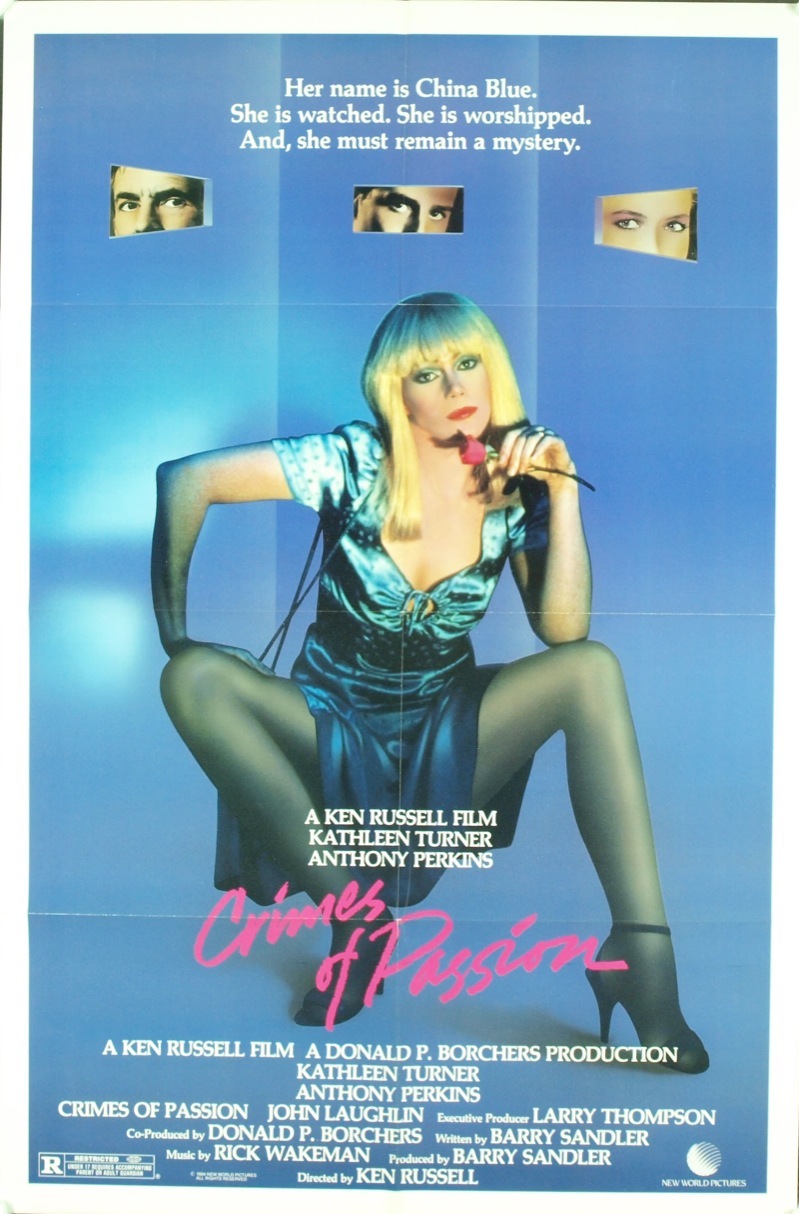
Bobby (John Laughlin) is suffering from marital problems at home while also having trouble keeping up with his kid’s expenses, so he looks for a part-time job and gets hired by Lou Bateman (Norman Burton) an owner of a fashion clothing studio to work as a private investigator by following around one of his designer’s named Joanna (Kathleen Turner) who he is convinced is selling his patents to a competitor. What Bobby finds instead is that Joanna is actually working as a hooker in the seedy red light district and using the name of China Blue, which gets Bobby more infatuated with her. Soon they are locked into a passionate affair, but unaware that China/Joanna is also being stalked by a crazy street preacher named Peter Shayne (Anthony Perkins) who is suffering from demons of his own while also harboring strange ideas on how to ‘save her’.

The film, which is directed by Ken Russell who can sometimes be brilliant and other times horribly self-indulgent, is annoying from the beginning. The recreation of a therapy group is wooden and artificial and the sex scenes are over-the-top with characters that are one-dimensional and poorly fleshed out. The gaudy color schemes and flashing lights used to recreate the seedy hotel look quickly become repetitive and irritating. It’s hard to tell whether Russell is trying to be serious or campy, but it’s a mad mixture that ends up being a pointless mess. Rick Wakeman’s obnoxious electronic music score and the cliché ridden Psycho-like finale simply add insult to injury.

The script by Barry Sandler is shallow and filled with plot devices that make no sense. Rarely do prostitutes ever fall in love with one of their clients and many create a defense to keep that part of their lives separate from their personal one and vice-versa, so the fact that Joanna and Bobby get into a relationship so quickly and seamlessly while failing to explain why she would find Bobby so ‘special’ out of all the other men she had already had indiscriminate sex with makes this dumb movie even more absurd. It’s also hard to believe that Joanna would be such a great employee as she is described to be by her boss when she is going out every night having sex with strange men at all hours. I would think at some point she’d become exhausted and her productivity at her day job would be effected. I also thought it was a bit goofy why someone would hire Bobby as a private investigator to begin with when he had no experience in that area.

Annie Potts gives the film’s all-around best performance particularly during a strong scene involving her character in bed with Bobby and her roundabout way of admitting that he no longer satisfies her. Laughlin is okay, but bland and the segment where he dresses up as a giant penis having an erection is downright embarrassing. Perkins is fun as the flamboyantly weird reverend and I got a kick out of his singing as well as his bag full of sex toys, but in the end it’s just a bad rendition of Norman Bates that typecasts him while discrediting his earlier more serious efforts.

The scene where China visits an old man who has only a few months to live is the movie’s one and only interesting moment. Had there been more of a history shown to Joanna’s character and why this seemingly intelligent woman did what she did I might’ve have been able to get into it more instead of being completely bored with it. The sexual imagery was considered quite ‘shocking’ and explicit for 1984 standards, but now comes off as benign and hooky especially since one can find far more graphic stuff simply by casually surfing any one of the thousands of porn sites on the internet today.

My Rating: 1 out of 10

Released: October 19, 1984

Runtime: 1Hour 47Minutes

Rated R

Director: Ken Russell

Studio: New World Pictures

Available: VHS, DVD
David Holzman’s Diary (1967)

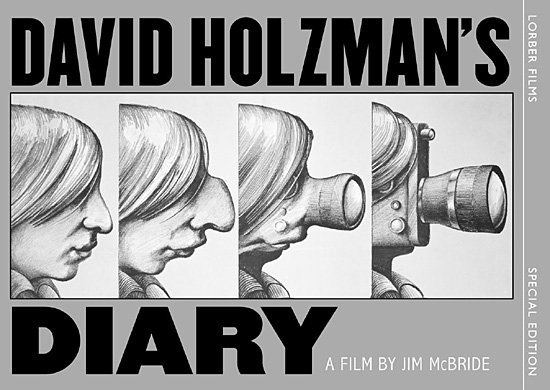
david holzman 1

By Richard Winters

My Rating: 8 out of 10

4-Word Review: He records his life.

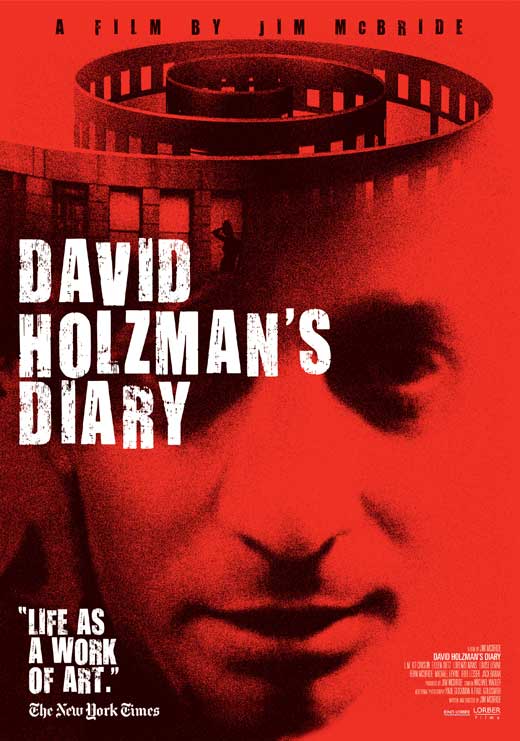
David (L.M. Kit Carson) is a young college-aged movie fan who wants to use the camera to not only record his life, but help him better understand and interpret reality. Unfortunately he finds that instead of clarifying things the camera instead brings out even more of reality’s complexities making his life and the world he is in even more confusing. It also inadvertently exposes a darker side to his personality that he wasn’t aware of which his voyeurism to both an attractive woman across the street as well as his live-in girlfriend Penny (Eileen Dietz) who eventually gets fed up with his film and him and moves out.

I realize the saying ‘ahead of its time’ can get a bit overused, but this is one case where that term really fits. This movie is cool on many different levels and features scenes and segments that you will never see done anywhere else. The Cinema verite style is perfect and I loved how the camera gets turned on itself as we are given a good background and visual to the type of camera that was used and why for its time was considered a cutting edge piece of machinery. The scene where he takes a shot of every image that he saw during a night of television viewing and then plays it back creating a mosaic of flashing images from shows and commercials is equally cool. The segment where he interviews a woman, which was apparently a man dressed in drag, but quite hard to tell, who stops her car in the middle of the street to tell him of her candid sexual desires while holding up traffic is quite amusing as is the part where he stalks a nervous lady from a subway car out onto the city streets.

The film also successfully transcends its time period. I have always said it is very easy to tell the time period or decade a movie was made usually after viewing it for only a few minutes, but this was one case where it is actually quite hard to tell. The detached, hip nature of the protagonist is still trendy and the film’s existential philosophical approach dealing with an artist’s need to recreate reality, but ultimately failing is as relevant today as ever. The loosely structured ad-libbed dialogue gives it a legitimate documentary feeling and was so believable that when audiences first viewed it during the 60’s they booed when they saw the closing credits and realized it had all been made-up. This was also the first American film to use the f-word and one of the first to feature full nudity, which is done by the attractive Dietz who later went on to play the face of the demon in the movie The Exorcist.

Although I saw this movie many years earlier and was already a big fan I watched it again during a special showing at the The Marchesa Theatre in Austin as a tribute to the film’s star who passed away in October of 2014. Afterwards many people got on stage to talk about how Carson had inspired them with their lives and careers and it included his son Hunter Carson as well as film director Guillermo del Toro who was probably the most entertaining.

If the film has any drawbacks it’s in the use of black frames that are shown in between shots where for several seconds the viewer will see no image at all and at times only a voice over. This might’ve been done for effect, but ends up giving it too much of an amateurish feel. There are also times when the camera stays too fixated on its subject making it look too much like talking heads with not enough cutaways or interesting camera angles. Overall though it’s still one-of-a-kind and worth checking out for a glimpse at experimental and original filmmaking at its purest.

david holzman 2

My Rating: 8 out of 10

Released: October 3, 1967

Runtime 1Hour 14Minutes

Not Rated

Director: Jim McBride

Studio: Direct Cinema Limited

Available: DVD, Blu-ray, Amazon Instant Video

Static (1985)

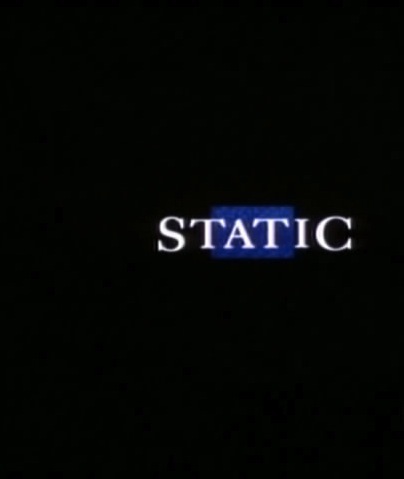
static 1


By Richard Winters

My Rating: 5 out of 10

4-Word Review: Everybody sees only static.

Ernie Blick (Keith Gordon) works at a crucifix factory, but dreams of making it big with his secret invention. The whole town that he lives in is abuzz about it and many take bets as to what it is. However, once Ernie unveils it no one is impressed. Ernie insists that he has created a device that can show live images of heaven, but all anyone else can see on the TV screen is static. Ernie becomes frustrated that no one can appreciate what he has done so he hijacks a bus carrying a group of senior citizens in order to create a media event that will allow him to share his invention with the rest of the world, but things don’t go as planned.

The film has that refreshing look and feel of an authentic indie flick made long before it was trendy and still in its infancy of being a trailblazer for original ideas. It’s fun and clever most of the way including a memorable shot of Ernie’s weird crucifix collection. The humor is subtle and hip with a cool music selection from lesser known 80’s bands. Director Mark Romanek shows great visual flair with his use of unique settings and color designs. The dialogue and characters are both engaging and quirky. I also loved the opening credits, which features a small, static filled TV screen in the distant background along with the sound of a low hum, which I found to be strangely hypnotic.

Gordon, who co-wrote the screenplay, does well in a difficult role where the viewer is supposed to find him likable and appealing despite the fact that he is clearly a bit unhinged. Amanda Plummer as his girlfriend gets a rare turn as being the most normal one in the film, which is interesting. Bob Gunton has a few choice moments as a conniving preacher man named Frank and Jane Hoffman is amusing as a senior citizen who tries to help Ernie on his mission.

Unfortunately the story doesn’t carry the quirky idea to a successful completion. It might have worked better had there been some image of some kind seen and then everyone could’ve debated whether that was indeed heaven or not instead of just seeing static, which comes off like a big buildup to nothing. The satire is too obvious and its overall message frustratingly vague. The violent and completely unexpected tragic ending is jarring and unnecessary and ruins its otherwise pleasant, whimsical tone.

There is also a scene where Gordon and Plummer go to a restaurant and order food, but when it gets served they barely touch it and then a minute later get up and leave after paying the bill, but why pay for something or even order if you’re just going to leave it there untouched? This is an annoying thing that I’ve seen happen in other films as well. I hate to sound preachy, but sometimes when I see these types of scenes I feel like screaming ‘There’s kids starving in Africa, so don’t waste your food people’!

static 2

My Rating: 5 out of 10

Released: October 1, 1985

Runtime: 1Hour 33Minutes

Rated R

Director: Mark Romanek

Studio: Siren

Available: VHS 

Vanishing Point (1971)

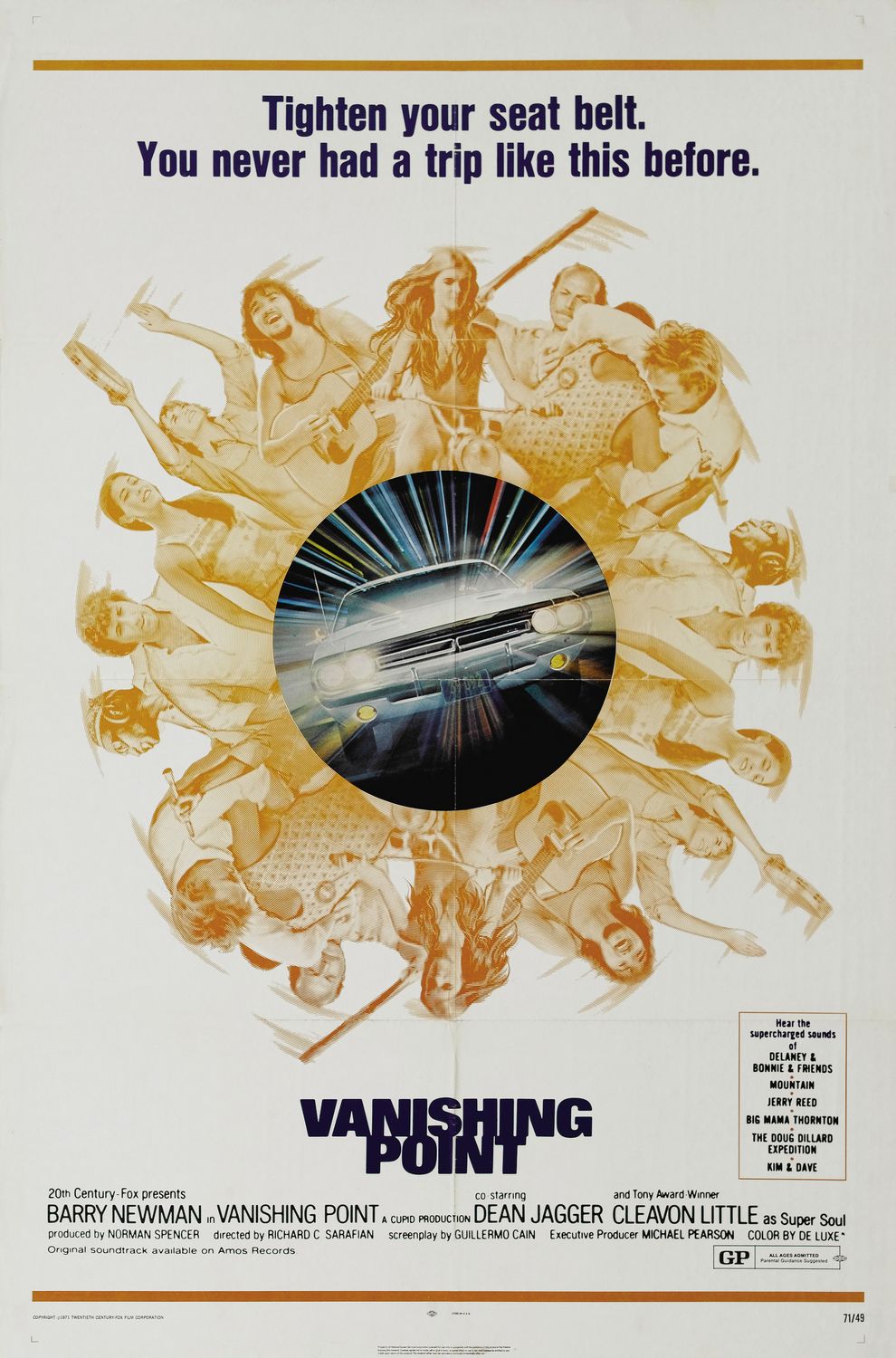
vanishing point 1

By Richard Winters

My Rating: 7 out of 10

4-Word Review: Racing to San Francisco.

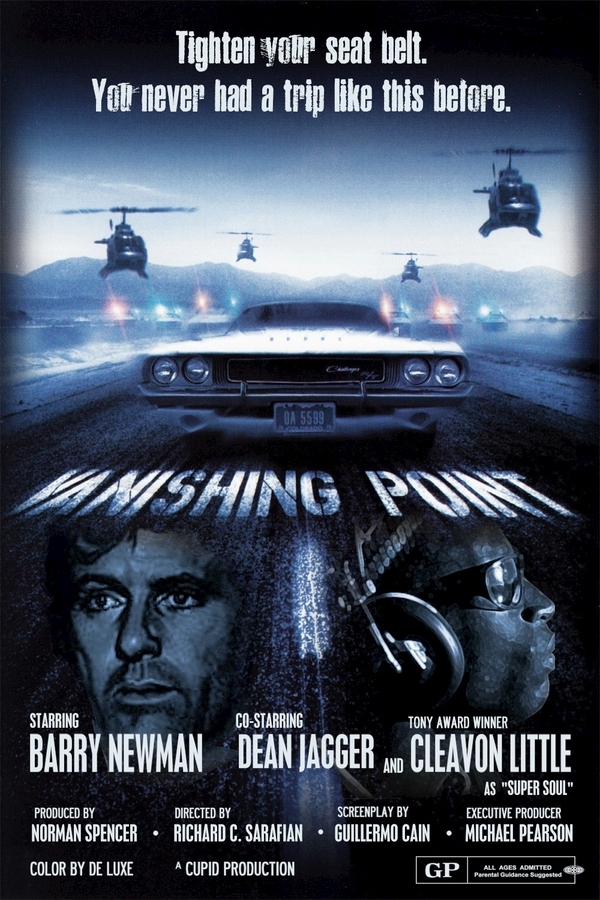
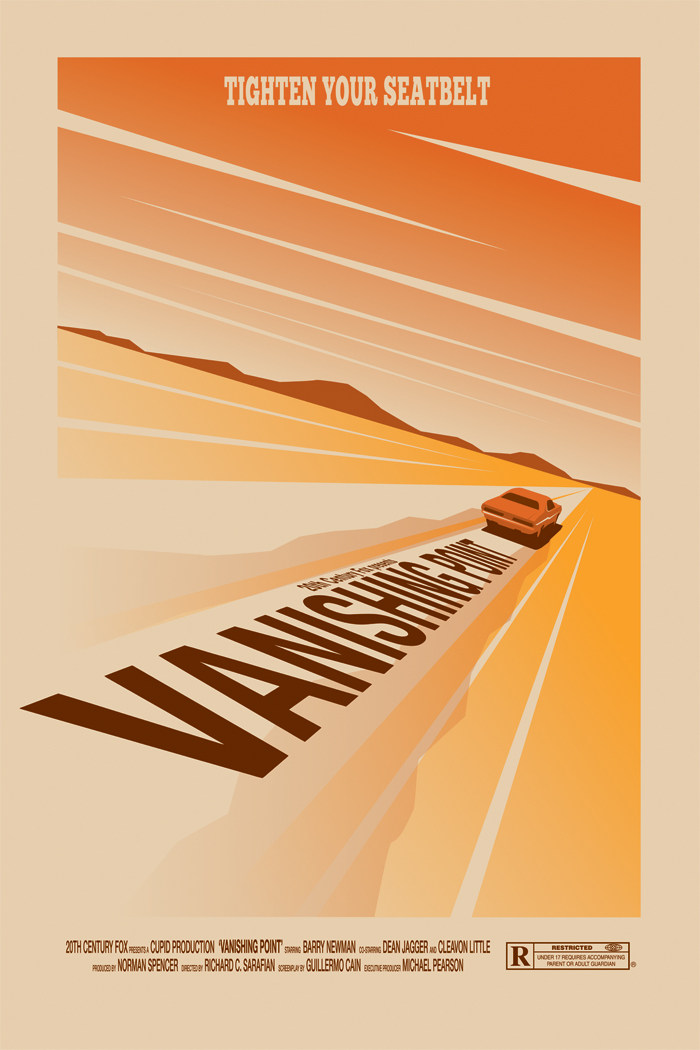
Kowalski (Barry Newman) is a car delivery driver whose next assignment has him driving a white Dodge Challenger R/T 440 Magnum from Denver to San Francisco. He is a former cop who seems disillusioned and detached from the world around him. To give his existence some meaning he decides to ‘challenge’ himself by making the delivery in record time and even makes a bet with a local drug dealer while purchasing some ‘uppers’ that he can get to San Francisco by 3:00 the next day. As his record drive proceeds he gets the attention of the local law enforcement from every state that he drives through, but none of them are able to stop him despite all efforts. He also attracts the attention of a local blind, black DJ named Super Soul (Cleavon Little) who has access to the police radio frequency and able to help Kowalski with his goal.

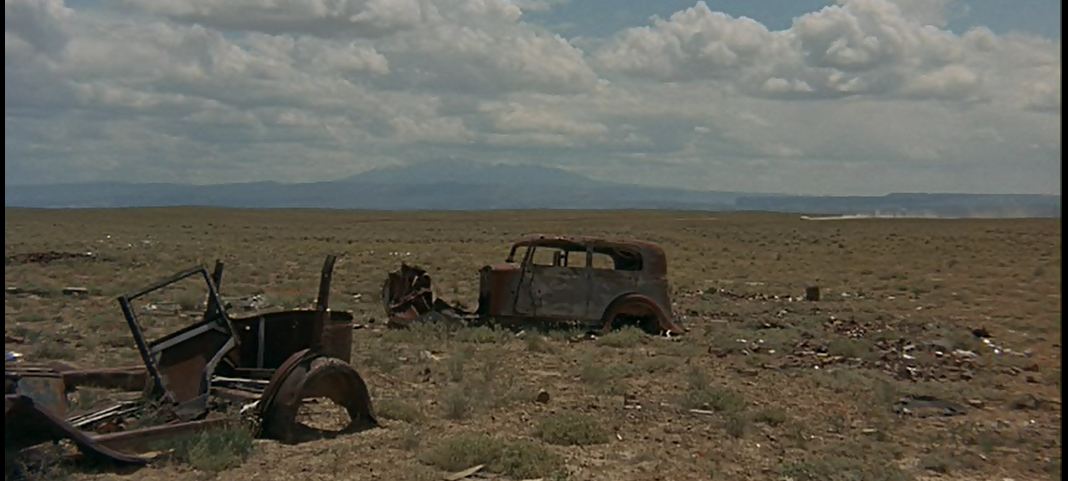
Richard C. Sarafain’s direction and John Alonzo’s cinematography are the real winners here. In fact my favorite scenes from this film are the long distance shots capturing the car driving along the lonely highways to the backdrop of the stunning western skies and its rugged, sandy landscape. This is a movie that will appeal to one’s emotional senses and bypass the need for logic. Certain things aren’t fully explained particularly Kowalski’s past, but the fact that it isn’t makes it more enjoyable. It’s the connection with his need for speed, escape and non-conformity that attracts us and it’s the adrenaline that propels the movie and viewer’s interest forward thus making this one of the quintessential road movies from its era or any other.

Capture 1


Capture 2

Newman seems an unusual casting choice as he really doesn’t have the dynamic star power or all that many lines of dialogue. He is also clearly in his mid-30’s for a part that seems better suited for some renegade, long haired 20-year-old, but in some ways his presence makes the movie more intriguing and distinctive by showing middle-aged people can have a dormant desire to rebel as well and sometimes even more so.

Little is terrific in what is probably the best performance of his career even though it seemed highly improbable and even ridiculous for a black DJ playing soul tunes at a radio station located in a small, isolated town inhabited by conservative, white, racist people. Severn Darden is edgy as a traveling evangelist and Dean Jagger is appealing as an old-time snake hunter. On the flip side of the 20th Century Fox DVD you can see the extended U.K. release that features a brief scene with Charlotte Rampling as a hitch-hiker. This sequence was intended to be allegorical, but really isn’t that impressive even though Rampling is quite attractive with her hair highlighted with blonde streaks.

Spoiler Warning!

The ending, which features Kowalski intentionally driving into some bulldozers parked in the middle of the road, which kills him instantly in a ball of flames, has proved through the years to be quite controversial and filled with many interpretations. I found it to symbolize Kowalski’s ultimate need for escape as he realized that he could never achieve the true freedom that he wanted, so he decided in a way to become a martyr and take his chances in another world beyond this one. The wry smile seen on his face just before he does it signifies the ‘fuck you’ that he gives to the authorities who are convinced that they finally have him cornered but really don’t. It also connects to the death of the counter-culture movement who by that time had realized that their dream of a utopian society filled with complete individual freedom and outside of mainstream control was never going to happen.

End of Spoiler Warning!

vanishing point 4


vanishing_point

My Rating: 7 out of 10

Released: January 15, 1971

Runtime:  1Hour 45Minutes (U.K. Version) 1Hour 39Minutes (U.S. Version)

Rated R

Director: Richard C. Sarafain

Studio: 20th Century Fox

Available: DVD, Blu-ray

The Christian Licorice Store (1971)

christian licorice store 2

By Richard Winters

My Rating: 2 out of 10

4-Word Review: He searches for answers.

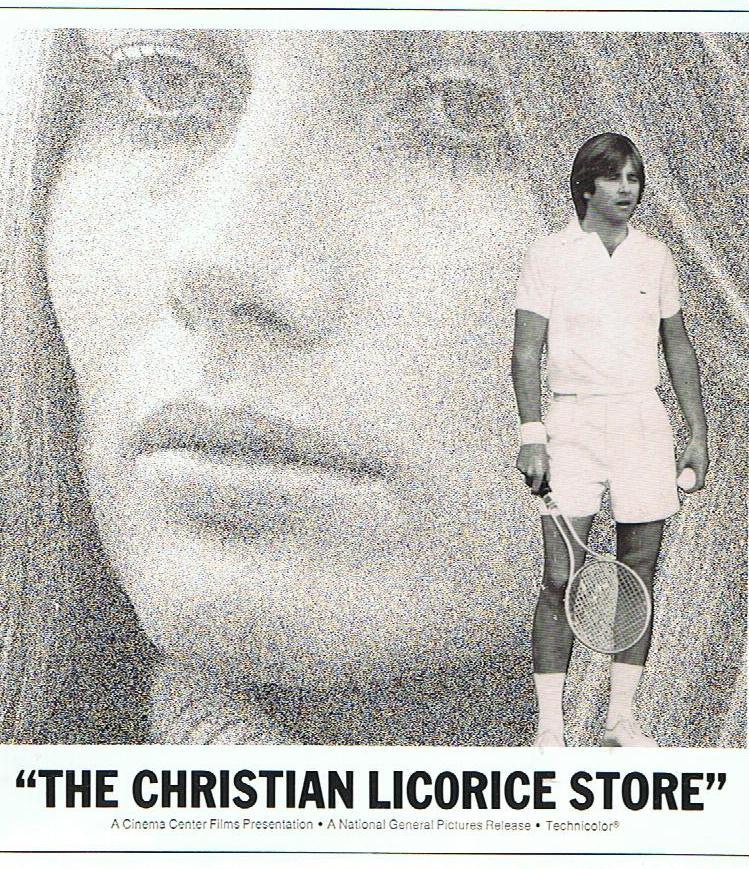
Cane (Beau Bridges) is a successful tennis player who has a close bond with Jonathan (Gilbert Roland) his mentor/coach who at one time during the 30’s was a tennis star himself. Things seem to be going well for him both on and off the court. He even starts fitting in with the chic Hollywood crowd and invited to some of their swanky parties. He meets Cynthia (Maude Adams) a beautiful photographer and their relationship begins to sizzle. Then Jonathan dies suddenly in his sleep and the emptiness in Cane’s life and the people in it come to a head. He begins searching for meaning and finds nothing, which eventually drives him away from his girlfriend, career and life in general.

The film was directed by James Frawley who is the son of actor William Frawley best known for his portrayal of Fred Mertz on the old ‘I Love Lucy’ episodes. James himself dabbled in acting a bit before turning to directing, but proves here to be completely in over-his-head. The attempt to replicate the French new wave type of filmmaking that had become so trendy at that time and done quite well by accomplished directors like Jean Luc Goddard and Michelangelo Antonioni is a disastrous dud and all the more reason why the artsy stuff should stay with the Europeans who have a better handle on it. From the very first shot forward this thing limps along with no pace, story or momentum. The cinema verite-styled takes go on for too long without enough visual flair to help carry it. The perceived ‘sophistication’ is nothing but an empty façade and an embarrassment to watch making it no wonder that the studio shelved this thing for 2 years before finally letting it out to a limited release.

Bridges does well, but the material offers him little to work with. Adams is surprisingly strong and this may be one of her best performances in an otherwise overlooked career. Silent film star Roland is solid as well particularly with the discussion he has with the two leads about aging and the quick passage of time, but he exits the story too quickly. Legendary French director Jean Renoir is the ultimate scene stealer even though he is only in it for less than five minutes, but clearly shows in that brief period how to own the screen and make the most of it in an almost effortless fashion.

The only thing that I liked about this sleep inducing 90-minute bore and actually even found original is the party scene where Beau meets up with several famous directors of the day including Monte Hellman and Theodore J. Flicker. The camera pans between several different side conversations of the various groups of people there and then everyone goes into a small theater to screen a new film where they then watch the opening credits to this film that they are all in, which I found to be kind of cool.

My Rating: 2 out of 10

Released: November 15, 1971

Runtime: 1Hour 30Minutes

Rated R

Director: James Frawley

Studio: National General Pictures

Available: None at this time.

Funnyman (1967)

funnyman1

By Richard Winters

My Rating: 5 out of 10

4-Word Review: Being funny isn’t funny.

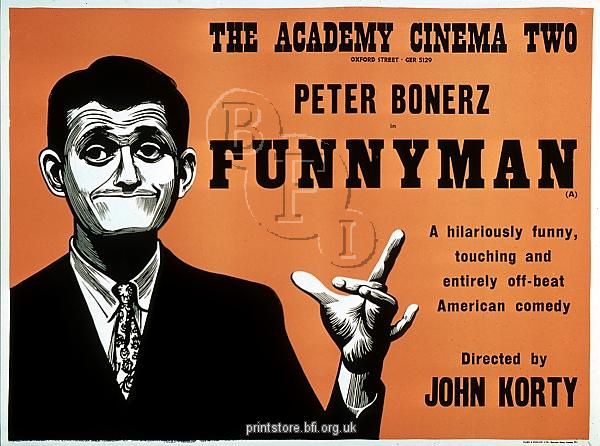
Peter Bonerz, who also co-wrote the script along with director John Korty, plays Perry a struggling comedian working with the famous San Francisco improvisational group The Committee who is finding that life onstage isn’t as fulfilling as he had thought. The story focuses on his many different relationships and behind-the-scenes activities as he searches for some meaning to what he does.

The film is a loosely based look at Bonerz’s own experiences during his time with the group. It has a definite cinema vertite feel and look, which helps accentuate the improv attitude. Some of the situations he goes through do indeed help shed light for the viewer as to the difficulties of the profession particularly the part where Bonerz and a friend stay up late one night trying to brainstorm a creative ad campaign for a bug spray and finally do manage to come up with something clever only to have it frustratingly nixed by the client over concerns that it may possibly offend their targeted audience.

I also found it interesting to see how much things have changed in regards to casual affairs and relationships as Bonerz is seen meeting woman for the first time and then going back to their place for sex and in one instance having the woman go off to work and leave him still in bed at her place without seemingly any concern about him being a potential psycho or thief.

Bonerz, who is probably best known for playing the Jerry Robinson character in ‘The Bob Newhart Show’ does well in the lead and I was impressed with his variety of voices and characterizations. However, the many skits that they do, which were filmed onstage in front of an audience weren’t all that funny or engaging. The only one that is mildly humorous involves a bit with Richard Stahl describing a new robot (played by Bonerz) that is programmed to be used as a peace demonstrator during campus protests.

Korty’s over-direction doesn’t help as too much emphasis is put on mood over substance. His attempts to instill an existential slant to the material falls flat and his use of shooting each scene with a different color filter is distracting and ultimately annoying. The final twenty minutes veers too much away from the main story as the Bonerz character decides to take a vacation at an isolated retreat where he gets into a relationship with a nude model, which meanders and is not compelling or interesting.

My Rating: 5 out of 10

Released: September 23, 1967

Runtime: 1Hour 25Minutes

Not Rated

Director: John Korty

Studio: Korty Films

Available: None at this time.

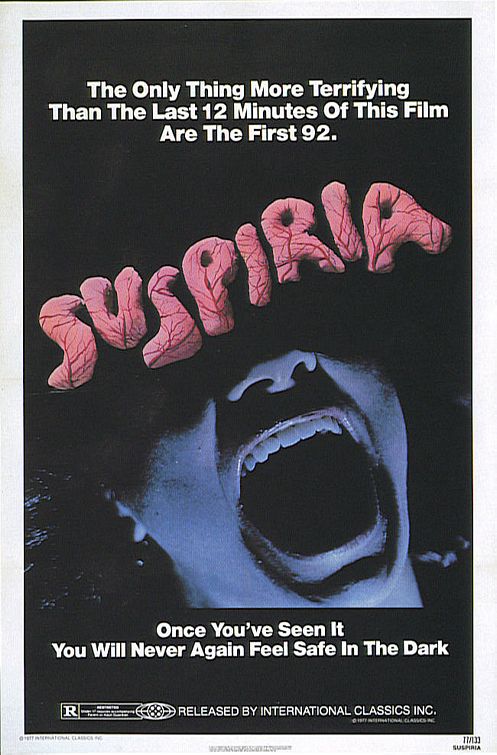
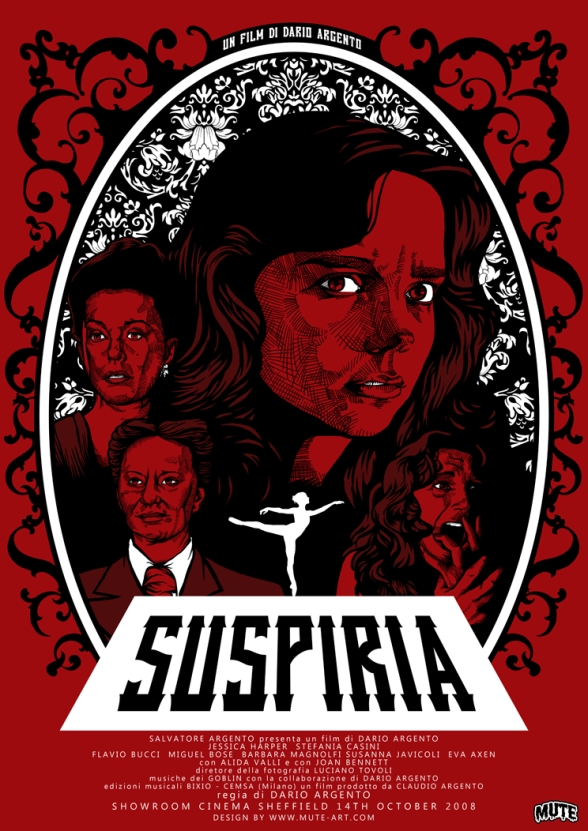
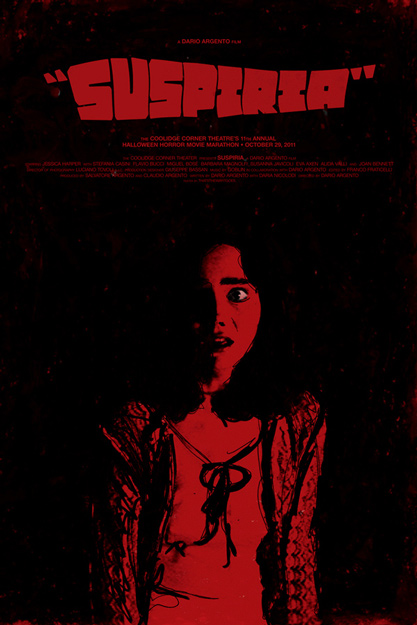
Suspiria (1977)

suspiria 2

By Richard Winters

My Rating: 4 out of 10

4-Word Review: Ballet dancer battles witches.

Suzy (Jessica Harper) is an American from New York who aspires to be a ballet dancer and travels to Freiburg, Germany to enroll at the dancer academy there. When she arrives she confronts another young lady who shouts something about a ‘blue iris flower’ before running out into the stormy night and then later turning up murdered. As the days progress strange events begin to occur convincing Suzy that the dance school may really be a cover for a coven of witches.

I first saw this film back in the late 80’s and it left me cold, but after reading a few other movie blogs where the critics insisted this was ‘brilliant’ I decided to give it another chance and approached it with a completely open mind only to end up liking it even less. The majority of the problem is Dario Argento’s over-direction. The sets and color schemes are wildly over-the-top bordering on camp. Had he pulled back even a little it might have been visually impressive, but instead gets obnoxious. The atmosphere, like everything else, is overdone creating a dream-like fantasy feel that has no connection to reality and therefore not very compelling.

The music, which was done by a group called Goblin, is interesting to some extent. I like the effect that to me sounded like hissing demons, but the other parts of it too closely resembled the ‘Tubular Bells’ music that was used in The Exorcist. It also gets overplayed and is too loud coming off like a spoiled child demanding your attention, which creates less tension and more distraction instead.

The special effects don’t live up to billing. When a man gets attacked and then eaten by his own dog is the only good part simply because it’s unexpected. Otherwise the blood and gore is average and even lacking. The majority of it is at the beginning where we see a young, frightened woman squirmy around on the floor while she gets stabbed and to a degree looks like some interpretive dance routine. The shot of a body coming out of a ceiling and then hung from a rope doesn’t work because it is clearly a mannequin and if you look real closely her face already has a strangled expression on it before the head goes through the noose.

suspiria3

Harper is a good protagonist and its fun seeing classic film star Joan Bennett in her last film role. I also really liked Alida Valli as Miss Tanner the dance instructor. During the 40’s and 50’s she was a stunningly beautiful leading lady, but here looks very witchy with the way her hair is cropped up into a tight bun as well as with her eyes and voice. The rest of the supporting cast have their voices dubbed, something that Italian productions during this period were notorious for and gives the already wooden dialogue a cheesy, amateurish sounding banter.

Spoiler Alert!

The climactic finish is a big letdown. For such an extravagant, garish build-up I was expecting much more of a bloody, drawn-out battle. Instead Harper just picks up a sharp object and stabs the head witch, who looks dead already, and it immediately kills her along with the others, but to me this didn’t make sense. This is supposedly some otherworldly demon, so the same laws of physics wouldn’t necessarily apply to her like it does to humans and a simple stab wound wouldn’t have the same effect like it would to regular people.

End of Spoiler Alert!

I was glad to see that other viewers on IMDB particularly those on the message board felt the same way about this ‘classic’ as I did. In my opinion the only way to enjoy it is for its excessive camp value and nothing more.

suspiria4

suspiria5

My Rating: 4 out of 10

Released: February 1, 1977

Runtime: 1Hour 38Minutes (Blue Underground 2-Disc Special Edition)

Rated R (Originally rated X)

Director: Dario Argento

Studio: International Classics (Dubbed Version)

Available: VHS, DVD, Blu-ray

Woodstock (1970)

woodstock 2

By Richard Winters

My Rating: 7 out of 10

4-Word Review: Love, peace and music.

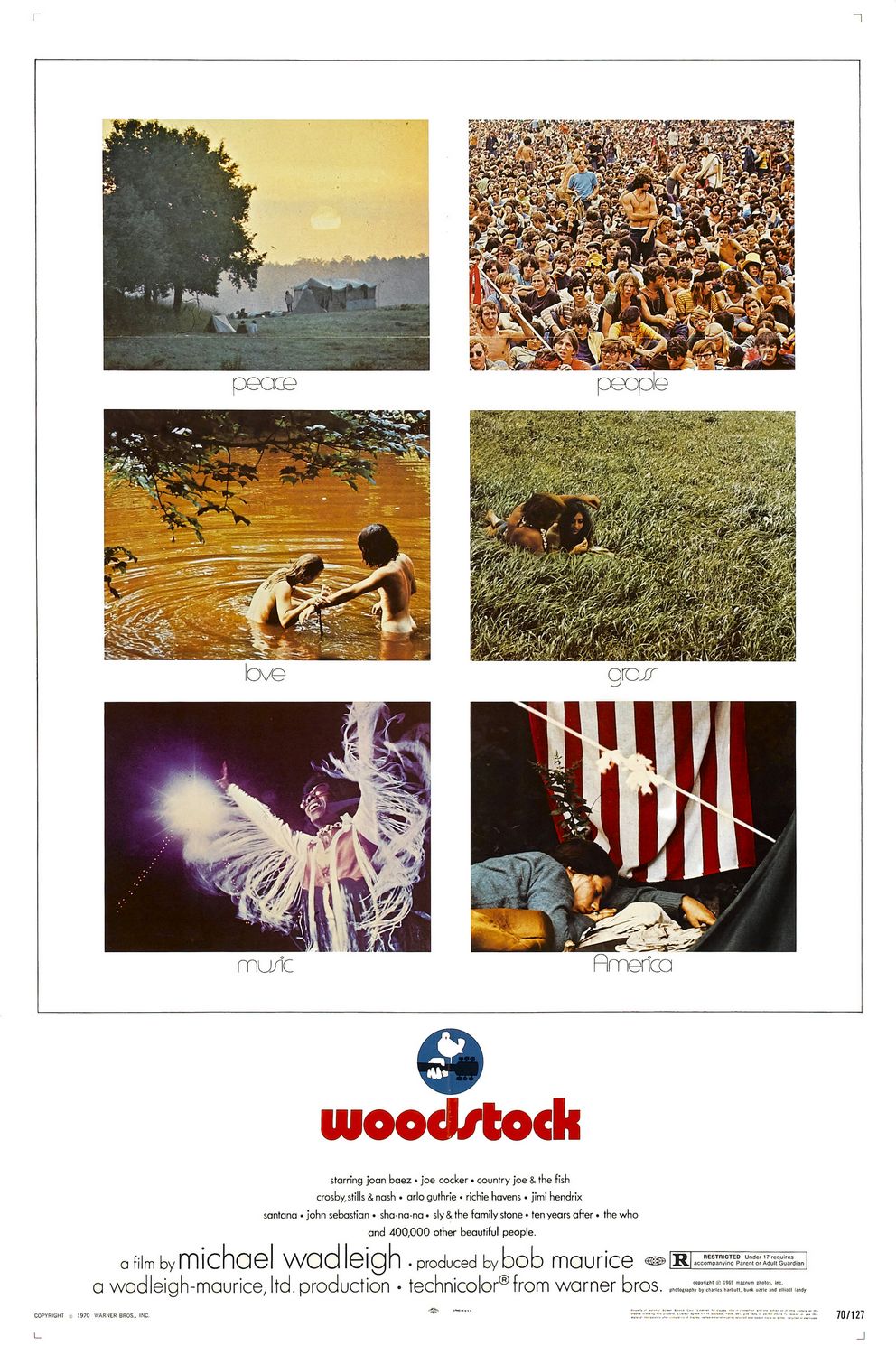
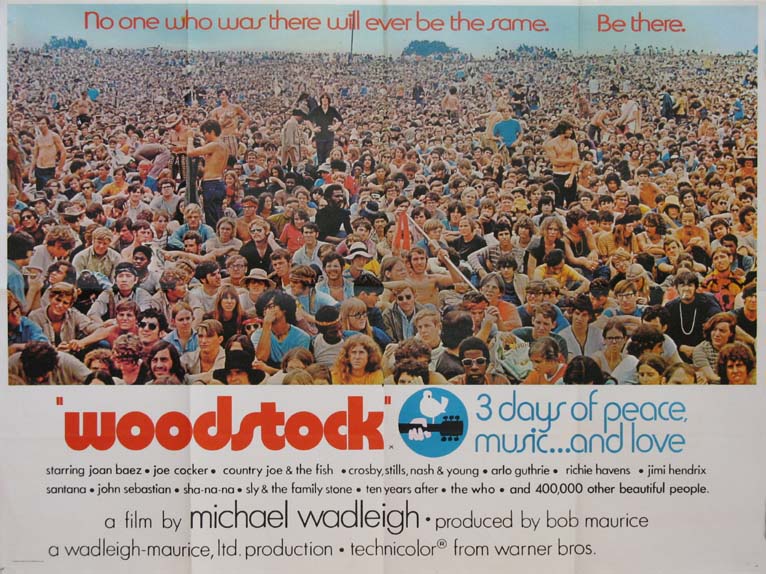
During August 15 – 18, 1969 Max Yasgur loaned out his 600 acre farm, which was near the town of Bethal, New York to some concert promoters for an epic 32-act rock extravaganza that has become the cornerstone for the counterculture movement and a major moment in Rock’N’Roll history. Although originally expected to attract only 50, 000 it ended up being more than 400,000 and this movie captures the mood, festivities, and music right up close.

Unlike most documentaries this film doesn’t just turn on the camera and then proceed to let things happen at a sometimes slow and boring pace. Instead it relies on a great use of editing done at the time by an unknown Martin Scorsese, which helps give the film a very polished and dramatic narrative. The dual screen setting allows the viewer to see two things at once and you are given a full view of the occasion as you watch not only the beginning as they construct the stage, but also the massive clean-up of all the debris left afterwards.

The music acts are captured perfectly as director Michael Wadleigh’s use of the camera nicely compliments the energy on stage with a variety of angles and quick cuts. In some ways you feel more connected with the music by watching it here than having been there in person as you are made to feel like you are right next to the performer as they are playing. One of the best moments is Richie Haven’s opening act where you see the broken strings on his guitar, the sweet glistening off his nose and saturating his back as well as a close-up of his mouth where he appears to have no teeth on his upper jaw. Janis Joplin who was known to have an incredible onstage energy is also memorable and is part of the added 45-minutes of the director’s cut. Country Joe Mcdonald is also memorable with his now famous ‘fuck cheer’ and ‘I-Feel-Like-I’m-Fixin’-to-Die Rag’, which comes complete with lyrics on the screen and a little bouncing ball.

woodstock 1

The film also features different elements than what you would find in most other concert movies including one segment that looks at the cleaning of the many port-o-potties as well as a long drawn out rain storm in which many of the concert goers’ end up sliding through the mud. There is another segment looking at the skinny dippers as well as all the naked children in attendance.

There are some good interviews spliced in although I wished there had been a few more. Some of the more interesting ones include those with the townspeople who despite reports to the contrary where actually excited about the event and supported ‘the kids’at least the ones seen here. I also liked hearing from the attendees as they lined up to take turns at calling their parents on pay phones. The only interview that I didn’t care for was of a young man who used the phrase ‘you know’ so numerously that it really got on my nerves.

The movie is quite long with the director’s cut being almost 4 hours in length and not all of the music acts shown including some of the better ones. However, the film is still quite electrifying and doesn’t end up seeming as long as it is. It is also so amazingly vivid that it gives you the feeling like you were there and something that only happened yesterday instead of forty-five years ago.

woodstock 4

My Rating: 7 out of 10

Released: March 26, 1970

Runtime: 3Hours 45Minutes (Director’s Cut)

Rated R

Studio: Warner Brothers

Director: Michael Wadleigh

Available: VHS, DVD, Blu-ray, Amazon Instant Video

Body Heat (1981)

body heat 1

By Richard Winters

My Rating: 7 out of 10

4-Word Review: Lawyer kills lover’s husband.

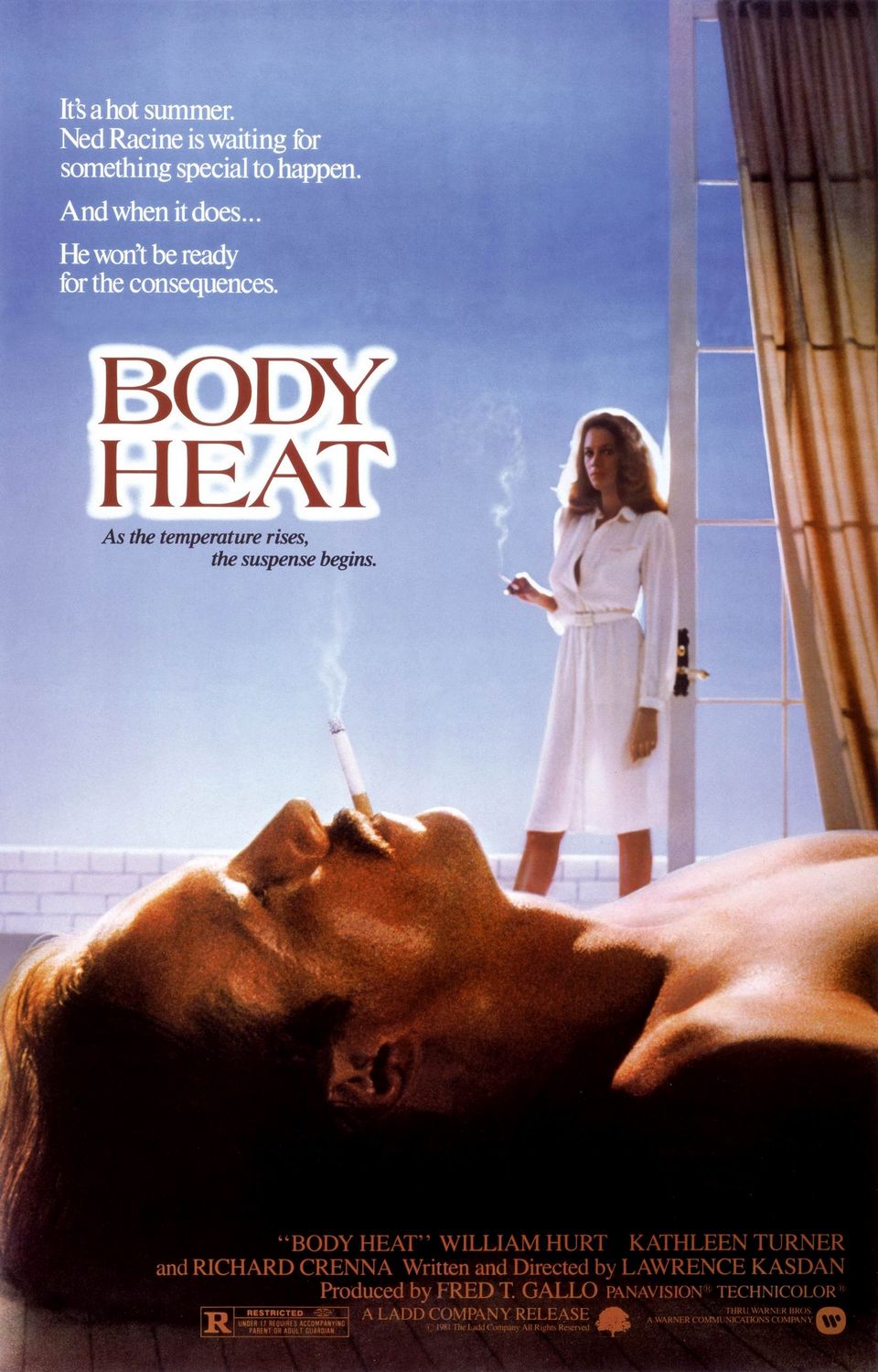
Every Monday for the month of August I’ll review an 80’s film that has the word ‘heat’ in its title starting with this modern-day film noir classic. Ned Racine (William Hurt) is a shyster lawyer looking for some action and on one sultry hot Florida night finds it when he spots the beautiful Matty Walker (Kathleen Turner) at an outdoor concert. The two soon fall into having mad passionate sex, but there is one problem. Matty is married to Edmund (Richard Crenna) who is rich, but boring. She plants the seed in Ned’s head to kill him and thus allow the two to live happily ever after with the money they will get from his will. Ned jumps into the scheme with his eyes wide-open only to later realize after it is too late that Matty has other plans that don’t involve him and thus making him a schmuck of the first kind.

I still enjoyed Double Indemnity and The Postman Always Rings Twice better, but for a modern day film noir this one isn’t bad and rates superior to most of the others. Writer/ director Lawrence Kasdan creates characters that are amoral, but fascinating. The dialogue is snappy and the production stylish without ever getting too overdone or pretentious.  The first hour is a bit slow and it takes too long to get to the killing, but once the second half kicks in it becomes a wild ride of twists and turns that remains as entertaining as ever.

The movie also has numerous references to the heat even more so than most movies that takes place in a hot climate. Overall I enjoyed this as it makes the viewer feel sweaty and muggy even if the weather outside isn’t. The sweat glistening off their naked bodies is effective and not an irritating cliché like in most other movies. The only problem I had was that Matty lives in this giant, luxurious mansion and yet must rely on fans and open windows to cool off when in reality the place would have been wired with indoor air conditioning.

Turner, in her film debut, looks stunning and it is just unfortunate that due to illness and age she no longer looks anything like she did here. Her nude scenes are brief and from far away, but still hot.

Hurt is excellent as usual, but the character was a bit irritating. I realize that the guy is thinking with his penis and not his brain, but it still seemed hard to believe that he wouldn’t once just for a second step back and contemplate whether he was being set-up especially since her ‘tactics’ to convince him to do it weren’t in any way novel or sophisticated. The minute she brings up wanting to change the will like she does here so that she gets all the money instead of Edmund’s ex-wife should have been a red flag to even the dumbest and horniest of males that this woman is in love only with money and a good signal that he is being used and to dump her.

Ted Danson looking almost unrecognizable in horn-rimmed glasses is a stand-out in support and almost ends up stealing the film as Ned’s lawyer buddy. He also gets the movies best line. As everyone is sitting in a smoke filled room looking over the will and someone offers him a cigarette he states “No thanks. I don’t need any. I’ll just breathe in the air.”

body heat 2

My Rating: 7 out of 10

Released: August 28, 1981

Runtime: 1Hour 53Minutes

Rated R

Director: Lawrence Kasdan

Studio: Warner Brothers

Available: VHS, DVD, Blu-ray, Amazon Instant Video, YouTube

The Man Who Fell to Earth (1976)

the man who fell to earth

By Richard Winters

My Rating: 6 out of 10

4-Word Review:  Alien looking for water.

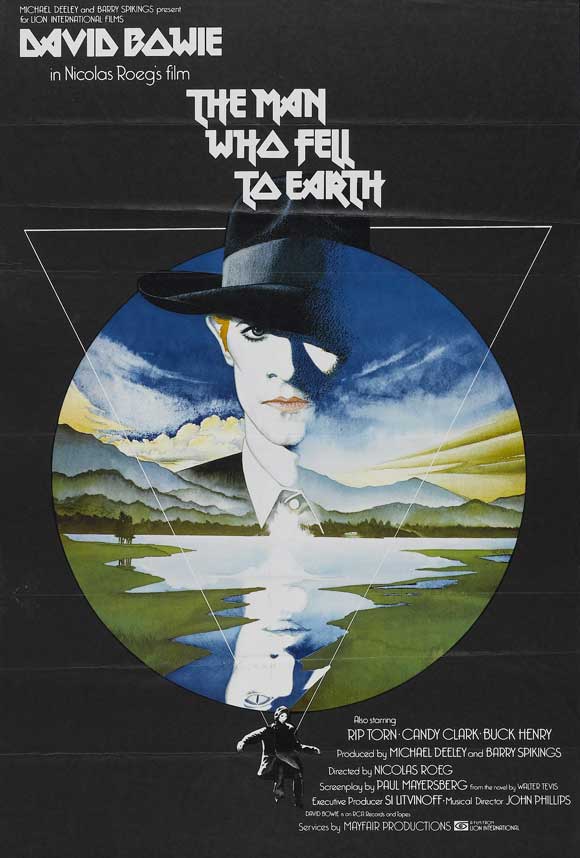
Thomas Newton Bryce (David Bowie) is a humanoid alien that has come to earth looking for water to bring back to his drought stricken planet. He works under the disguise as an inventor who uses the advanced technical knowledge of his home planet to patent many new inventions that eventually turns him into a millionaire head of a giant conglomerate. He even meets Mary Lou (Candy Clark) a hard-living, earthy girl who he falls in love with. Fuel technician Nathan Byrce (Rip Torn) suspects that Thomas may not be human and takes a secret picture of him with an X-ray camera that reveals his alien make up. Nathan then tips off the government and when Thomas tries to return to his home planet in a spaceship he built himself he is seized and taken into captivity and interrogated.
Director Nicolas Roeg has always had an incredible visual flair and able to take simple stories like Walkabout and Don’t Look Now and turned them into flashy masterpieces. I admire the way he can create atmosphere and attitude with every shot and tell a narrative in fragments and yet still have it come together into a fluid whole.

Watching this movie is particularly fun and the variety of music used is terrific. Whether it is a country oldie or new wave techno it fits and is always lively. The scenes are intoxicating and Roeg seems to be challenging himself by trying to come up with a unique way of capturing everything he shoots.

However, the story is light and proves to get even lighter as it goes along. The first hour, although fun, goes nowhere. The second half has some twists, but they are predictable. There are also tons and tons of loopholes with a letdown of an ending that explains nothing.

When compared to sci-fi films from the past it seems progressive, but in hindsight it is a victim of the 70’s era as it oozes too much with the irreverence of that period. Its main purpose seems to be turning-the- tables on all those sci-fi classics where the alien was always the threat by instead portraying the alien as the gentlest person in the picture. Yet they still could have made this message while giving it a more fleshed-out story and legitimate sci-fi leanings.

The overall glossiness maybe enough for some as it certainly does seem intriguing and promising at the start. Bowie is a perfect choice for the lead and unlike most rock singers, his foray into acting seems solid and almost like he is a natural.

Candy Clark is also outstanding. She is the perfect embodiment of a small town southern girl simple, sweet and generous yet also very to-the-point. Buck Henry is also good playing a part that most resembles his true self and his line describing his father’s advice on how to look a gift horse in the mouth is priceless.

My Rating: 6 out of 10

Released: May 28, 1976

Runtime: 2Hours 19Minutes

Rated R

Director: Nicolas Roeg

Studio: Columbia

Available: VHS, DVD-R, Amazon Instant Video