Category Archives: Gangster Movies

The Seven Ups (1973)

By Richard Winters

My Rating: 7 out of 10

4-Word Review: Cops use unorthodox methods.

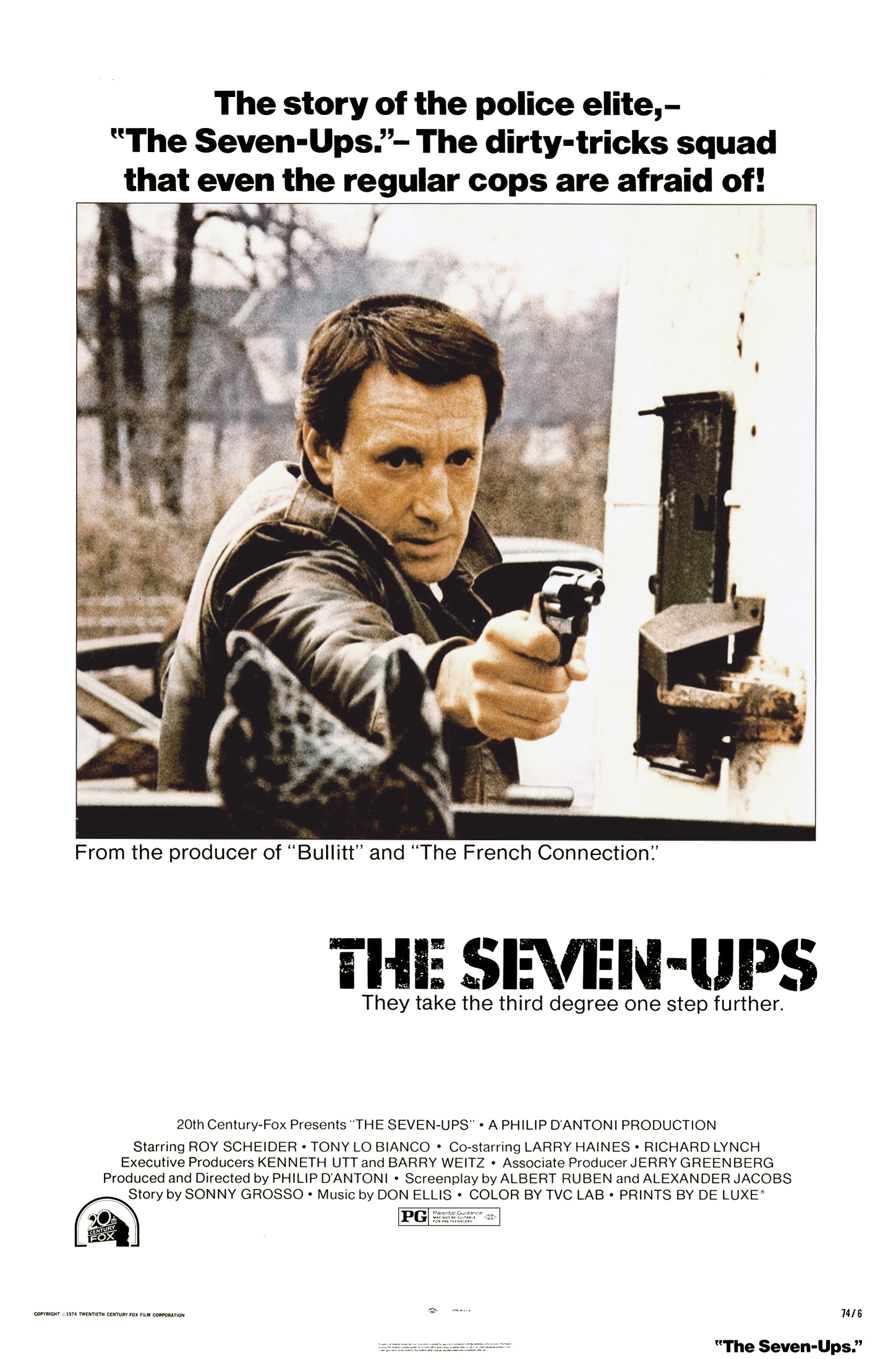
Buddy (Roy Scheider) is a police detective who runs a group of renegade cops who employ unusual and sometimes questionable methods to nab crooks. Once apprehended the criminals they arrest usually end up serving 7-years or more in the penitentiary, which gives their group the nickname of the ‘Seven Ups’. The groups most recent mission is investigating kidnappings occurring in the city and Buddy uses the help of Vito (Tony Lo Bianco) a childhood friend who works as an undercover informant for the police, but who unbeknownst to Buddy is actually behind the recent crimes going on and even the orchestrator.

After the success of The French Connection producer Phil d’Antoni became inspired to produce another similar crime film dealing with the true-life event that occurred in the 50’s in New York that had mobsters being kidnapped by criminals posing as cops. He wanted William Friedkin, who had done so well with the first film, to direct this one, but Friedkin didn’t like the script and passed as did several other directors, which eventually lead the studio to choose d’Antoni to take the helm himself in his one and only foray behind the camera with results that are both good and bad.

The production lacks cinematic flair and shot in a flat way almost like a documentary, which to some degree actually helps it. It was filmed between January and April of 1973 and the crisp, gray, frigid look helps build an atmosphere by accentuating the grimy, cold life of the underworld and how the detectives themselves get foisted into it. The plot is basic and linear, so it’s easy to follow and not cluttered with unnecessary mystery angles and tangents as the viewer knows right away who’s behind everything. There’s also a tense scenes inside a car wash, not exactly sure the perpetrators would’ve been able to pull-off as effortlessly as they do, but it definitely keeps you riveted as you feel the same unease as the two guys in the car though having another scene come later that also takes place in a car wash wasn’t needed.

The film though doesn’t have the interesting characters like in The French Connection where Popeye Doyle’s lifestyle and temperament contrasted in fascinating ways with the man he was pursuing and in fact it was Doyle’s fractured personality that made the movie so compelling. Here, through no fault of Scheider who plays the part well for what is asked, but his character is quite one-note. We learn nothing about him, or his home life. He’s just a typical New York cop obsessed with getting the bad guys, which is fine, but doesn’t have the multi-dimensional quality to help make him memorable.

The supporting characters aren’t necessarily much better, but the actors who play them at least help give them some life. Larry Haines, probably best known for playing one of Felix and Oscar’s poker playing buddies in The Odd Couple, has a good turn here as a crime boss who’s nonchalant initially when he thinks he’s being taken to the cop station for a routine arrest only to cower in fright when he realizes he’s been duped and then when he survives shows no mercy in his unrelenting pursuit for revenge. My only quibble though is that Scheider and his cohorts are able to break into Haines’ house too easily and even able to catch him and his wife sleeping in bed, but you’d think with him being a well-known target with the police he’d have burglar alarms set-up all over his home to detect anyone trying to get in and since he’d just had a traumatic kidnapping incident earlier you’d think he wouldn’t be able to sleep soundly again, or paranoid enough to sleep lightly and aware of any noise.

The car chase sequence is by far the best moment, and some may say the only real reason to watch it. It certainly has you holding your breath, but in a lot of ways is too similar to Bullit, another film produced by d’Antoni, so it really doesn’t stand out as much as it should. There’s also the issue of Scheider pursuing the bad guys even as there’s pedestrians all around. Most real-life cops will stop chasing after a culprit’s car if they feel  it will put others at too much of a risk and this comes to a horrifying moment when school children are playing on the street and must quickly run to the curb when the bad guys drive their car through only a few seconds later to almost get hit by Scheider’s car as he plows through at high speeds without even a thought of putting on his breaks making him seem more like an irresponsible cop who’s more of a problem than a solution.

Nonetheless it’s gripping and I enjoyed how it ends with Scheider ducking under the windshield just as his vehicle hits the underside of the backend of a truck in an intended ‘homage’ to Jayne Mansfield’s wreck. It’s also great watching Richard Lynch’s facial expressions as he plays the crook sitting in the passenger’s side of the fleeing car. Some could say it’s great acting, which maybe it was, but I believe his looks of nervousness and fear was genuine, which just helps to make these shots of his face, which get intercut throughout the chase all the more entertaining and help to have a human side to the action as I and almost anyone else would be reacting the same as he does if we were in the same situation.

My Rating: 7 out of 10

Released: December 14, 1973

Runtime: 1 Hour 43 Minutes

Rated R

Director: Philip D’Antoni

Studio: 20th Century Fox

Available: DVD, Blu-ray
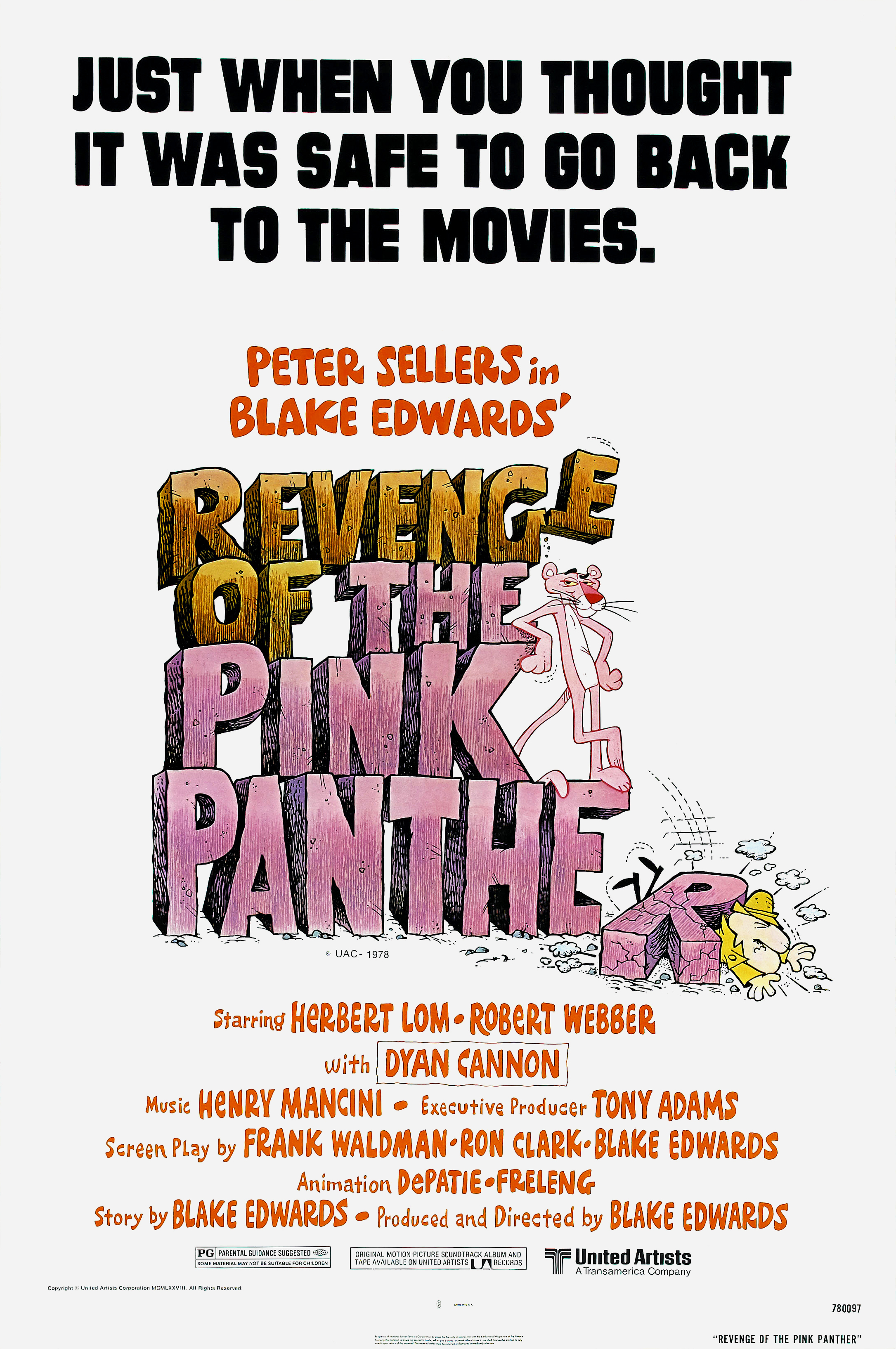
Revenge of the Pink Panther (1978)

By Richard Winters

My Rating: 6 out of 10

4-Word Review: Out to get Clouseau.

Philippe (Robert Webber) is a successful businessman who’s secretly the head of the French criminal underground. Some though are questioning his leadership considering him to be too weak to remain in that position. In order to squash the impending threat, he decides to make a bold move by having Inspector Clouseau (Peter Sellers) killed. Clouseau was considered a master detective by the outside world and only known to be an incompetent by those who worked with him, so by having him out of the way the drug dealers would feel relieved and thus Philippe would remain in power. However, things don’t get as planned as Clouseau manages to miraculously evade all attempts on his life. The media though mistakenly announces that he has died, which allows Clouseau to go undercover along with his manservant Cato (Burt Kwouk) to find out who’s after him.

This marked the fifth entry in the series and is probably the funniest. Initially director Blake Edwards had wanted to reuse footage that had been cut from the previous entry and then film new scenes around those, but star Sellers insisted he wanted an all-new story and that was probably for the best. Sellers by far gets the most laughs whereas in the one that came before this, The Pink Panther Strikes Againit was Herbert Lom as the unhinged Dreyfus, that was the most memorable, but here his part becomes much more benign, though he still gets one good scene where he tries not to breakout laughing while giving a eulogy at Clouseau’s funeral. Sellers though comes out on top here especially in his disguises like when he pretends to be a sea captain with an inflatable parrot on his shoulder, or in a hilarious send-up as a Mafia Don.

It’s great to see Kwouk, who was usually relegated to the ‘fight’ scene between him and his boss Clouseau, become more involved in the story, as the two go to Hong Kong in disguise to track down the bad guys. Dyan Cannon is a refreshing change of pace. Usually, the women in these films were young models whose sole purpose was to allude sex appeal, but here she’s middle-aged, but still attractive, and shows much more of a feisty personality. She helps build a strong secondary character and is better interwoven into the plot versus simply appearing as a potential romantic interest.

Webber though as the main villain is a detriment. I have no doubt that the notoriously insecure Sellers didn’t like the way Lom stole the film as the nemesis in their last outing and wanted to make sure that didn’t happen again. Not only is the Dreyfuss character far more neutered, but so is Webber making him seem like he’s almost sleepwalking through his role. It would’ve been more interesting had his character has some personal vendetta against Clouseau, possibly because it was Clouseau who had sent him, or one of his men to jail, and now he wanted revenge. Just having him out to get Clousau because it might bolster his own image didn’t seem to be enough of an incentive and the two, outside of one comic moment where Clouseau’s is in one of disguises, never have any ultimate confrontation. Watching him get chased around his desk and cower from Dyan Cannon may have been intended as funny, but it just further erodes his villainy making him seem even more impotent than he already is. Even a comedy still needs a bad guy that can elicit some tension and this one doesn’t.

The implementation of Mr. Chong, played by martial arts instructor Ed Parker, has potential. Supposedly he’s an ‘invincible’ fighter that can beat-up anyone and not be stopped as proven when he takes down several other men while in Webber’s office but then he gets comically defeated once he comes into contact with Clouseau. While watching him go through the floor/ceiling of several apartments below as he crash lands is visually funny it would’ve been more engaging if he had come back at some point and continued his relentless attack on Clouseau albeit with injuries in order to reclaim his reputation that he couldn’t be defeated, but in the process just became more hurt and ineffective.

Spoiler Alert!

The climactic sequence that occurs in Hong Kong is a cop-out and comes-off like they’d run out of ideas, so they tried to save it with a calamity filled chase that plays more like a cartoon, or something better suited for a live action Disney movie. Introducing yet another Mafia boss, this one played by Paul Stewart, makes things too cluttered and there should’ve been just one main bad guy that was the boss of everyone. The finale inside a firecracker factory should’ve proven dangerous and in fact we do see the entire place explode from a distance and yet everyone comes out of it unscathed, which doesn’t exactly make a lot of sense.

My Rating: 6 out of 10

Released: July 20, 1978

Runtime: 1 Hour 39 Minutes

Rated PG

Director: Blake Edwards

Studio: United Artists

Available: DVD, Amazon Video, YouTube

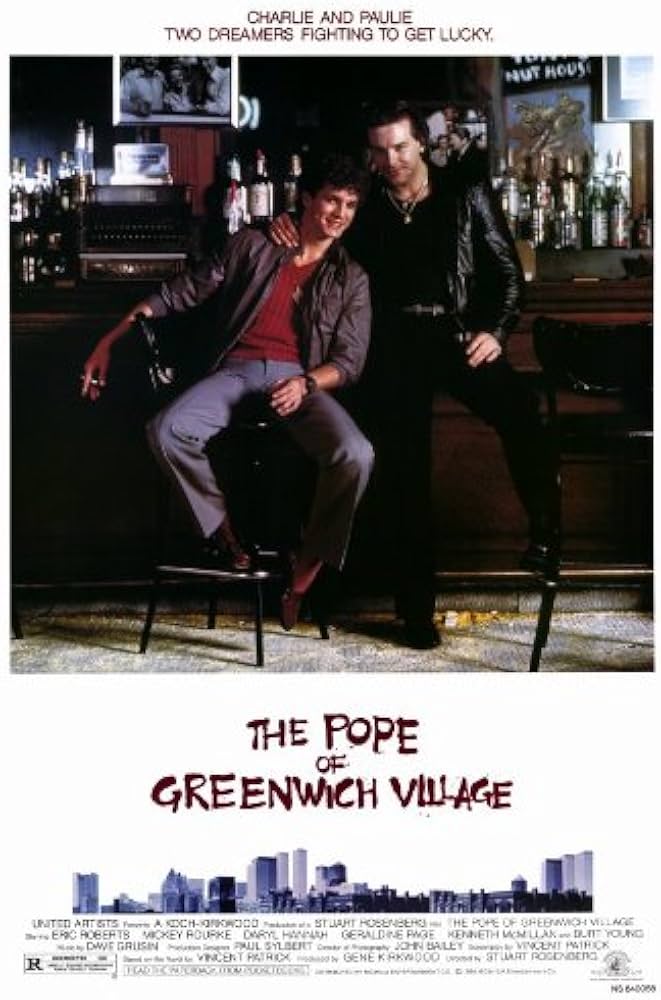
The Pope of Greenwich Village (1984)

pope

By Richard Winters

My Rating: 7 out of 10

4-Word Review: Cousins turn to crime.

Charlie (Mickey Rourke) and Paulie (Eric Roberts) are cousins working at a restaurant who get themselves fired when Paulie is caught skimming checks. Since Charlie’s girlfriend Diane (Daryl Hannah) has a baby on the way he must act fast to bring in some money. Paulie convinces him of a ‘great’ opportunity, which is to hire a former safecracker, now working as a clock repairman, Barney (Kenneth McMillan) to break-open a safe inside the building of a large company that reportedly has a large amount of money inside it. Charlie is cautious as he doesn’t completely trust Paulie whom he finds immature and unseasoned, but he’s so desperate that he reluctantly agrees. Things go smoothly at first, as they’re able to break into the building easily, but the unexpected arrival of undercover cop Walter (Jack Kehoe) soon sends their plans awry. When Walter dies during the melee they’re now on the hook for his death as well as in the bad graces of mob boss Eddie (Burt Young) who’s safe it was that they tried to rob. 

The film is based off of the 1979 novel of the same name by Vincent Patrick who also penned the screenplay. It does an excellent job of creating a vivid feel of Greenwich Village where it was shot on-location and the interactions of the characters seem overall authentic. The only real issue is the way it hinges of extreme Italian American stereotypes where it seems like anyone from that background must be involved in crime and if any other group was portrayed that way it would be deemed problematic if not downright controversial. The cliches are so strong that had it been heightened just a small degree it could’ve been deemed as parody, or even satire and in fact IMDb does list it as being a ‘comedy’ though I really don’t think that’s the case. I believe it’s meant to be a drama, but either way, for the sake of balance, it would’ve helped had there been some Italians even just one who didn’t fall into the tired caricatures. 

The acting is the crowning achievement. Roberts is superb and I really found it hard to believe he didn’t become a star from this. While he’s always been a great character actor I think he should’ve been given more and I do realize he’s still busy in the business and has been consistently, but I don’t think the quality of the parts has always been there and most filmgoers are probably more familiar with his sister Julia, which is a shame. I was completely blow away by him here and genuinely surprised why the Oscar didn’t fall into his lap.

Rourke is excellent too, but more because he wisely underplays his role and allows Roberts to carry all the emotional energy. Had they both been competing for it it would’ve failed, but their different approaches help create a nice contrast and sometimes it’s the best actors who don’t force it and for the most part that’s what Rourke does here. Of course, he too has his moments like when they go to the racetrack, and he bumps into a guy and instead saying ‘excuse me’ like a normal person he instead says, ‘out of my way asshole’. Him beating up on his refrigerator when Diane leaves him has a memorable quality to it though I would’ve thought the fridge would’ve been more damaged and he should’ve at the very least injured his hand, which strangely doesn’t occur despite him punching at it repeatedly.  

On the female end most accolades goes to Geraldine Page who got nominated for the supporting Oscar despite having only 8-minutes of screentime. She gives a powerful performance for her limited presence, but the idea that she could stymie police efforts to search her deceased son’s room by giving veiled threats that she’ll make them look bad in the media I didn’t totally buy. If cops want something bad enough, they’ll get it with the possible exception of money exchanging hands, which in this case didn’t happen. Hannah as the girlfriend has almost the same screentime, maybe a little more, and hits the bullseye as an idealistic young woman who believes she can somehow get her boyfriend to change only to learn the ultimate harsh lesson that it doesn’t work that way. 

Spoiler Alert!

The ending I felt was a letdown. I was actually intrigued with Charlie finding the tape from the deceased cop that implicated Eddie and seeing how he could use that to stay out of trouble for being a part of the robbery. Having Paulie then swoop in by putting lye into Eddie’s drink and poisoning him seemed too easy. Eddie had just gotten done having his men cut-off Paulie’s thumb, so he should expect Paulie would be looking for revenge and not naive enough to have him make his drinks, or if he does at least have one of his henchmen taste it first. You have to wonder how Eddie was able to climb up the crime ladder if he was that stupid and thus the climax really isn’t that clever, or surprising as the camera focuses up-close on the coffee cup making it too evident that something is going to happen. A letdown for a movie that had been relatively smart up until then.  

My Rating: 7 out of 10

Released: June 22, 1984

Runtime: 2 Hours

Rated R

Director: Stuart Rosenberg

Studio: MGM/UA

Available: DVD, Blu-ray, Amazon Video, YouTube, Tubi, PlutoTV

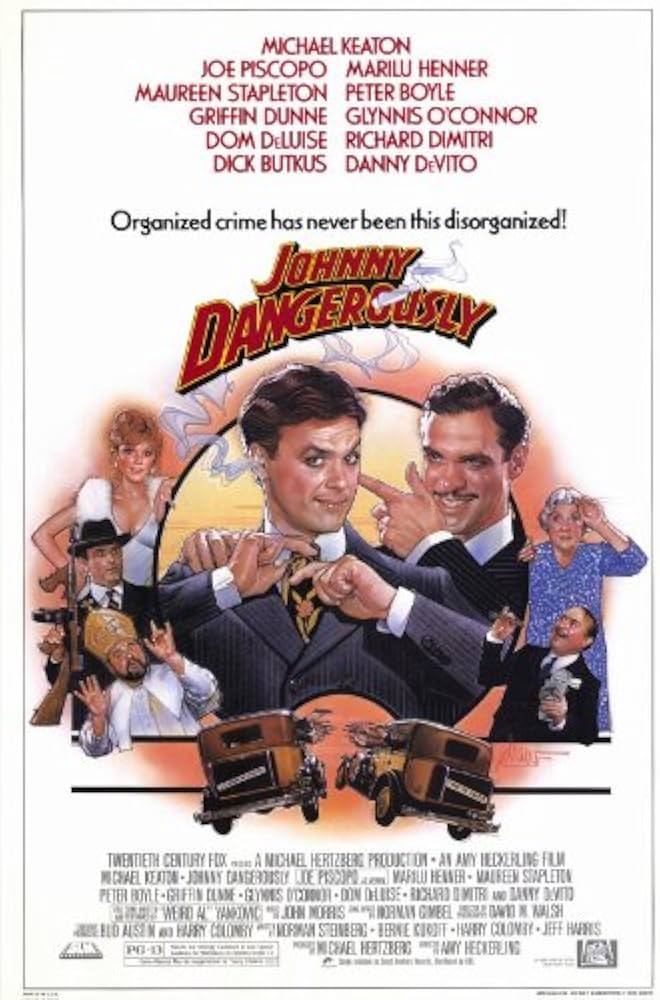
Johnny Dangerously (1984)

johnnydangerously

By Richard Winters

My Rating: 3 out of 10

4-Word Review: From newsboy to gangster.

Young Johnny (Byron Thames) must find some income to help his mother (Maureen Stapleton) with her medical expenses. He catches the eye of Jocko (Peter Boyle) a notorious gangster who offers him odd crime jobs to do part-time and Johnny takes him up on it but feels guilty. The years pass and a grown-up Johnny (Micheal Keaton) finds that his mother’s health hasn’t improved, and the bills continue, so he decides to get into the gangster business full-time and even takes over as head of the gang once run by Jocko. The money is so good that it not only covers everything his mother could need but also helps his younger brother Tommy (Griffin Dunne) get through law school. However, once Tommy graduates, he gets a job at the D.A. office where becomes committed to stamp out corruption and put all criminals behind bars even if it would mean his older brother.

The pace and structure are modeled after the more successful Airplane movies in which the light plot works as a platform for a barrage of rapid-fire jokes and pratfalls mostly satirizing gangster movies from the ’30’s. While Airplane came off as fresh and funny as it poked fun of all the disaster movies from the ’70’s this thing seems old and tired before it’s barely even begun. The biggest issue is that gangsters had already been parodied for many years both in TV and on the big screen. By the time this movie came-out most of the jokes had already been used many times over and the comedy fails to create anything inventive. The characters are nothing more than walking-talking cliches that mouth banal one-liners and not much else. Almost all the jokes fall flat, nothing sticks and has no edge to it. It’s something that could’ve easily been made for TV and it should be no surprise that the writers were two men who helped create the ‘Different Strokes’ TV-show.

What surprised me most is that it wasn’t even dirty, or at least not that much. It’s directed by Amy Heckerling who had just gotten done doing Fast Times at Ridgemont High, which seemed to have bawdiness and sexual innuendoes in almost every frame and yet here there’s surprisingly very little. Yes, there’s an animated segment dealing with victims of enlarge scrotums, which doesn’t have much to do with the story, but is kind of amusing, but that’s about it. Some more sex and even nudity could’ve helped enliven things, or at the very least given something more to laugh it. The malapropisms by the gangster character Moronie, played by Richard Dimitri, where he uses a lot of colorful language that sounds like curse words, but really aren’t I didn’t find to be clever at all. Today words like fuck and fucking are used liberally in social media and even casual daily conversations. I even hear young neighborhood kids saying it, so for a movie to think that it’s ‘pushing the envelope’ by having someone use phrases the sound like the F-word but aren’t makes the movie seem quite dated.

I didn’t care for Keaton. He comes-off like some smart ass who’s phoning in his performance with a pasted-on smile that never leaves his face. It’s like he isn’t even acting or trying to create any type of character. He just casually walks on, makes a semi-amusing remark, and then walks-off. Thames who played the younger version of Johnny was better and the movie could’ve been more engaging had Johnny remained a kid the whole way and then watching an innocent teen take down the gangsters and even ultimately become their leader would’ve had some original spin that’s otherwise lacking.

Joe Piscopo, who plays Johnny’s criminal rival, is quite good and as opposed to Keaton, seems to be making some sort of effort to play a role and I thought he should’ve been in it more, or even just given the reins and taken over completely. The film’s promotional poster makes it seem like the two will have equal screentime, but that’s shockingly not the case and Joe’s presence amounts to a few walk-ons, which is a shame.

The rest of the supporting cast are equally wasted. Marilu Henner sings a nice dance number but otherwise doesn’t do or say anything else that’s interesting. Stapleton looks way too old for the role of a mother and would be more suited as a grandmother. At one point she even refers to herself as being ’29’ despite having gray hair. Don’t know if this was meant to be a ‘funny joke’, but it doesn’t work and is dumb like most everything else. Dunne is miscast as well. He’s supposed to be this young idealist but appears much more like someone already in their 30’s and would’ve been more authentic had they gotten a college aged student with a wide-eyed, clean-cut image versus Dunne who’s always had more of a weary and beaten down impression. Dom Deluise though is the most out-of-place in a part that amounts to being a cameo as the Pope who appears inexplicably on a city sidewalk for some strange reason that misses-the-mark completely in a gag that like everything else gets thrown-in with little thought, or care.

I did do enjoy Danny DeVito who amazes me how even when given small roles still manage to steal the proceedings especially with his impromptu hosting of a game show send-up. I’ll even give a few props to the ‘pass the secret message’ segment done inside a jail where one prisoner whispers something into another prisoner’s ear, who then passes it along to yet another guy and so forth down the line until it gets to the last one where the initial message has now become completely distorted, which got me to laugh, but honestly that was the only time during the whole viewing that I did.

My Rating: 3 out of 10

Released: December 21, 1984

Runtime: 1 Hour 30 Minutes

Rated PG-13

Director: Amy Heckerling

Studio: 20th Century Fox

Available: DVD

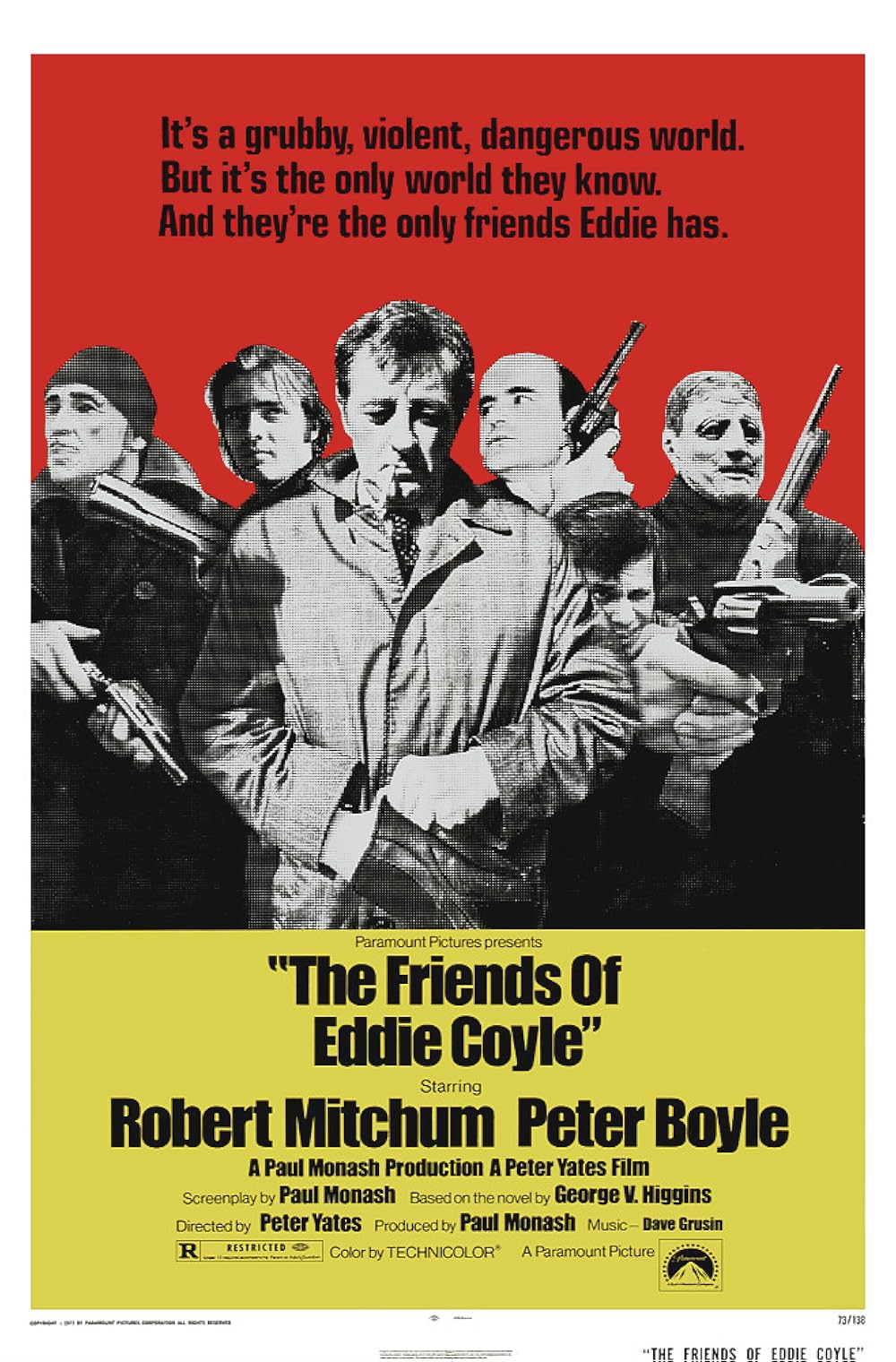
The Friends of Eddie Coyle (1973)

eddie

By Richard Winters

My Rating: 4 out of 10

4-Word Review: Gunrunner tries avoiding sentencing.

Eddie (Robert Mitchum) is an aging gunrunner living in Massachusetts whose career in crime has taken a toll on his family. He feels his life in and out of jail has caused him to lose connection with his kids and wants to avoid a repeated stint in the slammer. Another sentencing is likely as he’s been charged with hijacking a truck, so he works with special agent Dave Foley (Richard Jordan) to help reduce his pending time, or get it cleared altogether, by agreeing to give him tips of other crooks he’s worked with, of planned crimes that are about to take place including a string of bank robberies that have been occurring throughout the area and being carried out by people Eddie knows. While Eddie is able to give Dave some help it’s not enough and he continues to be squeezed to offer more names and when he does his former associates become convinced, he’ll sell-out on them, so they devise a plan that’ll quiet him once and for all. 

The film is based on the 1972 novel of the same by George V. Higgins that won numerous accolades including by such famous authors as Norman Mailer and Elmore Leonard who called it the ‘best crime novel ever written’. While the film does closely follow the story in the book, and received equally positive reviews, it did very poorly at the box office. A lot of the problem is that while the actions is captured in a gritty and unglamourous way, the idea behind the film was to give a harsher viewpoint of those working in the criminal underworld as The Godfather had been deemed at the time as being too romanticized, the characters are not people to get emotionally vested in and the plot fails to garner any momentum. The crimes get carried out in too much of a methodical way and lack tension. The viewer doesn’t care what happens to these people and thus the movie ends up lacking much of a point.

There were certain things that I did like. The gray and brown late autumn landscape helps accentuate the cold, soulless lives of the characters. The bank robberies are captivating for a while as it focuses on the intricacies of carrying out such daring heists and the planning though I felt seeing one of these was enough and having to go through two of them made it redundant and unnecessary. 

Mitchum gives an excellent performance and certainly appears and acts like someone who’s been beaten down enough by the system that’s he’s willing to do whatever he can to self-preserve. His attempts at a New England accent aren’t bad either. However, I would’ve liked to see some interaction with him and his kids as this is the whole motive for why he turns informant as he wants to spend more time with the family and not go to jail, but we never see any actual communication that he has with them albeit a brief moment with his wife. Had there been more family moments where the viewer could actually feel the character’s quandary on an emotional level than they might’ve been more wrapped-up in seeing him get through it, but by the way it gets done here there’s very little if any of that. He’s also not in it enough and there’s long stretches where we see Steven Keats, a fellow gunrunner, who’s more adept at showing the anxiety and paronia that goes into someone living the fringe lifestyle that he does and thus it would’ve been a more captivating film had it focused on him instead. 

Spoiler Alert!

The ending is the biggest letdown. While it’s the same one as in the book it’s too uneventful to be riveting or impactful. It features Eddie getting invited to a hockey game by Peter Boyle, a fellow hood, and another man who after the game take a drunken Eddie out for the ride where he passes-out and thus gives them the opportunity to conveniently shoot him, which they do. While I did enjoy close-up footage of an actual hockey game as it features players in an era where they didn’t have to wear helmets, I did find the way Eddie falls prey to the men to be too easy. This was a career criminal, so he should’ve in the back of his mind been well aware that his ‘friends’ may start to suspect him of being the snitch that he is and put on a more defensive mind set. I was fully expecting him to be faking passing out and at the last second jumping out of the car and trying to get away, which could’ve led to an exciting climactic foot chase, but stupidly falling into their trap without a peep of a fight isn’t an adequate payoff. He might as well had just shown up to the event with a bullseye tattooed to his forehead that said ‘shoot me’ as it ends-up playing-out in pretty much the same way. 

My Rating: 4 out of 10

Released: June 26, 1973

Runtime: 1 Hour 43 Minutes

Rated R

Director: Peter Yates

Studio: Paramount Pictures

Available: DVD, Blu-ray (The Criterion Collection), Amazon Video

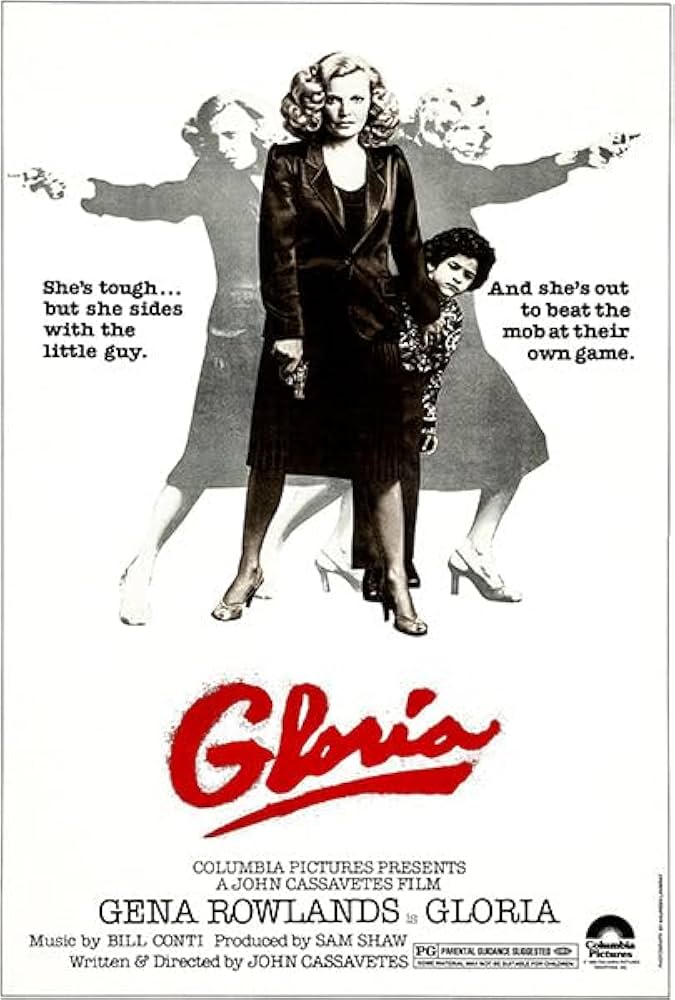
Gloria (1980)

gloria

By Richard Winters

My Rating: 8 out of 10

4-Word Review: Protecting a young boy.

Phil (John Adams) is a young boy whose father (Buck Henry) works as an accountant for the mob and has become an informant for the F.B.I. causing him and his family to become marked for retaliation by the criminal underground. In desperation Phil’s mother (Julie Carmen) pawns the child off on Gloria (Gena Rowlands) who’s their neighbor from across the hall. Gloria initially refuses to take the child as she’s adverse to kids, but eventually agrees as she takes the boy away and into her apartment just as the mob moves in on the hit. Phil was also handed by his father the ledger listing in detail the mob’s incriminating financial corruption and when they’re unable to find it after annihilating his family they then go after the pair. Gloria, who has mob connections from her past including having been in relationship with a mob kingpin, feels she can’t go to the police and must defend the child on her own using only her street savvy and gun, but where ever they go in the city the hit men remain right behind them.

John Cassavetes, who has described this as “a thoughtless piece about gangsters and I don’t even know gangsters” was never intending to direct it and though it’s become his most popular work among mainstream audiences it was one of his least favorites and something he felt embarrassed about doing. He wrote the script simply to sell it and make enough money from it to help him finance his other projects. He completed it in early 1979 and was meant as a vehicle for Ricky Schroeder who was just coming-off doing The Champ and MGM studio was looking for other projects for him to do. Cassavetes intentionally gave it a very commercial feel, much more than any of his other scripts, because he felt it would give it a better chance to sell, but when Schroeder and Barbara Streisand, who was the original choice for Gloria, both turned it down Cassavetes then shopped it around to Columbia Pictures who agreed to take it on, but only if Rowlands played the lead and since she was his wife he then reluctantly took on the directing duties.

The film doesn’t seem like the usual Cassavetes material as I was quite impressed with the location shooting, which takes the viewer to all sorts of New York City locales and makes you feel like you’re right there with Gloria and the boy as they try to maneuver their way around the unpredictable and very dangerous urban jungle. The opening bird’s-eye shot that tracks from the city’s skyline to Yankees Stadium is downright breathtaking and the grimy, rundown interiors of the family’s inner city apartment building effectively illustrates on a purely visual level the fear, stress, and tension of living in the inner city is truly like. Leonard Maltin, in his review, labeled this as being possibly done ‘for laughs’, but I didn’t find anything funny about it except for one amusing comment Gloria makes when she gets stuck in a slow elevator, but otherwise it’s a nail-bitter all the way through.

Rowlands gives her usual stellar performance, but I was hoping for more of an arch with her character. She states right up front to Phil’s mother that she hates kids and yet is pretty much warm and friendly to the child the second she takes him back to her apartment and it would’ve been more interesting to see her cold and indifferent to him initially only to slowly warm-up to him as their shared adventure went on. Buck Henry is also surprisingly good in an unusual casting choice as he’s typically known for his deadpan humor and had very little dramatic acting in his background. It was strange though why such a small, squirmy guy who was hitting 50 would be married to such a hot young Latino woman who looked to be only 24 and I felt this needed to be explained, but isn’t. I also felt the shooting of the family should’ve been shown, it gets implied, but that wasn’t enough. Seeing them shot in graphic style would’ve really hit home how dangerous and serious these people were and would’ve made the tension even stronger.

Critics at the time of the film’s release didn’t like the kid nor his acting and in fact Adams got nominated for the first razzie award for worst actor, which traumatized him so much he decided never to pursue anymore roles and to date this has been his only film appearance. I for one happened to like the kid and yes his character isn’t exactly ‘cute and cuddly’, but real children rarely ever are. They can be as rude, indifferent, and crabby as any adult and since he was brought-up in a troubled neighborhood having him be a bit ‘rough-around-the-edges’ made sense and was realistic. The only acting that I really didn’t care for was from Basilio Franchina who plays a crime boss that Gloria used to date and while he may have looked the part his performance is stiff like he’s just regurgitating lines he’s memorized and there’s no sign of a chemistry between them and their conversation is stilted and unconvincing.

Spoiler Alert!

The mob’s ability to be constantly on the pair’s tale no matter where they went seemed a bit implausible especially being in such a big, congested city, but I was willing to forgive it since the rest of it is so good. The ending was a little problematic too as it has Gloria reappearing disguised as an old lady after it was presumed she was dead. She then reunites with the kid in the middle of a cemetery, but it leaves more questions than answers like how did the two evolve? Did they become like mother and adopted son and where did they ultimately move to since New York for them was no longer safe? This might’ve gotten answered in the sequel that Cassavetes had written, but unfortunately never got green-lit. Remade in 1999 with Sharon Stone in the lead.

My Rating: 8 out of 10

Released: October 1, 1980

Runtime: 2 Hours 2 Minutes

Rated PG

Director: John Cassavetes

Studio: Columbia Pictures

Available: DVD, Blu-ray, Amazon Video, Tubi, YouTube

The Hit (1986)

hit

By Richard Winters

My Rating: 5 out of 10

4-Word Review: Not afraid to die.

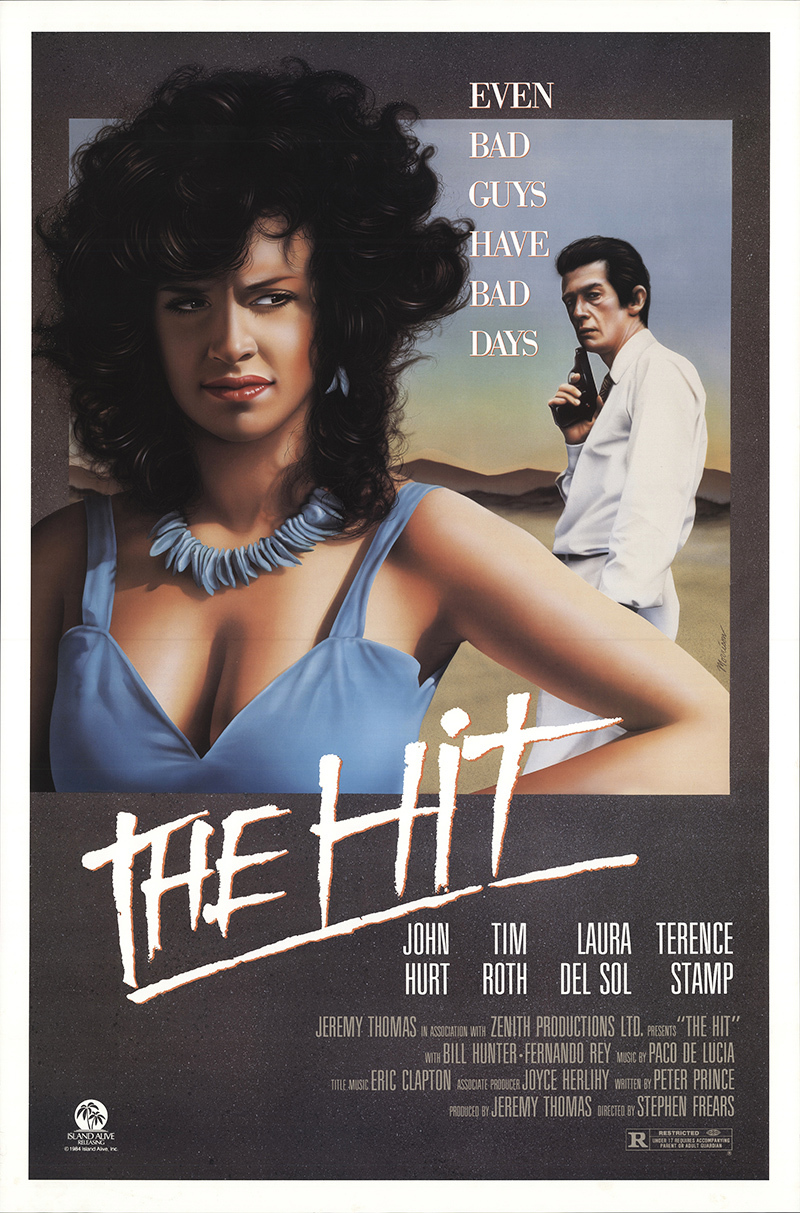
Willie (Terence Stamp) turns states evidence against the criminal underground that he’d been apart of, which then sends his former partners away to prison, but before they go they sing ‘We’ll Meet Again’ just as he leaves the court room. Ten years later Willie is living the quiet life in Spain as a part of the witness protection program only to have his home invaded by a group of teens who kidnap him and take him to hitman Braddock (John Hurt) who was hired by the kingpin that Willie helped put away. Braddock along with his young partner Myron (Tim Roth) are instructed to take Willie, via a car, to Paris where the kingpin hopes to inflict harm on Willie before eventually killing him. However, things don’t go quite as planned as Willie shows no fear of death insisting that he’s accepted it as a part of the cycle of life and this throws the two hit men off convinced that he must have something up-his-sleeve, but does he?

This is another example where a movie I enjoyed when I first watched it years ago, but doesn’t quite live up to expectations upon the second viewing. For the most part this doesn’t happen that often and there has been some cases where a movie I didn’t like when I first saw it I’ve come to appreciate when seen a second time. This one though is definitely a case of the former and I came away a bit miffed on what its point was. When I first saw it I was impressed by the scene at the waterfall where Willie, who had a chance to escape, but doesn’t and instead decides to spend his time appreciating nature’s beauty until Braddock catches up to him, I found at the time to be quite memorable and unique moment as it revealed that the bad guy in this instance was the one more afraid and insecure of death than the intended victim.

However, there’s a lot of stuff that doesn’t mesh, or could’ve been more convincing. I had a hard time understanding why this sophisticated criminal group would hire a bunch of teen boys to break into Willie’s home (hideout). How could they trust these novices to get the job done and the fact that they’re able to do it so easily makes it seem that Willie’s ‘protection’ as it were wasn’t too impressive. It also negates the effect of the criminal unit. They’re supposedly this cunning, evil, underground group relentlessly pursuing their man against this supposedly intricate government program, but if literal kids can just break down the door with just a bit of effort then the whole operation from both sides comes-off as rather amateurish.

The casting of Hurt as the bad guy isn’t effective mainly because of his meek stature. Stamp was originally intended for that role and with his big build and piercing blue eyes would’ve been perfect, but it was ultimately decided for both actors to play against type and thus the parts got reversed, but it really doesn’t work. Hit men should have an intimidating presence, but with Hurt’s slim figure and quiet, exhausted looking demeanor that doesn’t happen. Roth as his quick-triggered, youthfully naive henchmen makes matters worse as he’s a walking cliche of a teen in over-his-head just biding time before his knee-jerk reactions to do them in. Thus the psychological games that Willie plays with them are not that interesting, or impressive since these two come-off as badly dis-coordinated right from the start and like any average person could easily outfox them.

Stamp’s character is baffling as well. During the courtroom moments he states his testimony is an almost hammy way like he’s making fun of the whole situation, which maybe he is, but it’s not clear as to why and his ulterior motivations are never answered. It’s hard to tell whether he really is a good guy, or maybe secretly a bad one as there are scenes where he puts other potential victims in definite danger and then feigns ignorance about it afterwards. He spends the whole time telling everyone how death doesn’t scare him and yet when a gun does finally get pointed at him he panics and tries to run while also pleading for his life, so which is it? The same goes for Roth’s character who during the course of the movie he seems to be falling for the lady hostage, played by Laura del Sol, and even protective of her and yet when the time comes for Hurt to shoot her he puts up no fight, or resistance, which defeated the momentum and missed-out on what could’ve been an interesting confrontation.

I like movies with multi-dimensional characters and the film does have that and certainly humans can be a bag full of contradictions. However, at some point it kind of needs to explain itself and it fails on that end. Intriguing elements about these people get thrown-in, but the story fails to follow through with it ultimately making it too vague, ambiguous to be full satisfying and in many ways it will most likely leave most viewers frustrated and scratching their heads as they ask themselves what the point of the whole thing was supposed to be.

I did though really enjoy the scenes with Australian actor Bill Hunter who is marvelous in support playing a man who takes over one of Hurt’s friend’s apartments while on vacation only to get the shock of his life when the hit man and his entourage show up unexpectedly. His rather pathetic attempts to mask his fear and trying to somehow carry-on a casual conversation knowing full well he could be blown away at any second is dark comedy gold and by far the film’s best moments.

My Rating: 5 out of 10

Released: May 18, 1984

Runtime: 1 Hour 38 Minutes

Rated R

Director: Stephen Fears

Studio: Zenith Entertainment

Available: DVD, Blu-Ray (Criterion Collection), Tubi, Plex

Broadway Danny Rose (1984)

broadway2

By Richard Winters

My Rating: 5 out of 10

4-Word Review: Talent agent becomes beard.

Danny Rose (Woody Allen) is a hapless talent agent who represents clients who are down-and-out, but seeking a comeback. Lou (Nick Apollo Forte) is a singer who uses Danny as his agent. Since he has some potential and might even get hired by a big star, in this case Milton Berle who plans on tabbing him as his opening act, Danny will do anything to keep Lou happy especially since Danny’s other clients tend to drop him once they become famous, which Danny doesn’t want to happen again. In order to appease him Lou has Danny acting as a ‘beard’, or a person who pretends to being a boyfriend to someone he really isn’t. In this case it’s to Tina (Mia Farrow) a woman whose been dating a gangster. Danny acts as her boyfriend to draw attention away from Lou, but her ex-gangster lover becomes jealous and thinking Danny to be the real boyfriend sends out a hit on him forcing both he and Tina to go on-the-run.

While this film did well with the critics I felt it was pretty much a letdown. What annoyed me most was the washed-up, aging comedians sitting around a cafe table and essentially telling the story, which gets done in flashback. I felt these comedians, who say nothing that is funny, or even slightly amusing, served no real purpose except for maybe padding the runtime, which was short already, and the scenario could’ve easily played-out without constantly cutting-back to these guys to add in their useless side commentary. This also cements Allen’s transition from being hip and edgy. which he was considered as during the 70’s, to out-of-touch with day’s youth and young adults by the 80’s as no one in this movie appears to be under 40.

It’s confusing too what time period this is all supposed to be taking place in. Supposedly the cutaways to the comedians is present day though with it being shot in black-and-white it hardly seems like it, and then the scenes with Danny are apparently things that happened in the 60’s. This though gets completely botched not only because of the cars they drive, which are of an 80’s variety, but there’s also a scene where Lou and Danny are walking on a sidewalk and go past a theater marque advertising Halloween III, which was  a film that was released in 1982.

On the plus side I enjoyed Mia’s performance of a hot-headed, highly oppionated Italian especially with the dark glasses and bouffant hair-do, which could’ve been done up even more. She’s known as being such a serious actress, who’s marvelous in drama, but to see her able to handle the comedy and even become the centerpiece is a real treat. Woody and her make for a quirky couple, she’s actually taller than him when they stand side-by-side, and she really gets in some good digs on him. Though with that said I actually wished that Nick had played the role of Danny as his amateurish acting made his doopy character funnier and the scenes between him and yappy Mia could’ve been a real riot.

There are a few laugh-out-loud moments, though it certainly takes it sweet time getting there. Watching Woody and Mia attempt to escape the killer by running through a field of tall grass I liked as too the scene where they are chased into a warehouse filled with parade floats and the hydrogen that escapes from them, due to the shooting bullets, causing their voices to become extremely high-pitched. The rest of the humor though relied heavily on Italian-American stereotypes that have been done hundreds of times before and isn’t original. I was also surprised that it has walk-on cameos by Howard Cossell and Milton Berle, who even appears in drag during the Thanksgiving Day parade, but are given no lines of dialogue.

My Rating: 5 out of 10

Released: January 27, 1984

Runtime: 1 Hour 25 Minutes

Rated PG

Director: Woody Allen

Studio: Orion Pictures

Available: DVD, Blu-ray, Amazon Video, Freevee, Tubi, YouTube

Hide in Plain Sight (1980)

hide

By Richard Winters

My Rating: 6 out of 10

4-Word Review: Searching for his children.

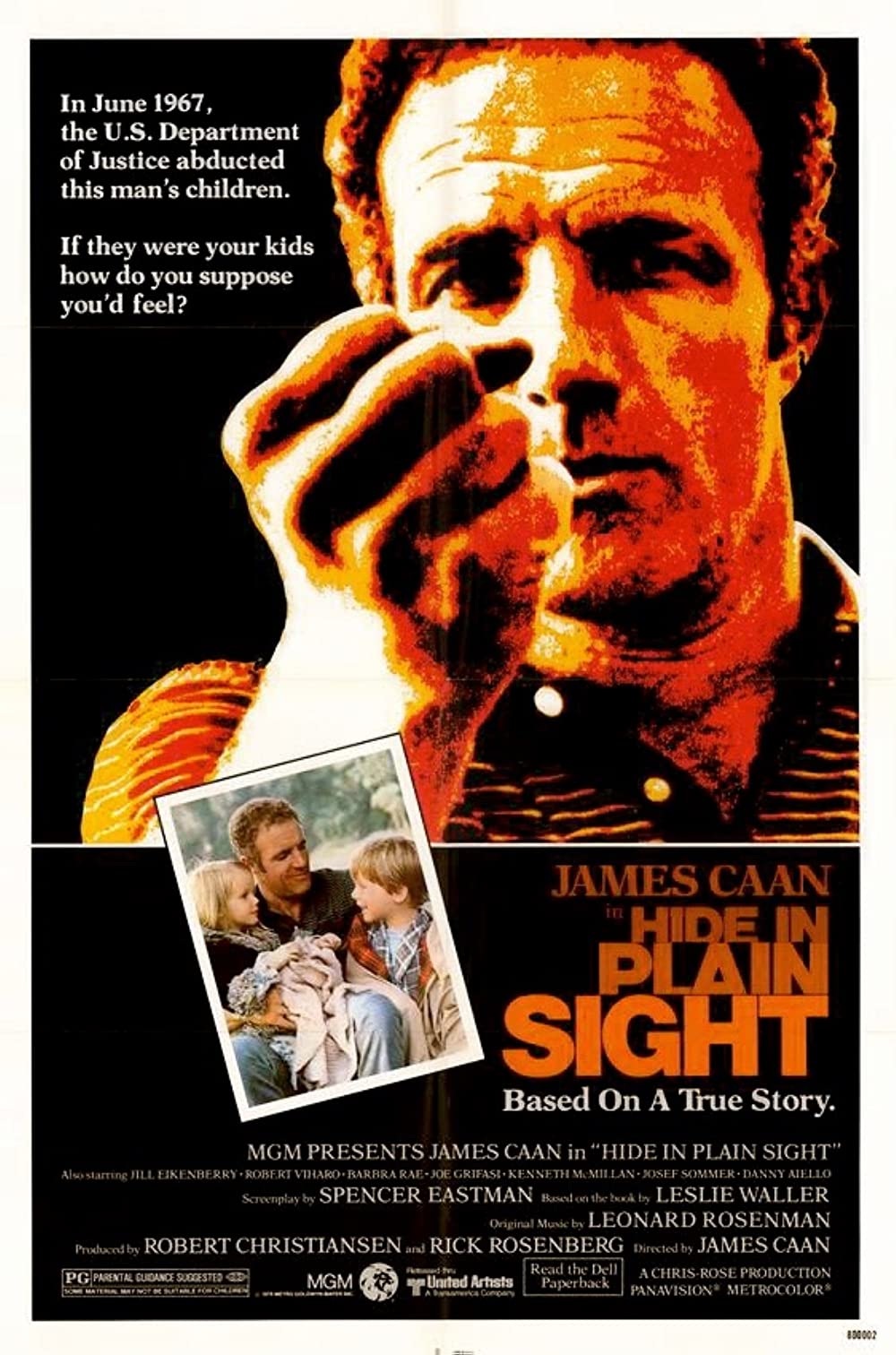
Thomas Hacklin (James Caan) is a divorced father of two children who has visiting rights to see his kids every weekend. One day when he arrives at his ex-wife Ruthie’s (Barbra Rae) residence he finds the home abandoned and no one around. He eventually learns that her and the kids have been put into the Witness Protection Program due to her remarriage to Jack (Robert Viharo) a gangster who qualified for the program when he became a state’s witness against the mob. Thomas’ efforts to find his kids prove futile and the authorities are no help, but he becomes relentless and hires a lawyer (Danny Aiello) to represent him in court, but even then the odds remain seemingly insurmountable.

The film is based on the novel of the same name by Leslie Waller, which in-turn was based on the actual experiences of Thomas Leonhard who one day in 1967 when he went to pick-up his kids for his weekly visitation found them gone and the house that they had been living in with his ex-wife Rochelle to have been abandoned. This then precipitated an 8-year crusade by Thomas to get them back, which proved to be a landmark legal battle, but on July 4, 1975 he was eventually reunited. The film though changed several things from the true story including adding in a subplot where Thomas gets followed by the mob and eventually leads to a violent confrontation. It also compresses the time span from 8 years to 18 months.

While I enjoyed the movie more than when I first saw it over 10 years ago the issues that I had with it during the first viewing remained the same. Most of it had to do with Caan’s, in this the only film that he directed, non-use of close-ups, which the studio heads complained about during the production. A good example of this is when Thomas and ex-wife are arguing on a public sidewalk the camera does not move-in, like in most movies, to allow us to hear what they’re saying, but instead pulls back, so they go further away, but what’s the point of seeing characters on the screen argue if we can’t hear what it’s about? Another scene has Thomas arriving at his ex-wife’s abandoned home, but instead of having the camera go inside with him as he enters it, it remains outside and then tracks around the home to the back door, which Thomas is seen leaving. This though lessens the impact as having the viewer visually witness the suddenly empty house would’ve been far more dramatic.

I did though like that many of the scenes were shot in Buffalo at the exact locations where the real-life incidents happened. The film reconstructs the look and feel of the 60’s quite nicely and many of the participants from the actual events coached the actors on how to perform their roles accurately. The acting is impressive especially by Viharo who’s mafia mobster caricature is right on-target. Kenneth McMillan is quite entertaining as a police detective who initially impedes Thomas’ efforts, but eventually has a change-of-heart. As with any great character actor, which McMillan clearly is, it’s what they add to the part that makes it interesting and here it’s his excessive eating with virtually each scene he’s in has him stuffing his face though I wondered how many takes were required to do each scene and if he ultimately overate and got himself sick while performing the role.

Spoiler Alert!

I was annoyed though with how certain fictional things that got added-in like Thomas’ dealings with the mob got played-down instead of up. The original script by Spencer Eastman called for a lengthy car chase and violent fist-fight, but Caan chose to take the subtle route making these moments less tension filled and possibly too slow and uneventful for some people to sit through. I was also amused how the actual reunion between the father and kids was different from the one in the movie where it’s portrayed as being a happy one. In real-life the kids disliked their father’s rules and ended up moving back with their mother showing how ironic life can be where you fight hard for something and then when you finally get it it ends up not being as great as you thought it would be.

My Rating: 5 out of 10

Released: March 21, 1980

Runtime: 1 Hour 32 Minutes

Rated PG

Director: James Caan

Studio: MGM

Available: DVD-R (Warner Archive Collection), Amazon Video

The Prize Fighter (1979)

prize1

By Richard Winters

My Rating: 1 out of 10

4-Word Review: Boxer wins rigged fights.

Bags (Tim Conway) is a former boxer who lost all 20 matches that he was in and now helps his former trainer Shakes (Don Knotts) train new fighters, but neither of them is having much luck. Bags decides to go back into the ring during an amateur fight night and this gets the attention of local crime boss Mike (Robin Clarke). Mike is trying to build a convention center, but is stymied by Pop Morgan (David Wayne) who owns a gym on the block Mike wans to build on and he’s refusing to sell at any cost. Mike decides to rig the fights that Bags is in, unbeknownst to both Bags and Shakes, to the extent that it looks like Bags is ‘unbeatable’. He then will entice Pop to bet on the fight that Bags has with the The Butcher (Michael LaGuardia). Pops will be under the presumption it’ll be a ‘safe bet’, but this time Mike won’t rig it and presumably Bags will go down and Mike will be able to get his hands on Pop’s gym and tear it down for his new building. 

While Knotts and Conway had success with their pairing in The Apple Dumpling Gangthis foray, an attempted parody of Rocky, goes nowhere. Instead of being filled with a lot of gags and pratfalls, which is what you’d expect, it’s a slow story filled with every cringy cliche from a fight movie out there. Comedy is supposed to make fun of the cliches instead of propping them up, but unfortunately that’s the approach taken and it bombs massively.

Comedy movies should also have all the characters be funny in some way, but here most of them are not. Possibly that was for vanity reasons as Conway, who also wrote the script, didn’t want to be upstaged, but this forces the viewer to go through long periods of trite drama in every scene that he’s not in. The supporting characters are extreme caricatures of the 1930’s which the film is set in. Robin Clarke is particularly annoying (not necessarily his fault as that was just the way the part was written) as he attempts to channel Al Pacino from The Godfather while speaking like a poor man’s Marlon Brando. David Wayne is cast to resemble Burgess Mereridith who was in Rocky (ironically both men played villains in the 60’s ‘Batman’ TV-show with Meredith as the Penguin and Wayne as The Mad Hatter). Here though Wayne speaks, in an effort to sound like Meredith, in a gravely voice that makes him sound like a duck. I also found John Myhers, who co-wrote the script, put-on Irish accent to be equally irritating.  

Even Knotts gets wasted. Some enjoy the moment where he cracks a bunch of raw eggs in a glass and then tries to force Conway to drink it, but other than that he doesn’t elicit too many laughs. Yes, Conway is amusing at times, but his perpetually clueless shtick gets a bit old by the end. The only performer that had me laughing was Mary Ellen O’Neill who plays Mike’s senile old mother and who does some wildly bizarre things while in Conway and Knotts’ presence. She’s a scene stealer and should’ve been in it more and while she’s at the boxing match as she watches the fight with Mike she should’ve continued to do weird things while the fight was going on, which outside of swearing she doesn’t, and it was a missed opportunity.

I will give credit for the climatic bout, which is surprisingly well choreographed and effectively has a large crowd watching, which gives it an electric atmosphere, but everything else falls flat. The irony I suppose is that the film ended up being a money-maker and in fact was one of the most successful films released by New World Pictures, but I think this was mainly because a lot of people went to it based off the reputations of the two stars more than the movie itself being good. I remember I went with my dad and two siblings to see it at the local theater because we were fans of Conway and Knotts, but all of us, our dad included, were quite bored and went home unimpressed and it clearly hasn’t improved with age. 

My Rating: 1 out of 10

Released: November 16, 1979

Runtime: 1 Hour 39 Minutes

Rated PG

Director: Michael Preece

Studio: New World Pictures

Available: DVD