Category Archives: Foreign Films

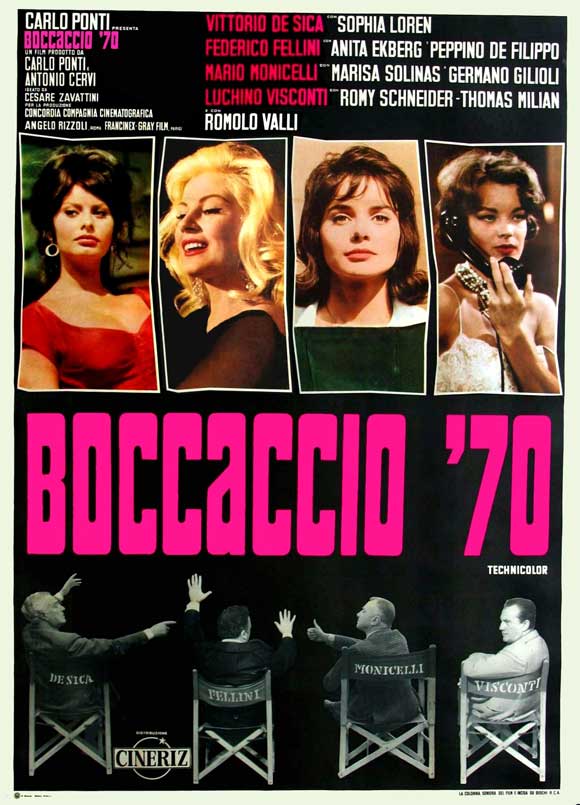
Boccaccio ’70 (1962)

By Richard Winters

My Rating: 7 out of 10

4-Word Review: It’s all about sex.

            This film, which is well over 3 hours, is a compilation of four different sex tales directed by legendary Italian greats: Federico Fellini, Vittorio De Sica, Luchino Visconti, and Mario Monichelli. The segments also star some of the most beautiful and sexiest women to ever grace the screen including: Sophia Loren, Anita Ekberg, and Romy Schneider. These ladies are at their most stunning and really light up the screen with their presence. Despite the extreme length the film moves along in a breezy fashion and I was actually surprised how quickly the time went.

The first segment directed by Monichelli and entitled ‘Renzo e Luciana’ was cut from the initial American theatrical release and it is easy to see why as it lacks the energy and flair of the others. It stars Marisa Solinas who doesn’t have the sex appeal and star power of the other leading ladies and apparently this was the reason why it was cut, but now has been restored on the recent Blu-ray release. The story is rather simple and deals with Luciana (Solinas) getting married to Renzo (Germano Gilioli), but having to move-in with her parents as they are unable to afford a home of their own. She also must keep her marriage a secret because the contract that she signed at the accounting firm that she works at strictly states that the female employees must remain single. This is so their overweight, lecherous boss can flirt and go out with them and threaten to fire them if they resist. Because of her financial situation and sparse job market Luciana is forced to put up with his advances. Although seeing two young newlyweds struggling as they start out can at times be touching this segment doesn’t have enough comedy, or drama to keep it afloat. The only lasting image one remembers from this is when Luciana goes to a public pool and sees her fat boss prancing around in nothing but a skimpy bikini bottom, which might be enough to make some viewers sick.

‘Le tentazioni del dottor Antonia’ is the second segment and directed by Fellini with his usual visual flair and style. The plot is about an older gentleman named Antonio (Peppino De Filipo) who is quite prudish and protests and tries to ban any type of public display of sexuality. When a giant billboard is erected in front of his apartment showing an alluring model (Ekberg) in a provocative pose while holding a glass of milk he becomes irate. His initial anger turns to horror as the giant model comes to life and begins to terrorize him in all sorts of comical ways. The special effects are pretty good. Filipo plays his role to a delightfully hammy level and Ekberg is striking. The ironic ending, which features a lot of surreal elements, is amusing.

The third feature is entitled ‘II lavaro’ and is directed by Visconti.  Here a rich young husband (Thomas Milian) can’t seem to avoid being caught cavorting with prostitutes despite the fact that he is married to the beautiful Pupe (Schneider). She decides that the only way to prevent this is by becoming a prostitute herself and then having him pay her to be his mistress. This segment starts out with a humorous and engaging tone, but eventually becomes talky, static, and stagy. Schneider is the best thing about it and is intoxicating in every scene that she is in. She not only speaks fluent Italian here, but German as well.

The final segment entitled ‘La riffa’ and directed by De Sica is by far the best. It is about a raffle that all the men in a small village get involved in to see who will win one night with the beautiful Zoe (Loren).  The irony here is when timid Cuspet (Alfio Vita) who looks and acts exactly like Rowan Atckinson’s Mr. Bean character, ends up winning it. De Sica nicely plays everything up to its full potential and captures the nuances and eccentricities of the characters well. Loren is both sexy and funny and shows a flair for frantic comedy. The sequence involving Cuspet and Zoe’s rendezvous is amusing, touching, and even a bit surprising.

My Rating: 7 out of 10

Released: June 26, 1962

Runtime: 3Hours 25Minutes

Rated NR (Not Rated)

Directed by: Federico Fellini,  Vittorio De Sica, Mario Monichelli, Luchino Visconti.

Studio: Cineriz

Available: VHS, DVD (Region 1 and 2), Blu-ray, Netflix Streaming

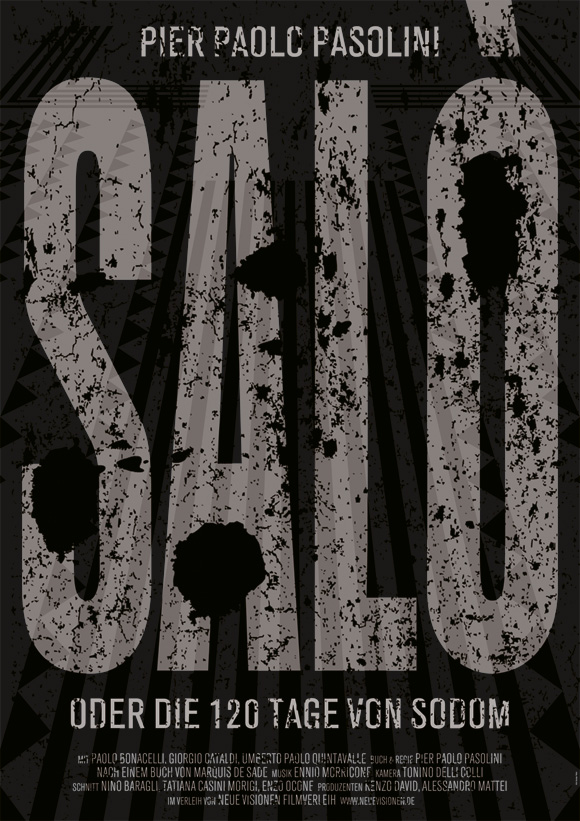
Salo, or the 120 Days of Sodom (1975)

By Richard Winters

My Rating: 5 out of 10

4-Word Review: They want sex slaves.

During the end of WW II in a northern city of occupied Italy a group of bourgeoisie men and women round up a group of teenage boys and girls and take them to an isolated mansion where they are forced to become sex slaves. They are also inflicted with cruel tortures in this story based on the writings of Marquis De Sade.

The film is interesting, but only up to a point. Director Pasolini’s natural lighting fetish really works here and he makes it into an art form. His ability to find the perfect moment in the day to shoot the scene and be able to frame the action within the shadows is amazing and along with the color schemes gives it a very distinctive look and an unusual atmosphere.

The acting by the adults is amazing as they project evilness without flaw. The perverted stories they tell in some ways is more shocking than the actual scenes and the casual way they go about their sick behavior achieves an unprecedented level.

The story itself has some good insights. It shows the veneer of civilized behavior and how the passive nature of the victims and society as a whole only helps to allow evil to flourish. There’s also the main point which is that evil is truly a part of the human make-up and hides itself in everybody and can come out if provoked including the victims themselves.

Yet the film makes its point and then hammers it home without pause. The non-stop perversity becomes excessive and the redundancy eventually makes the shock value and message meaningless. Showing the background of these captors might have helped given it more of a balance.

I have nothing against those who wish to ‘push the envelope’ and there is nothing that says movies need to be tasteful, or even entertaining, but I couldn’t help but wonder if Pasolini simply used the material as an excuse to explore his own dark fantasies. Of course DeSade’s actual writings were far more twisted and unsettling then anything you see here and the film is a significantly toned down version.

Actual teenagers were used and there is an abundance of nudity and perversity. Something like this could never have been made here in the states and exactly how it ever got made is more interesting than the film itself. If there was ever a movie begging for a “Making of…” documentary it’s this one. It is also interesting to note that Pasolini was mysteriously killed by a hit-and-run driver just a few days before the film’s official release.

My Rating: 5 out of 10

Released: November 22, 1975

Runtime: 1Hour 56Minutes

Rated NC-17

Director: Pier Paolo Pasolini

Studio: United Artists

Available: DVD, Blu-ray (The Criterion Collection)

Two for the Road (1967)

By Richard Winters

My Rating: 6 out of 10

4-Word Review: Couple examines their marriage.

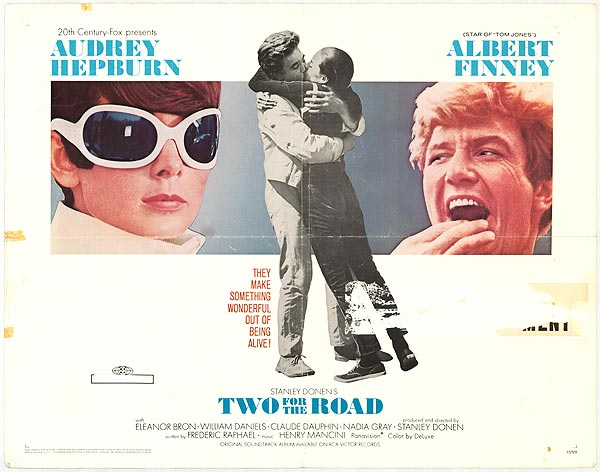
This is a unique and diverting look at a couple (Albert Finney, Audrey Hepburn) traveling the French countryside while dissecting their turbulent marriage. The road of course represents their long and winding relationship. It cleverly cuts between when they first met, which seems to have been on the same road, to twelve years later. The edits between the two stages are creative as is the majority of this fluid and entertaining movie. It wants to be silly, fluffy, serious, complex, exotic, avant-garde, and romantic all at once and most of the time it succeeds proving what an over looked, unsung genius director Stanley Donen is.

It’s a movie made for couples, but probably those who have been married for quite a while and can relate to the characters here who have been through the rough spots and have learned to accept their partner and the flaws that come with them. This film tries to dig a little bit deeper, which helps it stand out. It also has a more relaxed European attitude, especially in regards to ‘indiscretions’.

On the negative side the film contains a lot of old fashioned sexist attitudes. For instance the man is expected to be mechanically inclined and in control of every situation, which becomes very apparent in the scene where he has to get underneath the car to fix it while she sits on top of the vehicle without any care or inclination to what he is going through. The man is also expected to be the sole provider of the family while the woman does the majority of the child rearing.

Audrey, who wears an amazingly high number of stylish, chic outfits, looks more like a runway model sporting the latest fashions than an average housewife on a country drive. I realize that they wanted to accentuate her beauty, but it ends up being a distraction at the same time. If the intention of the story is about an average couple going through average marital problems then at least have them look the part.

The Henry Mancini score is pleasant as usual, but eventually gets overplayed. It’s also not as introspective as it wants you to believe, but on a slickness level it gets an “A”. Also, watch for Little Ruthie who is the world’s most obnoxious child.

My Rating: 6 out of 10

Released: April 27, 1967

Runtime: 1Hour 51Minutes

Rated NR (Not Rated)

Director: Stanley Donen

Studio: 20th Century Fox

Available: VHS, DVD

Dirty Hands (1975)

By Richard Winters

My Rating: 7 out of 10

4-Word Review: Their plans go awry.

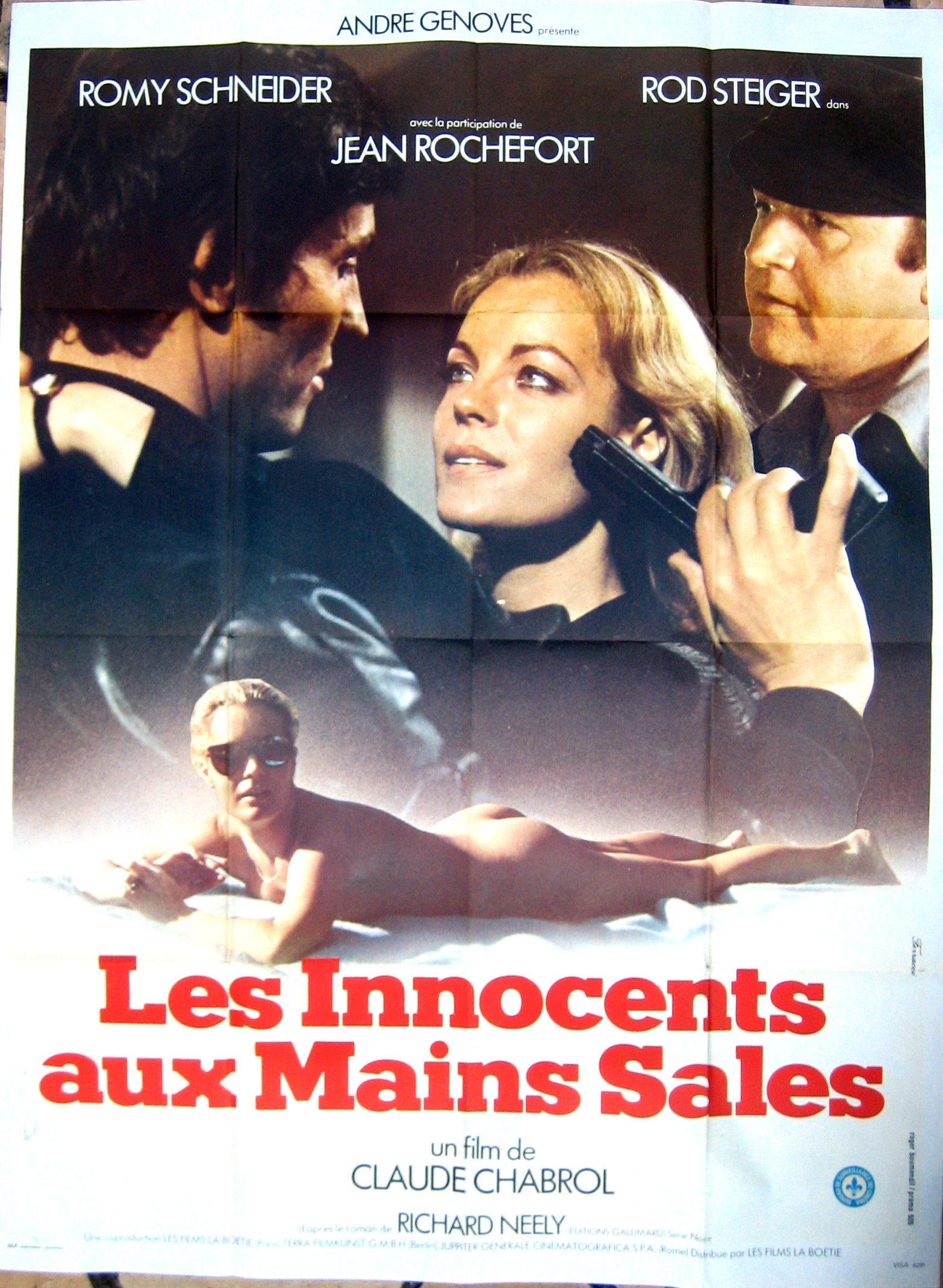
Julie Wormser (Romy Schneider) is married to Louis (Rod Steiger) who is rich, but also 18 years older and suffering from impotency. A young, virile man by the name of Jeff Marle (Paolo Giusti) comes into her life and the two become lovers. They conspire to murder her husband and run off. However, their elaborate plan quickly unravels leading to many unexpected twists and turns.

Story-wise this is one of the better Hitchcock imitations. There are a lot of twists that are interesting and surprising. They are also well-explained and make sense. Nothing is thrown in that is implausible or creates loopholes.  The script is like traveling on a curving, winding road in a fast car and I found myself delightfully surprised, intrigued, and entertained with each new revelation. The film takes its time in explaining each detail and plot point. I liked how the investigators are given almost as much screen time as the culprits and writer/director Claude Chabrol has everything well-thought out and even manages to get you to care for these people at the end.

Schneider is stunning. I loved her blonde tinted hair and chic outfits. She has a sultry nude scene at the very beginning, but it is only from the backside. This was pretty much her vehicle. Her character goes through a wide-range of emotions and she does a great job of conveying each one. Her facial expressions especially as the case unravels and she is being interrogated by the Judge and questioned by her lawyer are captivating to watch and perfectly realized.

Steiger is always fun. His ability to display raw intense emotion is second to none. The character was a bit cardboard as written, but Steiger manages to make him human and I had genuine sympathy for him towards the end. He does tend to border on over-acting at times, but he injects life into the scenes that otherwise could have gotten boring and slow.

Although Chabrol clearly put a lot of care into the script the visual element is lacking. The camera work is conventional and unimaginative. Certain scenes are too dark and shadowy while others look bright and splotchy. The majority takes place in an exquisite looking French Chateau, but Chabrol fails to take advantage of this. The lack of visual style makes the thing look almost amateurish and the grainy, faded DVD transfer does not help. I also felt the dialogue between the two investigators seemed stale and derivative. There was also a part were Julie complains to the investigators that they have dropped into her house for a visit at much too late an hour and then, only a minute later, she is seen walking out of her house and it is broad daylight. Also, when she hits her husband over the head and supposedly kills him in his sleep he is still seen breathing.

If one is looking for a sharp mystery done in the Columbo style then this pick could be a fun, escapist evening. Schneider’s beauty and acting will carry the rest, but just be prepared for production values that are on a TV-movie level.

My Rating: 7 out of 10

Released: March 26, 1975

Runtime: 2Hours 1Minute

Rated PG

Director: Claude Chabrol

Studio: New Line Cinema

Available: DVD

The Offence (1972)

By Richard Winters

My Rating: 8 out of 10

4-Word Review: Interrogate the child molestor.

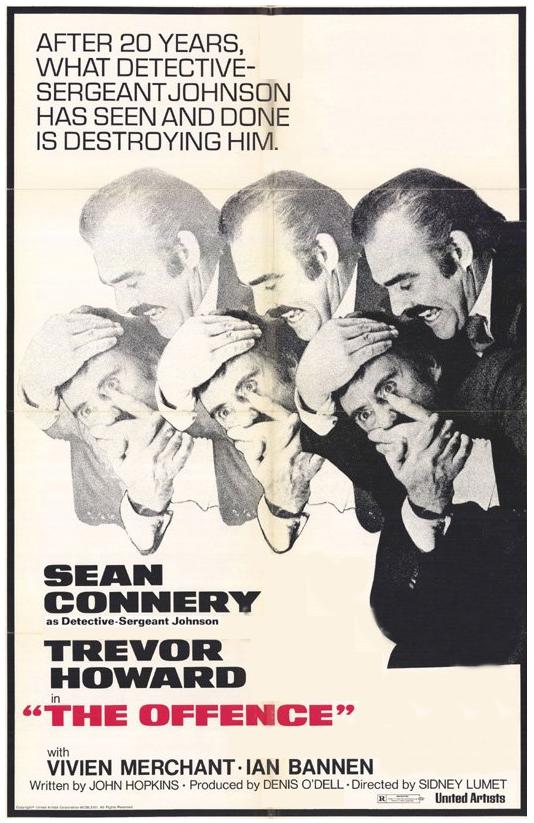
Well respected, longtime police detective Johnson (Sean Connery) becomes so burned-out by all the sickening crimes that he has seen through his career that he snaps during the interrogation of a suspected child molester (Ian Bannen) and ends up beating the man to death.

Based on the stage play by John Hopkins this film has lots and lots of talking and some may say there is too much of it. The script is split into three drawn out conversations between two people. One is between Johnson and the suspect, the second is between Johnson and his wife (Vivien Merchant), and the third is between Johnson and the man brought in to investigate the incident, which is played by Trevor Howard. By the end even the most patient viewer may feel a bit talked out and it gets especially trying when you realize that the same issues are being discussed over and over again.

Yet that is not to say that this is a poor film as the visual element is excellent. In many ways you can appreciate the production for its visual style alone. Director Sidney Lumet displays a good handle on the material and it’s technically sharp on all levels. The lighting is well composed with the center that is bright, but the corners that are shadowy much like the human psyche and society. The overall grayness helps bring out the depression and isolation of the main character. The pacing is slow, but deliberate. Each scene builds to an intense crescendo. The music soundtrack resembles that of a one tone alarm that keeps building to a higher pitch much like the alarm ready to go off in Johnson’s head. The character’s inner tension is made even more vivid by Lumet’s use of interposing the bright light of the interrogation room over the screen. It is hard to imagine this film being any better crafted and it is a terrific training tool for the inspiring filmmaker.

Despite being talky the script in itself isn’t bad as it makes you aware of the ugly side of police work. It focuses not on the system or corruption, like a lot of other police films, but more on the actual work itself. It questions whether someone who is bombarded with the daily gore and societal sickness can remain sane and whether ‘leaving it all at the office’ is even possible. Every officer may eventually suffer scars from his job experience.

In a way this may be Connery’s best role. He shows his usual tough exterior, but also has moments where he unravels into a helpless, scared man. Bannen does an equally good job as the suspect. You are never really sure if he is guilty or not. The fact that he gives off a leering grin even after being beaten gives this film an added edge.

This is an oppressive and unrelenting movie filled with stark and unpleasant imagery that may stay with you long after it is over. Yet it is also expertly crafted and brings up some serious and important issues that are as timely today as they were back then.

My Rating: 8 out of 10

Released: January 11, 1972

Runtime: 1Hour 52Minutes

Rated R (Mature Theme)

Director: Sidney Lumet

Studio: MGM

Available: VHS, DVD (Region 1 and 2), Amazon Instant Video

Dead Calm (1989)

By Richard Winters

My Rating: 8 out of 10

4-Word Review: Psycho on a boat.

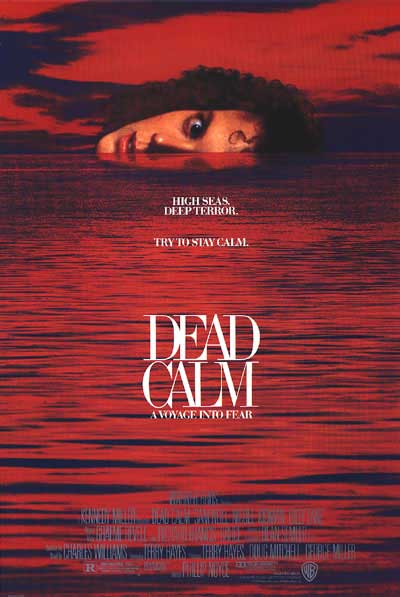
Rae and John (Nicole Kidman, Sam Neill) are a young couple who in an attempt to get over the death of their child go on a cruise along the coral reef in their own private yacht. After many days at sea they come upon a boat with only one survivor. The man (Billy Zane) comes aboard their ship and almost immediately begins to behave strangely. Tensions slowly rise until it becomes obvious that this man is a full blown psychotic who has killed everyone on the first boat and plans to do the same to them.

In many ways this is a foundation to a perfect thriller. The two main characters are sensible and intelligent people who just happen to be at the wrong place at the wrong time. Like with every thriller there are a few minor loopholes, but overall the situations are done in a believable fashion with no extreme jumps in logic. The script is tight and the suspense consistent. The action comes naturally through the scenarios and is not forced or played out too long. Having it take place at sea gives it a distinct flavor and the setting limitations makes the story more creative. It also hits on one of the main ingredients of fear which is isolation.

The only minor liability is the Zane character. At certain points he seems very human and a fascinating psychotic who is definitely no machine-like slasher. There are times when he is calm and complacent and his disturbed traits only surface sporadically thus giving him a much more multi-faceted personality. Unfortunately he is also careless and amazingly dumb, which hurts the tension because it seems to be telegraphing his own demise. Either way Zane is convincing in the role.

The Neill character makes a good counterpoint. He is savvy and no-nonsense. He takes action into his own hands and doesn’t fall into the helpless victim mode like in other thrillers. The Kidman character is another refreshing change of pace. She is not the standard ‘screaming lady in a bikini’, but instead shows equal resourcefulness.

The film does resort to the modern day slasher trend of having a ‘double’ ending. Yet everything else is so slickly handled that you can almost forgive it. For thriller fans this should be a real treat.

My Rating: 8 out of 10

Released: April 7, 1989

Runtime: 1Hour 36Minutes

Rated R

Director: Phillip Noyce

Studio: Warner Brothers

Available: VHS, DVD, Blu-ray, Amazon Instant Video

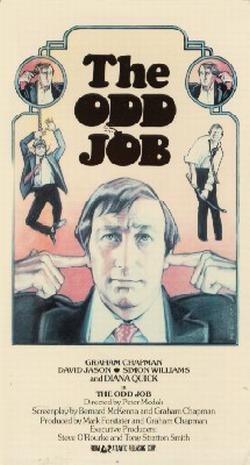
The Odd Job (1978)

By Richard Winters

My Rating: 2 out of 10

4-Word Review: Hired to kill him.

            Arthur Harris (Graham Chapman) comes home one day to celebrate his wedding anniversary only to find that his wife Fiona (Diana Quick) is leaving him. He becomes so despondent that he decides to kill himself. He has a lot of problems doing it, but then he receives a knock on his door by a man (David Jason) looking for some ‘odd jobs’. Arthur decides to hire him to be his killer, but when his wife decides to come back Arthur is thrown into a state of panic trying to avoid being killed.

Normally I love British comedies and this one seemed to have all the ingredients to being a hilarious one, but it never gels. The opening bit where the couple is arguing and Arthur insists that they are ‘happily married’ even if she doesn’t think so is full of great English wit, but everything after that falls into a lull. The jokes become long and elaborate where so much time is spent building the set-up that getting to the punch-line becomes trying. The restaurant scene is particularly drawn-out and unfunny. The ‘zany’ chase sequence in the zoo is derivative and flat.

Quick was not a good casting choice as the spouse. She is too young and beautiful a wife for such a nebbish man. A good comic character actress who was more frumpy and dowdy would have been a better fit. Quick doesn’t show any comic ability, or timing as her affected responses and facial expressions become annoying and tiring. There is also no motivation for why the character decides to come back to her husband and although this is absurd comedy there still needed to be one otherwise the writing comes off as forced and sloppy, which it is.

Chapman doesn’t completely work in his role either.  It seemed strange that he would want to kill himself when a super-hot lady neighbor is more than willing to go to bed with him and even strips off your clothes and hops into the sack before he goes running off in fright. There is also the issue that killing oneself because your wife as left you seems extreme. Most men would probably celebrate if this happened to them and it is hard to relate to a protagonist that seems so pathetic. A stronger motivation, like having him killed in a staged murder, so his family could collect on some life insurance money would have been more effective. There is another part where the police become aware that someone is trying to kill him and for some reason Arthur does not tell them of the bizarre scenario when they ask him about it even though to me it made more sense to let them try to apprehend the man instead of continuing to live in fear of being killed.

The music, which is soft and melodic, was a terrible choice as it does not fit the quirky theme, nor complement the fast-paced comic scenarios. The tacked on ‘surprise ending’ is horrible and pretty much cements the film as a misfire. During his Monty Python days Chapman was famous for walking onto the screen and telling the audience that the sketch they were doing had become too absurd and would now end and I wish he had done that here.

My Rating: 2 out of 10

Released: September 3, 1978

Runtime: 1Hour 27Minutes

Rated PG (Brief Nudity)

Director: Peter Medak

Studio: Columbia-EMI-Warner

Available: VHS

Macaroni (1985)

By Richard Winters

My Rating: 3 out of 10

4-Word Review: He writes love letters.

            Due to a business trip Robert Traven (Jack Lemmon) finds himself returning to Italy after four decades. He hadn’t set foot on their soil since World War II. He is old, tired, and grouchy and looking like an extension of the character Lemmon played in Avanti! , which was also took place in Italy.  When he arrives he meets Antonio (Marcello Mastroianni) who tells him he is the brother of Maria, a woman Robert had a relationship with during the war.  Robert decides to go and meet her despite the fact that she is now married. When he gets there he finds that everyone acts as if they already know him. Robert then finds out that Antonio has been writing ‘love letters’ to Maria all this time, but pretending to be Robert. The letters are filled with wild stories and conquests making Robert a cult-hero to the local people.

This movie is high on the charm, but not much else. Mastroianni is engaging and endearing. I wasn’t too crazy about his mustache and I don’t think it was needed, but he otherwise sparkles in every scene he is in and gives the film much needed energy. Lemmon is fun too, but he seems old and tired here. The camera stays locked on his worn, emotionless face during his entire cab ride from the airport to his hotel, which was too much and the main problem with the film in that director Ettore Scola’s scenes are too long. However, together with Mastroianni these two legendary actors make for an interesting duo. The way their friendship blossoms and slowly progresses is natural and pleasing. The best shot of the whole film is watching the two walking along a shore of rocks from a bird’s-eye-view.  Lemmon also plays a bouncy piano piece and I wished they had let him play more of it.

The film gives one a nice sense of Italian city life.  The on-location shooting makes if feel and look authentic. There is a lot of focus on Italian food and desserts that will make one hungry by the time it is over. The soft, melodic music is relaxing and peaceful and perfectly reflects the easy-going nature of the script, but ends up getting a bit over-played.

The film’s main issue is that there is just not enough story here. It is almost a one-joke script dealing with Antonio’s fabricated letters, which is funny for a while  especially when Robert argues with him about some of the lies in the letters and how he would have preferred that they’d be exaggerated differently, but nothing else.  The film takes too long to get there and they tack on a very formuliac and contrived ending dealing with Antonio trying to avoid the mob who is after him for some unpaid debts and Robert’s attempts to save him.  There is also the fact that Maria, who Robert supposedly was in-love with at one time, never speaks a word of dialogue. In fact the two never share much of any type of conversation, which seemed odd. The other family members and friends appear too naïve for believing all of the wild scenarios that Antonio wrote in the letters that would make anyone else skeptical.  By portraying them as being so gullible makes them stereotypes and is unrealistic.

I’m surprised that these two actors of such high stature agreed to take on this limp material, or didn’t demand for more changes when they did. Even if you are fans of these leading men it still isn’t worth seeking out even for a slow night.

My Rating: 3 out of 10

Released: October 24, 1985

Runtime: 1Hour 44Minutes

Rated PG

Director: Ettore Scola

Studio: Paramount

Available: VHS

The Passion of Anna (1969)

By Richard Winters

My Rating: 8 out of 10

4-Word Review: Lonely little island retreat.

This is an intriguing film that seems quite similar to Roman Polanski’s Cul-De-Sac. Both films have a unique atmosphere and take place in a remote island setting and deal with a turbulent undercurrent that brews just underneath its deceivingly placid exterior.

Here we have Andreas (Max Von Sydow) living a lonely existence on an island retreat. He meets, by chance, Anna (Liv Ullmann) who is still grieving from the death of her first husband. The two form a tenuous relationship that slowly unravels as the dark corners of their personalities are eventually exposed.

In many ways this film has all the right ingredients. It wraps you up in its surreal nature and adds interesting effects. There are some creepy elements including a mad killer running around the island killing and torturing all the animals. Things work at a deliberate pace and leave no clue as to where it is headed. The characters are unpretentious and introspective. They are open about their faults and failures and give good reason as to why they have them. There are also fascinating cutaways to the actors themselves who help explain and interpret their characters motivations, which is a novel idea that gives the viewer a deeper understanding of the characters and adds an extra dimension.

Unfortunately it doesn’t come together and leaves no real emotional impact. There are a few good twists, but you can’t help but feel that it should have gone farther. There a certain scenarios that get touched on, but are never explored. For instance there is Andreas’s relationship with Elis (Erland Josephson).  Andreas has taken a loan out from him, but has also had an affair with his wife. This of course has some potential for fireworks and there is a moment where it begins to sizzle, but it never goes back to it. The same thing can be said for many of the other segments including the identity and reason for the animal killer.

Overall this is an outstanding experimental-like movie. It is not one of director Ingmar Bergman’s best, but it is still richer and more deeply textured than eighty percent of the other movies that are out there. The crisp and revealing dialogue alone makes it worth it and Bergman displays the most realistic perspective on the union of marriage.

My Rating: 8 out of 10

Released: November 10, 1969

Released: 1Hour 41Minutes

Rated R

Director: Ingmar Bergman

Studio: United Artists

Available: VHS, DVD

Moscow Does Not Believe in Tears (1980)

By Richard Winters

My Rating: 6 out of 10

4-Word Review: Three women three stories.

            Some Russian lady friends of mine suggested I review this film, which is a favorite of theirs and awarded the Oscar for best foreign film of 1980. The story deals with three women who room together at a boarding house and detailing their hopes, dreams, and personalities and then the second half examines them several years later and showing how much they have evolved.

The film has a definite European flair in that characters are well-rounded and believable. I found myself liking them right from the beginning and genuinely interested in their fates.  Lyudmila (Irina Muravyova) is engaging and amusing in her attempts to snare a man with prestige and money. Katerina (Vera Alentova) is equally interesting in the other way. I liked seeing how she starts out as shy and naïve, but blossoms into a strong, successful, self-assured woman by the end. The film takes its time in telling the story, letting you get to know the characters and allowing the scenes and situations to gel without the need for any quick edits, or cuts. I also thought director Vladimir Menshov does an excellent job with the women’s aging, which is natural but impressive without any use of make-up. At first I thought the movie had been filmed over a several year period in order to make the aging look so realistic, but that was apparently not the case. In discussing this with my Russian friend she tells me that the women were already in their 30’s when this was filmed, but even if that was the case then making them look so youthful at the beginning is still a successful feat.

The film is not a completely dour drama and manages at times to have a nice light-hearted touch with good amounts of humor. Lyudmila’s schemes are delightful at the beginning, but I also enjoyed the old man who joins a singles social club and then complains that all the women in his age group are ‘old hags’ forcing the program director to offer him a spot in a younger age group of women between 35 and 50 and he still complains that he would like them ‘even younger than that’, which only goes to prove that there’s always ‘dirty old men’ in every culture no matter where you go.

If you are expecting the film to deal with the oppressive aspects of the communist regime you won’t find it here. Most foreign films, especially those that won awards at the time, usually had this as their running theme, but here it doesn’t even touch on it. Yet I was still able to find traces of it including a scene near the beginning where a couple on a city sidewalk is told by an official that they are showing too much affection. There is another segment where Katia is being interviewed at her job in a factory by a news program. The interviewer exclaims that because Katia has shown signs of being creative that the task of a machine fitter is a ‘perfect’ job for her, which I found funny. She then asks Katia if she will be going to college, so she can get a degree and come right back to the same dreary factory and work as an engineer. I found this to be funny also, but my Russian friend tells me that the title of engineer in her country at the time was a highly regarded position that paid well, even though in America the idea of going to college is so that one can get a good education and not have to work in a factory at any level.

Another part of the film that may confuse American audiences is when Katia finds that she has become pregnant by a man that she is not married to. When she tells him the news he refuses to pay any support and she does not take him to court in order to force him. My friend explained to me that in Russia the single woman will typical not demand support from the man as this is apparently a source of ‘pride’ in their culture although many women here will find that difficult to relate too.

On the technical end the film looks like it was done on a miniscule budget. The color is faded and the images are fuzzy. Everything is filmed in places that show little that is interesting aesthetically. I thought with the word ‘Moscow’ in the title that there should have been more images of the city and scenes done at certain exotic locales to allow the viewer to get familiar with the region. There is a bit too much music. Although it is not in every scene the majority of the film has music going on underneath the conversations almost like a radio playing in the background and in my opinion it gets distracting.

My biggest complaint is that the second half spends too much time focusing on Katia and no one else. The synopsis for the film from several different sources describes this as a story about THREE women, but the by the end it is really only about one. I was disappointed as I found Lyudmila fun and I wanted to see more of her and the third woman, Antonina, is barely shown at all to the point that we get to know little about her.  Katia’s late-blooming romance goes on too long and seems a bit forced. Having her old boyfriend suddenly reappear and try to get back into her life is strained and the fact that he initially didn’t recognize her seemed hard to believe.

The story and scenarios are not original and have to varying degrees been done many times before. Unlike other Russian classics that I’ve liked including Solaris and Stalker this film lacks anything profound and comes off as a typical drama that is passable and entertaining, but not great.

My Rating: 6 out of 10

Released: February 10, 1980

Runtime: 2Hours 22Minutes

Rated NR (Not Rated)

Director: Vladimir Menshov

Studio: Mosfilm

Available: VHS, DVD (Region 1 and 2)