Category Archives: Fast Cars/Car Chase

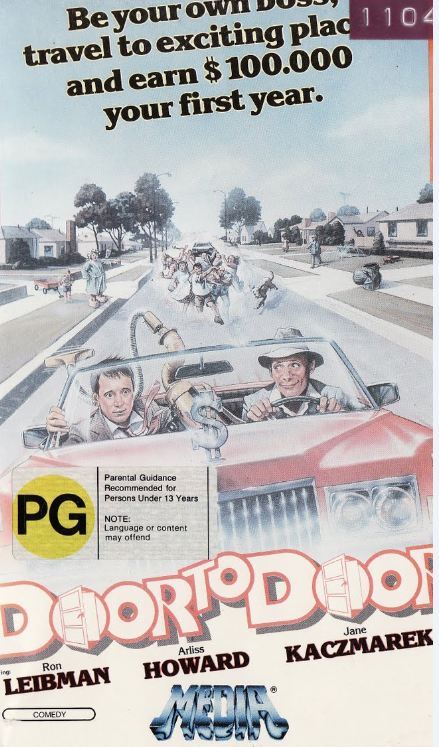
Door to Door (1985)

door to door 3

By Richard Winters

My Rating: 0 out of 10

4-Word Review: Schmuck can’t sell shit.

Leon (Arliss Howard) has taken a sales job, but is finding very little luck with it. He meets by chance Larry (Ron Leibman) who is a more seasoned sales professional and who promises to take Leon under his wings and ‘show him the ropes’. Unfortunately for Leon Larry is not very ethical and sells vacuums for a company that he does not actually represent forcing the two to go on the run from a bounty hunter (Alan Austin) who has been hired by the vacuum company to track them down.

I’ve worked in sales at various points in my working life and can attest that it is usually quite thankless and never lives up to the great promises of a high lucrative potential salary that the ads always suggest. The movie lightly touches on these aspects as well as a ‘motivational’ speech given to a group of sales people to get them ‘pumped up’, but it doesn’t go far enough with it. What starts out as a satirical look at life in the sales world quickly devolves into just another contrived and generic comedy/romance.

The plot is also highly illogical, which includes a tidy wrap-up that makes no sense at all. The biggest issue is that Larry pays this bounty hunter not to turn him in, but why bother? Larry has proven to be successful at sales, so why not get a legit sales job as there are always a ton of them around and quit the charade while spending half of his earnings paying off someone that he doesn’t need to. It also doesn’t make complete sense for the bounty hunter to keep accepting the payoff either as eventually the company is going to quit employing him when he is unable to ever manage to find Larry and hire someone else who can, which means Larry will no longer have the need to keep paying him and eventually cut off both of the bounty hunter’s income streams.

Leibman has enough of an acting pedigree that he shouldn’t feel the need to appear in this transparent, low budget, obscurity simply to collect a buck, but with that said he still gives an energetic performance and can be seen sans his usual toupee. Jane Kaczmarek is attractive as the love interest, but Howard is dull in the lead and has a perpetually mopey expression that I found annoying.

A story dealing the trials and tribulations of working a sales job is ripe with comical potential, but this thing, which was filmed on-location in Covington, Georgia, doesn’t even touch the surface. The scene where Larry stupidly drives his Cadillac into a river is the film’s one and only mildly interesting moment, but otherwise this bland movie lacks any type of originality or imagination.

My Rating: 0 out of 10

Released: August 3, 1985

Runtime: 1Hour 30Minutes

Rated PG

Director: Patrick Bailey

Studio: Castle Hill Productions

Available: VHS

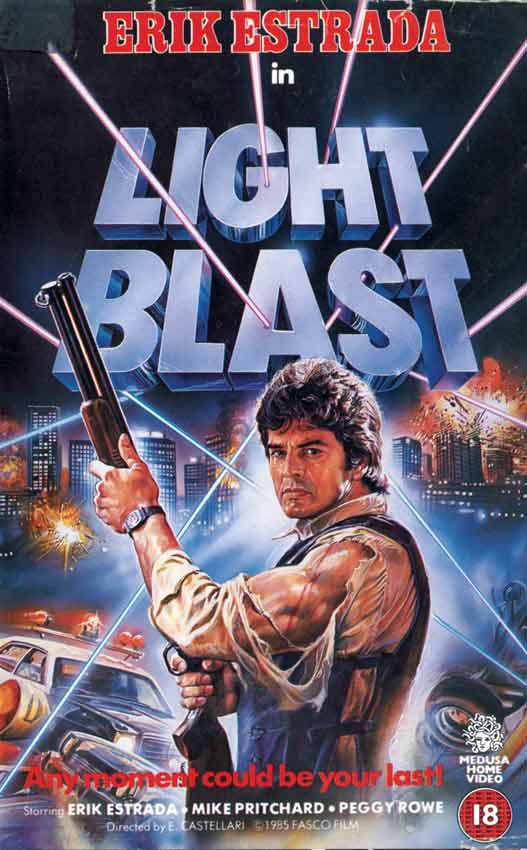
Light Blast (1985)

light blast 2

By Richard Winters

My Rating: 2 out of 10

4-Word Review: Erik Estrada saves Frisco.

A crazed scientist (Ennio Girolami) has created a laser gun that can melt people on contact. He uses it to kill a couple and then threatens to do the same to the entire city of San Francisco unless the mayor can come up with $10 million dollars. Rugged, renegade cop Ronn Warren (Erik Estrada) is assigned to track the culprit down and that he does while careening down the city streets in a race car.

The only interesting aspect about this movie is that it stars Estrada the one time big TV star from his heyday on the ‘CHiPs’ TV-series. I never cared much for that show and the only thing that I’ve seen him in where I enjoyed him was in the reality series ‘The Surreal Life’ where I found him to be humble and laid back, which I suppose happens to one when they have a long line of movies like these to their credit. I remember in the late 70’s he was considered an up-and-coming star and was known to have big ego fits on the set, which eventually lead to his co-star Larry Wilcox quitting. Then once the series ended he was trapped doing low grade stuff like this, which makes me wonder; can you really call it a ‘movie career’ if no one has seen the movies that you’ve done?

Overall if you approach this with decidedly low expectations then this film, which was produced by an Italian production company, but still filmed on-location in Frisco, is okay. Watching the laser melt people is entertaining as a sort-of cheap version of Raiders of the Lost Ark. The action is choreographed well enough to be mildly exciting and the budget isn’t so low that it makes everything look cheap. Estrada’s manning of a race car down the city streets at the end is fun, but highly improbable that he would be able to drive into oncoming traffic and not be hit or be able to find a car that was being stored inside a truck that would conveniently have its keys in the ignition and fully tanked up with gas.

The film’s biggest transgression is that it’s too predictable. It’s like they’ve stolen every other formulaic element from every other cop movie and then crammed it into this one. Estrada is dull and the actor playing the bad guy is equally bland making this at best a passable time waster.

My Rating: 2 out of 10

Released: August 13, 1985

Runtime: 1Hour 26Minutes

Rated R

Director: Enzo G. Castellari

Studio: Overseas FilmGroup

Available: DVD

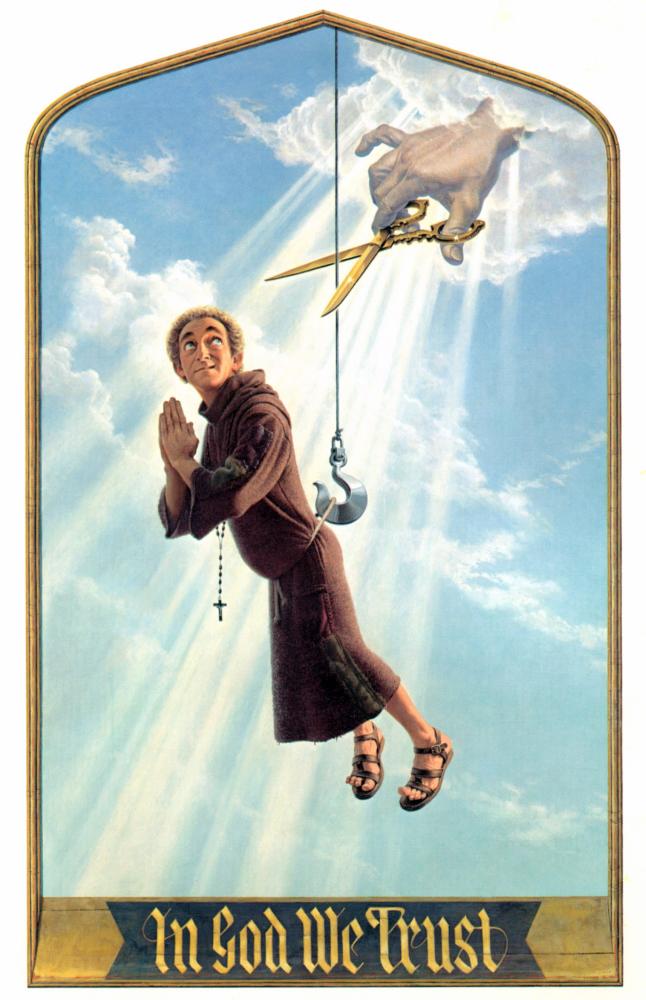
In God We Tru$t (1980)

IN GOD WE TRUST, Marty Feldman, 1980, (c) Universal

IN GOD WE TRUST, Marty Feldman, 1980, (c) Universal

By Richard Winters

My Rating: 3 out of 10

4-Word Review: Monk travels to L.A.

With his monastery in desperate need of money Brother Ambrose (Marty Feldman) is sent out into the secular world for the first time in order to find donations to help keep the place solvent. Unfortunately he travels to southern California where the wild and jaded lifestyles of the people come as a shock to him. He meets Mary (Louise Lasser) a hooker who takes him into her home and the two eventually fall in love, but he also comes into contact with the nefarious Armageddon T. Thunderbird (Andy Kaufman) a televangelist who wants to exploit the naïve Ambrose for his own gain.

Feldman with his famous buggy eyes is a delight and the fact that he did all of his own stunts, some of which were dangerous including having him dragged down a busy city behind a truck while clutching a rope and standing on a skateboard does indeed deserve credit for bravery, but his character is too annoyingly naïve. A full grown man is going to know about sex regardless if he is a monk or not and he is certainly going to know what female breast are. By having the character so incredibly out-of-touch with the jaded world makes him seem inhuman and like an alien from another planet, which isn’t funny even on a farcical level and an insult to anyone who has chosen a spiritual or more isolated lifestyle.

This pretty much explains the problem with the whole film as the satire is too broad. Poking fun at corrupt street preachers and televangelists is nothing new and thus this thing becomes derivative and one-dimensional from the very beginning. The movie also shifts awkwardly from silly slapstick to parody with running gags that become tiring and certain other bits that seem better suited for a kiddie flick.

There is very little that is genuinely funny although seeing two street preachers ram their vehicles into each other in a sort-of pissing match is amusing as is Peter Boyle’s ventriloquist act using a dummy made to look like Moses. The final scene with Richard Pryor as a computerized version of God and Feldman’s attempts to convert him to Christianity isn’t bad either.

The real scene stealer though is Kaufman who with a bouffant blonde wig plays the perfect caricature of a greedy preacher and I loved his meltdown during one of his religious broadcasts. I also got a kick out of his sink, which has one faucet for cold another for hot and then a third for holy water.

The casting of Lasser as a prostitute was great because she doesn’t fit the caricature of an 80’s Hollywood hooker and has more of the realistic and less flattering looks of an actual streetwalker. However, the film is a grab bag of hit-or-miss jokes many of which fall flat and with a runtime that is much too long for such slight material.

My Rating: 3 out of 10

Released: September 26, 1980

Runtime: 1Hour 38Minutes

Rated PG

Director: Marty Feldman

Studio: Universal

Available: VHS

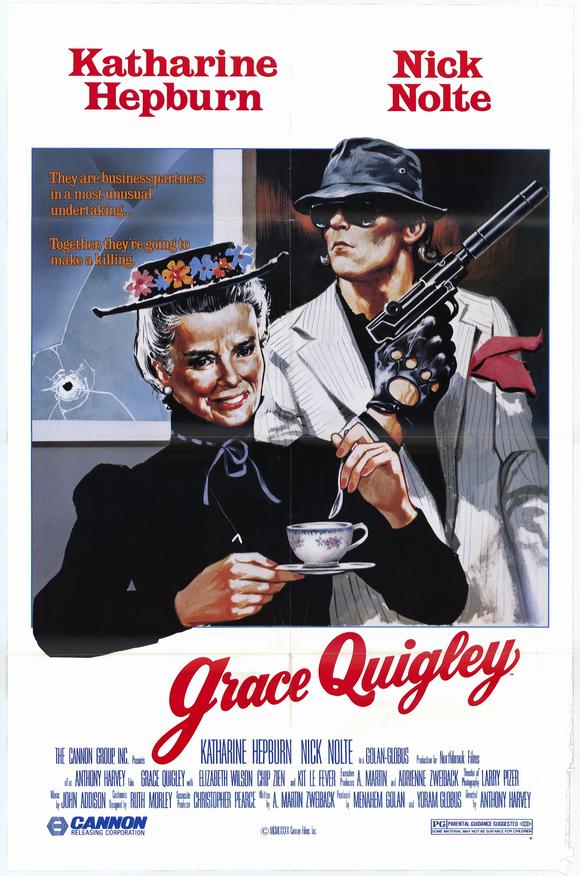
Grace Quigley (1984)

grace quigley1

By Richard Winters

My Rating: 4 out of 10

4-Word Review: Granny hires hit man.

Grace Quigley (Katharine Hepburn) is an elderly lady living alone on a limited budget who’s being forced out of her apartment due to having a pet bird, which her slumlord (Harris Laskawy) does not allow. She has nowhere to go and feels like ending her life, but has tried suicide before with unsuccessful results including swallowing a bottle of pills and having her stomach pumped, which she promised herself she would never go through again. Then she meets hired hit man Seymour Flint (Nick Nolte) and feels he’s the solution. He can not only bump her off, but her other elderly friends who no longer wish to go on as well. The problem is that Seymour doesn’t want to do it as he has grown attached to Grace and even starts calling her ‘mom’.

The first 60 minutes aren’t bad and even a bit humorous, but the final 30 brings in a weird story thread involving a cantankerous taxi driver (Christophe Murney) that seems thrown in simply to pad the running time. The ending, which was changed from the one in the original cut, is flat and helps to make this potentially tart black comedy a misfire.

Hepburn herself is awesome. She plays against type as she is usually a forceful and independent minded character, but here is much more vulnerable and sympathetic. Her shaking/wobbling head, which became an issue and even a distraction during her later years, is strangely not as apparent. Nolte is okay, but his character is wracked with psychosomatic quirks that are too silly and it would’ve been more fun had the character been played straight as a typically cold, soulless hit man who only softens after his friendship with Grace.

There are a few funny moments with my favorite being the striptease that Seymour’s hooker girlfriend (Kit Le Fever) does in front of Grace’s elderly and shocked friends. The running gag of people getting bloody noses every time they feel guilty does not work and the bloody nose that Hepburn’s character gets almost looks like a giant bug coming out of her nostril. The climatic chase involving five hearses careening down the city’s streets is forced although the slow motion shot of one of them driving into the New York harbor merits a few points.

The idea that people would want to die simply because they are old just doesn’t ring true especially since these folks still had their health and friends (at least with each) and were not bound to a wheelchair. There are many seniors who enjoy their golden years and still excited about life and yet the film doesn’t balance itself by portraying any of those. The attempt at showing the more serious side of aging by having Grace take Seymour on a tour of a rest home exposes little and ultimately helps makes the film’s potential social statement weak and simplistic.

My Rating: 4 out of 10

Alternate Title: The Ultimate Solution of Grace Quigley

Released: October 2, 1984

Runtime: 1Hour 28Minutes (VHS Version)

Rated PG

Director: Anthony Harvey

Studio: Cannon Film Distributors

Available: VHS

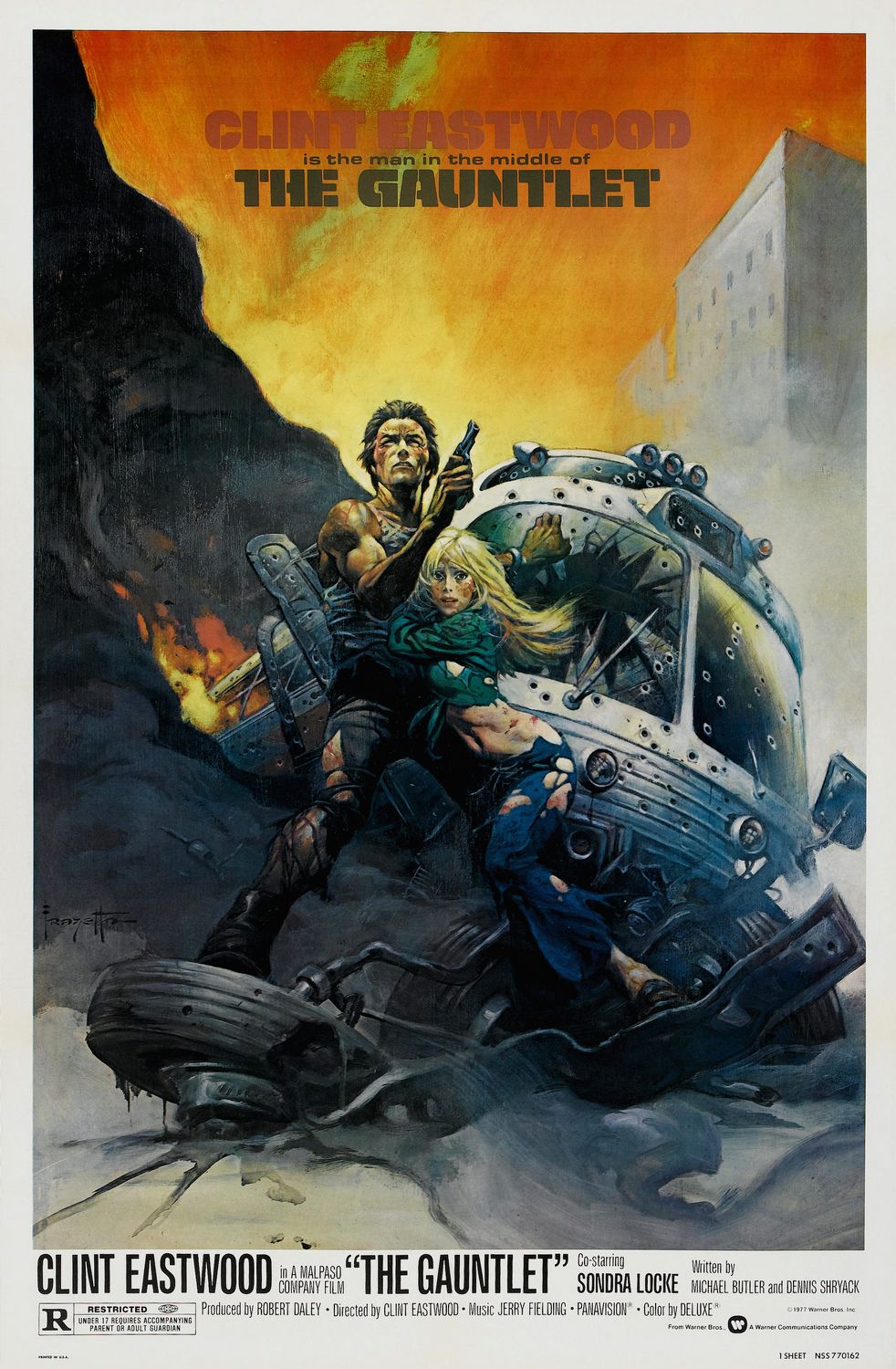
The Gauntlet (1977)

the gauntlet

By Richard Winters

My Rating: 7 out of 10

4-Word Review: Alcoholic cop escorts hooker.

Ben Shockley (Clint Eastwood) is a down-and-out cop and borderline alcoholic who’s given the assignment of escorting a hooker named Gus Mally (Sandra Locke) from a prison in Phoenix to a trial in Las Vegas where she will be a key witness. Ben is initially told that it’s a ‘nothing witness to a nothing trial’, but finds that to be anything but the truth as the two are shot at and chased by both the mob and his fellow policeman convincing him that he’s been set-up and making him determined to ‘even the score’.

This film overall is great fun and has enough well-choreographed action sequences to be entertaining for just about anyone who watches it. The story also manages to have some intrigue and a certain symbolic message. The on-location shooting done in and around Phoenix gives it an added flair particularly the long shots of the dessert landscape.

The film is best known for its climatic sequence involving Eastwood and Locke riding in a bus that travels slowly down the main streets of Phoenix while being shot at by hundreds of cops lining the sidewalk that ultimately puts thousands of holes into the vehicle. As a visual this is exciting and memorable, but I still kept wondering why the cops didn’t simply aim at the bus’s tires, which would’ve disabled the vehicle instantly and they would not have had to bother shooting up the rest of it.

Another action segment in which Eastwood and Locke are riding on a motorcycle while being chased and shot at by men in a helicopter brought up some similar issues. Again the segment itself is exciting and surprisingly prolonged although it would’ve done better without the bouncy jazz score being played over it. Either way the helicopter begins to attack Eastwood while he is standing at an outdoor phone booth. He then runs inside to an indoor food market where the Locke character already is, but instead of staying there where they are shielded he instead leads her out of the building and onto the motorbike where it would be more dangerous because it makes them an open and vulnerable target.

I also wasn’t too crazy about Locke’s performance or her character. For one thing Locke approaches the part in too much of a one-dimensional way. A hardened, snarky prostitute may be realistic, but hardly interesting or appealing and the character would’ve been more fun had their being some sort of unique or funny trait about her instead of leaning so heavily towards the stereotype.

The other supporting characters though are great. Pat Hingle is excellent as Ben’s nervous, hyper friend who finds himself unwittingly in the middle of the fracas. I also enjoyed William Prince playing an extension of the corrupt, jaded corporate-like character that he did in Network. Bill McKinney is also good as a hick cop who has an interesting ‘conversation’ with Locke about her ‘profession’.

If you’re looking for a bubblegum, action-packed escapism then this film should do the trick and still holds up well today even when compared to modern-day action flicks.

My Rating: 7 out of 10

Released: December 21, 1977

Runtime: 1Hour 49Minutes

Rated R

Director: Clint Eastwood

Studio: Warner Brothers

Available: VHS, DVD, Blu-ray, Amazon Instant Video

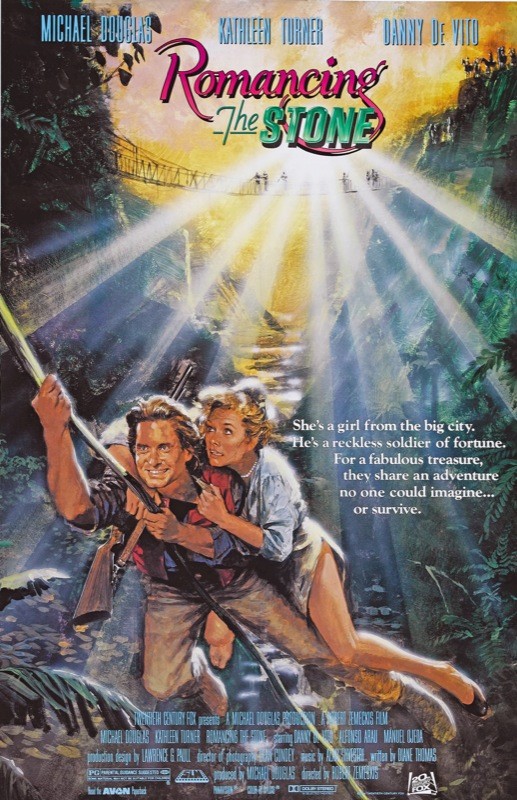
Romancing the Stone (1984)

romancing the stone

By Richard Winters

My Rating: 4 out of 10

4-Word Review: Romance novelist has adventure.

Joan Wilder (Kathleen Turner) is a romance novelist living her love life out through her characters because she fails to have one of her own. One day she receives a mysterious treasure map in the mail and then gets a call stating that her sister Elaine (Mary Ellen Trainor) has been kidnapped and will only be released once her captors receive the map. Joan then travels down to Columbia where Elaine is being held and bumps into Jack (Michael Douglas) a rugged adventurer who helps her navigate her way through to jungle while falling in love with her in the process.

The most interesting aspect to the film may actually be in the backstory of its screenwriter Diane Thomas who seemed to live both the Hollywood dream and tragedy all at the same time. She was working as a waitress while struggling as a would-be screenwriter during her off hours. Then one day by chance actor Michael Douglas arrived at her café as one of her customers and seeing this as her one chance to break into the business she pitched her idea, which later became this movie, to him and he loved it. She was eventually able to sell it for $250,000 and as an added bonus Douglas brought her a Prosche, which she ended up being killed in during a car accident that occurred only 1 year after this film was released.

As a story though this thing is quite weak and barely passes for a plot at all and really is just more of some high-end adventure concepts strung together. It’s pretty much bubblegum on a fifth graders level and if you stop to think about it all it will quickly become quite empty-headed.

Turner’s performance and her nerdy character is the best thing about it. Unfortunately the character changes too quickly shifting into a more confident and secure woman by the midway point and thus losing its comic edge. Her relationship with Jack is initially interesting as well as they have very divergent personalities and approaches to things, but this too gets lost when the romance between the two becomes full-throttle making the film’s whole second half seem more like a feminist fantasy than an actual movie.

Danny Devito is amusing and needed more screen time. However, the ironic ways he keeps accidently bumping into the main characters starts to become a little too convenient. Holland Taylor is fun as Joan’s snarky agent and I wished her character had gone along with Joan on the adventure. The bad guys though are dull and generic and create no type of fun tension at all.

The story as a whole is just too cutesy and lacks any type of real conflict or excitement. Had Jack and Joan’s sparring been played up more and only turned into a romance at the very end, or even just approaching it in a satirical vein to all the romance novels out there I might have gotten more into it. Female viewers may take to this better as it seems completely geared for them. Unfortunately though it becomes too slick for its own good while failing to have any footing in reality, which ultimately makes it cease to feel like any type of real adventure at all.

My Rating: 4 out of 10

Released: March 30, 1984

Runtime: 1Hour 46Minutes

Rated PG

Director: Robert Zemekis

Studio: 20th Century Fox

Available: VHS, DVD, Blu-ray, Amazon Instant Video

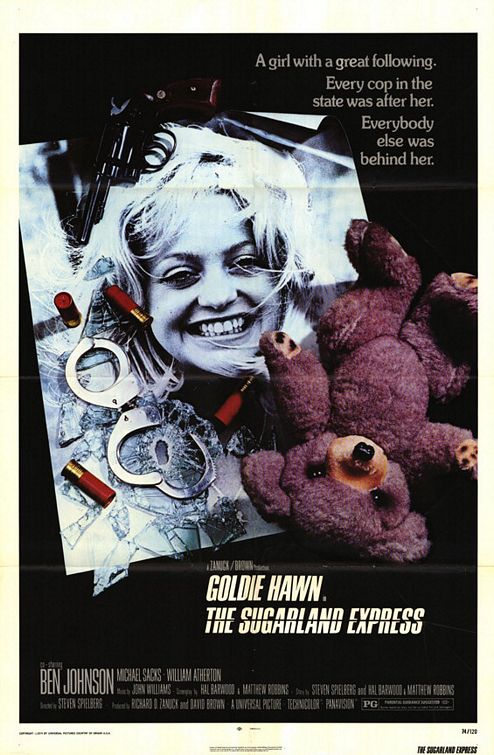
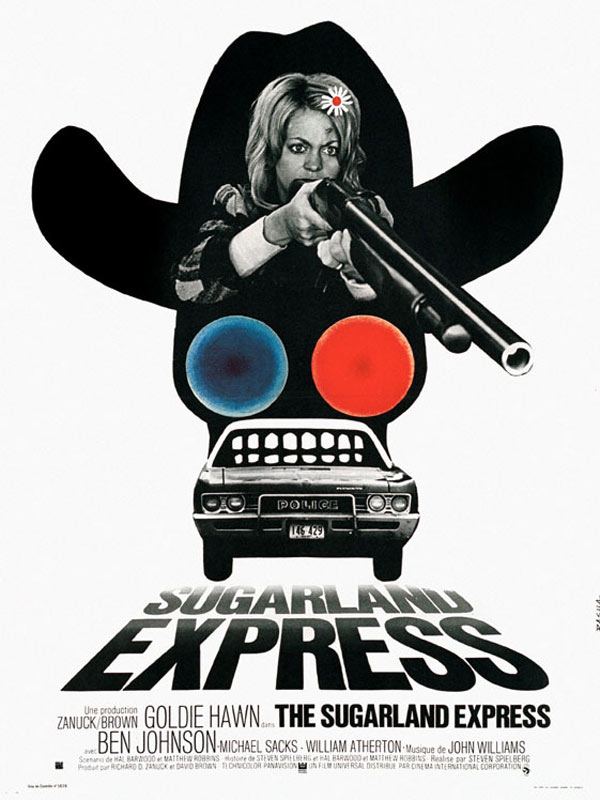
The Sugarland Express (1974)

sugarland express 4

By Richard Winters

My Rating: 7 out of 10

4-Word Review: She wants her baby!

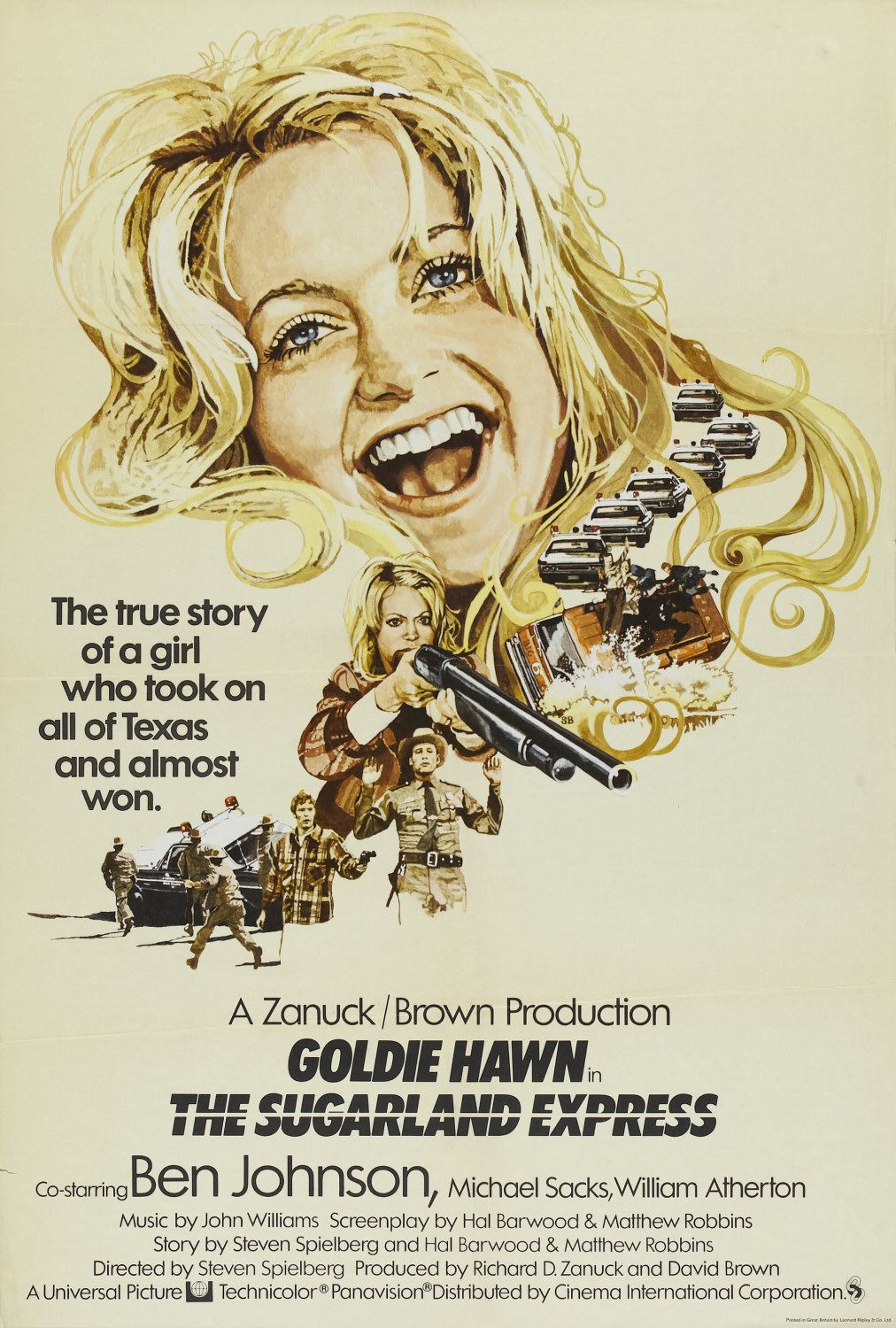
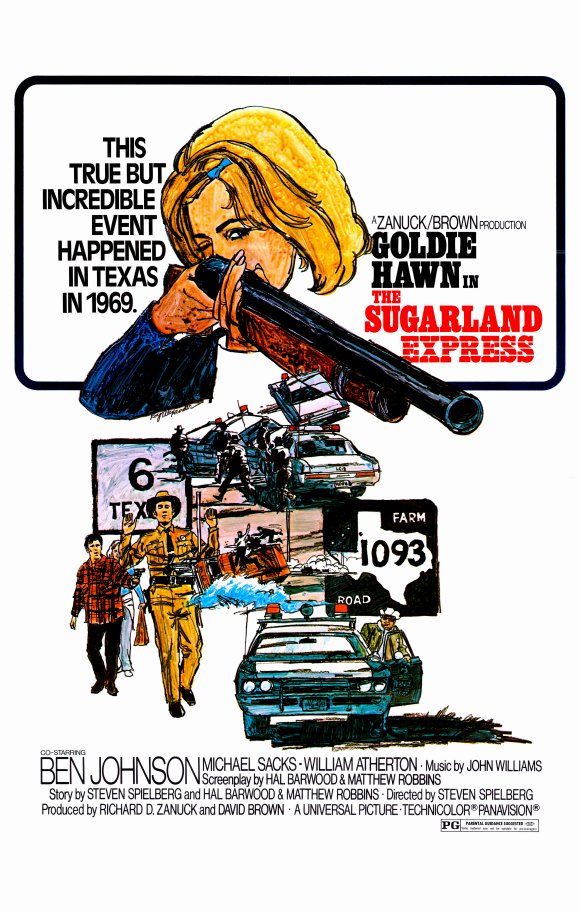
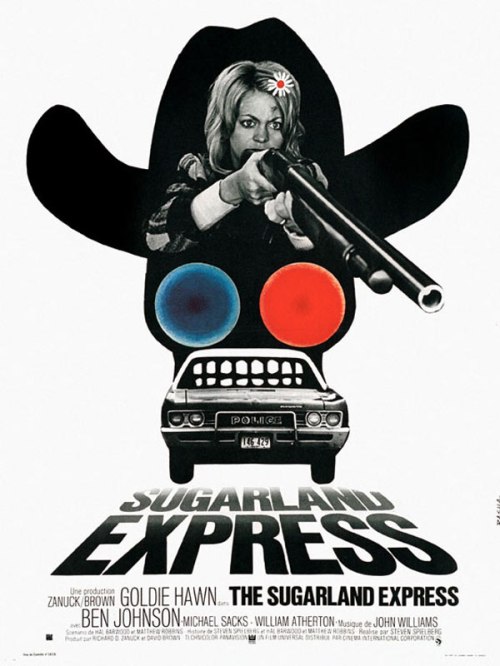
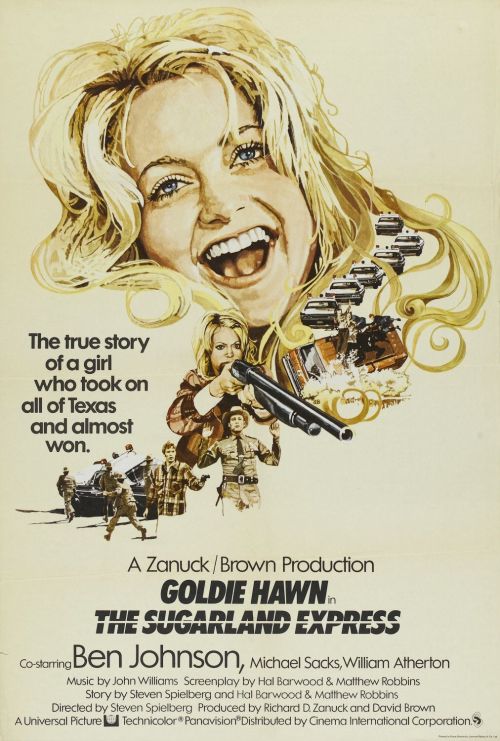
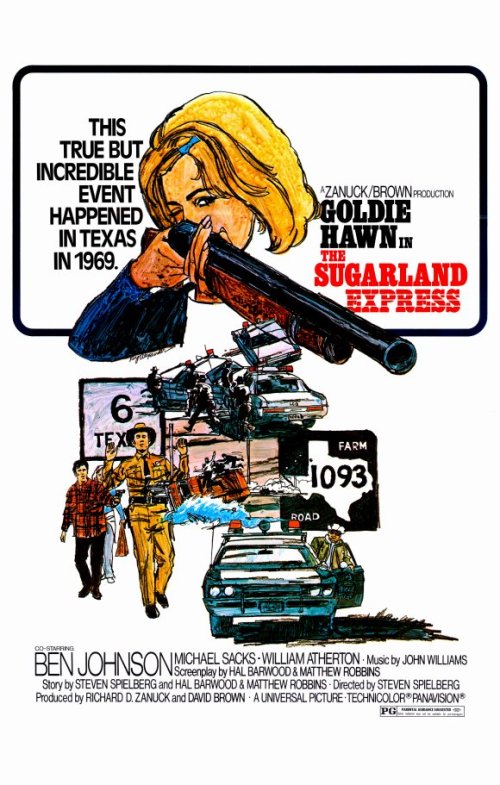
When her baby is put into a home with foster parents Lou Jean (Goldie Hawn) will have nothing of it and helps her husband Clovis (William Atherton) break out of pre-release prison in an attempt to steal the child back. The two hitch a ride with an older couple (A.L. Camp, Jessie Lee Fulton), but when the car gets pulled over by Officer Maxwell Slide (Michael Sacks) they panic and drive off. The officer is able to track them down when their car crashes, but when he goes to investigate the accident Clovis pulls the officer’s own gun on him and uses it to take him hostage. They speed off in his patrol car, which soon gets the entire Texas Highway Patrol after them as well as creating a media frenzy in a slow moving car chase that spans 2-days and 300 miles.

This film marks director Steven Spielberg’s full-length theatrical feature film debut and the result is highly entertaining. He takes an odd moment in history and helps infuse a playful quirkiness to the proceedings while also gently nudging the Texas stereotype. The music by John Williams and especially the harmonica solos by Toots Theilemans help cement the mood and tone. This is also the first film to use a panaflex camera and the first ever to feature a tracking shot from inside a car.

There are enough original and humorous scenes to make this well worth catching. The scene in which the police bring in a Porto potty so Lou Jean can stop and take a pee is hilarious as is the moment where their car runs out of gas and Captain Harlan Tanner (Ben Johnson) who is technically ‘chasing’ them must push their car with his to the nearest gas station. The impromptu TV interview done during the chase is great as is the first CB conversation that Tanner has with the three inside the patrol car. The best moment though is when they go through a small town where the main street is lined with onlookers and well-wishers who hand the three all sorts of gifts and encouragement through the car windows as they slowly drive through.
sugarland express 2

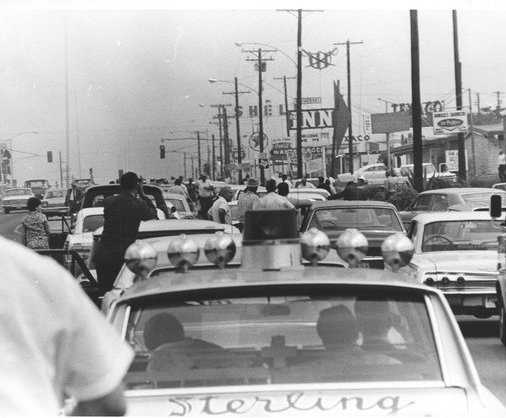
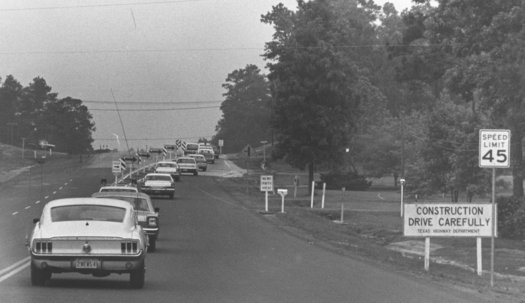
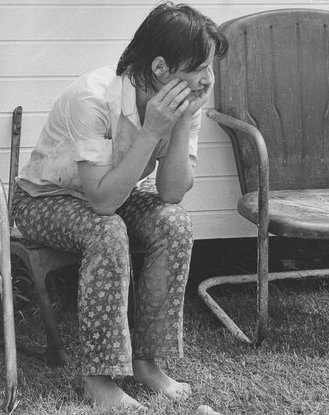
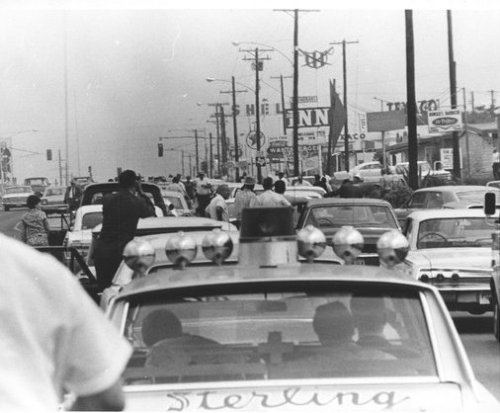
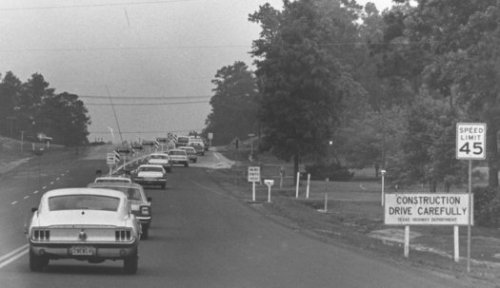
Of course as with any true story the movie takes many liberties and I researched the incident by reading actual newspapers reports from that era and found this to be the jest of what actually happened. It all started in the early morning hours of May 3, 1969 when Ila Faye Dent (1947-1992) and her husband Robert where chased by the Port Arthur police for speeding. The couple managed to evade them by abandoning their vehicle and fleeing on foot into a heavily wooded area. They eventually came upon a ranch whose owner called the police to say that he had been attacked by two hitch-hikers. Patrolman Kenneth Crone, whose character is played by Michael Sacks and who also appears briefly in the film as a sheriff’s deputy, answered the call. When he arrived on the scene Robert pulled a gun on him and forced him back into his patrol car where the three then took off in the vehicle that started the massive 200 mile slow speed chase that attracted hundreds of police cars as well as onlookers and media outlets. Their destination was Wheelock, Texas where Ila Faye wanted to visit her two children from her previous marriage that where now staying with her parents. They had no intention of kidnapping them like it is portrayed in the film only to visit them for 15 minutes, which Captain Jerry Millter (portrayed by Ben Johnson) initially agreed to allow, but then later reneged.
sugarland1


Ila Faye Dent portrayed by Gold Hawn in the film
sugarland2

The actual car chase as it occurred on May 3, 1969.
sugarland3

The changes that Spielberg and his team of two writers made to the story doesn’t help and I wish they had been more accurate with it. The biggest issue is the fact that the actual chase lasted for only about 5 hours while in the film it gets extended for 2 days, which doesn’t work because the part where they sleep overnight inside a car lot kills the momentum and makes for a draggy middle. The use of foreshadowing becomes too obvious and heavy-handed. The child-like enthusiasm by the two main characters is initially fun, but their notion that they can somehow take the police on a wild car chase and snatch back their child without having any consequences seems too unrealistically naïve even for a pair of country bumpkins as they are portrayed.

Spoiler Alert!

The film’s biggest downfall though and the main reason it didn’t do well in the box office is with its downbeat ending. From a directorial stand point I liked it as Spielberg infuses all sorts of interesting elements into it including making the house in which the child supposedly is staying look very foreboding and ominous as well as a brief shot of a teddy bear being thrown out a car window and laying the road while the cars speed all around it. However, seeing Clovis get shot is jarring and takes away from the film’s otherwise lighthearted tone. In the real life incident the husband did indeed get shot and killed although it happened differently than the way it gets played out here, so I don’t really have anything against showing it, but film should’ve added in a brief moment showing Lou Jean being reunited with her child after her stint in prison, which also really happened. I realize the denouncement mentions this in text over the credits, but visually showing it would’ve made more of an impact and helped the audience leave the theater with an upbeat feeling.

End of Spoiler Alert!!
sugarland express 3


sugarland express 1

My Rating: 7 out of 10

Released: April 5, 1974

Runtime: 1Hour 52Minutes

Rated PG

Director: Steven Spielberg

Studio: Universal

Available: VHS, DVD, Blu-ray, Amazon Instant Video, YouTube

Joyride (1977)

joyride 2

By Richard Winters

My Rating: 4 out of 10

4-Word Review: This joyride turns joyless.

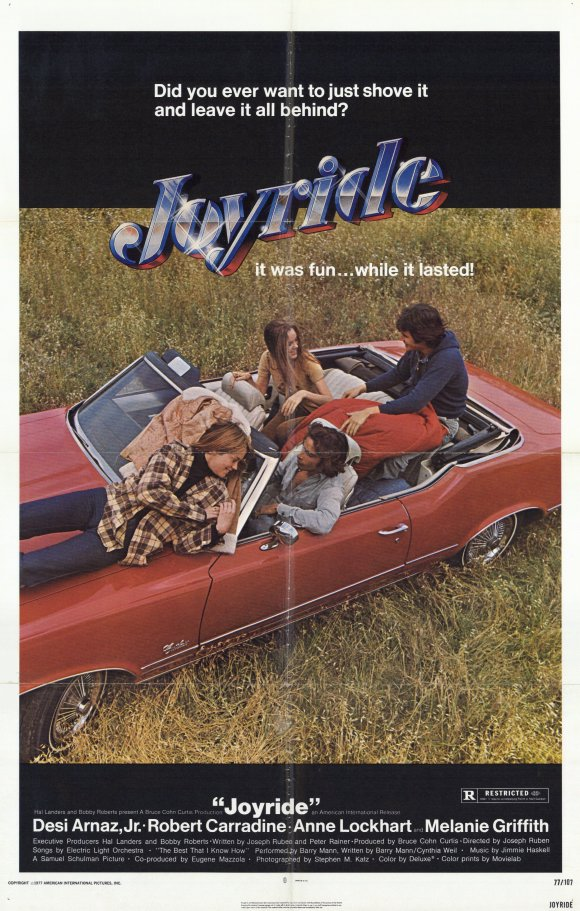
Scott (Desi Arnaz Jr.) is bored with his job and finds that his friend John (Robert Carradine) is too. With John’s girlfriend Susie (Melanie Griffith) in tow they decide to drive up to Alaska where they hope to get jobs on the pipeline. Unfortunately they end up facing a lot of unexpected problems and eventually are forced into robbery with the Canadian Mounted Police hot on their tail.

The film was written and directed by Joseph Ruben who later went on to do much better things, but this isn’t too bad for the most part. It has a good pace without any of the static drama or wooden dialogue typical with these types of features during that era. The situations are for the most part believable and mildly engrossing. The film also features two very unique scenes including that of a genuine pissing contest, which John wages and wins with some fellow bar patrons and a scene where the trio is forced to eat dog food that by the looks on their faces seems to have been the real thing.

Unfortunately the film tends to ramble and takes a lot of predictable dramatic twists while failing to add any new perspective to it. The characters seem ill-prepared for many of the expected problems that they face, which any sensible viewer could’ve predicted would happen from the get-go. It’s also unrelentingly downbeat. I was expecting a little more frivolity and humor, which could’ve helped and I also thought it was unrealistic that every person they meet in the town turns out to be corrupt, conniving or mean.

It’s interesting to some extent to see the next generation of baby boomers or those who were too young to get involved in the protest movement during the 60’s, but still trying to carry on the counter-culture torch during the mid and late 70’s. The four leads are all offspring of famous celebrities, which is the film’s one true novelty and I couldn’t help but wonder while I viewed this what their presumably more conservative parents must’ve thought while watching their kids in this playing characters that are quite jaded and with no shortage of sex, nudity and cursing.

Arnaz Jr. is the weakest link and quite transparent while lacking the charisma needed for a lead actor. Carradine is good and it’s nice seeing him not playing a nerd type. Griffith is cute and there’s even a glimpse of her bare bottom during one segment when she flashes some passing motorists. The most dynamic performance though goes to Anne Lockhart who appears later on and acts as a love interest for Scott. Her character is sassy and real while helping add some needed dynamics and it’s a shame she didn’t stay for the entire duration.

The second half where they decide to rob the payroll department and then go on a mad car chase across the northern Canada has a few fun moments. Unfortunately the viewer is left hanging as we are never shown if they ultimately get away or are caught, which is frustrating and ends up being a cop-out of the highest order.

My Rating: 4 out of 10

Released: June 6, 1977

Runtime: 1Hour 32Minutes

Rated R

Director: Joseph Ruben

Studio: American International Pictures

Available: DVD

The Laughing Policeman (1973)

the laughing policeman 1

By Richard Winters

My Rating: 7 out of 10

4-Word Review: This policeman isn’t laughing.

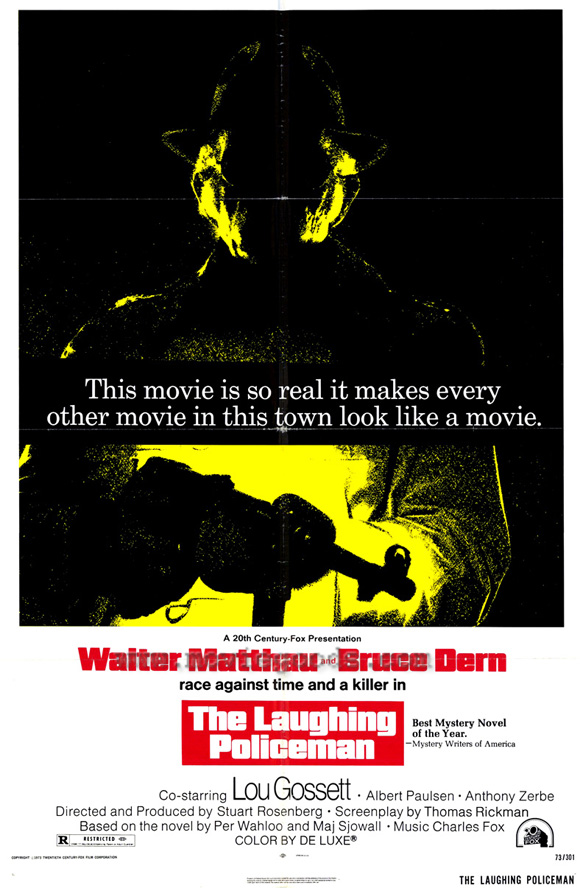
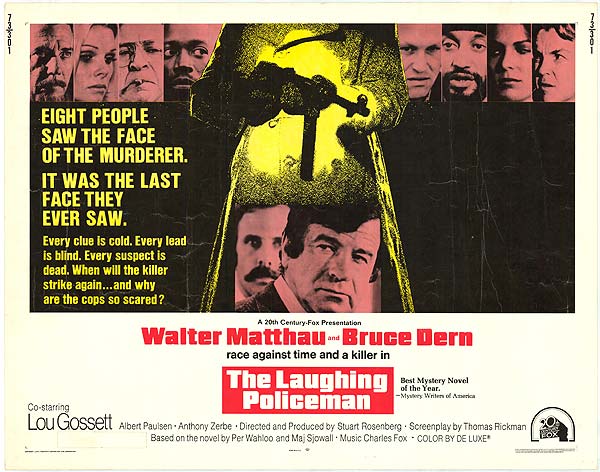
8 passengers on a San Francisco bus are slaughtered to death by a mysterious gunman for no apparent reason. When Police Sargent Jake Martin (Walter Matthau) investigates he finds that his patrol partner is one of the victims. He soon learns that his partner was working on another case during his off hours dealing with a murdered prostitute that Jake had also worked on, but couldn’t crack. He begins to believe the two cases are somehow connected, but his brash department head (Anthony Zebe) doesn’t agree and thinks it is a waste of time to pursue the possible connection while also sticking him with Leo (Bruce Dern) a younger cop who doesn’t always like to play within the rules and whose manner and methods conflicts with Jake’s.

The film, which is based on the novel by Per Wahloo and Maj Sjowall who also did the book version for Man on the Roof, has a finely detailed gritty nature about it that looks at the methods of a police investigation in a realistic and unglamorous fashion, which significantly helps this one stand out from the usual cop dramas. I loved the way they searched for clues on the bus and the autopsies of the victims as well as pursuing leads that never pan out, which is a very common occurrence in most police investigations, but rarely is ever shown in movies. There is even a shot of a tow truck removing the disabled bus from the accident scene once the investigation is completed.

Although the novel’s setting was Stockholm the movie transplants the action to San Francisco making the Bay City almost like a third character. Director Stuart Rosenberg manages to nicely capture the eclectic vibe of the area and the disdain many people had for the police during that era. The movie also uses very little music, which is a major asset and helps accentuate the realism. Outside of the closing credits the only time there is really any other music is near the end when Jake and Leo start following a suspect, which comes off as jarring and should’ve been left out.

Matthau who’s mostly known for his comedic parts does well in an atypical role, which due to his casting and the film’s strange title may make some think it is a comedy though this is far from it. Dern is terrific in a role that takes full advantage of his edgy acting style and I liked how the two characters don’t get along at first, but eventually get past their differences and use each other’s unique strengths to their advantage. I was disappointed though that there is a side-story dealing with Jake’s tumultuous relationship with his teenage son that gets introduced early on, but then dropped and completely forgotten during the second half.

Louis Gossett Jr. gets a star making turn as a brash street cop and Zerbe is superb in support as the gruff police chief. Joanna Cassidy has a brief, but interesting bit as a witness and I liked the shot showing her and Dern sitting amidst a row of tables with table legs made to look like human ones. It’s also amusing to note that Albert Paulsen’s character who becomes the main suspect in the film never utters a single word of dialogue.

Spoiler Alert!

The film’s biggest downfall though is with its ending. It is very hard to believe that a character such as Paulsen’s that is portrayed as being rich and having a lot of connections would feel the need to shoot and kill the bus passengers himself as most if not all rich people simply hire someone else to their dirty work. I also didn’t think that someone who walks down the street surrounded by lawyers would crack as quickly as this one does when Matthau comes to question him about the case. A typical well-off businessman would simply ‘lawyer-up’ and trust that the minimum evidence that the police have would not hold up in court instead of jumping into his car and racing down the city streets in a panic such as he does here. The finale becomes too conveniently Hollywood-like and seems to sell out on the film’s original concept, which left this viewer with a flat and ambivalent feeling towards it when it was over.

the laughing policeman 2

End of Spoiler Alert!

My Rating: 7 out of 10

Released: December 20, 1973

Runtime: 1Hour 52Minutes

Rated R

Director: Stuart Rosenberg

Studio: 20th Century Fox

Available: DVD

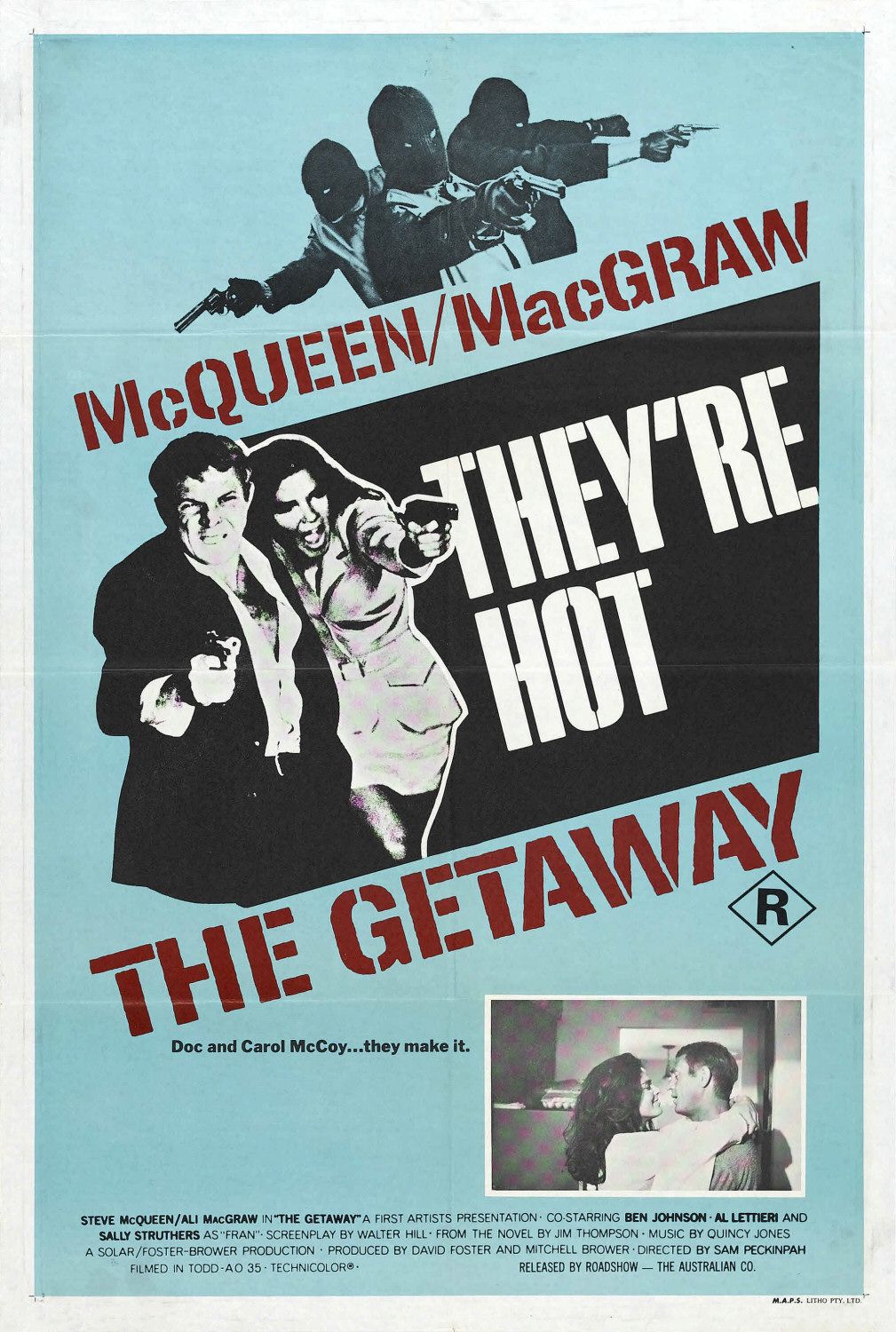
The Getaway (1972)

getaway 1

By Richard Winters

My Rating: 8 out of 10

4-Word Review: Bank robbery goes bad.

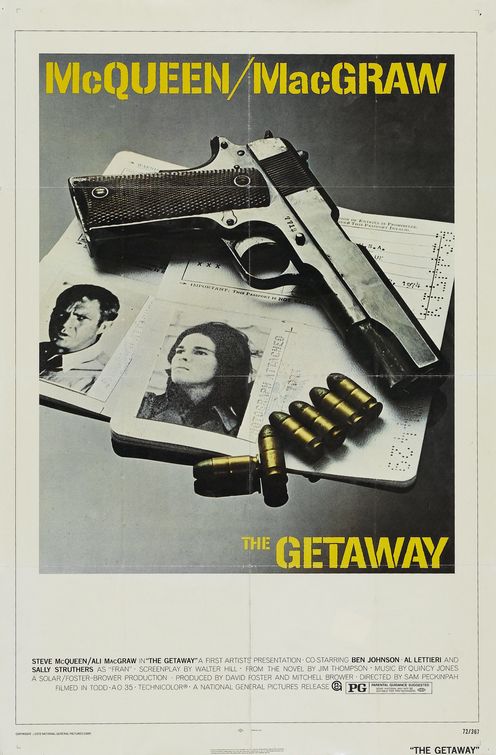
Based on pulp writer Jim Thompson’s novel the story centers on Doc McCoy (Steve McQueen) who is stuck in the Texas State Prison and itching to get out. He gets his wife Carol (Ali MacGraw) who is on the outside to strike a deal with Sheriff Jack Benyon (Ben Johnson) where he will get a release as long as he agrees to rob a bank using Benyon’s men. Doc is somewhat reluctant, but agrees to go along with it only to find that after the robbery he has been double-crossed and now along with his wife must make a dash for Mexico while being chased by the cops and going through a wide assortment of unexpected obstacles.

Action director guru Sam Peckinpah has done many classic films most notably The Wild Bunch and Straw Dogs, but this one has always been my favorite as it’s a nice mix of action, character study and comedy. In fact it’s the subtle humor that I like best. I get a kick out of the shot showing Benyon’s brother’s henchman riding in a convertible down a highway while having their hands on their cowboy hats in order to keep them from blowing off. I also chuckled at the book actor Dub Taylor has in his back pocket while cowering under a table during a shootout or what actor Al Lettieri immediately does after finding a dead man hanging in a bathroom.

Peckinpah also makes great use of sound particularly at the beginning where during the opening credits we hear no music, but instead the monotonous sounds of the machines inside the prison workshop, which helps convey Doc’s increasing frustration and this sound doesn’t stop until the exact second that the prison doors open up and allows him out. When there is music it’s effective and distinct particularly the harmonica solos by Toots Thielemans.

Of course Peckinpah’s trademark action sequences are excellent and maybe even superior to his other films because the situations are more unique including an exciting segment showing the couple trapped inside a garbage truck as well as an impromptu shootout along the main street of Fabens, Texas. The only complaint is the scene where Doc’s car goes crashing through someone’s front porch and yet the car shows no visible damage; one shot does show a crack in the corner of the windshield, but then in the next shot it has magically disappeared.

McQueen’s ability to show effortless cool and make an edgy character likable proves what a legendary actor he is and it’s a shame that he doesn’t get placed with the best of them amongst casual movie fans because he really should. MacGraw is at the peak of her beauty here and her moments of vulnerability are great. Struthers gives the best performance of her career as an unfaithful wife of a kindly veterinarian (Jack Dodson) and Lettieri, who unfortunately died at the young age of 47 just 3 years after this film’s release by a heart attack brought on by severe alcoholism, which was already painfully apparent to the cast and crew during the filming of this adds great tension as Doc’s double-crossing partner.

The film also makes great use of its Texas locations bringing out the ruggedness of the region without overdoing it. I particularly liked the scenes in the junkyard as well as footage shot on-location inside the Huntsville prison using actual prisoners and the longshot showing the flat, barren landscape that Doc first sees when he gets out.

I’ve watched this movie many times and never cease to grow tired of it. In fact it seems even more original after multiple viewings. It was unwisely remade in 1994 that starred Alec Baldwin, who doesn’t come close to McQueen’s stature. This version is by far the better one and the other should be avoided.

getaway 2

My Rating: 8 out of 10

Released: December 13, 1972

Runtime: 2Hours 2Minutes

Rated PG

Director: Sam Peckinpah

Studio: National General Pictures

Available: VHS, DVD, Blu-ray, Amazon Instant Video, YouTube