Category Archives: Dry Humor

Such Good Friends (1971)

such good friends 1

By Richard Winters

My Rating: 8 out of 10

4-Word Review: Her husband fools around.

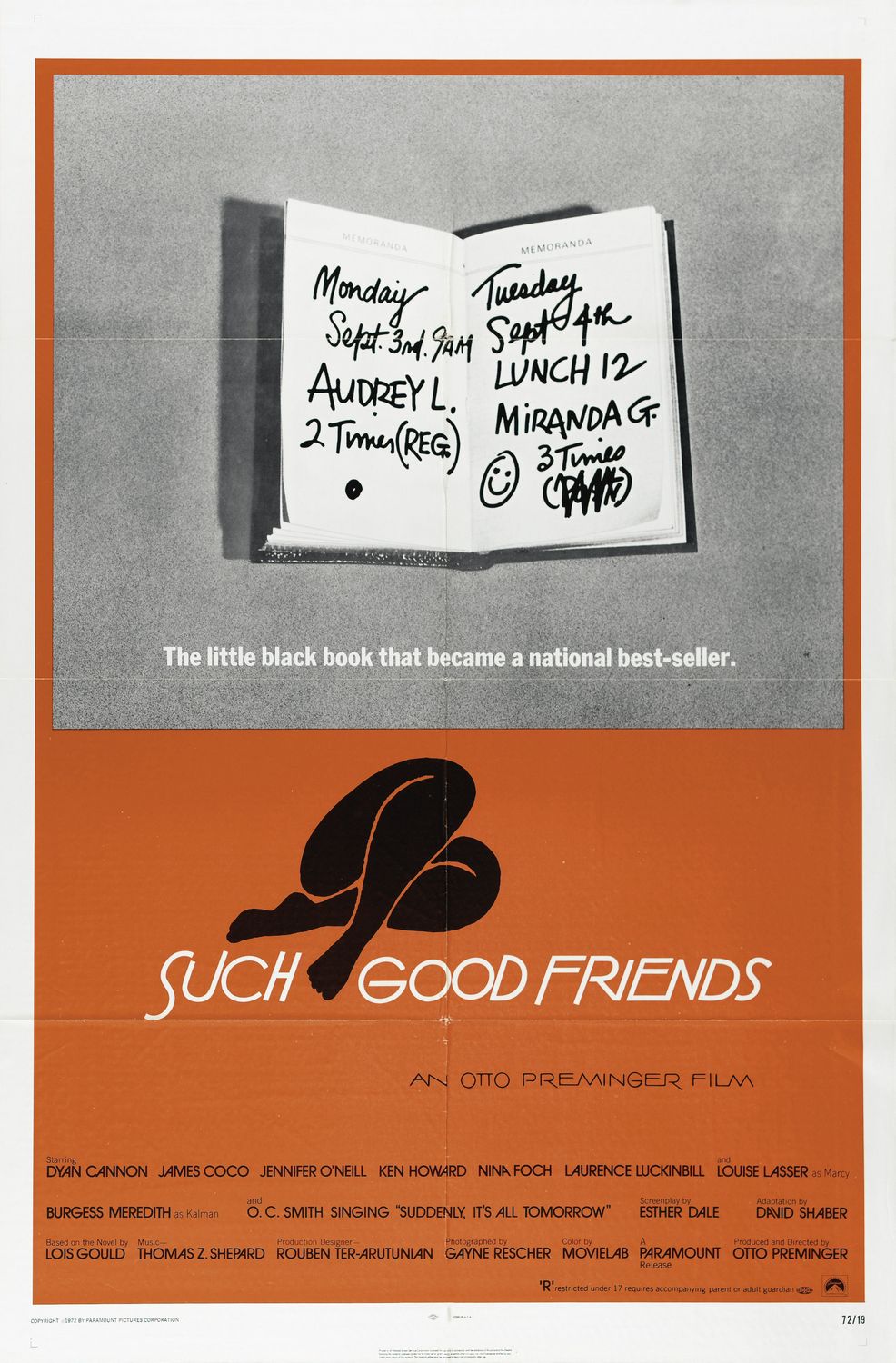
Julie (Dyan Cannon) is a well-off New York Housewife living in a swanky Manhattan apartment with her husband Richard (Laurence Luckinbill) who is the successful editor of a New York fashion magazine. Her life seems fulfilled and happy until Richard goes into the hospital for routine surgery, which has unexpected complications that sends him into a coma. While going through some of his personal belongings she comes upon his little black book that lists all sorts of sexual conquests he has had with her friends, which first leads the devastated Julie into considering suicide, but then ultimately into revenge.

This film can be considered Otto Preminger’s swan song as the two movies he made after this weren’t worth watching. This movie also proves to be a giant improvement from the awful Skidoo that he did just three years before where he tried unsuccessfully to get with the ‘hip generation’, but failed miserably. It has the same irreverence and satire as that one, but it is much more disciplined and sophisticated and makes its point without going overboard. It also shows that despite his renowned cantankerous nature behind-the-scenes he was still a gifted director who managed to span five decades with movies that had vastly different styles and themes and he deserves to be labeled a filmmaking legend.

I loved the way the camera spins around in a circle during a scene inside a New York art museum as well as some breathtaking shots of the New York skyline while on top of Jennifer’s and Richard’s condominium. The fractured narrative that deals heavily with flashback sequences is also nicely handled though the scenes showing a middle-aged Cannon trying to look like she is an adolescent while wearing pigtails looks tacky and should’ve been scrapped.

The film is based on the Lois Gould novel of the same name and while that book had a much more serious tone the movie gives the material more of a satirical spin much like Diary of a Mad Housewife, which Preminger had scriptwriter Elaine May (who gets credited as Ester Dale) watch before writing this one. The result is endlessly witty dialogue and some near brilliant conversational exchanges between the characters. Some of the best bits are Jennifer’s discussions with Richard’s doctors who seem reluctant to take responsibility for their medical blundering as well as Jennifer’s awkward sexual encounter with her friend Cal (Ken Howard) when he is unable to ‘rise to the occasion’.

Although she has a face that can show pain and sadness well Cannon may not have been the best choice and some other actresses would’ve been more interesting in the part. Apparently Preminger had her in tears already on the first day and she has in subsequent interviews called him a ‘horrible man’. The scene showing her naked in a snapshot is actually that of another nude model with Cannon’s face cropped on it.

James Coco is great in support and I was genuinely shocked that it didn’t get him nominated for best supporting actor. The scene where Cannon is undressing him for some sex and he tries desperately to distract her while he takes off a corset that he is wearing underneath is frickin’ hilarious. Burgess Meredith has an outrageous moment where he is seen nude while attending a posh party and only his genitals are covered by a book hung from a belt that he is wearing.

The only real negative is the ending that is too serious and somber and deflates the energy from the film’s otherwise snarky tone. Some of the music used doesn’t work with the scenes either including the O.C. Smith song played over the closing credits. Otherwise it’s as fresh, original and timely as it was when it first came out and ripe to be rediscovered by the right audience. The title sequence created by Saul Bass that is used to open the film is diverting and I wished it had been extended.

My Rating: 8 out of 10

Released: December 16, 1971

Runtime: 1Hour 42Minutes

Rated R

Director: Otto Preminger

Studio: Paramount

Available: DVD, Blu-ray, Amazon Instant Video

Static (1985)

static 1


By Richard Winters

My Rating: 5 out of 10

4-Word Review: Everybody sees only static.

Ernie Blick (Keith Gordon) works at a crucifix factory, but dreams of making it big with his secret invention. The whole town that he lives in is abuzz about it and many take bets as to what it is. However, once Ernie unveils it no one is impressed. Ernie insists that he has created a device that can show live images of heaven, but all anyone else can see on the TV screen is static. Ernie becomes frustrated that no one can appreciate what he has done so he hijacks a bus carrying a group of senior citizens in order to create a media event that will allow him to share his invention with the rest of the world, but things don’t go as planned.

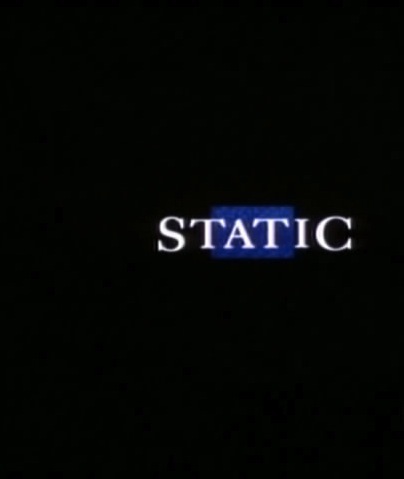
The film has that refreshing look and feel of an authentic indie flick made long before it was trendy and still in its infancy of being a trailblazer for original ideas. It’s fun and clever most of the way including a memorable shot of Ernie’s weird crucifix collection. The humor is subtle and hip with a cool music selection from lesser known 80’s bands. Director Mark Romanek shows great visual flair with his use of unique settings and color designs. The dialogue and characters are both engaging and quirky. I also loved the opening credits, which features a small, static filled TV screen in the distant background along with the sound of a low hum, which I found to be strangely hypnotic.

Gordon, who co-wrote the screenplay, does well in a difficult role where the viewer is supposed to find him likable and appealing despite the fact that he is clearly a bit unhinged. Amanda Plummer as his girlfriend gets a rare turn as being the most normal one in the film, which is interesting. Bob Gunton has a few choice moments as a conniving preacher man named Frank and Jane Hoffman is amusing as a senior citizen who tries to help Ernie on his mission.

Unfortunately the story doesn’t carry the quirky idea to a successful completion. It might have worked better had there been some image of some kind seen and then everyone could’ve debated whether that was indeed heaven or not instead of just seeing static, which comes off like a big buildup to nothing. The satire is too obvious and its overall message frustratingly vague. The violent and completely unexpected tragic ending is jarring and unnecessary and ruins its otherwise pleasant, whimsical tone.

There is also a scene where Gordon and Plummer go to a restaurant and order food, but when it gets served they barely touch it and then a minute later get up and leave after paying the bill, but why pay for something or even order if you’re just going to leave it there untouched? This is an annoying thing that I’ve seen happen in other films as well. I hate to sound preachy, but sometimes when I see these types of scenes I feel like screaming ‘There’s kids starving in Africa, so don’t waste your food people’!

static 2

My Rating: 5 out of 10

Released: October 1, 1985

Runtime: 1Hour 33Minutes

Rated R

Director: Mark Romanek

Studio: Siren

Available: VHS 

The Effect of Gamma Rays on Man-in-the-Moon Marigolds (1972)

effect of gamma rays 2

By Richard Winters

My Rating: 8 out of 10

4-Word Review: My heart is full.

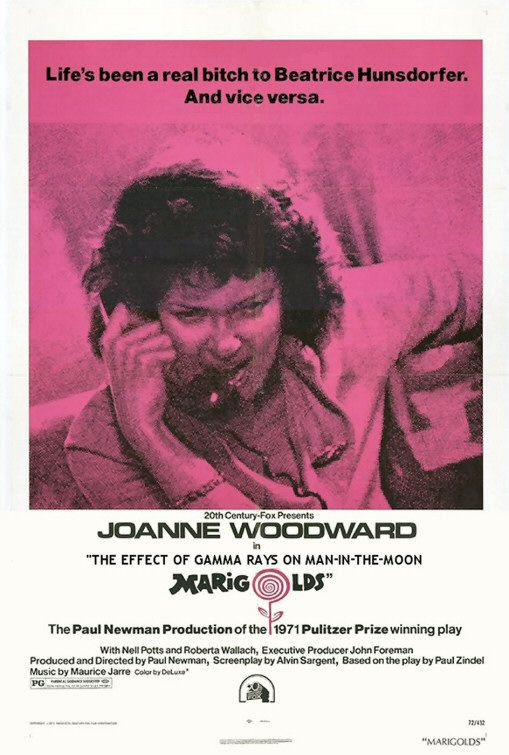
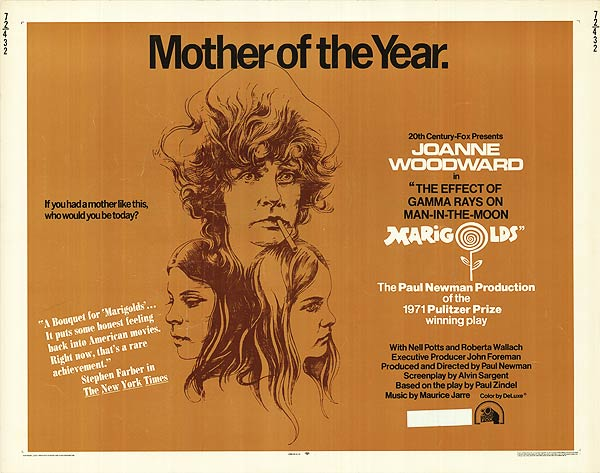
Beatrice Hunsdorfer (Joanne Woodward) is a single-mother raising two girls while living in the poor side of Staten Island. She is an extremely self-centered, emotionally frail woman who’s bitter about life and alienates everyone that she meets. Ruth (Roberta Wallach) is her rebellious teenage daughter who recognizes her mother’s flawed personality and tries to distance herself from her. Matilda (Nell Potts) is the quiet, introspective daughter who takes in all the chaos while escaping by concentrating on her school science projects particularly the one involving marigolds, but as things progress Beatrice’s mental state becomes more erratic and threatens to tear their lives completely apart.

Actor Paul Newman directs on a tour-de-force level. Absolutely everything comes together while still keeping it on a subtle, visual level. The opening sequences gives the viewer a clear picture of the family’s strife and divergent personalities without ever having to go into any type of verbal backstory, which is great filmmaking at its finest. Although filmed in Bridgeport, Connecticut one still gets a good feeling of a poor inner-city neighborhood with the house that was chosen for the setting looking authentically cluttered without appearing staged. The variety of settings has a cinema verite feel while also remaining true to Paul Zindel’s script. Yet Newman’s greatest achievement is the fact that he creates a wholly unlikable main character that the viewer ends up still feeling quite sorry for and the climactic scene inside the school’s auditorium becomes emotionally wrenching.

Woodward excels in a difficult role and creates a character that becomes permanently etched in the viewer’s mind. Her brilliance comes through from the very beginning with the way she chews her gum while trying on some wigs and her never ending stream of caustic remarks runs the gamut of being rude and insensitive to darkly humorous. Although she was nominated for best actress with the Golden Globes and won the award at the Cannes for her work here she really should have been given the Academy Award as well.

Wallach, who is the daughter of Eli Wallach and Anne Jackson, is terrific in her film debut and has some memorable moments not only when she has a seizure, but also later when she plays a caricature of her mother for a school play. Potts, who is Newman’s and Woodward’s daughter, is quite good too especially with her stunning clear blue eyes and facial expressions.

Judith Lowry, who made a name for herself in her later years playing cantankerous old ladies, is outstanding as an old woman who rents a room from Beatrice. Although she frustratingly never says a word her moments are still unforgettable especially with the way Newman focuses on her wrinkled face and toothless mouth as she sips drinks or even hobbles her way to the bathroom.

Zindel’s story was originally a stage play and in fact Carolyn Coates who is cast as Mrs. McKay here played the Beatrice role in one of the stage versions. Most teenagers from the 70’s and 80’s will recognize Paul Zindel’s name as the author of ‘Pigman’, which was required reading in many high schools during that era. Yet I liked this story, which is based loosely on his experiences while growing up, even better and it’s a real shock that it has never been released on an American DVD as it definitely should be!

effect of gama rays 1

My Rating: 8 out of 10

Released: December 20, 1972

Runtime: 1Hour 40Minutes

Rated PG

Director: Paul Newman

Studio: 20th Century Fox

Available: DVD (Region 2)

The Trip to Bountiful (1985)

the trip to bountiful 1

By Richard Winters

My Rating: 7 out of 10

4-Word Review: Old lady goes home.

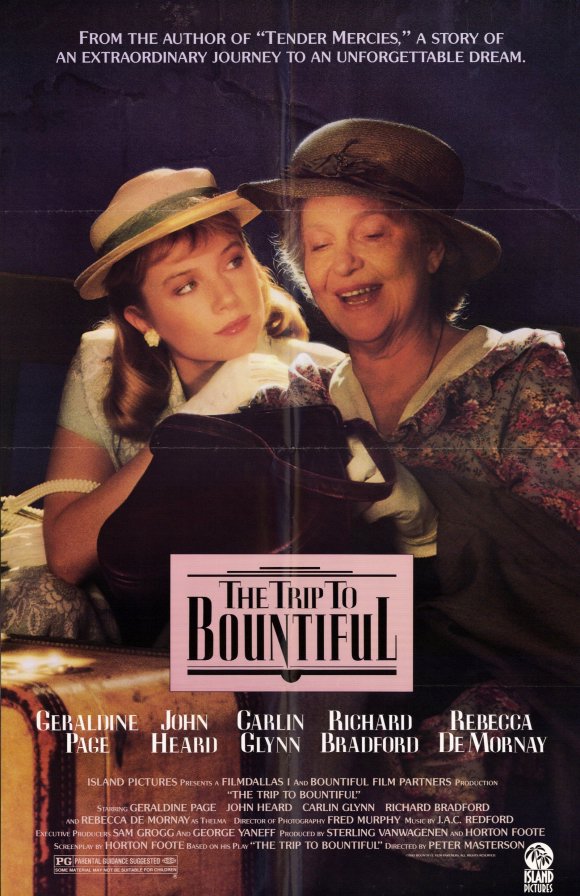
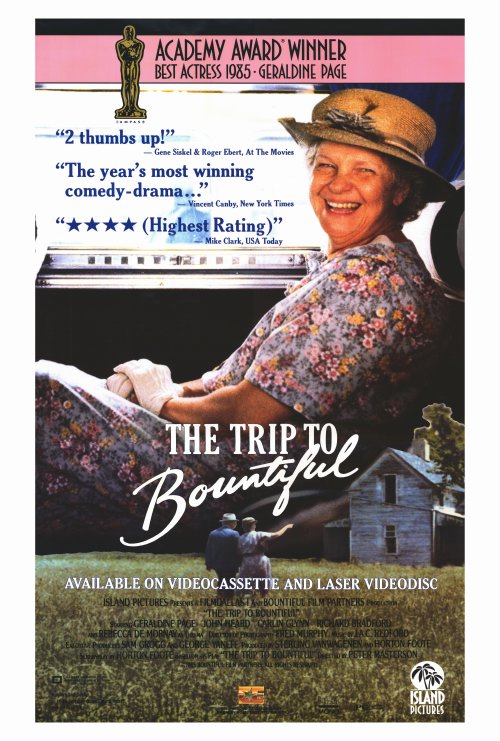
Carrie Watts (Geraldine Page) is an elderly woman living inside a cramped apartment with her grown son Ludie (John Heard) and his wife Jessie Mae (Carline Glynn) in Houston, Texas during the 1940’s. Carrie dreams of one day returning to her childhood home in the small town of Bountiful and ‘escaping’ from Jessie Mae who is overbearing and treats her like a child, but she lacks the transportation or funds. She secretly hides her government checks with the hopes of saving enough to take a train. When she finally makes it to the train station she finds there is no longer any stops to her old town, which is now essentially abandoned, but with the help of the local sheriff (Richard Bradford) he takes her there while Ludie and Jessie follow close behind determined to drag her back with them.

Peter Masterson’s directorial debut shows a great appreciation for Horton Foote’s script as it manages to stay true to the period and tone. I especially liked the part where Carrie describes the quietness of her childhood home while the camera slowly pans the yard and allows the viewer to essentially experience what she is talking about. The recreation of the ‘40s is on-target making you feel like you are living there yourself. Having some tunes of the era playing on a phonograph in the background is a great touch and it’s nice to hear a soundtrack that isn’t from the preverbal classic rock period.

Page shines in her Academy Award winning performance. She has played evil characters with such a relish for most of her career that it is nice seeing her portray a sweet old lady for once and do it so well. Her presence adds to every scene she is in and helps make them more interesting particularly with her conversation on the train with Thelma (Rebecca De Mornay) and the way she holds up everyone in line at the train station specifically two men standing behind her who in real life where her twin sons. She also manages to cry effectively with tears actually coming out of her eyes as opposed to De Mornay whose tearless attempts at it where so pathetic it seemed almost embarrassing.

Carlin is quite good in the snippy adversarial role and I was surprised she didn’t at least get a nomination for her efforts. Heard is solid as a sort of mediator and De Mornay is perfect for the part simply because her fresh youthful face makes a great contrast to Page’s worn one.

The on-location shooting adds a lot of flavor and helps to make this superior over its original stage version. The story itself is slow moving, but a wonderful character study on aging that at times manages to be dryly humorous, honest and sad, but never maudlin.

the trip to bountiful 2

My Rating: 7 out of 10

Released: December 20, 1985

Runtime: 1Hour 48Minutes

Rated PG

Director: Peter Masterson

Studio: Island Pictures

Available: VHS, DVD

Our Time (1974)

our time 2

By Richard Winters

My Rating: 6 out of 10

4-Word Review: She gets an abortion.

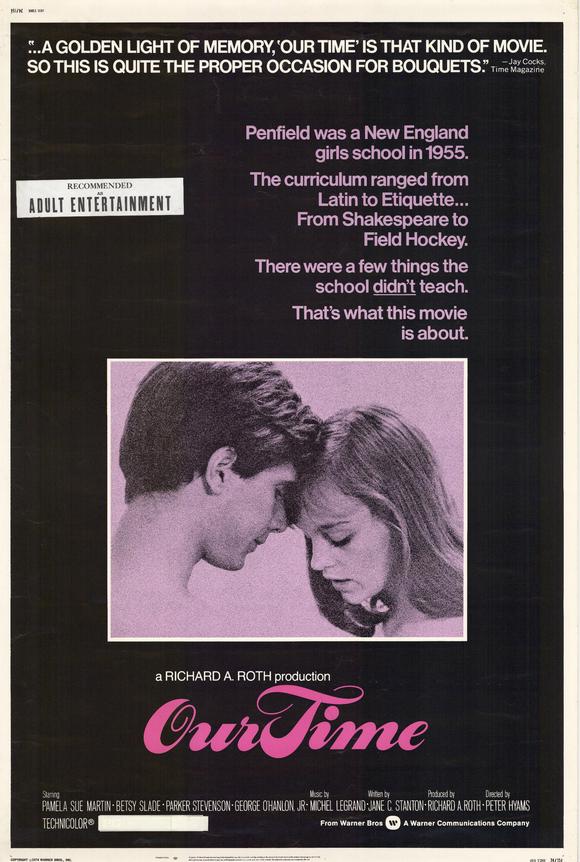
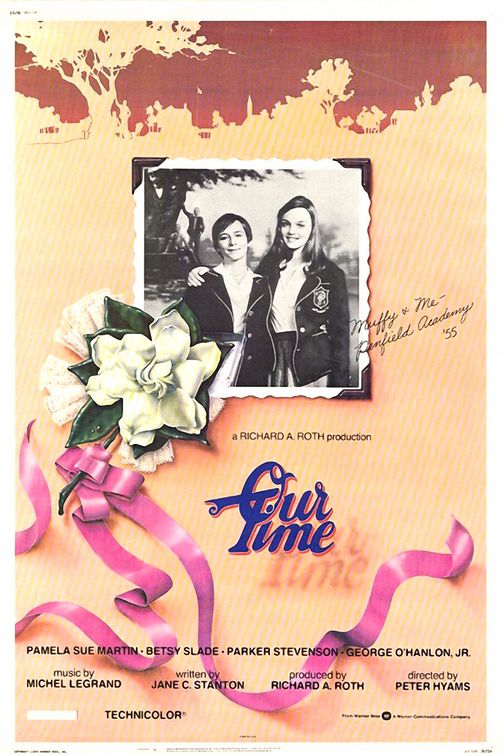
Abby (Pamela Sue Martin) and Muffy (Betsy Slade) are two teen girls and the best of friends that are attending a New England all-girls school during the 50’s. Abby is in love with Michael (Parker Stevenson) and the two sneak off one weekend and consummate their relationship, which makes Muffy jealous. She is not as pretty as Abby and has a hard time getting boyfriends, but decides one night during a Christmas party to have sex with Malcolm (George O’Hanlon Jr.) in the backseat of a car simply to feel what it is like. Their experience isn’t as enjoyable, but Muffy becomes pregnant anyways and the four then spend the rest of the time looking for an underground abortionist to terminate her pregnancy.

On the technical end the film is slick. I particularly liked the opening tracking shot that takes place in a church. The camera starts at the front of the church showing a close-up of the headmaster singing with the choir and then pulls back down the side aisle to show Abby sneaking in late and then goes back up the middle aisle as she looks for a seat. In fact just about every scene features some form of a tracking shot, which may get a little overdone, but helps give the film a certain visual liveliness. Unlike Leonard Maltin who in his book described the color photography as being ‘bad’, I found it to be quite vivid with a nice soft focus lens that gives it a nostalgic-like appeal.

The story itself is predictable, but I enjoyed the sometimes humorous takes of the sexual repressive, stifling attitude of the era and how the students were made to feel like they were being watched and monitored at every second. Abby’s and Michael’s sexual encounter inside a hotel room is quite amusing, but the one done later on between Muffy and Malcolm is painful to watch and not very realistic, looking more like two clothed bodies on top of each other without much effort to simulate the sexual motions.

Martin is excellent in the lead and ironically starred just two years earlier in a similar film about a young unwed woman looking for an abortionist entitled To Find a Man. Stevenson, who later co-starred with Martin in ‘The Hardy Boys/Nancy Drew Mysteries’ TV-show looks like he is barely past puberty. Jerry Hardin, Cliff Emmich, Robert Walden and Debralee Scott can all be seen in brief bits. This is also the only other film appearance of Karen Balkin, who played the bratty student in The Children’s Hour and plays a similar type of character here.

The only issue I had with the film is with the abortion segment. Overall, from a purely dramatic level I felt these scenes were compelling and the best moments in the movie, but it seemed unrealistic especially from a 1950’s perspective that none of the four would try to convince Muffy to keep the baby. It almost comes off like these are 70’s teens with more modern sensibilities that were transplanted into a different time period than actual characters from a bygone era. The plot also becomes more like a political statement than a story and seems to lean too heavily on a liberal point-of-view.

our time 3

My Rating: 6 out of 10

Released: April 10, 1974

Runtime: 1Hour 30Minutes

Rated PG

Director: Peter Hyams

Studio: Warner Brothers

Available: DVD (Warner Archive)

Last Night at the Alamo (1983)

last night at alamo

By Richard Winters

My Rating: 6 out of 10

4-Word Review: Life at the bar.

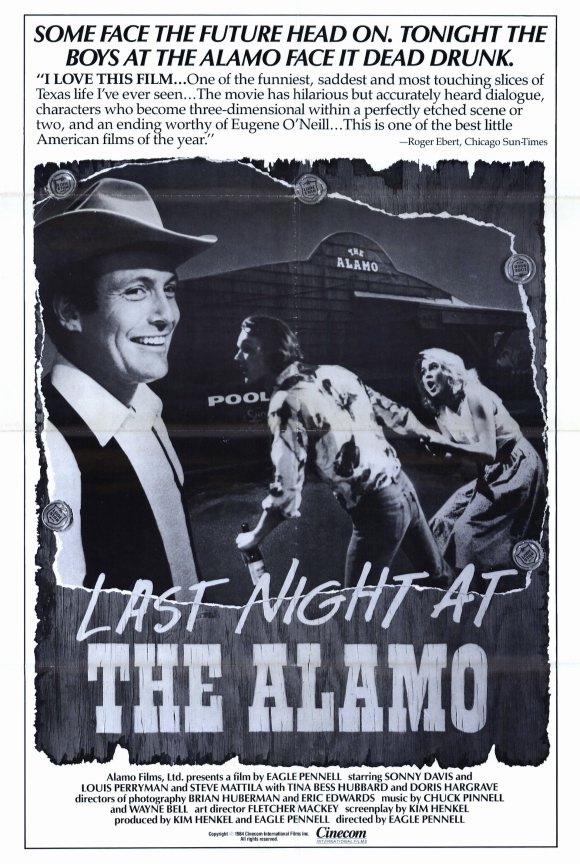
It’s the last night of business for The Alamo bar in Houston, Texas. Some developers have purchased the land and plan on constructing a skyscraper on the site much to the dismay of the regular patrons. There’s Icabod (Steven Mattila) a wiry, creepy looking fellow who seems to bitch about everything and anything. There is also Claude (Lou Perryman) who has just been kicked out of his house by his wife and spends he majority of the night on the phone begging her to let him comeback as well as Cowboy (Sonny Carl Davis) who has big dreams of becoming a Hollywood star, but can’t seem able to hold down a job for any lengthy duration.

The film was shot in black-and-white on a measly budget of $25,000. The majority of it was done inside a place called The Old Barn, which was a popular neighborhood bar in Houston. The scenes where done during the day, so as not to interfere with the regular customers coming in during the evening. Kim Henkel who is best known for penning The Texas Chain Saw Massacre wrote the screenplay as well as appearing as a character named Lionel. Director Eagle Pennell appears briefly as Bo and his wife Peggy can be seen as Ginger.

What makes this film so interesting is the fact that nothing really happens. Instead it gets filled with a lot of rhetorical arguments, insignificant conversations and down-and-out characters much of what you’re likely to find on a regular night at any neighborhood bar across the country. The film takes the ‘Cheers’ format, but with more of a caustic, darker sense of humor. Although this minimalistic approach may sound boring it actually isn’t and in many ways is surprisingly engaging, refreshing and even daring.

The eclectic cast, many of whom were local performers who had not appeared in a film before, really helps. The Davis character who wears a big cowboy hat to cover up is balding head and goes to great lengths to try to save the bar even calling the state capitol in Austin for assistance only to find that there is nothing they can do because nobody ‘important’ had ever gone there is especially endearing. Perryman, who was tragically murdered in 2009, is quite amusing in his desperate attempts to reconcile with his wife and Mattila has his moments as well particularly when he decides to hold a conversation with a wall because he feels it’s more interesting than talking to his girlfriend.

Barflies young and old should appreciate this low budget gem as it hits the essence of bar life and those that frequent them head on while taking an offbeat approach that most Hollywood films wouldn’t dare to do. Henkel and Pennell reteamed 10 years later to create the similarly themed Doc’s Full Service about people who frequent a Texas service station.

My Rating: 6 out of 10

Released: October 2, 1983

Runtime: 1Hour 21Minutes

Not Rated

Director: Eagle Pennell

Studio: Cinecom Pictures

Available: VHS

Dead Heat (1988)

dead heat

By Richard Winters

My Rating: 5 out of 10

4-Word Review: These cops are dead.

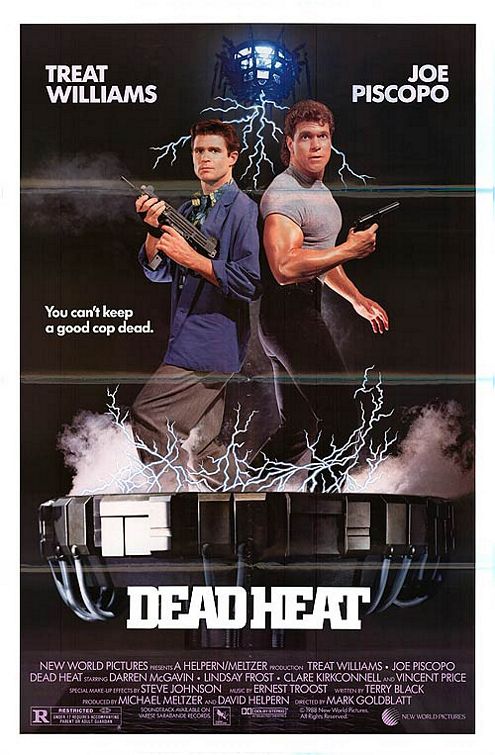
Roger and Doug (Treat Williams, Joe Piscopo) are two cops fighting bad guys that seem to be indestructible. They get shot at, but never die. Upon further investigation it seems some maniacal madmen (Darren McGavin, Vincent Price) have come up with a resurrection machine that can bring dead people back to life and they are being used as zombies to rob banks and commit other types of crimes. When the two cops end up being killed while on-duty they are put onto the resurrection machine themselves and ultimately making it dead cops chasing after the dead bad guys.

The film’s script by Terry Black is creative and has enough energy to be passably entertaining. Unfortunately the pace is too fast and the runtime too compact making the many elaborate twists and turns happen too quickly and conveniently and many times making no sense. Mark Goldblatt’s direction looks amateurish with a faded color and a film stock that looks like it was initially done on video and then transferred to film. The special effects are surprisingly good given the budget and for the most part the film’s only saving grace. The two best moments are when the two leads get attacked by produce at a meat market including that of a beheaded steer as well as when the Randi character (Lindsay Frost) decomposes right in front of Roger.

The acting is genuinely poor and Piscopo is especially weak, but has funny enough lines to at least be humorous. McGavin looks understandably embarrassed and seems to be simply going-through-the-paces while Price in one of his last film roles appears tired, old and frail.

William’s gives an okay performance and I liked how his is more subdued and educated character played off of Piscopo’s hyper one, but the way his character responded to things seemed weird. For instance when he finds out that he is dead and brought back to life for only a short time before decomposing he doesn’t respond with panic, but instead continues to go about his job in a very matter-of-fact way and when his partner is found dead in a particularly gruesome way he doesn’t react with any type of emotion or shock.

The film also fails to follow through on its own logic. For instance when Roger finds out he is dead and then gets cut on some glass he does not bleed, but later on when he gets shot there is blood coming out of his bullet holes. The bad guys cannot be killed by bullets because essentially they are dead already and yet somehow can still be stopped by electrocution or impalement with a pole, but why as essentially they should still be able to continue no matter what the injury.

The final act becomes like a cheesy B-horror movie that goes way over-the-top and overall the whole thing is badly disjointed. However, it’s an okay time-filler if approached with exceedingly low expectations.

My Rating: 5 out of 10

Released: May 6, 1988

Runtime: 1Hour 23Minutes

Rated R

Director: Mark Goldblatt

Studio: Image Entertainment

Available: VHS, DVD, Blu-ray, Amazon Instant Video
The Stunt Man (1980)

the stunt man

By Richard Winters

My Rating: 7 out of 10

4-Word Review: Convict becomes a stuntman.

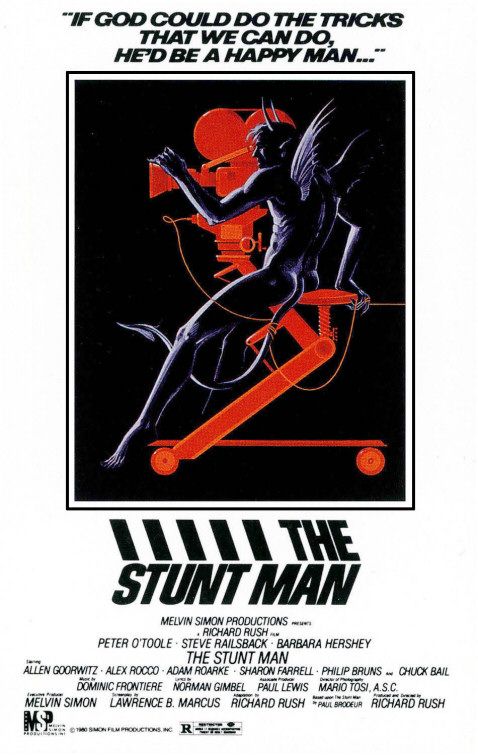
Cameron (Steve Railsback) is on the run from the cops who unknowingly comes onto a movie set and inadvertently causes the death of one of the stuntmen. Eli Cross (Peter O’Toole) the film’s God-like director takes a liking to Cameron and decides to hire him on as the replacement stuntman. Cameron is initially reluctant as he has no experience, but decides it would make a good cover from the police who are still after him. He starts an affair with the film’s leading lady Nina (Barbara Hershey), but finds that it may be Cross that he should be the most afraid of and who may be planning to film Cameron’s death during a difficult underwater stunt in order to add realism.

This is another one of those film-within-a-film type movies with this one faring a bit better than the others. One of the best ingredients it has is showing the behind-the-scenes politics that go on during any film production as well as hitting-the-nail-on-the-head with its caricatures.

Railsback is fun in a rare leading role. The way he can get intense as well as convey the rugged, ragged personality of a war-weary veteran on the run and just trying to survive is completely on-target. His best moments are simply his frightened and confused facial expressions that he has while going through many of Eli’s elaborate stunt routines and not sure if he will be coming out of it alive or not.

O’Toole is in peak form and was nominated for the Academy Award playing an egotistical director, which he modeled after David Lean. Having a director make a film advocating the horrors of war and violence, but then beat-up or threaten numerous crew members any time they make a mistake is perfect irony. My favorite moment of his is when they are showing rushes of Nina’s scenes from that day to her parents and then to their shock he throws in a few scenes showing Nina naked and in bed with another man. Then the next day he informs Nina about it simply to upset her and get the needed reaction that he wanted for the scene.

Hershey is splendid as a Hollywood actress who at times is quite jaded while at other moments is very naïve, child-like and emotionally fragile. Allen Garfield as the film’s exasperated and beleaguered screenwriter is also quite good. I also liked Chuck Bail who essentially plays himself as a stunt coordinator who tries to teach Cameron the fundamentals of the business.

Dominic Frontiere’s booming orchestral score is quite distinctive and at times even stirring particularly during the chase sequence. There is an abundance of ironies and twists that keep things interesting throughout and at points a bit surreal, but it’s missing that one final delicious twist or payoff and has an ending that seems a bit like a copout.

My Rating: 7 out of 10

Released: June 27, 1980

Runtime: 2Hours 11Minutes

Rated R

Director: Richard Rush

Studio: 20th Century Fox

Available: VHS, DVD, Blu-ray, Amazon Instant Video
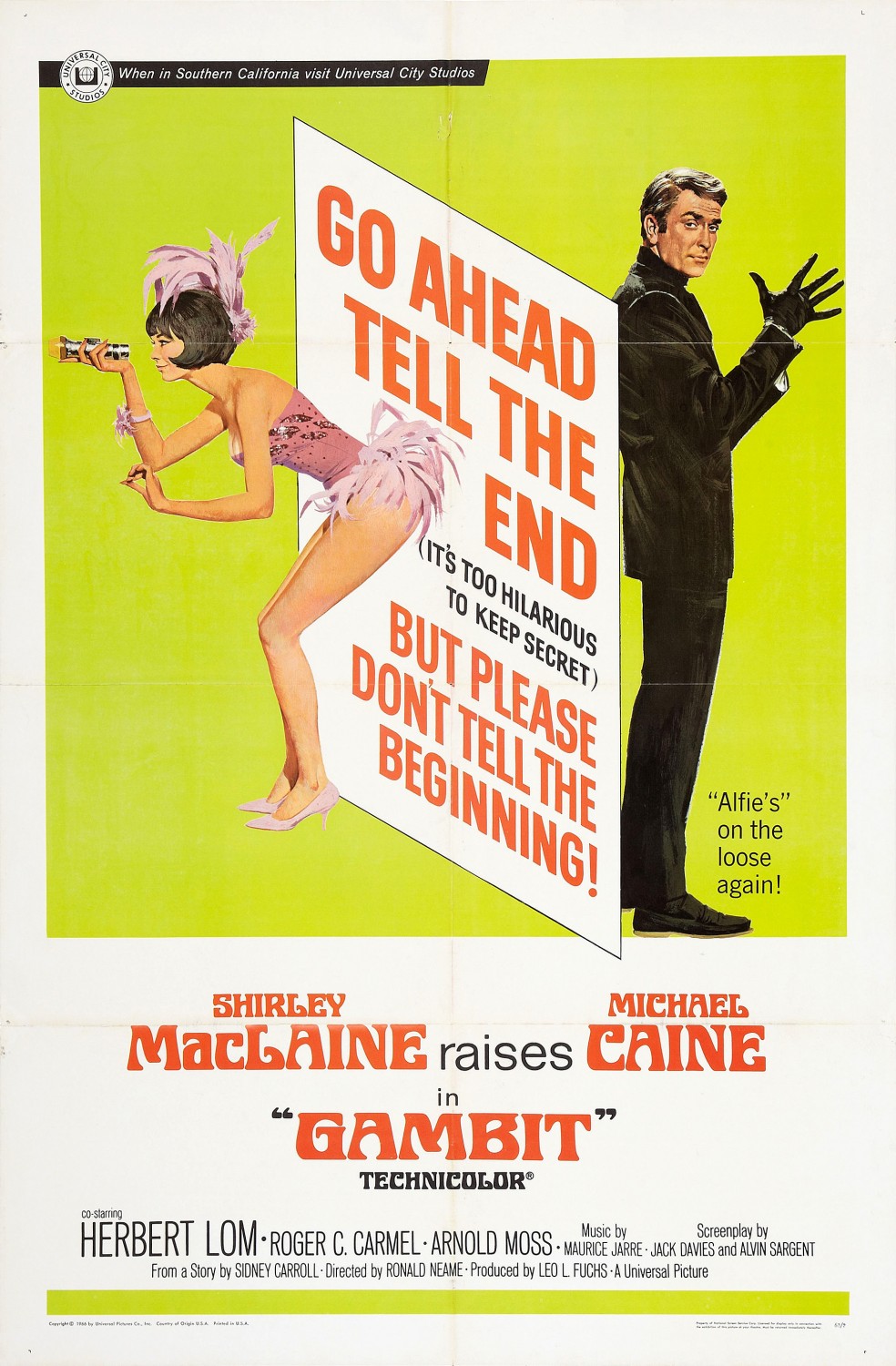
Gambit (1966)

gambit 2

By Richard Winters

My Rating: 6 out of 10

4-Word Review: Foolproof plan has holes.

Harry (Michael Caine) is an international cat burglar looking to make his biggest steal yet. He recruits dance girl Nicole (Shirley Maclaine) to pose as his wife and with the help of some makeup and a different hairstyle made to resemble the late wife of reclusive millionaire Shabandar (Herbert Lom). The idea is to use this uncanny resemblance to get Shabandar’s attention who will then invite them up to his reclusive mansion. While Shabandar remains entranced with this woman Harry will use the time to steal an expensive statue that is in Shabandar’s home. Unfortunately Harry fails to factor in the human element, which sends his ‘foolproof’ plan into disarray.

This movie is fun most of the way and great escapism for a slow evening. The novel twist of showing how the plan should work, which takes up the first part and then showing what really happens is quite amusing. The movie works almost as a parody to all those slick heist movies and spy films that always have elaborate schemes, but usually overlook the human element in the process and if anything I wished they had played this up even more.

Maclaine is a delight and for the first 30 minutes doesn’t utter a single word. She has always been good as vulnerable characters and here is almost child-like. The contrasting personalities and verbal exchanges between her and Caine are amusing and something that I wished had also been played up a bit more.

The real problem is the blossoming romance between the two that doesn’t make any sense. The two know each other for only a couple of days and yet somehow ‘fall madly in love’ despite the fact that Harry is very rude and detached towards Nicole the whole time.  Harry also finds Nicole to be quite irritating and even explicitly tells her as much, so why he would suddenly fall for her is just as ridiculous. The idea, which is quite prevalent in 60’ movies, that two single people of the opposite sex must become a couple by the end of the movie is quite contrived and mechanical and in some ways diminishes the story by always forcing a happy ending even when it is not natural or needed.

There are a few other loopholes that hurts the story as well. One of them is while Harry is inside Shandabar’s home he opens up a statue and reaches in to take out the equipment needed to for the crime, but how was he able to do this? Did he sneak into Shandar’s home at some earlier point and put the statue there and if so how was it not detected by Shandabar? This is not explained, which seriously affects the credibility. There is another moment later on where Nicole sneaks back into Shandabar’s home while Harry is committing the robbery, but it is never explained how she was able to do that since there were guards everywhere, which required Harry earlier to go to elaborate means to do it himself.

Spoiler Warning!!!

The twist ending, which has Harry returning the original statue to Shandabar, but keeping the copy of it and using it to resell to the gullible public who thinks it’s the original is kind of cool. However, when Harry smashes the statue replica to pieces in an effort to show Nicole that he has ‘reformed’ from his criminal ways and retain her affections I knew immediately that there must have be even more statue copies hidden somewhere else, which there is, because there was no way his friend Emile would have taken something like that as lightly as he does otherwise.

End of Spoiler Warning!

gambit 1

My Rating: 6 out of 10

Released: December 21, 1966

Runtime: 1Hour 49Minutes

Not Rated

Director: Ronald Neame

Studio: Universal

Available: VHS, DVD (Region 1 & 2), Blu-ray (Region B), Amazon Instant Video

Alex & The Gypsy (1976)

alex and the gypsy

By Richard Winters

My Rating: 6 out of 10

4-Word Review: Gypsy out on bail.

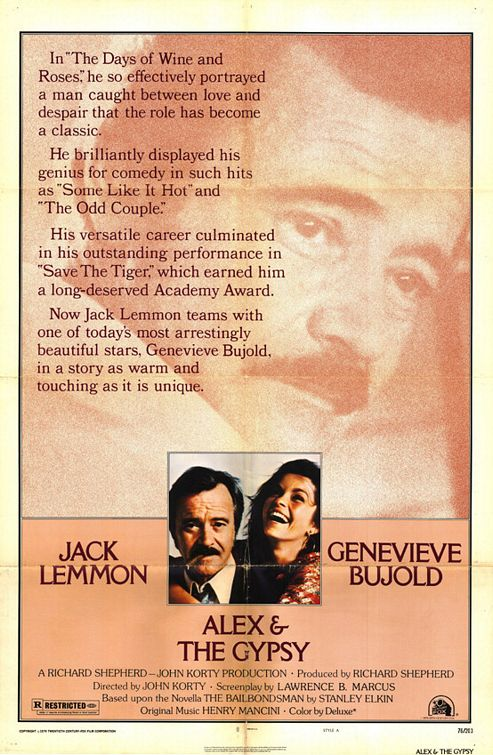
Alex is a middle-aged bail bondsman who is down on life and masks his disappointments with cynicism. By chance he meets the beautiful Maritza (Genevieve Bujold) a young gypsy woman who travels the countryside reading people’s palms and futures for a living. When she is accused of trying to kill her father and thrown into jail Alex decides to post her 30,000 dollar bail in an attempt for a brief romantic fling, but she instead spends the whole time trying to escape and keeping the overly-stressed Alex constantly on guard to prevent it.

The film has a pleasantly laid-back, free-spirited style to it that at times does meander, but nicely reflects the attitude and feeling of the decade that it is in. Director John Korty wisely pulls back and doesn’t try to over-direct, but instead allows his talented cast to carry the picture by creating well-defined and relatable characters. The dialogue and conversations are full of dry, acerbic wit and just the right amount of jaded sensibilities to keep it hip and real.

Lemon is great and has grown as an actor by taking on roles that are more world-weary and edgy  and going light years from the clean-cut, all-American young man type characters that he played in the comedies from the 50’s and early 60’s where he always was naïve and in-over-his-head. Here the character is like an extension of the one he played in Save the Tiger that being a middle-aged man who has lost his faith in everything and everyone and yet still holds out for that elusive moment of magic. His side comments are amusing making this one of his funniest and most endearing performances.

Bujold is ravishing and in fact I don’t think I’ve ever seen her looking better. Korty seems to know how to photograph her in just the right way by making full use of her prominent and alluring eyes. Her moments on screen give off a subtly sensual quality. Her nude scenes aren’t bad either particularly when she is lying handcuffed to a bed almost emotionless while Lemmon, who is under the covers, attempts to have sex with her.

James Woods is also terrific showing a surprising knack for comedy as Alex’s nerdy and timid assistant. Although his character has only limited screen time he skillfully manages to almost steal the film from his two more established co-stars especially in a scene in the bail office where Alex gets bribed by a mafia criminal as well as another one inside a hospital where he tries to explain to Alex why he foolishly allowed Maritza to get away.

The ending is the film’s only real letdown. It is not a particularly bad one, but it is a little too cute and doesn’t seem to mesh well with the rest of the film. It also offers no real conclusion and leaves the viewer hanging as to what ultimately became of these characters. A little more of a side-story particularly the one involving the bounty hunter (Todd Martin) might have given the film a bit more excitement and dimension.

I also wasn’t too crazy about Henry Mancini’s melodic and serene score. He’s a great composer for sure, but something with more of an acoustic or modern folk rock tinge might have fit the story’s theme and mood better.

My Rating: 6 out of 10

Released: October 3, 1976

Runtime: 1Hour 40Minutes

Rated R

Director: John Korty

Studio: 20th Century Fox

Available: None at this time.