Category Archives: Drama

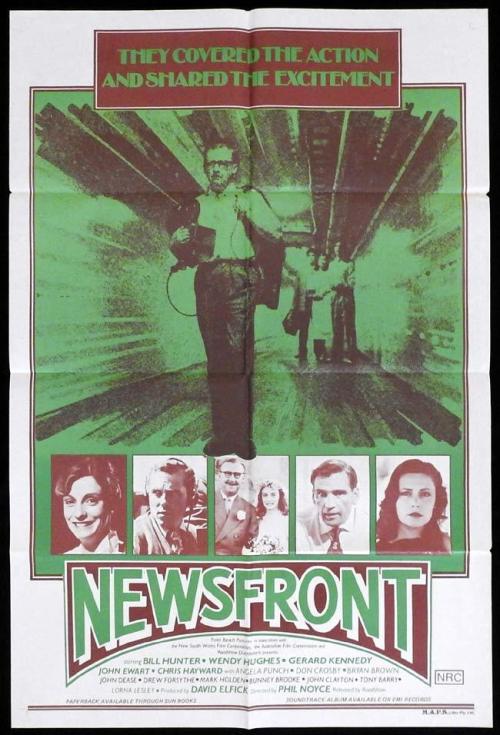
Newsfront (1978)

newsfront2

By Richard Winters

My Rating: 7 out of 10

4-Word Review: Life of a cameraman.

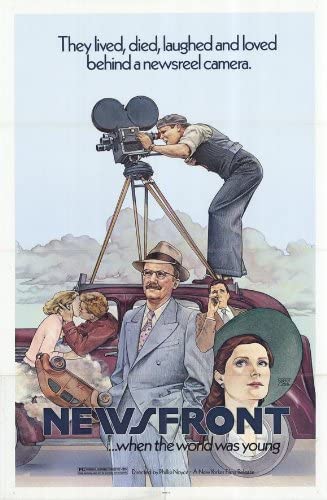
The story centers on the men and women who worked to bring Australian film audiences the latest footage of news events of the day during post World War II. It focuses on those working for a company called Cinetone, which is run by A. G. Marwood (Don Crosby), who’s a demanding boss who expects perfection in the product that he sends out as well as footage that is brought in. The movie also looks at the private lives of the crew including Len (Bill Hunter) whose brother Frank (Gerard Kennedy) works for a competitor as well as the advent of TV news, which eventually put the weekly news reels out of business since they could show the events live as they happened.

The film is unusual in that the first 15 minutes are in black-and-white looking much like the newsreel footage that is shown during the opening credits only to shift suddenly into color. It then goes back and forth between color and black-and-white at roughly 30-minute intervals where for a couple minutes the scene shifts to black-and-white for no apparent reason that I could find and then eventually back to color. I’m not sure what the significance of this was, but it’s a bit distracting and doesn’t help get the viewer into the story, but if anything drives them a bit away.

The plot is different too as it’s made up of small personal dramas versus one big one. I didn’t necessarily have a problem with this, but I did feel the conflicts should’ve been more tied to the newsreel profession, which the majority of it isn’t. For instance the story thread dealing with Len’s opposition to having an amendment added to the constitution barring affiliation with the communist party, which goes against the sentiments of the rest of the town, has nothing intrinsically to do with his camerawork and therefore didn’t seem necessary to the story. There’s also scenes dealing with his failing marriage and love affair with co-worker Amy (Wendy Hughes), which again could happen in any work place and seemed rather pedestrian.

There’s also other threads that I thought should’ve been played-out more. Len’s conflict with his assistant Chris (Chris Haywood) over his reluctance to get married to his girlfriend after he finds out she’s pregnant had potential for strong dramatic moments and it would’ve been interesting seeing them continue to work together despite the underlying tensions, but like with a lot of things in this movie, it gets briefly introduced and then quickly resolved. The same thing happens when Len is forced to work with a new assistant after Chris dies unexpectedly. It’s obvious during the short scene of the two in a car that there’s a big generational difference between them, which piqued my interest seeing if they could forge a working relationship despite these issues, but the film never goes back to it, which I found frustrating.

Overall it manages to be compelling nonetheless and much of it could be credited to actual newsreel footage that gets shown throughout. The violent ones that get shown at the start I found particularly riveting including the one where a race car careen out of control and drives right into the spectators, where it clearly injuries and kills many. I was almost hoping for a backstory to that one, but none is given yet it skillfully illustrates how vivid some of the newsreel footage was even after all of these years, which is the best point that the movie makes. I just wished the scenarios dealt more with the work aspect. In a lot of ways my favorite character was A.G. as I enjoyed the way he fretted about every little detail, was a classic chain smoker, and seemed married to his job. It’s a shame he didn’t stay on the whole way through as he was the type of obsessive guy you could’ve really built a movie around.
newsfront1

My Rating: 7 out of 10

Released: July 29, 1978

Runtime: 1 Hour 50 Minutes

Rated PG

Director: Phillip Noyce

Studio: Roadshow Shows

Available: DVD, Tubi
R.P.M. (1970)

R.P.M.

By Richard Winters

My Rating: 4 out of 10′

4-Word Review: Caught in the middle.

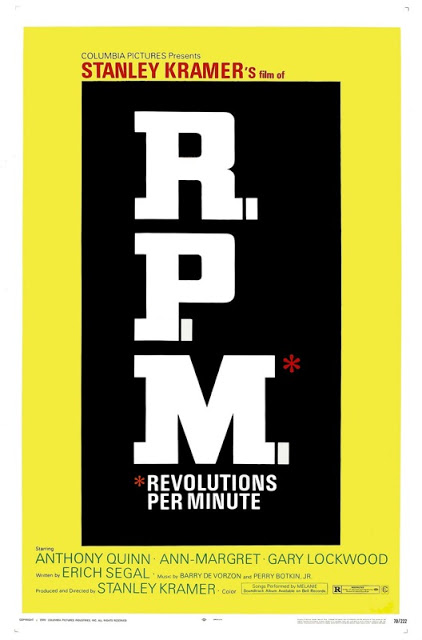
Paco Perez (Anthony Quinn) is a college professor given the position of acting university president after a group of students overtake an administration building, which forces the other president out. Paco now has the duty of negotiating with these students in order to meet their requests and have them leave the building, but their list of 12 demands are extreme and Paco cannot agree to all of them. Eventually he accepts 9 of the conditions, but Rossiter (Gary Lockwood) the head of the student movement refuses to budge unless all 12 are met, which continues the standoff until Paco feels he has no other choice but to have the police called in and the students forcibly removed.

For a film with the title of Revolutions Per Minute this is woefully lacking in action. There had already been other films dealing with the campus unrest of the day including The Strawberry Statement and Getting Straight and while neither one of those were perfect they at least had violent confrontations between the protesters and authorities, but this thing is mainly all talk. These students are also the most uninteresting ‘radicals’ that I’ve ever seen and spend most of their time just looking out the window. I would think at their age they’d be partying, doing drugs, drinking, listening to rock music, sex, and maybe even some infighting amongst themselves in between meeting with Paco, but instead it has the atmosphere of a retirement community.

Writer Erich Segal and director Stanley Kramer, who later admitted this was the least favorite of his films and the first to do poorly at the box office, were too old and out-of-touch with the young generation to effectively tackle the subject in any meaningful way. The kids are bland and the scenes with them stagnate. All of the emphasis is put on Quinn and while some of the issues that it brings out, which mainly consist at how the older generation sees things and approaches things differently, is not enough to keep it compelling despite the arguments that he has with his much younger live-in girlfriend, played by Ann-Margret, which are the only times when the movie gets quasi-lively, but even then it’s not enough to save it.

The biggest disappointment is when the police finally do invade the building. I was hoping for a big battle to make up for all the boredom that came before, but Kramer fails to deliver. He unwisely uses music during these clashes, which should not be necessary as the yelling, screaming, and other noises from the chaos would be more than enough to keep it riveting, much like in Medium CoolHe also blurs out the images, so we just see these fuzzy little dots on the screen, which I guess was his idea of being ‘artsy’, but it doesn’t allow for any emotional impact. Ultimately it becomes just another run-of-the-mill flick looking to cash-in on the screaming headlines of the day, but offers no new insight. Kramer was famous for making ‘relevant’ films that tackled difficult topics like Judgement at Nuremburg, The Defiant Ones, and Guess Who’s Coming to Dinner, and while those were a success this one was an overreach and he should’ve quit while he was ahead.

My Rating: 4 out of 10

Released: September 16, 1970

Runtime: 1 Hour 32 Minutes

Rated R

Director: Stanley Kramer

Studio: Columbia Pictures

Available: DVD-R

White Dog (1982)

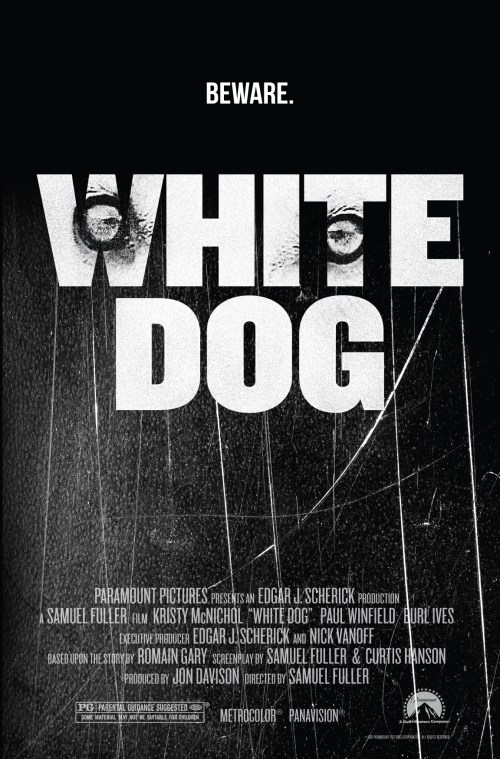
white dog1

By Richard Winters

My Rating: 6 out of 10

4-Word Review: Dog attacks black people.

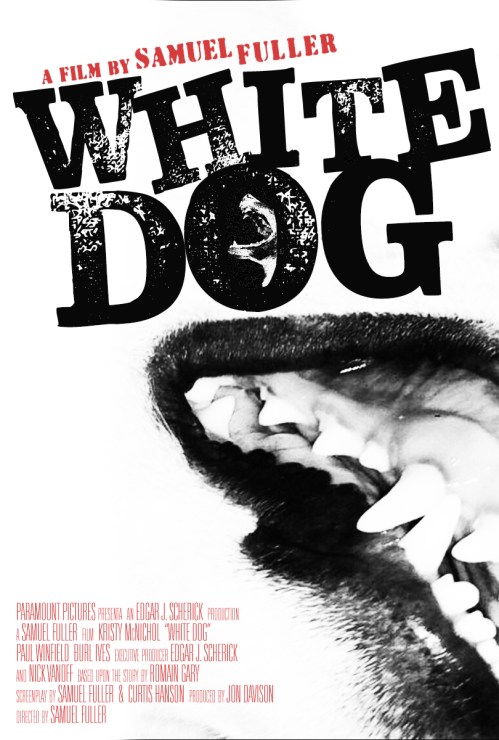
Late one night while driving home aspiring actress Julie (Kristy McNichol) hits a stray dog, which she takes immediately to an emergency vet. They find that his injuries were minimal and she’s allowed to take him home until his owner can be found. She soon starts to bond with the White Shepherd dog, who at one point saves her from a would-be rapist. She also becomes aware that he attacks black people when he goes after one of her African American friends unprovoked. She takes him to an elderly dog trainer named Carruthers (Burl Ives) who advised that the dog should be put to sleep, but another trainer named Keyes (Paul Winfield), who is black, wants to rehabilitate the animal, but finds this undertaking far more challenging than he initially expected.

The story is based on a real-life incident of novelist Romain Gary and his actress wife Jean Seberg, who during the early 60’s took in a stray dog that had previously been an Alabama Police dog, who they later learned, was trained to attack black people. Gary wrote about this experience in a short story that was published in Life Magazine in 1970 and this was eventually turned into a novel. The novel though incorporated many things that had not occurred in real-life, nor in the movie, including having the dog trainer being an angry black Muslim who gets the dog to start attacking white people including Gary himself.

The story rights were purchased by Paramount in 1975 with Roman Polanski set to direct, but when he was forced to flee the country due to statutory rape chargers the projects was put on hold. Then after the success of Jaws producers decided to turn it into a ‘jaws with paws’ storyline with the racism angle taken out, but when director Samuel Fuller was signed on he returned the plot to its original theme, which caused controversy when the NAACP, without ever having seen the film, accused it of being ‘racist’, which frightened Paramount executives enough that they gave the movie a very limited engagement with no promotion, which led to it recouping only $46, 509 out of its original $7 million budget. Despite eventually getting released on VHS and shown sporadically on cable outlets such as Lifetime, it languished in obscurity until finally getting a DVD/Blu-ray issue in 2008 where it’s now seen in a totally different light.

For me the biggest problem is the hackneyed drama starting with the dopey way the dog gets hit by a car and yet miraculously healed enough to go home that very same night and never showing any lingering injuries. The potential rape scene is too manufactured as well as it has the rapist magically appearing in the apartment without showing how he broke-in and later having one of the cops state that he had just arrested the same guy earlier that year for another rape attempt, so if that’s the case then why wasn’t he still in jail? It also has the dog sleeping as the bad guy sneaks in, but I’ve found dogs have a keen sense of awareness and would’ve heard the guy trying to bust in and growling or barking long before he actually made it into the apartment. Having Kristy go on a late night jog with the dog and then being chased by a masked assailant, which the dog would scare away, would’ve been a better way to have done it.

I also didn’t like the part where Kristy meets the dog’s owner and he openly admits to training him to attack black people, which to me didn’t seem believable. I liked the idea of having the owner being this seemingly kindly old man, played by Parley Baer best known for voicing the Keebler Elf, that you’d never expect as being someone who’d train an animal to do such a thing. However, freely admitting this to a stranger is like a murderer admitting to their crime. Most won’t fess up because they know it would get them into a lot of trouble if they did. Movies should also not be obligated to explain everything and like in real-life should leave a few things open-ended. When Kristy accuses him of this he could reveal a funny look on his face, giving the viewer insight that he most likely was guilty, but then have him verbally deny it like most people would.

While I could’ve done without the slow motion and booming music I did find the dog’s retraining sessions with Keys to be the film’s best moments and Winfield’s strong presence is excellent. However, trying to use a dog as a metaphor to racism doesn’t really work, nor hold-up to logic. Winfield explains that the dog was most likely beaten by a black person hired by a white man to get the dog to become the way he does, but I don’t think this could be achieved as the dog would just hate that one individual and not connect it to the man’s skin color unless he was abused by a whole group of black people. We’re also told that the dog does not hate black people he just fears them, but if that’s the case then why does he go out of his way to attack and kill them. Animals will only go on the attack if they feel threatened, but if the perceived threat keeps their distance then the dog shouldn’t feel the need to be aggressive making the blood splattering attacks that the dog does come off as quite over-the-top.

white dog2

My Rating: 6 out of 10

Released: November 12, 1982

Runtime: 1 Hour 30 Minutes

Rated PG

Director: Samuel Fuller

Studio: Paramount

Available: DVD/Blu-ray (Criterion Collection)

Conversation Piece (1974)

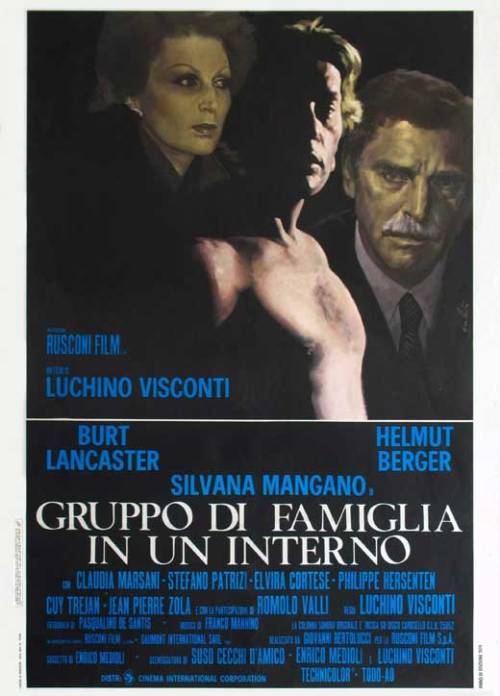
conversation piece1

By Richard Winters

My Rating: 3 out of 10

4-Word Review: Obnoxious tenants take over.

Burt Lancaster plays an aging Professor who lives alone in his giant palazzo situated in Rome along with the exquisite art pieces that he has collected through the years. His only connection with other people comes through the form of his servants headed by his live-in maid Erminia (Elvira Cortese), but even here his communications with them is distant and detached. Then one day a Countess (Silvana Mangano) arrives asking if she can rent his upstairs room, which he rarely uses. The Professor is initially reluctant, but the Countess is looking for a place to harbor her young, left-wing lover Konrad (Helmut Berger) from her right-wing husband as well as using it as a sanctuary for her teen daughter Lietta (Claudia Marsani) to spend time with her boyfriend Stefano (Stefano Patrizi). After a great deal of insistence he finally agrees. The new tenants then immediately begin remolding the room using outside contractors, which creates a great deal of noise and distraction, causing the Professor to regret his decision and feel like his once peaceful abode has now been invaded.

The behind-the-scenes had more drama than anything you see in front of the camera as director Luchino Visconti had suffered a stroke that left him confined to a wheelchair and made it hard to find funding as backers believed he was in such bad shape that the film wouldn’t be completed only to have Lancaster assure them that he would take over directing should it become necessary. To help compensate everything was shot on a soundstage, which is the most impressive thing about it as the interiors were so meticulously created that it genuinely looks like an old lived-in mansion complete with a wide assortment of artifacts that you’d find in an home resided in by an elderly person. There’s even a hidden room and the major renovation by the tenants to the upstairs is visually intoxicating. Ultimately though it becomes static and having at least a few scenes done outdoors, or in a different locale, would’ve helped.

Lancaster is excellent and comes-off seeming quite old even though he was really only in his late 50’s. His facials expressions and body language are enough to carry it even as his voice gets dubbed into Italian, which is weird at first, but eventually you get used to it. Still I didn’t understand why since it was shot in English that the dubbing even was necessary as they could’ve used subtitles for Italian viewers while allowing the authentic voices of the actors to remain.

Spoiler Alert!

The biggest disappointment though is the story, which essentially doesn’t lead to anything interesting. I sat through it convinced there was some subtle context beneath the surface that was sure to come out as I couldn’t believe these tenants could be as obnoxious as they were without intentionally doing it in order to drive the guy mad, so they could  take over the residence, steal his paintings, and resell them on the black market, at least that’s what I thought would be the twist, but instead there really isn’t any. Despite the way they annoy the Professor at every turn he still ends up appreciating their presence and calling them his ‘family’ while anyone else would’ve had them forcibly removed and the locks changed. No matter how lonely one might be dealing with these idiots and the massive upheaval that they brought including criminal elements and even sexual perversity would be considered NOT worth it to any rational person. The fact that the film acts like it is and goes as far as rehabilitating their image to that of ‘well meaning losers’ by the end made it corny and not worth the effort, as talky as it already is, to sit through.

My Rating: 3 out of 10

Released: December 10, 1974

Runtime: 2 Hours 1 Minute

Rated R

Director: Luchino Visconti

Studio: Cinema International Corporation

Available: DVD, Blu-ray, Amazon Video, YouTube

The Winnipeg Run (1972)

winnipeg1

By Richard Winters

My Rating: 3 out of 10

4-Word Review: Winning a snowmobile race.

Randy (Lance Henriksen) has been institutionalized for several years after suffering from PTSD from fighting in Vietnam. His Dr. (Peter Michael Goetz) feels that he’s ready to go back out into the real world, but must continue to take his medications, which Randy refuses to do. He travels back to his hometown in northern Minnesota, but finds obtaining a steady income to be tough, so he participates in a local snowmobile race that offers a cash prize. He does well enough in that it compels him to travel to Canada to take part in a race called The Winnipeg Run, which runs from Manitoba to St. Paul, but as he prepares for the competition his mental problems return.

This marked Henriksen’s film debut as well as Goetz’s and even though Lance has described this project in interviews as being ‘the worst movie he has ever done and will remain the worst movie he’s ever done’, he’s still the best thing about it. He adds conviction and nuance, which allows the character to rise above the middling material and become a multi-dimensional person that you want to root for.

The location shooting is excellent. While it was never shot in Winnipeg, despite its title, but instead Thief River Falls, Minnesota it’s great to see a movie that truly captures the frigid climate of the region. Most films with a Minnesota setting are usually shot in the summer when the weather is pleasant, or done on a soundstage with fake winter effects, but this one goes the extra step to show the massively high snow hills that you can get there, I was born and raised in the region so I know, and the icy clouds of breath that encircles each individual as they walk outside. The cold temps can also be quite brutal on the film equipment, so kudos to the crew for being brave enough to fight the elements in order to bring authenticity. The racing footage isn’t bad either and I could can only think of one other movie, the Disney pic Snowball Expresswhich came out the same year, that has snowmobile racing in it, so it gets credit for originality.

Spoiler Alert!

However, what I didn’t like is that after having this long, drawn-out build-up watching Randy prepare for the race and describing in detail the  grueling aspects of it, it then never actually occurs. Instead we find that, due to his mental illness, it’s all inside his head. While he does get on a snowmobile and drive it around it’s not a part of any competition and just him speeding alongside a lonely highway while his nervous girlfriend (Cynthia Subby) drives in a car next to him and screams for him to come home.

If the writer and director thought that this was some kind of ‘clever twist’ then it was they who had the real mental problem as it’s more of a bait-and-switch to the viewer who are primed for an action packed climax only to be left with something that has no impact at all. Even as a character study it’s misguided and it’s assessment of mental illness quite dubious. While I initially thought Lance’s take of this movie was a bit harsh, as it does start out okay, I could ultimately see why he now considers it a black mark on his resume.

Alternate Title: It Ain’t Easy

Released: November 10, 1972

Runtime: 1 Hour 22 Minutes

Rated PG

Director: Maurice Hurley

Studio: Dandelion Films

Available: None

Lolly-Madonna XXX (1973)

lolly3

By Richard Winters

My Rating: 3 out of 10

4-Word Review: Two rural families feud.

Rod Steiger is the patriarch of the Feather family while Robert Ryan heads the Gutshall household. Both families live next to each other in poor ramshackle shacks in rural Tennessee. Neither side gets along and both will occasionally play tricks on the other in order to try and get the upper-hand. One day the Gutshall boys send a letter to the Feathers signed by a Lolly Madonna even though that woman doesn’t really exist and was created to get the Feathers away from their whiskey still so the Gutshalls could destroy it. However, two of the Feather boys, Thrush and Hawk (Scott Wilson, Ed Lauter) spot Ronnie (Season Hubley) sitting at a bus stop in town and think that she’s the mysterious Lolly, so they kidnap her and bring her back to their farm where they hold her hostage. The Gutshalls see them bring in this new girl, but have no idea who she is, so the Gutshall’s daughter Sister E (Joan Goodfellow) sneaks over to the Feather residence to spy on them, but gets accosted and raped by Thrush and Hawk in the process. Now the Gutshalls feel the Feathers need to pay a price and both factions go to war, which causes several casualties.

The screenplay was written by Sue Grafton, better known for her later mystery novels, and based on her book ‘The Lolly-Madonna War’, which was published in the United Kingdom, but never in the U.S. Supposedly the story is a metaphor for the Vietnam War and the horrible destruction of violence, but trying to make a profound statement through the follies of a bunch of stereotyped hillbillies doesn’t work. For one thing they live in homes that look like they were abandoned 30 years ago and drive in rusted pick-ups that seem taken straight out of the junkyard. I realize poor people can’t all live in nice homes or drive fancy cars, but most can at least maintain them a bit better. Also, neither family owns a telephone, but they do have electricity, a refrigerator and even a TV, so if they can have all of those things then why not a telephone too?

Hubley’s character has no real purpose in the story as the Gutshall’s daughter could’ve been raped for a variety of reasons without any stranger needing to be present. She doesn’t do much when she’s there anyways except sit quietly in the background and observe the feuding. Having her fall madly in love with one of the boys, played by Jeff Bridges, and grieve openly when Hawk, the same man who violently kidnapped her just a day earlier, gets injured seems too rushed and out-of-whack to be believable. I’m well aware of the Stockholm Syndrome where victims can over a great deal of time fall for their captors, but this takes that concept to a ridiculous new level.

Despite being top-billed Steiger is seen very little, especially during the first hour and he’s not allowed to chew-up the scenery like he usually does though watching him make a ham sandwich where he applies a massive amount of ketchup is fun. Bridges pretty much takes over things by the end, but for the most part no one actor, despite the plethora of well-known faces, headlines here and if anything they’re all wasted by being locked into roles that are caricatures and indistinguishable from the others.

The pace is slow with an inordinate amount of talking that over explains things that the viewer could’ve picked up on visually. When the action does occur, like the death of Bridges’ first wife, played by Kathy Watts, it comes off as corny. The animal lovers will not like the scene where Steiger shoots a horse looped together from several different angles and in slow-motion, nor the segment where pigs get tied to a post and scream in panic as a ring of fire gets set around them. The final shootout though is the biggest letdown as the film fades-out before it’s over, so we really never know who survives it and who doesn’t.

Fred Myrow’s haunting score is the only thing that I liked, but everything else falls flat. If you’re looking for a movie with a anti-war/anti-violence message there are hundreds of others to choose from that do it way better.

My Rating: 3 out of 10

Released: February 21, 1973

Runtime: 1 Hour 45 Minutes

Rated PG

Director: Richard C. Sarafian

Studio: MGM

Available: DVD-R (Warner Archive), Amazon Video, YouTube

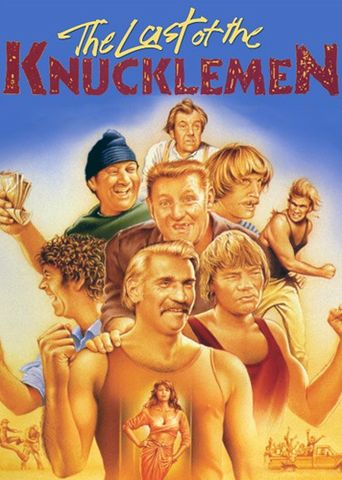
The Last of the Knucklemen (1979)

lastknuckle1

By Richard Winters

My Rating: 7 out of 10

4-Word Review: Isolated miners living together.

A group of miners, some of them with criminal records and no other means of employment, survive together in the remotest area of the Outback as they make a living working for Tarzan (Gerard Kennedy) who leads the team and gives them their paychecks. At night they sleep via bunkbeds in a small tin shack where they also play card games, drink, and occasionally brawl. Pansy (Michael Preston) is the de facto leader, who uses his quick temper and husky build to intimidate anyone who challenges his authority. The only one he doesn’t fight is Tarzan, but only because he’s the employer. Then a new man arrives named Tom (Peter Hehir) with a mysterious past. He has karate skills that allow him to take-on Pansy’s fist-fitting ability, but Pansy has a secret weapon of his own when he brings in Carl (Steve Rackman) from a nearby town who’s a huge guy with very few teeth, who he feels can beat Tom in a fight and everyone else in the camp takes bets on who they think can win.

The film is based on the stage play of the same name written by John Powers who himself had never worked in a mining camp, but had always been intrigued with the ruggedness, wildness, and overall isolation of them after growing up hearing bawdy tales from his Uncle Harry who had been employed at one of them. 20 years after hearing his uncle’s stories he then decided to turn those rustic tales into a play while also incorporating it with the adventures of Ronald Biggs who was a train robber who managed to evade the authorities for many years. Pitting a known criminal trying to just hide-out at a remote camp with the gruff nature of the men who worked there he felt would make for an interesting dynamic and the play, which opened in 1973 in Australia and 10 years later in the U.S. where it starred Dennis Quaid, was met with rave reviews.

Director Tim Burstall was looking to do a male bonding pic and had a choice between doing this one or The Odd Angry Shotwhich was reviewed last week, and came to the determination that this was the better fit. He particularly liked the outback setting and became focused on finding the most remote town to film it in and eventually chose the itty-bitty one of Andamooka, which at the time had only 316 people living there and today has even less. While the town certainly met the rustic quality it had no police and the inhabitants, much like the characters in the story, had previous criminal records forcing the producer to sleep with a gun at his side and the production’s payroll under his pillow. It also at times caused interruptions with the filming when one day one of the locals threatened to blow up the set with a stick of dynamite, which sent the cast and crew running, until the special effects man realized the stick had no detonator.

The interior scenes were done on a soundstage in Melbourne, though it’s so impressively camouflaged you’d never know it. My only complaint with the outdoor shots is that filming took place during September and October, which is Springtime in Australia where temps aren’t as hot, and in fact they were quite chilly, so that intense hot Outback feel, which is the whole basis of the story, never really comes through.

As for the story, it’s surprisingly engaging despite the fact that there’s really not much of a plot and everything hinders on the interactions of the characters. Fortunately the characters are so well defined that you enjoy and are even intrigued at how they all relate to each other and the love-hate relationship that they share. One of the most gripping moments has nothing to do with the climactic fight, but instead on an intense poker game between Pansy and the elderly Methusela (Michael Duffield), where each tries to bluff the other while also raising the money stakes to drastic heights.

The fight itself, which you wait through the whole movie to see, wasn’t as exciting, or captured in as intense of a way, as I was expecting. The animosity between Tom and Pansy wasn’t played-up enough either and only comes to a head during the third act while I felt it should’ve been brewing from the very start. Tom as a character is quite dull and is seen a lot less than Methusela who’s the scene-stealer. The sequence between Tom and Carl’s battle is surprisingly quick while the big showdown between Tarzan and Pansy gets captured from a distance and shown over the closing credits, which I found quite disappointing. There’s no answer to who ultimately wins the fight either, which despite the film’s other good qualities, is a big letdown.

My Rating: 7 out of 10

Released: July 11, 1979

Runtime: 1 Hour 29 Minutes

Not Rated

Director: Tim Burstall

Studio: Hexagon Productions

Available: DVD (Import Region 0)

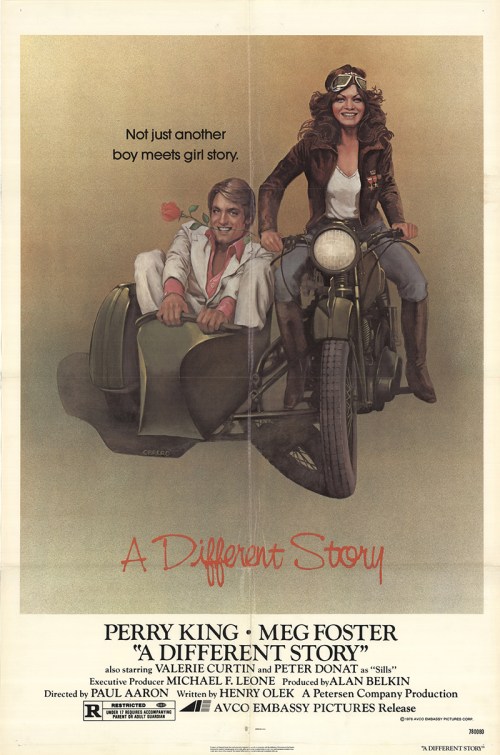
A Different Story (1978)

By Richard Winters

My Rating: 2 out of 10

4-Word Review: Homosexuals in heterosexual relationship.

Albert (Perry King) works as a chauffeur to famous pianist Sills (Peter Donat) and he’s also his part-time lover, but when Sills finds another man Albert gets put on the street and must seek refuge as a squatter. Stella (Meg Foster) is a real estate agent who finds Albert taking up residence in one of the homes she’s trying to sell. She decides to let him move in with her and since both of them are gay they partake in a platonic friendship. Then immigration comes looking for him since he’s also an illegal alien from Belgium. In an effort to prevent his deportation Stella decides to marry him and they soon become romantic including having sex and a baby, but just as things seem to blossom Stella becomes concerned that Albert may be seeing someone behind her back.

While this movie may have seemed ‘groundbreaking’ when it came out it has not aged well and features an assortment of issues starting with the whole botched premise. Having a single woman take in a virtual stranger is never a good idea. If you have concern for a homeless person direct them to the nearest shelter, but inviting them back to your place is clearly dangerous. Perhaps because she knew he was gay she thought he’d be ‘safe’, but just because he’s not going to rape you doesn’t mean he might not rob her when she was away.

The characterization of Albert works too much off gay stereotypes such as having him into cooking, cleaning, and even dress designing. The film should’ve challenged the viewer’s perception of gay people by working against the cliché by having him into auto repair, football, and drinking beer instead. I also thought it was dumb that, in an effort to hide that he was gay, Stella pretends to have made the dinner when her parents (Richard Bull, Barbara Collentine) arrive for a visit, but why couldn’t she just have introduced Albert as her straight male friend who just happens to be a great cook, or are we to presume that every male chef out there is secretly gay?

Spoiler Alert!

The third act is when it jumps-the-shark not so much with the introduction of the baby, which was bad enough, but more when Albert starts fooling around on Stella with another woman! The whole idea that simply having feelings for a member of the opposite sex would magically ‘ungay’ a person, or that ‘love can change everything’ is just not true. The initial gay theme gets totally lost and it starts to resemble a flick about a straight married couple instead. In the end there’s just nothing different about this ‘different story’, which is the whole problem.

My Rating: 2 out of 10

Released: May 10, 1978

Runtime: 1 Hour 48 Minutes

Rated R

Director: Paul Aaron

Studio: AVCO Embassy Pictures

Available: DVD, Blu-ray

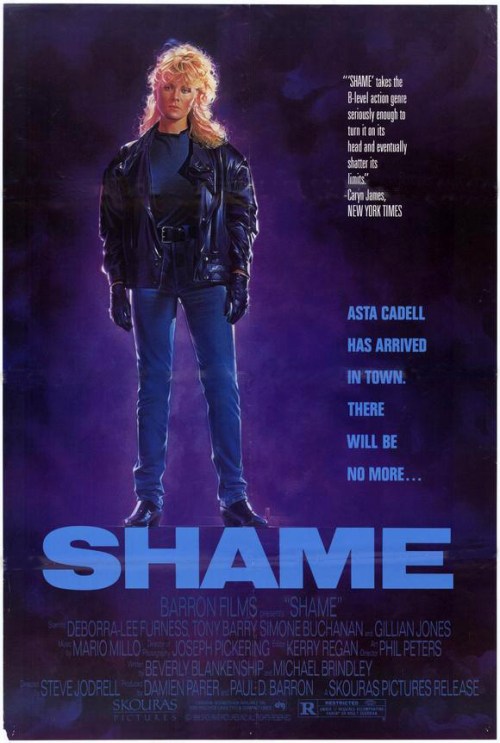
Shame (1988)

By Richard Winters

My Rating: 5 out of 10

4-Word Review: Lawyer uncovers town’s secret.

Asta (Deborra-Lee Furness) is enjoying her vacation holiday from work as a lawyer by traveling through the Western Australian countryside on her motorbike only to get into an unexpected accident late one night when she inadvertently drives into a flock of sheep in the road that due to the darkness she didn’t see. With her bike now damaged she brings it into a repair shop run by Tim (Tony Barry). Since the parts for the bike need to be shipped in Asta agrees to stay at Tim’s residence in a spare room. It is there that she overhears a conversation involving Tim’s daughter Lizzie (Simone Buchanan) and her sexual assault by a group of young men at the town’s bar. No one seems to want to press any charges and everyone in the town places the blame on Lizzie by openly implying that she’s a ‘slut’, but Asta gives her the confidence to go to the police and press charges only to find that those same men are now after her and consider her to be their next ‘conquest’.

The film is loosely based on a true story, that also inspired The Accused, which starred Jodie Foster.  However, here the approach is different where the rape victim isn’t the main protagonist, but instead someone who wasn’t even involved in the actual incident and mainly just stands on the sidelines as an observer, which isn’t as compelling. The Asta character almost becomes like a transparent ghost who’s always in the middle of the action, but overall doesn’t really do much to help propel the story along. The producers had wanted Asta to be more violent and vigilante-like, but the director nixed this idea even though I felt it would’ve helped.

While I liked the segments dealing with the parents of the boys who committed the rape and their denial of what happened and at one point even agreeing to pay-off the victim’s family not to press charges, as it’s interesting to see things from the family of accused, which most rape movies don’t do, but overall I found the story structure to be lackadaisical. I was a bit confused during the first act about what had occurred as everything is handled in a subtle and conversational fashion. We never see the actual crime happen it’s just spoken about in passing, but I felt at some point there should’ve been a flashback to the build-up of it and I was fully expecting it to come along at some point, but it never does.

The characterizations of the males is too extreme and stereotyped. I’m okay with some of the men being bad apples, as this can occur anywhere, but in this movie they’re all portrayed as being leering savage animals with no conscience or self-control. The fact that they’ve apparently raped other women in the town the same way just made it all the more over-the-top. I’ve never heard of small towns dealing with marauding, serial rape gangs and wondered what made this one so special. Was it something in the water?

There is a certain Mad Max vibe to it, which was apparently what the filmmakers were aiming for, but the results are only so-so. At least in Mad Max it had a surreal, futuristic setting, but this thing has extreme behavior happening amongst the men in an average place in the modern-day, which didn’t make much sense.

My Rating: 5 out of 10

Released: February 26, 1988

Runtime: 1 Hour 31 Minutes

Rated R

Director: Steve Jodrell

Studio: Barron Films

Available: DVD, Amazon Video

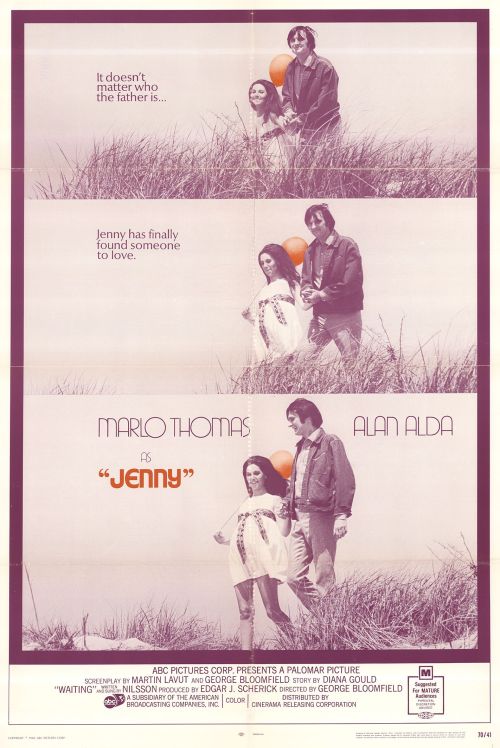
Jenny (1970)

jenny

By Richard Winters

My Rating: 3 out of 10

4-Word Review: An unmarried, pregnant woman.

Jenny (Marlo Thomas) is a young woman living in New York City who has a one night stand with a man engaged to be married and ends up getting pregnant. She fears the stigma of being an unwed mother, so when she meets Delano (Alan Alda), a struggling filmmaker who wants to marry in order to avoid the draft, she agrees. The marriage of convenience does not start out well as living together brings out all of their differences, but the closer they get to the delivery date the stronger their bond to each other grows.

This was intended to be a breakout role for Marlo, who was still doing her TV-show ‘That Girl’ at the time and filmed this while on hiatus from that one. She was hoping this would be the first of a long line of starring vehicles for her and even precipitated the ending of her series two years later in order to be available to do more movies, but the offers never came. One of the main reasons is that the movie did not do that well either at the box office, or critically. Much of the blame could be given to the limp storyline that acted like the social mores of 1939 were still intact in 1969 where having a baby without a husband would be considered ‘scandalous’ even though it was the height of the hippie movement where lovemaking outside of marriage had become the new trendy thing making this film very dated even before it was ever released.

The film should’ve been titled ‘Delano and Jenny’ as Alda’s performance is the one thing that manages to hold it together. He’s best known for playing Hawkeye in the TV-show ‘M*A*S*H’ where he was a touch-feely, sensitive 70’s guy, but here he’s character is quite self-centered and volatile. Yet this is the one thing in the movie that’s interesting. Marlo’s performance on the other-hand ends up being one-note. Watching her big, brown eyes show a constant look of pain and sadness becomes too excessive and too redundant.

The supporting players help a little. Marian Hailey plays Delano’s world-wise, jaded lover, which is a far cry from the nerdy, nasally sounding, neurotic character that she was in the cult hit Lovers and Other Strangers. Vincent Gardenia and Elizabeth Wilson, who play Jenny’s parents, also played another married couple that very same year in the movie Little Murders. The scene where everyone takes a look at a cabinet full of teeth that Jenny’s father had made during his career, as he was a dental prosthetist, and had encased in the middle of his living room did offer a rare funny moment, but the camera should’ve done a close-up on the dentures as he described them instead of  having the viewers only see it from a distance.

The first half is surprisingly watchable as it brings out the inevitable realities that would occur when simply marrying for convenience, but having the film shift to a love story at the end doesn’t jive. These two had so little in common it didn’t seem possible that they could’ve fallen in love even if they had wanted to. Jenny’s character needed to be better fleshed out as well. She comes-off as shy and cautious and yet is brazen enough to hop into bed with a guy engaged to someone else, which is a scene we needed to see played-out instead of only discussed in passing later.

Spoiler Alert!

When the nurse brings in the infant as Jenny and Delano sit in the hospital room was the one moment I thought there might be a surprise as the baby looked from the back to be African American and from the front to be Asian even though apparently he was neither. I was hoping that it was as that would’ve been something that that neither the moody Delano nor the viewer would’ve expected and helped given this otherwise sterile story the edgy twist that it needed.

My Rating: 3 out of 10

Released: January 2, 1970

Runtime: 1 Hour 29 Minutes

Rated M

Director: George Bloomfield

Studio: Cinerama Releasing Corporation

Available: DVD