Category Archives: Drama

A Day in the Death of Joe Egg (1972)

deathjoe

By Richard Winters

My Rating: 9 out of 10

4-Word Review: Caring for disabled child.

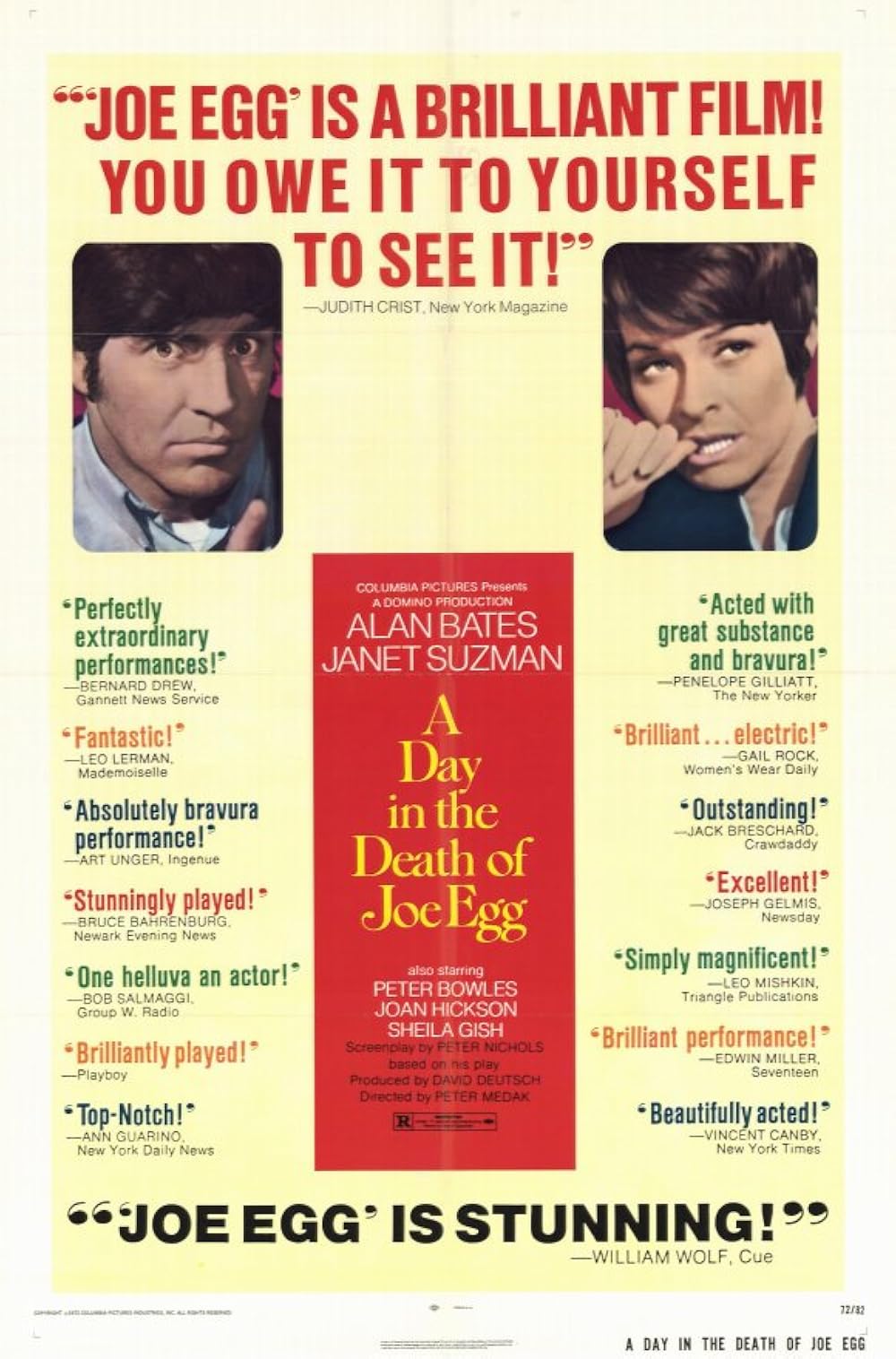
Bri (Alan Bates) and Sheila (Janet Suzman) are a British couple caring for their daughter Josephine (Elizabeth Robillard), who they’ve nicknamed ‘Jo’ or ‘Joe Egg’. Sheila had a narrow pelvic, which caused Jo’s birth to be a difficult one. The couple had wanted the delivery to occur at home, but due to the complications they were forced to go to the hospital. Initially Jo seemed to be a healthy baby, but she began to suffer from ongoing seizures that eventually put her into a coma. She never came out of it and by age 10 sits in a wheelchair unable to speak, care for herself, or show any type of emotional response to anything. Bri and Sheila pretend to have ‘conversations’ with her in an attempt to lessen the stress of caring for her. Bri feels she should be placed in an institution, but Sheila won’t hear of it, which causes a rift to form in their marriage. Eventually Bri becomes so frustrated with the situation he begins to consider killing Jo and even starts to joke about his intentions to not only his wife, but also their friends (Peter Bowles, Sheila Gish).

The film is based on the stage play of the same name written by Peter Nichols who used his own experiences of caring for a child with cerebral palsy as the basis for the story. It premiered at the Citizen’s Theatre in Glasgow, Scotland in 1967 before eventually moving to Broadway a year later where it starred Albert Finney and Zena Walker and won rave reviews. The movie was filmed in 1970 and completed on time, but the studio decided to then shelve it fearing due to the downbeat storyline that they’d have no way to market it and it would be unable to find an audience. It was only after Suzman’s acclaimed performance in Nicholas and Alexandra that they eventually released it to theaters hoping to capitalize off the attention she got from that one in order to get people to see this one.

Many sources refer to this as being a ‘black comedy’, but I found absolutely nothing funny and in fact it’s instead brutally bleak. I guess the humor as it were was in the way the parents have ‘conversations’ with the kid, but this doesn’t really come-off as being even the slightest bit amusing particularly when you have the child just sitting there with her eyes rolled-up in her head and resembling someone who has died.

This doesn’t mean I didn’t like the film as in-fact I found it quite powerful, but clearly much more from the dramatic end. I admired the way it pulls-no-punches and forces the viewer to confront some very uncomfortable questions like what is the point of caring for a child that will never be able to recognize them, or show any response, or emotion to anything? Granted there’s many kids with disabilities out there and some can grow to lead productive lives, but when one is in a literally vegetable state such as this it does make it infinitely more severe and emotionally challenging. Director Peter Medak approaches the material, which is certainly no audience pleaser, in an earnest way with many varied cutaways and dream-like segments including one memorable moment where Bri and Sheila are on a gray, stormy beach and he imagines throwing the baby carriage that the child is in into the sea, which helps give the production a moody, surreal-like vibe and keeps it on the visual scale quite inventive.

The acting is superb especially Suzman whose character must deal with the inner turmoil of dealing with the stark reality a child who won’t ever grow into anything, but also a husband, whom she loves and is emotionally dependent on, who wants out. It’s interesting too seeing Sheila Gish in a supporting role as a friend who places a high degree on physical appearance and can’t stand anything that is ugly, or deformed and yet she in real-life many years later lost an eye to skin cancer and was forced to walk around with an eye patch.

I was most impressed though with Robillard whose career never really took-off, but proves up to the challenging task here and was picked out of over 100 other children who auditioned for the role. Remaining motionless and unresponsive and whose only noise is periodic moans isn’t as easy as you’d think especially when everyone else is moving and speaking around you. The best moments of the whole movie is when Sheila envisions what Jo would be like if she were a normal kid and we see shots of her jump roping and playing with the other children, which effectively accentuates their sad situation even more.

Spoiler Alert!

The ending, where Bri essentially runs away from home and leaves Sheila alone with the kid, I felt was realistic and most likely what would happen to most any couple stuck in the same environment. The shots of seeing Sheila lying down in bed fully aware that Bri is gone and looking almost at peace with that to me spoke volumes. My only complaint is that I felt the couple’s tensions and cracking of their relationship should’ve been apparent right from the start. They seemed to get along too well at the beginning, but with the child already age 10 by that point and with no signs of ever getting better I felt there should’ve already been plenty of arguments and disagreements and sleeping in separate bedrooms instead of showing them still having a robust sex life and only by the second act do things finally start falling-apart between them.

My Rating: 9 out of 10

Released: June 4, 1972

Runtime: 1 Hour 46 Minutes

Rated R

Director: Peter Medak

Studio: Columbia Pictures

Available: DVD-R

On the Edge (1986)

ontheedge

By Richard Winters

My Rating: 5 out of 10

4-Word Review: Disqualified runner enters race.

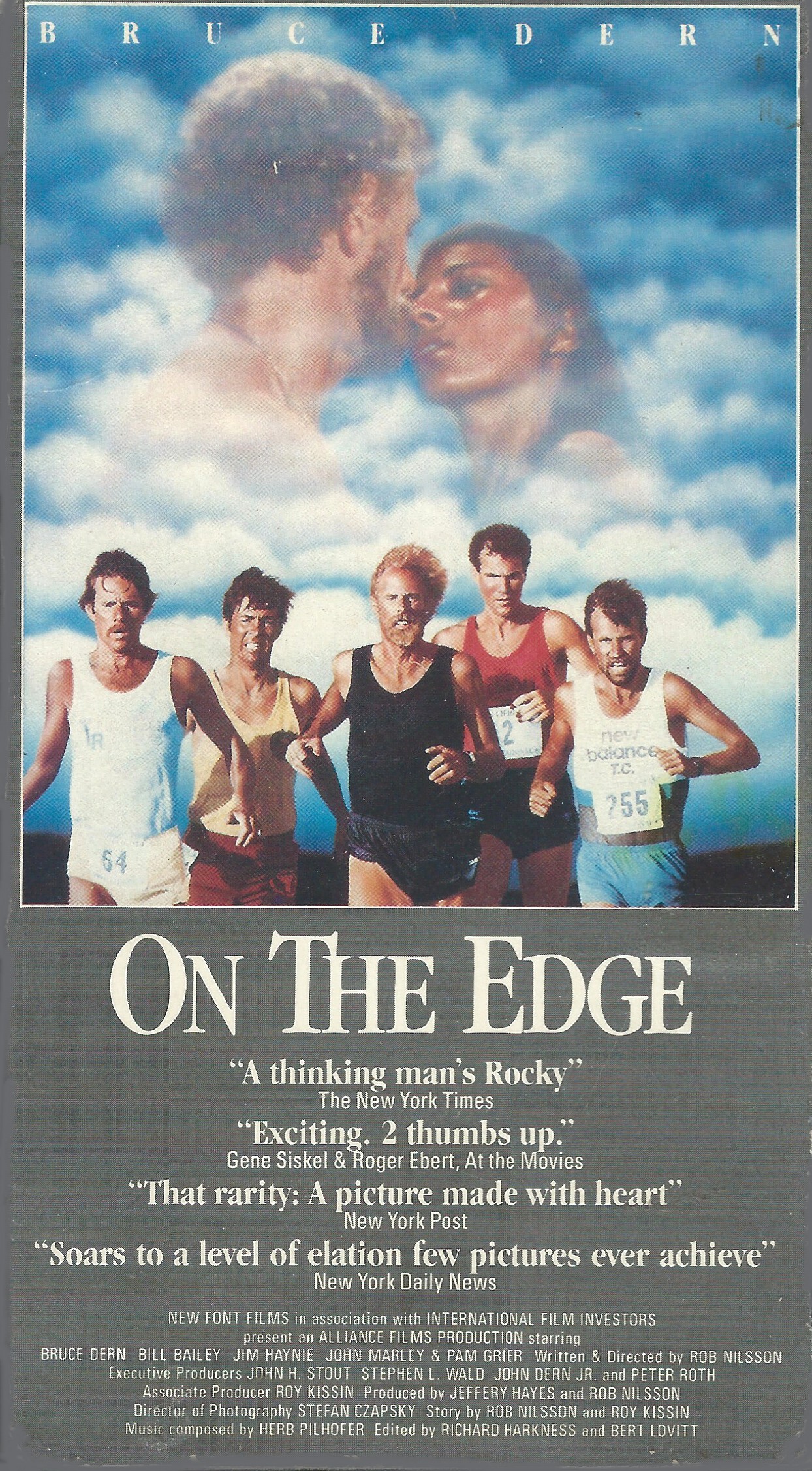
Wes (Bruce Dern) was at one-time a star, long distance runner who ended up in 1964 being banned from competition after calling out the secret practice of paying amateur athletes under-the-table. He’s now nearing 40 and wants to take one last stab at entering the grueling Cielo-Sea cross-country race and hires his old coach, Elmo (John Marley), to help him train for it. The runners are much younger than him by a couple of decades, but they’re aware of his history and look up to him. Unfortunately the race organizers still use what he did in the past against him and refuse to allow him to enter, but Wes decides to join the race anyways illegally, which forces the organizers to try and knock him out of it as the race is going on and being broadcast live.

Surprisingly for a movie that is so little known and hard-to-find the quality isn’t bad. Director/writer Rob Nilsson conveys some wonderful bird’s-eye shots of the climactic race including seeing the runners going along a winding route as it scales a high hill, which is dramatic and exciting. The character building and his personal mission is fairly well done and the strenuous preparation that he must go through to get ready for the race is handled in a way that makes it quite vivid for the viewer. After watching what he must go through you feel as mentally and physically drained as he does especially the shots showing the things from the runner’s point-of-view as they bound down the rugger trails with the camera tied directly to their bodies.

Dern, who was at one time a long distance runner himself and actually ran the race that gets depicted here, which in real-life it’s called the Dipsea race the oldest race run in America, back in 1974, does a fine job though his dialogue is limited and I missed-out on some of his patented, ad-libbed ‘Dernisms’. His character is marginally interesting though in a lot of ways not all that well defined. There’s no real explanation of what he’s been doing for the past 20 years that he’s been away from the sport and the film makes it almost seem like he’s been wandering around as a vagabond all that time. It would’ve been interesting had we seen him stuck in some boring office job and his secret longing to ‘break free’ and do something, no matter how high the odds, that he felt passionate about, which would’ve helped the viewer get more into his mission that is otherwise emotionally lacking.

It would’ve been intriguing too had he been married with a family and the wife was not in agreement to what he was doing, which would’ve added some extra dramatic conflict. Instead we get treated to his casual relationship with Pam Grier, who’s a marvelous actress in her own right, but here is mostly wasted. She pops in and out almost like a fantasy character who’s dialogue is limited, so we learn little about her as a person, and their semi-erotic love-making is cheesy. Their moments together was considered so inconsequential that the distributors cut-out her scenes entirely for the theatrical release only to restore them for the DVD version, but overall they really don’t add much.

The movie is only marginally captivating for the first third, but it does become more appetizing when it finally gets to the actual race.  I’ve never seen a race movie where the person we’re meant to be rooting for isn’t even supposed to be in the event in the first place. The attempts by the organizers to ‘take him down’ and literally drag him out via physically tackling him, or at least trying to, at various points in the race, are memorable particularly as they fail each time. My only gripe is that the other runners intervene to protect him, which I wasn’t sure was completely plausible. After all he wasn’t wearing a number, so it was obvious he shouldn’t be there, and he was competing with them for the title, so one less person would better their chances, so why not allow him to be taken out? Of course there is a scene earlier where Dern hitches a ride and everybody inside the van, made up of young runners who recognize him and even treat him as a sports hero, could explain that he was idolized by his competitors and therefore decided to stick-up for him, but in the moment where you’re only focus is winning you’d think some of them might not care what happens to him and more concerned about getting to the finish line and not doing anything that might slow them up.

Spoiler Alert!

The film ends with the seven runners all holding hands as they cross the finish line. While some could consider this novel, as most movies dealing with competitions will rarely celebrate a tie, it still seems hard to imagine that all seven of them would, in the spur-of-the-moment, agree to share the prize and there wouldn’t be at least one of them who would take advantage of it and run out in front at the last second in order to achieve all the glory and money, or at least lean his head out to get that ‘photo finish’. Maybe having one, or two hold hands and agree to finish it together might come-off as passable. It’s Dern who slows up to let the others catch-up to him, so they might be grateful that he let them share the spotlight, but let’s face it there’s always a black sheep in every bunch who for selfish reasons, these are athletes conditioned and trained to win after all, who would attempt to exploit the situation making the final image too romanticized for its own good.

My Rating: 5 out of 10

Released: May 2, 1986

Runtime: 1 Hour 35 Minutes

Rated PG-13

Director: Rob Nilsson

Studio: Skouras Pictures

Available: VHS, DVD (Out-of-Print)

F.I.S.T. (1978)

fist

By Richard Winters

My Rating: 7 out of 10

4-Word Review: Laborer becomes union leader.

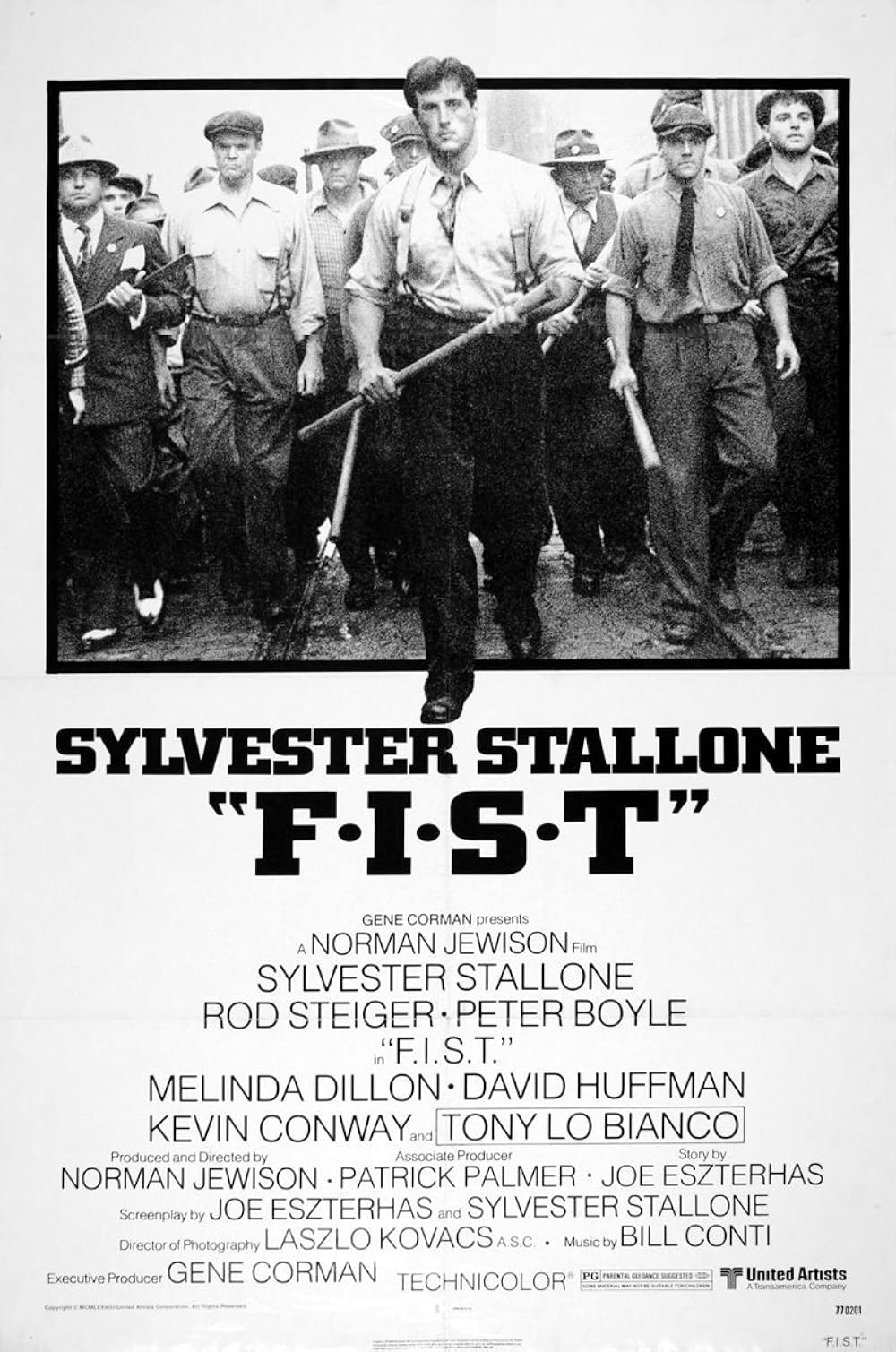
Set in the 1930’s in Cleveland the story centers on dock worker Johnny Kovac (Sylvester Stallone) who becomes so upset at the poor treatment of the employees that he leads a revolt that soon gets squashed by a management when Kovac goes to the office of Mr. Andrews (James Karen) who promises to bring his demands to ownership only for the next day to have Kovac and his friend Belkin (David Huffman) fired from their jobs. Impressed though by their tenacity truck driver Mike (Richard Herd) recruits them into his union telling them they would have a job of going out and recruiter others. Kovac initially refuses the offer until he finds out that a free car would come along with it. Kovac eventually rises up the union ladder until he becomes their national leader, but with the power and prestige also comes corruption and enemies.

This was Stallone’s first film after doing Rocky, which was a bit of a gamble by director Norman Jewison. He had wanted to cast Jack Nicholson in the role, Nicholson would later star in a similar film Hoffa, which came out 14 years later, but was so impressed at Stallone’s performance in the boxing film that he offered the role to him before he was even a household name. Jewison felt Sly was a star in the making just from what he saw in the preview of the film not knowing whether that movie was ultimately going to be a runaway success, or not. Had it not it might’ve put him in an awkward position as the studio wasn’t likely to finance a project that didn’t have guaranteed star power. As it was it became a blockbuster making the tables-turned a bit because Stallone could’ve easily backed out of the deal since it had only been a verbal agreement and he had since then been offered higher paying roles, but he kept to his word and took on this project, which surprised Jewison as many big names in Hollywood don’t always stick to their promises, but then later when the film didn’t do as well as expected Jewison’s blamed Stallone’s casting as part of the problem.

From my perspective I thought Stallone was terrific. His delivery does come-off as a bit monotone, but I felt that’s what added to the authenticity as this was a character with a limited education, so he probably wouldn’t sound real smart to begin with. Seeing Sly fight the system correlated with his real-life struggles as an actor trying to make it big in a competitive business, which helped to make it seem all the more genuine like this was a guy who had really lived the same type of life as the man he was playing.

In support I was highly impressed with David Huffman. This was an actor, whose career and life were sadly cut short in 1985 when he got stabbed to death, who I had always found quite bland. He had an attractive looking face, which I figured is what got him his foot-in-the-door, but his acting always came off as blah, but here he puts a lot of emotion into his role and it’s interesting to see the way his character grows and morphs throughout. James Karen and Tony Lo Bianco both have small parts, but there sinister facial expressions and ability to mug to the camera without it seeming obvious is what helps them stand-out. I was surprised though with Rod Steiger who gets second billing, but doesn’t appear until 1 Hour and 33 minutes in. His part, as a powerful senator, does ultimately become integral to the proceedings, but the fact that he underplays instead of his usual over-acting is what got me.

I thought the way Jewison captured the setting was great. It was actually shot in Dubuque, Iowa because by that time Cleveland no longer looked the way it once did, but the flavor and vibes from that period come-out strong and you feel right from the start that you’re being swept away to a bygone time. Stallone’s ascension into the ranks of union head prove riveting, but his corruption and downfall get glossed over and seemed rushed. I did though appreciated the way it examines worker’s unions from all angles both the good and bad making it seem less like a propaganda movie than Norma Rae, which came-out at around the same time, but only focused on the positive aspects of unions.

Spoiler Alert!

The ending, in which Kovac gets shot and killed while in his home came-off like a cop-out. It was intended to reflect at the time the recent disappearance of union head Jimmy Hoffa, but seeing the main character get assassinated without telling who was behind it proves unsatisfying. Sure we could probably surmise who the culprits were, but having to sit through a long movie only to be left with more questions than answers makes the viewer feel like watching it had been a big waste of time.

My Rating: 7 out of 10

Released: April 13, 1978

Runtime: 2 Hours 25 Minutes

Rated PG

Director: Norman Jewison

Studio: United Artists

Available: DVD, Blu-ray

Butterfly (1982)

butterfly

By Richard Winters

My Rating: 0 out of 10

4-Word Review: Family has genetic birthmark.

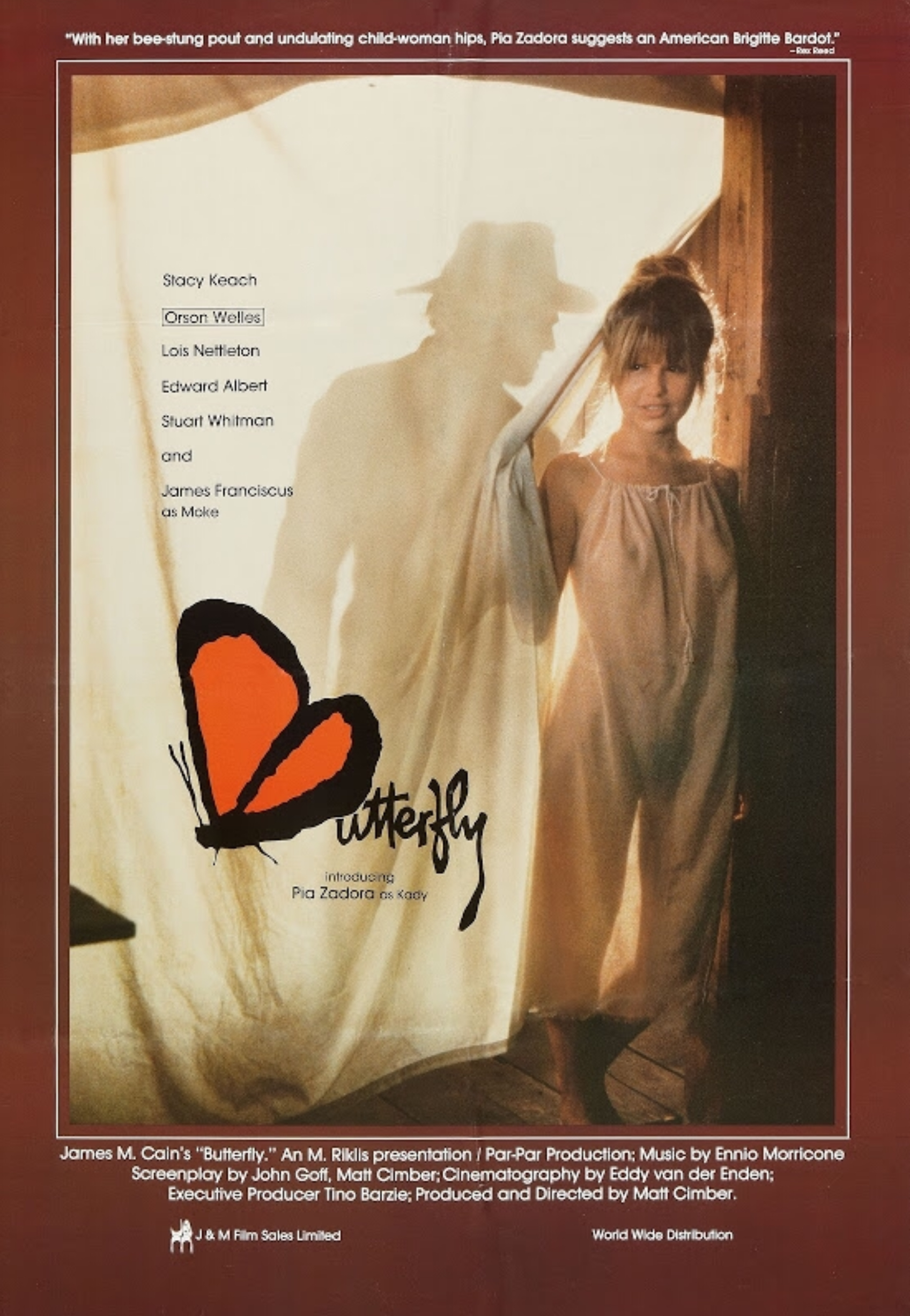
Jess (Stacy Keach) takes care of an unused mine outside of a small Arizona desert town. One day Kady (Pia Zadora) shows up at his doorstep. Jess doesn’t recognize her at first, but then realizes she’s his 17 year-old daughter the product of his marriage to Belle (Lois Nettleton) who abandoned him 10 years earlier for another man named Moke (James Franciscus). She is pregnant by a man who refuses to marry her, so she  wants to steal silver from the mine that Jess protects in order to help her financially with the child who’s on the way. At first Jess disapproves, but Kady uses her provocative body and looks to essentially seduce him and get him to relent. However, a local man named Ed (George Buck Flower) witnesses their stealing from the mine as well as their lovemaking later on, which gets them arrested for incest.

The story is based on the 1947 novel ‘The Butterfly’ by James M. Cain, who at the time was an immensely popular author, who had many of his books made into movies, but due to the controversial nature of this one it had to wait 35 years until it finally went to the big screen. He was inspired to write the story when years earlier, in 1922, he got a flat tire while driving through a mountainous area in California and a farm family that had moved there from West Virginia helped him fix it, but at the time he speculated that the young daughter they had with them was a product of incest.  The movie makes several deviations from the book. In the book Jess was the overseer of a coal mine and the plot took place in West Virginia while the Kady character was 19 instead of 17.

While the plot has some tantalizing elements, and on the production end it’s well financed, the whole thing comes crashing down due to the really bad performance of its lead actress. Zadora at the time had done only one other film before this one, Santa Claus Conquers the Martians, which was universally lambasted. It probably should’ve killed anyone’s career who had been in that, but she continued to struggle on in the business. Then in 1972 while performing in a small role in a traveling musical show, she caught the eye of a rich businessman named Meshulam Riklis, who was 29 years her senior. The two began dating and eventually married in 1977. Her new husband was determined to make her a star even if it meant buying her way in. He put up the entire $3.5 million budget for the film while demanding that she be placed as the star forcing director Matt Cimber to cast all the other parts around her. Riklis even put up big money to help get her promoted to winning the Golden Globes Newcommer of the Year Award, but all of this didn’t get past the critics, or audiences who rightly saw her as undeserving of all the attention and while she did a few other movies after this, which were equally panned, and even a few music videos and singing ventures, she is overall largely forgotten today and hasn’t been in a movie in 30 years.

To some extent her performance isn’t completely her fault as her character is poorly fleshed-out, which is my main gripe. I just couldn’t buy in that this chick on the verge of adulthood would be so extraordinarily naive that she’d come-on to her own father and not see anything wrong with it. First of all why is she sexually into her dad anyways as majority of girls tend to want to go for guys their own age and if not there has to be a reason for it, which this doesn’t give. In either case she should have some understanding that the rest of society doesn’t condone this behavior nor having her aggressively flirt with literally any guy she meets. The fact that she’s so blissfully ignorant to the effects of her behavior made her not only horribly one-dimensional, but downright mentally ill. Sure there’s people walking this planet that harbor some sick, perverse desires, but virtually all of them know they’re taboo and not dumb enough to be so open about, or if they do they learn real fast. Having her unable to understand this, or never able to pick-up on even the slightest of social cues is by far the most annoying/dumbest thing about it.

Keach, who gives a good performance and the only thing that holds this flimsy thing together, has the same issue with his character though not quite as bad. The fact that he doesn’t even recognize his daughter at first is a bit hard to believe. Sure he left the family 10 years earlier, but that would’ve made her 7 at the time and although she has clearly grown I think she’d still have the same face. He gives into his temptations too quickly as at one point he massages her breasts while she’s in the tub. Now if he weren’t religious then you could say he didn’t care about the taboos and had been living so long alone that he’d be happy to jump at any action he could irregardless if they were related, but the fact that he goes to church regularly should make him feel guilty and reluctant to follow through. In the book he’s portrayed as fighting these internal feelings by turning to alcohol, which is the way it should’ve been done here as well.

The eclectic supporting cast does make it more interesting than it should. Orson Welles caught my attention not so much for his role as a judge, but more because of his wacky combover. James Franciscus, who usually played sterile good guys is surprisingly snarly as the heavy and Stuart Whitman has a few good moments as a fiery preacher though even here there’s some logic loopholes that aren’t explained like how did he know Kady was Jess’ daughter, which he mentions while at the pulpit much to the surprise of Jess as he hadn’t introduced her to anybody.

My Rating: 0 out of 10

Released: February 5, 1982

Runtime: 1 Hour 48 Minutes

Rated R

Director: Matt Cimber

Studio: Analysis Film Releasing Corporation

Available: DVD-R

Six Weeks (1982)

sixweeks

By Richard Winters

My Rating: 1 out of 10

4-Word Review: Young girl has leukemia.

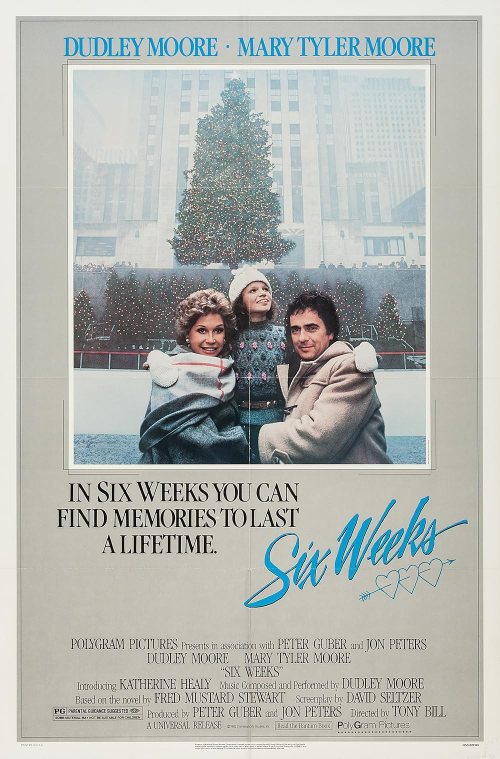
Patrick Dalton (Dudley Moore) is running for political office in the state of California when he becomes lost while trying to find his way to a political fundraiser where he is to be the keynote speaker. He stops to ask a young girl, Nicole (Katherine Healy), for directions and the two strike-up a conversation. He invites her to the fundraiser and finds that she’s the daughter of Charlotte (Mary Tyler Moore) who is the wealthy owner of a cosmetic company. Initially Charlotte is frosty towards Patrick convinced he’s just another opportunist politician. Nicole though grows very fond of Patrick and volunteers to work on his campaign. Charlotte, after seeing how much her daughter likes Patrick, even agrees to give him a generous donation, which he initially rejects until he learns that Nicole has been diagnosed with leukemia and has only a short while to live. This causes Patrick to become quite close to Charlotte and Nicole and he begins visiting them frequently much to the concern of his wife Peg (Shannon Wilcox) who thinks he’s having an affair.

Hard to find much to like about this shallow tear-jerker that was based on the novel of the same name by Fred Mustard Steward. I did though like seeing Dudley, who also composed the film’s score, in a rare dramatic turn. He’s best known for his comedy, but even when he was at his goofiness I still detected a serious side to him and this role here brings that out quite well. I did though have issues with the marriage angle as I felt the wife gave up too easily. She does show-up at a party that the three others are at in an attempt to make them uncomfortable, which it does, but I felt she should’ve created more of a scene. This was done in an era where putting up a veneer of civility was expected even when it was with people who shared intense feelings towards each other, but these days there’s jilted women out there that don’t take kindly to those that are out to ‘steal their man’ and could lead to some very public catfights, which could’ve given the film a lively energy as well as making the viewer more sympathetic to Dudley for leaving her as she would be better deemed as a ‘psycho’. Yet the way the film does it here you’re actually sympathetic to the wife and Dudley, as noble as his intentions are, comes off looking a bit like a cad for literally just abandoning her and getting with the other two essentially full-time.

I was confused too why this didn’t hurt him politically. If I’m his opponent and I catch-wind that he’s been seen regularly with another women that’s not his wife I use it to my advantage to crush him in the polls with it, or this is something his wife could’ve done by tipping off to the press that he was seeing someone else in order to ruin his bid and get back at him, yet none of this occurs. What’s the point of having him be in politics if it’s not going to be used to enter in some potentially delicious dramatic conflicts? Might as well have him being a bland accountant since him as a politician doesn’t really add much, or make that much of a difference to what happens.

Healy, who as of this date is the only theatrical film she’s been in and much better known for her ballet work, is fantastic and shows a lot of poise for someone who never acted in a movie before. I enjoyed her worldly-wise character who despite her age shows a keen awareness to many adult topics, which I appreciated. Kids can be far more observant about things than many adults would like to think, so I was glad she wasn’t played-up to being cute, but painfully naive. I did though feel her protruding, poorly spaced teeth should’ve been straightened with braces and was surprised that her mother, being as rich as she was, hadn’t had that done.

Her leukemia that she’s supposedly suffering from is problematic as she goes through the great majority of the film showing absolutely no symptoms of it. She states that she’s refused treatment, so I guess that could explain why her hair doesn’t fall-out, but I’ve known people who’ve suffered from the illness and it takes a toll on one’s energy to the point that they become bedridden as it progresses and yet here she shows nothing but boundless energy and even dances on stage without any signs of exhaustion near the end. It got to the point that I started to wonder if she was faking being sick and I wouldn’t blame anyone for thinking the same thing.

The casting of Mary Tyler Moore, who won the Razzy award for her work here, was a real mistake. Although she was only 45 she looked more like she was 55 and too old to have a daughter that wasn’t yet even in high school. She shows at times quite a cold demeanor making the way she melts away and falls for Dudley seem too quick and forced. Watching the two walk side-by-side where she’s clearly way taller than him makes it resemble a mother walking her son than a couple and thus has the romantic angle visually look even more odd and awkward than it already is.

I was confused too about who this girl’s father was. I have never read the book of which this is based, so maybe it gets talked about there, but here it’s never mentioned. I would think that even if she was a product of a painful divorce her father would still want to see her especially if he knew she was dying. Even if it was just a passing fling that the mother had year’s ago it would be presumed that Dudley would be curious about it and at least ask since he was essentially taking the father’s place with his presence.

Having the Dudley character ‘pull some strings’ in order to get Nicole to perform onstage in the New York Ballet at the last minute was too fanciful to be believed. The other cast members would resent that they would have to rehearse for weeks, even months and years, just to get the opportunity to be on the show and yet this kid gets whisked into the lead, at the sacrifice of someone else, all at the last minute. I admit I liked seeing the Nutrcracker production, but having Nicole already a part of the cast, but afraid due to the onset of the disease she might not be able to do it when it became time for the performance, and having some overly ambitious understudy ready to take over if she couldn’t, would’ve made more sense and been more interesting drama.

Spoiler Alert!

The death scene has got to be one of the lamest I’ve ever seen. Again, she spends virtually the entire movie showing no outward signs of any problem and then while on a subway car she starts feeling ‘weird’ and then a few seconds after that she promptly falls over dead, which was so corny it was almost like the movie makers were begging the viewers to make fun of it.

My Rating: 1 out of 10

Released: December 17, 1982

Runtime: 1 Hour 48 Minutes

Rated PG

Director: Tony Bill

Studio: Universal Pictures

Available: Amazon Video, Tubi, Freevee, YouTube, VHS

Remember My Name (1978)

remember

By Richard Winters

My Rating: 7 out of 10

4-Word Review: His ex-wife returns.

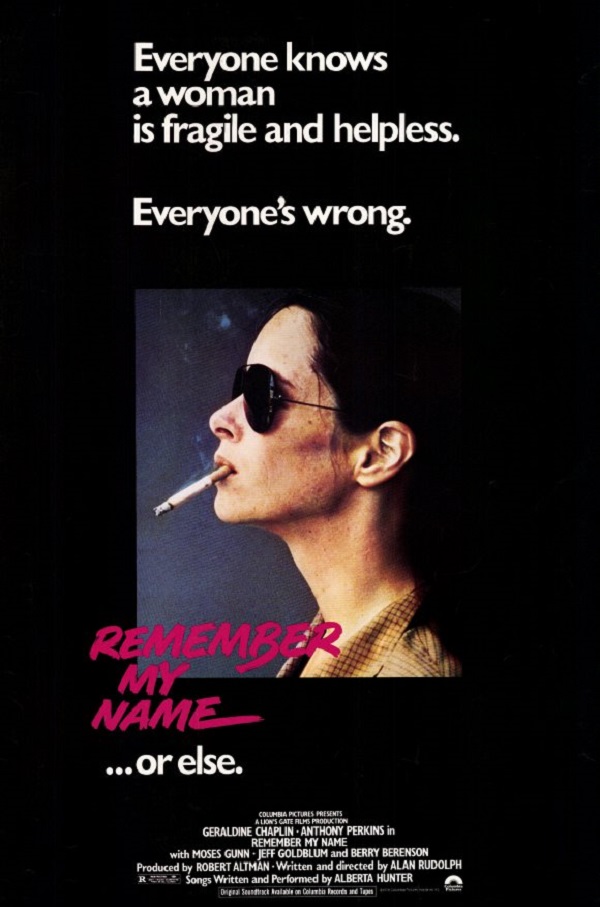
Neil (Anthony Perkins), who works as a local carpenter, is married to Barbara (Berry Berenson). While the two have their share of ups-and-downs they mostly find a way to work it out and get along. Then comes Emily (Geraldine Chaplin) whose been recently released from jail. She begins harassing the couple for no apparent reason. After she breaks the window of their home Barbara insists on pressing charges. Neil though resists while divulging that he had previously been in a relationship with her and because of certain things that occurred has a misplaced sense of guilt to cover-up for her actions. Barbara does not understand this and the two break-up while Neil decides to rekindle things, but while Emily initially seems receptive she may actually harbor ulterior motives.

Alan Rudolph does a marvelous job of directing this emphasizing the working-class existence with a pale color scheme and great use of on-location shooting, which gives the viewer a vivid and intimate portrait of the character’s lives and their environment. The use of showing that Emily had previously been in prison without actually saying it by simply using certain sounds and visuals as she sleeps is a genuinely inspired moment as is the use of the brief dialogue that reveals things slowly and deliberately using subtle hints that achieves a certain fragmented narrative.

Chaplin is brilliant and convincing in the lead and her unique colored eyes helps build a riveting psycho-like effect though with her extremely thin frame it’s hard to imagine she’d be able to take-on and even beat-up the Alfre Woodard character as she does though one could possibly justify it by saying she learned fighting skills while in jail. Perkins is also quite good, but the use of his real-life wife Berenson, who didn’t have a lot of acting training, hurts as her time on screen is rather blah including the otherwise tense confrontation that she has with Emily when Emily invades her home, which might’ve been a more interesting scene with a better qualified actress in the part.

While the first-half is quite slow I was thoroughly gripped and found the whole thing fascinating, but this tapered-off by the third act when Perkins and Chaplin rekindle things while at a restaurant. The scene gets done in amusing way as the couple keeps ordering alcoholic drinks one after the other, much to the consternation of the waiter, played by Terry Wills, but having Perkins go back immediately to Chaplin with almost no apprehension kills the intrigue. This is a woman that supposedly murdered someone before, so how does he know she can be trusted? Having him more defensive and cautious and even conflicted as he was technically still married would’ve helped continue the tension instead of deflating it.

Spoiler Alert!

The scene in which the Moses Gunn character, who was having a bit of a fling with Emily, goes back to her apartment apparently to murder Perkins who had been temporarily staying there, could’ve been done better. It’s only intimated that Gunn kills him as we see a nervous look on Perkins face as he hears somebody at the door and then it cuts away to the outside of the building with loud crashing music to display that there was violence, but I really felt it should’ve gotten played-out visually. Perhaps it could’ve been done Rear Window-style with it being captured through the windows, which would’ve stayed consistent with the film’s detached tone, but to leave the story’s most crucial moment up to speculation was a letdown.

The same can be said to Alfre Woodard’s character who promises revenge on Chaplin, but it never comes. A good physical confrontation between the two could’ve added some much needed action, which otherwise is sorely missing and makes the film seem incomplete. Having Chaplin terrorize the couple by messing up their flower garden is a bit too tame as any squirrel or raccoon could’ve done the same thing while putting a bloody animal on their doorstep, or nailing a graphic picture of the person she had killed before would’ve been far more frightening.

Overall I liked the style, but the attempt to keep things buttoned-down all the way through doesn’t work. At some point, just like with the ticking time bomb mentality of its main character, it needed to explode with violence that would’ve awakened the viewer with a shocking effect. The fact that this is only slyly hinted at is a letdown and doesn’t give the movie the strong pay-off that it should.

My Rating: 7 out of 10

Released: October 1, 1978

Runtime: 1 Hour 34 Minutes

Rated R

Director: Alan Rudolph

Studio: Columbia Pictures

Available: DVD-R, Tubi

Rich and Famous (1981)

rich2

By Richard Winters

My Rating: 0 out of 10

4-Word Review: College friends become writers.

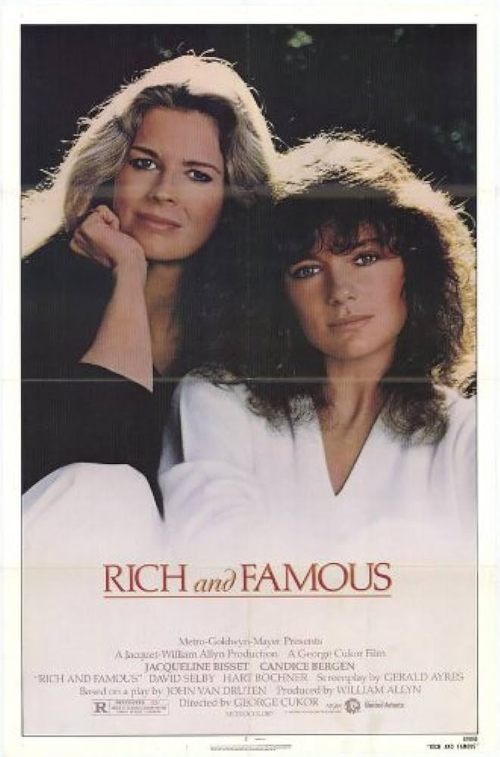
Liz (Jacqueline Bisset) and Merry (Candice Bergen) meet while attending college and become best friends. After graduation Liz achieves accolades for writing a novel and Merry, despite being married and living in posh Malibu, becomes jealous. She strives to write her own novel based on real-life experiences of her rich southern California acquaintances where only the names are changed. One night while Liz is visiting  Merry digs the first draft of her book out and reads it to her. Liz does not care for it, but promises the pleading Merry she’ll run it by her publisher (Steven Hill) convinced he won’t like it and nothing with come of it. To her surprise it does get published  and becomes a best seller. Now she’s the one seething in jealousy since her writing career has crested from writer’s block. While this is going on Merry’s husband Doug (David Selby) begins to come-on to Liz behind-the-scenes and openly wanting to have an affair with her, which Liz finds tempting since the two had a fling during college.

This is a remake of Old Acquaintances, which came out in 1942 and starred Bette Davis and Miriam Hopkins. Bisset spent 2 years working on the script and getting it funded as she was determined to play a ‘real person’ for once and not just the proverbial beauty. However, the movie, which was the last to be directed by legendary filmmaker George Cukor, bombed badly at the box office and it’s easy to see why. The storyline is out of touch with the decade that it’s in. What gets used as fashionable status symbol like having Merry stay at the Waldorf Astoria hotel might’ve been considered glitzy back in the 40’s, but for the 80’s generation would be looked upon as passe. Nothing is hip or trendy. The characters and their conflicts are of a soap opera variety, which is where this tepid storyline should’ve stayed.

My biggest beef was the whole friendship thing, which didn’t make a lot of sense. The two characters are about as different as you could get with Merry coming-off, particularly with her annoying southern twang, as dim-witted particularly when compared with Liz who’s clearly more sophisticated and articulate. Why these two opposites would bond is a complete mystery. There’s no backstory given, only a brief scene during their college days is shown, but nothing displaying what lead to the friendship blossoming, or what they had in common that they’d enjoy each other’s company. For the relationship to work it needs to be believable and organic, and the viewer able to buy into it, but instead it’s quite shallow and forced. Merry is incredibly annoying painfully insecure, emotionally needy, and grossly self centered. She’s the type of person most people would want to quickly dump as a friend and you wonder why Liz, who could easily find new friends more her intellectual equal, doesn’t do just that.

Merry’s marriage to Doug has the same issue. Why would he marry someone that had such a contrasting personality to his? The film fleetingly intimates that it was Liz he was truly after, he went to their same college, and only married Merry as an attempt to stay close to Liz, though the film relies on the viewer reading into this and should’ve instead fully confirmed it.

Merry’s ascent into the writing world is equally ridiculous. From the opening three paragraphs that she reads out loud to Liz gave more than enough reason that it was poorly written and should never see the light-of-day and yet somehow it becomes an immediate best-seller. In a better movie this might get used as satire showing how bad the American Public’s taste in literature is, but the film here has the audacity to show her winning awards for her writing, which just makes it all the more absurd and laughable. It also makes it seem like writing a book is easy and simply requires someone to sit down and throw some words on a page and walah it gets published when it reality it takes many drafts and polishing before it’s even potentially considered publish ready, but the movie glosses over this part completely.

I enjoyed Bisset who’s clearly the stronger actress, but Bergen makes an utter fool of herself particularly her attempt at a southern accent. Normally she’s good at playing the snarky type, which best reflects her personality. Trying to portray a simpleton isn’t her best suit and the film digresses every time she’s in it to the point her sporadic appearances start to seem almost like unintentional comic relief.

Had the film ended with some bitter, knockout cat fight I might’ve forgiven it and even gave it a few points. Not everyone is meant to get along and in real life these two would be a bad match. It’s one of those friendships that ultimately fizzles because the two just don’t have enough in common to keep it going and in a lot of ways ingrate on each other’s nerves. A nasty bitch session would’ve been just what the doctor ordered, and they do have a little bit of one, but then immediately make-up, which just cements the film’s profound shallowness.

My Rating: 0 out of 10

Released: September 23, 1981

Runtime: 1 Hour 57 Minutes

Rated R

Director: George Cukor

Studio: United Artists

Available: DVD, Amazon Video, YouTube

Daniel (1983)

daniel

By Richard Winters

My Rating: 7 out of 10

4-Word Review: Researching his parent’s execution.

Based on the 1971 novel ‘The Book of Daniel’ by E.L. Doctorow, who also wrote the screenplay, which was inspired by the true story of Ethel and Joseph Rosenberg, who were convicted and executed in 1953 for being spies to the Soviet Union. The story here centers on Daniel (Timothy Hutton), the now grown son of Paul (Mandy Patinkin) and Rochelle (Lindsay Crouse), who many decades after his parent’s execution now decides to research their case to see if his parents really were spies, or not.

Despite being well produced the film failed at both the box office and with the critics, which is a shame as I felt director Sidney Lumet does some marvelous work here and creates a few powerful scenes. One is when the the FBI agents raid Daniel’s house, who is played at this stage by Ilan Mitchell-Smith, and the look of horror in his eyes as the home gets torn up from top to bottom and his father violently removed in handcuffs. Another great moment are the execution scenes filmed in the actual death chamber at the Sing Sing Prison. These moments are quite chilling as Lumet’s focuses in on the close-up shots of the two being strapped in and the leather flaps of their hoods pulled down over their frightened eyes and then seeing their bodies shake violently while a group of men sit quietly observing it is effectively disturbing and one of the more impactful execution segments put on film.

There are though some things that could’ve been done better. The jumping back and forth between time periods proves distracting and takes the viewer out of the story instead of wrapping them in. The book of which it’s based had a very fluid structure as well, but here the scenes involving Daniel and his sister as children prove far more impactful while segments involving Hutton all grown-up are weak by comparison. The film would’ve been more effective had it taken a linear structure.

Watching Hutton walk along the sidewalk while voice overs are heard from his sister, played by Amanda Plummer, chastising him for not caring more about what happened his parents, was unnecessary and heavy-handed as we had heard her saying all this earlier to him at the dinner table and could see by the shocked reaction on his face that it really got to him, so we didn’t need the same lines getting repeated again. The music particularly the singing, is way too intrusive and having almost no music and just relying on the action and visuals would’ve been far better.

I was also confused who Linda was, played by Tovah Feldshuh, whom Daniel comes upon at a dental office years later and acts like he knows her from childhood. I didn’t remember seeing a young Linda, though one is listed in the closing credits, and then it dawned on me that there was a quick moment when a snotty girl tells Daniel and his sister, when they’re kids, that they ‘smell’ while they’re riding in a car, but because this character does end up returning and playing a pivotal role to the plot I felt the confrontations between them as kids should’ve been more pronounced and extended instead of so fleeting that you completely forget about it.

Hutton, who turned down the starring role in Risky Business to be in this at the protest of his agent, gets wasted. He gives a strong performance, but is over shadowed by Ilan Mitchell-Smith. His character also had too wide of an arch as he seems to have a complete personality change after the argument with his sister even though I thought he should’ve been shown harboring the same feelings and questions about his parent’s death for a long time and decided to explore the case out of his own curiosity and anger. I also felt that both he and his sister should’ve done the investigation together instead of discarding her off to a mental institution and barely seen. I know the book had her going to a mental hospital as well, but we see them go through the trauma together as children and therefore it seemed only right that they should work as a team as adults to find the answers.

The film offers no conclusions. The parents are portrayed in a highly sympathetic way like they didn’t really do anything and it does play with the idea that there might’ve been another phantom couple ‘who were the real culprits’ though it doesn’t pinpoint to anyone specifically. I felt it would’ve been a stronger movie had it based itself on the real children of the Rosenbergs, Michael and Robert, and detailed things from their true-life experiences. Maybe they didn’t want the limelight, which is okay, but fictionalizing a real historical event with a lot of made-up people and situations doesn’t have the same profound effect.

My Rating: 7 out of 10

Released: August 26, 1983

Runtime: 2 Hours 10 Minutes

Rated R

Director: Sidney Lumet

Studio: Paramount

Available: DVD, Amazon Video, Paramount +

Believe in Me (1971)

believe

By Richard Winters

My Rating: 6 out of 10

4-Word Review: Couple addicted to drugs.

Remy (Michael Sarrazin) is a medical student at a New York hospital, who finds himself increasingly addicted to speed and other drugs available to him through his job. Pamela (Jacqueline Bisset) is the beautiful new girlfriend he meets through his friend and fellow intern Alan (Jon Cypher) who’s also Pamela’s brother. The two hit-it-off and soon move into together, but the romance doesn’t last when Pamela becomes aware of Remy’s addiction. He convinces her that he can handle it and even gets her to try some of it despite her reluctance. This then leads to her becoming hooked as well and their lives quickly spiral out-of-control as they both lose their jobs, their money, and ultimately their dignity.

The early 70’s was  a peak era for drug culture movies with most getting a bad rap from the critics, which included this one. Certainly it does start out cringey with a sappy love song sung by Low Rawls that not only gets played over the opening credits, but also about 30-minutes in, which practically kills the whole thing with its heavy-handed melody and lyrics. The title is not so great either as it seems to imply a totally different type of movie like have someone sticking with another person through thick-and-thin, which really doesn’t happen here and in fact its the complete opposite.  ‘Speed is of the Essence’, which was the working title as well as the title of the New York Magazine article by Gail Sheehy of which the film was based was far more apt and should’ve been kept.

However, what I did like are that the characters aren’t teen agers, or a part of the counter-culture movement, which is where all the other drug movies from that period had. The blame in those films was always the same too: peer pressure and bad influences, but here that all gets reversed. Remy and Pamela are well educated and with Remy’s background is well aware of the dangers of drugs and essentially ‘knows better’ and yet becomes a victim to them anyway. Because he’s at such a high standing initially and not just played-off as being some naive kid, makes his downfall and that of his equally smart girlfriend all the more stark and gripping.

The performances are good too. Sarrazin and Bisset met while filming The Sweet Ride, that started a 6 year relationship and this was the one project that they did together. Sarrazin has been blamed as being too transparent an actor who’s instantly forgettable and melts into the backdrop. While I’ve usually found his acting credible he does have a tendency to be passive and lacking an imposing presence, but here he’s genuinely cranky and snarly. Even has some moments of anger, which is why the movie mostly works because the character is believable. There’s good support by Alan Garfield as his dealer who gets the final brutal revenge on Remy when he can’t pay up as well a Cypher whose advice to his sister when she’s down-and-out and asking for money is shockingly harsh.

Spoiler Alert!

The film has a few strong moments particularly when it focuses on the couple’s teenage friend Matthew (Kurt Dodenhoff) who also becomes hooked and goes through a scary mental and physical decline, but the ending lacks punch. It has Remy sitting outside his apartment saying he’s ‘lost his key’ (not sure if this was meant as a code word for them being evicted, but probably should’ve been). Pamela then leaves him there while she walks to a clinic in order to get sober, which for me was too wide-open. For one thing there’s no guarantee that Pamela would’ve been able to cleanly kick-the-habit as many people enter into drug recovery suffer many relapses. Leaving Remy alone doesn’t offer any finality. Either he dies from his addiction, or finds a way out, but we needed an answer one way, or another like seeing his lifeless body lying in the gutter, which would’ve given the film the brutal final image that it needed. The movie does give an honest assessment of the situation most of the way, so why cop-out at the end and become vague? The viewer had invested enough time with this that they should’ve been given a more complete and concrete character arch.

My Rating: 6 out of 10

Released: December 8, 1971

Runtime: 1 Hour 26 Minutes

Rated R

Director: Stuart Hagmann

Studio: MGM

DVD-R (dvdlady.com)

Equus (1977)

equus1

By Richard Winters

My Rating: 6 out of 10

4-Word Review: Teen blinds six horses.

Martin (Richard Burton) is a disillusioned, middle-aged psychiatrist who gets tasked with finding out why a 17-year-old boy named Alan (Peter Firth) blinded six horses one night in a stable with a sickle. At first Alan is uncooperative during their sessions and will not speak to him and instead sings out commercial jingles repeatedly, so Martin must go to Alan’s parents (Colin Blakely, Joan Plowright) in an effort to find some answers. It is here that he learns the mother is highly religious and taught her son that ‘God sees all’ particularly when it comes to sexual transgressions. Alan though has replaced God with his obsession with horses and idolizes them instead where he essentially makes them his ‘deity’. Martin now must try to break the boy away from this fanaticism in an effort to make him ‘normal’, but realizes when he does that the kid will cease to have passion and become like Martin himself who no longer has any emotions for anything including his own wife whom he no longer shares intimate relations.

Director Sidney Lumet has always had a penchant for turning plays into a movies and with some of them he’s had great success like with 12 Angry Men, but some of his other efforts did not fare as well. This project was met initially with a lot of apprehension, but overall Lumet’s directorial flair adds a lot and cinematically it works for the most part. The effort to get away from the staginess of the story by having several scenes done outdoors, like Martin having a discussion with his friend played by Eileen Atkins, about the case while raking leaves I felt really worked. Again, with cinema you have to have the characters doing something during the dialogue even if it’s some sort of chore as there’s nothing more stagnant than talking heads in a movie. The opening sequence done over the credits is well done too as it features Martin dealing with hostile patients hitting home the point of how burnt-out with his career he is without having it told to us and the white color schemes accentuates the tone one is most likely to see in hospitals.

The controversy came with the portrayal of the horses. In the play there were performed by muscular men inside a horse costume, but for the movie Lumet decided they needed to use real animals. This is okay until it comes to the scene where they get blinded. The play version only intimates the violent act, but with the movie you actually see the sickle go right into the horses’ eyes, which is so realistically done I don’t know how they did it without hurting the animal. This was way before computer effects, so just be warned if you’re an animal lover these scenes may be too graphic to bare and could easily take some viewers out of the story to the extent they may not be able to get back into and might just turn it off altogether.

The casting is a bit problematic. Both Burton and Firth played the roles in the stage version, but by this point Firth was no longer looking like a 17-year-old, he was in fact already 23. I admire his bravery to ride a horse in the nude in one of the movie’s more memorable moments, but he still resembles adult features physically taking away the innocence of the character and the shock of how someone so young, i.e. a teen. could commit such a vicious act. Burton too looks too worn out having spent this period of his career battling alcoholism. Some may say that this fit his role, but his presence seems at times almost lifeless and like he’s just walking through his part. The segments where he speaks directly to the camera become long-winded, stagey and aren’t effective.

The story itself may not work for everyone. It was inspired by a true event, which occurred in 1954, that playwright Peter Shaffer heard about, but did not actually investigate. Instead he wanted to come up with his own hypothesis on how someone could do what this character does without learning the real reason that motivated the actual culprit. Some may find the teen’s motivation here to be interpretive and revealing while others will blow-it-off as pseudo psychology and not able to fully buy into. For example certain viewers will find the scene where the father catches the boy kneeling in front of a picture in his bedroom of a horse and ‘worshipping it’ while wearing a make-shift harness to be quite disturbing though with others this same segment may elicit a bad case of the giggles instead.

My Rating: 6 out of 10

Released: October 14, 1977

Runtime: 2 Hour 17 Minutes

Rated R

Director: Sidney Lumet

Studio: United Artists

Available: DVD, Blu-ray