Category Archives: Drama

The Sterile Cuckoo (1969)

sterile cuckoo 1

By Richard Winters

My Rating: 7 out of 10

4-Word Review: This relationship is doomed.

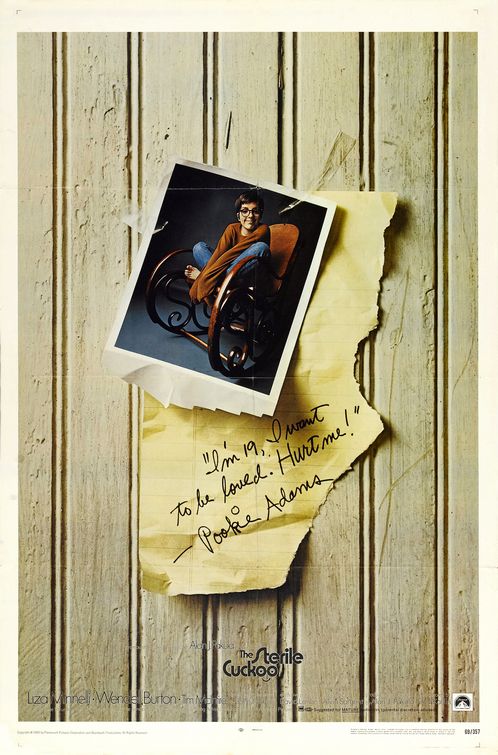
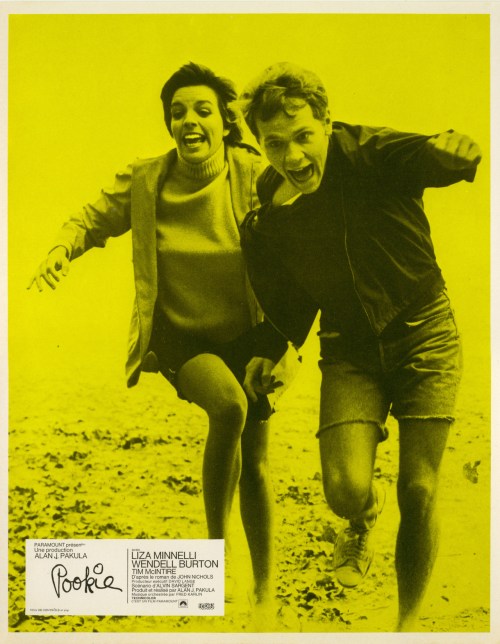
Mary Ann Adams (Liza Minnelli), who goes by the nickname of Pookie, is a complete social misfit who can’t fit-in anywhere.  As she waits at a bus stop to go off to college she meets Jerry (Wendell Burton) a shy and reserved young man who just happens to be attending the same school as she. Pookie immediately starts up a conversation with him and takes full advantage of his quiet nature to force herself into his life. The two soon begin to date, but Pookie’s inability to get along with others and her extreme insecurities make it almost impossible for the fledgling relationship to get off the ground.

This film marks the directorial debut of Alan J. Pakula and the result is nothing short of excellent. This is the type of movie that they don’t seem to make anymore where great sensitivity is taken to focus on a broken individual, but without ever making fun or demeaning them in anyway. The film’s pace is slow, but never boring and the emphasis is almost entirely on the nuances of its two leads. It also features one of the best and most memorable movie soundtracks to come out of the ‘60s.

The film is based on the novel of the same name that came out in 1965 and was written by John Nichols. It was even shot at Hamilton College in Clinton, New York where Nichols graduated in 1962. For the most part the script, by the prolific Alvin Sargent, stays quite faithful to the book with the only real big difference being that the story here encompasses only one year while in the book it was three. To me this revision was an improvement because the relationship was clearly doomed from the beginning and I couldn’t imagine it somehow lasting for three years let alone one to begin with.

Minnelli’s performance is Oscar worthy and the scene where she has a long talk on the phone with Jerry and the camera stays solely focused on her face is one the strongest moments in the movie and could only have been pulled off by a brilliant actress who somehow makes the viewer empathetic to this otherwise annoying character.

Burton, in his film debut, is equally strong and watching the two characters with such contrasting styles dealing with each other is the main catalyst that propels the story. Tim McIntire, as Jerry’s college roommate, is quite good as well playing the perfect composite of a partying college kid while also offering one of the film’s few moments of levity.

Some viewers have complained that the film lacks any wintertime shots even though the story takes place in Upstate New York where snow is inevitable and the story is supposedly spread over one full school year, but to me this is nitpicky. Clearly the film’s budget didn’t allow for shooting over an entire year and it wasn’t necessary anyways. The film captures the forestry region in such a vivid way that it almost becomes like a third character. It also in my mind made it more believable because I never felt this wacky, makeshift romance could last a full year and at best might’ve only existed for the fall semester before inevitably petering apart.

For me the only real criticism is the fact that we learn very little of about Pookie’s personal life. She mentions her relationship with her father quite a lot and we see him for a brief period at the beginning, but then that’s it even though it would’ve helped the viewer understand the character better had a backstory, or scenes involving her family life been shown.

The film is also incredibly sad to the point that it will make just about any viewer depressed after seeing it. On the technical end it’s flawless, but Pookie’s feelings of loneliness and the character’s extreme isolation eventually reaches out and sucks the viewer into it without any let up and it remains with them long after it’s over.
sterile cuckoo 2

My Rating: 7 out of 10

Released: October 22, 1969

Runtime: 1Hour 48Minutes

Rated M

Director: Alan J. Pakula

Studio: Paramount Pictures

Available: DVD, Blu-ray, Amazon Instant Video, YouTube
Kansas City Bomber (1972)

kansas city bomber

By Richard Winters

My Rating: 2 out of 10

4-Word Review: Life on roller derby.

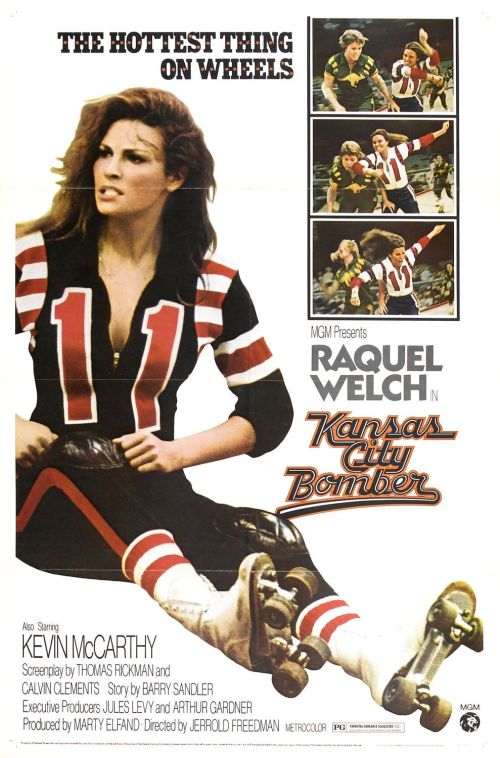
Raquel Welch plays K.C. Carr a struggling mother of two who goes all-out as the star in the roller derby circuit. She plays for the Kansas City Bombers, but then gets into a grudge match with Big Bertha (Patti ‘Moo Moo’ Cavin) with the loser agreeing to leave Kansas City and never return. Through some cheating by other teammates K.C. loses, but is soon picked up by the Portland Loggers whose owner (Kevin McCarthy) is quite impressed with her and promises to make her a star. The two eventually get into a relationship, but then she gets into yet another grudge match this time with the aging Jackie (Helena Kallianiotes) and the loser agreeing to leave Portland forever.

During the ‘70s the roller derby sport was all-the-rage and several films during the period were produced on the subject including The Unholy Rollers, which was also released in 1972 and starred Claudia Jennings as well as Derby, which was a documentary on the sport and came out a year before this one. I once went to a roller derby game a few years back in Indianapolis and I found it to be inane and boring, but there were indeed some people there that seemed to really get into it. In fact if there is one thing that this film does well it is the way it captures the spectators. Seeing many of them with missing teeth and looking like they would not fare too well on a college entrance exam, but getting extremely worked-up with the action in front of them solidly hits-the-mark on the mentality that one will find when attending these events.

The action though looks horribly fake and it’s obvious that the performers are pulling their punches during the fight sequences. I initially thought this was intentional and to show how the sport is really just about acting, but the script wants to play it like it’s for real, which makes the phony staged action look all the more ridiculous.

Welch’s presence is another hindrance. She’s a beautiful looking lady, but her acting has always been suspect. She manages to convey a toughness during the game sequences, but the character is just too nice and naïve otherwise. The film makes efforts to show the hard life and dehumanizing conditions that working in the business entails and yet somehow we are expected to believe this is the one person that has managed to ‘rise above it’ when in reality it would’ve dragged her down to its level, or at least made her more world-wise. The scene where she becomes ‘shocked’ at how the players are being ‘used’ and expresses this to the Kevin McCarthy character gets a good comeback from him when he states “We’re all being used…that’s the American way. You outta know that by now!”  And the fact that she strangely doesn’t despite being supposedly a ‘seasoned’ player makes her character come off as poorly fleshed-out and hollow.

Her relationship with McCarthy is a major issue as he was 30 years older than her. The two share no chemistry and have little in common and watching this gray haired man walking hand-in-hand with a hot young chick comes off like an old fogey that’s  porking his granddaughter.

The unintentionally funny climactic finish is pathetic and features the replay of the same hokey shot done from 3 different angles. The ending also leaves open a slew of unanswered questions while wasting the talents of a young Jodie Foster who appears only briefly as Welch’s daughter. I also didn’t get why it was entitled the Kansas City Bomber as the character spends only a brief time there while the bulk of the story takes place in the Pacific Northwest.

My Rating: 2 out of 10

Released: August 2, 1972

Runtime: 1Hour 39Minutes

Rated PG

Director: Jerold Freedman

Studio: MGM

Available: DVD (Warner Archive), Amazon Instant Video, YouTube

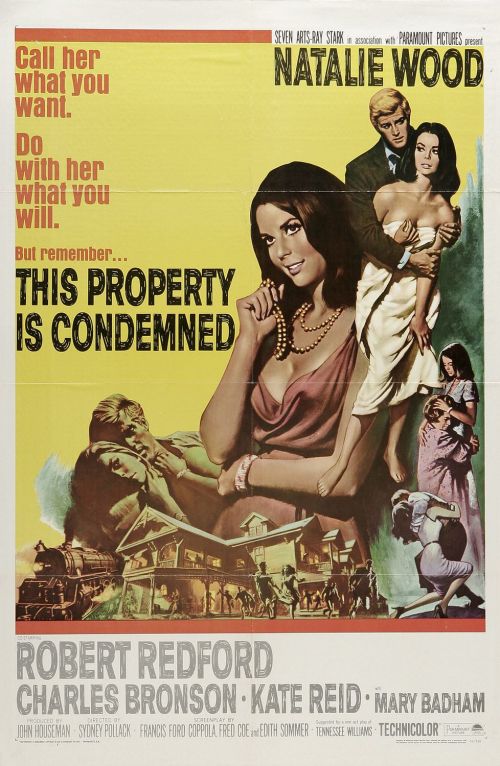
This Property is Condemned (1966)

this property

By Richard Winters

My Rating: 8 out of 10

4-Word Review: Mother pimps her daughter.

Owen Legate (Robert Redford) arrives in the small town of Dodson, Mississippi in the 1930’s to carry out an unpleasant task. He’s been assigned by his employer to layoff many of the railway workers in the area due to the economic depression. Many in town are not pleased with his presence and want him to go while even threatening him with violence. Alva (Natalie Wood) is the only one who takes a liking to him despite the fact that he consistently gives her the-cold-shoulder in return. She’s been forced by her mother (Kate Reid) to ‘entertain’ the male guests that stay at their boarding house and Owen wants none of it as he finds her dreamy, child-like personality to be off-putting and even an illness. Yet the longer he stays the more entranced with her he becomes, but he wonders if he’ll ever be able to get her away from the clutches of her domineering Mother.

This film was considered by critics at the time to be ‘trash’ and that was most likely due to its provocative subject matter that was clearly years-ahead-of-its-time, but with a script written by Francis Ford Coppola and Fred Coe, produced by John Houseman and directed by Sydney Pollack in a story based on a Tennessee Williams play couldn’t be all that bad and this clearly isn’t and in fact it’s excellent and should be considered a classic instead. The recreation of The Deep South from the ‘30s is spot-on and the on-location shooting done in the small town of Bay St. Louis, Mississippi lends some terrific atmosphere. The dialogue is sharp and the well-paced script leads to emotionally charged scenes of high drama.

Redford’s cool and detached persona is put to great use and I liked seeing a scenario where it’s the girl chasing after the guy for a change. Mary Badham is equally good in her first film after doing To Kill a Mockingbird, but here she is much more attractive with long hair and sans the Tomboy look. There is also solid support from both Charles Bronson and a baby-faced Robert Blake who just three years later reteamed with Redford in Tell Them Willie Boy is Here.

Wood gives an excellent performance as well, but I had a hard time understanding her character as her perpetual flights of fancy didn’t make much sense. The script seems to say that this is her ‘defense’ and escape from her harsh life, but any woman whose been forced into prostitution by her mother and pawed at by literally every man who comes along would most likely become hardened and bitter and learn to distrust and dislike any man who came near her.

Kate Reid as the mother also posed some initial problems as she looks too young for the part and in reality was only 8 years older than Wood who played her daughter. However, there is a birthday celebration where she is given a cake full of candles to blow out, but she refuses as she feels that 43 is getting ‘too old’, which made me realize that back then people had kids earlier even before they were 18 and therefore her still youthful look by our standards could be forgiven and even understood.

The final half is where this thing really comes together and includes a great confrontational moment between a drunken Wood, who really did get drunk in order to get into the scene, as well as her picturesque journey to New Orleans. Like in most movies the odds of her suddenly bumping into Owen after a couple of short days in the city seemed pretty slim, but I could forgive it as the rest of the film is so strong that any minor flaw with it is hardly worth discussing.

My Rating: 8 out of 10

Released: August 3, 1966

Runtime: 1Hour 50Minutes

Not Rated

Director: Sydney Pollack

Studio: Paramount

Available: DVD, Amazon Instant Video, YouTube

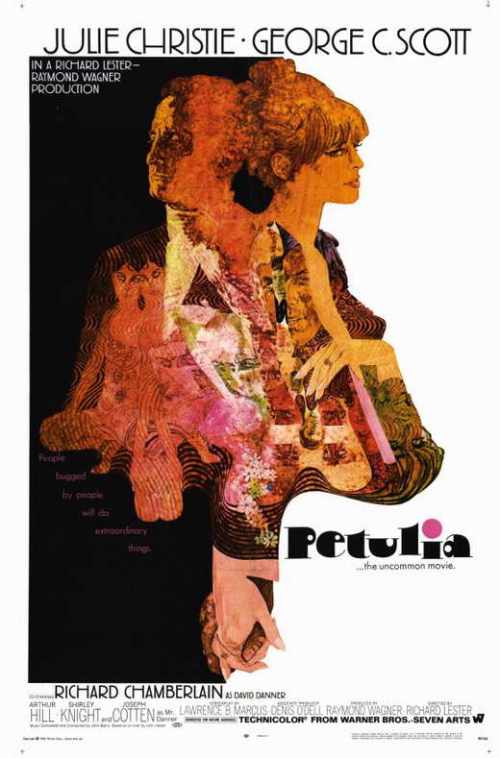
Petulia (1968)

petulia 2

By Richard Winters

My Rating: 9 out of 10

4-Word Review: A very brief affair.

While attending a medical fundraiser Petulia (Julie Christie) who is a married rich socialite, decides to come-on to Archie (George C. Scott), a doctor who performed a life-saving surgery on a young Hispanic boy (Vincent Arias) that she brought to him a few months earlier. Archie is still hurting from his recent divorce to his wife Polo (Shirley Knight) and not sure he wants to jump into another relationship so quickly especially with a woman that behaves in such an eccentric way. However, her kooky personality and good-looks get the better of him and the two spend the night together. In the days that follow Archie learns of her abusive relationship with her husband David (Richard Chamberlain), but when he makes an attempt to help her get out of it she resists, which causes him a great deal of frustration as he is unable to get a good grasp on why she behaves the way that she does.

The film is based on the novel ‘Me and My Arch Kook Petulia’, which was written by John Haase who worked as a dentist and wrote his stories between his appointments. What makes this plot stand out from the rest of the romances is that it focuses on the chance meeting between two people who share an immediate attraction, but are unable due to various extraneous circumstances to ever get it into a relationship stage. They become like two-ships-passing-in-the-night and go on with their lives and even other relationships while quietly longing for ‘the-one-that-got-away’. Most movies portray romances where everything falls into line and works out while blithely ignoring the ones that get shown in this film even though these are much more common.

Director Richard Lester, who is better known for his slapstick comedies, shows an astute eye for detail and his fragmented narrative works seamlessly. I enjoyed the quick edits and color detail as well as the subliminal symbolism including showing the David and Petulia characters wearing all-white to display their sterile marriage as well as capturing David’s father (Joseph Cotton) sitting in front of a giant window that looked like a cobweb to help illustrate how he had entangled Petulia into his own personal web. The film, which was shot on-location in San Francisco, features great shots of the Golden Gate Bridge and the world famous cable cars as well as an interesting scene at the Jack Tar Motel, which has now been demolished but was famous for its ability to check customers into their rooms without the use of a live clerk, but instead through close circuit TV and a room key that would light up when the person passed by their assigned room.

The two leads give strong performances particularly Scott who for a change doesn’t play a character with a forceful personality, but instead someone who inadvertently gets bowled over by a woman who has an even stronger one than he. Even Chamberlain does well. Normally I find him to be quite bland, but here he is surprisingly effective.

This movie also marks the film debuts of many performers who are seen in brief, but quirky bits including: Richard Dysart as a virtual hotel clerk, Howard Hesseman as a hippie, Rene Auberjonois as a seat cushion salesman and Austin Pendleton as a hospital orderly. Members of the Grateful Dead get some funny moments while inside a grocery store and Janis Joplin can be seen onstage singing during the opening party sequence.

Romance fans will like this, but so will those living in the Bay area during the ‘60s as the city gets captured well. However, fans of that decade will also like it as it expertly exudes the vibe from the period and making it seem very real to the viewer even if they weren’t alive during the time it was made. Also, John Barry’s haunting theme nicely reflects the character’s mood and evasive film style.

petulia 1

My Rating: 9 out of 10

Released: June 10, 1968

Runtime: 1Hour 45Minutes

Rated R

Director: Richard Lester

Studio: Warner Brothers

Available: DVD, Amazon Instant Video, YouTube

Doctors’ Wives (1971)

doctors wives

By Richard Winters

My Rating: 4 out of 10

4-Word Review: His wife sleeps around.

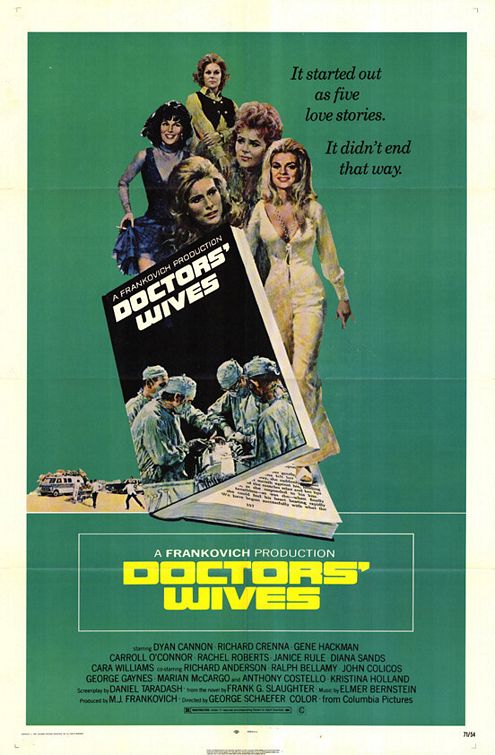
Several wives of prominent surgeons at a prestigious hospital get together for a game of cards, but one of the women, the oversexed Lorrie Dellman (Dyan Cannon), gives them a shocking proposition. Seeing that they are not satisfied with their sex lives, she tells them that she will sleep with each of their husbands and then critique their ‘performances’, so as to enlightened them as to what they might be doing wrong. The women turn down her ‘friendly’ offer, but then panic when Lorrie tells them that she has slept with ’50 percent’ of them already.  They have no time to worry though because the next day Lorrie is shot dead by her brain surgeon husband (John Colicos) after she is found in bed with one of the physicians. Now the women must try to figure out which doctor it was while worrying if their husbands were also involved with Lorrie at some other point.

The film, which is based on a novel by Frank Slaughter, is just too trashy and soap opera-like to take seriously. The productions values are strong and director George Schaefer shows a flair for the visual, which makes it watchable, but the characters are one-dimensional and the dialogue seemingly stripped straight out of a potboiler paperback.

Cannon, who’s billed as being the star, is on-screen for less than five minutes, which has to set some sort of record. Who on earth would ever accept a part to be the film’s ‘star’ if they are going to only be in it for that short of a period, or why bill someone as being such if they ultimately will have that little to do? In some ways I wished the character had remained as she is so outwardly slutty that it becomes campy and her initial proposition would certainly have created a more interesting scenario than what ultimately gets played out. Besides any character whose first words out of their mouth is “God, I’m horny” can’t be all that bad.

The supporting cast, which is made up of many familiar faces, are essentially wasted especially Gene Hackman in what may be the dullest role of his otherwise illustrious career although the way he repeatedly slaps his wife (Rachel Roberts) across the face after she confides in him that she once had a lesbian affair does have a certain outrageous quality.

Colicos is competent as the heavy, but Anthony Costello steals it as a young intern who sleeps with the middle-aged wives of his superiors. In real-life he was gay and ended up dying of AIDS at the young age of 45, but here successfully comes off as a flaming heterosexual who brags of his conquests and acts like going to bed with married women is as common place as taking out the garbage. His best bit comes when he beds fellow intern Sybil (Kristina Holland) who is making a sex documentary and narrates a ‘play-by-play’ of her sexual intercourse with him as it happens.

The film’s most memorable moment, and it’s a doozy, is when it shows in incredibly graphic style the operation of taking a bullet out of a man’s heart. A real pumping human heart was used and the footage would rival that of any educational film. Not only do we see them tear off the organ’s outer membrane, but we also watch as the doctor sticks his finger into it and then in one truly ghoulish shot pop the bullet out of it. It’s all real and done in close-up making it far more explicit than any gore movie out there and one of the most stomach churning things ever to be put in a mainstream Hollywood movie.

My Rating: 4 out of 10

Released: February 3, 1971

Runtime: 1Hour 41Minutes

Rated R

Director: George Schaefer

Studio: Columbia Pictures

Available: DVD-R

The Only Game in Town (1970)

only game in town 1

By Richard Winters

My Rating: 7 out of 10

4-Word Review: A Vegas love story.

Fran (Elizabeth Taylor) is an aging Las Vegas showgirl living alone in a two-bit hotel room while awaiting the return of her lover (Charles Braswell) who has disappeared yet again while he goes off to his wife that he consistently promises he will eventually divorce. In her loneliness she decides to go out to a piano bar and order a pizza. It is there that she meets Joe (Warren Beatty) and the two quickly hit-it-off while also spending the night together. Joe has a gambling problem, but promises that the minute he saves up $5,000 he’ll be out of Vegas for good. He moves into her hotel room where she helps him save up the necessary dough to achieve his dreams even though with his gambling addiction he will fritter it all away the moment he gets his hands on it. Then Fran’s long lost lover returns and ready for marriage. Will she go back with him, or stay with the self-destructive Joe that she has despite her better judgement fallen in love with?

The script by Frank D. Gilroy is based on his stage play and it’s not particularly rich in character development or plot. In fact the play itself fared poorly when it ran on Broadway and had only 16 performances before being shut down. However, despite its lack of originality I still found myself enjoying it and a major reason for this is the casting.

Taylor shines in a role that didn’t seem to be a particularly good fit for her. She spent the latter part of her career playing bitchy old dames that always seemed one step away from the sanitarium or a nervous breakdown. Here her character merits some sympathy and her usual overacting is actually entertaining and helps propel the flimsy plot along. The pairing of her with Beatty is an odd one, but then again the relationship is supposed to be awkward, so it ends up working to the script’s advantage.

Beatty’s performance is equally impressive. Normally he specializes at playing characters that are cool, calm and in control, but here he portrays one that is quietly crumbling and manages to pull it off to complete perfection. The scenes of him at the craps table and compulsively blowing all of his hard-earned money away is genuinely difficult to watch, especially since real cash gets used, and one of the most effective looks at the gambling addiction that I’ve seen.

This also marks the last film to be directed by the legendary George Stevens. He was known for helming some epic Hollywood productions, so it is a bit surprising that he choose to do this one since the storyline and setting were far more constrained from what he was used to working with. In fact the majority of it was shot in Paris, France and not Las Vegas, which many critics at the time felt was a detriment, but to me it made it even more fascinating to watch because of it. For one thing the crew did spend 10 days in Vegas shooting some of the outdoor shots, so you still get some legitimate Sin City scenery regardless. What I enjoyed though was the way Stevens was able to camouflage the rest of the scenes including having the bright daytime light seeping through the hotel room windows, which convincingly looked like the natural sunlight reflecting off of the sandy desert landscape. The recreation of the giant Las Vegas grocery store was impressive as well and strangely one of my favorite moments from the movie.

If you enjoy quirky love stories particularly between characters who are painfully human and less than glamorous you may enjoy this film better than most. It’s also a terrific chance to see two very fine actors playing against type and doing so in splendid fashion.

My Rating: 7 out of 10

Released: January 21, 1970

Runtime: 1Hour 53Minutes

Rated M

Director: George Stevens

Studio: 20th Century Fox

Available: Blu-ray

Heatwave (1982)

heatwave 1

By Richard Winters

My Rating: 8 out of 10

4-Word Review: Fighting to save homes.

Stephen (Richard Moir) is an English architect employed by Robert (Bill Hunter) to construct a massive high-rise building in downtown Sydney that will be financed by Peter (Chris Haywood). However, the construction will require the demolition of several row houses and the eviction of those living in them. Kate (Judy Davis) takes up the cause by protesting the development and along with Mary Ford (Carole Skinner) are able to get a temporary block on the building project by getting the local builder’s union to instill a green ban. Stephen tries to fight this by attending the group’s meetings and airing out his side of the issue, but in the process finds himself more and more sympathetic to the residence especially when he finds out that Peter isn’t a completely honorable businessman and has no plans to use Stephen’s building design at all. When Mary mysteriously disappears he joins forces with Kate to try and find her only to unearth even more troubling and dark revelations along the way.

This film is based on a true-life incident and one of two movies made about it with the other one being The Killing of Angel Street, which will be reviewed here next month. The real-life event centers on Juanita Nielsen (1937-1975) who took up the anti-development cause when it was found that her home was pegged to be demolished in order to make way for three high-rise buildings in the Victoria Street neighborhood of Sydney. Her efforts managed to delay the project for three years, but the developer eventually became impatient and hired men to harass the residents who were trying to stop it and in the process kidnapped Nielsen even though her body has never been found and no one has ever been convicted of her murder.

The film here depicts Nielsen through the fictional character of Mary Ford, but what surprised me was that Ford is not the central person. Instead we only see her briefly at the beginning before she disappears and is generally forgotten while writer/director Phillip Noyce adds other fictional characters and story lines around her, which wasn’t as interesting as the actual case and I’m not sure why they didn’t just stick with the facts.

However, this still a highly intriguing thoroughly riveting plot that keeps you on the edge of your seat from the beginning. Part of what I liked about it is the way it shows things from the different perspective of the various characters while bringing out the myriad of complexities where nothing is black-and-white and no one is completely right or completely wrong. The viewer gets torn about whose side to be on, but fascinated with each new rapid-fire twist that comes about.

There are definite shades of L’Avventura here where a main character disappears and is essentially forgotten until it seems almost like she had never existed in the first place. The script offers no easy answers and instead shows in vivid and almost brutal detail how taxing and frustrating fighting for social change can be and the hopelessness one feels when they realize that all of their efforts may have made little or no difference.

My Rating: 8 out of 10

Released: March 8, 1982

Runtime: 1Hour 32Minutes

Rated R

Director: Phillip Noyce

Studio: Roadshow Film Distributors

Available: VHS, DVD (PAL, Region 0)

Le Mans (1971)

le mans 1

By Richard Winters

My Rating: 6 out of 10

4-Word Review: Car race of endurance.

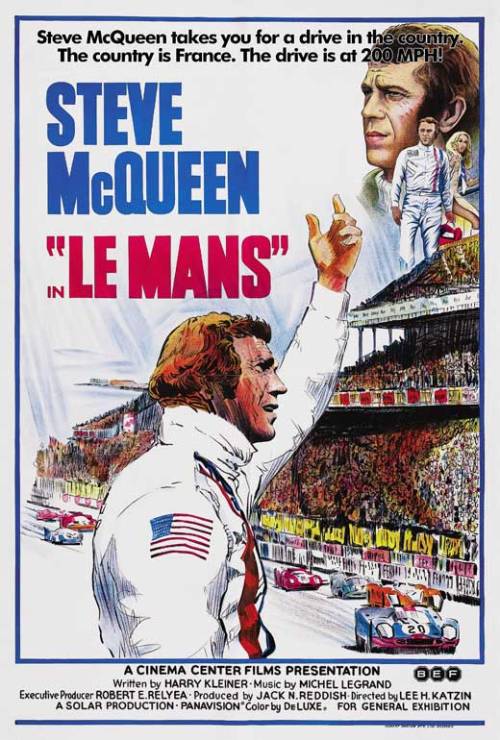
Le Mans is a car race held annually in France in which the test is to show not only how fast the vehicle is, but also its reliability as cars are forced to drive for 24 straight hours with a minimum of pit stops. Michael Delaney (Steve McQueen) is the driver who represents the American team and who is under a great deal of duress because of the fact that he caused an accident that killed another driver just a year before.

The film’s first thirty minutes may be its most captivating and has been described by many fans as being their favorite part of the movie. I loved seeing the empty stands fill up with people as it gives the viewer an authentic race day feeling. Every little facet of the race gets captured almost like it is a documentary with the emphasis more on ambience and the adrenaline it creates instead of a story and in fact no one utters a single line of dialogue until almost 40 minutes in. Watching the cars whizz by with the camera set directly on the pavement just inches away was enough to make me flinch and the wipeouts are particularly graphic and up close.

The film has very little of a backstory to the characters and one gets propelled into the race without much distinction between the various drivers, or even any emotional stake for who wins. Normally I’d say this is a good thing because the dramatic elements in these types of films can get overly drawn out and soap opera-like, but it also makes it a rather detached experience like watching a football game with no concern for either team, or the outcome. The drama that does get played out is boring with dialogue that is only on a conversational level. It also gets confusing as to which driver is in the lead and the constant shots of loud cars speeding by eventually becomes tedious.

Things manage to recover by the end with an exciting finish between three of the race’s drivers that even features a very dramatic tire blow-out. Unfortunately the middle half bogs it down so much that by the time it gets there you feel pretty worn out already. It also wastes the acting talents of McQueen. Granted I was impressed that he did his own driving, but the script doesn’t give him enough to do outside of that.

The film was known for its troubled production in which John Sturges the film’s original director left after being unable to deal with McQueen’s constant meddling and replaced with Lee H. Katzin. Katzin was mainly known for doing TV-Movies and I honestly don’t think had the skill to create the movie’s impressive visual style. I believe it was McQueen’s presence that forged that and I almost feel he should’ve been credited ultimately as the being the director, or at least co-director. The irony is that McQueen ended up not receiving any salary for his work here, or even a percentage of the profits and in fact refused to even attend the film’s premiere.

My Rating: 6 out of 10

Released: June 23, 1971

Runtime: 1Hour 46Minutes

Rated G

Director: Lee H. Katzin

Studio: National General Pictures

Available: DVD, Blu-ray

Flashdance (1983)

flashdance 2

By Richard Winters

My Rating: 6 out of 10

4-Word Review: Dancing is her passion.

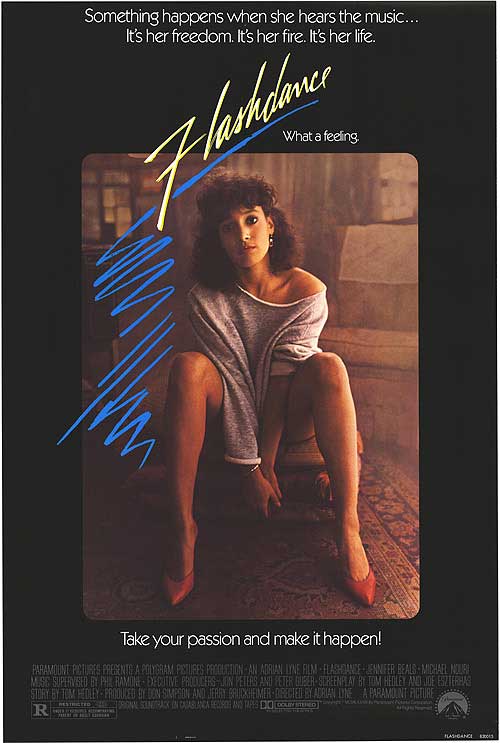
Alex Owens (Jennifer Beals) is a young lady of 19 who works as a welder during the day, but moonlights as an exotic dancer by night. She dreams of one day joining the dance institute and train to work in the professional ballet, but when she goes to their admissions desk they demand that she show some proof of prior training, which she doesn’t have and this is enough to intimidate her from applying at all.  She eventually starts up a relationship with Nick (Michael Nouri) who is the owner of the factory where she works. He uses his money and influence to pull-some-strings at the dance conservatory so that she’ll be able to get an audition, but she resents his help and threatens to not only pull out of their relationship because of it, but her audition as well.

The film is loosely based on the real-life story of Maureen Marder and the plot is relatable to anyone who dreams of one day rising above their humble beginnings, which is what makes the film interesting. Beals does well in the title role and has a very appealing face, but I was surprised how little dancing there actually was. Out of the whole runtime there are only three dance routines that the Beal character does, which was a shame as the routines are well staged, have a lot of energy and creativity and the most unique part about the film while its contrived romantic angle is  a complete bore.

The Alex character has issues as well as she comes off as too much of a mish-mash of different extremes making her more like a caricature than a real person. I realize human beings can be a bag of contradictions, but this character takes it too far. The biggest one is when she goes every week to confession even though she doesn’t behave at all like she is a religious person in any other way. I would think a devoutly Catholic individual wouldn’t feel as relaxed about getting on stage and gyrating her body let alone stripping off her clothes the minute she brings her new boyfriend back to her place, going to bed with him on their first date and even aggressively flirting with him at a restaurant.  In either case the confession scene was unnecessary because all it does is have the character verbally explain what the viewer has already been able to pick-up on visually.

The character is also highly volatile in ways that could easily get her pegged as being a borderline psycho these days. First she throws a rock through her boyfriend’s window when she thinks he is seeing another woman, then she jumps out of a moving car in the middle of a tunnel that could’ve caused a major traffic accident and then tops it all off by rushing onstage to drag her friend Jeanie (Sunny Johnson) off at a strip club and then callously throwing the dollars that Jeanie had earned into a puddle of water all because she consider herself to be a ‘good friend’, which brings up another point; why does this character consider stripping to be so ‘sleazy’ while being an exotic dancer is ‘respectable’? Granted she doesn’t take her clothes off as an exotic dancer, but the outfits she wears are quite revealing and the dance numbers are so sexually tinged that in my opinion there wasn’t that much of a difference.

I was also surprised how the male characters at her factory job seemed to treat her as being ‘just-one-of-the-guys’ as this was a highly attractive single woman making me believe that a lot of the guys would be hitting on her besides just the owner. I would also expect that she would be sexually harassed at the work place by some of them since she spends her evenings playing into their fantasies with her sexy dancing and the fact that the film fails to tackle this subject even briefly makes it poorly thought-out.

Overall though I found it to be an enjoyable watch and I think this was mainly due to Adrian Lyne’s direction and his use of lighting that made each shot seem like a visual design and his ability to photograph the grimy, steel mill setting in a way that made it seem artsy and evocative as well as the film’s rousing dance number at the end that despite its cheesy nature is still inspiring and fun.

My Rating: 6 out of 10

Released: April 15, 1983

Runtime: 1Hour 34Minutes

Rated R

Director: Adrian Lyne

Studio: Paramount

Available: DVD, Blu-ray, Amazon Instant Video, YouTube
The Last Picture Show (1971)

last picture show 1

By Richard Winters

My Rating: 9 out of 10

4-Word Review: A Texas sized drama.

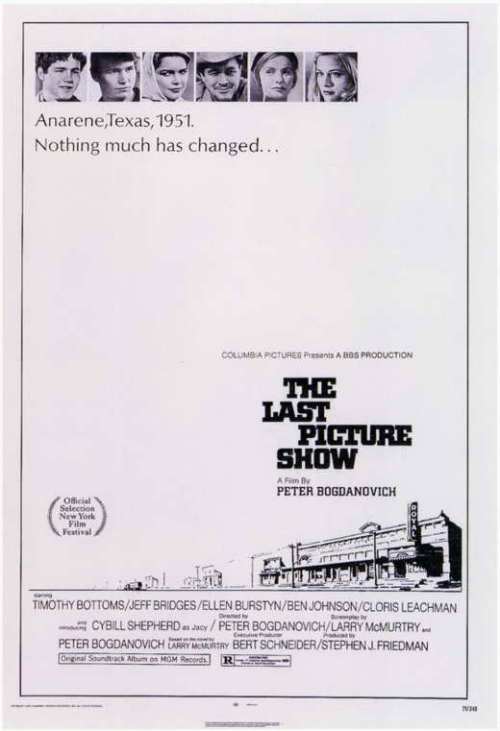
Based on the Larry McMurtry novel, who also co-wrote the screenplay, the story deals with the inter-workings and relationships of a people living in a small Texas town known as Anarene during the years of 1951 and 1952.  There’s Duane (Jeff Bridges) and Sonny (Timothy Bottoms) two high school seniors who are also best friends. Duane dates the highly attractive Jacey (Cybill Shepherd) who seems more geared to playing the field with every guy in town and even makes a play for Sonny, which seriously affects his relationship with Duane. There’s also Ruth (Cloris Leachman) the lonely coach’s wife who begins a brief affair with Sonny until he decides to bail-out for the more attractive Jacey. Sam (Ben Johnson) makes up part of the older generation still stuck in the dusty town and trying to make ends meet by running the local movie theater and pool hall both of which come to a halt when he dies suddenly.

I saw this film just recently outside on the big screen as part of the Texas Film Heritage and Preservation Society here in Austin. Although I had seen it before I was hit with how much more impressive and visually sumptuous it is on the big screen. Robert Surtees’ black and white cinematography is top-notch and the main ingredient to what makes it so spellbinding, so much meticulous attention is taken into each and every shot that one could almost watch this with the sound down and still find it thoroughly compelling.

Director Peter Bogdanovich takes great care to make sure that all of the elements are there and spins them together like a well-crafted machine so the viewer learns bit and pieces about these characters and their attitudes through each shot and camera angle that comes along. Filming it on-location in Archer City where McMurtry grew up helps accentuate the authenticity as does playing the country music from the period although I could’ve done with a little less of that and more of the sound of the wind and dust crackling across the barren region instead.

What surprised me most was how interesting and varied the love making scenes where and how instrumental they became to the film as a whole. One of the most memorable ones is when Sonny first tries to make love to Ruth, but is quite awkward about it. We see the pained expressions on both of their faces, hear the rusty springs of the mattress, and then finally witness Ruth’s attempts to shield her crying and frustration from Sonny. Duane’s futile attempt at sex with Jacey later on is also good particularly the fiery look of anger spewing from Jacey’s eyes when he is unable to perform. The scene involving a mentally challenged young man pushed into attempting sex with an obese and caustic prostitute inside the backseat of a cramped car is both darkly funny and sad, but the most provocative love making moment comes near the end when Jacey has sex with her mother’s boyfriend (Clu Gulager) on top of a pool table inside a dark and lonely pool hall while bracing the table’s side pockets with her hands for leverage.

The performances are all-around outstanding and both Leachman and Johnson won the Academy Award for their work here, but I still came away feeling, just like I did twenty years ago when I first saw this film, that Shepherd does the best job and leaves the most lasting impression. I love how her character slips between being insecure and indecisive to cunning and conniving and Shepherd’s facial expressions are completely on-target all the way. Her striptease done on top of a diving board is still pretty hot and my only complaint about the character is the way she elopes with Sonny and then completely bails on him the next day. I realize she didn’t love the guy and she’s just used him like she did others, but I didn’t understand what her motivation was in this instance as she seemed to get little if anything out of it.

I was also a bit disappointed that the Coach Popper character played by Bill Thurman didn’t have a bigger role in the story. The way he berates his players during practice is amusing and would most likely get coaches in today’s more sensitive world in hot water. I also found his constant spitting of tobacco juice into a cup that he carries around with him to be grotesquely amusing, but my biggest beef is the fact that we have a main character screwing his wife and the whole town knows about it, but never any reaction from the man himself. Maybe he was aware and didn’t care, but the movie should’ve made an attempt to show this, or at least some interaction between Sonny and the Coach since Sonny was at one time one of his players, which would have to make things quite awkward whenever they would bump into each other and in a small town that would most likely happen on more than a few occasions.

Overall though this is a great movie and I was surprised at how frank and explicit it was despite its 1950’s setting. Some may argue that it was done with too much of a revisionist mindset and things weren’t quite this wild, but others, like myself, will insist that it probably was, but just not talked about as much.

My Rating: 9 out of 10

Released: October 22, 1971

Runtime: 2Hours 6Minutes (Director’s Cut)

Rated R

Director: Peter Bogdanovich

Studio: Columbia Pictures

Available: DVD, Blu-ray, Amazon Instant Video