Category Archives: Comedy

Don’t Make Waves (1967)

dont make waves 1

By Richard Winters

My Rating: 5 out of 10

4-Word Review: House slides down cliff.

Carlo (Tony Curtis) is a single 40-something man traveling through coastal California when he decides to pull his Volkswagen beetle over to the side of the road and get out to enjoy the gorgeous view. Problem is that Laura (Claudia Cardinale) is pulling out and her car’s bumper hooks onto his and his car goes speeding down the hill and crashes. All of his money was in the car, so Laura agrees to allow him to stay at her place for a while, but then her boyfriend Rod (Robert Webber) shows up who throws Carlo out onto the beach where he becomes acclimated with the beach bums including beautiful Malibu (Sharon Tate). He wants to date her, but she has a muscular boyfriend named Harry (David Draper). Carlo though has a plan to steal her away as well as getting a cushy job as a pool salesman and a beachfront home that ultimately goes crashing down the cliff just like his car did.

Curtis is engaging in the lead and shows great flair for frantic comedy, but his character has no backstory, which makes him generic and undistinguished. His constant conniving including tricking Harry into no longer having sex with Malibu so he can get his hands on her isn’t all that appealing since Harry is a rather nice guy and I was hoping he would give Curtis a much deserving punch in the face in the end, which unfortunately doesn’t happen.

Cardinale is sexy. Her tan, sleek figure, Italian accent and feisty temper make every scene that she is fun and sensuous. The fact that the character is at times quite oblivious to her surroundings and at other points very observant makes her interesting and quite human.

Tate’s performance is weak and her amount of speaking lines quite limited. The part was originally intended for Julie Newmar who might have been a bit better. However, the scene showing her bouncing up and down on a trampoline while wearing a bikini that even gets shown in slow-motion and freeze frame will be more than enough to satisfy most males.

The film features some impressive stunt work. The opening bit where Curtis tries to catch up with his rolling car and even gets his pants leg caught on fire isn’t bad. The part where Curtis falls from a plane and goes free falling into the air without a parachute is quite vivid even though stuntman Bob Buquor ended up getting killed during the sequence. The best part though is at the end when Curtis’s ritzy home and pool go sliding down a steep cliff during a rainstorm and subsequent mudslide. The special effects are outstanding even by today’s standards. The mud flowing through the place and the shots showing five occupants forced to survive in the home in a Poseidon-like scenario when it gets turned upside down before finally sliding down onto the cusp of the ocean is entertaining enough to make sitting through the rest of it almost worth it.

Unfortunately outside of this and the breathtaking scenery the film is quite vapid. The story is too unfocused and doesn’t seem to know what kind of message it wants to make. The scenarios and situations are trite and offer no momentum or plot progression. The theme of a middle-aged man trying to get in with the young mod generation of the time was handled much more effectively in I Love You Alice B. Toklas, which starred Peter Sellers and came out around the same time.

My Rating: 5 out of 10

Released: June 20, 1967

Runtime: 1Hour 37Minutes

Not Rated

Director: Alexander Mackendrick

Studio: MGM

Available: DVD (Warner Archive), Amazon Instant Video

Micki & Maude (1984)

micki and maude

By Richard Winters

My Rating: 5 out of 10

4-Word Review: Two women get pregnant

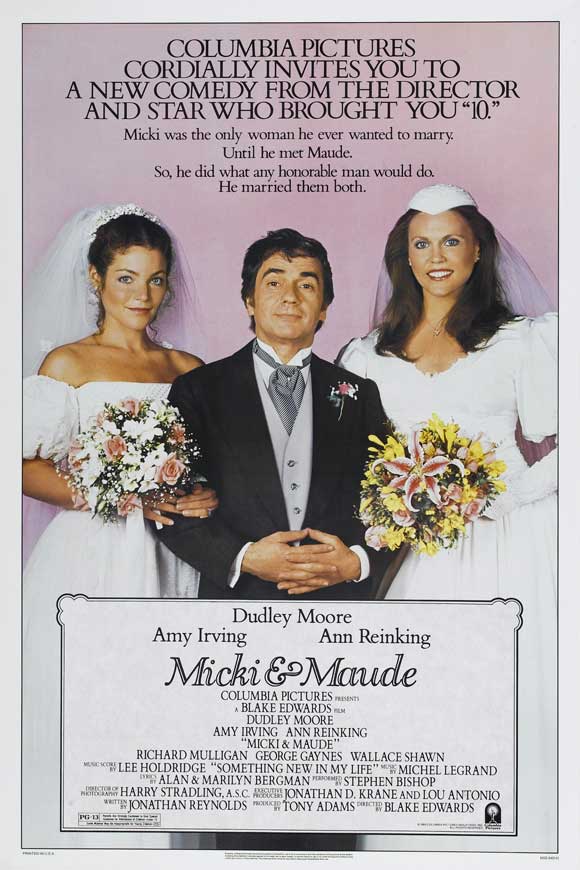
Rob (Dudley Moore) is a man who becomes increasingly isolated from his wife Micki (Ann Reinking) after she gets too caught up in her career to have time for him. To compensate he begins an affair with an attractive younger woman named Maude (Amy Irving). He plans on divorcing his wife and marrying her, but then they both become pregnant at the same time.

The plot progresses much too slowly and it takes almost fifty minutes before there is any real comedy. It seems hard to believe that a man, by his own admission, could spend ten hours a day with one woman another ten with the other and still be able to hold down a full time job without it all unraveling on him a lot sooner than it does. Moore also doesn’t play the part in a realistic way he should be more stressed out and frantic and on the verge of a complete mental and physical breakdown, but instead he seems very cool and collected most of the time. The script also doesn’t capitalize enough on the many crazy complications that would most assuredly ensue in a situation like this one and the ones it does bring up are not real believable or funny. The climactic delivery room scene becomes way too overblown.

On the positive end Ann Reinking clearly comes off as the better actress than her counterpart, at least in this production. Her character has some amusing flaws while Irving is just too boringly normal. Her only good moment comes with an amusing line that she says during the delivery room scene. Richard Mulligan is good in support and some of his lines are real gems! There is also a completely unexpected and very funny scene between overweight actress Lu Leonard and Wallace Shawn that may very well be the best moment in the whole movie.

The concept is good and it should have been ripe for hilarity, but it doesn’t live up to its full potential. If there is one film that should be remade it is this one. There is a lot more comedy that could be squeezed out of a storyline like this one.

My Rating: 5 out of 10

Released: December 21, 1984

Runtime: 1Hour 58Minutes

Rated PG-13

Director: Blake Edwards

Studio: Columbia Pictures

Available: VHS, DVD, Amazon Instant Video

Money Talks (1972)

money talks

By Richard Winters

My Rating: 6 out of 10

4-Word Review: It’s all about money.

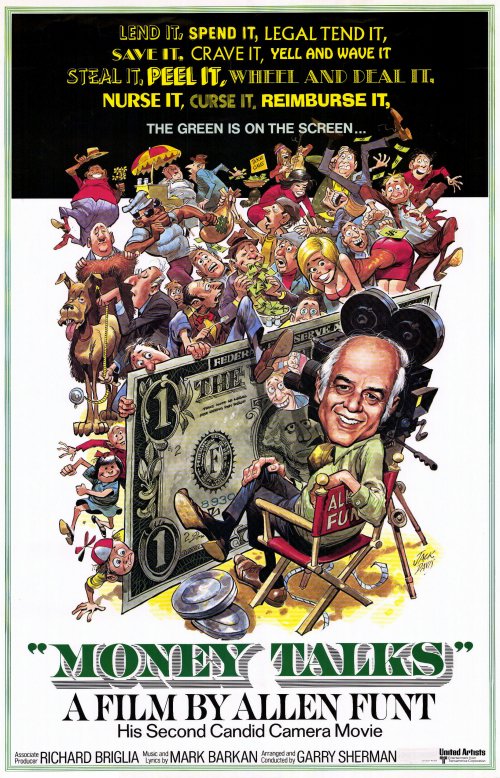
Allen Funt the creator of ‘Candid Camera’ returns with his second cinematic feature all centered around pranks and stunts done on unsuspecting regular people to see just how far they will go when presented with the allure of money. The film examines the deep seated psychological effect that money has in society and how it controls what people do and in some cases what they don’t do.

This feature is an improvement over Funt’s first. Fortunately he keeps the majority of it on a comic level and avoids trying to make unnecessary ‘profound’ social statements. The film is also faster paced and although the music is still annoying it isn’t as bad and has a bit more of a funky beat. Some of the stunts aren’t necessarily all that funny and few become rather redundant and predictable. However, the majority of them I liked and even found fascinating including the one where a woman walks down the street and intentionally allows dollar bills to fall out of a hole in her pocket and drop to the ground behind her and how surprisingly many people would pick them up and chase after her to give them back. The funniest one is where a mild mannered middle-aged woman gets a job answering phone calls for a man who she finds out is a professional hit man. Hearing her diligently taking down an order and answering questions over the price of a hit while trying to mask her shock and remain calm had me laughing-out-loud.

A few of them are definite artifacts of a bygone era including the many relentless attempts a woman goes through to try to retrieve a simple five dollar bill that is lodged beneath a car tire. Another segment has a bare foot hippie girl begging for money on a street sidewalk and her startlingly naïve willingness to go back to a strange man’s apartment who approaches her and says he has shoes for her, which she almost does until Funt and crew advise her not to.

A few of the pranks have celebrities in disguise. My favorite was the one with actress Marian Mercer pretending to be a waitress and asking beforehand how much of a tip the customer planned to give her, so she could plan out what type of service she would give him. The segment where comedian Henny Youngman has no money to pay a hot dog vendor, so instead he tells the irritated man a bunch of lame jokes as ‘payment’ is quite funny and I wished it had been extended longer. Muhammad Ali’s bit isn’t quite as good, but his personality is as engaging as ever.

The film also has some good interviews including an opening bit where a commercial jingle writer comes up with on-the-spot a ditty for the film’s theme, which is not bad. Dominic the knife sharpener becomes almost a show in itself with the flamboyant way that he tries to bargain with Funt over not only how much he should be paid to sharpen his knives, but also for his fee to appear in the film. The interviews with hippies who don’t have jobs and don’t want them could have been more interesting had we seen what happened to them twenty years later and if they were still adamantly in the non-work camp, which I doubt. Funt also interviews his own 6-year-old daughter who is surprisingly more perceptive than you might think.

My Rating: 6 out of 10

Released: August 30, 1972

Runtime: 1Hour 21Minutes

Rated PG

Director: Allen Funt

Studio: United Artists

Available: Amazon Instant Video, Netflix streaming

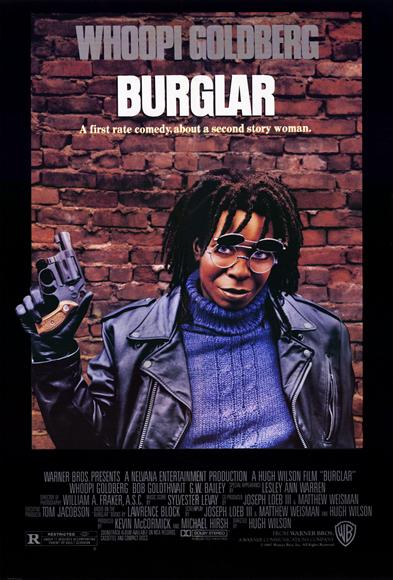
Burglar (1987)

burglar

By Richard Winters

My Rating: 3 out of 10

4-Word Review: Burglar witnesses a murder.

Bernice who goes by the nickname of Bernie (Whoopi Goldberg) is a cat burglar who gets hired by a dentist named Cynthia Sheldrake (Lesley Ann Warren) who wants Bernie to rob her ex-husband’s apartment and steal back her jewelry. When Bernie enters the apartment she has to hide in the closet when the ex-husband comes home earlier than expected and it is there that she hears him get murdered. Cynthia implicates Bernie in the crime and it is up to Bernie to track down the real killer before the police catch up with her.

The usually entertaining Goldberg doesn’t seem right for the part, which was originally intended for Bruce Willis. Except for a few amusing moments she is not all that funny and seems to be coasting most of the way and even out-of-place. For some reason she wears blue contacts and they look hideous. She also seems just a bit too nice for a career criminal that has spent time in jail and should be little more rough-around-the-edges. Having her constantly concerned about doing the ‘ethical’ thing and only robbing those that ‘deserve’ it doesn’t quite jive.

Bobcat Goldthwait as her dog groomer friend Carl is more of distraction than anything. His quivering, high pitch schtick comes off like someone with a serious psychological or physical problem and more creepy than funny. His line stating that drinking olive oil before drinking alcohol will prevent one from getting drunk later became the amusing basis for the film Calling Bobcat.

The supporting cast ends up being funnier than the two leads. John Goodman and Anne De Salvo have a few good moments as a bickering and perpetually perplexed cop duo. Warren is also good as an all-around bitch and all three performers deserved more screen time.

The film features Whoopi riding a motorcycle and being chased by police down the hilly, winding streets of San Francisco, which to an extent resembled the chase sequence in What’s Up Doc?. However, the chase is so poorly photographed and edited that it becomes hard to follow and nothing more than a collage of jump cuts.

There is another scene where the police try to enter her apartment which is equipped with a steal door, all sorts of booby traps and even a hidden room. On one hand this is kind of funny, but on the other it is wholly unrealistic. If this had occurred in a house that she owned I might have bought into it, but I would think that the noisy construction of all these contraptions would have had her reported to the landlord and she would have been evicted. Also, how is one able to build a hidden room in an apartment building without it affecting the neighboring tenants? There is also the issue that she states earlier that she had just been released from jail, so where did she find the time to build all this stuff?

The story itself lacks intrigue, relies too much on coincidence and eventually becomes implausible. I liked the use of the Bay area locations particularly the fog setting at the end, but otherwise this is just a bunch of overblown nonsense.

My Rating: 3 out of 10

Released: March 20, 1987

Runtime: 1Hour 44Minutes

Rated R

Director: Hugh Wilson

Studio: Warner Brothers

Available: VHS, DVD, Amazon Instant Video
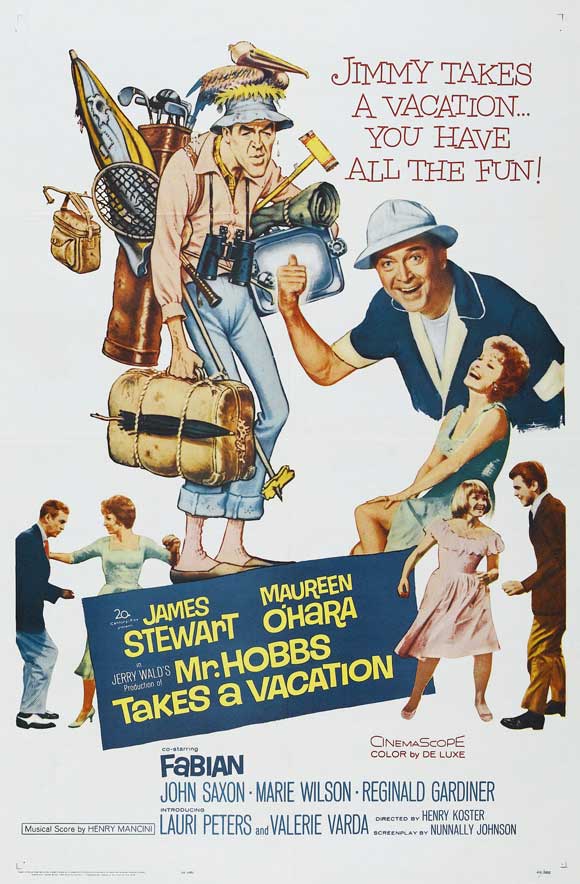
Mr. Hobbs Takes a Vacation (1962)

mr hobbs takes a vacation

By Richard Winters

My Rating: 5 out of 10

4-Word Review: Calamity filled family vacation.

Roger Hobbs (James Stewart) is a slightly cantankerous man in his 50’s who is tired of family vacations as he finds them to be more stress than they are worth. He loves his family, but hates going on trips with them. He dictates a letter to his secretary that is to be opened by his wife (Maureen O’Hara) upon his death detailing his many grievances of one particular trip that they took to a beach-side house that ended up being one catastrophe after another and through flashbacks the viewer relives them along with him.

Stewart is a real blast and the best thing about the movie. He doesn’t have that wide-eyed country boy charm like in some of past roles, but instead is a world-weary cynical man whose constant flow of acerbic comments and observations are quite funny. O’Hara is beautiful and engaging as his wife and helps as a sort of anchor between him and the rest of the family although I thought she looked much too young to be playing a grandmother. 60’s teen-heartthrob singer Fabian can also be seen as Joe a young man who takes a liking to one of Hobbs’ daughters. I liked the beatnik beard that he grows, but the part where he breaks out into a duet with his date in a film that is otherwise not a musical is very weird.

The actual beach house is a crazy sight and looks creepier than the Psycho house and sits literally right on the sandy beach and looking vulnerable to getting flooded during high tide. Beachgoers sit and sunbathe all around it and I would have thought many of them might walk into the house, or peer through the windows, but that angle does not get played up. Some of the myriad mechanical issues that Hobbs has with the building are the film’s funniest moments especially his difficulty getting the water pump going. The film should’ve continued to focus on this story thread all the way till the end, but doesn’t, which is a weakness.

While the movie is cute and pleasing it is also contrived and unoriginal. Many of the scenarios that they have could have easily occurred had they stayed home and the whole vacation concept seems to get lost. The writing and humor are better suited for television and the plot is threadbare. In a lot of ways this could better be described as an ordinary family sitcom with several different episodes strung together.

The visit that they have with a boring couple (John McGiver, Marie Wilson) near the end doesn’t work at all and should’ve been cut as a two hour running time is too long for this type of film to begin with. The scene where Hobbs get stuck in the bathroom with the tipsy and nude visiting wife elicits a few chuckles, but the bird spotting trek that he takes with the husband becomes too much of a pointless tangent. The scene also has a glaring goof because the two men decide to wake up at 4:30 in the morning to start their trek but when they first get outside the sun is already high in the sky and looking like it is the middle of the afternoon.

My Rating: 5 out of 10

Released: June 15, 1962

Runtime: 1Hour 56Minutes

Not Rated

Director: Henry Koster

Studio: 20th Century Fox

Available: VHS, DVD, Amazon Instant Video
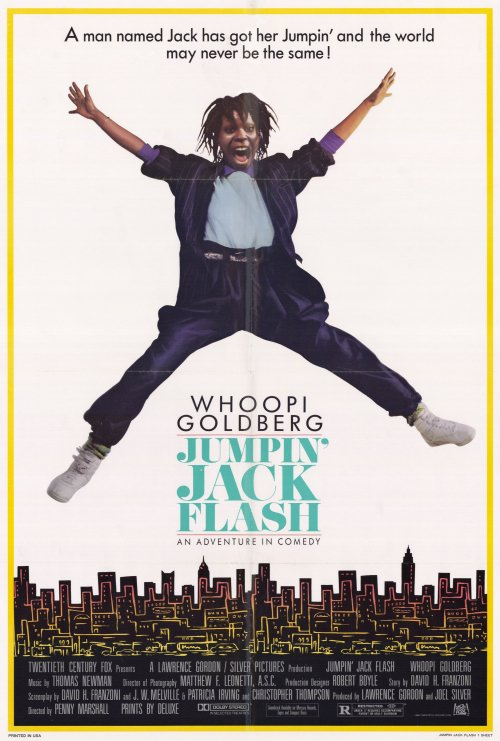
Jumpin’ Jack Flash (1986)

jumpin jack flashBy Richard Winters

My Rating: 3 out of 10

4-Word Review: Whoopi plays spy game.

Due to Whoopi Goldberg turning 58 on November 13th and because whenever I watch a clip of ‘The View’ on YouTube she tends to be my favorite panelist I have decided to review each of the films she starred in during the 80’s for the next 7 Mondays. Critically her films in that decade did not fare well and she has even disowned a few, but since this is a 80’s movie blog I feel it is my professional duty to review them anyways whether some of them are torturous to sit through or not.

In this one she plays Terry Doolittle a bank employee who does a lot of transactions and communications through her computer. One day she gets a message from someone using the code name Jumpin’ Jack Flash who asks for her help supposedly to save his life. This sets into motion wild adventures in which she puts her life at risk and gets involved with everything from the CIA to foreign government powers.

Whoopi is the best thing about this otherwise silly and contrived plot. Director Penny Marshall nicely allows Whoopi room to flex her comic muscles while also taking advantage of her sassy and streetwise humor. The part where she tries to decipher the lyrics of the ‘Jumpin Jack Flash’ song by the Rolling Stones is full of all sorts of Goldbergisms and it’s great. Her impressions of Ray Charles and Diana Ross are on target as well, but my favorite part is when she is drugged with truth serum and then goes into a beauty salon and tells everyone there exactly what she thinks. My only complaint to her performance is her unnecessary use of the F-bomb, which turns this otherwise kid friendly story into an R-rated movie.

It is also fun to watch a lot of up-and-coming comic stars in small roles including Phil Hartman, Jon Lovitz, James Belushi, Tracy Ullman and Annie Potts. There is even a surprise appearance by Jonathan Pryce at the very end, but my favorite is when Penny casts her older brother Gary as a detective who has a humorously confrontational exchange with Whoopi inside a police station.

Marshall’s directorial debut is limp. I liked all the movie posters that line Whoopi’s apartment, but otherwise the visuals are dull. Her workplace environment and conversations that Whoopi has with her co-workers seems realistic, but not particularly interesting or amusing. The opening segment limps along while barely being engaging. The part where Whoopi gets her dress caught in a shredder has up-tempo cartoon-like music played over it, which puts the thing too much at a kiddie level.

The story itself is convoluted and confusing with little that is plausible. The shootout inside the office gets particularly ridiculous, but the biggest problem I had with the script is the way the Terry character gets herself involved in the mess in the first place. If she knew the person asking for her assistance to this dangerous mission I might understand it, but she doesn’t. After she is shot at and nearly killed, gets her apartment ransacked and is verbally threatened she decides to immerse herself even more into the precarious situation even when she is given the opportunity to get out of it, which most normal people would’ve.  The viewer starts to lose empathy for a protagonist when they act irrationally, which this one does. The idea that she is doing it because she has ‘feelings’ for this other person even though she has never met him, knows nothing about him and doesn’t even know what he looks like is just plain stupid.

Although the Rolling Stones song from which the movie is named after does get briefly played later on I felt it should have been used over the opening credits. I still prefer the Stones version, but Aretha Franklin’s rendition that is used during the closing credits isn’t bad.

My Rating: 3 out of 10

Released: October 10, 1986

Runtime: 1Hour 45Minutes

Rated R

Director: Penny Marshall

Studio: 20th Century Fox

Available: VHS, DVD, Blu-ray, YouTube, Amazon Instant Video

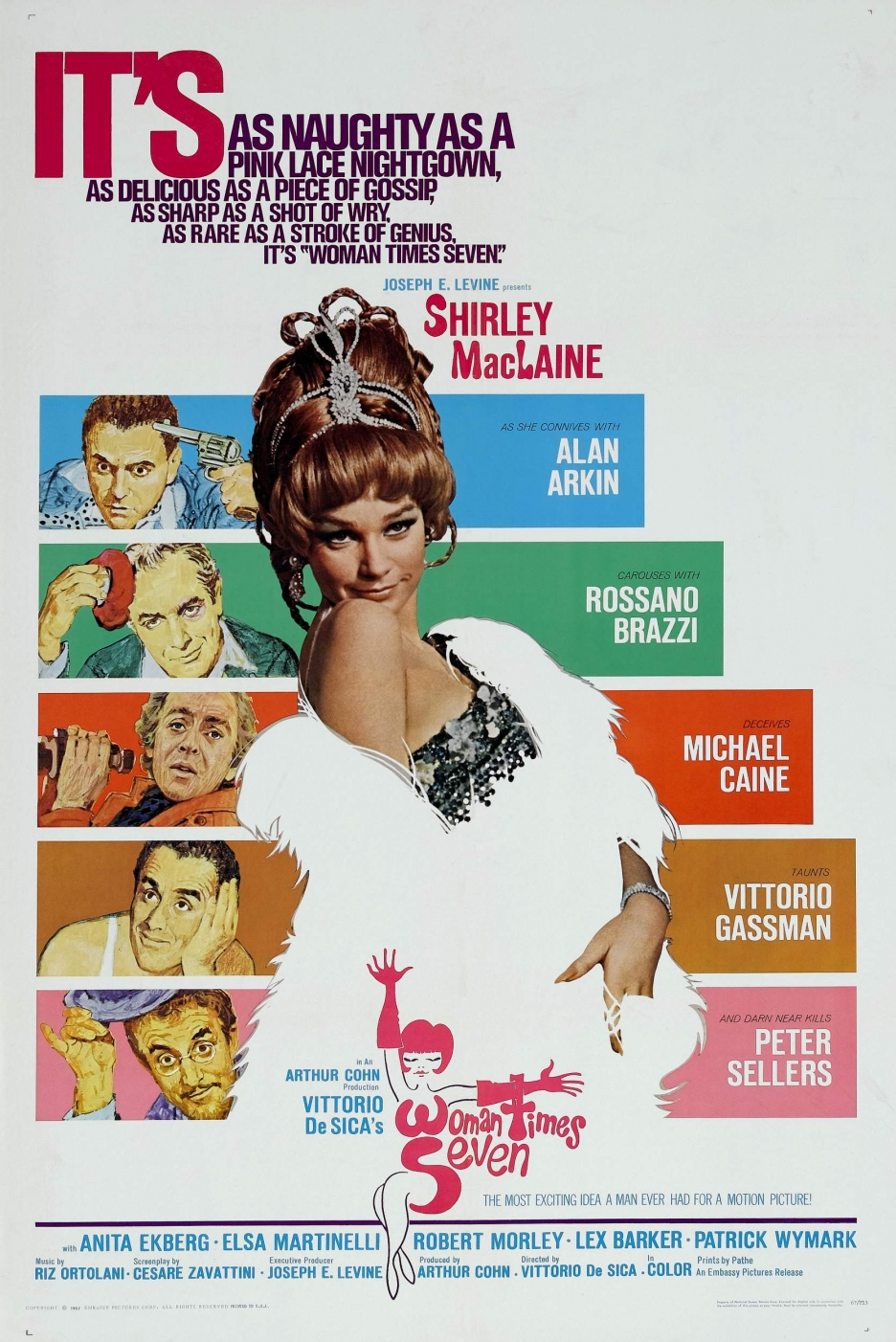
Woman Times Seven (1967)

woman times seven 2

By Richard Winters

My Rating: 7 out of 10

4-Word Review: Gotta love Shirley MacLaine.

Much like with Yesterday, Today and Tomorrow Vittorio De Sica directs a collage of stories all centering on a different female character and all played by the same actress this time being Shirley MacLaine who is fabulous. In fact she is so good that her famous male co-stars get badly upstaged and their presence almost becomes transparent.

The first story is entitled ‘Funeral Procession’ and deals with MacLaine playing the character of Paulette who is grieving over the recent death of her husband. As they are walking behind the hearse that is carrying her husband to his gravesite her friend Jean (Peter Sellers) uses this moment to proposition her for a weekend of sex and fun at an isolated getaway. The irony in this one is amusing and De Sica makes great use of nuance particularly the way everyone tries to avoid the messy puddles they come upon during the procession.

‘Amateur Night’ is the second segment and this one deals with Maria Theresa (MacLaine) coming home early from a vacation only to find her husband Giorgio (Rossano Brazzi) in bed with her best friend. She becomes so upset that she runs out of the house and into a group of prostitutes who lend a sympathetic ear as well as concocting some revenge. The interplay of the prostitutes is quite amusing and I loved watching all the different items that she throws at Giorgio during her rage, but the final payoff on this one could have been better.

MacLaine plays Linda in the third segment, which is entitled ‘Two Against One’. This is where she takes two competing suitors (Vittorio Gassman, Clinton Greyn) up to her apartment and reads them poems while she is completely naked. This segment is a bit forced and the attempts at satirizing the artsy-fartsy crowd is strained, but the creative ways De Sica cover-ups MacLaine’s otherwise naked body, so the viewer never sees anything explicit is amusing.

‘Super Simone’ makes up the fourth story and deals with Edith (MacLaine) becoming jealous because her writer husband Rik (Lex Barker) seems more infatuated with the female character in the book that he is writing than with her. Her wild attempts to get his attention backfires as he starts to think that she is going insane and even brings in a psychiatrist (Robert Morley) to take her away. The story here is slightly contrived, but MacLaine with a short bob haircut is adorable and the foot chase at the end along some apartment rooftops is visually engaging.

MacLaine gives an hilarious over-the-top performance in the fifth segment entitled ‘At the Opera’ dealing with a rich woman who becomes enraged when she finds out that another woman will be wearing the same dress that she will to an exclusive opera. The satirical jabs at the rich are on-target, but it loses steam at the end.

The weakest segment of them all that is barely even funny is the sixth one entitled ‘Suicides’. This is where a young couple (MacLaine, Alan Arkin) decide to commit suicide as a form of vague political protest, but then both chicken out at the end.

The seventh and final segment is entitled ‘Snow’ and deals with a married woman who becomes intrigued by a handsome stranger (Michael Caine) who follows her around the city streets, but who may not be who he seems. Most of the time movies like these have the final story be a strong one, but this one is strangely subdued making the film end with a whimper instead of the bang that it should. This segment is also novel because Caine barely even utters one word of dialogue and becomes completely wasted in the process.

Overall this is fun lightweight entertainment with a great chance to see MacLaine’s wide acting ability and different hairstyles and looks.

My Rating: 7 out of 10

Released:  June 27, 1967

Runtime: 1Hour 40Minutes

Not Rated

Director: Vittorio De Sica

Studio: Embassy Pictures

Available: DVD, Amazon Instant Video, Netflix Streaming

Can She Bake a Cherry Pie? (1983)

can she bake a cherry pie 1

By Richard Winters

My Rating: 7 out of 10

4-Word Review: Fighting keeps them together.

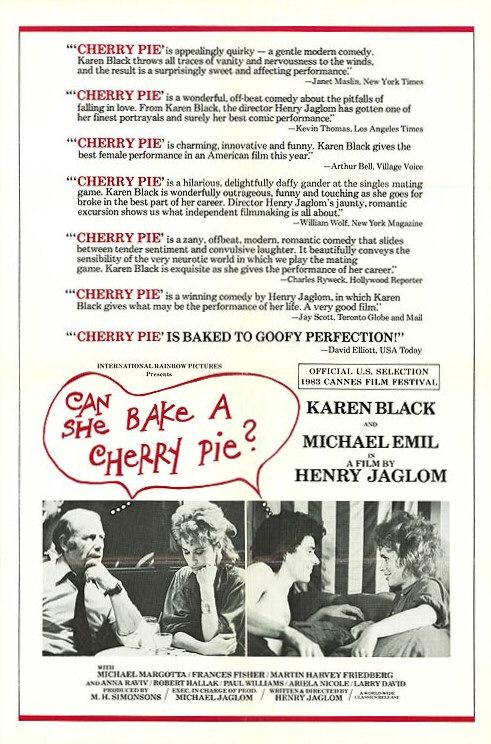
An emotional and neurotic Zee (Karen Black) has just broken up with her husband. Eli (Michael Emil) is an older man who enjoys calculating odds and averages. The two meet at a restaurant and become involved in an offbeat and tumultuous relationship.

The film at times tries a bit too hard to be offbeat. Zee seems almost like a walking cliché. She sobs so much she can’t even order her food at the restaurant without breaking into tears. She chain smokes and has a plethora of hang-ups and paranoia that seems to possess every eccentric movie character and makes the whole thing fall flat before it has even begun.

Fortunately once you make past the rather clumsy beginning it actually starts to click. Writer/director Henry Jaglom instills a wonderfully free-form style to the proceedings that allows one to become engaged without even knowing it. The cinema-vertite approach turns its low budget into an asset. It’s the little things that start to grab you especially the Michael Margotta character and his trained pigeon named Eddie or the brash  way he tries to pick-up women at cafes while their boyfriends are sitting right there at the table with them.

Eli and Zee’s quirky conversations are quite amusing especially Zee contemplating on getting pregnant. These is even a segment showing old home movies done by Jaglom’s parents where you get to see Jaglom and Emil, who are brothers in real-life, whey they were little kids.

Jaglom has seemed to have gotten to the very heart of why we watch movies, which is because we are all secretly voyeurs. We like that little window that opens up and allows us to observe other people and see how they respond and react to things without being told what to look for or what to think. The European style of filmmaking is a refreshing change of pace. The actors are allowed to freely improvise and when it is all over you feel like you’ve watched real people, which makes it seem more relevant and funny.

This is very similar to John Cassavete’s Minnie and Mokowitz, but this fairs better as it is not as strained or aimless. The characters also have a bit more appeal and didn’t ingrate on my nerves as much.

Black gives another intriguing performance. She even sings, which she does quite well and does it while wearing the same wig that she wore while singing in the classic film Nashville.

The only real negative that I had with it was the soundtrack, which was performed by street musicians and sounds awful. It eventually gets so overplayed that it becomes irritating.

My Rating: 7 out of 10

Released: September 10, 1983

Runtime: 1Hour 30Minutes

Rated R

Director: Henry Jaglom

Studio: Pan-Canadian Film Distributors

Available: DVD, Amazon Instant Video

Denise Calls Up (1995)

denise calls up 1

By Richard Winters

My Rating: 8 out of 10

4-Word Review: Friends over the phone.

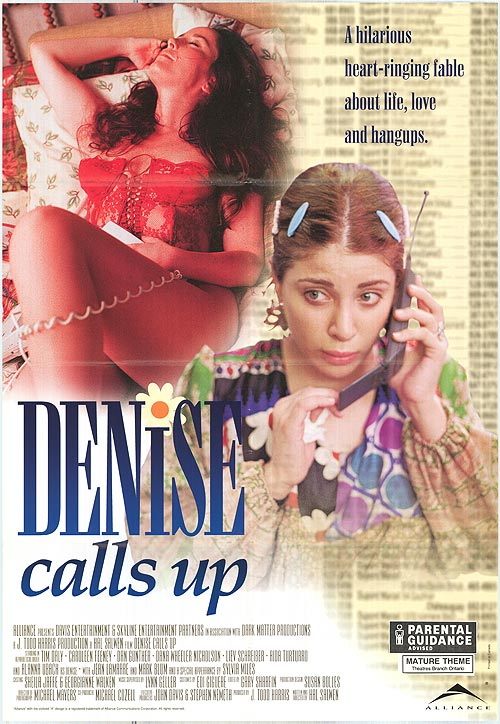
This is a highly original offbeat comedy dealing with a group of young urbanites living in New York who become friends over the phone, but never meet in person. There is Martin (Dan Gunther) who donates some of his sperm to a sperm bank and then gets a call from Denise (Alanna Ubach) who was impregnated with it and now calls to tell him he is the new father. Gail (Dana Wheeler-Nicholson) tries to play matchmaker with Jerry (Live Schreiber) and Barbara (Caroleen Feeney) with the help of her former boyfriend Frank (Tim Daly). Linda (Aida Turturro) and Sylvia Miles as Gail’s nutty Aunt round it out.

The best thing about the film is that all the characters are very real and it makes concise observations on the young upwardly mobile Generation X. All of them possess a myriad of contradictions, insecurities, and neuroses just like people you know in real-life. They are technology savvy, but seem to hide behind it like it is a security blanket. The more options that they are given to communicate with more people the more isolated they become not only from the world around them, but from themselves as well.

I especially got a kick out of the Barbara character because I dated women who were just like her. She is interested in meeting Jerry and seems to like him, but every time he tries to move the relationship forward she backs away and then when he pulls away she goes on the offensive again. She reminded me of what a marriage counselor friend once told me for how he had managed to stay married for so long, which was ‘let them always think they are in control and also let them think that they have won every argument.’

The film is filled with many uniquely humorous scenes as well as sharp dialogue that are quite funny. My favorite part is when all the characters get on a conference call in order to offer support and give advice to Denise during her delivery.

Director Hal Salwen does a great job of keeping things visually interesting. I loved the extremes close-ups of some of the characters mouths as they spoke as well as the back drop of Jerry’s cluttered cramped apartment and the variety of settings that Denise is in when she calls Martin. Salwen was considered an up-and-coming director at the time, but has only done two other features since, which were quite original as well, but he really needs to do more.

Although in my mind I still consider the 90’s to be relatively recent I was really amazed to see how much the technology has changed since this was made. The phones are big and bulky and still require the use of a little antenna for reception. There was no such thing as the internet and faxes were used to send grainy black and white pictures. In some ways this makes it kind of fun to see how things have evolved, but unfortunately it hurts the film a bit because it gives this otherwise hip story a sort of dated look and feel.

The film also allows for a great chance to see young talented stars at the start of their careers. Ubach with her very expressive face is a standout and looks almost exactly like Donna Pescow. Miles is predictably hammy especially with the way she delights in describing the morbid graphic detail of the death of one of the characters that dies when she talks on the phone while driving.

Spoiler Alert!

The only real complaint I had with the movie is the ending when Frank decides to hold a New Year’s Eve party and invites everyone over to his place so they can meet, but everyone finds an excuse at the last minute not to show up. When one of the characters does arrive and rings his doorbell he decides not to let them in. To me this proves to be a bit false especially for a film that was so otherwise on-target. I get the idea that their laptops and phones are their cocoon and they can only function halfway normally when they hide behind them, but still everyone has to get out sometimes and deal with people in person. In my opinion a better way to have ended it would have been to have them get together, but have it be awkward and uncomfortable for all of them. Then have it cut to 5 years later and show how all of them have remained close friends, but still just over the phone.

My Rating: 8 out of 10

Released: May 17, 1995

Runtime: 1Hour 20Minutes

Rated PG-13

Director: Hal Salwen

Studio: Dark Matter Productions

Available: VHS

The Lonely Guy (1984)

the lonely guy

By Richard Winters

My Rating: 6 out of 10

4-Word Review: He needs a girlfriend.

This film almost seems like an extension of Steve Martin’s character in The Jerk and could probably be retitled ‘The Jerk Goes to the Big Apple’. Here we find the same incredibly vapid, highly benign character looking for love and adjusting to the pitfalls of being single.

Like with The Jerk the film taps into the same absurd type of humor some of which is quite funny, but other parts become stretched and even stupid. The best stuff comes at the beginning and then starts to get strained by the end. There is no real story and the whole thing is just loosely structured hit-or-miss comical bits casually tied around the theme of loneliness.

Based on the novel by Bruce Jay Friedman the script was written by Neil Simon, Ed Weinberger and Stan Daniels three titans of comedy who have written some smart stuff in the past and yet I found their script here to be a bit annoying. It takes on the serious issue of social alienation with kid gloves. The points that it makes are superficial with no effort to dig deeper or make any type of real statement. The single male characters are too hopeless and needy and too much emphasis is placed on relationships and the misconception that people who are in them are always happier than those who are not. It also acts like being in relationships will somehow solve everything.

Judith Ivey makes a nice addition as Martin’s eventual girlfriend. She is not glamorously beautiful and therefore the two make a nice and realistic looking pairing. Her scenes and interactions with Martin make the film much stronger.

Unfortunately with Charles Grodin, who is dynamic at dry deadpan humor, is not used to his full potential. Merv Griffin has an unfunny cameo and the recently departed Joyce Brothers also appears with her nerdette persona that was beginning to wear thin.  Singer Steve Lawrence is completely miscast as a ‘chick-magnet’.

The bit involving lonely men jumping off the Brooklyn Bridge every two minutes borders on being tasteless and the running gag involving Ivey having an orgasm every time a man sneezes is just plain dumb. However, the part where Martin argues with a policeman over whether the poop on the sidewalk is from his dog is a gem. There is also a hilarious bit involving Groodin throwing a party with cardboard cutouts of famous movie stars as his ‘guests’ although don’t look for one of Gene Hackman because his have to be reserved one-week in advance!

My Rating: 6 out of 10

Released: January 27, 1984

Runtime: 1Hour 30Minutes

Rated R

Director: Arthur Hiller

Studio: Universal

Available: VHS, DVD, Amazon Instant Video