Category Archives: Buddy Movies

Nice Dreams (1981)

By Richard Winters

My Rating: 3 out of 10

4-Word Review: Ice cream side effect.

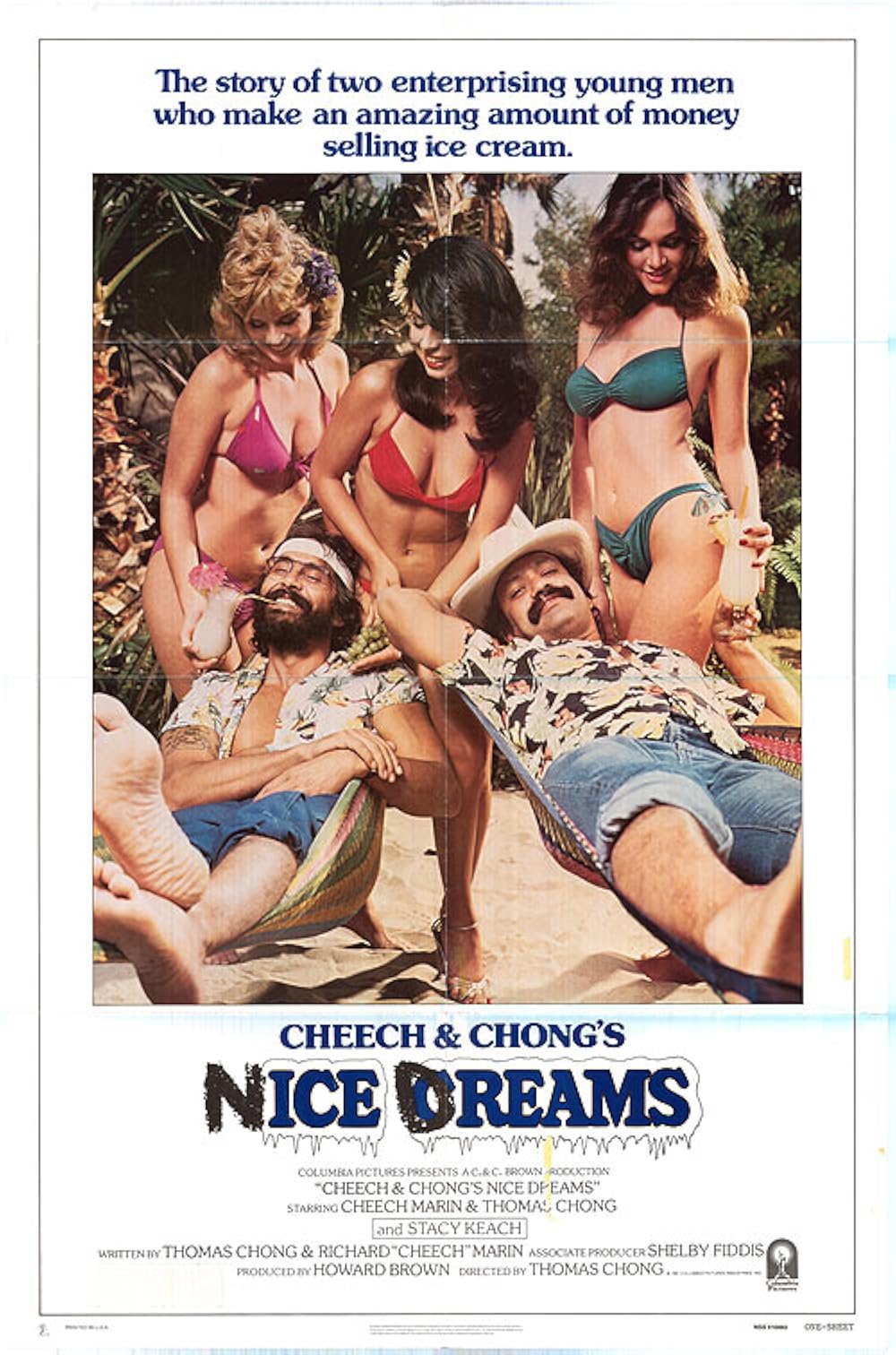
Cheech (Cheech Marin) and Chong (Tommy Chong) have become rich by driving around in an ice cream truck that appears to be selling ice cream, but in reality, it’s marijuana and the side effect of taking too much of it is that it can turn people into lizards. Sargent Sardenko (Stacy Keach) who has been on the two’s trail since the first installment has been smoking the weed for a while in order to get into the mindset of a dope user and thus better able to figure them out, but in the process, it has turned himself into a stoner and no better than the people he’s chasing after. When he takes Cheech and Chong’s stuff the lizard side effects become apparent, and he tries to conceal from his two deputies (Tim Rossovich, Peter Jason) who become increasingly more suspicious of his bizarre behavior. Meanwhile the duo’s fortune takes a bad turn when Chong, under the heavy influence of cocaine, signs away all of his fortune to Howie (Paul Reubans), a mental patient. In an effort to get their money back they track him down to the hospital where he resides, but Cheech gets mistaken as being a fellow patient and is soon strapped into a strait jacket and locked into a cell. 

The third installment of the series made a lot of money, $35 million at the box office, but the majority of that was in the first 2-weeks where loyal fans flocked to it, but it leveled off after that making it apparent that for general audiences it wasn’t received as well. The biggest problem for me is that it’s too disjointed. The surreal effect worked in the first two, but here it gets in the way and a more conventional storyline was needed to make it compelling. Case in point is the fact that it starts out with the two already in the business and making cash while residing in a posh, oceanside pad. I liked the messy, rundown shack that they lived in in the second film and kind of wanted to see them stay there as its extreme cluttered state made it bizarrely eye catching and like a third character. If they had to move that’s fine but show that occur in the movie as well as them attaining their newfound fortune versus them already in the new lifestyle when the film begins, which doesn’t make it seem like a continuation from where the second left off, but instead a completely new story altogether. 

I didn’t like the way the Sardenko character got portrayed here at all. In the first film he was the main source of the energy and his almost insane passion to catch the two and his by-the-book brash manner made him a fun heavy and somebody you liked to see get rattled. He was also the perfect overblown caricature of how the counterculture viewed cops during that era, so his presence had a definite point, but here all of that gets thrown out by having him just laying around smoking pot and behaving like every other stoner out there. The irony of him becoming who he despises is lost, had we seen the transition during the course of the film where he at least starts out the way we remembered him from the previous movie and then became a stoner by the end, it might’ve worked better, but as it is it seems like a whole new character connected by name only and isn’t half as fun to watch. 

There are still some funny moments like when Chong gets mistaken for Jerry Garcia while eating inside a Chinese restaurant and when Cheech runs around a hotel naked while trying to escape the clutches of a jealous boyfriend, but there’s no momentum as the plot doesn’t really seem to be progressing anywhere. Part of the reason for this is that the two relied heavily on storyboarding while keeping the script to a minimum, which in fact was only 3 1/2 pages in length and Cheech stated in interviews it was only this long because it was double-spaced. 

Improv can be wonderful if done right and there are moments here when it hits the mark, but the slow bits in-between hurt it. Had it been tied together inside a more cohesive storyline it would’ve really helped and just coming up with wacky scenarios on the seeming fly starts to wear thin.  The climactic scenes inside the asylum don’t work at all and the cameo by Dr. Timothy Leary, a friend of Cheech’s, is more annoying than funny especially with his incessant laugh and monotone delivery. Yet because this one made money, they continued to make more with their next film, which will be reviewed next, being a definite improvement. 

My Rating: 3 out of 10

Released: June 5, 1981

Runtime: 1 Hour 27 Minutes

Rated R

Director: Tommy Chong

Studio: Columbia Pictures

Available: DVD, Amazon Video, YouTube
Cheech and Chong’s Next Movie (1980)

By Richard Winters

My Rating: 6 out of 10

4-Word Review: Chong meets Cheech’s cousin.

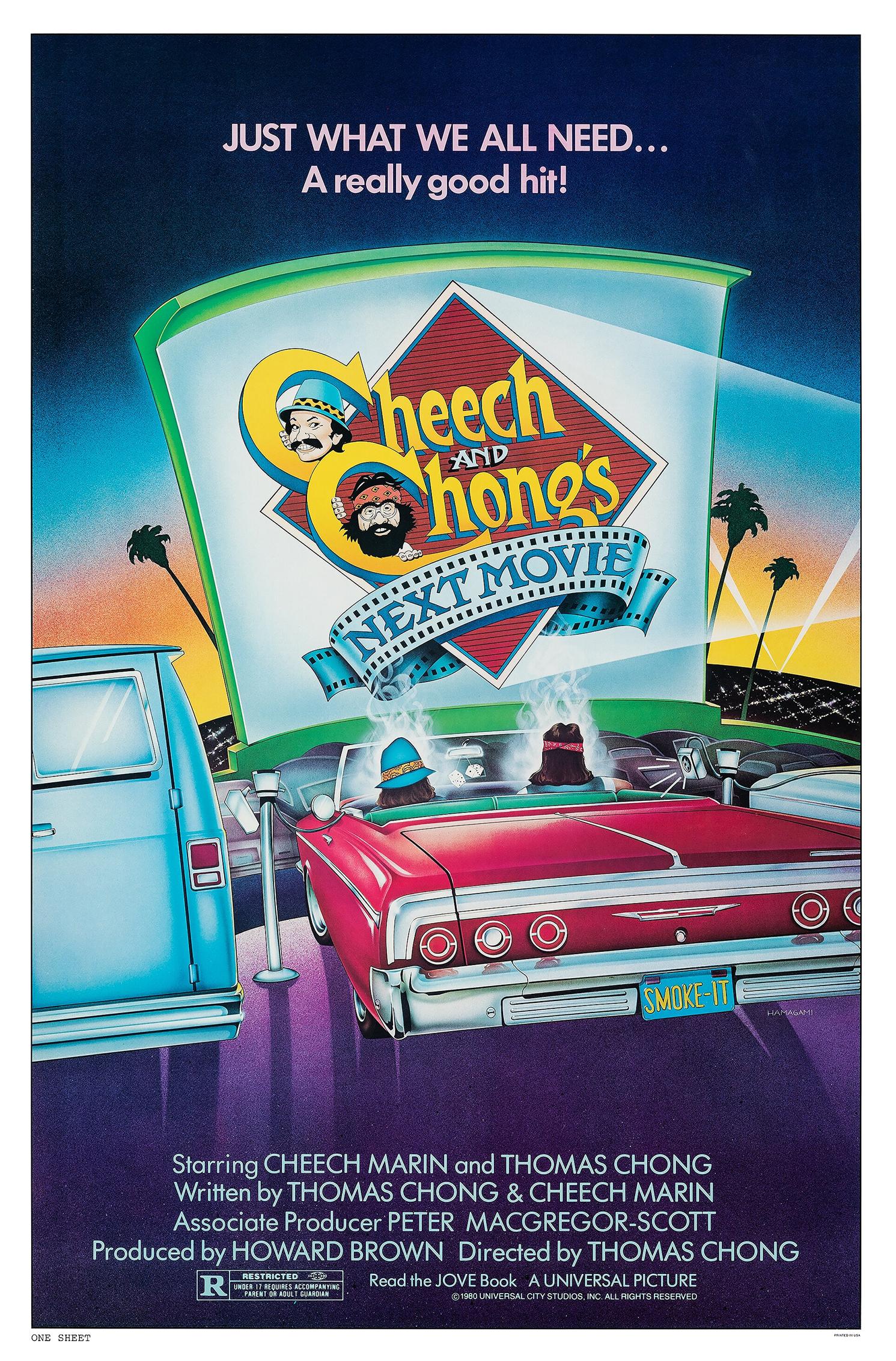
Chong (Tommy Chong) and Cheech (Cheech Marin) have moved in together in a decrepit place that puts new meaning to the word pigsty. Chong doesn’t have any interest in finding a job and spends his days playing his electric guitar at an ear-splitting level that disrupts the rest of the neighborhood. Cheech does work but gets fired forcing the two to go to the unemployment office where Cheech meets-up with his old girlfriend Donna (Evelyn Guerrero). The two get-it-on inside her office, which soon gets her fired. She then calls Cheech later on and the two agree to a date at his house. To get Chong out of the way Cheech has him get together with his cousin Red (Cheech Marin). Red is getting kicked out of his hotel room for nonpayment, so Chong helps him get his stuff out including a 20-pound bag full of marijuana (in the edited TV-version it’s described as a bag full of ‘diamonds’). The two then spend the rest of the night meeting up with different people and attending various nightclubs before ultimately being kidnapped by some outer space aliens while Cheech sits home alone dreaming of his rendezvous with Donna, who to his knowledge, never gets there.

This is, in my opinion, the best installment of the Cheech and Chong film series and an upgrade from their first film. This one has the same cinema vertite approach as that one but is able to tie it in better with a more consistent atmosphere that at times becomes almost surreal. Chong travels with Red late at night and the goofy people they meet along the way becomes very similar in theme to After Hoursor at least the Los Angeles version of that and had it been amped up just a little more it might’ve been just as good and memorable but just misses the mark yet kooky enough to keep it engaging. Thomas Chong’s direction is leisurely paced, which helps add to the offbeat vibe and his character is more engaged. In the first film Chong was strung-out most of the time making him boring and giving all the funny lines to Cheech, but here it’s more equal, making it a true buddy movie. The drug use isn’t emphasized as much either and doesn’t come off like it’s promoting the use of it like in the first one.

Some of the set pieces are impressive especially their messy house, which is so dirty and unsanitary that it’s almost like an art form the way the production team got it to look that way. I’ve seen some cluttered places before in movies, but never in quite the authentic way as here as it seems great care was taken to give it a legit look and making the scenes shot inside the place both fun and jaw-dropping at the same time. There’s no doubt though that had slacker stoners with no cleaning skills moved in together it would end up looking very similar to the place here. I also enjoyed seeing their neighbor’s place, played by Sy Kramer, who’s overly efficient ways are a far cry from theirs and the confrontations between them needed to be played-up more especially after the two steal and destroy his car and while his vehicle does get returned to him it’s in a highly damaged state, but without seeing his reaction shot we miss half the comedy potential.

It’s fun seeing Cheech play dual roles, speaking in a voice that sounds entirely unlike his own and proving he’s a much more talented actor than one might initially suspect. Edie McClurg gets one of her best roles as a rich uppercrust suburbanite who with only a few drinks becomes increasingly ditzy as the night wears on. Paul Reubens is entertaining as a no-nonsense hotel desk clerk and Michael Winslow has some engaging moments doing ‘sound effects’ while inside the unemployment office and old man John Steadman laughing at every single thing Winslow does.

This film also supposedly is the final onscreen appearance of veteran actress Mary Anderson, who is probably best known for her work in Alfred Hitchcock’s classic thriller Lifeboat. Here she has an uncredited bit as an old lady inside a music store, but the woman is seen for less than two seconds and within a group of other people making it hard to fathom why she’d come out of retirement, her first acting work in 15 years, just to give off an annoyed expression for a brief second and then call it a day. The woman doesn’t really look like her either making me think that since Mary Anderson is a very common name, they got the wrong one and it’s a different actress entirely.

I also can’t end this review without mentioning a glaring continuity error in which the car that Chong and Cheech are riding in goes out of control and ends up crashing into somebody’s front yard but the fence surrounding the yard remains intact. However, for the car to have gotten onto the lawn it would’ve had to have crashed through the fence, so showing it with no damage at all makes no sense.

My Rating: 6 out of 10

Released: July 18, 1980

Runtime: 1 Hour 35 Minutes

Rated R

Director: Tommy Chong

Studio: Universal Pictures

Available: DVD, Blu-ray, Amazon Video, YouTube

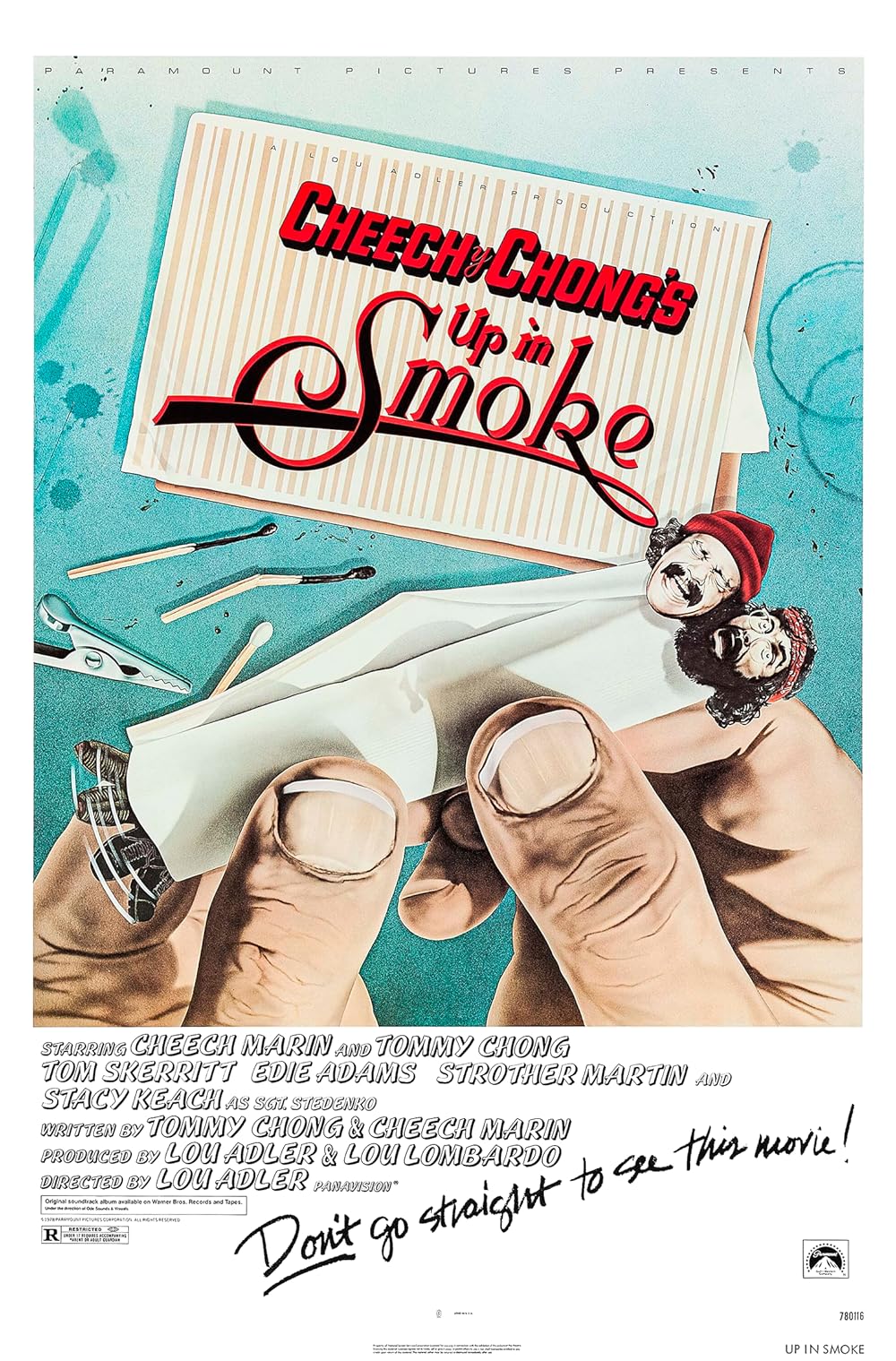
Up In Smoke (1978)

By Richard Winters

My Rating: 5 out of 10

4-Word Review: Two stoners become friends.

Anthony (Thomas Chong) is told by his father (Strother Martin) that he must find a job, or he’ll be kicked out of the house. Anthony then hitches a ride with Pedro (Cheech Marin) and the two quickly become friends based on their mutual interest of getting high on drugs. Soon they’re involved in many adventures including being shipped off to Tijuanna. In order to get back into the country they agree to drive a van that unbeknownst to them, is made completely of hardened marijuana, which gets them quickly put on the radar of Seargent Stelko (Stacy Keach) who along with his crack team of incompetents chases the two relentlessly in order to haul them into jail and make the country’s streets safe again. 

Cheech Marin was trying to avoid the draft when he went to Canada in 1969, which is where he met Thomas Chong, already a Canadian citizen who was starting up his own improv called ‘City Works’ after seeing Second City improv in Chicago while touring as a musician. The two became a comedy team who would come out to warm up audiences before concerts, but in many cases were more popular than the bands they were introducing. This then caught the attention of producer Lou Adler, who signed them to a contract to create record albums, which were so profitable that they graduated into making a movie, which Adler directed, that recreated many of the same skits they had used during their stage routines.

The movie upon its initial release with its open drug use was considered quite controversial and lead to many critics at the time to condemn it but nonetheless proved to be a big money-maker grossing $104 million on a $2 million budget.  Today the film is seen in a much softer light and in 2024 was elected for preservation by the National Film Registry by the Library of Congress.

I remember watching this when it came out and laughing at much of it particularly the car scene where the two smoke a giant marijuana cigarette and then get pulled over by the police. The film also does a terrific job of showing the East L.A. vibe possibly better than any other movie out there. You feel immersed in the culture and get a vivid feel of the era and setting especially at the end when the two go onstage and take part in the Battle of the Bands at the Roxy Theater. The film also has a leisurely pace, much like a French film, where it doesn’t feel the need to have a highly structured plot like in most American films and putting the emphasis more on atmosphere, which is a refreshing change of pace. Some of the supporting players, including Strother Martin who refers to his son as the ‘anti-Christ’ and Stacy Keach as the hardnosed police detective as well as his loyal, but bumbling deputy, played by Mills Watson, but without his patented mustache, who later went on to play the same type of role in the TV-show ‘The Misadventures of Sheriff Lobo’, are all perfect and help add to the fun.

On the negative end the two leads and their interactions, are poor. Cheech never even bothers to learn his buddies name and just continues to refer to him as ‘man’ for the duration of the pic, which might be the intended comedy, but offers no character development. They never grow or change and instead are paralyzed in a permanent caricature. Marin is funny, and in fact the only source of the humor, but Chong is underdeveloped. He spends most of the time strung out on drugs, or going through a bad trip, to the point that he seems catatonic and allowing all the energy to go to Marin, which is fine as he makes the most of it, but it barely seems like a buddy pic when it’s only one guy getting all the laughs. 

Without sounding like somebody’s old-fashioned parent I must agree with the initial sentiment that found this movie to be glorifying drug use and thus toxic to the day’s youth. The film acts like using drugs is just harmless fun. The scene involving actress June Fairchild, who later became homeless due to her own real-life addictions, where she sniffs some Ajax by mistake thinking it’s cocaine, but has no bad reaction to it and instead gets just as an enjoyable high is a problem. Granted I realize it’s supposed to be ‘funny’, but I could see a parent being concerned that it’s sending the wrong message to impressionable teens. 

My Rating: 5 out of 10

Released: September 15, 1978

Runtime: 1 Hour 26 Minutes

Rated R

Director: Lou Adler

Studio: Paramount Pictures

Available: DVD, Blu-ray, Amazon Video, YouTube

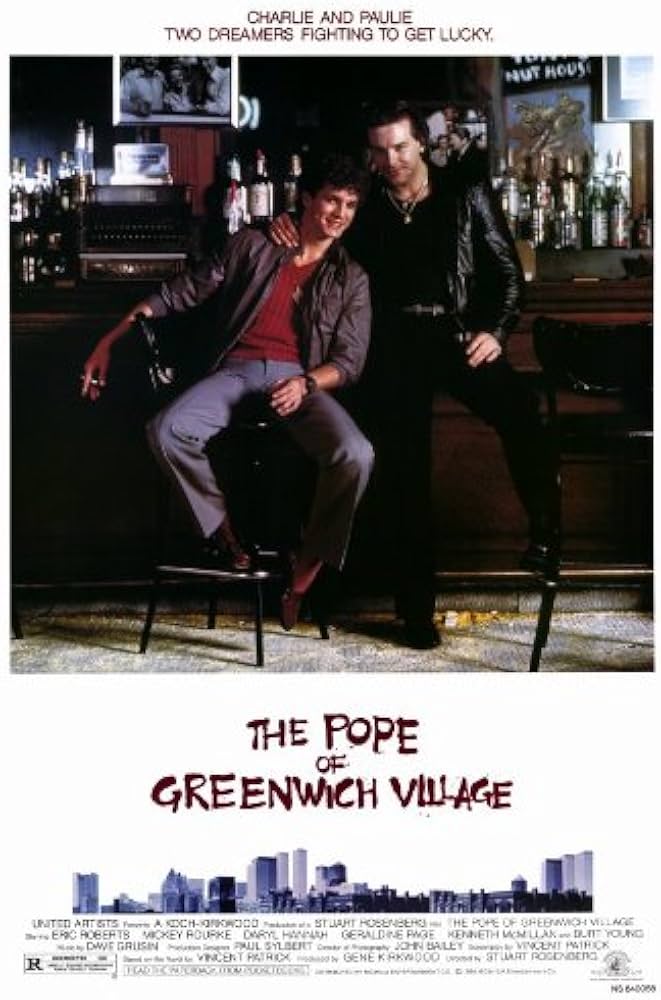
The Pope of Greenwich Village (1984)

pope

By Richard Winters

My Rating: 7 out of 10

4-Word Review: Cousins turn to crime.

Charlie (Mickey Rourke) and Paulie (Eric Roberts) are cousins working at a restaurant who get themselves fired when Paulie is caught skimming checks. Since Charlie’s girlfriend Diane (Daryl Hannah) has a baby on the way he must act fast to bring in some money. Paulie convinces him of a ‘great’ opportunity, which is to hire a former safecracker, now working as a clock repairman, Barney (Kenneth McMillan) to break-open a safe inside the building of a large company that reportedly has a large amount of money inside it. Charlie is cautious as he doesn’t completely trust Paulie whom he finds immature and unseasoned, but he’s so desperate that he reluctantly agrees. Things go smoothly at first, as they’re able to break into the building easily, but the unexpected arrival of undercover cop Walter (Jack Kehoe) soon sends their plans awry. When Walter dies during the melee they’re now on the hook for his death as well as in the bad graces of mob boss Eddie (Burt Young) who’s safe it was that they tried to rob. 

The film is based off of the 1979 novel of the same name by Vincent Patrick who also penned the screenplay. It does an excellent job of creating a vivid feel of Greenwich Village where it was shot on-location and the interactions of the characters seem overall authentic. The only real issue is the way it hinges of extreme Italian American stereotypes where it seems like anyone from that background must be involved in crime and if any other group was portrayed that way it would be deemed problematic if not downright controversial. The cliches are so strong that had it been heightened just a small degree it could’ve been deemed as parody, or even satire and in fact IMDb does list it as being a ‘comedy’ though I really don’t think that’s the case. I believe it’s meant to be a drama, but either way, for the sake of balance, it would’ve helped had there been some Italians even just one who didn’t fall into the tired caricatures. 

The acting is the crowning achievement. Roberts is superb and I really found it hard to believe he didn’t become a star from this. While he’s always been a great character actor I think he should’ve been given more and I do realize he’s still busy in the business and has been consistently, but I don’t think the quality of the parts has always been there and most filmgoers are probably more familiar with his sister Julia, which is a shame. I was completely blow away by him here and genuinely surprised why the Oscar didn’t fall into his lap.

Rourke is excellent too, but more because he wisely underplays his role and allows Roberts to carry all the emotional energy. Had they both been competing for it it would’ve failed, but their different approaches help create a nice contrast and sometimes it’s the best actors who don’t force it and for the most part that’s what Rourke does here. Of course, he too has his moments like when they go to the racetrack, and he bumps into a guy and instead saying ‘excuse me’ like a normal person he instead says, ‘out of my way asshole’. Him beating up on his refrigerator when Diane leaves him has a memorable quality to it though I would’ve thought the fridge would’ve been more damaged and he should’ve at the very least injured his hand, which strangely doesn’t occur despite him punching at it repeatedly.  

On the female end most accolades goes to Geraldine Page who got nominated for the supporting Oscar despite having only 8-minutes of screentime. She gives a powerful performance for her limited presence, but the idea that she could stymie police efforts to search her deceased son’s room by giving veiled threats that she’ll make them look bad in the media I didn’t totally buy. If cops want something bad enough, they’ll get it with the possible exception of money exchanging hands, which in this case didn’t happen. Hannah as the girlfriend has almost the same screentime, maybe a little more, and hits the bullseye as an idealistic young woman who believes she can somehow get her boyfriend to change only to learn the ultimate harsh lesson that it doesn’t work that way. 

Spoiler Alert!

The ending I felt was a letdown. I was actually intrigued with Charlie finding the tape from the deceased cop that implicated Eddie and seeing how he could use that to stay out of trouble for being a part of the robbery. Having Paulie then swoop in by putting lye into Eddie’s drink and poisoning him seemed too easy. Eddie had just gotten done having his men cut-off Paulie’s thumb, so he should expect Paulie would be looking for revenge and not naive enough to have him make his drinks, or if he does at least have one of his henchmen taste it first. You have to wonder how Eddie was able to climb up the crime ladder if he was that stupid and thus the climax really isn’t that clever, or surprising as the camera focuses up-close on the coffee cup making it too evident that something is going to happen. A letdown for a movie that had been relatively smart up until then.  

My Rating: 7 out of 10

Released: June 22, 1984

Runtime: 2 Hours

Rated R

Director: Stuart Rosenberg

Studio: MGM/UA

Available: DVD, Blu-ray, Amazon Video, YouTube, Tubi, PlutoTV

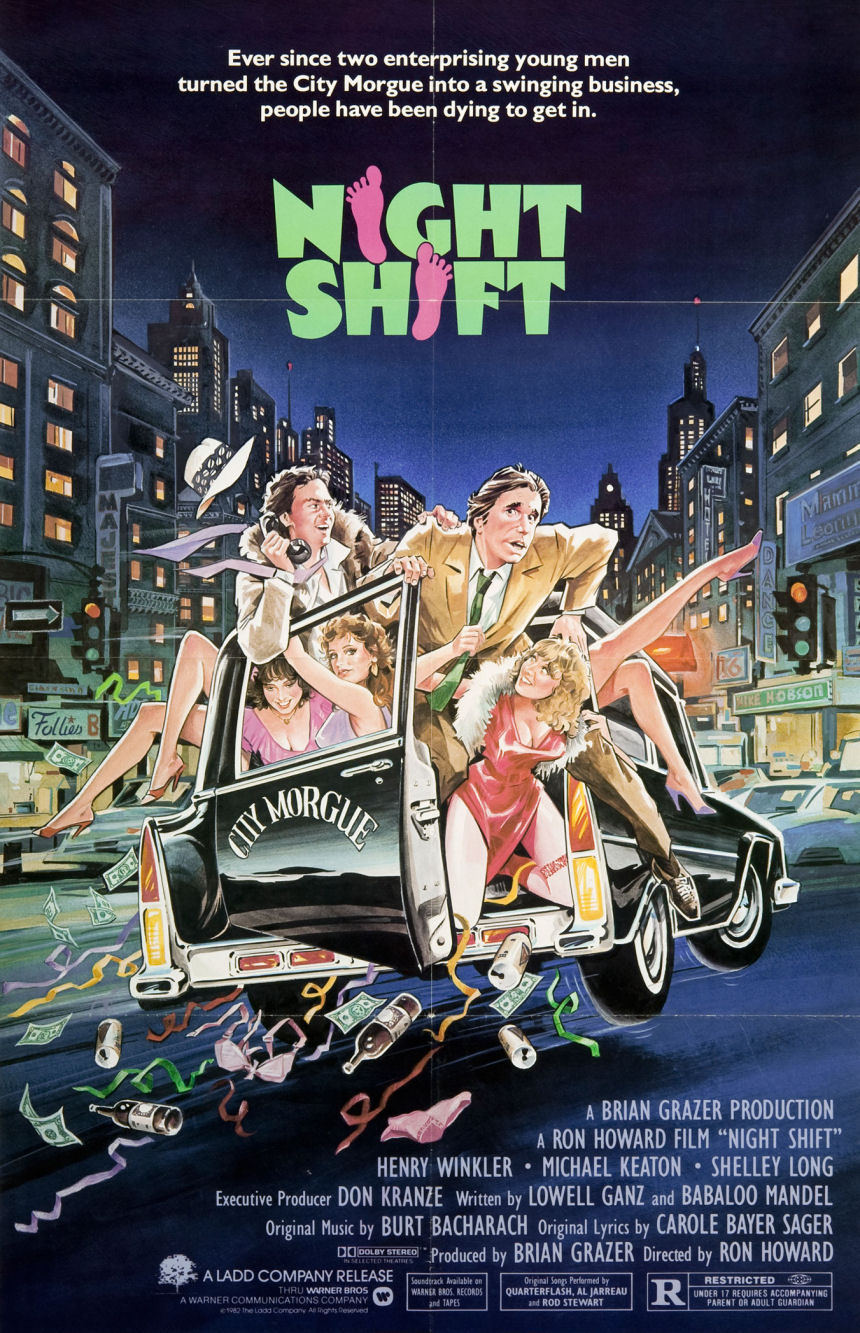
Night Shift (1982)

nightshift1

By Richard Winters

My Rating: 6 out of 10

4-Word Review: Hookers in a morgue.

Chuck (Henry Winkler) has dropped-out of his former job as a stockbroker due to the stress and decided to work in a more tranquil setting as the night shift manager of a New York City morgue. He’s unhappy though to have to share duties with Bill (Michael Keaton) who’s talkative and partying ways are a complete contrast to Chuck’s introverted manner. Chuck’s home-life isn’t much better as he’s engaged to be married to Charlotte (Gina Hecht) though her habits and constant complaining are at odds with Chuck’s. His only solace is Belinda (Shelly Long) a prostitute whom he sometimes bumps into as she’s servicing his next-door neighbor Luke (Tim Rossovich). When Chuck finds her beaten-up inside an elevator he decides she needs to find a work environment that will afford her more protection, which gives Bill the idea to open-up a prostitution ring inside the morgue, which goes-off surprisingly well for  awhile before rival pimps become aware of it and threaten Bill and Chuck with their lives unless they agree to let them in on the payout.

This marked the second feature length film directed by Ron Howard and was inspired by a New York Times article about a real-life morgue that became a prostitution hang-out during its night hours. He decided to offer the leading role to Winkler, who had the choice of either playing Bill or Chuck but went with Chuck as he felt it would be fun playing against type, or in his words a ‘chance to play Richie Cunningham’. Winkler was still acting in ‘Happy Days’ TV-show at the time, so he’d shoot this on Mondays and Tuesdays in New York and then fly back to Hollywood to play Fonzie on Thursdays and Fridays.

While the change of pace may have shown what a good actor Winkler was it really didn’t help his image as the protagonist here is too wimpy. A somewhat passive guy is okay, but this guy lets people push him around too much making him look pathetic and his buttoned-down personality doesn’t show much energy making most of his moments in front of the camera too subtle to be either funny or engaging.

Keaton on the other-hand is too flamboyant, and his talkative ways become obnoxious instead of endearing and I personally didn’t blame Winkler for telling the guy to shut-up and leave him alone as I would’ve felt the same way. The story could’ve worked just as well if not better had Keaton not been in it at all and let Winkler carry-it alone, which would’ve allowed for a more interesting character arch at seeing this nebbish guy run a prostitution ring and thus learn to open-up more because of it.

Winkler’s relationship with Charlotte made little sense as the two had nothing in common and all she did was nag and complain. Why would anyone want to date someone like that let alone get engaged with them? I realize this was supposed to be part of the ‘comedy’ but for it to be funny there actually has to be some truth in it and these two shared no chemistry and at least one of them would’ve in reality come to their senses and broke it off and logically it’s surprising that it didn’t happen. The Charlotte character wasn’t even needed because the focus is on Winkler’s budding romance with Long, so why not just have him be a single guy who’s lonely and can’t make it with women and thus becomes entranced with Long despite her being a hooker simply because she showed him some attention.

While she gives a really good performance that’s light years removed from her Diane Chambers role from ‘Cheers’ that she’s best known for, and she sure looks great in the scene where she wears skimpy panties, her character here is problematic. She’s too wide-eyed and innocent for a woman whose been working as a call girl on the big city streets and even been badly beaten-up a few times by her pimp and johns. Seems like she should’ve formed a very hardened, crusty exterior for her own basic mental defense and the fact that she doesn’t show any of this and instead is so openly sweet seemed not remotely believable.

The premise has great potential, but it doesn’t do enough with it. For most of the way the pace is leisurely and the comedy subtle. I was expecting dead bodies coming-in amidst the sex and lots of mix-ups and confusion, but that stuff barely even gets touched upon. The prostitutes are portrayed as an extreme caricature with no distinct personalities, which reveals how shallow the whole thing is. Back-in-the-day, and I know because I was around, movies dealing with the subject of prostitution was considered ‘edgy’, but now stuff like this is looks trite and barely even touching the surface in regard to realism.

My Rating: 6 out of 10

Released: July 30, 1982

Runtime: 1 Hour 46 Minutes

Rated R

Director: Ron Howard

Studio: Warner Brothers

Available: DVD, Blu-ray, Plex, Roku, Tubi, Amazon Video, YouTube

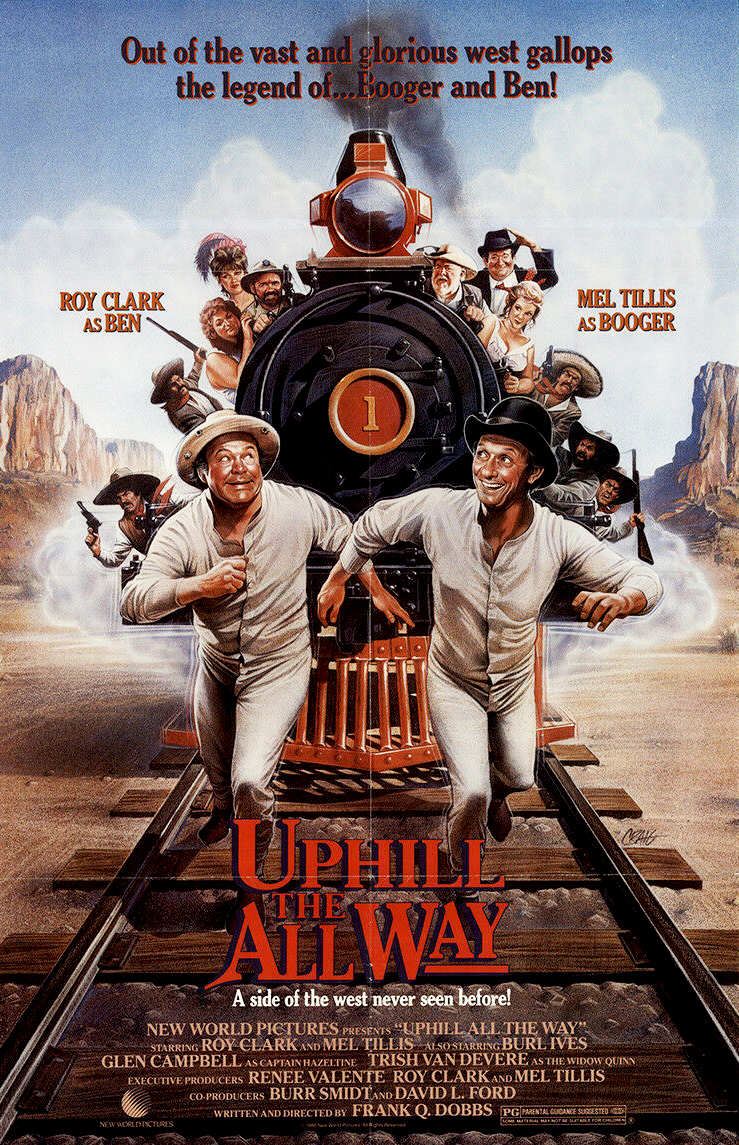
Uphill All the Way (1986)

uphill

By Richard Winters

My Rating: 2 out of 10

4-Word Review: Bumbling cowboy con-men.

Ben (Roy Clark) and Booger (Mel Tillis) are two con-men living in the old west, who don’t have a dime between them. After getting kicked-off a train for not having tickets they then venture to a saloon in order to win some money at poker, but even though they attempt to cheat, they still end up losing. In desperation they try to trade in their rifle for a loan, but the bank teller (Richard Paul) mistakenly thinks they’re trying to hold him up and sounds the alarm. The two then go on the run while being chased by a posse of sorts that includes the sheriff (Burl Ives) two prostitutes (Elaine Joyce, Jacque Lynn Colton) and the town drunk (Frank Gorshin).

The film is a misguided effort to replicate the campy, rural humor of the TV-show ‘Hee-Haw’, which Roy Clark hosted for almost 17years and which Mel Tillis made several guest appearances, and try to turn it into something resembling a movie. While the show never met any critical acclaim it still managed to succeed because all the humor, much of it being ribald and corny, was set-up into brief segments that only lasted for a few minutes if even that long and relied almost exclusively on one-liners. As soon as the punchline was uttered it would quickly move to another segment much like the variety show ‘Laugh-In’ was styled. However, trying to expand that format and silly comedy into a feature length film is virtually unworkable. Instead of a plot we get a collection of goofy situations coupled with goofy characters saying and doing cartoonish things that gets strung along with a mind numbing 90-minutes before it finally, mercifully manages to end much like putting a sick horse out of its misery.

Had the chemistry between the two stars been better it might’ve had some chance, but Tilis and Clark, both better known as country singers of which they’re very good at, don’t have what it takes to carry a movie. I was thankful at least that Tillis didn’t rely on his old stuttering routine for cheap laughs and here for the most part he articulates quite well, but he fails to have much to say that is amusing. Clark with his tubby physique coupled with his high-pitched voice seems all wrong for different reasons and his attempts at being exacerbated comes-off as affected. The banter between the two is stale and with both being in their 50’s they lack the fresh boyish charm that they might’ve otherwise been able to exude had they done this when they were in their 20’s.

The supporting cast falls equally flat. Burl Ives looks old and tired here and like he’s just phoning-it-in. Gorshin, a great and versatile talent if given the right material, is completely wasted as a drunk who does and says very little. Trish Van Devere, who during the early 70’s was considered a leading lady, reveals how sadly her career had fallen, she officially retired after doing just one more movie after this one and I think it was because she was no longer getting any quality offers, doesn’t appear until 55-minutes in and almost becomes like a background character with not much to do. Burt Reynolds does appear briefly near the beginning, he apparently accepted no fee for his work here, but is quite amusing and had he been in more scenes might’ve saved it. Elaine Joyce stands-out too as she usually played bubble-headed blondes, but here is a bitchy, angry type and does surprisingly well with it though if she’s going to be the best thing about a movie then you know it must be in real trouble.

The story is disjointed too as it starts out as a playful chase comedy then strangely diverts into an extended shoot-out where the two become hold-up in a home with another family trying to fend-off a group of bad guys that are separate from the ones chasing after them making it seem like two different, poorly realized plots meshed into one. I will give it some credit for being a movie with a Texas setting that was actually filmed in Texas unlike some other movies that say the setting is Texas when it really isn’t. You can tell that it is the Lone Star state because of the prickly pear cactus that is seen all about, which is different from the upright variety that’s seen in the deserts of Arizona and California. Though on the negative end it was shot in the month of October when the searing heat of the region was over and any good Texas movie should have the heat play a factor since that’s very much a strong characteristic of the state.

My Rating: 2 out of 10

Released: January 21, 1986

Runtime: 1 Hour 26 Minutes

Rated PG

Director: Frank Q. Dobbs

Studio: New World Pictures

Available: DVD, Blu-ray, Amazon Video, YouTube

When the Legends Die (1972)

whenlegends

By Richard Winters

My Rating: 8 out of 10

4-Word Review: Indian becomes rodeo rider.

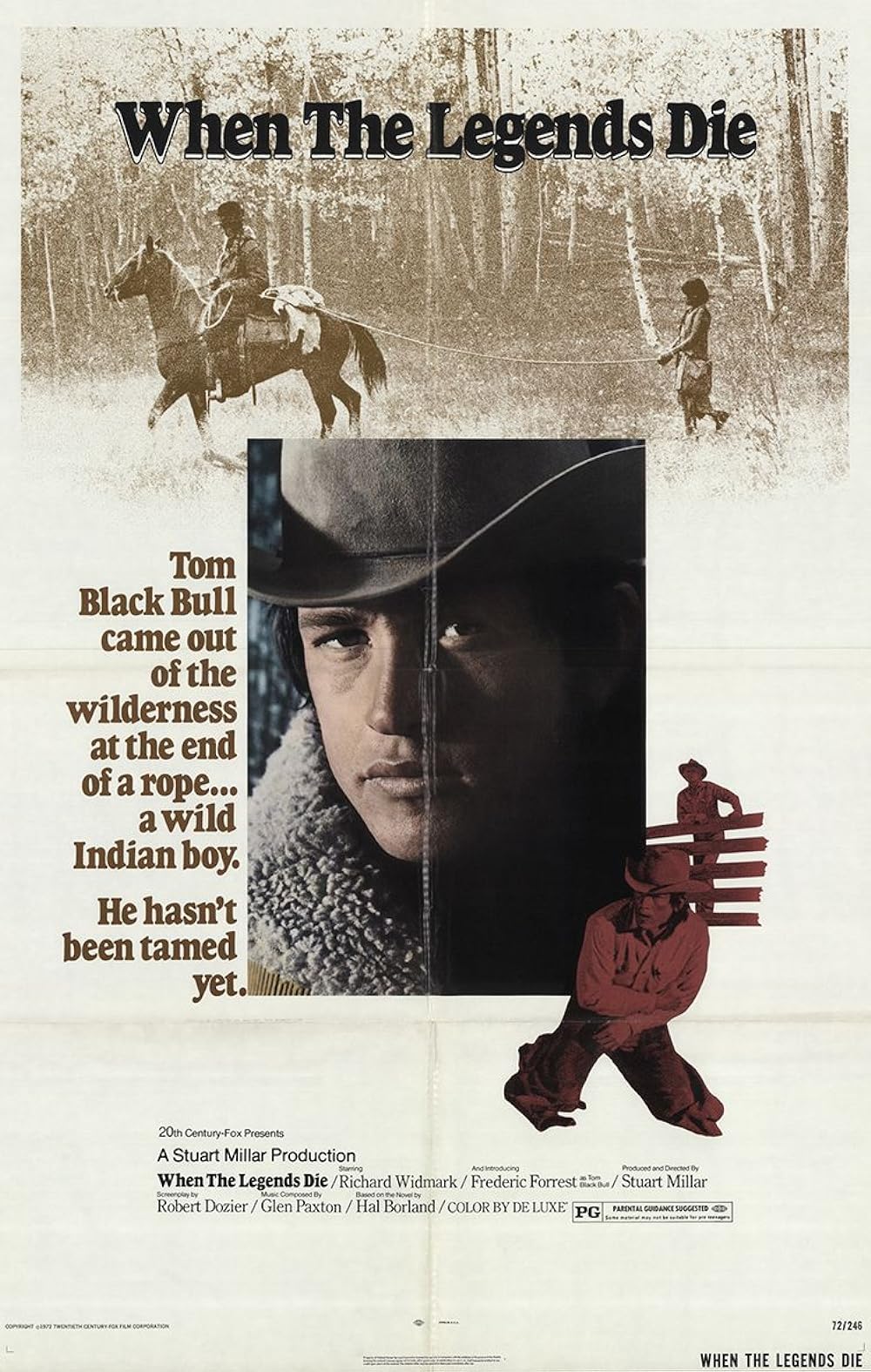
Tom Black Bull (Tillman Box) is a young Ute Indian orphan living in the wild with his pet bear. One day Blue Elk (John War Eagle) an Indian elder comes upon the child and decides it’s time to get him acclimated into society by having him enroll into a school where Tom does not get along with the other students and forcing him to begrudgingly release his bear. Over the years Tom grows to being a young adult (now played by Frederic Forrest), but is bitter with the racism that he must endure. By chance he gets spotted by Red (Richard Widmark) who’s impressed by the way Tom can ride and control a difficult horse and decides he’d like to train him into becoming a rodeo rider. Tom sees this as an opportunity to get out of the slums that he’s in, but soon realizes that Red, who suffers from alcoholism, is exploiting him just like the other white men by forcing him to intentionally lose contests in order to trick people into betting against him.

During the early 70’s there were many modern-day westerns that focused on the rodeo circuit including Junior Bonner, J.W. Coop, The Honkers and Riding TallWhile all of those were good in their own right I’ve found this one to be at the top. The others were more a character study with the rodeo atmosphere a side-story while this one examines the training and technique that it takes to be a successful bronco rider with a meticulous detail making it more revealing and informative. The others didn’t always do a adequate job of making it seem like the lead character was actually riding the kicking horse and many times looked like a shot of the guy on top of one of those bull machines you see inside western barrooms, but here it’s captured in an authentic style including a disturbing moment where Tom refuses to get off the horse as it continues to buck, which ultimately exhausts the animal and requires it to be shot.

The story is based on the 1962 novel of the same name by Hal Borland who was a journalist who specialized in writing novels with an outdoor setting. The book though was aimed more for young adults and split up into four different sections while the film just analyzes the third portion. It also updates the time period to the modern day versus the turn-of-the century like in the book. It’s expertly directed by Stuart Miller, better known as a producer, with a well-written script by Robert Dozier that has crisp dialogue that manages to intimate a lot while saying little and never overstating anything.

Forrest plays his role with a sullen expression that remains constant throughout and some might complain it makes it one-dimensional, but I felt this helped illustrate the character’s inner anger and it’s fascinating seeing the juxtaposition of someone who’s very rugged and savvy when it comes to nature and animals, but quite virginal, literally, when it has anything to do with societal elements like women, alcohol, and other vices.

Widmark is brilliant as usual and one of the few people who can play a miserable, brash, and genuinely unpleasant old guy and still keep it on a humanistic level. Watching him go from gruff and demanding as he’s clearly the more worldy-wise at the start to more of a vulnerable and even dependent one at the end is a fascinating journey to watch. In many ways his relationship with Tom is like a father and son where the older one starts out as the stern teacher only to have it flip with the younger one, now fully accustomed to the world, taking the reins and caring, albeit begrudgingly, to someone who can no longer do it themselves.

My only complaint with the film that is otherwise close to flawless is that I would’ve liked to have seen one moment where Widmark shows some actual kindness to Tom as all the way through he’s quite grouchy and condescending even when Tom offers him some much needed support. I realize his character was a victim of the hard world he lived in and thus it wasn’t natural for him to show any tender side, which he most likely possessed very little of anyways, but one even fleeting moment of gratitude, even if it just was putting his arm around the young man and showing him a slight gesturing hug, could’ve gone a long way to giving it a bit more emotional balance and the touching image that every hard-edge drama ultimately should have and needs.

My Rating: 8 out of 10

Released: October 19, 1972

Runtime: 1 Hour 47 Minutes

Rated PG

Director: Stuart Miller

Studio: 20th Century Fox

Available: DVD-R

The Frisco Kid (1979)

friscokid

By Richard Winters

My Rating: 4 out of 10

4-Word Review: Rabbi travels across America.

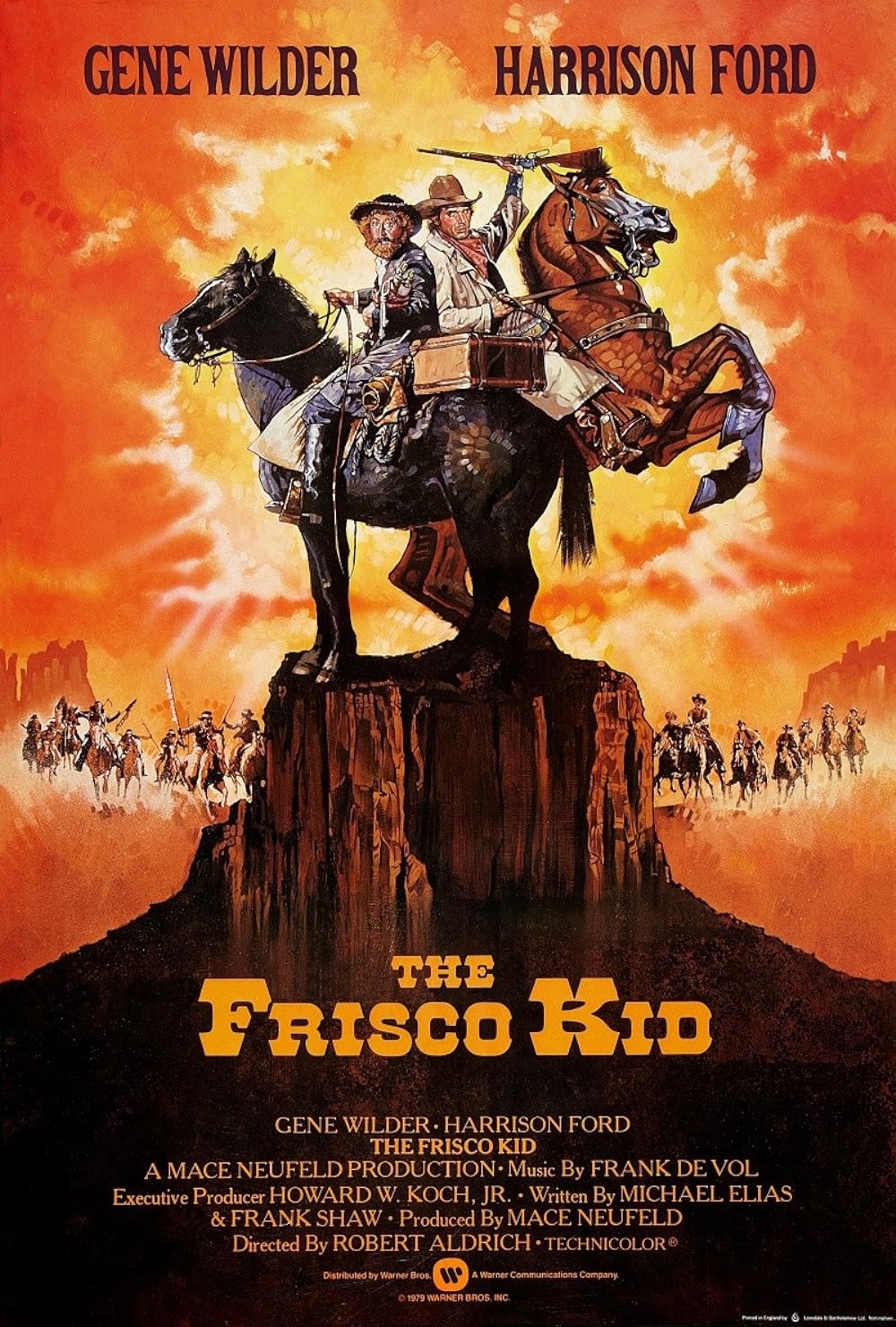
Avram (Gene Wilder) is a Polish rabbi traveling across the U.S. from Philadelphia to the west coast where he plans to head a congregation in San Francisco. He has all of his money taken from him by three unscrupulous men (George Di Cenzo, William Smith, Ramon Bieri) who initially befriend him only to eventually leave him stranded in the middle of nowhere. Avram is then offered some help by a local Amish community and even gets a job for awhile as part of a crew laying down train tracks. He’s eventually earns enough to buy himself a horse, so he can continue his travels. It is then that he meets up with Tommy (Harrison Ford), who unbeknownst to Avram is a robber. When Tommy steals money from one of the banks in a town that they pass through both he and Avram must go on-the-run in an effort to avoid getting caught.

The script was originally written in 1971 under the title ‘No Knife’ in reference to Avram who traveled with no weapon of any kind for protection. Originally John Wayne was considered for the role of Tommy, who was interested, but the studio could not meet his fee requirements so along with his declining health, he bowed-out. Dick Richards, who won praise for helming another western The Culpepper Cattle Companywas originally tabbed to direct this one, but during the pre-production phase he left the project, so it was given to Robert Aldrich, who, as Roger Ebert explained in his review, treated it like a routine assignment and didn’t put in a lot of heart into it.

The  shoddy effects are noticeable and really hurts the production. The interiors have a stage play quality and all of the outdoor scenes look like they were shot on a studio backlot. Certain long shots show steel silos in the background, which wouldn’t have existed during the turn-of-the-century time period that the story takes place while other shots are clearly just a matted photograph edited in. For a western to be fully effective it has to have some grit and atmosphere and this film unfortunately has neither. The first hour works more like darkly humored comical vignettes and while they succeed at being slightly amusing aren’t really all that captivating.

Wilder is excellent and probably the sole reason to see it, but I was more surprised by the presence of Ford who had just came-off starring in the landmark Star Wars, but here accepts second billing and isn’t even seen until 22-minutes in. I was more baffled by the motivations of his character and didn’t understand why he’d take-on the mission of helping Avram, a virtual stranger, through the perilous journey. This was a man who was quite self-sufficient and excellent with a gun and easily getting away with robbing people, so befriending a rabbi was just going to hold him back. A backstory was needed showing why he might seek-out a partner, even an awkward one like Avram. Possible  showing Tommy being a part of a larger gang who kick him out of the group and thus in a desperate need for companionship he befriends Avram, or maybe Avram gets Tommy out of some sort of jam and thus Tommy decides to help the rabbi on his travels in an effort to show his gratitude, but just having Tommy show up out of nowhere and become Avram’s instant buddy doesn’t really work. I would’ve liked to have seen a wider relationship arch too where Tommy would take much longer to warm-up to and understand Avram’s unique personality than he does.

Spoiler Alert!

The scene where Avram befriends an Indian Chief, played by Val Bisoglio, and teaches the Indian tribe how to do a Jewish dance is fun and the climactic duel between Wilder and Smith merits a few point as well. The scene though where Avram shoots a man gets botched. He had never used a gun before, so I would’ve expected him to miss his target especially since he was nervous and his hands shaking. The fact that he’s able to shoot the guy right through his heart the very first time he’s ever pulled a trigger is beating astronomical odds and not the least bit believable.

My Rating: 4 out of 10

Released: July 13, 1979

Runtime: 1 Hour 59 Minutes

Rated PG

Director: Robert Aldrich

Studio: Warner Brothers

Available: DVD, Blu-ray, Amazon Video, YouTube

Private Eyes (1980)

privateeyes

By Richard Winters

My Rating: 3 out of 10

4-Word Review: Inept detectives investigate case.

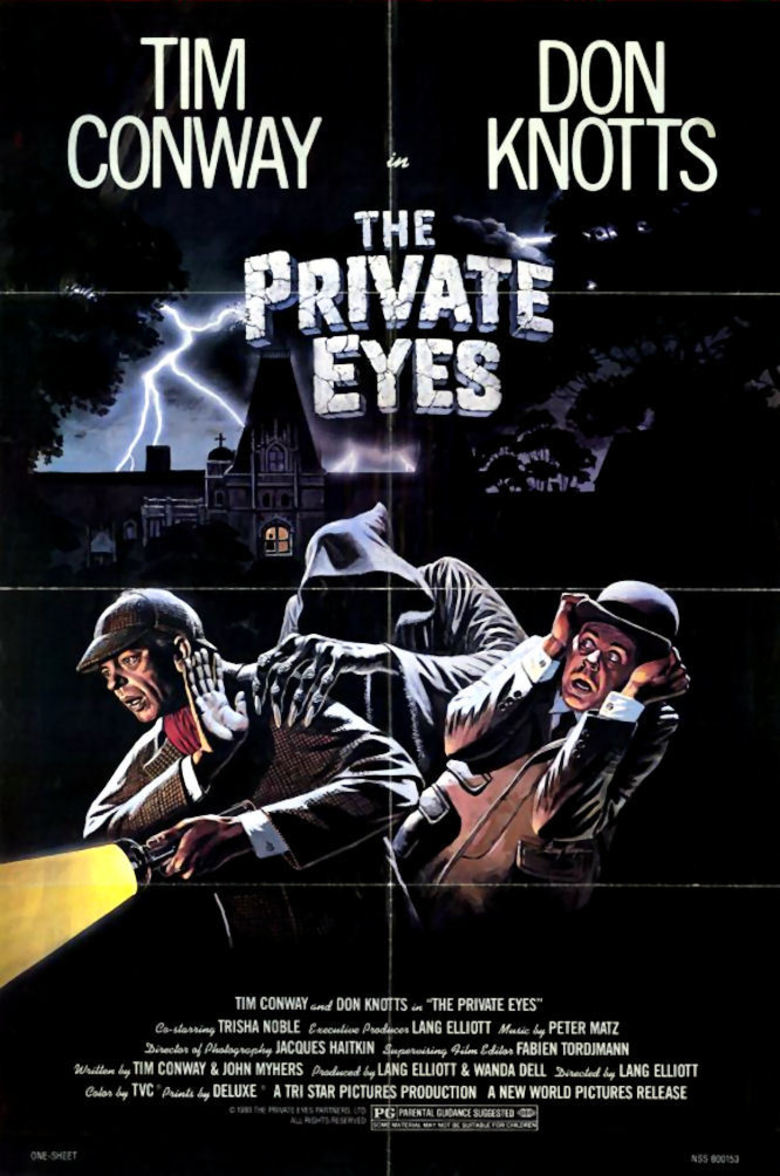
Inspector Winship (Don Knotts) and Dr. Tart (Tim Conway) are two American detectives hired by Scotland Yard to investigate the murder of two people at a country estate in the 1920’s. Despite receiving a letter from one of the murdered victims asking them to investigate their murder the two prove to be quite inept. The various members of the mansion’s staff begin to turn-up dead one-by-one, which further deepens the mystery as a figure shrouded in a dark robe menaces the two as they investigate the case.

After the surprise box office success of The Prize Fighter, which became one of the most profitable films ever released by New World Pictures, screenwriter John Myhers, who had co-wrote that one, convinced Conway and Knotts to do another one. This one also did well earning a big profit, but for whatever reason it was the last of the Conway/Knotts comedies and they appeared together only once more in a brief cameo as two highway cops in Cannonball Run II

To some degree this is an improvement over their other one because here the entire cast is allowed to be funny and there’s none of the awkward, corny drama. Conway has a few good moments like when he stuffs his mouth full of apricots, or tries to cut a rope tied around Knotts’ hands with a sword that’s still connected to a knight’s armor. These two also get to reveal that they have a sex drive as they fight with each other over who gets to look through a tiny peephole to see the ravishing Mistress Phyillis, played by Trisha Noble, undress.

On the negative end a lot of the comedy falls flat. The opening animated bit, styled after the Inspector Clouseau Pink Panther films, is especially lame and should’ve been nixed. The running gag where the killer leaves notes where the last word never rhymes with the others is amusing for awhile, but gets overplayed. The stunts, pratfalls, and special effects are cheap and despite being filmed on-location at the Biltmore Estate in Asheville, North Carolina you really only get to see a few rooms of it making it seem like a waste.

Conway and Knotts can certainly be amusing at times, but they’ve played these types of characters for so long that they now have become predictable and boring. The Sherlock Holmes-styled parody has been done many, many times and this adds nothing new to the mix. It’s also hard to understand why if these guys are really this hopeless and everyone in the world seems to know it how they’d continue to find work and why Scotland Yard continues to give them employment and doesn’t just let them go. Inspector Clouseau was also very inept, but he always managed through irony and dumb luck to solve the case and come-out still looking like the ‘hero’ to the public, which only helped to bolster his career. These guys though don’t ever get anything right and are perpetually clueless, so why are they detectives to begin with?

A much better idea would’ve been to have placed the setting into the modern day especially since none of the humor, or pratfalls are contingent to the period. They could’ve played two guys who were out of work and saw an ad in the newspaper looking for amateur private eyes and they decide taking a stab at it as a ‘fresh start’. Then all of their bungling would make more sense and actually would’ve been funnier since the comedy would’ve had a more plausible setting.

Spoiler Alert!

Beyond just the bland comedy the case itself, particularly the final explanation, is illogical as it has one of the victims, Lord Morley, played by Fred Stuthman, coming back to life at the end as he essentially faked his own death. This though doesn’t make sense as we see a screaming newspaper headline at the beginning stating that two people were killed, or two bodies found when the car that Lord and Lady Morley were in drove into a lake, so if Lord Morley wasn’t one of the bodies then whose was it?

My Rating: 3 out of 10

Released: April 17, 1980

Runtime: 1 Hour 31 Minutes

Rated PG

Director: Lang Elliot

Studio: New World Pictures

Available: DVD, Blu-ray, Amazon Video

Cutter’s Way (1981)

cutter1

By Richard Winters

My Rating: 6 out of 10

4-Word Review: Friends help catch murderer.

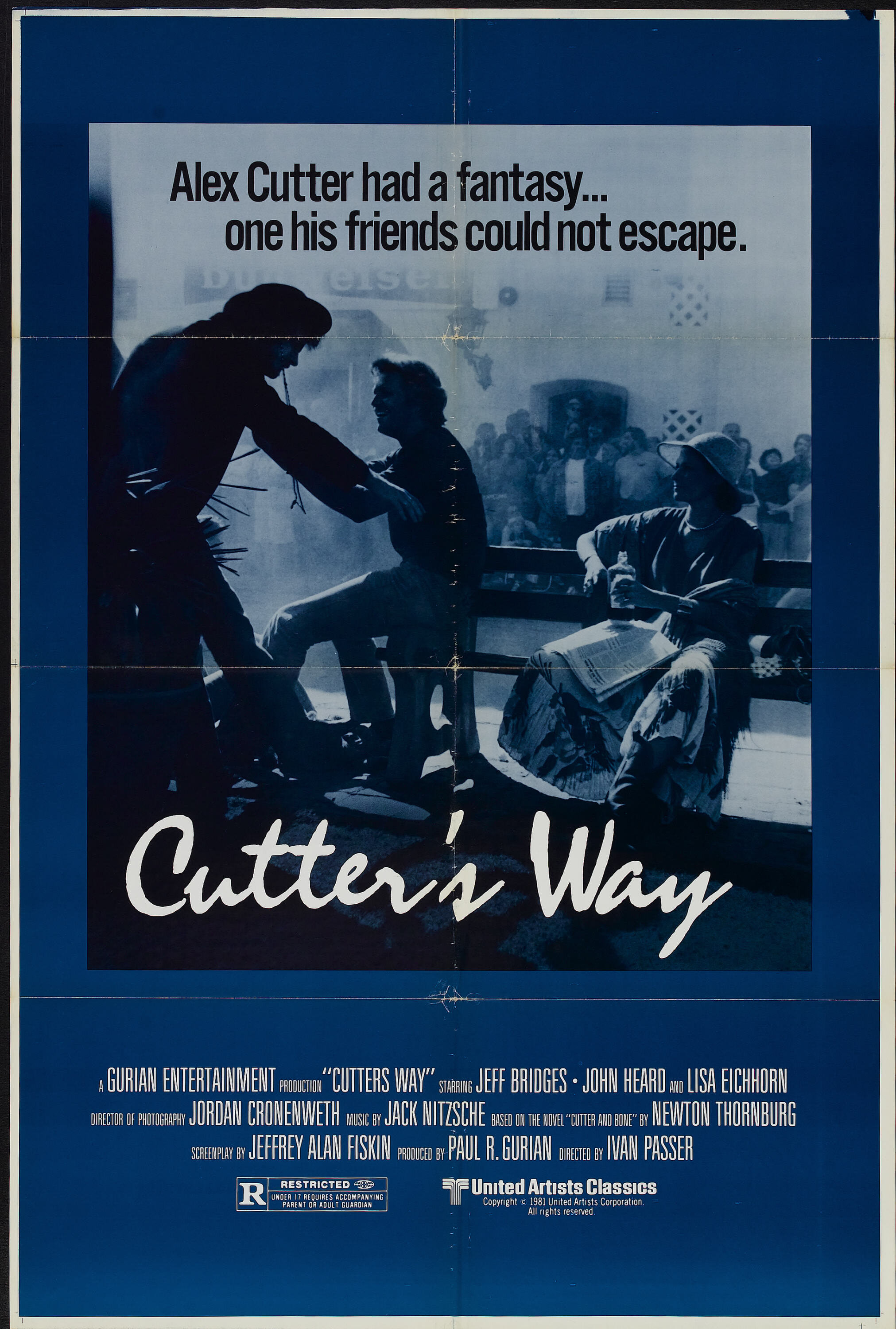
Richard Bone (Jeff Bridges) driving his old beat-up car, a 1966 Austin-Healey, which breaks down in a dark alley during a late night rain storm. From behind comes another vehicle where the driver dumps something into a nearby garbage can that turns out to being the dead body of a young girl. Since Bone’s car is still at the crime scene the next day when the authorities arrive he quickly becomes suspect number one. Bone’s friend, Alex Cutter (John Heard), a Vietnam vet struggling with alcoholism and PTSD, takes on the process of investigating the case to help get his friend out of trouble. The two soon hone in on a rich local businessman named J.J. Cord (Stephen Elliot) whom Bone swears was the man he saw driving the car that dumped the body.

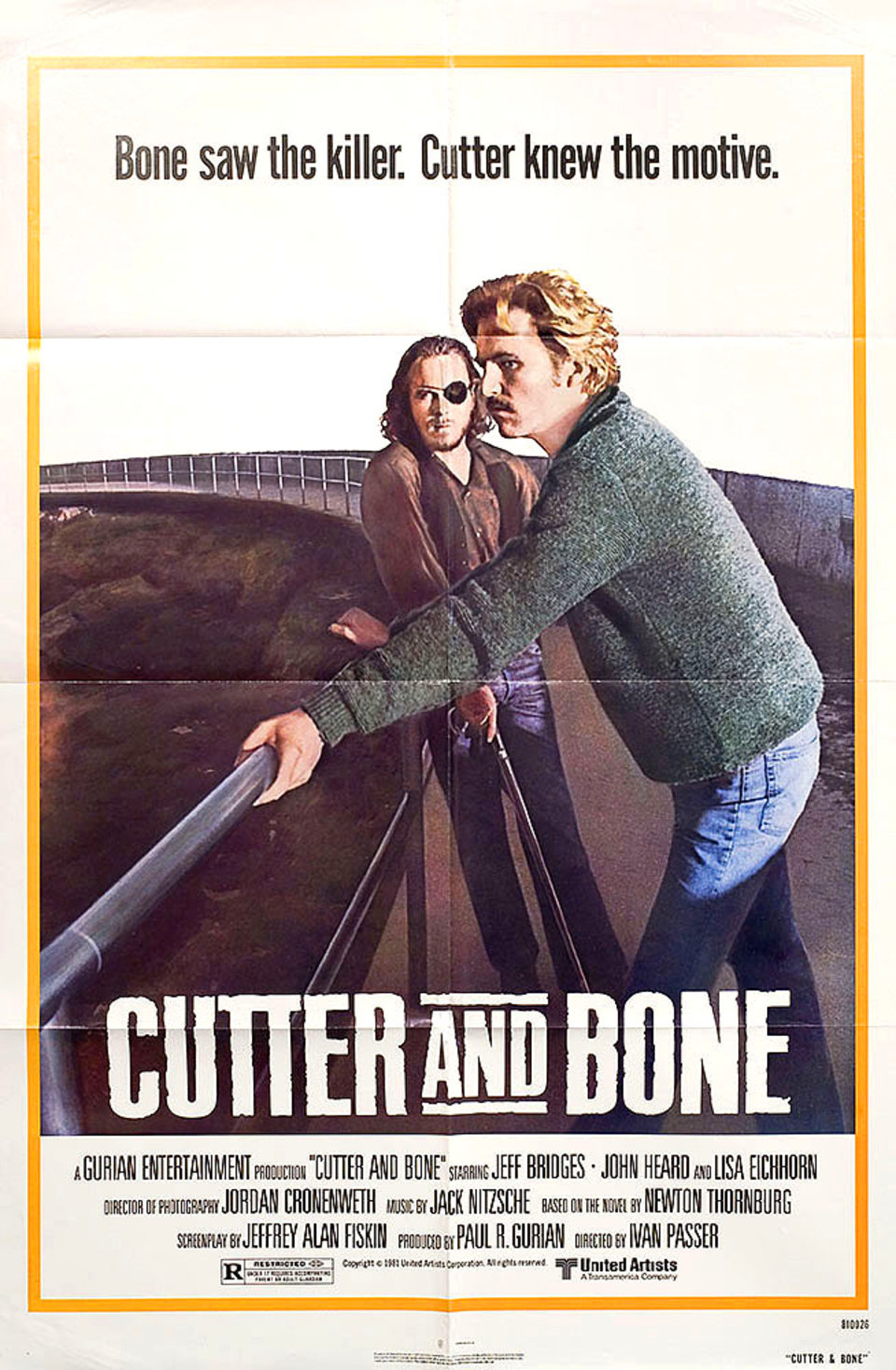
The film is based on the 1976 novel ‘Cutter and Bone’ by Newton Thornburg. Producer Paul Gurian bought the rights to the book and asked struggling screenwriter Jeffrey Alan Fiskin if he’d be interested in adapting it to a screenplay. Since Fiskin was broke at the time, he last sold a screenplay, Angel Unchained, 10 years earlier, he was forced to shoplift the book in order to read and adapt it. David Field from United Artists was open to backing it for $3 million, but only if they could find a big-name star. Gurian then went to the home of Jeff Bridges, where he got attacked by one of Bridges’ dogs thus motivating Bridges to accept the part unseen in order to avoid a possible lawsuit. The film was released in the Spring of ’81 where it fared poorly with the critics and the studio was ready to scrap it only for it to pick-up good reviews a few weeks later. The studio then decided to place the film in their ‘classics’ division where it got retooled from it’s former title of ‘Cutter and Bone’, which they felt made it seem like a comedy about surgeons, to it’s current one and then rereleased it in the fall of that year were through good word-of-mouth it managed to recoup a modest profit.

Director Ivan Passer has stated that his motivation for directing the film was to go against what he felt was the ‘cripple mania’ at the time where film characters would get maimed usually through being in the war and then come back better, stronger people. Here he wanted to show that it didn’t make them better, but instead more dangerous.

While Heard certainly gives a good performance, it was originally intended for Richard Dreyfus, I felt he was too much of a caricature of an angry, wounded war vet and I didn’t find him interesting at all. Bridges was his usual transparent self and thus the interactions between two not all that captivating. Elliott is rather blah as well as the bad guy since for most of the runtime he’s only seen from a distance and never has any lines of dialogue until the final 9-minutes, though this does at least give him a certain creepy/mysterious vibe. Out of everyone I was most intrigued with Lisa Eichorn who plays a woman who bounces between the two friends and seems to want to play-off them both.

The emphasis is on the character study with long takes of Heard snarly at everybody he meets including the next door neighbor’s whose car he crashed into and the the subsequent police report, which goes on too long and doesn’t help the film or story move forward. The mystery isn’t as intriguing as it could’ve been because elements of it fall into place a little too conveniently. Bridges witnesses the killer driving away and then right away the next day spots the guy in a parade. Then a couple of days later the friends are talking about the case at a restaurant where the guys’ wife (Patricia Donohue) is sitting right next to them and overhears everything, which again is letting things fall too neatly into place without much effort.

There’s also questions about why the killer didn’t just run Bridges over with his car when he had the chance in order to avoid any witnesses. Also, Bridges is able to recognize the killer/driver, but when I saw the scene it was impossible to see the face of the driver. The viewer’s perspective should be the same as the protagonist, so if he’s able to get a good look at the culprit then we should’ve too.

Spoiler Alert!

Since everything is tied into circumstantial evidence I was hoping for some unexpected twist at the end. For instance having Bridges’ house get burnt down not because of Cale like they initially thought, but instead from the neighbors still angry over their car. The final confrontation in which Bone apparently shoots Cale (the screen fades to black and we only hear the noise of the gun going off) leaves more questions than answers. Does Bone and to an extent Cutter, who was there in the room with him, now go to jail for this? Seems like that should’ve been confirmed one way or the other and leaving it vague is like showing the viewer only half of the story.

cutter2

My Rating: 6 out of 10

Released: March 20, 1981

Runtime: 1 Hour 49 Minutes

Rated R

Director: Ivan Passer

Studio: United Artists

Available: DVD, Blu-ray, Amazon Video, Pluto, Freevee, Roku Channel, YouTube