Category Archives: British Movies

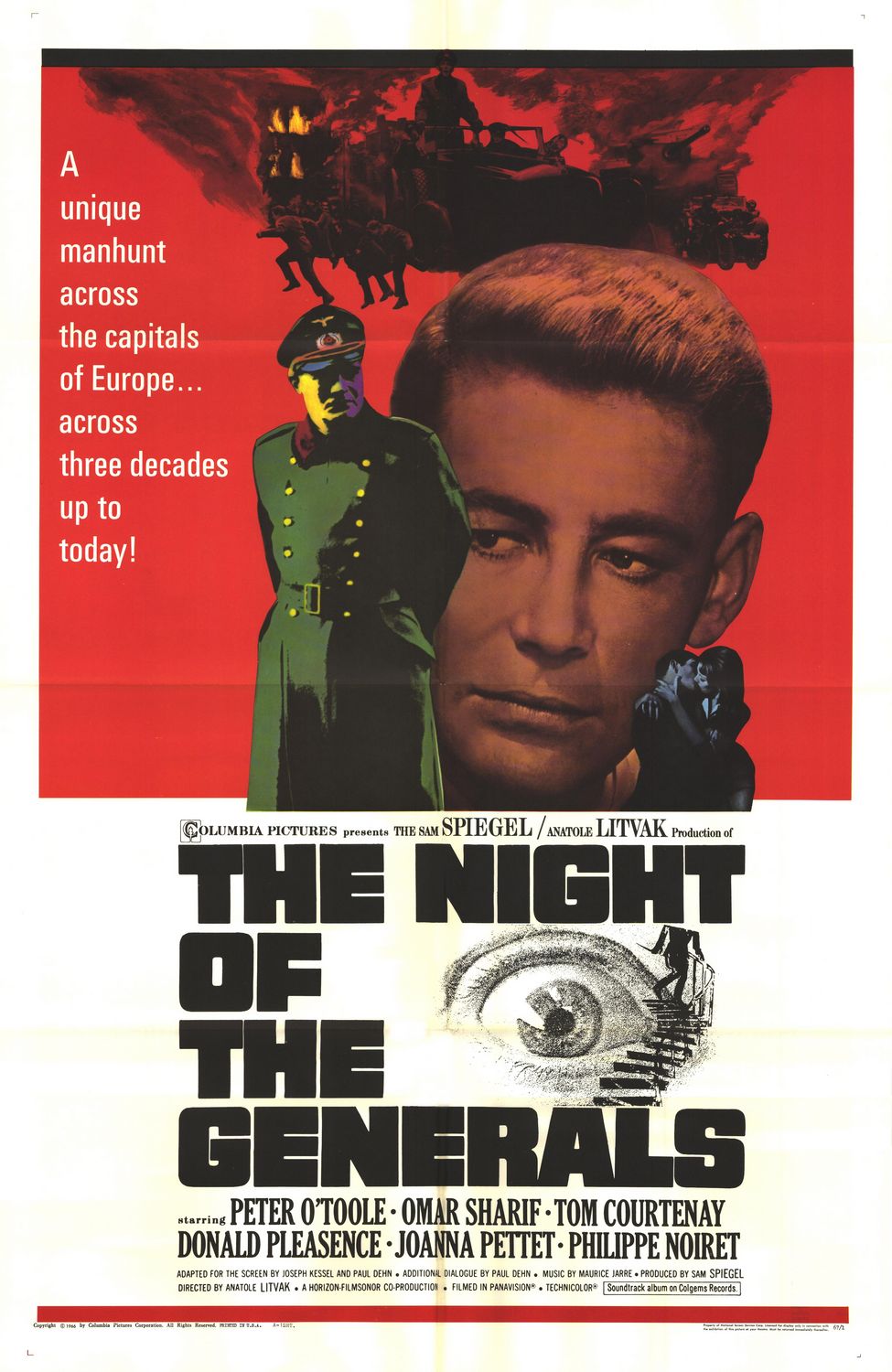
The Night of the Generals (1967)

night of the generals

By Richard Winters

My Rating: 5 out of 10

4-Word Review: A general kills prostitutes.

In 1942 during the height of the war a Polish prostitute is found murdered and sexually mutilated. A witness spotted a man leaving her room who was wearing a uniform that had a red stripe running down the side of his pants, which signified that he was a general. Major Grau (Omar Sharif) who is in charge of the investigation decides to interview three generals (Donald Pleasance, Peter O’Toole, Charles Gray) who were in the vicinity and have no alibi, but finds a lot of pressure not to pursue the case and it takes several decades before it finally unravels.

The storyline is compelling enough to keep you intrigued, but the script is talky with not enough action. Certain story threads seemed unnecessary and the film could have been more compact. The actors are mostly all British, but make no effort to speak in German accents despite playing Nazi roles. The music cues that are used whenever an important plot point is revealed or to transition to another scene are too loud and have a generic quality to them that does not appropriately reflect the time period.

O’Toole gives an interesting performance as psychotic ready to fall completely apart. His extreme emphasis on cleanliness especially to those that serve under him and his nervous twitches steal the film as well as a bit where he commands his men to destroy an entire block of a town simply to get at a couple of snipers. His bizarre reaction to a painting of Vincent Van Gogh that he spots in a gallery is intriguing especially when it occurs twice and his blank blue-eyed stare becomes almost piercing.

Sharif does quite well in support and despite being born and raised in Egypt does a convincing job as a Nazi and I think make-up was used to lighten his skin. Tom Courtenay is good as O’Toole’s assistant and the relationship that they form has some interesting subtexts to it.

Joanna Pettet’s appearance however seemed pointless and although the constant sparring she has with her mother (Joan Plowright) was fun it really didn’t add much to an already cluttered narrative. Christopher Plummer also gets stuck in a thankless part where he is seen for less than five minutes before promptly being killed off.

The identity of the killer gets revealed 45 minutes before the end, which hurts the suspense. I also didn’t like that the Sharif character gets killed off and the rest of the investigation is taken over by a Frenchman (Philippe Noiret) which seemed defeating since we had spent so much time siding with the character’s plight to seek justice despite all the obstacles. The film’s very final moment is supposed to be dramatic and poignant, but instead goes over-the-top and becomes weak and strained.

My Rating: 5 out of 10

Released: January 29, 1967

Runtime: 2Hours 25Minutes

Not Rated

Director: Anatole Litvak

Studio: Columbia Pictures

Available: VHS, DVD, Amazon Instant Video
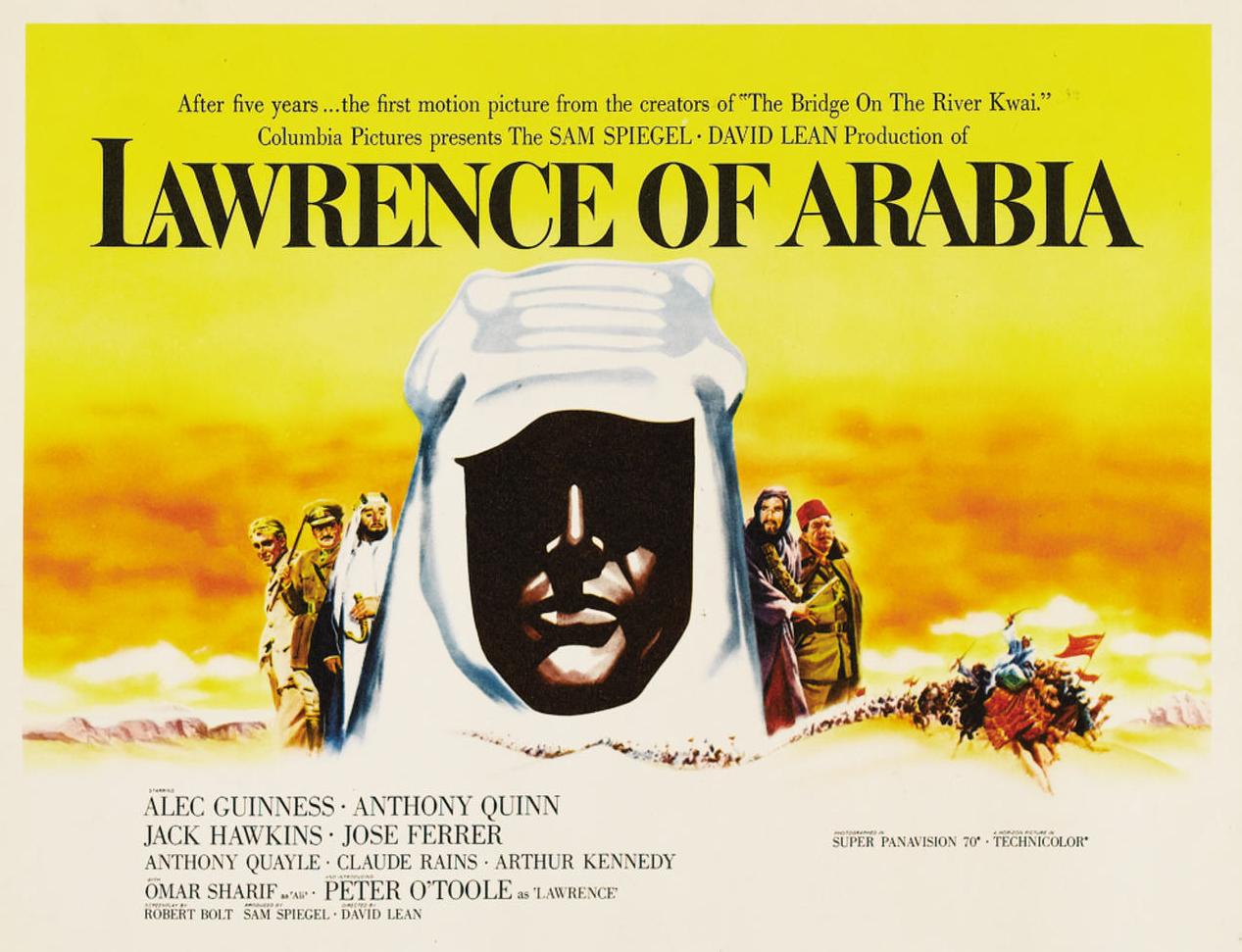
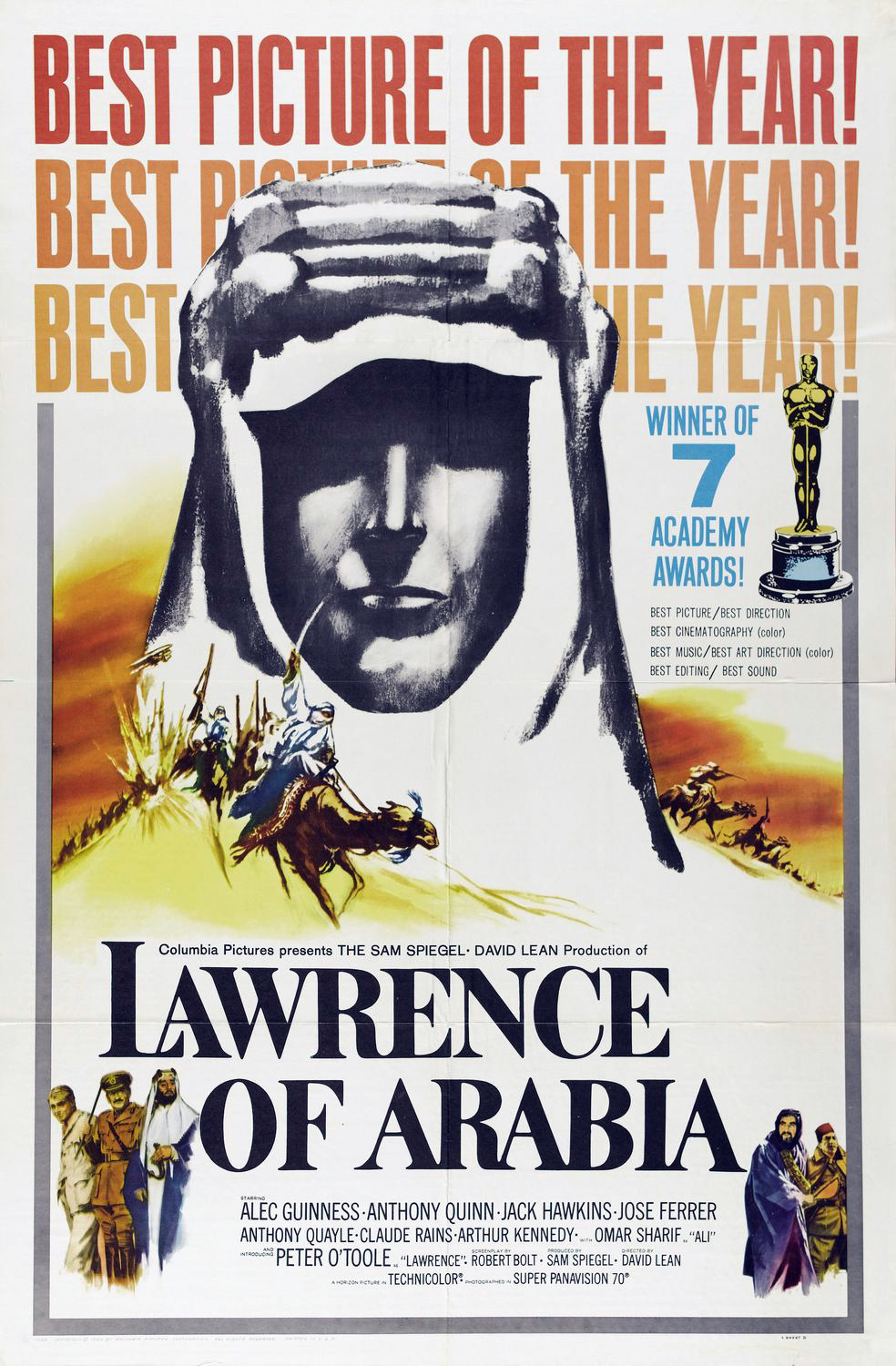
Lawrence of Arabia (1962)

lawrence of arabia 1

By Richard Winters

My Rating: 9 out of 10

4-Word Review: Lawrence unites the Arabs.

Due to the death of actor Peter O’Toole on December 14 we will be reviewing each Sunday of this month 4 films that he did during the 60’s with this one be his most famous role and one that jettisoned his career into stardom.

The film chronicles the life of T.E. Lawrence who helped unite the Arab tribes during World War I and allowed them to fight back and eventually overpower the Turks. The film starts out with his motorcycle death in 1935 at the young age of 46 and then flashes back to his days in the army as a young intelligence officer. It examines his unique personality, determined headstrong ways as well as his ability to unite varying warring Arab tribes and get them to work together to defeat a common enemy.

Director David Lean and cinematographer Freddie Young are the real stars here. Filmed mostly in the countries of Morocco and Jordan Lean manages to capture the barren, hot landscape of the desert better than anyone else as he gives it an almost surreal and exotic quality that takes over the rest of the story and leaves the strongest impression. I loved the sun slowly coming up over the horizon and onto the flat terrain. I also liked the longshots showing characters enveloped by the majestic landscape and looking almost nonexistent when seen against some of the towering rocky formations. Omar Sharif’s characters entrance while on horseback and seen from a distance as he rides up through layers of heat that rises from the ground is also excellent.

The action is well captured although there isn’t as much of it as you might think. Their raid on Aquba is for my money the best. I loved the bird’s-eye shot of seeing all these soldiers looking almost like ants scurrying from the desert and into the fortress through the buildings and property and then eventually into the sea that sits on the other side. The bloody battle that they rage against an already weakened Turk army near the end is also a strong visual as is the Lawrence’s visit to an unsanitary hospital housing the wounded Turks.

lawrence of arabia 2

O’Toole’s portrayal of Lawrence was controversial at the time and to some still is. His bright, clear blue eyes makes him look like he is in a trance and the way he says his lines sounds like he was under some sort of spell and gives the character a certain mystique that isn’t quite human. Still I thought the part fit O’Toole’s personality well. My favorite moment of his is when he first tries on the Arab robes that he is given and he goes running around in them in an almost child-like manner. It is also nice seeing a story about a true-life character that isn’t preachy and more open about their flaws particularly his propensity for violence which becomes increasingly more evident as it goes along.

Sharif is excellent is support and in some ways gives the film’s all around strongest performance. I liked the adversarial relationship that his character has with Lawrence. They start out at odds with each other, but slowly become friends and yet continue to have their differences. Arthur Kennedy is good as a glib and detached photojournalist and Alec Guinness was to me initially unrecognizable as Prince Feisal.

The movie does not stay completely accurate to the real life events. Some of these are minor and while others are more major, but are too many to elaborate here. The truth is there is probably no movie pertaining to a true life event that is completely accurate to what really happened and no one should be naïve enough to expect it to be either. On an entertainment and cinematic level this one scores high. My only real complaint is the scene where a character gets swallowed up in quicksand, which in reality is very unlikely to happen, but a prevalent feature in a lot of 60’s movies and the one point where it got a bit too ‘Hollywood’.

lawrence of arabia 4

My Rating: 9 out of 10

Released: December 10, 1962

Runtime: 3Hours 47Minutes

Not Rated

Director: David Lean

Studio: Columbia Pictures

Available: DVD, Blu-ray, Amazon Instant Video

Eye of the Devil (1966)

eye of the devil 2

By Richard Winters

My Rating: 7 out of 10

4-Word Review: Husband is a pagan.

Vineyard owner Philippe (David Niven) is called back to the castle of Bellenac when it is found that they are suffering from another dry season. Philippe’s wife Catherine (Deborah Kerr) and his two young children follow him there a few days later despite his insistence that they not come. Once there Catherine finds everyone’s behavior to be quite odd including a menacing brother and sister (David Hemmings, Sharon Tate) who make Catherine uneasy, but nothing prepares her for the real reason that her husband is there nor its shocking outcome.

Although several directors worked on this project including Michael Anderson the credit is ultimately given to J. Lee Thompson, who is probably best known for his frequent collaborations with Charles Bronson. Despite the different directors the film is very fluid and well produced. In fact it is the directing that makes this film high enjoyable. The lighting, editing, imagery and evocative camera work make this a near brilliant work from a visual level. Turning down the sound and appreciating it for its aesthetic style alone is more than enough and the on-location shooting done at the Chateau de Hautefort is excellent.

Tate is stunningly beautiful and the photography makes the most of it watching her sit out and get drenched by the rain is actually kind of sexy. She had bit parts in two films previous to this, but this is still credited as her official film debut.  Although her voice was dubbed she still is effective with a character that straddles the line between being sensual and creepy. The part where the Niven character viciously whips her while she wriggles around on the floor and then in the end turns around and smiles like she enjoyed it was year’s ahead-of-its-time and definitely pushing-the-envelope for that period.

Kerr came in to replace Kim Novak who was injured during filming and unable to complete the picture. Normally she always gives a superior performance, but her she seemed miscast. The only facial expression she seems able to show here is that of shock and fright and the character and scenario seems to be too much of an extension to the one that she did in The Innocents just a few years earlier. Both she and Niven seemed too old to be parents of such young children. He was already in his mid-fifties and she in her mid-forties and the film would have been better served had a young attractive couple in their 20’s been cast in the part.

Niven has always done so well being cast in likable roles that having him play someone with a dark personality doesn’t quite work and he looks uncomfortable in the part. Both Donald Pleasance and David Hemmings are underused and not given enough lines or screen-time.

The story itself is rather one-dimensional. The final sequence features some great shots and editing of Kerr running through some underground tunnels of the castle, but the outcome is quite predictable. The script lacks that added perspective or twist to make it truly memorable and is the weakest element in this otherwise visually arresting production.

eye of the devil 4

My Rating: 7 out of 10

Released: July 8, 1966

Runtime: 1Hour 32Minutes

Not Rated

Director: J. Lee Thompson

Studio: MGM

Available: DVD (Warner Archive), Amazon Instant Video

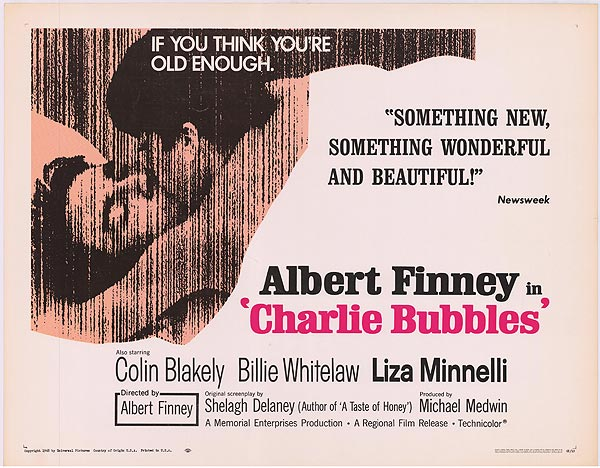
Charlie Bubbles (1968)

charlie bubbles 1

By Richard Winters

My Rating: 4 out of 10

4-Word Review: He’s detached from life.

Charlie Bubbles (Albert Finney) is a successful English writer who finds that he is no longer connected to the world around him. He sits in his office and views life from the television monitors around him. He has an affair with his secretary Eliza (Liza Minnelli in her film debut), but it means little. He travels to the countryside to visit his estranged wife Lottie (Billie Whitelaw) and his son Jack (Timothy Garland), but finds the effects of his detachment have worn off on them. No matter how hard he tries he cannot get his son to emotionally connect with him, which he finds troubling.

This is to date Finney’s only cinematic foray behind the camera and on a visual level it proves interesting. Most actors who turn to directing lack the needed cinematic eye, but Finney is just the opposite. The scene, which gets protracted, showing all the action inside Charlie’s sprawling home from within the television monitors that he has set-up is really cool. It’s like in the film Network where you see several monitors on top of each other and two per row. Each monitor shows a different room in the mansion as well as the garage. As the action moves from each room it also moves to a different monitor, which becomes fascinating to follow. The scene inside a hotel hallway with milk bottles and newspapers lined up at each door has an interesting design to it and the part where Charlie and Eliza come upon a lonely marching band in a desolate rundown part of the city has a unique visceral appeal. The massive food fight between Finney and actor Colin Blakely near the beginning of the film deserves a few points as well.

The downside to the direction is that the film is slow and almost as aloof as the character. The scenes become too extended and the dialogue has little to say. The segment inside a roadside diner has the sound of cars passing by it during the character’s conversation, which becomes distracting and unnecessary.

The Charlie character seems almost like he is sleepwalking and barely responds to anything. I realize this is to show his detachment, but it goes overboard. It’s like viewing a corpse who has no screen presence or energy and absolutely no connection with the viewer nor any ability to wrap them in to his quandary.

Minnelli makes for an odd choice to represent the film’s sexual tensions. She was never considered attractive and her constant and incessant chattering while the two ride in a car would be enough to make most men want to throw her out let alone make love to her. The sex scene itself is about as mechanical as you can get and lacks eroticism. It also becomes like a throwaway scene that doesn’t end up having that much to do with the story as a whole.

The viewer needs more of a background to this character in order to make him real and interesting. Simply showing someone who is detached doesn’t mean much unless we know why and if he was at any time any way else. The ponderous ending leaves a lot to be desired and watching this movie is similar to viewing a program on C-Span as it comes-off like a nonevent.

My Rating: 4 out of 10

Released: February 11, 1968

Runtime: 1Hour 29Minutes

Not Rated

Director: Albert Finney

Studio: Universal

Available: None at this time.

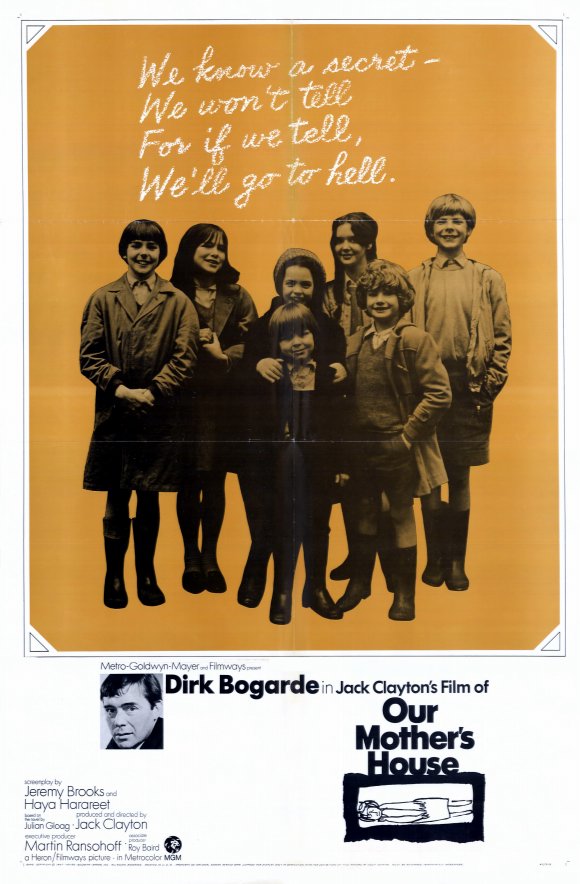
Our Mother’s House (1967)

our mothers house 1

By Richard Winters

My Rating: 6 out of 10

4-Word Review: Life after mother dies.

Seven children live with their mother inside a large English house. She is sickly and when she dies they decide to keep it a secret by burying her body in the back garden and then continuing on as normal as they fear they will otherwise be sent off to an orphanage. Things go surprisingly well for the most part, but then their alcoholic father Charlie (Dirk Bogarde) reappears after a long absence, which sends everything spiraling out of control.

Director Jack Clayton lends an amazing amount of control and freedom to the child performers and the result is fantastic. The kids give solid performances and really carry the movie. Margaret Brooks as Elsa is a standout and shows great maturity especially with the way she stands up to the Bogarde character. Phoebe Nicholls is also terrific and looks like a young Sandy Dennis. Mark Lester did this just before doing his star turn in Oliver and he is cute, but his stuttering is annoying.

Although the character is obnoxious, one-dimensional and predictable Bogarde does a fine job as always in his part in what was a bit of an offbeat turn for him as he doesn’t appear until about forty-five minutes in. Yootha Joyce is entertaining with her bit as the children’s callous nanny. She has interesting facial expressions and voice tones, which makes the most of her otherwise small role. She is probably most famous for playing the equivalent of the Mrs. Roper character in the British version of ‘Three’s a Company’, which was ‘Man about the House’ and it is a shame that alcoholism cut both her career and life short.

The film weaves an interesting atmosphere and this is the type of story where you have no idea where it is going. I also liked some of the side diversions that Clayton incorporates including having the children take a boat ride around the famous Dinosaur Court in the Crystal Palace Park. Erected in 1854 these were the very first dinosaur sculptures ever made in the world.

I also found it interesting that there are scenes showing the children praying and even reading Bible verses. This is not a spiritual film in any way and I personally have no stand on the issue, but it brought to mind how mainstream films today never show anyone ever praying even though a lot of regular people still do it and by putting it into the story it makes it more realistic instead of less.

The only real issue that I had with the movie that otherwise has some very intriguing elements is the ending, which comes pretty close to being a copout and leaves way too many loose ends open.

My Rating: 6 out of 10

Released: October 9, 1967

Runtime: 1Hour 44Minutes

Not Rated

Director: Jack Clayton

Studio: MGM

Available: YouTube

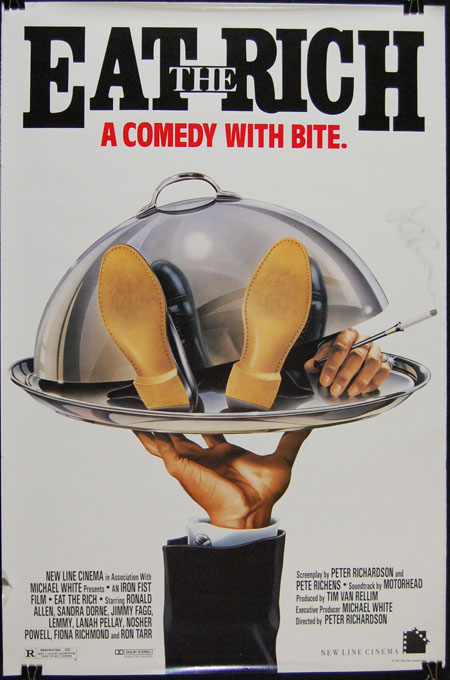
Eat the Rich (1988)

eat the rich

By Richard Winters

My Rating: 5 out of 10

4-Word Review: Rich feed the poor.

This is an extremely garish mixture of loud music, ugly visuals, and shock comedy. The story is about a waiter, a gay man with a real fun bitchy attitude, who gets fired when he refuses to suck up to the arrogant clientele. He gets revenge by banding together other misfits who return and kill everybody and then feed the dead bodies to new unsuspecting patrons.

Sounds gross and tasteless, but it really isn’t. There’s no nudity or sex and no graphic violence or gore. A little bit more of these things would have actually helped. At least it would have solidified it as the underground shock comedy it seems to be striving to be. Instead it’s cluttered with no real objective or foundation. At times it plays like biting social commentary and at other times nothing more than a silly gross out teen flick

By the time you get to the way off-base ending it becomes obvious that the filmmakers were trying to be outrageous simply as a way to get noticed. There is no real insight to the have and have-nots of society. They simply came upon the idea because they felt it would appeal to the type of audience they were looking for.

This is too bad because had it been a little more polished it might have been a stronger film. Believe it or not there are some clever bits. The jabs at the Queen are a riot. The scene involving terrorism and the Middle East crisis is a true original. The rich characters are so over-the-top obnoxious you have to laugh-out-loud.

The true scene stealer though is Nosher Powell. He is a former stunt man/ stunt coordinator who worked on many of the stunts in the early James Bond movies. Here he plays a sort of Teddy Roosevelt times ten a ‘working class’ politician who bullies everyone and everything. The actor has a rather rough, amateurish delivery which only adds to the saltiness of the character.

My Rating: 5 out of 10

Released: April 22, 1988

Runtime: 1Hour 30Minutes

Rated R

Director: Peter Richardson

Studio: Recorded Releasing

Available: VHS, DVD, Amazon Instant Video
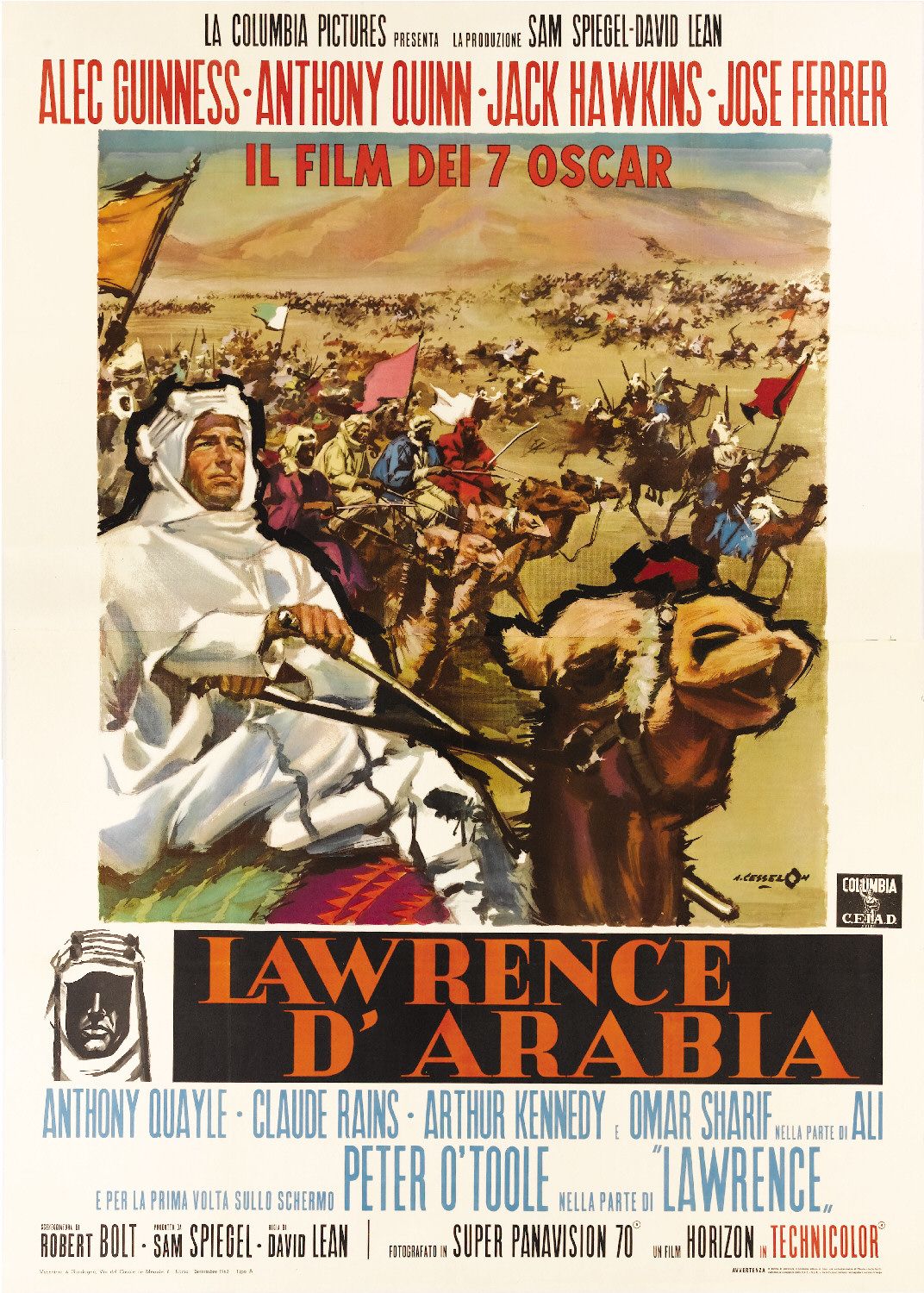
Sands of the Kalahari (1965)

sands of the kalahari

By Richard Winters

My Rating: 8 out of 10

4-Word Review: Stranded in the desert.

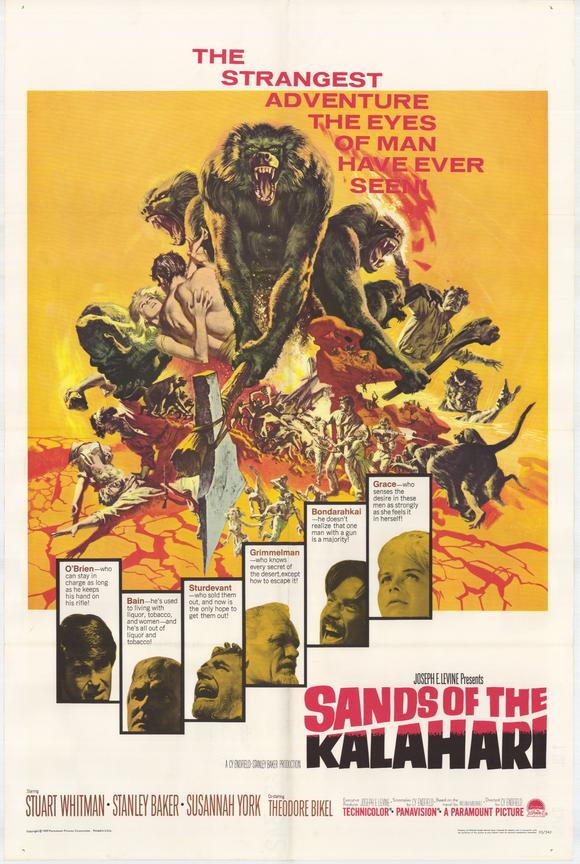
Based on the novel by William Mulvihill the story centers on a group of six individuals, five men and one woman, who fight to survive the blistering heat of the Kalahari Desert when their plane crashes after it’s struck by a large swath of locusts. Instead of working together as a team the group quickly disintegrates with infighting and tensions. The young and virile Brian (Stuart Whitman) who initially takes control of the situation starts to feel that his own survival would be heightened if there were less people needing food and water, so he decides to carefully eliminate them one-by-one, which leads to many interesting confrontations and a very unusual climactic finale.

Filmed on-location in Namibia the desert becomes its own character. The stunning sandy landscape is breathtaking and watching the characters walk along it under the crystal blue sky becomes almost awe-inspiring particularly during birds-eye view shots. The viewer feels like there are right there feeling the heat along with the rest of the characters. Writer/director Cy Endfield keeps things on an authentic level and stays for the most part faithful to the book with the exception of changing one of the characters who had been African American in the novel to Caucasian here. His use of actual animals is what impressed me the most particularly the baboons who become a major part of the story as well as seeing a live scorpion crawling up a man’s arm. The only real technical weakness is the cloud of locusts forming on the horizon, which looked like dust being sprayed on the plane’s windshield and when they started to splatter onto the window it looked more like scrambled eggs and not quite as impressive as I think the filmmaker’s had hoped.

I also had a bit of a problem with the Sturdevan character, which had been the plane’s pilot and is played by actor Nigel Davenport who attempts to rape Grace (Susannah York) after they had only been stranded in the desert for a day and a half. I felt this was too quick for people to so suddenly drop their civilized veneers and cave into their more animalistic urges. I could see this maybe occurring after being there for weeks or months, but I would think initially the urgency would be finding help and just plain surviving and sex being the last thing on anyone’s minds. This same issue occurs with Grace who becomes romantically attached to Brian and even professes her ‘love’ for him after only a couple of days, which again seemed too rushed. The romantic scenes make the film seem soap-opera like and gives it an unnecessary melodramatic feel that does nothing but bog down the pace.

Whitman whose career dissipated after the 60’s and was confined with less significant roles and films is memorable here. The character who comes onto the plane at the last second is initially big and brawny heroic and watching him devolve into a selfish anti-social man is interesting as are the scenes with him trapped in a hole. The segment where he throws a fire into a cave filled with baboons and then shoots the animals as they run out is quite startling. I also enjoyed York. She has always been a splendid actress, but here with her blonde hair matched against her red skin and torn dress looks genuinely sexy.

The one-on-one confrontations between the characters especially the one between Grimmelman (Harry Andrews) and Brian and then later between Brian, Grace and Mike (Stanley Baker) is what helps the film really stand-out. I would have liked it played-out a bit more, but the twist that comes at the end is indeed unexpected and leads to one of the more unusual climactic sequences you will ever see.

My Rating: 8 out of 10

Release: November 24, 1965

Runtime: 1Hour 59Minutes

Not Rated

Director: Cy Endfield

Studio: Paramount

Available: DVD, Amazon Instant Video 
Repulsion (1965)

repulsion 1

By Richard Winters

My Rating: 8 out of 10

4-Word Review: She loses her mind.

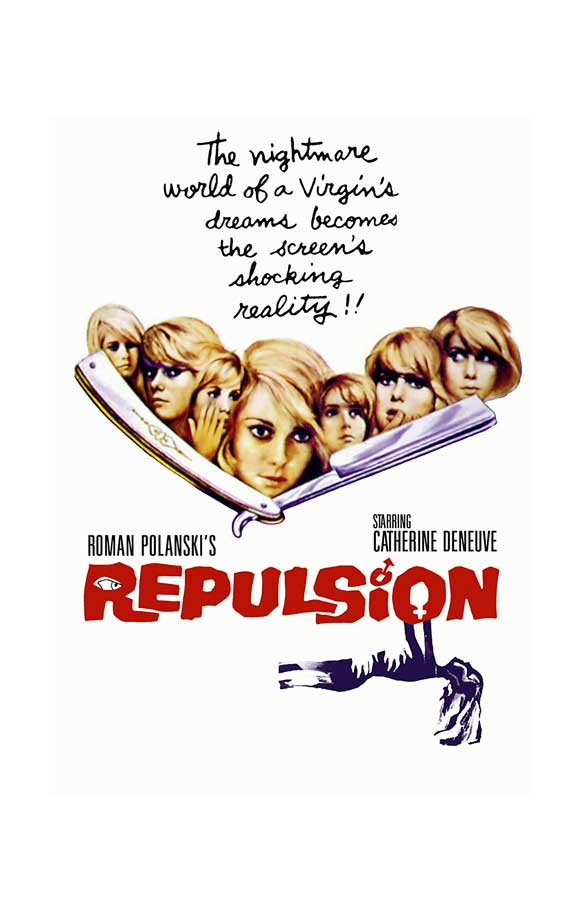
Love or loathe him one thing is for sure the controversial Roman Polanski has made some great movies and since today marks his 80th birthday I thought it would be good to review one of his films this being his first English language one. The story, which was written by Polanski and Gerard Brach centers on Carol (Catherine Deneuve) a beautiful but lonely young woman living in an apartment with her older sister Helen (Yvonne Furneaux) and Helen’s boyfriend Michael (Ian Hendry). Carol seems detached and troubled and when Helen and Michael go off for the weekend Carol begins to suffer hallucinations while inside the apartment that becomes increasingly more frightening and eventually leads to murder.

The film works at a slow and deliberate pace that some viewers may feel put-off by. Personally I felt it was effective and made it more realistic although things really don’t start to get intense until the final hour. For me it was the little things that made it intriguing for instance the way Carol becomes fascinated with the distorted reflection of herself in a teapot, or a rolling bottle of nail polish. Nothing is over-the-top, but instead subtle and restrained. This is one of the few films that seem to understand the thought process of the mentally ill and makes you feel like you are really inside their head and seeing things as they do, which is what makes it so unnerving. The low-key approach works because like with an actual person having a breakdown it starts with little things that slowly morph into bigger ones.

Polanski shows incredible control over the material. The stark black-and-white cinematography helps to heighten the ugliness of the situation. The variety of camera angles and movements creates an almost hypnotic effect. I loved the way, as Carol gets further into her demented state, that the dimensions of the apartment begins to change, or the hands coming out of the walls. My only complaint is I wished some of these effects had been played up even more. The rape sequences are quite effective and surprisingly explicit for its time period. Yet instead of hearing Carol’s screams during these moments we instead hear the ticking of a clock, which somehow makes it even more disturbing.

Deneuve gives one of her best performances and she was at the peak of youthful beauty here. The blank almost zombie-like look in her eyes is penetrating. You get the feeling that she not only truly understands the madness of her character, but actually is the character. Patrick Wymark is also memorable as the landlord who goes from being bombastic and demanding to kind and cuddling and eventually sexually deviant in a matter of only 10 minutes.

Normally I always like a background to the characters and when they are missing or vague I find it a weakness to the script while here it is strangely a strength. We can surmise that she was most likely abused sexually when she was younger, but the who, when, and why is never made clear. This though somehow makes the character and the situation more compelling and reflects back to how psychologically fragile the human condition can be and how these things can happen to anyone. The final tracking shot, which stops on a picture of Carol as a child showing an angry look on her face is great.

The imagery and psychological approach to this thing is still one-of-a-kind. The movie viewing experience on this one remains potent and aptly deserves its classic status.

repulsion 2

My Rating: 8 out of 10

Released: October 2, 1965

Runtime: 1Hour 45Minutes

Not Rated

Director: Roman Polanski

Studio: Compton Films

Available: VHS, DVD, Blu-ray, Amazon Instant Video

The Running Man (1963)

the running man 1

By Richard Winters

My Rating: 7 out of 10

4-Word Review: Couple scams insurance company.

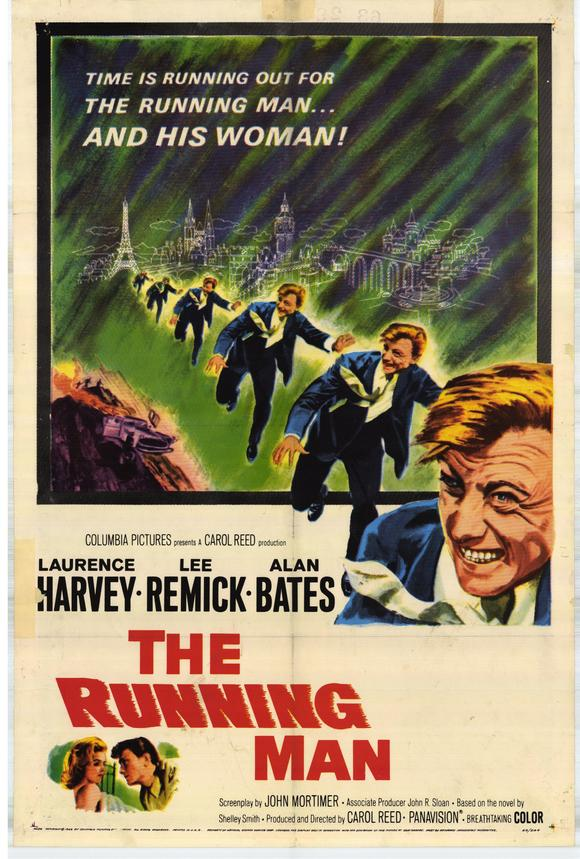
Rex (Laurence Harvey) is a victim of a plane crash when the airplane he is piloting crashes in a forest. He survives with minor injuries, but the plane is totaled and he expects a big payout from his insurance company. However, since he was two days late with his premium payment the policy was canceled and he gets nothing. Outraged he plans a scheme to get revenge with the help of his wife Stella (Lee Remick). He purchases a glider plane and has it insured with the same company. He then intentionally crashes it into the water and before help arrives he dives into the lake and by using an underwater apparatus swims ashore undetected. He hides out on a small island during the investigation and when it is finally confirmed that he was ‘lost-at-sea’ and the insurance pays a handsome sum to Stella the two then run off to Spain, but insurance investigator Stephan (Alan Bates) still has his suspicions and follows the two while continuing to hound them with questions forcing them into a shrewd game of cat-and-mouse.

Based on the novel by Shelley Smith this is a thriller in the most classic sense. The plot is completely believable and still very timely without any of the annoying loopholes. The action particularly during the final 30 minutes, which had me literally on the edge of my seat, is very exciting. The twists are interesting and unpredictable.

What I enjoyed most though was the way the characters evolve and change as the story progresses. Stella initially comes off as carefree and callous only to end up being beleaguered, worn out, and even feeling a bit guilty. Rex seems slick and conniving at the start, but eventually turns crass, vindictive and wholly unlikable. Stephan is nosy and intrusive when it begins, but before it is over he is the most sympathetic to the viewer. Having worked in the insurance industry now for 15 years I liked how the film shows things from both side not only the rigid business-like end, but also how those that try to cheat the system even when they feel somehow ‘justified’ in doing it only ends up making it worse for everybody else. The very ironic ending hits the bullseye.

Director Carol Reed is in top form. I liked how he captures the many different exotic locales of Spain not only with the outdoor scenery and villas, but also inside an old church cathedral as well as an empty bullfighting arena. The opening credit sequence showing Harvey’s shadowing figure running in front of a colored background is good as his the variety of camera angles used particularly during Rex’s final attempt to escape by airplane. The only part that I thought was unnecessary was in when Rex finds a passport left by an Australian that he was talking to inside a bar. Rex picks it up and it is clear to the viewer that he was thinking of using it for his own change of identity, but Reed still felt the need to superimpose Rex’s head shot over the Australian’s, which seemed heavy-handed as does the booming music that is played when Stephan meets Stella for the second time while in Spain.

Remick is excellent and the stresses and strains that her character conveys are easily felt by the viewer. Harvey seems to be having a grand old time particularly when he is in the disguise of the Australian. Although there is some debate over it at IMDB I actually felt that his Aussie accent was alright. He does however look much too scrawny in his bathing suit although Remick in her bikini is delectable.

Why this exciting and polished thriller has never been released onto DVD, or Blu-ray let alone VHS is a complete mystery especially when it stars two major actors from 60’s British cinema and directed by a legend. This movie is waiting to be discovered by new fans and can be enjoyed by just about everyone.

the running man 2

My Rating: 7 out of 10

Released: October 2, 1963

Runtime: 1Hour 43Minutes

Not Rated

Director: Carol Reed

Studio: Columbia Pictures

Not Available at this time.

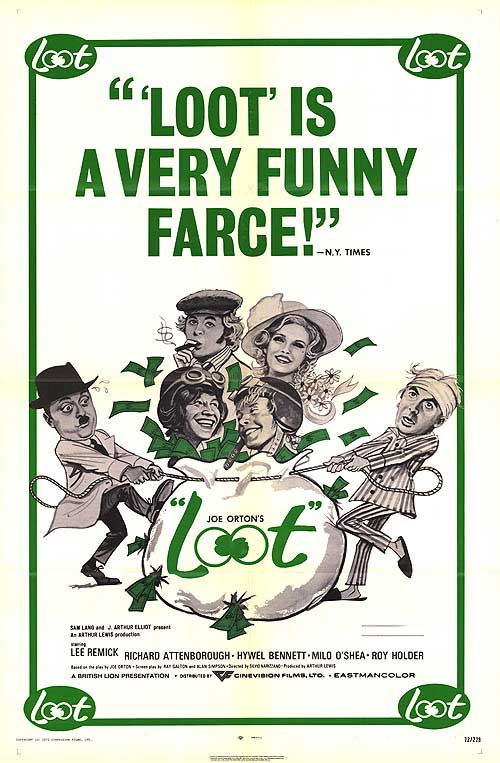
Loot (1970)

loot 3

By Richard Winters

My Rating: 8 out of 10

4-Word Review: They are all greedy.

Every Friday this month I will review the Top 5 best and most outrageous black/dark comedies from the 70’s. There were many to choose from, but these five have stood the test of time and remain as potent and hilarious as they were when first released. Today’s film was written by Joe Orton who died before ever seeing his play made into a movie and despite being top-notch in every aspect remains unjustly overlooked and hard-to-find.

The story deals with Dennis and Hal (Hywell Bennett, Ray Holder) two friends who decide to rob a bank next to a funeral home and hide the stolen money inside the coffin of Hal’s late mother. Problems ensue when Inspector Truscott (Richard Attenborough) starts to suspect the boys have something to do with it and incorporates brutal interrogation tactics to get the truth out of them. Then there is Nurse Fay (Lee Remick) who may have had something to do with Hal’s mother’s death and is inclined to want a piece of the action. All of this occurs inside Hal’s house, which is also a bed and breakfast run by Hal’s Father McLeavy (Milo O’Shea) who remains oblivious to all of the shenanigans and only worried about getting a decent burial for his departed wife.

The film is fast and funny and retains all of Orton’s dark and acidic wit. It is full of one-liners, sight gags, odd characters, and bizarre, unexpected comical twists, with ninety-eight percent of it being clever and funny. The best is the funeral procession when Dennis, who is driving a hearse that is carrying the deceased, finds out that the vehicle has lost its brakes and careens down the streets at high speeds with all the other cars in the procession try to keep up with it while driving equally fast.

Director Silvio Narizzano shows a terrific grasp on the material. Unlike Entertaining Mr. Sloane the only other film adaption of Orton’s work this film has a terrific pace that starts with a bang and never lets up. Narizzano also infuses a lot of imaginative camera angles, edits, and set design to give the thing a nice edgy, off-color feel. Outdoor action is nicely balanced with the indoor scenes to create a good cinematic feel and it never seems like a filmed stage play. There are some interesting homoerotic overtones as well including having Dennis and Hal blow a hole in the bank wall, crawl through it and take the money, then crawl back out and stuff it into the coffin while being completely naked.

Remick has one of her most interesting and unique performances in her already illustrious career as she is quite amusing looking almost like Marilyn Monroe with her dyed platinum blonde hair and authentic sounding British accent. Attenborough is memorable playing against type. Usually he is best at meek and passive types, but here he almost steals the film as the aggressive Inspector with a Hitler mustache. His best moment comes when he picks up a glass eye from the floor and in one brief second sticks out his tongue and licks it, which is done in vivid close-up.

The bouncy, psychedelic score by Steve Ellis helps give the proceedings attitude and personality. Why this film has never been released on DVD or Blu-ray is a mystery. The humor remains sharp and a whole new throng of fans could be acquired if they were just able to see it.

My Rating: 8 out of 10

Released: May 1, 1970

Runtime: 1Hour 41Minutes

Rated R

Director: Silvio Narizzano

Studio: British Lion Film Corporation

Available: VHS