Category Archives: British Movies

Repulsion (1965)

repulsion 1

By Richard Winters

My Rating: 8 out of 10

4-Word Review: She loses her mind.

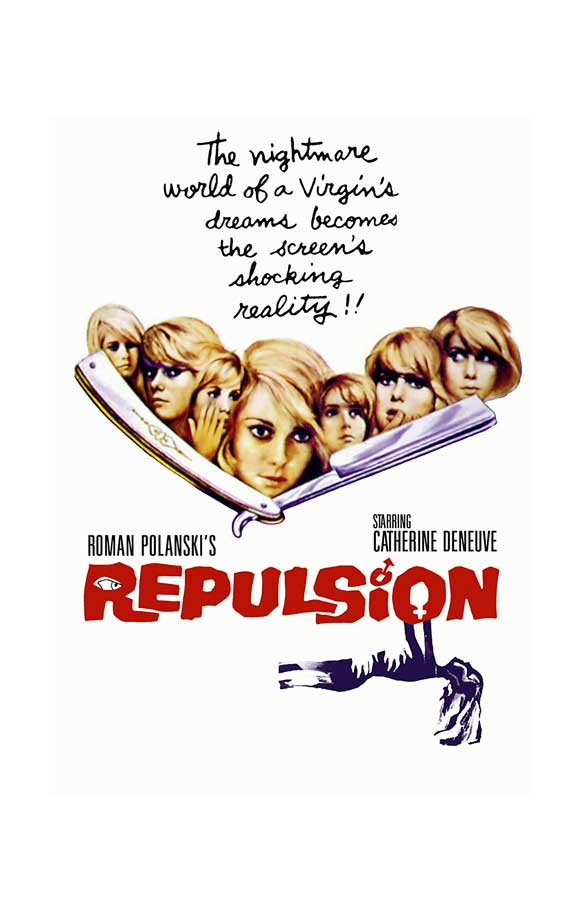
Love or loathe him one thing is for sure the controversial Roman Polanski has made some great movies and since today marks his 80th birthday I thought it would be good to review one of his films this being his first English language one. The story, which was written by Polanski and Gerard Brach centers on Carol (Catherine Deneuve) a beautiful but lonely young woman living in an apartment with her older sister Helen (Yvonne Furneaux) and Helen’s boyfriend Michael (Ian Hendry). Carol seems detached and troubled and when Helen and Michael go off for the weekend Carol begins to suffer hallucinations while inside the apartment that becomes increasingly more frightening and eventually leads to murder.

The film works at a slow and deliberate pace that some viewers may feel put-off by. Personally I felt it was effective and made it more realistic although things really don’t start to get intense until the final hour. For me it was the little things that made it intriguing for instance the way Carol becomes fascinated with the distorted reflection of herself in a teapot, or a rolling bottle of nail polish. Nothing is over-the-top, but instead subtle and restrained. This is one of the few films that seem to understand the thought process of the mentally ill and makes you feel like you are really inside their head and seeing things as they do, which is what makes it so unnerving. The low-key approach works because like with an actual person having a breakdown it starts with little things that slowly morph into bigger ones.

Polanski shows incredible control over the material. The stark black-and-white cinematography helps to heighten the ugliness of the situation. The variety of camera angles and movements creates an almost hypnotic effect. I loved the way, as Carol gets further into her demented state, that the dimensions of the apartment begins to change, or the hands coming out of the walls. My only complaint is I wished some of these effects had been played up even more. The rape sequences are quite effective and surprisingly explicit for its time period. Yet instead of hearing Carol’s screams during these moments we instead hear the ticking of a clock, which somehow makes it even more disturbing.

Deneuve gives one of her best performances and she was at the peak of youthful beauty here. The blank almost zombie-like look in her eyes is penetrating. You get the feeling that she not only truly understands the madness of her character, but actually is the character. Patrick Wymark is also memorable as the landlord who goes from being bombastic and demanding to kind and cuddling and eventually sexually deviant in a matter of only 10 minutes.

Normally I always like a background to the characters and when they are missing or vague I find it a weakness to the script while here it is strangely a strength. We can surmise that she was most likely abused sexually when she was younger, but the who, when, and why is never made clear. This though somehow makes the character and the situation more compelling and reflects back to how psychologically fragile the human condition can be and how these things can happen to anyone. The final tracking shot, which stops on a picture of Carol as a child showing an angry look on her face is great.

The imagery and psychological approach to this thing is still one-of-a-kind. The movie viewing experience on this one remains potent and aptly deserves its classic status.

repulsion 2

My Rating: 8 out of 10

Released: October 2, 1965

Runtime: 1Hour 45Minutes

Not Rated

Director: Roman Polanski

Studio: Compton Films

Available: VHS, DVD, Blu-ray, Amazon Instant Video
The Running Man (1963)

the running man 1

By Richard Winters

My Rating: 7 out of 10

4-Word Review: Couple scams insurance company.

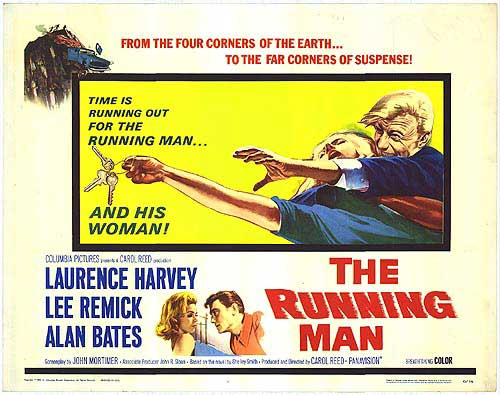
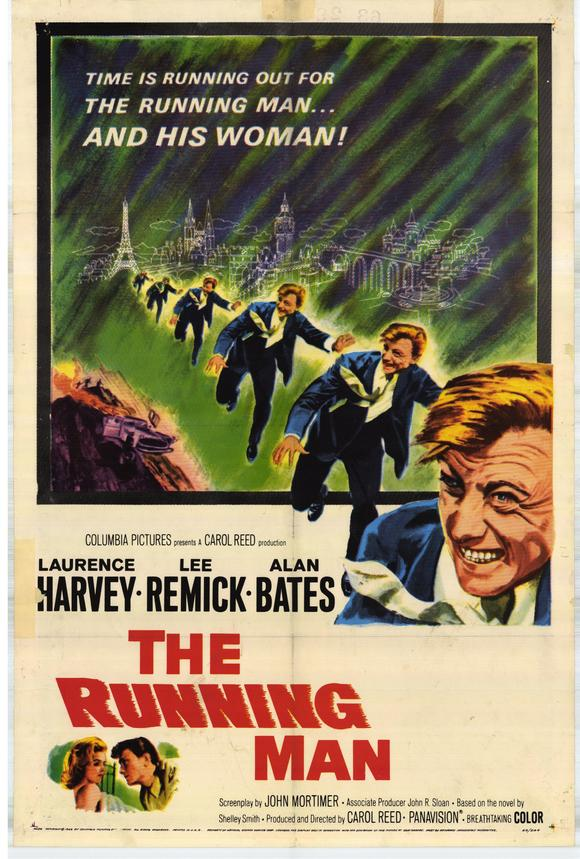
Rex (Laurence Harvey) is a victim of a plane crash when the airplane he is piloting crashes in a forest. He survives with minor injuries, but the plane is totaled and he expects a big payout from his insurance company. However, since he was two days late with his premium payment the policy was canceled and he gets nothing. Outraged he plans a scheme to get revenge with the help of his wife Stella (Lee Remick). He purchases a glider plane and has it insured with the same company. He then intentionally crashes it into the water and before help arrives he dives into the lake and by using an underwater apparatus swims ashore undetected. He hides out on a small island during the investigation and when it is finally confirmed that he was ‘lost-at-sea’ and the insurance pays a handsome sum to Stella the two then run off to Spain, but insurance investigator Stephan (Alan Bates) still has his suspicions and follows the two while continuing to hound them with questions forcing them into a shrewd game of cat-and-mouse.

Based on the novel by Shelley Smith this is a thriller in the most classic sense. The plot is completely believable and still very timely without any of the annoying loopholes. The action particularly during the final 30 minutes, which had me literally on the edge of my seat, is very exciting. The twists are interesting and unpredictable.

What I enjoyed most though was the way the characters evolve and change as the story progresses. Stella initially comes off as carefree and callous only to end up being beleaguered, worn out, and even feeling a bit guilty. Rex seems slick and conniving at the start, but eventually turns crass, vindictive and wholly unlikable. Stephan is nosy and intrusive when it begins, but before it is over he is the most sympathetic to the viewer. Having worked in the insurance industry now for 15 years I liked how the film shows things from both side not only the rigid business-like end, but also how those that try to cheat the system even when they feel somehow ‘justified’ in doing it only ends up making it worse for everybody else. The very ironic ending hits the bullseye.

Director Carol Reed is in top form. I liked how he captures the many different exotic locales of Spain not only with the outdoor scenery and villas, but also inside an old church cathedral as well as an empty bullfighting arena. The opening credit sequence showing Harvey’s shadowing figure running in front of a colored background is good as his the variety of camera angles used particularly during Rex’s final attempt to escape by airplane. The only part that I thought was unnecessary was in when Rex finds a passport left by an Australian that he was talking to inside a bar. Rex picks it up and it is clear to the viewer that he was thinking of using it for his own change of identity, but Reed still felt the need to superimpose Rex’s head shot over the Australian’s, which seemed heavy-handed as does the booming music that is played when Stephan meets Stella for the second time while in Spain.

Remick is excellent and the stresses and strains that her character conveys are easily felt by the viewer. Harvey seems to be having a grand old time particularly when he is in the disguise of the Australian. Although there is some debate over it at IMDB I actually felt that his Aussie accent was alright. He does however look much too scrawny in his bathing suit although Remick in her bikini is delectable.

Why this exciting and polished thriller has never been released onto DVD, or Blu-ray let alone VHS is a complete mystery especially when it stars two major actors from 60’s British cinema and directed by a legend. This movie is waiting to be discovered by new fans and can be enjoyed by just about everyone.

the running man 2

My Rating: 7 out of 10

Released: October 2, 1963

Runtime: 1Hour 43Minutes

Not Rated

Director: Carol Reed

Studio: Columbia Pictures

Not Available at this time.

Loot (1970)

loot 3

By Richard Winters

My Rating: 8 out of 10

4-Word Review: They are all greedy.

Every Friday this month I will review the Top 5 best and most outrageous black/dark comedies from the 70’s. There were many to choose from, but these five have stood the test of time and remain as potent and hilarious as they were when first released. Today’s film was written by Joe Orton who died before ever seeing his play made into a movie and despite being top-notch in every aspect remains unjustly overlooked and hard-to-find.

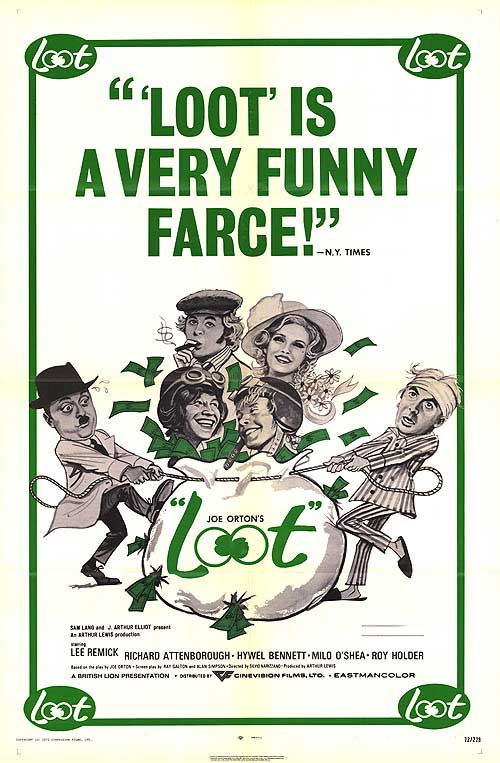
The story deals with Dennis and Hal (Hywell Bennett, Ray Holder) two friends who decide to rob a bank next to a funeral home and hide the stolen money inside the coffin of Hal’s late mother. Problems ensue when Inspector Truscott (Richard Attenborough) starts to suspect the boys have something to do with it and incorporates brutal interrogation tactics to get the truth out of them. Then there is Nurse Fay (Lee Remick) who may have had something to do with Hal’s mother’s death and is inclined to want a piece of the action. All of this occurs inside Hal’s house, which is also a bed and breakfast run by Hal’s Father McLeavy (Milo O’Shea) who remains oblivious to all of the shenanigans and only worried about getting a decent burial for his departed wife.

The film is fast and funny and retains all of Orton’s dark and acidic wit. It is full of one-liners, sight gags, odd characters, and bizarre, unexpected comical twists, with ninety-eight percent of it being clever and funny. The best is the funeral procession when Dennis, who is driving a hearse that is carrying the deceased, finds out that the vehicle has lost its brakes and careens down the streets at high speeds with all the other cars in the procession try to keep up with it while driving equally fast.

Director Silvio Narizzano shows a terrific grasp on the material. Unlike Entertaining Mr. Sloane the only other film adaption of Orton’s work this film has a terrific pace that starts with a bang and never lets up. Narizzano also infuses a lot of imaginative camera angles, edits, and set design to give the thing a nice edgy, off-color feel. Outdoor action is nicely balanced with the indoor scenes to create a good cinematic feel and it never seems like a filmed stage play. There are some interesting homoerotic overtones as well including having Dennis and Hal blow a hole in the bank wall, crawl through it and take the money, then crawl back out and stuff it into the coffin while being completely naked.

Remick has one of her most interesting and unique performances in her already illustrious career as she is quite amusing looking almost like Marilyn Monroe with her dyed platinum blonde hair and authentic sounding British accent. Attenborough is memorable playing against type. Usually he is best at meek and passive types, but here he almost steals the film as the aggressive Inspector with a Hitler mustache. His best moment comes when he picks up a glass eye from the floor and in one brief second sticks out his tongue and licks it, which is done in vivid close-up.

The bouncy, psychedelic score by Steve Ellis helps give the proceedings attitude and personality. Why this film has never been released on DVD or Blu-ray is a mystery. The humor remains sharp and a whole new throng of fans could be acquired if they were just able to see it.

My Rating: 8 out of 10

Released: May 1, 1970

Runtime: 1Hour 41Minutes

Rated R

Director: Silvio Narizzano

Studio: British Lion Film Corporation

Available: VHS

Antonia and Jane (1991)

antonia and jane 1

By Richard Winters

My Rating: 7 out of 10

4-Word Review: Friends aren’t always friends.

Jane (Imelda Staunton) is a depressed single woman slipping into middle-age and jealous of her lifelong friend Antonia (Saskia Reeves) who she feels is prettier and gets all the breaks. Jane pours her thoughts out to her therapist (Brenda Bruce), but the twist is that Antonia sees the same therapist and is having the same problems only in reverse as she is jealous of Jane. The first half-hour looks at things from Jane’s point-of-view while the second half shows it from Antonia’s.

The element that really makes this movie so enjoyable is the cutaways. Everything talked about during their sessions is recreated visually. These recreations are all quite funny. Some of my favorites are when Jane talks about a trip to Canada and we see her pushing over a tall pine tree with one hand. There is also the segment where Antonia’s 10-year-old son gives a raunchy stand-up comedy routine to his friends during his birthday party. The part where the two find themselves trapped in an old French war movie complete with them speaking fluid French and subtitles is quite creative as is the many different and colorful outfits that the two wear each year when they get together for their annual visit with the other.

Somehow friendships between females are quite different than the ones of their male counterparts. Harbored jealousies and insecurities seem to always lurk beneath the surface no matter how ‘happy’ their facades and this film explores them with biting and accurate detail as well as showing how skewed people’s perspectives can sometimes be. I also found myself digging the name Antonia and wondered why we don’t hear more women named that so…

Memo to all young couples and parents to be: Let’s get a few more  Antonias out there and a few less Ashleys. Thank You.

The Howard character played by Bill Nighy is also quite amusing. Jane meets him at an art exhibit where he displays big blown-up black and white photographs of twenty-four different naked rear-ends. The two go down the line and analyze each and every one, which in a strange way I thought was kind of interesting. I also got a kick out of the way he asks Jane out on a date.

Howard: Are you involved in a long-term monogamous mutually self-absorbed sexual relationship?

Jane: No.

Howard: Me neither.

In an effort to keep the quirkiness going the two women characters sometime do strange things that at times makes them hard to relate to and is the film’s only real weakness. For instance Antonia tells Jane that she is having an affair with Jane’s husband and Jane becomes very supportive of it and attends their wedding even though most people would probably want to kill their friend if they told them that and the unfaithful husband to boot. There is another scene where Antonia meets a stranger at a theater and goes back to his place for sex and even allows herself to get tied up during some kinky bondage games, which most viewers will consider being too reckless and putting oneself into too vulnerable a position with someone they don’t even know.

Usually films that seemed obsessed with tying everything together get overdone and annoying, but here the ironies are hilarious and become funnier as it goes along. Strangely it is the very end where the film loses it flamboyance and instead gives us a nice, simple scene of genuine human affection that leaves the strongest impact in this very offbeat and entertaining gem.

My Rating: 7 out of 10

Released: November 2, 1991

Runtime: 1Hour 15Minutes

Rated R

Director: Beeban Kidron

Studio: Miramax

Available: VHS

Cul-De-Sac (1966)

cul de sac 2

By Richard Winters

My Rating: 8 out of 10

4-Word Review: Bubbling beneath the surface.

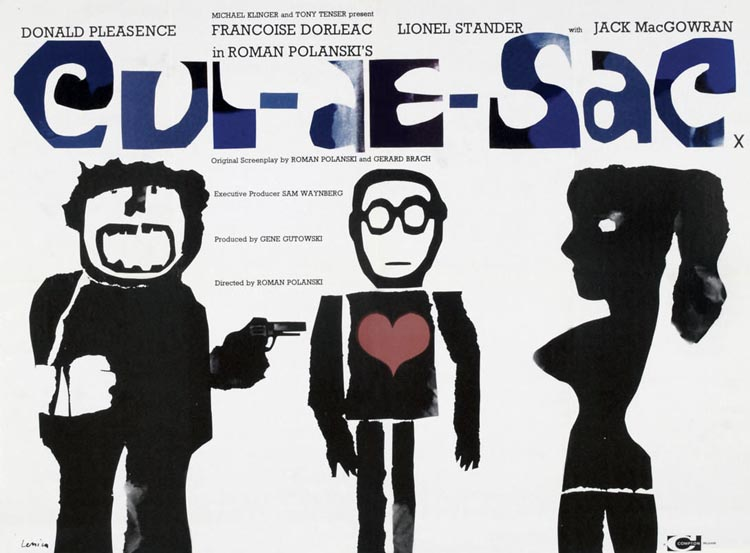
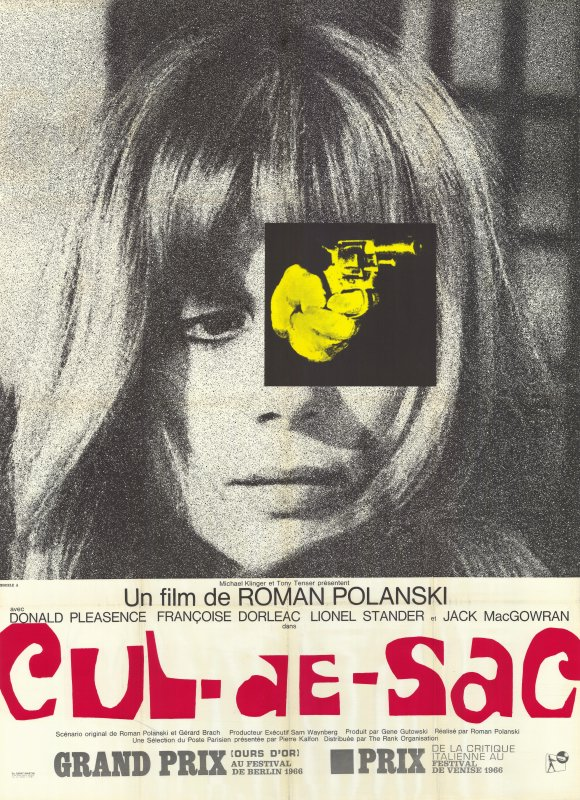
Albie and Richard (Jack MacGowran, Lionel Stander) are two gangsters on the run. Albie is injured with a gunshot wound and their getaway car has broken down. They come upon an isolated castle owned by George (Donald Pleasance) who lives there with his new wife Teresa (Francoise Dorleac, who tragically died in a car accident just one year after this film was released). George is very passive and timid and pretty much allows Richard to have his way as he takes over the place and his wife and yet as the situation progresses different shades of the character’s personalities begin to come to light.

Roman Polanski leaves his strong directorial touch from the exquisite opening shot, which shows an old car being pushed along on a desolate road amidst a very flat landscape until the end. In the hands of any other director this otherwise odd story probably would not have worked. Like with A Knife in Water Polanski makes great use of the quiet and serene atmosphere and as a viewer you feel like you are right there with the characters.  Filmed on-location at the Lindisfarne Castle on Holy Island in Northumberland, England the movie makes great use of the tranquil setting. I found it almost hard to believe that there was a film crew there as the isolation really grabs you and sucks you in. The quiet moments are the film’s strongest and I just loved the hooting owl heard in the background. The idea of filming it in black and white nicely compliments the film’s dark psychological undertones.

The film’s novelty is watching how the characters evolve and interact with one another. Donald Pleasance gives one of his best performances as the cowardly George. There have been many weak and frighten characters in cinema history, but Pleasance makes the character here quite interesting and the way he finally shows some bravado at the least likely moment is fascinating. Stander also excels with a character that initially comes off as a brute, but at strange times reveals a trusting and even child-like manner.

The movie can be viewed in different ways and doesn’t fit distinctly into any type of genre. To a degree it can work as a dark psychological character study, a mystery, film noir, a thriller, or macabre comedy. Approaching it as a comedy works best Polanski has not always had great success in that area and some of his comedies in particular the ill-advised Pirates have been complete disasters, but this one works. The best scene is when some of George’s old friends come to visit and bring along their bratty son who becomes an absolute terror to everyone.

The odd ending is open to interpretation and leaves a lasting impression. This is also a great chance to see Jacqueline Bisset in her film debut. She appears during the second half wearing glasses and saying little, but is as beautiful and alluring as ever.

cul de sac 1

My Rating: 8 out of 10

Released: November 7, 1966

Runtime: 1Hour 57Minutes

Not Rated

Director: Roman Polanski

Studio: Tekli British Productions

Available: DVD (The Criterion Collection) Blu-ray, Amazon Instant Video, Netflix streaming

The Birthday Party (1968)

the birthday party 3

By Richard Winters

My Rating: 8 out of 10

4-Word Review: Tear up the newspaper.

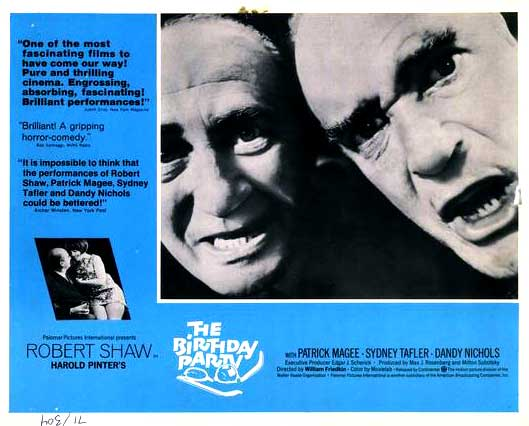
Since tomorrow will be my birthday I wanted to come up with a film that had birthdays as its theme and found this bizarre but fascinating obscurity. It is the story based on the play by Harold Pinter of Stanley Webber (Robert Shaw) a mysterious and private man who takes up lodging in a rundown British seaside house. He rents an upstairs room from Mr. and Mrs. Bowles (Moultrie Kelsall, Dandy Nichols) who are quite odd themselves. One day two men dressed in black suits (Patrick Magee, Sydney Tafler) come to pay Stanley a visit. They know something about Stanley’s past and their presence frightens him to the extent that it causes him to have a nervous breakdown.

On the surface this film shouldn’t work. There is an excessive amount of talking with dialogue that doesn’t say much and at times seems absurd. The set is drab and dirty with the camera seemingly locked down inside of it. There is never any explanation about Stanley’s past or what he is running from nor who the men are or what they know about him. The ending is elusive and the viewer will go away feeling more confused than they did at the start.

However, it is these ingredients that make the film so thoroughly intriguing. The seemingly banal dialogue is simply a façade for underlying thoughts and feelings. What Stanley is trying to run from is unimportant because it is really not about him at all and is instead more about ourselves, human nature and the quandary of our existence. It’s an examination of people’s futile attempts at trying to escape from who they are only to have society and life catch up with them. The set could be a metaphor for the inside of Stanley’s head. The grimy and decayed place symbolizes his decayed soul and the men in black suits are his conscience coming to haunt him.

Once you adjust to the eccentric narrative it then becomes a fantastic film for observing subtitles and nuance. Director William Friedkin shows a keenness for detail not only visually, but with the sound as well. The way the Magee character tears up a newspaper and the sound used for it could actually unnerve some viewers. Stanley’s meltdown scene is very unique and overall the direction is superb for such difficult material.

This movie was years ahead of its time, but for some it may be off-putting. However, it should be enjoyed by those who crave the avant-garde. It is also a rare chance to the see the normally strong-willed Shaw playing a very weak and vulnerable character. Nichols is also a stand-out playing an Edith Bunker type with a perverse streak lying just beneath the surface.

the birthday party 1

My Rating: 8 out of 10

Released: December 9, 1968

Runtime: 2Hours 3Minutes

Rated G

Director: William Friedkin

Studio: Palomar Pictures International

Available: VHS, DVD (Region 2)

Night Watch (1973)

night watch 2

By Richard Winters

My Rating: 3 out of 10

4-Word Review: Murder in the window.

Ellen Wheeler (Elizabeth Taylor) is an emotionally unstable woman recovering from a nervous breakdown. Her first husband died in a car crash along with his young lady lover. Now her second husband John (Laurence Harvey) is fooling around with Ellen’s best friend Sara (Billie Whitelaw). One night Ellen witnesses a murder at the abandoned house next door, but because of Ellen’s past mental state no one believes her. Even the police doubt her story, which starts to send her over-the-edge.

I saw this play about a year ago with a group of friends at a local church. It was written by Lucille Fletcher best known for having done Sorry Wrong Number, which was later turned into a classic film starring Barbra Stanwyck. Although the play started out slowly the twist ending was impressive and something no one in the audience had predicted, but what I liked even better was that when you went back and thought about it, it made perfect sense. I thought at the time that it would make a great movie and was interested in seeing what this film did with it. I felt that there was no way they could screw up such a great story, but somehow they managed to do it.

Director Brian G. Hutton adds a lot of elements to make it more cinematic that should have helped it, but it really doesn’t. I liked the flashback sequences showing the car crash of the first husband as well as Ellen visiting the hospital and identifying the bodies. These segments have a good nightmarish visual quality to them, but Hutton goes back to it too often and eventually wears it out. I also liked that the film shows the police inspecting the inside of the abandoned home, which in the play you never see, but I felt they could have done a lot more to make the place seem more distinct and creepy. There is also a skirmish between two people inside the place at the end that you can hear, but not see because it is too dark and shadowy, which was annoying. The music is effectively creepy, but it also has a ringing quality that quickly becomes irritating and gets way over-played.

This was just one of the many misfires that Taylor did during the 70’s that helped extinguish her otherwise illustrious career long before it should’ve. This one fares slightly better than the others, but not by much. Her affected British accent could seem annoying to some and sounds kind of like the put-on one that Madonna sometimes does although for the record Taylor’s is better than hers. Liz’s emotionalism is a bit too theatrical and may come off as unintentionally funny to certain viewers although seeing her go completely nutty is impressive and fun.

Harvey is all wrong as the husband. His cold, detached presence can work in certain roles, but definitely not in this one. In the play that I saw the actor cast in this part looked more middle-aged with a spare tire stomach, balding head, and graying sideburns, which is what I felt the role called for. This is a character that is overburdened with a stressful job and unstable wife and yet Harvey shows none of this. His slick black hair and turtleneck shirts, which were fashionable at the time, make him look like someone still going out to the trendy nightclubs to pick up young chicks… or guys.

Whitelaw is one of the best British character actresses of all-time, but her talents are wasted with a part that doesn’t allow her to show any range. Her blonde hairdo is nice, but Taylor’s histrionics dominate the proceedings and unceremoniously push Whitelaw into the background.

The play had a lot of humor especially with the Mr. Appleby character played here by actor Robert Lange. Unfortunately the movie turns it into a serious drama making it seem more like a soap opera instead of a mystery. I came away from this feeling that the live production that I had seen was far more entertaining and intriguing. I would suggest to viewers to skip this film and wait for a chance to see it done as a play as the movie does not do the story justice.

night watch 1

My Rating: 3 out of 10

Released: August 9, 1973

Runtime: 1Hour 39Minutes

Rated PG

Director: Brian G. Hutton

Studio: AVCO Embassy Pictures

Available: DVD (Warner Archive), Amazon Instant Video

Sliding Doors (1998)

sliding doors

By Richard Winters

My Rating: 5 out of 10

4-Word Review: Two scenarios in one.

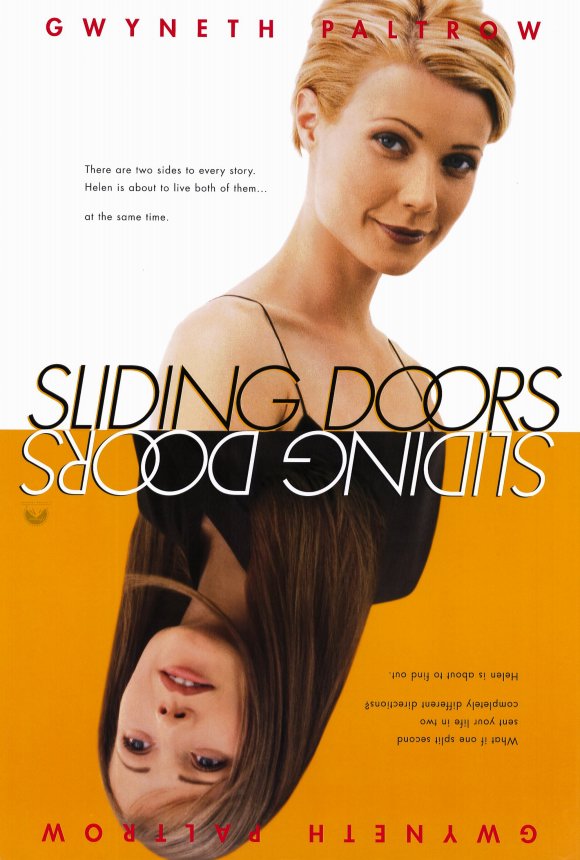
This movie examines the life of a woman named Helen (Gwyneth Paltrow) who lives in a parallel universe. In one story she makes it through the sliding doors of a train and comes home to find her boyfriend in bed with another woman. In the second story she misses the train and does not find out about the affair.

The novelty keeps your attention for a while as the director Peter Howitt cuts back and forth between the two stories nicely. They evolve in interesting ways, but then instead of veering off into separate directions they start to come together until the one story ends up being pretty much like the other. This then negates the original idea altogether and makes it just another ‘chick flick’. The boyfriend Gerry (John Lynch) has to be one of the most pathetic out there. Not only does he have the audacity to have an affair on the beautiful and sweet Helen, but he does it while she is supporting him so he can sit home all day and write a book! He also seems to be unable to ever stand up for himself and he has a Hugh Grant type hairstyle that seems to only look good on Grant and nobody else. Jeanne Tripplehorn as the other woman is extremely cold and bitchy to the point that you wonder why anyone, even this twit, would want to have a relationship with her. Helen’s other love interest James (John Hannah) is charming in too much of a prepackaged sort of way and at times it seems to come off like he is a stalker even though that is not the intention. Also Paltrow ends up becoming afflicted with the ‘Ali MacGraw syndrome’ as she is shown lying in a hospital bed after a bad accident with no scratches or bruises and looking as beautiful as ever.

On the positive side Paltrow is really pretty to look at and speaks with an effective British accent, which takes a little getting used to, but she does it well. She sports two different hairstyles and looks good in both, but with the second one it starts to make her look exactly like Susan Dey from the 80’s TV-show ‘L.A. Law’.

The movie is fun for a while, even engaging, but eventually it throws in too many dramatic twists. The boyfriend is beyond pathetic and Tripplehorn, as his lover, seems to be running for bitch of the century.

My Rating: 5 out of 10

Released: April 24, 1998

Runtime: 1Hour 39Minutes

Rated R

Director: Peter Howitt

Studio: Miramax Films

Available: DVD, Amazon Instant Video

Turtle Diary (1985)

turtle diary 1

By Richard Winters

My Rating: 5 out of 10

4-Word Review: They free the turtles.

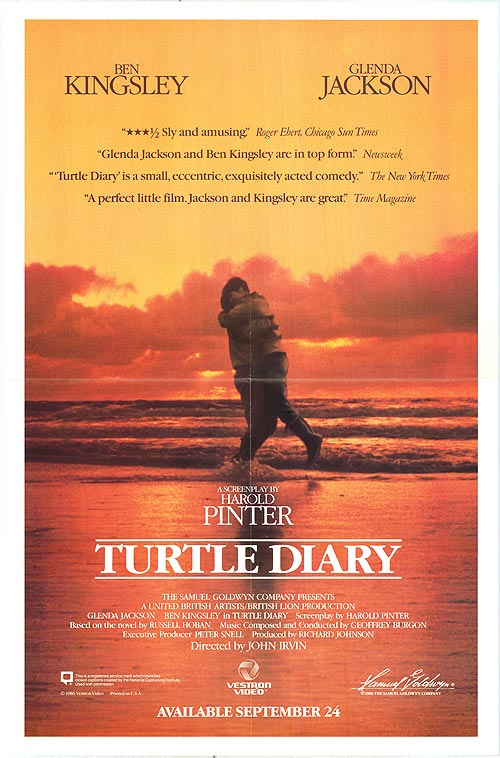
William (Ben Kingsley) becomes fixated with the idea of freeing the sea turtles at the London Zoo and returning them to the ocean. Neaera (Glenda Jackson) starts to have the same dream. The two get together and with the help of the kindly zookeeper George (Michael Gambon) begin to execute their plan.

Although well received by the critics at the time of its release I felt the film never seemed to gel. The plot is too thin and there is no explanation as to why William got so worked up about the turtles being in captivity. I felt there needed to be something shown in his history or character to explain this motivation. After all there are thousands and thousands of people that go to this zoo each year and none of them seemed to get worked up about the same idea. Also, why just the turtles? If William’s problem is seeing an animal that is not in their natural habitat then why not free all the species in the complex.

The plan also goes off way too seamlessly. What are the odds that the zookeeper would be in agreement with them and pretty much do all the work for them in setting it up to the point that all they end up doing is driving the turtles to the ocean. The story would have been a lot funnier and exciting had they somehow had to do it all themselves and behind the scenes. As it is here it becomes almost a non-event that barely holds any interest. Also, I have never heard of a zoo that decides not to press charges when they find that the turtles have been stolen or not firing the employee when they find that he had something to do with it.

The way Neaera and William get together is equally uninspired. They seemingly just keep bumping into each other and through sheer circumstance find out they have the same motivations. I was expecting something a little more creative and humorous. Neaera’s attempts at getting William’s address is particularly forced and contrived. In fact almost all of the conversations that they have with the exception of one where Neaera describes a weird dream that she had is very ordinary. The dialogue they have while traveling to the ocean is the blandest and none of it reveals much about the characters who end up being pretty forgettable.

Watching them carry the turtles to the open water has no emotional impact at all. It is not even the climatic sequence as it happens with 30 minutes left of the film. The rest of the movie concerns William’s dealings with the other people in his flat, which is mainly pointless.

The screenplay was written by celebrated writer Harold Pinter, who has an amusing cameo as one of the customers at William’s bookstore. Pinter was famous for his cutting edge and provocative plays of the 50’s, 60’s, and 70’s many of which I found to be quite fascinating, but this thing seems to be the polar opposite. The story and execution is standard while lacking any flair or pizazz. I can handle low-key and subtlety and many times relish it, but there still needs to be something more to it. More quirkiness and humor was needed as well as some tension. The film as it is here is flat and seems to waist a potentially unique idea as well as its cast.

My Rating: 5 out of 10

Released: September 10, 1985

Runtime: 1Hour 37Minutes

Rated PG

Director: John Irvin

Studio: The Samuel Goldwyn Company

Available: VHS

Pulp (1972)

pulp

By Richard Winters

My Rating: 6 out of 10

4-Word Review: Running for his life.

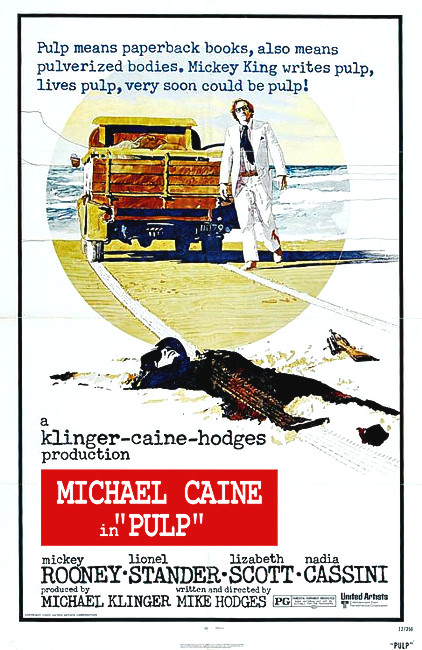
Michael Caine and director Mike Hodges teamed up again one year after doing the gritty classic Get Carter with this breezy oddity dealing with a pulp fiction writer Mickey King (Caine) who is hired to pen the autobiography of ex-Hollywood star Preston Gilbert (Mickey Rooney) who is now living in exile in Malta. The problem is that Gilbert has ties to the underworld and Mickey soon finds himself running for his life while meeting up with a barrage of oddball characters along the way.

The movie has a wonderfully quirky sense of humor with a few memorable laugh-out-loud sequences especially at the beginning. I got a real kick out of the man with a weak bladder who says a prayer to God to open up a locked bathroom door when he can’t get into it. The scene in the bus where we hear the different thoughts going on inside each of the passenger’s heads is great as well. The opening sequence featuring a row of lady typists writing up King’s latest manuscript is cute, but the one thing that holds it all together is Caine’s wry voice-over narration that remains consistently amusing.

Rooney though manages to steal the whole thing with his hilarious send-up of an aging actor. In fact this may be one of the funniest roles of his entire career. Even the scene showing him shadow boxing in his underwear is engaging although thankfully the camera doesn’t stay on it for too long. I was a bit disappointed that the character didn’t last through the film’s duration, but his death scene is so funny that it almost makes up for it.

It is nice to see Lizabeth Scott in her last film to date and first since 1957 when she was essentially blacklisted from Hollywood purportedly for her lesbian leanings. Although only 50 at the time her aging face looked like she was almost 70 and her deep, raspy voice sounded similar to the demon’s in The Exorcist. I thought she could’ve been given more to do and played a character that was more integral to the story as her screen time is much too brief.

The on-location shooting done on the island nation of Malta is another asset. The sunny weather has a nice exotic feel and the old architecture of the buildings helps give the film a visual distinction. The melodic piano soundtrack is pleasing and I wished it had been heard a little bit more.

The story is full of a lot of unexpected twists and turns that manages to be engaging for a while, but I felt it runs out of steam by the end. During the final 15 minutes I found myself a bit bored and no longer caught up in it. While I do like the scene where the gunmen gets run over by a pick-up and shown from the point-of-view of the driver I still felt that the ending lacked the finesse and quirkiness of the beginning. The offbeat ideas that writer/director Hodges showers into the film become dried up with a finish that lacks any payoff and unfortunately sullies what is otherwise an offbeat gem waiting to be discovered.

My Rating: 6 out of 10

Released: August 4, 1972

Runtime: 1Hour 35Minutes

Rated PG

Director: Mike Hodges

Studio: United Artists

Available: DVD, Amazon Instant Video