Category Archives: British Movies

The Collector (1965)

the collector 2

By Richard Winters

My Rating: 8 out of 10

4-Word Review: Collecting women like butterflies.

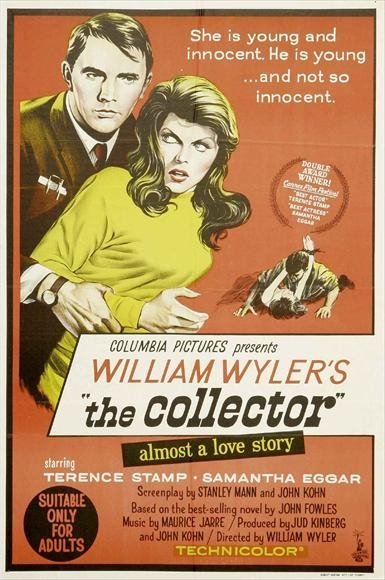
Freddie (Terence Stamp) is a withdrawn loner who collects butterflies for a hobby. One day he manages to win a lot of money in a football pool and uses it buy an old, isolated house in the English countryside. The place has a very large cellar, which gives him the idea that it can be used as a prison. It is then that he decides to kidnap beautiful art student Miranda (Samantha Eggar). He keeps her in the cellar, but fixes it up making it seem almost like an apartment. He treats her with the upmost respect and even knocks before entering her room. He buys her art supplies so she can continue her work and makes an agreement with her that he will let her go after 4-weeks, but hopes in between then that she will fall in love with him.

The film puts an interesting spin on the old ‘psycho kidnapping a beautiful woman’ theme and for the most part succeeds. The viewer ends up feeling almost as sorry for Freddie as they do his victim as it becomes clear that through his social awkwardness he is in even more of a prison than she. The way the two try to communicate and connect, which only ends up driving the them further apart is fascinating and their contrasting views about the book ‘Catcher in the Rye’ as well as the paintings of Picasso are equally revealing.

Stamp gives one of his greatest performances in his already illustrious career playing a character who weaves from being menacing to vulnerable and childlike. Eggar makes for an appealing victim and apparently turned Stamp down years earlier when he had asked for her date while the two were students in acting school.
the collector 4

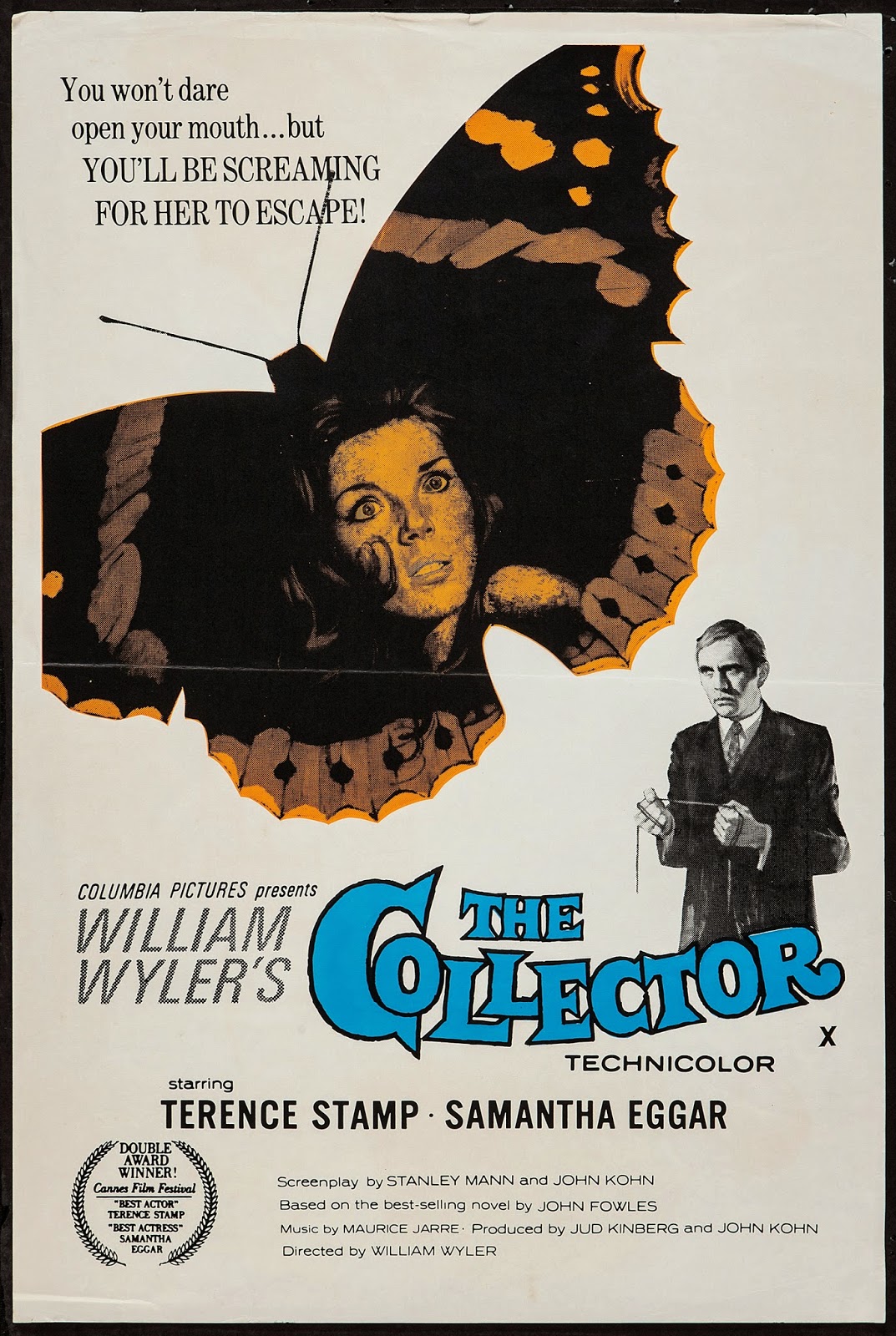
William Wyler’s direction is perfect as he wisely decides to pull back without adding any unnecessary Hitchcock touches and thus allowing the interactions between the two characters to propel the film. His superimposed, colorful shots of butterflies seen over the closing credits are a nice added touch. My only minor grievance is the Maurice Jarre score, which seemed too melodic without enough of the dark foreboding undertones that music for a thriller should have.

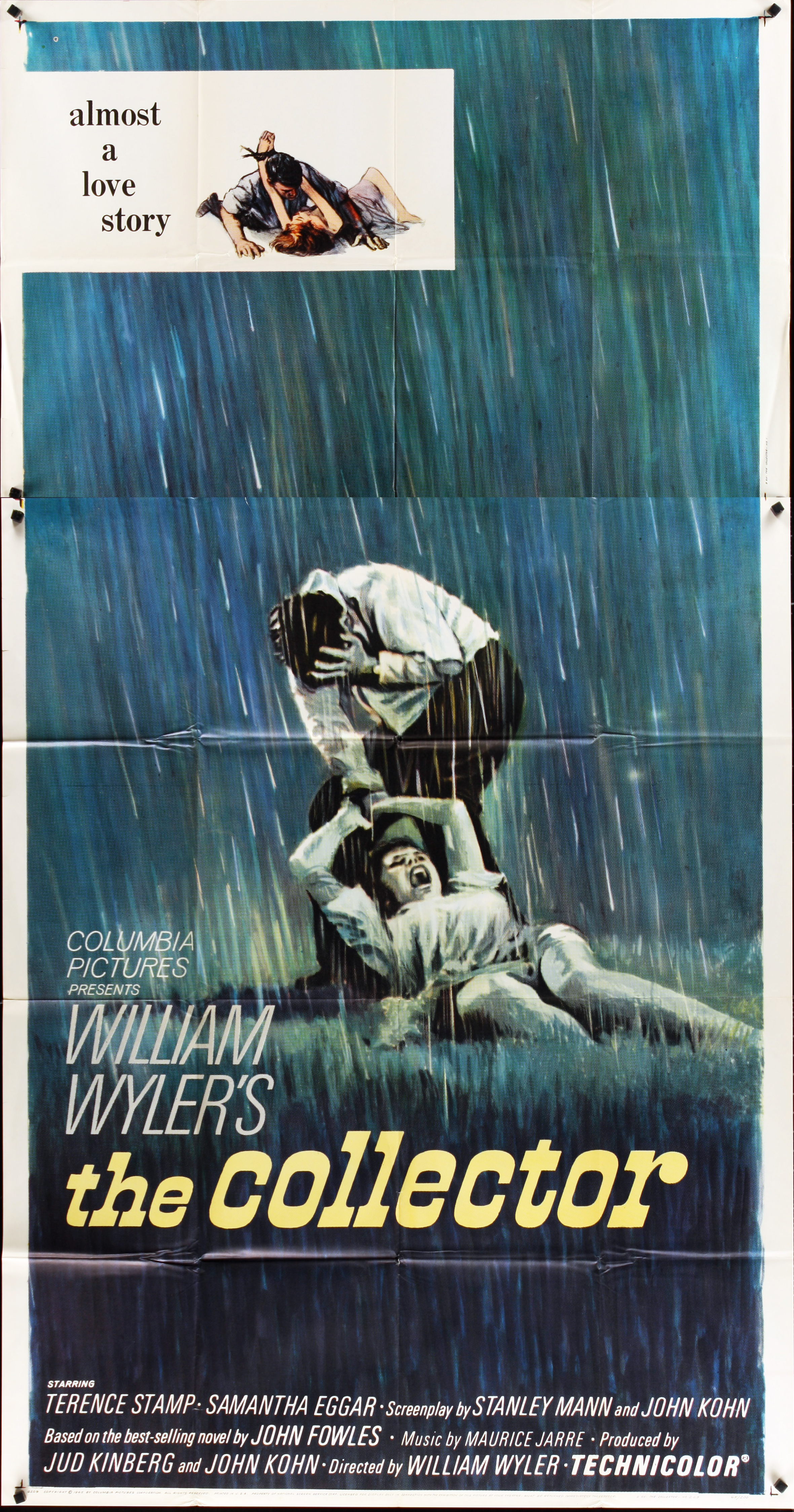
If you’re looking for the conventional thriller you may be disappointed as the emphasis is more on the psychological than the suspenseful. There are a few good tense moments including Miranda’s final attempt to escape during a nighttime rain storm, but for the most part the compelling element comes from the way these two multi-layered people deal with each other and ultimately reveal things about themselves that they didn’t know existed. The story also makes an excellent point of how everyone to a certain degree is trapped in a prison and the challenging if not impossible effort it can sometimes be to bond with others especially when reaching across different social-economic lines. The only thing that does get ruined is the ending, which no longer has the novelty or shock value that it once did.
the collector 3

My Rating: 8 out of 10

Released: June 17, 1965

Runtime: 1Hour 59Minutes

Not Rated

Director: William Wyler

Studio: Columbia Pictures

Available: VHS, DVD, Blu-ray, Amazon Instant Video
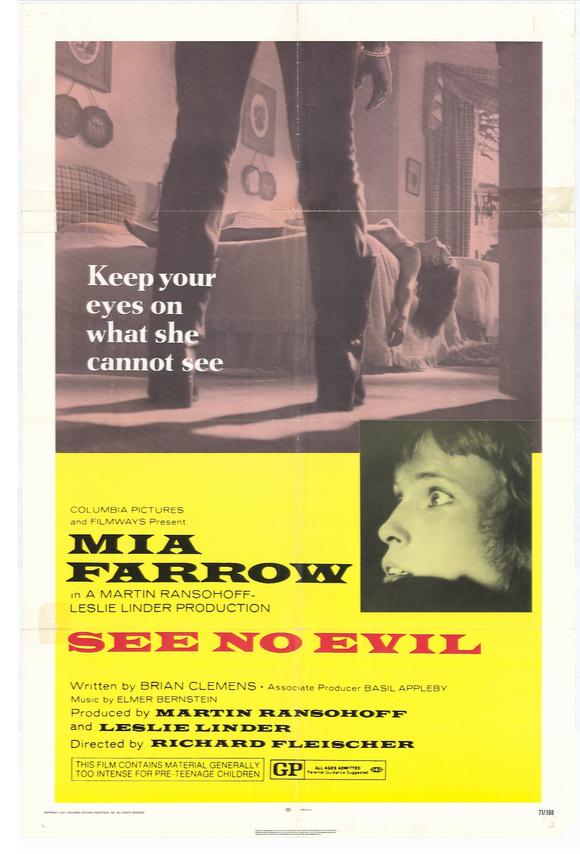
See No Evil (1971)

see no evil

By Richard Winters

My Rating: 7 out of 10

4-Word Review: Psycho stalks blind girl.

Sarah (Mia Farrow) is a young woman who becomes permanently blinded during a horse riding accident. After months of rehabilitation she returns to her family home in the English countryside. Dealing with her new handicap is awkward at first, but things go genuinely smoothly. Unfortunately a psychotic man harboring a petty grudge lurks in the shadows. One day while Sarah is away he murders her entire family and when she returns he goes after her, but the viewer is as in the dark as she is to his identity as all that is shown are the nifty looking cowboy boots that he walks in.

Veteran director Richard Fleischer takes Brian Clemens compact script and turns it into a visual masterpiece. The camera angles and shot compositions are not only perfect, but highly creative. One of the highlights is when Sarah comes home and doesn’t realize at first that her family is dead and only slowly becomes aware of it along with the viewer. The countryside, which was shot near Berkshire, England, is majestically captured particularly during the horse riding sequences. The pace is fast and intense and never lets up with twists that prove to be quite interesting.

Farrow has a limited range as an actress, but her delicate features and the character’s self-reliant nature make her easily likable and the viewer immediately becomes empathetic to her plight. The rest of the characters are well-rounded and believable with noted character actress Lila Kaye in a small, but memorable role as a gypsy mother.

The fact that the identity of the killer is kept a secret until the very end is an added bonus, but you actually do see his face in an earlier scene, but are not made aware that it is him, which I thought was pretty cool. The only misgivings that I had in this area is the fact that the killer supposedly murders these people in a fit of revenge for accidently splashing water on his precious boots when they drove past him in a car, but then later after he kills them he goes to bed and allows the droplets of blood from his victims to dry on his boots while he sleeps even though I felt with his obsessive preoccupation with them that he would have wiped that off right away. Also, for a man who brazenly murders a family in broad daylight for such a petty reason he seems to get a little too nervous about it afterwards even though if he is that crazy I would think that he would have remained cocky about it and felt that he would be able to murder anyone else who got in his way. He also puts up no fight in the end when he finally gets cornered making him look wimpy and making the climax a bit of a letdown.

Overall though I found this thriller to be highly entertaining and its effect has not diminished through repeat viewings. They don’t seem to be able to make them like this anymore, which is unfortunate.

My Rating: 7 out of 10

Alternate Title: Blind Terror

Released: September 2, 1971

Runtime: 1Hour 29Minutes

Rated GP

Director: Richard Fleischer

Studio: Columbia Pictures

Available: DVD, Amazon Instant Video

Heat and Dust (1983)

heat and dust

By Richard Winters

My Rating: 5 out of 10

4-Word Review: Illicit love in India.

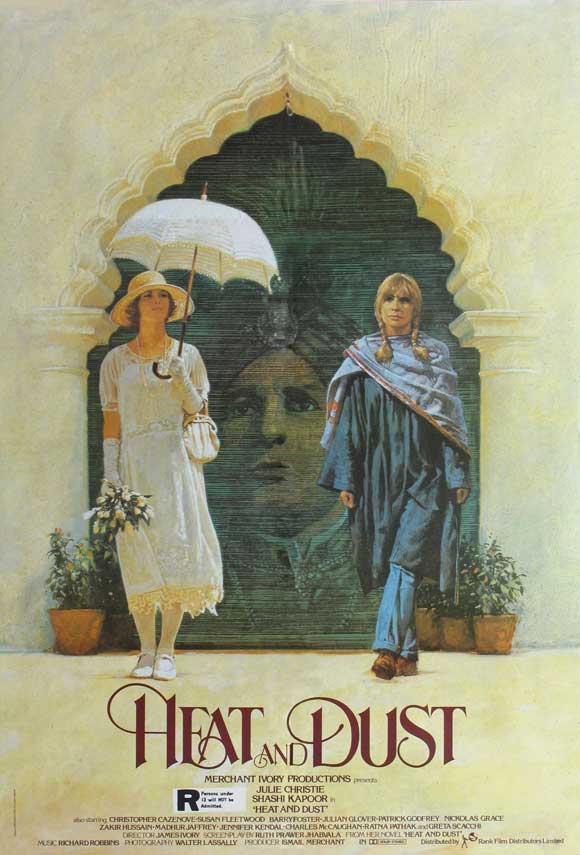
Anne (Julie Christie) has acquired a great fascination with her long-lost Aunt Olivia (Greta Sachi) who was involved in scandal while living in India during the 1920’s. After doing some extensive interviews with Harry (Nickolas Grace) a man who knew Olivia and was friends with her during the period, Anne decides to make a trek to the region herself.  Although several decades removed Anne still manages to find some interesting things about her Aunt including her illicit affair with a local ruler named Nawab (Shashi Kapoor) which caused great scandal at the time and forced her to go into hiding.

The film has a unique structure in that it weaves back and forth between the ‘60s when Anne travels to the region and the ‘20s when Olivia was there. Initially this is slightly off-putting as it cuts back and forth quite suddenly and without warning, but eventually I adjusted to it and amazingly it comes off quite seamlessly most of the way. The film spends more time on Olivia, but by the end it’s cutting between the two every couple of minutes and it one cool moment even have the two come together in a surreal type of way. The only real problem I had with this is when Anne meets a young American man who has ‘purified’ himself from the capitalistic culture of the west, but then still seems to fall back on his old ways at times creating a tumultuous relationship with Anne that I found rather interesting and was upset when the film suddenly cut back to Olivia and then stayed with her for too long a time before going back.

I enjoyed the on-location shooting of India, which makes you feel almost like you’ve traveled there yourself. The film not only analyzes the crowded squalor of the big cities, but also the rocky beauty of its rugged terrain. The film immerses the viewer in the culture looking at both the positive aspects of it as well as the negative, which gives you an overall balanced viewpoint. However, I would have liked more an expansive look of the area with greater use of a wide angle lens and a few bird’s-eye shots of the city, but this was most likely limited because of budget restraints.

I enjoyed the wide-eyed idealism of the Olivia character and Sacchi captures it just right. Christie is also solid, but in the end a bit wasted. The film itself is interesting enough to hold your attention, but some of the scenes go on longer than necessary and could have easily been trimmed. The story seemed rather simple and predictable and has no action at all making the runtime excessive especially with a final payoff that is not too exciting and leaves more than a few loose ends open.

My Rating: 5 out of 10

Released: September 15, 1983

Runtime: 2Hours 13Minutes

Rated R

Director: James Ivory

Studio: Merchant Ivory Productions

Available: VHS, DVD

The Boy Friend (1971)

Boy Friend, The

By Richard Winters

My Rating: 9 out of 10

4-Word Review: An eye popping musical.

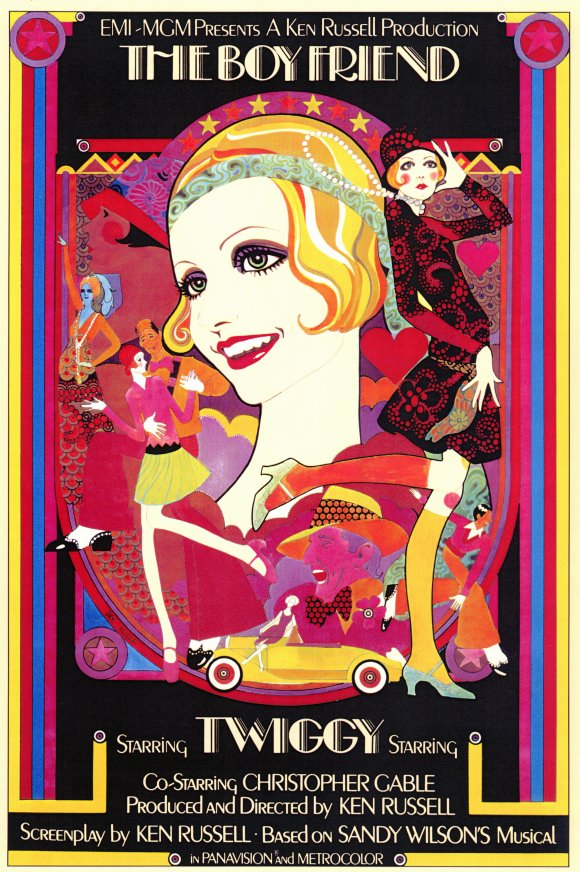
I would not call myself a big musical fan, but I found this one to be excellent and the gold standard for all others. The whole thing is visually stunning from beginning to end with a wide variety of backdrops and settings used. You get everything from conventional dance numbers to a fairy tale recreation where the performers dress like ladybugs and live in giant mushrooms. There is even a fun take-off on Greek mythology done in a scenic forest setting.

The best segment has the dancers on not one but two giant record players shown side-by-side and from overhead. The performers dance on top of the huge turntables while as a group make unique symmetrical designs with their bodies. Another part has them on a gigantic playing card, which reminded me of an old Busby Berkley number and who has always been considered the godfather of splashy dance numbers and yet here it seems to outdo even him.

The film carries itself on the visual level alone with a story that can be best described as a standard musical plot. It involves a group of underpaid actors who put on a tacky musical for a small group of people. The film than interweaves between the low budget numbers, which are all still really good, and their fantasies of what things would look like if they had more money. Twiggy plays the shy awkward crew hand that comes on as the star when the leading lady breaks her leg.

Sure it is at times predictable, corny, and lightweight but it makes up for it with a really good sense of humor. The songs all sound great and the dance routines are certainly extravagant. Twiggy may never score as a great actress, but she hits the mark here. She has a cute bob haircut and a constantly perplexed expression that is really amusing. All the other characters have funny idiosyncrasies as well including Glenda Jackson as the injured leading lady who comes back and is none too happy to see how successful her replacement is.

Ken Russell has immense talent and is sadly one of the most unheralded directors around. Some of his films have been considered excessive and nonsensical, but that is not the case here as his visual flair and indulgence work to enhance the production including his use of primary colors in every shot.

This is a highly recommended visual delight that is impressive even by today’s standards and fun to watch for every member of the household.

My Rating: 9 out of 10

Released: December 16, 1971

Runtime: 2Hours 17Minutes

Rated G

Director: Ken Russell

Studio: MGM

Available: VHS, DVD, Amazon Instant Video

The White Bus (1967)

the white bus 1

By Richard Winters

My Rating: 6 out of 10

4-Word Review: Bizarre tour through Manchester.

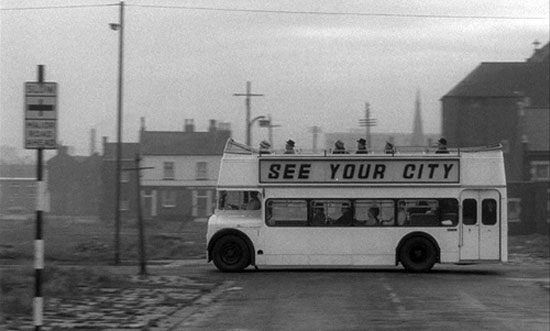
Patricia Healey plays a young lady who is never given any name that is bored with her job and looking for a diversion. While walking through some of the slum sections of the city she comes upon a white double-deck tour bus headed by the Mayor (Arthur Lowe) promising to show her the exciting areas of town. The tour group visits a factory, library and even witness a civil service drill of people saving victims from burning buildings that had been attacked during an unnamed war. In the end the young lady breaks from the group and goes wandering the streets herself looking into windows of homes where she learns a lot more about ‘the real’ city that she lives in that the tour bus could never show.

the white bus 2

This short film, which only runs 45 minutes was directed by Lindsay Anderson who later went on to collaborate with Malcolm McDowell in the classic if…., O Lucky Man! and Britannia Hospital. Anderson’s films were known for their surreal qualities, absurd situations and bizarre characters. This film proves to be no exception and part of the fun of watching the movie is never knowing what strange thing will happen next.  There are some weird moments for sure including the young lady envisioning herself hanging by the neck from a rope connected to the rafters of the ceiling at her job while the cleaning crew obliviously works around the dead body like it is not there. To me though the best moment is when she witnesses a group of people pushing a polio victim inside an iron lung through a lonely train station.

The film is mostly done in black-and-white, but occasionally for no reason or warning will flip over to color for a few seconds and then back to black-and-white again. These intervals become more frequent towards the middle of the film, but then go back to all black-and-white during the final fifteen minutes. In some ways I found this to be diverting and interesting initially, but eventually it became distracting and pointless.

the white bus 3

Healy does well in the lead and speaks only 9 words of dialogue through the whole thing. Her prominent light blue eyes look like emeralds and she exudes a nice detached quality where she at times seems a confused and curious about her surroundings as the viewer. Classic British character actor Lowe offers some moments of levity as he leads the group through a library while expounding on his opinions about ‘dirty books’.

This movie also marks the film debut of Anthony Hopkins, but to be honest I couldn’t spot him anywhere. Supposedly he can be seen in the background of one scene singing a song in German, but I couldn’t find it. I even went back through the scene selections re-watching moments that had some singing, but I still didn’t see him. If anyone knows exactly where he appears in the film and could let me know I would be forever grateful.

My Rating: 6 out of 10

Alternate Title: Red, White and Zero

Released: December 9, 1967

Runtime: 46Minutes

Not Rated

Director: Lindsay Anderson

Studio: United Artists Corporation

Available: DVD (MGM Limited Edition Collection), Amazon Instant Video

Lord of the Flies (1963)

LOTF

By Richard Winters

My Rating: 8 out of 10

4-Word Review: Kids turn into savages.

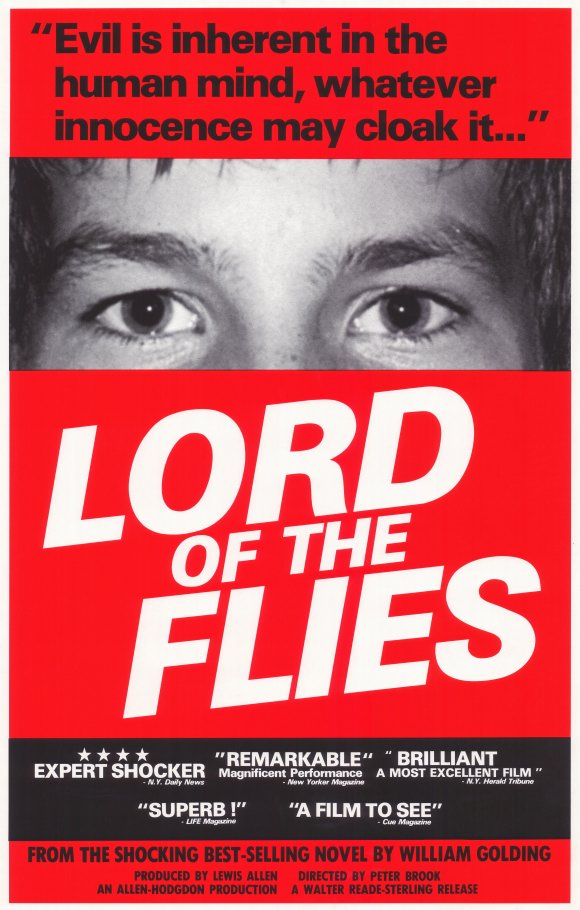
Based on the William Golding novel that has been required reading for most high school students. The story centers on a group of British schoolboys who survive a plane crash on an uninhabited tropical island. The boys are of varying ages, but none older than 14. Ralph (James Aubrey) is chosen as their leader, but finds almost immediate friction from Jack (Tom Chapin) who is an aggressive type that likes to hunt and doesn’t tolerate being told what to do. As things progress Jack breaks off from the main group and eventually starts his own following that comes to odds with Ralph’s. More and more of the boys join Jack and start to display savage behavior that leads to two deaths and puts the frightened Ralph on the run and into hiding.

It has been three decades since I’ve read the book, so I can’t really compare it with the film. The criticisms that I have are aimed solely at the film although as I remember the book had some of the same issues. One of the biggest ones is just the fact that there are so many survivors from a plane crash and all of them are conveniently the kids while all the adults perishing, which seems to play too much against the odds. There are also no scratches, bruises or injuries, which you usually come about with a crash even amongst those that survive it. Director Peter Brook does a clever job of intimating a plane disaster at the beginning over the opening credits through use of photographs, which I found to be creative, but showing an actual destroyed plane with kids getting out of it would have given it a little better foundation.

There is also another segment where the kids are convinced some sort of strange beast is on the island and as they go searching for it, it is found to a pilot in a helmet who was killed while trying to parachute to safety. Yet the kids don’t seem to realize this and remain frightened of it. I realize the setting is the 1940’s around the time of the war, but I would still think the kids of that time would have been sophisticated enough to recognize a dead man in a fighter helmet and the fact that they don’t seems pretty odd and even farfetched.

Overall though I really enjoyed the film and feel reluctant to watch the 1990 remake as I am afraid it would ruin the experience of this one.  It was filmed on-location off the island of Vieques in Puerto Rico during late August of 1961. The entire cast was made up of amateur actors who had not read the book. There was no actual script and the boys were allowed to ad-lib their lines, which helps give it an extra air of realism.

lord of the flies 1

I will admit there are shots where some of the boys look bored and detached from things, but then again I suppose boys that age can be that way anyways no matter what situation they are, so in some ways it doesn’t really hurt things. Hugh Edwards who plays Piggy is a real standout and apparently got the role simply by writing a letter to director Brook and informing him that he was fat and wore spectacles.

The black and white photography helps heighten the dark undertones. The shot showing a close-up of the pig’s head on top of a stake with flies’ going in and out of its mouth and nostrils is quite impressive and a brilliant realized moment from the book. The climatic sequence where Ralph must run through the burning foliage to escape the other boys is quite intense. The shot showing a dead boy’s body floating in the water under the moonlight has an evocative flair, but fake looking to the extent that the child was stabbed to death and yet has no visible wounds or blood coming out.

On the DVD commentary Brook states that he likes to believe something like this couldn’t happen. That we have somehow evolved enough as a human race where this savagery would be impossible, but I respectively this disagree. I think this could very well happen in this day and age which is what makes this an infinitely fascinating look at human nature and ultimately a great movie.

lord of the flies 3

My Rating: 8 out of 10

Released: August 13, 1963

Runtime: 1Hour 32Minutes

Not Rated

Director: Peter Brook

Studio: Continental Distributing

Available: VHS, DVD (Criterion Collection), Amazon Instant Video

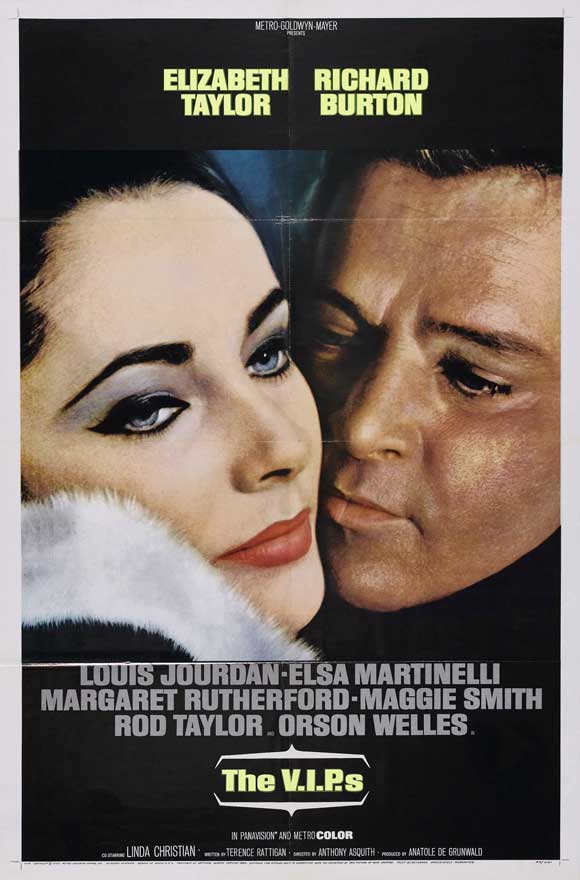
The V.I.P.s (1963)

the vips2

By Richard Winters

My Rating: 3 out of 10

4-Word Review: Drama at the airport.

Several diverse characters come together at London’s Heathrow Airport. All have urgent needs that require them to board a certain flight that they hope will take off as soon as possible. Frances (Elizabeth Taylor) is the wife of rich tycoon Paul (Richard Burton) and is secretly having an affair with gambler/playboy Marc (Louis Jourdan). She has left him a ‘dear John’ letter at home and hopes to be well on her way to New York before he reads it. Les (Rod Taylor) is a businessman who also hopes to get to the Big Apple quickly to avoid the hostile takeover of his company. Max (Orson Welles) is a famous movie director traveling with his vapid starlet Gloria (Elsa Martinelli) and hoping to leave England before he is forced to pay an enormous tax penalty. Unfortunately for them a fog rolls in, which delays the flight and sends everyone’s plans into disarray.

The drama has some potential at the beginning, but the 2-hour runtime is much too long for this type of material. Whatever compelling elements the threads may have had when it started become lodged in endless talk and boredom. The scene where Burton smashes Liz’s hand against a mirror is the only time there is any action and Terence Rattigan’s soap opera script is too clichéd. Director Anthony Asquith’s direction shows no visual flair and fails to capture the airport in any type of interesting way. The background sets look like they were built on a soundstage and the fog effects are quite tacky.

Margaret Rutherford won the supporting Oscar for her portrayal of an aging Duchess. She adds some much needed humor particularly in the segment where she has difficulty getting her hat box into the plane’s luggage compartment. However, like with the story thread concerning the Orson Welles character she is seen to briefly and their scenes are spread so far apart that you almost forget all about them.

Spoiler Warning!

There is also another segment where a complete stranger played by actress Maggie Smith approaches the Burton character and asks him for a hundred and fifty three thousand pounds and he gives it to her in the form of a blank check, which had me floored. Men like him don’t become rich by handing out a lot of money to anyone who asks especially people they don’t know. Some may argue that because the character was considering suicide that he didn’t care anymore, but it still seemed too much of a stretch and for me sent this already stale drama into the realm of the absurd and ridiculous.

End of Spoiler Warning

Every story thread gets a nice, convenient happy ending that gives the whole thing a TV-sitcom quality and barely worth the effort to sit through. The production has some glossy aspects and certainly big-name stars, but ends up being a buildup to nothing.

the vips1

My Rating: 3 out of 10

Released: September 19, 1963

Runtime: 1Hour 59Minutes

Not Rated

Director: Anthony Asquith

Studio: MGM

Available: DVD, Amazon Instant Video

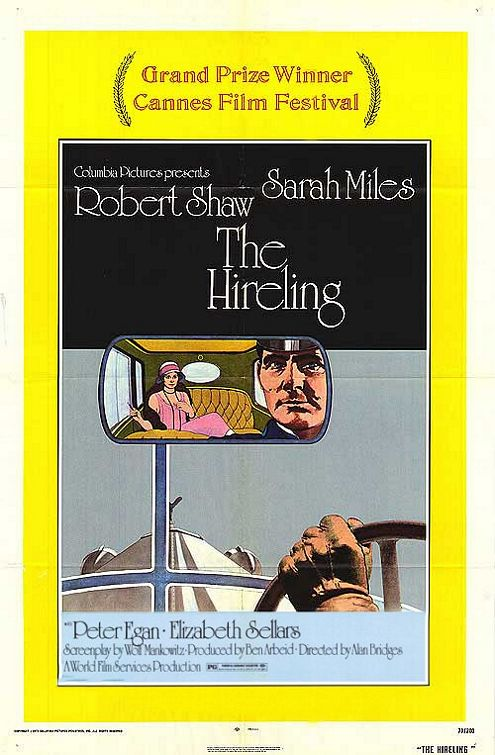
The Hireling (1973)

the hireling

By Richard Winters

My Rating: 6 out of 10

4-Word Review: His love isn’t reciprocated.

Based on the L.P. Hartley novel the film examines the unusual relationship between a rich English widow named Lady Franklin (Sarah Miles) and her chauffeur Steven Ledbetter (Robert Shaw). The setting is just after the First World War and Lady Franklin has suffered a nervous breakdown after the untimely death of her husband. Steven drives her from place-to-place and helps her out of her depression while also forming a strong attachment to her. Once she recuperates she no longer calls upon his services as much, which hurts him. She then forms a relationship with the much younger Hugh Cantrip (Peter Egan). His personality is the complete opposite of Steven’s and when Steven finds out that Hugh is still seeing another woman on the side it angers him. When he goes to Lady Franklin to inform her of this as well as profess his love for her things do not go well and soon spirals out-of-control.

The film is exquisitely photographed by director Alan Bridges with a haunting score by Marc Wilkinson that is excellent. The period atmosphere is perfect and the slow pace not only reflects that era, but the book to which it is based. Some may be put off by the pace as it is for the most part quite talky although the last half-hour has more action and final showdown is quite intense. The element I really liked about the film are the brief cutaways showing people listening in to other’s conversations and people always being careful what they say and great concern with always playing their ‘proper role’ in society. It really helps build a cloistered feeling for the viewer and gives them a better understanding to the meltdown that occurs at the end.

Miles gives another great performance and she essentially plays two characters here with the fragile, wide-eyed woman at the beginning and the more confident, emotionally distant person that she turns into at the end. Shaw is excellent as always. It is almost amazing to see how someone with such a strong personality as his could get hidden underneath the rather bland and proper character that he portrays at the beginning, but he comes through full-force at the end, which is chilling and terrifying.

The film makes some great statements about the inequities of a rigid social caste system as well as the unrealistic, rigid demands that were placed on people especially in past eras that did not completely take into account the human being underneath or their natural emotions. It is also a great testament to the loneliness of unrequited love, which is sadly a perennial element of the human experience. Although the film stays faithful to the novel the ending has been changed, which may or may not go over well with some viewers.

My Rating: 6 out of 10

Released: June 10, 1973

Runtime: 1Hour 35Minutes

Rated PG

Director: Alan Bridges

Studio: Columbia Pictures

Available: DVD (Region 1 & 2)

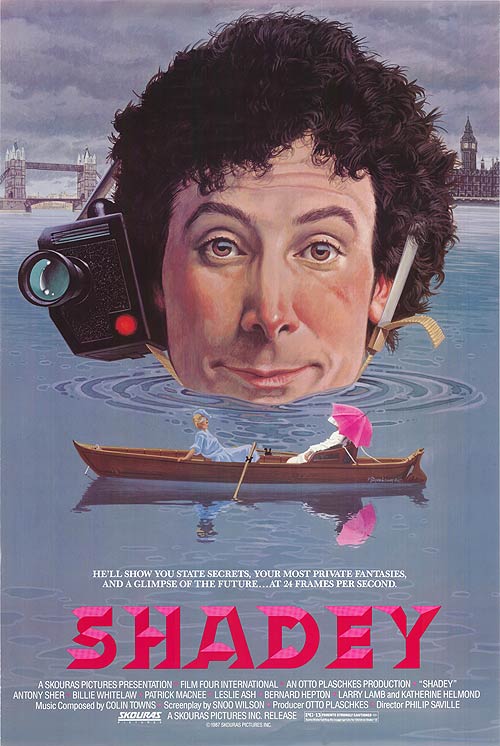
Shadey (1985)

shadey

By Richard Winters

My Rating: 6 out of 10

4-Word Review: His thoughts onto film.

Oliver Sher (Anthony Sher) finds out that he has an amazing ability. Not only can read other people’s minds, but he can also transfer those thoughts onto film. He tells his secret to Cyril (Patrick Macnee) a wealthy businessman hoping he can use his unique ability for some purpose and thus pay him enough money for a sex change operation, which is his ultimate goal. His only condition is that his ability not be used for military purposes. Unfortunately Cyril disregards this and strikes a deal with Doctor Cloud (Billie Whitelaw) who does experiments for the military and sees Oliver as her next guinea pig. Soon Oliver finds himself and his ability being exploited, but gets his revenge by taking advantage of Cyril’s emotionally fragile wife Constance (Katherine Helmond) in a weird and interesting way.

This film is quite original and manages to hold up all the way through. Some of the caricatures are a bit predictable mainly in the way it portrays the older brass businessman and military, but otherwise it defies all genres. It has a nice cerebral quality to it as it moves between being sad and dehumanizing to sharp and satirical sometimes in the very same scene. The humor is laced with drool, dry British wit that makes it engaging and fun.

The old British pros really help here. Macnee with his perpetually stern expression and terse delivery is fantastic. Whitelaw is also good as always as she plays her cold business-like character perfectly.

The best performance though goes to Helmond. She is best known for play Jessica Tate on the 70’s sitcom ‘Soap’ as well as co-starring in the 80’s TV-show ‘Who’s the Boss?’ yet her appearance here may be her career highlight. She has always had a wonderful ability at conveying child-like qualities in adult characters and here that comes to great use. Her facial expressions are both touching, unnerving as well as humorous and the scene where she eats coal from a fireplace while crouching on the ground is unforgettable.

The script could have gone further with its intriguing premise, but manages to be provocative nonetheless. The points it makes are good as it shows how those that are exploited will eventually do the same to others and how you never really know or understand someone no matter how much you think you get inside their head as well as examining how the image can sometimes take on more importance than the reality. The interesting chase that takes place at the end where Shadey continuously rides an elevator from the top of a building to the bottom while the bad guys busily run up and down the stairs to catch him is just one of the many unique scenes in this movie that makes it worth catching for those with an offbeat frame of mind.

My Rating: 6 out of 10

Released: November 18, 1985

Runtime: 1Hour 30Minutes

Rated PG-13

Director: Philip Saville

Studio: Skouras Pictures

Available: VHS

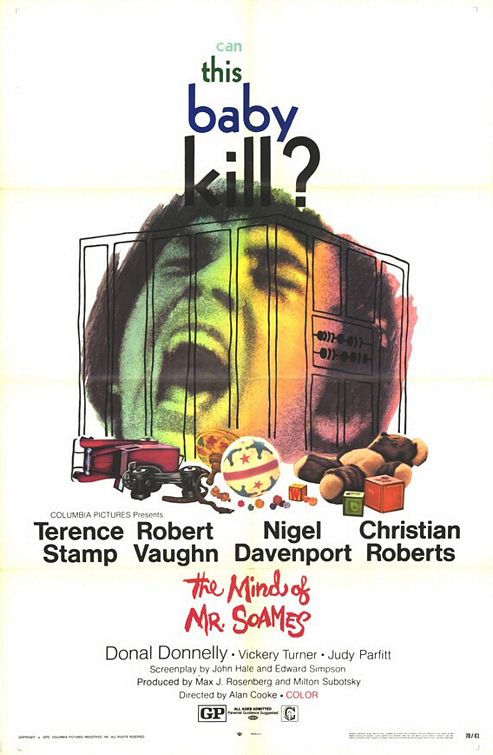
The Mind of Mr. Soames (1970)

the mind of mr soames 1

By Richard Winters

My Rating: 6 out of 10

4-Word Review: Man child faces world.

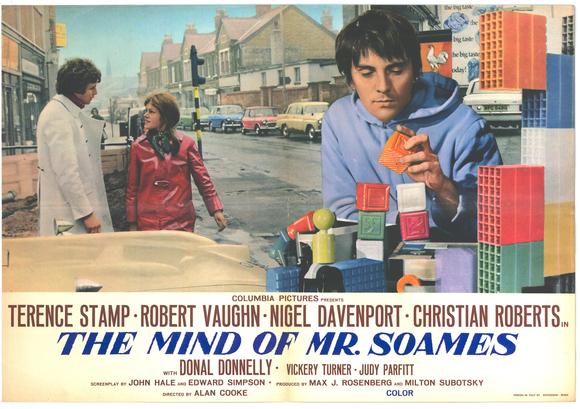
Due to a complication at birth a man (Terence Stamp) is born into a coma and for thirty years he has stayed that way. Now due to medical advancement they can stimulate the part of the brain that is asleep, thus allowing him to awaken into consciousness. The problem is that he will be a virtual infant and have to taught at a much quicker pace than a normal child.

Outside of a few implausibility’s the story is handled in an overall realistic manner. The pacing is tight and compact and the cinematography by Billy Williams is outstanding with excellent framing. Stamp plays the part with conviction and overall makes a believable grown up baby.

The story itself is much more complex than it initially looks as it takes a good examination into the science approach vs the humanistic one. It shows how truly complicated the human being is and the great balance it takes to successfully raise one. It also takes a few good potshots at the obtrusiveness of the media.

The stories most interesting angle though comes when the adult child escapes and goes out into the real world where we see what a tight inner fabric society is and the complete inability that the ‘pure’ human, with no prior connections to it would have.

However, in the end this movie is a disappointment as it gives us no conclusion and we never see the end result. Was this man child successfully raised? Which approach was the best and did he ever fully adapt to the world around him? We never know because it never tells us. The whole idea for the film looks to have been made only to bring up certain issues with no attempt at a complete story.

the mind of mr soames 2

My Rating: 6 out of 10

Released: October 12, 1970

Runtime: 1Hour 32Minutes

Rated GP

Director: Alan Cooke

Studio: Columbia Pictures

Available: DVD-R