Category Archives: Black Comedy

Midnite Spares (1983)

midnite2

By Richard Winters

My Rating: 6 out of 10

4-Word Review: Searching for his father.

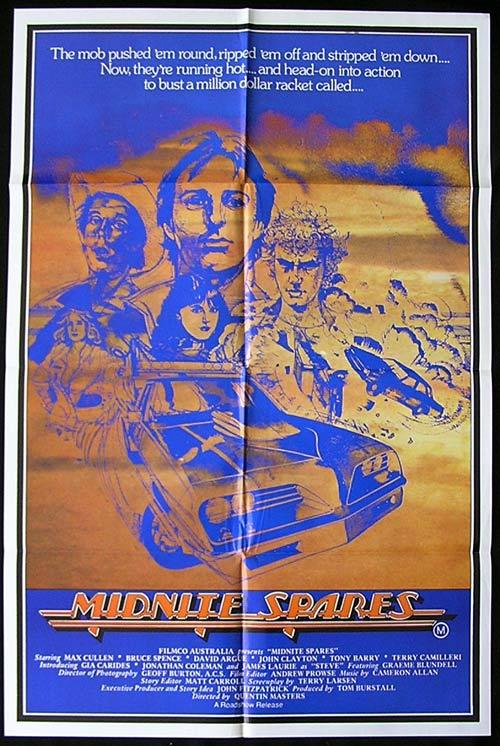
Steve (James Laurie) returns to his hometown of Sydney to team up with his dad to be a part of a sprintcar racing team. However, when he visits the towing company that his dad owned along with his business partner Tomas (Max Cullen) he cannot find him and is told that he mysteriously disappeared weeks ago without a trace. After further investigation he becomes convinced that it has something to do with a local car thief ring headed by corrupt cop Howard (Tony Barry) and uses the help of tow truck drivers Wimpy (Bruce Spence) and Rabbit (David Argue) to reel them in while also falling for a local girl named Ruth (Gia Carides) much to the chagrin of her conservative mother ( Tessa Mallos).

On the one hand this is a well set-up comedy with all the necessary ingredients to have been a top-notched funny movie. I really enjoyed the character actors who are in top form especially Bruce Spence, probably best known for his starring role in the cult film Storkwho plays a happy-go-lucky mechanic who always has greased caked-on his face no matter where he goes even when off the job and out in public. Tony Barry gives an interesting performance as well. Just a year before this film was shot he in starred in the New Zealand cult classic Goodbye Pork Pie that’s one of the best road movies ever made. In that film he played the nonconformist running from the cops while here plays the obnoxious oppressive authority figure and he’s able to play both types of roles quite convincingly. I also enjoyed the set pieces, which resembles very much the dingy, grimy look of a car repair shop as well as the distinctive score that has a creepy tone to it, which helps accentuate the late-night, underground vibe of the story.

There’s also a few very engaging moments as well including a segment where a guy hijacks a mobile hot dog stand and drives it around the track with the perplexed staff still inside while the sprintcar race is delayed due to an accident, which is pretty funny. I also loved the scene where the thieves steal a car, bring it into their shop and in a matter of literally seconds are able to completely dismantle it piece-by-piece until only its bare shell is left much like the famous scene in The French Connection where a car gets taken a part in the search for drugs, but here it’s done even more quickly and thoroughly.

What I didn’t like was the editing, which is done in too much of a choppy style. It’s very hard to get into the characters when their scenes and conversations are limited to only a couple of minutes and a few lines of dialogue before it quickly cuts away to another scene somewhere else. It would’ve worked better had it slowed the pace down a bit and allowed the elements to percolate instead of having this rushed feel. There’s also a some storylines that had potential, but aren’t followed through enough including the conservative mother of James’s girlfriend, which could’ve been ripe with far more confrontation than it ultimately does.

The action gets captured in too fleeting of a way and there isn’t as much of it as you’d expect despite its reputation as being an action movie. The climactic car chase showdown is too brief though it does feature some good camera angles that makes the viewer feel like their a part of it, but this also ended up taking the life of one of the cameramen, David Brostoff, who got too close to one of the cars and ended up getting run over. (The footage that he shot was left in while the movie is dedicated to his memory)

As crazy as it sounds it also would’ve been nice had it come with an English subtitle option. While the language is in English the Aussie accents are strong and it’s not always completely clear what they’re saying. I felt like I was missing a few words here and there especially with its quick pace where an actor would say a short line and then there’d be an immediate cut to something else.

My Rating: 6 out of 10

Released: February 17, 1983

Runtime: 1 Hour 27 Minutes

Not Rated

Director: Quentin Masters

Studio: Roadshow Films

Available: DVD-R (Domestic Import Region 0)
The Hospital (1971)

hospital1

By Richard Winters

My Rating: 8 out of 10

4-Word Review: An incompetently run hospital.

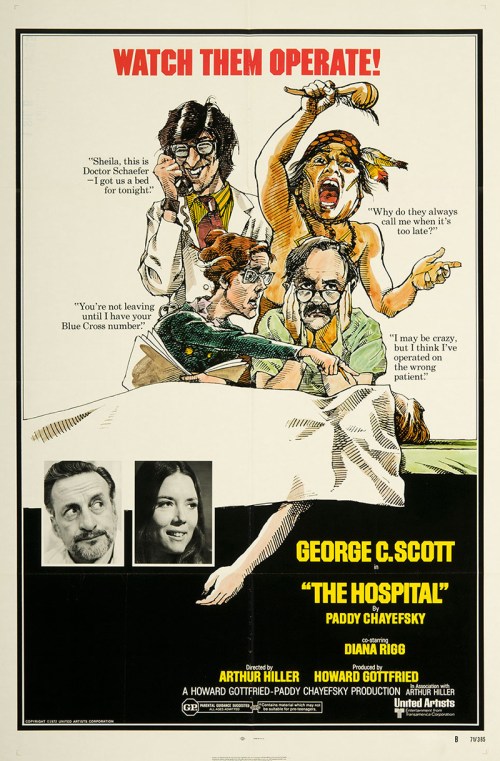
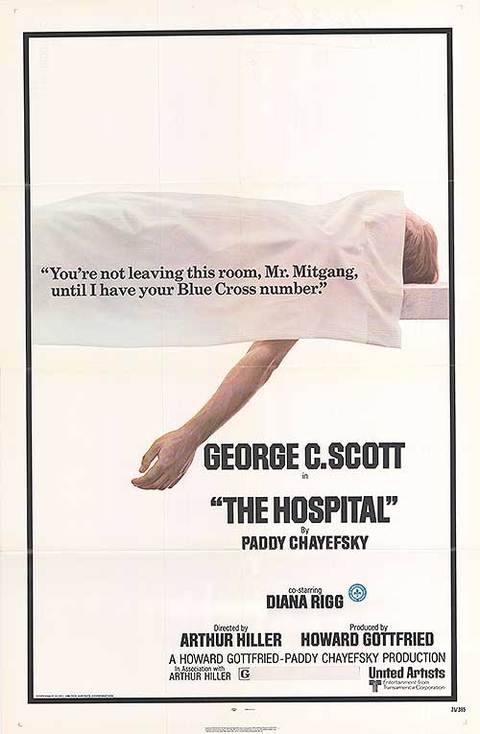
Dr. Herbert Bock (George C. Scott) is the chief of staff at a teaching hospital in New York where patients routinely die due to misdiagnosis and other blunderings. There’s also a protest by a group of tenants from a nearby apartment building that’s been annexed by the hospital to make room for a drug rehabilitation center. Bock not only must deal with these issues, but also his crumbling personal life which has turned him to both alcohol and thoughts of suicide. His only ray-of-light is meeting the beautiful Barbra (Diana Rigg) who has come to the hospital to seek treatment for her father (Barnard Hughes), but just as Bock starts to come out of his depression the place becomes terrorized by an unseen assailant who begins killing both the patients and staff.

In 1969 after his wife had received poor care at a local hospital Paddy Chayefsky set-out to write a script exposing what he felt was the corruption and incompetence going on inside the American medical institutions. He managed to get full control over his screenplay and final say over any proposed changes, which was a good thing since initially the studio felt it was filled with too much medical terminology that would go over many viewer’s heads. I’ll admit there’s an excessive amount of lingo, both with the dialogue between the doctors and staff as well as the opening voice-over narration by Chayefsky, that’s done at a rapid-fire pace and I really didn’t understand it, but I still kind of liked it. I have no medical background myself, so I and most viewers aren’t going to get the ‘medical speak’, but leaving it in helps make it sound more authentic. It also impresses the viewer with how much research was put into it and you basically trust what’s going on because it ‘sounds intelligent’.

Another complaint was the shift in tone where things start out in a darkly-humorous slap-dash fashion only to end up during the second act becoming quite serious. Normally this would’ve been a big problem, but I liked the shift here. I think the reason is because underneath the comedy there’s still life-and-death consequences going on and if you’re going to make a statement movie, which this is attempting to do, then at some point things have got to slow-down and get serious in order for that statement to get out, which this thing ends up successfully doing.

While I enjoyed the fluid pace that manages to encompass not only satire and drama, but even shades of horror without ever losing its realism I did find that it spends an inordinate amount of time telling us about all of the problems without bothering to give us any solutions. There’s no focus on what the underlying causes are nor any balance by showing an well-run hospital in comparison. One might start to believe that all hospitals are like this and become afraid to ever go into one even if they are really sick, which isn’t exactly a good thing. This may have been the reason why Chayefsky himself died at the relatively young age of 58 from cancer because he feared Dr.’s would “cut me up because of that movie I wrote about them” and thus refused surgery that might’ve saved his life.

Spoiler Alert!

There’s a few issues with the casting as well. Overall, I was impressed with the performances particular Scott who got his second Oscar nomination for his work here. Rigg is also quite good, in a part that seemed better suited for Jane Fonda, who was the studio’s choice, but Rigg’s British accent and terse style makes for an interesting dynamic. You can also glimpse young soon-to-be-stars in small bits including: Nancy Marchand and Robert Walden, who later went on to co-star with each other in the TV-show ‘Lou Grant’ as well as Stockard Channing, in her film debut, and Frances Sternhagen as an exasperated medical clerk. The main problem though comes with Barnard Hughes, who appears for some strange reason in two completely different roles. He is very funny as the surgeon who finds he’s been operating on the wrong person, but then later he reappears as Rigg’s father, which didn’t make much sense. Since the father turns out to be the mysterious killer many people thought the scene with Hughes as the surgeon was meant to be the father in disguise, but that was not the intention. Again, if there’s no specific/underlying purpose story-wise for an actor to play two different parts in the same movie then don’t do it. There’s no lack of actors out there clamoring for work, so one of the two parts could’ve easily have been filled by someone else and thus avoided confusing the audience for no good reason.

It’s possible that the reason Chayefsky had Hughes playing dual roles was to help explain how the killer was able to get away with his crimes for so long. While the killer is always shown off camera, so the viewer does not know the identity, the Dr.’s and nurses do seem to recognize him as being a colleague and are put at ease just before he kills them. Of course the odds of a patient entering a random hospital and looking similar to one of the staff is astronomically low, but if this was the underlying concept, and it very well may have been, then the film should’ve eventually made this clear by having a split screen scene where Hughes the surgeon bumps into Hughes the killer.

hospital3

My Rating: 8 out of 10

Released: December 14, 1971

Runtime: 1 Hour 43 Minutes

Rated GP

Director: Arthur Hiller

Studio: United Artists

Available: DVD, Blu-ray, Amazon Video, Tubi, YouTube

The Clinic (1982)

By Richard Winters

My Rating: 7 out of 10

4-Word Review: Helping those with V.D.

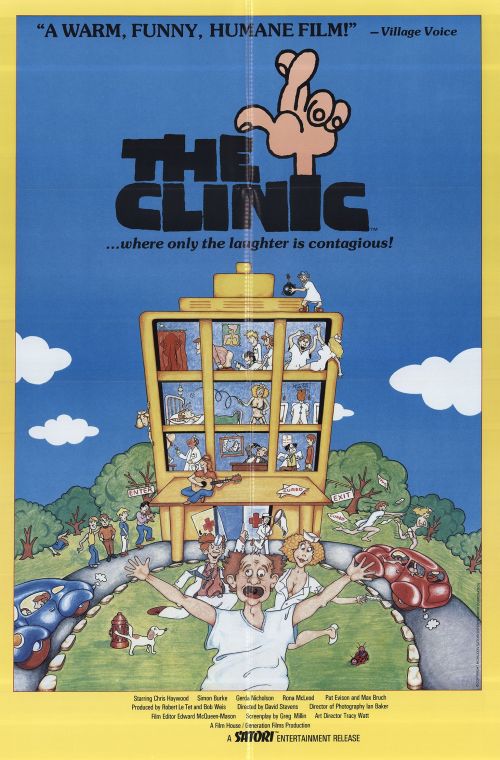
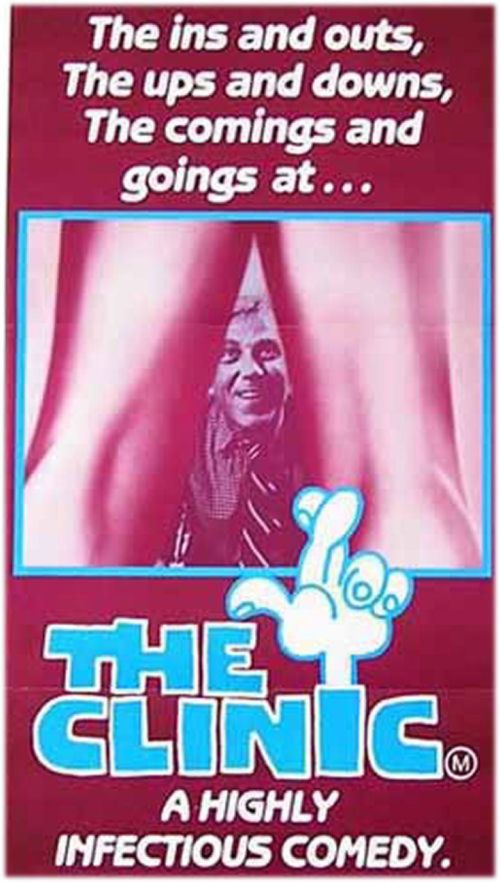
A day in the life of a clinic in Melbourne, Australia that specializes in treating people with venereal disease.  Both the doctors and the patients have many issues to deal with, but not all of them have anything to do with sexually transmitted diseases including Dr. Eric Linden (Chris Haywood) who after spending the day treating patients is more worried about meeting the mother of his gay partner for the first time. There’s also Dr. Hassad annoyed with the lamp on his office desk that he can’t get to work right no matter how many times he tries to fix it and three men visiting from China who think they’re at a health clinic, not a VD one, but nobody can translate to them that they’re in the wrong place.

For the most part this is a funny engaging ensemble comedy similar to Britannia Hospital, a satirical comedy done in the U.K., or The Hospital done here in the US and starring George C. Scott.  There’s also distant shades to the 80’s TV-show ‘St. Elsewhere’ that toed the line between being surreal and serious.  The editing is fast paced as it cuts back and forth between various scenarios happening at the same time throughout the different offices in the building.

There are also many characters and it’s hard to keep track of all them. They’re introduced at such a dizzying pace that the viewer isn’t allowed to get attached to any of them as you see them for only a couple of minutes and then it cuts away to someone else and never going back to the previous one until much later when you’ve almost forgotten about them, or their dilemma. Some may consider this the hallmark of bad filmmaking as in Hollywood the idea is to have, even in an assemble comedy such as this, one central character for the audience to connect with and then colorful people surrounding them, but here no one takes center stage. Director David Stevens admitted in interviews that he was pressured by producers to go more the conventional route, but he resisted and in many ways it succeeds better because it gives you a true day-in-the-life feel of the inter-workings of a clinic and the constant hustle-and-bustle of patients coming in and out that a story more focused on one person might not be able to convey as effectively.

The lack of music is another thing that is unusual. During the opening sequence all that is heard is traffic noise while the credits roll and it’s not until 1 hour 5 minutes that any type of soundtrack is heard in a rare moment that does not take place at the Hospital, but instead on a beach. There is a bouncy tune sung by Alistair Jones over the closing credits, but other than that there’s nothing, which again I found okay as it uses the ambience of the people walking around and talking as the film’s soundtrack, which helps heighten the realism. The nudity is different here too as it’s solely close-ups of male genitals, but none from females, which bothered some viewers, but I found alright. What I did question though was the males so obediently disrobing in front of a female Dr. as I felt some of them would be uncomfortable and even hesitant to do this.

The conversations and throwaway lines are quite funny, which is the film’s centerpiece as are the quirkiness of the characters who say one thing, but end up doing the complete opposite much like people in real-life. There’s also a few serious moments that brings up the stigma that people with V.D. had to deal with including one who loses his job, but these don’t come to satisfying conclusions and should’ve been explored more.

Overall it’s an enjoyable 90-minutes although by the final 15 it starts to exhaust itself. Had it been done with a smaller cast might’ve helped although technically it’s still quite fluid throughout though some may point to its poor box office showing where it managed to only recoup $414,000 profit from its $1 million budget as a sign that the unconventional narrative was a failure. This though is more likely because of distributors at the time being reluctant to show the film fearing public backlash at what was still considered a taboo subject.

My Rating: 7 out of 10

Released: September 17, 1982

Runtime: 1 Hour 28 Minutes

Not Rated

Director: David Stevens

Studio: Roadshow Films

Available: None at this time.

Fade to Black (1980)

By Richard Winters

My Rating: 2 out of 10

4-Word Review: A cinephile becomes homicidal.

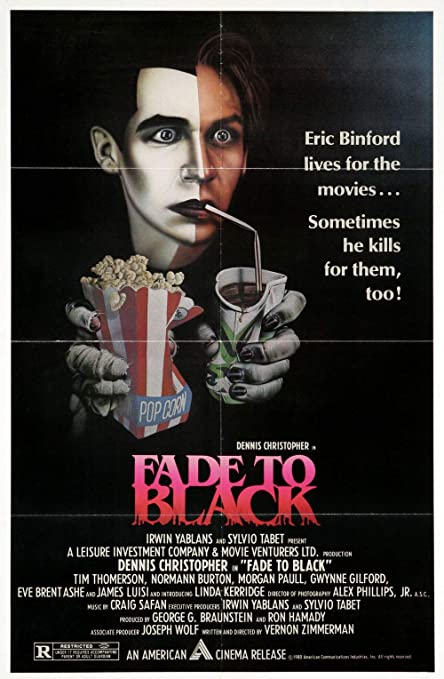
Eric Binford (Dennis Christopher) is thoroughly engrossed in movies to the extent that he watches them all day in his bedroom and does little else. Aunt Stella (Eve Brent), whom he lives with, nags him constantly about what a loser he is as does Richie (Mickey Rourke) who he works with at his job inside a film distribution center. One day he meets Marilyn (Linda Kerridge) who looks exactly like his favorite actress Marilyn Monroe. The two agree to go out on a date to see a movie, but when Eric shows up at the theater and Marilyn is nowhere to be found he becomes unhinged. All of his pent-up rage gets released and soon he goes on a killing spree by slaughtering all of the people who have made fun of him in the past.

Writer/director Vernon Zimmerman has insisted in interviews that this wasn’t meant to be a horror film, but then what exactly was it supposed to be? I admit initially it has some intriguing elements, but like with Zimmerman’s other directorial efforts it misses the mark. Ultimately despite the offbeat touches it  devolves into a mechanical slasher flick by the second act, but in this case a really bad one, as the killings are handled in a very unimaginative way with the victims dying way too easily to the point that the segments become boring and very predictable.

Some felt that this was an odd follow-up project for Christopher to take after his critical success starring in the acclaimed Breaking Away, but I’ll give him credit for not playing it safe and taking a role outside of mainstream Hollywood. He actually plays the part pretty well, but that’s actually the problem as his skinny, geeky build makes him seem too Norman Bates-like and falls into the lonely stereotypical psycho mold too easily and thus witnessing his eventual melt down is neither surprising nor revealing. His attempted impressions of  famous characters/stars are quite poor too and makes these moments very annoying.

Having a cinephile only into classic old movies didn’t seem realistic. You’d think someone like him had seen films others hadn’t even heard of, so referencing obscure flicks and lesser known actors should’ve been added into the mix. I was also confused where he was able to get the money to pay for all the elaborate costumes, make-up, and props that he uses during the killings as at the beginning he was so broke he had to beg people for money just to fill-up his bike with gas, or go out on a date. Some may argue that when his Aunt died she willed him the money, but this is never mentioned or shown.

I did like Rourke and I felt he would’ve been more interesting in the lead role as he plays a movie fanatic as well, but also didn’t fall into the tired nerdy cliché like Christopher. Kerridge though as the love interest proves to be a dud. She certainly is easy-on-the-eyes, but seems uncomfortable playing the Marilyn caricature and her presence ultimately is rather transparent.

The production values are slick and the climactic sequence that takes place both in and on top of the famous Grauman’s Chinese Theater has some pizazz, but everything else falls flat. It’s just not offbeat enough, scary enough, nor darkly humorous enough to ever catch its stride, or sustain any consistent interest.

My Rating: 2 out of 10

Released: October 17, 1980

Runtime: 1 Hour 42 Minutes

Rated R

Director: Vernon Zimmerman

Studio: American Cinema Releasing

Available: DVD, Blu-ray, Amazon Video, YouTube

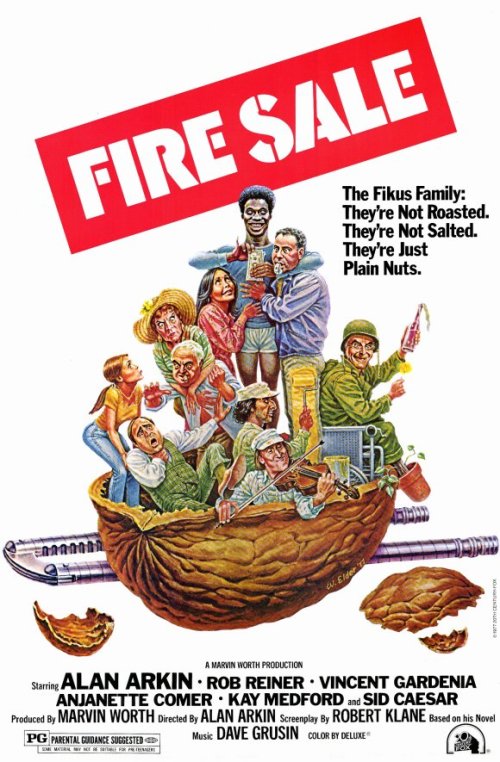
Fire Sale (1977)

By Richard Winters

My Rating: 3 out of 10

4-Word Review: Burn down the store.

Benny Fikus (Vincent Gardenia) is the elderly owner of a struggling clothing store, who has decided the only way to recoup costs will be to have it burn down and then collecting money on the fire insurance policy. He has convinced his mentally ill brother Sherman (Sid Caeser), who still believes that WWII is happening, that the store is really a front for the Nazi Headquarters and thus motivating Sherman to destroy it. To make his alibi iron-clad Benny takes a trip with his wife Ruth (Kay Medford) to Florida when the arson is expected to occur. During the trip Benny has a heart attack causing his son Russell (Rob Reiner) to take over the business. When he realizes that the place is bankrupt he decides to cash-in the fire insurance policy and use those funds to help regenerate the place. When Benny recovers from his heart attack and realizes what Russell’s done the two, along with Russell’s older brother Ezra (Alan Arkin), go on a mad dash to stop Sherman from setting the fire before it’s too late.

It’s hard to imagine just how badly botched this thing is as I approached it with high expectations. Arkin had already directed the brilliant Little Murders, which is one of the best dark comedies ever made. Robert Klane, who wrote the screenplay and book of the same name that the movie is based on, had also 6 years earlier written the screenplay for Where’s Poppa?, another cult masterpiece. So, with those great films already under the filmmaker’s belts you’d expect good things from this and yet it’s pretty awful right from the beginning.

The main problem is that there’s no running theme. Little Murders centered around the isolating effects of urbanization and Where’s Poppa? dealt with the harsh realities of caring for elderly parents.  This film though has no point to it. Lots of sloppy, slapdash comedy as director Arkin and writer Klane seem more concerned with getting a cheap laugh than telling a story. The sets have no cinematic style making it look better suited for a low-grade sitcom. The score by Dave Grusin, is too generic with overtones more on-par with a cartoon. A good movie should have music that is distinct and matches the tone of the script, which this one doesn’t.

I’ve always considered Reiner the weakest link from the classic ‘All in the Family’ TV-show and while his talents have been much better served as a director this movie was made when producers were still trying to turn him into a star, but the attempt fails. That only thing that he does that could be considered ‘comical’ is the running joke of him going into wheezing fits from his asthma every times he gets stressed-out, which gets overdone. He shares no chemistry with Arkin and they’re too far apart in age to be a believable brotherly pair.

Anjanette Comer, who was married to Klane at the time this was filmed, gets wasted in a thankless bit as Arkin’s beleaguered wife and the scene where she tries to commit suicide by locking herself inside a refrigerator is pointless because it never shows how she got rescued. Caeser as the would-be arsonists relies too heavily on  zany slapstick that is inconsistent in tone with the rest of the film.

Medford, as Arkin’s and Reiner’s put-upon mother, is alright, but the person that impressed me most was Gardenia whose frantic, over-the-top delivery as the exasperated father/business owner is quite good and his energy, even though he is not the star, helps propel the film. He’s even good when he’s in a comatose state and doesn’t move at all. I was particularly amazed during a segment where Reiner and Arkin crawl over him during an altercation and Arkin accidently kicks him in the head, but Gardenia does not flinch and remains very much in character.

My Rating: 3 out of 10

Released: June 9, 1977

Runtime: 1 Hour 25 Minutes

Rated PG

Director: Alan Arkin

Studio: 20th Century Fox

Available: DVD-R (Fox Cinema Archives)

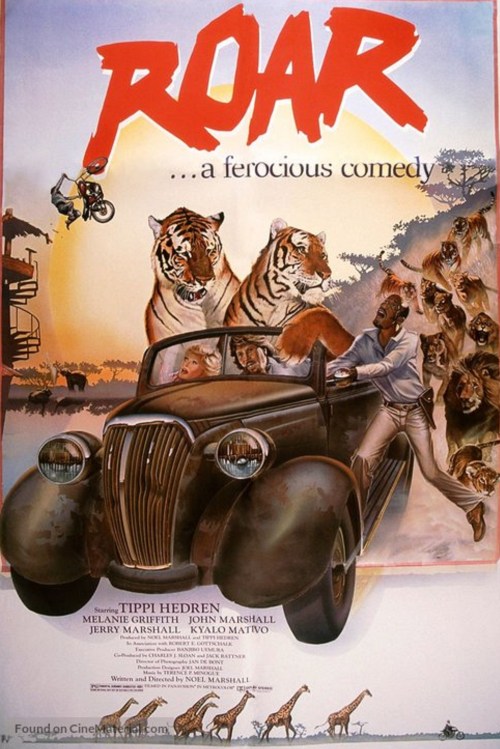
Roar (1981)

By Richard Winters

My Rating: 5 out of 10

4-Word Review: Lions takeover a house.

Hank (Noel Marshall) is a naturalist residing in east Africa where he studies the behaviors of lions and keeps several of them in his home. His wife Madeline (Tippi Hedren), daughter Melanie (Melanie Griffith) and two sons (John Marshall, Jerry Marshall) travel from Chicago to visit him. However, when they arrive there’s a mix-up causing Hank to miss picking them up at the airport. The four then travel to the home without him. When they get to the place it becomes overrun with the lions and the family is unable to handle them causing much havoc and destruction as they try to keep from getting attacked and bitten.

The idea for the film was inspired by Marshall and Hedren, who were married at the time, as they traveled through Mozambique in 1969. While going on a nature tour their guide pointed to a abandoned home that had become inhabited by lions and they thought this would make for a funny movie. It took them over 7 years to find the funds to be able to actually film it and then another 3 years before filming was complete. Over 150 lions were used at a cost of $4,000 a week to feed forcing the couple to sell their 3 homes just to be able to have enough money to cover the food and other expenses. Initially it was never released in the US and only abroad until in 2015 it got reissued to Alamo Drafthouse theaters were it got dubbed as being ‘the most dangerous movie ever made’ due to the many injuries inflicted on the cast and crew by the animals during the production.

To some degree the loose story works. I liked the scene where local official come to Hank’s home in their boats and become inexplicable attacked by the lions without warning even seeing actor Marshall’s hand bitten by one of the beasts, which all comes off as quite realistic and unstaged, something you rarely see in most Hollywood films. Unfortunately having to spend 90-minutes watching the family trying to get away from the lions becomes quite redundant. There’s constantly something going on and there’s a lot of chaos and running around, so visually it’s never boring, but the story goes nowhere. Ultimately it’s like gazing at a hamster inside their cage running inside a spinning wheel, which might be fun for while, but eventually pointless.

Savage Harvest, which I reviewed earlier in the week and came out around the same time, had a much more consistent tone. At least we knew that was intended to be a suspenseful thriller and for the most part it delivered, but here it gets increasingly confusing. While this budget is better and I enjoyed the opening sequence showing the beautiful topography of Kenya I still came away liking the other movie a bit better. The lion attacks are more graphic and in-you-face here, but without any sufficient tension it’s not captivating to sit through. It’s supposed to be a comedy and was marketed as such, but it gets too intense for that. Had the cast been made up of evil poachers that get harassed by the animals the prolonged scenario might’ve worked, but watching a bland family as the intended ‘victims’ isn’t enough to hold sustained interest.

I admire Hedren’s willingness, and the whole cast, for putting themselves in harm’s way and there are a few cute moments like when a lion plays with a skateboard, but it relies too heavily on the action, and the animals who are given onscreen credit along with the rest of the cast, but an actual plot was needed. With that said it’s still a one-of-a-kind movie that needs to be seen to be believed. I’m not sure if this one is included in the book ‘1001 Movies You Must See Before You Die’, as I have not always in agreement with some of the other ones that got listed in it, but this one definitely should be.

My Rating: 5 out of 10

Released: October 30, 1981

Runtime: 1 Hour 38 Minutes

Rated PG

Director: Noel Marshall

Studio: American Filmworks

Available: DVD

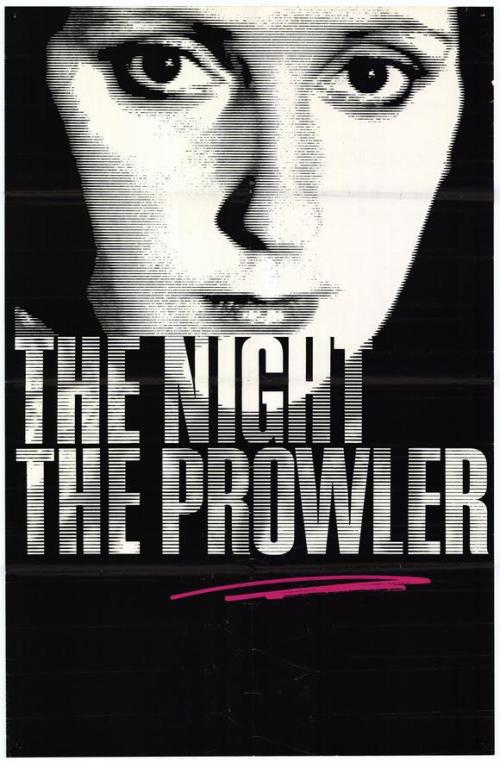
The Night, The Prowler (1978)

By Richard Winters

My Rating: 6 out of 10

4-Word Review: Victim turns into prowler.

Late one night Felicity (Kerry Walker), who is an adult woman still living at home with her parents (John Frawley, Ruth Cracknell), finds that a prowler (Terry Camilleri) has invaded her bedroom. After getting into a conversation with him she is surprised to learn that he’s a married man with kids, who enjoys prowling as a side gig to make up for the monotony and stresses of his home life. Felicity then realizes that the suburban lifestyle that her parents want her to live does not fully satisfy the individual and therefore decides she doesn’t want it. She breaks off her pending engagement with her fiancé (John Derum)  and turns into a prowler herself breaking into men’s homes late at night and learning to enjoy the underbelly of society by socializing with the homeless and other people that her parents always told her to stay away from. She soon finds a sense of empowerment by thumbing her nose at the elitists that make her her suburban community and doing all the forbidden things that her former cloistered lifestyle never allowed.

The film was directed by Jim Sharman best known for having done The Rocky Horror Picture Show. The basis for this project comes from his collaboration with playwright Patrick White and the many plays of his that he directed while doing experimental theater in Sydney during the 70’s. White wanted to expand one of his short stories into a screenplay and Sharman suggested this one had the best chance of working. The two had both grown up in the eastern suburbs of Sydney and wanted to create a film that showed their inner disdain for the arrogant, privileged people that populated the neighborhoods there and how the sterility of those environments may have been a comfort to the adults, but stifling and alienating to the teenagers.

To some level the film is interesting, but the fragmented narrative becomes an intrusive turn-off. Normally I like films that to get away from the mainstream approach and use different cinematic styles to tell a story, but the presentation here never allows you to get emotionally invested into the characters or their situations. There’s too much cutting back and forth between the present day, the past, and even some dream-like segments that ultimately makes the whole thing confusing and off-putting. That’s not to say that there aren’t some provocative moments as there are, but the non-linear approach never allows it to catch its stride, or feel like its progressing forward.

I did enjoy though the scenes with Felicity in the park late at night talking to the homeless while inadvertently scaring off a gang of young hoodlums by chasing after them and demanding that they assault her. When she breaks into a rich couple’s home and systematically destroys it and their subsequent over-the-top facial reactions when they come home to witness it is a hoot too. There are though some very disturbing moments too including Felicity’s conversation with a naked, starving homeless man (Harry Neilson) that she finds lying inside the filthy squalor of an abandoned building.

The one thing that holds it all together is the acting. Walker is perfectly cast in the lead as her plain looks and perpetually despondent expression visually signals her inner angst and alienation. Cracknell though completely steals it in a campy send-up of the suburban housewife/ mother that is at times both comically absurd and over-the-top funny. Her odd behavior keeps the interest going even as the story and direction at times lull and in fact it was enough to have nominated for the Best Actress Award by the Australian Film Institute.

My Rating: 6 out of 10

Released: June 2, 1978

Runtime: 1 Hour 25 Minutes

Not Rated

Director: Jim Sharman

Studio: New South Wales Film Corporation

Available: DVD, Amazon Video

Head Office (1985)

By Richard Winters

My Rating: 2 out of 10

4-Word Review: Climbing the corporate ladder.

Jack (Judge Reinhold) is a recent college graduate and business major who gets a job at a prestigious Chicago company named INC. Jack has very little ambition and more interested in making it with the women than climbing the corporate ladder, but despite his lack of effort he keeps getting promoted. He begins to realize that his ascension may not have anything to do with who he is and more with the fact that his father (George Coe) is a influential senator and the company’s CEO (Eddie Albert) wants to gain his favor in order to have a textile plant moved to a Latin American country that will allow them cheap labor and more profits.

The film, which was written and directed by Ken Finkleman, starts off with a bang and has many funny gags, but eventually wears out its welcome by relying too heavily on age-old clichés and caricatures.  Everyone knows the business world can be corrupt and filled with eager boot lickers driven by those with power-hungry career aspirations and willing to backstab anyone that might get in their way. Trying to fill 90-minutes with this same point-of-view that just gets repeated over and over is not amusing nor insightful and if anything becomes boringly predictable.

The characters lack distinction and are more like yes men robots than real people. I worked at several Fortune 500 companies during my lifetime and can attest that there are indeed the proverbial ass-kissers, but they’re plenty of people that have no interest in playing the company game and realize it’s sheer folly because the more you work up the ladder the more a pawn to the system you become. Some are simply satisfied to have a job and provide for their families and yet the film does not show these folks at all, which makes it one-dimensional and ultimately unrealistic.

Reinhold is weak in the lead, which is another reason it doesn’t work. This is a film that is in desperate need of a socialist or someone that is very anti-corporate and just there to openly thumb their  nose at the system and try to muck it up if they can and yet half the time it’s confusing what Reinhold’s position is. He’s too transparent and has no strong presence at all.  There’s also a scene where he gets shot at by a disgruntled ex-employee, which would’ve been enough to make most people never want to go back to that company again as no job is worth that and yet Reinhold returns like it somehow was no big deal.

The supporting cast is interesting and includes such familiar faces as Danny DeVito and Rich Moranis, but they die-off quickly. What’s the use of bringing in big-name stars if they’re going to be killed off right away? It’s fun seeing Jane Seymour playing against type as a power hungry boss. She made her mark in romantic roles for the most part, so it’s impressive seeing her doing a different type of part and doing it well and it’s just a shame she wasn’t in it more. Eddie Albert is good too and plays the violin in a convincing way, or at least is smart enough to know how to move his fingers so it looks realistic.

Spoiler Alert!

However, the gag involving Reinhold inadvertently destroying an expensive Stradivarius violin that gets handed to him by Albert gets ruined when it’s made known that it wasn’t authentic, but simply a prototype. That was the only moment in the film where I had laughed-out-loud, but leave to this dumb movie to botch even that.

My Rating: 2 out of 10

Released: December 29, 1985

Runtime: 1 Hour 30 Minutes

Rated PG-13

Director: Ken Finkleman

Studio: TriStar Pictures

Available: DVD

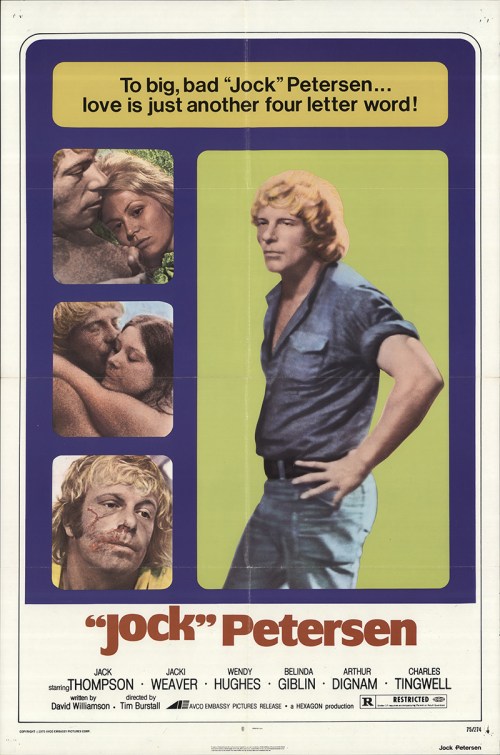
Petersen (1974)

petersen1

By Richard Winters

My Rating: 7 out of 10

4-Word Review: Going back to school.

Tony Petersen (Jack Thompson) is an electrician who decides to go back to school and major in English. He feels people look down on him because he works a blue collar job and hope that by returning to college to get a degree that will change, but instead he finds he’s still not getting the respect that he desires particularly from his stuffy professor (Arthur Dingnam), so he ends up having an affair with the man’s wife (Wendy Hughes),  but things don’t stop there. He has sex with the coeds too including right out in the open on the campus grounds for public display while hundreds of onlookers surround them.

The screenplay was written by acclaimed Australian playwright David Williamson, who’s best known for having penned the cult hit Don’s Party However, this film lacks the fluidity of that one and seems more like a selection of vignettes than a story. The leader character isn’t likable either and comes off as selfish while in Don’s Party we were able to understand the protagonists frustration with his marriage here the domestic situation doesn’t seem as bad and therefore watching him mess around isn’t cute, funny, or sexy and instead just tiring and off-putting.

The biggest problem though is that the film starts right away at the halfway point where Petersen has already been attending school and neck-deep in an affair instead of going back to where it all began. Showing Petersen’s frustrations with his job and income, instead of just being told about it through dialogue, would’ve helped the viewer empathize more with his situation and emotionally invested with his quandary instead of feeling lost and ambivalent in the jumbled narrative.

There are a few good scenes here-and-there including a very ugly moment where a group of obnoxious bikers crash an upscale party and make things quite tense for the guests who are seemingly unable to do anything about it. Later there’s a poignant segment involving a discussion that Petersen has with his father (Charles Tingwell), who works as a reverend at a church despite professing to having lost his faith. Petersen’s public sex act has great potential too and even though it does contain full frontal male nudity, which at the time was still considered shocking to see in a mainstream film, it doesn’t get played-up enough to really being as funny or irreverent as it should’ve been.

Spoiler Alert!

There’s also several moments though that needed more context, which is frustratingly lacking. One includes Petersen getting caught making-out with his friend’s wife by his own spouse (Jacki Weaver) who looks very disappointed in him, but we never get any follow-up almost  like the whole situation just gets forgotten by the next day. There’s another scene where Petersen rapes his lover inside her own office, but without showing any aftermath. Such a violent, disturbing act deserves some denouncement and not treated like a throwaway bit such as it is.

End of Spoiler Alert!

Overall if you stick with it the characters do have a way of growing on you, but the story needed to be more developed. Too much emphasis on being edgy and provocative, but filled with characters in desperate need of depth and better connecting pieces between scenes.

My Rating: 7 out of 10

Released: October 25, 1974

Runtime: 1 Hour 43 Minutes

Rated R

Director: Tim Burstall

Studio: Hexagon Productions

Available: DVD (Import Region 2)

Getting Straight (1970)

getting straight1

By Richard Winters

My Rating: 5 out of 10

4-Word Review: Student unrest plagues campus.

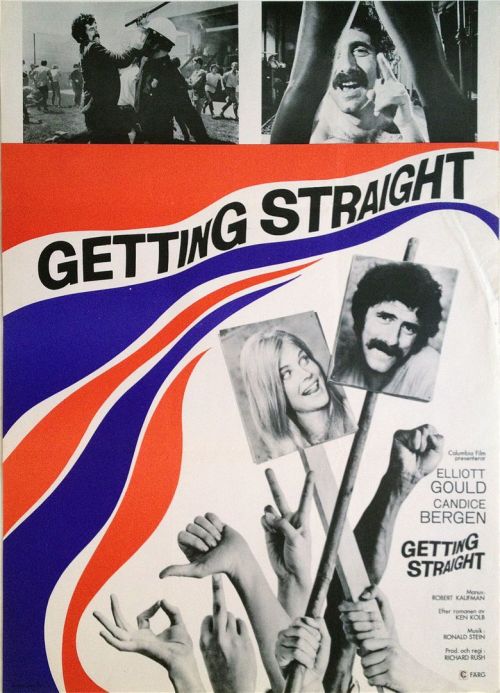
Harry Bailey (Elliot Gould) was at one time a student radical, but after returning to campus from serving time in Vietnam his perspectives have changed. Now he simply aspires to get a teaching degree, but the other students want him to take part in their campus protests, which he resists. His girlfriend Jan (Candice Bergen), who is much younger, starts to get active in the student movement, which creates further pressure for Harry. He sees the absurdity on both sides, but as the protests become more violent and the response from school administrators more inept, Harry comes to the conclusion that he can no longer sit on the sidelines.

If there is one thing that really stands out it’s Gould’s performance in a part he was clearly born to play. In fact the studio refused to go ahead with the project unless Gould made a commitment to star in it. Had he decided not to take the part the studio would’ve shelved the project permanently as they felt there was no other actor that was right for the role and they were correct. Fortunately Gould did accept and his running, raucous, irreverent commentary is the most entertaining thing about it.

Unfortunately his presence is so powerful that he dominates Bergen who comes off as transparent and overwhelmed. She certainly looks quite beautiful and I particularly enjoyed her cowgirl look with two ponytails, but her presence is blah. Maybe the producers wanted a weaker performer to expose how unequal the character’s relationship was with each other, but the result makes the conversations that the two have dull and tepid because Bergen can simply not keep up with Gould’s rapid-fire delivery.

Their fights are a little more entertaining with some of the jabs Gould throws out being downright funny especially when he accuses Bergen of being ‘just a guy with a hole in the middle.’ Yet the fact that the two get back together after flinging out some very nasty insults made no sense. There are certain things that were said here that got personal and couldn’t just get written-off as having been said in a ‘fit of anger’ like they do here. In most real-life relationships it would’ve created a rift that would never have returned things to the way it was before.

The protests come-off looking too staged, which includes one scene where Gould and Bergen stand in the middle of all of the chaos and manage to somehow hold an extended conversation even as everyone around them is getting beat-up.  In the original novel by Ken Kolb there weren’t any student protests and were only added in by director Richard Rush to give the story a more topical feel, but there were too many other films with a similar theme that  were more effective. Even The Strawberry Statement starring Bruce Davison, which had its share of faults, still at least managed to make the student’s confrontations with the police look more authentic and intense.

Some of the arguments that Gould dishes out as he battles with administrators, and sometimes with the students too, are on-target and even funny like when he challenges the new curfew rule by pointing to one of the students (played by John Rubinstein) and stating: “At the start of the school year he just wanted to get laid. Now he wants to kill somebody…you should’ve just let him get laid.”

Gould’s angry confrontation with Jon Lormer who plays one of the school board members has a riveting quality and that’s where this movie should’ve ended. Having it continue to where Gould then later confronts Leonard Stone, who plays another school board member, gets too heavy-handed and ultimately kills the film’s best moments with a lot of talky bits that seem insightful, but really aren’t.

My Rating: 5 out of 10

Released: May 13, 1970

Runtime: 2 Hours 5 Minutes

Rated R

Director: Richard Rush

Studio: Columbia Pictures

Available: DVD, Amazon Video, Youtube