Category Archives: Black Comedy

Mother’s Day (1980)

By Richard Winters

My Rating: 5 out of 10

4-Word Review: Rednecks murder for mama.

Trina (Tiana Pierce), Abbey (Nancy Hendrickson), and Jackie (Deborah Luce) are three friends from college, who are now in the adult world but still enjoy getting together one weekend of the year for a ‘mystery trip’ where they go to some place they’ve never been before. This year they decide to take a camping trip into the dense woods of New Jersey. It is there that they come into contact with a redneck family consisting of two grown sons: Ike (Frederick Coffin, but billed as Holden McGuire) and Addley (Michael McCleery, but billed as Billy Ray McQuade) who kidnap the girls and bring them back to their secluded home where they torture and rape them all for the amusement of their twisted mother (Beatrice Pons, but billed as Rose Ross in order to avoid losing her actor’s union membership for starring in a non-union film.)

The film is loosely inspired by the true story of Gertrude Baniszewski, a single woman with 7 children living in Indianapolis in 1965 who got her kids to torture and murder a 14-year-old girl who was boarding at their home while her parents went off to work in a carnival. This same story was done in two other films: An American Crime starring Ellen Page, and The Girl Next Door with Blanche Baker. While both of those movies took a more serious approach this film tries to spin in goofy satire which kind of works and kind of doesn’t.

I enjoyed the graffiti sprayed painted on the walls inside the mother’s home and the silly TV references as well as the two sons arguing over the merits of  whether ‘Punk sucks’ or ‘disco’s stupid’, but the opening bit where the mother attends a weekend encounter group, which was a parody of The Erhard Seminars Training, which was popular during the 70’s, should’ve been cut. For one thing there’s no logical reason why this reclusive old woman would be motivated to attend this group. It also telegraphs too much of the plot by having her car break down and her two sons then jump out of the forest to kill two of the people that she had met at the seminar. Not having the mother and her boys introduced right away but waited until after the girls were kidnapped would’ve created more tension and mystery.

Spoiler Alert! 

The women characters are better fleshed-out than in most other slasher films and a great deal of time is spent showing their backstories. They’re also not made to seem like bimbo party girls, but portrayed more like everyday women who are smart and more average looking, which was a refreshing change of pace.

However, the ending, which consists of them turning-the-tables on their captors and savagely killing them doesn’t work. Had they still been held hostage and forced to kill in order to escape then it might’ve been more believable, but instead they successfully escape and then decide to come back and murder the family for ‘street justice’  after one of them dies. This though was too wide of arch as nothing is shown before hinting at this violent streak that harbors within them. Screenwriter Warren Leight tries to justify it by having the redneck mother remind Abbey of her obnoxious mother back home and thus letting out all of her pent-up frustrations that she with her own mother onto the old woman, but it’s all still too extreme and heavy-handed.

End of Spoiler

Despite all of these issues I still felt this was a step above most other slasher flicks. There’s enough interesting elements to it that I was convinced that director Charles Kaufman, who is the brother of Troma President Lloyd Kaufman and not to be confused with the famous screenwriter with the same name, had the potential of being a good cult film director, but since 1988 he is no longer in the filmmaking business and instead runs the successful bakery Bread & Cie in the Hillcrest neighborhood of San Diego.

My Rating: 5 out of 10

Released: September 19, 1980

Runtime: 1 Hour 31 Minutes

Not Rated

Director: Charles Kaufman

Studio: United Film Distribution Company

Available: DVD, Amazon Video, YouTube


Creepshow (1982)

By Richard Winters

My Rating: 5 out of 10

4-Word Review: Five stories of horror.

This film was the collaboration of Stephen King, making his screenwriting debut, and George Romero, who filmed the entire thing in his hometown of Pittsburgh, Pennsylvania with many of the scenes done in an abandoned boy’s school. The production was a homage to the horror comics like ‘Tales of the Crypt’ and ‘The Vault of Horror’, which were published between 1950 and 1955 before being shutdown because they were considered ‘dangerous’ to the well being of children and contributing to juvenile delinquency.

The script consists of five stories with the emphasis more on camp than terror and outside of the cool comic book effects fall pretty much flat.  The first story entitled ‘Father’s Day’  comes off more like a one-joke skit and deals with an adult daughter (Viveca Lindfors) who kills her obnoxious father (Jon Lormer) on his birthday with an ashtray and then years later visits him at his grave site where his corpse comes back to life.

The second story entitled ‘The Lonesome Death of Jody Verrill’ should’ve been extended out more as it has some intriguing possibilities to it. It consists of a redneck (played with campy glee by Stephen King) who finds a meteor that’s landed in his backyard, but realizes to his horror that everything it touches grows a greenish foliage including on himself.

‘Something to Tide You Over’ is the third entry and it’s about a man (Ted Danson) being buried alive in the sand and then drowning as the tide rolls in. It’s shot in a way where the viewer sees the water rushing in from the victim’s point of view, which gives it a frightening quality, but suffers from having the victim  too easily lead into the trap and a twist ending that involves a metaphysical phenomenon, but with no suitable explanation for how it could’ve occurred.

‘The Crate’ involves an arctic monster being found inside a crate that was underneath a college stairwell. One of the professors (Hal Holbrook) uses this monster as a way to kill his obnoxious wife (Adrienne Barbeau), but the logic on this one is loopy. First how was the monster able to survive four decades inside a box without any food or water? Having him encased in a block of ice and then unfrozen would’ve been a little more plausible, but the story is further hampered by the casting of Barbeau, who’s too young for the part, which would’ve been better suited for a fat old bitty that was more Holbrook’s age. The biggest question though is why would Holbrook bank on the idea that the monster would kill his wife and not attack him first and why would the wife, or anyone with half a brain, be dumb enough to get tricked into driving all the over to the college campus and then crawling under the stairwell to begin with as the reason he gives her to do it is pretty dumb.

‘They’re Creeping Up on You’ has the most potential and a fun performance by Marshall, but ultimately gets botched. It’s about a rich Howard Hughes-like billionaire (E.G.Marshall) who lives alone in this fancy, hermetically sealed penthouse that gets overrun with cockroaches. Watching the roaches crawl around is creepy and apparently over 20,000 of them were used. Yet having them pile onto each other until they create a roach-like mountain loses the effect, many of them weren’t even roaches by this point but instead nuts and raisins. This segment would’ve been better had it been a fancy penthouse with all the elaborate furniture trappings as King intended instead of a white room with barely nothing in it. This story also features a dead body, which clearly looks like a wax dummy that ultimately ruins the intended effect.

My Rating: 5 out of 10

Released: November 12, 1982

Runtime: 2 Hours

Rated R

Director: George A. Romero

Studio: Warner Brothers

Available: DVD, Blu-ray, Amazon Video, YouTube

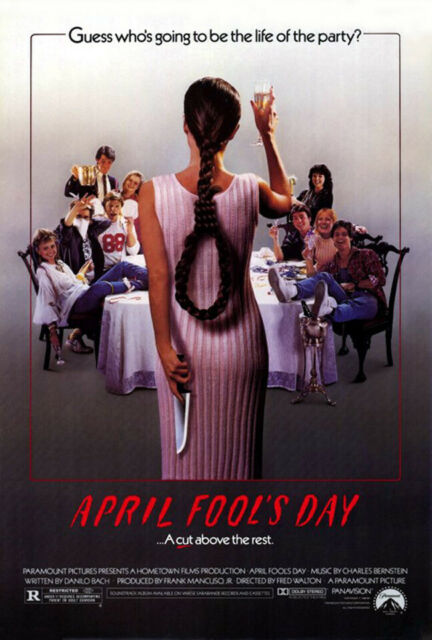
April Fool’s Day (1986)

By Richard Winters

My Rating: 3 out of 10

4-Word Review: It’s all a prank.

A group of college students get together at an excluded island home of one of their friends Muffy (Deborah Foreman) to celebrate their last year in school together. Then as the weekend progresses they find that a killer is knocking them off one-by-one. Will the remaining survivors be able to escape, or is there something more to these murders that no one realizes?

The film was an attempt to revive what at the time was a lost interest in the slasher genre by creating a irreverent tone to the staid formula and in that regard it does an okay job. The main issue though is that it gets too jokey making it seem more like a misguided comedy that losses sight of its intended horror fan audience completely.

I didn’t mind a few of the pranks, but too much time gets spent on them and 40 minutes seemed to be a ridiculous wait (if you don’t count the injury that occurs on the initial boat ride in, which seemed more like an accident) before we even get to the first killing. The pranks bordered on being too elaborate and something a regular person wouldn’t be able to pull off. For instance one deals with Rob (Ken Olandt) turning off one light in a room only to have another one turn on, all to the amusement of his girlfriend (Amy Steel) who apparently (I guess?) rigged the lights to do this, but where did she  get the electrical background or time to wire the room in this manner?

If the pranks are supposed to revolve around the fact that it’s April Fool’s Day then all the action should  take place within a 24-hour period instead of over several days. The scenery doesn’t have a spring-like look either as there should be blossoms and buds on the trees, but instead, since it was filmed in August, it looks more like late summer.

The cast comes-off too much like crude and obnoxious junior high kids whose only topic of conversation is sex instead of young adults ready to enter the working world and their dialogue doesn’t seem genuine.  One dumb bit has Harvey (Jay Baker) trying to make amends with Nikki (Deborah Goodrich) by trying to prove to her he really isn’t as much of a ‘dick’ as she thinks, but then proceeds to tell that he’d like to ‘plow her field’, which would only convince her otherwise.

Spoiler Alert!

The killings are brief and feature virtually no gore at all, which will disappoint those expecting to see at least a little. The ending, which reveals the killings to being just another gag, was novel, but there still needed to be a secondary twist. In the film’s original cut Skip (Griffin O’ Neal) kills Muffy after everyone else has left the island, but the studio execs nixed this opting for an ‘upbeat’ ending instead. Upbeat endings are fine if it’s a comedy, but a horror film should have a dark undertone and the fact that this one doesn’t have one at all makes it woefully undernourished.

My Rating: 3 out of 10

Released: March 28, 1986

Runtime: 1 Hour 29 Minutes

Rated R

Director: Fred Walton

Studio: Paramount

Available: DVD, Blu-ray, Amazon Video, YouTube.
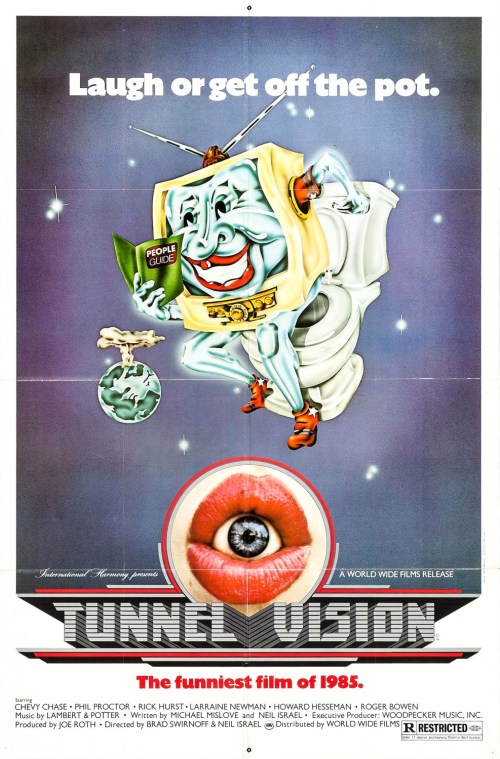
Tunnel Vision (1976)

By Richard Winters

My Rating: 1 out of 10

4-Word Review: Lame parody of television.

The year is 1985 and due to a new Bill of Rights an uncensored television network has been created, which causes many viewers to become hooked on its content watching it for hours while neglecting their other responsibilities. The head of the network, Christian A. Broder (Phil Proctor) is brought in for a senate hearing where the network’s programs are examined by a government panel to see if it should be allowed, or if censoring it would be the better option.

What was considered ‘pushing-the-envelope’ in its day would now barely pass as a blip on the radar of the average seventh grader. I was honestly expecting much more sex and nudity here, but ultimately the film offers very little and nothing is worse than smug filmmakers thinking they’re making something ‘edgy’ when they really aren’t. I also got tired of seeing a close-up shot of a plastic eyeball popping out of a woman’s lipstick laden lips, which I suppose might be considered by some as being sort-of sexy looking, but after it gets shown over and over again it becomes annoying.

The overall tone is too inconsistent. Certain provocative bits get lumped in with a lot of goofy, mindless ones, which creates a casual chuckle every 20 minutes or so but then coupled mainly with a lot of groans in between. The film also never cuts away to show any reaction shots of the conservative committee who are supposedly watching these ‘shocking’ clips, which could’ve added in an extra layer of humor. The viewer is also required to be highly familiar with mid 70’s programs and commercials as otherwise many of the in-jokes will go completely over their heads especially to those born at a later time.

The film was written and directed by Neal Israel who managed to have one hit Bachelor Party in 1984, but overall his other output conveys the same mindless, lame comedy as this one and whose talents seem limited. Had there been some visual flair it might’ve helped, but everything looks like it was filmed inside someone’s suburban home using low-budget home movie-like production values. Also, for a film that was supposed to be a peek into the future it certainly doesn’t have much of a futuristic design and instead reeks of mid-70’s sensibilities.

Of course there’s a lot of politically incorrect bits here too, which includes a parody of ‘All in the Family’ that features a Romanian gypsy family that spouts every conceivable ethnic slur, but this segment like so many of the others are just not that funny or imaginative. The only interesting aspect about the film is that, besides showing some young up-and-coming stars at the beginning of their careers, it also features many behind-the-scenes announcers whose voices you’ll immediately recognize, but not their faces, so seeing them in front of the camera for a rare time like Donny Darko who portrays a newscaster named Steve Garvey is kind of cool, but otherwise this thing is nothing more than a dated dud.

My Rating: 1 out of 10

Released: March 3, 1976

Runtime: 1 Hour 7 Minutes

Rated R

Director: Neal Israel

Studio: World Wide Pictures

Available: DVD

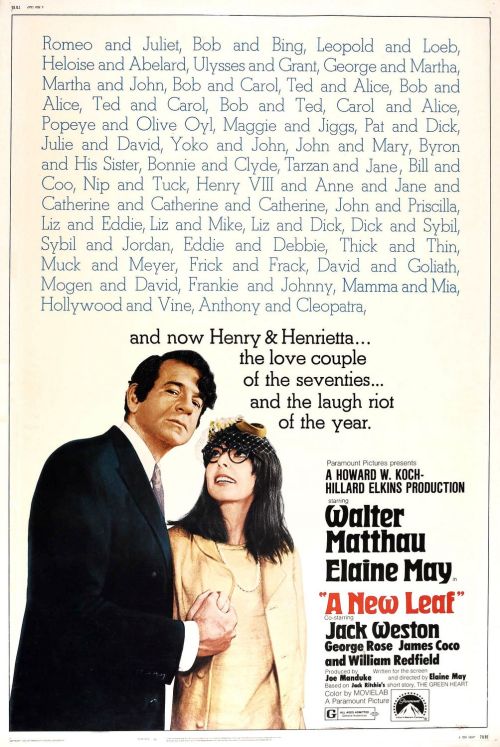
A New Leaf (1971)

By Richard Winters

My Rating: 7 out of 10

4-Word Review: Marrying for her money.

Henry Graham (Walter Matthau) has been living off of his vast inheritance for years only to find that his overspending and has now made him broke. Since he has no work history and no interest in getting a job he decides the only other alternative is to marry a rich woman. He finds his target in the form of Henrietta (Elaine May) who is an heiress to a massive family fortune. She is also quite homely, socially inept, and very into botany. Henry decides to ask for her hand in marriage and then once they are hitched kill her off and acquire her fortune for himself, but nothing goes as planned.

The plot is based on a short story ‘The Green Heart’ by Jack Ritchie and is full of many ingenious twists that helps propel the dark comedy along at a very even tone. Director May’s use of dry, subtle humor comes in perfectly for this type of material. So many other Hollywood comedies feel the need to bombard the viewer with broad, in-your-face gags so it’s genuinely refreshing to have a film take a more restrained approach by allowing the humor to peculate more. Instead of a rapid fire, gag-a-minute pace the film stretches the comical bits out for several minutes allowing the actors to play up the scene to a full crescendo with Henrietta’s inability to wear her evening nightgown properly on their honeymoon being quite possibly the funniest.

The characters are made up of extreme caricatures and in less talented hands could’ve been a detriment, but Matthau manages to play his part so astutely that the viewer ends up liking him anyways and his arc, where he reluctantly and quite unexpectedly ends up helping Henrietta out of several jams that she wasn’t aware of, is quite satisfying. George Rose, who sadly and ironically ended up having the same fate that almost befell the May character here when in 1988 in an attempt to get his hands on Rose’s fortune the teenage son that he adopted killed him while trying to make it look like a car accident, lends great support as Matthau’s wise and loyal butler.

Like with May’s other projects including the notorious Ishtar this film suffered many cost overruns and production delays most notably the 10 months it took to edit the film, which initially ended up having a 180 minute runtime and featured a secondary story dealing with Matthau poisoning a blackmailer played by William Hickey. The then head of Paramount Robert Evans decided, much to May’s objections, to cut this part out, which shortened it to 102 minutes, which I personally feel was a good idea. While I usually like director’s cuts the story here is too thin for a 3-hour length and in many ways goes on a bit too long the way it is although it would still be cool to see the extra footage, which is rumored to have been either lost or destroyed, as a bonus feature on a future DVD/Blu-ray release.

As a simple black comedy it comes off pretty well and even has a cute twist ending. Although a box office flop at the time it has garnered strong acclaim and since become a cult classic. The two stars also reunited 8 years later playing another couple in the Neil Simon farce California Suite

My Rating: 7 out of 10

Released: March 11, 1971

Runtime: 1 Hour 42 Minutes

Rated G

Director: Elaine May

Studio: Paramount

Available: DVD, Blu-ray, Amazon Video, YouTube

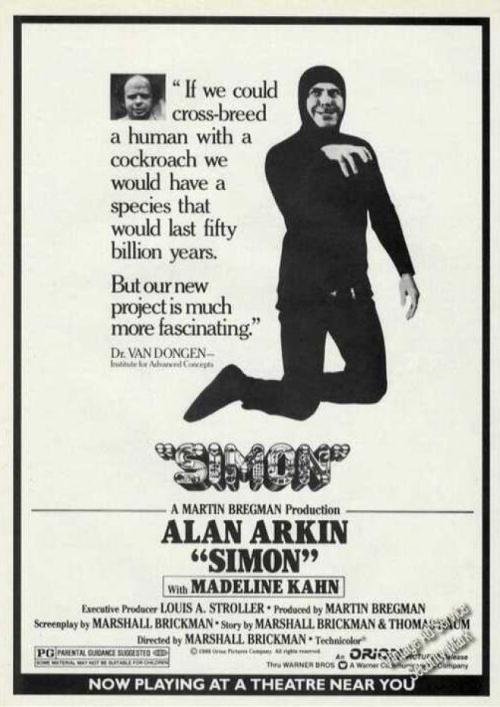
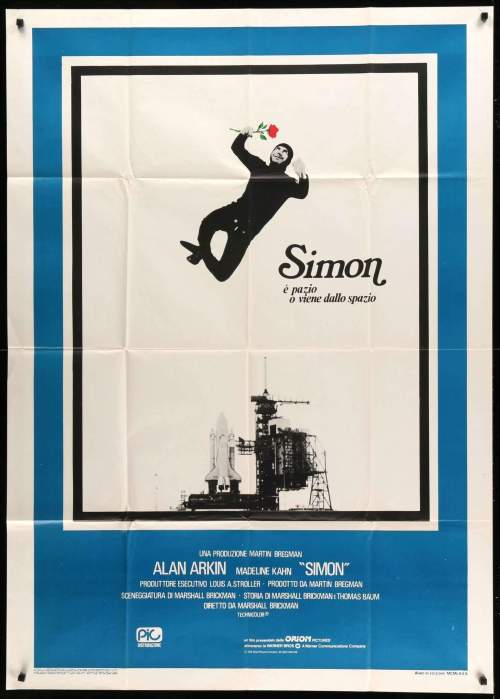
Simon (1980)

By Richard Winters

My Rating: 4 out of 10

4-Word Review: College professor becomes brainwashed.

An underground group of scientists who enjoy playing elaborate pranks decide to brainwash a college professor named Simon Mendelssohn (Alan Arkin) into believing that he is an alien from another planet. After he is successfully brainwashed he then escapes from the institution and gets in with a religious cult who have a transmitter that can block the TV airwaves and allow him the ability to be seen by the entire nation where he tries to reform American culture while also becoming a celebrity sensation.

This extremely odd comical satire  seems out of place for a studio backed film and more in tune with a independent project as it’s unclear what specific type of audience the filmmakers were hoping to attract as mainstream viewers will most likely find the humor off-putting. One could describe it as being ahead-of-its-time, but the banal potshots at such overused targets as TV and American consumerism makes it seem more dated instead.

The movie would’ve worked better had it remained focused on one intended target and then ravaged the hell out of it instead of soft jabs at various safe targets, which makes its overall message muddled and unclear. There are some funny bits including watching Austin Pendleton, who is the head of the research group, making love to a giant telephone receiver, whose voice is supplied by Louise Lasser. It’s also funny having a brainwashed person such as Simon trying to brainwash others via the airwaves, which could’ve been really hilarious had they gone farther with this idea.

There’s signs that writer/director Marshall Brickman hadn’t fully thought through the quirky story idea to begin with. For instance why would this underground group of scientists allow a video crew in to film what they are doing as the members are seen at the beginning talking directly to the camera and answering questions by some unseen interviewer. Wouldn’t this allow their secret to get out and get them into trouble? The army that takes over the institute is too incompetent as Simon and his girlfriend Lisa (Judy Graubart) are able to escape from it too easily and their inability to locate Simon’s rogue TV transmitter even after days of searching is rather pathetic. I realize this is meant to be ‘funny’, but even a comedy should have some tension to it to make it more interesting and the army’s extreme buffoonery isn’t humorous at all, but just plain dumb instead.

Arkin is the one thing that saves it. His unusual acting style makes him hard to cast, but here he really delivers especially during the segment where he plays out the evolution of man, but without using any dialogue although it might’ve been funnier and more of an interesting contrast had his character not been so kooky to begin with, but instead some stuffy intellectual only to become zany once he was brainwashed.

Judy Graubart makes for a good anchor as the one normal person in the whole movie. She was best known for her work on the children’s TV-show ‘The Electric Company’ and this was her live-action film debut, which should’ve lead to a long line of film appearances, but instead she only had brief bits in two other movies and that was it.

There are signs of a great movie trying to break out and the overall concept has brilliant potential, but this is the type of film where you’ve got to go full-throttle and Brickman seems either unable or too timid to do that making what could’ve been sharp satire into a transparent, benign mess that offers only a few chuckles, but not much else.

My Rating: 4 out of 10

Released: February 1, 1980

Runtime: 1 Hour 37 Minutes

Rated PG

Director: Marshall Brickman

Studio: Orion Pictures

Available: DVD-R (Warner Archive) Amazon Video, YouTube

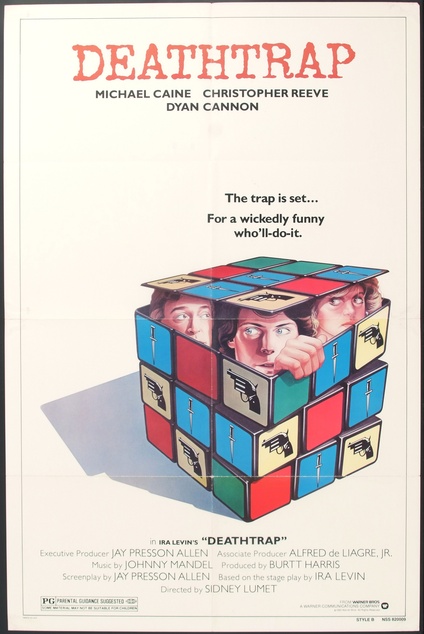
Deathtrap (1982)

By Richard Winters

My Rating: 4 out of 10

4-Word Review: Playwright turns to murder.

Sidney Bruhl (Michael Caine) was at one time a top playwright, but his latest play is a flop. To add to his depression he finds that one of his students who attended his writing seminar, Clifford Anderson (Christopher Reeve), has on his first attempt written a brilliant sure-fire hit. Something that makes Sidney jealous. He decides to invite Clifford over to his secluded cottage and while there, and with the help of his wife Myra (Dyan Cannon), kill Clifford and then steal his script and treat it as if it’s his own. Things though don’t work out quite as expected especially when their neighbor Helga (Irene Worth) arrives who has psychic visions that could ultimately implicate Sidney for doing the dirty deed.

The film is based on the Broadway play of the same name written by Ira Levin that ran for 1,793 performances from February 26, 1978 to June 13, 1982. The play was well received by critics and audiences alike including director Sidney Lumet who put up some of his own money to get it made into a film, but ultimately he relies too heavily on the twisting plot while failing to add any cinematic element to it.

The exterior of Sidney’s home was the picturesque DeRose Windmill Cottage, which sits in East Hampton, New York and helps add a visual flair, but the interior of the home was shot on a soundstage and the film becomes quite claustrophobic as almost the entire story takes place in this one setting. The movie desperately needed more cutaways, even some minor breakaway bits like Helga’s disastrous guest spot on the Merv Griffin Show, which gets talked about, but never shown, in order to make it seem less like a filmed stageplay, which it ultimately ends up being.

The script brings up some potentially interesting insights like how sometimes the characters in a writer’s play can closely parallel the authors themselves. In fact many people that knew him felt that the Sidney character here strongly resembled the real Ira Levin, but the film fails to pursue this in a satisfying way and is devoid of any interesting subtext or nuance. The characters end up being just boring one dimensional caricatures that are wholly unlikable. You could care less which one of them killed who, or whether any of them even survive.

Christopher Reeve is the film’s only real bright-spot and the way he plays a gay man is effective and believable. His onscreen kiss with Caine was considered controversial and daring at the time and even upsetting to fans to the point that purportedly one audience member in a Denver theater screamed out “Superman, don’t do it!” just as the kiss occurred. Irene Worth is fun too and her accent is so believable that I was convinced that she must’ve been born in Eastern Europe and was shocked to learn that instead she was from, of all places, Nebraska.

Caine is good, but his presence will remind many of the movie Sleuth, which he also starred in and is quite similar to this one. In fact a lot of viewers thought this was a sequel to that simply for that reason and because of this somebody else should’ve been hired to play the part.

Cannon on the other hand is annoying as the hyper wife and shares no onscreen chemistry with the other two actors. Marian Seldes had played the role on Broadway in every one of its 1,793 performances, which garnered her a citation in the Guinness Book of World Records as most durable actress and because of that alone she should’ve been given the part here.

Johnny Mandel’s soundtrack gives the proceedings a highbrow flair and I wished it had been played more. The plot twists may entertain and surprise some, but not if you think about them for too long, which ultimately makes this just a second-rate Sleuth.

My Rating: 4 out of 10

Release: March 19, 1982

Runtime: 1 Hour 56 Minutes

Rated PG

Director: Sidney Lumet

Studio: Warner Brothers

Available: DVD, Blu-ray, YouTube

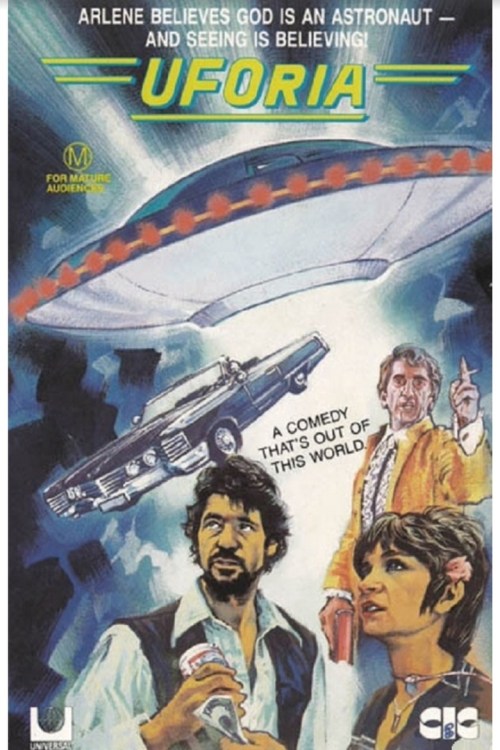
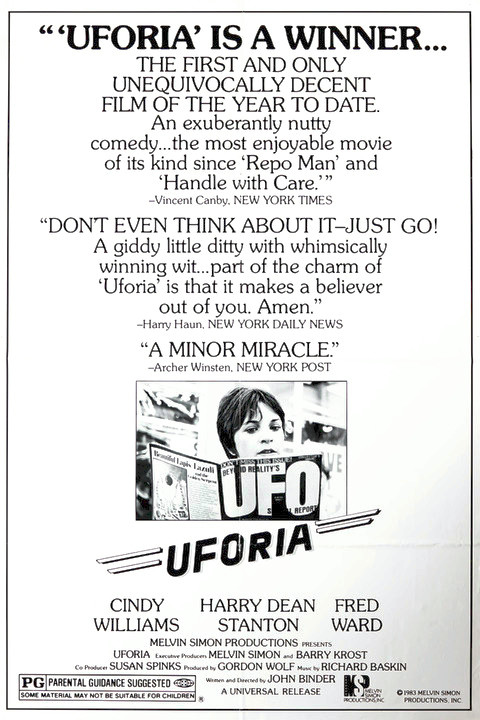
UFOria (1985)

By Richard Winters

My Rating: 4 out of 10

4-Word Review: She dreams about spaceships.

Arlene (Cindy Williams) is a lonely woman living in a small town and working at a local supermarket. One night she starts having dreams about a spaceship landing in town and taking her away. Her new boyfriend Sheldon (Fred Ward), who is a shady drifter always looking to make a quick buck, works with his brother Bud (Harry Dean Stanton), much to her consternation, to use her ‘visions’ to make money off of it by portraying her as communicating with some outer worldly messenger that’s connected to God.

This film was made in 1980, but sat on the shelf for 5 years and it’s easy to see why as it’s difficult to put it into any predefined genre. It’s certainly isn’t a sci-fi flick and in a lot of ways it really isn’t a comedy either. There are a few funny bits, but they get lost inside scenes that go on far longer than they should, which never allows the film to gain any traction or momentum.

Williams is not right for her part and fails to convey the downtrodden look of a lonely woman in a role that would’ve been better served had it been played by an actress with a more plainish, dumpy features like Kathy Bates. It’s also annoying that she has these vivid dreams, but the viewer never gets to see them. Movies are a visual medium and should take advantage of that element as much as possible by showing what’s happening instead of just having a character describe it.

Stanton isn’t right for his part either. In certain films his low-key style is perfect, but here he fails to effectively convey the animated, fiery delivery of a TV evangelist, which is a part that needed to be comically played-up much more.

Ward was the only one that I liked and he really comes into his own with a character that isn’t particularly likable, but has an interesting arch where he goes from being a cynical non-believer to eventually defending Arlene from those who mock her. He also drives his car in the most bizarre way that I’ve ever seen with his feet up on the dashboard and not on the pedals.

Spoiler Alert!

I was hoping that the ending would be a payoff for having to sit through such a slow, poorly paced film, but ultimately it falls flat just like everything else. I liked the idea of a spaceship suddenly appearing, but then the film cuts to the closing credits without examining what happened to the people, how they reacted to it, or what the aftermath was, which I found frustrating.

End of Spoiler Alert!

The small town setting filmed in Palmdale and Lancaster, California gives off just the right rustic look and prime stomping ground for fringey, eccentric people like the characters here.  While the film does have a definite cult appeal the offbeat elements get stymied inside a lethargic pace that never allows it to gel, or become captivating.

My Rating: 4 out of 10

Released: October 1, 1985

Runtime: 1 Hour 35 Minutes

Rated PG

Director: John Binder

Studio: Universal

Available: VHS

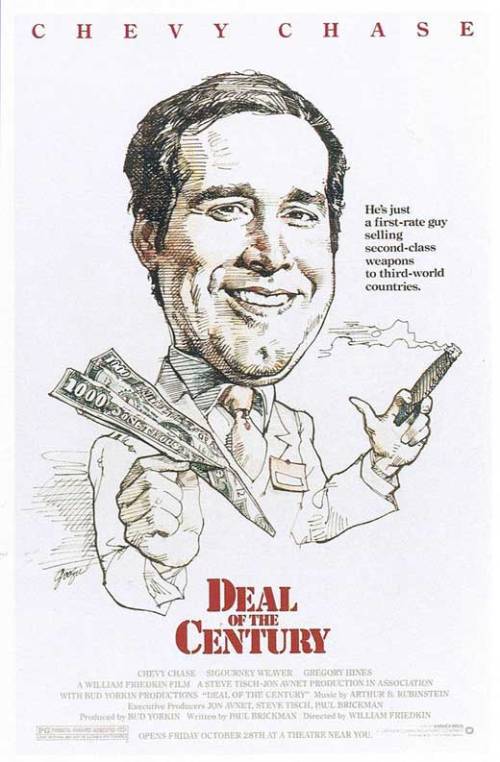
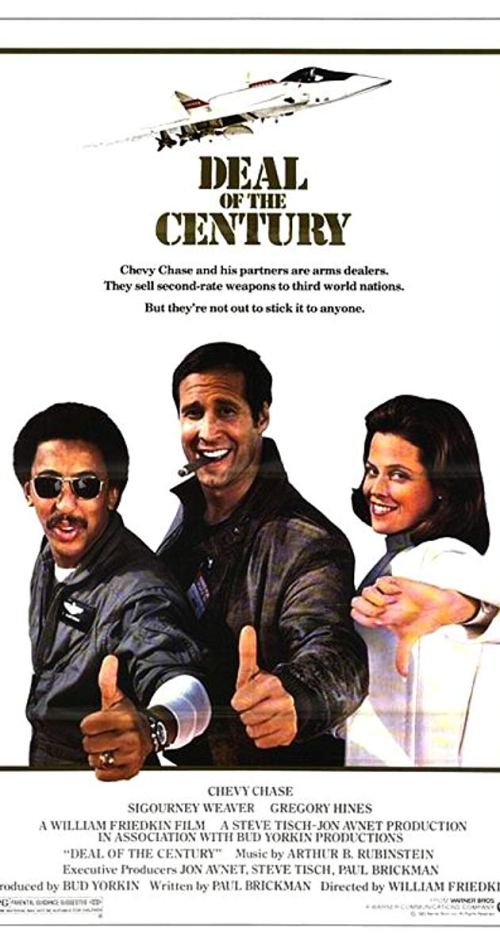
Deal of the Century (1983)

By Richard Winters

My Rating: 5 out of 10

4-Word Review: Making money selling weapons.

Eddie (Chevy Chase) is a American arms dealer selling weapons to both the rebels and military dictator of a small South American country. While there he meets Harold (Wallace Shawn) who works for a large contractor known as Luckup. Their weaponry is much more sophisticated and cutting edge so after Harold kills himself Eddie takes over the deal and successfully wins a big contract, but upon returning to the states he finds that the deal fell through, which forces him to return to the small country along with Harold’s widow Catherine (Sigourney Weaver) and his partner Ray  (Gregory Hines) to see if they can make another pitch.

The film is based on the novel of the same name by Bernard Edelman and makes some really good satirical points about how the arms race being driven more by corporate greed, which only helps to create wars instead of preventing them. Unfortunately the film’s tone is too muddled and goes haphazardly from lighthearted fare to dark humor while throwing in graphic violence that is jarring. There’s also a surprising number of scenes where the three main characters don’t appear in it at all.

Chase can be appealing if given the right material but his cynical smart-ass sense of humor doesn’t exactly make him lovable. Here his character is so consumed with making a deal that he becomes no different than the bad guys and someone the viewer doesn’t connect with or care for. The only positive thing about his character is that he gets shot in the foot early on and then unlike most other movies where the healing power gets sped up he instead spends the rest of the film in a cast, which is more realistic. The scene where he gets shot in the foot a second time and blood spews out of the cast until Sigourney stops it up with a cork is the film’s best moment.

Hines on the other hand is quite likable and his convergence to Christianity is funny and should’ve been played-up more. The scene where he gets into a confrontation with a Latino couple after a car accident is amusing, but having him suddenly go rogue at the end makes little sense and is kind of stupid.

Weaver, who doesn’t have any significant presence until almost 45 minutes in, is wasted and there’s no way that anyone as beautiful as her would marry a chump like Wallace Shawn, which makes the casting here quite nebulous. Vince Edwards, famous for starring in the 60’s medical drama ‘Ben Casey’, gets a surprisingly large role as a Luckup executive and I can only guess that this was because of his longtime friendship with director William Friedkin as otherwise by the 80’s he was way past his prime and largely forgotten.

There are some humorous bits here and there, but overall the pacing is poor and quite jumbled. Friedkin, better known for his dark dramas and horror films, appears to be out of his league and when compared to other Hollywood comedies this thing lacks finesse. The special effects are also really tacky, which ultimately sends this to a schlock level and becomes an embarrassment to all those who were involved.

My Rating: 5 out of 10

Released: November 4, 1983

Runtime: 1 Hour 39 Minutes

Rated PG

Director: William Friedkin

Studio: Warner Brothers

Available: DVD, YouTube

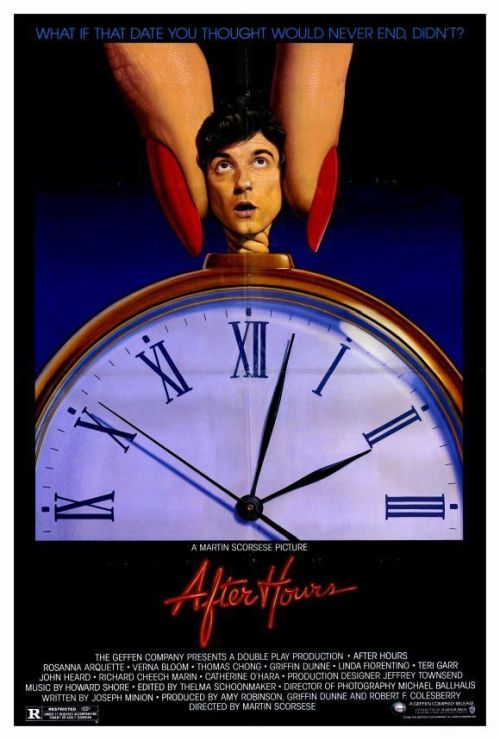
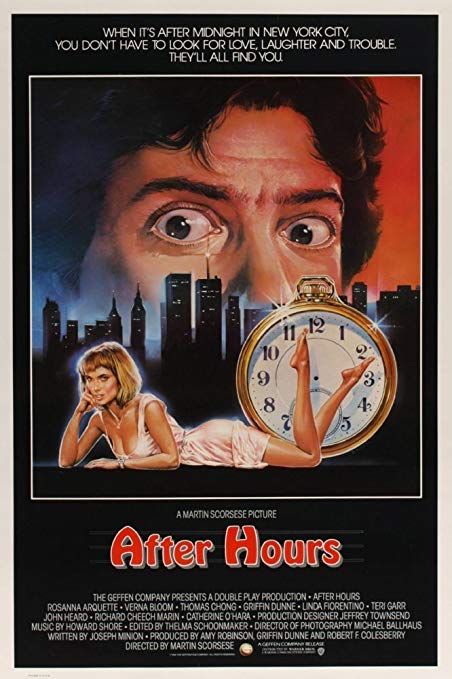
After Hours (1985)

By Richard Winters

My Rating: 8 out of 10

4-Word Review: Don’t stay out late.

Paul (Griffin Dunne) is a single man living in New York, who’s bored with his job and looking to spend his Friday night on the town in hopes that he might hook-up with an attractive woman. While at a late night cafe he meets Marcy (Rosanna Arquette) who tells him that she lives with a sculptress who makes and sells paperweights. Paul decides to use the excuse that he wants to buy one as his ruse to go over to her apartment in hopes of ‘getting lucky’. Yet when he arrives things quickly become surreal where everybody he meets behave in strange ways making his night-on-the-town a nightmarish event.

The film is based on a screenplay by Joseph Minion, who has written two other produced screenplays 1999’s On the Run and 1991’s Motorama that play off the exact same theme, and was done for the screenwriting class that he was taking at Columbia University, which got the attention of Dunne who optioned it as a project he felt would be a perfect fit for his acting style. Unbeknownst to him though was that the first part of it was based on a 30 minute-monologue piece called ‘Lies’ written by Joe Frank and broadcast on NPR radio in 1982 and when the film came out the studio was forced to pay Frank an out of court settlement because of it.

Many have felt the film’s theme is Paul’s emasculation by all the women that he meets, and to an extent that’s probably true, but for me I found it more interesting to see how despite the film’s surreal quality it’s still not that far off from truth. It’s like going out on a first date with a really attractive person who your’e excited about only to find as you get to know them that they’re really screwed-up, or meeting a new group of people who you initially think you have something in common with only to learn as you talk to them that you really don’t. It also nicely satirizes the hip/happening patrons of the club scene who walk around with a perpetual arrogant attitude of coolness, but in reality are quite hollow.

The production was filmed at night, which forced the crew to work for 10-straight weeks from sundown to sun up and then catch-up with their sleep during the day, but the effort was worth it as it helps create this underworld feel with no connection to the ‘proper’ daytime one. I also loved how it tries to explore New York’s club scene and the artsy SoHo district with all the eccentric personalities that make up that subculture, which helps to make New York the unique place that it is and which gets criminally ignored in most other movies that take place there.

The acting is excellent with everyone perfectly cast although the scenes I enjoyed the most involved Dunne’s exchanges with some lesser known performers like Murray Moston as a subway attendant and Clarence Felder as a nightclub bouncer. Credit must also go to Dunne himself who plays the normal guy role perfectly. Had he been too over-the-edge with it, or too nerdy it wouldn’t have worked as the character had to be someone the viewer could relate to while behaving/reacting to things in plausible ways in order to feed off the paradox that the more rational he was the more irrational everything else around him  became.

Spoiler Alert!

The ending proved to be the toughest part for director Martin Scorsese to implement. Originally Dunne’s character was driven away in the van still trapped in a the plaster sculpture that Gail (Verna Bloom) had put him in, but this got a negative response from the test audience, so they then considered having Dunne crawl into Bloom’s womb to hide and then getting ‘reborn’ out on the highway, but that was too bizarre.

The one that they finally came up with, which was suggested by director Michael Powell who came on as a consultant, has Dunne ending up at the office where he worked, which has added irony since most offices are boring places that people usually can’t wait to get out of.  However, it never shows how these experiences changed him and a scene should’ve been added showing Dunne afraid to ever leave and continuing to work late in the night after everyone else had gone before finally getting dragged out by the security guards.

The film also fails to explain how Dunne ever got back into his apartment since the bartender (John Heard) had taken his keys to his place earlier. A good alternative ending would’ve had Dunne falling out of the van not at the office, but at his apartment instead where he would’ve then be let in by his landlord. He would fall asleep in his bed feeling safe only to awaken with everyone that had been chasing him earlier now standing around his bedside having been let in by the bartender with the keys.

Overall this is the type of film that you wished had gone on longer as it gets funnier the more it goes on. My only quibble is that Dunne should’ve been forced to get the Mohawk when he was at the club as seeing him with one would’ve accentuated his beaten down mindset and made his appearance when he returned to work even more absurd.

My Rating: 8 out of 10

Released: September 11, 1985

Runtime: 1 Hour 37 Minutes

Rated R

Director: Martin Scorsese

Studio: Warner Brothers

Available: DVD, YouTube