Category Archives: 70’s Movies

White Line Fever (1975)

white

By Richard Winters

My Rating: 5 out of 10

4-Word Review: Truck driver fights corruption.

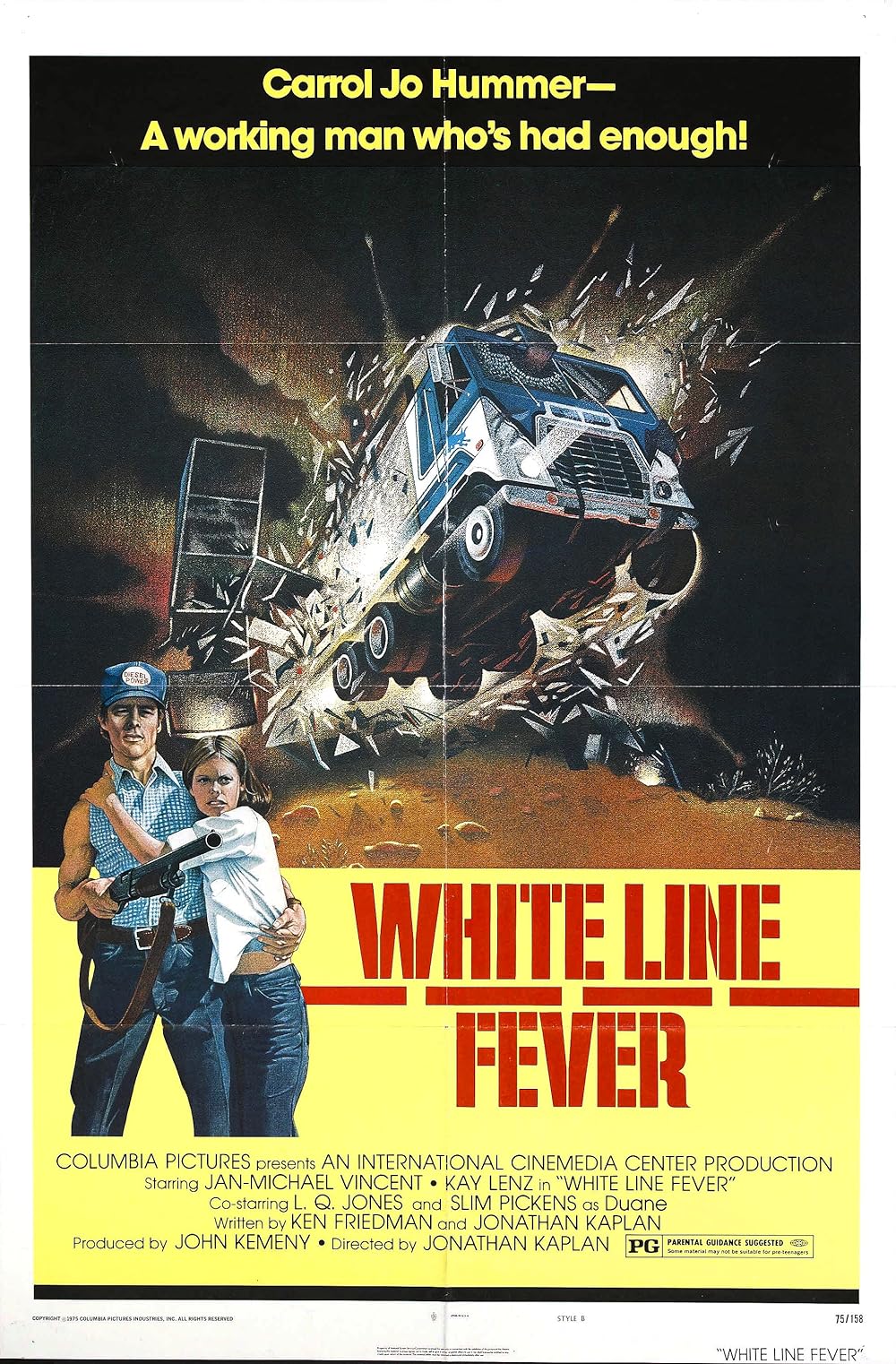
Carrol Jo (Jan-Michael Vincent) has returned from a overseas trip in the Air Force and is now set to marry his sweetheart Jerri (Kay Lenz), but to do so he must get a job. Since he grew up in the trucking business where his father was a long haul driver he decides to buy himself a rig by getting a loan at the bank. Once purchased he drives to the Red River company in town to find cargo to haul, so that he can quickly start making money and get out of debt with the bank as soon as possible. However, he realizes that the company has become overrun with corruption and if he wants to work there he must agree to haul contraband, which he refuses. He tries going into business for himself, but the folks at Red River, who secretly have deep connections to some very influential and rich people, are determined not to let his start-up get-off the ground and stymie his efforts at every turn, which causes Carrol Jo to take matters into his own hands and proceeds to instigate an elaborate revenge.

This was Jonathan Kaplan’s 5th film effort and he got hired onto the project when one of the producers mistakenly thought the film he did before this one, Truck Tanner, had been about truck driving, which it wasn’t, but Kaplan decided to just take the offer without bothering to correct the confusion. His directorial instincts helps a lot particularly at the beginning where he uses some interesting montages including showing actual pics of Vincent and Lenz as children and then progressive photos as they age into adulthood. There’s quick edits, which gives it a breezy pace and never allows it to get boring.

However, the story itself is quiet pedestrian as there’s no interesting twists. Small town bigots running a questionable trucking operation is about as cliched as it gets and it’s hard to get emotionally invested in the proceedings when you know exactly how it’s going to work out. No new angles get added in and everything from the one-dimensional characters to the paper thin plot is so painfully predictable it becomes genuinely irritating.

The story has more of a herky-jerky structure than a linear one. I thought the whole first two acts would be Vincent dealing with the repeated harassment until he’s had enough and implements a vigilante style response, but instead it becomes more violent vignettes with the bad guys doing something underhanded and then Vincent immediately responding making it seem episodic and like the plot is moving in a circular fashion instead of forward. Shooting it in Tucson, Arizona is alright though the barren, sandy wintertime desert landscape isn’t exactly eye-catching. Having police cars fitted with Confederate flags and cops behaving like southern hicks is out-of-place as Arizona is a western state far removed from the deep south as most of the people living there have come from the north to escape the cold winters and certainly not from places like Alabama like the movie seemingly wants you to believe.

The supporting cast is certainly engaging especially Slim Pickens who manages to always be fun no matter what B-movie he is in, but Vincent is weak. This was reportedly when he first started using cocaine, which culminated in both the downfall of his career and eventually his life. He mentioned that he never felt comfortable with the fame and I suspect it’s because he knew deep down he maybe didn’t really belong. He’s a good-looking guy who in supporting parts had some potential, but as someone trying to carry a film he’s incredibly blah and doesn’t add anything other than the basic reaction shots. Lenz shows a far more interesting energy and the script should’ve been rewritten to make her the truck driver trying to fight a male dominated industry, which would’ve given the movie the unique spin that it needed.

The villain side gets botched as well. Pickens would’ve been okay, but he amounts to being just a throwaway henchman as does Martin Kove, who years later would get remembered as being the mean coach in The Karate Kid. L.Q. Jones though had strong potential and had he been the so-called brains behind the thing it could’ve been forgiven and there’s even a long, drawn-out foot chase between he and Vincent near the end that isn’t bad, but the ultimate culprits turn-out to being this group of non-descript old guys headed by Don Porter best known for playing Sally Field’s widowed father in the TV-Show ‘Gidget’. Now, R.G. Armstrong, who plays Porter’s shyster lawyer, isn’t bad, but Porter doesn’t have enough sleazy flair to give the part any panache making him come-off more like he’s just another stock character. In films like these there needs to be one really nasty mastermind that needs to be taken down and having it get assimilated to an entire group of otherwise non-descript old guys dilutes it too much.

Spoiler Alert!

Even the action seems a bit lacking. Granted there are a few edge-of-your-seat moments like when Vincent gets on top of a moving rig in order to fire a rifle at the driver of another vehicle that’s chasing them and Pickens death scene, in which he gets runover by a truck is pretty shocking too, but other than that the stunts are run-of-the-mill. The ending was a particular letdown as it has Vincent driving his truck through the gate of Porter’s residence and then into the marquee that sits out front, but I wanted him to go all the way and crash through the walls of the plush mansion. I’m sure that would’ve been deemed too expensive to pull-off, but it would’ve given it a more dramatic conclusion and if done in slow motion could’ve been really cool to see and might’ve made sitting through the rest of it worth it.

My Rating: 5 out of 10

Released: July 16, 1975

Runtime: 1 Hour 30 Minutes

Rated PG

Director: Jonathan Kaplan

Studio: Columbia Pictures

Available: DVD-R, Amazon Video, Tubi
Remember My Name (1978)

remember

By Richard Winters

My Rating: 7 out of 10

4-Word Review: His ex-wife returns.

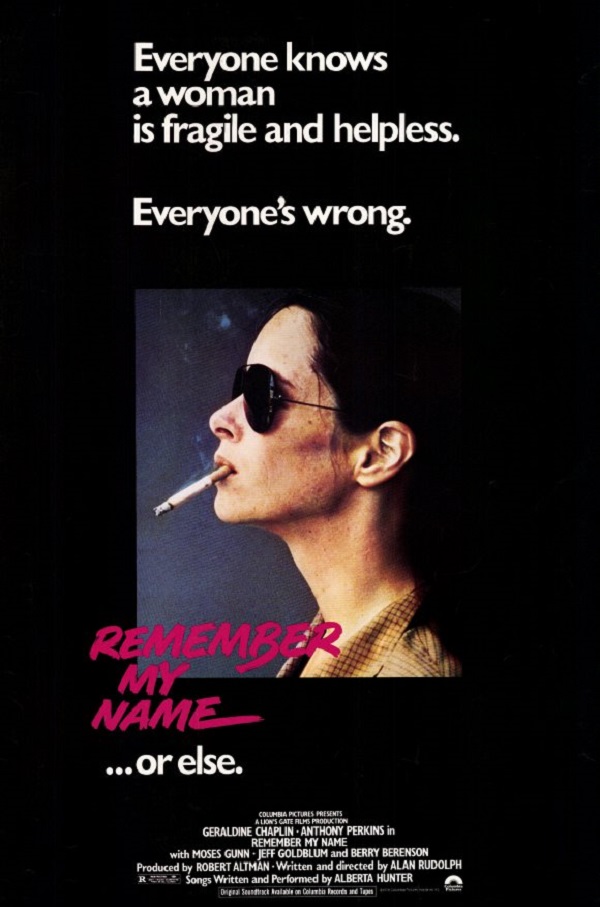
Neil (Anthony Perkins), who works as a local carpenter, is married to Barbara (Berry Berenson). While the two have their share of ups-and-downs they mostly find a way to work it out and get along. Then comes Emily (Geraldine Chaplin) whose been recently released from jail. She begins harassing the couple for no apparent reason. After she breaks the window of their home Barbara insists on pressing charges. Neil though resists while divulging that he had previously been in a relationship with her and because of certain things that occurred has a misplaced sense of guilt to cover-up for her actions. Barbara does not understand this and the two break-up while Neil decides to rekindle things, but while Emily initially seems receptive she may actually harbor ulterior motives.

Alan Rudolph does a marvelous job of directing this emphasizing the working-class existence with a pale color scheme and great use of on-location shooting, which gives the viewer a vivid and intimate portrait of the character’s lives and their environment. The use of showing that Emily had previously been in prison without actually saying it by simply using certain sounds and visuals as she sleeps is a genuinely inspired moment as is the use of the brief dialogue that reveals things slowly and deliberately using subtle hints that achieves a certain fragmented narrative.

Chaplin is brilliant and convincing in the lead and her unique colored eyes helps build a riveting psycho-like effect though with her extremely thin frame it’s hard to imagine she’d be able to take-on and even beat-up the Alfre Woodard character as she does though one could possibly justify it by saying she learned fighting skills while in jail. Perkins is also quite good, but the use of his real-life wife Berenson, who didn’t have a lot of acting training, hurts as her time on screen is rather blah including the otherwise tense confrontation that she has with Emily when Emily invades her home, which might’ve been a more interesting scene with a better qualified actress in the part.

While the first-half is quite slow I was thoroughly gripped and found the whole thing fascinating, but this tapered-off by the third act when Perkins and Chaplin rekindle things while at a restaurant. The scene gets done in amusing way as the couple keeps ordering alcoholic drinks one after the other, much to the consternation of the waiter, played by Terry Wills, but having Perkins go back immediately to Chaplin with almost no apprehension kills the intrigue. This is a woman that supposedly murdered someone before, so how does he know she can be trusted? Having him more defensive and cautious and even conflicted as he was technically still married would’ve helped continue the tension instead of deflating it.

Spoiler Alert!

The scene in which the Moses Gunn character, who was having a bit of a fling with Emily, goes back to her apartment apparently to murder Perkins who had been temporarily staying there, could’ve been done better. It’s only intimated that Gunn kills him as we see a nervous look on Perkins face as he hears somebody at the door and then it cuts away to the outside of the building with loud crashing music to display that there was violence, but I really felt it should’ve gotten played-out visually. Perhaps it could’ve been done Rear Window-style with it being captured through the windows, which would’ve stayed consistent with the film’s detached tone, but to leave the story’s most crucial moment up to speculation was a letdown.

The same can be said to Alfre Woodard’s character who promises revenge on Chaplin, but it never comes. A good physical confrontation between the two could’ve added some much needed action, which otherwise is sorely missing and makes the film seem incomplete. Having Chaplin terrorize the couple by messing up their flower garden is a bit too tame as any squirrel or raccoon could’ve done the same thing while putting a bloody animal on their doorstep, or nailing a graphic picture of the person she had killed before would’ve been far more frightening.

Overall I liked the style, but the attempt to keep things buttoned-down all the way through doesn’t work. At some point, just like with the ticking time bomb mentality of its main character, it needed to explode with violence that would’ve awakened the viewer with a shocking effect. The fact that this is only slyly hinted at is a letdown and doesn’t give the movie the strong pay-off that it should.

My Rating: 7 out of 10

Released: October 1, 1978

Runtime: 1 Hour 34 Minutes

Rated R

Director: Alan Rudolph

Studio: Columbia Pictures

Available: DVD-R, Tubi

Magic (1978)

magic

By Richard Winters

My Rating: 7 out of 10

4-Word Review: Ventriloquist has split personality.

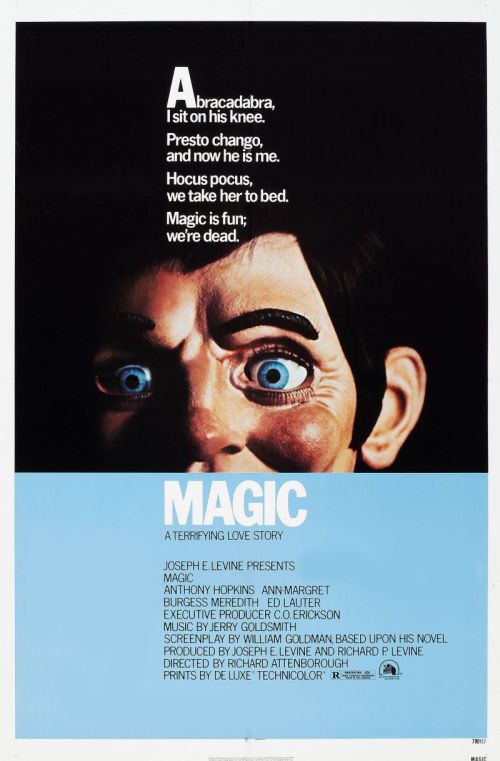
Corky (Anthony Hopkins) is an aspiring stand-up magician who’s finding it hard to play in front of live audiences. After a particularly disastrous effort he comes upon the idea of adding in a ventriloquist dummy named Fats into his act. The addition helps him become a top act and soon gets him the attention of well known agent Ben Green (Burgess Meredith). Ben wants to get Corky a TV contract, but first Corky must undergo a health physical, which Corky refuses to do. Ben insists that Corky has no other option, so Corky leaves the city and drives via a cab to the Catskills where he grew up and rents a lakeside cabin from his former high school sweetheart Peggy (Ann-Margaret). The romance between the two quickly renews, but then Ben finds out where Corky is staying and catches Corky alone in his cabin having an animated argument with his dummy convincing Ben that Corky has mental issues. Ben tells Corky that he’s going to get him psychiatric care, but Corky fears that if it gets out that he’s mentally ill he’ll never get another job offer and thus resorts to drastic action in order to keep Ben quiet.

The film is based on the novel of the same name by William Goldman who also wrote the screenplay. The novel was unique in that it was told through the voice and point-of-view of the dummy. While there had already been several stories and movies dealing with the ventriloquist/dummy persona including the film Dead of Night starring Michael Redgrave and a famous episode of ‘Twilight Zone’ where actor Cliff Robertson played a ventriloquist that gets tormented by his dummy. This film takes a slightly different approach where upfront the protagonist is clearly shown as having a major personality disorder and thus he’s the real threat while the dummy only symbolizes his inner turmoil between the ego and the id.

The film definitely has some creepy moments especially the dummy, whose spooky appearance is what makes it worth catching. It was modeled after Hopkins with oversized blue eyes, head, and mouth gives it an almost monstrous presence. Supposedly when it was completed and Hopkins first took it home to rehearse he got unnerved by it in the middle of the night and called Goldman to come over and pick-it-up or he was going to destroy it. The placid, gray setting of the isolated cabin, which was actually filmed in California despite it looking like northern New York, is perfect for this type of story and the serenity helps accentuate the suspense.

I really liked too the opening bit where a sweating Corky is seen bombing on stage in front of a apathetic crowd, which realistically hits home how nerve-wracking being up onstage for the first time can be though I wish we could’ve heard what Corky angrily shouted at the audience instead of having the sound of this blotted out by a voice over. It is though hard to believe that a man in his 40’s would get so addicted to his dummy, something he hadn’t used before then, that he couldn’t communicate without it and would have to take it everywhere he went. For a relationship to become this deep seated I’d think he’d have to have been doing a ventriloquist act from childhood on and thus the alter-ego of the dummy became meshed with his own as he grew older.

The acting is excellent by not only Hopkins, but also the supporting cast. Meredith is especially enjoyable playing the caricature of a Hollywood agent, which was modeled after the real-life one of Swifty Lazar, with his best moments coming whenever he takes out one of his expensive cigars, which are each separately incased inside a glass cannister. When he pulls the cigar out he then flings the cannister away, which can then be heard shattering onto the floor. Ann-Margaret known for her beauty and flair plays down her looks here as she wears no make-up and takes on a more earthy persona. Ed Lauter is also interesting playing her husband. Normally he’s a tough guy/bully and I thought this was going to come-out when he takes Corky out on a boat in the middle of a lake where he was going to threaten him to stay away from ‘his girl’, but instead he surprisingly displays a more vulnerable side and makes an emotional appeal to Corky to leave Peggy alone versus a strong-armed one.

Spoiler Alert!

The pacing is slow and the suspense builds very gradually though ultimately there are a few good spooky moments including a brief moment when Fats begins moving itself without the help of an operator and when Corky’s face suddenly begins to resemble the wooden dummy’s. Yet I felt it could’ve gone farther. The segment which has Corky crawling on the floor doing whatever the dummy tells him is certainly unnerving, but could’ve been accentuated more by showing it from Corky’s perspective where the dummy’s head would’ve grown to giant size as it looks down on the meek Corky as it gives him the orders.

The ending, at least when I first saw it, had me confused. The film climaxes with Corky returning to his cabin having stabbed himself and bleeding to death where he and Fats then slowly die together, but outside of the cabin Ann-Margaret appears telling Corky she has now changed her mind and wants to go away with him. Initially though it had been made to seem like Corky had killed her, so seeing her reappear as she does comes-off as almost dream-like. She also begins to speak in the dummy’s voice making it seem like his spirit had transferred to her.

Upon the second viewing many years later I came to the conclusion that this scene was meant to only be ironic. That if Corky had simply held-out longer Peggy would’ve agreed to go with him and thus him killing himself was a horrible waste, but in retrospect since he was suffering from such severe mental issues it was unlikely a long lasting relationship would’ve happened, so having her come back the way she does doesn’t really make much sense since she had been deeply offended by what he had said earlier, via the dummy. It would’ve been more horrifying had he chased her around the house and then killed her and the viewer seeing that get played-out.

My Rating: 7 out of 10

Released: November 8, 1978

Runtime: 1 Hour 47 Minutes

Rated R

Director: Richard Attenborough

Studio: 20th Century Fox

Available: DVD, Blu-ray, Amazon Video, YouTube

Bug (1975)

bug

By Richard Winters

My Rating: 3 out of 10

4-Word Review: Underground insects set fires.

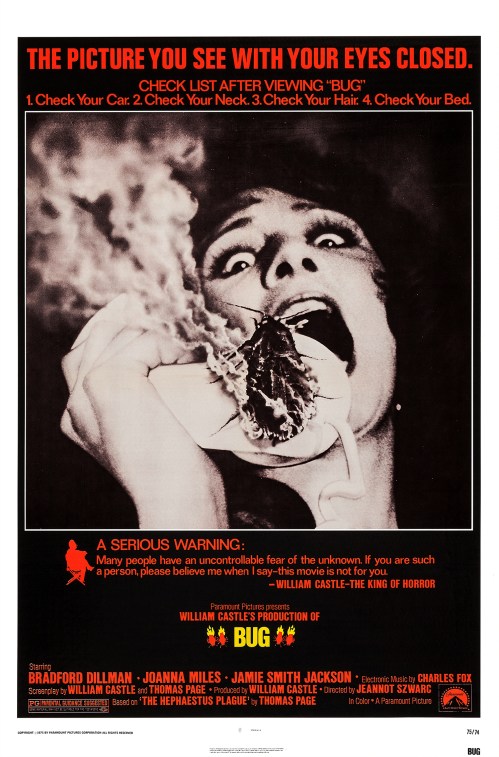
A small, rural California community becomes besieged by a violent earthquake that opens up large cracks in the ground that allows a type of bug to come up through them that can start fires by rubbing its two legs together. Soon fires begin everywhere and there are many casualties. Professor James Parmiter (Bradford Dillman), a local scientist, is put in charge to research these new insects and see if there’s a way to control them. He eventually learns that their time is limited because they can’t handle the low pressure of our climate, but then one of the bugs kills his wife (Joanna Miles) and this creates an obsession in him to save the last of the species and breed it with a cockroach to create a new hybrid, which he successfully does, but with horrifying results.

The film’s greatest achievement, which was the last to be produced by famous horrormeister William Castle, is the photography of the bugs, which is sure to make anyone who is queasy about insects to be squirming in their seats. My favorite moment is when the professor stabs the bug’s underbelly and all of this white puss explodes out of its insides in slow motion. Some may also enjoy the weird electronic score by Charles Fox, but for me its the quiet moments that were far more effective with my favorite part coming right at the beginning during the opening credits where we hear nothing but the wind blowing off the open prairie while a white church can be seen in the background.

The fatal flaw is the fact that the characters are dull and one-dimensional with none of them standing-out, or having any discernable personalities. In order for the viewer to get emotionally wrapped-up in their fate they need to be interesting enough to save and these people clearly aren’t. What’s worse is that the protagonist, whom we are supposed to bond with and root for, begins behaving in stranger and stranger ways until he becomes as creepy as the bugs he’s fighting.

There’s just so many fires one can watch before it becomes redundant, so during the middle of the second act the film takes an awkward transition from being a disaster flick into a mad scientist one, but the way it gets done is confusing. Why would the professor want to keep the bug species alive as they’ve just killed his wife, so you’d think he’d be happy that they were dying off, but instead he saves one by putting it into a pressure chamber and then tries to mate it with another bug species. His motivations though needed to be better explained, but aren’t, which makes the whole second-half off-putting. Some fans of the film in their reviews on IMDb say it’s because the man goes ‘insane’, but why? Some may argue it’s because the death of his wife, which causes a breakdown, but there’s many people who survive the death of a spouse and it doesn’t turn them into a nutjob. If the man does have weak mental state that could collapse under a stressful event then this needs to be eluded to, or hinted at right at the beginning, so the viewer can be clued into the idea that the individual has mental issues, but it never is.

There are also those that say in the novel version, ‘The Hephaestus Plague’ by Thomas Page, which the film is based on, better explains the reason for the professor’s mental decline, which I don’t doubt, but the filmmakers cannot depend on the audience having read the book beforehand, nor should it be needed. The film needs to make the inner-workings of it’s lead character clearer on its own and in that respect the movie fails.

Spoiler Alert!

The way he’s able to create this new type of insect happens too quickly and seamlessly. Normally it should take many generations of breeding for a bug that doesn’t originally have any wings, and neither of the parents do, to finally begin to form them in their offspring and yet here this occurs literally overnight. The bugs are also capable of spelling out words with their bodies, but even a super smart species must learn the English language before they’re able to communicate it. No one has a language imprinted on their minds as they come out of the womb, or in this case the larvae, and yet here that’s exactly what we’re expected to believe.

Personally if I had directed it I would’ve done the storyline in reverse. Started with the professor already  in a secluded room in his house secretly trying to create a new species of bug because he has a God complex and wants to have an insect named after him. Then have the bugs escape from his lab and kill his wife and then go out into the town and start killing everyone else with their fires. I’m not saying this version would be perfect, but at least the narrative would be linear and the action better connected versus here where it comes-off like two different plotlines awkwardly spliced together.

My Rating: 3 out of 10

Released: June 17, 1975

Runtime: 1 Hour 40 Minutes

Rated PG

Director: Jeannot Szwarc

Studio: Paramount

Available: DVD, Blu-ray, Amazon Video, YouTube

End of the Game (1975)

endofgame

By Richard Winters

My Rating: 7 out of 10

4-Word Review: Unable to prove crime.

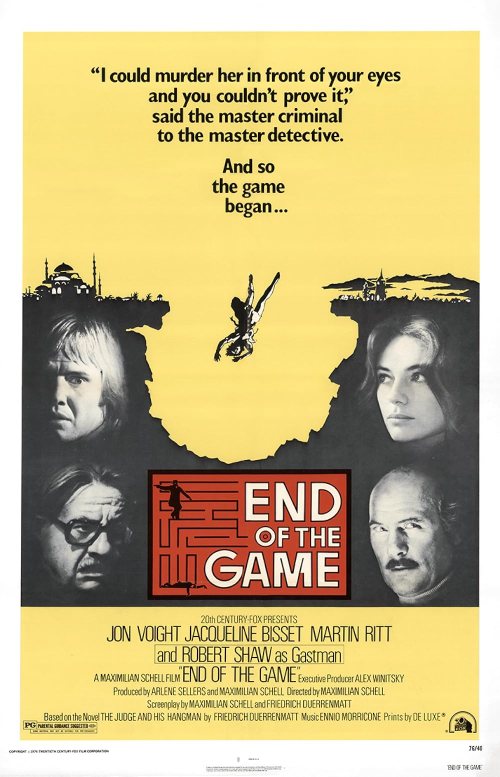
Richard Gastman (Robert Shaw) makes a bet with his young friend Hans (Martin Ritt) that he can commit a crime in front of him, but Hans will be unable to prove who did it. Later Hans’ girlfriend (Rita Calderoni) plunges to her death from off of a bridge. Hans is convinced Gastman did it, but just like he predicted he cannot prove it. 30 years pass and Hans is now a police commissioner with only a few months to live due to suffering from stomach cancer. His Lieutenant Schmied (Donald Sutherland) is found shot to death inside his police vehicle. He’d been assigned by Hans to keep tabs on Gastman as Hans was still intent on making him pay for what he did to his girlfriend, but he again can’t prove that Gastman killed Schmied though he’s certain that he did. Walter (Jon Voight) gets assigned to the case, but Hans can’t be completely honest with him about the case, so instead he sets Walter up to witness firsthand the brutality of Gastman for himself.

The story is based on the 1950 novel ‘The Judge and the Hangman’ by Frederich Durrenmatt who also wrote the screenplay and has a very amusing cameo as a man who plays chess against himself and always loses. The novel was first adapted into a broadcast for German television in 1957 and then again in 1961 for British TV, and then it got adapted for a third time for Italian television and then a fourth as a TV-movie for French broadcast before finally making it’s way to the big screen with this version, which so far has been the last adaptation to date.

The film was directed by Academy Award winning actor Maximillian Schell who was unable to get along with either of his leading actors with Shaw accusing him of being a ‘clockwatcher’ and ‘pocket Hitler’ while Voight described him as being humorless and overly demanding. The film is well directed for the most part, but an unusual reliance on humor almost kills it. The story itself is certainly not meant to be funny, but Schell implements comedic moments particularly in the first half when they’re not needed and almost a distraction. This is particularly evident during Schmied’s funeral and earlier when Schmied’s body is found and another cop drives the corpse to the hospital with Donald Sutherland, in an unbilled bit, playing the dead man and his body twisting around in weird ways as the car goes down the curvy road, which is humorous, but unnecessary and doesn’t help propel the plot. Initially too the corpse is spotted by some pedestrians who stare at it through the car window and seem amused by it, which isn’t exactly a normal reaction people have when witnessing someone who has just died. Possibly this was meant to show the public’s distrust, or disdain for the police, but if that were the case it should’ve been explained and elaborated.

The casting is unusual as it features Ritt in the lead who’s better known as a director, but here ultimately shines and becomes the film’s only likable character though the way he behaves throughout still makes him seem sketchy like everyone else. Shaw, who complained that he never got paid the $50,000 that he was owed for doing this, is commanding as usual, but Voight who wears a shaggy bleached blonde look comes-off as creepy right away. Technically the viewer is expected to side with his character, at least upfront and consider him a ‘good guy’, but right away Voigt telegraphs it in a way that makes him seem ‘off’ and hence kind of ruins the stories eventual twists.

For those who like complex whodunits this might fit the bill. The plot certainly does constantly unravel in surprising ways and no one should be bored, but the characters are cold and unlikable. There’s no one to root for and therefore the viewer is not as keyed into the outcome as they would’ve had they been more emotionally invested. The editing is also quite choppy and there seems to be certain key elements that get left out, which most likely due to the fact that the original runtime was 106 minutes, but the DVD version, the only one publicly available at this time, runs a mere 92 minutes.

My Rating: 7 out of 10

Released: September 21, 1975

Runtime: 1 Hour 46 Minutes (Director’s Cut) 1 Hour 33 Minutes (DVD Version)

Rated R

Director: Maximillian Schell

Studio: 20th Century Fox

Available: DVD-R

Footprints on the Moon (1975)

footprints5

By Richard Winters

My Rating: 4 out of 10

4-Word Review: Tormented by a nightmare.

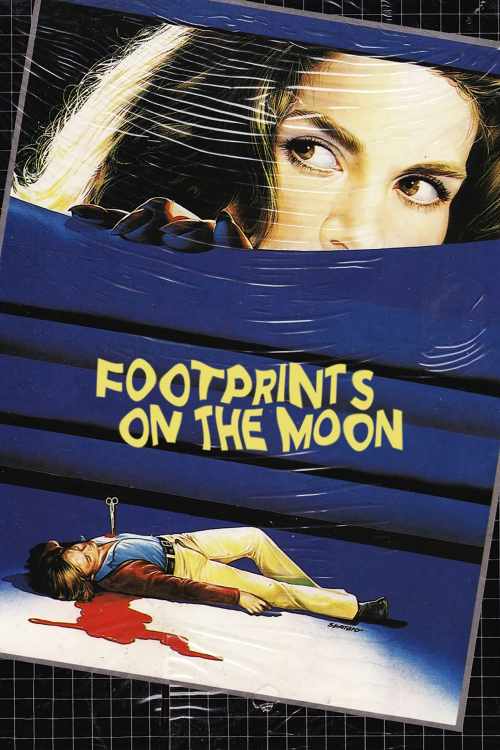
Alice (Florinda Bolkan) is tormented by a constant dream involving an old movie she saw when she was younger that dealt with a man being left on the moon to die. She awakens one morning to find that she’s slept for over 2-days and when she arrives at her job she learns that she’s been fired for not showing up and not calling-in. She gets back to her apartment and spots a postcard revealing a hotel, which she vaguely remembers being at. She decides to travel there, which is off the Turkish coast, and meets people who say they’ve seen her before, but while wearing a wig and going by a different name.

The film’s chief asset is the directing by Luigi Bazzone, who had a brief 10-year career where he did 5 films and then inexplicably retired when he was only 46 and never to do another film after this one, which is a shame as he had many more years ahead of him and could’ve helmed a slew of interesting movies in the process. This one definitely relies on a good visual touch. The opening bit done on the moon has certainly a tacky quality, but is also captivating. It doesn’t exactly look authentic, but captured in a way that gives it a dream-like feel and makes it gripping. The island setting that Alice goes to, shot in Phaselis, has such a unique topography that it gives the whole thing a very outer worldly appeal and helps enhance the bizarre story elements.

Bolkan’s presence though does not help. She wears a perpetual scowl, outside of one moment when she smiles to greet a child, that makes her unappealing and hard to sympathize with. She also lost too much weight, reportedly 11 pounds by her own admission, making her look scrawny and like she could tip over with the slightest breeze. She already had a thin frame, so for her to lose anymore, makes her anorexic and not sexy particularly when she goes nude during a shower scene.

Her character is ghost-like and transparent. Some may say this is due to the twist, but for the viewer to get wrapped-up into the character’s quandary they need to see her as a multi-dimensional person. Instead we get someone with no apparent connections to the world around her. Having her go through the plot with some other friend beside her, which she could’ve fed-off of emotionally whenever she got upset, or confused would’ve helped tremendously. Trying to care about a person who’s not fleshed-out doesn’t work and I went through most of it feeling ambivalent about the protagonist’s fate.

Nicoletta Elmi, who plays a young girl that Alice meets while on the island, has far more appeal especially with her striking red hair and clear blue eye, and thus her scenes allow for some intrigue though her conversations with Alice seem to just be repeating themselves. Klaus Kinski is only on hand for a little while and never interacts with anyone making it seem like he’s in some other movie with no connection to this one. In fact his moments could’ve been cut, he only gets shown sporadically anyways, and the movie would not have been hurt by it.

The plot, which was based loosely on the novel ‘Las Huellas’ by Mario Fenelli, doesn’t have enough going on to hold the viewer’s attention. This is yet another example where had it been shortened it would’ve worked perfectly as an episode for the “Twilight Zone’, but here it labors along. It gives out a lot of tantalizing clues at the beginning, but the second act goes nowhere with not enough twists. The concept becomes highly strained with a character that doesn’t interact enough and the few conversations she has are bland and don’t allow the story to progress. The ‘surprise ending’ doesn’t make-up for the lulls and only leads to more questions than answers.

My Rating: 4 out of 10

Released: February 1, 1975

Runtime: 1 Hour 30 Minutes

Not Rated

Director: Luigi Bazzoni

Studio: Cineriz

Available: DVD-R, Amazon Video, Screambox

The Frisco Kid (1979)

friscokid

By Richard Winters

My Rating: 4 out of 10

4-Word Review: Rabbi travels across America.

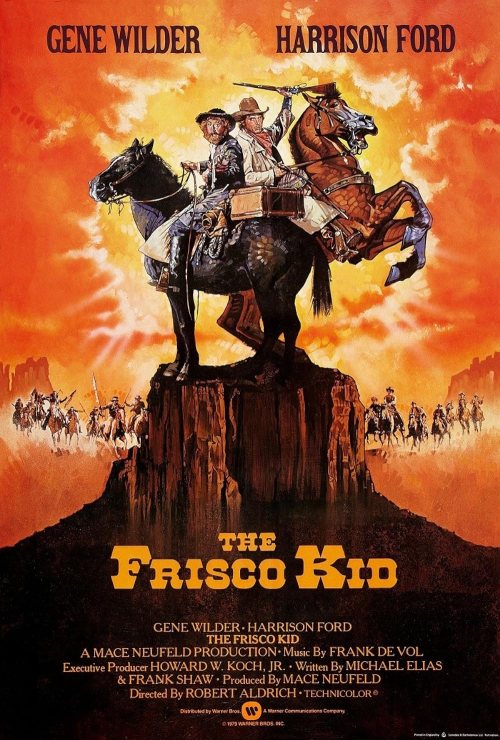
Avram (Gene Wilder) is a Polish rabbi traveling across the U.S. from Philadelphia to the west coast where he plans to head a congregation in San Francisco. He has all of his money taken from him by three unscrupulous men (George Di Cenzo, William Smith, Ramon Bieri) who initially befriend him only to eventually leave him stranded in the middle of nowhere. Avram is then offered some help by a local Amish community and even gets a job for awhile as part of a crew laying down train tracks. He’s eventually earns enough to buy himself a horse, so he can continue his travels. It is then that he meets up with Tommy (Harrison Ford), who unbeknownst to Avram is a robber. When Tommy steals money from one of the banks in a town that they pass through both he and Avram must go on-the-run in an effort to avoid getting caught.

The script was originally written in 1971 under the title ‘No Knife’ in reference to Avram who traveled with no weapon of any kind for protection. Originally John Wayne was considered for the role of Tommy, who was interested, but the studio could not meet his fee requirements so along with his declining health, he bowed-out. Dick Richards, who won praise for helming another western The Culpepper Cattle Companywas originally tabbed to direct this one, but during the pre-production phase he left the project, so it was given to Robert Aldrich, who, as Roger Ebert explained in his review, treated it like a routine assignment and didn’t put in a lot of heart into it.

The  shoddy effects are noticeable and really hurts the production. The interiors have a stage play quality and all of the outdoor scenes look like they were shot on a studio backlot. Certain long shots show steel silos in the background, which wouldn’t have existed during the turn-of-the-century time period that the story takes place while other shots are clearly just a matted photograph edited in. For a western to be fully effective it has to have some grit and atmosphere and this film unfortunately has neither. The first hour works more like darkly humored comical vignettes and while they succeed at being slightly amusing aren’t really all that captivating.

Wilder is excellent and probably the sole reason to see it, but I was more surprised by the presence of Ford who had just came-off starring in the landmark Star Wars, but here accepts second billing and isn’t even seen until 22-minutes in. I was more baffled by the motivations of his character and didn’t understand why he’d take-on the mission of helping Avram, a virtual stranger, through the perilous journey. This was a man who was quite self-sufficient and excellent with a gun and easily getting away with robbing people, so befriending a rabbi was just going to hold him back. A backstory was needed showing why he might seek-out a partner, even an awkward one like Avram. Possible  showing Tommy being a part of a larger gang who kick him out of the group and thus in a desperate need for companionship he befriends Avram, or maybe Avram gets Tommy out of some sort of jam and thus Tommy decides to help the rabbi on his travels in an effort to show his gratitude, but just having Tommy show up out of nowhere and become Avram’s instant buddy doesn’t really work. I would’ve liked to have seen a wider relationship arch too where Tommy would take much longer to warm-up to and understand Avram’s unique personality than he does.

Spoiler Alert!

The scene where Avram befriends an Indian Chief, played by Val Bisoglio, and teaches the Indian tribe how to do a Jewish dance is fun and the climactic duel between Wilder and Smith merits a few point as well. The scene though where Avram shoots a man gets botched. He had never used a gun before, so I would’ve expected him to miss his target especially since he was nervous and his hands shaking. The fact that he’s able to shoot the guy right through his heart the very first time he’s ever pulled a trigger is beating astronomical odds and not the least bit believable.

My Rating: 4 out of 10

Released: July 13, 1979

Runtime: 1 Hour 59 Minutes

Rated PG

Director: Robert Aldrich

Studio: Warner Brothers

Available: DVD, Blu-ray, Amazon Video, YouTube

Absolution (1978)

absolution

By Richard Winters

My Rating: 7 out of 10

4-Word Review: Pranking a strict priest.

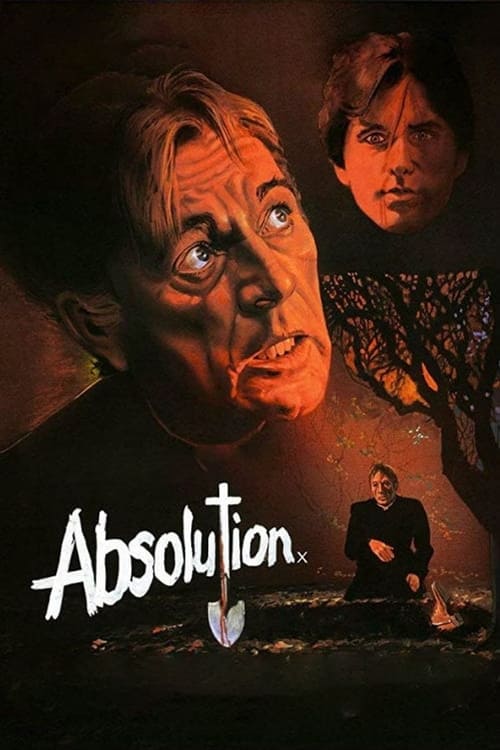
Father Goddard (Richard Burton) is the head of an English Boy’s School and uses his influence to control those who attend and is unflinching on his policies. Goddard constantly displays a cold and detached demeanor particularly with Arthur (Dai Bradley) a handicapped student that the Father doesn’t seem to care for. Benjie (Dominic Guard) on the other-hand is the teacher’s pet and routinely shown favorable treatment. Benjie though grows to resent the Father’s stern ways when he’s told he can no longer visit with Blakely (Billy Connolly) a motorcycle riding vagabond who has set-up an encampment just outside of the school grounds. Benjie decides to play a prank on the Father after hearing the lecture about the seal of confession, which a priest cannot break even if what he’s told is about a murder, so during confession Benjie tells Goddard that he’s murdered Blakely. Goddard initially doesn’t believe him, which sets off a myriad of twists that soon sends Goddard’s life, career and even his sanity spiraling out-of-control.

After the success of The Wicker ManAnthony Schaffer was commissioned by director Anthony Page to write another script that could be made into a movie and Schaffer decided to choose one that had initially been meant as a stageplay, but had never been produced. However, once Schaffer had completed his adaptation Page was unable to find a studio willing to fund it and he was ultimately forced to use his own money and Burton agreeing to slash his normal fee in order to get it made.

The lack of a budget is sorely evident at the start featuring a grainy print with faded color and what initially seems like misplaced banjo music that would be considered more appropriate for a film set in the American south instead of England. Having it shot on-location at Ellesmere Collage helps as many of the local pupils played the students here and the film gives-off a realistic atmosphere about what a boys school would be like with all of the kids looking age appropriate for their grade level and not like, as with other teen school movies, older actors in their 20’s trying to come-off as if they were still adolescents.

Billy Connelly, in his film debut, is terrific and it’s fun seeing Bradley, who was better known for his starring role in KesBurton though is the standout as his jet setting persona that he had at the time with Elizabeth Taylor gets completely erased and he fully sinks into his role of a steely-eyed, cantankerous man who rules with a rigid, iron-fist and whose simple presence wields terror in the boys as he walks-by and to some extent the viewer too. It’s a commanding performance that helps the movie stand-out.

Spoiler Alert!

The story though, while intriguing, doesn’t fully work. It becomes obvious that Goddard is being tricked by the boys, but you feel no empathy for his quandary. He has spent so much time up until then being a jerk that you end up siding with the boys, at least initially, which seriously hurts the tension as normally in a thriller/mystery such as this you’re supposed to side with the protagonist and want to emotionally see them get out of their predicament. Here though you like his mental breakdown and not as invested in finding out the resolution beyond it. The final explanation, dealing with the Arthur character supposedly disguising his voice to sound like Benje’s is too much of a stretch and ultimately hurts the credibility.

Shaffer stated in interviews that this was not meant to be an anti-Catholic movie, but I feel he said this in order not to alienate potential viewers as it’s clearly written by someone who grow-up in the church and had many problems with it. Father Goddard is more a caricature meant to represent Catholicism as a whole and how the religion with its very rigid rules ends up trapping those who follow it with a damned-if-you-do, damned-if-you don’t scenarios leaving its followers in a perpetual state of guilt and paranoia. This becomes quite evident at the end where the Father feels unable to break his seal of confession for fear of divine wrath, but also fears it for the murder he committed and his thoughts of suicide that would equally lead him to hell, per the teachings, making him more a victim of the religion than of the boys, which I feel was the whole point.

My Rating: 7 out of 10

Released: December 8, 1978

Runtime: 1 Hour 35 Minutes

Rated R

Director: Anthony Page

Studio: Bulldog Productions

Available: DVD, Blu-ray, Amazon Video

Believe in Me (1971)

believe

By Richard Winters

My Rating: 6 out of 10

4-Word Review: Couple addicted to drugs.

Remy (Michael Sarrazin) is a medical student at a New York hospital, who finds himself increasingly addicted to speed and other drugs available to him through his job. Pamela (Jacqueline Bisset) is the beautiful new girlfriend he meets through his friend and fellow intern Alan (Jon Cypher) who’s also Pamela’s brother. The two hit-it-off and soon move into together, but the romance doesn’t last when Pamela becomes aware of Remy’s addiction. He convinces her that he can handle it and even gets her to try some of it despite her reluctance. This then leads to her becoming hooked as well and their lives quickly spiral out-of-control as they both lose their jobs, their money, and ultimately their dignity.

The early 70’s was  a peak era for drug culture movies with most getting a bad rap from the critics, which included this one. Certainly it does start out cringey with a sappy love song sung by Low Rawls that not only gets played over the opening credits, but also about 30-minutes in, which practically kills the whole thing with its heavy-handed melody and lyrics. The title is not so great either as it seems to imply a totally different type of movie like have someone sticking with another person through thick-and-thin, which really doesn’t happen here and in fact its the complete opposite.  ‘Speed is of the Essence’, which was the working title as well as the title of the New York Magazine article by Gail Sheehy of which the film was based was far more apt and should’ve been kept.

However, what I did like are that the characters aren’t teen agers, or a part of the counter-culture movement, which is where all the other drug movies from that period had. The blame in those films was always the same too: peer pressure and bad influences, but here that all gets reversed. Remy and Pamela are well educated and with Remy’s background is well aware of the dangers of drugs and essentially ‘knows better’ and yet becomes a victim to them anyway. Because he’s at such a high standing initially and not just played-off as being some naive kid, makes his downfall and that of his equally smart girlfriend all the more stark and gripping.

The performances are good too. Sarrazin and Bisset met while filming The Sweet Ride, that started a 6 year relationship and this was the one project that they did together. Sarrazin has been blamed as being too transparent an actor who’s instantly forgettable and melts into the backdrop. While I’ve usually found his acting credible he does have a tendency to be passive and lacking an imposing presence, but here he’s genuinely cranky and snarly. Even has some moments of anger, which is why the movie mostly works because the character is believable. There’s good support by Alan Garfield as his dealer who gets the final brutal revenge on Remy when he can’t pay up as well a Cypher whose advice to his sister when she’s down-and-out and asking for money is shockingly harsh.

Spoiler Alert!

The film has a few strong moments particularly when it focuses on the couple’s teenage friend Matthew (Kurt Dodenhoff) who also becomes hooked and goes through a scary mental and physical decline, but the ending lacks punch. It has Remy sitting outside his apartment saying he’s ‘lost his key’ (not sure if this was meant as a code word for them being evicted, but probably should’ve been). Pamela then leaves him there while she walks to a clinic in order to get sober, which for me was too wide-open. For one thing there’s no guarantee that Pamela would’ve been able to cleanly kick-the-habit as many people enter into drug recovery suffer many relapses. Leaving Remy alone doesn’t offer any finality. Either he dies from his addiction, or finds a way out, but we needed an answer one way, or another like seeing his lifeless body lying in the gutter, which would’ve given the film the brutal final image that it needed. The movie does give an honest assessment of the situation most of the way, so why cop-out at the end and become vague? The viewer had invested enough time with this that they should’ve been given a more complete and concrete character arch.

My Rating: 6 out of 10

Released: December 8, 1971

Runtime: 1 Hour 26 Minutes

Rated R

Director: Stuart Hagmann

Studio: MGM

DVD-R (dvdlady.com)

The Double McGuffin (1979)

double

By Richard Winters

My Rating: 4 out of 10

4-Word Review: Briefcase full of money.

Homer (Greg Hodges) is walking outside one day behind the boarding school that he attends where he comes upon a briefcase that’s full of a lot of money. He then runs to tell his friends, Specks (Dion Pride), Billy Ray (Jeff Nicholson), and Foster (Vincent Spano) about it, but when they return to the spot where Homer hide it it’s gone. They then see a man named Sharif Firat (Ernest Borgnine) walking about town carrying it. They track him to a nearby hotel where he’s staying and bug his room to find out that he has hired three gunmen (Lyle Alzado, Ed ‘Too Tall’ Jones, Rod Browning) to carry-out an assassination. The boys though don’t tell the local sheriff (George Kennedy) because they’ve played some practical jokes on him in the past and fear now he won’t believe them, so they go about investigating the case on their own with the help of Jody (Lisa Whelchel) who is a student journalist and good at taking pictures with a camera as well as Arthur (Michael Gerard) who’s an uptight nerdy kid, but a whiz with computers.

After the success of Benji, a film that Joe Camp not only directed, but also wrote, produced and distributed, made over $30 million from a paltry initial budget of $450,000 he became motivated to further direct more movies for a family audience. This one though is definitely intended for adolescences and may even shock some viewers with a few of the scenes as it’s not exactly as family-friendly as Camp’s other films. One of the biggest jaw-droppers is that it features nudity, or in this case a glimpse of Elke Sommar’s breasts that occurs right at the beginning. There’s also some shots of the boys bare behinds when they go skinny dipping as well as scenes inside their dorm rooms where they are seen reading Playboy and drinking, or at least harboring, Coors Beer despite being underaged. They also swear though nothing worse than ‘hell’, which are all things that kids at that age would most likely do, or partake in, but some parents may still not be pleased and fear that it might be a ‘bad influence’ for the real young kids to see.

The four leads, which consists of country singer Charley Pride’s son, are an odd looking bunch mainly because three of them look like they’re senior high school age hanging around with this small kid named Homer who could easily pass-off as being a fourth grader. Seemed hard to believe that he’d be housed in the same room as these older guys and worse yet be playing on the same football team as he’d most likely be injured badly and better suited for the Pee-Wee division. His acting though is more dynamic than the rest, including Spano who may have become the most famous of the bunch, but here doesn’t really have much to do, so that may have been the reason he got cast despite his puny size. I also really enjoyed Whelchel, who later became famous for playing the snotty Blair on the TV-show ‘The Facts of Life’. who is engaging and looking quite young, like about 13 though at the time of filming she was actually hitting 15. Gerard as the pensive and androgynist Arthur has a few fun moments too.

The twists are entertaining for awhile though having the briefcase constantly appearing and disappearing gets tiring. Initially it’s kind of creepy and intriguing, but the segment where the boys open it to find a severed hand and they run a few feet away in fright and then go back to have it no longer there makes it seem like it’s almost magical and not realistic. Homer’s ability to unlock anything simply by using a pocket knife gadget gets played-up too much. It’s okay when he uses it to open the briefcase though you’d think something used to hold a lot of money would have a much more sophisticated lock in place, but when he’s able to continue to pick any lock in virtually any door he wants is a bit much to the point you start to wonder why does anyone even bother putting locks on doors if any kid with a small knife can easily pick-it.

Spoiler Alert!

The film’s biggest downfall though is that not enough happens. The lack of action, especially for a film aimed at the younger set, is appalling. There’s only one chase, done on foot when Borgnine tries to catch-up with two of the boys, who you’d think could easily outrun him since he was 60 at the time and out-of-shape and also in broad daylight with plenty of pedestrians on the street who could’ve easily called-out for help, which makes this moment not very tense at all. The climactic sequence really fizzles as the shooters are apprehended inside their hotel room before the assassination even is attempted, which should’ve gotten played-out more. The concept had plenty of potential, but with so little that actually happens it’s quickly forgettable and hardly worth the effort to seek-out.

My Rating: 4 out of 10

Released: June 8, 1979

Runtime: 1 Hour 40 Minutes

Rated PG

Director: Joe Camp

Studio: Mulberry Square Productions

Available: DVD