Category Archives: 70’s Movies

Pulp (1972)

pulp

By Richard Winters

My Rating: 6 out of 10

4-Word Review: Running for his life.

Michael Caine and director Mike Hodges teamed up again one year after doing the gritty classic Get Carter with this breezy oddity dealing with a pulp fiction writer Mickey King (Caine) who is hired to pen the autobiography of ex-Hollywood star Preston Gilbert (Mickey Rooney) who is now living in exile in Malta. The problem is that Gilbert has ties to the underworld and Mickey soon finds himself running for his life while meeting up with a barrage of oddball characters along the way.

The movie has a wonderfully quirky sense of humor with a few memorable laugh-out-loud sequences especially at the beginning. I got a real kick out of the man with a weak bladder who says a prayer to God to open up a locked bathroom door when he can’t get into it. The scene in the bus where we hear the different thoughts going on inside each of the passenger’s heads is great as well. The opening sequence featuring a row of lady typists writing up King’s latest manuscript is cute, but the one thing that holds it all together is Caine’s wry voice-over narration that remains consistently amusing.

Rooney though manages to steal the whole thing with his hilarious send-up of an aging actor. In fact this may be one of the funniest roles of his entire career. Even the scene showing him shadow boxing in his underwear is engaging although thankfully the camera doesn’t stay on it for too long. I was a bit disappointed that the character didn’t last through the film’s duration, but his death scene is so funny that it almost makes up for it.

It is nice to see Lizabeth Scott in her last film to date and first since 1957 when she was essentially blacklisted from Hollywood purportedly for her lesbian leanings. Although only 50 at the time her aging face looked like she was almost 70 and her deep, raspy voice sounded similar to the demon’s in The Exorcist. I thought she could’ve been given more to do and played a character that was more integral to the story as her screen time is much too brief.

The on-location shooting done on the island nation of Malta is another asset. The sunny weather has a nice exotic feel and the old architecture of the buildings helps give the film a visual distinction. The melodic piano soundtrack is pleasing and I wished it had been heard a little bit more.

The story is full of a lot of unexpected twists and turns that manages to be engaging for a while, but I felt it runs out of steam by the end. During the final 15 minutes I found myself a bit bored and no longer caught up in it. While I do like the scene where the gunmen gets run over by a pick-up and shown from the point-of-view of the driver I still felt that the ending lacked the finesse and quirkiness of the beginning. The offbeat ideas that writer/director Hodges showers into the film become dried up with a finish that lacks any payoff and unfortunately sullies what is otherwise an offbeat gem waiting to be discovered.

My Rating: 6 out of 10

Released: August 4, 1972

Runtime: 1Hour 35Minutes

Rated PG

Director: Mike Hodges

Studio: United Artists

Available: DVD, Amazon Instant Video
Wolf Lake (1978)

wolf lake 1

By Richard Winters

My Rating: 2 out of 10

4-Word Review: He doesn’t like deserters.

Charlie (Rod Steiger) is a hard-bitten conservative man who lost his 23-year-old son in the Vietnam War. He likes to vacation with a couple of his middle-aged buddies Wilbur (Jerry Hardin) and George (Richard Herd) at a remote Canadian hunting lodge. However, this time when they arrive they find that the regular lodge owner is not there and instead it is being run by a young man named David (David Huffman) and his pretty girlfriend Linda (Robin Mattson). Charlie and David almost immediately are at odds as they both share a wide variance in age and political leanings. What is worse is the fact that David is a war deserter and once Charlie finds out about this he flies into a rage of psychotic proportions, which culminates in a violent night of terror for both David and his girlfriend.

The film was written and directed by the normally reliable Burt Kennedy who is better known for doing westerns. After watching this I think he should have stayed in that genre as this film is too formulaic and one-dimensional. There seems to be too much emphasis to conform to the horror movie/slasher style formula of that era with a plot set-up that is too brief and character development that is almost non-existent. The story shows its cards too quickly and then proceeds to just plod on and on until it climaxes with a predictable and boring finish.

Charlie and David’s arguments and confrontations fail to elicit any type of tension. Their shouting matches are rhetorical and redundant and their points-of-view are handled at a superficial level that allows for no new insight, or intellectual debate. Charlie is so limited in his stubbornness that he becomes annoying instead of threatening, or scary.

The final 25 minutes when the two sides wage a proverbial war between their two cabins is the only time that there is any action. However, by then I was completely bored with the proceedings and so emotionally detached from the third rate material that it was a strain just getting through it. The film’s ultimate message is heavy-handed and done so much better in other films on the same subject that it renders this excursion as pointless.

Steiger is wasted. The character he plays is poorly defined and doesn’t allow him to take full advantage of his acting abilities. He gets stuck with another one of his many wigs this one looking like the same type of gray haired rug that actor Ray Milland used to wear in his later years. The producers should have just allowed him to appear bald as it would have fit this type of part better and even made him look creepier and more menacing.

Huffman is the best thing about this movie and it is a shame that his life and career were cut short when he was murdered in 1985 while trying to chase down a suspected purse snatcher. His performance here is nicely understated, which helps carry the picture as he is the only character that is multi-faceted.

Although the story takes place in Canada and the landscape certainly looks Canadian I was surprised to learn that it was actually filmed near the city of Creel in Chihuahua, Mexico, which due to its high elevation has a climate that is more similar to the North’s.

SPOILER ALERT

There are actually two different versions of this film. There is this one and another one entitled The Honor Guard. In that one there are no flashback scenes like there are here and in the end Charlie ends up killing David and his girlfriend while in this version Linda shoots Charlie before falling over dead herself. I actually liked the flashbacks that are used as it gives the film what little suspense it has and also shows a bit of cinematic flair. However, the scene where Linda miraculously comes up with a gun and killing Charlie before keeling over looked cheesy and clichéd and I might actually have voted for the alternate ending.

My Rating: 2 out of 10

Released: May 3, 1978

Runtime: 1Hour 25Minutes

Rated R

Director: Burt Kennedy

Studio: Melvin Simon Productions

Available: VHS

W. C. Fields and Me (1976)

W. C. Fields and me

By Richard Winters

My Rating: 6 out of 10

4-Word Review: Fields had a girlfriend.

Based on the memoirs from Carlotta Monti who was W.C. Field’s (Rod Steiger) companion for 14 years this film looks at their relationship as well as W.C.’s alcoholism and difficult personality.

This biography is highly romanticized and very light on the details. Apparently only one scene from the book is actually used in the movie. If one watches this in hopes of learning more about Field’s the man they will be disappointed. The tone seems similar to Oliver Stone’s The Doors where the intent is more on perpetuating the myth of its subject instead of tearing it down and showing the complete person. Just about everyone is familiar with Field’s drinking and cantankerous behavior, so having the film dwell exclusively in this area for the entire time is not interesting, or captivating.

The story would have been better served if it had been a complete bio beginning with Fields life as a child and then going all the way through to his death. Apparently he was born to an alcoholic father who beat him forcing Fields to run away from home at the age of 11 and live in a hole in the ground where he became dependent on stolen food and clothing for survival. He was in many fights and in and out of jail for most of his youth. Showing this could have been quite revealing, but instead the film skips past all of it and starts instead with Fields already in vaudeville and recreating a lot of corny comedy routines before having him drive off to Hollywood where his ascent to stardom seems much too easy and superficial.

Things improve during the second act when he begins his love-hate relationship with Carlotta (Valerie Perrine). Part of the reason this works is because Perrine is excellent. Her down to earth sensibilities really help balance the flamboyant ego’s around her and fit the character well. She is the one, not Steiger, who carries the movie and it was worthy of an Oscar nomination.

Steiger thought for sure that he would nab his second Oscar for his portrayal here, but instead didn’t even get nominated. His mimicking of Fields voice comes off as too rehearsed and effected. At times it gets annoying and just makes one want to watch a movie with the real Fields instead. His dialogue is too cutesy using lines borrowed from many of W.C.’s famous jokes and punch-lines. As expected he does induce the character with his famous Steigerisms and manages to not make it a complete misfire that it otherwise is. The scene, near the end, where Fields meets his now grown son that he hadn’t seen since he was three is his best moment.

Jack Cassidy is great in support as actor John Barrymore. The scene where he dies and his friends prop his dead body up into a chair and have him holding a liquor glass is amusing. Dwarf actor Billy Barty is good as Ludwig one of Field’s long-time friends. Some of the scenes the two share together are actually quite touching.

The film does a commendable job of recreating the period atmosphere. The music has a nice soothing quality to it and on the charm level it scores a bullseye. Despite my reluctance I found myself entertained by it, but as a biography it is flimsy, fictional and irrelevant.

My Rating: 6 out of 10

Released: March 31, 1976

Runtime: 1Hour 51Minutes

Rated PG

Director: Arthur Hiller

Studio: Universal

Available: Amazon Instant Video

Love and Bullets (1979)

love and bullets

By Richard Winters

My Rating: 5 out of 10

4-Word Review: Chuck falls for Jill.

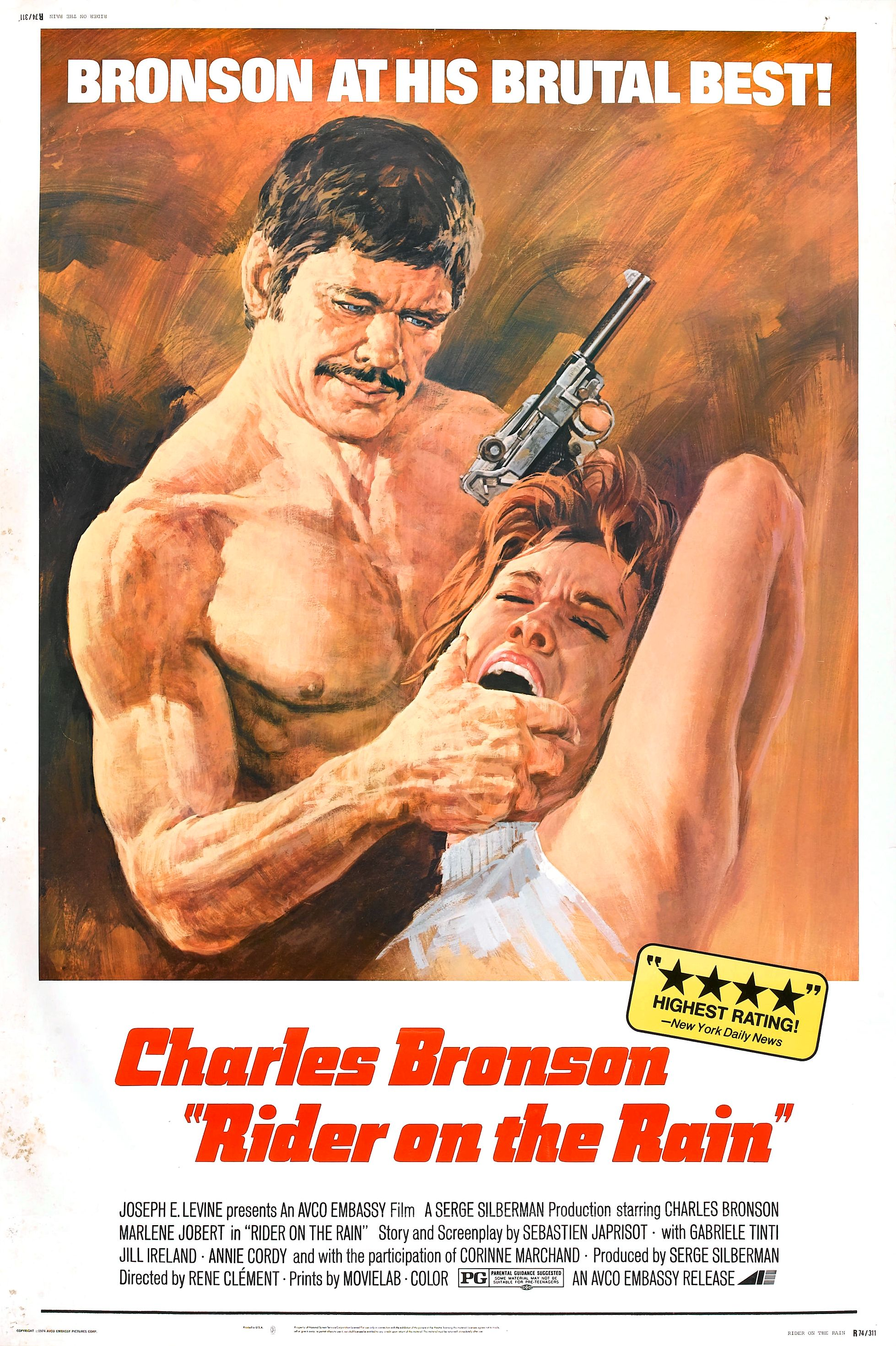
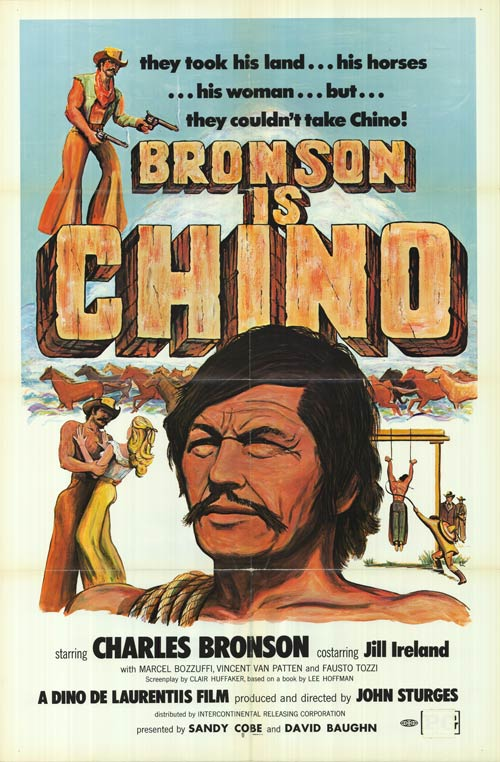
Jackie Pruit (Jill Ireland) the one-time girlfriend of mob boss Joe Bomposa (Rod Steiger) is being marked for death by him as she has the potential to turn states evidence. Undercover cop Charlie Congers (Charles Bronson) is hired to go to Switzerland and nab her before they do so that he can bring her back to the states and allow her to testify for the FBI, but along the way he ends up falling in love with her.

Ireland and Bronson where married in real-life, which is why this is just one of many movies that they did together during the 70’s. The strange thing is that they really don’t seem to have much chemistry. Bronson is much older and has more of a grounded, stoic personality while Ireland, at least here, comes off as ditzy and flighty making it seem more like a father and daughter relationship than two equal adults.  The ditzy behavior of Ireland’s character is not amusing or interesting and eventually becomes annoying making most men want to kill her instead of falling for her. Her character initially wears a wig and gaudy make-up, but Charlie insists that she take it off and when she does he states that she looks much better, but personally I thought she looked better with it on.

For whatever reason the Bronson character does not use a gun and is required to resort to unusual weapons for defense one of them being a standing lamp that he finds in a hotel room. He takes off the top and bottom of it and then uses the middle part as a pipe in which he blows nails through to kill off the bad guys. Initially this seemed like a neat idea, but I found it hard to believe that he would have such good aim and able to hit victims from several yards away. He also makes himself highly conspicuous walking around the busy streets of Zurich carrying a pipe.

Steiger gives another interesting performance. Although his character is the villain Steiger manages to give him depth and a humanistic quality. He speaks with a stutter and wears big glasses making him seem almost like a lovable galoot. The part where he stresses over ordering the hit on Jackie and at the end when he sits alone watching a classic romantic movie and insists that he not be interrupted for any reason are two of his best moments.

The supporting cast is full of familiar faces, but Bradford Dillman and Henry Silva are wasted and Michael V. Gazzo gets killed off too quickly. Paul Koslo has the perfect face for a cold-blooded hit man and it is neat seeing Strother Martin dive into the water because in his younger years before he got into acting he was a gifted diver and almost even made it onto the Olympic team. His death scene is good because it is done from his perspective as he is pushed under water giving the viewer a definite drowning feeling.

The action and story are standard and the scenic wintry landscape of Switzerland can help it only so much. The explosive finale gives it a few points, but the drama is weak and the action is only fair. Nothing real impressive and made for die-hard action fans only.

My Rating: 5 out of 10

Released: September 14, 1979

Runtime: 1Hour 43Minutes

Rated PG

Director: Stuart Rosenberg

Studio: AFD

Available: VHS, DVD (Region 2), Amazon Instant Video

Hennessy (1975)

hennessy

By Richard Winters

My Rating: 6 out of 10

4-Word Review: Blow up the Queen.

This review will be the first in a month long series analyzing movies from the 70’s that starred Rod Steiger. Steiger was an interesting performer with a long and varied career who always brought a unique intensity to all of his roles. He performed in a wide variety of movies from Hollywood pictures to foreign films and from big productions to the low budget as well as going from the leading man to character actor. Every Friday during the month of January I will select films of his that will hopefully be able to spotlight a little bit of all of these.

Today’s film deals with the story of Niall Hennessy (Steiger) an Irishman with ties to the IRA. When his wife and daughter are killed during a riot in Belfast he plots revenge with a plan to blow up the House of Parliament with the Queen Elizabeth inside.

The movie has a great concept, but the execution is a bit lacking. For one thing the police immediately pinpoint Hennessy as the man they are looking for as well as figuring out his plan. How they were so easily able to do this not only seemed a little farfetched, but also sapped a lot of the intrigue and tension out of the story. Having the police come to this conclusion more slowly would have plotted the suspense out longer and been more interesting.

This also opened the door to a few loopholes the biggest one being that they know Hennessy wants to blow up the Parliament so one would expect that the police would have their men staking out the place and on alert to spot Hennessy if he came near the premises, but instead Hennessy is able to go on a guided tour and able to canvas the building unheeded. Another scene later on has Hennessy trapped in an upstairs apartment by the police who have surrounded the building and yet he is somehow able to escape even though it is never shown how.

The scene showing his family getting killed during a bomb attack is not effective. We see the mother and daughter leave a nearby building and then the film cuts away from them and goes back to the fighting in the street only to go back to the two a few minutes later lying in the street motionless. However, there is neither blood on them nor any type of make-up effects to show injury making it look more like two people lying down with their eyes closed. Seeing them actually hit by the bomb and screaming would have been more jarring for the viewer and allowed them to get more emotionally attached to Hennessy’s plight. Also, when Steiger is shown standing over them I was expecting him to let out another one of his patented primal screams much like he famously did in The Pawnbroker, but here he doesn’t and the sequence is quite brief making me wonder why would they hire an actor known for his onscreen intensity and emotionalism if they aren’t going to allow him to do what he does best especially when the scene calls for it.

Steiger for the most part does well with the part although he is surprisingly restrained during most of it. It is a bit of unusual casting given that he wasn’t Irish or a native of the region however, the accent he uses is alright and I kind of got a kick out of the way he runs especially at the end. His biggest obstacle though was his wig. Rod became bald as he aged and instead of just appearing that way in his roles, which he finally did during his later years, he instead wore a variety of wigs for his parts. Some of them were okay and some weren’t and the one used here definitely wasn’t.

Richard Johnson is quite good playing the relentless Inspector Hollis and I liked seeing him with a moustache. The talented Lee Remick appears as Kate Brooke a lady friend to Hennessy who allows him to hide out at her home and although she has a few good lines she is ultimately wasted. Legendary Trevor Howard is wasted as well and only seen briefly as a police commander.

The best part about the movie and the one thing that gives it distinction is the ending when Hennessy goes into the parliament building with a bomb strapped to his body. Actual footage of the Queen is shown and it looks so authentic that many people thought she had been involved in the production, but she really wasn’t. Their ability to crop this footage in with the action is well done and almost seamless and certainly helps to heighten the tension. Seeing a young Prince Charles looking bored with the proceedings and the elaborately decorated interior of the building as well as its many large and majestic hallways and rooms is fun and interesting.

My Rating: 6 out of 10

Released: July 31, 1975

Runtime: 1Hour 43Minutes

Rated PG

Director: Don Sharp

Studio: American International Pictures

Available: Amazon Instant Video

Happy New Year (1973)

happy new year

By Richard Winters

My Rating: 8 out of 10

4-Word Review: A robbery with romance.

Stylish, moody, charming, serene, glossy, and evocative are just a few of the words that come to mind when you view this film and that’s just after the first five minutes. This is truly a French picture. It has all the ingredients that lovers of that cinema enjoy. Unlike American films, French films take their time in telling their story and everything is leisurely paced. The viewer is actually allowed to soak in the visual experience without being told what to think. Director Claude Lelouch is a master at work. He wisely realizes that film viewing is a very personal experience. What the viewer will take from that experience is unique only to them. Thus you have a picture that stays rather wide open in regards to structure. The camera takes many wide shots, thus allowing the individual viewer to focus on whatever it is that intrigues them personally. The story, while still being focused, stays elusive and subtle throughout.

To say the plot is about a planned jewelry store heist is misleading since this only takes up a part of the movie. There is also a running mix of character study, romance, comedy, satire, and even drama. Some will enjoy the amusing banter and love-hate relationship of the two male leads. Others will like the blossoming romance between one of the crooks and a beautiful antique shop owner. Still others will like the wide array of conversational topics some of which include: unique observations on marriage, hairstyles, churchgoers, psychology, men’s definition of women, and women’s definition of men. There’s even a playful critique of an earlier Lelouch film A Man and a Woman.

Overall it’s perfectly made for the viewer with distinct tastes even though when you get right down to it, it really is just a piece of entertainment fluff made more intriguing because of its sophisticated approach. Like with its Wizard of Oz-like format where the beginning and end are in black and white while the middle is in color. Why do it this way? No reason, except, why not. Same with the long slow shots of actor Lino Ventura’s very lined and expressionless face, which manages to hold an unexplainable captivation.

The rather abrupt and elusive ending seems to be the film’s only real weak point and yet when taken into context with everything else, this too has its allure. An American version of this movie was made in 1987 under the same title and starring Peter Falk, but that version is far inferior to this one and not worth seeking out.

My Rating: 8 out of 10

Released: April 13, 1973

Runtime: 1Hour 30Minutes

Rated PG

Director: Claude Lelouch

Studio: Les Films 13

Available: DVD (Region 2)

Between the Lines (1977)

between the lines

By Richard Winters

My Rating: 6 out of 10

4-Word Review: Newspaper get corporate takeover.

This is a look at an underground/counter-culture newspaper staff and the conflicts and concerns that they have at being taken over by a no-nonsense corporate owner (Lane Smith).

The film almost immediately takes you back to the bygone era of the late 70’s. The attitudes and conversations are realistic for that period and anyone who lived through it will most assuredly feel nostalgic .John Heard, Jeff Goldblum, and Bruno Kirby are engaging in their respective parts as is most of the cast. Stephen Collins is good also, but in an unusual role for him as he usually plays nice sensitive types, but here is a more driven, intense, and confrontational. This also works as a good unofficial statement to the death of the counter-culture movement and the eventual rise of materialism.

The story starts out well as it looks at the inside workings of an underground newspaper, but then spends too much of the middle part focusing on the relationships of some of the characters. Only at the end when the new owner takes over does it get back to the newspaper angle. Unfortunately it concludes just as things are getting interesting and we never get to see how the characters survive and adjust to the takeover. The film would have been much stronger and original had it stuck to scenarios involving the newspaper business and scrapped the relationship stuff, which tended to be derivative. Jon Korkes and Michael J. Pollard’s characters are seen too little and needed more screen time.

Also, when the film deals with the relationships there seems to be too much of a feminist bias as the men are always shown to be the ones at fault due to their ‘insensitive and selfish natures’ while the women come off the ones who are ‘reasonable and unfairly neglected’. This could be a product of the fact that it was directed by a woman as well as the era where men were somehow supposed to feel guilty simply because they were men.

This is fun as a time capsule as well as a great chance to see young stars in the making. However, the story does not take advantage enough of its original concept and ends up dealing with a lot of the same old scenarios and story lines that we’ve all seen before. Director Joan Micklin Silver and John Heard teamed up again two years later for Chilly Scenes of Winter, which I felt was better.

My Rating: 6 out of 10

Released:  April 27, 1977

Runtime: 1Hour 41Minutes

Rated R

Director: Joan Micklin Silver

Studio: Midwest Films

Available: DVD (MGM Vault)

Dealing: or the Berkeley-to-Boston Forty-Brick Lost-Bag Blues (1972)

dealing

By Richard Winters

My Rating: 5 out of 10

4-Word Review: Drugs are a trip.

This review was originally slated to post in February, but due to the death on Christmas Eve of Charles Durning I decided to post it now. Durning was one of the all-time great character actors who always brought an amazing amount of energy to every role he played and could do a wide variety of character types well. Although he has very few lines of dialogue in this movie he still manages to become the most interesting part of the proceedings and helps enliven an otherwise slow moving film.

The plot, based on a novel by Michael Crichton, pertains to Peter (Robert F. Lyons) who is a recent Harvard graduate hired by John (John Lithgow) to transport a suitcase full of marijuana from Boston to Berkeley, California. Peter is new at this and things do not go as planned, but he meets beautiful Susan (Barbara Hershey) along the way and the two fall in love. John next hires Susan to transport another suitcase of narcotics, but when she loses the luggage at the airport and then tries to go back and get it she is arrested by corrupt cop Murphy (Durning) who resells some of the recovered stash back out onto the street. In order to get Susan out of jail Peter plays an elaborate game of cat-and-mouse with the cop, which culminates in a violent showdown.

The story is done in a laid-back style similar to the approach taken by many European films. The emphasis is on mood and subtle nuance yet when the Europeans do it this style seems refreshing, but here it is more off-putting. I really had a hard time getting into it as the first hour is slow with too many scenes going on longer than it should. The set-up is too quick and there is not enough background, or history shown to the main character.

The second hour improves. Durning gives the proceedings some pizazz and Peter’s scheming is fun. The shootout done in the snow has flair and style.

The music by Michael Small is impressive. It is one of the most original scores I have heard and really fits the mood of the script. The best is over the opening credits.

Hershey is as always gorgeous and fans may like that she is shown topless. The part of a free-spirited hippy chick seems to be her forte and she excels. However, having her fall for a guy that is rather dull and ordinary didn’t make sense. Sure they make love right away, but I thought that was more just because it was a part of her lifestyle and she does after all go around in a dress without wearing any underwear. She just seemed to be diving into the free love atmosphere of the era. Obviously having Peter fall for her made sense because she is hot, but why would she go head-over-heels for this schmuck when there are so many other guys that would be more than willing to do it with her. The romantic angle was forced and hurt the credibility of the story.

Lithgow is okay in his film debut, but I had problems with the character. One minute he is cool, conniving, brash, and arrogant and then in the next instant he becomes scared, confused, and meek, which was too much of a quick transition.

The under-rated Lyons is excellent and makes for a terrific lead especially with this type of part. Despite being in his 30’s he looks and acts very much like a college kid from that period. His performance is nicely understated and believable throughout.

The on-location shooting in Boston is vivid and people from the area may like to view this just to see how much it has changed. The DVD transfer from Warner Archive is excellent with a nice clarity and vivid colors. The movie itself is slick, but it also has a detachment to it that doesn’t allow the viewer to get as connected with the characters, or the situations like they should and thus making it an interesting period artifact, but nothing more.

Also, Demond Wilson can be seen briefly as one of the drug dealers. He did this just before his signature role of Lamont in the hit TV-series ‘Sandford and Son’. Ellen Barber is real cute as Peter’s girlfriend and so is Joy Bang who later became a registered nurse. Normally I don’t like women with buck teeth, but with her it actually looks sexy.

My Rating: 5 out of 10

Released: February 25, 1972

Runtime: 1Hour 28Minutes

Rated R

Director: Paul Williams

Studio: Warner Brothers

Available: DVD (Warner Archive)

Black Christmas (1974)

black christmas 1

By Richard Winters

My Rating: 8 out of 10

4-Word Review: He’s in the attic.

It’s Christmas time at the sorority house, but as the girls celebrate the season they continue to get harassing phone calls from a strange man who speaks in different and frightening voices. Unbeknownst to them the man has snuck into the attic of their house and the calls are coming in from another room. As the night progresses the girls begin to disappear forcing the lone survivor to fight off the killer by herself.

I have not seen the remake of this film and due to negative response that I have heard I don’t think I want to either. This review pertains to the original only. If you have seen the remake and disliked it you should still give this film a try.  Despite its low budget it is quite effective and it slowly builds up the tension in a nice compact style with a great twist ending.

Of course one of the things that make this movie so good is the humor. I loved Marian Waldman as the alcoholic house mother Mrs. McHenry who stashes bottles of whiskey in all sorts of goofy places. The vulgar Santa who swears even as the kids are sitting on his lap is a hoot and a nice precursor to Bad Santa, but my favorite is the poster of a sweet old lady giving the finger.

One of the best moments on the terror end is the part where the killer’s eyeball can be seen looking through a small crack in the doorway, which is memorable. The scene where the camera pans from each girl’s nervous and frightened face as they listen to the weird voices emanating from the phone receiver is very well done although it would have been even stronger had the Christmas music not have been playing in the background.

The performances are top rate and I liked the fact that the girls all have distinct personalities from one another. Margot Kidder as the vulgar and obnoxious sorority sister Barb is a scene stealer and I’d say this is the best performance of her career. I loved when she calls one of the more conservative members of the group a ‘professional virgin’, or has the audacity to call her own mother a ‘gold-plated whore’. The part where she gets a young kid drunk and even swears in front of him is also funny as is her conversation about a species of turtle that can have sex for three straight days without stopping. Yet through all of her outrageousness director Bob Clark still manages to create a three-dimensional character by showing her as also being lonely, moody, and suffering from asthma, which is good.

Olivia Hussey as Jess is terrific. She is poised, confident, intelligent, and sweet and the type of character the viewer can immediately connect with and care about. Her face has a wonderful fragility about it as well a natural beauty. The look of terror coming from her eyes seems genuine and the horror is made more effective because she responds to it in a believable and relatable way.

Keir Dullea is good as Jess’s high strung boyfriend Peter. I had to chuckle a bit seeing him here as it brought back memories of what playwright Noel Coward once said about him “Keir Dullea gone tomorrow”, which seemed to have some credence since he was starring in the masterpiece 2001: A Space Odyssey just a few years earlier and now delegated to a supporting role in a low budget horror film. I always felt that his reserved and emotionless delivery can work when given the right role and for the most part it clicks here despite the fact that he was pushing 40 at the time and not quite looking college age.

I read one review where the critic complained that he did not feel it was believable for a killer to be hiding in an attic and no one else in the house aware of it, but the house was a big old building and for me it seemed possible especially since it was only for a short period of time. Overall I felt this was a very plausible premise that is handled in a realistic fashion without all the glaring loopholes, which is one reason I continue to enjoy it no matter how many times I’ve seen it.

However, there are a few quibbles. One is the policeman who gets his throat slashed while sitting in an unmarked police car just outside of the sorority home. I would think a seasoned office would be able to spot someone sinking up on him while he is inside a car especially since it was otherwise not a busy street and since it was wintertime I think it would be highly doubtful that he would be sitting there with the driver’s side window rolled down. I also had to roll my eyes at the scene where Jess is trying to get out of the house as she is being chased by the killer and yet for some inexplicable reason the front door conveniently jams even though no had a problem with it before.

Bob Clark shows what a talented director he is and it is too bad his career and life was cut short in a car accident in 2007. It is one thing to have a big budget and access to all the state-of-the-art special effects, but it is another to make a memorable movie on a shoestring. Despite its low budget it doesn’t seem hampered by many of the limitations that other similar films suffer.

Some may prefer lots of gore, which this one has very little of, and a bigger-than-life monster or bad guy, but the reason this is a classic is because they go with the philosophy that less is more. Any self-respecting horror fan should see this film and most likely appreciate it.

My Rating: 8 out of 10

Released: October 11, 1974

Runtime: 1Hour 38Minutes

Rated R

Director: Bob Clark

Studio: Warner Brothers

Available: VHS, DVD (Special Edition), Blu-ray

Up in the Cellar (1970)

up in the cellar 3

By Richard Winters

My Rating: 5 out of 10

4-Word Review: Senior citizens watch porno.

This is a variation of the film Three in the Attic and for a time was called Three in the Cellar to try and capitalize off of the success of that one. Ironically both films starred Judy Pace. In this one Colin Slade (Wes Stern) is a nerdy college student who loses his scholarship to a computer glitch. When he can’t get college president Maurice Chamber (Larry Hagman) to help him, he decides to get revenge by seducing both his wife (Joan Collins) and daughter (Catlin Adams).

The production proudly proclaims to be filmed on location in New Mexico, which is obvious from the start and nothing to really boast about since it hurts the film as a whole. Shot in wintertime it’s dusty, desolate landscape leaves the viewer with a cold, lonely feeling, which configures poorly with a story that is supposed to be lighthearted and whimsical. The big, modern cement buildings used as the campus looks like they would be better suited for a corporation than a student body. The students themselves, or what little you see of them, look all suspiciously over the age of 24.

Director Theodore J. Flicker nicely camouflages the fact that this is a very low budget production. His script is compact and well-paced. He frames and cuts his shots so you don’t notice how lacking in personality or energy it really is. Yet he also shows little connection to the student uprisings that dominated the campuses of that era and seems to view it as a sort of silly amusement. He keeps the film at this tone the whole time and thus makes it as silly and forgettable as the characters and situations he tries to satirize

Hagman comes off best. He plays it with a fun mixture of traits from two of his best known characters. He has J.R. Ewing’s arrogance coupled with Major Nelson’s frantic anxiety.

The film also has two fun and unique scenes. One has Hagman climbing up an actual radio tower to save Stern who is threatening to jump off. The second one has a pornographic movie shown to a group of unsuspecting and shocked senior citizens

My Rating: 5 out of 10

Released: August 12, 1970

Runtime: 1Hour 34Minutes

Rated R

Director: Theodore J. Flicker

Studio: American International Pictures

Available: Amazon Instant Video