Category Archives: 70’s Movies

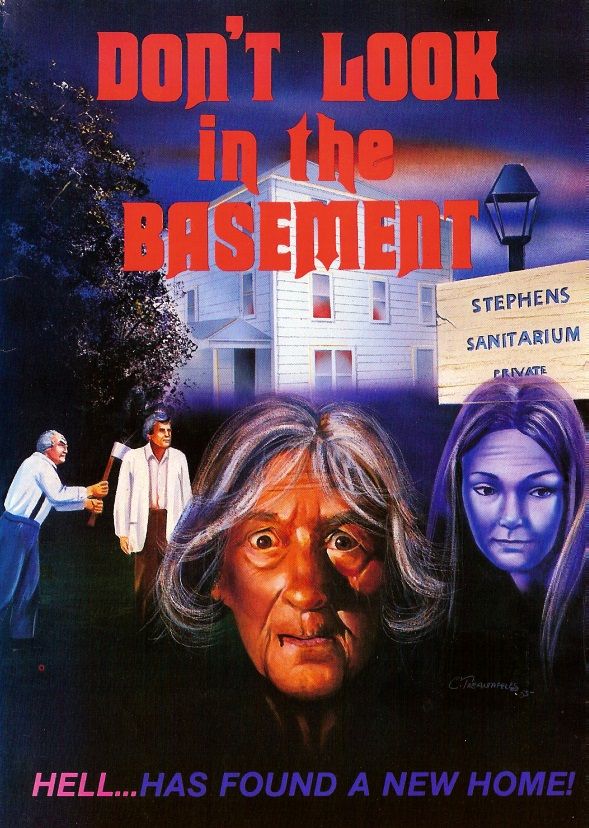
Don’t Look in the Basement (1973)

dontlook

By Richard Winters

My Rating: 2 out of 10

4-Word Review: Murder inside insane asylum.

Charlotte Beale (Rosie Holotik) gets hired by the director of a rural mental health institute, but when she arrives she finds only one nurse there, Dr. Geraldine Masters (Annabelle Weenick), who reluctantly agrees to take-in Charlotte though warning that the institute’s director was killed earlier by one of the patients, but she is determined to carry-on his work in his absence. The hospital is unusual in that it allows the patients to freely walk around with no perimeters as well as acting-out all of their fantasies versus trying to have them reeled-in back to reality. Charlotte though finds her stay there to be stressful as some of the patients try to attack her and she’s not allowed to leave the premises. She begins to wonder if she’s really there to help treat the insane, or instead slowly turned into becoming like one of them.

The film was shot in the summer of 1972 in the very small town of Tehuacana, Texas, which has a population of only 228 people. While the isolation works to some degree, particularly the exterior shots of the old white building that stands-in as the hospital, the interior action takes place in only 4 of the rooms and a hallway and thus there is no visual variety to the shot selections. You start to see the same shots over and over like a repeating loop that ultimately becomes redundant and boring.

The mentally ill patients are not captured in any type of realistic way as they’re characterized as being simpletons perpetually locked in child-like fantasies. In reality those with mental health issues can still be quite intelligent and simply suffering from dangerous delusions, thoughts, or emotional imbalance versus like here where they’re portrayed as being overgrown children lost in make believe and who never got past age 4. What’s worse is the entire thing gets solely focused on them, their silly antics and inane dialogue, making it seem more like a misguided, unfunny comedy than a horror film.

The staff members, or what little of them there are, are poorly fleshed-out as well. Nurse Charlotte immediately becomes spooked by one of the elderly residents on her first night like she’s had absolutely no training on how to handle mentally ill people. At each and every turn she gets more and more thrown off by them like someone who has no educational background in that field and the part could’ve easily just been some pedestrian thrown in there and you’d never know the difference.

The gore is quite minimal and even pathetic. When the doctor gets axed in the back he immediately falls down to the ground dead. I could understand this happening if the ax got him in the head, but instead it cuts into his shoulder, which shouldn’t have been enough to kill him, at least not instantly, and he instead should’ve been screaming out in pain versus just lying there motionless. The ax killings at the end are equally lame showing only small trickles of blood crawling down the victim’s faces when with a blade that big and that sharp their whole heads, if not entire bodies, should’ve been drowning in red.

Spoiler Alert!

The final 15-minutes are slightly creepy, but it’s not enough to make sitting through the rest of it worth it. The ‘big twist’ in which Nurse Masters is revealed to be a mental patient like the rest of them is no surprise as I had been suspecting it the whole time. There’s also no conclusion to what happens to the main character Charlotte, we see her escape outside into the rain, but not what she does after that. Does she go to the police and report what happens, or does she get committed since it’s intimated earlier that she may be crazy too, or does she just get lost in the wilderness surrounding the place and die? Nothing gets answered on this, but really should’ve.

In 2014 the director’s son, Tony Brownrigg, rebooted the franchise by doing a sequel, which was filmed at the same location as this one with one of the cast members, Camilla Carr, who was the only one still living, returning to play a part, but as a different character from the first one.

My Rating: 2 out of 10

Released: May 16, 1973

Runtime: 1 Hour 29 Minutes

Rated R

Director: S.F. Brownrigg

Studio: Hallmark Releasing Corporation

Available: DVD, Blu-ray (Region B/2), Plex, Pluto, Tubi, Amazon Video, YouTube

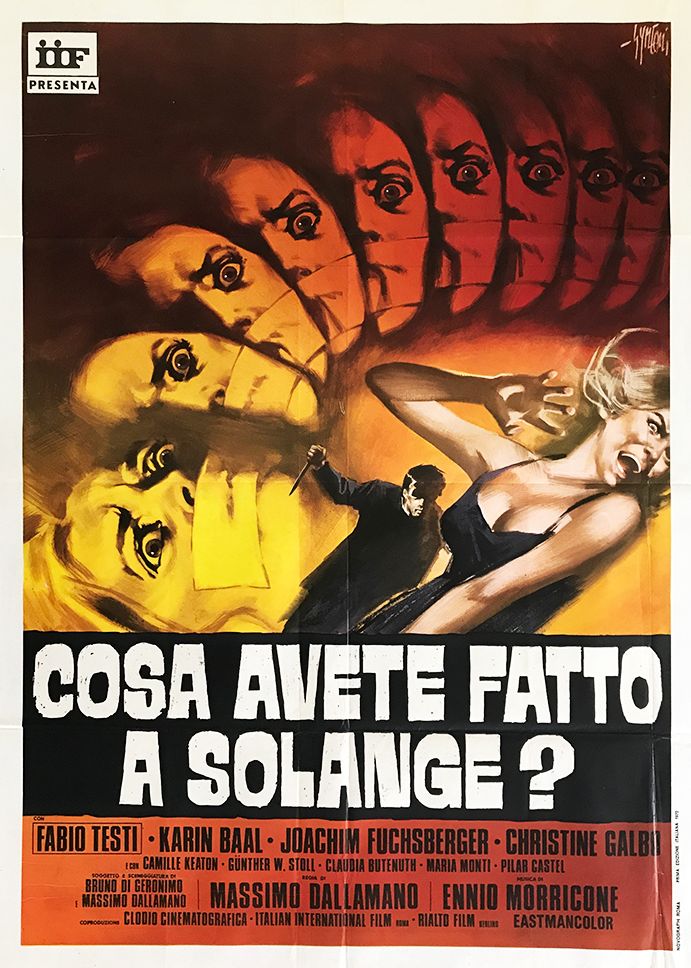
What Have You Done to Solange? (1972)

solange

By Richard Winters

My Rating: 7 out of 10

4-Word Review: Bearded priest murders schoolgirls.

Enrico (Fabio Testi) is a high school teacher who’s having an affair with Elizabeth (Cristina Galbo) who’s one of his students. While making-out with her on a boat at a park Elizabeth spots a shadowy figure murdering a young girl in a nearby wooded area. The girl turns-out to be one of her classmates, but Enrico convinces her not to tell anyone for fear that it could jeopardize his job. Once the murder gets discovered and reported on the news Enrico goes back to the scene to check for clues only to be photographed by the police who are there doing the investigation. Inspector Barth (Joachim Fuchsberger) spots Enrico in the photo and brings him in for questioning. Enrico denies any knowledge of the killing, but comes under suspicion especially after Elizabeth is later found murdered in her bath tub. Enrico then reconciles with his frigid wife Herta (Karin Baal) in order to have her help him do their own investigation, so they can unmask who the real killer is before the police are able to close in on him.

The film is a unique partnership between a West German production company and an Italian one that was filmed on-location in London. While there are many German actors in the cast the film as a whole is modeled after an Italian giallo and has many of the mystery, gore, and sleaze elements that you’d expect from those. The direction, by Massimo Dallamano, who was a cinematographer of Spaghetti westerns during the 60’s, approaches the material with a visual elegance. The photography is crisp and detailed with some evocative camera work and angles as well as a few graphic shots including the murderers modus operandi, which is shoving a large knife up his victim’s vaginas, which not only gets revealed on the corpses, but also in x-ray version, but also a drowning death in a bath tub that gets played-out moderately well. In most slasher flicks the victim goes down easily when they’re attacked by surprise by their killer, but here this one struggles quite a bit making the killing more drawn-out and thus more realistic.

The plot though, particularly the second act, gets stretched too thin. We have an intriguing set-up and a zesty conclusion, but in-between it meanders. The biggest reason for this is that the protagonist and his quandary becomes neutered and thus all the potential drama from his situation evaporates. Having the inspector tell him upfront that he doesn’t think he did it hurts the tension and would’ve been intriguing if they thought he did, or he even became their prime suspect. Having Enrico make amends with his wife, at the beginning they’re at extreme odds and even close to fully hating each other, further moderates things as the wife could’ve been an interesting possible suspect too, killing the school girls and trying to make the hubby look like he did it in order to get back at him for cheating on her, but then having the two team-up just fizzles away a potentially dark undercurrent to their relationship. Showing Enrico working with the inspector ultimately makes him seem more like a side character in his own movie and by the end like he’s not really the star at all as the inspector completely takes over.

The one performer that does stand-out is Camille Keaton. She’s better known for her starring role in the cult hit I Spit On Your Grave, but here in one of her first performances in the front of the camera she’s quite impressive and she does so without uttering a single line of dialogue. She comes-in real late too to the extent I was starting to think she’d have some minor part and be spotted for only a few seconds, but her character comes-on strong despite not saying anything and is an integral component to the whole mystery. What I liked most about her was her trance-like demeanor and glazed over look in her eyes that’s both effective, creepy, and disturbing at the same time.

Spoiler Alert!

The film’s wrap-up could’ve been better done as it elaborates about the motives of the killer and the elements of the case too much saying things that the viewer should’ve been able to pick-up on during the course of the movie. For instance it describes the sex parties that these teen girls attended, but snippets of these orgies should’ve been shown and not just discussed. The film had no qualms with the violence, so why not have a little explicit sex as well. Also, Keaton’s character going in to have an abortion like it’s going to be some ‘fun activity’ didn’t seem believable. The attempt was to show that she was naive about how rough the procedure would be and thus became ‘traumatized’ by it afterwards, but she still should’ve shown some trepidation upfront as just about anybody else would.

My Rating: 7 out of 10

Released: March 9, 1972

Runtime: 1 Hour 47 Minutes

Rated R

Director: Massimo Dallamano

Studio: Italian International Films

Available: DVD, Blu-ray, Amazon Video, CONtv

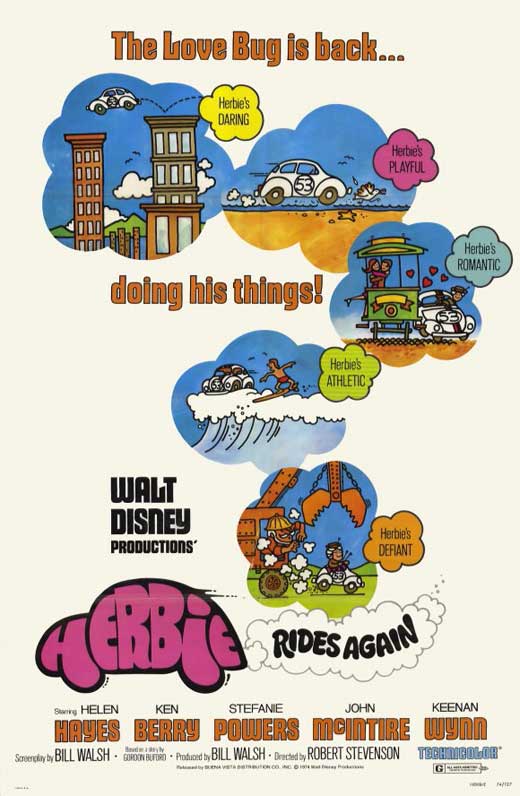
Herbie Rides Again (1974)

herbie1

By Richard Winters

My Rating: 3 out of 10

4-Word Review: Saving home from demolition.

Alonzo Hawk (Keenan Wynn) is a rich man who wants to build the world’s tallest sky scrapper on land that is currently occupied by a little firehouse built in 1892 and owned by an old lady named Mrs. Steinmetz (Helen Hayes). So far she’s refused all offers by Alonzo’s lawyers to sell, so Alonzo decides to have his nephew Willoughby (Ken Berry) go visit her as he has a very clean-cut image and hopes his nice-guy approach may be what it takes to persuade her. However, once he’s there he gets introduced by Mrs. Steinmetz former neighbor Nicole (Stefanie Powers) who’s now living with the old day due her place being demolished by Alonzo. When Nicole realizes Willoughby is related to Alonzo she immediately takes a disliking to him and even punches him in the face. Her feelings towards him though begin to change when she gives him a ride in the Volkswagen beetle that Steinmetz is taking care of for its owner while he’s away in Europe racing. Willoughby at first doesn’t believe that the car, who’s named Herbie, has a mind of its own, but soon realizes it does after his trip in it and this eventually gets him to side with Nicole and Steinmetz on the issue they’re having with his uncle and he begins fighting with the other two and Herbie to stop Alonzo from tearing the place down.

This was a rather odd idea for a sequel to the Love Bug that came-out 6 years earlier and had the VW Beetle involved in racing, but now apparently was ‘retired’ and no longer able to race effectively even though in the third entry to the series, which came-out 3 years later he does go back to racing.  The plot here though doesn’t really need the car involved to help propel it, yes the vehicle does ‘come to the rescue’ a few times, but the story could’ve easily worked with just the humans fighting Alonzo in various ways and would’ve been just as funny. To make-up for this the film does show archived footage, which goes on for several minutes, of the car ‘dreaming’ about it’s racing days though some of his race ‘victories’ could be called into question like when it decides to go off the racing track in one and cut through a forest and then back onto the track where it’s now at the front line of the other cars, which most would deem as cheating and not really an honorable win.

Overall though I really didn’t find any of the scenes with the car to be all that interesting. It’s hard to get emotionally attached to some machine that doesn’t speak, or show any expression and the only sign that it’s ‘alive’ is through its car stunts. The fact that it has seemingly no limits to what it can do, at least driving wise, I felt worked against it. To create even the modicum of suspense, or believability, there needs to be some rules to what it can and cannot do and yet here it defies all probability like driving on the side of cliffs without falling off, or being able to somehow pull vehicles, that are much bigger and weigh more, around like it does during a ‘tug-of-war’ scene with a cop car that’s attempting to tow it. It’s even able to smash through walls without receiving any damage to its front-end. I’m okay with the car having a certain ‘personality’, but when the car is able to get out of any predicament in a seeming magical way then there really isn’t any intrigue at all.

The acting by Hayes, Powers, and Wynn are good and I was especially impressed with Wynn’s ability to essentially shout out all of his lines in a consistently snarly way and yet never get any laryngitis and he certainly adds energy to all of his moments. Berry though is so vanilla that he’s just plain boring. It might’ve worked better had he remained loyal to his uncle longer, but he sides with the two ladies so easily that his character quickly becomes quite benign to the point that it would’ve been more interesting to have just the two women, and the car of course, fighting the bad guys and his presence excised from the script completely.

The nightmare segment where Alonzo dreams of being attacked by not only Herbie, but several clones of Herbie whose front hood opens up to reveal a mouth with giant teeth, which also includes a take-off of King Kong, where Alonzo is on top of the Empire State Building as he fights off the Herbie’s that are flying in a circle around him is genuinely inspired and the best part of the movie. Everything else though falls painfully flat including the cheap special effects where the exterior of the firehouse looks like it’s a painting on a back-drop, which I’m sure it was, or the scene where Herbie goes up the Golden Gate Bridge, which you can plainly tell was a miniature model matted onto a picture because as the car goes back down it starts to lose its pixelation and fade-out and disappear into thin air.

My Rating: 3 out of 10

Released: June 6, 1974

Runtime: 1 Hour 28 Minutes

Rated G

Director: Robert Stevenson

Studio: Buena Vista

Available: DVD, Blu-ray, Amazon Video, YouTube

Once is Not Enough (1975)

once

By Richard Winters

My Rating: 0 out of 10

4-Word Review: Having a father fixation.

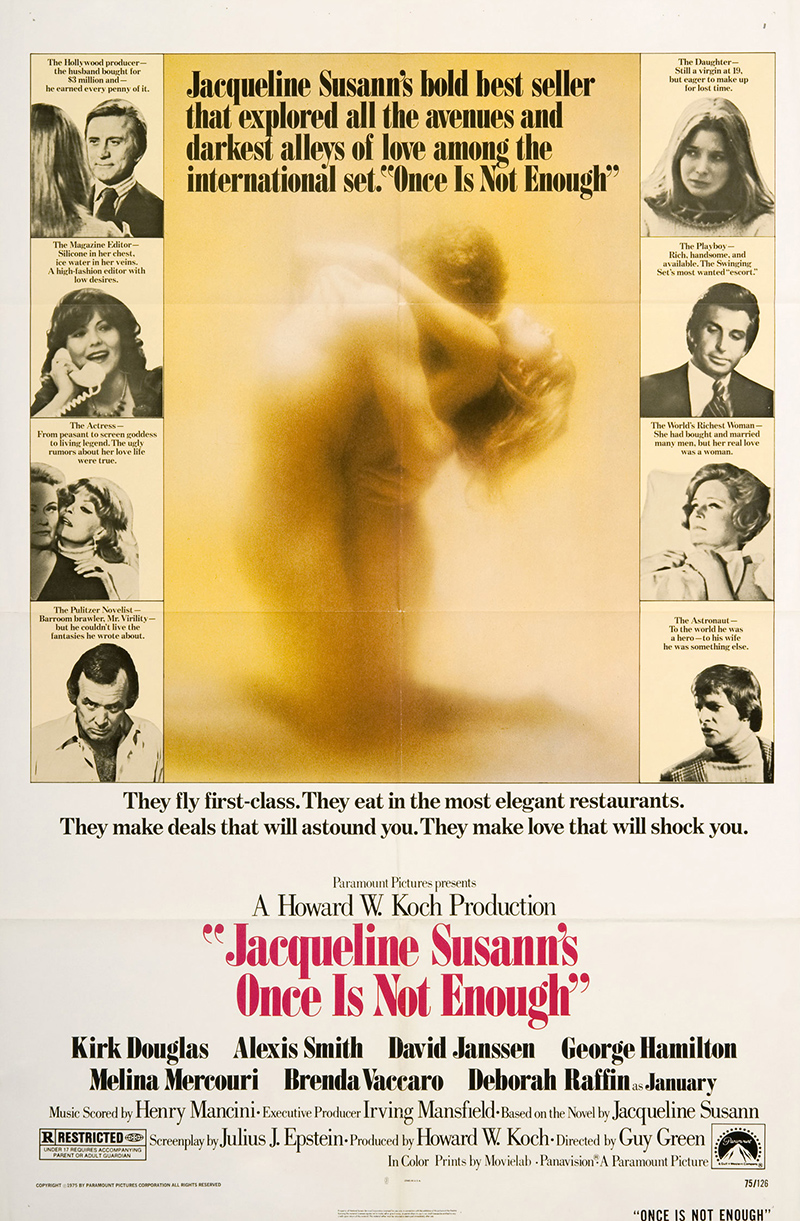
January (Deborah Raffin) is the college-aged daughter of wealthy Hollywood producer Mike (Kirk Douglas) who spent time recovering from a motorcycle accident in Europe and now returns to the states excited to see her father of which she adores immensely. Unfortunately things have changed since she’s been gone. Mike no longer has the clout, or capital that he once did and now can’t get any of his projects off-the-ground. He’s married rich socialite Deidre (Alexis Smith) simply as a way to get his hands on some money as he no longer has any of his own, but she’s more into her lesbian affair that she’s having with Karla (Melina Mercouri). Feeling dejected at how things have turned-out January falls into the arms of Tom (David Janssen) an alcoholic semi-successful novelist who suffers from impotency. When Mike learns of this relationship he becomes enraged as Tom has long been one of his biggest adversaries and so he goes to the apartment where the two are staying determined to have it out with the both of them.

The film is based off of the final novel written by Jacqueline Susann who became famous for having penned the popular Valley of the Dolls 7 years earlier. This book, like her two other ones, shot-up immediately to the top of the Best Seller’s list and she became the first author to ever have her first three novels achieve this, but her ability to savor her success was short-lived as she was diagnosed with cancer shortly after the book went to press and she never lived to see it made into a movie.

The book, like her other ones, was widely panned by the critics, but this movie here does it no justice. When compared to Valley of the Dolls this thing has absolutely no zing and nothing that’s truly salacious or tawdry, which were the main elements that gravitated folks to read Susann’s books in the first place. The only ‘shocking’ moment comes during the lesbian segment, which was considered ‘pushing-the-envelope’ at the time, which shows two older actresses kissing each other on the lips, which by today’s standards will be seen as quite trite and forgettable. The other potentially spicy moments never come to play and it ends flatly making you wonder what were they thinking when they made it.

Raffin, a former model, is quite beautiful and the best thing in it, but her character is too innocent to be believed. She’s a virgin despite being raised in the fast lane of Hollywood, which seemed hard to believe. Supposedly this is because she’s so infatuated with her father she’s subconsciously ‘saving herself’ for him, but a person could have sex outside of a romantic context and I’d think since most of her other friends would’ve have likely done it she’d be at least curious enough to try it out. The same goes for her inexperience with drugs, alcohol, or even dealing with womanizing men such as George Hamilton’s character who fills her glass to the brim with brandy and when she asks why he says so he can ‘get her drunk, so she’ll lose her inhibitions’ and she’s shocked to hear this, but any young women living in L.A. during the swinging 70’s should conditioned and prepared to this age-old ploy and having her so taken aback by it makes her too painfully naive to be believable. Instead of being a producer’s daughter she seems more like some nun snatched from a  convent she’s been living in her whole life and completely out of whack with her surroundings.

Douglas is a complete bore and I can only imagine he took the role simply because he was on a career decline and needed the work, but despite being center stage during the first half, his character slowly fades out and is completely forgotten by the end. Alexis Smith, whose acting work had also been in a downward spiral, this was her first movie role in 16 years, and was only given the part because Lana Turner, who was the producer’s first choice, turned it down as she objected to having to do the lesbian kissing scene, is sufficiently bitchy, but overall wasted.

Brenda Vaccaro won accolades for her performance and was even nominated for the Supporting Oscar for her work, but I was a bit surprised. I’ve always found her an impressive actress, but playing some jaded California gal that likes to openly sleep around isn’t that interesting and her character lacked depth. The part where she tries to quickly clean-up her cluttered bedroom before letting a new man into it was kind of amusing, but otherwise her presence, like all the others, was quite tepid. I did though enjoy Hamilton, this marked his last serious role before he then began to venture into comedy, not so much for his acting, but more because I felt this role most closely resembled his true personality. Janssen has some potential as this brash, abrasive guy, but then having his lifelong impotency suddenly and magically ‘cured’ after seeing Raffin nude in the shower is just downright laughable.

Spoiler Alert!

The biggest letdown is the unexciting ending. In the book January gets into acid and then partakes in a sex orgy only to eventually walk into the ocean and drown after seeing a vision of her dead father. The movie though, in an attempt to be ‘hopeful’, doesn’t show any of this. It just has her walking around the city in a daze and that’s it. A movie like this needs, especially with this type of soap opera material, some sort of salacious pay-off and seeing a once innocent, naive girl in an acid driven orgy would’ve been just the ticket, so for the filmmakers not to give the viewer even that much makes this whole vapid thing pathetic beyond belief.

My Rating: 0 out of 10

Released: June 20, 1975

Runtime: 2 Hours 1 Minute

Rated R

Director: Guy Green

Studio: Paramount

Available: DVD, Blu-ray, Amazon Video, YouTube

Mandingo (1975)

mandingo1

By Richard Winters

My Rating: 7 out of 10

4-Word Review: Slave turned into fighter.

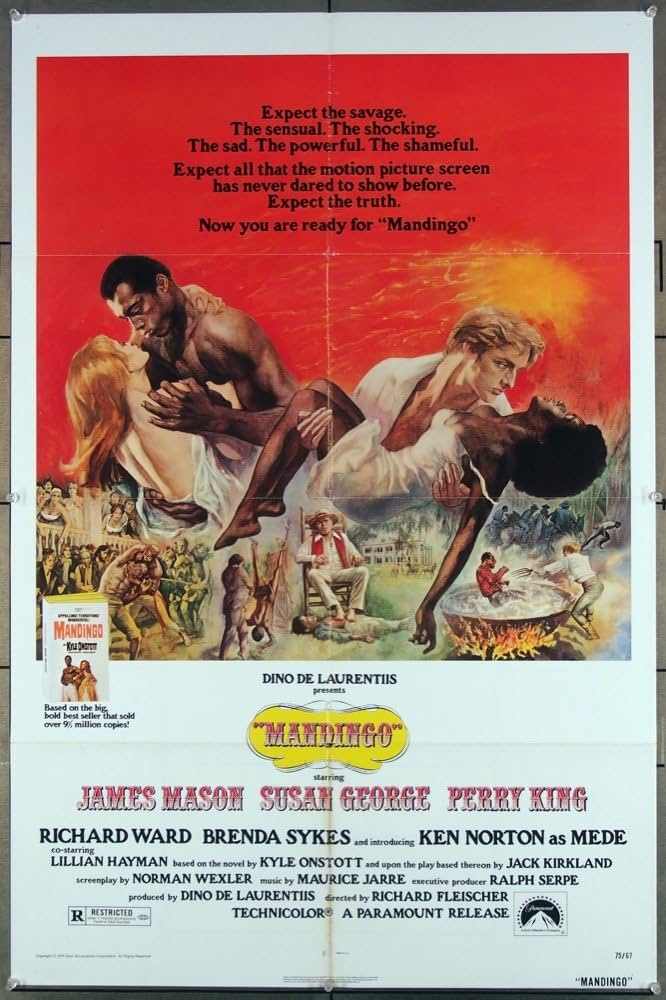
Hammond (Perry King) is the son of aging plantation owner Warren (James Mason) who purchases a Mandingo slave named Mede (Ken Norton). Mede proves himself as having superior fighting skills, so Hammond turns him into a prize fighter and makes money off of him. Meanwhile Hammond is also having an ongoing sexual affair with a slave named Ellen (Brenda Sykes), but his father orders him to find a white woman in order to supply him with an offspring, so Hammond marries his cousin Blanche (Susan George), but on their wedding night he rejects her when he realizes she is not a virgin. Blanche becomes jealous of Ellen, whom is secretly carrying Hammond’s child, and causes her to miscarry. She then forces Mede to have sex with her, so she’ll become impregnated with a black baby and bring humiliation to Hammond. After the birth, when Hammond realizes what has happened, he then goes on a violent revenge not only against Blanche, but also Mede whom he once considered his prize possession, but will Mede just accept his punishment, or use his strength to finally turn on his master?

The story is based on the 1957 novel of the same name written by Kyle Onstott. Onstott had written a book about dog breeding with his adopted son, but that didn’t do too well, so at the age of 65 he became motivated to write a book that he hoped would be a bestseller and make him a lot of money. He decided a sensationalistic material was the way to get attention and thus choose to write a story based on many ‘bizarre legends’ he had heard growing up. It was printed by a small publisher and it soon got him the national attention that he craved and sold 5 million copies that not only lead to a series of books on the same theme, but also a 1961 stage play that starred Dennis Hopper. The film rights was purchased by noted producer Dino De Laurentiis and became a very rare exploitation film that was given a big budget and a major studio release.

Critics at the time gave it almost unanimously negative reviews including both Roger Ebert and Leonard Maltin, but today it’s seen in a slightly more favorable light. Personally, if you’re going to do a movie on slavery, a notoriously dark moment in human history, and you’re want to do it honestly, then a graphic portrayal of it such as this should be in store. It may make the viewers cringe throughout, but that’s kind of the purpose. On a purely shock value scale this thing delivers in an almost mechanical sense. It’s just one scene after another that should leave even the most seasoned audiences with their mouths agape. While it’s hard to pick just one moment that’s the most shocking as there are an incredible amount of them I felt the fight sequence where both men literally bite the flesh off the other until blood spurts out of the one’s neck is for the me the infamously top moment though having Mason using a black child as his own personal foot stool, or hanging a 60-year-old black man, played by Richard Ward, naked and upside down to be paddled not only by Hammond, but also by Charles (Ben Masters) who stops by to visit and immediately takes part while another black child looks on amused by it, comes in as a close second.

On the technical end I liked the way it was shot by cinematographer Richard H. Kline. Initially I found the decrepit look of the mansion, which was filmed at the Ashland-Belle Helene Plantation in Geismer, Louisiana, to be problematic as everything looked old and rundown, but you’d think if it had really been done in the time period it was lived-in then it should look new and just built. The overgrown lawn was an added issue as it made it seem like it was an abandoned place, but back then maybe they didn’t all use manually powered lawn cutters, or care to, so I was willing to overlook that portion. I did though love the use of natural lighting, electricity wasn’t a thing, so sunlight coming in from the windows was about it and the use of shadows nicely illustrated the dark personalities of the characters.

The acting is excellent and I was especially impressed with Mason who can seem to go from playing nice guys to villain with an amazing ease as most actors are usually just good at doing one or the other. Some complained about his attempt at a southern accent, but for a guy born and raised in Britain I thought he disguised it pretty well. Susan George, most noted for playing frightened damsel-in-distress types, does a terrific turn as an evil bitch who’ll stop at nothing to get her revenge. King is also impressive as he shows at times to have a certain conscious and appalled at what he sees, but ultimately is unable to get over the hump and becomes just as evil as the rest despite convincing himself and his slave girlfriend that he’s somehow ‘more reformed’.

My Rating: 7 out of 10

Released: July 25, 1975

Runtime: 2 Hours 7 Minutes

Rated R

Director: Richard Fleischer

Studio: Paramount

Available: DVD, Blu-ray, Amazon Video, YouTube

The Dogs (1979)

dogs

By Richard Winters

My Rating: 4 out of 10

4-Word Review: Canines on the attack!

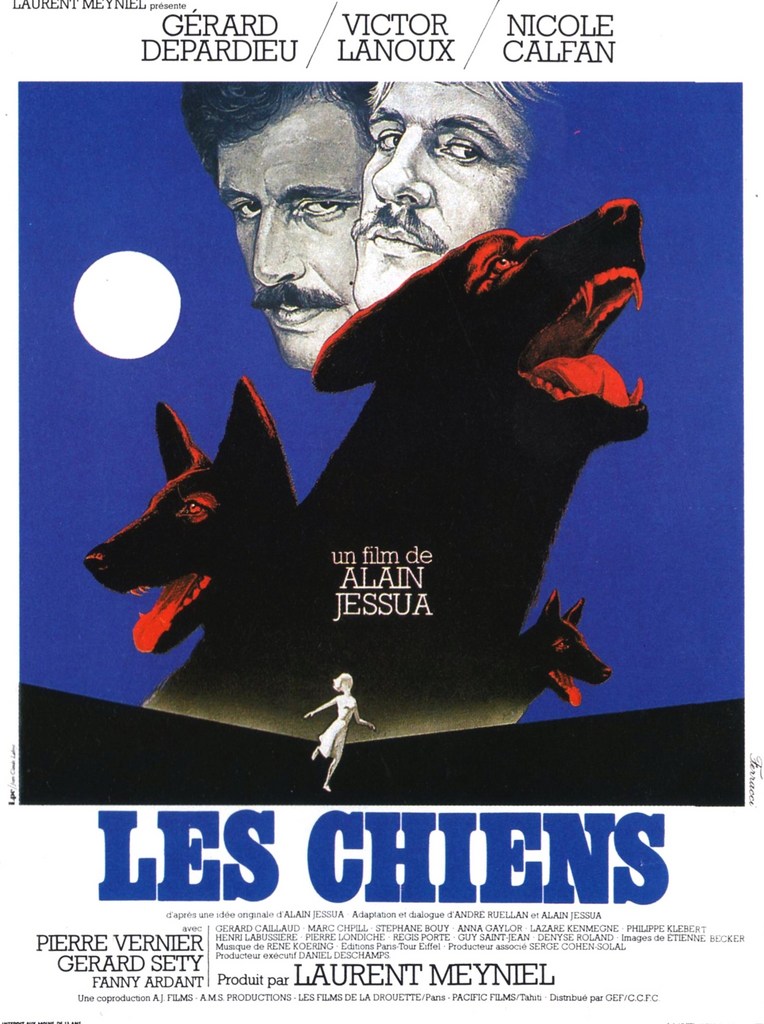
Henri (Victor Lanoux) is a doctor who opens up a clinic in a planned community. He finds to his surprise that many of his patients are coming in complaining about dog bites. He then becomes aware of Morel (Gerard Depardieu) who runs a club were participants learn how to train their dogs to protect them from attacks. However, these same dogs have now become more of a menace that’s putting other citizens in the town in danger including the mayor who becomes a victim. Henri is soon at odds with his girlfriend Elisabeth (Nicole Calfan) who gets a guard dog after she is raped and she is more attached to the dog than him.

The story certainly has some interesting ingredients including the fact that the dogs themselves  aren’t really the threat, but more their owners who train them to be aggressive, which is a nice change of pace from other films from that era that would show animals attacking for seemingly no reason, or that they had become possessed by something evil. Here the set-up is more realistic and plausible and the residents are wealthy living in plush homes helps convey the idea that even ‘nice’ neighborhoods can have evil dwelling underneath and no place is ever completely ‘safe’.

Depardieu goes against type playing the villain and he approaches the part in a fascinating way where he’s not outwardly creepy at the start, but more just an awkward individual who genuinely believes, which is a mindset that he continues to have to the very end, that he’s the ‘good guy’ who’s simply helping vulnerable people find ways to adequately protect themselves. He also has a profound love for his dogs whom he likes more than people, that comes to prominence during a graphic birthing seen where the mother dog isn’t able to come through it. His performance is even more impressive when you factor in that he suffered a dog attack of his own in real-life just a few months before being offered the role and he took the part hoping it would alleviate his pent-up fears and he certainly goes all out here including allowing the dogs to attack and bite him while wearing protective clothing during the training exercises that he conducts.

On the other end, as his adversary, I didn’t find Lanoux to be half as impressive. For one thing he never comes-off seeming like much of a doctor nor ever seen wearing a white physician jacket and works inside a place that resembles a rented out business office than a legitimate clinic. He looks and behaves more like a detached business man walking through his role and never being as emotionally charged as the part demanded.

Calfan, as the girlfriend isn’t convincing either. She leaves her job late at night all alone even though she’s well aware of the crime in the area, which makes it seem like she’s foolishly walking into trouble and the subsequent rape attack gets played-out in a cliched and mechanical way. He recovery is too quick as she’s back to be her normal self again almost instantaneously without showing any of the post traumatic effects that victims of the crime typically do. Her character’s arch offers some intrigue as she at one moment ‘jokingly’ tells her dog to attack Lanoux and then at the last second calls him off, which understandably frightens Lanoux and made me believe she was mentally moving into a dark mindset and she would become the source of danger, but this doesn’t lead to anything. By the end she ‘snaps out of this phase’ and goes back to being her normal self even to the extent turning into the hero, which I didn’t find interesting at all and it would’ve been far more memorable had she slowly became the threat.

The film is too leisurely paced. We know upfront that these dogs, and the people who own them, are something to be feared, but the actual attacks take too long to get going and when they do they’re too quick and ultimately start to play-out in a redundant fashion. The chills and thrills are limited and there’s not enough surprises or twists. There are also some disturbing segments including a dog getting kidnapped and then bound with a muzzle while dangling in the air by a rope as it whimpers, which many viewers including animal lovers will most likely find highly unsettling.

Alternate Title: Les Chiens

My Rating: 4 out of 10

Released: March 7, 1979

Runtime: 1 Hour 40 Minutes

Not Rated

Director: Alain Jessua

Studio: A.J. Films

Available: DVD (French), DVD-R (dvdlady.com)

Cockfighter (1974)

cockfighter

By Richard Winters

My Rating: 6 out of 10

4-Word Review: He refuses to talk.

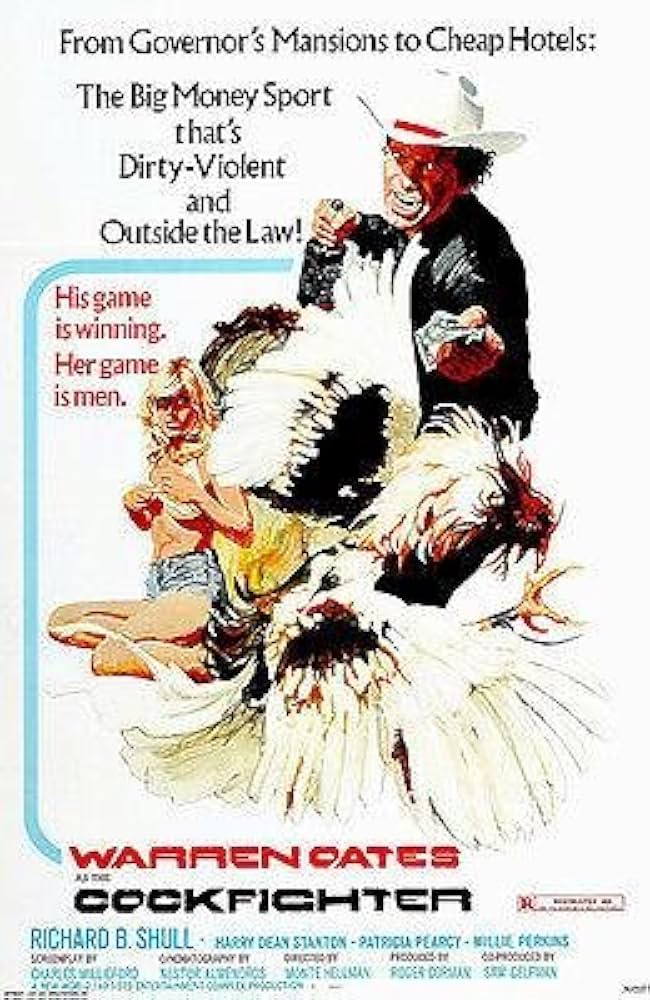
Frank (Warren Oates) has a passion for cockfighting. While he’s had other endeavors in his life he’s always come back to this because of the unpredictability. He can predict the way the chicken is built how it will fare in a fight, but it’s actual fighting spirit is unknown until it’s put to the test and because of that factor it keeps him intrigued with the sport. However, his bragging gets him into trouble when one of his chickens losses a battle during a makeshift fight inside a hotel room with a chicken from fellow cocker Jack (Harry Dean Stanton). After he’s forced to pay up the bet Jack tells him that he ‘talks too much’ convincing Frank to take a vow of silence and become effectively mute until he’s able to win a cockfighting championship.

The story is definitely a relic of a bygone era as cockfighting is no longer legal in the U.S. with Louisiana being the last state to ban it in 2008. Today only a few countries in the world allow it as the sport is considered by many to be animal abuse. The film pulls-no-punches and will be deemed brutal for certain viewers who’ll probably turn it off by the halfway mark if not sooner. The fights between the chickens are actual and up close. You see the beaks of one cock jamming into the eyes of another and their dead carcasses of which there ends up being many thrown into a heap onto others into a trash bin, or in one segment where the fights take place in a hotel room, into a bathtub with what seems like hundreds them. There’s even a scene where Oates hacks-off a live chicken’s head with an ax and another moment where he lays a chicken onto the pavement and then steps on its head and yanks it off from the rest of its body by sheer force, so if any of these details upset you then it’s best to stay away from the movie altogether.

For those who are game the story ends up having a darkly humorous tone. The armed robbery that takes place inside a hotel room and Richard B. Shull’s character hiding his earnings amidst the pile of dead chickens where he presumes no one would dare think to even check is amusing. The best moment though comes when Ed Begley Jr. becomes incensed when Oates’ chicken kills his during a fight and being so distraught at losing his prized possession comes after Oates with an ax.

The acting is marvelous particularly by the legendary Oates though he doesn’t say much until the very end, but he makes up for it by being the film’s voice-over narrator. What impressed me most though was his comfort level in handling the chicken’s and at one point casually dealing with one that tried attacking him, which made me believe that this must go back to upbringing in rural Kentucky where he lived amongst them as a kid so he was used to their behavior and not scared away as I’d think another actor without that type of background wouldn’t be able to pull-it-off.

The script was written by Charles Williford, who appears in the movie as a judge/ref during the cockfights and based off his novel of the same name. While the film does move along at a brisk pace and is never boring I did feel it lacked a certain context. It works more like a preview than a full story. You get a general feeling about the people and atmosphere, but not a deep understanding. My main curiosity was with the folks who come to see these fights and what motivated them to want to watch such a bloody sport. Analyzing this mentality would’ve been interesting, but never happens making the film feel incomplete and like it’s only barely tapping into the surface of the subject.

My Rating: 6 out of 10

Released: July 30, 1974

Runtime: 1 Hour 23 Minutes

Rated R

Director: Monte Hellmen

Studio: New World Pictures

Available: DVD, Blu-ray, Amazon Video, Fandor, Pluto, Tubi, Plex, Shout TV

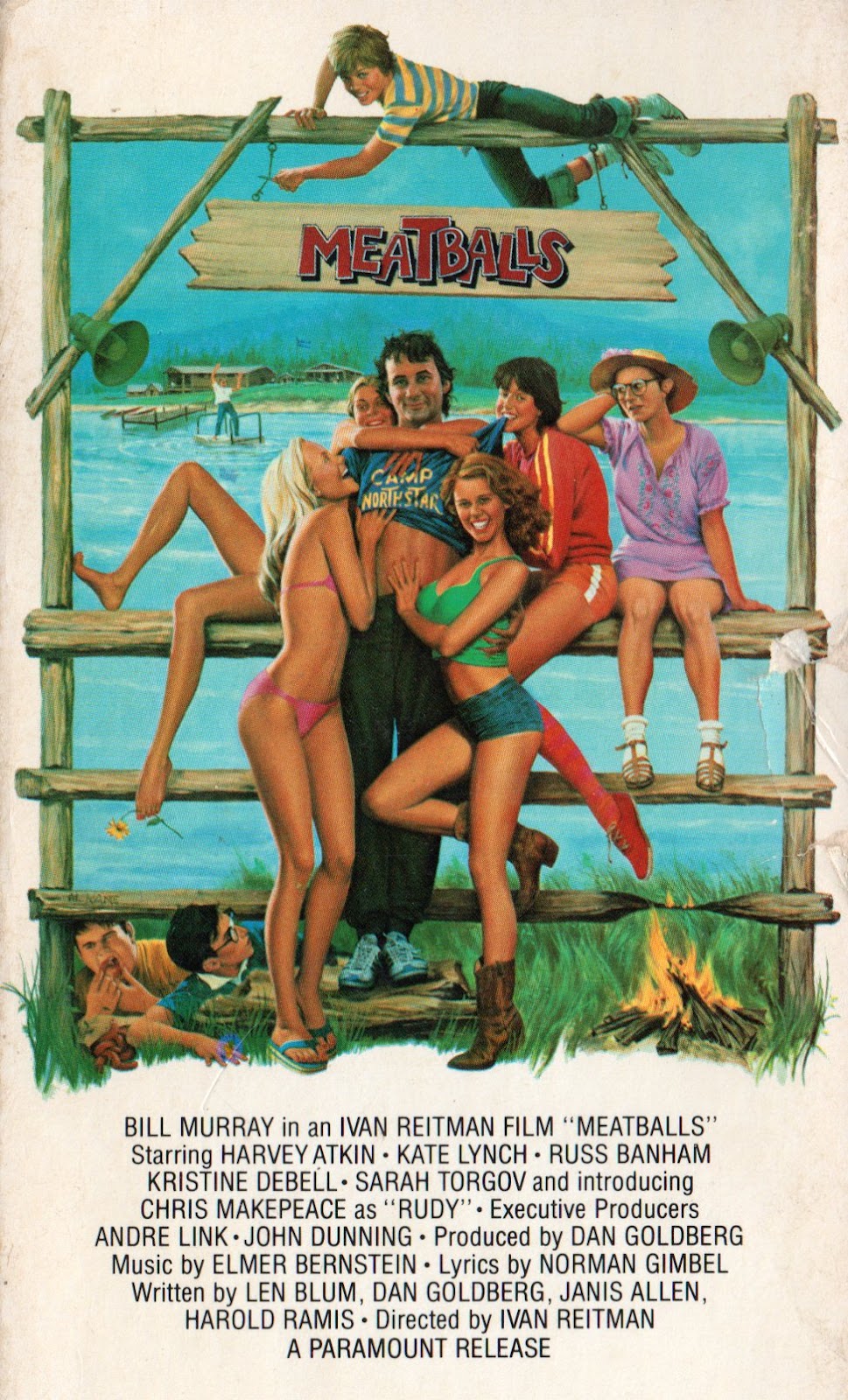
Meatballs (1979)

meatballs2

By Richard Winters

My Rating: 3 out of 10

4-Word Review: Shenanigans at summer camp.

Tripper (Bill Murray) has been assigned to lead a new group of counselors-in-training while simultaneously pulling pranks on camp director Morty (Harvey Atkin). He also takes shy camper Rudy (Chris Makepeace) under his wings and giving the kid some confidence, so that he can play in sports and feel that he has a chance to win. Tripper also gets involved in the annual Olympiad between his camp, Camp North Star, and their rival Camp Mohawk, which sits across the lake from theirs. Camp Mohawk has won the title the past 12 years, but this year Tripper thinks things will be different mainly because he’s trained Rudy on how to be a cross-country runner due to their early morning jogs together and assigns him, much to the disagreement of the other campers, to run against Mohawk’s top runner in the crucial final race.

This was the fourth film directed by Ivan Reitman and while he went on to direct a lot of big hits I felt here he was still learning the craft and it would’ve been a better movie had someone with more experience been at the helm. Originally it was intended for John Landis to direct, but he was too busy working on The Blues Brothersso Reitman reluctantly took the reins, but the pacing and tone is all off. To some degree it seems to want to be an Animal House wanna-be filled with off-color humor and slapstick, but at other points it tries for sentimental drama. Nowhere is this more evident than it’s eclectic choice of music featuring bouncy tune by Rick Dees and then turning around and having a sappy song by Maureen McGovern that seems out of place for a film that most of the time dwells in low brow humor.

Story-wise it’s incredibly vapid and seems to almost be plotless most of the way. The main crux of the script is apparently centered around Rudy and Tripper’s attempts to help him find some confidence in himself, but even these moments come-off as trite and thrown-in at haphazard intervals. In-between we get treated to a lot of silly hijinks and benign characterizations that mostly fall flat. There’s a lot of potential story threads that the could’ve been funny, but the movie fails to follow through on.

There’s a segment where the parent’s come to visit for a day, but this lasts for a minute and then it’s over. I also wanted to see the reluctant Rudy give out the morning messages of the day via an intercom set-up that had been traditionally done by Tripper. Since Tripper was going to be out he handed over the duties to Rudy who seemed nervous about the responsibility, so it would’ve been interesting to watching how he ended up approaching it and how the other campers responded, but instead we aren’t shown any of it. The same goes for a little boy who brings a frog with him that doesn’t ever move because he’s ‘tired’ yet we never get any follow-up to this, so why even have the scene, which isn’t funny or interesting anyways, if it has no real point to the plot?

The running gag involving the camp director named Morty who’s constantly referred to as ‘Mickey’ gets overblown and rather dumb. It has him being such a sound sleeper that the other campers, under Tripper’s guidance, move him and his bed, along with his bedside table, out of cabin and into various other parts of the campsite including at one point on a raft on a lake. When he wakes up he then finds himself in a very precarious situation, but it’s hard to believe that someone could sleep that deeply that they would’ve wake-up while they were being moved. Even if that were the case you’d think they’d come-up with some way to prevent it occurring in the future like bolting their door shut, or constructing some sort of booby trap that would catch the pranksters in the act. This could actually make it even funnier as it would be upping the ante each time versus just replaying the same old prank. At the very least you’d expect an ultimate angry confrontation between Morty and Tripper who he knew was behind it, which at one point he threatens to do, as he states ‘we’ll talk about it later’, but we never see the ‘talk’ actually happen, which again makes it seem like the movie really isn’t going anywhere.

Bill Murray, who reportedly wasn’t sure if he wanted to do it due to his SNL obligations at the time, but finally did show up to the shoot on the third day of production, is genuinely quite funny and the only things that saves it from being a dud though it comes close to being one anyways. However, his character does prove to be a bit problematic in the scene where he aggressively tackles an attractive counselor he wants to have sex with, played by Kate Lynch, which would be deemed sexual harassment in this day and age and not the ‘good natured, boys will be boys’ fun that it was considered at the time.

The film though does manage to elicit nostalgic homage to the camping experience, so those that look back to their summer camp days with fond memories may bond to this better. Otherwise I found it highly overrated and genuinely surprised that it did so well at the box office.

My Rating: 3 out of 10

Released: 1 Hour 34 Minutes

Rated PG

Director: Ivan Reitman

Studio: Paramount Pictures

Available: DVD, Blu-ray, Amazon Video, Freevee, Pluto, Roku, Tubi, YouTube

Same Time, Next Year (1978)

sametime

By Richard Winters

My Rating: 6 out of 10

4-Word Review: Affair lasts 26 years.

George (Alan Alda) meets Doris while staying at an inn in California in 1951. Both George and Doris are married with kids, but that doesn’t stop them from having a tryst while they’re there since neither of their spouses are with them. They decide to continue to meet each year at the same time and inside the same oceanside cabin. This reoccurring rendezvous lasts all the way up to 1977 and they go through many changes both in their personal lives and personalities, but remain in-love with the other despite never divorcing from their spouses.

While there’s a definite Neil Simon quality to the dialogue and situational comedy it was actually written by Bernard Slade who at that time was best known for creating the sitcoms ‘The Flying Nun’ and ‘The Partridge Family’. Originally it opened as a play on March 14, 1975 and starred Ellen Burstyn and Charles Grodin and ran for 1,453 performances. Slade also wrote the screenplay to which he was nominated for an Oscar.

While the interiors were filmed on a soundstage the outer portion of the cottage was built specifically for the film and when shooting was completed it was decided to move this foundation to a location in Little River, California with the interiors fitted with the furnishings that had been used on the soundstage during filming and then allowing couples to rent it out. This became so popular that the cabin was split into two with one called ‘Same Time’ and the other ‘Next Year’ and can still be rented out for a romantic getaway to this very day.

While the film stays faithful to the stage version I felt there should’ve been added context revolving around how they meet. We see them first making contact as they enter the inn to check-in and then they have dinner at separate tables before Alda invites himself over to eat at Burstyn’s, but we never hear their dialogue and instead get treated to sappy music, which could’ve easily been chucked and not missed. It also fails to answer one of the plot’s more crucial questions: why would a married woman with kids be traveling the countryside all by herself? For Alda it could make some sense as it was socially acceptable for a man to be traveling single for business reasons, but woman at that time were pretty much stuck in the home doing the majority of the child rearing, so what would her reason be for being out on the road all alone? Maybe she was visiting relatives, but you’d think if that were the case they’d let her stay at their place, or she’d bring her kids along, but either way there needed to be an explanation and there isn’t any.

The fact that they’re able to continue to do this for literally two and a half decades without the spouses finding out for the most part begs a lot of questions. What excuses were they giving their families, so that they could continue to keep meeting at the exact same time of year? Having an angry spouse secretly follow them and then unexpectedly show-up could’ve added some extra spice and if this situation had occurred in real-life most likely that would’ve ultimately happened.

While this may sound like nit-picking I had issues with the cabin setting too. Don’t get me wrong it’s scenic and I loved the outdoor moments where you get a great view of the shore and pine trees, but the interior of the place should’ve changed, or been updated with the times instead of the furniture and the placement of it looking virtually the same for 26 years. Make-up work could’ve been done on Ivan Bonar who plays the Inn’s owner and while the two stars age in interesting ways he remains ancient looking right from the start and never changes.

On the plus side I found both Burstyn and Alda to be fabulous and I enjoyed their comic, and sometimes dramatic, interplay even though their transitions in personalities proves a bit problematic. Normally as people age their attitudes and perspectives can shift, but it’s more linear and not herky-jerky like here. For instance during the 60’s Burstyn gets into the flower child movement only to, by the 70’s, become a business owner and a part of the establishment. Alda too goes from hardcore conservative during the 60’s, even admitting to voting for Barry Goldwater, to necklace wearing lib by the 70’s, which seemed like these characters were just conforming to the trends and attitudes of the day like caricatures instead of real people.

Spoiler Alert!

All of the quibbles listed above I could’ve forgiven, but the ending I found annoying. I actually liked the idea that George’s wife dies and he meets someone else and she won’t allow him to keep seeing Burstyn, so he then puts pressure on Burstyn to divorce her husband and marry him, which she refuses, so he then walks-out. This I found to be very realistic as most affairs don’t last this long anyways, so the memories and good times they had would be treat in itself and should be left at that. For Alda then to walk back-in and say it had all been a lie and they could continue to get together ‘forever’ was too far-fetched for a concept that had been pushing the plausibility to begin with. Everything needs to end at some point as even ‘perfect marriages’ will stop when one partner dies. The audience saw the first meeting, so they should’ve been treated to the last one too. Even if it meant having them elderly and entering with their walkers it should’ve been shown and the story given, one way or another, a finality of some sort.

My Rating: 6 out of 10

Released: November 22, 1978

Runtime: 1 Hour 59 Minutes

Rated PG

Director: Robert Mulligan

Studio: Universal

Available: DVD-R

When the Legends Die (1972)

whenlegends

By Richard Winters

My Rating: 8 out of 10

4-Word Review: Indian becomes rodeo rider.

Tom Black Bull (Tillman Box) is a young Ute Indian orphan living in the wild with his pet bear. One day Blue Elk (John War Eagle) an Indian elder comes upon the child and decides it’s time to get him acclimated into society by having him enroll into a school where Tom does not get along with the other students and forcing him to begrudgingly release his bear. Over the years Tom grows to being a young adult (now played by Frederic Forrest), but is bitter with the racism that he must endure. By chance he gets spotted by Red (Richard Widmark) who’s impressed by the way Tom can ride and control a difficult horse and decides he’d like to train him into becoming a rodeo rider. Tom sees this as an opportunity to get out of the slums that he’s in, but soon realizes that Red, who suffers from alcoholism, is exploiting him just like the other white men by forcing him to intentionally lose contests in order to trick people into betting against him.

During the early 70’s there were many modern-day westerns that focused on the rodeo circuit including Junior Bonner, J.W. Coop, The Honkers and Riding TallWhile all of those were good in their own right I’ve found this one to be at the top. The others were more a character study with the rodeo atmosphere a side-story while this one examines the training and technique that it takes to be a successful bronco rider with a meticulous detail making it more revealing and informative. The others didn’t always do a adequate job of making it seem like the lead character was actually riding the kicking horse and many times looked like a shot of the guy on top of one of those bull machines you see inside western barrooms, but here it’s captured in an authentic style including a disturbing moment where Tom refuses to get off the horse as it continues to buck, which ultimately exhausts the animal and requires it to be shot.

The story is based on the 1962 novel of the same name by Hal Borland who was a journalist who specialized in writing novels with an outdoor setting. The book though was aimed more for young adults and split up into four different sections while the film just analyzes the third portion. It also updates the time period to the modern day versus the turn-of-the century like in the book. It’s expertly directed by Stuart Miller, better known as a producer, with a well-written script by Robert Dozier that has crisp dialogue that manages to intimate a lot while saying little and never overstating anything.

Forrest plays his role with a sullen expression that remains constant throughout and some might complain it makes it one-dimensional, but I felt this helped illustrate the character’s inner anger and it’s fascinating seeing the juxtaposition of someone who’s very rugged and savvy when it comes to nature and animals, but quite virginal, literally, when it has anything to do with societal elements like women, alcohol, and other vices.

Widmark is brilliant as usual and one of the few people who can play a miserable, brash, and genuinely unpleasant old guy and still keep it on a humanistic level. Watching him go from gruff and demanding as he’s clearly the more worldy-wise at the start to more of a vulnerable and even dependent one at the end is a fascinating journey to watch. In many ways his relationship with Tom is like a father and son where the older one starts out as the stern teacher only to have it flip with the younger one, now fully accustomed to the world, taking the reins and caring, albeit begrudgingly, to someone who can no longer do it themselves.

My only complaint with the film that is otherwise close to flawless is that I would’ve liked to have seen one moment where Widmark shows some actual kindness to Tom as all the way through he’s quite grouchy and condescending even when Tom offers him some much needed support. I realize his character was a victim of the hard world he lived in and thus it wasn’t natural for him to show any tender side, which he most likely possessed very little of anyways, but one even fleeting moment of gratitude, even if it just was putting his arm around the young man and showing him a slight gesturing hug, could’ve gone a long way to giving it a bit more emotional balance and the touching image that every hard-edge drama ultimately should have and needs.

My Rating: 8 out of 10

Released: October 19, 1972

Runtime: 1 Hour 47 Minutes

Rated PG

Director: Stuart Miller

Studio: 20th Century Fox

Available: DVD-R