Category Archives: 70’s Movies

Gus (1976)

gus

By Richard Winters

My Rating: 4 out of 10

4-Word Review: Mule becomes a kicker.

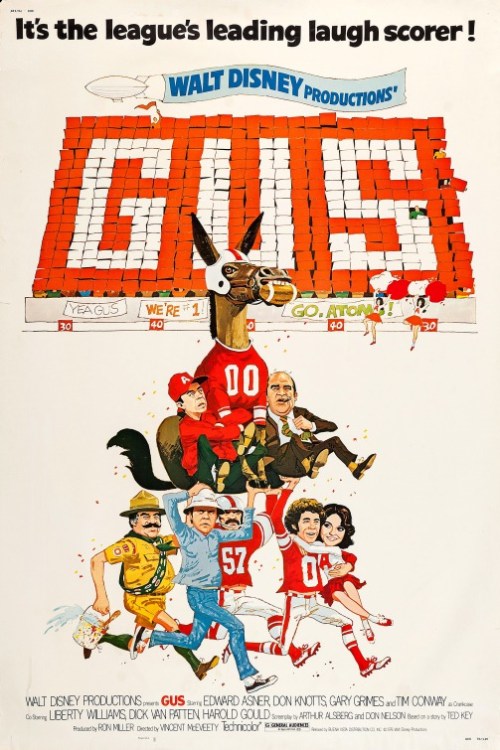
The California Atoms are the worst team in football and their owner Hank Cooper (Ed Asner) is desperate to try anything in order to get them winning and fans back into the seats. His secretary Debbie (Louise ‘Liberty’ Williams) reads an article about a mule living in Yugoslavia that is able to kick soccer balls at a long distance. He decides to have the animal and its owner Andy (Gary Grimes) shipped all the way from there to the United States where they hope to have the mule try out as a field goal kicker for the team. Since the rule book never specifically states that the players must be human they figure they can get away with it and do. The team starts to win again and Gus is a fan favorite, but mobster Charles (Harold Gould) doesn’t like it and hires two bumbling crooks (Tom Bosley, Tim Conway) to kidnap the animal, so he won’t be able to show up when the team plays in the all-important Superbowl.

Although as a kid I found this film to be enjoyable as an adult it comes off as boring and lacking. The idea that simply adding in a mule to kick long field goals would be enough to turn around a team’s dismal fortunes is highly suspect. For one thing a long distance field goal kicker will kick the ball at a much lower trajectory in order to get it to travel farther and thus the potential to block those kicks is much higher and yet for some reason that never occurs with any of Gus’s kicks, but most likely would. Also, just having a good kicker who can make field goals does not improve the defense that still must stop the other team from scoring. This team was described as getting blown out of every game that they were in, so how then does the defense start magically keeping the other team’s offense in check, so that the games remained manageable and Gus’s field goals would mean something?

The viewer never gets to see Gus kick an actual field goal anyways. What we see instead is the animal kick the ball and then the camera immediately cuts to a superimposed ball floating in the air with a corny sound effect tacked on and then another cut showing it gliding through the goal posts, but never an unedited long shot, which proves most likely no animal would be able to do the feat in real-life or able to do it in a consistently accurate way.

The comical elements aren’t too great either with the two best moments coming from a chase through a hospital as well as another one inside a grocery store, but even here there are problems. For one thing the super market chase, where Bosley and Conway try to corral the animal, goes on way too long and most likely the security or police would’ve been called in long before many of the antics that do occur would’ve happened. There’s also a tacky ‘life lesson’ thread thrown in dealing with Andy learning to have self-confidence, which does nothing but make the film seem even more contrived than it already is.

This marks Grimes’s last film to date as he ended up retiring from movies at the young age of 21 even though his career started off so promisingly with his starring role in Summer of ’42. He stated that the roles he was being offered were no longer up to his standards, but most likely studios were realizing that his acting abilities were limited and it was either get into another line of work, or be relegated to B-movie hell afterwards and his transparent presence here more than proves that.

Asner is the real star and has a few funny lines. I also enjoyed football legend Dick Butkus playing the role of a jealous boyfriend. His acting isn’t exactly good, but his constant expressions of aggravation are fun. Bob Crane in a brief bit manages to be a scene stealer as an obnoxious sportscaster who won’t stop talking until he finally loses his voice.

Kids may take to this more, but even then I’m not so sure as many of them may find it dated in a film that unfortunately can’t stand up to the test of scrutiny or time.

My Rating: 4 out of 10

Released: July 7, 1976

Runtime: 1Hour 37Minutes

Rated G

Director: Vincent McEveety

Studio: Buena Vista Distribution Company

Available: DVD, Amazon Video, YouTube
Cinderella Liberty (1973)

cinderella-liberty-1

By Richard Winters

My Rating: 5 out of 10

4-Word Review: Sailor falls for prostitute.

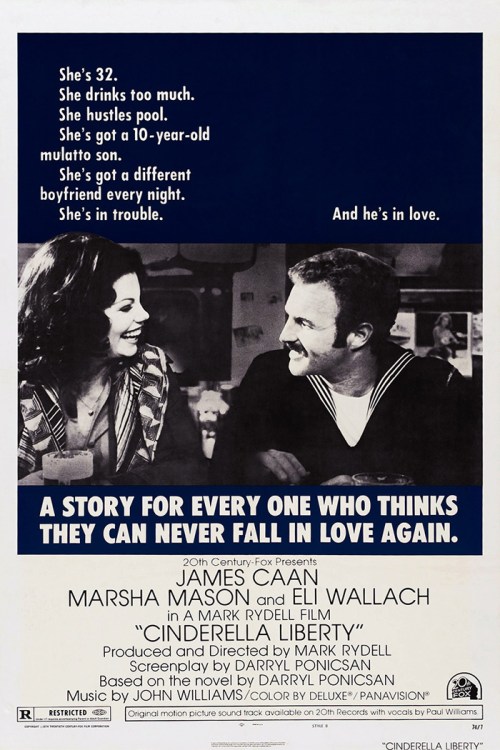
John Baggs (James Caan) is a sailor who checks into a Seattle, Washington naval base medical facility for a check-up and while there has his files lost and is unable to receive pay or new orders until they are found. While the navy tries to find them they give him a ‘Cinderella Liberty’ pass, which allows him to come and go from the base as long as he returns before curfew. During his excursions into the city he meets up with Maggie (Marsha Mason) a prostitute and goes back to her place for sex. It is there that he meets her biracial son Doug (Kirk Calloway). Despite the tremendous odds John finds himself falling-in-love with Maggie while trying earnestly to make a better life for Doug.

This is one of those films I enjoyed quite a bit the first time I saw it, but could not get into it as much the second time around, which is a shame as it does have a lot of good things going for it. Vilmos Zsigmond’s cinematography and the way he captures the seedier side of the city is one of the film’s chief assets particularly the vivid look at Maggie’s squalor of an apartment that no studio could possible recreate quite as effectively. Trying to mix romance with gritty reality while getting away from the soft focus and idealized view of love, which permeated a lot of romance films of the ‘70s is a noble and interesting effort. I also really enjoyed John Williams’s ragtime sounding score and the bouncy opening tune sung by Paul Williams.

The performances are excellent. For Caan this may be the best performance of his career and the role that most effectively works into his acting style. Mason is equally good and deserved her Oscar nomination alone through the strained facial expressions that she shows during the delivery of her child. The supporting cast is great too and includes Dabney Coleman, who wears a wig, as Caan’s crass, blunt superior and Eli Wallach as an old timer in the naval system who seems genuinely shell shocked at the prospect of having to survive as a civilian.

The film’s main fault is that I just could never buy into the idea of why John would ever want to get into the situation that he does. There might be some cases out there where a prostitute and one of her customers do fall for each other and start a relationship, but I would think they’re few and far between and usually doesn’t last. If anything it couldn’t be as extremely bad of a situation as it is here where the woman is a complete emotional mess living in squalor with a delinquent son and pregnant with another.

Several characters throughout the film keep asking John why he would want to get involved in something like this and his answer of ‘because it makes me feel good’ is not sufficient. A good relationship needs a healthy dose of give-and-take, but here John is doing all the giving. There isn’t much to love with the Maggie character anyways as she is extraordinarily irresponsible as a parent and at one point even abandons her son with not much more than a second thought.

Had the film emphasized John’s bonding with Doug and made this the focal point then I could see him wanting to have some limited involvement with the mother in order to help the kid, but the romance angle in this situation given the circumstances bordered on the insane and prevented me as a viewer from fully getting into it.

cinderella-liberty-2

My Rating: 5 out of 10

Released: December 18, 1973

Runtime: 1Hour 57Minutes

Rated R

Director: Mark Rydell

Studio: 20th Century Fox

Available: DVD, Amazon Video, YouTube

Man on a Swing (1974)

man-on-a-swing

By Richard Winters

My Rating: 6 out of 10

4-Word Review: Psychic knows too much.

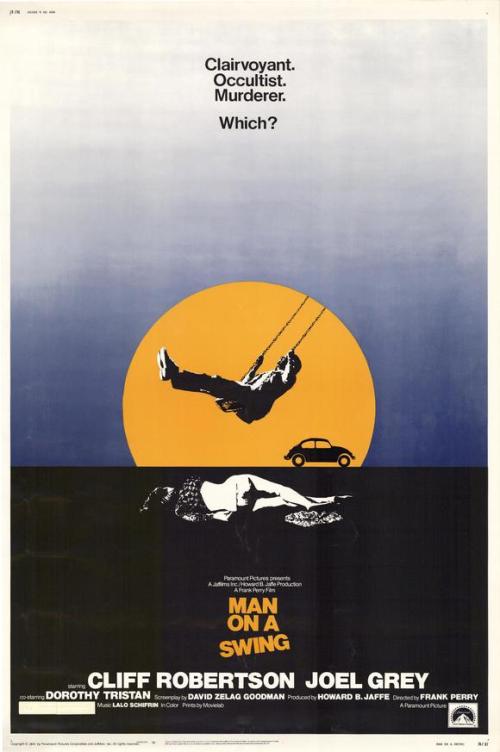
On one sunny afternoon Maggie Dawson (Dianne Hull) goes out shopping and never returns. 24-hours later her strangled body is found on the floor of her car. Police detective Lee Tucker (Cliff Robertson) heads the case, but finds few clues. After all leads dry up they turn to Franklin Wills (Joel Grey) who purports to be a psychic who can help them find the culprit. Initially the police are quite impressed with his abilities, but Franklin begins to show too much knowledge about the crime and the victim making them believe that he may be the actual killer.

The film is based on the novel ‘The Girl on the Volkswagen Floor’ by William A. Clark, which itself is based on an actual incident that occurred on June 12, 1968 in Kettering, Ohio. In the real-life event a young 23-year-old school teacher by the name of Barbara Ann Butler went shopping at a discount store one day only to end up being found murdered later. Police were, like in the movie, baffled and eventually ended up using the services of a psychic named Bill Bosheers, who goes under the pseudonym of Norman Dodd in the book. Like in the film Bosheers seemed to know an extraordinarily high amount of unauthorized info about the case including the fact that the victim used prescription glasses for just one eye. Bosheers also predicted another similar crime would occur in the near future, which it did and police have long suspected that the two were done by the same person.

What makes this film interesting is the way it meticulously follows the police investigation and keeps everything at a real level including having them pursue what turns out to be a lot of false leads, which other Hollywood movies rarely tackle. Nothing gets overblown and in fact the film’s strength comes from keeping everything on a nice creepy, low-key level with the focus on Robertson’s interaction with Grey. I also liked that there is very little music and the only time that there is some is when Grey is onscreen and even then it’s quiet and nonobtrusive accentuating the creepiness without over doing it.

Although he gets stuck with a non-flamboyant part I felt Robertson does quite well and I enjoyed how his down-to-earth sensibilities continually clash with Grey’s more flighty ones although the scene where the Robertson’s character discusses the case with his wife (Dorothy Tristan) at home didn’t really mesh. The character is also seen drinking constantly to the point of being a full-fledged alcoholic and this should’ve been touched on, but isn’t.

Grey, who ironically starred in a TV-movie called Man on a String just before doing this one, is outstanding and the whole reason to watch the film as he commands every scene that he is in. The way he goes into his psychic ‘trances’ is riveting and the part where he makes his entire face turn dark red, without the use of any makeup, is genuinely startling as is his drooling after he passes out. The film is also littered with many familiar faces of up-and-coming stars too numerous to mention here, but worth spotting at seeing what they were doing before they were famous.

I enjoyed the on-location shooting done in Milford, Connecticut which takes full advantage of the small town locale and helps make the story seem even more vivid. There are several uniquely memorable moments including an exercise that Grey is forced to take to measure his psychic ability as well as his visit to a pair of psychiatrists, which is wonderfully played by Elizabeth Wilson. However, even with all these good elements the ending is a letdown as it leaves too many questions unanswered and plays like an intriguing mystery that ultimately goes nowhere.

My Rating: 6 out of 10

Released: February 27, 1974

Runtime: 1Hour 49Minutes

Rated PG

Director: Frank Perry

Studio: Paramount

Available: DVD, Blu-ray, Amazon Video

Little Fauss and Big Halsy (1970)

little-fauss-1

By Richard Winters

My Rating: 6 out of 10

4-Word Review: Their friendship doesn’t last.

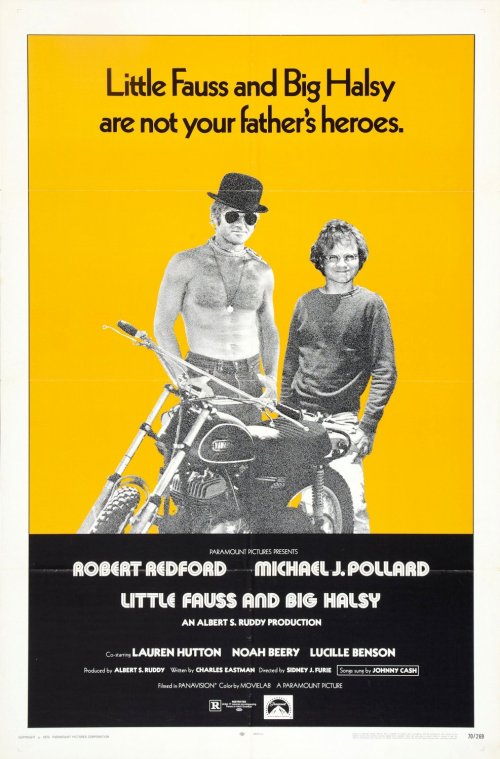
Little Fauss (Michael J. Pollard) is a motorbike racer who is shy, has few friends and still lives at home with his parents (Noah Beery Jr., Lucille Benson). Halsy (Robert Redford) is a brash womanizer whose been kicked out of the racing league for drinking on the track. He befriends the timid Little and conspires with him to race in his place while splitting the winning proceeds 50/50. Little’s parents do not approve of Halsy and feel that he will be a bad influence, but Little sees this as an opportunity to break away from his parent’s while befriending someone whose lifestyle he idolizes. Things start out poorly and only get worse particularly when the they meet up with the free-spirited Rita (Lauren Hutton) who chooses Halsy over Little despite the fact that Little has a crush on her.

The film has a nice gritty feel to it and the harsh desert landscape helps accentuate the hardened, rough living characters. The racing footage is also well done and just like with Downhill Racer, which was a film about skiing that Redford did just before this one, the viewer feels like they are in the middle of the action driving the motorbike along with the characters with wipeouts and crashes are real and at certain spots genuinely violent. I also enjoyed Benson and Beery’s performances and wished they had been in the film more as well as the opening tune sung by Johnny Cash although it became distracting when it gets played later on and should’ve been contained over the credits only.

Redford gives a stellar performance playing a character unlike any he has ever done and he does it convincingly to the point that the actor’s son in real-life considers this to be his father’s best onscreen achievement. Pollard though is solid too in a part that he seemed almost born to play. The two, who apparently didn’t get along well behind-the-scenes, play off each other in interesting ways and the movie only works when the two share the screen and is draggy when they don’t.

The story has its share of decent dramatic moments but it is also quite predictable. Redford’s character is completely unlikable and I would’ve liked one moment where he did or said something nice, or at least given us more of a background for why he turned out at being the way he was. The way Little outgrows the friendship and eventually becomes more confident and self-reliant is rather formulaic and like with most everything else in the film one can see coming long before it happens, which eventually makes the viewing experience of this thing feel almost like a nonevent.

My Rating: 6 out of 10

Released: October 21, 1970

Runtime: 1Hour 38Minutes

Rated R

Director: Sidney J. Furie

Studio: Paramount

Available: DVD, Blu-ray, Amazon Video

Soylent Green (1973)

soylent-green-1

By Richard Winters

My Rating: 6 out of 10

4-Word Review: People are the food.

This Review May Contain Spoilers.

The year is 2022 and the world is so overpopulated that people must sleep on stairwells and hallways and fight over getting their hands on the one and only food source called Soylent Green. Thorn (Charlton Heston) works as a police detective and assigned to a case involving the investigation of the murder of William Simonson (Joseph Cotten) who worked as a board member to Soylent industries. Thorn is convinced that there is more to the killing than simply an in-home robbery, but finds as he pursues the case that others are trying to prevent him from continuing on it, which makes him more determined to find the answers and connect-the-dots.

We’ll get the elephant out of the room right away by divulging that Soylent Green is made up of people who are killed to feed the rest of the population. Normally that would be considered a ‘spoiler’, but this film has become so well known for this ‘twist’ it that it seems almost absurd to avoid giving it away. If that ruins the film for you then I apologize, but the truth is I knew going into this how it was going to end, due to watching one of many parodies done on the movie particularly a SNL skit from years back involving Phil Hartman, and yet I came away enjoying it anyways. Mostly what I liked was the film’s neo-futuristic look that combines old buildings with a mod image and an opening sequence, which is the best part of the movie, used over the credits that was done by filmmaker Charles Braverman and shows visually through rapid-fire photographs how the world came into its bleak situation.

I was also really impressed with Heston’s performance. He is not an actor I’ve particularly enjoyed as I feel he is routinely too stiff and conveys his lines in an overly dramatic way that is quite stagey and even hammy and yet here he portrays a rough-around-the-edges man quite well and I consider this one of his best performances.

soylent-green-2

This also marks the final film of screen legend Edward G. Robinson who died only 20 days after production was completed. The scene where he and Heston eat fresh food, which is something the characters hadn’t done in a long time due to its scarcity, was completely improvised, but an excellent and memorable moment. I did feel though that there needed to be a backstory about why these two men, who had such contrasting differences in age, were living together and the fact that at one point both men say that they ‘love’ the other made me wonder if it was implied that they were gay.

The ending isn’t bad and I liked the way Thorn investigates the inner workings of the Soylent factory with the only noise coming from the plant’s machinery and no music, which makes it creepier. It is mentioned earlier though that this plant is ‘highly guarded’ and yet he is able to get into it rather easily and he walks through it for quite a bit before he is spotted by anyone and even then the men aren’t armed, which makes it seem like it isn’t too well guarded at all. Also, I didn’t get why Thorn, who is quite jaded for the most part, would get so noble and heroic once he found out the plant’s secret and feel the need to ‘warn’ others. The world they live in is quite bleak, so what is he ‘saving’ them from anyways as some may actually choose death over the squalor that they were stuck in.

The ultimate logic to this ‘clever’ twist ending doesn’t hold up too well either. For instance the idea that the company would just kill a few people here and there wouldn’t be enough to keep up with the demand and at one point does the overpopulation begin to go down? If so many are supposedly being killed to feed the others then the crowding should lessen, which again only reiterates the fact that the filmmakers hadn’t completely thought this thing through and if anything the film should’ve used Thorn’s discovery as springboard to a more complex and intricate plot instead simply relying on it as a ‘shock’ ending.

soylent-green-3

My Rating: 6 out of 10

Released: May 9, 1973

Runtime: 1Hour 37Minutes

Rated PG

Director: Richard Fleischer

Studio: MGM

Available: DVD, Blu-ray, Amazon Video, YouTube

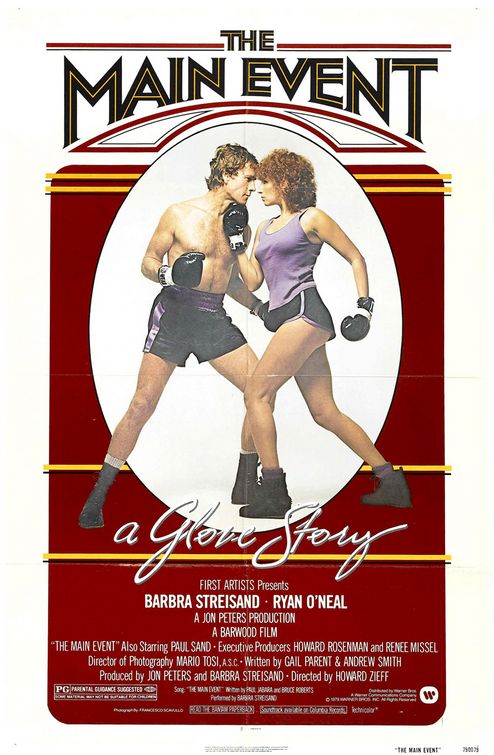
The Main Event (1979)

main-event

By Richard Winters

My Rating: 3 out of 10

4-Word Review: Babs promotes a boxer.

Hillary Kramer (Barbra Streisand) is an owner of a successful perfume company who suddenly finds that all of her financial assets have been stolen by an unscrupulous business manager. The only thing she has left is a contract with a down-and-out boxer named Eddie ‘Kid Natural’ Scanlon (Ryan O’Neal). She decides to become his manager and promote him even though he is through with boxing and much more content at working as a driving instructor.

Barbra is quite enjoyable and the one thing that manages to hold it all together even though I couldn’t stand her frizzy hair look and wished she had just kept it straight, but as a comic character she is good. I was amazed at how much she makes fun of herself including an open bit that takes potshots at her world famous nose. There are other segments that reverse her feminist stance as well where the man, or in this case the O’Neal character, feels like he’s being ‘objectified’ by her and after they sleep together feeling ‘used’ when she isn’t quite ready to get into a relationship. Amazingly she even allows herself to be clad in very tight fitting shorts and in one rather explicit moment bends down in them, which again being the famous feminist that we know she is in real-life seemed surprising, but I liked the fact that she can show a playful side and that she doesn’t take herself too seriously.

Unfortunately O’Neal is the wrong man as her co-star as he is too weak of an actor and cannot keep up with her strong personality. Trying to play these two off as equals doesn’t work as he has no ability to counter her comic punch and his attempts at seeming exacerbated are forced and not funny. Sure they had success earlier with What’s Up Doc? but that was because he played a character that got run over and dominated by hers, which is the only way their contrasting styles would succeed on celluloid.

The film though still manages to be funny and I was ready to give this a 7 until it peters out like air coming out of a tire during the second half. Having the group cooped up in a winter cabin stifles the action as this is the type of story that should’ve stayed permanently on the road. The contrived love angle that gets thrown in is formulaic and not believable. These two could never get along even if they wanted to. They may at some point gain a begrudging respect for the other, but to think they could cohabitate in a lasting relationship is ridiculous and besides it was the bickering between them that was entertaining and once that goes so does the movie.

My Rating: 3 out of 10

Released: June 22, 1979

Runtime: 1Hour 49Minutes

Rated PG

Director: Howard Zieff

Studio: Warner Brothers

Available: DVD, Amazon Video, YouTube
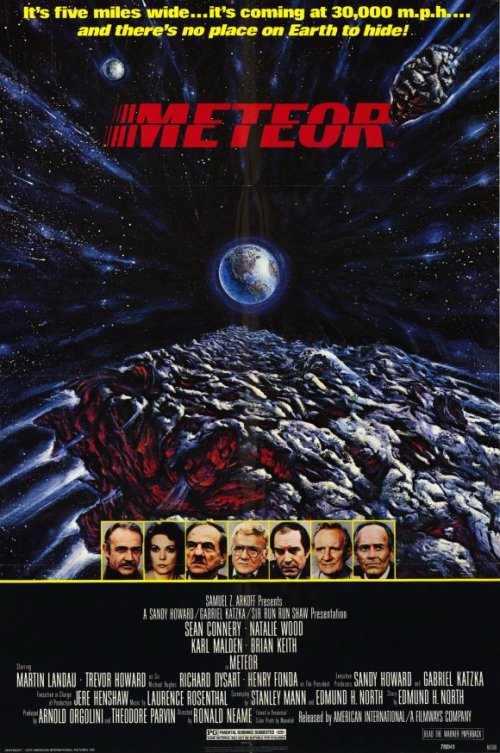
Meteor (1979)

meteor

By Richard Winters

My Rating: 3 out of 10

4-Word Review: Save earth from rock.

Inspired by the ‘Project Icarus’ report done by MIT students during the spring of 1967 the film surmises what would happen and what defenses might be used should a gigantic asteroid come barreling towards earth. Here the meteor is described as being 5-miles wide with an impact that could prove catastrophic and turn the earth’s climate back into the next ice age. Dr. Paul Bradly (Sean Connery) is brought in to advise since he is the one that created an orbiting nuclear missile space station specifically for this reason, but its firepower will not be enough and they must rely on the help from their Russian counterparts, who have a similar missile station in space, in order to get the job done.

The story and characters are quite bland with little to no effort made to enrich the drama with any side-stories or issues. The viewer is teased with a potential romance between Paul and Russian interpreter Tatiana (Natalie Wood), but it goes nowhere. The constant cutaways showing the meteor zooming through space actually lessens the tension because as it gets dwarfed amongst the immensity of the universe, which makes the rock look rather small and therefore it doesn’t seem all that impressive.

The special effects are tacky although the scene where a smaller asteroid fragment hits New York City has a shot of the World Trade Center collapsing in much the same way that it did on 9-11, which is eerily prophetic. The mud slide in the subway tunnel does have merit and the actors do at times seems genuinely overcome by it, but everything else borders on being unintentionally funny. The only thing that really impressed me was the amount of extras they were able to attain including participants in a ski race that seemed to border on the tens of thousands.

The cast is made up of old Hollywood has-beens who careers peaked long ago and all seemed better suited for a guest shot on ‘The Love Boat’. None of them were under 40 and therefore younger filmgoers of the day where disconnected from it although Brian Keith is a scene stealer as the Russian scientist and speaks fluent Russian rather amazingly given the fact that he did not know the language and was only doing it phonetically. I also got a kick out of Martin Landau as a hot-headed general who has the perfect eyes for a glazed over expression of a dead man, which the viewer gets treated to briefly.

Several special effects teams were reportedly fired during the course of production simply because they could not provide adequate enough effects on the limited budget, but it seems dumb to produce a film that hinges on spectacular effects if that is something that can’t be provided, which ultimately is why this did so poorly at the box office.

meteor-2

My Rating: 3 out of 10

Released: October 19, 1979

Runtime: 1Hour 49Minutes

Rated PG

Director: Ronald Neame

Studio: American International Pictures

Available: DVD, Amazon Video

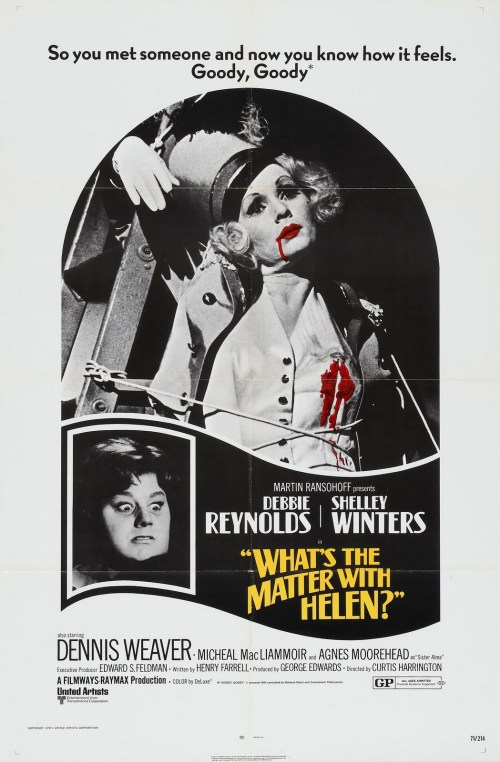
What’s the Matter with Helen? (1971)

whats-the-matter-1

By Richard Winters

My Rating: 6 out of 10

4-Word Review: Religious lady goes crazy.

Adelle (Debbie Reynolds) and Helen (Shelley Winters) are two mothers whose sons commit a gruesome murder. Once the two men are convicted the women decide to move across the country, change their names and open up a dance studio. Adelle meets a handsome bachelor (Dennis Weaver) who is full of money, but Helen’s fortunes don’t improve. Instead she wallows in depression while receiving threatening phone calls, which gets her paranoid that someone is out to get them. She tries to seek solace through her religion, but eventually the stress becomes too much and her psychic begins to crack.

The screenplay was written by Henry Farrell famous for penning the novel What Ever Happened to Baby Jane?, which later became a big screen success. Unlike that one this was written directly for the screen and misses the textured richness of a backstory specifically how the two women first met or how their friendship blossomed.

On the visual level it starts out well and I enjoyed the use of old news reel footage to help introduce the story, but after that it goes into a lull with long, talky takes that fail to generate much excitement. The recreation of the 1930’s setting looks cheap and stagy and the film lacks a cinematic flair to help compliment it’s campy storyline. Originally director Curtis Harrington had implemented visual effects to be used in the transitions between the scenes, which would’ve helped immensely, but the producer hated them and forced them to be taken out.

On the acting end I felt Reynolds was rather boring and stuck playing a character that isn’t very interesting, which made me surprised that she put up $800,000 of her own money just to get it produced. The showy role is clearly Helen’s and Winters plays the part quite well and becomes the film’s main attraction. Usually she would take-on flamboyant-type characters, but this one required her to be more subdued and repressed and she is able to do it magnificently, which only proves what a gifted and versatile performer she was.

There are a few edgy but brief bits including the shot of a dead body that has been run over by a farm plow, which has some pretty good bloody effects. However, the shot showing a close-up of the women’s body who was the victim of the two sons isn’t effective because it supposedly gets posted in a newspaper as a lead in to the article about the crime, but no mainstream publication either then or now would print such a gruesome picture of a victim.

There were also several provocative scenes that got excised in an effort to the attain the GP rating, which included a shot of Winters kissing Reynolds on the lips as well as a murder scene that was originally intended to be much more drawn out than what it ends up being. The film’s final shot though is still well done and probably the only thing that makes sitting through this worth it.

My Rating: 6 out of 10

Released: June 30, 1971

Runtime: 1Hour 41Minutes

Rated GP

Director: Curtis Harrington

Studio: MGM

Available: DVD

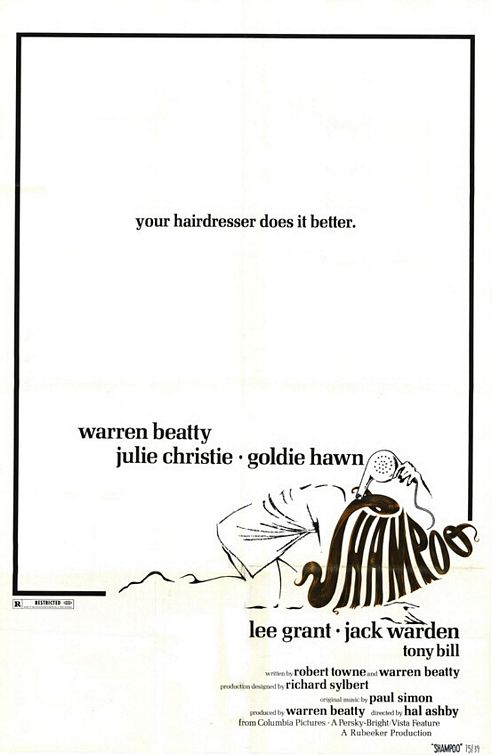
Shampoo (1975)

shampoo-2

By Richard Winters

My Rating: 9 out of 10

4-Word Review: Hairdresser shags his clients.

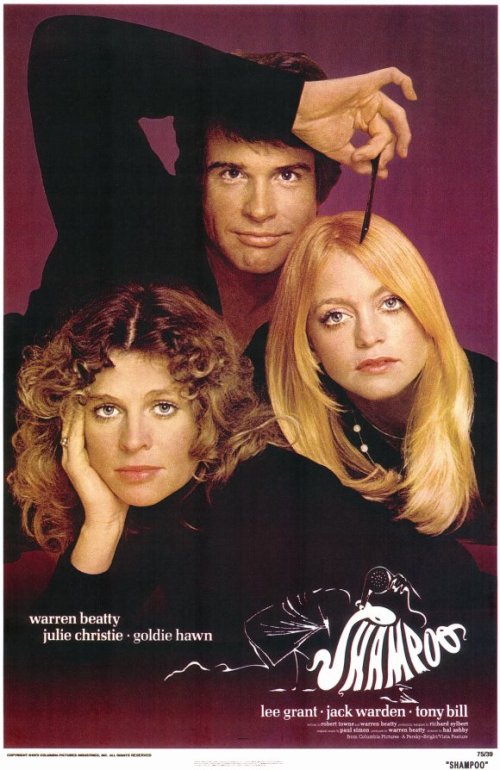
George (Warren Beatty) is a successful hairstylist who makes a habit of sleeping with his lady clients. He wants to open up his own beauty salon, but lacks the funds and not enough collateral to qualify for a loan. He is currently sleeping with Felicia (Lee Grant) who tells him to ask her husband Lester (Jack Warden) for the money. Lester is having an affair with Jackie (Julie Christie) who used to be George’s girlfriend. George’s current girlfriend is Jill (Goldie Hawn) who is having the inklings to sleep with Johnny (Tony Bill) since she thinks George is not being faithful to her. Everything comes to head on the night of November 5, 1968 during the election returns when everyone finds out that everyone else has been cheating on them and things get hilariously awkward.

This could quite easily be the best satire on the mores of Southern California culture ever made. The fact that it gets juxtaposed with the election where the same people who voted for an administration that vows to crackdown on the ‘permissive culture’ are the same ones doing the immoral behavior makes a very loud statement on the foibles and hypocrisies of the establishment.

Richard Sylbert was nominated for the Academy Award for his set decoration and he should’ve won as the vibrant and colorful interiors of the plush homes that the characters reside in become almost like a third character and makes you feel like you are right there inside the places with the characters and immersed completely in their world. The spectacular skyline views seen from the window of Lester’s office are equally impressive and I also enjoyed the party sequence, which reflected a true party atmosphere particularly the one attended by members of the counter-culture and the stylized set lighting by a slowly opening refrigerator door that gradually exposes the identities of a couple making love in the dark to the shocked onlookers standing around is outstanding.

The talented female cast is terrific, but a bit misused. Jackie’s meltdown during the election party seemed way overdone. This was a smart woman who would’ve seen through Lester’s thin veneer from the start and therefore wouldn’t have been that ‘traumatized’ when it finally came out in the open.

I was also disappointed that we didn’t see more of Lee Grant’s character. She won the Academy Award for her work here, but there needed to be more of a wrap-up with her as well as a scene showing an ultimate confrontation with her daughter (Carrie Fisher in her film debut) who has a secret fling with George behind her back. However, the shot showing Fisher giving her mother the most hateful and disdainful glare you can imagine that literally burns through the screen is almost a gem in itself.

Despite his many transgressions I found Lester to be strangely likable. His quirky ‘bonding’ with George near the end is cute, but I really wanted to see him jump into the hot tub and smoking some weed with the hippies after they offer him a joint and was disappointed it never came to pass even though it does come close.

Beatty, who co-wrote the screenplay, has his moments too, but they don’t come until the final half-hour, but it’s worth the wait. His ‘confession’ to Jill about what motivates him to sleep with all of his female clients and what he gets out of it is not only funny, but quite revealing to any male with the same traits. His final desperate plea to Jackie at the very end is equally interesting and even a bit surprising.

My only real complaint is the fact that it doesn’t seem like a legitimate ‘60s atmosphere even though that’s when it supposed to take place. The adult characters are too brazen in their actions. The college crowd was the first to embrace the free love philosophy while the middle-agers, who were raised in a more repressed, guilt-ridden era, took longer to catch-up to it. It just reeks too much of the mid ‘70s where by that time ‘everybody was doing it’ particularly in swinging L.A., which is where the time period should’ve stayed. There is also never any explanation for why the fire department comes in to evacuate the guests from the building as they are watching the returns.

Still the message of how people who use other people will eventually end up getting owned by the very same folks that they think they are manipulating is very on-target and amusingly played-out.

shampoo-1

My Rating: 9 out of 10

Released: February 11, 1975

Runtime: 1Hour 49Minutes

Director: Hal Ashby

Studio: Columbia Pictures

Available: DVD, Amazon Video, YouTube
The Tall Blonde Man with One Black Shoe (1972)

tall-blonde-2

By Richard Winters

My Rating: 7 out of 10

4-Word Review: Following the wrong man.

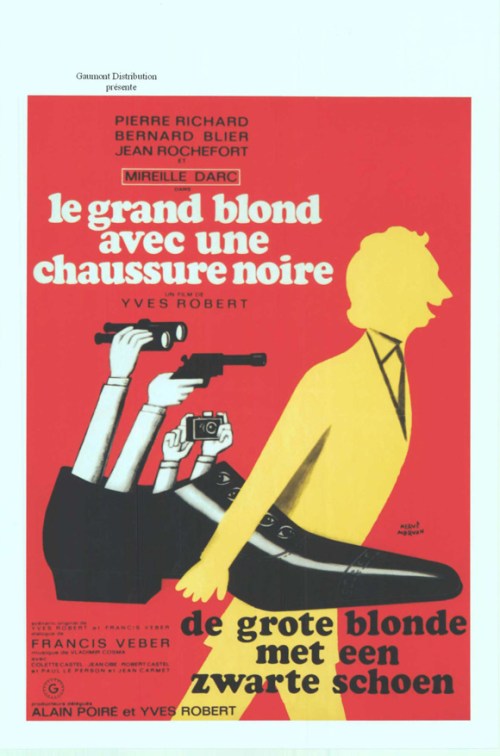
Bernard Milan (Bernard Blier) and Louise Toulouse (Jean Rochefort) are two rivals within the French Intelligence agency with each looking to unseat the other from their position of power. To counterattack his rival’s ambitions Louise decides to trick the other side into wasting their time by getting them to believe that a man chosen at random is a spy and having them follow him around even though in reality he has no connections to the spy game at all. Violinist Francois (Pierre Richard) gets chosen when he is spotted at the airport wearing only one black shoe. Bernard and his men fall for the bait and follow around Francois wherever he goes and eavesdrop on his conversations like there is some hidden meaning in whatever he says and does, which leads to many amusing results.

The film’s main charm is its satirical jab at governmental bureaucracy and the way they spend so much time and money on wasteful elements that lead nowhere while blithely ignoring the bigger problems. It also playfully taps into the foibles of human nature and how people, once they are convinced of something, will continue to believe it to the point of willfully rejecting or rationalizing evidence that may point elsewhere.

The best bit comes with the overly serious facial expressions that Blier and his subordinates show as they intently listen into Francois’ lovemaking with a woman (Colette Castel).  The slapstick during one of Francois concerts and the side-story dealing with Francois’ friend Maurice (Jean Carmet) who thinks he may be going nuts as he spots the spies at various times when no else does are equally side-splitting.

Pierre Richard, who was not the original choice for the part, is perfect in the lead with his flaming, curly, disheveled hair the perfect look for a man that’s just a bit out-of-touch with world around him. The fact that he continues about his daily life while oblivious to all the spying going on around him makes it even funnier and I liked that despite the character being on the goofy side he still ends up coming off like a real person albeit on the eccentric end.

The script by Francis Veber manages to sustain its comical edge throughout, but like with many of his other plots it borders on stretching its one-joke too thin and seeming more like a collection of gags than an actual plot. The humor is funny enough that it works, but the story still lacks a second or third act and could’ve ended sooner than it does. The film also fails to show the most crucial moment of the story, which is why Francois was wearing one black shoe to begin with. It gets briefly explained later, but this is a scene that should’ve been shown right up front before any of the rest of it got played-out.

In 1985 20th Century Fox did an American remake of this film that starred Tom Hanks and was called The Man with One Red Shoe, which will be reviewed tomorrow.

My Rating: 7 out of 10

Released: December 6, 1972

Runtime: 1Hour 30Minutes

Rated PG

Director: Yves Robert

Studio: Gaumont

Available: DVD, Blu-ray, Amazon Video, YouTube