Category Archives: 70’s Movies

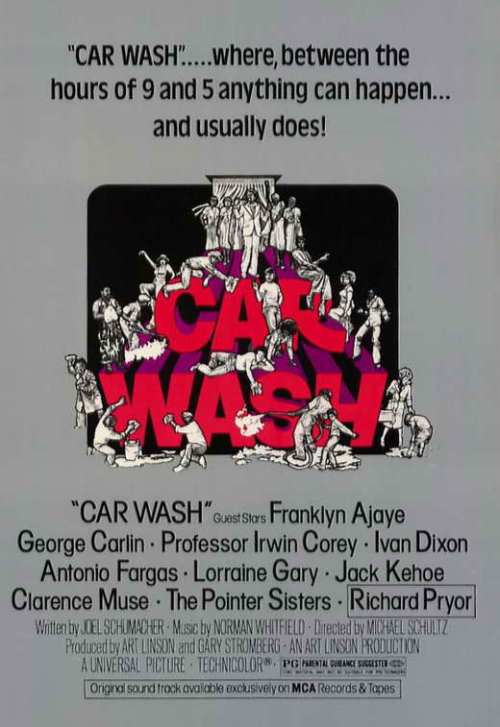
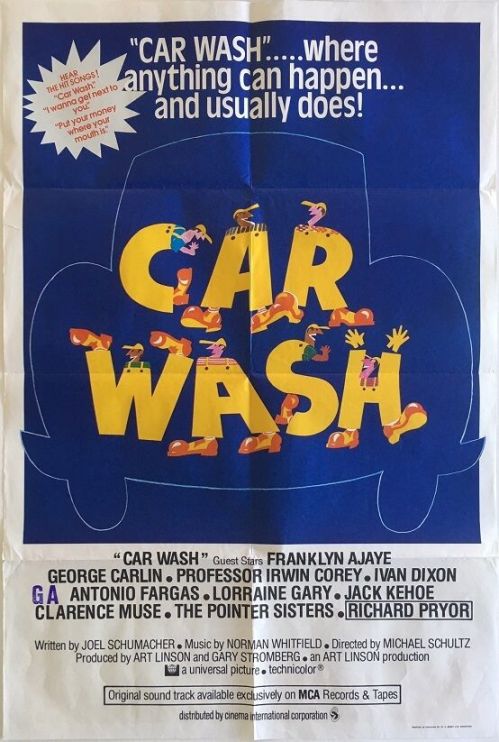
Car Wash (1976)

By Richard Winters

My Rating: 2 out of 10

4-Word Review: Having fun washing cars.

A look at the day-in-the-life of those working at a L.A. car wash. Mr. B (Sully Boyar) is the owner and frets about his employees not working hard enough, but too afraid to fire any of them for fear of retribution. Behind-the-scenes he’s having an affair with his young, but plain-looking receptionist Marsha (Melanie Mayron) who in-turn is more interested in a man with money and gets excited when a well-dressed one asks her out on a date. Lonnie (Ivan Dixon) is a recently released convict working at the car wash and raising a family, but finding it hard on the salary he’s given, which Mr. B refuses to raise. Duane (Bill Duke) is a Black Muslim revolutionary now going by the name Abdullah who preaches power to the people while Mr. B’s son Irwin (Richard Brestoff) who has just graduated from college and groomed to take over the business is more interested in being a part of the working class instead.

In many ways this could be described as a precursor to Clerks with a cinema vertite feel that captures the daily experience of working a mundane job quite well. The humor is restrained and never goes over-the-top making the dialogue between the cast and the pranks they play on each other believable and like something that could play out in just about any car wash or blue collar job across the country. The disco soundtrack, which includes the iconic title tune by Rose Royce, which is actually better than the movie itself, helps add to the 70’s ambiance as well as the fact that it was filmed on-location at an actual car wash, which has since been demolished, at 610 South Rampart Boulevard in Los Angeles.

Unfortunately there’s not enough plot, or character development to hold it all together. The loosely structured approach, which initially comes off as fresh and original, eventually grows tiring without any type of genuine drama or story line to keep it compelling. There are also too many amusing bits that could’ve been strung out longer and even enhanced, but instead end up getting dropped almost as quickly as they’re introduced.

The cast is filled with too many characters and it’s hard to keep track of them, or understanding why they’re needed. At most car washes I’ve been there’s usually only one employee, or maybe two at the most, to wax the car, or rub it down after it’s been through the wash, but here it takes literally 5 or 6 guys to work on one car, which seems ridiculous. Cutting the cast down would’ve helped and having it centered around one main person instead of doing the ensemble thing would’ve been even better.

The appearances of George Carlin and Richard Pryor add very little and their screen times are so brief I was surprised they even accepted the parts. I was also disappointed that Lorraine Gary’s part was so short too. She’s best known for playing Roy Schieder’s wife in the Jaws films. Here she plays a stuck-up Beverly Hills housewife who’s more concerned about how her car looks than in the fact that her young son is sick. Her haughty attitude creates a delightful culture clash and I really thought she could’ve added some funny friction had she stayed in it all the way through and I really thought she would especially after her son throws up in the car just as they are leaving the lot making me think she would’ve simply backed-up the car and had them clean out the vehicle’s interior, since they had just done the exterior seconds before, but instead she apparently just goes on driving, but who would do that?

There are also potentially interesting story lines that never get adequately explored. The affair between Mr. B. and Marsha was one of them, but another had to do with a ‘pop bottle bomber’ that was terrorizing the city. At one point the crew thinks it’s an old man (Irwin Corey) that comes into the place, but find that’s a false alarm, but it would’ve been exciting had they eventually come into contact with the real one, which could’ve added intriguing dynamics both with the characters and plot.

Originally this was to be a musical, but for whatever reason Universal nixed that idea and decided to turn it into a plain-old comedy instead. I’m not necessarily a fan of musicals, but in this case the songs and dance numbers would’ve helped tie everything together as the script is otherwise too unfocused to remain captivating past the first 30 minutes.
My Rating: 2 out of 10

Released: September 3, 1976

Runtime: 1 Hour 37 Minutes

Rated PG

Director: Michael Schultz

Studio: Universal

Available: DVD, Blu-ray, Amazon Video, YouTube
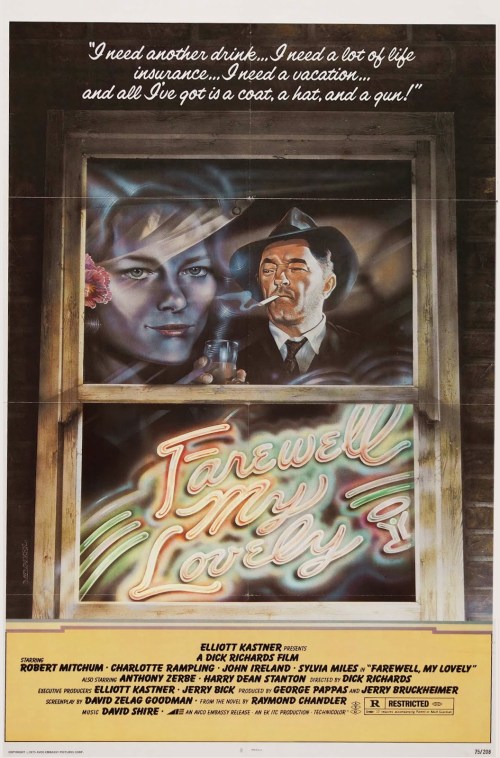
Farewell, My Lovely (1975)

By Richard Winters

My Rating: 4 out of 10

4-Word Review: Searching for missing lady.

Based on the Raymond Chandler novel of the same name the story centers on private eye Phillip Marlowe who meets Moose Malloy (Jack O’Halloran) a recently released convict that asks Phillip to find his girlfriend Velma who worked as a dancer at a nightclub, but who has now gone missing. Marlowe decides to take the case, but finds a wide array of strange clues that leads him on a bizarre trail that has many twists.

The novel was filmed before in 1944 as Murder, My Sweet that starred Dick Powell, which has become a classic. This remake was noted for being able to stay closer to the source novel by retaining aspects of the story that was considered too provocative for 1940’s standards, but the edition of these elements really doesn’t make the mystery any more interesting. The direction doesn’t convey any feel for the material and despite the intricate plot everything plods along at a rather mundane pace. I also never really felt that the setting effectively reflected the 40’s as much as it could’ve.

The biggest issue though is Mitchum. The guy is certainly a legendary actor and his performance here isn’t bad I actually thought his timing with the way he conveys his lines was on-target, but he’s just way too old for the role. In the novel Marlowe was described as being in his 30’s, but Mitchum was 57 and looking more like 67. The guy comes-off as washed-up with no charisma, or ability to win a fight even though he does get into a few altercations anyways, which doesn’t seem believable.

The eclectic supporting cast is the only thing that makes it mildly interesting. Sylvia Miles got nominated for supporting actress Oscar as a lonely alcoholic lady with a secret, but I actually enjoyed Charlotte Rampling as a beautiful, but cold and conniving gold digger much better. It’s also great to see Kate Murtagh as this overweight woman who runs a whorehouse. Fat woman are usually never given prominent roles in most Hollywood films, but here she plays an intriguing part that culminates with a surreal, nightmarish segment that helps give the film a little extra verve that’s otherwise missing.

The film also has a couple of great cameos. One features Sylvester Stallone in a non-speaking role as a thug, which was just before he broke it big with Rocky. I found the cameo though by author Jim Thompson, who’s best known for writing such novels as ‘The Getaway’ and ‘Pop. 1280’ to be far more interesting. He plays the elderly husband to Rampling and the scene where he opens up a door to find her kissing Mitchum on a couch and all he does his just shut the door back-up and leave to be the funniest moment in the movie.

The budget should’ve been bigger as it’s not stylish. If you’re going to redo a classic you’ve got to go all-out, but the effort here is half-hearted. Yet despite this the producers forged ahead with another Marlowe film that had Mitchum again playing the part. That one was called The Big Sleep and will be reviewed later this month.

My Rating: 4 out of 10

Released: August 8, 1975

Runtime: 1 Hour 35 Minutes

Rated R

Director: Dick Richards

Studio: Embassy Pictures

Available: DVD, Amazon Video, YouTube

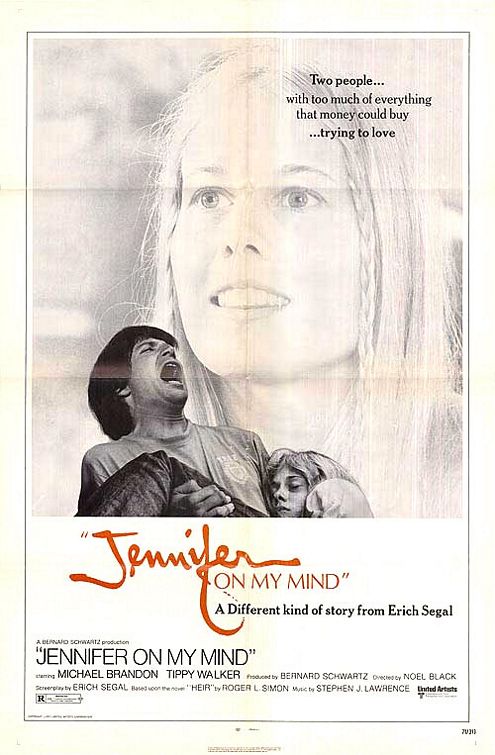
Jennifer on My Mind (1971)

By Richard Winters

My Rating: 3 out of 10

4-Word Review: Girlfriend becomes heroin addict.

While vacationing in Venice Marcus (Michael Brandon) meets up with Jennifer (Tippy Walker) a young free-spirit whose beauty and carefree ways immediately smitten him and the two begin a relationship, but Jennifer’s impulsive ways doesn’t allow it to last. He later learns that she’s a heroin addict and tries to help her overcome it, but to no avail. After she disappears for several months she then suddenly shows up at his doorstep wanting to rekindle old-times. At first he’s happy to see her, but then learns that her addiction has grown worse and after reluctantly giving her an injection that turns out to being fatal he then goes into a panic and tries to get rid of the dead body as he fears he’ll be implicated for her death otherwise.

After the success of Love Story screenwriter Erich Segal was a hot commodity and given free-reign to write any concoction he wanted and this script, which is based on the Robert L. Simon novel ‘Heir’ is the result.  The story though is poorly structured and seems to focus more on Marcus and his efforts to get rid of the body than on giving any meaningful insight to the drug addiction experience. There’s also severe shifts in tone where it’s dramatic one minute and then has weird dream-like humorous segues where Marcus sees visions of his dead grandfather (Lou Gilbert) who cracks corny jokes.

Director Noel Black, whose career looked bright after doing the critically acclaimed cult hit Pretty Poison, manages to infuse some nice on-location scenery, particularly that of Venice,  but technically botches many other moments. The worst comes when Jennifer tries to jump off the roof of her house, but she goes from being in her backyard to on the rooftop in a matter of seconds, which isn’t realistic. She then jumps off it even though it’s a 2-story building with another rooftop of a different section of the home beneath her, which is where she should’ve landed, but instead the film in a poorly edited bit that doesn’t even show the actual jump has her landing in a flower bed.

The Marcus character, who has inherited his grandfather’s fortune and therefore doesn’t have to work for a living, is too smug to be likable and most viewers will find his privileged situation off-putting. He also doesn’t seem, despite his insistence, to be all that ‘in-love’ with Jennifer especially with the callous ways he tries to get rid of her body and in one really creepy moment even professes to the corpse that he feels closer to her now than when she was alive. I also couldn’t understand why this non-descript guy would be constantly attracting the attention of violent bikers and hippies. One instance occurs when he is doing nothing more than standing at a pier of a lake and within seconds finds himself surrounded by three bikers who come out of nowhere and then later on as he’s driving down a busy highway some hippies decide to harass him at random but no one else.

Jennifer character is equally annoying as the viewer learns little about what makes her tick. Walker’s acting career ended after this film as she left Hollywood disillusioned with the business after having an affair with George Roy Hill when she was only 16 and he was 42 while filming The World of Henry Orient. Her life, like the character in the film, then  took a strong downward spiral as she opened up an art gallery in New Haven, Connecticut which eventually closed. In a 2015 interview published in the New Haven Register she was living in a cramped 1-bedroom apartment that was infested with cockroaches after having spent several years being homeless and surviving off of social security and what little monthly money her brother in Texas sent her.

The film’s  only saving grace are the performances of its supporting cast . I enjoyed Peter Bonerz as a psychiatrist who barrages into Marcus’ home and tries to give him an impromptu therapy session. Chuck McCann is amusing too as a motorist who tries to help Marcus change a flat, Barry Bostwick and Jeff Conaway enliven things as two antagonistic minstrels and Robert De Niro is great as a gypsy cab driver. Otherwise this thing is a complete mess that like a bad car accident is garish enough to keep you watching, but offers nothing in return.

My Rating: 3 out of 10

Released: November 10, 1971

Runtime: 1 Hour 30 Minutes

Rated R

Director: Noel Black

Studio: United Artists

Available: DVD-R (MGM Limited Edition Collection), Amazon Video

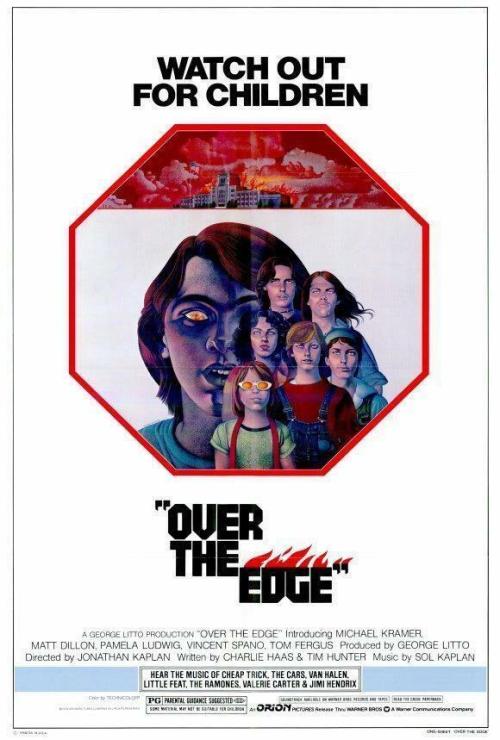
Over the Edge (1979)

By Richard Winters

My Rating: 5 out of 10

4-Word Review: Out of control teens.

The teenagers in the planned community of New Granada, Colorado find themselves bored and constantly getting into trouble. The town was designed for adults with no consideration given for them. The recreation center is their only outlet, but that closes at 6 PM allowing for too much idle time in the evenings. Vandalism and other petty crimes soon commence, but when one of the teens (Matt Dillon) gets shot and killed by a cop (Harry Northup) his friends rebel by locking all the parents inside the local Junior High School while they’re having a meeting and not allowing them to leave.

The story, which was co-scripted by Tim Hunter who went on to even greater success by directing River’s Edge, which had a similar theme, is based on true events that occurred in the early 70’s in a planned community of Foster City, California. Like in the film no consideration was given to the teens during the planning phase causing them to become bored and resort to crime and rebellion, which lead to an article being written about in the San Francisco Examiner that attracted the attention of Hunter and Charles S. Haas who thought it could make good material for a movie. They traveled to the town and interviewed many of the teens first-hand to get a good idea about their feelings and thoughts.

There are elements about the movie that I enjoyed, which is mainly the way it captures the community, which was filmed on-location in the Colorado towns of Aurora and Greeley. I especially liked how the cinematography focuses on the barren desert landscape and the cookie-cutter homes built in the middle of it without showing any downtown, which helps to accentuate how unimaginative and soulless a lot of these suburban places really are.

The presence of Matt Dillon, in his film debut, helps as well. He was 14 at the time and only attended the audition simply as an excuse to get out of going to school without any intention of actually getting a part, but onscreen he shows a strong acting flair and outshines his other co-stars to the extent that he should’ve been made the lead and it’s a shame when his character exits so quickly.

The idea by director Jonathan Kaplan was to try and make this seem like a documentary, which works to some extent. I liked how the cast was made up of  little known actors that most viewers will not recognize makes it seem like ordinary people and not actors at all. The use of the music though is what I had a problem with. The songs that get heard in the background by such bands as Cheap Trick, The Ramones and The Cars are perfect and convey a punk attitude that the kids were feeling, but the instrumentals that are played during some of the action sequences was not needed. Again, if this is supposed to seem like a documentary then very little music should be used as real-life doesn’t have an ongoing soundtrack and by implementing one in, even if it was composed by the director’s father Sol Kaplan, was a mistake.

I also had a problem with the film’s climactic sequence in which the teens lock the adults in the school and then go about vandalizing their cars outside. This is the film’s only unique moment and should’ve been played-up much more, but the tension from this doesn’t get stretched out as much as it should. I would’ve liked this scene to take up more of the movies and played out almost like a thriller by trapping the adults in the place for several days until you start to fear they might never get out and even turning-the-tables on them by having the kids order them around and forcing them to do humiliating things just for their own amusement.

Although the movie received very little reception when it was first released, which was only a limited engagement, it has managed to find a cult following and critical acclaim since. There are some keen moments particularly the way it portrays the out-of-touch adults who are always convinced that their kids are ‘angels’ while it’s someone else’s that is the troublemaker, but the script makes its point early and then just proceeds to repeat it over and over again until it gets redundant.

My Rating: 5 out of 10

Released: July 7, 1979

Runtime: 1 Hour 35 Minutes

Rated PG

Director Jonathan Kaplan

Studio: Orion Pictures

Available: DVD, Amazon Video, YouTube

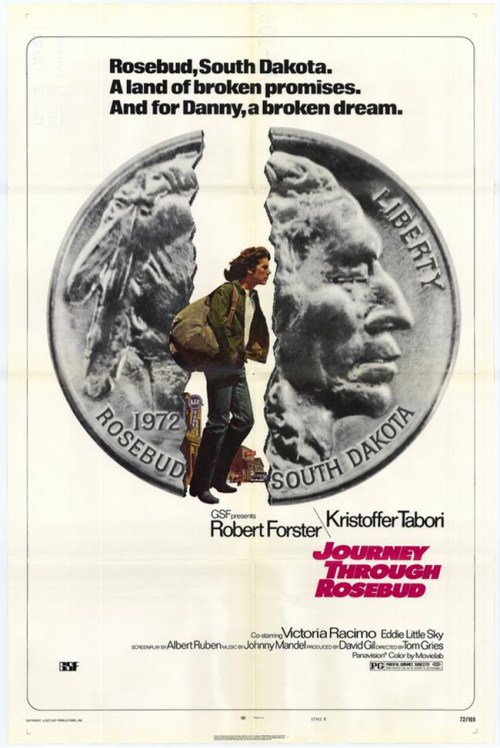
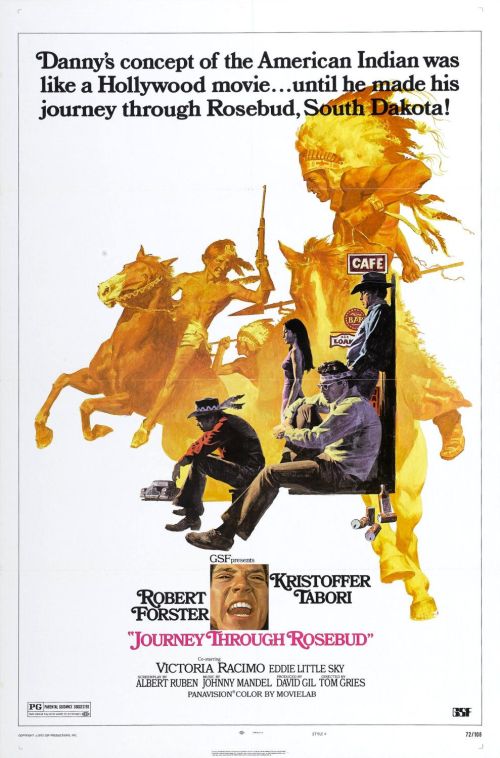
Journey Through Rosebud (1972)

By Richard Winters

My Rating: 3 out of 10

4-Word Review: Draft dodger visits reservation.

Danny (Kristoffer Tabori) travels to a South Dakota Indian reservation as he tries to escape the draft and troubles at home. He meets up with Frank (Robert Forster) who is an Indian living there and who has issues of his own, which is mainly his alcoholism and that at the age of 32 he still lives with his mother in a ramshackle home with no prospects at a secure, good paying job. Danny learns first-hand of the struggles of the modern-day Indian while also take part in some of their rituals and customs.

The film’s best element is the performance by Forster who goes outside his comfort zone by playing a Native American and doing it with conviction. Normally he’s entertaining as a brash-talking tough guys, but here his character is much more restrained and in one sad moment even falls to the ground and begins crawling around in a drunken state while those around him look on with contempt and disdain that is gut-wrenching to see while also exposing his courage as a performer by putting himself in such a pathetic looking state that not all actors would be willing to do even if the script called for it.

Tabori is equally enjoyable and in the few films that I’ve seen him in I’ve become convinced that he was a potentially strong leading man who never quite got his fair shot. His thin frame and youthful age belie a strong inner presence that helps to make his dynamic between Frank and himself potentially interesting, but the film neglects to follow through with it enough.

As for the action there is unfortunately not enough of it. The only time something does occur is when a group of Indians go on private land to rustle and kill cattle, which includes a very grisly shot of them slashing the animal’s throat that may make many viewers uncomfortable. Otherwise it flatlines from the first frame to the last and almost comes off like a minor league educational film dealing with the issues of reservation life than a movie with an actual story. In fact it’s so slow that I started to feel a group of amateurs with good intentions, but limited ability made it, but instead it was directed and written by a couple of Hollywood veterans who should’ve known how to better pace a story, so why that wasn’t done here I don’t know.

The film received a very limited release with the explanation that the studio didn’t think they could find the right target audience for it, but I think it was more to the fact that they knew it was boring and no one, even those that connected with the theme, would want to sit through it. The film is more like some small day trip excursion where someone visits a small no-name town, takes part in benign events there and then leaves without any of it having much impact on them, which is exactly how the viewer feels after watching the movie.

My Rating: 3 out of 10

Released: March 2, 1972

Runtime: 1 Hour 33 Minutes

Rated GP

Director: Tom Gries

Studio: GSF

Available: None at this time.

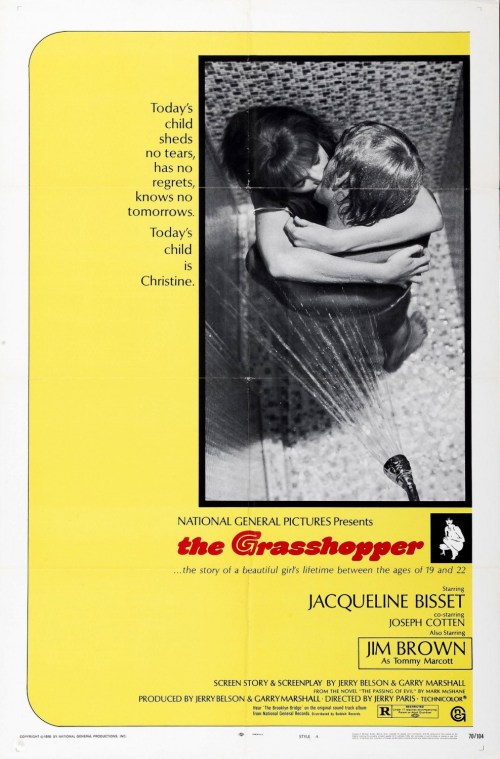
The Grasshopper (1970)

By Richard Winters

My Rating: 6 out of 10

4-Word Review: Runaway becomes  a showgirl.

Christine (Jacqueline Bisset) is a 19-year-old who’s bored with her life living in rural British Columbia and decides one morning to run away from home and meet up with her fiance Eddie (Tim O’Kelly). He gets her a job as a bank teller, but she finds this boring too, so she runs away from him and moves in with a Vegas comedian (Corbett Monica) who gets her work as a showgirl, but Christine’s inability to ever settle down and her impulsiveness leads her to spiral downhill until she’s eventually forced into prostitution.

Initially I was leery about this one as it was directed by Jerry Paris an actor-turned-director who mainly directed episodes from TV-shows as well as the infamous sequels to the Police Academy franchise and for awhile this thing did not look much better than those, but just when I thought it would be nothing more than a sanitized TV sitcom-like foray into the runaway scene it improved. The second-half has some genuinely gritty moments and the behind-the-scenes look of the showgirl lifestyle is well handled and realistic.

Bisset is excellent and her performance pretty much makes the movie, but she’s not completely right for the part either. For one thing she doesn’t look anything like 19 and was in fact 25 when she did this. She also wears too much make-up. I had no problem with this when she became a showgirl as it’s expected, but initially she should’ve had more of a plain look, which would’ve made her transition into the jaded world more visually striking.

On the flip-side I enjoyed her character and found it refreshing that she wasn’t portrayed as being so completely innocent, but in many ways her own worst enemy. The scenes where she goes out on the Vegas runway with her teeth painted black shocking some in the audience as well as handing a bank customer a note pretending that the place is being robbed reveals some intriguing self-destructive tendencies. It also makes her seem very much like a grasshopper, which was a far better title than ‘The Passing of Evil” that was used for the Mark McShane novel that the film is based on.

Jim Brown, who traditionally plays intimidating characters comes off as surprisingly gentile and sympathetic one here and the inter-racial marriage that he has with Bisset was way ahead-of-its-time. Ramon Bieri gets a great role in his film debut as a rich, arrogant tough who always expects to get his way and watching him chow down on his food is memorable. This also marks the film debut of Ed Flanders, who wears a wig here and looks far older than he did in the ‘St. Elsewhere’ TV-show that he starred in 12 years later.

The ending in which Bisset talks a airplane pilot (William Callaway) into writing ‘Fuck It’ in the sky, is funny, but the film’s overall impact is light. Adding in scenes of Bisset’s home-life growing up and during more innocent times might’ve made her transition stronger, but overall despite a few good moments it never quite comes together as a fluid whole.

My Rating: 6 out of 10

Released: May 27, 1970

Runtime: 1 Hour 36 Minutes

Rated R

Director: Jerry Paris

Studio: National General Pictures

Available: DVD-R, Amazon Video, YouTube

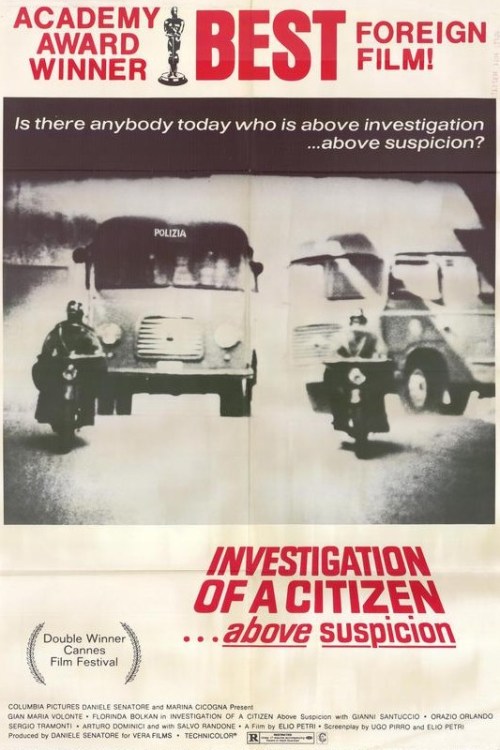
Investigation of a Citizen Above Suspicion (1970)

By Richard Winters

My Rating: 8 out of 10

4-Word Review: Police Chief kills prostitute.

Dottore (Gian Maria Volante) is the police chief in the homicide division of his department. He is by all measures a man above suspicion and decides to one day put this to the test by killing his mistress (Florinda Bolkan) who was also a prostitute. To make the challenge even more interesting he plants obvious clues, which should lead to his indictment, but they don’t. Instead the police inspectors come up with a maddening array of warped reasons why the police chief is not the killer even when the evidence clearly points to the fact that he is.

This film, which won the Academy Award for best foreign film of 1970, touches on an issue rarely seen in American cop movies outside of maybe The Fugitive, where the police get a tunnel vision on who they think the suspect is, in this case the woman’s gay husband, and tune-out all other potential angles in their zeal to ‘get their guy’.  This is something that happens in real-life cases much more often than people realize where inspectors, in an effort to get the case solved and move-on, will make the evidence fit their own preconceived narrative instead of vice-versa.

The story also analyzes how having a rigid protocol system can be dangerous. What on the surface may seem ‘orderly’ can underneath be covering up all sorts of corruption. Everyone is so afraid of keeping their jobs and saving the reputation of the police department that all sorts of corrupt acts are allowed to pass through unhindered as everyone becomes ingrained with the yes-man mentality. Even having some of the most cutting edge police technology in the world doesn’t help if it falls victim to human overseers whose subjectivity only allows them to see what they want to see.

Gian Maria Volante, who in real-life was known as a left wing radical and was arrested many times during the 70’s by police for taking part in political demonstrations, is excellent as the reactionary authority figure. His piercing stare is more than enough to own every scene that he is in and ironically he played just three years earlier in the film We Still Kill the Old Way  done by the same director, a character is on the opposite end who fought corruption to get to the truth over a murder.

Elio Petri’s direction is nothing short of excellent and had his life not been cut short by cancer he most assuredly would’ve gone on to become one of the greats of Italian cinema. Ennio Morricone’s distinctive score is terrific too. Normally I tend to prefer as little music in films as possible, but the soundtrack here helps accentuate the film’s stylish presentation and gives it a real attitude and should’ve been played-up even more including over the film’s opening credits, which are strangely silent.

The film’s only defect is the fact that since we already know who’s committed the crime there’s not a lot of tension. It might’ve worked better had the police chief not been the main character and the perpetrator of the crime remained a mystery until later on. One of the lead investigators could’ve been made the protagonist who follows the evidence, which eventually leads to the police chief, but then he finds stiff resistance to his findings from the department, which could’ve been more impactful, but the film still has its share of strong scenes including its surreal-like ending.

My Rating: 8 out of 10

Released: February 12, 1970

Runtime: 1 Hour 55 Minutes

Rated R

Director: Elio Petri

Studio: Euro International Film

Available: DVD, Blu-ray (Criterion Collection), Amazon Video, YouTube

Oh, God! (1977)

By Richard Winters

My Rating: 7 out of 10

4-Word Review: An atheist meets God.

Jerry Landers (John Denver) is a married man with two kids (Moosie Drier, Rachel Longaker) who works as an assistant manager at a local grocery store. He doesn’t consider himself to be religious nor does he attend church (he most likely could be called an atheist, but I assume that term was considered ‘too toxic’ of a label to put on a protagonist that mainstream audiences of the day were expected to like, so he’s just given the much softer description of being a non-believer.) One day he receives a letter in the mail stating that God would like to interview him at a certain location, but Jerry considers this to be a practical joke and throws it away, but when the letter keeps popping up at the most unlikely places he finally decides to take it seriously. He goes to the location and meets God (George Burns) who at first he does not see, but only hears, but eventually the almighty takes the form of an old man. He tells Jerry to spread the word that he exists, which Jerry does only to have it all snowball against him when everyone thinks he’s crazy and even his own family becomes embarrassed to be seen with him.

The film is based on the 1971 Avery Corman novel of the same name though the book had more of a satirical tone and the protagonist was a journalist. The film though manages to retain the same jaded sensibilities of the modern-day public, which is what makes it so amusing and for the most part quite on-target. Denver, who was known more as a singer and did very little acting both before or after this, is quite good here, but only if you can get past his bowl haircut. Burns is excellent as well and I always felt this is the performance he should’ve won the Academy Award for instead of the one in The Sunshine Boys as it easily became his signature role.

The script though by Larry Gelbart is full of incongruities. For instance the God here claims to be a non-interventionist who sets the process in motion and then lets things happen without getting involved. Everyone is given free will and he doesn’t intervene to stop suffering or ‘bad things’ from occurring because that would upset the ‘natural balance’, but then turns around and admits that he had a hand in such superficial things as helping the 1969 New York Mets win the pennant. He is also forced to become a ‘side show magician’ by performing what amounts to being magic acts, like doing a tacky card trick in front of a judge, in order to prove to Jerry and others that he really is the almighty. Yet he then becomes shocked to find that Jerry’s simple word-of-mouth as well as having Jerry pass out God’s ‘calling card’, which is nothing more than a white card with the word God on it, as not being enough to somehow convince others of the same thing.

There’s also a weird conversation, which I found loopy even as a child, where God tries to prove a point by explaining to Jerry that people only dream in black-and-white, which apparently was an accepted belief a long time ago. This idea has later been found to be incorrect, which is good as I’ve always dreamed in color, but it’s still off-kilter to have this supposedly all-knowing God argue a talking point from a debunked myth.

The performances by the supporting cast help  and in fact I consider this to be Teri Garr’s best role as I found her character arch to be more interesting than Denver’s. The aging Ralph Bellamy is good as an aggressive defense attorney and I also like Barnard Hughes as the overwhelmed judge. William Daniels is amusing as Denver’s snippy boss and a type of authoritative character he’d put to perfection years later in the TV-show ‘St. Elsewhere’. Paul Sorvino gets a few laughs too in a send-up of an over-the-top TV evangelist.

The only one that I had a problem with was Donald Pleasance who gets fourth billing, but only 2 lines of dialogue. With such a versatile talent as his you don’t want to waste it by giving him such a small role and unless a lot of his work here ended up on the cutting room floor I’m genuinely surprised why he even took it.

The film is mildly entertaining, but ultimately quite benign and nowhere near as ‘profound’ as some considered it. Nonetheless it was a big hit and even knocked Star Wars out of the top spot for 1-week. It also spawned 2 sequels as well as a TV-movie called ‘Human Feelings’ where Nancy Walker plays a female God set to destroy Las Vegas with a flood unless Billy Crystal, who plays an angel, can find 6 virtuous people that live there.

My Rating: 7 out of 10

Released: October 7, 1977

Runtime: 1 Hour 38 Minutes

Rated PG

Director: Carl Reiner

Studio: Warner Brothers

Available: DVD, Amazon Video, YouTube

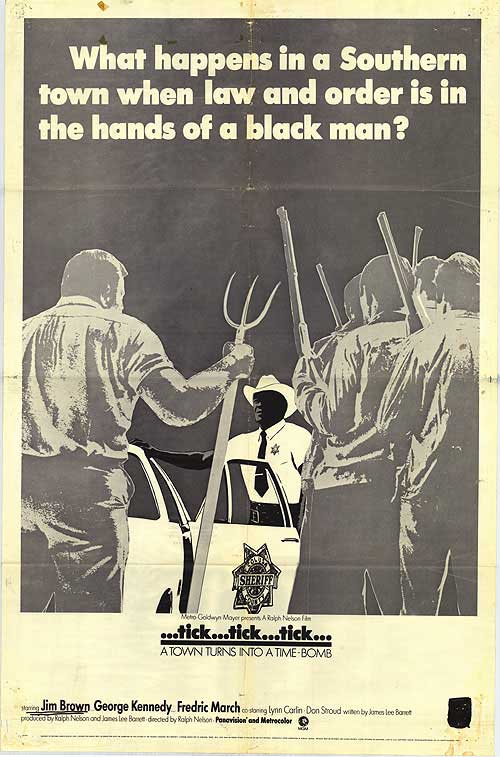
…tick…tick…tick (1970)

By Richard Winters

My Rating: 4 out of 10

4-Word Review: New sheriff faces racism.

Citizens of a small southern town get on edge when the current sheriff (George Kennedy) gets voted out and replaced by a black man (Jim Brown).  As the new sheriff Jim faces stiff resistance even from fellow members of the black community, but he forges on. When the son of a rich white man from a neighboring town runs over and kills a young white girl while he was driving drunk, Jim has him put into jail, but the young man’s father demands that he be released and when Jim refuses it creates the beginning of a potential race riot that forces the white citizens of the town to make a hard choice; do they continue with their racist behavior, or join the black sheriff in defending their town from corrupt outsiders?

The film starts out on the cheesy side by showing up close an egg frying on a sidewalk. The problem is that I tried this last year in Austin, Texas when the temp was 110 (actual temp and not a heat index figure), but I couldn’t get it to work even though I did it on asphalt and in direct sunlight. Some say that the egg has to be put in a frying pan and then have the pan put on the cement and maybe so, but that’s not how the film shows it and what’s worse is that it looks like the egg is already in a fried state even before it hits the pavement.

It’s also annoying that despite having the Deep South as the setting it was actually filmed in Colusa, California where the topography looks much different. I also had to wonder why everyone is constantly glazed over in sweat even when they were in bed at night and only small, little fans to cool them. The story’s time period is the present day (1970) and air conditioners were invented in 1902, so why the hell doesn’t anyone in this hot southern town own and use one?

The soundtrack features loud, poorly sung songs that not only get played over the opening and closing credits, but during a lot of the film as well, which gives the entire production a very B-level movie feel. I also got tired of hearing the sound of a clock ticking in the background that permeates just about every scene during the first 30 minutes and becomes heavy-handed and annoying.

The only thing that saves it is Jim Brown who’s really good here and looks better and younger without his trademark mustache. Kennedy on the other hand doesn’t seem up to the challenge with many of his scenes, particularly the one were he accosts a young man who was harassing him, coming off as unintentionally funny.

It’s sort-of fun seeing Frederic March playing a goofy mayor as well as Mills Watson, in his film debut, playing a racist deputy a decade before playing his most famous role as the bungling deputy Perkins in the ‘Misadventures of Sheriff Lobo’ TV-show.  I also liked how Clifton James and Anthony James (no relation) who had both played racist southern types in other films get roles here where they’re more level headed and help suppress the racist behavior of others instead of stoking it.

The film gets marginally better as it goes along and the ending is okay even a bit unique for this type of genre, but overall it’s just a cheap imitation of In the Heat of Night, which was much better. The only really surprising thing about the movie is that it received a G-rating despite having the N-word spoken throughout by several of the characters.

My Rating: 4 out of 10

Released: January 9, 1970

Runtime: 1 Hour 40 Minutes

Rated G

Director: Ralph Nelson

Studio: MGM

Available: DVD-R (Warner Archive), Amazon Video 

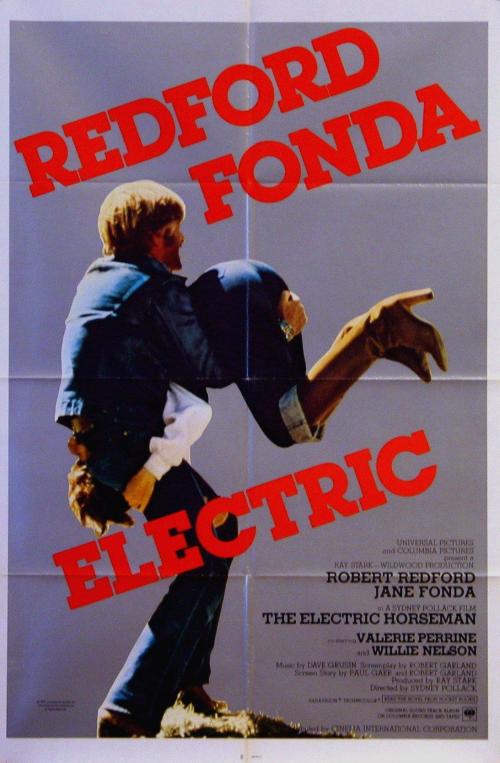
The Electric Horseman (1979)

By Richard Winters

My Rating: 3 out of 10

4-Word Review: Aging cowboy steals horse.

Sonny (Robert Redford) used to be a championship rodeo star, but those days are long behind him. Now he works as a spokesmodel for a cereal company and his next gig has him in Las Vegas where he’s set to ride a horse on stage while he wears a string of flashing lights. Sonny though has become disillusioned with the business as well as upset to find that the horse has been drugged, which propels him to ride off with it while the authorities and an aggressive TV reporter (Jane Fonda) are hot on his tail.

The story can best be described as a lightly comical variation of Lonely are the Bravebut without any of the strong dramatic impact. The biggest problem is that it reveals its cards too quickly making it too obvious what Sonny is planning to do, so when he finally does y abscond with the horse it’s not surprising or even interesting. I was intrigued at how he would get it out of the casino and past security, but the movie cheats this by cutting from him inside the casino one second to showing him outside on the street in the next frame, which takes away from potential action and excitement of having him fight his way out.

The chase inside a small town where Sonny and his horse outrun a mob of police cars and cops on motorbikes is fun, but it ends up being the only exciting moment in the film. Everything else gets toned down too much where even the bad guy, played by John Saxon, is boring because all he does is sit in a office while getting reports from others as to Sonny’s whereabouts instead of having him actively chase after the renegade cowboy himself, which would’ve heightened the tension.

Fonda’s character comes off like an unwanted house guest who tries to take over the place even when they weren’t invited. Her character is too abrasive and while everyone else is laid-back she comes of as being quite aggressive and otherwise out-of-place with the tone of the movie. Valerie Perrine, who has a much smaller part as Sonny’s ex-wife, does a far better job here and is more in step with the unglamorous, rugged western theme. Had she been the one to chase after Sonny then the romantic side-story that develops would’ve been cute and engaging, but having Fonda become the love interest just makes the whole thing seem forced.

Had the action and humor been  more jacked-up than it might’ve been a winner as Redford himself is quite good. I was a bit surprised too because I initially didn’t think this was the right fit for his talents, but his subtle country accent and brash attitude is fun and Willie Nelson, in his film debut, is quite good in support. Unfortunately the plot never catches its stride and in fact the more it goes on the boring it gets.

My Rating: 3 out of 10

Released: December 16, 1979

Runtime: 2 Hours 1 Minute

Rated PG

Director: Sydney Pollack

Studio: Universal Pictures

Available: DVD, Blu-ray (Region B/2)