Category Archives: 70’s Movies

Good Guys Wear Black (1978)

good

By Richard Winters

My Rating: 4 out of 10

4-Word Review: He’s marked for murder.

John T. Booker (Chuck Norris) was once the head of an elite CIA assassin group known as The Black Tigers. The group was sent into Vietnam on a mission to rescue American POW’s, but instead finds that they were set-up and marked for demise. Only Booker’s brave and cunning leadership allowed the group to survive. Five years later Booker now works as a UCLA professor where he lectures about the problems with the Vietnam War and how it should never have happened. During one of his classes he meets Margaret (Anne Archer) a beautiful, young reporter who works in Washington and relays to him some troubling information: his buddies that were a part of that unit are now being picked-off one-by-one and Booker is most likely the next target. He decides to team up with her to not only warn the remaining members, but also to weed-out the culprit, or secret organization, who are behind it.

This was Norris’ second starring feature with a story based off an outline written by one of his friends, but the biggest problem with it is that there isn’t enough action sequences and I was genuinely shocked. I’ve not seen too many of his movies, so I’m still new to the formula, but I was honestly expecting fights every 5-minutes. Instead it isn’t until an hour in before Chuck displays his karate expertise and even then it’s brief. This was apparently because he wanted to do it differently than with the Bruce Lee movies he had been in, in the early part of his career. He described those as being ‘all karate with a little story thrown-in’ and he wanted to do something that had a lot of story and only some karate scenes.

While this may sound good in theory the plot is weak and the budget sparse to the point that adding in a few more exciting sequences to make-up for the otherwise anemic production would’ve been a good idea. This really comes into play during the rescue mission where The Black Tigers are in Vietnam looking for the POW’s, but the lighting and camera work are so poor that you can barely see what’s going on. The film also cuts away, so we never see how Norris and his buddies manage to escape from their enemies and make it out. It just immediately jumps to them 5 years later working regular jobs and having moved-on from the traumatic experience, which makes the whole thing seem too rushed.

The story has a few logic loopholes as well. Namely the fact that these assassins seem intent to kill their targets in broad daylight with a lot of people around. Most professional killers can find more subtle ways to off their targets like through poisoning, which can work slowly and harder to trace back to the original source. Shooting someone in big crowds is just asking for trouble because it brings in many potential witnesses and no guarantee they’ll be able to get out of there in time before the authorities arrive. If they must do away with their target through shooting then at least have it done when the victim is alone and the fact that this supposedly slick organization thinks of doing it the other way makes both them and the movie seem pretty dumb.

While Norris’ fighting skills are excellent his acting is not and even he admitted that he felt like ‘hiding behind a chair’ while watching it every time his character came onscreen. His voice inflection is poor and he seems unable to convey any type of emotion. Pairing him with Archer helps as her performance anchors it. I thought too that James Franciscus was terrific as the villain as his dashing good looks effectively reflected a slimy politician willing to accept any underhanded agreement in order to close a deal, but he should’ve been in it more. I was disappointed though with Jim Backus’ appearance as he’s given a very nondescript part as a doorman at an upscale condo building. You’d think bringing in a well-known celebrity he’d have something amusing to say, or do, but it’s a bland bit that could’ve easily been done by a no-name actor. He probably needed the work so that’s why he accepted it, but the producers could’ve at least allowed him to ad-lib, in order to jazz the scene up a bit.

My Rating: 4 out of 10

Released: March 23, 1978

Runtime: 1 Hour 35 Minutes

Rated PG

Director: Ted Post

Studio: American Cinema Releasing

Available: DVD, Blu-ray, Pluto, Freevee, Amazon Video
Tomorrow (1972)


tomorrow1

By Richard Winters

My Rating: 5 out of 10

4-Word Review: Aiding a pregnant woman.

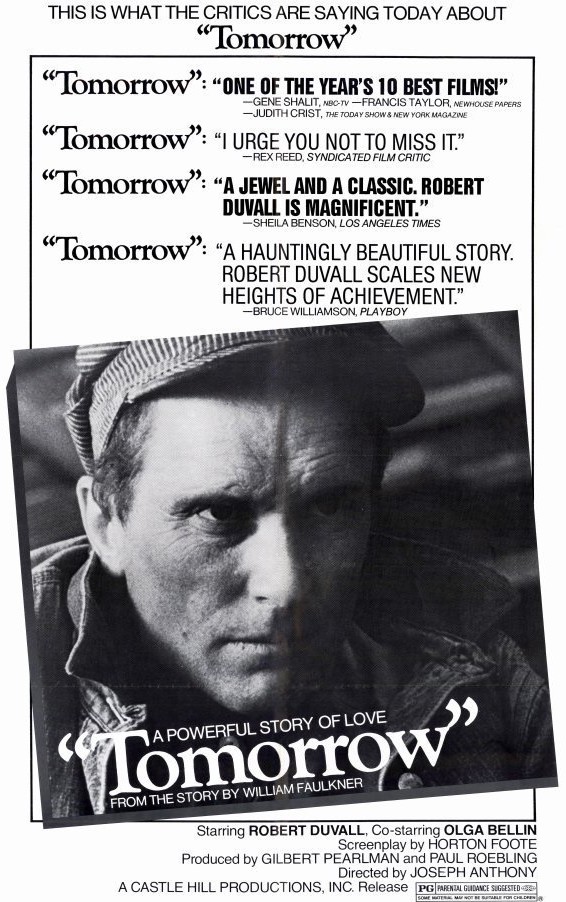
Jackson Fentry (Robert Duvall) is a lonely farm-hand who has never married and lives in a tiny shack on the grounds of the farm that he’s been hired to maintain. One day he comes across a pregnant woman named Sarah Eubancks (Olga Bellin) near the property who’s been abandoned by both her husband and his family. He brings her back to his modest shed to warm her up and since she has nowhere to go he eventually agrees, with the help of a local midwife (Sudie Bond), to assist through the birth of her child. Sarah though dies soon after the baby is born, but not before Jackson agrees that he’ll raise the child. For several years Jackson is able to do just that until the brother’s of the boy’s father arrive and take the child away. Then many years later Jackson is called-in for jury duty on a trial that, known only to him, has a connection to the boy he lost contact with. 

There’s been many movies that have tried to recreate the rural 1800’s, but many for the sake of drama, or to make it more relatable to modern audiences, tend to cheat things. They may make it authentic in some areas, possibly even painstakingly so, but then compromise in others due to the entertainment factor. This though is one film that could genuinely be described as being about as minimalistic as any director could possibly make it. Filmed on a farm in rural Mississippi that was owned by the grandfather of Tammy Wynette the movie gives one an authentic taste of life back then with little to no music and no sense of any staging. The bare-bones shack that Jackson must reside in gives the viewer a stark sense of the grim, no frills existence that many dealt with back then. The slow pacing aptly reflects the slower ways of life and having the camera virtually trapped in the shed, or at most the nearby property, symbolized how people of that era had to learn to endure and expect little.

While those qualities hit-the-mark I felt that black-and-white photography detracted from it. By the 70’s most films were shot in color and only a few like The Last Picture Show, Young Frankenstein, and Eraserhead just to name some, were not, but this was more for mood, or style. Here though with everything already at an intentionally drab level the color could’ve at least brought out the beauty of the outdoor scenery of a southern winter and offered some brief striking visuals and a cinematic presence that was still needed, but missing and kind of hurts the movie. 

Surprisingly I had issues with the acting. One might say with Robert Duvall present that couldn’t be the case, but his overly affected accent, he got it from a man he met once in the foothills of the Ozarks, was from my perspective overdone and even borderline annoying. Bellin is alright though behind-the-scenes she created problems by refusing to take any advice from director Joseph Anthony. She had done mostly stage work up until then and was used to having leverage about how she approached her character once she was onstage and considered that once the camera was shooting meant the same thing. It was okay, like with a play production, for the director to give advice during rehearsals, but when the actual filming started she should have free rein over her craft and having Anthony repeatedly reshoot scenes, like in typical film production, or suggest she do things differently as the filming was going on, was all new to her and not to her liking, which caused numerous arguments not only with Anthony, but Duvall as well making them both later admit that they regretted casting her and she never performed in another movie again. Out of the entire cast it was Sudie Bond as the lady who helps with the birthing that I found to be the most memorable. 

While the story has many commendable moments it gets stretched pretty thin especially since it was based on a short story by William Faulkner and then adapted first as a play and then to the big screen by Horton Foote (the first of two collaborations that he did with Duvall with the second one being Tender Mercies 10 years later). Almost the entire third of the film gets spent on Jackson’s conversations with the woman while his relationship with the son takes-up less than 10 giving the pacing and flow a disjointed feel. It’s also a shame that, like with The Owl and the Pussycat, which came out 2 years earlier, the producers compromised on the elements of the original piece as in Faulkner’s story the pregnant woman was black, but here she gets changed to being Caucasian. Had the character remained black then what Jackson does for her would’ve been more profound as he would’ve been taking great personal risk in helping her in an era and region of the country where racism was high and by no longer being a colored woman it lessens the drama and is not as impactful as it could’ve been.

My Rating: 5 out of 10

Released: March 19, 1972

Runtime: 1 Hour 43 Minutes

Rated PG

Director: Joseph Anthony

Studio: Filmgroup Productions

Available: DVD, Blu-ray, Plex, Tubi, Amazon Video


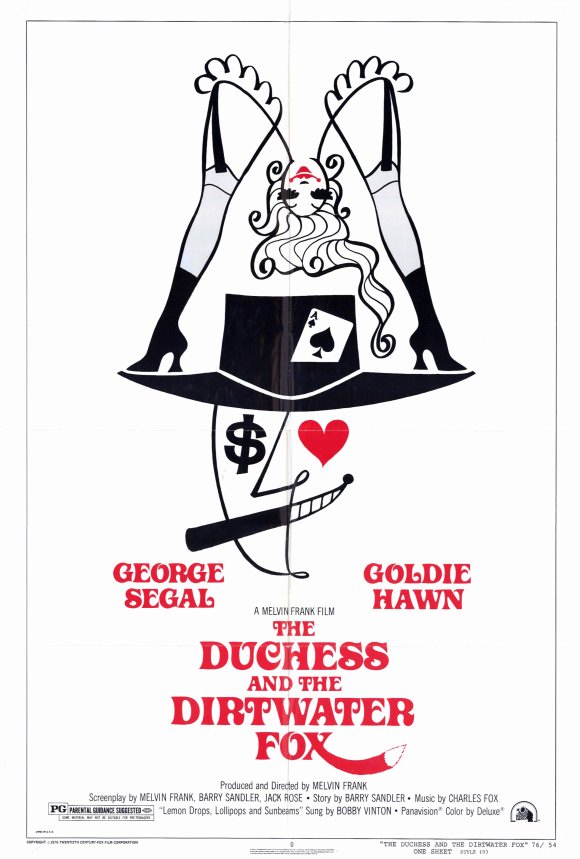
The Duchess and the Dirtwater Fox (1976)

duchess2

By Richard Winters

My Rating: 5 out of 10

4-Word Review: She steals stolen money.

Amanda (Goldie Hawn), who goes by the nickname Bluebird, works as a dance hall girl in the old west, but dislikes having to entertain the leering male clientele and looks for an opportunity that will allow her to live the ‘easy life’. She finally finds it in the form of a rich Mormon family from Utah who are looking for a nanny to watch after their large brood. In order to disguise herself as being one she’ll need to buy herself a suitable outfit, but she has no money. Then Charlie (George Segal), who goes by the nickname Dirtwater Fox, and who has just absconded with over $40,000 of stolen loot from the infamous Bloodworth Gang, walks into the saloon where Bluebird works and immediately starts flirting with her as she performs a dance routine on-stage. Bluebird finds him annoying, but agrees to go up to his hotel room as a prostitute performing a sexual service in order to get the money for her nanny outfit. However, once up there, Dirtwater refuses to pay her, so she drugs his drink, which knocks him out, and steals the briefcase with the stolen money. When Dirtwater wakes-up he goes after her and the two eventually meet back up, but find despite their mutual dislike that they must work together in order to avoid the vengeful clutches of the Bloodworth Gang who are hot-on- their-trail. 

The film was directed by Melvin Frank with a screenplay by Jack Rose, two men whose career peaks was during the 40’s and 50’s, but by the 70’s their senses of humor were quite dated and story ideas placid. After finding inexplicable success with the highly overrated A Touch of Class, which starred Segal and Glenda Jackson, director Frank became convinced that he had a winning chemistry and wanted to re-team the two in a western romantic comedy. Jackson though rejected the offer and was replaced by Hawn, who quite honestly is the only good thing about the movie. She had been up to this time known for her dumb blonde, ditzy persona, but here goes against type by playing a sharp-tongued, no nonsense lady who takes little crap from anyone. She plays the part perfectly and in the process grows as an actress. Her use of different accents is fun as well as being spot-on and the song and dance routines that she does despite Leonard Maltin calling them in his review ‘misplaced’ are actually quite entertaining and deliciously bawdy. 

Segal though is the film’s detriment. His acting is weak and a good example of this is when he’s caught cheating at a card game and strung up by a noose by an angry mob and yet even as the rope is put around his neck he remains cool and calm when anyone else in that situation would be panicked and struggling to get away. His character is totally unlikable and never grows on the viewer. It should’ve been a signal when Jackson backed-out to have Segal replaced with a younger charismatic actor who was more Hawn’s age instead of forcing her character to fall for someone who was 12 years her junior.

For a western the action is light and fleeting and there’s several scenes including the extended one with the two inside the hotel room where the pace slows up to a complete halt and becomes visually stagnant making it seem almost like a filmed stage play. The film does not play-up the character’s relationship, or illustrate how it grows. When the stagecoach they were riding in goes off a cliff, which they were able to jump out of it in time, they must climb down a steep ravine to get to it in order to retrieve the briefcase of money that was still on it. Instead of filming the scene showing the two helping each other navigate the rocky terrain, which could’ve been both amusing and romantic, the film just immediately cuts to them already there without ever showing how they were able to make it down.

Spoiler Alert!

The most annoying aspect, at least story-wise, comes at the end when Dirtwater and Bluebird find the Bloodworth Gang’s hideout. Dirtwater sneaks into it and immediately detects a loose floorboard, which signaled a hidden trap door leading to where the money was stored, which came-off as too easy. What’s the point of attempting to hide the loot if some stranger can just walk in and in a matter of seconds detect where it’s located? It’s also unrealistic to expect that the money would still be in the bag as most likely the gang members would’ve already split-up the loot amongst themselves.

There’s also the issue of Segal getting shot several times at the end by the gang as does his horse. The horse then collapses to the ground and seemingly dies only to mysteriously, after laying motionless for quite awhile, get up and magically comes back to life without any explanation. Segal on the other-hand is ‘kept alive’ by being coaxed to keep crawling after the money bag, which Goldie holds-out in front of him, but are we to believe that he’s going to manage to continue to crawl hundreds of miles through the desolate wilderness in a bullet-riddled body before they’re able to find medical help?

The idea that Goldie would even want to keep the schmuck alive is dingy. The guy refused to give up the money even as he lay dying and no longer had any use for it instead of just handing it over to someone he supposedly ‘loved’. Anyone else in that same situation would’ve been incensed at his selfishness and just grabbed the money out of his hands and been on their merry way while letting the son-of-a-bitch rot where he was. 

My Rating: 5 out of 10

Released: April 1, 1976

Runtime: 1 Hour 43 Minutes

Rated PG

Director: Melvin Frank

Studio: 20th Century Fox

Available: DVD-R (20th Century Fox Cinema Archives)


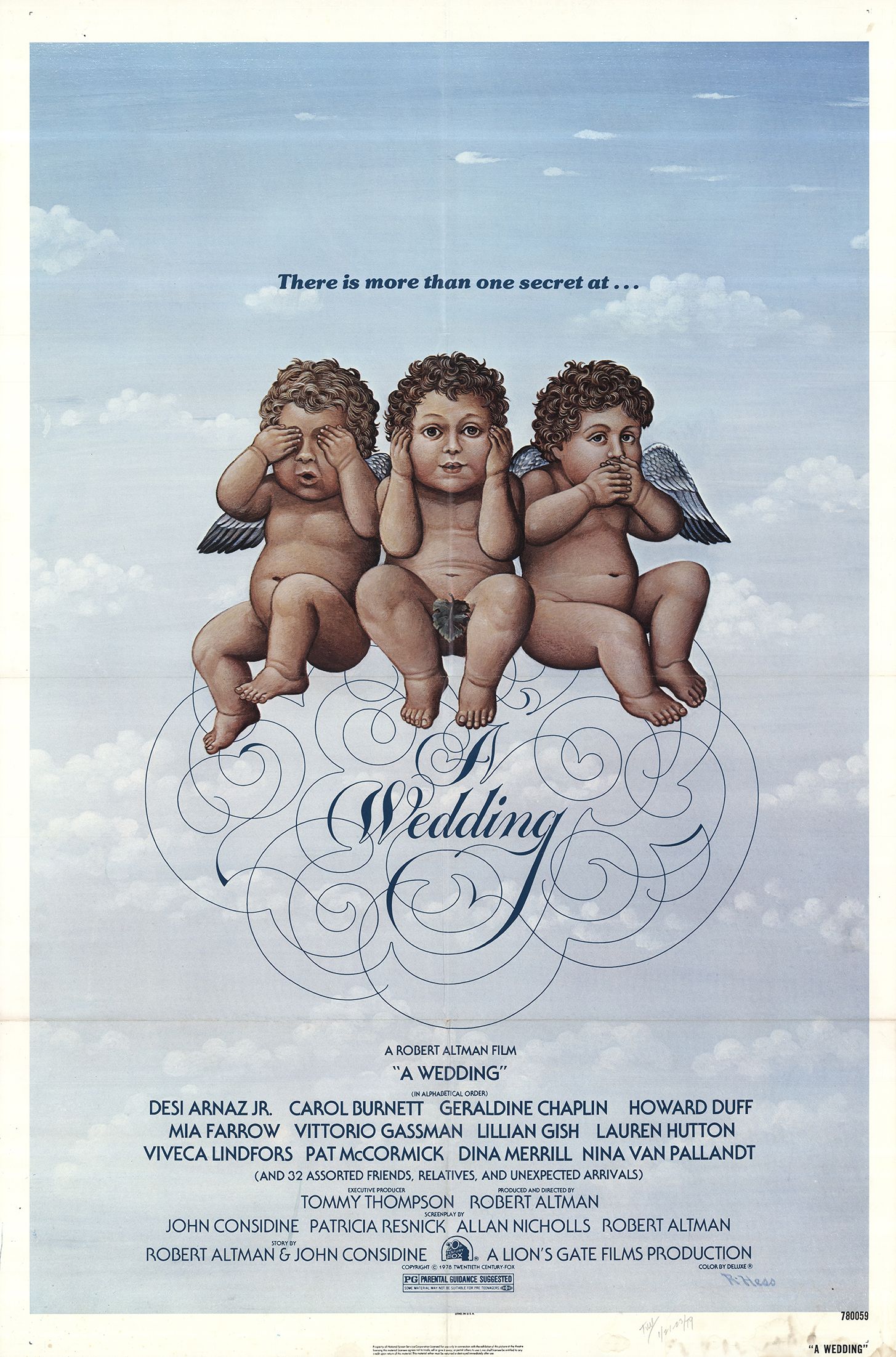
A Wedding (1978)

wedding2

By Richard Winters

My Rating: 7 out of 10

4-Word Review: Guests at wedding party.

Muffin (Amy Stryker) marries Dino (Desi Arnaz Jr.) at a wedding ceremony that is non-eventful. However, during the reception afterwards, held at the mansion of Dino’s family, the Correllis, everything begins to go wrong including having the family’s elderly matriarch, Nettie (Lillian Gish) promptly die just as the guests arrive. Snooks (Paul Dooley) and Tulip (Carol Burnett) are the parents of the bride, while Buffy (Mia Farrow) is Muffin’s jealous older sister. During the party Buffy lets Dino know that she’s pregnant with his baby, which sends the family into an uproar once word gets out. Meanwhile Mack (Pat McCormick), the cousin of the groom, makes it known that he’s ‘madly in-love’ with Tulip and wishes to have an affair with her. Tulip at first resists, but then devises a scheme where the two can meet in 2-weeks, at a location in Tallahassee, Florida under the ruse that Tulip will be going to visit her sister who lives there.

While director Robert Altman made some great movies and revolutionized movie-making with his over-lapping conversations technique, he did also produce a few duds. Most of them came during the 70’s when he was given too much free rein to make whatever he wanted in however way he wanted to do it, which culminated in a lot of over-indulgence. This one though, which came right in the middle of his down cycle, is one of his better efforts The idea came as an accident as he was tired of being hounded by a reporter asking, while he was still working on finishing up on 3 Women, what his next project would-be and he joked that he was set to ‘film a wedding’, which at the time had come into vogue for people to shoot the weddings of their family members in a home movie style. Later that night, after speaking with the reporter, he partook in a drinking session with the crew of 3 Women, where they discussed the possibilities of making a movie about a wedding where ‘everything would go wrong’ and by the end of the night he had already come-up with an outline for his script.

This film though, like with all of Altman’s movies, does come with its share of detractors. Gene Siskel in particular did not like the characters, who I admit are a cliche of the nouveau riche and too easy a satirical target. He also complained that there was no one likable, which is true, though films where one person in a large group somehow manages to rise-above-the-fray and being morally virtuous when all the rest aren’t, is unrealistic and having an amoral climate such as here where everyone gets dragged down to the same level as everyone else makes more sense.

The edginess of the comedy is dated as well as what was considered ‘pushing-the-envelope’ at the time, like introducing the characters who are secretly gay, smoke marijuana on the sly, have had multiple sex partners, or (gasp) had sex outside of marriage, is no longer even remotely the scandal, even amongst the most conservative, as it once was, so to enjoy the film one must put themselves in that time period to totally appreciate it. With that said, it still works beautifully. It’s amazing, when considering the massive amount of characters and intersecting story-lines, how well it flows and it’s never confusing, nor do you ever lose track of any of the characters, or their issues, even if they’ve not been shown for a while. The humor gets exaggerated just enough for comic effect, but always within the realms of reality, which is what I really enjoyed about it, is that this could easily remind people of their own real-life weddings, and wedding parties, that they’ve been through.

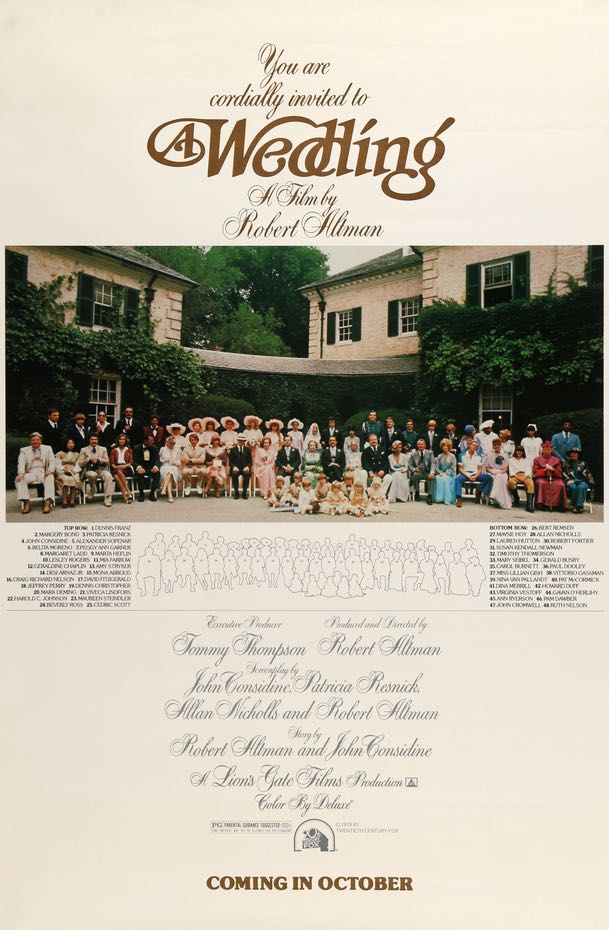
The cast is splendid and perfectly game to the script’s demands with many of them allowed to freely ad-lib. Howard Duff probably gets the most laughs as the chain-drinking doctor of a dubious quality and Viveca Lindfors as a caterer who becomes ill, takes a pill, and then breaks-out into a loud song during the reception. Burnett is superb as a middle-aged housewife looking for more excitement in her life while also juggling the difficulties of raising a promiscuous daughter and Paul Dooley is quite enjoyable as her brash, and never shy to speak-his-mind husband. I also got a kick out of Amy Stryker, who was cast on-the-spot simply because she wore braces and resembles a young Burnett in many ways and was therefore perfect to play her daughter. Though the ultimate scene stealer is Mia Farrow, who although well into her 30’s at the time, looks amazingly still adolescent-like and pulls off the part of a young daughter quite convincingly. She utters very few words, but makes up for it with her shocking topless scene (she looks great) and the bit where she openly tries to count everyone she has slept with to the stunned silence of the others, including her parents, in the room.

wedding3

My Rating: 7 out of 10

Released: September 12, 1978

Runtime: 2 Hours 5 Minutes

Rated PG

Director: Robert Altman

Studio: 20th Century Fox

Available: DVD

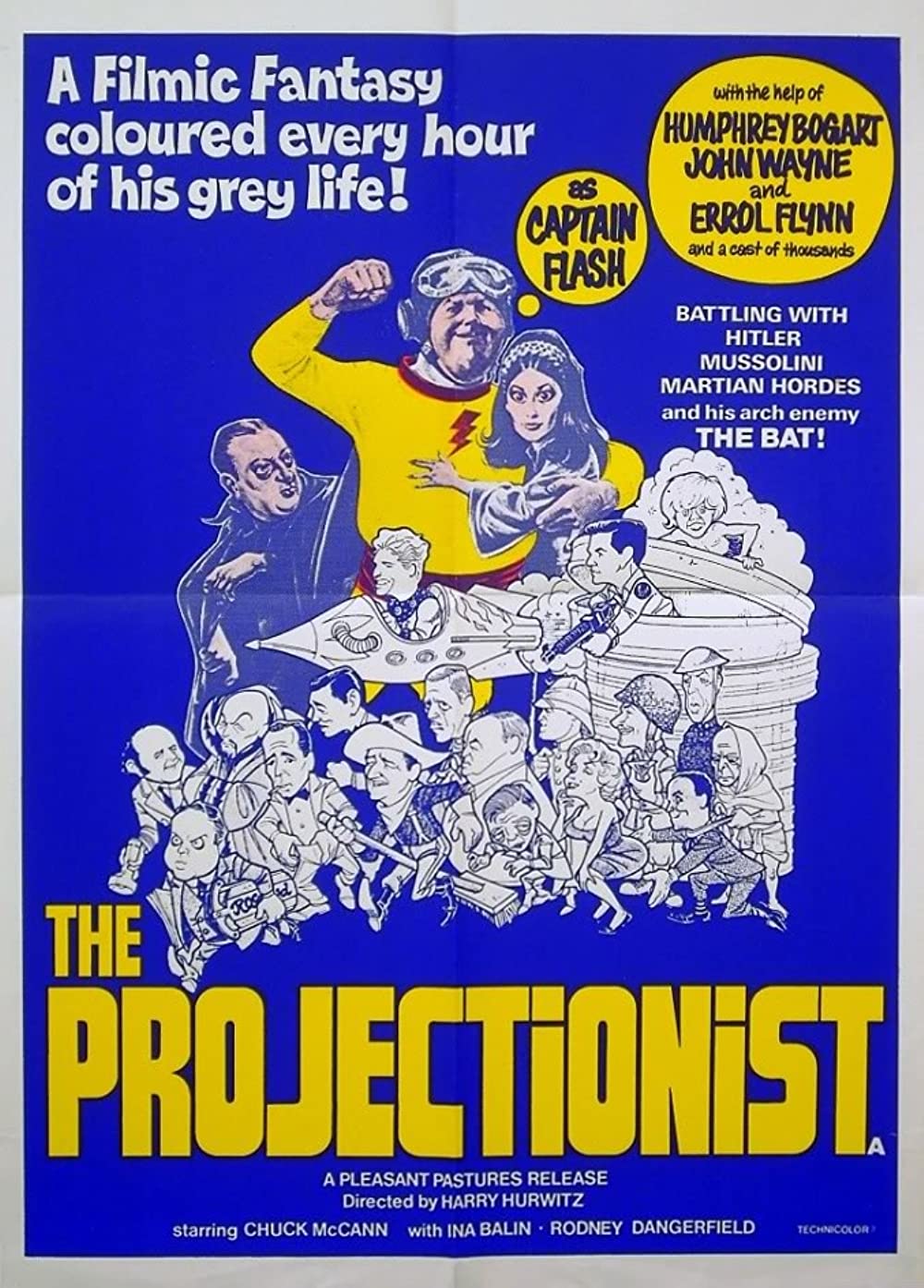
The Projectionist (1970)

projectionist1

By Richard Winters

My Rating: 5 out of 10

4-Word Review: Projectionist escapes into fantasy.

Chuck McCann plays a man named Chuck McCann who works in a projection booth of a New York theater. He spends his isolated days winding the film reels and putting them into the film machines so that they can be broadcast onto the big screen. He finds his job boring and he does not get along with Renaldi (Rodney Dangerfield) who is the head usher at the theater and routinely chews him out for minor infractions. To escape his mundane existence he imagines himself the star of his own movie playing the superhero Captain Flash who helps save a beautiful damsel in distress (Ina Balin) while also fighting-off the evil villain known as The Bat, which he sees as being Renaldi and his way of getting ‘back at him’ without having to do it in real-life.

Writer/director Harry Hurwitz, who appears as an usher who visits Chuck in his film booth, had some creative movie ideas during his career though most of the movies he made were hampered by a low budget and not fully realized enough to break-out and gain mainstream attention. This film, which was his first, is generally considered his best. It was shot in September-October of 1969, at the same time as Myra Breckenridge, with both movies being credited as the first to use superimposition of older movies, known as Hollywood’s Golden era, into the main story. Some of the clips, which features everything from old cartoons to news reel footage, is fun and even at times provocative. The Captain Flash segments, which are filmed in a grainy black-and-white to replicate the other older clips, are amusing and I really enjoyed seeing actual photographs of Chuck when he was younger, from infancy to a teen and then young adult, over the opening credits. There’s even some cool surreal moments where he walks out of the theater he’s working in and on the marquee is advertised the film we’re watching as well as a segment where Chuck the actor walks down the red carpet at the premiere of this film while talking about playing Chuck the character.

McCann, who’s probably best known for co-starring with Bob Denver in the 70’s children’s TV-show ‘Far Out Space Nuts’, reveals definite talent particularly his spot-on impressions of famous stars making you wonder with that much talent why does this character not make an attempt to go on stage at a local amateur night and show his stuff to an audience instead of hiding it away to himself. If the character has stage fright, or social anxiety, and that’s why he’s so shy and lonely then that needs to be brought out, which it isn’t, making the character poorly fleshed-out and in-turn makes the film less interesting.

The segments examining Chuck’s day-to-day activities, between the old film clips, are dull and have low energy. It’s like the production was completely dependent on the old footage to save it, which is not how a good movie works. ALL the scenes in a successful film need to be captivating in some way and a great number of them here fall flat. The character does not grow, or change in any way. In would’ve been fun to see Chuck confront Dangerfield in real-life instead of just fantasizing about it, or making an attempt to ask-out the beautiful woman instead of dreaming about her from afar.

Dangerfield, in his film debut, plays against type. Normally he’s the loser taking-it to the oppressive authority figure, but here he’s the heavy and helps keep it engaging. Ina Balin, on the other-hand, is beautiful, but I found it frustrating that she wasn’t given a single thing to say.

The story doesn’t evolve and ultimately comes-off as an experiment that fails to click. I was also surprised with the dark nature of  some of the old clips including bits with Adolph Hitler, Mussolini, the Klu Klux Klan and even one recreating the assassination of Lincoln, which didn’t have anything to do with the main theme and not sure why they were put-in.

My Rating: 5 out of 10

Released: October 17, 1970

Runtime: 1 Hour 28 Minutes

Rated GP

Director: Harry Hurwitz

Studio: Maron Films

Available: DVD-R

Rapists at Dawn (1978)

rapists1

By Richard Winters

My Rating: 7 out of 10

4-Word Review: Teen boys assault women.

Rubiales (Manuel de Benito), Quinto (Daniel Medran), Rafi (Bernard Seray), Cana (Cesar Sanchez) and Cana’s pregnant sister Lagarta (Alicia Orozco) roam the streets of Barcelona, Spain looking for young women to assault. The boys live on the poor side of town and are from abusive home lives with little future except working boring, low paying jobs. Feeling that society has ‘discarded’ them they they take out their hostilities on the pretty women that they meet. They pick their victims at random usually as they spot them getting out of their cars and go walking into their schools many times while in front of the victim’s family member who’ve just dropped them off. They then take the women to an isolated area and proceed to gang rape them while Lagarta acts as the look-out. The police are aware of the crimes, but seem helpless to do much about it. When they catch the boys in the act and try to arrest them the boys manage to escape making them confident that they can’t be stopped.

While films like I Spit on Your Grave and Irreversible get all the attention as being the ‘last word’ in rape movies, this one, if it was better known and more attainable, would trump those. The rapes here are graphic, prolonged and quite violent. Some will complain that it’s exploitative while others will argue that if you’re going to show rape for the violent crime that it truly is then it must be captured in all of its unpleasantness and toning it down for the sake of good taste does a disservice. Personally I found the brutal nature to be effective as I came away feeling really sorry for the victims, as it’s captured in such a real way you can barely see the acting and instead start to consider it more like a graphic documentary.

This movie also handles the aftermath in an interesting way by examining the debilitating effect the crime has on the victim psychologically and how they become like a different person. They’re outgoing and well-adjusted beforehand and then afterwards depressed, angry, and even ashamed. They turn sullen and anti-social to both their friends and family making it seem like they’ll never be the same again. The film also analyzes what happens when one of the women becomes pregnant, something that I don’t remember being touched upon in other rape films, and how the mother of the victim insist, due to religious reasons, that she keep the baby and not abort it, making her seem as cruel as the gang.

The thuggish boys are portrayed in an intriguing multi-dimensional way too. While they’re cocky when out and about they recoil and become like victims themselves when at home and dealing with their abusive fathers. I did like too that in their own twisted way they have ‘limits’ or  a ‘code of morality’ albeit a very weird one. A great example of this is when Lagarta becomes shocked when the boys continue to penetrate one of the victims even after she has clearly died. Normally Lagarta had no problem seeing them violently molest the women, but when one of them actually gets killed during the attack and the boys continue the assault it’s only then that she feels things have ‘gone too far’.

It’s hard to say what genre to put this one into. It’s not really a horror film as none of the women become Rambo-like by packing a big gun and going on a revenge tour against their assailants, which although emotionally satisfying isn’t realistic If anything it brings out how there are no easy answers, which makes it even more horrifying, but still thought provoking.

My Rating: 7 out of 10

Released: May 3, 1978

Runtime: 1 Hour 33 Minutes

Not Rated

Director: Ignacio Iquino

Studio: Ignacio Ferres Iquino

Available: DVD-R

The Prize Fighter (1979)

prize1

By Richard Winters

My Rating: 1 out of 10

4-Word Review: Boxer wins rigged fights.

Bags (Tim Conway) is a former boxer who lost all 20 matches that he was in and now helps his former trainer Shakes (Don Knotts) train new fighters, but neither of them is having much luck. Bags decides to go back into the ring during an amateur fight night and this gets the attention of local crime boss Mike (Robin Clarke). Mike is trying to build a convention center, but is stymied by Pop Morgan (David Wayne) who owns a gym on the block Mike wans to build on and he’s refusing to sell at any cost. Mike decides to rig the fights that Bags is in, unbeknownst to both Bags and Shakes, to the extent that it looks like Bags is ‘unbeatable’. He then will entice Pop to bet on the fight that Bags has with the The Butcher (Michael LaGuardia). Pops will be under the presumption it’ll be a ‘safe bet’, but this time Mike won’t rig it and presumably Bags will go down and Mike will be able to get his hands on Pop’s gym and tear it down for his new building. 

While Knotts and Conway had success with their pairing in The Apple Dumpling Gang, this foray, an attempted parody of Rocky, goes nowhere. Instead of being filled with a lot of gags and pratfalls, which is what you’d expect, it’s a slow story filled with every cringy cliche from a fight movie out there. Comedy is supposed to make fun of the cliches instead of propping them up, but unfortunately that’s the approach taken and it bombs massively.

Comedy movies should also have all the characters be funny in some way, but here most of them are not. Possibly that was for vanity reasons as Conway, who also wrote the script, didn’t want to be upstaged, but this forces the viewer to go through long periods of trite drama in every scene that he’s not in. The supporting characters are extreme caricatures of the 1930’s which the film is set in. Robin Clarke is particularly annoying (not necessarily his fault as that was just the way the part was written) as he attempts to channel Al Pacino from The Godfather while speaking like a poor man’s Marlon Brando. David Wayne is cast to resemble Burgess Mereridith who was in Rocky (ironically both men played villains in the 60’s ‘Batman’ TV-show with Meredith as the Penguin and Wayne as The Mad Hatter). Here though Wayne speaks, in an effort to sound like Meredith, in a gravely voice that makes him sound like a duck. I also found John Myhers, who co-wrote the script, put-on Irish accent to be equally irritating.  

Even Knotts gets wasted. Some enjoy the moment where he cracks a bunch of raw eggs in a glass and then tries to force Conway to drink it, but other than that he doesn’t elicit too many laughs. Yes, Conway is amusing at times, but his perpetually clueless shtick gets a bit old by the end. The only performer that had me laughing was Mary Ellen O’Neill who plays Mike’s senile old mother and who does some wildly bizarre things while in Conway and Knotts’ presence. She’s a scene stealer and should’ve been in it more and while she’s at the boxing match as she watches the fight with Mike she should’ve continued to do weird things while the fight was going on, which outside of swearing she doesn’t, and it was a missed opportunity.

I will give credit for the climatic bout, which is surprisingly well choreographed and effectively has a large crowd watching, which gives it an electric atmosphere, but everything else falls flat. The irony I suppose is that the film ended up being a money-maker and in fact was one of the most successful films released by New World Pictures, but I think this was mainly because a lot of people went to it based off the reputations of the two stars more than the movie itself being good. I remember I went with my dad and two siblings to see it at the local theater because we were fans of Conway and Knotts, but all of us, our dad included, were quite bored and went home unimpressed and it clearly hasn’t improved with age. 

My Rating: 1 out of 10

Released: November 16, 1979

Runtime: 1 Hour 39 Minutes

Rated PG

Director: Michael Preece

Studio: New World Pictures

Available: DVD


The Hired Hand (1971)

hired1

By Richard Winters

My Rating: 7 out of 10

4-Word Review: Returning to his wife.

Harry (Peter Fonda) and Arch (Warren Oates) having been wandering the American West for many years, but Harry has grown weary of it. He informs Arch and their younger companion Dan (Robert Pratt) that he plans on going back to his wife Hannah (Verna Bloom) whom he abandoned many years before. Arch is not happy with this decision and tries to talk him out of it, but eventually relents and after the untimely death of Dan decides to head back with him to Harry’s former homestead. When they arrive they find that Hannah is still working the farm with her young daughter Janey (Megan Denver). Hannah is not pleased to see Harry as she had informed Janey that her father had died many years earlier. Harry tries to make amends, but Hannah resists only allowing him to stay as long as he agrees to become a hired hand and help with the chores. Both Harry and Arch agree to this, but when Arch decides to eventually head west alone and then gets abducted by a crooked sheriff (Severn Darden) Harry leaves Hannah to help save his friend much to the anger of Hannah who feels he’s again abandoning her.

This film was the product of Universal Pictures’ new policy of allowing independent pictures to be made under the studio system as Easy Rider had done well with a low budget, and no studio meddling, so they hoped to replicate that success with more films like that one. Besides this one the other movies included: Silent Running, Taking Off, The Last Movie, and American Graffiti and were all made with each director given $1 million to work with and then allowed to use his artistic freedom to create the kind of film he wanted without studio interference.

Unfortunately this movie did not do well at either the box office, or with the critics. Variety labeled it as ‘disjointed’ while Time described it as ‘pointless’. With the bad press and poor profits the studio decided to end its ‘independent movie’ division and films like this were no longer made, at least under the Hollywood umbrella. While this movie sat in near obscurity it finally found an audience in 2002 when it was shown at the Sundance Film Festival and has since acquired many admirers.

What I liked about it is how it goes against the western narrative where life in the old west isn’t portrayed as being about gunfights and saloon brawls, but instead quiet and slow paced. Harry and Arch spend their time raising livestock and doing other farm chores as just keeping the crops growing and animals fed was a mighty challenge enough. The acting by the entire cast is superb, but the real stars are Bruce Langhorn and his wonderfully unique music score, Vilmos Zsigmond’s cinematography and Frank Mazzola’s brilliant editing where he mixes in a lot of montages and overlapping still photography.

There are a few gunfights, but unlike shoot-outs in the conventional westerns this isn’t about tough brave men with nerves of steel. Instead the gunfights are seen as happening when goofball idiots, much like today, get their hands on a weapon after being triggered over something insignificant and shooting wildly before killing himself. Most westerns will prolong these moments, but here it’s quick lasting only a couple of minutes, like in real-life, and when it’s over all you see are dead bodies lying about making it seem more like a needless waste of life.

Harry and Arch’s long travels together through the desolate, lonely west are what really stands-out. You get a true sense of what the world was like back then where you might not see other people, or homes for days on end. You also get a good understanding for why Harry becomes so attached to Arch and willing to risk is life at the end to save him because for such long periods during their travels Arch was, at least from his perception, the only other person on the planet with him and this then created an indelible bond.

When it got broadcast on NBC in 1973 a 20-minute deleted scene featuring Larry Hagman as a sheriff was edited back into the film. This segment had gotten cut-out when director Fonda felt, after viewing it in the editing room, it wasn’t needed and didn’t really help propel the story. The footage can be found on the 2003 DVD issues from Sundance as a bonus extra. I watched it and enjoyed Hagman’s performance as, like with everything else in this movie, goes against the grain of the conventional western. Most of the time sheriffs where portrayed as stoic figures, but Hagman comes-off as nervous and jittery and not completely in control of the situation. I would think most lawmen back-in-the-day with dangerous outlaws roaming the countryside and invading small towns would behave much more like Hagman does here, so in that respect I felt these scenes were insightful, but ultimately agree with Fonda that they didn’t add much to the story and the film flows better without it.

My Rating: 7 out of 10

Released: July 16, 1971

Runtime: 1 Hour 30 Minutes

Rated R

Director: Peter Fonda

Studio: Universal

Available: DVD, Blu-ray, Plex

Roseland (1977)

roseland2

By Richard Winters

My Rating: 7 out of 10

4-Word Review: Participants of ballroom dancing.

In 1976 director James Ivory, who had already collaborated with writer Ruth Prawer Jhabvala on 5 other films, wanted to turn her short story ‘How I Became a Holy Mother’ into yet another movie. The story required one scene to be shot at The Roseland Ballroom, a dancing venue in New York City, that was originally built as a ice skating rink in 1922 and then converted to roller skating only to eventually become a popular retreat for ballroom dancers. When Ivory approached potential investors none of them liked the story, but did like the idea of shooting a movie inside Roseland. They agreed to give money to the project as long as the entire setting took place in that venue.

Ivory then had Jhabvala interview the people at the club to get a better understanding of the folks who went there and to help generate story ideas. It was through these visits that Jhabvala was able to come-up with three different vignettes that is based closely on real-life events that occurred with people who attended the Roseland throughout the years and most of the dancers seen in the background were actual members of the dance hall and not paid extras.

While the owners of the Roseland were happy to give permission to shoot there it did come with several stipulations. One was they could only shoot during the day on Wednesdays and could not alter any of the interiors in any way, which included the lighting. Despite these restrictions he was able to succeed pretty well though at the 30-minute mark it’s obvious in a scene where Christopher Walken and Geraldine Chaplin are supposedly in a room alone that there’s a cameraman there as you can easily see his reflection on the wall mirror. Ivory was also forced, much to his chagrin, to hire a scenic artist and art director onto his crew even though they were unable to make any changes to the set, but union rules required one must be hired anyways, and the teamsters union picketed the production outside the building until Ivory finally relented, which resulted in 2 extra people being brought onto the crew to sit around and do absolutely nothing, but still getting paid.

As for the stories they’re okay, though the first one, ‘The Waltz’ is clearly the weakest despite excellent performances by the two leads. It stars Theresa Wright as a widow named May who keeps seeing a reflection of herself and her former husband when they were much younger in a mirror in the ballroom as she dances with her new partner named Stan (played by Lou Jacobi). No one else sees this same reflection except for May and most think she’s going nutty. Stan wants May to get over her memories of her old husband and focus solely on him, but when she doesn’t he loses interest in her though May finally comes around when she realizes that the past is the past and there’s no going back, so why not instead live for the present. This segment, unlike the others, relies heavily on voice-over narration of Helen Gallagher, who plays Cleo, a dance instructor, it also enters in weird supernatural elements as it’s never explained why May keeps seeing these reflections, is she really going nuts, or is some ghostly phenomenon trying to speak to her from the afterlife? This never gets answered and hence is why the story really doesn’t amount to much.

The second story, ‘The Hustle’, is the best one and features a terrific performance by Chaplin. It involves Russel (Christopher Walken) who is seeing the much older Pauline (Joan Copeland) not so much because he loves her, but more because she pays him to be her escort and he likes the money. He then meets Marilyn (Chaplin) who has just gone through a rough break-up. He immediately becomes smitten. Marilyn is at first reluctant in getting into another relationship, but eventually falls for Russel only to learn that he’s not quite ready to give-up Pauline, or her money and seems to want to juggle the two, which Marilyn does not want. While this segment is quite captivating I would’ve like a better, more dramatic confrontation and less of an ambiguous conclusion.

‘The Peabody’ is the third and final segment. It deals with Ruth (Lilia Skala) an older woman with a strong personality looking for a suitable dance partner to win a competition. She meets Arthur (David Thomas) a meek elderly man who agrees to partner with her despite having a weak heart. Ruth takes his friendship for granted and is quite demanding of him only to learn to regret it when he’s no longer around. Skala’s performance, of which she got nominated for the Golden Globe, makes catching this part well worth it.

My Rating: 7 out of 10

Released: October 2, 1977

Runtime: 1 Hour 44 Minutes

Rated R

Director: James Ivory

Studio: Merchant Ivory Productions

Available: DVD

The Sunday Woman (1975)

sundaywoman

By Richard Winters

My Rating: 6 out of 10

4-Word Review: Murdered by phallic object.

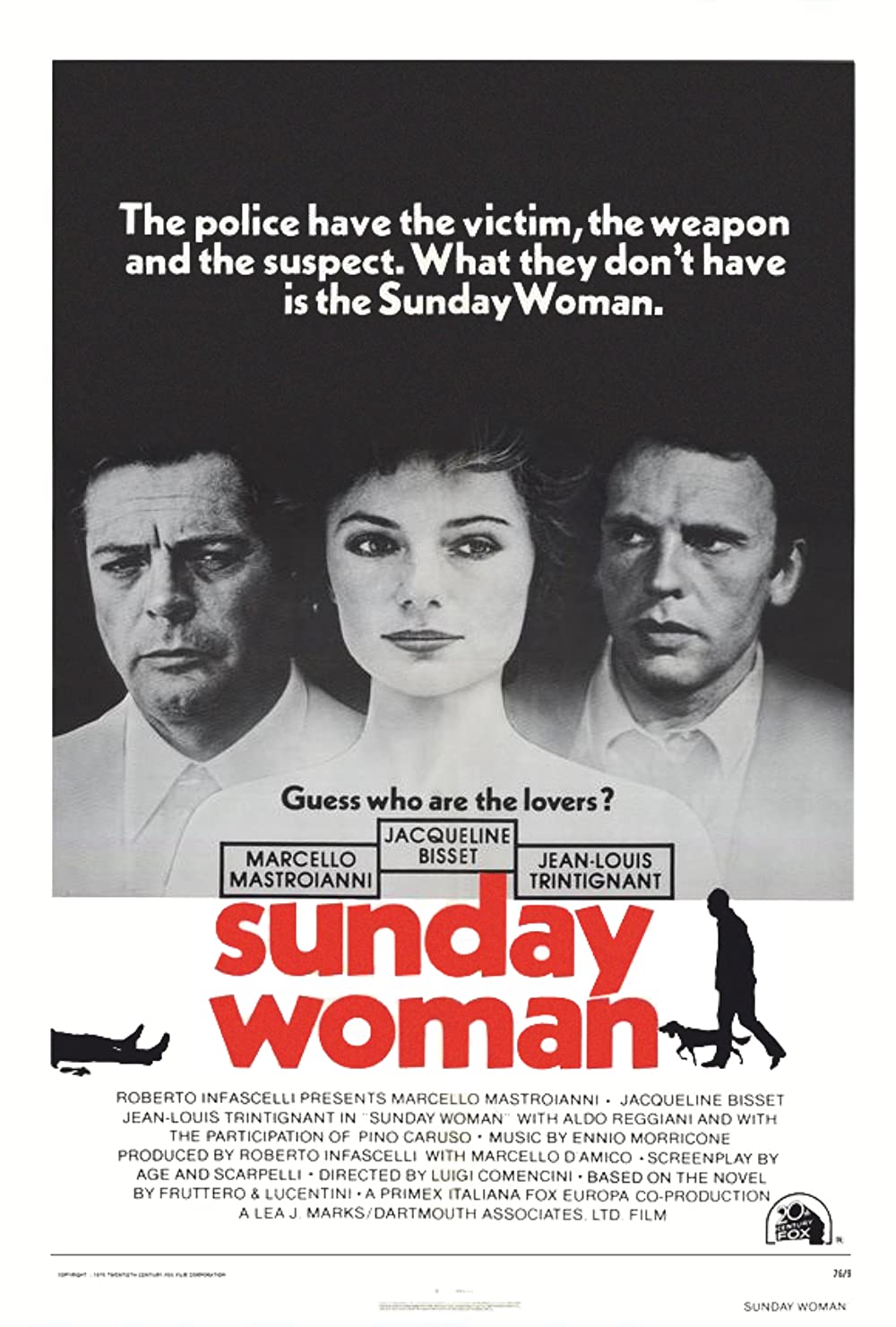
Based on the novel of the same name by Carlo Fruttero and Franco Lucentini, the story centers on the investigation of the murder of Mr. Garrone (Claudio Gora). Garrone is found bludgeoned to death inside his apartment by a giant penis statue. Garrone was a well known architect and a lecherous ladies man who couldn’t help but make unseemly passes at every woman he came by. Commissioner Santamaria (Marcello Mastroianni) is put in charge of the case, which has many suspects. Two of the biggest ones are Anna Carla (Jacqueline Bisset) and her platonic male friend Massimo (Jean-Louis Trintignant). Anna had written a note, found by her hired help the next day, stating her desire to ‘eliminate’ Garrone. Anna, who’s quite wealthy, insists that it was all a innocent misunderstanding and Massimo backs her up, but Massimo, who has an alibi, is reluctant to divulge it because it would require him to admit that he’s gay and at Lello (Aldo Reggiani) his lovers’ house. Santamaria begins looking into other potential suspects as does Lello who wishes to get his boyfriend cleared, but the deeper Santamaria gets into the case the more he connects with Anna and despite their age difference they begin to have a romantic relationship all while she remains at the top of his suspect list.

The film, on the technical end, is well done. Director Luigi Comencini nicely captures the visual beauty of the Italian landscape and the posh older homes of Turin a city in northwest Italy where it was filmed. The soundtrack by Ennio Morricone has a nice bounce that keeps the film moving along even while not a lot is happening. There’s an array of suspects and enough red herrings to keep it intriguing and impossible to guess who’s the true culprit.

The story has its share of offbeat moments though it’s disappointing that the funniest character, Garrone, ends up getting killed as he was amusingly sleazy enough to have kept things consistently comical. While the death by giant penis statue, if memory serves me correctly, had already been used in A Clockwork Orange, it’s still a novel idea and it’s funny how Santamaria visualizes each suspect he meets bashing Garrone over the head with it as he interviews them. Traveling to the shop where the statues are made and being surrounded with hundreds of them is certainly good for a chuckle, but outside of this there wasn’t all that much that stood out, or made this any better than any other murder mystery. The ingredients are good enough to keep sufficient interest, but nothing the makes it really memorable.

I was most disappointed that Bisset wasn’t in it more. She’s fabulous, as she is in most of her movies, and though I suspect that her voice, where she speaks fluent Italian, is dubbed, I still felt she gives a spectacular performance. Mastroianni on the other hand looks tired and worn-out and like his peak years of being a international sex symbol had passed. Yet when he’s together with Bisset it clicks and Jacqueline’s superior acting camouflages their extreme age difference making them seem more like a perfect couple than it should. The two should’ve investigated the case together and become a team, as every second Bisset is not seen it flatlines. Had the two shared the screen this might’ve been special, but ultimately it misses-the-mark and never fully gels.

My Rating: 6 out of 10

Released: December 16, 1975

Runtime: 1 Hour 45 Minutes

Rated R

Director: Luigi Comencini

Studio: Fox-Lira

Available: DVD-R (dvdlady.com) (Italian w/English subtitles), Amazon Video (English subtitles)