Monthly Archives: April 2025

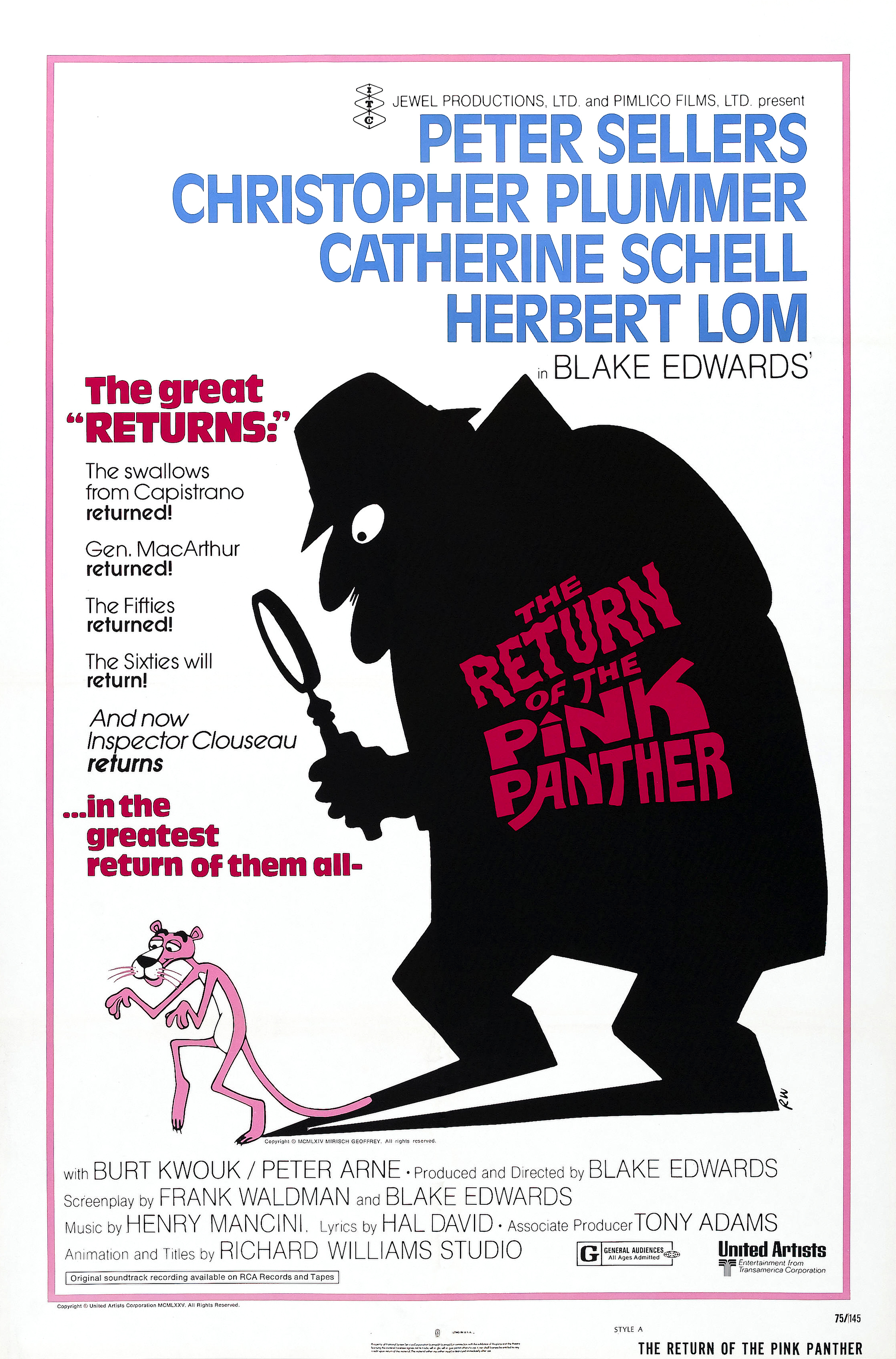
The Return of the Pink Panther (1975)

By Richard Winters

My Rating: 7 out of 10

4-Word Review: Tracking down stolen diamond.

Inspector Clouseau (Peter Sellers) has been demoted to street cop by Chief Inspector Dreyfuss (Herbert Lom) due to Clouseau’s continual incompetence, which is starting to drive Dreyfuss completely mad. However, inside the country of Lugash a prized diamond known as the Pink Panther is stolen and since Clouseau had success retrieving it the first time it went missing during a heist he is put on the case to find it again much to Dreyfuss annoyance. Clouseau suspects that the culprit is Charles Litton (Christopher Plummer), who is a notorious thief. Clouseau attempts to use several different disguises in order to infiltrate Litton’s home that he shares with his wife Claudine (Catherin Schell) in order to find incriminating evidence against Litton so that he can turn him in, but his attempts to try and a take Litton down prove to be comically inept. 

This marked the fourth installment of the Pink Panther series and the first in 10-years that reunited writer/director Blake Edwards with Sellers. Both had said after doing the second film A Shot in the Dark, that they never wanted to work with the other again due to much infighting during the production, but both had since then fallen on hard times. Edwards was by the early 70’s considered box office poison after the colossal failure of Darling Lilli which managed to recoup a measly $3 million from a $25 million budget and his other films from that era Wild Rovers and The Carey Treatment hadn’t done much better. Since Pink Panther had been his last success, he was interested in reviving it and even wrote up a 14-page treatment but found no takers amongst the major studios. Then producer Lew Grade agreed to finance it in exchange for Edward’s wife Julie Andrews agreeing to star in a British TV-special that he wanted to produce. Since Sellers career had also bottomed out, he came onboard to most everyone’s surprise without much hassle.

The film was shot in many scenic locations including Morrocco giving the optics an exotic flair and the proceedings a sophisticated European vibe making it seem like a step-up from just a silly comedy. In the first two installments all the characters were written to be funny and goofy particularly the second film, which had been based on a stage play. Here though the comedy is wisely given over to Sellers while the couple he’s after remain savvy, which makes it more intriguing as you want to see how this inept idiot takes them down, or is able to trip them up at their own game. I also liked how funny bits are interspliced with some legitimate action, especially the opening scene that features the heist, which could’ve easily fit into a realistic film dealing with a robbery. These moments help add a bit of relief from all the laughs, a sort of chance to catch your breath, while making the plot seem like it’s not just all about being a farce.

Lom adds terrific support as Clouseau’s exasperated supervisor, and his assertive acting style works nicely off of Sellers clownish one making the interplay between the two a highlight. It’s good too that Plummer replaced David Niven, who played the character in the first one, but wasn’t able to do it here due to scheduling conflicts, as Niven would’ve been too old and not plausible to have outrun the bad guys like Plummer does. 

My only issue is that Claudine is shown attempting to hold in her laughter at Clouseau right from the start like she knows he’s an idiot before she even met him, but this goes against the premise. Clouseau is considered an accomplished detective by the outside world hence why he was selected to head the case and it’s only the people that work with him and know him who are aware of his ineptness. This is the whole reason why Dreyfuss gets driven mad by him because the rest of the world celebrates the man that he knows is really a fool, so Claudine should’ve initially thought of him as being sharp and only came to the conclusion he was incompetent by the end after having dealt with him. It actually would’ve been funnier had she and Charles feared Clouseau upfront having believed his celebrated reputation and misreading his bumbling as being ‘genius’ ploys and remained that way throughout. In either case seeing her covering her mouth and shielding her giggles makes almost seem like she’s falling out of character and a blooper, similar to how Harvey Korman would unintentionally crack-up during Tim Conway’s antics on the ‘The Carol Burnett Show’ and for that reason it should’ve been avoided. 

My Rating: 7 out of 10

Released: May 21, 1975

Runtime: 1 Hour 54 Minutes

Rated PG

Director: Blake Edwards

Studio: United Artists

Available: DVD, Blu-ray, Amazon Video, YouTube
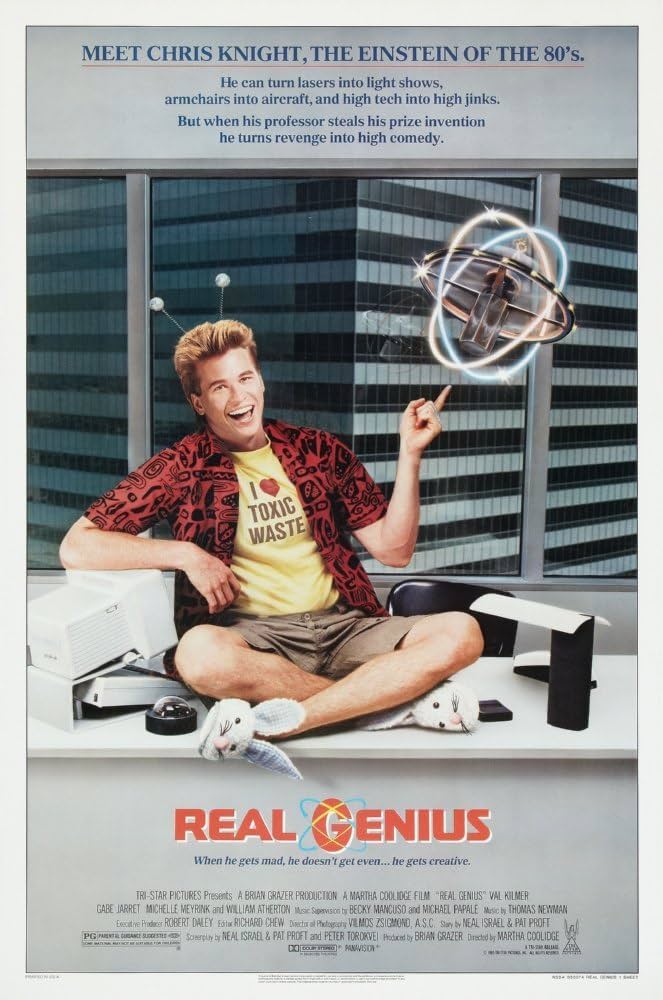
Real Genius (1985)

By Richard Winters

My Rating: 6 out of 10

4-Word Review: House full of popcorn.

Mitch (Gabriel Jarret) is a 15-year-old prodigy who attends college at a young age and rooms with Chris (Val Kilmer). The two though don’t hit-it-off as Chris is rebellious and irreverent while Mitch takes his studies seriously but doesn’t know how to have any fun. Both are assigned to work on a project called ‘Crossbow’ that is headed by an arrogant Professor Jerry Hathway (William Atherton). Neither student realizes that the laser project has been commissioned by the CIA that will allow them to commit political assassinations from outer space. Once they find this out, they band together to infiltrate the headquarters in order to corrupt the weapon and not allow it to function properly.

The film is best known as being the second starring vehicle for Val Kilmer who plays the type of smart ass that some may find amusing while others could consider it obnoxious. While he does have his moments, I did find it hard to believe that he was ever the studious type, which he insists he was during a ‘heart-to-heart’ conversation with Mitch and only became the goof-off after burnout, but if that really were the case the viewer should’ve seen that versus having it described. Since he plays the party personality so well it’s hard to imagine him being any other way and it would’ve been interesting to have witnessed the transition.

The real star is Mitch, and I’m surprised why he wasn’t given top billing as he’s more three dimensional, relatable, and has a genuine character arch while Kilmer seems brought in mainly just for comic relief and throw some spice into the proceedings. Atheron is a major scene-stealer that almost knocks the other two out playing the snobby jerk of all jerks, in an even more pronounced way than in Ghostbusters, which I didn’t think could be topped and in fact he plays it so well you don’t see the acting and begin to wonder if that’s the way he really is and in his case start to fear being potentially typecast.

While these characters are all engaging in their unique ways the supporting cast doesn’t work as well. Mitch’s parents, played by Paul Tuller and Joanne Baron, are just too dumb to be believed particularly when Atherton asks in snarky fashion if their son is adopted and for them not to catch-on that he’s insulting them was for me not plausible. Jordan, played by Michelle Meyrink, I felt was a bit over-the-top as she’s this super nerdy girl who spends seemingly every waking moment working on her inventions making it almost like it was a compulsion and it would’ve been nice seeing, at least for a few seconds, her doing something else.

The way Mitch, who has a crush on her, and she consummate their fledgling relationship gets completely botched. For one thing it didn’t need to turn sexual as I thought it worked better having things evolve between them slowly and not have it get serious until after school year was over and they could focus less on their studying. Either way the genesis that motivates them into sex is when Sherry, played by Patti D’Arbanville, appears in his dorm room and comes-on to him, but there’s no explanation for why she’s there and just popped-in out-of-the-blue. What’s worse is that you never actually see Mitch and Jordan get-it-on as the film cuts away, but seeing them in bed under the covers struggle to do it, as the first time could be quite awkward for many young people, could’ve been comical exposing how these geniuses were dumb at something to the point they decide it’s not worth it.

The pranks, which the film is best known for, are amusing, but seem a bit exaggerated. Coating the dorm floors with ice would cause massive damage once it melted and the water seeped through the floorboards making me believe the pranksters would’ve been kicked out. Same with Kilmer breaking one of the windows in his dorm room, which in the next scene is fixed, but no explanation with who fixed it, or more importantly paid for it. Getting the car of one of the students inside a dorm room was for me a jump-the-shark moment as there was simply no way that vehicle frame would’ve been able to fit through the doorway. Some may argue that because these pranks were based on real incidents that had occurred in other colleges, I’m being overly picky complaining about them, but I suspect they weren’t carried out in the exact same way as shown here, nor is there anything said about the aftermath because once the jokes are over somebody’s going to be paying for it. Here nobody ever gets into trouble or deals with the consequences, but in real-life they would.

Spoiler Alert!

The ending in which the students are able to infiltrate a military complex was wish fulfillment particularly the way they’re able to get in using ID cards they had made themselves, which I’m pretty sure would not have passed professional scrutiny. Just because these kids are smart doesn’t mean they can’t make mistakes or have oversights.

I did however love the house getting filled up with popcorn. Actual popcorn was used and had to be popped continuously for three months and then treated with a fire retardant so as not to combust. A 2009 episode of Mythbusters tried to recreate it and found that it wouldn’t be possible as the popcorn was not able to break glass or knock the home off of its foundation like in the movie, but it’s still a fun sight regardless and the film’s top moment.

My Rating: 6 out of 10

Released: August 7, 1985

Runtime: 1 Hour 46 Minutes

Rated PG

Director: Martha Coolidge

Studio: Tri-Star Pictures

Available: DVD, Blu-ray, 4K, Amazon Video, YouTube

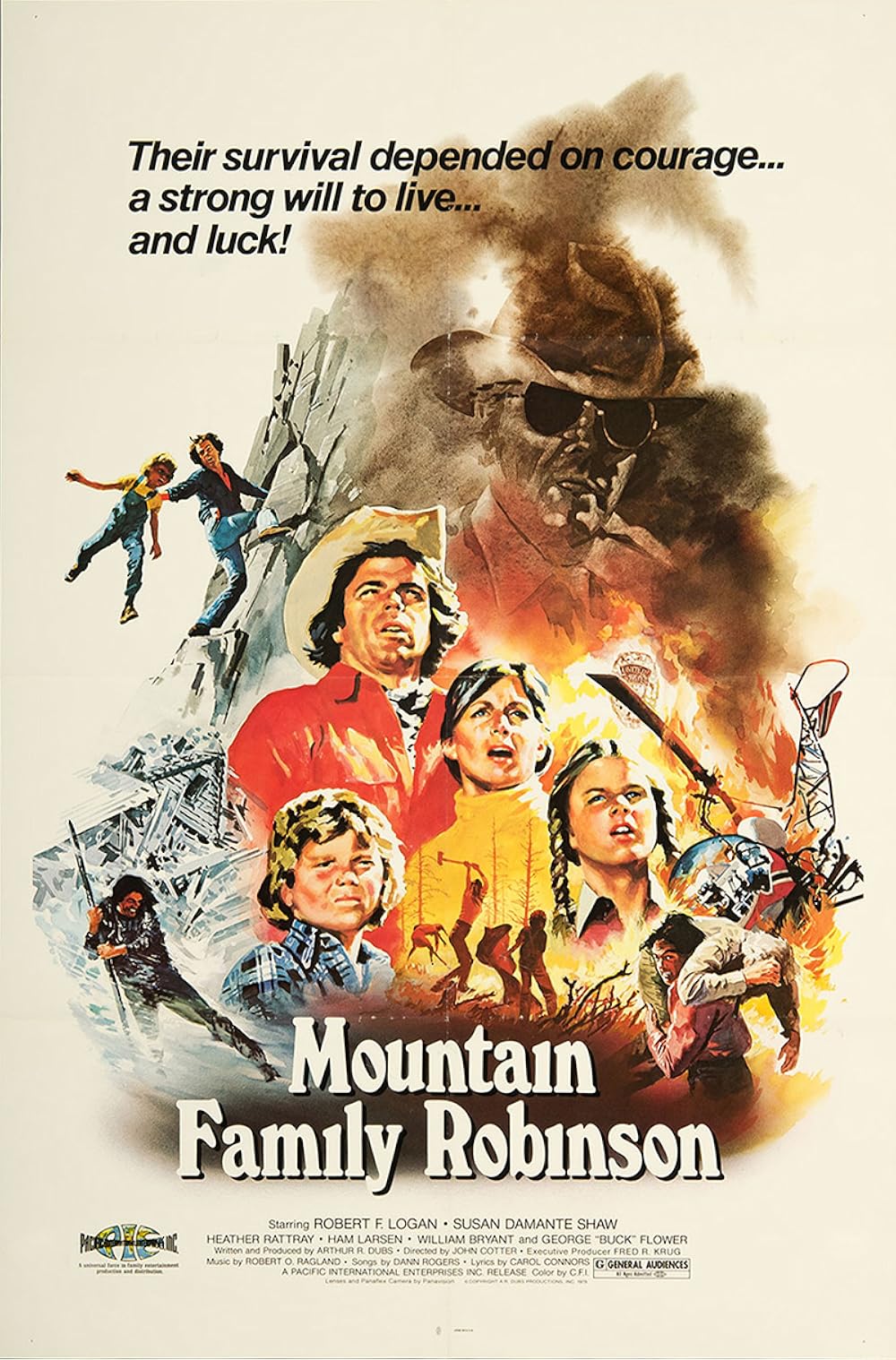
Adventures of the Wilderness Family 3 (1979)

By Richard Winters

My Rating: 1 out of 10

4-Word Review: Government threatens their home.

After surviving their first harsh mountain winter the Robinson family (Robert Logan, Susan Damante Shaw, Heather Rattray, Ham Larsen) are happy to go outdoors and enjoy the warmer weather of Spring, but there’s an unexpected problem. While doing a survey of the area a Forest Ranger (William Bryant) has surmised that the family doesn’t have rights to the property that they’re on. They must prove it’s a legitimate mining claim or move out.

I’ll give this film some credit, at least initially, that they made an attempt, albeit a feeble one, to mix things up. I was fully expecting more animal attacks, the formula had one occurring every 15-minutes in the first two installments, but with the exception of one minor one that happens to the boy when he runs away from home, there really isn’t any, at least to the family members. There is however, a confrontation between some mountain lions and the family’s pet dog, but the dog is able to fight them off, though I started to wonder how many times he could keep doing this. In the first two films the dog was also instrumental in scaring the other wildlife away, but you would think a domesticated pet would be at a disadvantage to one that had been living in the wild all their lives and were bigger in size. The fact that the dog constantly survives these battles and never even gets injured starts to raise the implausibility meter.

The two kids also feud a bit, which I found refreshing. Even the Brady Bunch had some conflicts between the siblings, as most any normal family does, so seeing everyone here be peachy towards each other the majority of the time is not only boring, but unrealistic. However, their disagreement, which amounts to nothing more than the two not talking to each other, which we don’t even see, but have described by the two parents, doesn’t last for more than a few minutes and then it’s all back to ‘happy family’. 

The mom finally does go back to L.A., something she had lightly threatened to do in the first two films but just like with the kids fighting it doesn’t add up to much as she comes back and says she’ll never leave again. Why then even add these elements if by the end it makes no difference to the story?

On a lesser note, are the bear cubs residing in the family’s cabin who never seem to grow and if anything, appear to have gotten smaller than when they were in Part 2. The Boomer character played by George ‘Buck’ Flower is also an issue as he’s a mountain man but never carries a gun making you wonder how he survives without one. For instance, how does he protect himself as animal attacks happen a lot, at least with the family, and what does he use to hunt for food? Maybe he lives completely off of berries and fish, but by the looks of his protruding belly it appears he’s eating something more.

Out of everything it’s the music that’s the worst. Because the story is so thin there are several segments featuring the family frolicking around while this sappy chorus by studio musicians get played that’s so sugary it’ll give you diabetes just by listening to it. It also has a dated sound from the 1940’s. The 70’s though was a period of many interesting music genres like rock, disco, soul, and even southern rock and media aimed at kids was trying to replicate it like ‘Sesame Street’ that had the Pointer Sisters singing a song that teaches children to count, but with a funky beat. Even religious people got into the times by introducing Christian Rock, so why does this movie have a soundtrack that’s so grossly out-of-step?

Spoiler Alert!

The third act in which the family openly refuses to leave their home after the Forest Ranger insists proves to be a letdown too as there’s no tense confrontation. Instead, the Ranger’s helicopter mysteriously crashes for no reason as the weather was sunny and when the family nurses him back to health he agrees to no longer push them out. However, all it would take is another government official to come along and the conflict would start all over making the tidy wrap-up/resolution unconvincing. The only positive thing to say is this was thankfully the final film of the series.

My Rating: 1 out of 10

Released: November 21, 1979

Runtime: 1 Hour 40 Minutes

Rated G

Director: Jack Couffer

Studio: Pacific International Enterprises

Available: DVD, Amazon Video, Roku

You’ll Like My Mother (1972)

By Richard Winters

My Rating: 3 out of 10

4-Word Review: Pregnant woman held captive.

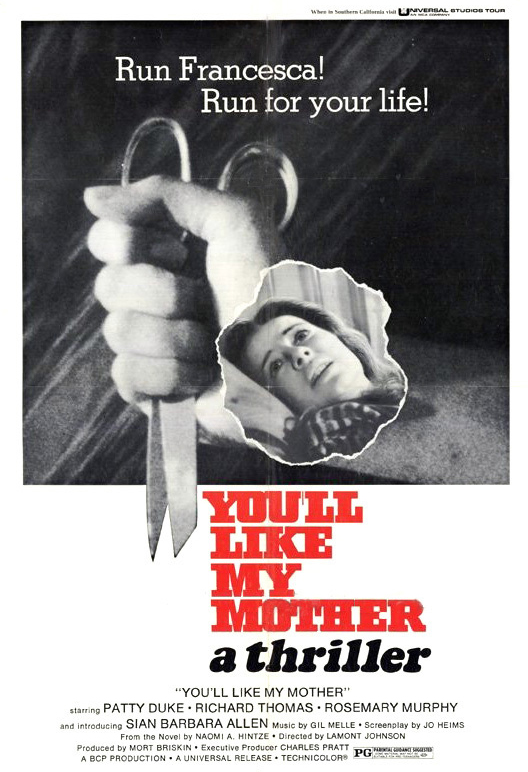
Francesca (Patty Duke) travels by bus to Duluth, Minnesota in order to meet her mother-in-law (Rosemary Murphy) after her husband dies in a plane crash in Vietnam leaving her alone and pregnant. When she arrives, she finds the woman to be cold and indifferent unlike how her husband had described her where he always insisted that ‘you’ll like my mother’. Francesca also finds out that he apparently had a sister, a mute girl named Kathleen (Sian Barbara Allen) that he had never mentioned. A snowstorm blocks her from leaving forcing her to stay in an upstairs bedroom where more troubling secrets come out including the fact that a young man named Kenny (Richard Thomas) is secretly residing in the home and has been accused in the past of being a serial rapist.

Blah thriller based on the 1969 novel of the same name by Naomi A. Hintze. The only interesting aspect about the film is that it was shot on-location at the Glensheen Historic Estate, which 5 years later became the site of a real-life crime when the mansion’s owner, Elisabeth Congdon and her nurse, were murdered by her son-in-law. The movie also marks the debut of Sian Barbara Allen, who died just recently and was quite active in TV and movies during the 70’s before retiring in 1990 in order to focus full-time on being an activist. She was, particularly in her prime, a great beauty with the most mesmerizing pair of blue eyes you’ll ever see. Unfortunately, her role doesn’t have her saying much outside of a few words she manages to mumble out and her character seems to be put in simply to help the protagonist figure out the mystery.

The story unfolds slowly and because the majority of it takes place in one building it becomes visually static. Since it was filmed in Minnesota during the winter the white stuff on the ground is real, which helps with the authenticity, but because it didn’t actually snow when it was being shot the crew was forced to use fake falling flakes in a feeble attempt to replicate a snowstorm, which they’re not able to pull off. Anyone who’s ever experience a real blizzard will see how tacky this one looks and thus the premise that ‘nobody can get through this storm’ is lost.

Patty Duke is good, but her character doesn’t do much outside of staying cooped up in room while Allen does most of the leg work. Her insistence that she didn’t need any help financially makes you wonder then why did she come at all? If it was just for a visit, she could’ve done that in the summer when Minnesota weather is more hospitable and after the baby was born. In many ways having her in need of money would’ve made more sense and heightened the dramatic tension since that would make her desperate with nowhere else to turn.

Murphy is a weak villain as half the time she’s more nervous than Duke and easily fooled making it seem that anyone could outfox her and get away. It doesn’t help that she stupidly gives away who she really is and why she’s there when she has a conversation with Thomas that gets overheard by Duke, which ruins the mystery when the film is only halfway through and thus killing what moderate intrigue there had been.

The foot chase through the snow at the end does offer some tension but waiting all the way until the finale for any action was a mistake and Duke should’ve tried to escape earlier. The plot twists aren’t enough to make sitting through worth it. It’s not adequate material for a 90-minute feature length film as there’s 30-minute episodes of the old ‘Alfred Hitchcock Presents’ with more plot wrinkles than what you get here.

My Rating: 3 out of 10

Released: October 13, 1972

Runtime: 1 Hour 33 Minutes

Rated PG

Director: Lamont Johnson

Studio: Universal Pictures

Available: DVD (Warner Archive)

The Conversation (1974)

By Richard Winters

My Rating: 10 out of 10

4-Word Review: Someone is listening in.

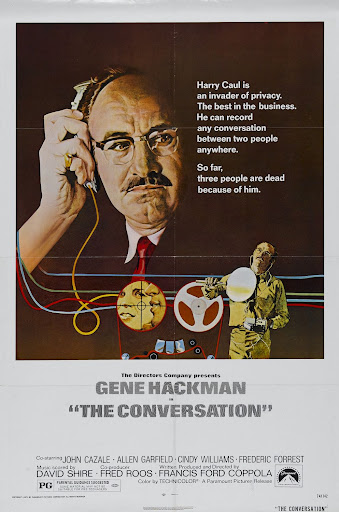
Harry Caul (Gene Hackman) is a surveillance expert who specializes in listening into people’s private conversations and has a reputation of being quite good at it. Many wealthy clients hire him to record things from their enemies that they might not be able to attain otherwise. However, one of these assignments led to the death of three people and Harry, being a highly religious man, has felt guilty about it ever since. He begins to have the same concerns with his new assignment when he overhears a couple (Fredric Forrest, Cindy Williams) who he’s recording mention that ‘he’d kill us if he got the chance’. Harry is unsure if he wants to give the tapes up to his client as he’s frightened the same scenario as before will occur. Martin (Harrison Ford) the man representing the client becomes aggressive in getting the tapes and warns Harry that they’ll get their hands on them one way or the other. Harry, a private man, soon realizes that this client is just as sophisticated in surveillance technology as he and maybe even more so as he becomes aware that his phone and even his apartment is bugged.

Inspired by real-life surveillance expert Martin Kaiser, who was a technical consultant on the production, the film deftly explores how today’s modern technology has easily evaded our private lives and how no one is safe from prying eyes and ears a concern that has become even more pronounced in the decades following its release. Many presumed that it was a testament about the Watergate break-in, which occurred a year before the movie came-out and uses much of the same sound equipment used the by criminals in the real-life event, but in actuality the script, by Francis Ford Coppola, was already complete in 1965, but was unable to get any financial backing until his success with The Godfather. 

The film scores on just about all levels especially with the way it captures San Francisco. I loved the bird’s eye-opening shot of Union Square as well as the terrific use of the fog that gets used to great effect during a memorable dream sequence. The soundtrack by David Shire is quite unique as it’s made to replicate sound waves changing frequency. I liked too that quite a bit of time is spent showing Harry inside his editing studio where he puts together the tape he’s recorded from different sources into a cohesive whole and watching him do it, even if it’s from equipment that would be deemed dated now, is impressive and makes you appreciate the expertise of the character.

Acting wise this may be Hackman’s best, and he stated in later interviews that he considers this to be his finest work, though at the time he felt it was an extreme challenge playing such an introverted person when he himself was highly extroverted, but the payoff is rewarding as he displays characteristics unlike any other role he’s played. What impressed me most was his body posture, which is hunched over, and he walks with a pensive gait, which reveals to the viewer the character’s inner angst without it ever having to be verbally explained. It’s interesting too how he’s mostly shy and stand offish during the majority of it making him seem like a wallflower, but when the subject of his sound expertise comes into discussion, he’s suddenly bragging about his state-of-the-art machinery showing how even the most unassuming of people can still have a big ego and helping to create a protagonist who’s three-dimensional.

There’s also great support from a young Harrison Ford, who appears with a scar on his chin, who despite presenting himself in a composed manner and speaking in a controlled tone of voice is quite menacing. Terri Garr is excellent as a prostitute that Harry frequents and acts as Harry’s only social outlet as well as Allen Garfield playing a huckster whose also Harry’s rival and clearly has a way about him that gets under his skin. Great work too by John Cazale who works as Harry’s assistant and their relationship runs hot-and-cold and there’s even Robert Duvall in a small, but pivotal part.

Spoiler Alert!

While the film is expertly crafted, I did find the scene where Harry’s landlady leaves him a birthday gift inside his apartment to be problematic. We see that Harry has three different locks on his door, which keenly reveals what a private person he is and how paranoid he is to protect it, and yet when he opens up his door there’s an item sitting on the floor left by his landlord. Through a subsequent phone conversation, he has with her we learn that she was able to get in by using her master key, but it’s highly unlikely that she would have three different keys for each lock.

Another issue happens at the end when Harry tears his apartment apart in desperate attempt to find the covert listening device that’s been planted by the client and is able to listen and record everything he says and does. He isn’t able to locate it despite a thorough and exhaustive search and then spends the rest of the time playing his saxophone as it’s the only thing he has left, which is where it finally dawned on me that was probably where they implanted the bug and the movie should’ve had him dismantle that too and then if he was unable to find it there, after destroying everything else, he could be seen lying in the barren, darkened room in a fetal position and completely defeated, which might’ve left an even more lasting and riveting final image.

My Rating: 10 out of 10

Released: April 7, 1974

Runtime: 1 Hour 53 Minutes

Rated PG

Director: Francis Ford Coppola

Studio: Paramount Pictures

Available: DVD, Blu-ray, Amazon Video, YouTube
Cheech and Chong’s The Corsican Brothers (1984)

By Richard Winters

My Rating: 1 out of 10

4-Word Review: Feeling pain from sibling.

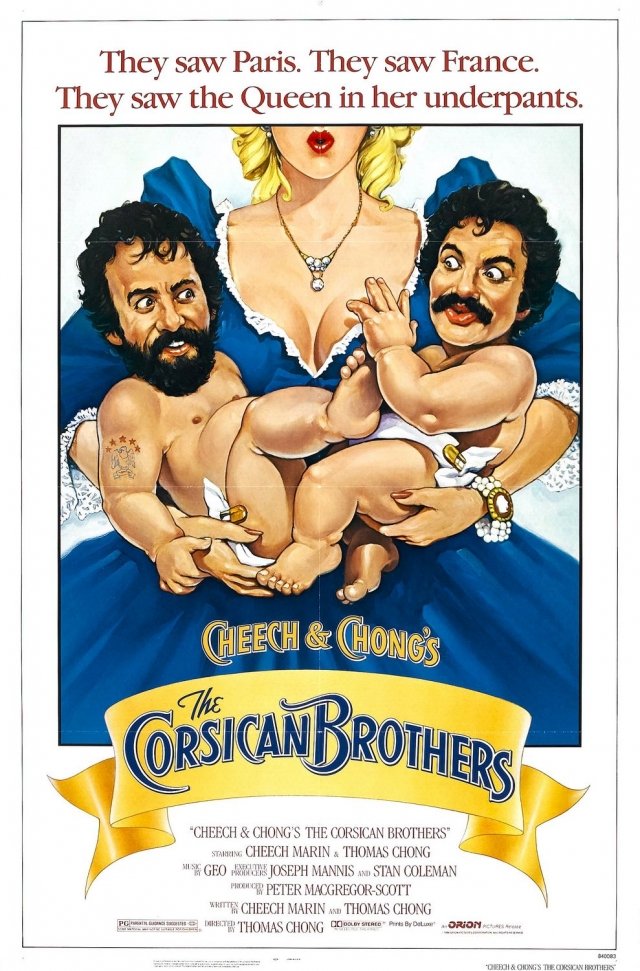
In France during the 1840’s two brothers, Luis and Lucien (Cheech Marin, Thomas Chong), are orphaned when their fathers die during a duel. Over time they realize they can feel the other’s pain and then split up and go their separate ways at age 9 after they accidentally burn down their house. 20 years later they meet up but find that their personalities are quite different with Lucien upset about the treatment of the pheasants and hoping to start a revolution while Luis wants to avoid all confrontations. Both of them draw the ire of the Queen’s henchman Fuckaire (Roy Dotrice) forcing them go in disguise in order to visit the Queen’s two daughters (Shelby Chong, Rikki Marin).

If there was ever a movie idea that cried out impending disaster during the planning stages it was this one and how it ever went into full-fledged production is a mystery, but far more interesting to explore than anything that’s actually in the film. Possibly the two got the idea after having brief cameo’s in Yellowbeard, another period piece parody, but the red flags should’ve gone up immediately. The whole reason Cheech and Chong became such a hit was their stoner caricatures and without that there’s nothing to watch. The two have proven in previous installments of the film series to be very good at playing different characters, but they were always in support. It was the stoner comedy routine that made it a hit and getting completely away from that and even changing the time period to the 18th century was too extreme and fans of the duo’s earlier work rightly stayed away.

The only possible chance it could’ve had would’ve been if the stoners had found some sort of time machine and went back into history where their mentalities would clash with those from the different culture though even this could’ve backfired, but at least it would’ve kept some slim thread from the other films in the series versus this way where there’s no connection. Yes, it still has the two stars, but their roles here just aren’t funny or engaging. Clearly their egos had them thinking it was all about them, but it really wasn’t and without the right material these two really struggle with a lot of the attempted humor coming off as strained.

The running gag dealing with their ability to feel the other’s pain runs out of steam fast and outside of that there’s really no laughs with many of the bits seeming better suited for a TV-sitcom if even that. The ending scene where Cheech imagines what the women he’s about to marry will look when they get older is the only unique moment with everything else being borrowed from some other movie, or show, which in almost all cases did it better than here. Only Edie McClurg and Dotrice have anything that is even faintly memorable, and their presence help keeps it slightly afloat.

It’s also fun to see Rae Dawn Chong, Tommy’s daughter, in a small bit as a gypsy that they meet while at a restaurant. Rae has always seemed to have a much different mentality than her father who’s predominantly goofy while she comes-off as serious, so I liked the idea of them sharing some scenes together but wished it hadn’t been so brief and that she’d been given a bigger role.

The only good thing to come out of this is that it finally became clear to everyone involved that it was time to put the whole thing to rest and both men decided to split-up and go their separate ways. The reason for this came when the two had a falling-out during postproduction when Chong decided to dub Cheech’s wife’s lines with a voiceover expert. Both were able to find success individually and finally reunited to bring back their stoner characters in an animated film in 2013.

My Rating: 1 out of 10

Released: July 27, 1984

Runtime: 1 Hour 30 Minutes 

Rated PG

Director: Thomas Chong

Studio: Orion Pictures

Available: DVD, 

Still Smokin (1983)

By Richard Winters

My Rating: 2 out of 10

4-Word Review: Stoners travel to Amsterdam.

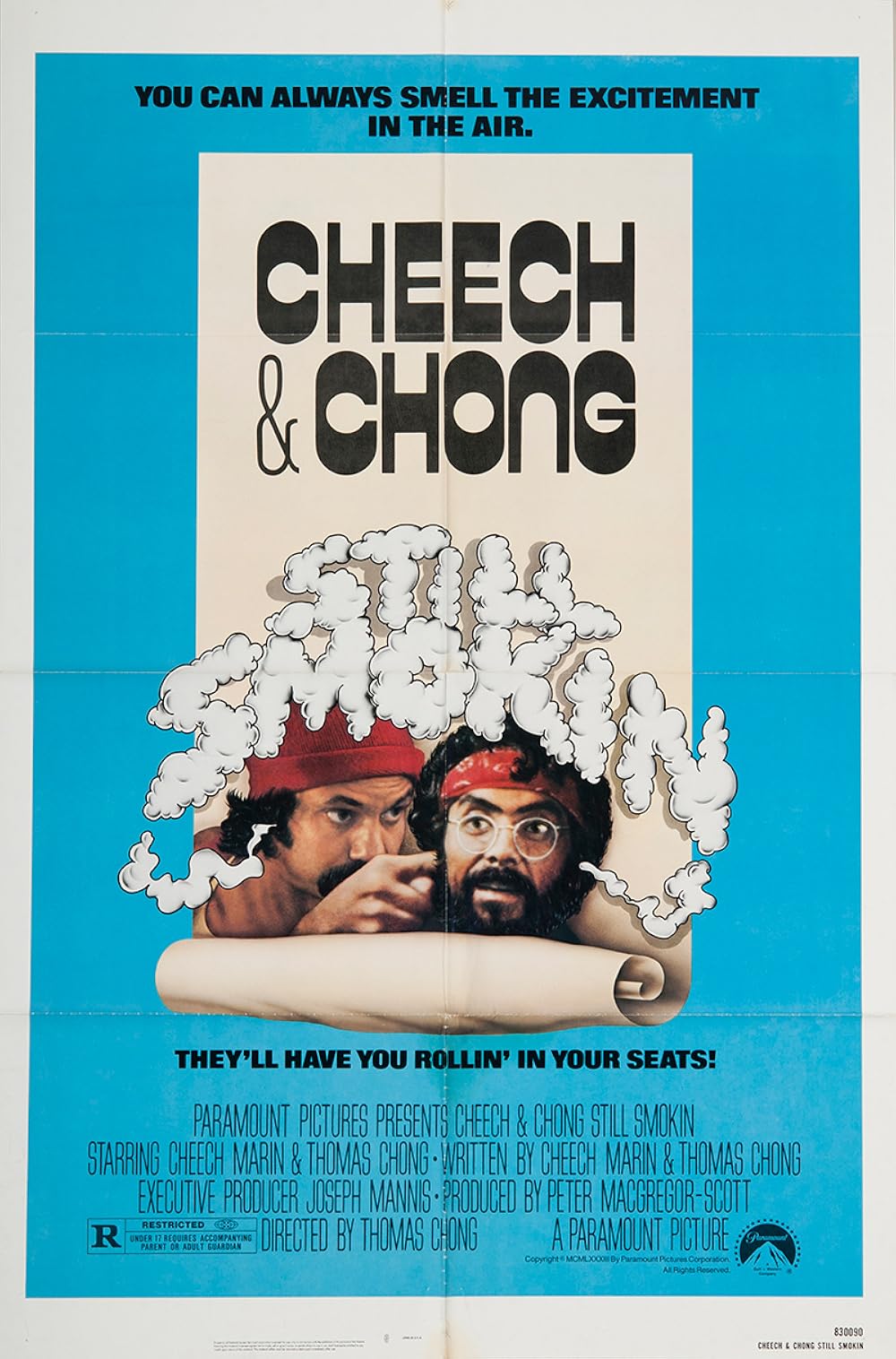
Cheech and Chong (Cheech Marin, Thomas Chong) travel to a film festival in Amsterdam dedicated to Burt Reynolds and Dolly Parton. Along the way Cheech gets mistaken as Reynolds and afforded the luxurious hotel room that should’ve been for him. The two take full advantage of it by ordering expensive dinners and drinks while signing it off on the hotel bill to be paid by the promoters. The promoter (Han Man in’t Veld) learns that the real Burt and Dolly won’t be showing up leaving the entire festival in shambles, but then the two stoners decide to save it by agreeing to do an improv comedy routine live in front of an audience where the Queen Beatrix of the Netherlands will be present. 

While the two may still be ‘smokin’ the film series has by this point completely lost all of its fire. My biggest complaint, which I’ve had with all of the previous installments, is that there isn’t enough story going on and had there been it would’ve been funnier. For instance, instead of the movie starting out with the two already celebrities it should’ve shown how they got into improv and learned the craft. Maybe it could’ve been because their drug dealing was no longer feasible and they were tired of constantly being harassed by the cops, so someone suggested improv as a side hustle. The two might’ve resisted at first, but then with nothing to lose decide to go on stage and try it out. To their surprise they become a hit, and this would then lead to fame and offers. Had it been done this way we would’ve at least had a plot and character development, but instead we’re just informed that they’ve become stars already, which makes it disjointed from the previous installment where they were driving around in the desert, still employed by the Arabs who wanted them to get into the adult film business.

The routines are flat almost shockingly so, as I’ve been involved in improv since moving to Austin 10 years ago and to be honest total amateurs stepping onstage for the first time and just coming up with a bit on the fly are far funnier than anything these supposed pros do here. I’m still impressed with their ability to change characters and speak in different accents, but their interplay doesn’t go anywhere. The skits as they are deals with an undercover cop (Chong) trying to arrest a drug dealer (Cheech), there’s also a gun debate between the two, a wrestling match where the two try to take on an opponent who’s invisible and yet another where they’re gay men trapped in a sci-fi movie, which may be deemed as offensive by today’s viewers as it relies heavily on gay stereotypes and mannerisms.

I remember in our improv group, like with most, somebody would usually yell out ‘scene’ when it was deemed that it had gone on too long and needed to end and I felt somebody should’ve been jumping into this movie and doing the same thing. The set-ups are okay and have potential, but don’t go anywhere that is interesting, or even slightly amusing. There are also certain bits that have no payoff at all but could’ve really used them. The best example of this is when the two continue to ‘sign-off’ on all of their elaborate room service expenses, but by the manager’s own admission, runs out of money, so who ends up paying for all those lavish meals and luxuries? I was fully expecting some moment to come where a massive bill showing of what they owed to come back to haunt them and their eyes getting all big, which could’ve been humorous, but it never happens proving how poorly thought the whole thing is. 

The final 20-minutes relies solely on concert footage of the two reenacting past skits that had been made famous from their record albums. These I found gross as the humor focuses too heavily on body fluids and stuff that would amuse only a seventh grader. I can be game for a dirty joke, if it’s clever, as anyone and have never been accused of being a prude, but when you have two grown men onstage crawling around pretending to be dogs who go through the motions of taking a shit and then smelling it, is when I checkout. Yes, the audience in the movie appears to be enjoying it, but I believe that was more from the shock value as back then some of this stuff was still considered pushing-the-envelope, but by now the edge has worn off and will be passee for many of today’s viewers. 

My Rating: 2 out of 10

Released: May 6, 1983

Runtime: 1 Hour 31 Minutes

Rated R

Director: Thomas Chong

Studio: Paramount

Available: DVD, Blu-ray, Amazon Video, PlutoTV, YouTube