Monthly Archives: April 2024

Zorro, The Gay Blade (1981)

zorro

By Richard Winters

My Rating: 4 out of 10

4-Word Review: Brothers become masked hero.

Diego (George Hamilton) is living in Madrid, Spain during the 1840’s when he receives a letter from his father ordering him to return to California. Once there he meets Esteban (Ron Liebman) whom he shared a friendship with when the two were children. Esteban has now married Florinda (Brenda Vaccaro) who Diego had a crush on when they were younger. He has also become Magistrate of the region upon the death of Diego’s father who suffered from a riding accident when his horse became startled by a turtle. Later Diego receives his inheritance, which turns out to being the disguise worn by Zorro the famous hero throughout the region. Diego now takes on the hero’s persona as he battles with Esteban who oppresses the already impoverished citizens of the area with high taxes. Unfortunately Diego breaks his ankle while jumping off a high balcony and is forced to turn-over his Zorro duties to his gay brother Ramon (also played by Hamilton) who uses a whip instead of a sword while also wearing flamboyant, color coordinated attire.

Hamilton’s career by the late 70’s had nose-dived to the point it seemed on life support until the surprise hit Love at First Bite helped revive it. This lead to many starring opportunities in the comic vein. He eventually decided to take this one since it allowed him the option to also be producer, but the film ultimately tanked at the box office killing off any more offers and he was never in another film for the rest of the decade and today he’s known less for his screen work and more for his vain persona, perpetual perfect tan, and appearing on reality shows dealing with has-been celebrities.

I’m not sure why this film is so obscure and hard-to-find as it’s not streaming anywhere, nor available on blu-ray while it’s DVD issue is from 20 years ago. Maybe it’s because of a white guy playing a Latino, though with Hamilton’s tan you’d never know, or maybe it’s because of the over-the-top caricature of the gay brother that could be deemed ‘controversial’ by today’s generation, but overall it’s adequately amusing for the most part. Hamilton is especially energetic and is the main reason it’s watchable though I felt it misses-the-mark when Diego goes from regular dude to caped crusader too easily. I would think becoming a masked super hero would bring in a certain learning curve that would invite mistakes to occur along the way. Outside of spraining his ankle no other missteps happen, which loses out on a lot of potential comedy.

Leibman as the bad guy is terrible as he overplays the campiness too much. A villain, even in a comedy, should have some threatening ability and this guy comes-off as a complete doofus from the get-go, so there’s never any suspense since we know this inept idiot’s bark is far worse than his bite. He also conveys his lines in a shrill tone that genuinely hurt my ears though he does have one good bit where he wiggles his hips in an attempt to replicate gay mannerisms, which is the only part of this movie that I remembered from when I first saw it over 40 years ago.

Vaccaro for her part is quite funny as she manages to balance the campiness with character’s personality in just the right way, so it seems organic. If anything I thought she should’ve been the heavy and Leibman could’ve been fully kicked-out. Lauren Hutton on-the-other-hand, who plays the other female lead as an idealistic woman fighting for change, and also Diego’s potential love interest, isn’t funny at all and is quite bland. I felt too that the idealistic period are usually when people are college-aged, so they should’ve cast a woman that was more that age, of which Hutton was clearly way past.

While there is a few chuckles here and there it overall comes-off as quite empty and limp. Not enough happens to make it intriguing and memorable. The sword fights become redundant and the hero is never put in any type of real peril. The humor is too constrained and needed to be played-up much more as does the sexual aspect. This was done when just having a gay character was considered ‘edgy’, but now seems quite pedestrian. There’s also only a few filming locations, so the visual backdrop offers little variety. The final shot has the heroes riding off into the sunset, which looks to be a painted backdrop, and it probably was, that just accentuates the film’s cheap looking production.

My Rating: 4 out of 10

Released: July 17, 1981

Runtime: 1 Hour 33 Minutes

Rated PG

Director: Peter Medak

Studio: 20th Century Fox

Available: DVD
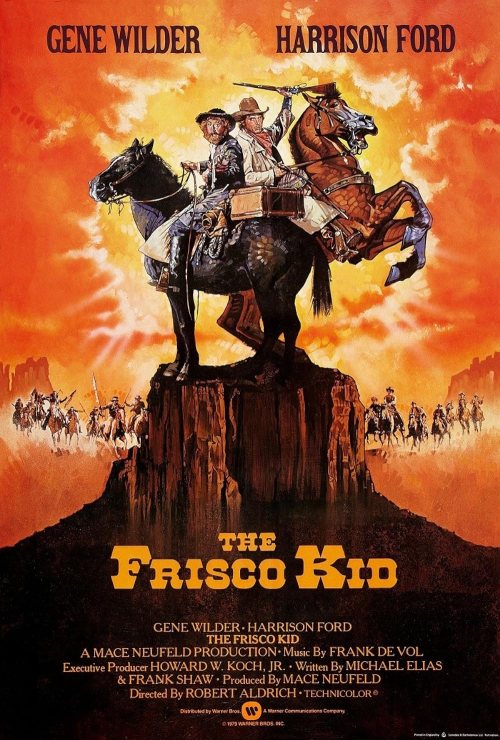
The Frisco Kid (1979)

friscokid

By Richard Winters

My Rating: 4 out of 10

4-Word Review: Rabbi travels across America.

Avram (Gene Wilder) is a Polish rabbi traveling across the U.S. from Philadelphia to the west coast where he plans to head a congregation in San Francisco. He has all of his money taken from him by three unscrupulous men (George Di Cenzo, William Smith, Ramon Bieri) who initially befriend him only to eventually leave him stranded in the middle of nowhere. Avram is then offered some help by a local Amish community and even gets a job for awhile as part of a crew laying down train tracks. He’s eventually earns enough to buy himself a horse, so he can continue his travels. It is then that he meets up with Tommy (Harrison Ford), who unbeknownst to Avram is a robber. When Tommy steals money from one of the banks in a town that they pass through both he and Avram must go on-the-run in an effort to avoid getting caught.

The script was originally written in 1971 under the title ‘No Knife’ in reference to Avram who traveled with no weapon of any kind for protection. Originally John Wayne was considered for the role of Tommy, who was interested, but the studio could not meet his fee requirements so along with his declining health, he bowed-out. Dick Richards, who won praise for helming another western The Culpepper Cattle Companywas originally tabbed to direct this one, but during the pre-production phase he left the project, so it was given to Robert Aldrich, who, as Roger Ebert explained in his review, treated it like a routine assignment and didn’t put in a lot of heart into it.

The  shoddy effects are noticeable and really hurts the production. The interiors have a stage play quality and all of the outdoor scenes look like they were shot on a studio backlot. Certain long shots show steel silos in the background, which wouldn’t have existed during the turn-of-the-century time period that the story takes place while other shots are clearly just a matted photograph edited in. For a western to be fully effective it has to have some grit and atmosphere and this film unfortunately has neither. The first hour works more like darkly humored comical vignettes and while they succeed at being slightly amusing aren’t really all that captivating.

Wilder is excellent and probably the sole reason to see it, but I was more surprised by the presence of Ford who had just came-off starring in the landmark Star Wars, but here accepts second billing and isn’t even seen until 22-minutes in. I was more baffled by the motivations of his character and didn’t understand why he’d take-on the mission of helping Avram, a virtual stranger, through the perilous journey. This was a man who was quite self-sufficient and excellent with a gun and easily getting away with robbing people, so befriending a rabbi was just going to hold him back. A backstory was needed showing why he might seek-out a partner, even an awkward one like Avram. Possible  showing Tommy being a part of a larger gang who kick him out of the group and thus in a desperate need for companionship he befriends Avram, or maybe Avram gets Tommy out of some sort of jam and thus Tommy decides to help the rabbi on his travels in an effort to show his gratitude, but just having Tommy show up out of nowhere and become Avram’s instant buddy doesn’t really work. I would’ve liked to have seen a wider relationship arch too where Tommy would take much longer to warm-up to and understand Avram’s unique personality than he does.

Spoiler Alert!

The scene where Avram befriends an Indian Chief, played by Val Bisoglio, and teaches the Indian tribe how to do a Jewish dance is fun and the climactic duel between Wilder and Smith merits a few point as well. The scene though where Avram shoots a man gets botched. He had never used a gun before, so I would’ve expected him to miss his target especially since he was nervous and his hands shaking. The fact that he’s able to shoot the guy right through his heart the very first time he’s ever pulled a trigger is beating astronomical odds and not the least bit believable.

My Rating: 4 out of 10

Released: July 13, 1979

Runtime: 1 Hour 59 Minutes

Rated PG

Director: Robert Aldrich

Studio: Warner Brothers

Available: DVD, Blu-ray, Amazon Video, YouTube

Daniel (1983)

daniel

By Richard Winters

My Rating: 7 out of 10

4-Word Review: Researching his parent’s execution.

Based on the 1971 novel ‘The Book of Daniel’ by E.L. Doctorow, who also wrote the screenplay, which was inspired by the true story of Ethel and Joseph Rosenberg, who were convicted and executed in 1953 for being spies to the Soviet Union. The story here centers on Daniel (Timothy Hutton), the now grown son of Paul (Mandy Patinkin) and Rochelle (Lindsay Crouse), who many decades after his parent’s execution now decides to research their case to see if his parents really were spies, or not.

Despite being well produced the film failed at both the box office and with the critics, which is a shame as I felt director Sidney Lumet does some marvelous work here and creates a few powerful scenes. One is when the the FBI agents raid Daniel’s house, who is played at this stage by Ilan Mitchell-Smith, and the look of horror in his eyes as the home gets torn up from top to bottom and his father violently removed in handcuffs. Another great moment are the execution scenes filmed in the actual death chamber at the Sing Sing Prison. These moments are quite chilling as Lumet’s focuses in on the close-up shots of the two being strapped in and the leather flaps of their hoods pulled down over their frightened eyes and then seeing their bodies shake violently while a group of men sit quietly observing it is effectively disturbing and one of the more impactful execution segments put on film.

There are though some things that could’ve been done better. The jumping back and forth between time periods proves distracting and takes the viewer out of the story instead of wrapping them in. The book of which it’s based had a very fluid structure as well, but here the scenes involving Daniel and his sister as children prove far more impactful while segments involving Hutton all grown-up are weak by comparison. The film would’ve been more effective had it taken a linear structure.

Watching Hutton walk along the sidewalk while voice overs are heard from his sister, played by Amanda Plummer, chastising him for not caring more about what happened his parents, was unnecessary and heavy-handed as we had heard her saying all this earlier to him at the dinner table and could see by the shocked reaction on his face that it really got to him, so we didn’t need the same lines getting repeated again. The music particularly the singing, is way too intrusive and having almost no music and just relying on the action and visuals would’ve been far better.

I was also confused who Linda was, played by Tovah Feldshuh, whom Daniel comes upon at a dental office years later and acts like he knows her from childhood. I didn’t remember seeing a young Linda, though one is listed in the closing credits, and then it dawned on me that there was a quick moment when a snotty girl tells Daniel and his sister, when they’re kids, that they ‘smell’ while they’re riding in a car, but because this character does end up returning and playing a pivotal role to the plot I felt the confrontations between them as kids should’ve been more pronounced and extended instead of so fleeting that you completely forget about it.

Hutton, who turned down the starring role in Risky Business to be in this at the protest of his agent, gets wasted. He gives a strong performance, but is over shadowed by Ilan Mitchell-Smith. His character also had too wide of an arch as he seems to have a complete personality change after the argument with his sister even though I thought he should’ve been shown harboring the same feelings and questions about his parent’s death for a long time and decided to explore the case out of his own curiosity and anger. I also felt that both he and his sister should’ve done the investigation together instead of discarding her off to a mental institution and barely seen. I know the book had her going to a mental hospital as well, but we see them go through the trauma together as children and therefore it seemed only right that they should work as a team as adults to find the answers.

The film offers no conclusions. The parents are portrayed in a highly sympathetic way like they didn’t really do anything and it does play with the idea that there might’ve been another phantom couple ‘who were the real culprits’ though it doesn’t pinpoint to anyone specifically. I felt it would’ve been a stronger movie had it based itself on the real children of the Rosenbergs, Michael and Robert, and detailed things from their true-life experiences. Maybe they didn’t want the limelight, which is okay, but fictionalizing a real historical event with a lot of made-up people and situations doesn’t have the same profound effect.

My Rating: 7 out of 10

Released: August 26, 1983

Runtime: 2 Hours 10 Minutes

Rated R

Director: Sidney Lumet

Studio: Paramount

Available: DVD, Amazon Video, Paramount +

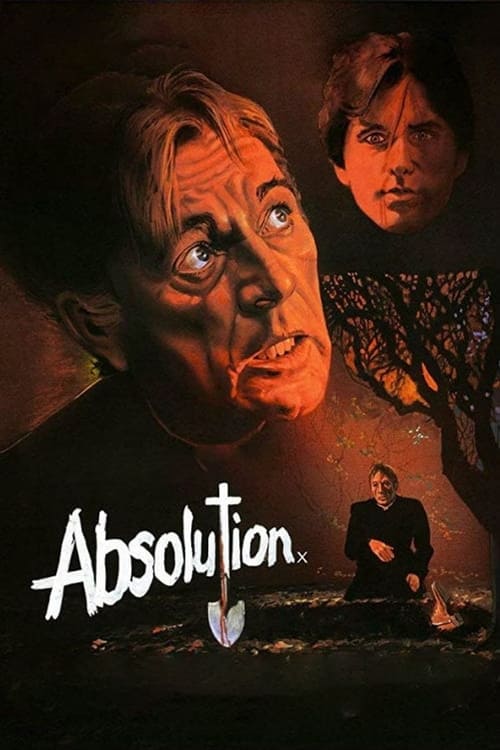
Absolution (1978)

absolution

By Richard Winters

My Rating: 7 out of 10

4-Word Review: Pranking a strict priest.

Father Goddard (Richard Burton) is the head of an English Boy’s School and uses his influence to control those who attend and is unflinching on his policies. Goddard constantly displays a cold and detached demeanor particularly with Arthur (Dai Bradley) a handicapped student that the Father doesn’t seem to care for. Benjie (Dominic Guard) on the other-hand is the teacher’s pet and routinely shown favorable treatment. Benjie though grows to resent the Father’s stern ways when he’s told he can no longer visit with Blakely (Billy Connolly) a motorcycle riding vagabond who has set-up an encampment just outside of the school grounds. Benjie decides to play a prank on the Father after hearing the lecture about the seal of confession, which a priest cannot break even if what he’s told is about a murder, so during confession Benjie tells Goddard that he’s murdered Blakely. Goddard initially doesn’t believe him, which sets off a myriad of twists that soon sends Goddard’s life, career and even his sanity spiraling out-of-control.

After the success of The Wicker ManAnthony Schaffer was commissioned by director Anthony Page to write another script that could be made into a movie and Schaffer decided to choose one that had initially been meant as a stageplay, but had never been produced. However, once Schaffer had completed his adaptation Page was unable to find a studio willing to fund it and he was ultimately forced to use his own money and Burton agreeing to slash his normal fee in order to get it made.

The lack of a budget is sorely evident at the start featuring a grainy print with faded color and what initially seems like misplaced banjo music that would be considered more appropriate for a film set in the American south instead of England. Having it shot on-location at Ellesmere Collage helps as many of the local pupils played the students here and the film gives-off a realistic atmosphere about what a boys school would be like with all of the kids looking age appropriate for their grade level and not like, as with other teen school movies, older actors in their 20’s trying to come-off as if they were still adolescents.

Billy Connelly, in his film debut, is terrific and it’s fun seeing Bradley, who was better known for his starring role in KesBurton though is the standout as his jet setting persona that he had at the time with Elizabeth Taylor gets completely erased and he fully sinks into his role of a steely-eyed, cantankerous man who rules with a rigid, iron-fist and whose simple presence wields terror in the boys as he walks-by and to some extent the viewer too. It’s a commanding performance that helps the movie stand-out.

Spoiler Alert!

The story though, while intriguing, doesn’t fully work. It becomes obvious that Goddard is being tricked by the boys, but you feel no empathy for his quandary. He has spent so much time up until then being a jerk that you end up siding with the boys, at least initially, which seriously hurts the tension as normally in a thriller/mystery such as this you’re supposed to side with the protagonist and want to emotionally see them get out of their predicament. Here though you like his mental breakdown and not as invested in finding out the resolution beyond it. The final explanation, dealing with the Arthur character supposedly disguising his voice to sound like Benje’s is too much of a stretch and ultimately hurts the credibility.

Shaffer stated in interviews that this was not meant to be an anti-Catholic movie, but I feel he said this in order not to alienate potential viewers as it’s clearly written by someone who grow-up in the church and had many problems with it. Father Goddard is more a caricature meant to represent Catholicism as a whole and how the religion with its very rigid rules ends up trapping those who follow it with a damned-if-you-do, damned-if-you don’t scenarios leaving its followers in a perpetual state of guilt and paranoia. This becomes quite evident at the end where the Father feels unable to break his seal of confession for fear of divine wrath, but also fears it for the murder he committed and his thoughts of suicide that would equally lead him to hell, per the teachings, making him more a victim of the religion than of the boys, which I feel was the whole point.

My Rating: 7 out of 10

Released: December 8, 1978

Runtime: 1 Hour 35 Minutes

Rated R

Director: Anthony Page

Studio: Bulldog Productions

Available: DVD, Blu-ray, Amazon Video

Private Eyes (1980)

privateeyes

By Richard Winters

My Rating: 3 out of 10

4-Word Review: Inept detectives investigate case.

Inspector Winship (Don Knotts) and Dr. Tart (Tim Conway) are two American detectives hired by Scotland Yard to investigate the murder of two people at a country estate in the 1920’s. Despite receiving a letter from one of the murdered victims asking them to investigate their murder the two prove to be quite inept. The various members of the mansion’s staff begin to turn-up dead one-by-one, which further deepens the mystery as a figure shrouded in a dark robe menaces the two as they investigate the case.

After the surprise box office success of The Prize Fighter, which became one of the most profitable films ever released by New World Pictures, screenwriter John Myhers, who had co-wrote that one, convinced Conway and Knotts to do another one. This one also did well earning a big profit, but for whatever reason it was the last of the Conway/Knotts comedies and they appeared together only once more in a brief cameo as two highway cops in Cannonball Run II

To some degree this is an improvement over their other one because here the entire cast is allowed to be funny and there’s none of the awkward, corny drama. Conway has a few good moments like when he stuffs his mouth full of apricots, or tries to cut a rope tied around Knotts’ hands with a sword that’s still connected to a knight’s armor. These two also get to reveal that they have a sex drive as they fight with each other over who gets to look through a tiny peephole to see the ravishing Mistress Phyillis, played by Trisha Noble, undress.

On the negative end a lot of the comedy falls flat. The opening animated bit, styled after the Inspector Clouseau Pink Panther films, is especially lame and should’ve been nixed. The running gag where the killer leaves notes where the last word never rhymes with the others is amusing for awhile, but gets overplayed. The stunts, pratfalls, and special effects are cheap and despite being filmed on-location at the Biltmore Estate in Asheville, North Carolina you really only get to see a few rooms of it making it seem like a waste.

Conway and Knotts can certainly be amusing at times, but they’ve played these types of characters for so long that they now have become predictable and boring. The Sherlock Holmes-styled parody has been done many, many times and this adds nothing new to the mix. It’s also hard to understand why if these guys are really this hopeless and everyone in the world seems to know it how they’d continue to find work and why Scotland Yard continues to give them employment and doesn’t just let them go. Inspector Clouseau was also very inept, but he always managed through irony and dumb luck to solve the case and come-out still looking like the ‘hero’ to the public, which only helped to bolster his career. These guys though don’t ever get anything right and are perpetually clueless, so why are they detectives to begin with?

A much better idea would’ve been to have placed the setting into the modern day especially since none of the humor, or pratfalls are contingent to the period. They could’ve played two guys who were out of work and saw an ad in the newspaper looking for amateur private eyes and they decide taking a stab at it as a ‘fresh start’. Then all of their bungling would make more sense and actually would’ve been funnier since the comedy would’ve had a more plausible setting.

Spoiler Alert!

Beyond just the bland comedy the case itself, particularly the final explanation, is illogical as it has one of the victims, Lord Morley, played by Fred Stuthman, coming back to life at the end as he essentially faked his own death. This though doesn’t make sense as we see a screaming newspaper headline at the beginning stating that two people were killed, or two bodies found when the car that Lord and Lady Morley were in drove into a lake, so if Lord Morley wasn’t one of the bodies then whose was it?

My Rating: 3 out of 10

Released: April 17, 1980

Runtime: 1 Hour 31 Minutes

Rated PG

Director: Lang Elliot

Studio: New World Pictures

Available: DVD, Blu-ray, Amazon Video

Believe in Me (1971)

believe

By Richard Winters

My Rating: 6 out of 10

4-Word Review: Couple addicted to drugs.

Remy (Michael Sarrazin) is a medical student at a New York hospital, who finds himself increasingly addicted to speed and other drugs available to him through his job. Pamela (Jacqueline Bisset) is the beautiful new girlfriend he meets through his friend and fellow intern Alan (Jon Cypher) who’s also Pamela’s brother. The two hit-it-off and soon move into together, but the romance doesn’t last when Pamela becomes aware of Remy’s addiction. He convinces her that he can handle it and even gets her to try some of it despite her reluctance. This then leads to her becoming hooked as well and their lives quickly spiral out-of-control as they both lose their jobs, their money, and ultimately their dignity.

The early 70’s was  a peak era for drug culture movies with most getting a bad rap from the critics, which included this one. Certainly it does start out cringey with a sappy love song sung by Low Rawls that not only gets played over the opening credits, but also about 30-minutes in, which practically kills the whole thing with its heavy-handed melody and lyrics. The title is not so great either as it seems to imply a totally different type of movie like have someone sticking with another person through thick-and-thin, which really doesn’t happen here and in fact its the complete opposite.  ‘Speed is of the Essence’, which was the working title as well as the title of the New York Magazine article by Gail Sheehy of which the film was based was far more apt and should’ve been kept.

However, what I did like are that the characters aren’t teen agers, or a part of the counter-culture movement, which is where all the other drug movies from that period had. The blame in those films was always the same too: peer pressure and bad influences, but here that all gets reversed. Remy and Pamela are well educated and with Remy’s background is well aware of the dangers of drugs and essentially ‘knows better’ and yet becomes a victim to them anyway. Because he’s at such a high standing initially and not just played-off as being some naive kid, makes his downfall and that of his equally smart girlfriend all the more stark and gripping.

The performances are good too. Sarrazin and Bisset met while filming The Sweet Ride, that started a 6 year relationship and this was the one project that they did together. Sarrazin has been blamed as being too transparent an actor who’s instantly forgettable and melts into the backdrop. While I’ve usually found his acting credible he does have a tendency to be passive and lacking an imposing presence, but here he’s genuinely cranky and snarly. Even has some moments of anger, which is why the movie mostly works because the character is believable. There’s good support by Alan Garfield as his dealer who gets the final brutal revenge on Remy when he can’t pay up as well a Cypher whose advice to his sister when she’s down-and-out and asking for money is shockingly harsh.

Spoiler Alert!

The film has a few strong moments particularly when it focuses on the couple’s teenage friend Matthew (Kurt Dodenhoff) who also becomes hooked and goes through a scary mental and physical decline, but the ending lacks punch. It has Remy sitting outside his apartment saying he’s ‘lost his key’ (not sure if this was meant as a code word for them being evicted, but probably should’ve been). Pamela then leaves him there while she walks to a clinic in order to get sober, which for me was too wide-open. For one thing there’s no guarantee that Pamela would’ve been able to cleanly kick-the-habit as many people enter into drug recovery suffer many relapses. Leaving Remy alone doesn’t offer any finality. Either he dies from his addiction, or finds a way out, but we needed an answer one way, or another like seeing his lifeless body lying in the gutter, which would’ve given the film the brutal final image that it needed. The movie does give an honest assessment of the situation most of the way, so why cop-out at the end and become vague? The viewer had invested enough time with this that they should’ve been given a more complete and concrete character arch.

My Rating: 6 out of 10

Released: December 8, 1971

Runtime: 1 Hour 26 Minutes

Rated R

Director: Stuart Hagmann

Studio: MGM

DVD-R (dvdlady.com)

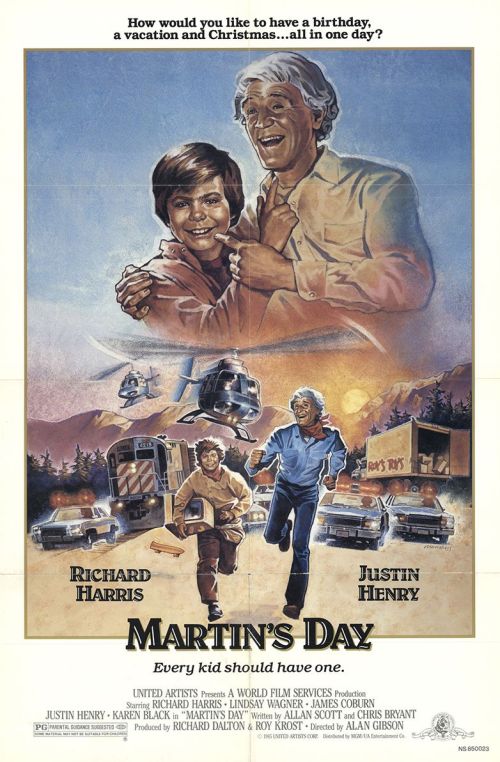
Martin’s Day (1985)

martinsday

By Richard Winters

My Rating: 4 out of 10

4-Word Review: Escaped convict kidnaps boy.

Martin Steckert (Richard Harris) breaks out of jail and disguises himself as a policeman while also absconding with a squad car. Soon some other cops notice the stolen car, which has a broken rear window, and begin to inspect it while Martin is buying groceries. When Martin returns he sees the cops inside the car, but notices their vehicle, which has caught the attention of some neighborhood boys, is sitting idle. He decides to use that car to getaway, but just as he tries to get inside it the other cops take out their guns and point them at him. In a desperate move Martin grabs one of the kids and threatens to kill him, which forces the officers to put down their weapons and let him get away. During the subsequent road trip the two get to know each other and he learns that the kid’s name is also Martin (Justin Henry). A unique bond is created, but the Canadian police force, lead by Lt. Lardner (James Coburn), is hot-on-their-trail.

Richard Harris is fantastic as usual, but the majority of the film is too intent on being a family-friendly movie that it ends up having no edge. The Canadian landscape, shot in September of 1983 in the province of Ontario, is nice and gives one a good feel of rural Canada, but everything else comes-off as trite and predictable though the eclectic supporting cast allows for some added interest.

I especially got a kick out of Lindsay Wagner playing the prison psychiatrist, who tries to replicate the Canadian accent by adding an ‘eh’ at the end of her sentences. I was surprised though that James Coburn, who was still considered a quality leading man at the time, was relegated to such a small role and only seen sporadically. Karen Black does a fine job as Harris’ former lover, but she’s in it for only about 5-minutes and they should’ve had her go along on the trip with the other two, which would’ve added some much needed energy and even a little spice.

The story itself is weak mainly because it telegraphs everything out and there’s absolutely no surprises. It’s clear right from the start, that Harris, while in jail, is a nice guy with a few anger issues, but then when he kidnaps the kid we know upfront that he isn’t going to hurt him. A more intriguing way to have done it, which would’ve allowed for some genuine tension, was to have shown him getting into angry confrontations with his cellmate and possibly even his therapist, so when the kid and him are alone you start to worry how he’ll behave and then during the course of the movie he could learn to be more calm and sympathetic. Even having him threatening the kid versus telling him upfront he’s not going to hurt him, would’ve upped the dramatic ante and allowed for a wider character arch.

I also couldn’t understand why the kid wouldn’t want to go back to his parents and start missing his home life at some point. The movie portrays his mom and dad, whom we never see, as being ‘strict’, but the rules that they had for him, like not eating candy on weekdays and only on weekends, didn’t seem all that outrageous. Had the film shown some scenes at the beginning where his folks were abusive towards him then his ‘escape’ with Harris might’ve made more sense, but as it gets done here the concept becomes highly strained.

Also, for a film aimed at a younger audience the segment where Harris intentionally sets himself on fire while inside his cell was quite graphic and could disturb a lot of children viewers. The scene where Harris backs the squad car that he’s just stolen into the front wall of the policeman’s house gets botched when I noticed that the backend of the vehicle remains completely intact and with no signs of damage, which just painfully illustrates that a breakaway wall was used and not a real one. Another logistical lapse comes when Harris and the kid park their pick-up on the train tracks, which forces the locomotive to stop and allows them to holed-up the train while the kid gets trained by the engineer on how to work it. Then in the next shot we see the train starting down the tracks with the kid now at the helm, but with the pick-up on the side of the tracks and no longer on them, but  it’s never shown how did the pick-up got moved.

My Rating: 4 out of 10

Released: February 22, 1985

Runtime: 1 Hour 38 Minutes

Rated PG

Director: Alan Gibson

Studio: MGM/UA

Available: DVD (Region 2), Amazon Video

The Double McGuffin (1979)

double

By Richard Winters

My Rating: 4 out of 10

4-Word Review: Briefcase full of money.

Homer (Greg Hodges) is walking outside one day behind the boarding school that he attends where he comes upon a briefcase that’s full of a lot of money. He then runs to tell his friends, Specks (Dion Pride), Billy Ray (Jeff Nicholson), and Foster (Vincent Spano) about it, but when they return to the spot where Homer hide it it’s gone. They then see a man named Sharif Firat (Ernest Borgnine) walking about town carrying it. They track him to a nearby hotel where he’s staying and bug his room to find out that he has hired three gunmen (Lyle Alzado, Ed ‘Too Tall’ Jones, Rod Browning) to carry-out an assassination. The boys though don’t tell the local sheriff (George Kennedy) because they’ve played some practical jokes on him in the past and fear now he won’t believe them, so they go about investigating the case on their own with the help of Jody (Lisa Whelchel) who is a student journalist and good at taking pictures with a camera as well as Arthur (Michael Gerard) who’s an uptight nerdy kid, but a whiz with computers.

After the success of Benji, a film that Joe Camp not only directed, but also wrote, produced and distributed, made over $30 million from a paltry initial budget of $450,000 he became motivated to further direct more movies for a family audience. This one though is definitely intended for adolescences and may even shock some viewers with a few of the scenes as it’s not exactly as family-friendly as Camp’s other films. One of the biggest jaw-droppers is that it features nudity, or in this case a glimpse of Elke Sommar’s breasts that occurs right at the beginning. There’s also some shots of the boys bare behinds when they go skinny dipping as well as scenes inside their dorm rooms where they are seen reading Playboy and drinking, or at least harboring, Coors Beer despite being underaged. They also swear though nothing worse than ‘hell’, which are all things that kids at that age would most likely do, or partake in, but some parents may still not be pleased and fear that it might be a ‘bad influence’ for the real young kids to see.

The four leads, which consists of country singer Charley Pride’s son, are an odd looking bunch mainly because three of them look like they’re senior high school age hanging around with this small kid named Homer who could easily pass-off as being a fourth grader. Seemed hard to believe that he’d be housed in the same room as these older guys and worse yet be playing on the same football team as he’d most likely be injured badly and better suited for the Pee-Wee division. His acting though is more dynamic than the rest, including Spano who may have become the most famous of the bunch, but here doesn’t really have much to do, so that may have been the reason he got cast despite his puny size. I also really enjoyed Whelchel, who later became famous for playing the snotty Blair on the TV-show ‘The Facts of Life’. who is engaging and looking quite young, like about 13 though at the time of filming she was actually hitting 15. Gerard as the pensive and androgynist Arthur has a few fun moments too.

The twists are entertaining for awhile though having the briefcase constantly appearing and disappearing gets tiring. Initially it’s kind of creepy and intriguing, but the segment where the boys open it to find a severed hand and they run a few feet away in fright and then go back to have it no longer there makes it seem like it’s almost magical and not realistic. Homer’s ability to unlock anything simply by using a pocket knife gadget gets played-up too much. It’s okay when he uses it to open the briefcase though you’d think something used to hold a lot of money would have a much more sophisticated lock in place, but when he’s able to continue to pick any lock in virtually any door he wants is a bit much to the point you start to wonder why does anyone even bother putting locks on doors if any kid with a small knife can easily pick-it.

Spoiler Alert!

The film’s biggest downfall though is that not enough happens. The lack of action, especially for a film aimed at the younger set, is appalling. There’s only one chase, done on foot when Borgnine tries to catch-up with two of the boys, who you’d think could easily outrun him since he was 60 at the time and out-of-shape and also in broad daylight with plenty of pedestrians on the street who could’ve easily called-out for help, which makes this moment not very tense at all. The climactic sequence really fizzles as the shooters are apprehended inside their hotel room before the assassination even is attempted, which should’ve gotten played-out more. The concept had plenty of potential, but with so little that actually happens it’s quickly forgettable and hardly worth the effort to seek-out.

My Rating: 4 out of 10

Released: June 8, 1979

Runtime: 1 Hour 40 Minutes

Rated PG

Director: Joe Camp

Studio: Mulberry Square Productions

Available: DVD

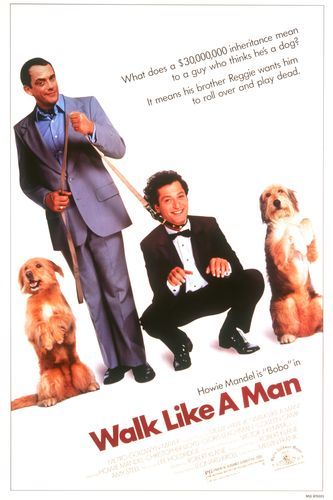
Walk Like a Man (1987)

walk

By Richard Winters

My Rating: 1 out of 10

4-Word Review: Raised as a wolf.

Henry (Christopher Lloyd) travels with his family to Alaska in the search of gold. His oldest son Reggie though doesn’t like the cold and so after finding his fortune Henry tells his family they’re leaving via a dog sled. Reggie is told that he’s now old enough to push the sled, which he doesn’t like, so when his father isn’t looking he hops onto the sled where his mother (Cloris Leachman) and younger 2-year-old brother, nicknamed Bobo, are. Bobo ends up getting pushed off the sled and lost in the icy wilderness where, despite the arduous search by his father who perishes while looking for him, is presumed dead. 28 years later a biologist named Penny (Amy Steel) comes across a man (Howie Mandel) with a pack of wolves. He gets identified through a tattoo as being the lost son and ‘returned’ to a now grown Reggie (Christopher Lloyd), his mother and Reggie’s wife Rhonda (Colleen Camp). Reggie has no interest in caring for his brother, who behaves like he’s a wolf, but because he’s squandered his father’s fortune and because Bobo was given a $30 million inheritance, Reggie agrees to let Penny teach him how to write, so he can ultimately sign over his money to Reggie.

The script was written by Robert Klane who burst onto the scene during the late 60’s with both ‘The Horse is Dead’, a highly irreverent, politically incorrect novel, but still quite funny, and ‘Where’s Poppa’, about a man trying to kill his senile mother. The latter got made into a movie, which was directed by Carl Reiner with the script written by Klane, that’s considered a landmark in dark comedy. So, how someone goes from doing stuff that’s highly inventive to this empty-headed, bare bones ‘comedy’ is hard to fathom, but the results are ‘blah’. The plot is threadbare and hinges on a lot of slapstick scenarios that prove to be predictable and overly-extended. Instead of picking up the pace, as a good comedic scene should, it saps the energy right out making the movie, as a whole, strained and boring.

The problems start out right away during the Alaska scene, which was clearly shot on a soundstage using fake snow, where the young Bobo falls off the sled, which if you think about it is quite horrifying as there is simply no way a toddler could survive in that climate. There’s no chance the wolves would ‘raise him’ either and instead would just eat him. Also, when he gets found by Penny he’s seen running around wearing a loincloth, but if he thinks he’s a wolf he shouldn’t be wearing anything at all just like the other wolves. Where did he find this cloth to wear, or did the wolves make that when they took up parenting him?

The running joke of Reggie’s neighbor, played by George DiCenzo, getting upset because Bobo keeps trampling through his freshly paved cement driveway, is overdone. The first time it happens it’s good for maybe a slight chuckle, but then several months later it goes back to Bobo doing it again, but the neighbor should’ve learned from the past and built a fence, or partition around the cement to prevent Bobo from going on it, or at the very least not be so shocked when the driveway gets ruined again since its already happened several times already.

The only interesting aspect is seeing Lloyd, who has later described this film as an ’embarrassment’, playing the lead. Usually he does likable, but eccentric character roles, so seeing him actually carry a film, which he does well despite the mess, is interesting and in fact he’s the only thing that gives it any energy and when he’s not in it it all falls flat. Mandel on the other hand isn’t dynamic enough to make his scenes work and his wolf routine is more tiresome than funny.

Leachman steals it as the mother with child-like instincts. She does have a few funny lines and her sitting with Bobo as Penny tries to teach him to read and write and her reactions to things being almost as clueless and fanciful is Bobo’s is definitely amusing. Steel, while quite bland, is good simply because she’s the only normal one in the movie, which when doing wacky comedies it’s nice to at least have one sensible person to help ground things.

I’ll give a point to the segment dealing with a trip to mall and the infamous sneezing scene, which did get me to laugh-out-loud, but everything else clunks badly. The final courtroom battle is especially cringey. Showing clips of ‘funny moments’ during the closing credits, which weren’t all that great when we saw them the first time, and acting like it’s some sort of ‘highlight reel’ just extends the pain further. If anything they should’ve shown bloopers and outtakes of the actor’s messing up their lines, which would’ve been funnier than hearing them speak the actual ones.

My Rating: 1 out of 10

Released: April 17, 1987

Runtime: 1 Hour 26 Minutes

Rated PG

Director: Melvin Frank

Studio: MGM

Available: DVD