Monthly Archives: November 2023

Dirty Little Billy (1972)

dirty

By Richard Winters

My Rating: 9 out of 10

4-Word Review: From awkward to outlaw.

Loosely based on the life of Billy the Kid the film centers on a young Billy Bonney (Michael J. Pollard) who moves to Kansas with his mother (Dran Hamilton) and her new husband Henry (Willard Sage). Billy and Henry don’t get along as Henry feels Billy is lazy and doesn’t help out enough with the farm chores. When Henry informs Billy one night that he needs to leave and never come back Billy does just that by hopping onto the nearest train that’s traveling back east only to at the last minute hop off of it and into a nearby small town where he encounters Goldie (Richard Evans) and his girlfriend Berle (Lee Purcell) who run a small gang of outlaws and are holed-up inside a bar run by Jawbone (Josip Elic). Initially Goldie and Billy are incompatible, but eventually Berle softens towards him and even allows him to go to bed with her. When Billy comes to their rescue when they have a confrontation with another gang he’s eventually welcomed into the group and ultimately becomes its new leader.

By the early 70’s the revisionist western, which portrayed the west in a less ideal way focused more on the realism and merged the good and evil theme so that it became less clear who the hero and bad guy were, became all the rage. Films like The Wild Bunch and McCabe and Mrs. Miller were critical darlings and set the standard for all westerns that followed. This film I considered to be one of the best and yet has strangely been overlooked and isn’t even in Wikipeadia’s list of revisionist westerns from that period, which is a real shame as this masterpiece deserves from more attention and if anything should be at the top of the list and figured prominently.

What’s even more baffling is that it was directed by Stan Dragoti a man that started out in commercial photography and had no aspirations for film directing until finally, at the age of 40, getting the offer to direct this one. The film is so highly stylized and has such a strong a precise artistic vision that I would liken this directorial debut to those of Richard Linklater, Quentin Tarantino, or Jim Jarmusch who burst into the film scene with a distinct style that took audiences and critics by storm while ultimately continuing each of their follow-up projects with the same unique approach and theme, but with Dragoti, who was married to supermodel Cheryl Tiegs, that was not the case. The films he did after this were all lightweight comedies that had a generic look and no resemblance to this one. How someone with no background in movies could helm something as flawless as this is hard to answer, but in the music world you have obscure bands who manage to make it big with one song and they end up being called one-hit-wonders and I guess in Dragoti’s case that’s what this movie was to him and his career.

The acting is masterful as well especially Pollard whose career was quite up-and-down. While he had been appearing in TV productions from as early as the late 50’s it wasn’t until his breakout role in Bonnie and Clyde that he came to the attention of audiences and studio heads alike. Trying to subsequently cast him in a film where he’d be the right leading man though was no easy task. The first attempt was Little Faus and Big Halseywhich did not do well at the box office and rumors of him fighting with his co-star Robert Redford didn’t help things. This role though, where his moody presence is put to perfect use, was a terrific fit and despite already being in his early 30’s his boyish face still gave off the late adolescence look that was needed. Lee Purcell is also fantastic in a sort of plain-Jane role where she wears no make-up, but still looks striking and her knife fight with another woman, played by Rosary Nix, is one of the movie’s top moments.

Overall, outside of the gritty visuals that have an almost poetic quality, what I liked most was how the characters didn’t seem locked into their time period like so many other historical type films. Too many other movies trying to recreate past eras end up having people who seem antiquated and not relatable while this bunch, particularly Billy and the outlaws came-off like people who could’ve easily fit-in with the hippies of the 60’s, or anyone that was living outside the system. They were simply looking for purpose and finding it by lashing out at a society that didn’t seem to want them, which in many cases is the common thread of most criminals of today as well.

My Rating: 9 out of 10

Released: October 25, 1972

Runtime: 1 Hour 33 Minutes

Rated R

Director: Stan Dragoti

Studio: Columbia Pictures

Available: DVD-R
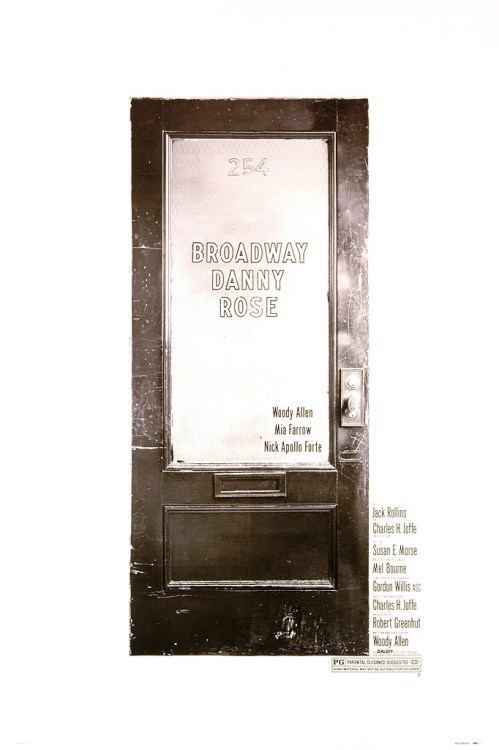
Broadway Danny Rose (1984)

broadway2

By Richard Winters

My Rating: 5 out of 10

4-Word Review: Talent agent becomes beard.

Danny Rose (Woody Allen) is a hapless talent agent who represents clients who are down-and-out, but seeking a comeback. Lou (Nick Apollo Forte) is a singer who uses Danny as his agent. Since he has some potential and might even get hired by a big star, in this case Milton Berle who plans on tabbing him as his opening act, Danny will do anything to keep Lou happy especially since Danny’s other clients tend to drop him once they become famous, which Danny doesn’t want to happen again. In order to appease him Lou has Danny acting as a ‘beard’, or a person who pretends to being a boyfriend to someone he really isn’t. In this case it’s to Tina (Mia Farrow) a woman whose been dating a gangster. Danny acts as her boyfriend to draw attention away from Lou, but her ex-gangster lover becomes jealous and thinking Danny to be the real boyfriend sends out a hit on him forcing both he and Tina to go on-the-run.

While this film did well with the critics I felt it was pretty much a letdown. What annoyed me most was the washed-up, aging comedians sitting around a cafe table and essentially telling the story, which gets done in flashback. I felt these comedians, who say nothing that is funny, or even slightly amusing, served no real purpose except for maybe padding the runtime, which was short already, and the scenario could’ve easily played-out without constantly cutting-back to these guys to add in their useless side commentary. This also cements Allen’s transition from being hip and edgy. which he was considered as during the 70’s, to out-of-touch with day’s youth and young adults by the 80’s as no one in this movie appears to be under 40.

It’s confusing too what time period this is all supposed to be taking place in. Supposedly the cutaways to the comedians is present day though with it being shot in black-and-white it hardly seems like it, and then the scenes with Danny are apparently things that happened in the 60’s. This though gets completely botched not only because of the cars they drive, which are of an 80’s variety, but there’s also a scene where Lou and Danny are walking on a sidewalk and go past a theater marque advertising Halloween III, which was  a film that was released in 1982.

On the plus side I enjoyed Mia’s performance of a hot-headed, highly oppionated Italian especially with the dark glasses and bouffant hair-do, which could’ve been done up even more. She’s known as being such a serious actress, who’s marvelous in drama, but to see her able to handle the comedy and even become the centerpiece is a real treat. Woody and her make for a quirky couple, she’s actually taller than him when they stand side-by-side, and she really gets in some good digs on him. Though with that said I actually wished that Nick had played the role of Danny as his amateurish acting made his doopy character funnier and the scenes between him and yappy Mia could’ve been a real riot.

There are a few laugh-out-loud moments, though it certainly takes it sweet time getting there. Watching Woody and Mia attempt to escape the killer by running through a field of tall grass I liked as too the scene where they are chased into a warehouse filled with parade floats and the hydrogen that escapes from them, due to the shooting bullets, causing their voices to become extremely high-pitched. The rest of the humor though relied heavily on Italian-American stereotypes that have been done hundreds of times before and isn’t original. I was also surprised that it has walk-on cameos by Howard Cossell and Milton Berle, who even appears in drag during the Thanksgiving Day parade, but are given no lines of dialogue.

My Rating: 5 out of 10

Released: January 27, 1984

Runtime: 1 Hour 25 Minutes

Rated PG

Director: Woody Allen

Studio: Orion Pictures

Available: DVD, Blu-ray, Amazon Video, Freevee, Tubi, YouTube

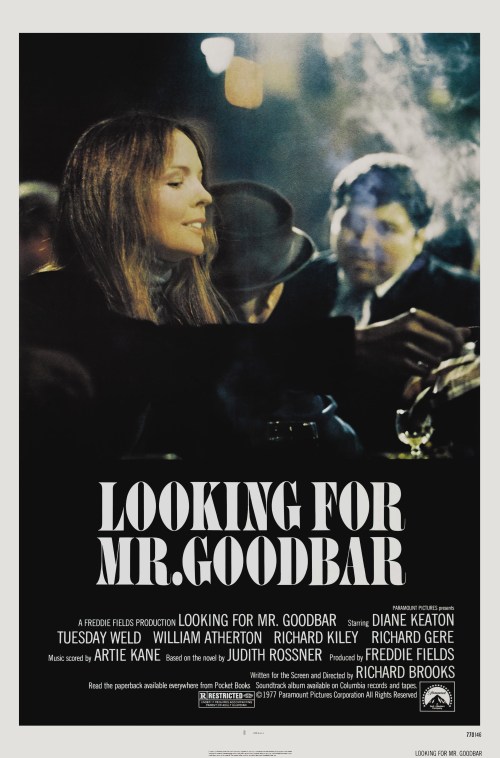
Looking for Mr. Goodbar (1977)

looking

By Richard Winters

My Rating: 7 out of 10

4-Word Review: School teacher sleeps around.

Theresa (Diane Keaton) is a young school teacher trying to get over the break-up with Martin (Alan Feinstein) a married college professor of whom she’d been in a relationship with for several years. Tired of living with her parents (Priscilla Pointer, Richard Kiley) and her domineering father she decides to get a studio apartment near the club scene. She picks-up Tony (Richard Gere) at a bar one night and takes him home. His volatile, drug induced behavior scares her at first, but eventually she enjoys his unpredictable ways. When he disappears for long periods she begins bringing more strangers home finding the one-night-stands to be a liberating change from her repressive catholic upbringing, but the more she partakes in this edgy lifestyle the more danger she puts herself in.

The film is based on the Judith Rossner novel of the same name, which itself is based on the true story of Roseann Quinn. Quinn was a school teacher living in New York City who had a propensity of bringing home men she’d meet from a bar that was across the street from her studio apartment. On the evening of January 1st, 1973 she invited John Wayne Wilson, a man she met at the bar, back to her place for intended sex, but instead it resulted in murder when he was unable to achieve an erection and he felt she was making fun of him.

Rossner read about the incident in a newspaper and became intrigued with the case and intended to write about it for an upcoming article in Esquire magazine, but the editor feared legal action since it was based on an actual case and reneged on the assignment, so Rossner turned it into a novel using fictional names for the real-life people. It got published in 1975 to rave reviews and instantly became a best seller, which caught the attention of writer/director Richard Brooks who had turned other true crime stories into hits such as In Cold Blood and felt he could do the same with this. In fact the film did quite well as it raked in $22.5 million and was the top movie in the country on its opening weekend.

While Rossner openly detested the film version I felt it does a great job of exposing the bleak, lonely existence of the 70’s single’s scene and how sexual liberation can end up being just as much of a trap, if not more, as monogamy. The dim, dark lighting, particularly inside Theresa’s apartment brings out the grim existence, and twisted personalities, of its characters nicely. The viewer feels as caught up in the depressing, aimless world as the protagonist and its the vividness of the 70’s young adult, city culture that makes this an excellent film to see simply to understand the motivations of the people who lived it. While on paper reading about someone that was a school teacher for deaf students during the day turning into a reckless, sexually promiscuous lady by night may seem shocking and hard to fathom, the film seamlessly fills-in-the-blanks to the extent  that you fully grasp, from her stifling family and religious upbringing as well as her painful break-up and insecure body image, to what drove her to it and thus cultivates a very revealing character study.

Keaton, Kiley and Tuesday Weld, who plays Theresa’s older sister who experiments with the wild lifestyle herself, are all stand-outs, but the film also has some great performances from actors who at the time were unknowns. Gere is especially good, quite possibly one of the best acting jobs of his career, as the creepy, but still strangely endearing Tony. LeVar Burton has very few lines, but still makes an impression with his pouty facial expressions as the older brother to one of Theresa’s deaf students. Tom Berenger though turns out to being the ultimate scene stealer as the psychotic who’s so on edge with his personal demons that he lashes violently out over the smallest of provocations.

Spoiler Alert!

While the film is known mainly for its notorious ending, which still packs a bit of a punch, its effect is muted by director Brooks unwisely telegraphing it ahead of time. Virtually the whole movie is done from Theresa’s point-of-view and yet at the very end it cheats it by having a scene between Gary and his gay lover giving the viewer an unnecessary warning about his mental state, which wasn’t needed. For one thing in the real-life incident the assailant was a married man and not gay, so adding in the gay subtext and using it to explain his psychosis could be considered homophobic and armchair psychology. It also hurts the shock value as the audience knows what’s coming versus having them as surprised as Theresa when he suddenly lashes out unexpectedly, which would’ve made for a more emotionally impactful, gripping finish.

My Rating: 7 out of 10

Released: October 19, 1977

Runtime: 2 Hours 16 Minutes

Rated R

Director: Richard Brooks

Studio: Paramount

Available: DVD

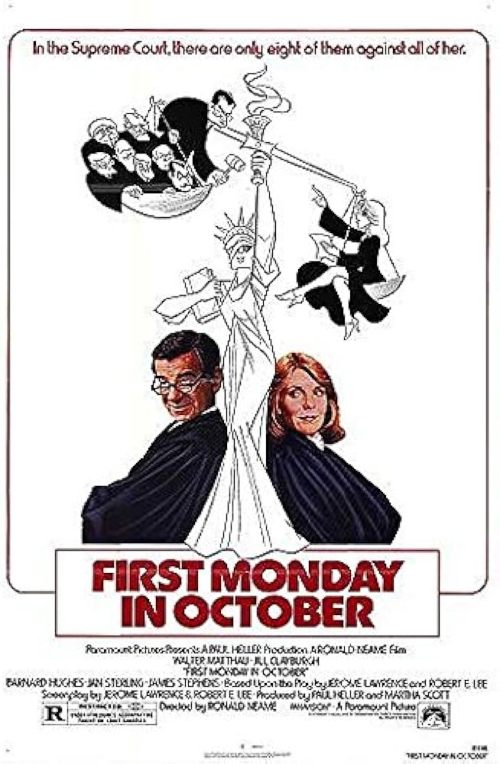
First Monday in October (1981)

firstoctober

By Richard Winters

My Rating: 3 out of 10

4-Word Review: The first lady justice.

While Daniel Snow (Walter Matthau), an associate justice on the Supreme Court who leans heavily left on most issues, is on vacation in Alaska, he gets word that the staunch conservative judge has passed away. The President then decides to nominate a woman to the court by the name of Ruth Loomis (Jill Clayburgh). Unfortunately Daniel is not happy about this as she’s as conservative as the man she replaced. Once the nomination is confirmed the two are immediately at odds over such things as pornographic movies and corporations that pollute the environment. While they bicker and debate constantly they do end up becoming friends, which comes in handy when Ruth realizes that her late husband was involved in some unscrupulous matters and she considers resigning from her position though Daniel tries desperately to talk her out of it.

The film is based on the 1978 play of the same name written by Jerome Lawrence and Robert Edwin Lee, who also wrote the screenplay. Initially the play, which first starred Jean Arthur and Melvyn Douglas received such terrible reviews that it soon closed and was revamped with Henry Fonda and Jane Alexander, was considered a novelty as up to that time no woman had ever served on the nation’s highest court. That all changed when Ronald Reagan nominated Sandra Day O’ Connor in July of 1981 forcing this film, in an effort to appear timely, to move up its release date to August, but the timing didn’t work and the movie was overall panned by both the critics and public.

The only interesting aspect is watching it from today’s perspective where the Supreme Court has now become a toxic and divisive issue when back in the early 80’s that was not the case. When the Girl Scouts of America posted on Twitter commemorating Amy Coney Barret getting nominated and approaching it as an achievement for women it got a lot of pushback from those unhappy with her due to her conservative leanings. Yet in this movie the fact that the character is staunchly conservative is not considered a problem and feminists and other women are seen during the senate hearings proudly cheer her on and considering her nomination a landmark.

In some ways having the political drama that the modern day court holds today might’ve made the story more interesting as the thing is so genteel that it’s enough to put most people to sleep. The script would’ve had more intrigue had their been a bad guy, maybe like the producer of the porn movies who gets talked about, but never seen, or even the elusive head of a mysterious corporation whose case the court is set to hear, that should’ve been added in to create genuine conflict, which is otherwise sorely missing.

I did like the scene where the judges get together inside a viewing room to watch the porno flick ‘The Naked Nymphomaniac’, but Matthau’s character should’ve been present during this and it’s less funny without him. Their subsequent arguments about whether X-rated movies should be allowed under the First Amendment seems quite dated as this issue had already been considered settled law and by the 80’s most video stores were offering adult films for rental and cable movie channels were showing porn late at night making the plot here woefully out of touch with the times.

Matthau and Clayburgh are great actors, but their performances here prove to be dull and lifeless. Having some sort of romance enter into the picture, it gets briefly alluded to when Matthau admits to having a certain attraction to Jill, but immediately dropped, might’ve given it a spicy angle, but just portraying them as friends with different viewpoints isn’t enough to keep it captivating. There’s  not too much that’s funny either. There’s a couple of semi-humorous lines here and there, but nothing that will make anyone break out into uproarious laughter. Matthau’s inability to eat his lunch using chopsticks while in a Chinese restaurant might amuse some slightly, but overall it’s a dull, empty ride. Very surprising that this thing received an R-rating. The only objectionable part is when they watch a porn flick, but nothing much in the way of nudity or sex is shown.

My Rating: 3 out of 10

Released: August 21, 1981

Runtime: 1 Hour 39 Minutes

Rated R

Director: Ronald Neame

Studio: Paramount Pictures

Available: DVD, Amazon Video, YouTube

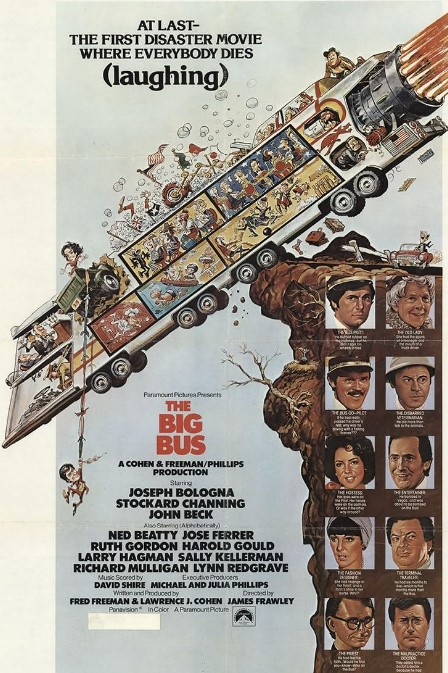
The Big Bus (1976)

bigbus1

By Richard Winters

My Rating: 6 out of 10

4-Word Review: Bomb planted on bus.

Cyclops is the new revolutionary designed double-decker bus that because it’s powered by nuclear fuel will allow it to travel non-stop between New York and Denver. Just before it’s set to make its maiden voyage a bomb goes off within the facility it’s been housed in, which seriously injures the bus’s designer Professor Baxter (Harold Gould). The vehicle itself remains unscathed, so the Professor’s daughter, Kitty (Stockard Channing), takes control of the project and hires a new driver named Dan (Joseph Bologna) whom she had a relationship with in the past. Dan though is still fighting-off the stigma of having crashed another bus into the mountains, and after being stranded for many days ended up reverting to cannibalism by eating all the rest of the passengers. The trip faces further obstacles when unscrupulous billionaire Iron Lung (Joes Ferrer), who resides inside a iron lung due to having polio as a child, orders his henchmen Alex (Stuart Margolin) to plant a bomb on the bus, so that it will be destroyed and prevent nuclear fuel from overtaking gasoline of which he owns much stock. Will Dan be able to overcome both his past and personal problems to both find and prevent the bomb from going off, or will this become yet another disaster on his already checkered past?

While Airplane! is widely thought-of as being the original parody of 70’s disaster flicks it’s really this one that came out a full 4 years earlier that deserves the credit. While it didn’t do well at the box office, which essentially pushed it off into obscurity it still upon second look has a lot of funny moments and deserves much more attention than it has gotten.  Not every gag works and some do fizzle, but the script by writing team Fred Freeman and Lawrence J. Cohen has far more hits than misses. Some of the best bits are the indoor swimming pool on the bus as well as the bowling alley and disco and the radiation suit to put on in times of emergency including the reaction of the passengers when it gets hung down from the ceiling compartment during the flight instructions. The attempt to treat the bus like it’s a metaphor for an airplane, which was the mode of transportation used in most disaster flicks, is quite funny especially the scene where crews in a small town try to halt the bus, or essentially ‘force it to land’ by spraying the main street with foam in order to slow the vehicle down.

The acting is in top form with many familiar faces from both television and the big screen. Stockard was probably my favorite she pretty much plays her part straight, but still manages to be quite amusing especially during the segment when she gets stuck inside a room that fills up with soda, which she stated in later interviews she almost drowned in.  Richard Mulligan and Sally Kellerman are equally amusing as a soon-to-be-divorced couple who share a rather unusual love-hate relationship. Larry Hagman as a dubious doctor, Ned Beatty as a moody technician and Murphy Dunne as a caustic pianist all help to top-it-off. Even Bologna, whose normally brash persona doesn’t make him a likely hero, scores comedic points though John Beck as his co-driver with a tendency to pass-out the second he gets nervous steals away most of the scenes they share.

Spoiler Alert!

The actual disaster, where the bus precariously balances over a cliff, is nicely photographed in a way that makes it seem real with some good stunt work, but I was disappointed that this ends up being the only real exciting moment. I didn’t like either that at the very end, just before the final credits begin to roll, the bus splits apart, which creates screams from the passengers. This was the type of movie where despite their oddball nature I had grown kind of fond of the daffy bunch and wanted to see them arrive safely, which with the ending here doesn’t occur. Instead the viewer is left (no pun intended) hanging, which is a giant cop-out. Just about every disaster flick made offers a conclusion where we see if the people ultimately make it out alive, or not and doing it the way they do here makes the viewer feel like they’ve seen only half a movie, which could explain why this did poorly at the box office.

A  good way to have prevented this would’ve been to chop up the beginning, which has a lot of unnecessary back-story. The bombing of the facility wasn’t needed as all of the calamity should’ve been saved for the bus ride itself. Dan’s visit to a bar in which the patrons harass him about his notorious past gets cheesy, particularly the cartoonish barroom brawl. This should’ve been cut- out too. The rumors of Dan’s supposed cannibalism could’ve been brought up at the press conference announcing the bus’s initial trip and seeing Dan’s uncomfortable response would’ve been enough to make the audience realize he had personal demons to overcome. The rest of the time could then be spent on the various problems that the bus runs into as it travels on road, which would’ve allowed for more excitement versus having the disaster portion seem like a side-story to the barrage of jokes that don’t always work.

My Rating: 6 out of 10

Released: July 23, 1976

Runtime: 1 Hour 28 Minutes

Rated PG

Director: William Frawley

Studio: Paramount

Available: DVD, Blu-ray, Amazon Video, YouTube

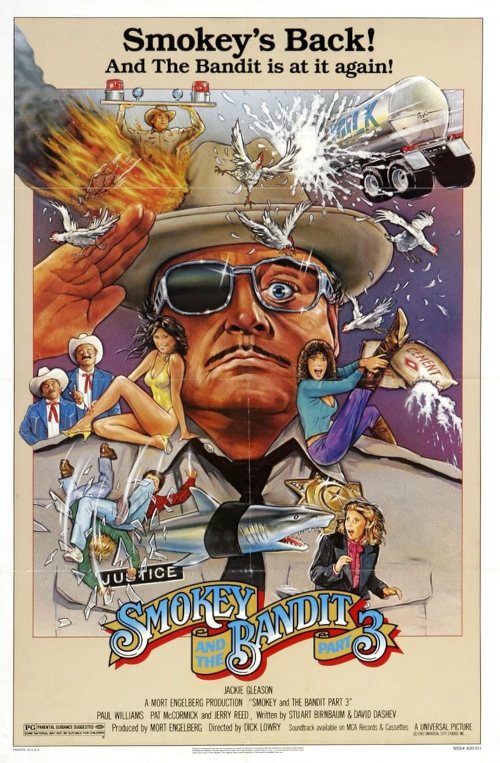
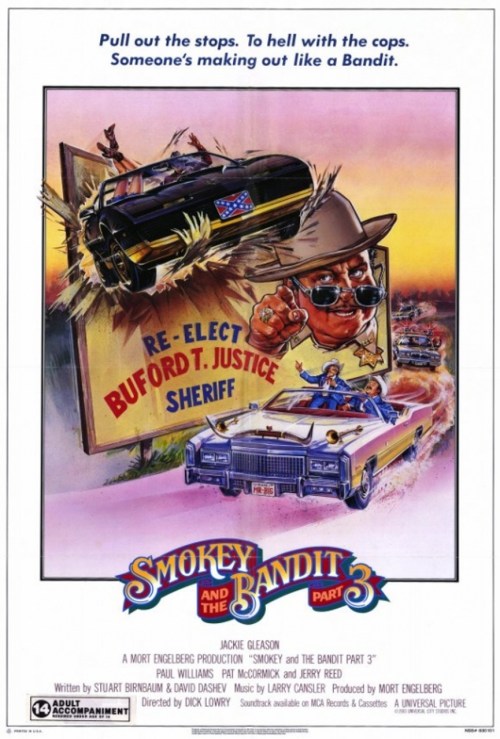
Smokey and the Bandit Part 3 (1983)

smokey1

By Richard Winters

My Rating: 0 out of 10

4-Word Review: Where is the Bandit?

Buford T. Justice (Jackie Gleason) announces his retirement as sheriff after more than 30 years of service. He decides to spend his time in Florida where he expects to get some rest and relaxation. However, once he becomes a part of the senior community he doesn’t enjoy it and feels the need to get back to what he liked doing most, which was chasing after the elusive Bandit. Big Enos (Pat McCormick) and Little Enos (Paul Williams) offer him a deal to get back into the swing of things. They bet that he can’t drive his police car from Miami, Florida to Austin, Texas, a total of 1,400 miles, in two days with a stuffed fish tied to the top of the car. If he’s able to succeed at the challenge he’ll make $250,000, which Buford readily accepts. To keep him from getting there the two Enos brothers set-up traps along the way in order to stymie his progress, but Buford and his dim-witted son Junior (Mike Henry) manage to get out of each predicament that gets thrown at them, so the Enos brothers decide to call-in Snowman (Jerry Reed) to help them. Snowman is a trucker, but in this instance he gets to pretend he’s the Bandit and even dress in his get-up and drive Bandit’s fancy black and gold Pontiac Trans Am. The new Bandit, who picks-up Dusty (Colleen Camp), a disgruntled used car sales woman along the way, soon catches up with Buford and son and steals their stuffed fish, which turns-the-tables and forces Buford to go after them.

By 1982 both Hal Needham, who had directed the first two installments, and Burt Reynolds, who had played the Bandit in the first two go-arounds, were no longer interested in getting involved in the project for another time as both were already busy working together on Stroker Ace. The studio though didn’t want to give up on the idea of a third installment since the first two had made a lot of money, so they signed-on Gleason to reprise his role as Buford with the promise that he’d have full script approval, which proved difficult as he didn’t like any of the scripts that were handed to him and at one point made the glib remark “with scripts like these who needs writers?’. After going through 11 rejections the writers finally hit on the idea of letting Gleason play dual roles of both the Bandit and the sheriff. Initially Gleason didn’t like this either, but the prospect of hamming up two different characters, which he had already done in Part 2 where he played Buford’s two cousins Gaylord and Reginald, got the better of his ego, so it received the green light.

In October of 1982 the script with Gleason in both roles was shot, but with no explanation for why he was playing the Bandit and everyone else in the story playing it straight like they didn’t see the difference. Eventually upon completion it was sent to a test audience in Pittsburgh where they gave the film unanimously negative feedback convincing the studio that the experimental novelty wasn’t going to work. They then hired Jerry Reed, who wasn’t even in the project before then, and asked him to reprise his role as Snowman who would then disguise himself as the Bandit. Then every scene that originally had Gleason in the role as Bandit was reshot with Reed now doing the part, but all the rest of the scenes that had already been filmed without the Bandit remained intact. The reshot Bandit segments were filmed in April of 1983 and the film eventually got its release in August of that year where the response of audiences and critics alike remained just as negative.

For years this was considered by many to be an urban myth as no footage with Gleason as the bandit was ever seen, but then in 2010 a promo of Gleason playing Buford, but talking about becoming the Bandit, or ‘his own worst enemy’ appeared on YouTube with the title of Smokey IS the Bandit Part 3 and Jerry Reed’s name not appearing anywhere on the cast list. Then in 2016 the actual shooting script that was shot in October of 1982 was downloaded to IMDb’s message board (back when they still had them), which plainly detailed Gleason as the Bandit, but had no written dialogue for those scenes since Gleason was routinely allowed to ad-lib his lines. The lost footage of Gleason in the Bandit scenes is purportedly in the control of the Gleason estate where it’s kept under wraps never to be shown to anyone again by apparently Gleason himself who felt humiliated by the test audiences negative reaction.

As it is the movie is not funny at all and unsurprisingly did not do well at the box office. Nothing much makes sense and the humor is highly strained including a drawn-out segment featuring the Klu Klux Klan, which I found downright offensive. Having a Blu-ray release of the lost footage of Gleason in dual roles would most likely be a big money maker as through the years it’s built up a lot of curiosity. It might be confusing and weird just like the original test audiences said it was, but it couldn’t be any worse than what we ultimately get here, which is as bottom-of-the-barrel as they come.

smokey2

My Rating: 0 out of 10

Released: August 12, 1983

Runtime: 1 Hour 25 Minutes

Rated PG

Director: Dick Lowry

Studio: Universal

Available: DVD, Blu-ray

Rage (1972)

rage

By Richard Winters

My Rating: 6 out of 10

4-Word Review: Nerve gas kills son.

Living just outside of Rawlins, Wyoming is rancher Paul Logan (George C. Scott) and his 12-year-old son Chris (Nicholas Beauvy). Since the death of his mother a year earlier the two have shared a special bonding and routinely do many things together as Paul works to guide Chris from being a child to a man. One night they decide to go camping on the outer stretches of their property. While Paul sleeps in a tent his son stays outside in a sleeping bag, but by morning he’s unresponsive and bleeding from the nose. Paul takes his child to a nearby hospital where the doctors aren’t sure what’s caused the condition, but keep him under observation. Behind-the-scenes it’s revealed that Chris has become a unintended victim of a botched military operation from a nearby base where nerve gas was accidentally released to the public. Paul soon comes down with the effects of the exposure as well, but before he dies he intends to get to the bottom of what happened and bring street justice to all those who were behind it.

The film, which was the first theatrical feature that Scott directed, is a handled in an unusual way. Most movies that deal with government cover-ups/conspiracies usually keep it a mystery of who’s behind it. Both the victim and the viewer have no idea what’s going on behind-the-scenes and are left with trying to guess who may be responsible and only at the very end do things get revealed, but in some movies even then many questions remain left open. Here it gets shown right away who’s causing the crisis and why as there are many long, drawn-out meetings between the government agents who almost painstakingly detail of what went wrong and how they’re going to cover it up. In fact there’s more scenes, especially in the first half, with the military brass and their co-horts than with Scott making it almost seem like he’s just a side character.

Spelling everything out may seem like a bad idea as part of what creates the suspense in these types of stories is the unknown. Yet it still held moderate interest though the scenes are overly talky, at least the first two acts. It’s also not explained what happens to Dr. Caldwell (Richard Basehart). He initially goes along with the government agenda to keep things quiet, but eventually changes his mind and decides to tell Paul the truth, but then he’s confronted with the agents who bring him into a hospital room and close the door, but it’s never shown what they do with him. He’s reappears at the very end, but no explanation for where he was in-between, or how the government managed to make him ‘disappear’ for awhile. For a movie that seemed intent to explain everything I felt this was one area that needed to be better played out.

Spoiler Alert!

Where the film goes really off-the-beam is when Paul exacts his revenge, which has him killing many indiscriminate people. Some of it turns quite savage particularly when he blows up a police car and the cops jump out screaming in pain as the hot flames rise off their bodies. At one point he even shoots-up a cat who tries to come to the aid of its owner, which has to be some sort of cinematic first. Normally other movies with this type never have the hero kill anyone and will usually just hold people that they come upon, like cops or security guards, hostage by tying them up. Here though he blasts them away without pause. Some critics have said this was a mistake as the protagonist loses his likability factor with the viewer, but in some ways if you’re really going to try take on something as big as the government then ultimately things will get ugly especially if the person is willing to go ‘all-in’ making it in a nihilistic way quite realistic.

The ending though is what really hurts it as Paul dies while the government agents callously watch on and then flown away via helicopter to some undisclosed location. I know 70’s movies were notorious for their unhappy endings, but this one piles-on that notion a bit too much. Outside of blowing up the research center, which could easily get rebuilt, Paul’s actions made no difference. The viewer likes to see their hero have more of an effect on things and to end it like this makes it overly defeating. Had we gotten to know the Paul character better and there had been more of a backstory then maybe his final rage at the system would have had more of a dramatic effect, but as it gets presented here on an emotional scale it’s unsatisfying.

My Rating: 6 out of 10

Released: November 22, 1972

Runtime: 1 Hour 39 Minutes

Rated PG

Director: George C. Scott

Studio: Warner Brothers

Available: DVD-R (Warner Archive), Amazon Video, YouTube

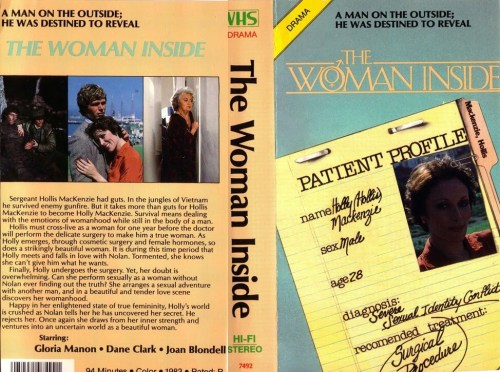
The Woman Inside (1981)

woman2

By Richard Winters

My Rating: 3 out of 10

4-Word Review: From man to woman.

Hollis (Gloria Manon) is a Vietnam Vet. whose suffers from gender dysphoria and decides to begin the process of gender transition with Dr. Rosner (Dane Clark). The first part of the procedure works perfectly as Hollis, who changes the name to Holly, resembles a woman physically and even takes voice lessons so that her voice is higher pitched. She still has a penis, but that doesn’t prevent her from beginning a relationship with Nolan (Michael Champion) though they don’t sleep together and she’s reluctant to tell him about her condition. Eventually she schedules the surgery while telling Nolan she’ll be gone for a couple of months, but when she returns they’ll be able to fully consummate their relationship. In the meantime she begins to question her decision when she joins a therapy group with other people who’ve had the procedure while also enduring verbal abuse from her Aunt (Joan Blondell) who doesn’t agree with the transition and openly mocks Holly for going ahead with it.

While on the surface this may seem like a groundbreaking film it really isn’t as two movies The Christine Jorgensen Story, which came out in 1970, and I Want What I Want, which starred Anne Heywood and released a year after the other one all preceded this movie by a good decade. It also suffers badly, much like with the Heywood film, where the protagonist doesn’t really resemble a guy even though technically that was what he was biologically born into. Instead Hollis looks much more like a woman with short hair and padded outfits and in a lot of ways kind of like Nancy Kulp the actress best known for starring in ‘The Beverly Hillbillies’ TV-show. Her attempts to speak in a lower voice doesn’t sound authentic and I felt it would’ve worked better had a biological male actor been cast in the part as the scenes with Manon trying to come-off as a guy is awkward and not believable.

The scenes where she goes back to the gas station, where she once worked when she was still a guy, and trying to get-it-on with Marco (Michael Mancini), a man she had a confrontation with earlier while she was Hollis, is ridiculous as well. Marco apparently doesn’t recognize her as the person he knew when she was a man, which I just couldn’t buy into, as Holly’s face is essentially she same as it was when she was Hollis except her hair’s is longer and she has a very distinctive facial structure, so there’s just no way someone that knew her in the past wouldn’t at the very least jog some Deja vu if ultimately connecting the two at some point and for him to go to bed with her without a single inkling is just not plausible.

Holly’s relationship with Nolan, particularly the way it begins, is highly problematic too. She works as a taxi driver and literally picks him up on a street corner at random while he’s in a drunken state, but why on earth would she suddenly fall for a guy, especially in that condition? She also comes upon him right after having a very scary and violent confrontation with another male passenger (Louis Basile) making me think she’d be so traumatized that the last thing she’d want to do is allow another male stranger into her car. Their relationship moves too quickly as they’re already talking about ‘love’ and long term commitment by only the next day. Nolan also transforms from a bum to a well-spoken respectable member of society overnight. The scene where they try to ‘outrun an approaching storm’ is stupid too as we see them madly riding their bicycles in an attempt to escape while above them is sunshine and blue skies.

Things improve a bit by the third act particularly the scenes involving the therapy group, which the movie should’ve had more of. Some commenters on YouTube, where the film is currently streaming for free, that also suffered from gender dysphoria seemed to appreciate the movie more than others, so if you personally connect to the subject matter you’ll most likely like it better, but on a technical end it’s botched.

This too marks, at least in most reference sites, as being Joan Blondell’s final film appearance though that’s not completely true. While this was the final film to be released with her presence, in fact it came out after she had already passed away, it was filmed in March, 1978 while The Glove, another movie she was in, was shot in April of that year, so technically that was her last film appearance even though it got released before this one.

My Rating: 3 out of 10

Released: September 15, 1981

Runtime: 1 Hour 34 Minutes

Rated R

Director: Joseph Van Winkle

Studio: 20th Century Fox

Available: VHS, DVD-R (J4HI.com)

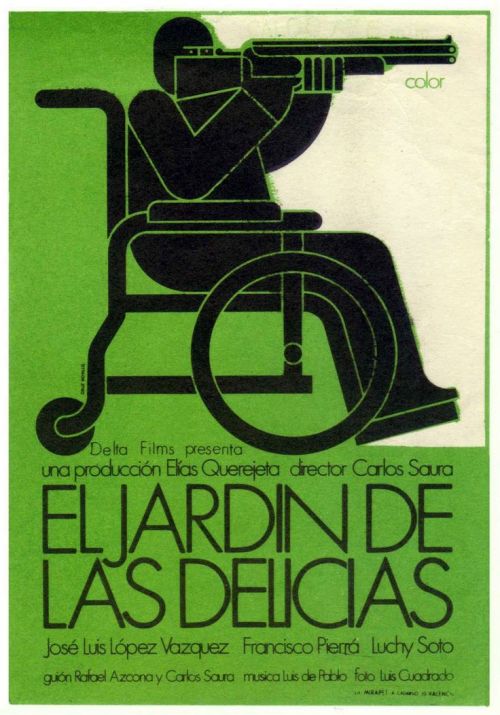
The Garden of Delights (1970)

garden2

By Richard Winters

My Rating: 6 out of 10

4-Word Review: He’s unable to speak.

Antonio (Jose Luis Lopez Vazquez) is a wealthy owner of a construction business that he took over from his father (Francisco Pierra) years earlier. Unfortunately just as he’s ready to reap his profits he gets into a car accident, which confines him to wheel chair and unable to speak, or write, or even remember anything. His greedy family becomes determined to get him his memory back even if it means drastic shock therapy as Antonio holds all the business secrets including the combination to the safe and the Swiss bank accounts. The family’s brazen attempts seem to be working though not enough to get him to speak, but while this is going on, inside Antonio’s head, he begins experiencing surreal events that seem almost real and are both fascinating and frightening.

The film’s director Carlos Saura started out his career in the 50’s as a director of documentaries and shorts, which eventually lead to him getting the offer to direct his first feature length film in 1966 with The Hunt, a film about three middle-aged male friends who go on a rabbit hunt that starts out pleasant enough, but ends in brutal violence for all three. That film won him many accolades and gave him the opportunity to direct this one, which plays out more as a metaphor. His home country of Spain was at the time under the authoritarian rule of Francisco Franco who did not allow for free speech and often punished those who spoke out against him. To get around this Saura uses many allegories to convey his anger at the oppressive government, but in a way that didn’t make it obvious enough for him to be arrested.

The main character of Antonio is meant to be a metaphor of the Spanish people with his mute condition being similar to their inability to speak out against their country’s leader. Unfortunately many of today’s viewers aren’t going to get this either because they haven’t bothered to study up about it, or just don’t care. Because of this many viewers will miss the symbolism and leave at the end, if they managed to stay with that long, shaking their heads. Since few people of today were around when it occurred and most Americans don’t have a good grasp of Spainish history it will all be unrelatable for most.

The lead role is well played and Vasquez has a very expressive face, which helps add nuance to a character that otherwise has no other way of expressing himself. I did find it frustrating that we don’t learn much about him. The scenes where he looks around his empty warehouse that he once ran does convey the quandary of someone who once felt powerful, but now only a shell of what he once was. The viewer though is unable to completely identify with him as not enough of his backstory is given. We do eventually during the third act see him in a flashback moment where he speaks with his father and aggressively takes over the company, we also eventually witness the car accident that put him into this condition as it had only been referred to before as ‘an accident’ with no details given, but I felt both of these things should’ve been shown and introduced a lot earlier.

Spoiler Alert!

Pierra as the father gives a thoroughly delightful performance and some of the surreal moments including Antonio’s vision of being pushed into his backyard pond and the recreation of a religious ceremony being two of the best. Yet there are other moments that miss the mark including having a live pig brought into the home and then trapping Antonio inside a room with it in order to jog his memory from a painful past event, but his confrontation with the animal is never shown, which is a letdown. The family members are confusing as it’s never clear whether they have bad intent, or are just acting the way they are due to being put in a desperate situation. The ending in which all the characters become bound to a wheelchair and unable to speak just like Antonio was trying to show how all of the Spanish citizens where being oppressed beyond just him, but emotionally it isn’t compelling and a potentially good story and character study get lost with Saura’s obsession to put political symbolism first and foremost.

My Rating: 6 out of 10

Released: November 5, 1970

Runtime: 1 Hour 30 Minutes

Rated GP

Director: Carlos Saura

Studio: Video Mercury Films

Available: DVD-R (dvdlady.com)