Tag Archives: Stacy Keach

Nice Dreams (1981)

By Richard Winters

My Rating: 3 out of 10

4-Word Review: Ice cream side effect.

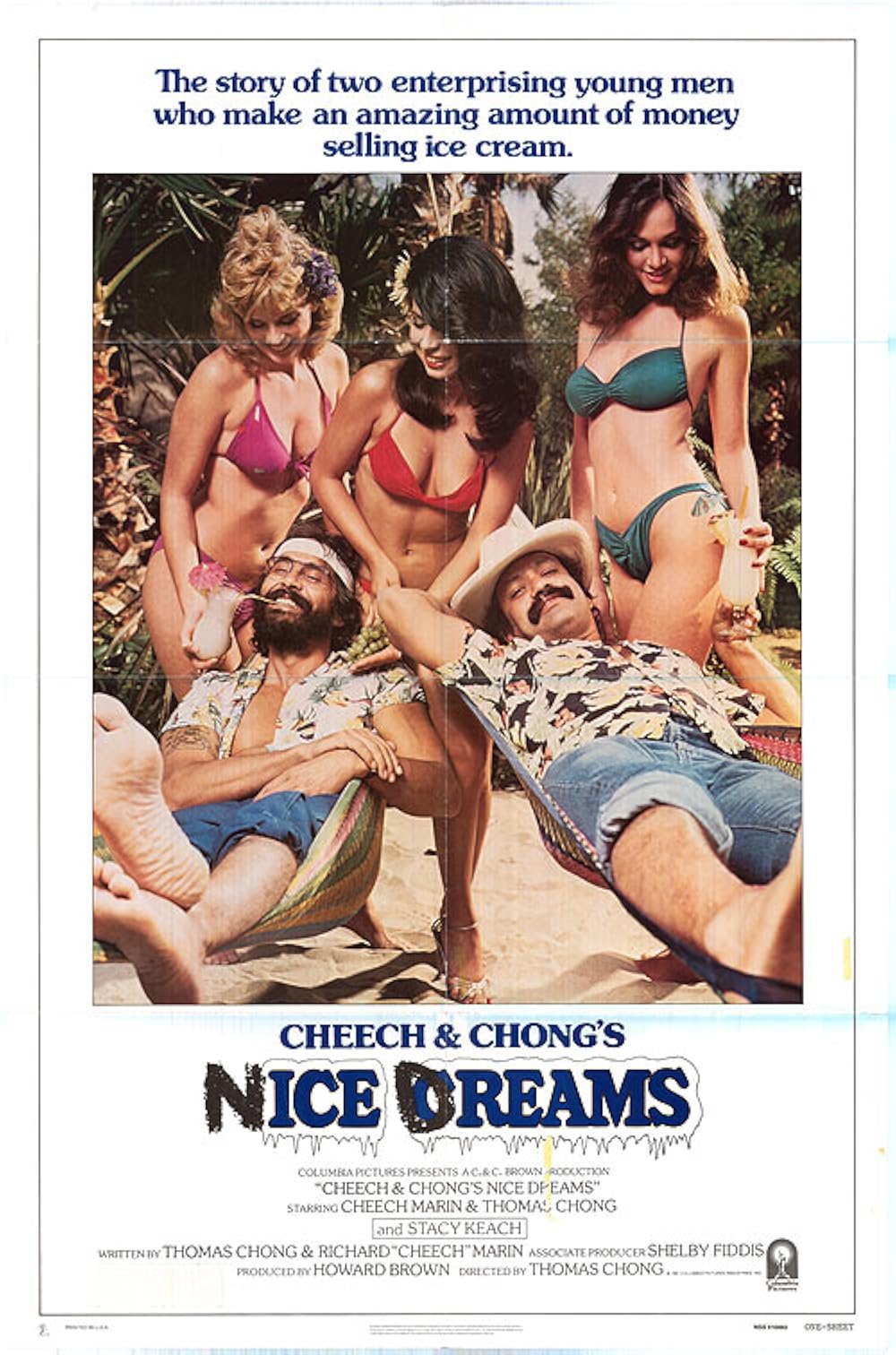
Cheech (Cheech Marin) and Chong (Tommy Chong) have become rich by driving around in an ice cream truck that appears to be selling ice cream, but in reality, it’s marijuana and the side effect of taking too much of it is that it can turn people into lizards. Sargent Sardenko (Stacy Keach) who has been on the two’s trail since the first installment has been smoking the weed for a while in order to get into the mindset of a dope user and thus better able to figure them out, but in the process, it has turned himself into a stoner and no better than the people he’s chasing after. When he takes Cheech and Chong’s stuff the lizard side effects become apparent, and he tries to conceal from his two deputies (Tim Rossovich, Peter Jason) who become increasingly more suspicious of his bizarre behavior. Meanwhile the duo’s fortune takes a bad turn when Chong, under the heavy influence of cocaine, signs away all of his fortune to Howie (Paul Reubans), a mental patient. In an effort to get their money back they track him down to the hospital where he resides, but Cheech gets mistaken as being a fellow patient and is soon strapped into a strait jacket and locked into a cell. 

The third installment of the series made a lot of money, $35 million at the box office, but the majority of that was in the first 2-weeks where loyal fans flocked to it, but it leveled off after that making it apparent that for general audiences it wasn’t received as well. The biggest problem for me is that it’s too disjointed. The surreal effect worked in the first two, but here it gets in the way and a more conventional storyline was needed to make it compelling. Case in point is the fact that it starts out with the two already in the business and making cash while residing in a posh, oceanside pad. I liked the messy, rundown shack that they lived in in the second film and kind of wanted to see them stay there as its extreme cluttered state made it bizarrely eye catching and like a third character. If they had to move that’s fine but show that occur in the movie as well as them attaining their newfound fortune versus them already in the new lifestyle when the film begins, which doesn’t make it seem like a continuation from where the second left off, but instead a completely new story altogether. 

I didn’t like the way the Sardenko character got portrayed here at all. In the first film he was the main source of the energy and his almost insane passion to catch the two and his by-the-book brash manner made him a fun heavy and somebody you liked to see get rattled. He was also the perfect overblown caricature of how the counterculture viewed cops during that era, so his presence had a definite point, but here all of that gets thrown out by having him just laying around smoking pot and behaving like every other stoner out there. The irony of him becoming who he despises is lost, had we seen the transition during the course of the film where he at least starts out the way we remembered him from the previous movie and then became a stoner by the end, it might’ve worked better, but as it is it seems like a whole new character connected by name only and isn’t half as fun to watch. 

There are still some funny moments like when Chong gets mistaken for Jerry Garcia while eating inside a Chinese restaurant and when Cheech runs around a hotel naked while trying to escape the clutches of a jealous boyfriend, but there’s no momentum as the plot doesn’t really seem to be progressing anywhere. Part of the reason for this is that the two relied heavily on storyboarding while keeping the script to a minimum, which in fact was only 3 1/2 pages in length and Cheech stated in interviews it was only this long because it was double-spaced. 

Improv can be wonderful if done right and there are moments here when it hits the mark, but the slow bits in-between hurt it. Had it been tied together inside a more cohesive storyline it would’ve really helped and just coming up with wacky scenarios on the seeming fly starts to wear thin.  The climactic scenes inside the asylum don’t work at all and the cameo by Dr. Timothy Leary, a friend of Cheech’s, is more annoying than funny especially with his incessant laugh and monotone delivery. Yet because this one made money, they continued to make more with their next film, which will be reviewed next, being a definite improvement. 

My Rating: 3 out of 10

Released: June 5, 1981

Runtime: 1 Hour 27 Minutes

Rated R

Director: Tommy Chong

Studio: Columbia Pictures

Available: DVD, Amazon Video, YouTube
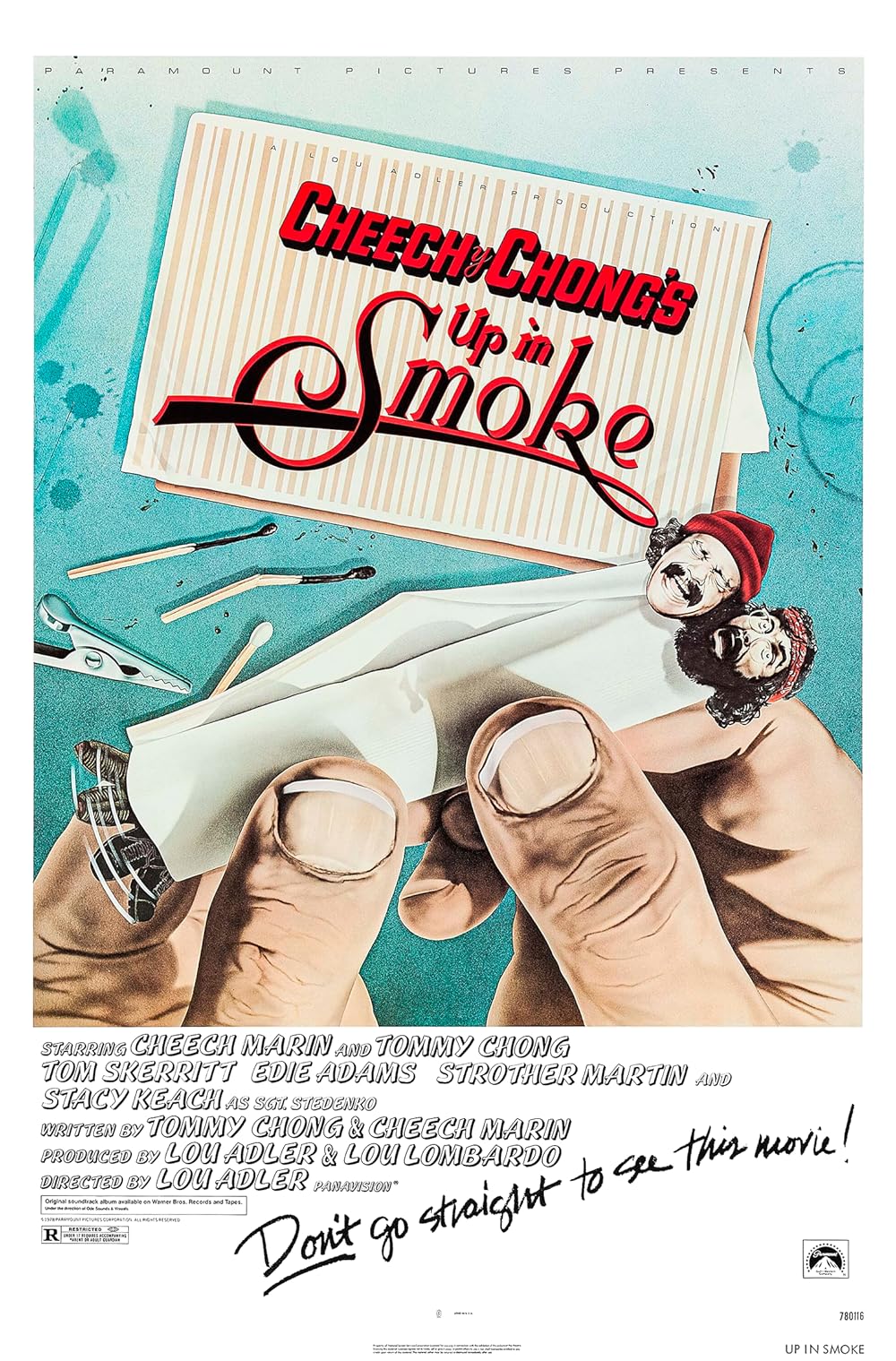
Up In Smoke (1978)

By Richard Winters

My Rating: 5 out of 10

4-Word Review: Two stoners become friends.

Anthony (Thomas Chong) is told by his father (Strother Martin) that he must find a job, or he’ll be kicked out of the house. Anthony then hitches a ride with Pedro (Cheech Marin) and the two quickly become friends based on their mutual interest of getting high on drugs. Soon they’re involved in many adventures including being shipped off to Tijuanna. In order to get back into the country they agree to drive a van that unbeknownst to them, is made completely of hardened marijuana, which gets them quickly put on the radar of Seargent Stelko (Stacy Keach) who along with his crack team of incompetents chases the two relentlessly in order to haul them into jail and make the country’s streets safe again. 

Cheech Marin was trying to avoid the draft when he went to Canada in 1969, which is where he met Thomas Chong, already a Canadian citizen who was starting up his own improv called ‘City Works’ after seeing Second City improv in Chicago while touring as a musician. The two became a comedy team who would come out to warm up audiences before concerts, but in many cases were more popular than the bands they were introducing. This then caught the attention of producer Lou Adler, who signed them to a contract to create record albums, which were so profitable that they graduated into making a movie, which Adler directed, that recreated many of the same skits they had used during their stage routines.

The movie upon its initial release with its open drug use was considered quite controversial and lead to many critics at the time to condemn it but nonetheless proved to be a big money-maker grossing $104 million on a $2 million budget.  Today the film is seen in a much softer light and in 2024 was elected for preservation by the National Film Registry by the Library of Congress.

I remember watching this when it came out and laughing at much of it particularly the car scene where the two smoke a giant marijuana cigarette and then get pulled over by the police. The film also does a terrific job of showing the East L.A. vibe possibly better than any other movie out there. You feel immersed in the culture and get a vivid feel of the era and setting especially at the end when the two go onstage and take part in the Battle of the Bands at the Roxy Theater. The film also has a leisurely pace, much like a French film, where it doesn’t feel the need to have a highly structured plot like in most American films and putting the emphasis more on atmosphere, which is a refreshing change of pace. Some of the supporting players, including Strother Martin who refers to his son as the ‘anti-Christ’ and Stacy Keach as the hardnosed police detective as well as his loyal, but bumbling deputy, played by Mills Watson, but without his patented mustache, who later went on to play the same type of role in the TV-show ‘The Misadventures of Sheriff Lobo’, are all perfect and help add to the fun.

On the negative end the two leads and their interactions, are poor. Cheech never even bothers to learn his buddies name and just continues to refer to him as ‘man’ for the duration of the pic, which might be the intended comedy, but offers no character development. They never grow or change and instead are paralyzed in a permanent caricature. Marin is funny, and in fact the only source of the humor, but Chong is underdeveloped. He spends most of the time strung out on drugs, or going through a bad trip, to the point that he seems catatonic and allowing all the energy to go to Marin, which is fine as he makes the most of it, but it barely seems like a buddy pic when it’s only one guy getting all the laughs. 

Without sounding like somebody’s old-fashioned parent I must agree with the initial sentiment that found this movie to be glorifying drug use and thus toxic to the day’s youth. The film acts like using drugs is just harmless fun. The scene involving actress June Fairchild, who later became homeless due to her own real-life addictions, where she sniffs some Ajax by mistake thinking it’s cocaine, but has no bad reaction to it and instead gets just as an enjoyable high is a problem. Granted I realize it’s supposed to be ‘funny’, but I could see a parent being concerned that it’s sending the wrong message to impressionable teens. 

My Rating: 5 out of 10

Released: September 15, 1978

Runtime: 1 Hour 26 Minutes

Rated R

Director: Lou Adler

Studio: Paramount Pictures

Available: DVD, Blu-ray, Amazon Video, YouTube

Butterfly (1982)

butterfly

By Richard Winters

My Rating: 0 out of 10

4-Word Review: Family has genetic birthmark.

Jess (Stacy Keach) takes care of an unused mine outside of a small Arizona desert town. One day Kady (Pia Zadora) shows up at his doorstep. Jess doesn’t recognize her at first, but then realizes she’s his 17 year-old daughter the product of his marriage to Belle (Lois Nettleton) who abandoned him 10 years earlier for another man named Moke (James Franciscus). She is pregnant by a man who refuses to marry her, so she  wants to steal silver from the mine that Jess protects in order to help her financially with the child who’s on the way. At first Jess disapproves, but Kady uses her provocative body and looks to essentially seduce him and get him to relent. However, a local man named Ed (George Buck Flower) witnesses their stealing from the mine as well as their lovemaking later on, which gets them arrested for incest.

The story is based on the 1947 novel ‘The Butterfly’ by James M. Cain, who at the time was an immensely popular author, who had many of his books made into movies, but due to the controversial nature of this one it had to wait 35 years until it finally went to the big screen. He was inspired to write the story when years earlier, in 1922, he got a flat tire while driving through a mountainous area in California and a farm family that had moved there from West Virginia helped him fix it, but at the time he speculated that the young daughter they had with them was a product of incest.  The movie makes several deviations from the book. In the book Jess was the overseer of a coal mine and the plot took place in West Virginia while the Kady character was 19 instead of 17.

While the plot has some tantalizing elements, and on the production end it’s well financed, the whole thing comes crashing down due to the really bad performance of its lead actress. Zadora at the time had done only one other film before this one, Santa Claus Conquers the Martians, which was universally lambasted. It probably should’ve killed anyone’s career who had been in that, but she continued to struggle on in the business. Then in 1972 while performing in a small role in a traveling musical show, she caught the eye of a rich businessman named Meshulam Riklis, who was 29 years her senior. The two began dating and eventually married in 1977. Her new husband was determined to make her a star even if it meant buying her way in. He put up the entire $3.5 million budget for the film while demanding that she be placed as the star forcing director Matt Cimber to cast all the other parts around her. Riklis even put up big money to help get her promoted to winning the Golden Globes Newcommer of the Year Award, but all of this didn’t get past the critics, or audiences who rightly saw her as undeserving of all the attention and while she did a few other movies after this, which were equally panned, and even a few music videos and singing ventures, she is overall largely forgotten today and hasn’t been in a movie in 30 years.

To some extent her performance isn’t completely her fault as her character is poorly fleshed-out, which is my main gripe. I just couldn’t buy in that this chick on the verge of adulthood would be so extraordinarily naive that she’d come-on to her own father and not see anything wrong with it. First of all why is she sexually into her dad anyways as majority of girls tend to want to go for guys their own age and if not there has to be a reason for it, which this doesn’t give. In either case she should have some understanding that the rest of society doesn’t condone this behavior nor having her aggressively flirt with literally any guy she meets. The fact that she’s so blissfully ignorant to the effects of her behavior made her not only horribly one-dimensional, but downright mentally ill. Sure there’s people walking this planet that harbor some sick, perverse desires, but virtually all of them know they’re taboo and not dumb enough to be so open about, or if they do they learn real fast. Having her unable to understand this, or never able to pick-up on even the slightest of social cues is by far the most annoying/dumbest thing about it.

Keach, who gives a good performance and the only thing that holds this flimsy thing together, has the same issue with his character though not quite as bad. The fact that he doesn’t even recognize his daughter at first is a bit hard to believe. Sure he left the family 10 years earlier, but that would’ve made her 7 at the time and although she has clearly grown I think she’d still have the same face. He gives into his temptations too quickly as at one point he massages her breasts while she’s in the tub. Now if he weren’t religious then you could say he didn’t care about the taboos and had been living so long alone that he’d be happy to jump at any action he could irregardless if they were related, but the fact that he goes to church regularly should make him feel guilty and reluctant to follow through. In the book he’s portrayed as fighting these internal feelings by turning to alcohol, which is the way it should’ve been done here as well.

The eclectic supporting cast does make it more interesting than it should. Orson Welles caught my attention not so much for his role as a judge, but more because of his wacky combover. James Franciscus, who usually played sterile good guys is surprisingly snarly as the heavy and Stuart Whitman has a few good moments as a fiery preacher though even here there’s some logic loopholes that aren’t explained like how did he know Kady was Jess’ daughter, which he mentions while at the pulpit much to the surprise of Jess as he hadn’t introduced her to anybody.

My Rating: 0 out of 10

Released: February 5, 1982

Runtime: 1 Hour 48 Minutes

Rated R

Director: Matt Cimber

Studio: Analysis Film Releasing Corporation

Available: DVD-R

Street People (1976)

street1

By Richard Winters

My Rating: 5 out of 10

4-Word Review: Betrayed by his nephew.

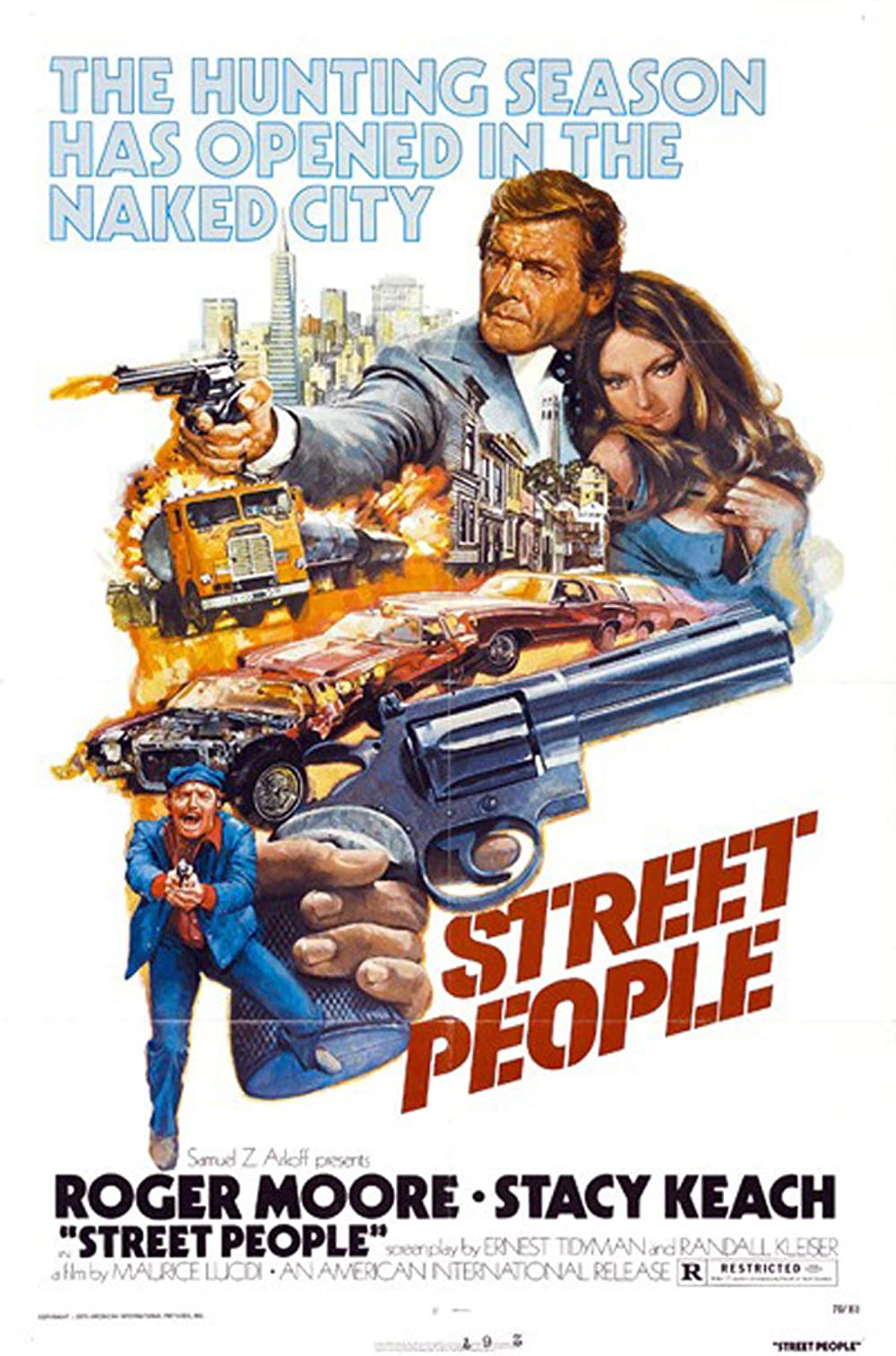
Salvatore (Ivo Garrani) is a crime boss residing in San Francisco who orders a specially made cross to be shipped from Italy to his church as a gift. Inside it is a stash of pure heroin, which leads to a crime hit and several deaths. Padre Frank (Ettore Manni), the priest at the church that was to receive the cross, thinks Salvatore was aware of the hidden heroin and used the cross as a ruse to get the drugs passed customs and thus he ex-communicates him from the church. Salvatore insists he had no knowledge of the heroin and hires his nephew Ulisse (Roger Moore), who is half Sicilian, to investigate and find out who the real culprit is. Ulisse asks his Grand Prix racing driver friend Charlie (Stacy Keach) to help him out, but the deeper into the case they go the more it leads them to believe that Salvatore was the mastermind behind it.

This unusual endeavor was produced by an Italian production company, but filmed in the U.S. with a British star and American actor and yet the supporting cast is made-up entirely of Italian performers straight from Italy. The Italians have their voices dubbed and share a high number of scenes only amongst themselves, while Moore and Keach speak in their regular voices and appear the majority of their screen time together. The result is a haphazard effect that cuts back and forth between what seems like two completely different movies spliced together. Casting Moore as someone who is ‘half-sicilian’ despite his very thick British accent, and pale skin, is one of the more ludicrous casting decisions ever made and the script, which Moore stated both he and Keach couldn’t make any sense out of even after watching the final print, goes all over the place and will be confusing to most.

The film does have some good points. Moore plays his part in a terse,no-nonsense style and I wished this was how he had approached the Bond role instead of the detached, humorous way that he did. Keach is highly engaging and watching the two trying to work a case despite having such opposite personalities is enjoyable, but there’s no explanation for how they ever met, or would even want to work together as they don’t get along. There needed to be at least one scene showing a genuine friendship in order to make their buddy relationship make sense instead of just the constant bickering.

The special effects are decent if not exceptional and for those just looking for some action and don’t mind a flimsy storyline then this should do. The scene where Keach takes a member of the mob’s car for a ‘little drive’ and then proceeds to recklessly smash it up before their very eyes is a delight. The car chase sequence gets riveting and the look of sheer panic in Moore’s eyes, as he was the passenger with Keach driving, makes it seem authentic and it’s nice to see people wearing seat belts, or at least putting them on once the ride gets dangerous, as that’s something you don’t always see in other movies. The foot chase that takes place over the rooftops of San Francisco’s business buildings is good too.

It’s unclear though what the film, which had six writers and two directors, was hoping to achieve. Maybe they just wanted to make a cheap, mindless action flick and for that you could say it’s a success, but there are some weird moments. The cross that gets shipped-in is unusual looking particularly the Jesus figure making me wonder if they were trying to go for something more like spoof, but either way it ultimately ends-up being an inept drama with few car smash-ups for diversion.

My Rating: 5 out of 10

Released: March 30, 1976

Runtime: 1 Hour 32 Minutes

Rated R

Director: Maurizio Lucidi, Guglielmo Garroni

Studio: American International Pictures

Available: DVD, Blu-ray

Road Games (1981)

road games 1

By Richard Winters

My Rating: 6 out of 10

4-Word Review: Truck driver pursues killer.

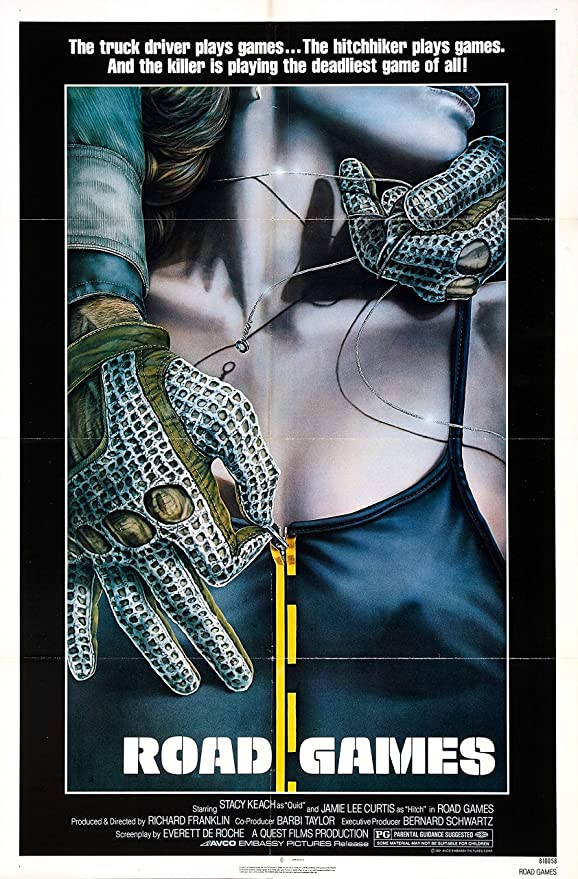
Quid (Stacy Keach) is an American working as a trucker in Australia and hauling a frozen shipment of pigs through the outback and into Perth. Along the way he becomes menaced by a strange man (Grant Page) driving a black van who has a penchant for picking-up prostitutes who then end up dying. Quid is convinced that the man is the serial killer that is being reported about on the news, but before he can go to the police he gets tabbed as the killer himself forcing him, with the help of Pamela (Jamie Lee Curtis) a hitch-hiker he picks up along the way, to find the real killer before he gets arrested for crimes that he did not do.

One of the coolest aspects of this film is its voyeuristic quality where visual clues are a requirement for the viewer to pick up on to figure out what’s going on.  Too many other movies don’t take enough advantage of this idea and usually sell-out by having everything explained through dialogue, but here director Richard Franklin, a major devotee of Alfred Hitchcock, who tried to model the story after Rear Window, keeps the viewer feeling like they’re an active participant.

The film’s drawback, and most likely one of the main reasons it didn’t do well at the box office, is that the tension  ebbs and flows. Too much labor gets put into dressing up the plot with a lot of quirky side stories. This includes having Quid  coming into contact with the same motorists through his travels, which I didn’t think was realistic that these same drivers would be taking the exact same route as him while maintaining the same speeds as he over a several day period, so that no matter where he went they were never far away. I have traveled extensively by car on long road trips similar to this one and have never kept passing the same motorists like Quid does here.

The film also lacks, with the exception of a surprise double ending that comes at the very end,  any type of actual scares. There is a running build-up making you believe that a shock is just around-the-corner, but ultimately it’s a letdown. People watch these things with the anticipation they’ll be jumping-out-of-their-seats at some point, but this is too tame and at certain points it’s almost more like a comedy.

The killer, who was played by a stuntmen and not a professional actor, lacks any type of presence to distinction. For things to get really intense, which it never does, the bad guy has to stand out and make the viewer feel on edge every time they see him, which this transparent guy is unable to do. It would have also been more interesting had his face not been shown until the very end instead of Quid seeing what he looks like early on when he spots him through his binoculars.

I was surprised why the two lead characters were played by Americans since the setting is the down-under and the story better served by performers who were native born. That’s not to say that Keach or Curtis don’t give engaging performances because they do, but I don’t believe there’s too many American truck drivers working in Australia, so there needed to be some explanation for why Keach was there and why, being that he was not from the region, he was so educated about the history of the area, as evidenced when the two camp-out overnight and he tells her the back story of an abandoned telegraph station that sits nearby.

The romantic undertones that are lightly introduced does nothing but sap away the tension. I also found it curious why Curtis would be trusting of Quid upfront as she’d have no idea whether the serial killer could’ve been him and therefore she should’ve been more guarded, which she isn’t.

The climactic sequence features a unique car chase where three vehicles follow each other around the back alleys of Perth late at night, but at very slow speeds, which surprisingly is effective. However, the script should’ve been tighter and the editing quicker. The film’s leisurely pace and colorful supporting characters works against it. There needed to be more shocks, more of a confrontation between Quid and the killer, and basically just more of a conventional thriller-like approach.

My Rating: 6 out of 10

Released: June 26, 1981

Runtime: 1 Hour 41 Minutes

Rated PG

Director: Richard Franklin

Studio: Embassy Pictures

Available: DVD, Blu-ray, Amazon Video

The New Centurions (1972)

By Richard Winters

My Rating: 7 out of 10

4-Word Review: Rookies on the force.

Roy Fehler (Stacy Keach) is a young law student who decides to join the LAPD until he can complete his degree. After graduating from training he gets partnered with Andy Kilvinski (George C. Scott) a veteran with almost a quarter of a century of police work under his belt. Roy likes Kilvinski’s unique approach to cop duty and enjoys his police work more and more to the point that he puts his law studies on hold, much to the consternation of his wife (Jane Alexander). Then one night Roy gets shot while on-duty forcing him to go through a painful recovery, but his determination to return to the force puts a major strain on his marriage and when his wife leaves him he turns to liquor for solace.

The film is based on Joseph Wambaugh’s debut novel, which he wrote in 1970 and based loosely on his own experiences and observations while working as a cop. The novel though differs greatly from the film in that there were three main characters in the book while the film focuses mainly on Keach while leaving the other two, which are played by Eric Estrada and Scott Wilson, as only secondary players that are seen only sporadically. The novel also delved into the Watts Riots at the end, which the movie completely ignores.

The film though does succeed at humanizing those that work on the force as we see them as regular people who just so happen to wear a badge as opposed to authority figures. The story thankfully avoids police cliches and seeing how Keach’s job affects both his home life and personality is quite interesting and something I wished had been explored even more.

The best moments come during the first act as the viewer gets thrust onto the street scene along with Fehler and Kilvinski where in almost cinema vertite style we see what an average night patrolling a poor African American neighborhood in Los Angeles is really like. Some of the time their experiences are quite lighthearted like when they pick up a group of black prostitutes, one of which is played by Isabel Sanford, who later went on to star in the TV-Show ‘The Jeffersons’, who get put into a paddy wagon where they drink hard liquor and tell bawdy stories. Other moments though become tense and serious particularly when they have to wrestle a crying infant away from his abusive mother.

Keach plays his part quite well and one of the reasons that the film is successful, but his character isn’t well defined. We have no understanding why he enjoys patrolling the streets so much and ignores his family life the way he does. Without any insight to what drives him it makes his obsession to return to the force after his shooting injury seem bizarre and confusing. In the novel he was portrayed as being quite arrogant and thinking he was smarter than everyone else, which gets toned down considerably here.

Spoiler Alert!

Scott’s character is another confusing mess. For most of the film he’s shown as being rather laid-back only to suddenly shoot and kill himself without warning after he retires. Yet the character is not fleshed-out enough making what he does senseless. The film seems to imply that he was bored in retirement, which is what lead him to do it, but do other policemen who retire also kill themselves at a high rate? I haven’t heard of that many who do so it seemed to me there needed to be a better reason than just that and without one being sufficiently supplied it makes the scene come-off as unnecessarily jarring that creates confusion instead of clarity.

The segment where Fehler joins the vice squad are quite funny and manage to be both outrageous and believable at the same time. However, his sudden descent into alcoholism gets too rushed and the film would’ve worked better had it reflected the same structure as its source novel where the character’s lives are examined every August of each succeeding year after graduating instead of keeping the time period undefined, which makes everything that occurs look like broad composites instead of a fluid situation.

The scene where Scott Wilson’s character shoots and kills an innocent black man gets poorly presented too as we never get to see the aftermath of his actions as the subsequent investigation is never addressed at all. We simply see him back on the force in later scenes like it never happened. The moment is startling, so not answering the question of what penalty he may or may not have faced is frustrating.

My Rating: 7 out of 10

Released: August 3, 1972

Runtime: 1 Hour 43 Minutes

Rated R

Director: Richard Fleischer

Studio: Columbia Pictures

Available: DVD

The Ninth Configuration (1980)

By Richard Winters

My Rating: 6 out of 10

4-Word Review: Insane man runs asylum.

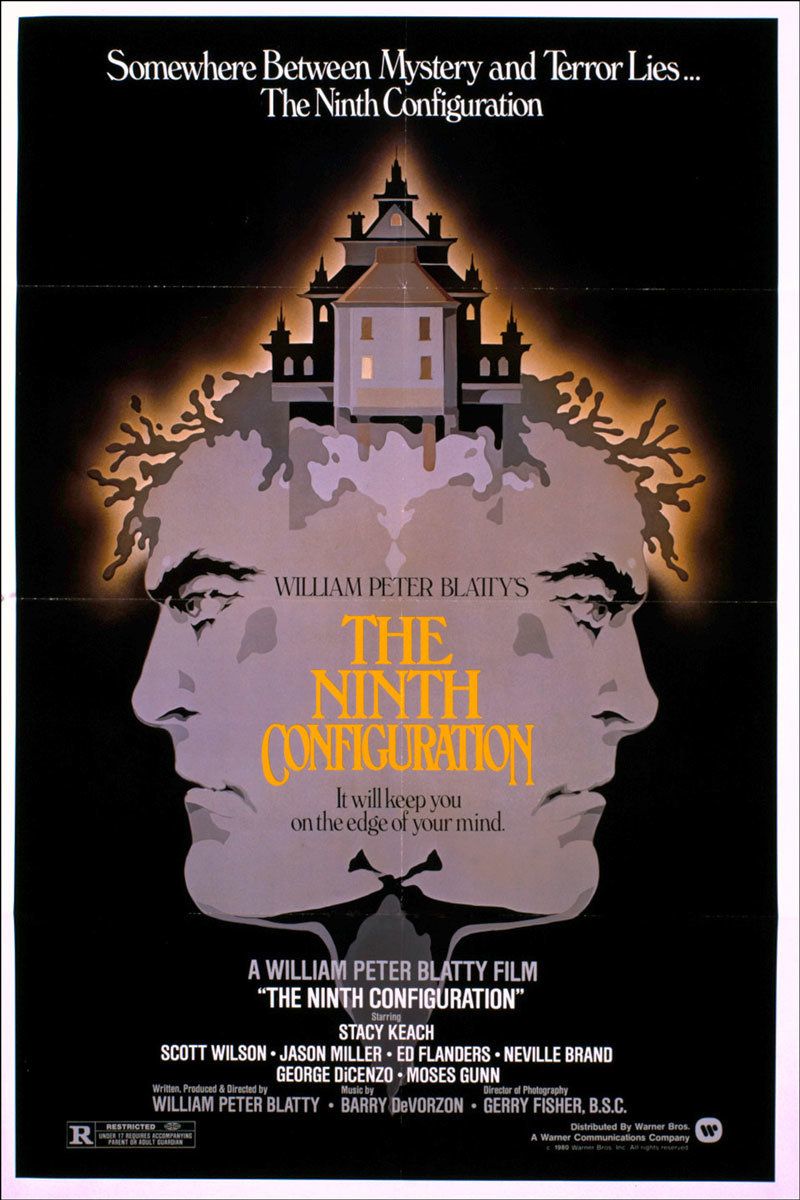
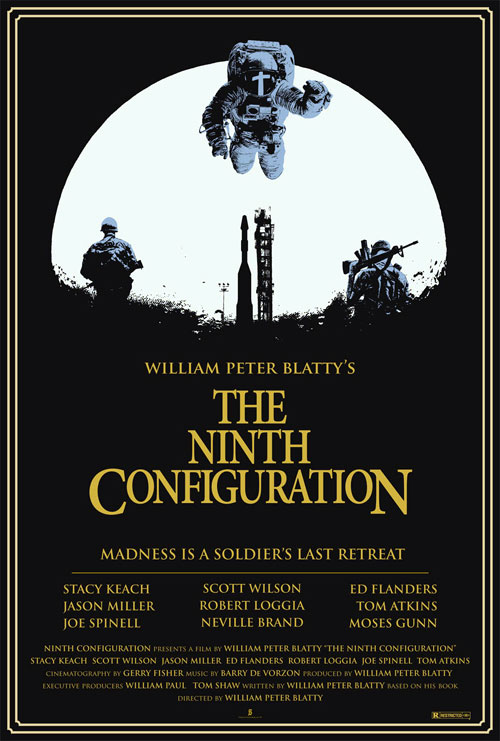
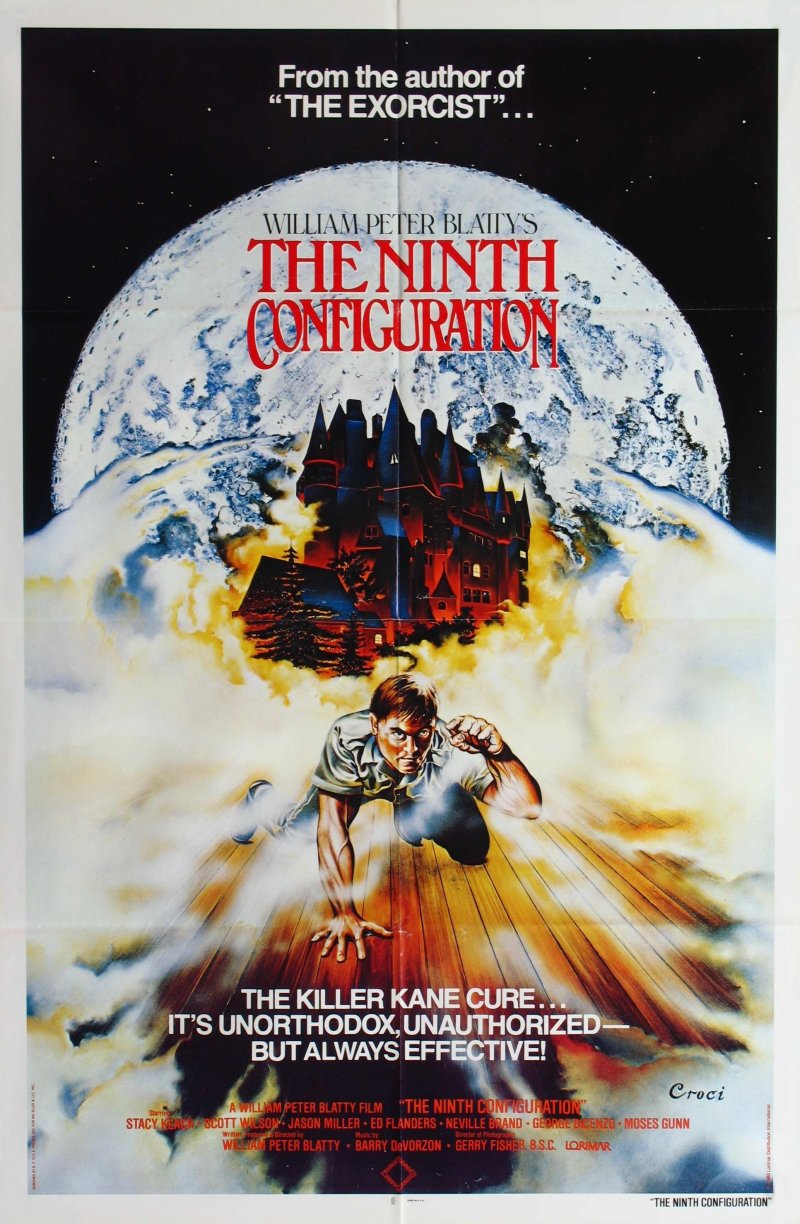
Col. Vincent Kane (Stacy Keach), a former marine who is suffering from demons of his own, is selected to head a psychiatric institution built inside a converted castle that specializes in military personal who fought in the Vietnam war and now feign insanity. The challenge is to find if these men are truly mentally ill, or just faking it and Kane’s technique, which allows the patients to openly act out their darkest fantasies, is considered unorthodox. He begins to have an unusual friendship with one of them, Billy Cutshaw (Scott Wilson) a former astronaut who bailed out of an important mission with a nervous breakdown just before lift-off. The two begin to debate the existence of God and the correlation between faith and sacrifice.

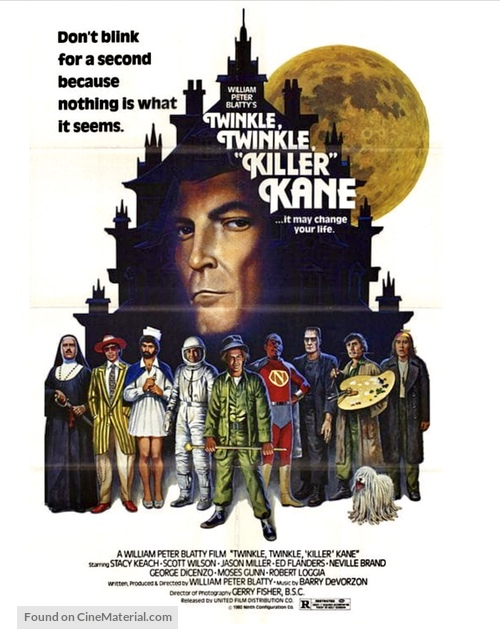
The film has a rocky tone in which part of it delves into campy humor while the other half is more serious. The reason for this is that when William Peter Blatty first wrote the novel of which this movie is based in 1966 it was called ‘Twinkle, Twinkle “Killer” Kane!’ and told in a darkly humorous vein. In 1978 he rewrote the story with a more serious tone and that version was published with the same title as this film.

For me I found the humor off-putting and not funny at all. The whole first hour becomes a complete waste with comical bits that rely too much on mental hospital stereotypes and overall campiness from the performers. There’s also long drawn-out segments dealing with the patients barging into Kane’s office and going on long circular rants that are quite boring.

The second half improves when the tone becomes dramatic, which is what I wished it had been all the way through. It also features a wild barroom fight, which is a bit over-the-top with the way the biker gang dress and behave, but also features some great choreographed violence and a creepy performance by muscleman Steve Sandor as the head of the gang that torments both Keach and Wilson. The second act also features a few surreal, dreamlike sequences, which are the best moments of the film.

The eclectic cast is interesting, but many of them, including Robert Loggia and Moses Gunn, gets wasted in small roles and little screen time. Wilson and Jason Miller are good as two of the patients, but Neville Brand is the best as a drill sergeant that at times seems to be channeling R. Lee Emery and at other moments a confused, overwhelmed man with a deer-in-headlights expression. Blatty, who casts himself as one of the patients is good too, not so much for anything that he says or does, but for his unique facial features, especially his eyes making him look like a guy possessed and the fact that he wrote The Exorcist is even more ironic.

Keach is also excellent, in  a role that was originally meant for Nicol Williamson, but who got fired from the production early-on. Keach manages to be both creepy and hypnotic at the same time. A guy you fear one minute and feel sympathetic for by the end and he does it here without his usual mustache allowing the cleft lip that he was born with to be on full display.

The setting, which was filmed at Castle Eltz in Germany and done there because Pepsi financed the film under the condition that it had to be shot in Europe, is an impressive site. Yet it’s hard to believe that such a Gothic styled fortress, which began being built before 1157, could ever exist inside the USA, which is were the setting is supposed to take place.

The discussions that Keach and Wilson have in regards to the existence of a supernatural being are fascinating and help push the film forward, but the ending, which features a mystical twist, was not needed. The tone, even with the humor, was quite dark, so having it suddenly finish with an ‘uplifting’ moment doesn’t click with everything else that came before it and comes off like it’s selling out on itself.

Alternate Title: Twinkle, Twinkle, “Killer” Kane

My Rating: 6 out of 10

Released: February 29, 1980

Runtime: 1 Hour 58 Minutes

Rated R

Director: William Peter Blatty

Studio: Warner Brothers

Available: DVD, Blu-ray, Amazon Video

Gray Lady Down (1978)

By Richard Winters

My Rating: 7 out of 10

4-Word Review: Submarine crew needs rescue.

Captain Paul Blanchard (Charlton Heston) is on his final submarine mission, but just as the vessel surfaces it gets struck by a Norwegian freighter, which sinks it to the ocean bottom. The navy’s rescue team is unable to get to the crew due to a rock slide that covers the escape hatch. Eccentric Navy Captain Gates (David Carradine) is brought in as he has created a submersible vehicle that can go down the depths of the ocean and remove the rocks from the sub, but his personality clashes with that of Captain Bennett’s (Stacy Keach), which further hampers the rescue efforts.

The story, which is based on the 1971 novel ‘Event 1000’ by David Lavallee gets off to a shaky start. Although the interiors of the vessel look quite authentic the exterior shots, especially those showing the crew sticking their heads outside the vessel’s port hatch, were clearly done on a soundstage in front of a green screen and nothing is worse than a film that tries hard to be meticulous in one area only to compromise in another. When the sub gets hit many of the crew, which were made up of stunt men and not professional actors, overreact giving it an unintentionally comical feel.

The cutting back and forth to scenes inside the Norwegian ship and how that crew becomes panicked was not necessary. Again, the acting gets a bit over-the-top here too and the dialogue is shown in subtitles due to them speaking in their native language. It might’ve actually added to the intrigue had we not seen what went wrong with the other ship to cause the collision especially since the focus of the film is on the rescue effort anyways.

Once the rescue gets going it gets better with a solid pace that keeps things on a realistic level and continues to throw in new twists that makes the attempted rescue continually more difficult. Although it does get to a point where it seems nightmarish scenarios are introduced simply for the sake of drama and almost like it was piling-on the problems making the submarine crew look like they were the most unluckiest people on the planet in order to have one bad luck situation happen after another.

The scenes involving Carradine and his relationship with his pal Mickey (Ned Beatty) as well as his animosity with Stacy Keach are more interesting than the ones involving the crew stuck in the ship. Part of the reason is there is no backstory given to any of the characters, so we never see them as three dimensional people and our empathy for their welfare isn’t as much as it could’ve been. A brief bit shows the wives of the crew upset at the news, but an added side-story would’ve helped. In fact I was genuinely shocked that Rosemary Forsyth, who plays Heston’s wife, has only a single line of dialogue. I realize she may not be an A-list star, but she has a respectable enough body of work to expect something more than a just a token walk-on bit and I’m surprised she took the part.

Spoiler Alert!

The ending is tense and filmed in a way that you’ll never realize that the subs used were simply miniaturized models shot on a soundstage with smoked used for the underwater effects. However, the drama could’ve been heightened especially when one of the characters sacrifices their life to save the others, which should’ve come off as a shock, but the film telegraphs it, which lessens the effect.

End of Spoiler Alert!

Heston’s a stiff acting doesn’t always work, but here he’s excellent and despite being well over 50 appears amazingly young and agile. This marks Christopher Reeve’s film debut who looks absolutely boyish as well as a reunion of sorts for Ned Beatty and Ronny Cox who starred together 6 years earlier in Deliverance although here they do not share any scenes together.

My Rating: 7 out of 10

Released: March 10, 1978

Runtime: 1 Hour 51 Minutes

Rated PG

Director: David Greene

Studio: Universal

Available: DVD, Amazon Video, YouTube
That Championship Season (1982)

By Richard Winters

My Rating: 2 out of 10

4-Word Review: Their reunion turns sour.

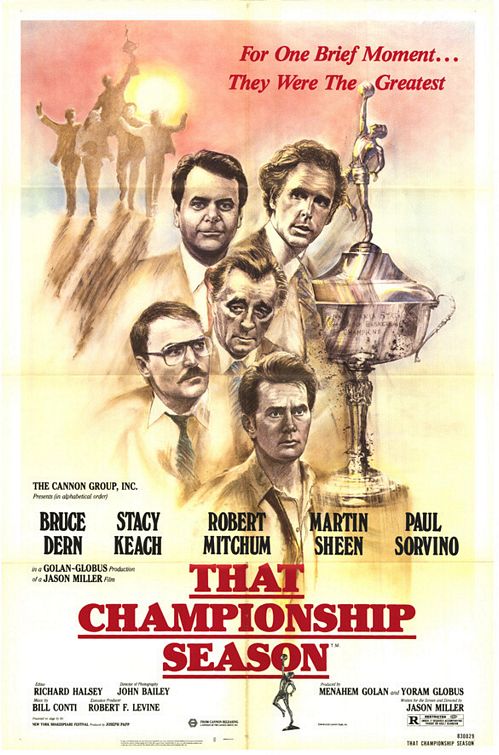
On the 25th anniversary of when they won the state high school basketball championship four members of the team get together with their coach (Robert Mitchum) to celebrate. George (Bruce Dern) who made the winning shot is now the town’s mayor and up for reelection. James (Stacy Keach) is a high school principal while his younger brother Tom (Martin Sheen) has become a vagabond alcoholic. Phil (Paul Sorvino) is the most successful of the group even though his business methods aren’t always ethical. It’s his revelation that he has had an affair with George’s wife that sends the gathering into a freefall where long dormant secrets from all the members slowly come to the surface.

The film was written and directed by Jason Miller, best known for playing Father Karras in The Exorcist, and the play version, which he also wrote won him the Pulitzer Prize. Despite the rave reviews of the play I was genuinely shocked how lifeless and boring the film is. It takes 35 minutes before any real conflict is introduced and once it does it’s all very contrived. The opening half-hour is nice as it was filmed on-location in Scranton, Pennsylvania, which was Miller’s hometown, but the second half is done completely inside one home, which makes it very stagey. Flashback sequences were done to help make it more cinematic, but unwisely cut by the film’s producer.

The plot thread dealing with Sorvino’s character having an affair with Dern’s wife seemed so utterly contrived that I literally had to roll my eyes when it gets brought up. It’s almost like they had to throw in something to keep it interesting so why not just make it the oldest, most clichéd soap opera-like thing they could think of. What’s worse is we never see this woman in question despite her being the catalyst for all the drama nor any explanation of where she is or what she is doing.

The acting is good for the most part, which is the only reason I’m giving this thing even 2 points, but at times the performers have trouble rising above the melodramatic material including the scene where Keach tries to put on a cry while describing his mistreatment by his father, which sounds very fake and unintentionally laughable.

Sorvino walks around with jet black hair except for a big white patch on the back of his head, which is distracting and gets shown a lot, but never mentioned by any of the other characters. I’ve never seen anyone with that condition, except for someone who intentionally highlighted it like that and even so I don’t think that was the case here. The producers should’ve had that spot dyed black like the rest of his hair to avoid the distraction, or had one of the other characters joke about it in passing, so the viewer didn’t have to keep wondering why they are the only ones seeing it and nobody else was.

The final scene where the men listen to a tape of when their team scored the winning shot, which brings tears to their eyes, is the only segment that rings true and hits home how high school for some people can be the highlights of their whole lives and everything afterwards is all downhill. The rest of the movie though is an exercise in boredom and filled with sterile characters dealing with generic issues.

My Rating: 2 out of 10

Released: December 9, 1982

Runtime: 1Hour 50 Minutes

Rated R

Director: Jason Miller

Studio: Cannon Film Distributors

Available: DVD

The Life and Times of Judge Roy Bean (1972)

life of judge 1

By Richard Winters

My Rating: 7 out of 10

4-Word Review: He rules the town.

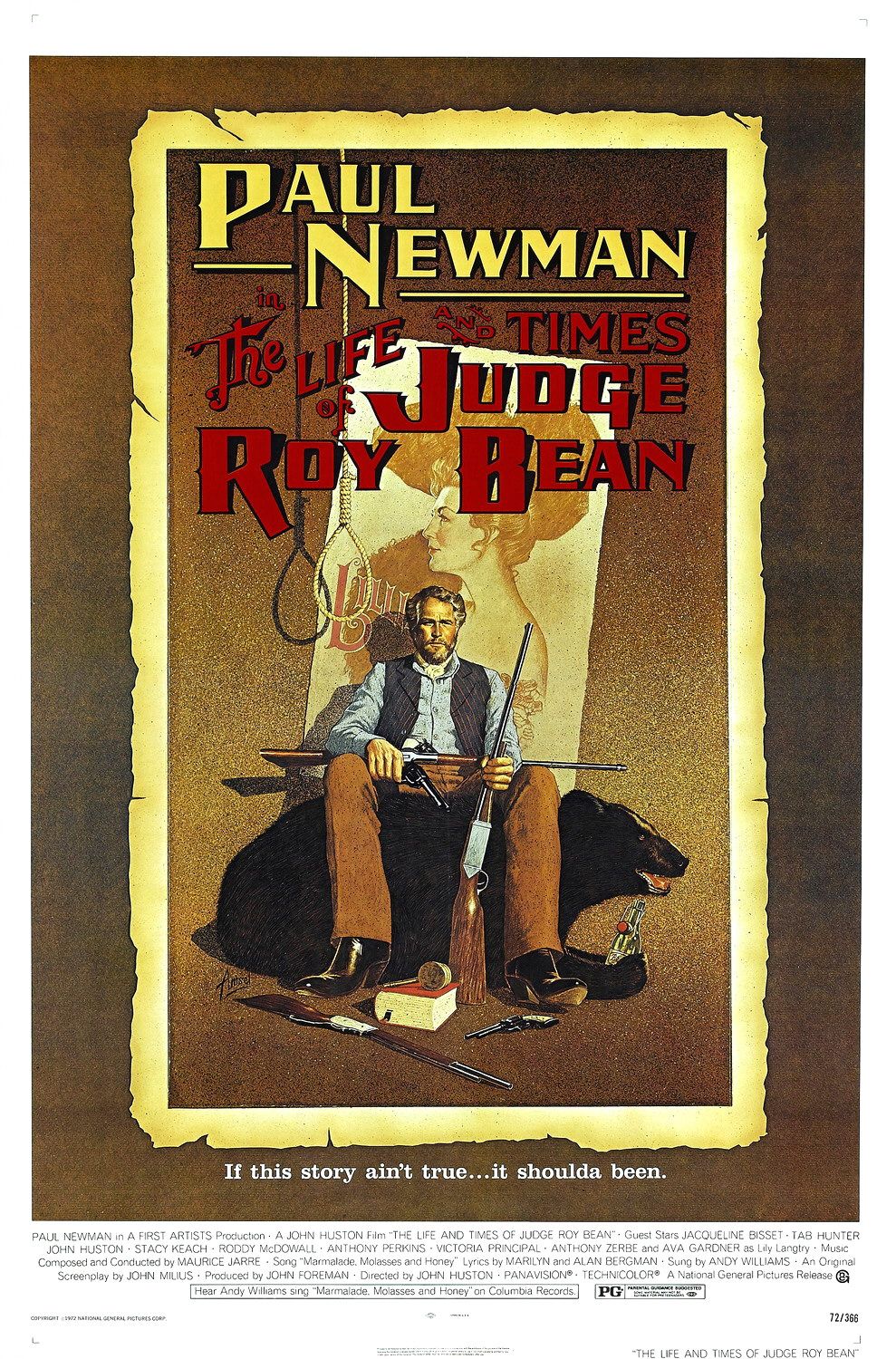
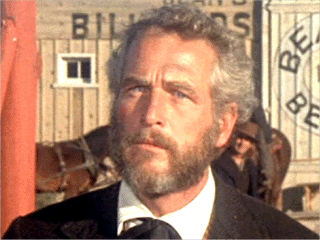
Roy Bean (Paul Newman) rides into a lonely western town that is being ruled by a group of violent vagrants that attack and rob him as he enters their saloon and then they tie him to an end of a wagon and drag his body through the dusty desert landscape. Fortunately for him he manages to survive the ordeal and gets his revenge by returning to the saloon and killing off the others. After which he appoints himself as the judge who oversees all issues of law and order in the vicinity, which quietly begins to prosper under his leadership.

Although based on an actual historical figure the script by John Milius goes wildly off-the-mark that has no bearing to anything that actually occurred and ends up becoming highly fanciful in the process. There are certainly some amusing bits here and there, but the tone is too whimsical and loses any semblance of grittiness until it doesn’t seem like a western at all. The story also lacks a plot and the overall theme that is way too similar to The Ballad of Cable Hogue, which was directed by Sam Peckinpah and came out just two years before this one.

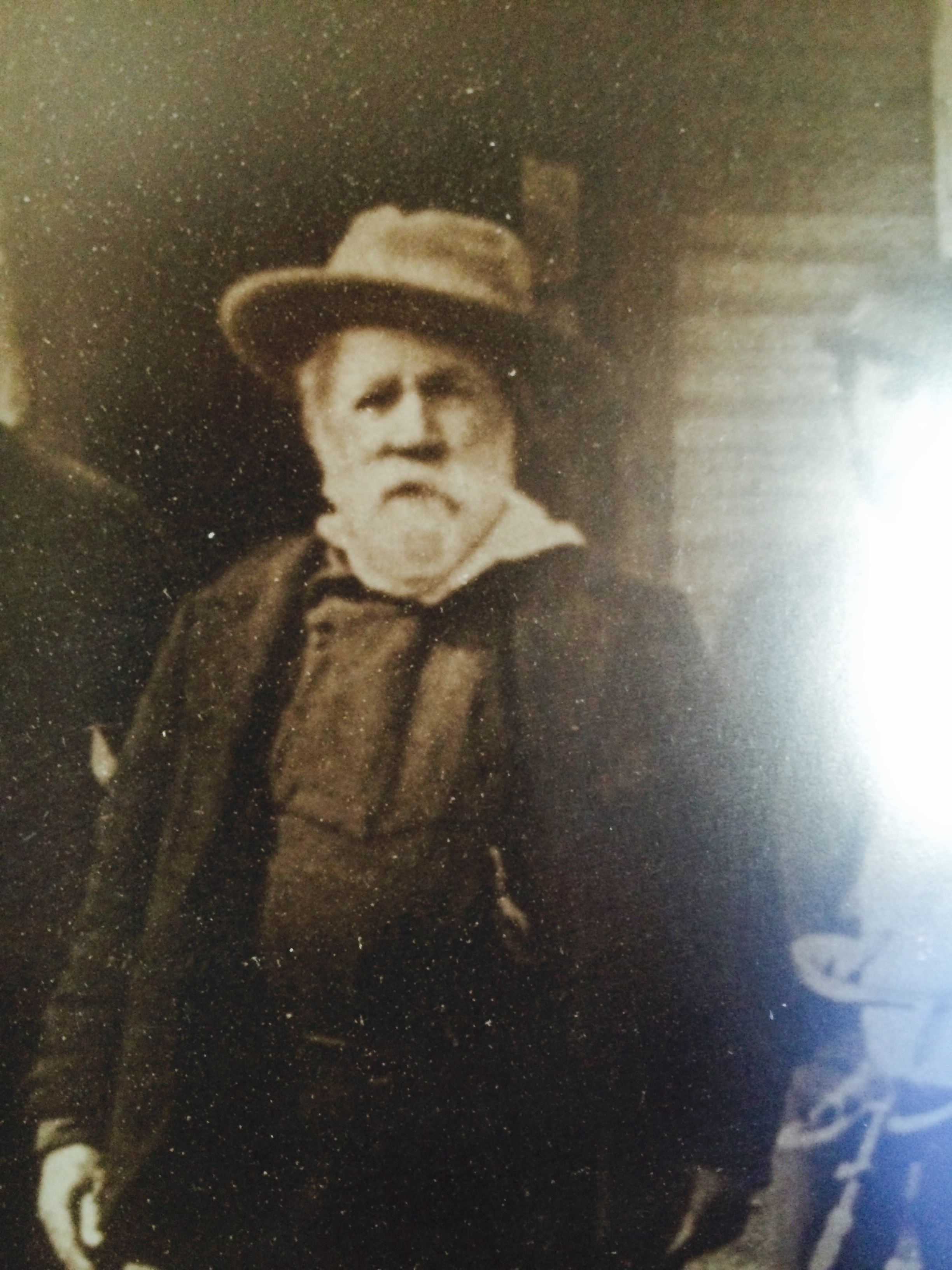
During my trip this summer I traveled to Langtry, Texas where the real Judge Roy Bean lived and where most of this movie was filmed.  I was surprised to find how interesting the true events of his life were and how the movie would’ve been much more fascinating had it just stuck to what really happened instead of making it all up. In real-life Bean entered the town in the spring of 1882 where he opened up a saloon and soon was appointed the Justice of the Peace by the state since the next nearest court was 200 miles away. The jurors for the cases that he heard were made up of his own bar patrons who were required to buy drinks in between court hearings. No one was sent to jail since he did not own a cell and all those accused were simply fined in the amount of cash that they had on them at the time.

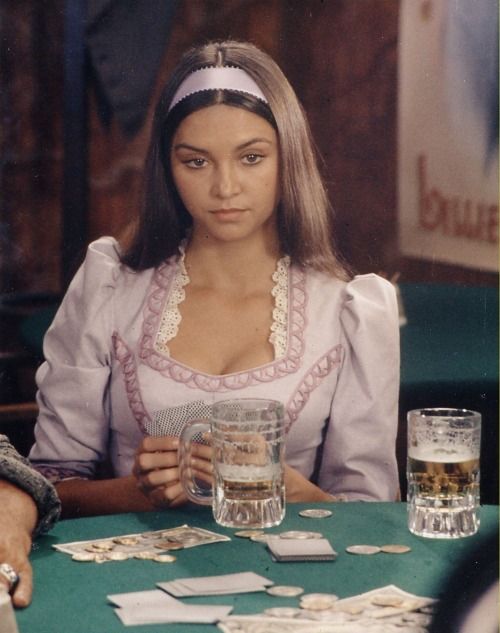
I also found it was amusing at how different the performers looked in comparison to their real-life counterparts. Newman shows some resemblance to the actual man, but Victoria Principal, who plays Bean’s Mexican bride Maria Elena, clearly looks far sexier than the real one did.

judge 2pic 21

judge 5

pic 22

Overall, the film is passable for those wanting nothing more than an evening of light entertainment. The scene where Bean travels to San Antonio so as to meet Lily Langtry (Ava Gardner) a stage actress who he adores his quite good as it takes the character, who had by then achieved almost a mythical quality, and turned him back into being quite mortal when he fights through the city crowds and becomes nothing more than just another-face-in-the-crowd to the people there.

I also enjoyed seeing the town grow into a big oil boom city although in reality this never happened and the place as of today only has a population of 18 people. Stacy Keach’s cameo where he wears heavy make-up to resemble an albino renegade who rides into town and challenges Bean to a gunfight is quite amusing, but it’s probably Principal’s performance in her film debut that ends up becoming the film’s most enduring quality.

pic 18

(The actual saloon where Judge Bean tried heard his cases, which still stands today.)

My Rating: 7 out of 10

Released:  December 18, 1972

Runtime: 2Hours 2Minutes

Rated PG

Director: John Huston

Studio: National General Pictures

Available: DVD, Amazon Instant Video