Tag Archives: Michael J. Pollard

Dirty Little Billy (1972)

dirty

By Richard Winters

My Rating: 9 out of 10

4-Word Review: From awkward to outlaw.

Loosely based on the life of Billy the Kid the film centers on a young Billy Bonney (Michael J. Pollard) who moves to Kansas with his mother (Dran Hamilton) and her new husband Henry (Willard Sage). Billy and Henry don’t get along as Henry feels Billy is lazy and doesn’t help out enough with the farm chores. When Henry informs Billy one night that he needs to leave and never come back Billy does just that by hopping onto the nearest train that’s traveling back east only to at the last minute hop off of it and into a nearby small town where he encounters Goldie (Richard Evans) and his girlfriend Berle (Lee Purcell) who run a small gang of outlaws and are holed-up inside a bar run by Jawbone (Josip Elic). Initially Goldie and Billy are incompatible, but eventually Berle softens towards him and even allows him to go to bed with her. When Billy comes to their rescue when they have a confrontation with another gang he’s eventually welcomed into the group and ultimately becomes its new leader.

By the early 70’s the revisionist western, which portrayed the west in a less ideal way focused more on the realism and merged the good and evil theme so that it became less clear who the hero and bad guy were, became all the rage. Films like The Wild Bunch and McCabe and Mrs. Miller were critical darlings and set the standard for all westerns that followed. This film I considered to be one of the best and yet has strangely been overlooked and isn’t even in Wikipeadia’s list of revisionist westerns from that period, which is a real shame as this masterpiece deserves from more attention and if anything should be at the top of the list and figured prominently.

What’s even more baffling is that it was directed by Stan Dragoti a man that started out in commercial photography and had no aspirations for film directing until finally, at the age of 40, getting the offer to direct this one. The film is so highly stylized and has such a strong a precise artistic vision that I would liken this directorial debut to those of Richard Linklater, Quentin Tarantino, or Jim Jarmusch who burst into the film scene with a distinct style that took audiences and critics by storm while ultimately continuing each of their follow-up projects with the same unique approach and theme, but with Dragoti, who was married to supermodel Cheryl Tiegs, that was not the case. The films he did after this were all lightweight comedies that had a generic look and no resemblance to this one. How someone with no background in movies could helm something as flawless as this is hard to answer, but in the music world you have obscure bands who manage to make it big with one song and they end up being called one-hit-wonders and I guess in Dragoti’s case that’s what this movie was to him and his career.

The acting is masterful as well especially Pollard whose career was quite up-and-down. While he had been appearing in TV productions from as early as the late 50’s it wasn’t until his breakout role in Bonnie and Clyde that he came to the attention of audiences and studio heads alike. Trying to subsequently cast him in a film where he’d be the right leading man though was no easy task. The first attempt was Little Faus and Big Halseywhich did not do well at the box office and rumors of him fighting with his co-star Robert Redford didn’t help things. This role though, where his moody presence is put to perfect use, was a terrific fit and despite already being in his early 30’s his boyish face still gave off the late adolescence look that was needed. Lee Purcell is also fantastic in a sort of plain-Jane role where she wears no make-up, but still looks striking and her knife fight with another woman, played by Rosary Nix, is one of the movie’s top moments.

Overall, outside of the gritty visuals that have an almost poetic quality, what I liked most was how the characters didn’t seem locked into their time period like so many other historical type films. Too many other movies trying to recreate past eras end up having people who seem antiquated and not relatable while this bunch, particularly Billy and the outlaws came-off like people who could’ve easily fit-in with the hippies of the 60’s, or anyone that was living outside the system. They were simply looking for purpose and finding it by lashing out at a society that didn’t seem to want them, which in many cases is the common thread of most criminals of today as well.

My Rating: 9 out of 10

Released: October 25, 1972

Runtime: 1 Hour 33 Minutes

Rated R

Director: Stan Dragoti

Studio: Columbia Pictures

Available: DVD-R

Sleepaway Camp III: Teenage Wasteland (1989)

sleepaway3

By Richard Winters

My Rating: 3 out of 10

4-Word Review: Angela commits more murders.

When Maria (Kashina Kessler), who has the words ‘milk’ and ‘shake’ tattooed to her breasts, goes off to camp, she is impeded by a truck driven by Angela (Pamela Springsteen) that runs her over and allows Angela to take on her identity. Angela then returns to the same campsite where she committed her atrocities from the last film, but which is now run by husband and wife Herman (Michael J. Pollard) and Lilly (Sandra Dorsey), who have turned it into a place to help reform teens with a criminal record and renamed Camp New Horizons. It doesn’t take long though for Angela to revert to her old ways and soon both campers and counselors begin disappearing with a frightening regularity.

While Part II was filming producer Jerry Silva was so impressed with what he was seeing that he immediately authorized another sequel with a script for this one being written while that one was still being shot and then only one weekend for pre-production. This also pushed the filming date back into October where not only were the leaves already changing, but in one segment you can see the breaths of the actors when they speak, which certainly does not give the viewer a summery feel.

The second installment had an okay balance between the black comedy and horror, but this one goes overboard into silly season. The initial killing is especially problematic as it has the victim chased down by a big truck in broad daylight. Yes, she eventually gets run over when she runs into a back alley, but the semi starts barreling down on her when she’s walking on an busy road with other cars, so other people would’ve witnessed what was happening and reported it making the odds of Angela getting away with it quite slim. Also, where does a woman, who was 13 when she got locked up into a mental hospital and been there most of the time until her recent release, find the time and money to learn how to drive a big rig and how was she able to steal one?

While Springsteen’s performance was slightly tolerable in the second installment I felt it got plain annoying here. She isn’t scary and even though this is meant as a dark comedy the villain should still have some frightening presence and she has none making for no suspense at all. She also has her hair dyed blonde, in order to resemble Maria, which has her looking even less like Felissa Rose who played the character in the first one and further way from the original concept making this seem like its own little movie with name-only connections to the other two.

The murders though are an improvement and the only thing that saves it. Part II put no creativity or imagination into the killings, but here we get a couple of memorable ones including Angela roasting marshmallows on a fire that’s burning two of her victims. Killing one of the campers via tying them up to a flagpole and then allowing them to drop many feet to the hard cement below was my favorite though the death by lawnmower, which apparently made some of the women members on the MPAA board, who were hired to give the movie its rating, physically sick, deserves honorable mention. Even here though there’s problems like when Angela stands over the body of a man and swings an ax on him, but then returns to the campsite wearing the same clothes she had, which would’ve been highly doubtful as they would’ve most assuredly been covered with blood splatter.

The only element I found interesting was the appearance of Michael J. Pollard who was at one time starring in Hollywood classics like Bonnie and Clyde and was even given a couple of leading man roles in  studio produced films, but here relegated to low budget direct-to-video fare. He isn’t even in it all that much as his character is one of the first to be killed though he does at least get to make-out with a hot young chick (Stacie Lambert), which may have made it worth it.

My Rating: 3 out of 10

Released: August 4, 1989

Runtime: 1 Hour 20 Minutes

Rated R

Director: Michael A. Simpson

Studio: Double Helix Films

Available: DVD, Blu-ray, Freevee, Pluto TV, Tubi, Amazon Video

Sunday in the Country (1974)

By Richard Winters

My Rating: 4 out of 10

4-Word Review: Farmer holds robbers hostage.

Adam Smith (Ernest Borgnine) is a Canadian farmer living in a rural home who becomes aware via the radio of reports of three bank robbers (Cec Linder, Louis Zorich, Michael J. Pollard) on the run in the area who’ve just killed a young man and his girlfriend who were his friends. He prepares for their arrival and when they come he shoots and kills one of them while taking the other two into his cellar where he hangs them on meat hooks. Smith’s granddaughter Lucy (Hollis McLaren) finds this treatment inhumane and wants to call the police, but Adam won’t let her and the two quarrel until he locks her in her room, but she escapes and runs for help, which enrages Adam even more.

The film almost gets ruined by an obnoxious musical score that is so heavily tinged with country twang that it seems almost like a parody of itself and makes the entire production come off as cheesy and amateurish. It would’ve been better without any music at all as it ends up taking you out of the action like having someone sitting beside you and rudely talking and not letting you concentrate on what’s happening on the screen.

As for the story it makes some good observations about just how thin the line can sometimes be between the good guy, or those that feel they’re morally justified to inflict whatever style justice they deem necessary, and the so-called bad guy. Unfortunately the character arch of the protagonist happens too quickly without much of a back story explaining why this otherwise law abiding farmer would deviate so quickly into an abuser. What makes him different from others who would’ve called the police? Just saying that he’s ‘old fashioned’ and ‘from a different era’ I didn’t feel was enough of an explanation.

With the exception of Pollard the robbers aren’t intimidating enough and it some ways came off as pathetic and not like professional crooks at all. This might’ve been intentional on the filmmaker’s part in an effort to make the viewer more sympathetic to their quandary once they are held hostage, but in the process it lessens the tension and makes them seem not as threatening.

Borgnine does a terrific job through his facial expressions of showing the character’s inner turmoil as well as constantly exposing his human side even as he forges ahead to doing some not-so-nice things. McLaren is also superb and her interactions with Borgnine are the most compelling aspect of the film.

Pollard is great here too and I was surprised as he’s not always able to find roles that match his unique talents and sometimes has been relegated to thankless and forgettable supporting parts, but here he’s viscous with a most creepy sounding laugh.

Unfortunately the eye-for-an-eye concept doesn’t get examined enough and the film could’ve gone a lot farther with it than it does. It still manages to bring out many interesting issues but the story should be remade and without the corny soundtrack.

Alternate Titles: Vengeance is Mine, Blood for Blood

My Rating: 4 out of 10

Released: November 22, 1974

Runtime: 1 Hour 33 Minutes

Rated R

Director: John Trent

Studio: Impact Films

Available: Amazon Video

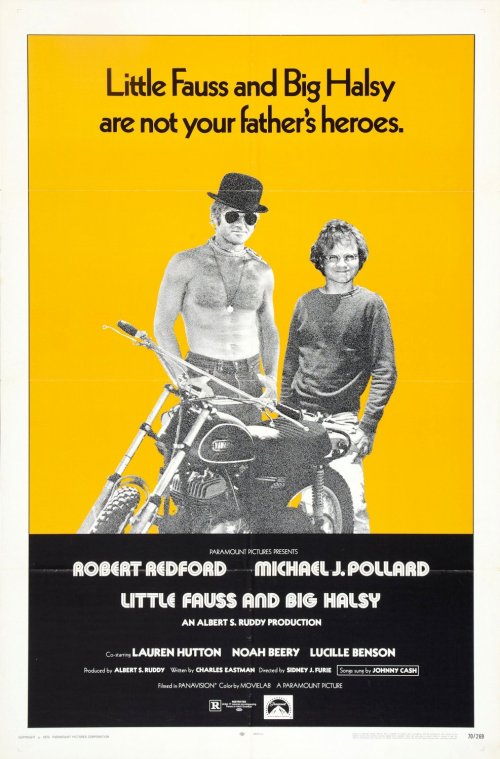
Little Fauss and Big Halsy (1970)

little-fauss-1

By Richard Winters

My Rating: 6 out of 10

4-Word Review: Their friendship doesn’t last.

Little Fauss (Michael J. Pollard) is a motorbike racer who is shy, has few friends and still lives at home with his parents (Noah Beery Jr., Lucille Benson). Halsy (Robert Redford) is a brash womanizer whose been kicked out of the racing league for drinking on the track. He befriends the timid Little and conspires with him to race in his place while splitting the winning proceeds 50/50. Little’s parents do not approve of Halsy and feel that he will be a bad influence, but Little sees this as an opportunity to break away from his parent’s while befriending someone whose lifestyle he idolizes. Things start out poorly and only get worse particularly when the they meet up with the free-spirited Rita (Lauren Hutton) who chooses Halsy over Little despite the fact that Little has a crush on her.

The film has a nice gritty feel to it and the harsh desert landscape helps accentuate the hardened, rough living characters. The racing footage is also well done and just like with Downhill Racer, which was a film about skiing that Redford did just before this one, the viewer feels like they are in the middle of the action driving the motorbike along with the characters with wipeouts and crashes are real and at certain spots genuinely violent. I also enjoyed Benson and Beery’s performances and wished they had been in the film more as well as the opening tune sung by Johnny Cash although it became distracting when it gets played later on and should’ve been contained over the credits only.

Redford gives a stellar performance playing a character unlike any he has ever done and he does it convincingly to the point that the actor’s son in real-life considers this to be his father’s best onscreen achievement. Pollard though is solid too in a part that he seemed almost born to play. The two, who apparently didn’t get along well behind-the-scenes, play off each other in interesting ways and the movie only works when the two share the screen and is draggy when they don’t.

The story has its share of decent dramatic moments but it is also quite predictable. Redford’s character is completely unlikable and I would’ve liked one moment where he did or said something nice, or at least given us more of a background for why he turned out at being the way he was. The way Little outgrows the friendship and eventually becomes more confident and self-reliant is rather formulaic and like with most everything else in the film one can see coming long before it happens, which eventually makes the viewing experience of this thing feel almost like a nonevent.

My Rating: 6 out of 10

Released: October 21, 1970

Runtime: 1Hour 38Minutes

Rated R

Director: Sidney J. Furie

Studio: Paramount

Available: DVD, Blu-ray, Amazon Video

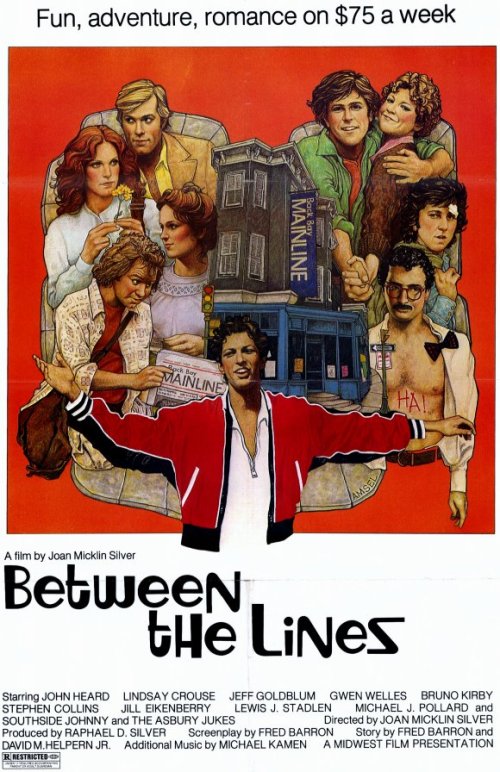
Between the Lines (1977)

between the lines

By Richard Winters

My Rating: 6 out of 10

4-Word Review: Newspaper get corporate takeover.

This is a look at an underground/counter-culture newspaper staff and the conflicts and concerns that they have at being taken over by a no-nonsense corporate owner (Lane Smith).

The film almost immediately takes you back to the bygone era of the late 70’s. The attitudes and conversations are realistic for that period and anyone who lived through it will most assuredly feel nostalgic .John Heard, Jeff Goldblum, and Bruno Kirby are engaging in their respective parts as is most of the cast. Stephen Collins is good also, but in an unusual role for him as he usually plays nice sensitive types, but here is a more driven, intense, and confrontational. This also works as a good unofficial statement to the death of the counter-culture movement and the eventual rise of materialism.

The story starts out well as it looks at the inside workings of an underground newspaper, but then spends too much of the middle part focusing on the relationships of some of the characters. Only at the end when the new owner takes over does it get back to the newspaper angle. Unfortunately it concludes just as things are getting interesting and we never get to see how the characters survive and adjust to the takeover. The film would have been much stronger and original had it stuck to scenarios involving the newspaper business and scrapped the relationship stuff, which tended to be derivative. Jon Korkes and Michael J. Pollard’s characters are seen too little and needed more screen time.

Also, when the film deals with the relationships there seems to be too much of a feminist bias as the men are always shown to be the ones at fault due to their ‘insensitive and selfish natures’ while the women come off the ones who are ‘reasonable and unfairly neglected’. This could be a product of the fact that it was directed by a woman as well as the era where men were somehow supposed to feel guilty simply because they were men.

This is fun as a time capsule as well as a great chance to see young stars in the making. However, the story does not take advantage enough of its original concept and ends up dealing with a lot of the same old scenarios and story lines that we’ve all seen before. Director Joan Micklin Silver and John Heard teamed up again two years later for Chilly Scenes of Winter, which I felt was better.

My Rating: 6 out of 10

Released:  April 27, 1977

Runtime: 1Hour 41Minutes

Rated R

Director: Joan Micklin Silver

Studio: Midwest Films

Available: DVD (MGM Vault)