Tag Archives: Kenneth McMillan

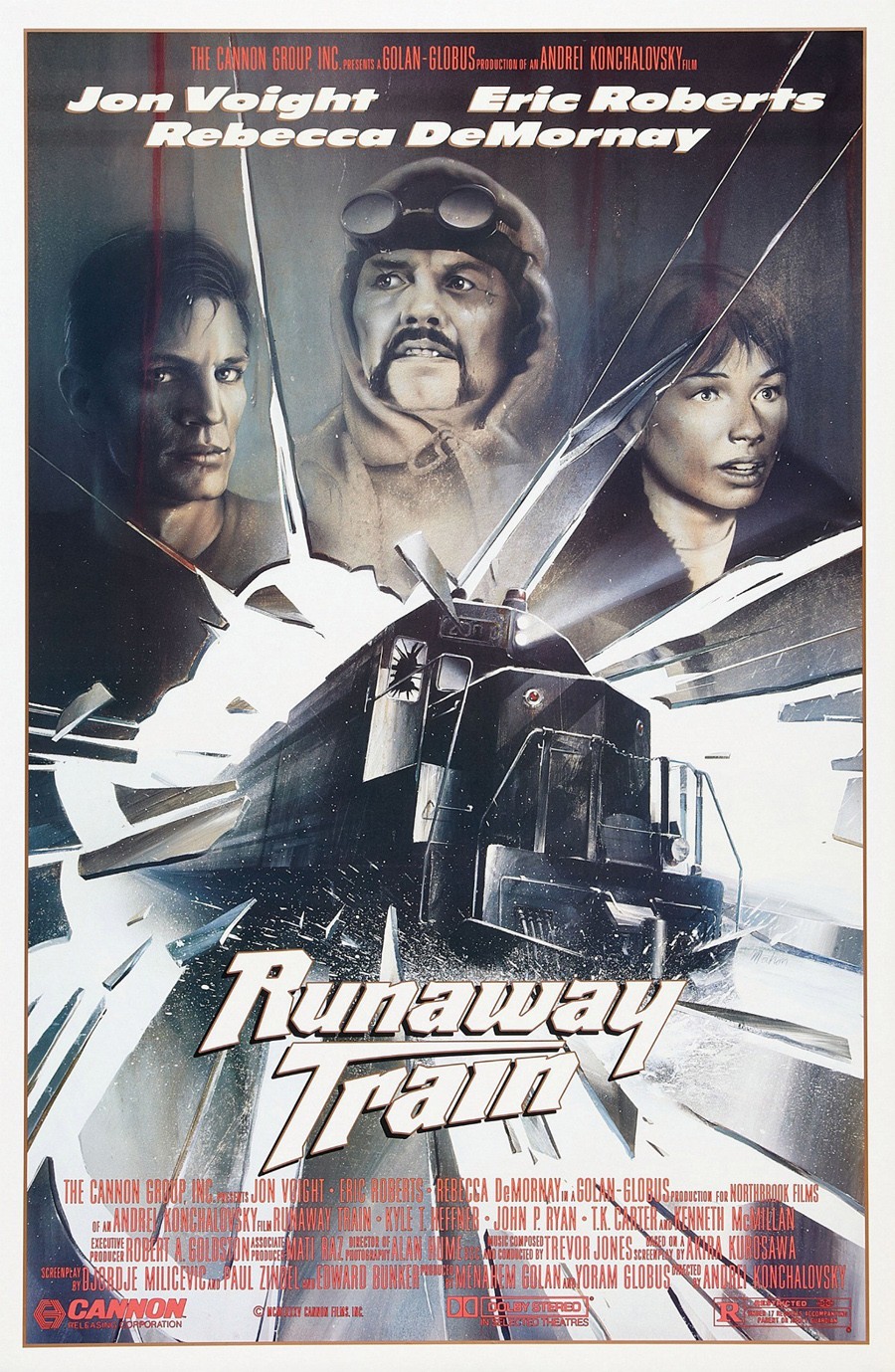
Runaway Train (1985)

runaway

By Richard Winters

My Rating: 8 out of 10

4-Word Review: Trapped on speeding locomotive.

Manny (Jon Voight) is a robber locked away in solitary confinement at a maximum security prison because of his two previous attempts at escape. He plans on making a third try with the help of a younger, more naive prisoner named Buck (Eric Roberts). Their breakout this time proves successful, but they find themselves having to fight the bitter cold and hike along the frozen Alaska landscape. They come upon a rail line and board a train by sneaking onto one of it’s four empty locomotives. However, unbeknownst to them the engineer, (Reid Cruickshanks) suffers a fatal heart attack while starting up the train and causing it to accelerate at high speeds, which is too fast for them to jump off. Later the two meet Sara (Rebecca De Mornay) an employee of the train company and three devise a plan to climb onto the lead engine and press the kill switch, but while this is going on the two fugitives are being pursued by police bounty hunter Rankin (John P. Ryan) who’s determined to board the runaway train via a helicopter and arrest Manny and bring him back to prison.

The story is based on a script by Akira Kurosawa who had read an article written in Life magazine about a runaway train and decided it would make for a good movie and planned to have this be his first American film. The shooting was to take place in the fall/early winter of 1965 with Peter Falk playing Manny and Henry Fonda as Rankin. However, the location, which was upstate New York received some early season snowstorms, which caused many production delays and eventually the financers pulled-out and film ultimately was never made. The project sat dormant for many years until 1982 when the script’s current owner managed to get Russian director Andrei Konchalovsky, at the suggestion of Francis Ford Coppola, interested in reviving it.

The film is for the most part masterfully done and quite suspenseful with kudos going to filming it in Alaska where the snow and ice are real and so vividly captured that you can almost feel the cold permeate through the big screen. Originally it was to be shot in Montana where the prison is, the same one that was also used in Fast Walkingbut the weather conditions proved to be mild and attempts at fake snow weren’t successful, so it was eventually decided to move the production further north.

I did though have some quibbles with the escape sequence, which gets done by having them hide in a cart of laundry, which is awfully predictable and unimaginative and you’d think a maximum prison such as this one would be on the lookout for such a thing making it all seem too easy. Voight having a gadget that could bend bars was equally too convenient. I realize prisoners can be adept at smuggling in many things, but if it’s so simple to get something that can literally bend steel bars then why doesn’t every prisoner use to breakout?

The casting of Voight was in my opinion a mistake, or at least not as effective as another actor in the part. He looks too thin and not threatening at all despite him wearing false teeth, tanning his skin in more of a darker tone, and putting on a fake scar around his eye, but for me this all came-off as highly affected and just didn’t seem gritty enough. While his performance improves as he gets on the train I couldn’t buy-in that this was a real bad ass as the movie wants you to believe and I really wish Voight had listened to his first instinct and not taken the role as he felt it wasn’t he type of character he could play, but eventually changed his mind when Konchalovsky convinced him that great actors play against type. I also didn’t like screenwriter Edward Bunker changing him into a bank robber as in the original script he was a killer, which would’ve made for a far more intriguing character arch as it would then attempt to humanize someone that is perceived as being quite viscous.

The train scenes are quite intense as it takes on a man vs. the elements theme with Roberts, who usually plays sleazy characters, doing quite well as the conscientious person here. De Mornay is fantastic too wearing very little make-up, which makes her look younger and almost teen-like and far more youthful than in Risky Businesswhich is a film she did 2 years before this one. My only complaint is that the character gets introduced in an awkward manner where she just literally ‘pops-in’ without any warning in the middle of it and the film should’ve given the viewer some hint that there was someone else on the train right from the start.

The scenes inside the dispatch office are highly engaging and become almost like comic relief, which for a film that’s as tension filled as this one, is a welcome addition and helps give the viewer a bit of a breather between moments on the train. I loved how oblivious the dispatchers, played by the talented T.K. Carter and Kyle T. Hefner, are initially to the situation and are seen at the start being quite laid-back. Hefner is even in the bathroom when the news hits and the film misses a great opportunity, similar to the one in Catch-22where he would be seen sitting on the toilet as he got updated on the situation. Kenneth McMillan, one of the all-time great character actors, comes-in later to lend advice and he really should’ve been given more screentime and possibly replaced Hefner altogether as he has a way to create amazing energy that his co-stars just didn’t.

Spoiler Alert!

The ending in which Manny goes down with the train, we don’t actually see it crash, but know it’s coming, with Manny raising his arms in the air like he somehow has achieved something I found disappointing. I didn’t care for it back when I first saw it during my college days and had the same response to it this time around. This was in the original script as well and was intentionally done to go against the theme of most American movies were the protagonist must always come out as the perceived winner, but either way it comes-off as all wrong for this time of film. We spend so much time watching him do whatever it takes to survive and going to great risks to accomplish it that to see him ultimately give-in to his inevitable circumstances and simply accept death to come and take him kills all the momentum that had built-up and becomes a letdown for the viewer. I kind of wonder if this is the reason why it didn’t do well at the box office as it only managed to recoup $7 million of its $9 million budget.

My Rating: 8 out of 10

Released: December 6, 1985

Runtime: 1 Hour 51 Minutes

Rated R

Director: Andrei Konchalovsky

Studio: The Cannon Group

Available: DVD, Blu-ray, Pluto TV, Roku, Tubi, YouTube

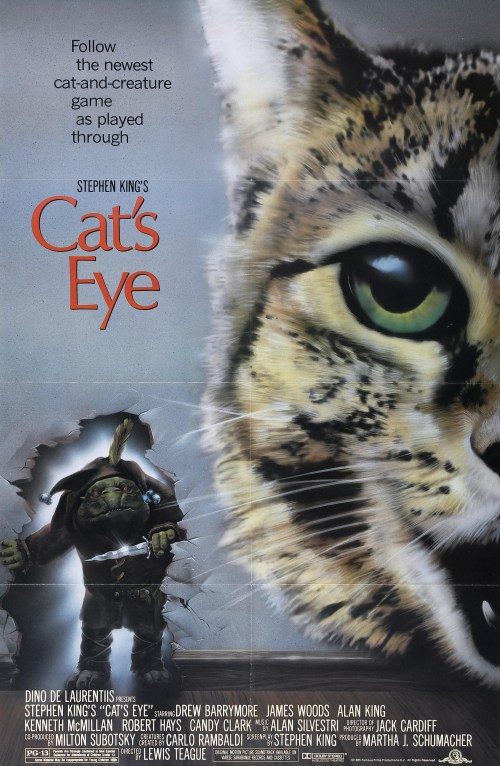
Cat’s Eye (1985)

cats

By Richard Winters

My Rating: 4 out of 10

4-Word Review: Three stories involving feline.

With a screenplay written by Stephen King the film is made up of three of his short stories with two of them taken from his 1978 novel ‘Night Shift’ while the third one was penned directly for the screen. The only connecting thread is a stray cat and actress Drew Barrymore who appear in all three tales though only have major parts in the third one.

The first segment is called ‘Quitters, Inc.’ and involves James Wood playing the part of a man named Dick Morrison who is trying to quit smoking and enters an agency that boasts a high success rate of getting their clients to stop. It’s run by Vinny (Alan King) who tells Dick that if he doesn’t stop smoking instantly that they’ll kidnap his wife (Mary D’Arcy) and put her into a room where she’ll receive electrical shocks. To prove his point he puts the cat in the cage and then through a glass partition Dick witnesses the feline getting shocked, which is enough to scare him into quitting on the spot. Yet as the days progress Dick finds himself constantly getting the urge to light-up, but Vinny warns him that he has people who’ll be watching him and if he does dare to backtrack they’ll immediately grab his wife and bring her into the cage. Eventually though the compulsion to have a cigarette gets to be too much and he sneaks a puff only to then face the dire consequences.

This segment tries for black comedy, but doesn’t go far enough with it. While Woods, who usually excels as the twisted types, is quite good as the straight man, I couldn’t understand why he didn’t go the police when his wife gets taken, or why any of the other clients didn’t either, which should’ve gotten the business quickly shut down and the owners prosecuted for running an unethical operation. Famously brash comedian Alan King isn’t given enough leeway to allow his cantankerous persona to go full throttle though watching him wearing a white leisure suit and lip synch the words to the song ‘Every Breath You Take’ makes it almost worth it. It’s interesting seeing James Rebhorn in a bit part as a drunken business man at a party as he later had a prominent role in the movie The Game, which had a very similar storyline to this one involving a business that overtakes their client’s lives and is constantly watching them.

The second segment called ‘The Ledge’ involves a man named Johnny (Robert Hays) who must walk across a thin, outdoor ledge along a penthouse wall many feet above a busy street. If he succeeds then the penthouse owner, Cressner (Kenneth McMillan), will grant his wife a divorce and allow her to marry Johnny whom she’s been dating.

This story is the best one mainly because it has McMillan who is one of the finest character actors of all time and supplies his role with an amazing amount of energy and dark campiness. The scenes of watching Hays trying to maneuver his way on the ledge while being simultaneously attacked by a pigeon and at times McMillan who throws things at him out his window, is really terrifying. You feel like you’re on the ledge with him and I cringed all the way through this one, but in a good way as I really got swept up in it though the twist ending is a letdown.

The third and final segment called ‘The General’ involves a young girl living in North Carolina, named Amanda (Drew Barrymore) who takes in a stray cat much to her nagging mother’s (Candy  Clark) chagrin as she feels the animal may attack Amanda’s pet bird named Polly whom she keeps in a cage in her room. Amanda though likes the cat, whom she’s named General, because he scares away the evil troll, who’s the size of a rat and sneaks into her bedroom at night through a small opening in the wall to steal away her breath while also attacking Polly.

This segment has some interesting special effects, but it’s hard to tell if this is intended to be scary, or comical. It’s probably supposed to be a mixture of both, but I wished it went more for the scares since the movie, which gets billed as being a ‘horror’ doesn’t really have much of them otherwise. This segment also doesn’t really have any twist to it other than the parents finally believing that a troll really does exist in their daughter’s bedroom, but then telling her not to tell anyone about it, but why? It seems like if there’s one of them there could be others and the whole home should be inspected and fumigated and if I were the homeowner I wouldn’t want to spend another minute in there until it was, so having this family just forget about it and go back to normal didn’t seem like a normal response. The troll is also too reminiscent of the devil doll in Trilogy of Terror, which was far more frightening.

My Rating: 4 out of 10

Released: April 12, 1985

Runtime: 1 Hour 34 Minutes

Rated PG-13

Director: Lewis Teague

Studio: MGM/UA

Available: DVD, Blu-ray, Amazon Video, YouTube

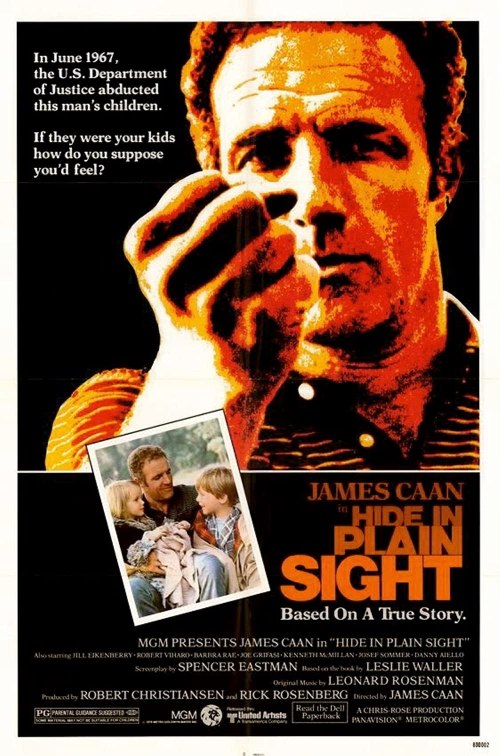
Hide in Plain Sight (1980)

hide

By Richard Winters

My Rating: 6 out of 10

4-Word Review: Searching for his children.

Thomas Hacklin (James Caan) is a divorced father of two children who has visiting rights to see his kids every weekend. One day when he arrives at his ex-wife Ruthie’s (Barbra Rae) residence he finds the home abandoned and no one around. He eventually learns that her and the kids have been put into the Witness Protection Program due to her remarriage to Jack (Robert Viharo) a gangster who qualified for the program when he became a state’s witness against the mob. Thomas’ efforts to find his kids prove futile and the authorities are no help, but he becomes relentless and hires a lawyer (Danny Aiello) to represent him in court, but even then the odds remain seemingly insurmountable.

The film is based on the novel of the same name by Leslie Waller, which in-turn was based on the actual experiences of Thomas Leonhard who one day in 1967 when he went to pick-up his kids for his weekly visitation found them gone and the house that they had been living in with his ex-wife Rochelle to have been abandoned. This then precipitated an 8-year crusade by Thomas to get them back, which proved to be a landmark legal battle, but on July 4, 1975 he was eventually reunited. The film though changed several things from the true story including adding in a subplot where Thomas gets followed by the mob and eventually leads to a violent confrontation. It also compresses the time span from 8 years to 18 months.

While I enjoyed the movie more than when I first saw it over 10 years ago the issues that I had with it during the first viewing remained the same. Most of it had to do with Caan’s, in this the only film that he directed, non-use of close-ups, which the studio heads complained about during the production. A good example of this is when Thomas and ex-wife are arguing on a public sidewalk the camera does not move-in, like in most movies, to allow us to hear what they’re saying, but instead pulls back, so they go further away, but what’s the point of seeing characters on the screen argue if we can’t hear what it’s about? Another scene has Thomas arriving at his ex-wife’s abandoned home, but instead of having the camera go inside with him as he enters it, it remains outside and then tracks around the home to the back door, which Thomas is seen leaving. This though lessens the impact as having the viewer visually witness the suddenly empty house would’ve been far more dramatic.

I did though like that many of the scenes were shot in Buffalo at the exact locations where the real-life incidents happened. The film reconstructs the look and feel of the 60’s quite nicely and many of the participants from the actual events coached the actors on how to perform their roles accurately. The acting is impressive especially by Viharo who’s mafia mobster caricature is right on-target. Kenneth McMillan is quite entertaining as a police detective who initially impedes Thomas’ efforts, but eventually has a change-of-heart. As with any great character actor, which McMillan clearly is, it’s what they add to the part that makes it interesting and here it’s his excessive eating with virtually each scene he’s in has him stuffing his face though I wondered how many takes were required to do each scene and if he ultimately overate and got himself sick while performing the role.

Spoiler Alert!

I was annoyed though with how certain fictional things that got added-in like Thomas’ dealings with the mob got played-down instead of up. The original script by Spencer Eastman called for a lengthy car chase and violent fist-fight, but Caan chose to take the subtle route making these moments less tension filled and possibly too slow and uneventful for some people to sit through. I was also amused how the actual reunion between the father and kids was different from the one in the movie where it’s portrayed as being a happy one. In real-life the kids disliked their father’s rules and ended up moving back with their mother showing how ironic life can be where you fight hard for something and then when you finally get it it ends up not being as great as you thought it would be.

My Rating: 5 out of 10

Released: March 21, 1980

Runtime: 1 Hour 32 Minutes

Rated PG

Director: James Caan

Studio: MGM

Available: DVD-R (Warner Archive Collection), Amazon Video

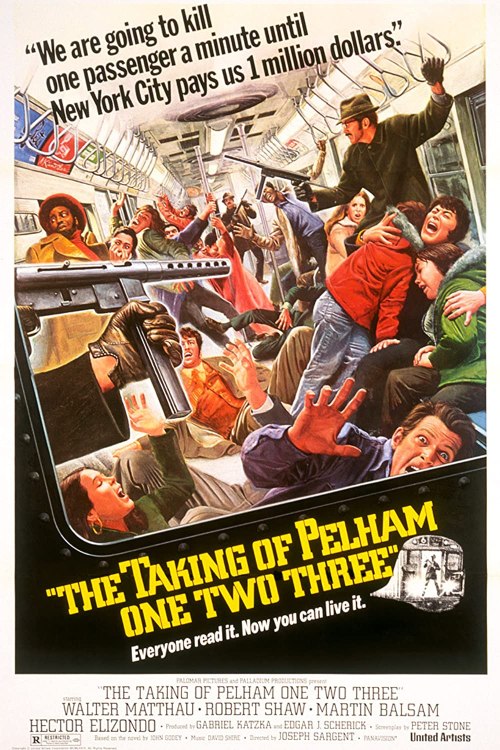
The Taking of Pelham One Two Three (1974)

taking

By Richard Winters

My Rating: 8 out of 10

4-Word Review: Subway passengers held hostage.

Four men wearing disguises and going by code names: Mr. Blue (Robert Shaw), Mr. Green (Martin Balsam), Mr. Grey (Hector Elizondo), and Mr. Brown (Earl Hindman) board the same subway car, this one being the Pelham 1-2-3, at different locations. Once all four are onboard they take out their guns and take over the subway car by holding both passengers and conductor hostage. For their release they demand $1 million in ransom to be paid in 1-hour and for every minute that it is late one passenger will be killed. They communicate these demands to Lt. Zack Garber (Walter Matthau) who is a part of the New York City Transit police. As Mr. Blue and Garber communicate with each other over the radio and the city races to meet the crooks demands Garber begins to try and surmise who these men are and how they’ll be able to get away with it since they’re trapped in an underground subway. Garber is convinced that it will not work and the men will eventually be caught unaware that Mr. Green, who used to work for the subway system until he was, in his mind, unfairly terminated, has come up with an ingenious contraption that can override the dead-man’s switch and allow the train to keep running even with no one at the controls.

The film is based on the best-selling novel of the same name by John Godey, who was a subway enthusiast and came-up with the plot after spending many years using the subway system. While the movie rights for the paperback were sold for $450,000, in anticipation that it’d make a great movie, the film almost didn’t get made due to the reluctance of the Metropolitan Transit Authority to allow the production to be filmed on-location.  Much of the reason stemmed from their fear that it might give ‘kooks’ the idea to pull-off a real-life heist, but eventually they caved once screenwriter Peter Stone added in the fictional contraption that could override the dead-man’s switch.

As a caper/action flick it is quite exciting from literally the first-frame to the last, but it’s some of the other added elements that make it a standout. I really enjoyed how the city of New York becomes like a third character and the unique, brash attitude of the people. Every character, no matter how small the part, has a distinct personality and memorable. My favorites were Mari Gorman as the feisty hooker, Michael Gorrin, as the elderly passenger convinced that the subway car must eventually come to a stop even as it careens out-of-control and everyone else panics. I also enjoyed Louie Larebee as an alcoholic woman, who is so drunk that she passes out when the crime begins and sleeps through the whole thing as well as Carolyn Nelson, the real-life wife of the film’s director Joseph Sargent, playing a college coed who believes she can stop the train through sheer mind control and meditation.

On the ground there’s some great character bits too including Tom Pedi as an aging, misogynist who doesn’t like the idea of having to work alongside women, nor that he should stop cursing because of it, who walks right into the line-of-fire when he stubbornly refuses to listen to the kidnappers warnings. Kenneth McMillan, is very funny as an exasperated street cop trying to direct traffic, and Dick O’Neill lends moments of drama as an outspoken transit employee who doesn’t like the idea of giving into the kidnappers demands and isn’t shy about voicing his disapproval, which leads to a tense confrontation with Matthau.

Matthau’s anti-hero take where he seems initially like nothing more than a aloof, laid-back guy, who doesn’t seem to have the cunning, or initiative to defeat the bad guys. At one point even openly insults a group of Japanese reporters who he thinks can’t speak English only to learn to his regret that they can, is excellent and in patented Matthau style seems to be able to do it without much visible effort.

Shaw is solid, but I felt there needed to be an explanation for how he got bought into the scheme, which never comes and ultimately is the film’s only real weak point. His personality is so different from the other men in the group that I couldn’t understand why he’d want to pull-off a robbery with them, nor why, being such a careful planner that his character is shown to be, he’d only realize as the crime is happening that the Mr. Gray was too much of a hot-head and not right for the job, as I’d think he would’ve observed this much earlier during the planning stage and had Gray removed before the actual crime had ever been carried out. Having scenes of the backstory spliced in would’ve helped made it more complete.

This was remade as a TV-movie in 1998 and then as another feature film in 2009 that starred Denzel Washington in the Matthau role and John Travolta playing Shaw’s part. I never saw the TV version and it’s been many years since I viewed the theatrical remake, but I remember finding it a letdown mainly because it centered too much around Travolta, who would go on long rants that bogged down both the pace and plot making it not nearly as exciting as this one.

My Rating: 8 out of 10

Released: October 2, 1974

Runtime: 1 Hour 44 Minutes

Rated R

Director: Joseph Sargent

Studio: United Artists

Available: DVD, Blu-ray, Amazon Video, YouTube

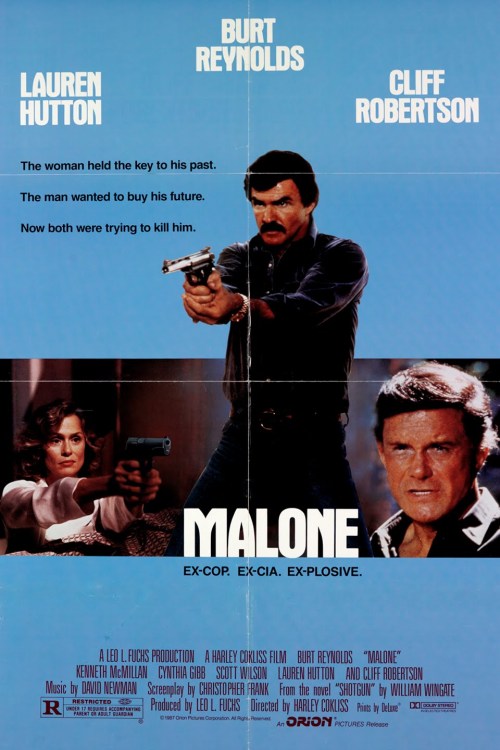
Malone (1987)

By Richard Winters

My Rating: 3 out of 10

4-Word Review: Hit-man saves town.

Richard Malone (Burt Reynolds) is a former CIA hit-man who decides that he’s had enough of the dirty business and wants to retire. He uses his savings to leave the profession and travel the countryside. On the way his car breaks down and he’s forced to push the vehicle to the nearest small town service station, which is run by Paul (Scott Wilson). Since the parts to repair the transmission will take several days to arrive he stays at the place and befriends Paul’s teen-age daughter Jo (Cynthia Gibb). He also becomes aware of a plot by billionaire Charles Delaney (Cliff Robertson) to buy up the town and force everyone to sell and if they don’t they end up dying. Despite his initial reluctance Malone ends up getting involved in the dispute and becomes Delaney’s number one target in the process.

The movie is based on the novel ‘Shotgun’ by William P. Wingate, which in turn was modeled after the formula from the western Shane. It reminded me more of High Noon particularly the way Malone single-handedly takes on not only Delaney, but all of his cohorts during a gun battle at the end, but without that film’s strong emotional impact. The story and characters are highly uninspired and this thing is aimed towards those that like their action flicks on a very simple and predictable level.

Reynold’s presence is the only interesting ingredient. This was during the downside period of his career where he was desperately trying to get back to the tough guy action roles that had made him famous. However, during the 70’s his action guy persona worked more in the humorous vein where his character would always approach the situation with a twinkle in his eye and funny side-quip, but here he’s all stiff and serious. To a degree this proves he’s a good actor in that he can play either type of role effectively, but the funny-Burt is far more entertaining than the serious one. Either way it’s doubtful that this middle-ager would’ve been able to run so vigorously and climb onto the rooftop of buildings as he does when he gets onto Delaney’s estate and I’m pretty sure a stunt double was used since we only see him doing this from a distance.

An element of the film that audiences today may take issue with is his relationship with the teen girl who starts to admire him to an emotional extreme. Clearly she represents the Brandon deWilde role from the Shane film, but the fact that she is underage and starts to have a romantic interest in the 50-year-old and he in her and even kisses him on the mouth may make certain viewers uncomfortable.

As for the villain he is as dull and transparent of a caricature as it gets and Robertson plays him very poorly by conveying no menace on the screen and creating zero tension. It would’ve worked better had Kenneth McMillan, who plays the sleazy sheriff would’ve been cast in the Delaney part as he’s an actor with genuine panache and owns whatever scene he’s in no matter how big or small the role.

The ironic thing about this otherwise mindless excursion is it’s all about this far-right nutty guy who wants to take over the government to ‘save the country’ and even requires all his followers to say a corny patriotic-like pledge and yet it wasn’t even filmed in the US, but instead British Columbia, Canada. Even more frighteningly is that given today’s political climate it doesn’t seem quite as farfetched and over-the-top as it once did.

My Rating: 3 out of 10

Released: May 1, 1987

Runtime: 1 Hour 32 Minutes

Rated R

Director: Harley Cokeless

Studio: Orion Pictures

Available: DVD, Blu-ray, Amazon Video

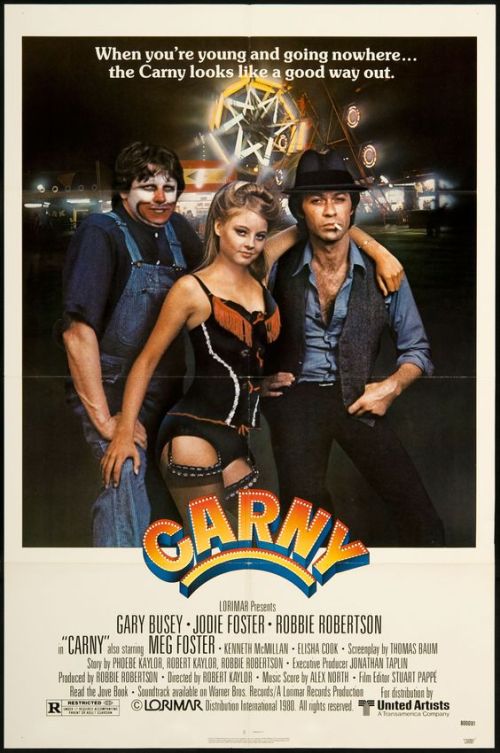
Carny (1980)

By Richard Winters

My Rating: 6 out of 10

4-Word Review: Runaway joins the carnival.

Bored with small town life and an overly-protective boyfriend (Craig Wasson) Donna decides at the age of 18 to break-free of her restraints and travel the countryside by working in a carnival. She befriends Frankie (Gary Busey) who works as a clown and she gets a job as one of the strippers before eventually working the string joint booth while slowly adapting to the shady ways of the gypsy-like lifestyle.

The carnival atmosphere is well-recreated and was directed by Robert Kaylor who years earlier helmed the documentary Derby, which was a behind-the-scenes look at life on the roller derby circuit and this film works much the same by fully immersing the viewer into the dark aspects of a tough environment while also exposing the personalities of the people who work in it. The revealing story manages to be both hard-hitting and intriguing.

The tone though stays too much on the negative side until the viewer feels almost bombarded with one unpleasant situation after another. There’s never anything redeeming and you’re made to feel tense waiting for the next uncomfortable twist to come about, which gets overdone. Certainly there had to be some good times and bonding that occurs and the film lightly touches on this at the very, very end, but I felt more of that should’ve been sprinkled in throughout.

There’s also too many con-games and underhanded shenanigans making me wonder if all carnivals were really this bad , or is it simply playing-it-up for dramatic purposes. The ending in which everyone works together to pull off an elaborate con on a meddling crime boss (Bill McKinney) comes off too much like a poor rendition of The Sting. Some potentially intriguing storylines get dropped; like what happened to Donna’s psycho boyfriend when he finds out that she has left him? I was fully expecting him to come back into the picture at some later point once he tracked her down, but instead he gets forgotten.

Robertson is a famous songwriter and musician whose been around since the ‘60s, but he grew up working in the carnival circuit and helped put his real-life experiences and insights into the script. His performance is okay, but the soundtrack he composed for the film is too upbeat and does not jive with the dark, moodiness of the plot.

The performances are the best thing. Foster usually plays characters that are confident, but here she is someone who is unsure of herself only to acquire an edge as the story progresses. Kenneth McMillan is engaging as the nervous, stressed-out owner and Meg Foster is good as a woman who’s become hardened from being on the road too long. Gary Busey is a standout too even though he sometimes gets mocked today for his weird behavior off-screen, but this guy was at one time considered a serious up-and-coming star and his presence here shows why.

My Rating: 6 out of 10

Released: June 13, 1980

Runtime: 1 Hour 47 Minutes

Rated R

Director: Robert Kaylor

Studio: United Artists

Available: DVD (Warner Archive), Amazon Video, YouTube

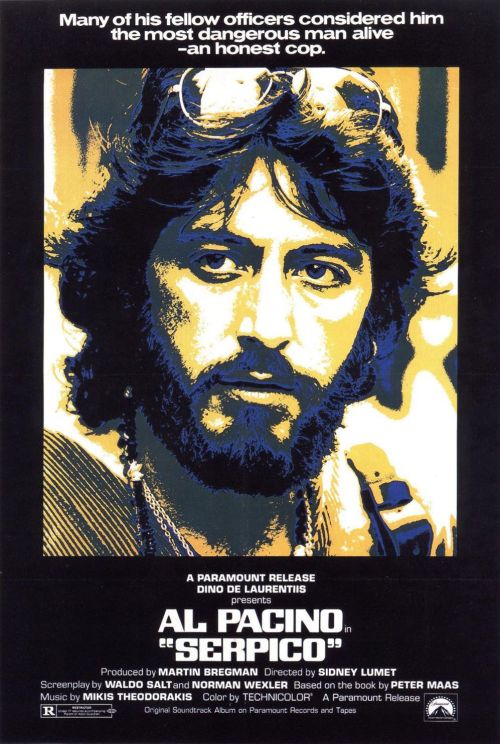
Serpico (1973)

serpico

By Richard Winters

My Rating: 8 out of 10

4-Word Review: A cop fights corruption.

One of the followers of this blog has requested that I review this movie, so today we take a look at Frank Serpico (Al Pacino) a policeman who fought against corruption that plagued New York’s police department during the ‘60s. Even though many of his partners on the force would accept under-the-table payouts from criminal elements in exchange for ‘looking-the-other-way’ he wouldn’t and when he would tell his superiors about it nothing would get done. Instead they would transfer him to other precincts only for him to find the same problems there. It was only when he decided to report the issue to the New York Times that people started to take action, but in the process he also made himself a mark and vulnerable to having his unhappy comrades set him up to be shot while on-duty.

The film is based on the Peter Maas novel, which in turn recounts the life of the actual Frank Serpico and the events he went through while working on the force between the years of 1959 to 1972. Not only does he remain alive today, but according to recent reports is even considering, at the ripe old age of 79, a run at political office. Equally interesting is that he and Pacino roomed together during the summer that this was filmed and became close friends.

It’s been years since I’ve read the novel, but I felt this film sticks closely to what actually happened and the always reliable Sidney Lumet manages to keep things exciting and insightful. The dialogue is sharp and the on-location shooting, which was done in every borough of New York except Staten Island, gives the viewer an authentic feel of the city as well as the police environment.

The film also does a successful job at showing the drawbacks of accepting bribes without ever getting preachy or heavy-handed. One might think, like many of Serpico’s partners do, that taking some kickbacks isn’t that big of a deal, but then the film shows in one brief moment a policeman shoving another man’s head into a toilet when he doesn’t ‘pay up’, which hits home how the police become no better than organized crime who would notoriously demand ‘protection money’ from business owners.

The only thing I didn’t like was the music, which was too loud and jarring. Fortunately it’s put in only sparingly, but its melodic quality takes away from the grittiness and the film works far better by simply relying on the ambient sounds of the locations that the scenes are in. In fact this is one movie that could’ve done fine without any music at all.

Pacino is fantastic and I loved how the character starts out as this clean shaven, boyish looking fellow only to grow into a bearded, long haired guy as the story progresses, which symbolically connects with the way he becomes savvier to the system. The character also sports earrings long before it became vogue for males to wear them.

Tony Roberts does well as one of the few cops that sides with Serpico and tries to help him in his fight and F. Murray Abraham can be spotted near the end as a member of a vice squad who tries setting Serpico up to be killed. This movie also marks the film debuts of character actors Alan Rich and Kenneth McMillan. In my mind this is also the debut of Judd Hirsh. Some sources state that his first onscreen appearance is in Jump, which came out two years earlier, but I watched that film and couldn’t spot him anywhere, but her I was able to spot him right away.

My Rating: 8 out of 10

Released: December 5, 1973

Runtime: 2Hours 10Minutes

Rated R

Director: Sidney Lumet

Studio: Paramount

Available: VHS, DVD, Blu-ray, Amazon Instant Video, YouTube

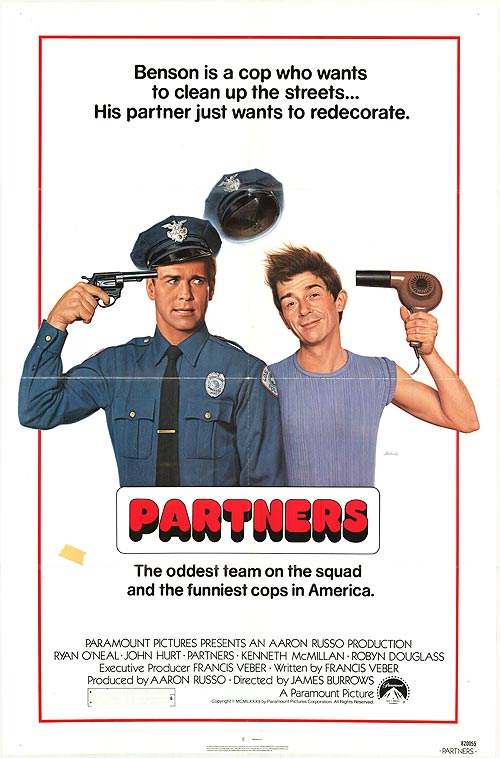
Partners (1982)

partners

By Richard Winters

My Rating: 2 out of 10

4-Word Review: Pretending to be gay.

A serial killer targeting gay men is on the prowl. When one of his victims turns out to be the son of an influential politician pressure is put on the police force to find the culprit. The police chief (Kenneth McMillan) feels he has no choice but to pair Sgt. Benson (Ryan O’Neal) a straight cop with Kerwin (John Hurt) who is a gay desk clerk at the station. They are to masquerade as a gay couple in hopes of infiltrating the gay underground and find clues to the elusive killer, but their contrasting personalities and lifestyles threaten to blow their cover before they can make headway.

This film was controversial at the time of its release for its overuse of gay stereotypes and there are indeed some especially at the beginning, but the film’s biggest offense is that it is just plain boring. The idea that two cops could be forced to pretend to be a gay couple or have one of them pose naked for the cover of a gay men’s magazine as part of their investigation is dubious enough, but had it been funny I might have forgiven it. Unfortunately this thing can’t even elicit a few chuckles.

The idea that Kerwin would automatically fall in love with Benson while working together simply because he is another man is absurd and makes about as much sense as a heterosexual male falling for every woman that he meets, which of course doesn’t happen. The Benson character is also quite callous and disrespectful to Kerwin while showing blatant homophobic tendencies and being a confirmed ladies’ man, so I didn’t see what there was about him that Kerwin would have fallen in love with anyways.

Benson’s transformation to being more sensitive to gays and their issues during the course of the story might have been more compelling had it been better written. However, his liberal use of the word ‘faggot’ makes the film seem quite dated and wouldn’t be heard in a movie today especially from a character that is supposedly a protagonist.

Hurt plays the gay caricature well, but the idea of placing someone on such a dangerous mission without having any undercover experience of even knowing how to use a gun seemed stupid and unrealistic. Out of all the characters McMillan’s comes off best and he even manages to be slightly amusing, but unfortunately isn’t seen enough. Character actors Jay Robinson and Sydney Lassick can be spotted very briefly.

This was intended to be a parody of Cruising, which was released 2 years earlier and was a much more serious and graphic look at a true life killer of gay men. That film starred Al Pacino and will be reviewed next Monday.

My Rating: 2 out of 10

Released: April 30, 1982

Runtime: 1Hour 32Minutes

Rated R

Director: James Burrows

Studio: Paramount

Available: VHS, DVD

Eyewitness (1981)

eyewitness

By Richard Winters

My Rating: 4 out of 10

4-Word Review: Janitor loves news reporter.

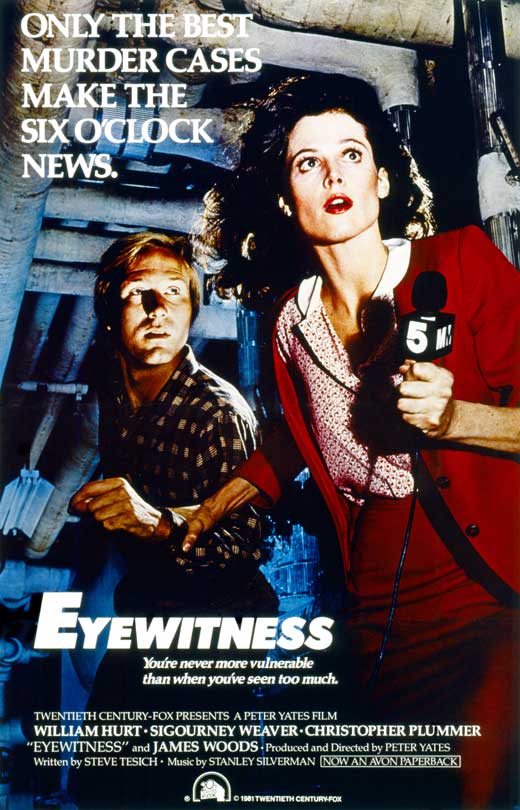
Daryl (William Hurt) is a nighttime janitor at a large Manhattan office building. He spends his otherwise lonely existence obsessing over a local news reporter Tony Sokolow (Sigourney Weaver) and records every news broadcast she is in and watches them each night when he gets home. Then a murder occurs in his office building and Tony covers it for her program. Daryl tries to use his inside knowledge to get closer to Tony, but is reluctant to tell her all the information he knows since he fears that it was his friend Aldo (James Woods) who committed the crime.

Hurt, who usually plays the intellectual type, does well here in the low-key role. Weaver is also excellent doing what she does best which is playing a tenacious no-nonsense woman who can take care of herself. My favorite part with her is when she is accosted by a couple of men with guns, but doesn’t scream, keeps her composure, and manages to get away.

The romantic angle is the film’s strong point. Tony’s on-camera interview with Daryl when she tries to get more information out of him, but he instead gushes about his undying love for her is funny. It is refreshing that when Daryl tells Tony about how he obsesses over her she doesn’t freak out and consider him a stalker, but instead is charmed by it. The two use each other for their own purposes, but the viewer is giving the impression that these are genuinely nice people who just have very contrasting personalities and approaches, which is what makes the budding relationship interesting. However, having them go to bed together and confirm their affections for each other seemed anti-climactic as it was more intriguing wondering if Tony really was starting to have feelings for Daryl, or just using him to get information and the film should have stayed at this level until the very end.

The mystery portion gets lost in the shuffle. The film is slow with very little tension. There are a few good action moments, but there needed to be more. The scene where Daryl almost gets crushed in a trash compactor had definite potential, but needed to be played-out longer. The part where he and Tony are attacked by a dog is very intense, but the climatic sequence where Daryl is chased by the killer through some horse stalls is certainly slick and well-shot, but it comes too late and I had already become bored and detached with it. The identity of the killer was a definite surprise, but it is also a bit preposterous and a little too convenient in the way it somehow manages to tie all the characters into it especially Tony.

Director Peter Yates does some excellent on-location shooting of New York City especially with the crowded streets and neighborhoods as well as Central Park, but the musical score is sparse and lacking. There is a pleasing jazzy score near the beginning that has a nice easy going beat to it, but then outside of a few tense moments there is nothing. This creates a film that is too quiet. Adding an urgent score could’ve helped make it more compelling, or at the very least given it more energy and personality.

There are a lot of familiar faces in supporting roles, but the majority of them are wasted. Morgan Freeman and Steven Hill as the police investigators who banter endlessly
with each other are dull and useless. Kenneth McMillan as Daryl’s handicapped father is dynamic, but pointless to the story as a whole. Christopher Plummer is always reliable, but he has done better. James Woods is good because he is a master at playing unhinged characters and I liked the casting of Irene Worth as Tony’s mother simply because she looked almost exactly like what Sigourney would end up looking when she reaches that age. This is also a great chance to see Pamela Reed in an early role as Daryl’s fiancée.

The film ends up biting off more than it can chew and the idea of mixing a cutesy romance with a murder mystery doesn’t gel and leaves a sterile effect in both areas.

My Rating: 4 out of 10

Released: February 13, 1981

Runtime: 1Hour 43Minutes

Rated R

Director: Peter Yates

Studio: 20th Century Fox

Available: VHS, DVD, Netflix streaming