Tag Archives: Jeff Bridges

The American Success Company (1979)

americansuccess

By Richard Winters

My Rating: 7 out of 10

4-Word Review: Taking on different personality.

Harry (Jeff Bridges) is a highly passive man that gets routinely dominated by both his boss (Ned Beatty) and wife (Belinda Bauer), who also happens to be his boss’ daughter. Determined to change his ways he decides to emulate the personality of a local tough-guy, who always seems to get his way and most importantly get the women. He works with a local prostitute (Bianca Jagger) to improve his bedroom skills and then finally ‘introduces’ himself to both his wife and boss. Surprisingly the ‘new Harry’ works to perfection as his domineering father-in-law learns to back-off and no longer humiliates him. His wife too likes the change, but he plays the part so well she refuses to believe it’s the same person. When he tries to go back to his old self she rejects him wanting only to be with the tough guy who she insists must be a totally different person and she can only be happy if she’s with him and no one else.

Back in 1978 while filming Winter Killswhich also starred Bridges and Bauer, the funding for the project, which was through AVCO Embassy Pictures, was pulled leaving the shooting of the film only half completed. Director William Richert then decided to do this film in-between, using much of the same cast, in order to bring in the extra money he needed to complete the other one. The script was written in 1974 by Larry Cohen who intended it to be a vehicle of Peter Sellers, but at the time Sellers was in a career lull having starred in a lot of box office duds, so investors didn’t want to take a chance on it and Cohen was eventually forced to sell the script, which remained in turn-over until Richert finally decided to take it on. While the film failed to turn a profit and was barely released, Cohen often stated that the changes Richert did to the script helped ‘ruin’ it, he was still able to make enough through the selling of the distribution rights to resume the shooting of Winter Kills and get it completed.

On the whole there’s enough directorial touches to keep it engaging and Richert, who has a small role as one of the employees of the firm whose constant leering grin is great, clearly knows how to make it entertaining enough despite the story’s absurdities. The setting though of Munich, this was apparently one of the stipulations he had to agree to in order to get it made, is off-putting especially when the plot revolves around corporate America and is a satire on the American mindset. The heavy use of a white color makes the office interiors seem almost like a hospital and Ned Beatty, who was only 41 at the time, but with his hair dyed a tacky white color to come-off as an overbearing elderly man in his 70’s, doesn’t work at all. Since John Huston was also in Winter Kills and they were using the same cast from that one to do this one then he should’ve been cast in the part especially since he was really old and better at playing dominating characters.

Bridges is fun as he plays against his good-guy image. Some critics have considered him a bland actor whose characters are at times ‘too good to be true’, so having him turn around and be overly passive and downright wimpy who jumps in terror at his neighbor lady’s pet poodle is definitely amusing. However, the transition to the brazen alter ego is too quick and seamless. If he’s truly timid at heart then that trait should trickle through even when he’s pretending to be someone else, which doesn’t happen here, but should’ve. No explanation about how he gets this big colorful tattoo on his chest, which he wears while being the tough guy, nor how he’s able to remove so quickly when he goes back to being himself.

The biggest plus is Bauer, who started her career in Australia where she studied ballet and competed in beauty contests before coming to the US. Here she becomes the sole reason to watch the film as she’s not only gorgeous, but displays a delightful way of morphing from a spoiled rich girl persona, to demanding wife, and then back to submissive woman. Her accent helps enhance her character and plays off of Bridges well. The only issue is if she couldn’t stand her husband why did she marry him in the first place? This is a highly attractive women born into money, so there was no need to settle, so what was it about his original personality that she liked in order to get hitched? If she craved a more domineering man then why not go after that type of guy in the first place? The film fails to explain this crucial point and thus ultimately makes it shallow and empty-headed.

My Rating: 7 out of 10

Released: September 28, 1979 (Test Screening)

Runtime: 1 Hour 31 Minutes

Rated PG

Director: William Richert

Studio: Columbia Pictures

Available: DVD, Amazon Video
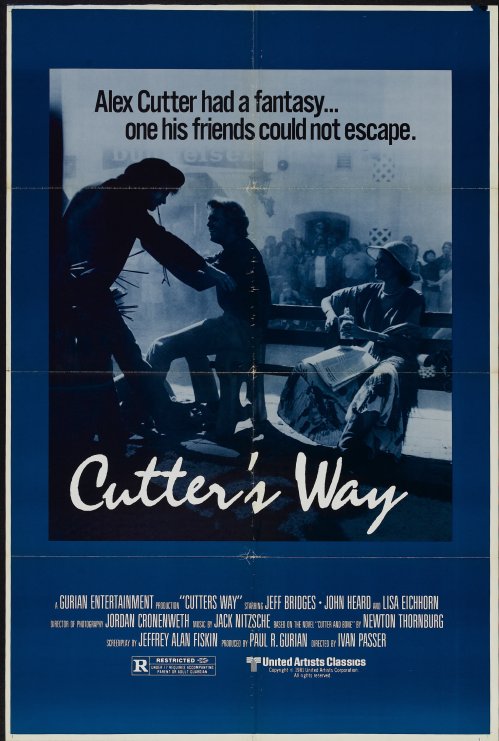
Cutter’s Way (1981)

cutter1

By Richard Winters

My Rating: 6 out of 10

4-Word Review: Friends help catch murderer.

Richard Bone (Jeff Bridges) driving his old beat-up car, a 1966 Austin-Healey, which breaks down in a dark alley during a late night rain storm. From behind comes another vehicle where the driver dumps something into a nearby garbage can that turns out to being the dead body of a young girl. Since Bone’s car is still at the crime scene the next day when the authorities arrive he quickly becomes suspect number one. Bone’s friend, Alex Cutter (John Heard), a Vietnam vet struggling with alcoholism and PTSD, takes on the process of investigating the case to help get his friend out of trouble. The two soon hone in on a rich local businessman named J.J. Cord (Stephen Elliot) whom Bone swears was the man he saw driving the car that dumped the body.

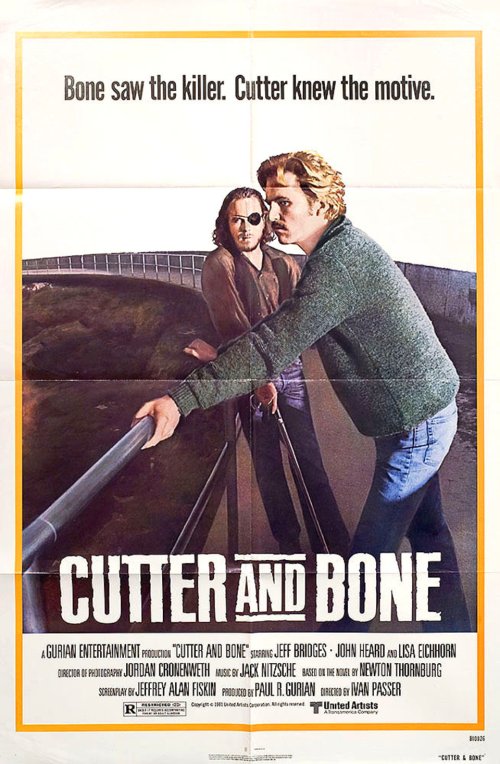
The film is based on the 1976 novel ‘Cutter and Bone’ by Newton Thornburg. Producer Paul Gurian bought the rights to the book and asked struggling screenwriter Jeffrey Alan Fiskin if he’d be interested in adapting it to a screenplay. Since Fiskin was broke at the time, he last sold a screenplay, Angel Unchained, 10 years earlier, he was forced to shoplift the book in order to read and adapt it. David Field from United Artists was open to backing it for $3 million, but only if they could find a big-name star. Gurian then went to the home of Jeff Bridges, where he got attacked by one of Bridges’ dogs thus motivating Bridges to accept the part unseen in order to avoid a possible lawsuit. The film was released in the Spring of ’81 where it fared poorly with the critics and the studio was ready to scrap it only for it to pick-up good reviews a few weeks later. The studio then decided to place the film in their ‘classics’ division where it got retooled from it’s former title of ‘Cutter and Bone’, which they felt made it seem like a comedy about surgeons, to it’s current one and then rereleased it in the fall of that year were through good word-of-mouth it managed to recoup a modest profit.

Director Ivan Passer has stated that his motivation for directing the film was to go against what he felt was the ‘cripple mania’ at the time where film characters would get maimed usually through being in the war and then come back better, stronger people. Here he wanted to show that it didn’t make them better, but instead more dangerous.

While Heard certainly gives a good performance, it was originally intended for Richard Dreyfus, I felt he was too much of a caricature of an angry, wounded war vet and I didn’t find him interesting at all. Bridges was his usual transparent self and thus the interactions between two not all that captivating. Elliott is rather blah as well as the bad guy since for most of the runtime he’s only seen from a distance and never has any lines of dialogue until the final 9-minutes, though this does at least give him a certain creepy/mysterious vibe. Out of everyone I was most intrigued with Lisa Eichorn who plays a woman who bounces between the two friends and seems to want to play-off them both.

The emphasis is on the character study with long takes of Heard snarly at everybody he meets including the next door neighbor’s whose car he crashed into and the the subsequent police report, which goes on too long and doesn’t help the film or story move forward. The mystery isn’t as intriguing as it could’ve been because elements of it fall into place a little too conveniently. Bridges witnesses the killer driving away and then right away the next day spots the guy in a parade. Then a couple of days later the friends are talking about the case at a restaurant where the guys’ wife (Patricia Donohue) is sitting right next to them and overhears everything, which again is letting things fall too neatly into place without much effort.

There’s also questions about why the killer didn’t just run Bridges over with his car when he had the chance in order to avoid any witnesses. Also, Bridges is able to recognize the killer/driver, but when I saw the scene it was impossible to see the face of the driver. The viewer’s perspective should be the same as the protagonist, so if he’s able to get a good look at the culprit then we should’ve too.

Spoiler Alert!

Since everything is tied into circumstantial evidence I was hoping for some unexpected twist at the end. For instance having Bridges’ house get burnt down not because of Cale like they initially thought, but instead from the neighbors still angry over their car. The final confrontation in which Bone apparently shoots Cale (the screen fades to black and we only hear the noise of the gun going off) leaves more questions than answers. Does Bone and to an extent Cutter, who was there in the room with him, now go to jail for this? Seems like that should’ve been confirmed one way or the other and leaving it vague is like showing the viewer only half of the story.

cutter2

My Rating: 6 out of 10

Released: March 20, 1981

Runtime: 1 Hour 49 Minutes

Rated R

Director: Ivan Passer

Studio: United Artists

Available: DVD, Blu-ray, Amazon Video, Pluto, Freevee, Roku Channel, YouTube

The Last American Hero (1973)

lasthero

By Richard Winters

My Rating: 7 out of 10

4-Word Review: He follows his dream.

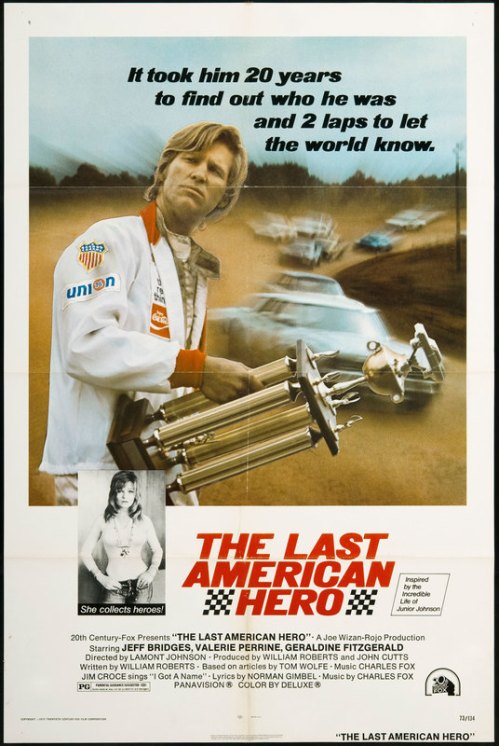
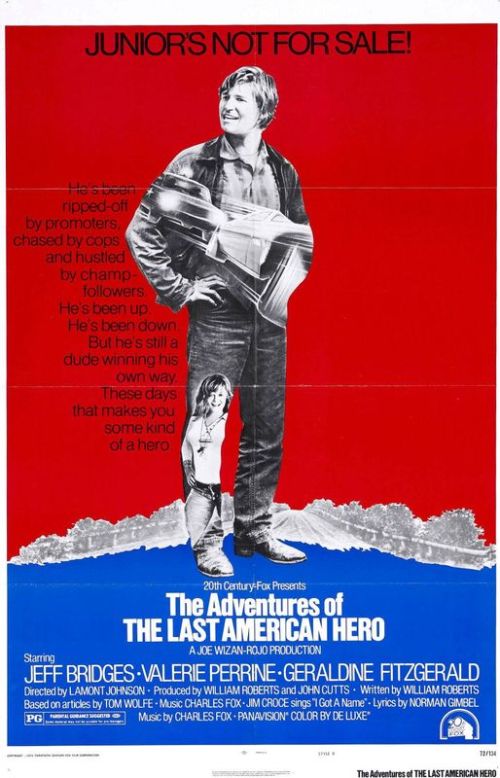
Junior Jackson (Jeff Bridges) works in his family’s moonshine business as a driver who transports the liquor and uses his superior driving skills especially his patented ‘bootlegger-turn’ in which to avoid capture he gets the vehicle to make a 180-degree turn by using the emergency brake, which then allows his car to go speeding off in the opposite direction. However, the authorities are able to catch-up with his father (Art Lund) and they throw him in jail for 11-months. With no moonshine business Junior is forced to find other means for an income, so he decides to try and turn his driving skills into a profit venture by entering into a demolition derby run by Hackel (Ned Beatty). He does well in this and eventually moves up to the higher levels and makes enough money for him to decide on turning it into his career, but his family does not approve as they feel it’s too dangerous. Junior is also forced to buy his own race car and pay for his own pit crew, which causes him to go back into the bootlegging business as a runner all to the disapproval of his father who feels it will just lead Junior into the same prison that he was in.

Overall this is one of the best bio’s out there and impeccably filmed and edited by actor-turned-director Lamont Johnson, who appears briefly as a hotel clerk. Johnson’s directing career was a bit spotty, he also did notorious clunkers like Lipstick and Somebody Killer Her Husbandbut this one is virtually flawless and there’s very little to be critical about on the technical end. The racing footage is both intense and exciting and one of the few racing movies where I was able to follow the race as a whole and not just be bombarded with a lot of jump cuts. I also appreciated how it captures the pit stops and the different conversations that the driver has with his crew during these moments and how sometimes this can be just as intense in its own way. The on-locations shooting done in and around Hickory, North Carolina as well as some of the neighboring race tracks during the fall of 1972 helps bring home both the ambiance and beauty of the region.

For me though what really stood out was Junior’s relationship with his family and how they were not supportive, at least initially, to his dreams as a racer and forcing him to have to pursue it on his own. Many times people who have ambitious goals don’t always have their friends and family on the same page with it and the road to success can definitely have its share of loneliness while also testing one’s own inner fortitude. One of my favorite scenes, that goes along with this theme, is when Junior is inside a K-mart and comes upon a recording booth that allows him to make a voice tape message that can be sent via the mail to one’s family or friends. Junior conveys into the microphone what he wants to say to his family, but ultimately seems to be talking more to himself than them, as a kind of self therapy to release the inner tensions that he’s been feeling, and subsequently never actually sends it out.

The acting is top-notch particularly by Bridges. Normally he’s good at playing mellow, level-headed characters, but here does well as someone who at times is quite volatile and caustic. There’s great support by Beatty as an unscrupulous race track owner, Ed Lauter as a highly competitive owner of a competing racing teams as well as Valerie Perrine as a woman who enjoys bed-hopping between different men, sometimes with those who are friends with each other, and yet completely oblivious with the drama and tensions that this creates. William Smith is good as a competing racer and while his part is small the scene where he walks in on Junior sleeping with his girl (Perrine) and the response that he gives is great. I thought Geraldine Fitzgerald, who plays Junior’s mother, was excellent and her Irish accent somehow effectively made to sound southern, but she should’ve been given more screen time.

The story is based on an Esquire article written by Tom Wolfe that was entitled ‘The Last American Hero was Junior Jackson. Yes!’, which in turn was based on NASCAR racing champion Junior Jackson (1931-2019) who also served as the film’s technical advisor. The movies pretty much stays with the actual account, but does change one pivotal point in that it has the father going to jail when in reality it was Junior who was sentenced to 11-months in 1956. Why this was changed I don’t know, but it usually helps the viewer become more emotionally connected to the protagonist when they see them going through the hardship versus someone else, so having Bridges spend time in the slammer would’ve made more sense. The film is also famous for its theme song ‘I Got a Name’ sung by Jim Croce, but this song has been played so much on oldies radio that one no longer connects it with the film and in fact when it does get played it takes you out of the movie because it reminds you of somewhere else where you’ve first heard it, which most likely wasn’t this movie.

lasthero2

My Rating: 7 out of 10

Released: July 27, 1973

Runtime: 1 Hour 35 Minutes

Rated PG

Director: Lamont Johnson

Studio: 20th Century Fox

Available: DVD, Amazon Video, YouTube

Lolly-Madonna XXX (1973)

lolly3

By Richard Winters

My Rating: 3 out of 10

4-Word Review: Two rural families feud.

Rod Steiger is the patriarch of the Feather family while Robert Ryan heads the Gutshall household. Both families live next to each other in poor ramshackle shacks in rural Tennessee. Neither side gets along and both will occasionally play tricks on the other in order to try and get the upper-hand. One day the Gutshall boys send a letter to the Feathers signed by a Lolly Madonna even though that woman doesn’t really exist and was created to get the Feathers away from their whiskey still so the Gutshalls could destroy it. However, two of the Feather boys, Thrush and Hawk (Scott Wilson, Ed Lauter) spot Ronnie (Season Hubley) sitting at a bus stop in town and think that she’s the mysterious Lolly, so they kidnap her and bring her back to their farm where they hold her hostage. The Gutshalls see them bring in this new girl, but have no idea who she is, so the Gutshall’s daughter Sister E (Joan Goodfellow) sneaks over to the Feather residence to spy on them, but gets accosted and raped by Thrush and Hawk in the process. Now the Gutshalls feel the Feathers need to pay a price and both factions go to war, which causes several casualties.

The screenplay was written by Sue Grafton, better known for her later mystery novels, and based on her book ‘The Lolly-Madonna War’, which was published in the United Kingdom, but never in the U.S. Supposedly the story is a metaphor for the Vietnam War and the horrible destruction of violence, but trying to make a profound statement through the follies of a bunch of stereotyped hillbillies doesn’t work. For one thing they live in homes that look like they were abandoned 30 years ago and drive in rusted pick-ups that seem taken straight out of the junkyard. I realize poor people can’t all live in nice homes or drive fancy cars, but most can at least maintain them a bit better. Also, neither family owns a telephone, but they do have electricity, a refrigerator and even a TV, so if they can have all of those things then why not a telephone too?

Hubley’s character has no real purpose in the story as the Gutshall’s daughter could’ve been raped for a variety of reasons without any stranger needing to be present. She doesn’t do much when she’s there anyways except sit quietly in the background and observe the feuding. Having her fall madly in love with one of the boys, played by Jeff Bridges, and grieve openly when Hawk, the same man who violently kidnapped her just a day earlier, gets injured seems too rushed and out-of-whack to be believable. I’m well aware of the Stockholm Syndrome where victims can over a great deal of time fall for their captors, but this takes that concept to a ridiculous new level.

Despite being top-billed Steiger is seen very little, especially during the first hour and he’s not allowed to chew-up the scenery like he usually does though watching him make a ham sandwich where he applies a massive amount of ketchup is fun. Bridges pretty much takes over things by the end, but for the most part no one actor, despite the plethora of well-known faces, headlines here and if anything they’re all wasted by being locked into roles that are caricatures and indistinguishable from the others.

The pace is slow with an inordinate amount of talking that over explains things that the viewer could’ve picked up on visually. When the action does occur, like the death of Bridges’ first wife, played by Kathy Watts, it comes off as corny. The animal lovers will not like the scene where Steiger shoots a horse looped together from several different angles and in slow-motion, nor the segment where pigs get tied to a post and scream in panic as a ring of fire gets set around them. The final shootout though is the biggest letdown as the film fades-out before it’s over, so we really never know who survives it and who doesn’t.

Fred Myrow’s haunting score is the only thing that I liked, but everything else falls flat. If you’re looking for a movie with a anti-war/anti-violence message there are hundreds of others to choose from that do it way better.

My Rating: 3 out of 10

Released: February 21, 1973

Runtime: 1 Hour 45 Minutes

Rated PG

Director: Richard C. Sarafian

Studio: MGM

Available: DVD-R (Warner Archive), Amazon Video, YouTube

Kiss Me Goodbye (1982)

By Richard Winters

My Rating: 5 out of 10

4-Word Review: Her dead husband returns.

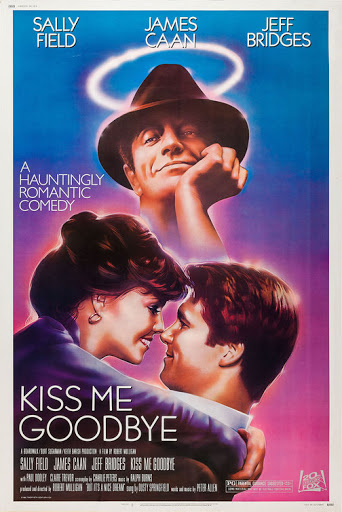
Three years after the death of her husband Jolly (James Caan) Kay (Sally Field) decides to move back into the house where her husband met his untimely fate when he fell down the home’s marble staircase. As she and her mother (Claire Trevor) get the home prepared for the arrival of her fiance Rupert (Jeff Bridges) she suddenly sees the vision of Jolly’s ghost in front of her. Only she can see, or hear it, which causes a great deal of confusion to those around her who all think she’s gone completely crazy.

The film is a loose remake of the Brazilian hit Dona Flor and Her Two Husbands, which in itself was based on the 1966 novel of the same name by Jorge Amado although this one does not have the erotic edge that made that film so famous. The comedy takes too long to get going, is a bit heavy-handed at times, and puts no new interesting spin on the ghost theme making it seem like just another modern updating of The Ghost and Mrs. Muir.

The introduction of the ghost should’ve occurred after the couple was already married instead of before as it offers both Rupert and Kay too much of an easy out and the stakes needed to be higher. Kay still seemed very much in love with Jolly as she had a complete shrine of him in one of their rooms, so it would seem once the ghost of him arrived she’d have second thoughts of going through with the marriage even though that’s not what happens. As for Rupert it would’ve made more sense had he just walked out of the situation altogether since all the red-flags where there even before the ghost came about that she wasn’t completely over her first marriage and unable to give Rupert the full attention that he  wanted.

The cast is game for the most part although I felt Bridges looked much too boyish here almost like he was still in high school. Caan though is quite engaging and the one element that holds it all together even though he apparently disliked doing it. It’s also great seeing Claire Trevor in her first film appearance in 15 years and the outfits and hats that she wears look quite chic. Paul Dooley has a good funny bit at the end playing a former priest who tries to exorcise the ghost out of the home, which he mistakenly thinks possesses Kay’s dog (Shakespeare).

Much to my surprise I ended up laughing much more than I thought I would. Two of my favorite moments occurs when Rupert and Kay go traveling to a country lodge and stop off at a cafe where Rupert pretends to have a conversation with the ghost much to the confusion of a young boy (Barret Oliver) sitting at the table next to him. The fight that the two have later on while at the lodge, which causes the break-up of another couple (Alan Haufrect, Maryedith Burrell), who start to take sides, is quite good too.

Spoiler Alert!

I was laughing so hard at points I was ready to give this a 7 or 8 rating, but then it gets ruined by the stupid ending. The idea that the ghost would agree to just leave and never come back again was too convenient. Why would he have bothered to come back to this life at all, if he was going to be gotten rid of so easily?

Having Rupert slip down the same staircase that took Jolly’s life looks cheesy and unintentional funny. Jolly’s death was cheesy enough, but to do it a second time with someone else was dumb and what’s worse is that Rupert, even when he smashes his head onto the hard ground, comes back to life with no injuries. Why even have this scene at all if there was no point to it?

A better ending would’ve had Rupert killed the same way as Jolly and then come back as a ghost just like Jolly and then Kay could’ve enjoyed the two men at the same time. Possibly even have the menage a trois that had been tapped into in the first film, but nixed here because it was deemed American audiences would’ve been too prudish to accept.

I also thought it was a bit unbelievable that Jolly had all these affairs behind Kay’s back while he was alive and she seemed to have no clue it was going on. Most married people usually have a sense something isn’t right even if they can’t prove it. Having Kay’s friend Emily (Dorothy Fielding) admit to fooling around with Jolly and Kay not be bothered by it and just go on being friends with her didn’t jibe with me either.

My Rating: 5 out of 10

Released: December 22, 1982

Runtime: 1 Hour 41 Minutes

Rated PG

Director: Robert Mulligan

Studio: 20th Century Fox

Available: DVD

Bad Company (1972)

By Richard Winters

My Rating: 6 out of 10

4-Word Review: Two deserters go west.

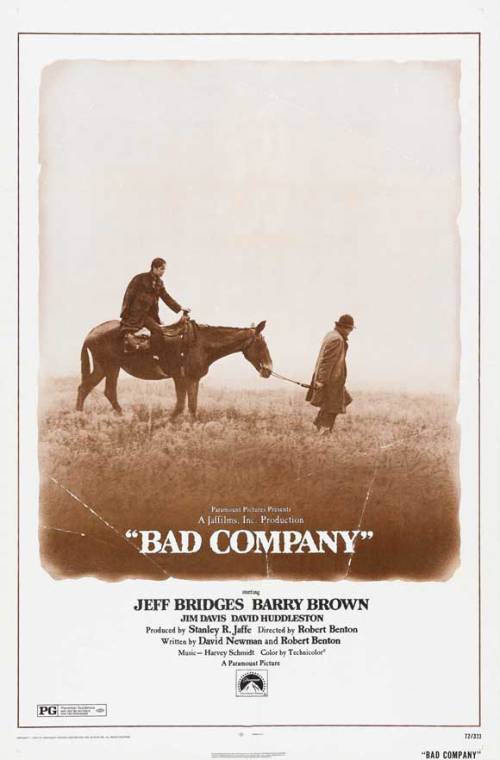
Drew (Barry Brown) is a young man living in the south during the civil war who manages to avoid going into the army by hiding from the soldiers when they come to his family home to retrieve him. After they’ve left his mother (Jean Allison) gives him $100 and tells him to go west. When he gets to St. Joseph, Missouri he meets up with Jake (Jeff Bridges) and the two form an uneasy alliance with Drew even getting invited into Jake’s young gang (Damon Cofer, John Savage, Jerry Houser, Joshua Hill Lewis) of youthful outlaws. The six ride off into the west hoping to find adventure and opportunity, but instead meet hardship and violence.

The film’s stark tone would’ve been more compelling had there not been so many other westerns coming out at the same time with a similar theme. Instead of being this refreshing change-of-pace from the old western serial it just ends up creating new clichés from the then budding revisionist  genre. At certain points it seems almost like a carbon copy of The Culpepper Cattle Company, or even The Great Northfield Minnesota Raid, which star Brown had been in just before doing this one.

The attempt to mix dry humor with harsh reality works fairly well and placing the setting amidst the sprawling wheat fields of Kansas gives it a distinctive look that is perfectly captured through the lens of cinematographer Gordon Willis although the piano score by Harvey Schmidt gets intrusive. This becomes particularly evident towards the end when the two boys get into a gun battle with a gang of outlaws and the action is choreographed to the beat of the music, which only helped to take me completely out of the story. What’s the use of spending so time creating a gritty realism if you’re just going to suddenly sell-out on it in a cheap attempt to be ‘humorous’ and ‘cute’?

The acrimonious friendship between the two leads is what I liked, but the film misses the mark by not focusing on this enough. The supporting cast wasn’t needed and the film should’ve focused solely on the two stars from the beginning making it like ‘the odd couple of the west’, which could’ve been memorable. Instead it meanders and only starts to gel by the third act, but by then it’s almost too late. I also wasn’t too crazy about the wide-open ending either, which offers no satisfying conclusion.

My Rating: 6 out of 10

Released: October 8, 1972

Runtime: 1Hour 33Minutes

Rated PG

Director: Robert Benton

Studio: Paramount

Available: DVD, Amazon Video, YouTube

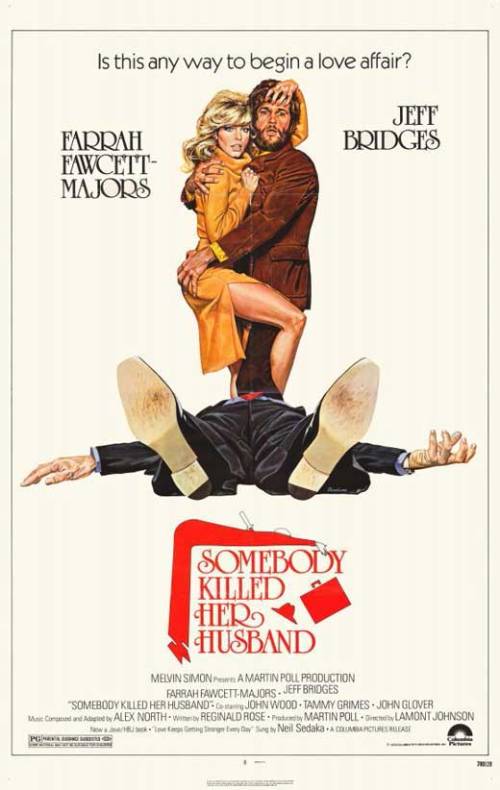
Somebody Killed Her Husband (1978)

By Richard Winters

My Rating: 1 out of 10

4-Word Review: Searching for spouse’s killer.

Jerry Green (Jeff Bridges) is a frustrated, would-be crime novelist who spends his days working as a clerk at a toy store while dictating to himself crime scenarios he plans on using in his stories that no one ever reads. One day he spots a beautiful woman named Jenny (Farah Fawcett) and he starts up a conversation with her, which quickly leads into a relationship. The problem is that she is already married, but that doesn’t stop the two from pledging that they’ll get married anyways until the husband turns up dead and they go on a mad search to find who did it before the police find out and accuse them of the crime.

This film was supposed to be Fawcett’s break-out role that was going to lead her into big-screen stardom, but it was such a disaster that it pretty much killed her aspirations before they even began. A lot of it is her fault as she got out of her ‘Charlie’s Angels’ contract after only one season, which enraged the show’s producer Aaron Spelling who threatened to sue any studio that offered her a film role, so she lost out in getting the starring part in Foul Play and was forced to accept this uninspired thing on the rebound.

She comes off looking like someone not ready for the big-time and in serious need of more acting training. Bridges is the far better performer and the only one that breaths any energy into it to the point that it would’ve been more entertaining had he been alone and Fawcett not appeared at all.

The romance itself is so corny and clichéd it’s embarrassing. Bridges falls in love with her the second he sees her and then after only a few minutes into their first date the two are already expressing their undying love for the other. I was also confused about why the Fawcett’s character would have married her husband (Laurence Guittard) to begin with as he is an arrogant prick of the highest order. My only guess is she did it because he had a lot of money and if that is the case then she shouldn’t act all that surprised or dismayed with what she ended up with.

Director Lamont Johnson had done some reasonably competent stuff in the past as did screenwriter Reginald Rose, who in better times penned the screenplay for Twelve Angry Men, but this thing looks like it was done by clueless amateurs. The first half-hour is so flatly photographed that I was surprised it didn’t immediately raise alarm bells from the studio heads while they watched the daily rushes.

The mystery angle allows for modest interest, but it ends up getting overly convoluted and culminates in a chase through a department store that is too dark and shadowy it’s hard to follow what is going on. Apparently the industry execs thought Fawcett’s celebrity status at the time, as she was coined as being ‘the most beautiful woman in the world’ by one mag, would be enough to smooth over the film’s glaring faults and still attract moviegoers, but in hindsight it should’ve never have been released as the box-office-bomb red flags are quite apparent right from the start.

My Rating: 1 out of 10

Released: September 29, 1978

Runtime: 1 Hour 37 Minutes

Rated PG

Director: Lamont Johnson

Studio: Columbia Pictures

Available: None at this time.

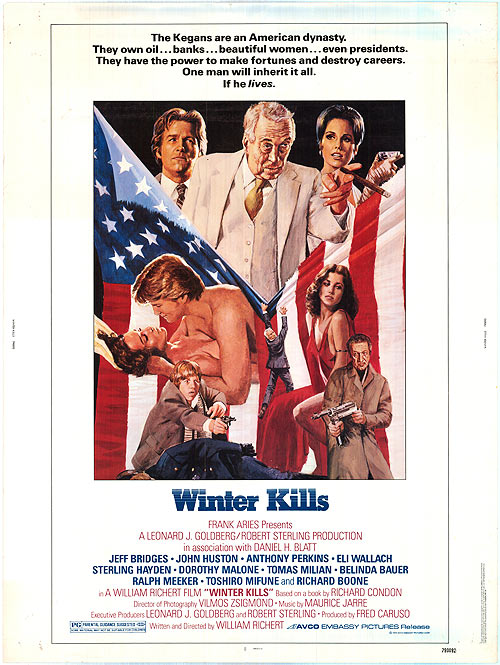
Winter Kills (1979)

By Richard Winters

My Rating: 6 out of 10

4-Word Review: Who assassinated his brother?

19 years after United States President Timothy Kegan is assassinated and an independent investigation concluded that it was the act of a lone gunman, his younger brother Nick (Jeff Bridges) gets a deathbed confession from a man (Joe Spinell) insisting he was the real killer hired by a secret underground organization. Nick goes to his rich father (John Huston) with the news and then decides to do an investigation of his own, but becomes entangled inside a web of lies and deceit that drives him further away from the truth instead of closer.

The film is based on the novel by Richard Condon and in many ways is a stunning filmmaking debut for director William Richert. The cinematography by Vilmos Zsigmond is richly textured with a colorful variety of backdrops, sets and atmosphere making it visually soar while the surreal tone helps give it an added edge.

Unfortunately the film suffered from many behind-the-scenes issues including running out of funding and forcing the cast and crew to put the production on hold while they went overseas to shoot The American Success Company in Germany and then used the proceeds from that one to finish this one. The final result is a fragmented narrative that at times gets too rushed. The story was significantly paired down from the novel, which leaves open a lot of loose ends and it should probably be remade as a miniseries.

The story is also permeated with a lot of dark humor which only makes the viewer even more confused. Some of it is genuinely funny, but it’s unclear what it’s trying to satirize. Certain absurd situations and oddball characters get thrown in for seemingly no reason and takes away from the otherwise compelling storyline while leaving the viewer baffled as to what the point of it was supposed to be and could easily explain why it bombed so badly at the box office during its initial run.

The casting is interesting. Jeff Bridges usually gets stuck in bland, transparent roles and that’s no different here, but he’s surrounded by so many eccentrics that his otherwise vanilla delivery seems refreshing and distinct. Huston is the real star in a bravura performance that steals the film and makes it memorable. There’s also a lot of recognizable supporting players that are on only briefly and if you blink you’ll miss them. This includes an uncredited appearance by Elizabeth Taylor who comes on near the end and has no lines of dialogue, but does clearly mouth the words ‘son-of-a-bitch’.

If you are looking for something that is offbeat, but still intriguing then this is well worth the effort. If it weren’t for its misguided humor this thing could’ve really had an impact although it does reveal its cards too soon and I was able to guess the twist ending long before it actually happened, but as a whole it has its moments and a potential cult following or sure.

My Rating: 6 out of 10

Released: May 11, 1979

Runtime: 1 Hour 26 Minutes

Rated R

Director: William Richert

Studio: AVCO Embassy Pictures

Available: DVD, Amazon Video
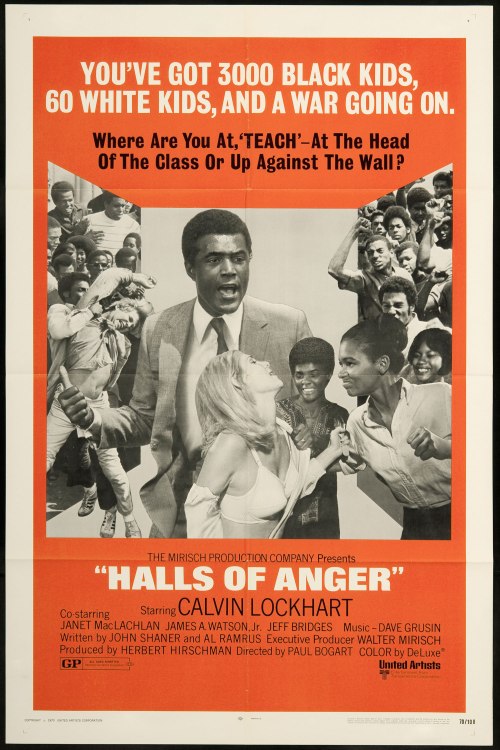
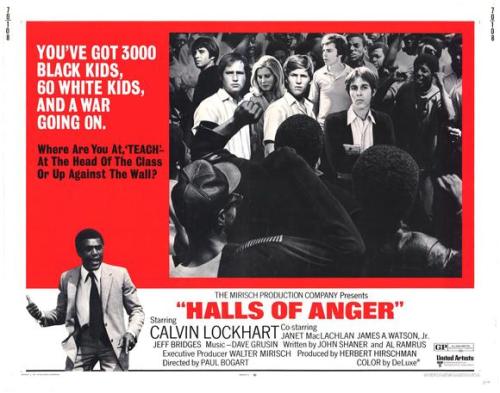
Halls of Anger (1970)

By Richard Winters

My Rating: 4 out of 10

4-Word Review: High school student integration.

Quincy Davis (Calvin Lockhart) is a respected educator who’s asked to transfer to a predominantly black school where it will be his duty to welcome in white students into the mix. Things do not go smoothly and Davis finds himself at the center of many heated confrontations as the black students resent the new white kids and try to make life miserable for them hoping that they will eventually give up and leave.

The film starts out interestingly enough and I found myself caught up in the plight of these students, both black and white, and wondering how they were eventually going to learn to get along. So many films from that period dealt with the opposite angle by examining the difficulties of black kids integrating into a white school making this reverse perspective a refreshing change of pace by showing how racism and hate can come from both ends.

Unfortunately not a lot happens. The film’s poster conveys the idea of rioting in the halls and physical altercations, but those things prove to be quite mild. There is one brief segment where a group of black girls gang up on a white woman (Patricia Stich) inside a locker room and strip off her clothes in an effort to see if she is ‘blonde all over’, but that is about it.

In fact the only interesting aspect to the film was the behind-the-scenes discord and how the filmmakers didn’t really practice what they preached onscreen. According to an August 1970 Life magazine article the black extras where paid only $13.20 a day while the whites got $29.15. The dressing rooms were segregated and director Paul Bogart proved indifferent towards the black performer’s concerns by refusing to hear out any of their complaints with regards to the script.

The only point to watching the movie is to see young stars-to-be in some early roles. I especially got a kick out of Rob Reiner with a full head of hair and no mustache and seeing Ed Asner as a Phy Ed. teacher who tries very ineffectually to break up a fight. Jeff Bridges is also on tap as one of the white students and he should’ve been made the star as his performance is quite effective and it would’ve been a stronger film had he been given the most screen time.

My Rating: 4 out of 10

Released: April 29, 1970

Runtime: 1Hour 36 Minutes

Rated GP

Director: Paul Bogart

Studio: Columbia Pictures

Available: DVD-R (MGM Limited Edition Collection), Amazon Video

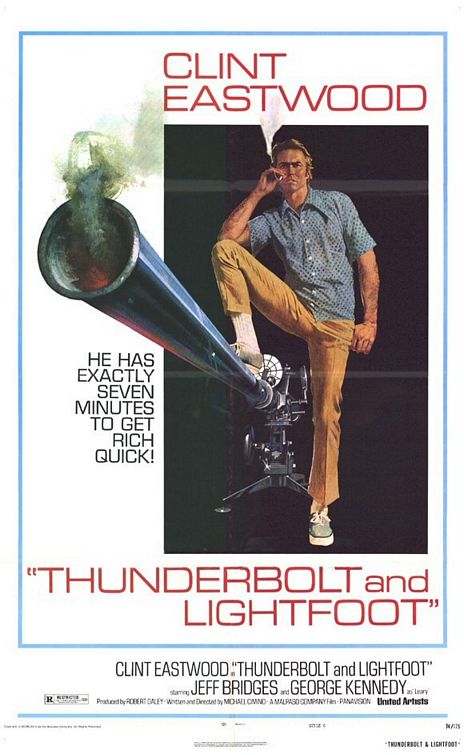
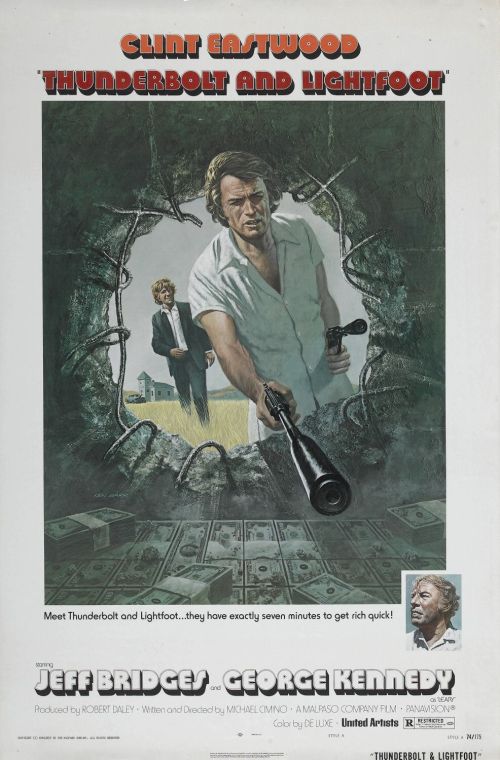
Thunderbolt and Lightfoot (1974)


By Richard Winters

My Rating: 8 out of 10

4-Word Review: The one room schoolhouse.

Thunderbolt (Clint Eastwood) is a former bank robber hiding out as a Montana preacher while trying to avoid Red (George Kennedy) and Eddie (Geoffrey Lewis) who are his former crime partners that mistakenly believe he double-crossed them. One day they manage to catch up with him and try gunning him down during one of his church services. Thunderbolt escapes by hopping into a car driven by Lightfoot (Jeff Bridges). Despite their contrasting temperaments and ages of the two end up hitting-it-off and even manage to bring Red and Eddie into the fold once it’s explained to them that Thunderbolt hadn’t sold them out. Now the four plan to rob the same bank again using a 20 millimeter cannon to break into the safe.

This was the Michael Cimino’s first foray behind the camera after having success co-writing the screenplays to Silent Running and Magnum Force.  For the most part it’s a success and I particularly enjoyed the way he captures Montana’s majestic landscape, which helps add a strong flavor to the story. Some of the comical bits and throwaway lines are hilarious and gives the film an edge over the usual bank robbery storyline.

The drawback is that like with Cimino’s other films it takes too long for the story to get going. The Thunderbolt’s backstory doesn’t get explained until almost 50 minutes in and we never learn much of anything about Lightfoot or why he would simply appear almost out of nowhere in this tiny, isolated town for literally no reason. There are certain scenarios that get introduced, but offer no payoff and the robbery itself gets pulled off a little too easily while not taking enough advantage of its unique premise.

The acting though is uniformly excellent including Bridges who is at his most engaging and even looks weirdly sexy when disguised as a woman and I loved the part when he talks to himself in the mirror. Kennedy gets one of his better post Cool Hand Luke roles as the cantankerous Red and Lewis is funny as his dim-witted partner.

The film also has some great bits for its supporting cast. Cliff Emmich is amusing as an overweight security guard with a porn fetish and Jack Dodson has a memorable moment when he finds to his shock that his teenage daughter isn’t quite as ‘innocent’ as he thought she was.

Bill McKinney is goofy as a crazy man driving around in a car with a trunk full of rabbits, but like with a lot of other things in the film it introduces something that doesn’t get fully explained including the fact that the character seems to be acting erratically because he is overcome by toxic gas fumes from his own car, but when Thunderbolt and Lightfoot take over the car and drive it for themselves they don’t for some reason end up having the same issue.

My Rating: 8 out of 10

Released: May 22, 1974

Runtime: 1Hour 55Minutes

Director: Michael Cimino

Rated R

Studio: United Artists

Available: DVD, Blu-ray, Amazon Video