Tag Archives: Jack Lemmon

The Out-Of-Towners (1970)

outoftowners

By Richard Winters

My Rating: 6 out of 10

4-Word Review: Travel plans go awry. 

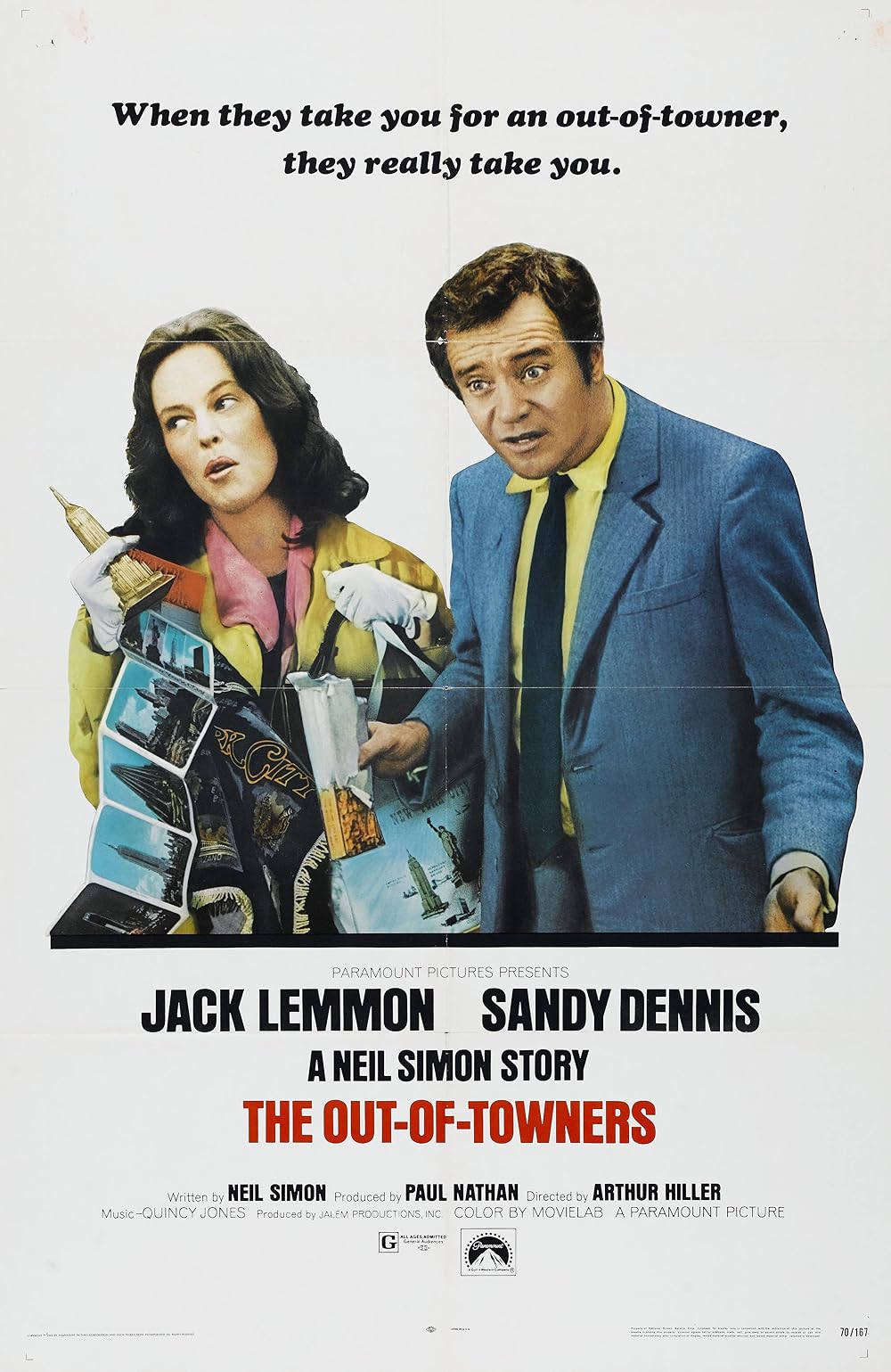
George (Jack Lemmon) is set to have an interview in New York City for a possible job promotion with his company. He brings along his wife Gwen (Sandy Dennis) for what he hopes will be a fun-filled trip in which they can explore the new city they hope to eventually relocate in, but things don’t go as planned. Their flight is forced to circle JFK Airport for hours before it’s diverted to the Logan Airport in Boston and then requiring them to take a train ride back to the Big Apple causing them to arrive there very late. Once they do make it, they find their hotel reservations expired since they hadn’t thought to call or wire, to tell them to hold it. They’re then mugged, and while being escorted by police to a local armory, where they plan on spending the night, they become involved with two liquor store robbers who hijack the squad car they’re in and force them out into Central Park in the middle of the night. This then leads to several more calamities, but despite everything George manages to somehow make it to his interview on time, but when offered the position he’s now not so sure he wants to accept it. 

Originally writer Neil Simon was planning on using this concept as a segment to his 1968 play Plaza Suite, but since that play was already divided up into three other segments it was deemed too many and thus this one got thrown out. He then tried making it into its own stage play but realized it would require too many different set pieces and ultimately came to the conclusion it would work better as a movie. Unlike his other works this one does not rely on dialogue for its primary humor as instead the intended laughs come from the situations, but it’s more like a dumb comedy in that what occurs isn’t all that clever, or original and relies solely on the exasperated reactions of the characters. 

Some of it goes overboard particularly an underground gas explosion that blows a manhole cover that George is standing on into the air and temporarily causes him to lose his hearing, which I found quite disturbing. What’s worse is that the cover comes crashing down just inches from George’s head, which could’ve been fatal and was apparently a mistake as it was intended to go up only a few feet and thus it could’ve really killed him had it hit him, but being the trooper that Lemmon was he remained in character despite the issue. However, exploding gas lines don’t happen that often giving the film an unintended surreal quality, or a piling-on effect and for that reason I would’ve excised that segment completely from the movie. 

The characters aren’t that lovable especially George who comes-off as what would be called today as a female Karen, or ‘Kevin’ as he complains about everything right from the start making him obnoxious and annoying. Had the character shown a laid-back Midwestern mentality, since that’s where he’s from, and been more congenial about things, only to finally get exasperated at the very end as it built up, would’ve worked better as by that time the audience could’ve forgiven him after what they’ve been through, but having him be so quick tempered already at the beginning doesn’t allow for any character arch and having him constantly threaten to sue everyone who has wronged him quickly becomes redundant. Sandy Dennis is better as she takes things in more of a strident fashion and makes a healthy contrast to George. The small bit parts made-up of a recognizable B-list actors are fun though they should’ve been given more amusing things to say. 

Spoiler Alert!

The overall point of the story is muddled. Supposedly it’s a harsh assessment on New York, but the couple’s problems aren’t exclusive to the city as they have issues when they go to Boston and even on their plane ride back when it gets hijacked to Cuba making it seem more like a cursed trip versus a nightmare place. Taking potshots at NYC isn’t hard either as most people have complaints about it even those that have lived there for their whole lives making the premise too obvious. A much more original idea that could’ve given it a fresher perspective would’ve had the couple already living in New York, but tired of the crime and rundown urban conditions, so they decide to move to a small Midwestern town but find unexpected problems at every turn and thus return to the city where they conclude that despite the less-than-ideal elements they’re still better off. 

My Rating: 6 out of 10

Released: May 28, 1970

Runtime: 1 Hour 37 Minutes

Rated G

Director: Arthur Hiller

Studio: Paramount

Available: DVD, Blu-ray (Reg. B/2), Amazon Video, YouTube
The Prisoner of Second Avenue (1975)

prisoner

By Richard Winters

My Rating: 4 out of 10

4-Word Review: Out of a job.

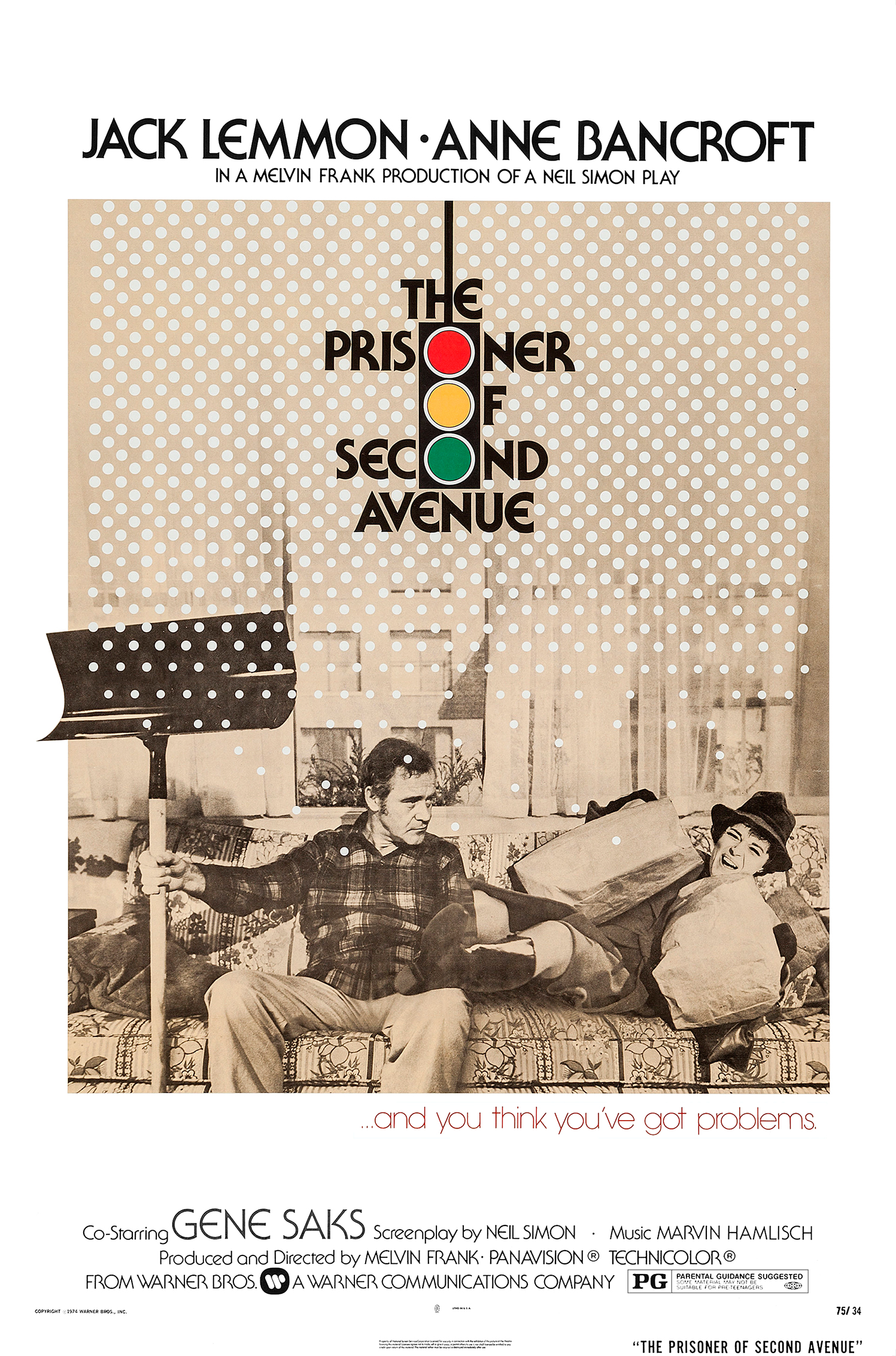
Mel (Jack Lemmon) has just lost his job that he’s had for 22-years and fears that at age 48 it will be hard for him to find another one. Edna (Anne Bancroft) goes out to find employment of her own in order to pay for the bills and while she’s initially sympathetic to Mel’s problems she becomes annoyed at the way he doesn’t do anything about it besides just complain about everything. Having their place get robbed in broad daylight, a garbage collector’s strike, noisy neighbors, and a massive New York heatwave all lead to Mel having a mental breakdown where he begins to believe all sorts of conspiracy theories. He also gets into loud verbal sparring with one of his upstairs neighbors. His brother Harry (Gene Saks) tries to get his two sisters, Pauline (Elizabeth Wilson) and Pearl (Florence Stanley) to chip-in to help pay for Mel’s therapy, but they’re reluctant making Edna feel like she’s in this all on her own while becoming openly frightened at Mel’s deteriorating state.  

The film is based on Neil Simon’s Broadway play of the same name that premiered on November 11, 1971, that starred Peter Falk and Lee Grant. The script was written by Simon but doesn’t do enough to differentiate it from a stage play with a boring visual design that falls flat and barely ever seems to get out of the apartment and when it does the moments are equally uninteresting. The ongoing potshots at New York City living have been done before and nothing that gets said here that is ground-breaking, or even mildly amusing. The plot and humor meanders and are too unfocused to be either riveting, or captivating. 

Lemmon gives a good performance, but he’s played this type of character before and his perpetual complaining about everything and anything quickly becomes tiring. I actually sided with the upstairs neighbor who throws cold water on him when he stands outside bellowing into the night air about his problems, which would annoy anyone. Bancroft’s Brooklyn accent is too affected and her wide-eyed responses to Lemmon’s constant shouting lends no spark making her character come off as transparent. Watching her fight-back a little or even get into a sparring match with Lemmon could’ve added some much-needed comic spark, but for the most part the scenes between them are dull and one-dimensional. 

It’s hard to feel sorry for a guy who makes no effort to help himself. Instead of him being shown moping constantly around the apartment each day in his bathrobe we should’ve seen him going out to job interviews, or even sprucing-up his resume and I was genuinely shocked why none of this happened. How does he really know the job market is so ‘tough’ if he doesn’t venture to go out and test it? Since his wife is able to get a job rather quickly it starts to seem like it’s not so hard to find one making the protagonist and his inactions all the more infuriating. 

Spoiler Alert!

What’s even more confounding is he’s able to somehow ‘snap out of’ his sorry state without actually finding another job. It’s not clear either what event gets him to change his thought patterns he just starts telling everyone that he’s ‘over it’ and back to being his old productive self, but in a good movie this should be seen by the viewer without the character having to explain it. Since he’s still not gainfully employed what’s to say he couldn’t easily fall back into the doldrums and therefore seeing him working at someplace new would’ve been a more complete ending. 

The side-story dealing with him buying a giant snow shovel in order to get back at his neighbor for throwing water on him, isn’t satisfying either. For one thing if money is so tight why waste it on something he really doesn’t need? His revenge plan is a bit confusing too. The idea, I guess, is that he’ll wait for the first big snowfall then climb up on the apartment roof and shovel the white stuff down on the neighbor’s balcony, but this is yet another thing that should’ve been put into action in front of the camera as him just alluding to what he’s going to do isn’t as satisfying. 

My Rating: 4 out of 10

Released: March 14, 1975

Runtime: 1 Hour 38 Minutes

Rated PG

Director: Melvin Frank

Studio: Warner Brothers

Available: DVD, Blu-ray, Amazon Video, YouTube

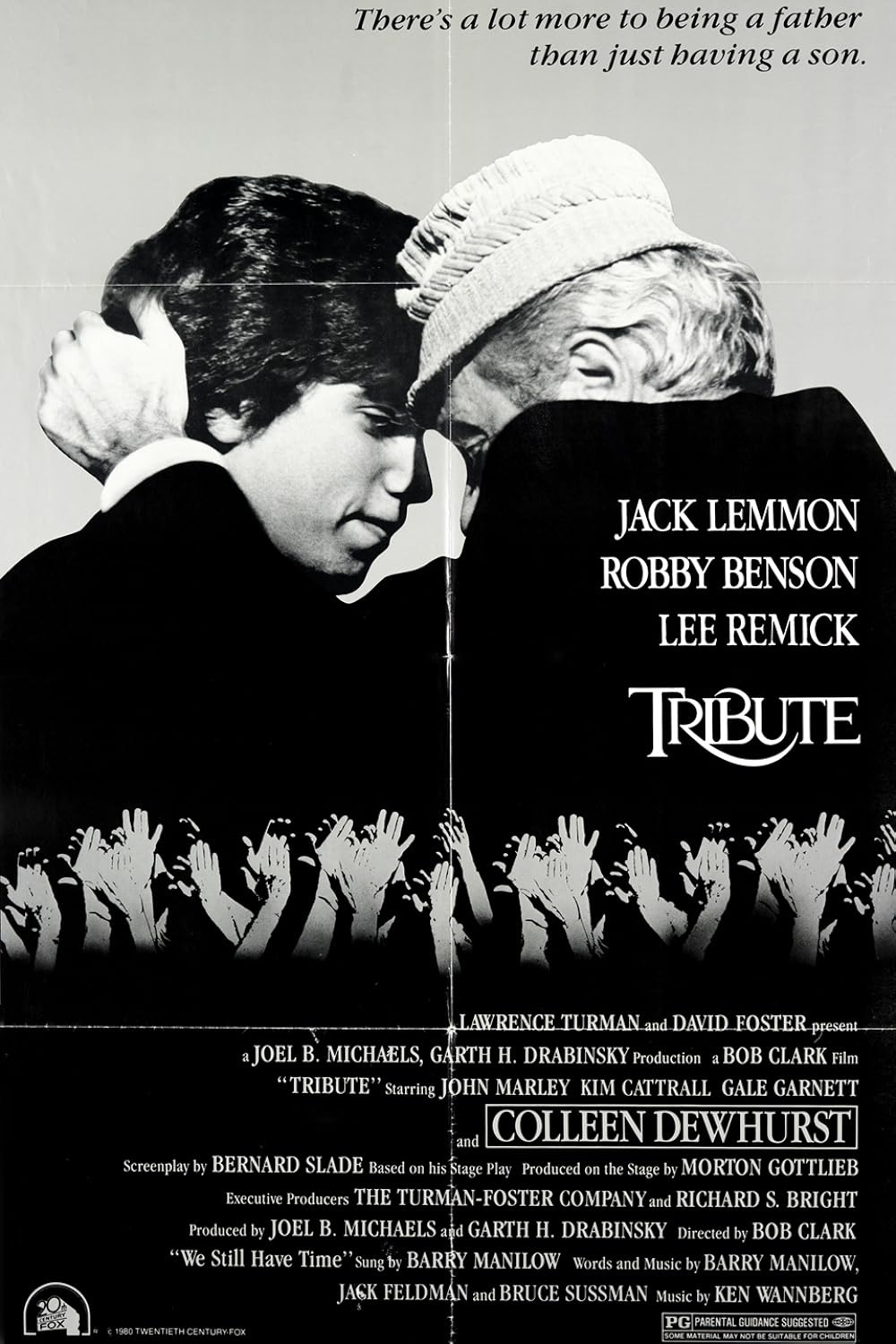
Tribute (1980)

tribute

By Richard Winters

My Rating: 3 out of 10

4-Word Review: Father reconciling with son.

Scottie (Jack Lemmon) has been working in show business for decades and has built up many friends and fans, but finds it all come crashing down when, at the mere of age of 55, he gets diagnosed with leukemia. His greatest regret is not having a close relationship with his now grown son Jud (Robby Benson). He wants to reconcile, but not make it obvious that’s it’s because he’s about to die. When Jud comes over for a surprise visit with his mother (Lee Remick), whom Scottie has long since divorced, he tries to mend things and become the father he never had, but the hurt runs deep and Jud proves to be resistant to everything Scottie tries making him feel even more hopeless and forcing him to come to terms with his personal faults and inadequacies.

The film is based on the stageplay of the same name, which also starred Lemmon, and got sold into a $1 million movie deal before the stage version ever hit Broadway. On the surface it’s deemed a drama, but the script by Bernard Slade, who also penned the play, comes off more like a desperate comedy akin in tone to Same Time Next Year, which is Slade’s most famous work that had a strong dramedy vibe to it. This works on that same level as it attempts to lighten the poignant moments with comical bits, but it fails miserable.

Had some of it managed to actually been funny I might not have complained, but it amounts to cringe instead. The most eye-popping moment is watching Lemmon in a chicken costume run around his place going ‘balk-balk’ and even lay a giant egg on the sofa, which I felt was a career low point. What’s even dumber is his wooing of a young woman, played by Kim Cattrall, who’s also a patient at the hospital. He gets into her room by pretending to be a doctor and then gropes her breasts in a feeble attempt to check her heart rate. A normal woman of today, and even one back then, should respond with outrage for him copping-a-feel by disguising himself into being someone he isn’t, but in this stupid movie she’s instead ‘charmed’ by his antics and it’s enough to get her to go to bed with him later.

What’s worse and even more outlandish is that Scottie then sets her up with his son to have them conveniently ‘bump into each other’ in public and then begin going out. Yet how many sons are going to be cool with Dad sleeping with their girl first? Of course Scottie never tells him that he’s already ‘tested her out’, but it does end up showing inadvertently what a conniving jerk the old guy is and what the film considers to be nothing more than an amusing comic side-story really hurts the likability of the character if you think about it.

The acting is good. Lemmon is expectedly strong and so is Remick as his wife though her part is limited. I liked seeing Benson, who usually got stuck with immature parts due to his young, geeky features, play the mature and sensible, level-headed adult of which he does perfectly. Colleen Dewhurst has some strong moments as the caring nurse and Cattrall, despite the annoying nature of her dippy character, is pleasing enough. Yet the ultimate scene-stealer goes to Gale Garnett famous for the mid-60’s folk song ‘We’ll Sing in the Sunshine’, who plays a hooker and in one segment goes topless (looks great), but it’s a bit jarring when you realize it’s the same person who sang such a sweet-natured tune, tough in some ways you could say it’s also a testament that her creative talents are quite broad.

The third act, where they have this major tribute for Scotty has a touching potential, but gets overdone by filling-up an entire auditorium with all of his ‘close friends’, which even for a social butterfly seemed a bit exaggerated. The scene where the hooker gets a restaurant packed with all of her male clients who have ever slept with her has an amusing quality though again equally hard to believe that all of these men would be cool with everybody knowing that they’ve bedded a prostitute. I’ll give props though to the segment showing Scotty getting treatment in the hospital, which gets shown exclusively through still photos, which I found visually innovative.

Unfortunately everything else falls into second-rate melodramatics. It doesn’t even have the decency to tells us whether Scotty dies or not. When an entire movie deals with a character’s ultimate demise I think it should eventually get answered instead of leaving it open. It makes the whole terminal illness thing seem like a tease done to emotionally manipulate the viewer than an actual reality that it supposedly is.

My Rating: 3 out of 10

Released: December 19, 1980

Runtime: 2 Hours 1 Minute

Rated PG

Director: Bob Clark

Studio: 20th Century Fox

Available: DVD-R

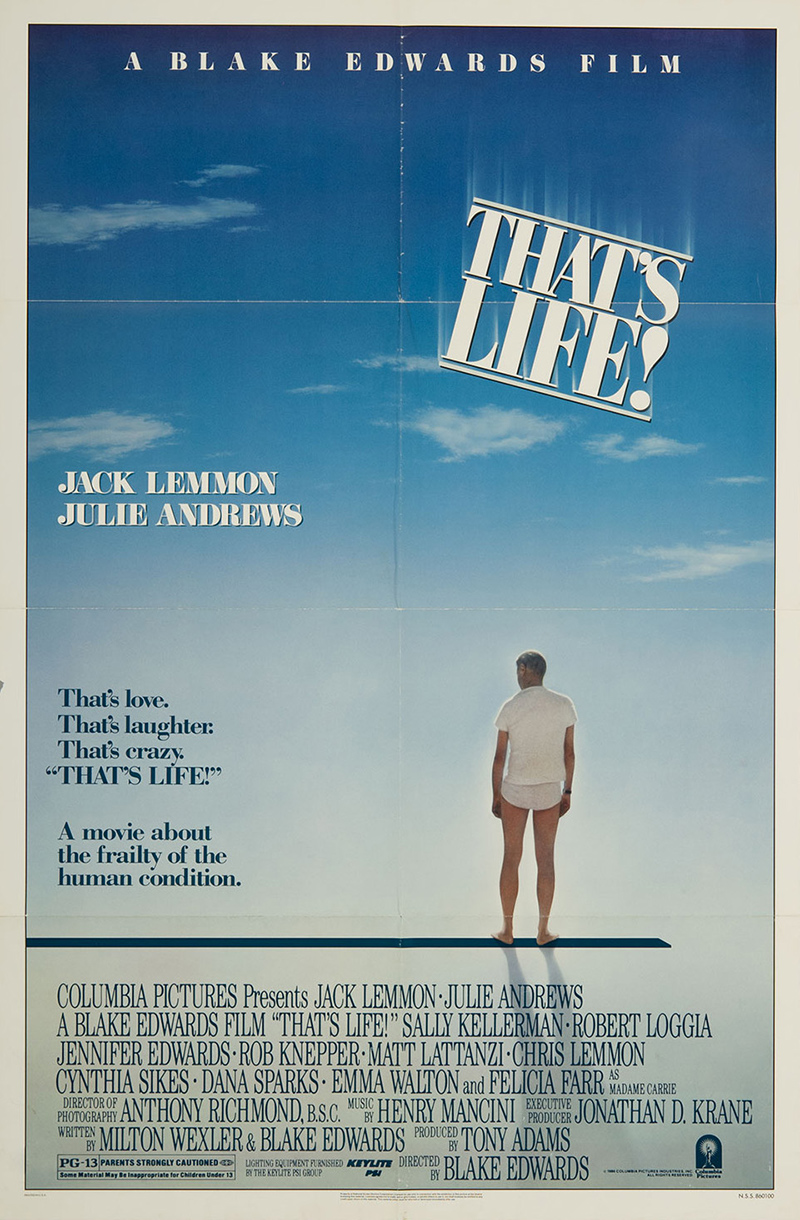
That’s Life! (1986)

thats1

By Richard Winters

My Rating: 2 out of 10

4-Word Review: Wife frets over biopsy.

Gillian (Julie Andrews) is a singer who detects a lesion in her throat and goes to the doctors to have a biopsy done to see if it’s cancerous. The results of it won’t be ready until Monday forcing her to have to worry about it over the weekend. In an effort not to ruin things for the rest of her family she doesn’t tell them about it and puts on a facade like everything is fine. Meanwhile the other family members have their own problems. Harvey (Jack Lemmon), her husband, is depressed about turning 60, and not excited about the impending birthday celebration, or even being reminded of it. Her oldest daughter Megan (Jennifer Edwards) is going through the stresses of being pregnant while her younger daughter Kate (Emma Walton) fears that her boyfriend is cheating on her.

This was writer/director Blake Edwards first attempt at drama since the Days of Wine and Roses, which had also starred Lemmon. It was independently produced and thus requiring both the cast and crew to agree to work below scale, which caused controversy with the cinematographer’s union and created picketing at theaters in Hollywood when the movie was first released. The story was inspired by real-life events and problems that Edwards and his wife Julie were going through at the time as well as things that were happening with their grown children and the whole thing was shot on-location at the family home in Malibu.

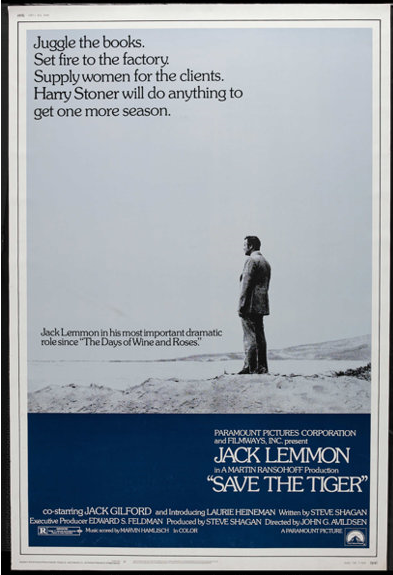
Lemmon, the movie’s promotional poster is a play-on the one for Save the Tigerthe movie he won the Oscar for as Best Actor, is the only fun thing about it. His constant bitching about everything is amusing without being forced and his presence helps give it some needed energy and it’s great seeing him do a few scenes with his real-life son Chris Lemmon, this was the only project they did together unless you count Airport ’77 though they never shared any scenes in that one, who also plays his actor son here. The only drawback is that he completely overshadows Andrews to the point that you start to forget about her even though technically she’s the protagonist that we’re supposed to be the most concerned about.

While the movie is meant to analyze the day-to-day realities of the human condition it does throw in some ‘comical’ side-stories that are really lame and end up dragging the whole film down. The first is Harvey’s relationship with Janice (Cynthia Sikes) a woman who has hired Harvey, who works as an architect, to design her dream house though her demands are constantly changing and many times unrealistic. Had this segment stopped there then it would’ve been insightful and humorous as many clients can make unreasonable requests, but since it’s ‘their money’ the person working for them feels the need not to speak up and go along with the crazy demands for fear they’ll lose out on the deal, which happens more than you think. However, the scene also has her coming on to him sexually, which made no sense. Harvey was significantly older than her, looking more like he was 70, with no guarantee that he could perform, which he ultimately can’t, so unless she had some sort of grandpa complex why would this highly attractive young woman, who could easily find a good-looking guy her age, even think about getting it on with this old duffer that virtually any other woman her age would consider ‘gross’?

The second ‘comical’ scenario is equally stupid as it features Lemmon’s actual wife Felicia Farr playing a psychic who has a sexual encounter with him at her place of business all for the measly price of $20 for a ‘reading’, but how often does this type of thing occur. I mean I’ve gone to a psychic a few times in my life, but it never turned hot-n-heavy; am I just missing out? She later has sex with one of Harvey’s friends making it seem like sex was all that she was into, but how long could she realistically retain the psychic facade before it all came crashing down and she was known simply as being the cheap neighborhood hooker? Why does she even bother with the phony psychic act at all? Why not just become a high-paid escort where she could be making a hell of a lot more money.

The third side-story deals with Harvey finding that the priest, played by Robert Loggia, whom he is confessing his infidelities to is actually his former college roommate that he hasn’t seen in decades, which again is pushing long odds not very likely to happen. The old friend angle doesn’t add much and actually would’ve been funnier had the priest remained someone he didn’t know and Harvey could feel that his confessions were completely confidential only to then get called up to the pulpit during a church service, like he does here, to read a Bible passage about infidelity, and thus getting the shock of his life that this supposedly benign man of the cloth may be on to him and his divulged sins not so safely protected.

Spoiler Alert!

The film’s wrap-up has all the problems getting neatly resolved, which gives it a sitcom quality. I was okay with Andrews learning that the lesion was not cancerous, but some of the other dramatic tangents that the family members went through should’ve not all worked out so nicely, because in real-life, which this film is attempting to be, things don’t always have happy endings. In fact this is what works against it as it’s too sterile for its own good. Nothing stands out making it a shallow, flat drama without much depth. Much like Gillian’s lesion it ultimately becomes benign.

My Rating: 2 out of 10

Released: October 10, 1986

Runtime: 1 Hour 42 Minutes

Rated PG-13

Director: Blake Edwards

Studio: Columbia Pictures

Available: DVD-R, VHS

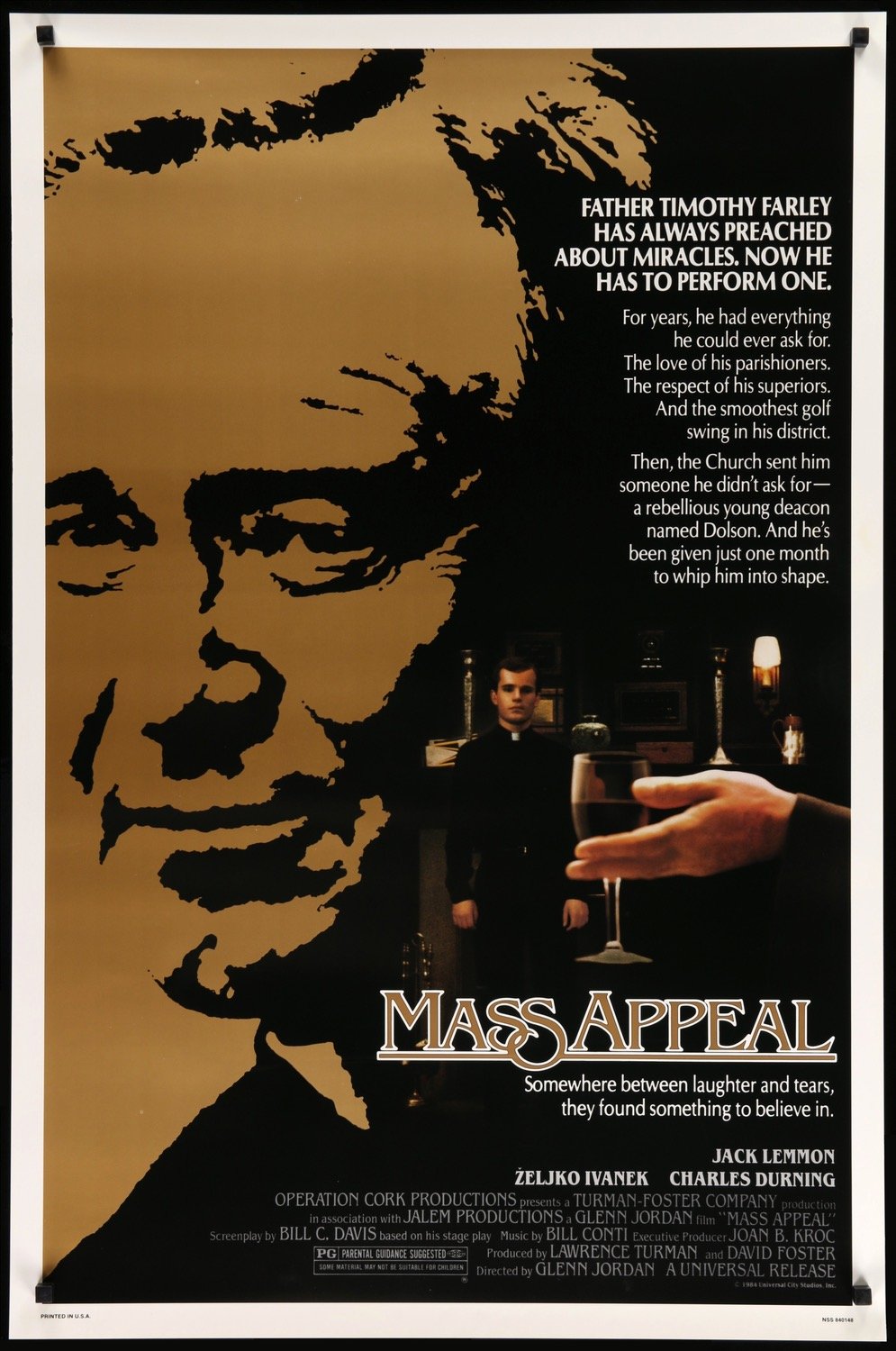
Mass Appeal (1984)

mass appeal1

By Richard Winters

My Rating: 6 out of 10

4-Word Review: Priest and deacon argue.

Mark (Zelijko Ivanek) is a young rebellious man attending Catholic seminary, who has a rigidly idealistic approach to how he thinks things should be especially within the church and will routinely clash with his superiors. Father Tim Farley (Jack Lemmon) is a middle-aged man who enjoys not rocking-the-boat and basically just telling people what they want to hear specifically his congregation while avoiding controversial issues at all costs. Tim is put in charge of Mark for a month in hopes that he can teach him to be more tactful and not such an outward firebrand. The two argue quite a lot, but eventually start to bond. When Mark divulges that he had sex with other men in the past and that he has admitted this to the Monsignor (Charles Durning), which could get him kicked-out of the seminary, it puts Tim in a tough bind. Will he stand-up for Mark by refusing to allow the Monsignor to use Mark’s past against him, or will he slink away like he always has to the safety net of the quiet life where he avoids making a stir of any kind?

The film may seem initially like it’s a spiritual one as there are many scenes shot inside the church during Sunday mornings where it perfectly captures the ambiance of a church service including having the mothers quarantined inside a glass ‘crying room’ where they take their babies when they get cranky, but are still able to interact with everyone else via microphones. Yet the more you get into the movie the less religious it is with the centerpiece of the story being instead universal to everyday life as it deals with the different perspectives of the generations and how one wants to vigorously challenge the system while the other is content with accepting things as they are. The arguments that the two have could easily be transferred to debates in other areas of life whether it’s politics, or even business.

The story is based on a two character play, written by Bill C. Davis, that was first performed in small theaters with Davis playing the part of Mark Dolson, a character not unlike himself. Eventually it caught the attention of actress Geraldine Fitzgerald, who agreed to direct it while also helping to revise the script, which then lead to it being produced on Broadway with Milo O’ Shea as the priest and Eric Roberts, who later got replaced by Michael O’Keefe, as Dolson.

The movie made changes from the play including adding in characters like the Monsignor and Margaret, played by Louise Latham, who works as Tim’s housekeeper. I had no problems with the Monsignor role, which is well played by Durning, who makes a strong presence to the plot, but the Margaret character seemed a bit too extreme as she overreacts to saying even a little white lie and like it might get her ‘in trouble with God’. To me this was an unrealistic portrait of a theist as I don’t think they’re quite this stringent and can lie and sin at times like anyone else. It also made me wonder that if she’s so obsessed with being a ‘perfect Catholic’ then her friendship with Mark, who she gets along with initially, would turn frosty after she found out hat he had gay sex because in her mind, if she’s to follow the same Catholic principles, would go against the teachings, so she technically she shouldn’t be associating with him even though this doesn’t actually happen.

Spoiler Alert!

My main beef with the film, which is captivating for at least the first 45-minutes before it becomes too much like a filmed stageplay, is that we never get to see whether Mark is able to stay in the seminary, or not. The movie acts like the big payoff is seeing Tim give this fiery sermon in Mark’s defense, but I would’ve been more interested in seeing how the congregation responded to it. Did they come to Mark’s aid like Tim hoped, or did they turn on Tim and have him banished to a small church in Iowa, which he feared? Not having these questions answered doesn’t bring the story to a satisfying conclusion.

My Rating: 6 out of 10

Released: December 14, 1984

Runtime: 1 Hour 39 Minutes

Rated PG

Director: Glenn Jordan

Studio: Universal

Available: DVD-R (Universal Vault Series)

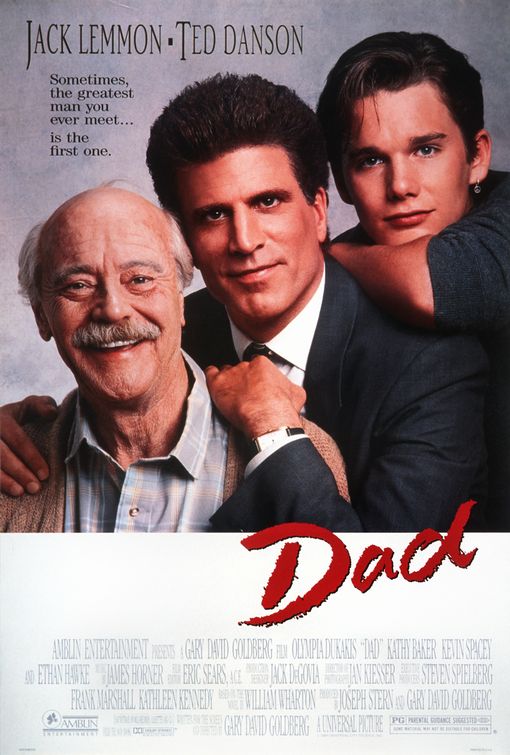
Dad (1989)

By Richard Winters

My Rating: 2 out of 10

4-Word Review: Son cares for father.

John (Ted Danson) is a busy executive who learns during one of his business meetings that his mother (Olympia Dukakis) has had a heart attack and rushes back home to care for his father (Jack Lemmon) who isn’t use to doing things on his own. John teaches his father how to do the every day chores while also learning to bond with his own son Billy (Ethan Hawke) who comes to visit. Just as things seem to be getting better and his mother gets out of the hospital it is the father who then gets sick with cancer leading to even further complications.

The film is based on the 1981 novel of the same name by William Wharton, which I’ve never read, but if it’s anything like this script then it’s not too good. One the main problems is the extreme shifts in tone that starts out with elements of Rain Man and then at the halfway mark becomes like a dark satire of incompetent medical delivery in the vein of Hospital and then in the third act turns almost fable-like.

My biggest beef is the pseudo-science that gets thrown in after the father goes to the hospital with his cancer. This is when the old man suddenly without warning starts going delusional and then ultimately into coma only to one day miraculous snap out of it. We’re told that the explanation for this is that the father was so fearful of cancer that the brain produced some sort of enzyme that acted as a defense mechanism that shut off the mind so it wouldn’t have to deal with it and it was the love shown by the son that ultimately allowed the dad to come back to consciousness, but what reputable medical journal has ever discussed this phenomenon?  Things get even more ludicrous when the old guy starts thinking he’s on a farm in a different time period and we’re told this is a schizophrenic condition caused by the cancer and everyone needs to play along with it, or he’ll go back into a coma.

Danson, for what it’s worth, gives a strong performance here, probably the best in his otherwise lukewarm film career. I found it frustrating though that his character doesn’t have all that much of an arch. Supposedly he’s self-centered at the start and needs to learn to be caring, but this only gets explained by the character during a long soliloquy during the middle part, when the viewer should’ve instead seen the transition play out. I also thought it was wacky that he’d be allowed to bring in a cot and stay with his father inside his hospital room as I’m pretty sure most doctors would not allow this.

Lemmon’s performance is good too, but I didn’t like how a tuft of white hair was kept on his otherwise balding head as I found it distracting. While it was nice that his character wasn’t a crotchety old man, which has become a bit of a cliche, I found his extreme dependency on his wife, to the point where he allowed her to dress him and even butter his toast despite the fact that he was physically able to do it himself, as pathetic. His later transition to laid-back hippie who wears colorfully garish outfits as he takes on a whole new perspective on life is too jarring and extreme.

The film never comes together as a whole and if anything could’ve been shortened with the first half dealing with the mother’s heart attack taken out and just started with the father’s cancer diagnosis as that’s when the main plot gets going. In either case it tries too hard to be cute while compromising too much on the believability.

My Rating: 2 out of 10

Released: November 10, 1989

Runtime: 1 Hour 57 Minutes

Rated PG

Director: Gary David Goldberg

Studio: Universal Pictures

Available: DVD, Amazon Video, YouTube

Save the Tiger (1973)

By Richard Winters

My Rating: 8 out of 10

4-Word Review: Arson is the solution.

Harry Stoner (Jack Lemmon) seems to be the embodiment of the American Dream living in a large house in an exclusive neighborhood and driving a  fancy car, but underneath the facade he’s struggling. His apparel business is on the brink of financial collapse and he decides along with his business partner Phil (Jack Gilford) to torch the place so they can collect on the insurance money, but the closer they get to the date the more despondent he becomes.

The producers realized upfront that this was not going to be an audience pleaser  and therefore made it on a small budget with Lemmon agreeing to waive his usual fee and instead working for scale, which at the time amounted to $165 a week. The effort though paid off as this film is able to tell its story with unflinching honesty without having to make the usual compromises in order to gain mass appeal.

What I really liked is how the main character gets attracted to the tantalizing aspects of corruption just like the world around him as opposed to how it’s done in most other films where the protagonist somehow manages to rise above the fray and remains magically immune from the corruptible forces. What’s even better is that it shows how sometimes even good people can be driven to do bad things especially when up against a system that is cold and unyielding.

John G. Avildsen’s direction has a nice day-in-the-life feel especially the way it captures Harry’s routine at work and all the contrasting personalities and egos he must deal with as well as a hectic and seemingly never ending pace. I also enjoyed Harry’s hook-up with a hippy (Laurie Heineman) and how despite their vast age differences and perceptions they’re still able to form an interesting bond. How a transient woman who has worked no job could somehow get a house sitting opportunity at a dreamy Malibu pad is a good question, but the scene there between the two is one of the film’s best moments and Lemmon’s raw meltdown at that point is what most assuredly netted him the Oscar.

I enjoyed Gilford’s performance as well and was impressed seeing him in a rare dramatic role, but his character seemed more like a metaphor to Harry’s conscience than a real person and his constant yammering about arson being a federal crime becomes redundant. Harry’s mental breakdown onstage brought unneeded surrealism to a film that otherwise pushed hard for gritty reality and the result is jarring. Having him see images of his dead army comrades sitting in the audience looks inauthentic as their dead pale faces appear to be covered with nothing more than theatrical make-up.

It also would’ve been nice had there been some conclusion to the arson scenario. The viewer is left hanging with the idea that they will go through with it, but nothing is conclusive. I realize with the budget restraints that showing a burning building as the final image would’ve been difficult but helpful and giving us some sort of hint whether Harry and his partner were able to pull it off, or got caught would’ve been nice too. Besides Thayer David, who plays the arsonist, is so good in his role that he should’ve been in more scenes anyways.

Overall though I liked the cynical tone and how the script doesn’t pull any punches while it paints a terse, vivid portrait of the so-called American Dream and how those that appear to be living it aren’t always so happy.

My Rating: 8 out of 10

Released: February 14, 1973

Runtime: 1 Hour 40 Minutes

Rated R

Director: John G. Avildsen

Studio: Cinema International Corporation

Available: DVD, Amazon Video, YouTube

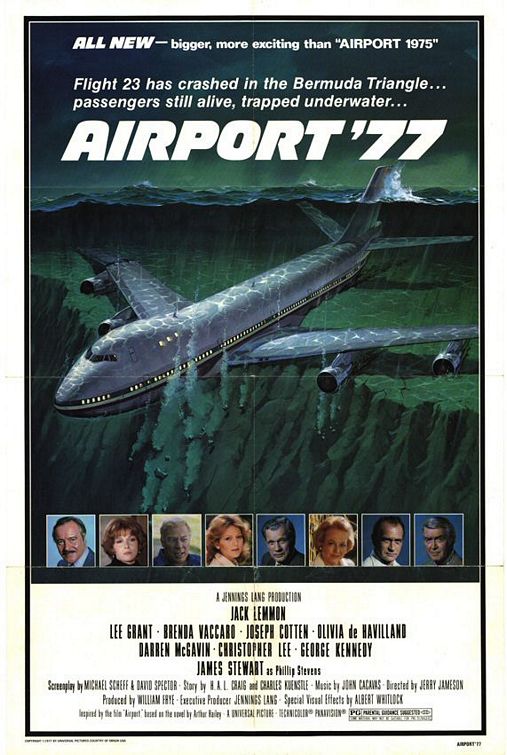
Airport ’77 (1977)

By Richard Winters

My Rating: 7 out of 10

4-Word Review: Plane crashes into ocean.

Rich tycoon Philip Stevens (James Stewart) invites his high society friends to his home in Palm Beach, Florida by flying them over on his luxury jet. Unfortunately a gang of hijackers have decided to use this opportunity to steal some expensive artwork, which is also on the plane, by rigging the venting system with sleeping gas, which temporarily knocks-out the Captain (Jack Lemmon) along with all the passengers. Then as everyone sleeps the thieves steal the artwork while the co-captain (Robert Foxworth), who is in on the crime, pilots the plane, but while going into some heavy fog the plane grazes an offshore oil rig that sends the craft and everyone on it into the ocean forcing the panicked people to figure out some way to signal those on the ground that they need help.

Although Airport 1975 did well at the box office it was critically maligned and producer Jennings Lang wanted to come up with some way to keep the theme fresh and inventive. In most ways the film succeeds and can be considered an admirable sequel as the silly humor from the first two is taken out and the audience gets left with a high adrenaline disaster flick that is convincing and compelling.

Unfortunately the first 35 minutes almost kills it as the film is too intent on setting up contrived soap opera-like storylines for all of its characters. The lovesick gaze that Kathleen Quinlan gives to blind musician Tom Sullivan as he plays a romantic tune on the piano is sappy enough to make some viewers want to turn the movie off completely. The side-story dealing with Lemmon’s relationship with head stewardess Brenda Vaccaro was not needed, although the way he rescues her at the end is quite cool, and is too similar to one between Dean Martin’s and Jacqueline Bisset’s characters in the first film. Lee Grant can play a bitch with a capital ‘B’, but here it gets over-the-top making her so unlikable I didn’t care if she lived or died. I was hoping that, through the course of the film, her character would be forced to show a sympathetic side at some point, but she never does.

If you can get past the clunky beginning then you’ll be rewarded with a genuinely exciting and tense second-half. The special effects are well done and watching the cast, who bravely did most of their own stunts, get doused with gallons of rushing water inside the plane is a tense and impressive moment.

Lemmon is excellent and his presence helps elevate it from just being a cheesy disaster flick. Christopher Lee is good in an uncharacteristically sympathetic role making me believe that maybe he should’ve played more of these types of parts in his career. Foxworth is also effective as the duplicitous co-pilot. He’s played bad guys before, so watching him become evil wasn’t a stretch, but I enjoyed how the camera cuts back occasionally to show his guilt-ridden face as he watches the others struggle to survive.

Screen icon James Stewart is wasted in a part that gives him very little to do other than standing around with a perpetually concerned look on his face and it would’ve been more interesting having him on the plane with the others. George Kennedy gets his token appearance as Joe Patroni the only character to appear in all four Airport films, but it hardly seems worth it. His caustic, brash personality that made him so engaging in the first movie is completely lost here making him dull and transparent and virtually pointless to the main story.

While it does seem a bit too similar to The Poseidon Adventure it still has some great underwater footage particularly when the rescue naval crew puts balloons underneath the craft in an attempt to lift the plane out of the water, which is unique and not shown in any other movie and makes this worth catching just for that.

My Rating: 7 out of 10

Released: March 11, 1977

Runtime: 1 Hour 54 Minutes

Rated PG

Director: Jerry Jameson

Studio: Universal

Available: DVD, Amazon Video, YouTube

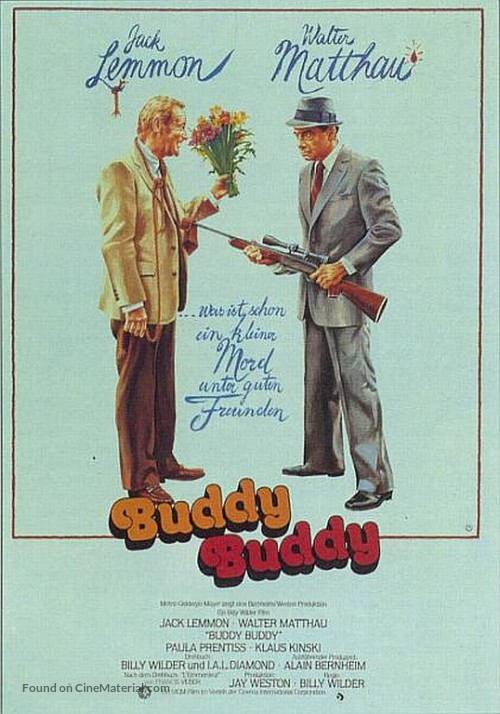
Buddy Buddy (1981)

buddy-buddy-2

By Richard Winters

My Rating: 7 out of 10

4-Word Review: Suicidal man hampers hit.

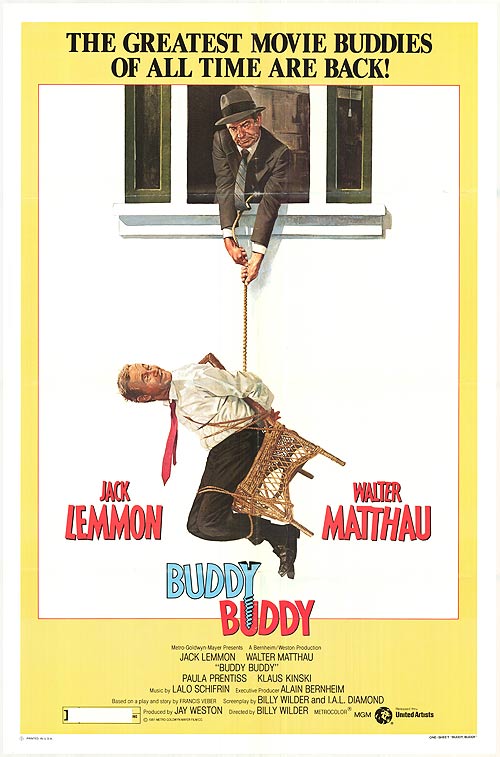
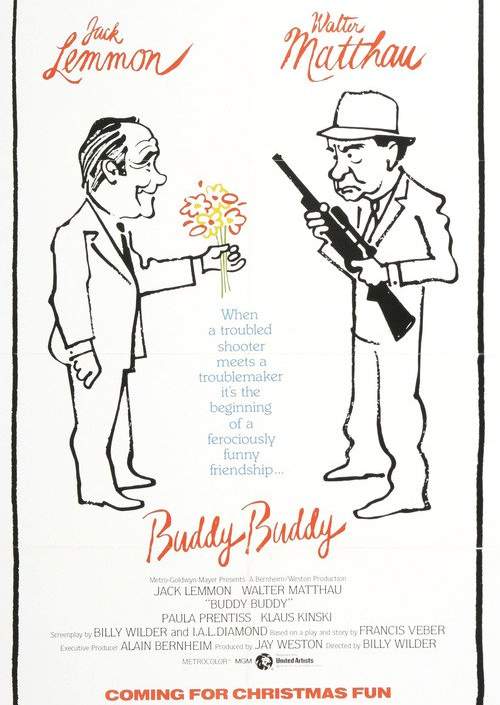
Trabucco (Walter Matthau) checks into a hotel intent on completing a hit by shooting a mob informant before he can testify at trial. He’s already killed the two other informants with relative ease, but now finds this one to be much more complicated due to having to deal with Victor (Jack Lemmon) who resides in the adjoining room. Victor is upset that his wife Celia (Paula Prentiss) has left him for a sex therapist (Klaus Kinski) and proceeds to try to hang himself by tying the noose around the water pipes in the bathroom, but all he succeeds at doing is busting the pipes and creating a flood. Trabucco decides to ‘befriend’ the man in order to keep an eye on him and prevent him from trying to kill himself again, which he feels will only lead to unwanted attention from the authorities. However, Jack causes more problems for him than the police ever could.

This was the last film directed by Billy Wilder who stated in more than a few interviews that he considers this movie to be his poorest effort and his least favorite. Matthau and Lemmon have pretty much said the same thing as well. The film was a critical flop and lost 3.5 million at the box office, which helped to prevent Wilder from ever helming another movie again.

However, I was delightfully surprised at how funny I found this movie to be. It’s not exactly laugh-out-loud hilarity, but on a low-key level it works. The part where Lemmon gets tied to a chair and his mouth gagged while he screams at an ambivalent housekeeper (Bette Raya) to free him is quite good and the part where the two men going gliding down a clothes chute is fun too.

The whole thing is a remake of the French film A Pain in the A__, but it implements changes to the plot that improves it from the original. For one thing the dialogue is funnier, the two men have more genuine conversations and they even develop a bit of a bonding. The film adds more characters too like the beleaguered Captain Hubris played by Dana Elcar who tries in vain to protect the witnesses from Trubacco, but with little success. The distinctive musical score by Lalo Shifrin is also big improvement.

Lemmon is quite funny as he plays a sort-of hyped-up version of his Felix Unger character. Matthau seems a bit stymied in a role that allows for very little expression, but he still manages to make the most of it. My favorite performance though was that of Kinski who takes a rare comic turn and utters the movies best line: “Pre-ejaculation means always having to say you’re sorry.”

Having the two actually work together to complete the hit and then make an escape from the cops is good and something that did not occur in the original. The resolution, which takes place on a tropical island, is a bit of an improvement over the first one though it’s still not perfect. In either event it’s a relatively solid comedy that offers a few good laughs and deserves more attention especially for fans of Lemmon/Matthau.

buddy-buddy-1

buddy-buddy-3

My Rating: 7 out of 10

Released: December 11, 1981

Runtime: 1Hour 36Minutes

Rated R

Director: Billy Wilder

Studio: MGM

Available: VHS

The China Syndrome (1979)

china-syndrome

By Richard Winters

My Rating: 8 out of 10

4-Word Review: He senses the vibration.

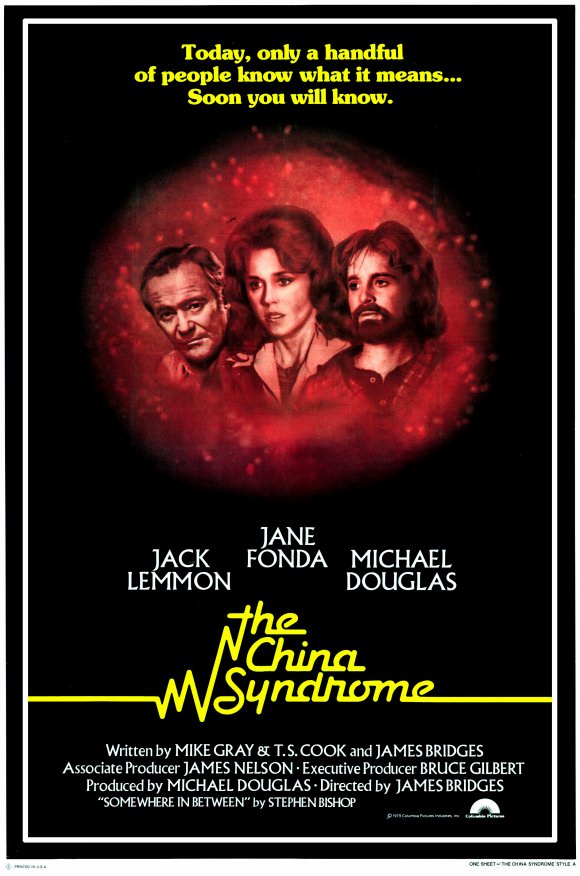
Kimberly Wells (Jane Fonda) is a television news reporter who along with Richard (Michael Douglas) her cameraman gets a chance to go inside a nuclear power plant and film its operations. While inside they witness the plant going through an emergency shutdown when the coolant to one of the nuclear reactors becomes dangerously low. Richard secretly films the nervous reactions of the men in the control room during the incident and wants to broadcast the footage on the news, but the station managers refuse for fear they might get sued. Later Kimberly comes into contact with Jack (Jack Lemmon) who is a shift supervisor at the plant and he informs her that the welds on the pumps are compromised and could lead to a core meltdown at some point. Richard, Kimberly and Jack then conspire to somehow get this information out to the public before it is too late while also avoiding those who wish to silence them.

One of the things I really enjoyed about this film is the way it remains completely realistic throughout and never once compromises anything simply for the sake of cheap drama. The behind-the-scenes politics of an on air news show is quite fascinating particularly how it is decided what constitutes ‘news’ and what doesn’t as well as the staff’s pecking-order and how an individual reporter has limited say on what topics they can actually report on.

The inside of the power plant is impressive particularly the scene where Jack goes inside the massive pump room to investigate a leak. The control room looks quite authentic and the film’s final twenty-five minutes take place solely inside of it, which makes for a gripping climax.

The film also has the distinction of having no musical soundtrack. Other than a song by Stephan Bishop which is played at the beginning there is no other music to be heard and quite frankly I didn’t miss it at all. The sound of the power plant’s emergency alarm going off is all that is needed to create tension and having the closing credits scroll to a deadening silence leaves a powerful impact. Apparently a score was composed by Michael Small, but it was rejected and rightly so as I listened to some of it and it had way too much of a disco sound and didn’t fit the theme at all.

The stars are excellent, but I was surprised how Fonda’s part gets increasingly pared down as the movie progresses. Douglas steals it away from her during an angry confrontation with his superiors, but ultimately Lemmon is the real star even though it deceptively doesn’t start out that way. The supporting cast is equally good including Wilford Brimley as a loyal, but quiet employee, Scott Brady as the cantankerous plant manager and Richard Herd as the steely and conniving owner.

As for the merits of the film’s message it’s hard to say. What was once a hot/trendy topic during the ‘70s and ‘80s now seems long forgotten. However, the script still brings up many good points no matter what one’s political leanings are and it’s great to watch a film that can be intelligent and entertaining at the same time without ever going overboard on either end.

My Rating: 8 out of 10

Released: March 16, 1979

Runtime: 2Hours 2Minutes

Rated PG

Director: James Bridges

Studio: Columbia Pictures

Available: DVD, Blu-ray (Region 0), Amazon Instant Video, YouTube