Tag Archives: Entertainment

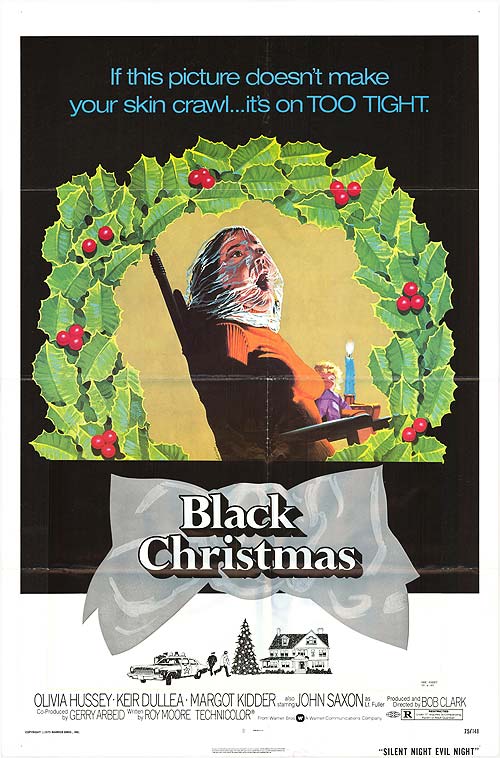
Black Christmas (1974)

black christmas 1

By Richard Winters

My Rating: 8 out of 10

4-Word Review: He’s in the attic.

It’s Christmas time at the sorority house, but as the girls celebrate the season they continue to get harassing phone calls from a strange man who speaks in different and frightening voices. Unbeknownst to them the man has snuck into the attic of their house and the calls are coming in from another room. As the night progresses the girls begin to disappear forcing the lone survivor to fight off the killer by herself.

I have not seen the remake of this film and due to negative response that I have heard I don’t think I want to either. This review pertains to the original only. If you have seen the remake and disliked it you should still give this film a try.  Despite its low budget it is quite effective and it slowly builds up the tension in a nice compact style with a great twist ending.

Of course one of the things that make this movie so good is the humor. I loved Marian Waldman as the alcoholic house mother Mrs. McHenry who stashes bottles of whiskey in all sorts of goofy places. The vulgar Santa who swears even as the kids are sitting on his lap is a hoot and a nice precursor to Bad Santa, but my favorite is the poster of a sweet old lady giving the finger.

One of the best moments on the terror end is the part where the killer’s eyeball can be seen looking through a small crack in the doorway, which is memorable. The scene where the camera pans from each girl’s nervous and frightened face as they listen to the weird voices emanating from the phone receiver is very well done although it would have been even stronger had the Christmas music not have been playing in the background.

The performances are top rate and I liked the fact that the girls all have distinct personalities from one another. Margot Kidder as the vulgar and obnoxious sorority sister Barb is a scene stealer and I’d say this is the best performance of her career. I loved when she calls one of the more conservative members of the group a ‘professional virgin’, or has the audacity to call her own mother a ‘gold-plated whore’. The part where she gets a young kid drunk and even swears in front of him is also funny as is her conversation about a species of turtle that can have sex for three straight days without stopping. Yet through all of her outrageousness director Bob Clark still manages to create a three-dimensional character by showing her as also being lonely, moody, and suffering from asthma, which is good.

Olivia Hussey as Jess is terrific. She is poised, confident, intelligent, and sweet and the type of character the viewer can immediately connect with and care about. Her face has a wonderful fragility about it as well a natural beauty. The look of terror coming from her eyes seems genuine and the horror is made more effective because she responds to it in a believable and relatable way.

Keir Dullea is good as Jess’s high strung boyfriend Peter. I had to chuckle a bit seeing him here as it brought back memories of what playwright Noel Coward once said about him “Keir Dullea gone tomorrow”, which seemed to have some credence since he was starring in the masterpiece 2001: A Space Odyssey just a few years earlier and now delegated to a supporting role in a low budget horror film. I always felt that his reserved and emotionless delivery can work when given the right role and for the most part it clicks here despite the fact that he was pushing 40 at the time and not quite looking college age.

I read one review where the critic complained that he did not feel it was believable for a killer to be hiding in an attic and no one else in the house aware of it, but the house was a big old building and for me it seemed possible especially since it was only for a short period of time. Overall I felt this was a very plausible premise that is handled in a realistic fashion without all the glaring loopholes, which is one reason I continue to enjoy it no matter how many times I’ve seen it.

However, there are a few quibbles. One is the policeman who gets his throat slashed while sitting in an unmarked police car just outside of the sorority home. I would think a seasoned office would be able to spot someone sinking up on him while he is inside a car especially since it was otherwise not a busy street and since it was wintertime I think it would be highly doubtful that he would be sitting there with the driver’s side window rolled down. I also had to roll my eyes at the scene where Jess is trying to get out of the house as she is being chased by the killer and yet for some inexplicable reason the front door conveniently jams even though no had a problem with it before.

Bob Clark shows what a talented director he is and it is too bad his career and life was cut short in a car accident in 2007. It is one thing to have a big budget and access to all the state-of-the-art special effects, but it is another to make a memorable movie on a shoestring. Despite its low budget it doesn’t seem hampered by many of the limitations that other similar films suffer.

Some may prefer lots of gore, which this one has very little of, and a bigger-than-life monster or bad guy, but the reason this is a classic is because they go with the philosophy that less is more. Any self-respecting horror fan should see this film and most likely appreciate it.

My Rating: 8 out of 10

Released: October 11, 1974

Runtime: 1Hour 38Minutes

Rated R

Director: Bob Clark

Studio: Warner Brothers

Available: VHS, DVD (Special Edition), Blu-ray
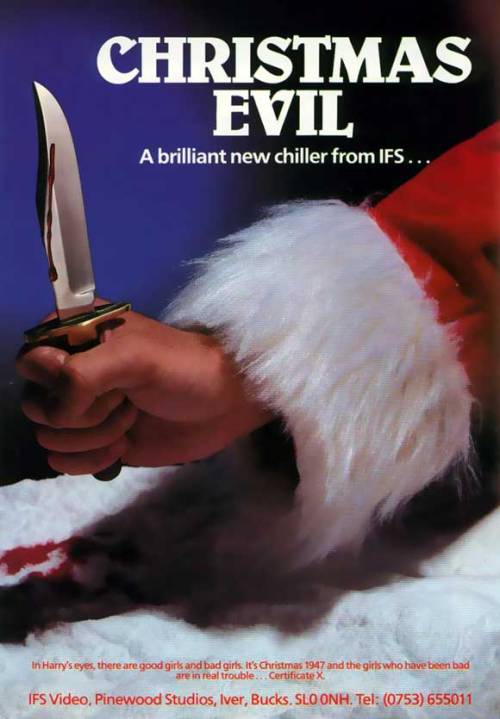
You Better Watch Out (1980)

you better watch out

By Richard Winters

My Rating: 1 out of 10

4-Word Review: This Santa isn’t jolly.

As a young boy Harry Stadling (Brandon Maggart) witnessed his mother being groped by Santa Claus, which was apparently his father in the disguise, but it nonetheless created a disturbing image in his mind that shattered the ideal he had for the mythical man. Years later as an adult working a thankless job at a toy factory Harry starts to believe he is Santa Claus and even spies on the neighborhood children to see which ones have been naughty or nice and keeps meticulous records on each. Then on Christmas Eve he dresses up as Santa and delivers presents to some needy kids at a hospital, but also comes into contact with a group of condescending people outside of a church who he then kills. This sends out a police alert where everyone in the city including the regular townspeople is on the hunt for him and Harry tries to avoid them while continuing to deliver his gifts.

For some reason this film never created the controversy of portraying Santa Claus as a killer like Silent Night Deadly Night did even though this film came out 4 years earlier.  Critic Leonard Maltin came down hard on that one in his book, but seemed to like this one, which is the whole reason I gave this one a chance 25 years ago, but I remember disliking it. Since this film has managed to inspire a small cult following I decided to give it another chance, but I didn’t like it any better.

Part of the problem is that it is very slow and plodding with the majority of the film focusing on Harry as he goes through the daily routines of his pointless and lonely life. Nothing that he does is compelling and sometimes it is even confusing. It is hard to call this a horror film even though that is what it is considered because there are really no scares at all and the gore is at an extreme minimum. Maggart gives a solid performance in the lead, but as my acting teacher in school once said a good actor cannot save a weak script, or as he put it ‘you can’t shine shit.’

There are only two killings and neither of them is effective. The killing done outside a church is captured in a choppy editing style with bloody special effects that look fake and it is carried out by Harry while using a toy ax, which seemed ludicrous. I also didn’t think it made a lot of sense for the victims to have such a snarky and sarcastic behavior especially when they were just coming out of a church service. What is worse is that when the victims are killed no one comes to their aid to see if they can save them they just stand on the church steps and stare at their lifeless bodies. An APB is also put out which is broadcast on the TV news stating that the killer escaped in a white van with Christmas sled painted on its side, which is distinct enough that somebody somewhere would have spotted it and yet Harry continues to drive around unheeded.

SPOILER ALERT!

The ending is the weakest part. For one thing some townspeople recognize Harry as being the killer Santa and chase him down through the neighborhood streets while carrying torches, but just where in this modern day and age are people going to find torches? Some fans of the film insist that this is homage to the film Frankenstein, but to be clever it still has to make sense and this doesn’t.  There is also the issue of when Harry drives his van off a bridge instead of going into the river below it instead flies off into the sky like Santa on his sled. Now, since the majority of the film was done from Harry’s perspective this might simply be his last delusional moment before he dies, but the film needed to confirm this and doesn’t, which makes it more annoying than anything.

Writer/director Lewis Jackson has stated in later interviews that he got the idea for this movie while smoking a joint and I think he was still smoking them when he made this thing. The majority of people come away from this thing feeling the same way about it that I did, but I know there are a few that insist it is ‘brilliant’ and if you are one them feel free to leave your comments below and let me know what it is you think I am missing because after two viewings I just don’t see it.

My Rating: 1 out of 10

Released: November 10, 1980

Runtime: 1Hour 40Minutes

Alternate Title: Christmas Evil

Rated R

Director: Lewis Jackson

Studio: Edward R. Pressman Productions

Available: VHS, DVD (Special Edition and in 3D), Amazon Instant Video

The Grass is Greener (1960)

grass is greener

By Richard Winters

My Rating: 4 out of 10

4-Word Review: They all fool around.

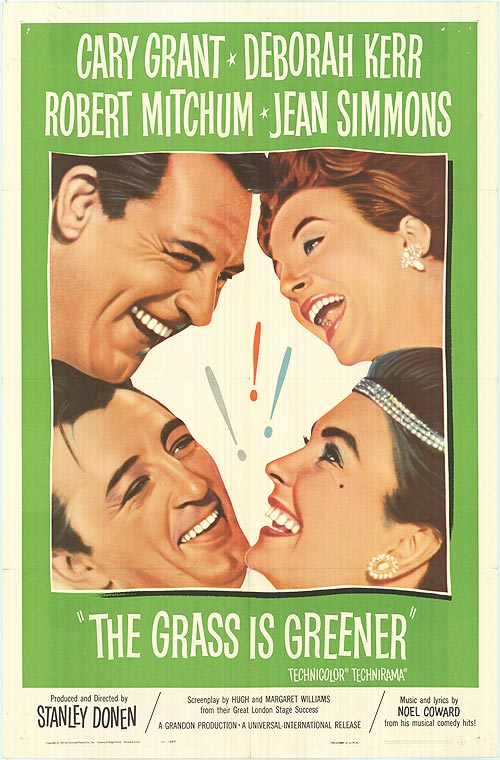
Hilary (Deborah Kerr) is married to Victor (Cary Grant) and they are low on funds so they give guided tours of their castle in order to make ends meet. Then one day rich American businessman Charles Delarco (Robert Mitchum) stops by and takes an immediate liking to Hilary and her to him. Soon they are having an affair and Victor along with his friend Hattie (Jean Simmons) devises a plan to win her back.

The film starts out well with a funny montage of cute babies in goofy poises shown during the opening credits, but then things go rapidly and irrevocably flat. One of the main problems is that there is simply too much talking and most of it isn’t funny or engaging. In fact none of the conversations between any of the four leads is interesting. The best dialogue in the whole film is the ones between Victor and his butler Trevor (Moray Watson) who is doing the job while working on his novel.  I wished there had been more of Trevor and that the story had revolved around him as the rest is trite and predictable.

Mitchum just doesn’t seem right as the love interest. He is best in parts requiring a rugged or villainous character as his romantic appeal is lacking. I actually thought he came off as downright creepy especially with the way he barges into Hillary’s room unannounced and is reluctant to immediately leave when he realizes he has walked into the wrong place. Most women would have considered him a stalker and his squinty eyes don’t help things.

I also thought Hillary throws herself at him a little too quickly. He is a stranger who pops out of nowhere. The two have a boring ten minute conversation and then are in a passionate embrace. Victor tries like crazy to win her back while I’m thinking why bother keeping a woman who jumps at any man who has money. Might as well just hire a good lawyer and take the hussy for all she’s worth.

The fact that Victor immediately figures out about the affair was another negative in my opinion as it doesn’t allow for hundreds of potential comic scenarios of them carrying on behind his back. As it is scenarios of any kind are woefully lacking. There is one scene where Victor takes Charles out fishing and another where they have a dual, but both end up being much too brief. For the most part it is just a static filmed stage play with background sets that a boring and color that looks faded and washed out.

Of course I did like Cary it is hard to dislike him simply because he is so good at being Cary. If anything his charm manages to keep this waterlogged thing afloat. Simmons isn’t bad either. I loved her variety of outfits and spunky personality. Kerr though looks and acts tired and not able to keep up with the comic timing of the other two.

If you like an old-fashioned but still very tasteful bedroom farce then this would at best be passable although Grant fans may like it a bit more while others will find it stagnant.

My Rating: 4 out of 10

Released: December 23, 1960

Runtime: 1Hour 43Minutes

Rated NR (Not Rated)

Director: Stanley Donen

Studio: Universal

Available: VHS, DVD, Amazon Instant Video

Up in the Cellar (1970)

up in the cellar 3

By Richard Winters

My Rating: 5 out of 10

4-Word Review: Senior citizens watch porno.

This is a variation of the film Three in the Attic and for a time was called Three in the Cellar to try and capitalize off of the success of that one. Ironically both films starred Judy Pace. In this one Colin Slade (Wes Stern) is a nerdy college student who loses his scholarship to a computer glitch. When he can’t get college president Maurice Chamber (Larry Hagman) to help him, he decides to get revenge by seducing both his wife (Joan Collins) and daughter (Catlin Adams).

The production proudly proclaims to be filmed on location in New Mexico, which is obvious from the start and nothing to really boast about since it hurts the film as a whole. Shot in wintertime it’s dusty, desolate landscape leaves the viewer with a cold, lonely feeling, which configures poorly with a story that is supposed to be lighthearted and whimsical. The big, modern cement buildings used as the campus looks like they would be better suited for a corporation than a student body. The students themselves, or what little you see of them, look all suspiciously over the age of 24.

Director Theodore J. Flicker nicely camouflages the fact that this is a very low budget production. His script is compact and well-paced. He frames and cuts his shots so you don’t notice how lacking in personality or energy it really is. Yet he also shows little connection to the student uprisings that dominated the campuses of that era and seems to view it as a sort of silly amusement. He keeps the film at this tone the whole time and thus makes it as silly and forgettable as the characters and situations he tries to satirize

Hagman comes off best. He plays it with a fun mixture of traits from two of his best known characters. He has J.R. Ewing’s arrogance coupled with Major Nelson’s frantic anxiety.

The film also has two fun and unique scenes. One has Hagman climbing up an actual radio tower to save Stern who is threatening to jump off. The second one has a pornographic movie shown to a group of unsuspecting and shocked senior citizens

My Rating: 5 out of 10

Released: August 12, 1970

Runtime: 1Hour 34Minutes

Rated R

Director: Theodore J. Flicker

Studio: American International Pictures

Available: Amazon Instant Video

The Ref (1994)

The ref

By Richard Winters

My Rating: 5 out of 10

4-Word Review: Not in holiday spirit.

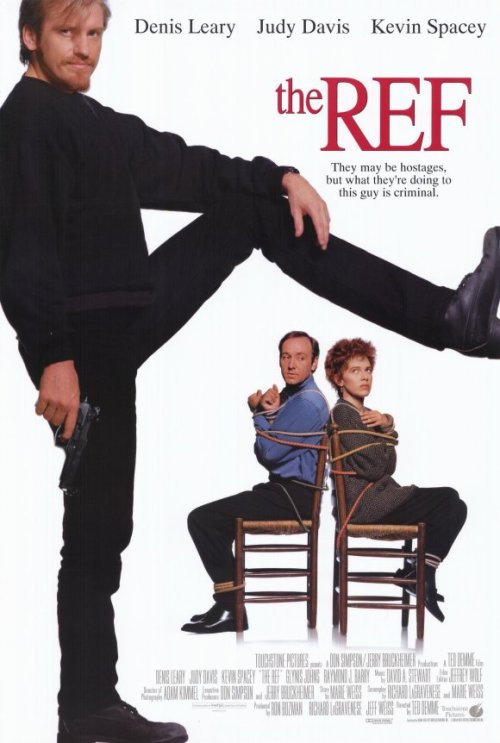
Gus (Denis Leary) is a burglar who takes a bickering couple (Kevin Spacey, Judy Davis) hostage and soon learns to regret it especially when the rest of the family comes over for a Christmas celebration and he is thrust into the middle of all of their squabbling.

The film starts off with a real bang as it takes a lot of satirical pot shots at marriage counseling, people who dress up like Santa, family parties, suburbia, bickering couples, and of course the holiday season itself. Christine Baranski is top-rate as the sarcastic mother and it is unfortunate she wasn’t given more screen time. Even her kids are funny. Glynis Johns is also excellent as Spacey’s mother. She takes command of her scenes even when star Dennis Leary can’t. For her age she looks fantastic and it is nice to see an older actress playing a character that isn’t just used as a throwaway device for senile jokes and aging.

However, star Leary can’t seem to act, at least not here. He shot to fame with his dark and edgy stand- up routines, but here falls into a character that is much too watered down and benign. This was supposed to be his vehicle, but in the end it seems like his character wasn’t even necessary. Baranski’s character is far more funny and memorable even though she has much less screen time.

Spacey and Davis don’t click as a couple. They share no chemistry and their bickering seems strained and contrived. The film also falls too far away from its original premise. Having a two-bit crook dealing with a bickering couple at first seems like a funny concept, but then the story starts to delve much too deeply into their personal problems until it becomes like a family drama that isn’t at all amusing or entertaining.

The film has a few funny bits, but not enough to sustain it the whole way. Leary is very weak in the lead and this thing completely loses steam by the end.

My Rating: 5 out of 10

Released: March 9, 1994

Runtime: 1Hour 33Minutes

Rated R

Director: Ted Demme

Studio: Touchstone Pictures

Available: VHS, DVD, Amazon Instant Video

Britannia Hospital (1982)

Britannia hospital 1

By Richard Winters

My Rating: 7 out of 10

4-Word Review: This hospital needs help.

This is another surreal Lindsay Anderson piece that takes many wild forays and yet still manages to come together as a whole in the end. This is as good, as clever, and as pointed as any of his better known stuff. How this got lost in the shuffle is a mystery, but it really deserves a better look.

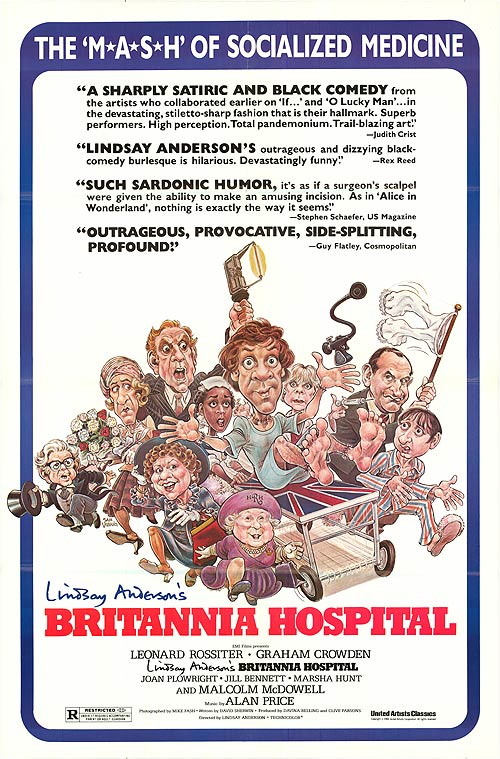
The plot pertains to a madcap hospital that is in complete disarray. The head surgeon is preoccupied with a ‘mad scientist’ experiment, the staff is threatening to strike, and the rich patients expect preferential treatment. All of this occurs while the Queen is set for a visit. Leonard Rossiter plays the head administrator that tries to keep it all under control.

Of course it’s not really about the hospital at all, but more a satirical look at British society and the arrogance of the upper crust as well as the apathy of the lower one. It shows how very wide apart they are and how the problem is only acerbated by the upper levels refusal to effectively deal with the lower level and their gripes.

The stuffy formalities of the British have never been played out better. At times it even goes for the jugular. Having the Queen and her entourage literally chased through the hospital by an angry mob is the best.

The cast is full of old British pros and all are quite hammy. Rossiter is the jewel. His nervous looking face and body tics have always been funny, but here they come to a hilt.

There are even a few gory segments that could satisfy almost any horror fan. In particular is Professor Millar (Graham Crowden). The scene where he cuts up a human brain, sticks it in a blender, and then has a cameraman drink it up like a milkshake, is outrageously funny.

The ending is a surprisingly sobering with a profound speech that deals not only with the inevitable advent of technology, but also the complexities of society’s problems, and the minimalism of our existence. Overall it’s not bad.

My Rating: 7 out of 10

Released: May 27, 1982

Runtime: 1Hour 56Minutes

Rated R

Director: Lindsay Anderson

Studio: EMI Films

Available: VHS, DVD, Amazon Instant Video

How to Succeed in Business Without Really Trying (1967)

how to succeed in business without really trying

By Richard Winters

My Rating: 8 out of 10

4-Word Review: Up the corporate ladder.

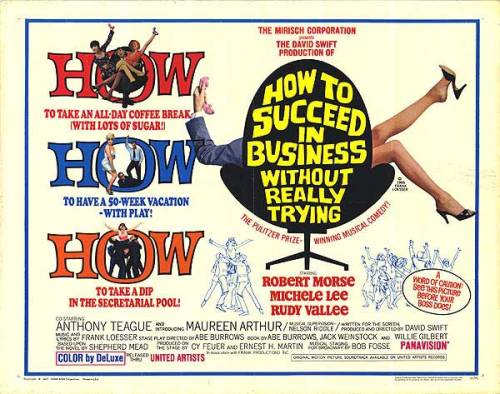
J. Pierpont Finch (Robert Morse) is a window washer looking to get ahead in the business world. By pure chance he finds a book entitled ‘How to Get Ahead in Business without Really Trying’. He reads it and follows the advice. He quickly gets a job at a large company and within days he moves all the way up from the mailroom to the head of advertising and eventually chairman of the board all without doing much work in this adaptation of the hit Broadway play, which in turn was an adaptation of the Abe Burrows novel.

This delightful film is lively and fresh even after all these years. The humor of course exaggerates life in the business world, but remains on target nonetheless. It accurately pinpoints all the universal problems and politics one goes through when working at a large company and dealing with the inside politics of getting ahead. Nothing is dated because it sticks with exposing the human foibles that come about in any generation when in a competitive and uncompromising environment, which is why I found it funny and interesting.

David Swift’s direction is top-notch. The pace is fast and furious balancing the humor and songs nicely. The sets are colorful and garish enough to accentuate the story’s farcical nature, but still bring out an office atmosphere feeling as well as the bigness of the company with large and imposing doorways including the amusing cathedral-like one that opens up to Finch’s office at the very end. At no times does the film suffer from the static staginess like most stage plays do when adapted to the screen.

The songs by Frank Loesser are upbeat and melodic and sound distinctive. My favorite one was the toe-tapping ‘A Secretary is Not a Toy’, but the showstopper ‘Brotherhood of Man’ had the best dance routines and was rousing enough to almost get me out of my seat. Rudy Vallee and Morse are also great in their rendition of ‘The Old Ivy’ fight song.

Morse recreates his role from the Broadway production. His voice isn’t necessarily the best and some of his singing seems a bit off-key, but his very boyish looks, gap-toothed grin, and bowl haircut is perfect for the part. A fun moment involving him is the scene where he prances down a busy New York sidewalk that was done with hidden cameras and the reactions from the other people on the street are genuine and real.

Michele Lee is terrific in her film debut. Her energy and perky smile are perfect as is her voice in the rendition of ‘I Believe in You’. She is probably best known to most for her starring role in the long running TV-series ‘Knots Landing’. What I can’t get over is how she continues to look like she hasn’t ever aged. A video on YouTube from her appearance at a 2011 AARP event has her looking almost the same as she does in this film. The interviewer tells her she is looking good and Lee replies ‘I always do’, which may seem conceited to some, but when one continues to look as great as she does then I suppose it is deserved.

Vallee best known as a crooner from the 1920’s is fun as Jasper Biggley the pompous head of the corporation. Anthony Teague with his devilish grin is great as the nefarious Bud Frump. I also liked the cute Kay Reynolds as Smitty and found it a shame that neither of these two talented young performers went on to do much else film-wise after this.

The only one I really didn’t like was Maureen Arthur as the ditzy and dumb Hedy Larue. Her high pitched voice and body gyrations were clichéd, over-the-top, and more annoying than funny. However, the incompetent way she takes down a dictated letter as well her reluctance to put her hand on a giant Bible during the film’s hilarious treasure hunt scene did manage to elicit some chuckles.

In 2011 the play was brought back to Broadway with Harry Potter’s Daniel Radcliffe in the lead. I wouldn’t be surprised if a remake of the film version comes out at some near point although nothing has been announced. Either way this film stands fine on its own and although never mentioned amongst the classic musicals I think it should be.

My Rating: 8 out of 10

Released: March 9, 1967

Runtime: 2Hours 1Minute

Rated NR (Not Rated)

Director: David Swift

Studio: United Artists

Available: VHS, DVD, Amazon Instant Video, Netflix streaming

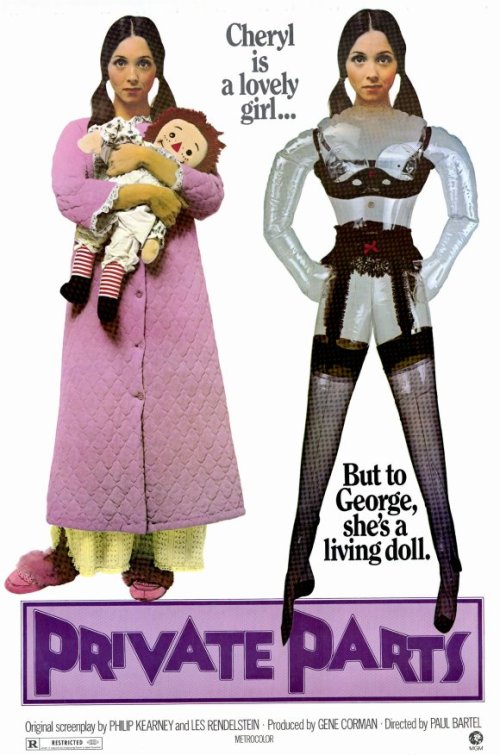
Private Parts (1972)

private parts 3

By Richard Winters

My Rating: 7 out of 10

4-Word Review: He likes to watch.

Cheryl (Ayn Ruymen) is a teen who cannot get along with her sister and boyfriend and decides to move out of their apartment and into a seedy hotel run by Martha (Lucille Benson) a very strange old lady. Here she lives next to voyeuristic photographer George (John Ventantonio) who has a big sex doll fetish. Cheryl secretly spies on George having sex with his doll and starts to get off on it. George becomes aware of Cheryl spying on him and likes it, which causes them to form an odd relationship and that is when things really get weird.

The film’s intrigue comes from the way it see-saws between being a perverted character study, horror film, and dark comedy. Director Paul Bartel makes great use of lighting, setting, and camera angles. There is also one truly odd and memorable sequence involving Ventantonio filling up his sex doll with water and then pumping it full of his own blood. The story is subtle enough to keep you involved and guessing and may even take a couple of viewings before you truly ‘get it’.

Much like with his later and better known film Eating Raoul Bartel examines the psychological complexities that make up people’s sexual nature and how perversions and fetishes are a normal part of it. The mindset is that everyone probably has a weird fetish of some kind and the open minded approach is what ultimately makes it refreshing and intriguing.

Although the film teases you with some sex and violence it never really goes all out. By dancing the line between being a horror film and a sex flick it fails to make a lasting impression despite a few good moments.

This is an interesting curio for sure and for its time was really pushing the envelope, but suffers from a low budget and isn’t scary or gory enough. However, George’s sex doll is unforgettable and watching it fill up with his blood is one of the damnedest looking sights ever put on film.

My Rating: 7 out of 10

Released: September 17, 1972

Runtime: 1Hour 27Minutes

Rated R

Director: Paul Bartel

Studio: MGM

Available: VHS, DVD, Amazon Instant Video

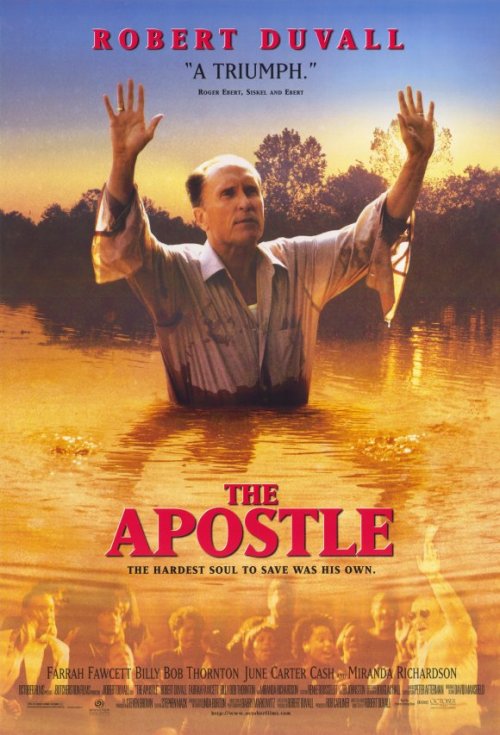
The Apostle (1997)

apostle

By Richard Winters

My Rating: 8 out of 10

4-Word Review: Preacher on the run.

As a would-be screenwriter I find it heartening knowing how many great screenplays there are out there that struggle to find a home no matter who has written or pitched it.  Actor Robert Duvall wrote the solid screenplay for this film in the 80’s only to have it rejected by every major studio and only got made when he decided to put up 4 million dollars of his own money.

The story involves a fiery evangelical minister by the name of Sonny (Duvall) whose volatile ways gets the better of him and he ends up killing his wife’s lover. He then goes on the run to Louisiana where he starts up a new church. There he begins to turn his life around and become loved and admired by the community only to have the police close in on him.

In many ways this is similar to a 1962 episode of the old ‘Alfred Hitchcock Hour’ series that was entitled ‘Bonfire’ and starred Peter Falk as the minister.  Both characters were loud and dramatic preachers.  Both men went on the run after committing homicide while continuing to start up new congregations along the way and both ended up being surrounded by the police as they gave one last fiery sermon. However, the difference comes with the fact that the Falk character was clearly a self-serving fraud while with Sonny that is not so clear, which is what makes this film and character so fascinating.

Sonny has a temper as well as other underlying issues, but he makes a genuine effort to rectify things with his new congregation.  He even brings boxes of groceries to the doorsteps of poor families. It is never clear whether he is simply trying to make personal amends for past transgressions, or just a flawed man with a good heart. The viewer is never allowed to feel sure either way, but ends up empathizing with him nonetheless. Every scene and line of utterance becomes more revealing.

Duvall gives a strong performance. I felt this may be his signature role and that comes after a long line of already brilliant performances.  I enjoyed his running ‘conversations with the Lord’ that he has when he is alone or just walking down the street.  The conversation that he has with the police is amusing as is the final scene that is shown over the closing credits.

The casting is unique.  June Carter Cash plays his mother, which is interesting by the fact that in real-life she was only two years older than Duvall.  Farrah Fawcett plays his wife, and although she was much younger than him, I felt she did a good job and made a perfect fit.  Billy Bob Thornton gets a memorable cameo as a man who initially wants to destroy the church with a bulldozer, but then with Sonny’s help becomes spiritually awakened.  I also very much liked James Beasley in the supporting role as the minister who helps Sonny start up his new church.  His calm and collected manner helped balance Duvall’s intensity.

The supporting players were all amateur actors, some of which had never performed in front of the camera before.  Director Duvall was known during filming to keep the atmosphere loose.  He allowed his cast to ad-lib, which gives the film a more authentic feel.  Just like with other actors who turned to directing, like Paul Newman and Marlon Brando, Duvall has scenes that stretch out much longer than most films.  This is done to give the actors more control over their characters and allow their performances alone to carry the scene.  I also liked the fact that the supporting cast was almost all African-American and the story centered on a white minister preaching to a black congregation.

Duvall has long been known to be an admirer of the south, so it is no surprise that the story takes place there or that the shooting was on-location.  He captures the ambience of the region and people quite well, including the sound of the heat bugs buzzing at night.

The only issue I had with the film involves the scene where Sonny kills his wife’s lover. He does this by hitting him over the head with a baseball bat during a little league game while in front of many onlookers.  In most real-life accounts when something similar to this happens people will usually gang up on the culprit and physically subdue him, or chase after him until the police arrive while here the onlookers allow Sonny to peacefully walk away.  Other than that I thought this was a great character study and I would highly recommend it.

My Rating: 8 out of 10 

Released: October 9, 1997 

Runtime: 2Hours 14Minutes 

Rated PG-13 

Director: Robert Duvall 

Studio: Butcher Run Films 

Available: VHS, DVD, Amazon Instant Video

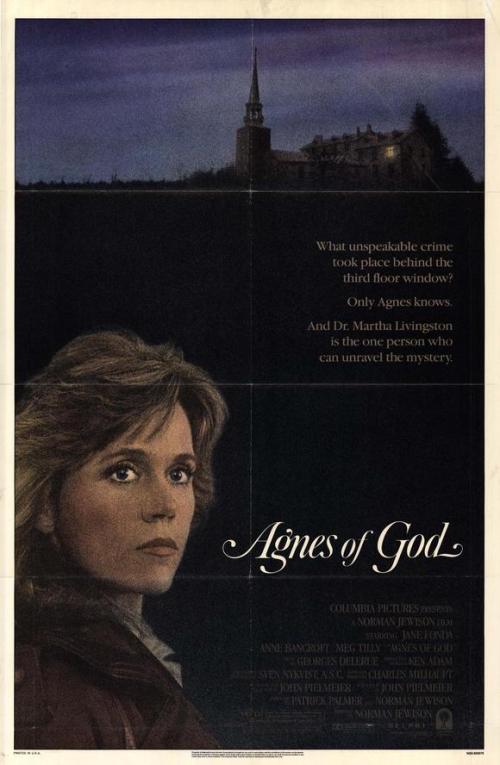
Agnes of God (1985)

Agnes of God 2

By Richard Winters

My Rating: 7 out of 10

4-Word Review: Meg Tilly is marvelos.

Sister Agnes (Meg Tilly) is a young nun found in a convent to have given birth to a baby who then dies. Martha Livingston (Jane Fonda) is the court appointed psychiatrist brought in to investigate the case, but as the investigation ensues it only seems to unearth more and more perplexing twists.

The theology is slight and the film, which is based on the Broadway play by John Pielmeier, approaches the subject matter in a very matter of fact way. It has the mindset that the majority of the viewers are non- religious or disgruntled ex-Catholics and portrays the church as a stubborn, age old institution that is slowly losing touch with our more modern sensibilities.

Yet, refreshingly, it also doesn’t try to tear down the church with every chance it gets. There is a certain level of respect and objectivity. The mother superior (Anne Bancroft) is shown to be very human and multi-faceted. She and Fonda make interesting adversaries. Their love-hate relationship is both interesting and enlightening. There is even a rare scene showing an excited young woman being inducted into the sisterhood as her proud family looks on.

Fonda, with her liberated modern woman persona, seems a very obvious choice to play the no-nonsense psychiatrist. She approaches the role with conviction, but her constant chain smoking seems affected and her emotionalism overwrought. I still say she is better suited for comedy like in Cat Ballou and Nine to Five.

Bancroft is solid as usual. Yet it’s Tilly that is really impressive. She portrays the innocence of her character with an incredible clarity and it’s almost astounding.

The mystery unravels well and keeps you intrigued. Yet the ambiguous conclusion is a bit disappointing. The drama side fares better. It poses a few good insights and ends with an interesting perspective. The film is well done on all levels even though outside of Tilly’s compelling performance there is really nothing that memorable or distinctive about it.

My Rating: 7 out of 10

Released: September 13, 1985

Runtime: 1Hour 38Minutes

Rated PG-13

Director: Norman Jewison

Studio: Columbia

Available: VHS, DVD, Amazon Instant Video