Tag Archives: Elliot Gould

The Devil and Max Devlin (1981)

devil and max devlin

By Richard Winters

My Rating: 2 out of 10

4-Word Review: Working for the devil.

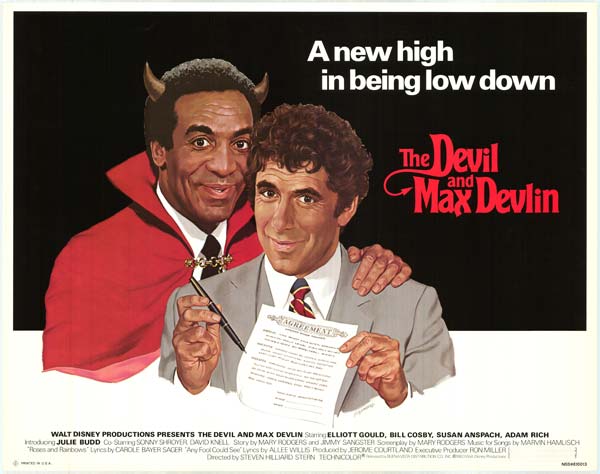
Max (Elliot Gould) works for a slumlord and does whatever he can to make life miserable for the tenants who rent from him. After getting run over by a bus while trying to chase down a delinquent tenant he finds himself in hell and face-to-face with the devil (Bill Cosby) who gives him a deal that will allow him to get out of dealing with ‘Level 4’, which is supposedly one of the harsher penalties for hell dwellers. The deal consists of Max getting three people to sign over their souls at which point Max’s will be freed, but as Max gets to know the people including that of 10-year-old Toby (Adam Rich) whose mother Penny (Susan Anspach) he is interested in marrying he becomes reluctant to follow through with it.

This movie was part of Disney’s effort to break away from the kiddie-like slapstick of their 70’s films and become edgier and more ‘hip’. This film along with The Black Hole, Condorman, and Tron where all produced to attract an older teen audience and gain a trendier appeal, but it pretty much failed and this movie was the worst of them. Part of the problem is that the main character is a man in his 40’s, which kids and teens cannot relate to. Most films need to have a protagonist the same age as its intended audience in order to build that connection and this one doesn’t. It’s also very slow with little or no action. I found myself completely bored with it during the second hour and I can only imagine what a 10 or even 13-year-old must have felt. The humor is minimal and not funny. It also lacks any type of ‘coolness’ with a plot that isn’t any more sophisticated than the formulaic stuff it had already been churning out, which at least was engaging on a mindless level, which this one isn’t.

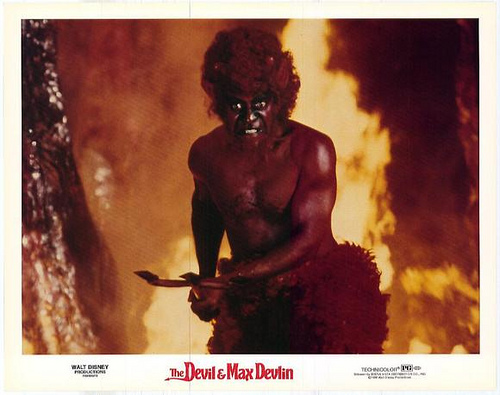
I liked the scenes shown from hell, but that is about it. The script, which was written by Mary Rodgers who had earlier success with Freak Friday seems unable to understand things from a teen’s perspective while being quite predictable in the process. Also, the reasons for Max going to hell, which include cheating on a test in the 4th grade and stealing candy from a store as a child seem awfully trite. If hell truly does exist and minor stuff like that is enough to get people sent there then the majority of us will be going and heaven will be a very empty place.

Gould does surprisingly well, but I still felt he was miscast. Cosby is wasted and barely even used although the scene near the end where he appears in devilish makeup is effective and creepy. Anspach is equally wasted and Ronnie Schell who plays as an aggressive talent agent wearing some very loud suits is seen much too briefly.

This one is a definite pass even for Disney fans. It’s too edgy and scary for little kids, not hip enough for teens while being too watered down for adults.

devil and max devlin2

My Rating: 2 out of 10

Released: March 6, 1981

Runtime: 1Hour 36Minutes

Rated PG

Director: Steven Hilliard Stern

Studio: Buena Vista Productions

Available: DVD, Amazon Instant Video

California Split (1974)

california split

By Richard Winters

My Rating: 4 out of 10

4-Word Review: Guys addicted to gambling.

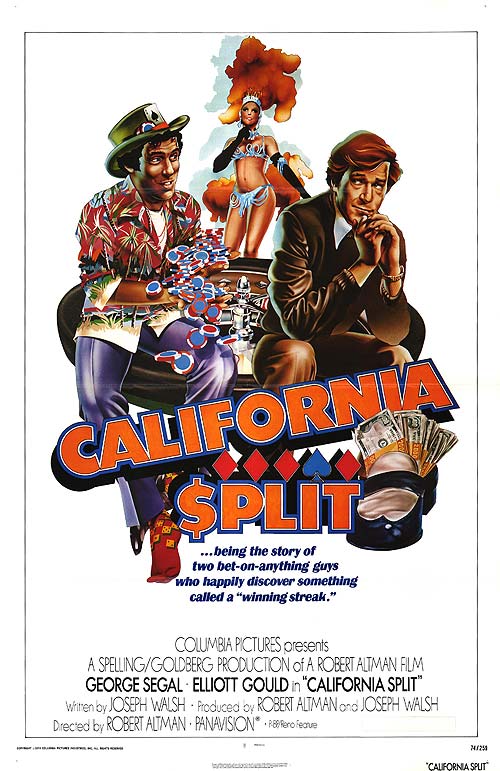
There is a scene in The Gambler, which is a similar movie to this one and came out around the same time, where actor James Caan’s character is on the beach with his mother. He writes in the sand $44,000. This is the amount he owes in gambling debt and the amount he needs from her. He can’t bring himself to ask her directly so he writes it instead. His mother gasps when she sees the amount and then asks “How is such a thing possible?!” It is for that reason that making a movie about someone with a gambling addiction is so intriguing. What exactly is it that could propel someone to act so foolishly with their money? Unfortunately both films promised a lot, but delivered little. Worse yet both are uninvolving and boring.

In this case the film fails to ever get inside the character’s heads. We have no idea what personality traits a gambler may have nor their background or relationships. We simply see two rather bland middle-aged men getting together and going through their gambling paces. Apparently the idea was to show a gambler doing his thing and hope to find some ‘truth’ from it. Well it doesn’t work. It’s tantamount to a novice writer scribbling out some rambling prose and hoping to get a story. It all just proves that the filmmakers have no more insight into this phenomenon than anyone else.

Director Robert Altman seems more interested in keeping things light and entertaining. Normally his eccentric touches help compliment the film, but here it gets in the way. For example there is a long drawn out scene featuring Bert Remsen’s character that likes to dress up like a woman that is completely unnecessary and bogs everything down.

Elliot Gould’s wise guy, wise cracking ways become obnoxious and never once does he come off as a man gripped by an addiction. George Segal shows a little more of an emotional downside, but it seems forced.

The film hits its mark only once and that is when it focuses on a big poker game, played in Reno, by the country’s top players. Listening to Gould describe to Segal all the traits of each player is interesting. It helps show what a psychological game poker really is, but unfortunately it doesn’t get to this part until the very end and then only for a short while.

In the category of ambiance Altman scores as usual. The faces of the people at the casinos are etched in character. You can almost smell the hanging second-hand-smoke and Dorothy Showalter’s brassy, slightly off-key singing gives the soundtrack a distinct flavor.

My Rating: 4 out of 10

Released: August 7, 1974

Runtime: 1Hour 48Minutes

Rated R

Director: Robert Altman

Studio: Columbia Pictures

Available: DVD, Amazon Instant Video

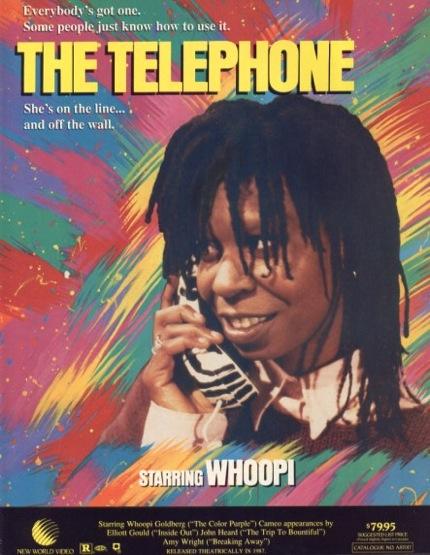
The Telephone (1988)

the telephone 2

By Richard Winters

My Rating: 1 out of 10

4-Word Review: I liked the owl.

Vashti Blue (Whoopi Goldberg) is an out-of-work actress sitting inside her dreary small apartment and having conversations with people over the phone. She also argues through a locked door that she shares with the women next door while waiting for a call from an agent for a job opportunity that never comes.

I am all for experimental cinema, which is the best way to describe this misguided project, but to work it still needs an artistic design and focus and this has none. It pretty much comes off as somebody’s cheap home video where a camera is turned on and then someone is allowed to rant and rave without pause for eighty minutes. Some could blame Rip Torn who is an actor turned first-time director here, but in subsequent interviews he has complained that Whoopi wouldn’t listen to any advice or direction that he gave and pretty much made his presence insignificant.  You could also blame the screenplay, which was written by the very odd pairing of Terry Southern and Harry Nilsson. Southern is best known for penning the screenplay for Dr. Strangelove while Nilsson is a famous singer/songwriter whose best work was doing the song ‘Everybody’s Talking’ that was the theme for the classic film Midnight Cowboy. However, Whoopi took great liberties with the material and ad-libbed a lot, so what was originally put down on paper and what is left on the screen could be minimal.

The conversations that Whoopi has over the phone ranges from lame to ridiculous. One includes calling the police and trying to get them to arrest a video store owner because he rented her a tape of Christmas in July with a scene excised is too absurd to be even remotely amusing. The Whoopi character also incorrectly stated that Frank Capra was the director of the film when it reality it was Preston Sturges.  Goldberg puts on a variety of accents including British, Japanese, Indian, and Southern as well as a few others, but her Irish one is suspect and her impression of John Wayne is terrible.

The apartment set is dull and bleak. The viewer feels trapped and with such little visual design their eyes and thoughts are apt to wander. Cutaways are sorely needed, but there are none. An infuriating moment is when there is a sound of a loud car pile-up outside, but despite this being a visual medium the camera never cuts away to show any of it. This was probably due to budget constraints, but what is even more perplexing is that there are sounds of people screaming, police sirens and even rioting and then a half minute later it all suddenly stops for no explained reason.

The supporting cast is eclectic but wasted. Noted character actor Severn Darden, in his last film role, appears in a brief bland bit as Whoopi’s neighbor. Elliot Gould gets a few minutes as Whoopi’s former agent and seems to be seriously slumming as he was a headline star during the seventies and now sadly stuck in this. John Heard is the only one who comes off best as a caustic, brash telephone repairman.

Whoopi’s two pets upstage the human cast by a mile. Her pet owl is very cute and I dug the goldfish particularly when he gets sucked down the drain of her bathtub and she must use a plunger to save him, which is the only time there is any action in the entire movie.

My Rating: 1 out of 10

Released: January 22, 1988

Runtime: 1Hour 20Minutes (The DVD cover states it’s 1Hour 36Minutes, but it is wrong.)

Rated R

Director: Rip Torn

Studio: New World Pictures

Available: VHS, DVD

The Silent Partner (1978)

silent partner 2

By Richard Winters

My Rating: 8 out of 10

4-Word Review: Bank teller outsmarts robber.

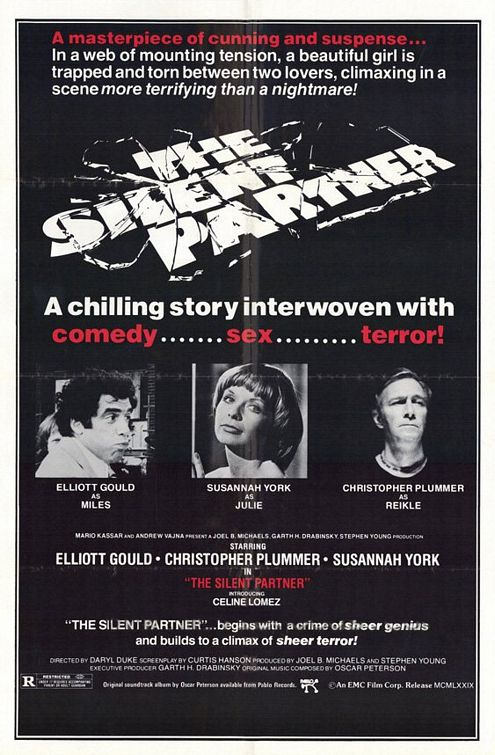
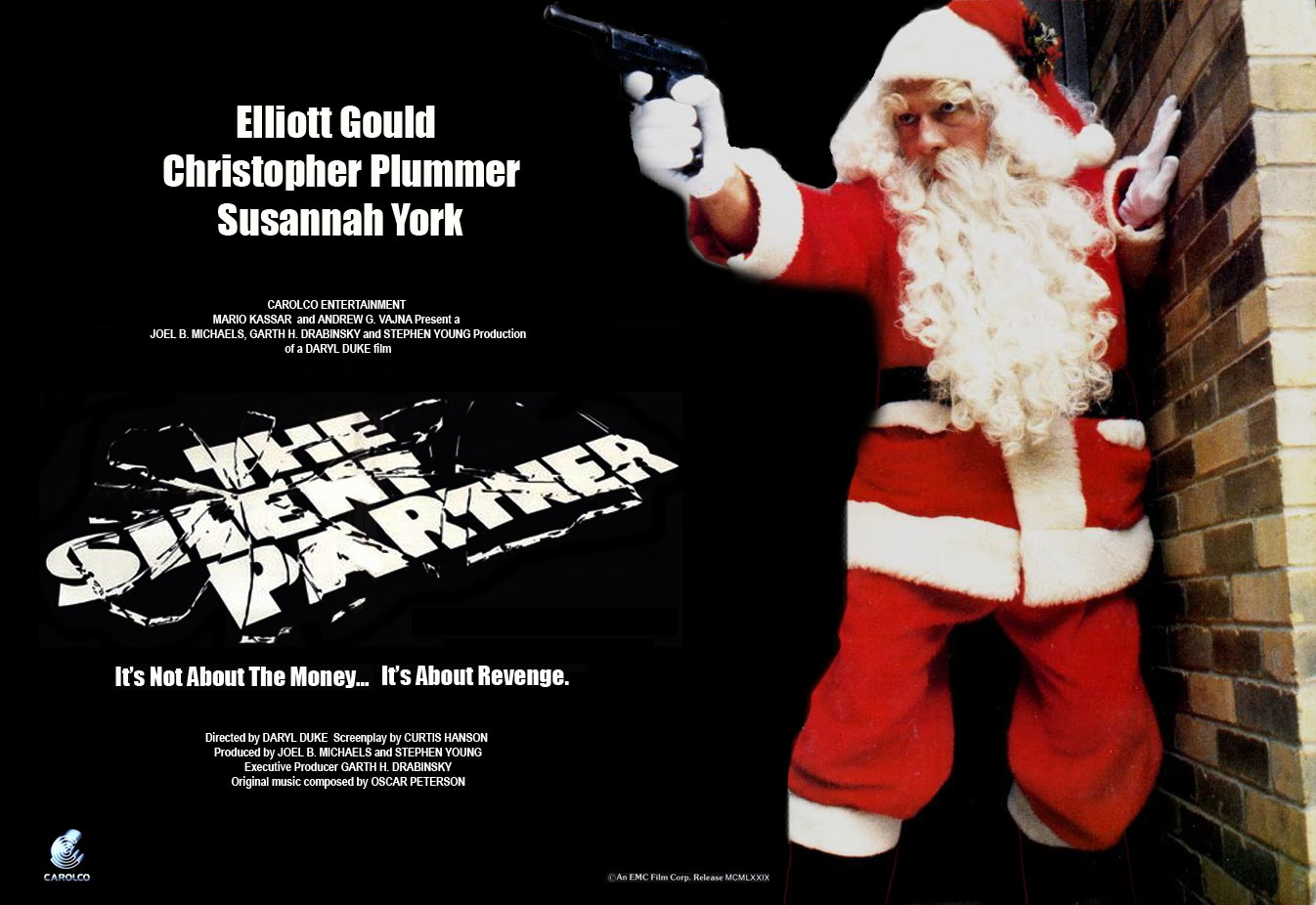
This is an ingenious, slick, and really fun caper movie that puts a whole new spin on the old bank robbery theme. Here Elliot Gould plays a bank teller named Miles who, by sheer accident, becomes aware that a man named Harry (Christopher Plummer) is planning on robbing his bank. Miles decides to take the money from his till and put it into his lunchbox. Then when Harry robs the bank it is actually Miles the teller that gets the money while Harry goes away with very little. Yet this is only the beginning as Harry and Miles continue to play a crafty game of cat- and-mouse, which leads from one interesting twist to another.

Gould plays against type here and he does quite well. Usually he tends to be loud, argumentative, and anti-authority, but here he is quiet and unassuming. It’s the type of character you think wouldn’t have the guts to pull off what he does, which makes him all the more intriguing. In fact he just keeps surprising you all the way along, stringing the very psychotic and dangerous Harry in ways you couldn’t imagine. It is only his final move that seems to be testing the odds too much.

Plummer makes a terrific adversary. He is dashing and handsome as ever, but with an intensely sinister edge and an icy cold gaze.

Susannah York as Miles’ love interest Julie is wasted. Her character seems thrown in for good measure and at no time seems interesting. There is no chemistry between them and the whole love angle is forced and unnecessary. Celine Lomez, as Elaine the other female character, is different. She is stunningly beautiful and much cagier. She plays between both Harry and Miles and you are never sure which side she is really on. Her acting isn’t spectacular, but she is sensual and has a nice French accent. Her gory and gruesome demise though is unwarranted and works as a drawback to the movie.

There are a few other negatives about the film. One is the drab setting that takes place in Toronto and yet we hardly see any of it. Having the bank itself set inside a boring shopping mall is not too visually exciting. The same goes for Miles’s bland apartment. The supporting characters, especially the other bank employees are incredibly dull. Their lines and basic presence all seem to have been written in simply as ‘filler’. A young John Candy plays one of these co-workers and his comic talents are wasted.

Still the story is creative and has enough unique twists that it overcomes the technical shortcomings and manages to be a highly entertaining flick.

silent partner 1

My Rating: 8 out of 10

Released: September 7, 1978

Runtime: 1Hour 46Minutes

Rated R

Director: Daryl Duke

Studio: EMC

Available: VHS, DVD, Amazon Instant Video

Little Murders (1971)

little murders

By Richard Winters

My Rating: 7 out of 10

4-Word Review:  They shoot at people.

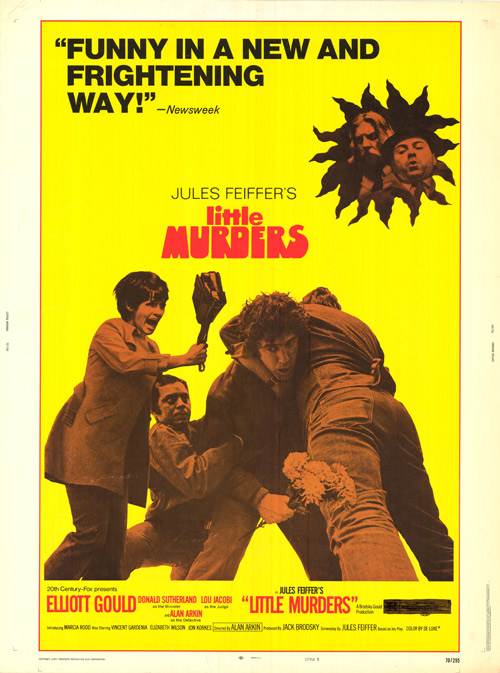
Patsy (Marcia Rodd) is a woman who practices the art of positive thinking despite her dismal urban surroundings. She meets Alfred (Elliot Gould) who is very detached and dropped out of society and no longer shares any hope in humanity, but she decides to marry him anyways and ‘reform’ him.

For a black comedy this one has got to be tops. It stays on a grimly humorous level from the beginning and doesn’t let up especially with its wicked ending. Everything gets the offbeat treatment and if it starts out conventional it is soon turned upside down until it is absurd. The funniest scenes involve Patsy taking Alfred home to meet her parents where things become very odd until they are absolutely hilarious. The wedding scene is also a classic where Donald Sutherland plays a hippie minister and gives a speech about masturbation that is as outrageously funny today as it was back then. Yet it is the surreal scene of seeing Alfred riding a subway car while dripping with blood and nobody saying anything that leaves the strongest impact. The targets that this film satirizes are just as potent today as they were back then. The film also manages to dig a bit deeper than most and successfully analyzes the myriad of societal complexities while not siding with any particular social movement or philosophy.

Rodd is terrific in her film debut and Gould is good in a surprisingly restrained performance. Jon Korkes is also excellent as an infantile adult son in an over-the-top send-up of grown children still living at home. However, it is Vincent Gardenia that ultimately steals it playing a hard-liner conservative father who finds himself becoming literally imprisoned by the increasingly insane world around him.

Although still potent this outrageous story seems to have lost some of its zing through the years and doesn’t seem to be as offbeat or ‘out there’ as it once did. It also lacks any type of cinematic flair and at times seems to be nothing more than a filmed stage play.

However, for fans of black comedy and relics of a bygone era it doesn’t come much better than this. Although it has softened a bit there are still enough bizarre and funny moments to please those with an acquired taste.

My Rating: 7 out of 10

Released: February 9, 1971

Runtime: 1Hour 50Minutes

Rated R

Director: Alan Arkin

Studio: 20th Century Fox

Available: VHS, DVD