Tag Archives: Ellen Burstyn

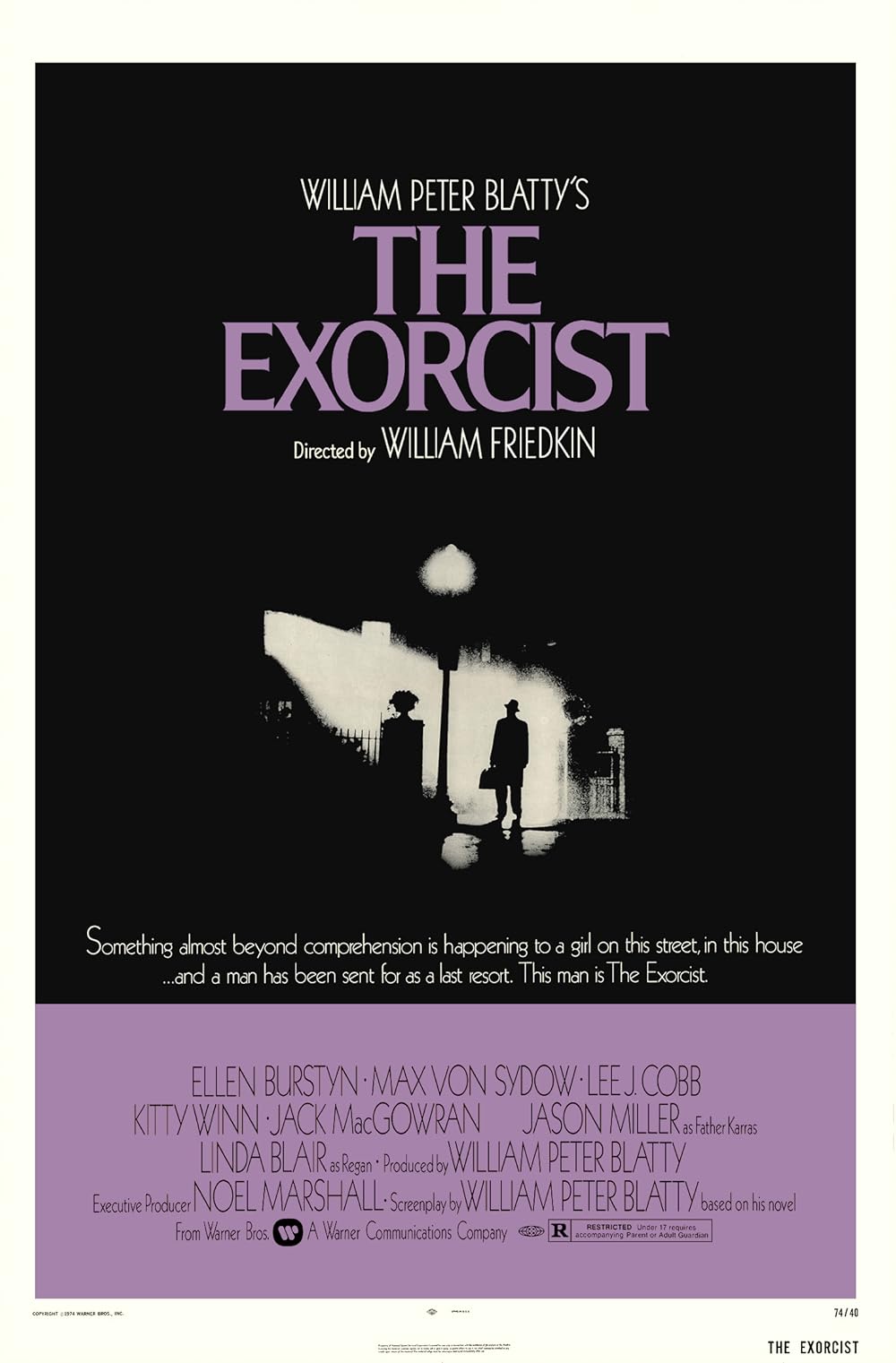
The Exorcist (1973)

By Richard Winters

My Rating: 10 out of 10

4-Word Review: Possessed by the devil.

Chris McNeil (Ellen Burstyn) is a famous Hollywood actress living on location in a neighborhood of Washington D.C. known as Georgetown where the latest movie she’s working on is being shot. She’s renting a posh home along with her two servants (Rudolf Schundler, Willi Engstrom), her secretary Sharon (Kitty Winn) and her 12-year-old daughter Regan (Linda Blair). Things start out fine, but then Regan begins exhibiting odd behaviors. Chris takes her to several doctors as Regan’s anti-social traits continue. The doctors prescribe various drugs, but nothing works. At her wits end Chris, a non-believer, finally resorts to asking a local priest, Father Karras (Jason Miller) if he’ll perform an exorcism on her daughter. Karras though is going through a crisis of faith and doesn’t believe the archaic ritual will help her but becomes more convinced after he visits the girl who displays knowledge of his personal life that she would not have known about otherwise. Eventually he asks the church for permission to conduct one, but under the condition that he do it alongside Father Merrin (Max Von Sydow) an elderly man with a heart condition who had done an exorcism many years earlier in Africa.

The film was based on the bestselling novel of the same name that in-turn was inspired by the true-life event that occurred in 1949 where priests performed an exorcism on a troubled 14-year-old boy named Ronald Edwin Hunkeler. Author William Peter Blatty, read about the incident while a student attending Georgetown University. After having become a successful screenwriter during the 60’s where he wrote mainly comedies for director Blake Edwards, he approached his agent about writing a horror novel about a child possessed but was initially talked out of it. Then in 1968 he watched Rosemary’s Baby, which he felt had a weak ending that he could’ve done better, so he brought up the exorcism concept to a book publisher while attending a cocktail party and he agreed pay him a $25,000 advance to write the book in 10-months. Upon publication the sales were at first sluggish, but then after an appearance on the ‘Dick Cavett Show’ they skyrocketed, which soon lead to a movie rights deal with Blatty commissioned to write the script.

The movie follows the book closely though in a more condense form with scenes that were groundbreaking in its level of explicitness and perversity including an infamous crucifix masturbation moment. However, it’s the angiography that many viewers found the most disturbing. While it’s shockingly explicit it’s also lauded by medical professionals as being highly accurate and for many years afterwards was used in radiological training films. Many critics at the time condemned the scene labeling it ‘irresponsible’ and ‘needless’, but I liked it. A good horror movie should put the viewer in an uneasy state right from the start and then continue to turn the screws tighter as it goes on. This moment clearly telegraphs to the audience that the filmmakers will not shy away from showing something graphic even if it’s outside of good taste and if they’re going to be this brazen with this scene then it makes it all the more unsettling about what’s to come next. 

In many ways, and I don’t believe it was intentional, but the film does become an inadvertent satire on the medical, psychiatric community as their ‘diagnosis’ on Regan are really just guesses and the extreme reliance on prescribing medications, which they feel will somehow ‘resolve everything’. I didn’t really have a problem with this as I think many doctors at the time, and maybe even now, would respond the same way if given such a bizarre case. My one issue though is that eventually one of them, played by Peter Masterson, gets up in front of a roundtable of other doctors and suggests that Chris take Regan to an exorcist. I don’t believe any real medical doctor would ever suggest it or certainly be met with pushback by the other medical professionals in the room. I realize the movie had to find a way to progress to the third act, so the idea of an exorcist needed to be brought up at some point, but it would’ve made more sense had it come from Chris’s servants, who were deeply spiritual already. Chris could’ve scoffed at it at first, but then after thinking and even reading up on it, would eventually relent. 

The performances are uniformly excellent. Burstyn was not the first choice as there were other actresses more famous than her at the time, but her ability to display distraught emotion and continue to do so as it progresses and still keep it fresh and genuine makes her the best person for the role bar none. Blair is quite good too though Mercedes McCambridge does voice the demon during the exorcism moments, which kind of affects things. Don’t get me wrong McCambridge’s deep vocals makes it scarier, but had the lines, which are quite obscene, been recited by Blair herself it would’ve made it more shocking. Plus, it would still allow credence for the doctors to say it was a mental illness and not a possession since whatever was being said was coming from her natural voice. 

The real star though is Father Karras as he’s the one that goes through an actual internal change during the course of the story, from a person who’s had a crisis of faith to ultimately regaining it. Miller, who’s perfect, was not the original choice as Stacey Keach had already been offered the role and signed on, but then director William Friedkin went to watch the play That Championship Seasonwhich Miller had written and afterwards the two met backstage and Friedkin talked about his new project that got Miller to describe his own Catholic upbringing and his quarrels with it, which convinced Friedkin that he’d be the better actor and thus the studio bought Keach out of his contract. As much as I like Keach this was still a good move as Miller’s guilt-ridden face, which gets on full display every time he’s in front of the camera, leaves a lasting visual impression. I also liked the way the character remains skeptical until the very end versus other horror films that would have the people believing in the supernatural right away, or pretty quickly. However, in real-life there’s always going to be cynical people, so allowing in their apprehension through Karras makes the story stronger and more three-dimensional. 

Spoiler Alert!

I felt the ending, in which Chris pronounces Regan to be ‘cured’ and not remembering a thing and then driving away, to be a bit lacking. Chris was portrayed as being secular, but you’d think after what she saw her daughter going through would’ve changed that. This could’ve been done subtly by having her holding a crucifix, something she had despised her staff putting underneath her Regan’s pillow earlier or just shown wearing a small one around her neck. 

I also didn’t like the side-story dealing with the Burke Dennings character, played by Jack MacGowran, being apparently pushed out the window by the demon and falling to his death down a flight of cement stairs as this takes away the impact of when it happens to Father Karras at the end. Instead of Karras’ death being the shocking, unexpected twist that it should’ve it comes off more like a ‘here-we-go-again’ thing. If I had been the director I would’ve removed both Dennings death and Lee J. Cobb character completely as I really didn’t think he added much or helped progress the story forward. I would’ve still had the steps being shown in the early part of the film as a forewarning by having Karras runup them during his early morning workouts and this could’ve been when he first met Chris as they’d bump into each other one day while she was leaving to go somewhere. The head being twisted all the way around, which is described as happening to Dennings, but never shown, could’ve been revealed as occurring with Karras, possibly with his eyes glowing when the pedestrians come running to his aid, which would’ve been a good creepy final horror visual. 

My Rating: 10 out of 10

Released: December 26, 1973

Runtime: 2 Hours 15 Minutes

Rated R

Director: William Friedkin

Studio: Warner Brothers

Available: DVD, Blu-ray, Amazon Video, YouTube
Same Time, Next Year (1978)

sametime

By Richard Winters

My Rating: 6 out of 10

4-Word Review: Affair lasts 26 years.

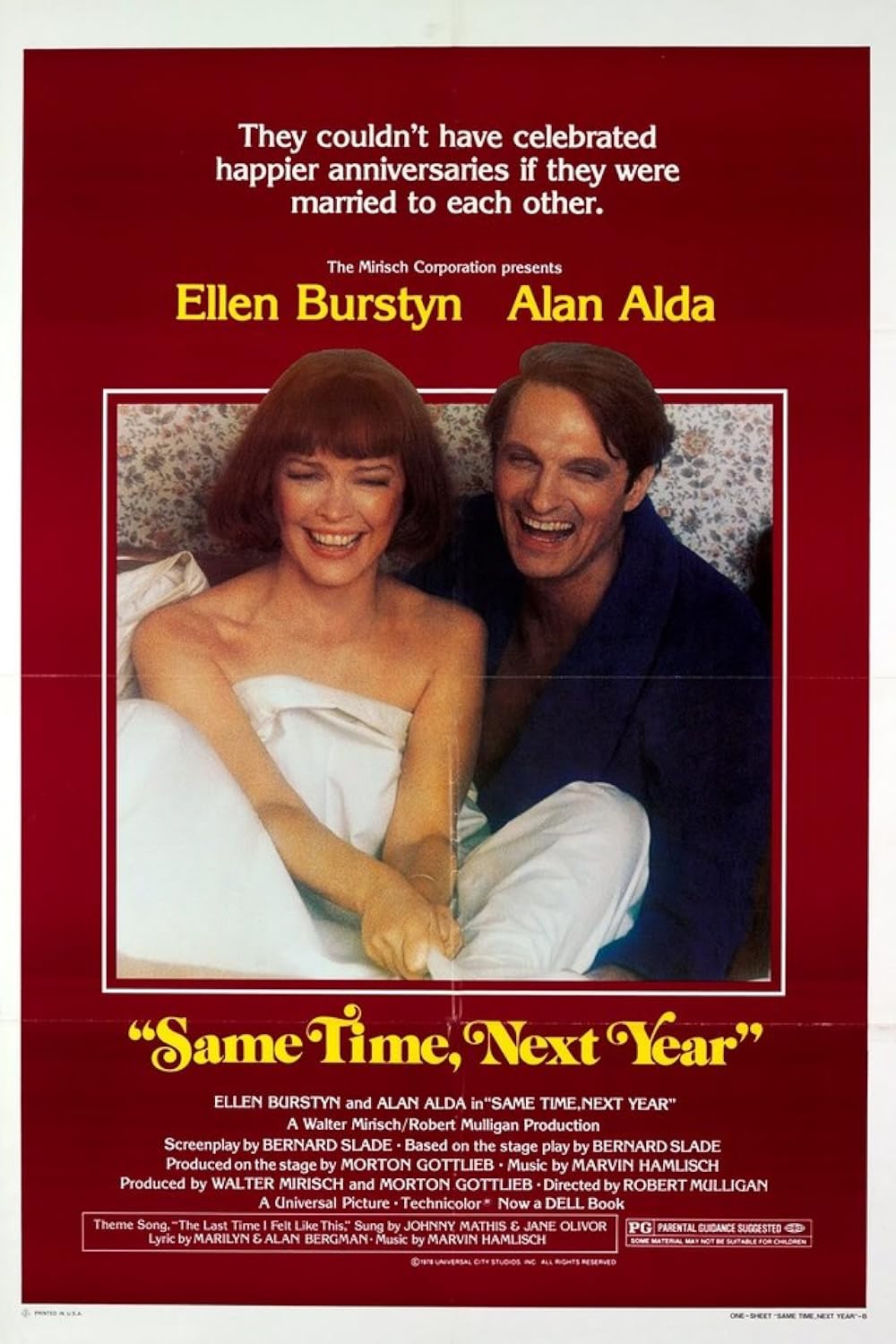
George (Alan Alda) meets Doris while staying at an inn in California in 1951. Both George and Doris are married with kids, but that doesn’t stop them from having a tryst while they’re there since neither of their spouses are with them. They decide to continue to meet each year at the same time and inside the same oceanside cabin. This reoccurring rendezvous lasts all the way up to 1977 and they go through many changes both in their personal lives and personalities, but remain in-love with the other despite never divorcing from their spouses.

While there’s a definite Neil Simon quality to the dialogue and situational comedy it was actually written by Bernard Slade who at that time was best known for creating the sitcoms ‘The Flying Nun’ and ‘The Partridge Family’. Originally it opened as a play on March 14, 1975 and starred Ellen Burstyn and Charles Grodin and ran for 1,453 performances. Slade also wrote the screenplay to which he was nominated for an Oscar.

While the interiors were filmed on a soundstage the outer portion of the cottage was built specifically for the film and when shooting was completed it was decided to move this foundation to a location in Little River, California with the interiors fitted with the furnishings that had been used on the soundstage during filming and then allowing couples to rent it out. This became so popular that the cabin was split into two with one called ‘Same Time’ and the other ‘Next Year’ and can still be rented out for a romantic getaway to this very day.

While the film stays faithful to the stage version I felt there should’ve been added context revolving around how they meet. We see them first making contact as they enter the inn to check-in and then they have dinner at separate tables before Alda invites himself over to eat at Burstyn’s, but we never hear their dialogue and instead get treated to sappy music, which could’ve easily been chucked and not missed. It also fails to answer one of the plot’s more crucial questions: why would a married woman with kids be traveling the countryside all by herself? For Alda it could make some sense as it was socially acceptable for a man to be traveling single for business reasons, but woman at that time were pretty much stuck in the home doing the majority of the child rearing, so what would her reason be for being out on the road all alone? Maybe she was visiting relatives, but you’d think if that were the case they’d let her stay at their place, or she’d bring her kids along, but either way there needed to be an explanation and there isn’t any.

The fact that they’re able to continue to do this for literally two and a half decades without the spouses finding out for the most part begs a lot of questions. What excuses were they giving their families, so that they could continue to keep meeting at the exact same time of year? Having an angry spouse secretly follow them and then unexpectedly show-up could’ve added some extra spice and if this situation had occurred in real-life most likely that would’ve ultimately happened.

While this may sound like nit-picking I had issues with the cabin setting too. Don’t get me wrong it’s scenic and I loved the outdoor moments where you get a great view of the shore and pine trees, but the interior of the place should’ve changed, or been updated with the times instead of the furniture and the placement of it looking virtually the same for 26 years. Make-up work could’ve been done on Ivan Bonar who plays the Inn’s owner and while the two stars age in interesting ways he remains ancient looking right from the start and never changes.

On the plus side I found both Burstyn and Alda to be fabulous and I enjoyed their comic, and sometimes dramatic, interplay even though their transitions in personalities proves a bit problematic. Normally as people age their attitudes and perspectives can shift, but it’s more linear and not herky-jerky like here. For instance during the 60’s Burstyn gets into the flower child movement only to, by the 70’s, become a business owner and a part of the establishment. Alda too goes from hardcore conservative during the 60’s, even admitting to voting for Barry Goldwater, to necklace wearing lib by the 70’s, which seemed like these characters were just conforming to the trends and attitudes of the day like caricatures instead of real people.

Spoiler Alert!

All of the quibbles listed above I could’ve forgiven, but the ending I found annoying. I actually liked the idea that George’s wife dies and he meets someone else and she won’t allow him to keep seeing Burstyn, so he then puts pressure on Burstyn to divorce her husband and marry him, which she refuses, so he then walks-out. This I found to be very realistic as most affairs don’t last this long anyways, so the memories and good times they had would be treat in itself and should be left at that. For Alda then to walk back-in and say it had all been a lie and they could continue to get together ‘forever’ was too far-fetched for a concept that had been pushing the plausibility to begin with. Everything needs to end at some point as even ‘perfect marriages’ will stop when one partner dies. The audience saw the first meeting, so they should’ve been treated to the last one too. Even if it meant having them elderly and entering with their walkers it should’ve been shown and the story given, one way or another, a finality of some sort.

My Rating: 6 out of 10

Released: November 22, 1978

Runtime: 1 Hour 59 Minutes

Rated PG

Director: Robert Mulligan

Studio: Universal

Available: DVD-R

The Ambassador (1984)

ambassador

By Richard Winters

My Rating: 7 out of 10

4-Word Review: Searching for porno film.

Peter (Robert Mitchum) is a US Ambassador to Israel who has an idealistic view on how to find peace in the Middle East by bringing together young Jews and Muslims who he hopes will work together for middle ground solutions. Not everyone including Peter’s own security agent Frank (Rock Hudson) thinks this is realistic. Peter’s wife Alex (Ellen Burstyn) feels ignored by her husband and falls into the arms of a much younger man named Hashimi (Fabio Testi) who just so happens to work for the PLO (Palestine Liberation Organization). Alex’s rendezvous with him are sexual in nature and during one of their meetups they are secretly recorded on film. Peter then gets blackmailed to pay a large sum of money, or risk having the movie broadcast on TV. Peter refuses to comply and orders Frank to find the whereabouts of the blackmailers hoping to retrieve the original print before it can be seen by anyone else.

This was yet another film shot on-location in Israel that was produced by Menahem Golan and his cousin Yoram Globus, who bought the production company known as the Cannon Group during the 70’s and were notorious for producing, and sometimes writing and directing, a lot of slap-dash action flicks that were made in such a quick, assembly line style, that it got them the nicknames of the Go-Go- Boys. This film isn’t as bad as some of those and features tight editing and interesting twists. It was inspired by the 1974 Elmore Leonard novel ’52 Pick-Up’ and Leonard himself was hired to write the screenplay, but after his first two drafts were rejected he walked-out. The only elements of the story that was retained was the sex film blackmail plot, but everything else was changed though 2 years later the Cannon Group produced 52 Pick-Up that starred Roy Scheider and Ann-Margaret that was more faithful to the original book.

Surprisingly the best thing about this version is Hudson and while I’ve been critical about some of his other performances he shines here despite being already quite ill and looking gaunt and not as muscular. The role had originally been offered to Telly Savalas, but due to scheduling conflicts he had to bow out and Hudson was brought in just a week before filming began. Even with his poor health he takes part in most of the action and has a strong presence though reports were that he and Mitchum did not get along and had many arguments throughout the shoot.

Mitchum, who took the role after getting accused of being anti-semitic and a holocaust denier, is wonderful despite his age and face that has a very tired and worn-out look. Burstyn is excellent too and I was genuinely shocked at her nude scene, no body double here, and at age 51 still looked great doing it.

Spoiler Alert!

The film’s ending had me rolling-my-eyes a bit with the way it’s able to bring together these Jewish and Muslin students at a remote location and somehow get them to see eye-to-eye on things, which seemed too easy and romanticized. The proceeding bloodbath did take me by surprise though having Mitchum conveniently leave the scene and is therefore not a part of the carnage that kills everybody else seemed like it would come-off as suspicious to others. The viewer knows he had no idea of the pending massacre, but the other characters don’t and having him quietly leave just before the shooting commenced would make some believe that he had something to do with it, or maybe even set-up the students to get killed and thus be despised by the other people at the end instead of considered a visionary hero like he is.

My Rating: 7 out of 10

Released: May 12, 1984

Runtime: 1 Hour 37 Minutes

Rated R

Director: J. Lee Thompson

Studio: Cannon Film Distributors

Available: DVD-R (MGM Limited Edition Collection) Blu-ray

Resurrection (1980)

By Richard Winters

My Rating: 6 out of 10

4-Word Review: She can heal people.

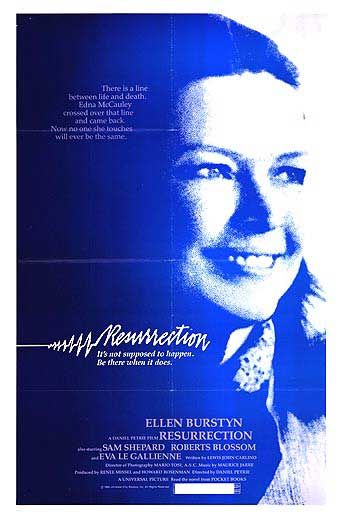
Edna (Ellen Burstyn) manages to survive a car crash and briefly finds herself in the afterlife, but ends up coming back to this world along with an amazing power to heal sick people with the simple touch of her hands. This makes her a celebrity in the small Kansas community that she lives, but others question her ability and wonder, especially since she refuses to acknowledge religion, if it may have a satanic origin. Her newfound boyfriend Cal (Sam Shephard) thinks she may be the second coming and becomes determined to get her to admit this even if it’s through violent means.

The story is loosely based on the life of Rosalyn Bruyere a self-described clairvoyant and medical intuitive who also acted as a consultant to the film. Although initially conceived as a thriller the script by Lewis John Carlino instead takes a more spiritual route, which I found refreshing. I also enjoyed the way director Daniel Petrie captures the vast Texas landscape, which despite the setting being in Kansas, was fully shot inside the Lone Star state.

The scenes of the afterlife are interestingly captured, but I found it baffling why Edna would just write this off as being ‘weird dreams’ and not connect it to any religious connotations. Having these visions then get ‘interpreted’ by her Grandmother (Eva Le Gallienne) seemed heavy-handed as even if a person was not religious themselves they would still be able to connect-the-dots on their own without it having to be explained.

The healing scenes work off of a murky logic. Edna is told after the accident that she is paralyzed from the waist down due to a blood clot in her spine and yet after she learns of her healing ability she places her hands on her legs to help her walk again, but if the root cause of the issue is actually in the back shouldn’t that be where she places her hands instead? The scene where a woman (Madeline Sherwood) who suffers from 2 degenerative vertebrates in her back, but is able to stand-up  after she sees Edna doesn’t make sense either. Standing with missing vertebrae is liking walking without a knee or cartilage. It’s just not scientifically possible, so unless Edna’s healing can cause bone mass to grow where they isn’t any then I’m not sure how they her powers actually work.

I thought it was a bit loopy too that when Shepherd’s character gets injured in a bar fight his buddies take him to Edna’s isolated farmhouse miles away for her to stop the bleeding, but this is when Edna’s healing ability had not been fully established, before this she had only stopped the nose bleed of a young girl, which some might consider simply a fluke, so the most rational thing would’ve been to take him to a nearby hospital instead. The scene would’ve worked better had Edna been in the bar when Shepherd got injured and then jumped in to heal him after he got stabbed.

I didn’t feel Shepherd’s character had the right chemistry to make Edna want to have a relationship with him either. His beady-eyed stare made him look creepy and his father (Richard Hamilton) had accused Edna of being satanic, so why would she want anything to do with that family? He also came off too much like a nondescript redneck like all the other rednecks that made up that small town. Edna was clearly an outsider, so for her to be attracted to someone I would think that person would need to be an outsider as well.

I could never understand why Edna was so resistant to religion, or so completely confident that her powers weren’t heavenly sent. I got that her Christian zealot father (Roberts Blossom) may have turned her off from religion altogether and she didn’t want to deal with the pressures of being considered Christ-like, which is understandable, but I’m not sure Burstyn was the right choice to effectively pull off that type of character. I love Ellen and think she’s a great actress, but she’s also a very spiritual woman in real-life and it pretty much gets conveyed in her performance here whether that was the intention or not. An actress that displayed more of a cynical, snarky attitude, only to have her outlook change once these powers took hold would’ve created a more interesting and dramatic arch.

The third act has Edna going to Los Angeles where her powers are tested by researchers, but these scenes don’t have any satisfying conclusion to them, which I found frustrating. However, the scene that Edna has with her dying father I felt were strong and the best moment of the whole film.

The spiritual element gets left open to interpretation depending on one’s own perspective, which is good. It also has a really great, and to some degree, surprise ending, but I didn’t like the freeze-frame shots taken from the film shown over the closing credits, which cheapens it as this is typically something done on TV-shows and not movies.

My Rating: 6 out of 10

Released: September 26, 1980

Runtime: 1 Hour 43 Minutes

Rated PG

Director: Daniel Petrie

Studio: Universal

Available: DVD

Twice in a Lifetime (1985)

twice-in-a-lifetime

By Richard Winters

My Rating: 6 out of 10

4-Word Review: He has an affair.

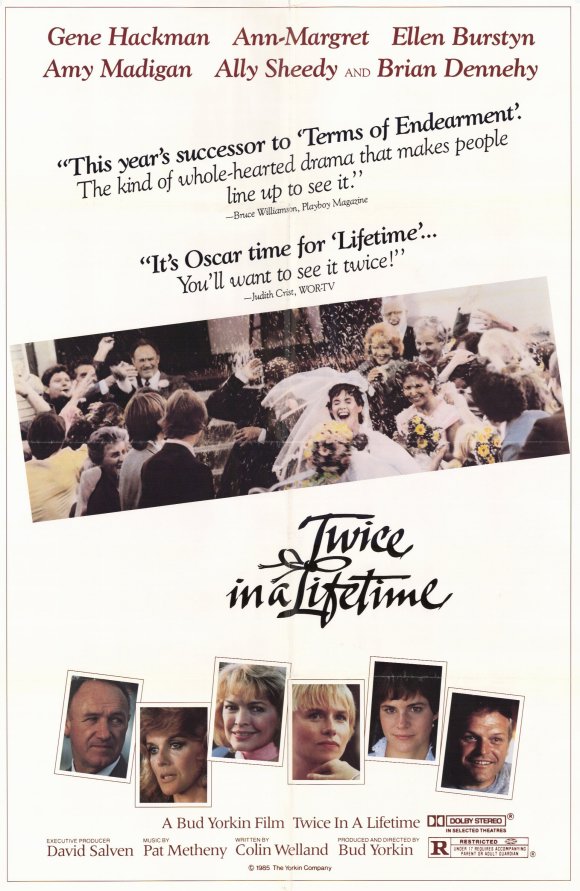
Harry MacKenzie (Gene Hackman) is a steel mill worker living in Seattle who has just turned 50. On the night of his birthday Kate (Ellen Burstyn), his wife of 30 years, tells him that he can go by himself to the local tavern to celebrate as she is not into the drinking. When he does he meets Audrey (Ann-Margret) who has just started working there. The two immediately hit-it-off and soon are in a relationship. When Harry finally tells his wife and family about it they are devastated, but learn to cope with it in unexpected ways.

The way Harry and Audrey’s relationship begins is too rushed as he simply spots her in a crowd and then quickly becomes entranced. If eyeing an attractive woman is all that it took then he should’ve been having a string of affairs way before this one. Making Audrey more of the instigator while Harry remained hesitant only to later realize how stale his marriage had gotten once the relationship started would’ve worked better. There is also no indication at the beginning that there was anything wrong with his marriage or that he was even bored with it.

It should’ve opened with Harry simply coming home one day and admitting to the affair and then focusing on everyone’s reactions, which would’ve been less contrived. I was also annoyed that two key scenes including when Kate first gets informed of the affair by a friend as well as Kate’s later confrontation with Harry are not shown. The film just cuts away before either of these conversations gets going, which to me was frustrating.

The second half is an improvement. I liked how the film sends the message that divorce isn’t always bad, but instead can act like a rebirth for both parties. I also enjoyed the on-location scenery of the Pacific Northwest and seeing Harry and Audrey sitting amongst a crowd at an actual Seattle Seahawks football game.

It was also great having Hackman playing a character that lacked confidence and at times was even socially awkward, but it’s Burstyn’s performance that really makes it special. Watching her shy character coming out-of- her-shell and learning to become independent is the film’s highlight. Unfortunately Amy Madigan as the eldest daughter is a turn-off as her angry outbursts come off as forced and overdone while the much quieter Ally Sheedy as the other daughter is far better.

Surprisingly no studio would agree to finance the picture even though the script was written by Colin Welland who had just won the Academy Award four years earlier for the film Chariots of Fire, so director Bud Yorkin was forced to put up his own money by using the earnings he had made through producing ‘All in the Family’, which helps explain why a clip from that show gets seen briefly. It could also be the reason why the production at times has a cheap look to it and like it had originally been shot of video and then later transferred to film. Paul McCartney, whom I’m a big fan of, does the closing tune, which unfortunately has to be the worst of his career.

My Rating: 6 out of 10

Released: November 8, 1985

Runtime: 1Hour 51Minutes

Rated R

Director: Bud Yorkin

Studio: Bud Yorkin Productions

Available: DVD, Amazon Video, YouTube

Tropic of Cancer (1970)

tropic of cancer

By Richard Winters

My Rating: 4 out of 10

4-Word Review: Writer living in Paris.

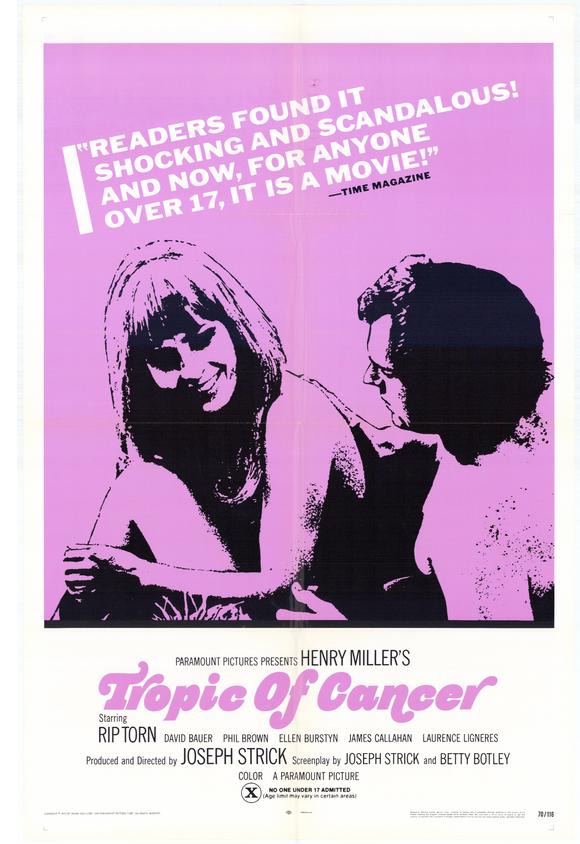
Rip Torn plays author Henry Miller living in Paris during the 1930’s and struggling to find work, shelter and money. He spends his time shoplifting items from food stands while also having sexual conquests with prostitutes and even the wives of his friends.

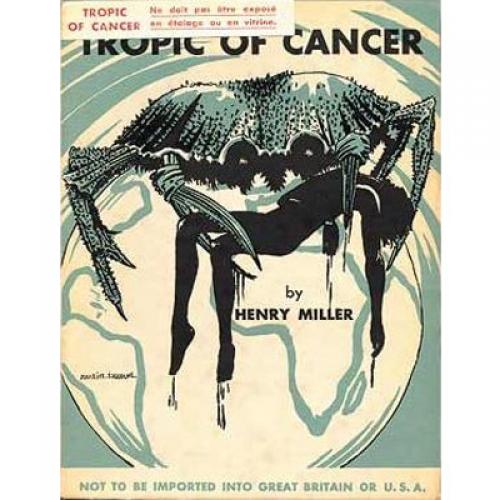
The film is based on Miller’s landmark novel that was published in France in 1934, but banned in the US until 1961 and even then went through several obscenity  lawsuits, which were finally all dropped in 1964 when the US Supreme Court deemed the book to have artistic merit. The novel, which is considered highly influential and won wide critical acclaim, has an odd mixture of stream-of-consciousness elements as well as autobiographical ones that works well in book form due to Miller’s first person narrative, but fails on the big screen. It was never meant to be made into a movie and director Joseph Strick’s ambitious attempt to make it into one, who just three years earlier tried to do the same thing with James Joyce’s equally unfilmable novel Ulysses seems futile and ridiculous.

The production looks cheap and lacks any type of atmosphere or visual flair. The setting is supposed to be the late 20’s, but it hardly seems like it. The acting is weak particularly by the supporting actresses playing the prostitutes who almost come off like people pulled off the street with no acting training of any kind.

The film’s most notorious claim to fame like with the book was its explicit sexual content that by today’s standards seems quite tepid. There are some nude scenes here and there including seeing actress Ellen Burstyn fully naked from the front, but it adds little. The best stuff is Torn’s voice over-narration describing his character’s sexual fantasies much of which was lifted directly from the novel. This was the first film to ever use the word ‘cunt’ and it gets said frequently. In fact it’s the character’s sexual conversations and the caustic way women get described in them that are the most amusing thing about the movie.

A few other funny moments include Miller having sex with a prostitute while she is also taking care of her sick mother and who would sometimes leave the bed to look in on her and although Miller initially pays the woman for her ‘services’ he eventually steals it back when she is away during one of her trips to her mother’s room. Miller’s roommate Carl (David Baur) has a great scene where he writes love letters to a woman he wants to have sex with and the two finally meet only to have the actual encounter not live up to the fantasy.

This was filmed at the same time as Quiet Days in Clichy, which was also based on the same novel. Both films were made in Paris and Henry Miller would routinely sit-in on the productions, which were done not far from the other. However, despite an admiral attempt the movie comes off as flat and boring and the viewer would be far better off skipping this and reading the source material instead as the only time it ever gels is when it uses text taken directly from the book.

tropic of cancer 2

My Rating: 4 out of 10

Released: February 27, 1970

Runtime: 1Hour 27Minutes

Rated X (Reissued as NC-17)

Director: Joseph Strick

Studio: Paramount

Available: DVD, Amazon Instant Video, YouTube