Tag Archives: Burgess Meredith

Magic (1978)

magic

By Richard Winters

My Rating: 7 out of 10

4-Word Review: Ventriloquist has split personality.

Corky (Anthony Hopkins) is an aspiring stand-up magician who’s finding it hard to play in front of live audiences. After a particularly disastrous effort he comes upon the idea of adding in a ventriloquist dummy named Fats into his act. The addition helps him become a top act and soon gets him the attention of well known agent Ben Green (Burgess Meredith). Ben wants to get Corky a TV contract, but first Corky must undergo a health physical, which Corky refuses to do. Ben insists that Corky has no other option, so Corky leaves the city and drives via a cab to the Catskills where he grew up and rents a lakeside cabin from his former high school sweetheart Peggy (Ann-Margaret). The romance between the two quickly renews, but then Ben finds out where Corky is staying and catches Corky alone in his cabin having an animated argument with his dummy convincing Ben that Corky has mental issues. Ben tells Corky that he’s going to get him psychiatric care, but Corky fears that if it gets out that he’s mentally ill he’ll never get another job offer and thus resorts to drastic action in order to keep Ben quiet.

The film is based on the novel of the same name by William Goldman who also wrote the screenplay. The novel was unique in that it was told through the voice and point-of-view of the dummy. While there had already been several stories and movies dealing with the ventriloquist/dummy persona including the film Dead of Night starring Michael Redgrave and a famous episode of ‘Twilight Zone’ where actor Cliff Robertson played a ventriloquist that gets tormented by his dummy. This film takes a slightly different approach where upfront the protagonist is clearly shown as having a major personality disorder and thus he’s the real threat while the dummy only symbolizes his inner turmoil between the ego and the id.

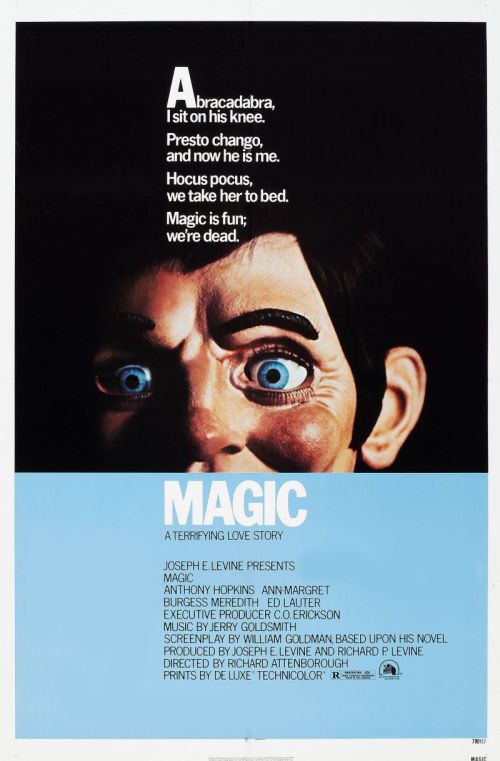
The film definitely has some creepy moments especially the dummy, whose spooky appearance is what makes it worth catching. It was modeled after Hopkins with oversized blue eyes, head, and mouth gives it an almost monstrous presence. Supposedly when it was completed and Hopkins first took it home to rehearse he got unnerved by it in the middle of the night and called Goldman to come over and pick-it-up or he was going to destroy it. The placid, gray setting of the isolated cabin, which was actually filmed in California despite it looking like northern New York, is perfect for this type of story and the serenity helps accentuate the suspense.

I really liked too the opening bit where a sweating Corky is seen bombing on stage in front of a apathetic crowd, which realistically hits home how nerve-wracking being up onstage for the first time can be though I wish we could’ve heard what Corky angrily shouted at the audience instead of having the sound of this blotted out by a voice over. It is though hard to believe that a man in his 40’s would get so addicted to his dummy, something he hadn’t used before then, that he couldn’t communicate without it and would have to take it everywhere he went. For a relationship to become this deep seated I’d think he’d have to have been doing a ventriloquist act from childhood on and thus the alter-ego of the dummy became meshed with his own as he grew older.

The acting is excellent by not only Hopkins, but also the supporting cast. Meredith is especially enjoyable playing the caricature of a Hollywood agent, which was modeled after the real-life one of Swifty Lazar, with his best moments coming whenever he takes out one of his expensive cigars, which are each separately incased inside a glass cannister. When he pulls the cigar out he then flings the cannister away, which can then be heard shattering onto the floor. Ann-Margaret known for her beauty and flair plays down her looks here as she wears no make-up and takes on a more earthy persona. Ed Lauter is also interesting playing her husband. Normally he’s a tough guy/bully and I thought this was going to come-out when he takes Corky out on a boat in the middle of a lake where he was going to threaten him to stay away from ‘his girl’, but instead he surprisingly displays a more vulnerable side and makes an emotional appeal to Corky to leave Peggy alone versus a strong-armed one.

Spoiler Alert!

The pacing is slow and the suspense builds very gradually though ultimately there are a few good spooky moments including a brief moment when Fats begins moving itself without the help of an operator and when Corky’s face suddenly begins to resemble the wooden dummy’s. Yet I felt it could’ve gone farther. The segment which has Corky crawling on the floor doing whatever the dummy tells him is certainly unnerving, but could’ve been accentuated more by showing it from Corky’s perspective where the dummy’s head would’ve grown to giant size as it looks down on the meek Corky as it gives him the orders.

The ending, at least when I first saw it, had me confused. The film climaxes with Corky returning to his cabin having stabbed himself and bleeding to death where he and Fats then slowly die together, but outside of the cabin Ann-Margaret appears telling Corky she has now changed her mind and wants to go away with him. Initially though it had been made to seem like Corky had killed her, so seeing her reappear as she does comes-off as almost dream-like. She also begins to speak in the dummy’s voice making it seem like his spirit had transferred to her.

Upon the second viewing many years later I came to the conclusion that this scene was meant to only be ironic. That if Corky had simply held-out longer Peggy would’ve agreed to go with him and thus him killing himself was a horrible waste, but in retrospect since he was suffering from such severe mental issues it was unlikely a long lasting relationship would’ve happened, so having her come back the way she does doesn’t really make much sense since she had been deeply offended by what he had said earlier, via the dummy. It would’ve been more horrifying had he chased her around the house and then killed her and the viewer seeing that get played-out.

My Rating: 7 out of 10

Released: November 8, 1978

Runtime: 1 Hour 47 Minutes

Rated R

Director: Richard Attenborough

Studio: 20th Century Fox

Available: DVD, Blu-ray, Amazon Video, YouTube
Foul Play (1978)

foul

By Richard Winters

My Rating: 7 out of 10

4-Word Review: Beware of the dwarf.

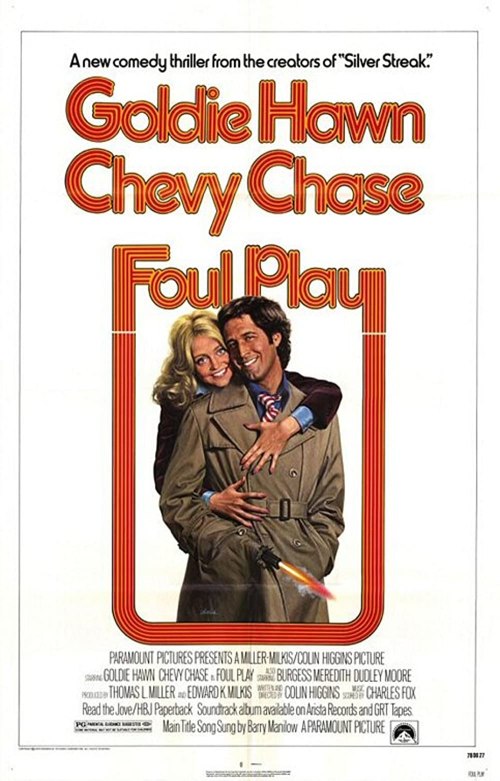
Gloria (Goldie Hawn) is a recent divorcee who takes a car trip along the San Francisco coast where she comes upon a stranded motorist (Bruce Solomon). Since she is looking to meet new people she decides to give him a ride. The man says his name is Scotty and that he’s looking to give up smoking and gives her his pack of cigarettes in an effort to stay away from them. Unbeknownst to Gloria the pack holds a microfilm that a secret organization is after. That evening the two meet-up at a theater to watch a movie, but Scotty, who has already been stabbed, dies while sitting in his seat. Gloria runs to notify the theater manager (Chuck McCann), but when they return the body is gone. Later that night Gloria gets attacked in her apartment by a man (Don Calfa) with a facial scare. She stabs him with her knitting needles and he falls over dead, at least she thinks so, before she herself passes-out. When the she comes to two policemen are in her place, but with no evidence of a body. One of the officers (Brian Dennehy) thinks she may be nutty, but the other one (Chevy Chase) finds her attractive and therefore makes an effort to research her story and while Gloria and he work together to investigate the case they begin a romantic relationship.

While Leonard Maltin, in his review, or whoever wrote if for him, describes this film as ‘Hitchcock plagiarism’ I found it similar to High Anxiety that came out a year before, and more of a homage. Many other films that try to replicate Hitch’s style usually fail because they go overboard with the theatrics, or too much parody, but this one has a nice balance that is both intriguing and funny.  Another great quality of the film is the way it lovingly photographs the city and landscape of Frisco Bay from its beautiful shore line, to row houses, to the scenic boat houses where the Chase character resides. It’s almost enough to compel one to move there if only a person who wasn’t super rich could afford to live there.

The supporting cast is delightful and everyone of them has some really laugh-out-loud moments. Dudley Moore is the best, in a part written specifically for Tim Conway who shockingly turned it down, as a sex starved bachelor who brings Gloria to his pad filled with blow-up sex dolls thinking the two will have sex only to learn that’s the last thing on her mind. Marilyn Sokol as Gloria’s fiercely feminist friend is quite amusing as is dwarf actor Billy Barty as a bible salesmen who Gloria mistakes as being the killer. Burgess Meredith, as Gloria’s kindly old landlord, doesn’t come-off as well and gets upstaged by his pet python. It also would’ve been good had his character brought-up his judo skills earlier in the story instead of having it introduced later on when they must confront the bad guys, which was just a little too convenient though the karate match that he has with Rachel Roberts is quite entertaining and something I wished had gone on longer.

I did though have some issues withe the two leads. Goldie is as enjoyable as ever, but her character makes what I felt were grossly misguided decisions. One is picking-up a stranded male stranger on an isolated road, which from a simple common sense perspective is a major no-no. She also later-on blithely walks into her apartment even after she becomes aware that the front door has been broken into. In another scene she’s given mace and a pair of brass knuckles from her friend Stella to use for protection and Gloria is able to escape from a locked room and knock-out the bad guy with the help of these items, but then she throws them away before running out, but any logical person would hold onto them in-case they were needed again.

Chase playing a police detective was something that I just couldn’t buy into. He initially comes-off, when Gloria first meets him at a party, as a lecherous lounge lizard looking to hit on hot babes and not serious about much else. He’s also seen as being highly klutzy, so having this clownish womanizer suddenly turn into a dedicated cop doesn’t jive and seemed more like two completely different people. Brian Dennehy gives a far more realistic portrayal of a policeman and is actually funnier in his exasperated responses to Gloria’s crazy story, so he should’ve been the sole investigator and Chase could’ve been this ordinary doofus that she meets and because he has the hots for her he agrees to ‘humor her’ and help her out on the case. The story and romance could’ve remained the same, but casting Chase as a regular Joe, which he’s far better playing at, would’ve made better sense.

The story does become strained at the end with a speeding car sequence that’s more nerve-wracking than fun, though the elderly Asian couple that can speak no English and sit in the back seat of the speeding limo are amusing. The whole reason behind the crime and attempted assassination of the Pope is hooky and it would’ve been better had no explanation been given at all than explaining it away the way they do. However, the climactic sequence done during a performance of ‘The Mikado’ at the San Francisco Opera House, is terrific and a nice finish to what is otherwise perfect escapism.

My Rating: 7 out of 10

Released: July 14, 1978

Runtime: 1 Hour 56 Minutes

Rated R

Director: Colin Higgins

Studio: Paramount

Available: DVD. Blu-ray

The Day of the Locust (1975)

By Richard Winters

My Rating: 8 out of 10

4-Word Review: Desperate people in Hollywood.

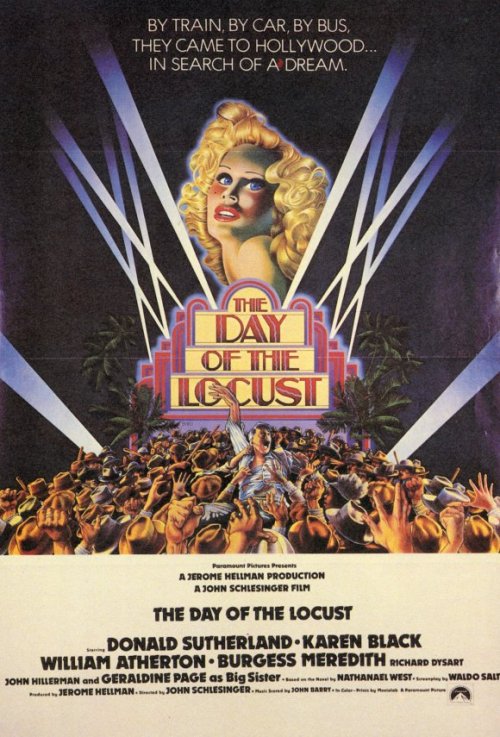
During the depression a young artist named Tod Hackett (William Atherton) comes to Hollywood to help design the set for a new movie. While there he meets a wide assortment of people, who seek fame and fortune, but find heartbreak and rejection instead. Tod falls for Faye (Karen Black) a woman striving to become the next big Hollywood starlet despite lacking any talent while her father Harry (Burgess Meredith) is on the opposite end of the spectrum. At one time he was a vaudeville comedian, but now with his failing health is relegated to selling health tonics door-to-door.

This film is the last great effort of director John Schlesinger whose films after this lacked the same visual style that made Midnight Cowboy and Far From the Madding Crowd cinematic masterpieces. From a visual standpoint it hits all the right chords and is filled with many memorable segments. The best ones include the scene where a group of bourgeoisie guests who come to Natalie Schafer’s home (she was best known for playing Mrs. Howell on ‘Gilligan’s Island’) to watch porn movies There’s also the scene where an entire film set comes crashing down and injuring the entire crew as well as the climactic moment where a large crowd waiting outside to see the premiere of The Buccaneer turn into a violent, bloodthirsty mob.

The acting is first-rate particularly Black who portrays her desperate character to a perfect tee. Meredith, who was nominated for a supporting Oscar, gives a vivid portrayal of her equally desperate father making his scenes quite entertaining. Donald Sutherland is also solid as a likable, but socially awkward outsider, which best suits his acting persona.

The script though by Waldo Salt, which is based on the 1939 novel of the same name by Nathanael West, misses out on a lot of the book’s subtext. In the movie Tod tries to rape Faye while at a party, but this eruption of his seems to come out of nowhere while in the book it gets better explained by showing how Tod continually harbors rape fantasies for Faye and makes these fantasies a running part of the story.

Donald Sutherland’s character, the aptly named Homer Simpson, which supposedly was the inspiration for Matt Groenig’s character in his famous comic strip, is a confusing enigma. In the book he is given a better backstory and revealed to be a man struggling with a lot of inner turmoil while here he’s seems more like a strange, naïve mope from another planet.

There’s also no explanation in the movie for why the word Locust is in the title, which is in reference to the Bible and the plague of locusts that descended onto the fields of Egypt. Tod symbolizes the locust in the novel’s version of the story while in the movie his character is more of an outsider observing the ugliness, but not having a hand at creating it

The biggest issue though is the film’s underperformance at the box office, which helped relegate both Black and Atherton, who at the time were considered up-and-coming stars, to supporting roles afterwards. I believe part of the reason for this is because none of the characters are likable. It’s fine showing humanity’s bad side as long as the audience doesn’t feel beaten-over-the-head with it, but the film wallows so much in the darkness that it overwhelms the viewer. Having a character that was slightly removed from the madness and not as flawed might’ve helped to balance things and make everything else that goes on more tolerable.

Overall though it’s a great film, but the statement it’s trying to make remains murky. Better efforts should’ve been made to tie it to the disillusionment of the American Dream, which is what the book does and not seemed so much like just a glimpse into a freak show of a bygone era like it ends up doing here.

My Rating: 8 out of 10

Released: May 7, 1975

Runtime: 2Hours 24Minutes

Rated R

Director: John Schlesinger

Studio: Paramount

Available: DVD, Blu-ray, Amazon Video, YouTube
A Fan’s Notes (1972)

fan-notes

By Richard Winters

My Rating: 4 out of 10

4-Word Review: He writes about himself.

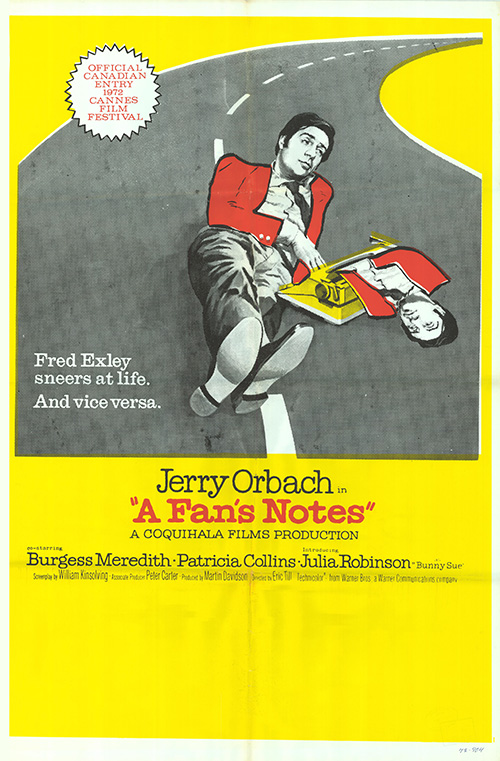
Exley (Jerry Orbach) is a loner residing in and out of mental institutions. He imagines having conversations with beautiful women, but is rarely able to approach them in real-life. He also obsesses over New York Giants running back Frank Gifford and wishes one day to achieve that same type of success, but fears that he’ll be a spectator in life just like he is in sports. He decides to begin writing about his nomadic existence in hopes that it will be a cathartic effort only to find that too harbors its own share of frustrations.

The film is based on the Frederick Exley novel of the same name, but despite the filmmaker’s best efforts it’s not able to achieve the book’s cult potential and in fact Exley himself stated that the movie “bore no relation to anything that I had written”. The idea of trying to somehow visualize a story that was never meant for the big screen is the film’s biggest issue and one that it cannot overcome no matter how hard it tries. The pacing is poor and tries awkwardly to make profound statements while at other points being zany and absurd, which is off-putting.

Orbach does well in the lead and helps hold it together. This also marks the official film debut of Julia Anne Robinson who appeared in only one other movie King of the Marvin Gardens before she tragically died in a house fire at the young age of 24. Like in that movie her acting is poor, but here it works in the positive because it makes her character seem transparent and accentuates the dream-like theme. The segment where she dresses up like a nun and then later as a street hooker, as part of Exley’s sexual fantasy, is fun as is his visit with her quirky parents (Conrad Bain, Rosemary Murphy).

Burgess Meredith appears only briefly, but practically steals it with his outrageousness. Watching him lie down on the floor in an effort to look up a blind woman’s skirt is a real hoot as is his ability to walk on his hands across the edge of a sofa.

Had the film stuck solely with the goofy comedy it might’ve worked and there are indeed a few memorable bits. The part where Exley punches an obnoxious woman (Elsa Raven) in slow motion is arresting and the segment where he imagines himself inside a scene of a his favorite soap opera where he directs the cast to strip off their clothes and have sex right in front of the camera is pretty funny too, but the best moment is the telephone conversation he has with a couple where he pretends to be a lawyer pleading with them to take-in the husband’s mentally unstable brother.

My Rating: 4 out of 10

Released: July 21, 1972

Runtime: 1Hour 32Minutes

Rated R

Director: Eric Till

Studio: Warner Brothers

Available: YouTube

Hard Contract (1969)

hard contract

By Richard Winters

My Rating: 3 out of 10

4-Word Review: Hit man becomes humanized.

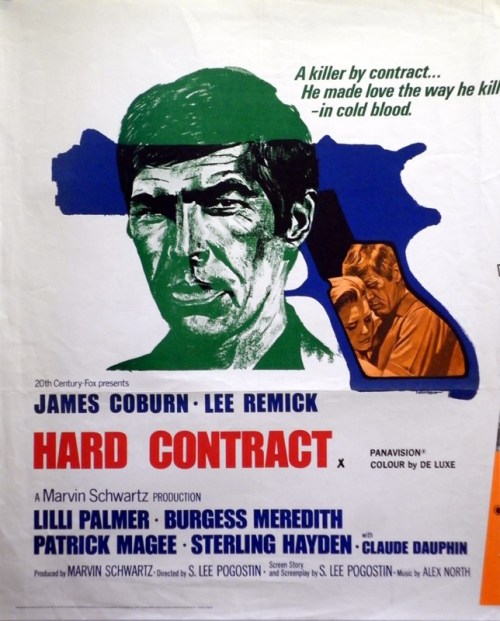
John Cunningham (James Coburn) is a professional hit man hired by Ramsey Williams (Burgess Meredith) to do one last ‘big score’ by rubbing out Michael (Sterling Hayden) of which Ramsey suffers a large financial debt to. John has done many of these jobs before and travels to Europe with the expectation that this one will be as routine as the others, but then he has an encounter with call-girl Sheila (Lee Remick) who plagues him with self-doubt and forces him to question his purpose in life.

This film was written and directed by S. Lee Pogostin a long time TV writer who finally at the age of 55 got his big break to do an actual feature film. Unfortunately for him his script is excessively heavy with dialogue and little to no action. There is only one brief segment where we see John actually doing his job and offing someone and it comes in the form of watching him drop a large trunk with a dead body inside of it out of an airplane, which is kind of a cool visually, but that is about it and the rest of the film consists of nothing but talk and long winded, flowing conversations dealing with theories and philosophies that regular people, particularly those in the crime and prostitution business, just don’t have.

Coburn and Remick are both excellent, but the scenario that their characters are placed in is ludicrous. The idea that a high paid prostitute would suddenly fall for one of her clients is quite doubtful. Had the Coburn character been somehow kind or gentle towards her then maybe, but instead he is cold and distant and treats her more like an animal than a person, so why, especially after all of the other men she has already presumably slept with, would she get so worked up over this guy? It just makes no sense and the same thing goes for the Coburn character. He’s slept with hundreds of prostitutes before and even brags about it, so why would this one stand out?

The conversation that Coburn has with Hayden, amidst a large wheat field and while sitting on a tractor, is pretty good and the most engrossing moment in the film. The scene where he drives a car speedily down a winding road, which gets the other passengers quite nervous, isn’t bad either. The European locations are scenic and the supporting cast all give strong performances especially Karen Black as a talkative hooker arguing with Coburn over political candidates. However, the script tries too hard to make a statement and comes off more like a protracted concept than a story with a pretentious flair that just doesn’t work.

hard contract 2

My Rating: 3 out of 10

Released: April 30, 1969

Runtime: 1Hour 47Minutes

Rated R

Director: S. Lee Pogostin

Studio: 20th Century Fox

Available: None at this time.

There Was a Crooked Man…(1970)

there was a crooked man 2

By Richard Winters

My Rating: 8 out of 10

4-Word Review: Money in snake pit.

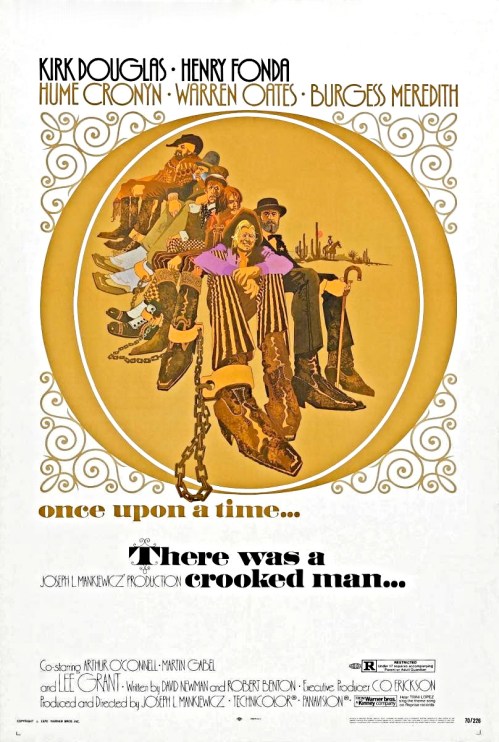
Paris Pittman (Kirk Douglas) is a rugged bandit who at times can be quite charming, but also cunning and ruthless. When he gets sent to an escape-proof Arizona prison he becomes determined to find a way out while using the skills of his fellow prisoners, who he has all promised will get a share of some stolen loot that he has hidden in the desert, to help him do it. Woodward Lopeman (Henry Fonda) is the prison’s new warden. He’s on to Paris’s manipulative ways and becomes equally determined to stop him from escaping while also subtly attempting to reform him.

During the social/sexual revolution of the late ‘60’s many film genres took on society’s new attitudes while also taking full advantage of the new found freedoms by showing things that had previously been taboo. Comedies, dramas, action films and even sci-fi movies were suddenly breaking new ground, but the western for the most part remained entrenched with the old-school values at least until the ‘70’s, but this film is one of the early entries into what became known as the revisionist western where age-old dramatic trappings where suddenly given a whole new spin and the caricatures of good and evil became much murkier.

Here the ‘good guy’ is to some extent the bandit who works outside of the system while seeing all the hypocrisies from those still working within it. The people getting robbed are no longer ‘God-fearing’ innocent town folk, but instead the greedy establishment who enslave blacks and use the façade of religion for their own self-interests.  Woman are no longer virginal maidens waiting to be properly married, but instead sexually oppressed young ladies eager to pursue their horny desires behind their parents back if they can get away with it. Those that still remain loyal to the old ways of doing things such as with Fonda’s character are now seen as being out-of-touch and unreasonably rigid to an inflexible, dated system.

Watching the western genre suddenly ‘grow-up’ as it where and show things that only a few years earlier would’ve been unthinkable is a lot of fun and the script meshes in a good amount of snarky humor, which keeps things consistently lively and comical. Even the music score gets a new slant. Typically music themes in westerns had a booming, orchestral sound, but here it’s much jazzier and modern.

Douglas is engaging and makes a great adversary to Fonda. Fonda, who just a year earlier shocked filmed audiences with his brilliantly creepy portrayal of a psychotic gunman in Once Upon a Time in the West goes back to his old form as the stoic good guy and does it quite well although I was confused why he is seen in the first half walking with a limp and a cane due to being shot only to go without it and walk normally during the second half.

The support cast, all men in their 50’s and 60’s and seen for years in the old fashioned westerns, but now clearly relishing the chance to be bawdy and irreverent are in fine form as well. Burgess Meredith is quite funny as an old codger who has worn the same underwear for 35 years and refuses to take it off even for a bath. Hume Cronyn lends equally good support and I loved the scene where he adds giant tits onto a drawing of an angel. This also marks the film debut of Pamela Hensley who became best known for her work on the TV-shows ‘Buck Rogers in the 25th Century’ and ‘Matt Houston’.

There are clearly other comical westerns out there, but this one, with a script co-written by Robert Benton, manages to still have a good story, some very exciting moments and even a great twist ending. The prison used in the film was built specifically for the production and great effort was put in to make it seem authentic to the period. The detail that was put into it along with the rock quarry where the prisoners work in is impressive and worth catching just for that.

My Rating: 8 out of 10

Released: December 25, 1970

Runtime: 2Hours 6Minutes

Rated R

Director: Joseph L. Mankiewicz

Studio: Warner Brothers

Available: DVD, Amazon Instant Video

Such Good Friends (1971)

such good friends 1

By Richard Winters

My Rating: 8 out of 10

4-Word Review: Her husband fools around.

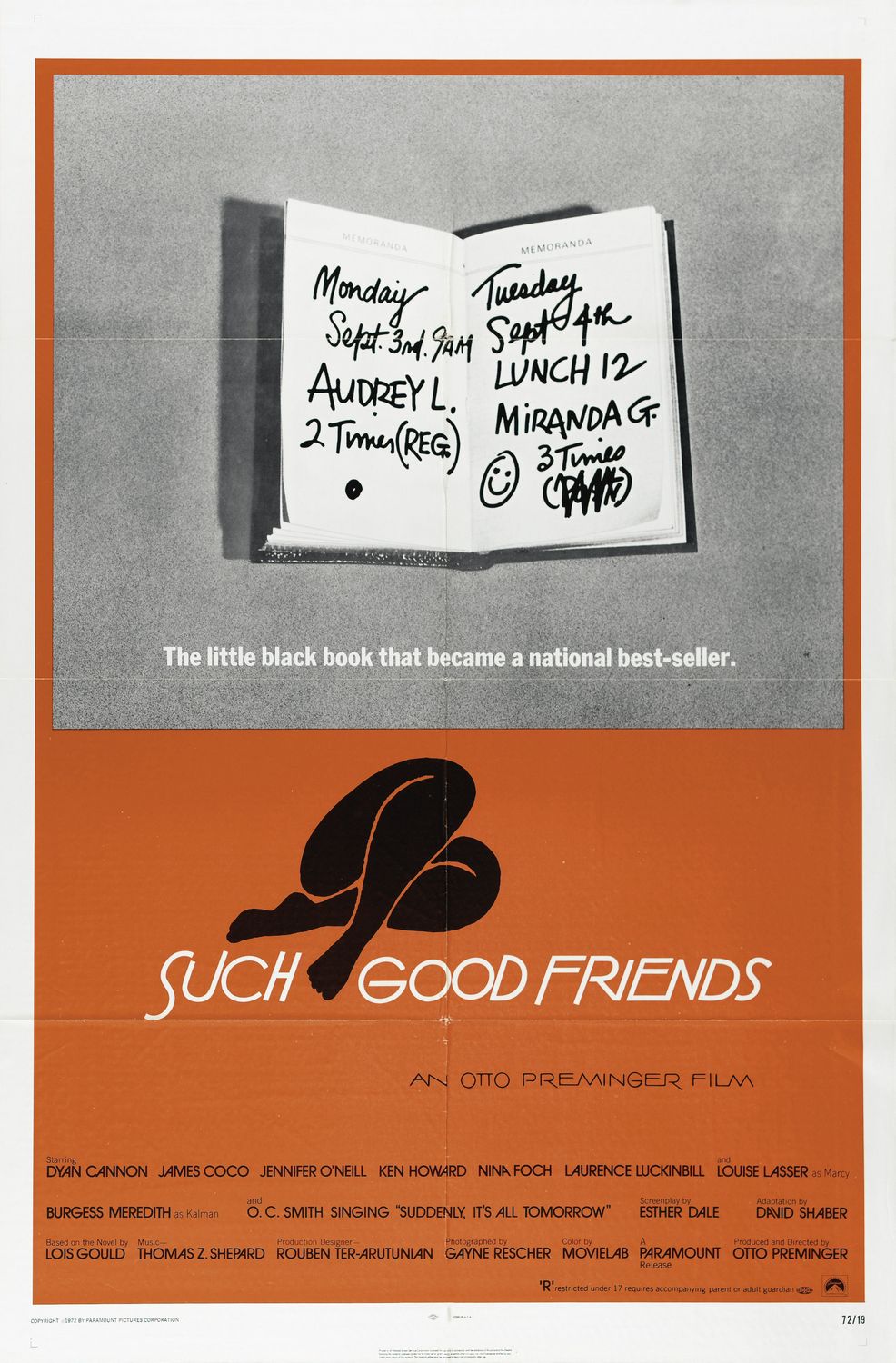
Julie (Dyan Cannon) is a well-off New York Housewife living in a swanky Manhattan apartment with her husband Richard (Laurence Luckinbill) who is the successful editor of a New York fashion magazine. Her life seems fulfilled and happy until Richard goes into the hospital for routine surgery, which has unexpected complications that sends him into a coma. While going through some of his personal belongings she comes upon his little black book that lists all sorts of sexual conquests he has had with her friends, which first leads the devastated Julie into considering suicide, but then ultimately into revenge.

This film can be considered Otto Preminger’s swan song as the two movies he made after this weren’t worth watching. This movie also proves to be a giant improvement from the awful Skidoo that he did just three years before where he tried unsuccessfully to get with the ‘hip generation’, but failed miserably. It has the same irreverence and satire as that one, but it is much more disciplined and sophisticated and makes its point without going overboard. It also shows that despite his renowned cantankerous nature behind-the-scenes he was still a gifted director who managed to span five decades with movies that had vastly different styles and themes and he deserves to be labeled a filmmaking legend.

I loved the way the camera spins around in a circle during a scene inside a New York art museum as well as some breathtaking shots of the New York skyline while on top of Jennifer’s and Richard’s condominium. The fractured narrative that deals heavily with flashback sequences is also nicely handled though the scenes showing a middle-aged Cannon trying to look like she is an adolescent while wearing pigtails looks tacky and should’ve been scrapped.

The film is based on the Lois Gould novel of the same name and while that book had a much more serious tone the movie gives the material more of a satirical spin much like Diary of a Mad Housewife, which Preminger had scriptwriter Elaine May (who gets credited as Ester Dale) watch before writing this one. The result is endlessly witty dialogue and some near brilliant conversational exchanges between the characters. Some of the best bits are Jennifer’s discussions with Richard’s doctors who seem reluctant to take responsibility for their medical blundering as well as Jennifer’s awkward sexual encounter with her friend Cal (Ken Howard) when he is unable to ‘rise to the occasion’.

Although she has a face that can show pain and sadness well Cannon may not have been the best choice and some other actresses would’ve been more interesting in the part. Apparently Preminger had her in tears already on the first day and she has in subsequent interviews called him a ‘horrible man’. The scene showing her naked in a snapshot is actually that of another nude model with Cannon’s face cropped on it.

James Coco is great in support and I was genuinely shocked that it didn’t get him nominated for best supporting actor. The scene where Cannon is undressing him for some sex and he tries desperately to distract her while he takes off a corset that he is wearing underneath is frickin’ hilarious. Burgess Meredith has an outrageous moment where he is seen nude while attending a posh party and only his genitals are covered by a book hung from a belt that he is wearing.

The only real negative is the ending that is too serious and somber and deflates the energy from the film’s otherwise snarky tone. Some of the music used doesn’t work with the scenes either including the O.C. Smith song played over the closing credits. Otherwise it’s as fresh, original and timely as it was when it first came out and ripe to be rediscovered by the right audience. The title sequence created by Saul Bass that is used to open the film is diverting and I wished it had been extended.

http://www.youtube.com/watch?v=Rw84PqkX3ZQ

My Rating: 8 out of 10

Released: December 16, 1971

Runtime: 1Hour 42Minutes

Rated R

Director: Otto Preminger

Studio: Paramount

Available: DVD, Blu-ray, Amazon Instant Video

Burnt Offerings (1976)

burnt offerings 1

By Richard Winters

My Rating: 2 out of 10

4-Word Review: Evil house menaces family.

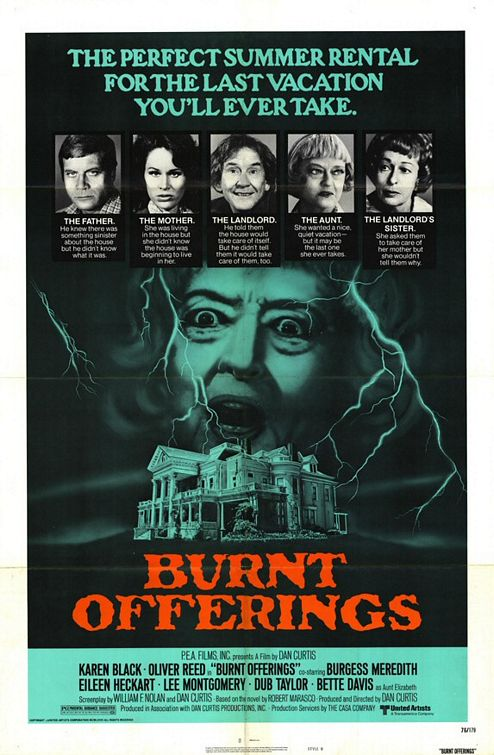
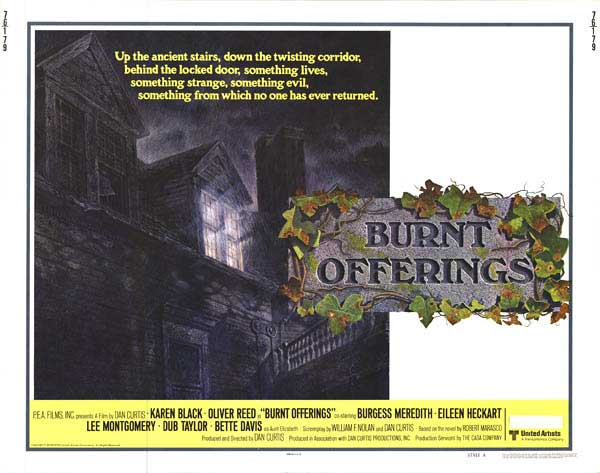
Marian and Ben (Karen Black, Oliver Reed) are a couple who takeover for the summer as caretakers for an old gothic-like mansion.  They bring along their son Davey (Lee Montgomery) and Aunt Elizabeth (Bette Davis). Soon there are strange occurrences as well as a transformation of their personalities, which makes them believe that the place is haunted.

The attempt at going back to an old-fashioned type of horror movie doesn’t work. Dan Curtis’s direction is too restrained and most likely will be a turn-off to even those that like these types of films. The pace is slow and the film takes way too much time telling a story that in the end adds up to nothing. The scares are non-existent and I didn’t even find it to be the slightest bit creepy. The only impressive scene involves a body flying out of an upstairs window and crashing head first into the windshield of a car, but that doesn’t occur until the very end. There is also a potentially interesting subplot involving Ben’s reoccurring nightmares about a traumatic childhood experience with a chauffeur, but it is never fully explained what this is about, which ultimately makes this more frustrating instead.

The soft lighting approach is another mistake as it makes the whole thing look like a shampoo commercial and adds nothing to the atmosphere. There is also the backyard pool that was clearly shot at another location from the summer house one that they reside.

Probably the only fun element of this otherwise blah film is the eclectic cast. Burgess Meredith, who shows up at the beginning, should’ve won an award for campy performance of the decade. Black plays another one of her flaky characters with her usual flaky style and Montgomery is good as the no-nonsense kid. Reed is outstanding as he ends up showing the widest array of emotions.

However, it is Davis whose latter day presence gives the film its broadest appeal. She spent a career playing strong-willed women with electrifying performances and yet here her character is downright ordinary. The change of pace is interesting especially the scene where she gets shouted down by Black. She also has a pretty good deathbed sequence and there is even a moment where Reed pats her on her rear. Depending on one’s point-of-view you will either find this to be amazing, amusing, or really gross.

On the whole though I found this to be a pretty hopeless excuse for a horror film with the most horrifying thing about it being having to sit through it.

burnt offerings 2

My Rating: 2 out of 10

Released: October 18, 1976

Runtime: 1Hour 56Minutes

Rated PG

Director: Dan Curtis

Studio: United Artists

Available: VHS, DVD